Distinguish free Tove Jansson Akebono Children’s Forest Park from paid Moominvalley Park by Lake Miyazawa. Plan the walk from Motokaji, dawn redwoods, Mushroom House, nursing, and lunch, with the 2026 opening-day changes and suspended illuminations.
- Region & Focus
- KantoFall foliage
- Reading Scope
- 34 min read · 13 chapters · 4 Q&As
- Official Verification
- 15 official sources checkedUpdated November 7, 2026
- Key Topics
- ItinerariesRail travelSeasons
Chapter Route Map (tap any stop)
- Use the addresses to distinguish three Nordic-themed destinations
- Look for dawn redwoods and keep late November for daylight
- Opening rules changed in 2026: buildings close half an hour before the park
- From Tokyo, get off at Motokaji and allow the final 20-minute walk
- Cars, taxis, and strollers: separate the last approach from the entrance
- Leave time for Mushroom House: its interior offers more than the exterior
- Forest House and Children’s Theater: reading, architecture, and baby care
- Keep children’s boundaries clear beside water and in the woods
- Lunch: choose between a packed meal and Cafe PUISTO
- Three to four hours in the park make a complete family half-day
- For playground time, allow a separate stop at neighboring Azu Sports Park
- For Moomin characters, choose Lake Miyazawa directly
- Adjusting for rain, pets, and photography
- Quick Q&A
For mushroom-shaped buildings and autumn colors with children in Hanno, set your destination to Tove Jansson Akebono Children’s Forest Park in Azu. This free woodland park is about a 20-minute walk from Motokaji Station on the Seibu Ikebukuro Line. Give its buildings, waterside, and reading spaces a half-day. Moominvalley Park by Lake Miyazawa is a separate paid theme park, with a different entrance, final station connection, and food rules. Dawn redwoods are the autumn highlight; the park gives late November to early December as the usual viewing period. Opening days changed in 2026 and nighttime illuminations were suspended, so plan a daytime walk.
Use the addresses to distinguish three Nordic-themed destinations
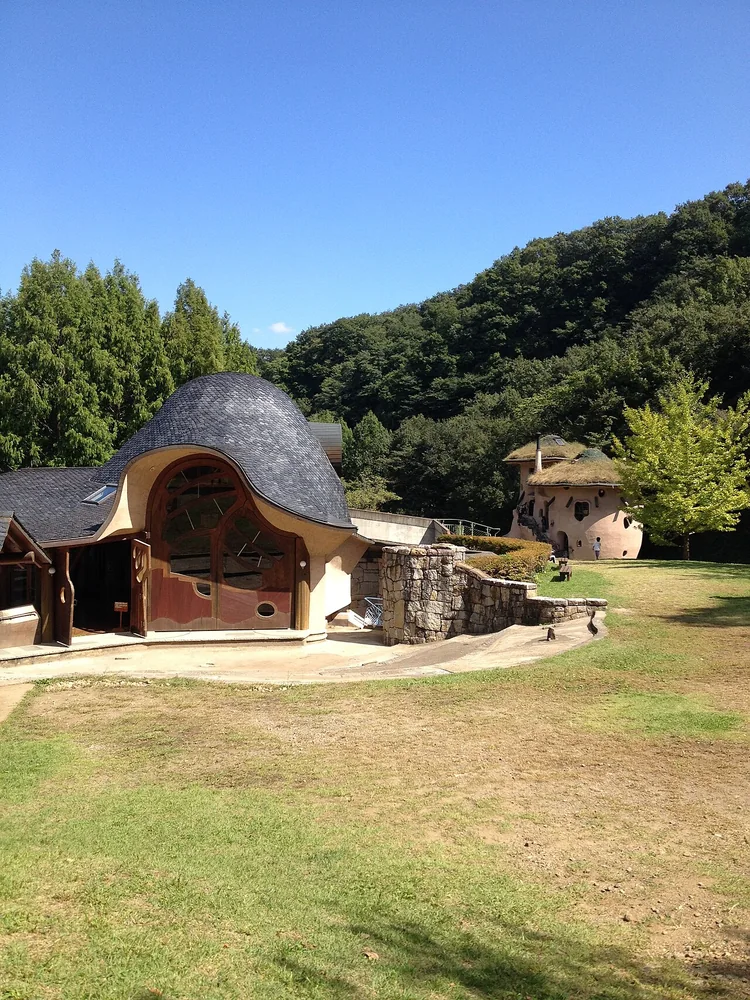
The full Japanese name of Tove Jansson Akebono Children’s Forest Park is “トーベ・ヤンソンあけぼの子どもの森公園.” Its address is 893-1 Azu, Hanno, Saitama. Keep that official name and Azu address when searching the forest park’s map location to avoid other Hanno destinations with Moomin in their names. This city-managed park is free to enter. Its focus is distinctive architecture, woodland terrain, and time for children to explore for themselves.
Moominvalley Park, “ムーミンバレーパーク” in Japanese, is within Metsä at 327-6 Miyazawa, Hanno. Based on the Moomin novels, it has exhibits, performances, and character-related content, with paid admission to the theme-park area. Metsä Village, “メッツァビレッジ,” is the free-entry lakeside shopping, dining, and activity area in the same Metsä complex; individual purchases cost extra. Treating “free” and “Nordic” as place names easily confuses the Azu forest park with the free area beside Lake Miyazawa.
Choose according to what your children want to do. For exploring a mushroom-shaped house, reading, and looking at buildings beside a pond, choose the forest park. For Moomin story exhibits, performances, and characters, choose the theme park directly. If someone only wants a lakeside meal and Nordic shopping, Metsä Village can be a trip on its own. The forest park’s free admission does not connect it to Metsä’s free area; travel across the city still separates them.
For a family day trip, first choose either the forest park or Lake Miyazawa. The forest park involves a return walk to Motokaji. Metsä involves waiting for a bus and walking through the free area to the paid entrance. Consider changing sites in one day only after everyone agrees to another ride and lunch and naps are arranged. For unhurried play inside buildings, a half-day at one site is easier.
Distinguish free Tove Jansson Akebono Children’s Forest Park from paid Moominvalley Park by Lake Miyazawa. Plan the walk from Motokaji, dawn redwoods, Mushroom House, nursing, and lunch, with the 2026 opening-day changes and suspended illuminations.
Look for dawn redwoods and keep late November for daylight
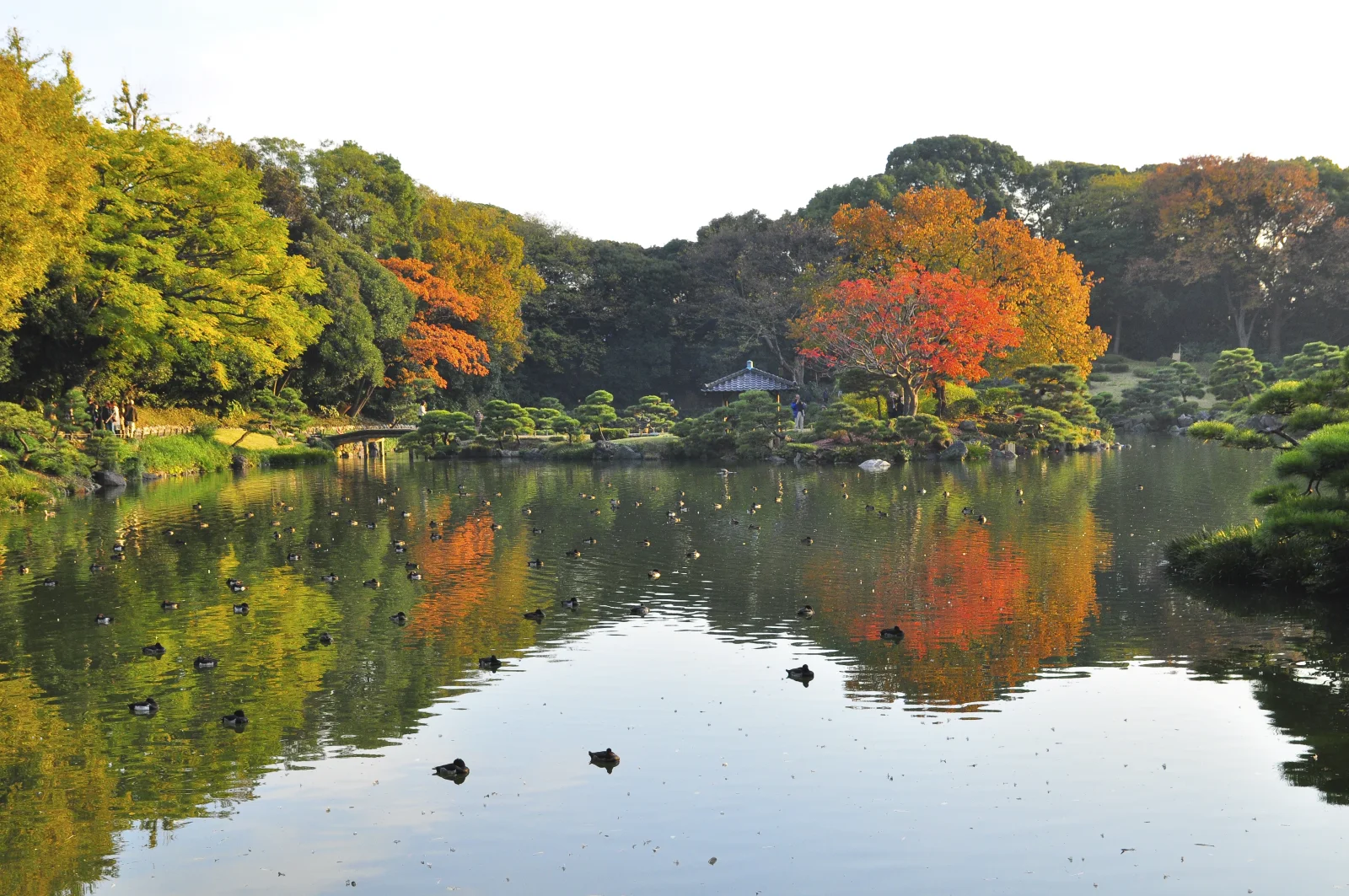
The trees called “metasequoia” or “akebonosugi” by the park are dawn redwoods. Rows of these trees beside irregular roofs give the forest park its distinctive autumn appearance. Look separately at crowns, trunks, and fallen leaves rather than expecting a whole expanse of bright-red maples. The park FAQ gives late November to early December as the usual viewing period, a useful window for a late-autumn walk near Tokyo.
The city’s autumn-color page places the usual peak around late November and displays autumn photographs taken in late November 2025. Use images on that page and the park’s official social accounts to assess conditions for your visit. Choosing a date with visible color, or accepting buildings framed by green trees, is more flexible than tying reservations to one fully colored day.
With young children, a practical sequence is the main buildings in the morning and outdoors after lunch. Use their more alert hours for taking shoes off, stairs, and quiet reading. If they tire in the afternoon, a short dawn-redwood and pond walk is enough before returning. Adults who enjoy photography can save trees near the entrance for departure instead of making children wait through a full set of compositions on arrival. The park warns of autumn crowds, and holding one photo position for a long time obstructs others. Adults can take turns: one accompanies the children while the other photographs. Let people clear narrow paths first. Do not ask children to step backward toward the pond or block building entrances. Take time comparing light and foliage, but keep photo routes within open paths, away from closed slopes and spaces beyond ropes.
Opening rules changed in 2026: buildings close half an hour before the park
The trial opening system introduced in April 2026 divides the year into busy and quiet periods. From April to May, mid-September through December, and late March, the park generally opens Tuesday through Sunday and closes Monday. If Monday is a national holiday, closure moves to the next weekday.
From June to early September and January to mid-March, it generally opens Thursday through Sunday and closes Monday, Tuesday, and Wednesday, with holiday adjustments. The year-end closure is December 28–January 4. Autumn trips mainly fall in the first group, but use the city’s opening calendar for a week with a holiday.
Current park hours are 9 a.m.–5 p.m., with final entry at 4:40 p.m. The Children’s Theater, Mushroom House, and Forest House open 9 a.m.–4:30 p.m. Arriving near 4:30 leaves mainly a short outdoor walk, without time for a full sequence inside all three. To see the Mushroom House interior, work backward from the 4:30 building closure to your train arrival and walk.
Nighttime illuminations were suspended after March 29, 2026. All current opening days end at 5 p.m. Older weekend and holiday night photographs show the architectural lighting, while this autumn visit needs a daytime return. The old plan of leaving Tokyo in the afternoon, eating, then waiting for lights now meets a closed park. A daytime visit also connects more easily with a Tokyo dinner reservation.
In March 2026, the city also announced partial closures because of falling-tree and branch risks. The closed area may expand with weather. Entrance notices, ropes, and open paths define your route. Check whether a woodland branch path is open before adding it. Build the half-day around the main buildings and permitted outdoor sections.
From Tokyo, get off at Motokaji and allow the final 20-minute walk
The most direct rail-and-walk approach to the free forest park is Motokaji Station on the Seibu Ikebukuro Line. Search a Seibu journey from Ikebukuro to “Motokaji,” choose a train that stops there, then allow the city’s approximately 20-minute walk. The station is 元加治, pronounced Motokaji. Entering only “Hanno” gives a different station. Motokaji is in Iruma City while the park is in Hanno; that municipal boundary does not affect the walk.
Seibu’s Motokaji Station page links to weekday, holiday, and both-direction timetables. Staying near Ikebukuro, you can begin by finding one train to Motokaji. From elsewhere in Tokyo, include the city journey to Ikebukuro or another Seibu transfer point. For a morning park arrival, breakfast, rail travel, and the station walk form one sequence. The train journey time alone does not put you at the park.
Twenty minutes is the city’s walking reference. A family’s actual time depends on organizing after the train, crossings, pace, and water breaks. For a new walker, the return station walk is already substantial. Avoid making a child walk the whole approach and then expecting continuous stairs and woodland paths inside. Let them use energy in the park, with a stroller or adult-guided walk for the station leg. Navigate using the full park name and 893-1 Azu, then identify entrance signs near the site. Return on the familiar route to Motokaji and take a train toward Tokorozawa and Ikebukuro. Familiar landmarks from the outward walk can guide departure. Keep the return train within a flexible window so one more book at Forest House does not mean rushing for an ordinary service.
Cars, taxis, and strollers: separate the last approach from the entrance
The city access page places Hanno and Higashi-Hanno stations about four kilometers from the park. With more baby equipment or companions unable to manage the Motokaji walk, consider a taxi from either station and arrange return collection separately. Treat the railway journey and station-to-park section as two legs. Tell the driver you mean the forest park in Azu; a casual “Moomin” name could be understood as the Lake Miyazawa theme park. Taxi costs follow the actual route, traffic, and fare conditions. Budget for both directions.
Free parking is shared with Hanno Civic Gymnasium, the baseball ground, and the hockey ground. Azu Sports Park parking across the prefectural road is another option. Shared facilities have their own events, so use open parking areas and follow staff directions. From parking across the road, crossing with children and organizing the stroller still takes time. With a baby, include unloading and organizing supplies after parking in your arrival allowance.
The city access page lists about 20 minutes from either Sayama-Hidaka or Ome interchange on the Ken-O Expressway.
A road notice updated in February 2026 asks drivers approaching from Ome to detour for the Azu Guard widening work. Compare navigation estimates with the actual detour and follow construction signs near the park. Include leaving parking and detours before any fixed booking afterward.
The park explicitly states that some areas are not accessible. A stroller helps on the station approach and usable outdoor sections; interiors, levels, and slopes need separate assessment. Travelers who use a wheelchair throughout can tell park management their equipment and intended buildings to identify a usable entrance. With multiple adults, let one check the building entrance before everyone folds a stroller to enter. That is easier than simultaneously managing children, carrying equipment, and removing shoes at the door.
Leave time for Mushroom House: its interior offers more than the exterior
Kinoko no Ie, translated as Mushroom House, echoes its name and is the park’s most recognizable building. The official introduction describes a first-floor lounge with a fireplace and an unusually designed second floor for exploration. Look at the roof and windows outside, then find the corresponding interior angles. Children can explore the spaces while adults compare the shell and internal structure. There is no need to leave for the next building immediately after exterior photos.
Remove shoes before entering. Eating, drinking, running, and loud voices are prohibited inside. Easy-to-remove shoes and a drink before entry reduce preparations at the door; an extra pair of dry socks is useful on cold, wet days. Accompany small children on stairs from a position where you can help, and wait when someone approaches through a narrow space. Looking for windows, curves, or sightlines between floors makes exploration engaging while keeping the space quiet.
The length of an interior visit varies. Some children immediately want to explore another level; others prefer the outside and finish after one circuit. Leave a block without a scheduled performance afterward and let their reaction decide. If you also planned Forest House and the Children’s Theater, save one for the afternoon.
Hanno City’s daytime park introduction, published in 2018, previews the main buildings and site layout.
Forest House and Children’s Theater: reading, architecture, and baby care
Forest House, or Mori no Ie, has Tove Jansson materials on its first floor and a freely accessible reading area upstairs. It uses hinoki cypress logs from Hanno’s Nishikawa timber, with undulating walls singled out in the official description. For children who like stories, make it the walk’s quiet segment. Visitors unfamiliar with the author can begin with her connection to the park, then look again at how its outdoor buildings sit among trees.
The park opened in 1997. The city describes correspondence with Tove Jansson during its creation. That background helps explain why a public park in Saitama was conceived around Nordic fairy tales and freely shared spaces. You do not need to turn the author’s life into a lesson for children. Start with a book, house, or illustration they have seen and stop where their interest ends. Reading and visiting here can grow naturally with your companions’ ages.
The Children’s Theater, or Kodomo Gekijo, is a hall used for concerts and other events. Its roof uses hinoki logs from trees over 100 years old. Window and light shapes offer more details to examine. The lower level has the management office, restrooms, and a cave-like space where the official description says you can hear pond water. Admire the building during a walk; plan concerts and performances using the park’s event notices.
A nursing room sits within the theater hall. It is normally locked for management, so ask at the lower-level management office before use. Hall events can make it temporarily unavailable. The city building page updated in January 2026 says shoes must be removed for lower-level restrooms, while the first-floor multipurpose restroom can be used with shoes on. The lower-level multipurpose restroom has a diaper-changing table. Identify the office and usable restrooms after arrival with a baby, avoiding a search among several buildings when care is needed.
Keep children’s boundaries clear beside water and in the woods
The park uses uneven woodland terrain and restricts play equipment accordingly. Prohibited items include balls, rackets, bats, balance bikes, tricycles, scooters, bicycles, skipping ropes, sleds, flying discs, remote-controlled toys, and drones. Tents, freestanding sun umbrellas, and tarps are also prohibited. Pack for a walk observing buildings, trees, and watersides, instead of carrying toys you cannot use. If a child normally travels by balance bike, use a stroller or walking for the station approach instead. Ponds and streams invite looking at water, listening, and watching wildlife. Capturing creatures, including crayfish fishing, is prohibited. Observe together from open paths, let children describe movements and colors, then look things up in a book. Leave nets behind and do not bait animals toward your hands. Hold young children through narrow, sloping, or waterside places and stop in a wider space.
There are bees and snakes in the woods. Choose stable walking shoes and stay within open areas. Where leaves cover the ground, adults can check footing before children follow. After rain, reduce routes over slopes and slippery places. In strong wind or thunderstorms, or if closures expand on site, follow park directions to shelter or leave and stop the woodland walk.
With siblings of different ages, divide activities practically. One adult can stay with a toddler in an open area that is easier to supervise; another can accompany a steady older walker through a building or short path. Agree on a particular building as the meeting point. With fewer adults, choose a route the youngest child can manage too.
Lunch: choose between a packed meal and Cafe PUISTO
You may bring boxed meals and drinks and eat on outdoor benches or in plazas. In rain, use the azumaya, or shelter, beside the Children’s Theater. Food and drink are prohibited inside Mushroom House, Forest House, and the theater. Fire, barbecues, and stoves are also prohibited in the park. Packed meals suit families with fixed eating times or specific ingredients. Prepare ready-to-eat food before arrival, then return to the buildings afterward.
Cafe PUISTO, “カフェプイスト,” is inside the park. Puisto means park in Finnish. The city describes its blue exterior, children’s space, and children’s meals, making it an option for a seated indoor break. If you enjoy the building, place lunch after the outdoor area and Mushroom House. Children get a seated interval while adults continue looking at Nordic architecture from the windows or exterior.
The cafe is a separate expense from free park entry. Order from the menu and availability that day. Ask the business directly about allergies or ingredient restrictions. If you need to eat on time, an appropriate packed meal is usually easier to control than relying on a queue for the whole family. You do not need a full meal in both formats. Choose the main lunch method and keep the other for a drink or snack.
There are no trash bins or coin lockers. Take meal boxes, packaging, and drink containers away with you. Separate clean and used items in bags before setting out, and bring only luggage you can carry throughout. If changing hotels that day, deal with large bags first so suitcases do not occupy the space needed for shoes, stairs, and strollers inside. These facilities make the forest park particularly suited to a light day trip from a Tokyo accommodation base.
Three to four hours in the park make a complete family half-day
Allow about three to four hours inside for a family half-day. Arrive in the morning, check entrance notices and open areas, and locate the Children’s Theater, management office, and restrooms. Then give children time to explore Mushroom House if that is their first choice. If they do not want to go indoors yet, start on open outdoor paths and let the building become the next target naturally. Put either Forest House or the Children’s Theater in the middle, followed by lunch. Families keen on books can give Forest House more time. Handle nursing or diaper changes before deciding the remaining route. After lunch, look at dawn redwoods, the pond, and building exteriors you missed. Finish when children begin needing to be carried, saving energy for the station walk.
With only two hours, keep Mushroom House, one quiet building, and a brief outdoor section, and eat before or after the park. With longer, read more books or revisit a favorite building instead of rushing to another attraction across the city. Adults’ photography, children’s play, and shared meals run at different speeds; a half-day in one place lets each take a turn. For an afternoon arrival, enter buildings first and treat 4:30 p.m. as the end of indoor visiting. The late-autumn walk to Motokaji is part of the return journey. Use the restroom, drink water, and put coats on before leaving rather than organizing outside the gate. If dinner will be in Tokyo, choose somewhere near your accommodation. If children sleep on the train, you then have one less move.
For playground time, allow a separate stop at neighboring Azu Sports Park
If climbing and play equipment interest your children more than buildings, Azu Sports Park can come before or after the forest park. Hanno City’s children’s-park information lists a children’s plaza, play equipment, restrooms, and parking there. It is a separate park with its own activity space. Check which facilities children most want, then shorten the forest park’s reading segment or save the playground for after the walk. Different interests can fit into the half-day.
Follow entrance and road signs between parks, with adults guiding children across the prefectural road. Near sports grounds or the gymnasium, distinguish a public passage from a field in use. Do not cut through active sports areas. Azu’s playground supplies physical play, while the forest park’s water and buildings remain for strolling. Keeping those activities separate removes any need to bring prohibited balls or balance bikes into the forest park.
If time is short, keep the place the children truly enjoy. After an absorbing morning at Azu, reduce the forest park to Mushroom House and a short dawn-redwood walk. After a long interior exploration, go straight back to Motokaji. Their proximity lets you change activity types with the day’s energy while keeping naps, lunch, and the return in their original rhythm.
For Moomin characters, choose Lake Miyazawa directly
If children keep talking before departure about Moomin characters, shows, or story scenes, paid Moominvalley Park better fits that purpose. The official main public-transport approach is a Metsä-bound bus from Hanno Station’s north exit. The FAQ lists boarding point 1 and about 20 minutes by bus. After getting off at “Metsä,” walk through Metsä Village for about another 15 minutes to the theme-park entrance. Include that internal walk in children’s daily capacity.
The official fee page lists a standard one-day adult ticket at ¥3,900 in advance or ¥4,300 on the day. Ages four through high-school age cost ¥1,000 in advance or ¥1,300 on the day; ages three and under are free. Advance tickets online or at convenience stores must be purchased by the preceding day. Same-day tickets are bought on site. Two adults and one eligible child total ¥8,800 in advance or ¥9,900 on the day, plus local transport, meals, and purchases. Use that cost to decide whether to devote a full day to the park, rather than buying admission just to see one house. For the standard one-day ticket on Asoview currently linked from the official website, cancellation from the date of use onward incurs a fee of 100% of the ticket price.
Metsä Village’s free area allows packed meals in open outdoor spaces. The paid park generally prohibits outside food and drink, but allows water flasks and plastic bottles for hydration and food and drinks bought in Metsä Village. Baby food may be brought to a restaurant for a meal with companions; tell staff on arrival. The forest park’s packed-lunch approach cannot simply be carried through the paid entrance. Conversely, a family wanting only a lakeside walk and lunch can stay in Metsä Village, putting the admission budget toward the dining and activities they will actually use.
Metsä’s parking rules also differ. A standard car currently costs ¥1,000 per weekday, with up to two hours free, or ¥1,500 on weekends, national holidays, and dates designated by the park. Parking is not reserved and is paid on site. During periods such as Golden Week, the holiday rate may apply throughout; use the official parking calendar for the dates. Calculate it separately from the forest park’s shared free parking. Visiting both adds a second trip across the city and parking costs.
Adjusting for rain, pets, and photography
In light rain, prioritize Mushroom House and Forest House, but travel between buildings and the station remains outdoors. Carry stroller rain protection, children’s spare clothes, and adult rainwear in a form you can put away quickly at entrances. Food and drink are banned indoors, so use the designated shelter for a packed meal in the rain. In persistent heavy rain, strong wind, or conditions requiring you to carry a child throughout, move the forest park to another opening day and choose indoor activities in Tokyo.
Dogs are allowed in the park on short leashes held by their owners, but pets cannot enter buildings. With children and a pet, visits to Mushroom House, exhibits, or the nursing room split the group. One adult needs to care for the pet outside while another accompanies the child. With only one adult for both, plan an outdoor walk. This condition directly affects which interiors you can use, so address it when choosing who comes.
Personal and family souvenir photography needs no prior application. The park prohibits occupying space to exclude other visitors and asks people not to change clothes or apply makeup in the park or restrooms. Business photography or filming requires a park activity permit from Hanno City’s maintenance management division. Keep family photos brief and clear of paths. For commercial work, include permits and copyright handling in production preparation; the two uses have separate procedures.
The park does not rent buildings or facilities for events and holds only park-organized activities. For an autumn birthday gathering, photography class, or family-group event, first explain the actual use to management. A general group reservation coordinates numbers and timing; it does not let you occupy a house or require other visitors to leave. Resolve those conditions before notifying other families, because they affect cakes, equipment, and meeting arrangements.
For group visits, including schools, clubs, and tour groups, the park requires an advance reservation with the management office, giving the group name, headcount, date, and contact details. Families arriving separately with friends can choose a clear meeting point near the Children’s Theater while preserving each family’s meal and care schedule.
A few useful answers
Are Hanno Children’s Forest Park and Moominvalley Park the same place?
They are separate places. The free forest park is at 893-1 Azu, Hanno, about a 20-minute walk from Motokaji. Paid Moominvalley Park is within Metsä at 327-6 Miyazawa, usually reached by bus from Hanno Station’s north exit. Metsä also contains the free lakeside Metsä Village.
Can I stay for nighttime illuminations at the forest park in autumn 2026?
Nighttime illuminations were suspended on March 29, 2026. All current opening days end at 5 p.m. The three main buildings close at 4:30 p.m.; final park entry is 4:40 p.m.
Is there a nursing space for babies?
The Children’s Theater hall has a normally locked nursing space. Ask at the lower-level management office before use; hall activities can affect availability. The lower-level multipurpose restroom has a diaper-changing table.
Can I bring lunch, a tent, and a balance bike?
Packed meals can be eaten on outdoor benches or in plazas, or in the shelter beside the Children’s Theater in rain. Food and drink are prohibited inside Mushroom House, Forest House, and the theater. Tents, balance bikes, bicycles, balls, and other specified play equipment are prohibited, as is fire.
Official information and references
Sources used in this guide.
- About Tove Jansson Akebono Children’s Forest Park | Hanno City
- Buildings in the park | Hanno City
- Tove Jansson Akebono Children’s Forest Park FAQ | Hanno City
- Visitor information: Tove Jansson Akebono Children’s Forest Park | Hanno City
- Access: Tove Jansson Akebono Children’s Forest Park | Hanno City
- Trial changes to opening days and hours at Tove Jansson Akebono Children’s Forest Park | Hanno City
- Partial area closure | Hanno City
- Road information: Azu Guard widening project | Hanno City
- Dawn redwood (metasequoia / akebonosugi) autumn colors | Hanno City
- Personal photography and filming at Tove Jansson Akebono Children’s Forest Park | Hanno City
- Motokaji Station | Seibu Railway
- Official prices | Moominvalley Park and Metsä Village
- Official FAQ | Moominvalley Park and Metsä Village
- Official access | Moominvalley Park and Metsä Village
- Children’s play areas and parks | Hanno City