Distinguish free Tove Jansson Akebono Children’s Forest Park from paid Moominvalley Park by Lake Miyazawa. Plan the walk from Motokaji, dawn redwoods, Mushroom House, breastfeeding facilities and lunch, with 2026 opening-day and illumination changes.
- Region & Focus
- KantoAutumn leaves
- Reading Scope
- 34 min read · 13 chapters · 4 Q&As
- Official Verification
- 15 official sources checkedUpdated 7 November 2026
- Key Topics
- ItinerariesRail travelSeasons
Chapter Route Map (tap any stop)
- Use the address to distinguish three Nordic-themed destinations
- Dawn redwood colours: keep late November for a daytime visit
- The 2026 opening trial: buildings close half an hour before the park
- From Tokyo: alight at Motokaji and allow the final 20-minute walk
- Cars, taxis and pushchairs: plan the final approach separately
- Give the Mushroom House time beyond the exterior photograph
- Forest House and the Children’s Theatre: reading, buildings and baby care
- Keep children’s movement clear beside the water and in the woods
- Lunch: a packed meal or Cafe PUISTO
- Three to four hours makes a complete family half-day
- For playground equipment, allow separate time at nearby Azu Sports Park
- For Moomin characters, choose Lake Miyazawa directly
- Adjustments for rain, dogs and photography
- Quick Q&A
For a family visit to the Mushroom House and autumn colours in Hanno, set your destination to “トーベ・ヤンソンあけぼの子どもの森公園” in Azu. This free forest park is about a 20-minute walk from Motokaji Station on the Seibu Ikebukuro Line. It suits half a day of buildings, waterside exploration and reading. Moominvalley Park beside Lake Miyazawa is a separate paid theme park, with a different entrance, final transport leg and food rules. Dawn redwoods are the autumn highlight: the park gives late November to early December as the usual viewing period. Opening days changed in 2026 and evening illuminations were suspended, so plan a daytime walk.
Use the address to distinguish three Nordic-themed destinations
Tove Jansson Akebono Children’s Forest Park’s full Japanese name is “トーベ・ヤンソンあけぼの子どもの森公園”. Its address is 893-1 Azu, Hanno City, Saitama. When searching for the forest park on a map, keep the formal name and Azu address to avoid other destinations in the same city associated with Moomins. This city-managed park is free to enter, with imaginative buildings, woodland terrain and time for children to observe at their own pace.
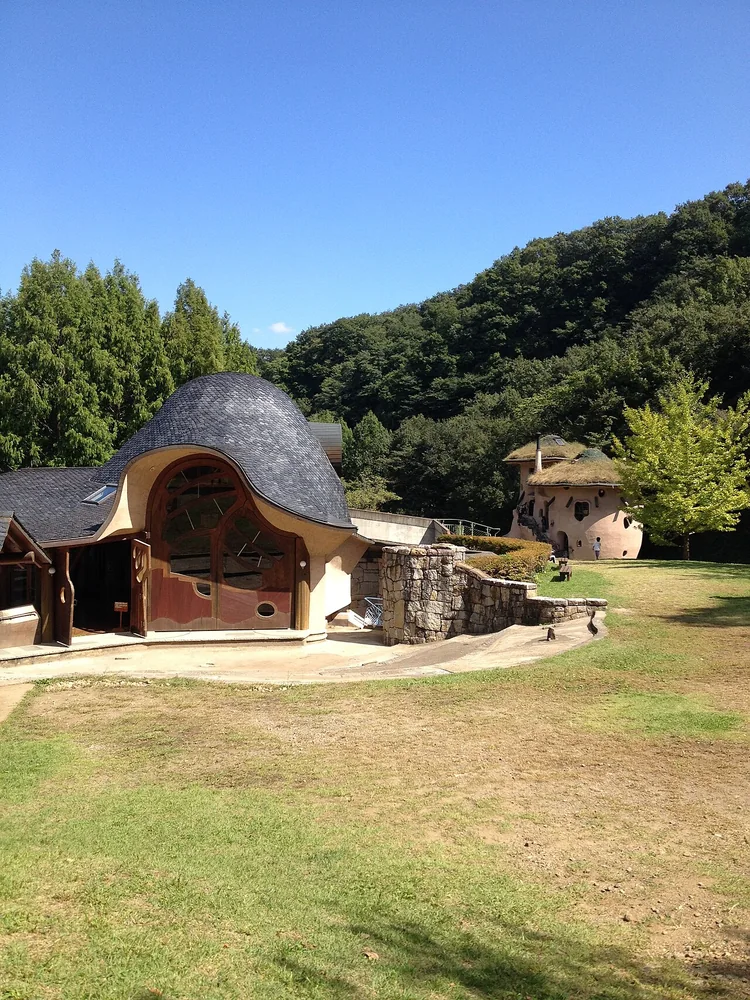
Moominvalley Park, “ムーミンバレーパーク” in Japanese, is in the Metsä complex at 327-6 Miyazawa, Hanno. Based on the Moomin novels, it offers exhibitions, performances and character-related content, with a ticket required for the theme park. In the same complex, Metsä Village (“メッツァビレッジ”) is a free-entry lakeside area of shops, food and activities, with individual purchases charged separately. Using only “free” and “Nordic” as location labels can confuse the Azu forest park with the free area beside Lake Miyazawa.
Choose according to what the children want to do. For exploring mushroom-shaped buildings, browsing books and looking at waterside architecture, give the time to the forest park. For Moomin story exhibitions, performances and characters, choose the theme park. If someone mainly wants lakeside food and Nordic shopping, Metsä Village can be a trip in its own right. The free forest park and Metsä’s free area do not adjoin: moving between them still requires travel across the city.
For a family day trip, first choose either the forest park or Lake Miyazawa. The former involves walking to and from Motokaji Station; Metsä involves a bus wait and a walk through the free area to the paid entrance. Consider changing sites on the same day only if everyone wants another journey and lunch and naps are arranged. For unhurried play inside the buildings, half a day in one place is easier.
Distinguish free Tove Jansson Akebono Children’s Forest Park from paid Moominvalley Park by Lake Miyazawa. Plan the walk from Motokaji, dawn redwoods, Mushroom House, breastfeeding facilities and lunch, with 2026 opening-day and illumination changes.
Dawn redwood colours: keep late November for a daytime visit
The trees called “メタセコイア” or “アケボノスギ” by the park are dawn redwoods. Rows of these trees against irregular roofs give the park its autumn character. Look separately at the crowns, trunks and fallen leaves rather than expecting a mass of bright red maples. The park FAQ gives late November to early December as the usual viewing period, a useful window for a late-autumn walk near Tokyo.
The city’s autumn-colour page puts the usual peak around late November. Its displayed autumn photographs were taken in late November 2025. Use that page and the park’s official social-media images to assess the season’s trees. Choosing a date with colour already showing, or accepting buildings among green trees, gives more flexibility than tying a booking to one fully coloured day.
With young children, visit the main buildings in the morning and go outdoors after lunch. Use their fresher hours for taking shoes off, stairs and quiet reading. If they tire in the afternoon, a short dawn-redwood and pond walk can complete the visit. Adults keen on photography can leave trees near the entrance until departure rather than asking children to wait through every composition on arrival. The park warns that autumn brings crowds, and occupying one photo spot for a long time obstructs others. Adults can take turns accompanying children and taking pictures. Let people pass through narrow paths first, and do not ask children to step backwards towards the pond or block building entrances. Compare light and leaf colour at leisure, but stay on open paths. Closed slopes and spaces beyond ropes are outside the photography route.
The 2026 opening trial: buildings close half an hour before the park
The opening system trialled from April 2026 divides the year into busy and quiet periods. From April to May, mid-September to December and late March, the park normally opens Tuesday to Sunday and closes Monday. If Monday is a public holiday, closure moves to a subsequent weekday.
From June to early September and January to mid-March, it normally opens Thursday to Sunday and closes Monday, Tuesday and Wednesday, with adjustments for holidays. It closes from 28 December to 4 January over New Year. Autumn mainly falls in the first group, but use the city’s opening calendar for weeks with public holidays.
The current park hours are 09:00–17:00, with final entry at 16:40. The Children’s Theatre, Mushroom House and Forest House open 09:00–16:30. If you arrive close to 16:30, the remaining visit is mainly a short outdoor walk, rather than a full sequence through all three interiors. Work back from the buildings’ 16:30 closure to choose your station arrival and walk.
Evening illuminations were suspended after 29 March 2026, and all current opening days end at 17:00. Older weekend and holiday night photographs show the architectural lighting, but this autumn visit needs a daytime return. An old plan of leaving Tokyo in the afternoon, eating and waiting for the lights now runs into closing time. Completing the walk by day also connects more easily to a Tokyo dinner booking.
In March 2026, the city also announced partial closures because of falling-tree and branch risks, with the area potentially expanding according to weather. Entrance notices, ropes and the day’s open paths define the route. Before adding a woodland side path, check that it is open. Build a half-day around the main buildings and accessible outdoor sections.
From Tokyo: alight at Motokaji and allow the final 20-minute walk
The most direct rail-and-walk approach to the free forest park is Motokaji Station on the Seibu Ikebukuro Line. Search for a Seibu journey from Ikebukuro to “元加治”, choose a service that stops there and allow the city’s stated walk of about 20 minutes. The station name is 元加治, pronounced Motokaji. Entering only Hanno produces a different station. Motokaji is in Iruma City and the park in Hanno City; the municipal boundary does not affect this walking connection.
Seibu’s Motokaji Station page links to weekday and holiday timetables in both directions. If you stay near Ikebukuro, finding a train to Motokaji is enough to start. From other Tokyo neighbourhoods, add the city journey to Ikebukuro or another Seibu interchange. For a morning family arrival, connect breakfast, the train and the station walk into one plan. The rail journey time does not end at the park.
The city’s 20 minutes is a walking reference. Actual family time depends on getting organised after the train, crossings, pace and water stops. For a child who has only recently learnt to walk, the station return is already a substantial distance. Avoid asking them to walk all the way there and then keep climbing stairs and woodland paths inside. A pushchair or adult support on the station leg can save energy for the more interesting park activities. Navigate using the formal park name and 893-1 Azu, then follow entrance signs locally. Return along the familiar route to Motokaji and use trains towards Tokorozawa and Ikebukuro. Landmarks seen on the outward walk can guide children back. Keep return trains within a flexible time window, allowing another book in Forest House without rushing for one ordinary service.
Cars, taxis and pushchairs: plan the final approach separately
The city’s access page puts Hanno and Higashi-Hanno stations about four kilometres from the park. With more baby equipment, or companions unable to complete the Motokaji walk, consider a taxi from either station and arrange collection separately. Treat the train and station-to-park journey as two legs. Give the Azu forest park as the destination, avoiding a loose Moomin nickname that could suggest the Lake Miyazawa theme park. Taxi charges follow the actual route, traffic and tariff conditions; budget the return fare separately.
Free parking is shared with Hanno Civic Gymnasium, the baseball ground and hockey ground. Azu Sports Park’s car park across the prefectural road is another option. These shared facilities have their own events, so use the open areas and follow staff directions. Crossing from the opposite car park and setting up a pushchair take time. With an infant, organise supplies and the pushchair after parking and include that in your arrival time.
The city lists about 20 minutes from either Sayama-Hidaka or Ome interchange on the Ken-O Expressway.
A road notice updated in February 2026 asked drivers arriving from Ome to detour because of widening works at Azu Gado. Read navigation estimates alongside the actual diversion and follow works signs near the park. If you have a fixed booking afterwards, allow for leaving the car park and the detour too.
The park explicitly says some areas are not accessible. Pushchairs can serve the station journey and passable outdoor sections, while interiors, floors and slopes need separate assessment. If you use a wheelchair throughout, tell park management your equipment and the buildings you want to enter to identify usable entrances. With two adults, let one check a building entrance before deciding whether to fold the pushchair and go in together. That is easier than managing a child, lifting equipment and removing shoes at once.
Give the Mushroom House time beyond the exterior photograph
“きのこの家” means Mushroom House, whose shape makes it the park’s easiest building to recognise. The official guide describes a ground-floor lounge with a fireplace and an upper floor with unusual spaces to explore. Look at the roof and windows outside, then find the corresponding angles within. Children can explore it as a space to move through, while adults compare the shell with its internal structure. There is no need to leave for the next building as soon as the exterior photo is taken.
Remove shoes before entering. Eating, drinking, running and loud voices are prohibited indoors. Easy-to-remove shoes and a drink before entry reduce doorway preparations; an extra pair of dry socks helps on wet, cold days. Stay where you can help children on stairs, and wait when someone approaches through a narrow section. Looking for windows, curves and views between floors lets children explore within the quiet-use rules.
Time spent inside varies widely. Some children want another level immediately; others prefer the exterior and head outdoors after one circuit. Leave a block of time without a performance deadline and let their response decide. If you have also planned Forest House and the Children’s Theatre, keep one for the afternoon.
Hanno City’s daytime park introduction, released in 2018, provides a first look at the main buildings and layout.
Forest House and the Children’s Theatre: reading, buildings and baby care
Forest House (“森の家”) has material about Tove Jansson on its ground floor and a freely accessible reading area upstairs. It uses local Nishikawa timber, with hinoki cypress logs and undulating walls highlighted in the official description. For children who enjoy stories, make it the quiet part of the walk. Visitors unfamiliar with the author can start with her connection to the park, then look again at the outdoor buildings among the trees.
The park opened in 1997. The city describes correspondence with Tove Jansson during its development. That background helps explain a public park in Saitama conceived around Nordic stories and space for free interaction. A family visit need not become a lesson in the author’s life. Begin with a book, house or illustration already seen, and pause wherever interest develops. Reading and exploration can expand naturally with your companions’ ages.
The Children’s Theatre (“子ども劇場”) is a hall used for concerts and other events. Its roof uses hinoki logs from trees more than 100 years old, with windows and lights offering further details to notice. The lower level has the management office, toilets and a cave-like space where the official guide says pond water can be heard. Enjoy the building during a walk; follow park event announcements for concerts and other performances.
A breastfeeding room is inside the theatre hall. It is normally locked for management purposes, so ask at the lower-level office before use. Hall events may make it temporarily unavailable. The city’s building page, updated in January 2026, says shoes must be removed for the lower-level toilets, while the ground-floor (1F) accessible toilet can be used with shoes on. The lower-level accessible toilet has a changing table. Locate the office and usable toilets on arrival with a baby, avoiding a search between buildings when care is needed.
Keep children’s movement clear beside the water and in the woods
The park’s sloping terrain is one reason it restricts play equipment. Prohibited items include balls, rackets and bats, balance bikes, tricycles, scooters, bicycles, skipping ropes, sledges, flying discs, remote-controlled toys and drones. Tents, freestanding sun umbrellas and tarps are also prohibited. Pack for a day observing buildings, trees and water, without a bag of toys that cannot be used. If a child usually travels on a balance bike, use a pushchair or walking for the station leg. Beside ponds and streams, look at reflections, listen and observe wildlife. Capturing creatures, including crayfish fishing, is prohibited. Watch together from open paths, let children describe movements and colours, then look in books afterwards. Leave nets behind and do not use bait to draw animals close. Hold young children through narrow places, slopes and waterside sections, then stop in a wider space.
The woods contain bees and snakes. Wear stable footwear and stay within open areas. When leaves conceal the ground, adults can check foot placement before children follow. After rain, reduce routes over slopes and slippery ground. In strong wind, thunderstorms or expanded closures, follow park directions to shelter or leave and stop the woodland walk.
With siblings of different ages, divide activities practically. One adult can remain with a toddler in an open area that is easier to supervise, while another takes a child who walks steadily to a building or short path, meeting at an agreed building. With fewer adults, choose a range that the youngest child can manage too.
Lunch: a packed meal or Cafe PUISTO
You may bring packed meals and drinks to outdoor benches and open spaces. In rain, use the “あずまや”, or shelter, beside the Children’s Theatre. Food and drink are prohibited inside Mushroom House, Forest House and the theatre. Fires, barbecues and cooking stoves are also prohibited in the park. Packed meals suit fixed eating times or specific ingredient needs. Prepare ready-to-eat food before arrival and return to indoor activities afterwards.
Cafe PUISTO (“カフェプイスト”) is inside the park; puisto means park in Finnish. The city describes blue exterior walls, a children’s space and children’s meals. It suits visitors wanting an indoor meal as a rest. If you like the architecture, eat after exploring outdoors and Mushroom House, giving children a seated break while adults continue looking at the Nordic-inspired design from the windows or outside.
The café is separate spending from free park entry. Order from the day’s menu and availability. Ask the café directly about allergies or ingredient restrictions. If lunch must be on time, a suitable packed meal is usually easier to manage than relying on a queue. You do not need a full main meal from both options. Choose the main method, leaving the other for a drink or snack.
There are no rubbish bins or coin lockers. Take away meal boxes, wrappers and drink containers, packing clean and used items in separate bags. Bring only luggage you can carry throughout. On a hotel-change day, store large cases before visiting so they do not take up space when removing shoes, using stairs or handling a pushchair. These facilities suit a light day trip from your Tokyo accommodation base.
Three to four hours makes a complete family half-day
Allow about three to four hours inside the park for a family half-day. On a morning arrival, read entrance notices and open-area information, then find the Children’s Theatre, office and toilets. Visit the Mushroom House if that most interests the children, leaving free exploration time. If they do not want to go indoors immediately, begin with an open outdoor path and let a building become the next destination naturally. Include either Forest House or the theatre in the middle, followed by lunch. Keen readers can give Forest House more time; deal with feeding or changing needs before deciding the remaining route. After lunch, see dawn redwoods, the pond and building exteriors still unvisited. Finish when children begin needing to be carried, saving energy for the station walk.
With only two hours, keep Mushroom House, one quiet building and a short outdoor section, moving the main meal before or after the visit. With longer, read more books or revisit a favourite building instead of adding another attraction across town. Adult photography, children’s play and everyone’s meals run at different speeds; half a day in one place lets them take turns. For an afternoon arrival, enter buildings first and treat 16:30 as the end of indoor visits. The late-autumn evening walk to Motokaji is part of the return journey. Use toilets, drink and put coats on before leaving the park rather than searching for space outside. A dinner near your Tokyo accommodation reduces another move if children fall asleep on the train.
For playground equipment, allow separate time at nearby Azu Sports Park
If children prefer climbing and playground equipment to buildings, Azu Sports Park can come before or after the forest park. Hanno City’s children’s park information lists a children’s square, play equipment, toilets and parking there. It is a separate park with its own activity spaces. Check what children most want to use, then shorten the forest park’s reading time or leave play equipment until afterwards, fitting different interests into the half-day.
Follow entrance and road signs between the parks, with adults accompanying children across the prefectural road. Around grounds and the gymnasium, distinguish public routes from sports areas in use; do not cut through an active game. Azu’s equipment meets the need for more physical play, leaving the forest park’s water and buildings for walking. Keeping these stages separate avoids bringing prohibited balls or balance bikes into the forest grounds.
With limited time, retain one place the children truly enjoy. After an absorbed morning at Azu, reduce the forest park to Mushroom House and a short redwood walk. After a long indoor exploration, you can simply return to Motokaji. Their proximity lets you adjust the type of activity to the day’s energy while keeping naps, packed meals and the return rhythm intact.
For Moomin characters, choose Lake Miyazawa directly
If children keep talking about Moomin characters, performances or story scenes before departure, paid Moominvalley Park better serves that purpose. The official main public-transport route is a bus from Hanno Station’s north exit to Metsä. The FAQ lists stop 1 and about 20 minutes on the bus. After alighting at “メッツァ”, allow about 15 minutes through Metsä Village to the theme-park entrance. Include that internal walk in the children’s day.
The official price page lists standard one-day adult tickets at ¥3,900 in advance or ¥4,300 on the day. Children aged four through senior-high-school age pay ¥1,000 in advance or ¥1,300 on the day; ages three and under enter free. Online and convenience-store advance tickets must be bought by the previous day. Same-day tickets are purchased on site. Two adults and one eligible child total ¥8,800 in advance or ¥9,900 on the day, plus transport, meals and purchases. These totals help decide whether to give the theme park a full day rather than buying entry merely to see one building. The standard one-day ticket on Asoview currently linked from the official website has a cancellation fee of 100% of the ticket price from the day of use.
The free Metsä Village area allows packed meals in open outdoor spaces. The paid park generally prohibits visitors’ own food and drink, but allows water flasks and plastic bottles for hydration, and food and drink purchased in Metsä Village. Baby food may be taken into restaurants to eat with companions; tell staff on arrival. The forest park’s packed-lunch approach cannot be transferred unchanged through the paid entrance. Conversely, families wanting only a lakeside walk and lunch can stay in Metsä Village, putting the ticket budget towards food and activities they will actually use.
Metsä also has a different parking system. Ordinary cars currently cost ¥1,000 per weekday, with stays of up to two hours free, or ¥1,500 on weekends, public holidays and dates designated by the operator. There are no reservations; payment is on site. During periods such as Golden Week, the holiday rate may apply every day; use the official parking calendar for the applicable dates. Calculate this separately from the forest park’s shared free parking. Visiting both adds a second cross-city journey and parking to the transport budget.
Adjustments for rain, dogs and photography
In light rain, prioritise Mushroom House and Forest House, but remember that the links between buildings and the station return remain outdoors. Carry pushchair covers, spare children’s clothes and adult rainwear that can be put away quickly at entrances. As food is prohibited inside buildings, use the designated shelter if you want a packed lunch under cover. With persistent heavy rain, strong wind or a child needing to be carried all the way, move the forest park to another opening day and choose indoor activities in Tokyo.
Dogs may enter on a short lead held and controlled by the owner, but pets cannot enter buildings. With children and a pet, Mushroom House, displays and the breastfeeding room require adults to split up: one stays outdoors with the animal while another accompanies the children inside. A single adult managing both should plan an outdoor walk. This rule directly affects building access, so resolve it when deciding who will come.
Personal and family souvenir photography needs no advance application. The park prohibits shoots that occupy space or exclude other visitors and asks people not to change clothes or apply make-up in the park or toilets. Photography or filming as a business requires a park activity permit from Hanno City’s maintenance management department. Take family photographs briefly without obstructing passage. For commercial work, put permission and copyright arrangements into production preparation as a separate process.
The park does not rent buildings or facilities for events and holds only its own events. For an autumn birthday gathering, photography class or family group activity, explain the intended use to management first. An ordinary group reservation coordinates visitor numbers and time; it does not let you occupy a building or ask other visitors to leave. Resolve this before inviting other families, as it affects cakes, equipment and meeting arrangements.
For group use, including schools, clubs and tours, the park requires advance booking with the office, providing the group name, numbers, date and contact details. Families arriving separately with friends can choose a clear meeting point near the Children’s Theatre while retaining each family’s meal and care time.
A few useful answers
Are Hanno’s children’s forest park and Moominvalley Park the same place?
They are separate. The free forest park is at 893-1 Azu, Hanno, about 20 minutes on foot from Motokaji Station. Paid Moominvalley Park is in Metsä at 327-6 Miyazawa, normally reached by bus from Hanno Station’s north exit. Metsä also has the free lakeside Metsä Village area.
Can I stay for the forest park’s illuminations in autumn 2026?
Evening illuminations were suspended on 29 March 2026. Current opening days end at 17:00. The three main buildings close at 16:30, and final park entry is 16:40.
Is there a breastfeeding room for babies?
A room is inside the Children’s Theatre hall. Ask at the lower-level management office before use, as it is normally locked. Hall use may affect availability. The lower-level accessible toilet has a changing table.
Can I bring a packed lunch, tent and balance bike?
Packed meals may be eaten on outdoor benches or in open spaces, with the shelter beside the Children’s Theatre available in rain. Food and drink are prohibited inside Mushroom House, Forest House and the theatre. Tents, balance bikes, bicycles, balls and other specified play equipment are prohibited for use in the park, as are fires.
Official information and references
Sources used in this guide.
- Hanno City | About Tove Jansson Akebono Children’s Forest Park
- Hanno City | Guide to the park’s buildings
- Hanno City | Tove Jansson Akebono Children’s Forest Park FAQ
- Hanno City | Tove Jansson Akebono Children’s Forest Park visitor guide
- Hanno City | Tove Jansson Akebono Children’s Forest Park access
- Hanno City | Trial changes to park opening days and hours
- Hanno City | Partial area closures
- Hanno City | Road information: Azu Gado widening project
- Hanno City | Dawn redwood autumn-colour information
- Hanno City | Personal photography and filming at the forest park
- Seibu Railway | Motokaji Station
- Metsä official | Moominvalley Park and Metsä Village prices
- Metsä official | Moominvalley Park and Metsä Village FAQ
- Metsä official | Moominvalley Park and Metsä Village access
- Hanno City | Children’s play areas and parks