Take the Odakyu Line from Shinjuku to Noborito and catch the character shuttle bus to the Kawasaki Fujiko F. Fujio Museum. Covers twice-monthly ticket drops, seven entry slots, multilingual audio guides, original manga artwork, the F Theatre, and the 3F cafe, with rainy-day and late-entry family itineraries.
- Region & Focus
- KantoFamily attractions
- Reading Scope
- 17 min read · 8 chapters · 6 Q&As
- Official Verification
- 24 official sources checkedUpdated 22 November 2026
- Key Topics
- BookingRail travelItineraries
Chapter Route Map (tap any stop)
- Tickets drop on the 5th and 20th each month for one-hour entry windows
- Shinjuku to Noborito: follow 2112 to the character shuttle bus
- Start with first-floor originals and scan QR codes to hear the artwork speak
- Sit down for the F Theatre on the second floor, then browse a manga
- Pump up Handsome Gian, then head up to the rooftop pipes and Anywhere Door
- Third-floor cafe queue and Memory Bread: check your ticket number before planning
- Allow half a day on your first visit—what to trim for rain or late entry
- Pushchairs, lockers, and getting home: free up your hands first
- Quick Q&A
If you are taking children out from Tokyo to see Doraemon, book your date and entry slot at the Kawasaki Fujiko F. Fujio Museum first—there is no ticket box office at the door. Ride the Odakyu Line from Shinjuku to Noborito, then board the character shuttle bus from the Ikuta-Ryokuchi Exit. For a first visit, pick the 10:00 or 11:00 entry slot and allow half a day to study the original hand-drawn manga pages, watch a short film, and step through the Anywhere Door on the rooftop. If Memory Bread is top of your list, head straight up to check the queue at the third-floor cafe as soon as you arrive.
Tickets drop on the 5th and 20th each month for one-hour entry windows
Start by picking two dates in your itinerary from the museum's opening calendar, then work out when each goes on sale. At 10:00 JST on the 5th of each month, tickets open for the 16th through the end of that month; at 10:00 JST on the 20th, they open for the 1st through the 15th of the following month. Set an alarm ahead of 10:00 JST in your local time zone. For a 12 December visit, booking opens on 20 November; for 19 December, you wait until 5 December. The same rule applies across the new year: dates in the first half of January go on sale on 20 December. Over public holidays, keep your second date pencilled in so you have an immediate backup if your first slot sells out.
The museum usually opens from 10:00 to 18:00 and closes on Tuesdays and over the New Year period, though it occasionally opens on selected Tuesdays. Closed days are marked with grey dots on the official calendar: in late 2026 and early 2027, Tuesday 1 December 2026 is open, while the museum is closed from 29 December 2026 to 3 January 2027 and again from 18 to 22 January 2027. Check your dates on the official opening calendar before opening the booking page. Both closed days and sold-out dates appear unclickable, so checking the calendar first tells you whether to wait for the next release, switch time slots, or pick another day.
Select your date, entry window, and ticket types on the official e-tix ticket page (if a slot reads sold out on the Japanese site, it has reached capacity). Admission is ¥1,000 for adults and university students, ¥700 for junior and senior high school students, ¥500 for children aged 4 and over, and free for children aged 3 and under. Two adults with an 8-year-old pay ¥2,500 in total; if a 3-year-old sibling comes along, you still only buy three tickets. Visitors holding an eligible Japanese disability certificate and one accompanying carer each need a free timed reservation and must show valid documentation on entry; the ticketing site notes that overseas-issued disability certificates do not qualify.
Credit-card QR e-tickets carry no booking fee. The site accepts Visa, Mastercard, JCB, and American Express, and may trigger 3D Secure verification. Once you select your tickets, you have 15 minutes to complete checkout, so keep your authentication phone and email inbox ready. After payment, open every individual QR code from the confirmation email or print the full tickets out. If you are entering with two children, load the entire booking beforehand and swipe through each ticket in turn rather than hunting through emails at the door. You can also pay and collect paper tickets at 7-Eleven stores in Japan for an extra ¥150 per ticket plus ¥220 per order, though overseas travellers wanting confirmed seats before flying will find the credit-card e-ticket far simpler.
If a date looks open on release morning but the next screen lacks enough tickets for your group, return to the main booking page and try another entry window. Before tickets drop, assign one adult to handle the card verification and confirmation email while the other double-checks dates, children's ages, and train times. Star the confirmation email once paid and reopen the ticket link before leaving your hotel—staff scan either the original QR code on screen or a full printout. If friends or relatives are travelling separately, confirm exactly which tickets each party holds before anyone sets off.
A 13:00 ticket lets you enter between 13:00 and 14:00; if you arrive early, you wait until 13:00, and once inside you may stay until closing at 18:00. When same-day capacity remains, tickets stay on sale online until 45 minutes into each entry window—for instance, the 14:00 slot can be bought until 14:45, with entry closing at 15:00. If you are still in Shinjuku, booking the next open slot beats rushing for a cutoff. Credit-card e-tickets can be cancelled as a whole order up to three days before the entry start time (for a Saturday 11:00 slot, the deadline is Wednesday 10:59 JST) before rebooking, whereas 7-Eleven tickets cannot be cancelled or changed once paid and collected. In cases of sudden illness, severe weather, or transport disruption, contact the museum before your scheduled entry time to ask about rescheduling.
| Entry Slot | Arrival Window | Best Fit for Your Day |
|---|---|---|
| 10:00 | 10:00–11:00 | Browse the galleries and take photos, then stay for lunch |
| 11:00 | 11:00–12:00 | On weekdays the cafe is already open, so check the queue on arrival |
| 12:00 | 12:00–13:00 | Midday entry; decide upfront whether to eat inside or beforehand |
| 13:00 | 13:00–14:00 | Keep the morning in central Tokyo and have lunch before entering |
| 14:00 | 14:00–15:00 | Prioritise the theatre, original art, and rooftop; treat the cafe as optional |
| 15:00 | 15:00–16:00 | Check rooftop daylight immediately if outdoor photos matter most |
| 16:00 | 16:00–17:00 | Museum closes at 18:00, so pick your top two stops straight away |
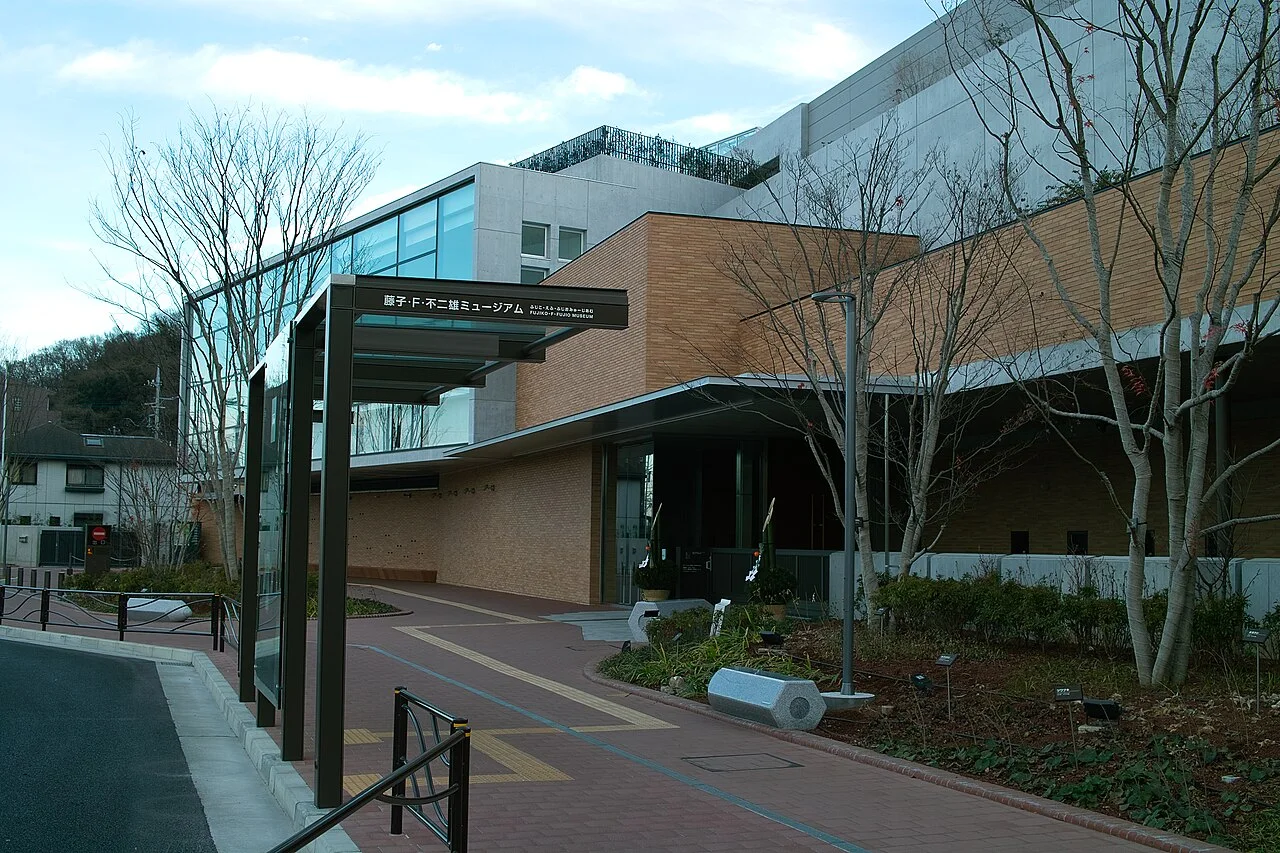
Take the Odakyu Line from Shinjuku to Noborito and catch the character shuttle bus to the Kawasaki Fujiko F. Fujio Museum. Covers twice-monthly ticket drops, seven entry slots, multilingual audio guides, original manga artwork, the F Theatre, and the 3F cafe, with rainy-day and late-entry family itineraries.
Shinjuku to Noborito: follow 2112 to the character shuttle bus
From Shinjuku, tap through the Odakyu Line ticket barriers and board a southbound Odawara Line train that stops at Noborito. Both Rapid Express and Express services call at Noborito; if the platform indicator shows a Rapid Express, glance at the stopping pattern to confirm. If family members are arriving in Shinjuku on JR lines, meet outside the Odakyu gates before tapping in together. The museum lists the fastest Odakyu run from Shinjuku to Noborito at roughly 15 minutes, which covers train time only—allow extra minutes from your hotel for walking through Shinjuku Station, waiting for a train, and transferring to the bus.
The Odakyu concourse at Noborito Station features Doraemon artwork, giving children characters to spot while you follow the signs. Exit the barriers towards JR Noborito Station's Ikuta-Ryokuchi Exit and head down to the ground-level bus roundabout. Kawasaki City Bus operates the direct museum shuttle from Stop 3, signed for the Fujiko F. Fujio Museum. Express buses to Ikuta Ryokuchi share the same stop, so if primary-schoolers want to help spot the right bus, ask them to match the museum name on the stop sign with the destination board on the front of the bus. Several routes queue around the roundabout, so check the stop number rather than joining the longest line.
If you arrive early, pause around the Odakyu gates to see the Doraemon and Nobita displays. Character details also appear along the stairs, escalator walls, and waiting-room benches, so children can hunt for yellow bells on the way out. Young kids often stop dead just past the ticket gates to point, so step clear of the main footfall before taking photos. You can enjoy all of this during the transfer without catching an extra-early bus just to stand outside the museum gates.
Direct museum shuttle buses run roughly every 10–15 minutes on opening days and take about 9 minutes. Single fares are ¥220 for adults and ¥110 for children, payable in cash or with a transport IC card such as Suica or PASMO. Standard return bus fares for two adults and an 8-year-old come to ¥1,100, separate from Odakyu rail fares. Give children with a child IC card their own card to tap, and keep yours in an easy-to-reach pocket. On weekends and holidays, an earlier bus may fill up, so build a one-bus buffer into your schedule: for a 10:00 entry, aiming to reach Noborito around 09:45 keeps the transfer relaxed.
Look out for the number plate 2112 on the buses, a nod to Doraemon's fictional birth year (3 September 2112). Kawasaki City Bus runs four themed liveries: Doraemon, Dorami, Korosuke, and Chimpui. Spot which character is painted on the outside while queueing, then look for matching patterns on the seat fabric, grab straps, and stop buttons once aboard. Riding a different bus back gives children a game of comparing the stop buttons. Have them look around from their seats before your stop, and wait until the bus pulls to a complete halt before standing up with a camera.
If you prefer to walk, the museum is about 16 minutes on foot from the South Exit of Mukoogaoka-Yuen Station on the Odakyu Line, or about 15 minutes from Shukugawara Station on the JR Nambu Line; set your map pin to 2-8-1 Nagao, Tama-ku, Kawasaki before setting off. Travellers staying in Tokyo who want the character bus on the way in but shorter queues on the way out can ride the shuttle from Noborito and walk to Mukoogaoka-Yuen for the return Odakyu train. With children who tire easily, wait outside the museum entrance for the return bus signed for Noborito Station. If you have a timed dinner reservation later, check the weekday or weekend return columns on the official museum bus timetable and work backwards to leave time for the shop and lockers.
Start with first-floor originals and scan QR codes to hear the artwork speak
Once your tickets are scanned at reception, keep the F Theatre passes handed to you by staff somewhere handy—you only show them when entering the cinema. For audio commentary on the original drawings, scan the QR code at reception or the gallery entrance on your smartphone or tablet and enter the daily passcode displayed on the sign. The passcode changes each day, so snap a photo of the sign or enter it at the door before looking for the speech-bubble numbers beside each display case. Commentary is available in Japanese, English, Chinese, and Korean, with on-screen text for visitors who prefer reading. It is free to use on the museum's Wi-Fi; bring earphones if you want to listen as you walk.
In earlier years, the museum's handheld audio devices featured a Japanese children's track voiced by Doraemon and Nobita alongside character-led quizzes. Children without their own phone or tablet can ask staff at the entrance to borrow a dedicated guide unit. Younger English-speaking visitors can select the English commentary and tap the display numbers for the whole family. On this floor, let children pick two numbers—one beside a colour illustration and one by the creator's desk—then ask them what extra detail they spotted in the drawing so the audio leads their eyes straight back to the page.
Exhibition Room I on the first floor makes the clearest starting point. One wall showcases full-colour illustrations while the opposite wall displays complete sequential manga pages. Whereas a cover packs characters and gadgets into one frame, the manga panels break a gag into beats—a hand reaching out, an object vanishing, a startled expression. Ask your child to point to a favourite panel, look at the frames before and after it, and guess what happened from the characters' faces. Adults wanting longer to read the brushwork can arrange to meet the rest of the family at the next display panel rather than crowding one case.
Move on to the creator's study, where Fujiko F. Fujio's drawing desk sits beneath towering bookshelves and dinosaur models. Once children spot the dinosaurs, ask how big they would draw one on paper and how long a ruler they would need for its tail. For kids who mostly know the television anime, this room links the stories back to the original pages—all those reference books and curios around the desk supplied real-world objects that slipped straight into the comics.
Upstairs on the second floor, the Animal Room leads into Exhibition Room II, with three-dimensional animal sculptures inspired by Fujiko's paper cutouts and an Anywhere Door marking the entrance to the special exhibition. Through 17 January 2027, the first part of the 15th Anniversary Original Artwork Exhibition focuses on wish-granting secret gadgets, highlighting pieces such as The Birth of Doraemon, a cup that shrinks or enlarges whatever goes inside, and the story of a snowman taking on part-time work. The second part is scheduled from 23 January to 20 June 2027, so factor in the mid-January closure for the exhibition changeover if a specific piece is on your must-see list.
Under rules effective from 1 July 2026, non-flash still photography is permitted where signed in reception, Exhibition Room I, the History Corridor, the study, and the Animal Room, while exhibits marked with no-photo icons must stay camera-free. In Exhibition Room II, photography is restricted to the entrance area, and the Sunday gallery zone does not allow photos. Flash, video recording, selfie sticks, and tripods are prohibited throughout the galleries. For an easy keepsake portrait, frame the giant speech-bubble backdrop at the Exhibition Room II entrance, then pop your earphones back in for the drawings inside.
Sit down for the F Theatre on the second floor, then browse a manga
The F Theatre sits on the second floor, and the pass issued at entry admits you to one screening. The first show starts at 10:20, with screenings running every 20 minutes thereafter. When you step out of the galleries, check the next showtime and queue outside the theatre doors—your timed entry ticket does not lock you into a specific screening. If you are enjoying the original pages, finish the gallery first; if children are flagging, catch the next film before heading out to the rooftop so everyone can rest their legs. Visitors needing free captioning glasses should register with staff upon entry, as allocation is first come, first served.
For November 2026, the programme lists Doraemon and F-Character All-Stars: Secret Gadget Topsy-Turvy Adventure, in which characters gathered at a party receive a gamebook, pair up inside, and trade coins for gadgets. Even children who only recognise Doraemon can follow who teams up with whom and which gadget clears each obstacle. If younger kids tend to get fidgety, ask them beforehand to remember their favourite gadget to tell you afterwards—no photography or filming is allowed inside the cinema, so save the chat for the exit.
Nearby in Minna no Hiroba, the manga reading corner greets visitors with a statue of Doraemon munching dorayaki over a comic book. It is a great spot for primary-schoolers to pull a volume off the shelf; even if they do not read Japanese, flip to an expressive page and take turns inventing a line for each speech bubble. You can dip in for five minutes while waiting for your cafe number, or shelter here if a sudden shower hits the rooftop. Return each volume to the shelf when you finish, then decide whether to check the capsule-toy machines beside the lounge.
Just off the plaza sits the Kids Space, decorated with motifs from Elephant and Squirrel and stocked with picture books for preschoolers accompanied by an adult. If you are visiting with children of very different ages, one adult can stay in the picture-book corner with a toddler while the other reads manga with an older child, meeting back by the dorayaki-eating Doraemon. Solo parents can base everyone in the manga corner first, step into the toddler area when the youngest is ready, and head straight from the same floor to the theatre.
Pump up Handsome Gian, then head up to the rooftop pipes and Anywhere Door
On dry days, start on the second floor at the Woodcutter's Spring, where a handsome version of Gian rises out of the water. Position one adult where both Gian and the child fit in the frame while the child pumps the handle up and down; if small hands struggle with the lever, swap so the adult pumps and the child waits for Gian's face to appear. With two adults, one can steady a toddler while the other shoots, without leaving rucksacks in the queue. To show kids why Gian has a different face, find Volume 36 of the Japanese manga in the second-floor reading corner beforehand and let them see the original expressions.
Climb to the third-floor rooftop lawn, Harappa, and head first for the stack of three concrete pipes. Crouch low to frame a child's face inside one of the lower pipes, then step back for a wider shot showing the lawn and the whole stack. Children may step inside the lower pipes, though climbing onto the top pipe is off limits; adults shooting from ground level can capture plenty of comic-book poses without anyone climbing. If another child is peeking out of the opposite end, wait a beat for them to move on so your child can spot you clearly through the lens.
At the pink Anywhere Door, ask your child where they want to open the door to before stepping in. Stand back far enough to keep the full doorframe in view so the shot shows a lone pink door standing out in the open. For variety, take one photo gripping the handle and a second stepping across the threshold. From there, walk over to Pisuke, the dinosaur from Doraemon: Nobita's Dinosaur—after seeing the desk models downstairs, children can compare what fits on an artist's table with a life-sized outdoor character.
If children want to linger at every stop, try the free smartphone stamp rally launched on the rooftop from July 2026: scan the event QR code inside the museum, hunt down hidden gadgets across Harappa, and snap the prompted photos to unlock digital wallpaper. Family members can split up to search different corners and call each other over, or share one phone by letting the child scout while the adult shoots before swapping roles at the next spot. If rain rolls in or your next slot is approaching, pick either the pipes or the Anywhere Door rather than rushing everyone around under umbrellas.
In November 2026, you can also include the rooftop crystal tree and the tall second-floor window decorations in your shots. During the autumn-winter season, the museum places a large Christmas tree in Minna no Hiroba, while the lighting on the third-floor rooftop comes into its own after dusk. If you want bright daytime colour on the Anywhere Door, take that photo early on and glance back from the same floor before leaving to catch the illuminated tree. The third-floor cafe also sells takeaway hot drinks for the rooftop—hot lemonade and royal milk tea at ¥500 each—worth picking up after photos to warm cold hands.
When outdoor photos are your priority, gauge afternoon light as soon as you arrive and, in winter, head upstairs straight after entry. If a queue builds at one photo spot, start at whichever sculpture is empty rather than insisting on Woodcutter's Spring, pipes, and Anywhere Door in strict order. If a child wants a picture of a statue without being in it, hand them the role of photographer while you stand at the edge of the lawn, then clear the spot promptly for the next family before wandering across the terrace.
Third-floor cafe queue and Memory Bread: check your ticket number before planning
If you plan to eat lunch inside the museum, walk straight up to the third-floor cafe entrance after arrival. When a numbered ticketing system is active at the door, take a queue ticket and check which number is currently being called. Stay on the third floor if only a few parties are ahead of you, or step outside onto the adjacent rooftop for photos while you wait. If your number is still a way off as the next F Theatre screening nears, push your film back by 20 minutes. The cafe opens at 11:00 on weekdays and 10:00 on weekends and holidays, closing at 18:00 with last orders at 17:30—with a 10:00 weekday entry, explore the first-floor galleries until opening, whereas weekend visitors can turn straight towards the cafe.
On the menu, French Toast de Ankipan—Memory Bread—costs ¥1,200. In the story, Nobita presses textbook pages onto slices of bread and memorises whatever he eats, so children who know that episode will immediately understand why you photograph the printed letters face up. It arrives with vanilla ice cream and chocolate sauce, easy to share onto side plates once everyone has taken their shot. For a Doraemon-themed dessert, the Dorayaki Sundae is ¥1,600, topped with a dorayaki pancake and a Doraemon wagashi sweet, while cafe lattes and hot chocolates at ¥750 come with surprise character latte art.
If you are using the cafe as a proper lunch stop, check the main-dish portions before adding sweets. The menu lists Gian's Katsudon (pork cutlet rice bowl) at ¥1,800 with miso soup and pickles, and a giant 15th-anniversary Doraemon Curry with ears at ¥2,600, marked as serving two to three. Families with mixed appetites will find one katsudon plus a plate of Memory Bread French toast easiest to divide; the big curry works well for groups keen to share one dish and spot the ears on arrival. Mains and desserts can be ordered separately, so show everyone the menu photos before choosing.
If the cafe wait is too long or you would rather eat a full meal back around Noborito, step next door to Fujiko-ya on the same floor for Memory Bread rusks (¥1,280 for a box of six) and packaged dorayaki. For something cold you can eat straight on the terrace, look for the Harappa de Ice Milk, whose wrapper features a cut-out door window. The cafe's French toast and Fujiko-ya's rusks riff on the same gadget with completely different textures, so picking one frees up more time for the rooftop.
Outside food and drinks are not permitted inside the museum, except for baby food. You may bring water bottles or capped PET bottles, though you should step to the designated areas staff indicate before drinking. The museum notes that cafe menus list allergens and advises visitors with strict dietary needs who must bring their own food to contact the museum in advance about exceptions. If anyone in your group needs lunch on a strict schedule, decide before leaving your hotel whether to eat near Noborito first or commit to the cafe early—re-entry is not allowed, so stepping out for lunch forfeits returning on the same ticket.
Allow half a day on your first visit—what to trim for rain or late entry
Budget half a day for the round trip from Tokyo, including roughly three hours inside the museum—longer if you want a sit-down meal or have keen young manga readers. On a sunny 10:00 entry, handle the cafe queue and rooftop photos first, drop down to the second-floor F Theatre, and finish with the original artwork. If your group cares most about the drawings, stroll slowly from the first floor up to the second until legs get tired, then rest at the theatre and reading corner. Keep any timed evening attraction back in Tokyo for later in the day so cafe waits and the return transfer never feel rushed.
With a 16:00 entry ticket, aim to walk in soon after 16:00. Focus on first-floor original artwork and one second-floor screening for a crisp two-hour circuit, or let photo-keen primary-schoolers head straight up to the Anywhere Door before catching the next cinema slot on the second floor. Remember that cafe last orders are at 17:30: if Memory Bread is non-negotiable, take your queue ticket before touring the galleries rather than debating food after shopping. Leave the first-floor museum shop for the end, agree upfront on one item per child and which aisle to browse first, and keep an eye on the clock for checkout.
If it rains, spend the bulk of your visit in the permanent gallery on the first floor, the special exhibition on the second, the F Theatre, and the manga lounge. Swap the outdoor Anywhere Door shot for the giant speech bubble at the Exhibition Room II entrance and the reading Doraemon statue in Minna no Hiroba. Treat the third-floor terrace as a bonus if the rain clears—even a quick dash to the pipes and Anywhere Door is enough. In winter, keep coats on hand or with another adult so you can slip them off comfortably once inside the heated galleries.
Parents visiting only with primary-schoolers can hand children small jobs—spotting the 2112 bus plate, picking a favourite manga page, and choosing where the Anywhere Door leads—while families with toddlers should pad the schedule for nappy changes and baby food. If two adults want to take turns reading through the sequential pages on the first floor without rushing, agree to regroup at the entrance of that gallery. Anyone in your party who dislikes crowds can wait along the side of the walkway while others queue for photos, meeting back at a named gallery rather than blocking stairs or doorways.
If children still have energy at the end, take the shuttle bus on the way in and walk to Mukoogaoka-Yuen Station on the way out; if you are carrying shopping bags, it is dark, or shoes are damp, taking the bus back to Noborito saves effort. Back on the Odakyu platform at Noborito, ask everyone which secret gadget they would borrow first—letting two children pick the Anywhere Door and Memory Bread while the adults name theirs carries the museum story all the way back to Shinjuku.
| Situation | Do First | Keep Flexible |
|---|---|---|
| Sunny day, photos top priority | 2F Woodcutter's Spring and 3F rooftop | F Theatre, original art, Fujiko-ya |
| Using the cafe for lunch | Take a 3F cafe queue ticket and browse that floor | Slot galleries and theatre around your ticket number |
| Rainy day or visiting with a toddler | 1F original art, 2F F Theatre, and reading corner | Check rooftop only if rain clears; nursing room is on 2F |
| Booked into the final 16:00 entry slot | Pick either the rooftop or original art first, then F Theatre | Decide early between the cafe and the gift shop |
Pushchairs, lockers, and getting home: free up your hands first
You can bring a pushchair on the train and bus, but once inside the museum it must be parked in the designated pushchair bay rather than pushed through the galleries. Pack a sling or baby carrier if you have a toddler who is not walking far yet. Beside the second-floor Kids Space is a nursing room equipped with changing tables and hot water for preparing formula or baby food, and accessible multipurpose toilets are located on both the first and second floors. Two wheelchairs are available to borrow on the day from staff (no advance booking). If a slower walker planned to walk from Shukugawara Station, switching to the direct Noborito shuttle saves energy for the galleries.
Coin lockers sit opposite the first-floor shop; they take a ¥100 coin that is returned when you unlock them, and oversized bags that do not fit can be left with staff at the entrance. Keep your earphones, smartphone, F Theatre passes, and water bottle with you before heading upstairs, and stow heavy rucksacks and spare layers away. When adults split up to see different rooms, have one person hold both the locker key and return train tickets so no one reaches the third floor only to realise their key is in someone else's coat.
If family members are travelling from different hotels, meet outside the Ikuta-Ryokuchi Exit at Noborito Station rather than searching across the separate Odakyu and JR concourses. Boarding the shuttle together also makes it far simpler for one adult to show the entire group's QR tickets at reception. Travellers checking out of a hotel that morning with bulky suitcases should ask their Tokyo hotel to hold luggage until evening, keeping everyone's hands free for rail handrails.
Make your final stop on the first floor before leaving: collect belongings from the lockers first, then let children pick a postcard or small book in the shop. Visitors purely after edible souvenirs can browse Fujiko-ya on the third floor earlier, saving the first floor for stationery and exhibition catalogues. Agree on a final meeting point, do one last toilet and locker run before the exit doors, and double-check the bus stop sign outside so you join the Noborito Station queue. Back at Noborito, head up to the Odakyu platforms for Shinjuku, or use the adjoining JR Nambu Line if you are continuing towards central Kawasaki.
A few useful answers
Can I buy tickets at the museum door?
No, there is no ticket counter at the museum. When same-day slots remain on an opening day, you can buy online up to 45 minutes after a slot begins and enter within the 60-minute arrival window.
Do I have to arrive right at 10:00 if I book the 10:00 slot?
You may enter any time between 10:00 and 11:00, though not before 10:00. Once inside, there is no time limit and you can stay until closing at 18:00.
Where do I catch the Doraemon shuttle bus from Noborito Station?
Walk from the Odakyu Line gates towards JR Noborito Station's Ikuta-Ryokuchi Exit and head down to the bus roundabout. Direct buses to the Fujiko F. Fujio Museum depart from Stop 3.
Will an 8-year-old understand the museum audio guide?
Yes, the smartphone web guide offers English, Chinese, Korean, and Japanese. Scan the QR code at reception or the gallery entrance, enter the daily passcode, and tap the numbered stops beside each case; children without phones can ask staff to borrow a unit at reception.
Can I visit just the cafe for Memory Bread without a museum ticket?
No, the cafe, Fujiko-ya, and the first-floor gift shop are all inside the ticketed area. The cafe is on the third floor, where Memory Bread appears on the menu as French Toast de Ankipan.
Is the museum still worth visiting on a rainy day?
Yes. Focus on the first-floor original artwork, the second-floor special exhibition, the F Theatre, and the manga lounge, swap the outdoor Anywhere Door photo for the giant speech bubble at the Exhibition Room II entrance, and head out to the rooftop if the rain clears.
Official information and references
Sources used in this guide.
- Fujiko F. Fujio Museum Opening Calendar, Admission Fees, and Access
- Official e-tix Traditional Chinese Ticketing, Payment, and Cancellation Rules
- Fujiko F. Fujio Museum FAQ and Family Facilities
- Odakyu Electric Railway Noborito Station Stopping Services and Map
- Kawasaki City Bus Direct Character Livery Vehicles, Stop Buttons, and Timetable
- Kawasaki City Bus Noborito Station (Ikuta-Ryokuchi Exit) Stop Lookup
- Fujiko F. Fujio Museum Permanent Exhibition, Study, and Floor Guide
- Fujiko F. Fujio Museum 15th Anniversary Special Exhibition and Schedule
- Fujiko F. Fujio Museum Smartphone Audio Guide Languages and Japanese Quiz
- Fujiko F. Fujio Museum 2026 Audio Guide and Loaner Device Notice
- Fujiko F. Fujio Museum Gallery Photography Rules
- Fujiko F. Fujio Museum F Theatre Showtimes and Short Film Programme
- Fujiko F. Fujio Museum Manga Reading Corner and Rooftop Harappa
- Fujiko F. Fujio Museum Woodcutter's Spring and Rooftop Photo Spots
- Fujiko F. Fujio Museum Cafe and Fujiko-ya Hours, Menu, and Prices
- Fujiko F. Fujio Museum Complete Cafe Menu (PDF)
- Odakyu Noborito Station Character Decorations
- Fujiko F. Fujio Museum Autumn-Winter Events and Takeaway Rooftop Drinks
- Fujiko F. Fujio Museum Secret Gadget Stamp Rally and Seasonal Events
- Fujiko F. Fujio Museum Food and Drink Regulations
- Fujiko F. Fujio Museum Manga Volume Reference for Woodcutter's Spring
- Fujiko F. Fujio Museum Archive Note on Ohanashi Denwa Children's Audio Guide
- Fujiko F. Fujio Museum Rooftop Photo Spots and Concrete Pipe Guidelines
- Third-Floor Cafe Queue Ticket Machine Photos (Tabiiku Dayori Visitor Report)