Compare the direct Shinjuku bus with the free Gotemba Station shuttle. Plan fitting rooms, lunch and an early exit across WEST, EAST and HILL SIDE, with locker dimensions, ticket changes and a budget for two.
- Region & Focus
- ChubuNeighborhoods and shopping
- Reading Scope
- 29 min read · 17 chapters · 6 Q&As
- Official Verification
- 8 official sources checkedUpdated November 16, 2026
- Key Topics
- ItinerariesNeighborhoodsTravel budget
Chapter Route Map (tap any stop)
- Book the return first, then mark the stores you actually want
- Direct from Tokyo or via the station: fewer transfers versus a flexible return
- The Odakyu direct bus: choose the destination before payment and ticket details
- Change the ticket before leaving early; after missing the bus is too late
- Gotemba Station: take the free shuttle at Hakone Otome Exit stop 2, not 3
- WEST is the return point for the station; learn it first
- EAST and the connecting bridge: finish stores in the same direction together
- Leave HILL SIDE until after lunch, then decide whether to go
- Finish priority purchases in the morning and keep lunch as an exit point
- If arriving in the afternoon, choose one main shopping zone and one meal
- Measure locker width, not just the suitcase’s inch rating
- Plan hotel delivery, the bus luggage hold and hand luggage separately
- Ask about fitting, discounts and tax-free shopping in the same store
- For children, wheelchairs and rain, reduce crossings first
- Let Konohana-no-yu replace afternoon shopping rather than fill the final gap
- Store closing and bus departure are two separate deadlines
- A budget for two: separate fares, storage and purchases
- Quick Q&A
Start a day at Gotemba Outlets with two must-visit stores, then decide over a seated lunch whether to continue. The direct Shinjuku bus reduces transfers; the free Gotemba Station shuttle makes it easier to adjust your stay. Bridges between the three zones, luggage collection and the return stop determine the final hour. This shopping plan uses official information dated October 27, 2026.
Book the return first, then mark the stores you actually want
Gotemba Outlets suits a full day. Trying coats, finding shoe sizes and comparing bags in a few priority stores can fill the morning. If others only want Mount Fuji views and lunch, limit shopping to half a day. Agree to decide over lunch whether to continue: stay if there are specific items still to find, otherwise stop. Nobody has to buy something to justify leaving, and those who dislike shopping know when they can go.
Put Tokyo transport, lunch and the walk back to the bus after checkout into the schedule first. This is an outdoor shopping complex. Bridges and passages connect WEST ZONE, EAST ZONE and HILL SIDE. You still walk between stores, and your bags grow heavier. Treat the zones as three parts you can shorten rather than pinning every brand on the map.
Before leaving, each person should list two must-visit stores and one optional store, then find their numbers and zones on the official digital map. List clothing, shoes and children’s wear needs separately even within one brand. If you only want a certain size, try the website’s Stock Finder for eligible products before devoting a day to it. Stock searches narrow the target; purchases are completed in store.
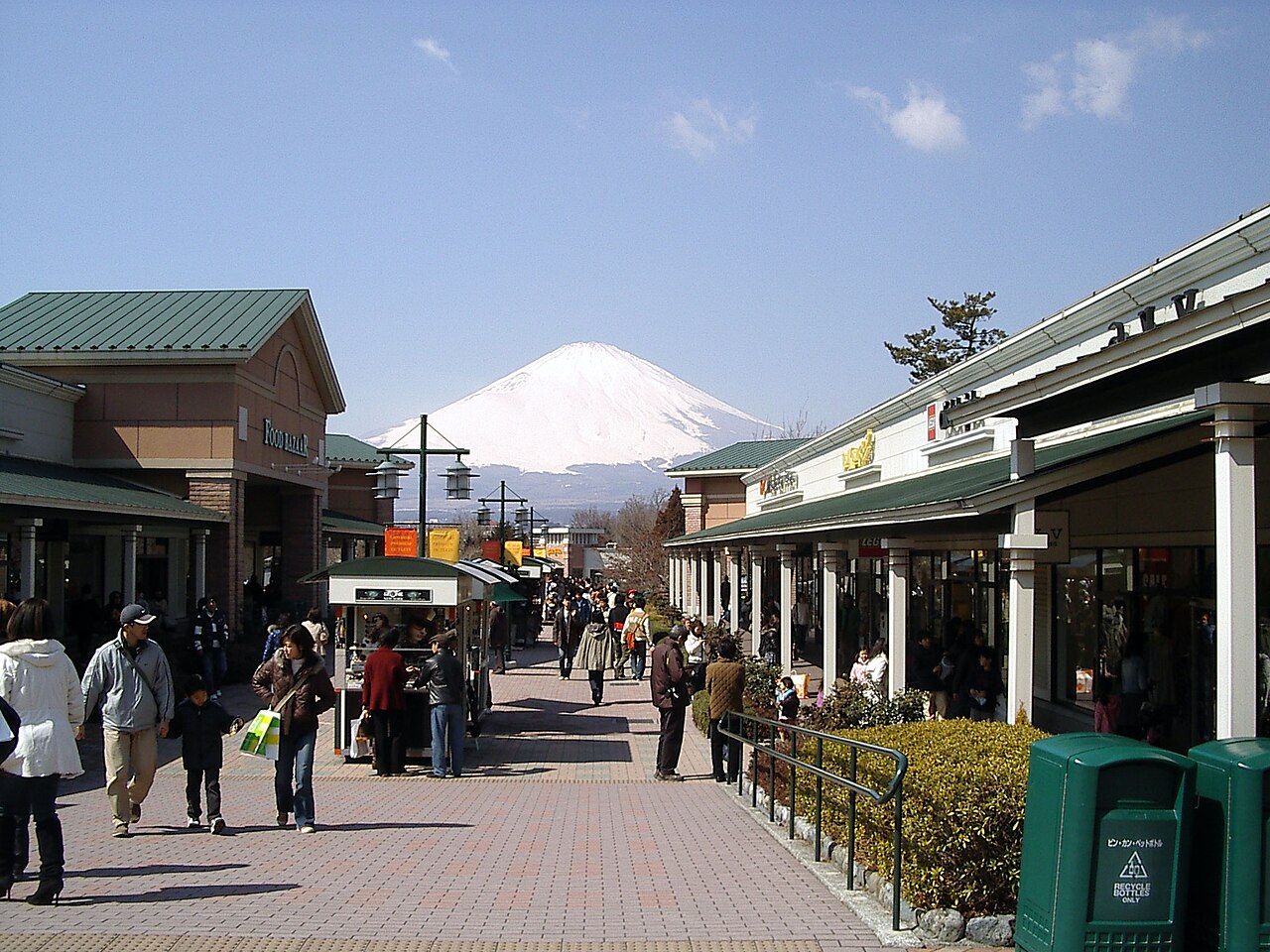
Follow the complex’s paths to see shopping streets, spaces connecting the zones and the direction of Mount Fuji.
Compare the direct Shinjuku bus with the free Gotemba Station shuttle. Plan fitting rooms, lunch and an early exit across WEST, EAST and HILL SIDE, with locker dimensions, ticket changes and a budget for two.
Direct from Tokyo or via the station: fewer transfers versus a flexible return
If you stay near Shinjuku and shopping is the main aim, prioritize a reserved bus directly to the outlets to reduce transfers with bags. Odakyu’s current Shinjuku–Gotemba/Hakone route page gives about 1 hour 50 minutes to the outlets and about 2 hours 20 minutes back to Shinjuku. These are the operator’s reference journey times. You still need to get from the Tokyo arrival point to your hotel. Leave room for road delays before any dinner reservation with a fixed seating time.
If your trip already follows the Gotemba Line or approaches from Numazu or Kozu, take a train to JR Gotemba Station and change to the free shuttle. The station route makes an earlier departure after shopping easier, but shuttle queues and train times still matter. Its value is being able to change the length of your stay. A long detour to the station merely to get the final 15 minutes free may not save total time.
Compare the full door-to-door journey: accommodation to the Tokyo departure point, early check-in, long-distance travel, shuttle waiting and walks outside stations. The direct bus fare is easier to total. For rail, separate the basic fare, limited-express charge and sections operated by different companies. If taking the Romancecar Fujisan from Shinjuku to Gotemba, read how to compare rail tickets and reserved seats, then select a service for your date. A general pass does not pay every limited-express charge.
| Option | Best suited to | Return and luggage plan |
|---|---|---|
| Reserved direct Shinjuku–outlet bus | Staying in Shinjuku; shopping is the priority | Book both directions; use stop B as shown on the ticket |
| Train to Gotemba Station + free shuttle | Traveling along the Gotemba Line; flexible length of stay | Outward from Otome Exit stop 2; return from WEST stop 1, then train |
The Odakyu direct bus: choose the destination before payment and ticket details
The Odakyu Shinjuku–Gotemba/Hakone route lists one-way fares from Shinjuku or Ikejiri-Ohashi to the outlets of ¥2,000 for adults and ¥1,000 for children. Children under six also require a child-fare seat. Two adults therefore pay ¥8,000 return at the standard fare. For an online discount, use the actual payment channel and confirmation screen. Do not apply a discounted price to every counter or payment method.
The route name includes both Gotemba and Hakone, so choose “御殿場プレミアム・アウトレット” as the alighting point. A bus stopping at Gotemba Station or Tomei Gotemba still requires a shuttle; other services head toward Hakone. For the return, also select departure from the outlets. The operator lists boarding point B for Shinjuku. Find your return stop when you arrive and photograph its name and destination instead of searching by navigation just before closing.
Official reservations open at 10:00 on the same date one month before travel. If that date does not exist, the official example moves sales to the first day of the travel month. After payment through specified online methods such as credit card, carrier billing or PayPay, a smartphone ticket with a QR code becomes available on the member page two hours before departure. Without a mobile device, print the purchase-confirmation email as instructed. Keep both tickets in one accessible place and check the party size and each seat so finding an email is not the last task before boarding.
Change the ticket before leaving early; after missing the bus is too late
If you find nothing in the morning but booked an evening return to Shinjuku, eat lunch and check earlier services. Tickets paid through Odakyu’s specified online methods can be changed or canceled on the Hassha Alright Net member page before the deadline in the payment email. The cutoff uses the service’s departure time at its first stop. If the bus starts elsewhere before reaching your stop, do not calculate the final minutes from your own boarding time.
Tickets bought at a counter, ticket machine or convenience store must be refunded through the original channel. Some payment methods require a refund with a fee and a new purchase rather than a direct service change. After purchase, changes, refunds and notices of nontravel are not accepted by phone. If ending early, settle the new return during lunch before deciding which zone to visit with the remaining time. Canceling the original before securing the replacement can turn a simple early return into a search for transport.
Once the ticket’s validity has expired or the bus has departed, ordinary changes and refunds are not accepted. If departure is near and you are still in a fitting room, put the item down and go. After missing the bus, reorganize around the next service available to buy or a confirmed rail option. Road-service suspensions have separate operator rules; use the operating notice and original booking channel. Let the return time set the shopping cutoff. If queues grow, drop the last store rather than making the group bear the cost of a missed bus.
Gotemba Station: take the free shuttle at Hakone Otome Exit stop 2, not 3
The official access page places the shuttle at stop 2 in the Hakone Otome Exit bus roundabout. Scheduled departures are generally at :00, :15, :30 and :45 each hour. The journey to the outlets takes about 15 minutes via Tomei Gotemba IC. The free shuttle cannot be used solely between Gotemba Station and Tomei Gotemba IC. Treat the station’s other exit, stops 2 and 3, and Tomei Gotemba on the expressway as separate locations in your itinerary.
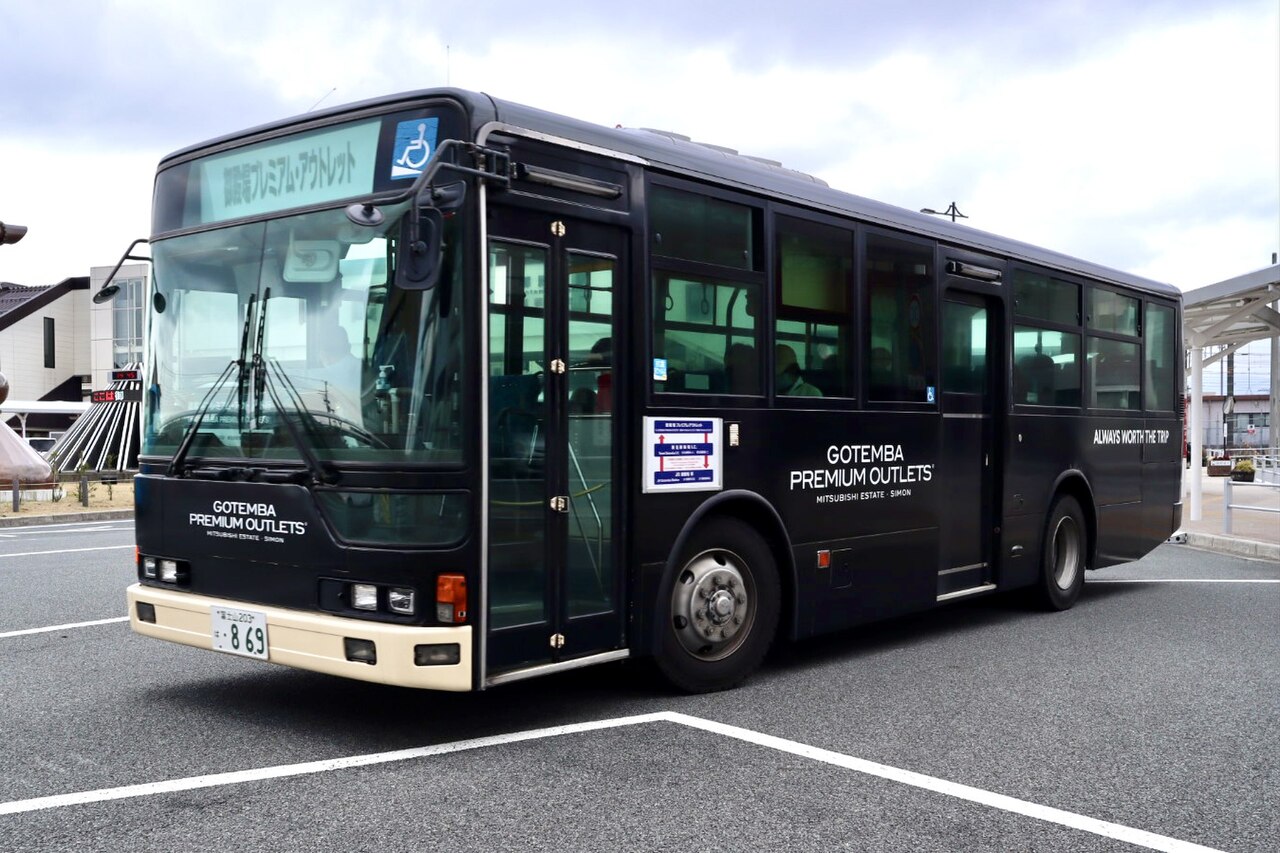
Odakyu long-distance buses use stop 3 at Gotemba Station; the free shuttle uses stop 2. If some travelers arrive by long-distance bus and others reach the station first, agree on the full “Hakone Otome Exit, stop 2.” Check the destination and shuttle signs before joining the queue. Keep large luggage where people can pass. Do not open suitcases beside the door or block boarding and alighting.
The outlet access page lists outward services from 30 minutes before opening until 30 minutes before closing. Return services run from 10 minutes after opening until 40 minutes after closing, generally leaving the outlets at :10, :25, :40 and :55. Busy periods may use irregular departures; a full bus means waiting for the next. To catch a specified train, allow at least one additional shuttle wait. This is planning margin; select the actual train from that day’s railway timetable.
WEST is the return point for the station; learn it first
The free shuttle arrives at the WEST ZONE bus roundabout. Use stop 1 to return to Gotemba Station. Find stop 1, toilets and luggage storage before shopping. If two people split up, agree on a specific storefront near the WEST Information Center rather than simply “the bus stop.” There is also a HILL SIDE bus area, and direct buses and the free shuttle use different stops.
Official WEST service landmarks include the Information Center beside Tory Burch and alterations and delivery counters behind Gap. Follow store numbers on your list for luxury goods or specific shops. Zone names organize the day; they do not place every product type together. Visit the one or two stores most likely to meet your needs first. Once the size works, finish the purchase so you do not have to cross the complex again to retry the same coat.
If you decide after lunch to return early, finish the last purchase near WEST, collect luggage and take shuttle 1. Allow extra walking time from another zone. Bags, toilets or a child’s clothing change can make it too tight to start counting minutes only after checkout. You can stop trying things on at the final store about an hour before departure, earlier depending on your zone.
EAST and the connecting bridge: finish stores in the same direction together
The bridge marks a change in the route from WEST to EAST. The website states that the WEST–EAST bridge has no roof; some passages and slopes are also uncovered. In rain, secure paper bags and phones before crossing, then check store numbers on the other side. Do not stop in the center to search bags or take a group photograph. If someone feels the cold, uses a stroller or has bought items vulnerable to water, reduce the crossings.
In EAST, Food Bazaar is a useful lunch and meeting landmark. Lockers, alterations and delivery services are behind Swarovski. Finish a block of fitting rooms and a meal on the same side before changing zones, instead of returning to WEST after every store to compare prices. For similar items in two shops, record sizes, prices, product numbers and whether they can be held before deciding to return. Without a promise to hold an item, assume it may sell.
If one person keeps shopping while another rests, agree on a named storefront or dining-area meeting point and time, and preserve phone battery. The EAST tourist information desk is at the Food Bazaar entrance and officially closes one hour before the complex. Ask about transport to other Gotemba sights early in the afternoon. Settle the next route before splitting up so you are not seeking a closed counter at the end.
Leave HILL SIDE until after lunch, then decide whether to go
HILL SIDE has its own bus area and Welcome Center. The official service page places the center in front of the bus area, with information, wheelchair loans and a lounge with power outlets. Visit this zone after the main shopping if your list calls for it. If the remaining stores are all in WEST or EAST, there is no need to add a circuit merely to cover all three zones.
For lunch in HILL SIDE, find Itadaki Terrace food court on the official map and check that the food suits your companions before ordering. Restaurants have their own queues and last-order times. Find usable seats and a meeting point before buying separately. At lunch, lay out the afternoon: if two stores still need size checks, keep shopping; if purchases are complete, sit for a drink or leave.
HOTEL CLAD and Konohana-no-yu are on this side of the complex, but bathing adds changing, time inside and the walk back to the bus. With a fixed return, do not turn a one-hour gap into a bath only after reaching this area. If departing from WEST in the evening, let the final stores lead gradually back there rather than starting lengthy fitting-room visits at the opposite end.
Finish priority purchases in the morning and keep lunch as an exit point
For an example arrival at WEST around 10:00, spend 20 minutes identifying the stop, storing luggage and organizing a small bag, then use the time until 11:40 for your two priority stores. Replace these times with your actual arrival. If queues are long, keep only one store. With a specific size need, ask about stock before joining the fitting-room queue.
Use 11:40–13:00 for lunch and a seated rest, with one group decision: purchases complete, nothing suitable found, or clear targets remaining. The first two both justify an early return to Tokyo. If your bus ticket can be changed, complete that first. With the station shuttle, check the next train and allow for missing the first shuttle. Leaving at lunch still completes a purposeful shopping visit. More spending is not needed to justify the fare.
If continuing, use 13:00–15:30 for another zone’s targets and extra purchases. After 15:30, start organizing bags, collecting luggage and walking to the stop. For all three zones, WEST in the morning, EAST at lunch and HILL SIDE in the afternoon can provide a general direction; adjust for the actual priority stores. A later return can include another seated rest instead of more shops.
If arriving in the afternoon, choose one main shopping zone and one meal
After a midday arrival, work backward from the return stop to see the available hours. With a 13:00 arrival and 17:00 departure, finding your way, lunch, collecting bags and waiting leave less than four hours for relaxed fitting. Have a simple meal, then select the zone with the most must-visit shops. Cross to neighboring stores only if time remains. Making all three zones the goal often leaves the items you actually need until last.
If traffic delays arrival, keep the original priority list rather than rushing to recreate the whole morning. Two adults can each complete one store and compare remaining time at an agreed point. If fitting requires both people or children need shared care, keep everyone on one shorter route. Prioritize irreplaceable sizes and products. Souvenirs, ordinary clothing and coffee can wait for other Tokyo days.
For stores you no longer have time to visit before departure, save the official shop page or number and end the shopping day. Compare the remaining Tokyo accommodation and neighborhood itinerary: some purchases can be made in the city. The aim is to bring suitable items back and reach your accommodation at the planned time. A short afternoon does not need to resemble a complete tour of every zone.
Measure locker width, not just the suitcase’s inch rating
WEST has several locker types near Mama no Reform. The official one-use extra-large locker is 116.2 centimeters high, 46.1 wide and 64.5 deep, costing ¥1,200. Another large type is 86.8 high, 35.5 wide and 64.5 deep, costing ¥600. Measure wheels, handles and bulging external pockets too. The suitcase’s inch rating does not replace the usable internal width.
There are also cashless timed lockers at the same location. A large locker is 89.4 centimeters high, 34.2 wide and 66.3 deep, at ¥100 per 30 minutes and a maximum ¥800 per six hours. Small lockers cost ¥100 per 60 minutes, capped at ¥400 per six hours. Charges start accumulating again in the next six-hour period. For storage over six hours, compare one-use and timed machines and check your payment method. “Maximum ¥800” is not an all-day cap.
Behind Swarovski in EAST are cash lockers, including a medium size 53 centimeters high, 35.5 wide and 43 deep for ¥400. HILL SIDE also has large, medium and small lockers in front of Tully’s Coffee & Tea. With a large suitcase, start with WEST’s larger sizes; if full, settle the luggage before crossing zones. Record the zone, locker number and payment receipt. Before splitting up, make sure those who need access know who has the key or operating screen.
| Location / type | Dimensions (cm) | Charge |
|---|---|---|
| WEST one-use extra-large | 116.2 × 46.1 × 64.5 | ¥1,200 per use |
| WEST one-use large | 86.8 × 35.5 × 64.5 | ¥600 per use |
| WEST cashless large | 89.4 × 34.2 × 66.3 | ¥100 per 30 min; maximum ¥800 per 6 hours |
| EAST cash medium | 53 × 35.5 × 43 | ¥400 per use |
Plan hotel delivery, the bus luggage hold and hand luggage separately
Paid delivery is available at Mama no Reform behind Gap in WEST and behind Swarovski in EAST. Refrigerated, frozen and international shipping are unavailable. To send a bulky coat or large purchase to Japanese accommodation, take the address, recipient name and stay dates to the counter, ask about arrival date and cost, then confirm receipt arrangements with the hotel. If leaving Japan early the next morning, choose items you can carry yourself.
Odakyu buses have luggage holds, but keep valuables and fragile items with you; long and large objects have transport restrictions. Before buying, decide how to pack for the return. One closable bag is easier to manage than several loose paper bags. Ask the shop to pack glass and pottery for transport. Before paying for very long or bulky items, check with the actual carrier. Purchase and permission to bring an item aboard are separate steps.
Do not leave repacking until the final five minutes. Put tickets, passport, wallet, phone, medicines and anything needed that day in your carry-on bag. Pack only things you will not need en route in the suitcase. If sorting near lockers, do it once in a place that does not block others. Back in Tokyo you still carry bags onto the subway, on station stairs and through the hotel lobby. Choose purchases you can carry over that full journey.
Ask about fitting, discounts and tax-free shopping in the same store
Outlet items vary in season, size and sales terms. Check the actual price, size and condition before comparing with what you were willing to pay. Choose sizes and styles you will wear. If adding an item to meet a spending threshold, divide the total by the number of pieces you will actually use to judge value. If companions want to pay together, ask whether the promotion allows combined purchases.
Try both shoes, stand and walk in the permitted area to assess the fit. Try a coat over the layers you will wear on the trip, checking the zipper, sleeves, shoulder movement and care label. Do this in the morning when you have time to decide. Near the return meeting time, do not begin a session involving several outfits or warehouse size searches and then rush the group away once staff bring them out.
For tax-free shopping or visitor offers, bring your own valid documents and ask the store before checkout about eligible goods, spending thresholds and the procedure. Keep receipts and return terms. Confirm delivery, alterations and exchange rules in the same transaction. Tax exemption and promotions are separate processes; one does not replace the other. Buying something unnecessary for tax savings still increases spending.
For trouser hemming, ask before payment about the earliest collection date, pickup point and delivery option. If same-day collection is unavailable and delivery is inconvenient, choose a size needing no alteration. If proceeding, keep the receipt and put collection at a fixed time before leaving. Paid alteration does not mean immediate completion. Keep the return journey tied to your booking.
For children, wheelchairs and rain, reduce crossings first
The outlet lists wheelchair loans at the WEST Information Center and HILL SIDE Welcome Center, with powered wheelchairs also available. Ask about availability on the day, then choose a workable store route. Strollers can also be borrowed, but may all be out on weekends and around New Year, and cannot be reserved. If your child needs one for a nap, bring your usual equipment and allocate luggage and bags separately.
One adult resting with a child in a dining area while another finishes one nearby store is often easier than repeated family fitting-room visits and bridge crossings. At lunch, replenish diapers, water and outer layers before extending the afternoon. If children are tired, return; anyone still shopping can plan their own short session in Tokyo. For accessible routes, use the digital map’s lifts, ramps and toilets rather than shortcut stairs.
In rain, limit the visit to a few indoor shops in one zone and a seated meal instead of wandering all three. Some crossings are uncovered. Protect paper bags with waterproof bags and keep a hand free for an umbrella or stroller. In wind, choose rain gear that packs away easily. If clothing is wet or someone is uncomfortable, end at the lunch decision point and handle the return according to the original ticket.
Let Konohana-no-yu replace afternoon shopping rather than fill the final gap
Konohana-no-yu is a day-use hot spring in the outlet grounds connected to HOTEL CLAD. It suits visitors making bathing the main afternoon activity. Odakyu’s facility introduction lists 10:30–22:00, last entry 21:00, and describes indoor communal baths, outdoor baths and private outdoor baths. Its evening closing time and your transport back to Tokyo are separate schedules.
If purchases are complete at lunch and you want a bath, first choose communal or private bathing, then select an available option from Konohana-no-yu’s official rates and conditions for the day. Allow about two to three hours for entry, changing, bathing and rest. Replace the second shopping round with this time instead of entering with only 40 minutes left. Families needing a private bath should settle party size, time slot and booking first, rather than basing the return on finding a vacancy on arrival.
Afterward you still need to reach the actual bus stop, collect locker luggage and wait. If bags are in WEST, finish there. If the ticket says outlet stop B, do not wait elsewhere merely because there is a stop beside the hotel. If accommodation and bathing are the focus of the whole trip, compare whether to add a night using Hakone bases and touring routes. For a shopping day, retain one route that gets you back on time.
Store closing and bus departure are two separate deadlines
The official map dated October 9, 2026 lists normal hours of 10:00–20:00, changing to 10:00–19:00 from December through February, with one closure each February. For winter shopping, use the current notice for your date. Do not push December lunch, fitting and luggage collection later based on October’s 20:00 closing. Restaurant last orders are earlier than the overall closing time. For dinner inside, check the chosen restaurant before assuming it will still serve after shopping.
With a reserved 17:00 return, you could stop shopping at 16:00, organize purchases and receipts until 16:20, then collect locker luggage and walk to the stop by 16:40. Leave the rest for toilets and waiting. This example works backward from your own ticket. From HILL SIDE, with a slower pace or large suitcase, stop earlier. Staff being willing to fetch more sizes does not create time for fitting and checkout.
If connecting in Shinjuku to another long-distance bus or a flight, allow for delays over the entire road journey. If flying that day, move shopping to the previous day so departure day involves checkout and airport transport only. If shopping on flight day is fixed, choose a sufficiently early return and remove afternoon shopping. The more important connections your itinerary contains, the more useful it is to treat the outlets as a stop you can end early.
A budget for two: separate fares, storage and purchases
Two adults pay ¥8,000 for the standard Odakyu return between Shinjuku and the outlets. Add one shared WEST one-use large locker at ¥600 and a planning allowance of ¥2,000 each for lunch and drinks: ¥12,600 total. The ¥4,000 for food is a budget allowance; actual orders follow menus. List shopping, bathing, delivery and Tokyo transport to the bus departure point separately so you know the cost even without buying anything.
With a large suitcase needing an extra-large locker, change storage from ¥600 to ¥1,200. The same plan totals ¥13,200. A cashless large timed locker has an ¥800 cap within six hours; seven hours incurs the next period’s charges, so the six-hour cap no longer applies to the whole stay. If each person uses a separate locker, calculate the actual number rather than treating one locker as the group’s storage.
Each person can set a shopping budget while retaining money for the return, meals and essential transport. If an item exceeds the original budget, sit down and decide whether you really want it before paying. If the intended size is unavailable, return to town with the unspent money. Put the lunch exit point, final fitting time and booked return on the same schedule. Shopping can then end naturally when purchases are complete or energy runs out.
A few useful answers
Where do I catch the free shuttle at Gotemba Station?
Use stop 2 in the Hakone Otome Exit bus roundabout. Departures are generally at :00, :15, :30 and :45 each hour. Odakyu long-distance buses use stop 3; check the full destination before queuing.
Do buses from the outlets to Gotemba Station and Shinjuku use the same stop?
The free shuttle uses stop 1 in the WEST bus roundabout. Odakyu lists stop B for Shinjuku. Follow your ticket and stop sign, and locate the return point when you arrive.
Can I skip HILL SIDE on a half-day visit?
Yes. Choose the zone with the most priority stores and add one meal. If you finish or cannot find your size by lunch, change the return or check the next train and leave.
Does the ¥800 locker cap cover a whole day?
The WEST cashless large timed locker is capped at ¥800 per six hours; charges accumulate again in the next six-hour period. One-use machines also exist. Check the machine, dimensions and payment method.
How can I return to Shinjuku early on Odakyu if I am tired?
Change or refund through the original purchase channel first. Specified online payments can be handled on the member page before the payment email’s deadline, based on the service’s first-stop departure. Other channels follow their refund-and-repurchase rules.
Can I bathe at Konohana-no-yu after shopping?
Decide at lunch to replace afternoon shopping with a bath. Allow about two to three hours for entry, changing, bathing and rest, plus time to collect luggage and reach the stop named on your ticket.
Official information and references
Sources used in this guide.
- Gotemba Premium Outlets | official digital map
- Gotemba Premium Outlets | complex map dated October 9, 2026
- Gotemba Premium Outlets | Gotemba Station shuttle and transfers
- Gotemba Premium Outlets | lockers, delivery, wheelchairs and dining services
- Odakyu Highway Bus | Shinjuku–Gotemba/Hakone route, fares, changes and refunds
- Odakyu HAKONE TRIP | Konohana-no-yu
- Konohana-no-yu | rates and conditions
- MIRU tube JAPAN: a walk through Gotemba Outlets