Compare the direct Shinjuku bus with Gotemba Station’s free shuttle. Plan fitting rooms, lunch and an early finish across WEST, EAST and HILL SIDE, with locker dimensions, ticket changes and a budget for two.
- Region & Focus
- ChubuNeighbourhoods and shopping
- Reading Scope
- 29 min read · 17 chapters · 6 Q&As
- Official Verification
- 8 official sources checkedUpdated 16 November 2026
- Key Topics
- ItinerariesNeighbourhoodsTravel budget
Chapter Route Map (tap any stop)
- Book the return journey, then mark the shops you want to buy from
- Direct buses and the station shuttle differ in changes and return flexibility
- Odakyu direct buses: select the right destination, then sort payment and tickets
- Change the ticket before leaving early; after missing the bus is too late
- Gotemba Station: use Hakone Otome Exit stop ② for the free shuttle
- WEST is the return point for the station: learn the layout here first
- EAST and the connecting bridge: group shops in the same direction
- Leave HILL SIDE for the afternoon and decide after lunch whether to go
- Finish priority shopping in the morning and allow a lunchtime exit without buying
- Arriving after noon: choose one main shopping zone and a meal
- Measure locker width rather than relying on suitcase inches
- Plan hotel delivery, coach hold luggage and hand luggage separately
- Ask about fitting, discounts and tax-free shopping in the same shop
- With children, wheelchairs or rain, reduce crossings between zones
- Let Konohana-no-Yu replace afternoon shopping rather than fill the last gap
- Shop closing and bus departure are two separate deadlines
- Budget for two: separate fares, lockers and purchases
- Quick Q&A
Choose two priority shops for a day at Gotemba Premium Outlets, then decide over a seated lunch whether to continue. Direct buses from Shinjuku reduce changes; the free Gotemba Station shuttle makes it easier to vary your stay. Bridges between the three zones, luggage collection and the return stop determine your final hour. This shopping plan uses official information dated 27 October 2026.
Book the return journey, then mark the shops you want to buy from
Give Gotemba Outlets a full day if you want to try coats, find shoe sizes or compare bags. A few main shops can fill the morning. If companions mainly want Mount Fuji views and lunch, reduce shopping to half a day. Agree to decide over lunch whether to continue: carry on if there is a specific item still to find, otherwise stop. Nobody has to buy something, and people who dislike shopping know when they can leave.
Fix the Tokyo return journey, lunch on site and time to reach the bus stop after paying. The outlets form an outdoor shopping district, with WEST ZONE, EAST ZONE and HILL SIDE linked by bridges and passages. You still walk between shops, and bags grow heavier. Treat the zones as three parts you can shorten rather than marking every brand on a map.
Before leaving, each person should list two priority shops and one optional shop. Find their numbers and zones on the official digital map. List clothing, shoes and children’s clothing needs separately even within one brand. If a particular size is your main aim, try the website’s Stock Finder for products it covers before giving it a whole day. Stock searches narrow the target; purchases still take place in the shop.
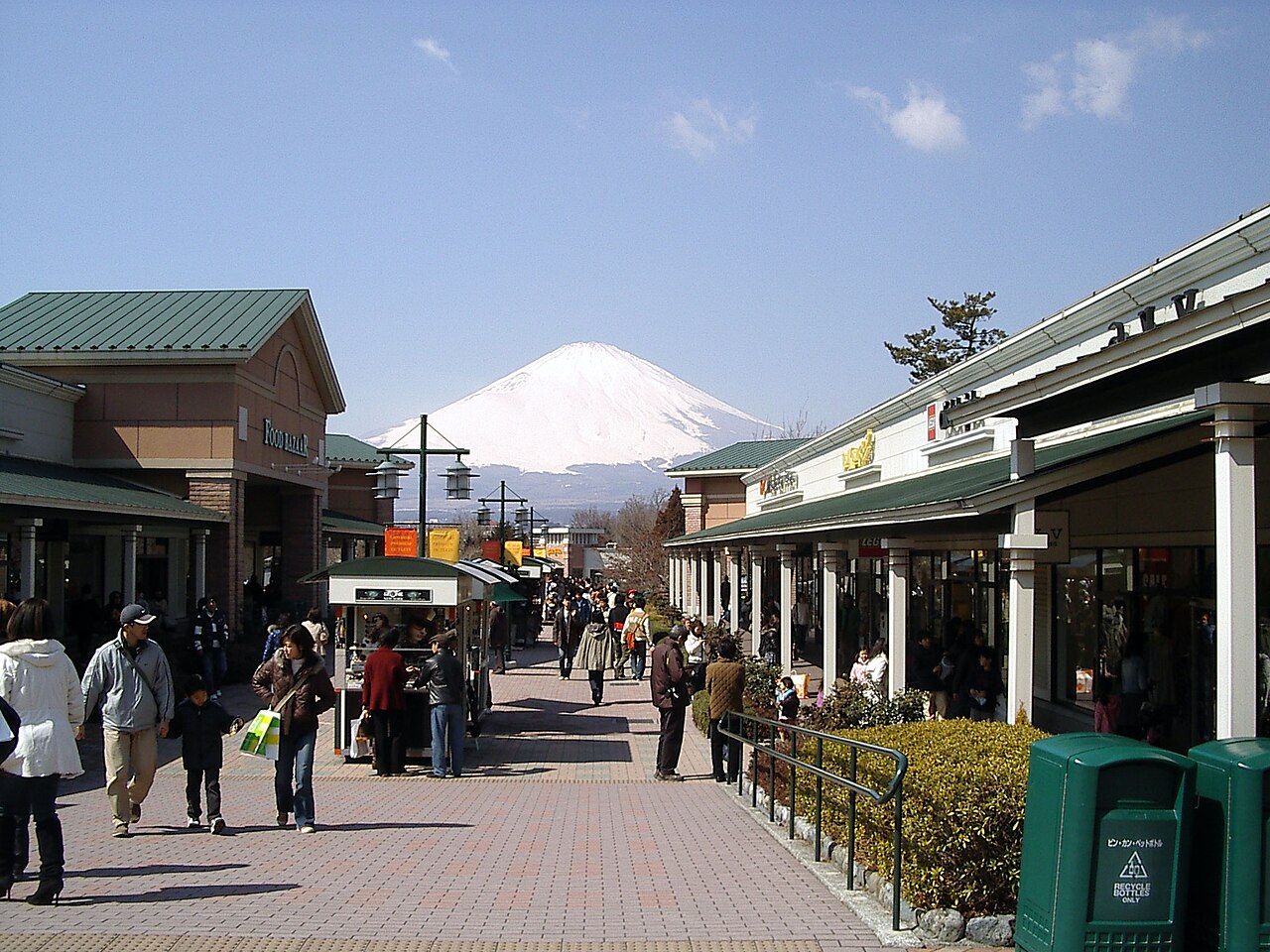
A walk along the outlet paths, showing shopping streets, spaces between zones and the direction of Mount Fuji.
Compare the direct Shinjuku bus with Gotemba Station’s free shuttle. Plan fitting rooms, lunch and an early finish across WEST, EAST and HILL SIDE, with locker dimensions, ticket changes and a budget for two.
Direct buses and the station shuttle differ in changes and return flexibility
If you are staying near Shinjuku and shopping is the main aim, prioritise a reserved bus direct to the outlets to reduce changes with shopping bags. Odakyu’s current Shinjuku–Gotemba/Hakone route page gives about 1 hour 50 minutes to the outlets and about 2 hours 20 minutes back to Shinjuku. These are the operator’s journey estimates. You still need to walk back to the hotel after reaching Tokyo. Leave room for road delays before a restaurant reservation with a fixed seating time.
If you already have plans along the Gotemba Line or are arriving from Numazu or Kozu, take the train to JR Gotemba Station and change to the free shuttle. This route makes an earlier finish easier, but shuttle queues and train times still matter. Its value is flexibility over the length of your stay. A long detour to the station just to make the final 15-minute ride free may not save overall time.
For a door-to-door comparison, include accommodation to the Tokyo departure point, early check-in, the long-distance ride, shuttle waiting and walking outside stations. Direct bus fares are easier to calculate in one total. Rail requires you to separate the basic fare, limited express supplement and sections run by different companies. If taking the Romancecar Fujisan from Shinjuku to Gotemba, read how to compare rail tickets and reserved seats, then choose a train for your date. A general pass does not mean every limited express supplement is paid.
| Option | Best suited to | Return journey and luggage |
|---|---|---|
| Reserved bus direct from Shinjuku to the outlets | Staying in Shinjuku, mainly shopping | Reserve both journeys; use boarding point B as shown on your ticket |
| Train to Gotemba Station plus free shuttle | Arriving along the Gotemba Line or varying the length of your stay | Leave from Hakone Otome Exit stop ②; return to the station from WEST stop ①, then take the train |
Odakyu direct buses: select the right destination, then sort payment and tickets
The Odakyu Shinjuku–Gotemba/Hakone route lists one-way fares from Shinjuku or Ikejiri-Ohashi to the outlets at ¥2,000 per adult and ¥1,000 per child. Children under six also require a child ticket to secure a seat. Standard return fares for two adults therefore total ¥8,000. Calculate any online discount from your actual payment channel and confirmation screen rather than applying it to every counter or payment method.
The route name includes both Gotemba and Hakone. Select Gotemba Premium Outlets (御殿場プレミアム・アウトレット) as the alighting point. Buses stopping at Gotemba Station or Tomei Gotemba require a further shuttle, and there are different Hakone-bound departures. For the return, select an outlet departure too. The operator lists boarding point B for Shinjuku. Find your return stop on arrival and photograph its name and destination rather than searching with navigation just before closing.
Official reservations open at 10:00 on the same date one month before travel. If that date does not exist, the official examples put opening on the first day of the travel month. After payment by specified online methods including credit card, carrier billing and PayPay, a QR-code mobile ticket can be displayed from the member page from two hours before departure. Without a mobile device, follow the operator’s instructions to print the purchase confirmation email. Keep both tickets somewhere accessible, and check the group size and each seat before check-in.
Change the ticket before leaving early; after missing the bus is too late
If the morning yields nothing you want and your Shinjuku return is booked for the evening, have lunch before checking earlier departures. Tickets paid by specified Odakyu online methods can be changed or cancelled through the Hassha Alright Net member page before the deadline in the payment email. The cut-off is based on departure from the service’s first stop. If the bus starts elsewhere before reaching your stop, do not calculate the final minutes from your own boarding time.
Tickets bought at a counter, ticket machine or convenience store follow the original channel’s refund process. Some payment methods require cancellation, a fee and a new purchase rather than a direct change. After purchase, changes, refunds and notices of non-travel are not accepted by telephone. Arrange the new return over lunch before choosing the remaining zone. Cancelling the original departure without securing the new one turns a simple early return into a search for transport.
Once validity has expired or the bus has departed, the operator does not accept normal changes or refunds. If departure is near and you are still in a fitting room, leave the item and catch the bus. After missing it, use the next departure you can buy or a confirmed rail alternative. Road-related service suspensions have separate operator rules; use the operating notice and original booking portal. Let the return time set the shopping deadline so a growing queue means dropping the last shop rather than making the whole group miss the bus.
Gotemba Station: use Hakone Otome Exit stop ② for the free shuttle
The official shuttle page specifies stop ② in the bus roundabout at Gotemba Station’s Hakone Otome Exit. Departures are normally at 00, 15, 30 and 45 minutes past each hour. The ride to the outlets takes about 15 minutes via Tomei Gotemba IC. You cannot use this free shuttle solely between Gotemba Station and Tomei Gotemba IC. Mark the station’s other exit, stops ② and ③, and the expressway’s Tomei Gotemba stop as separate places in your plan.
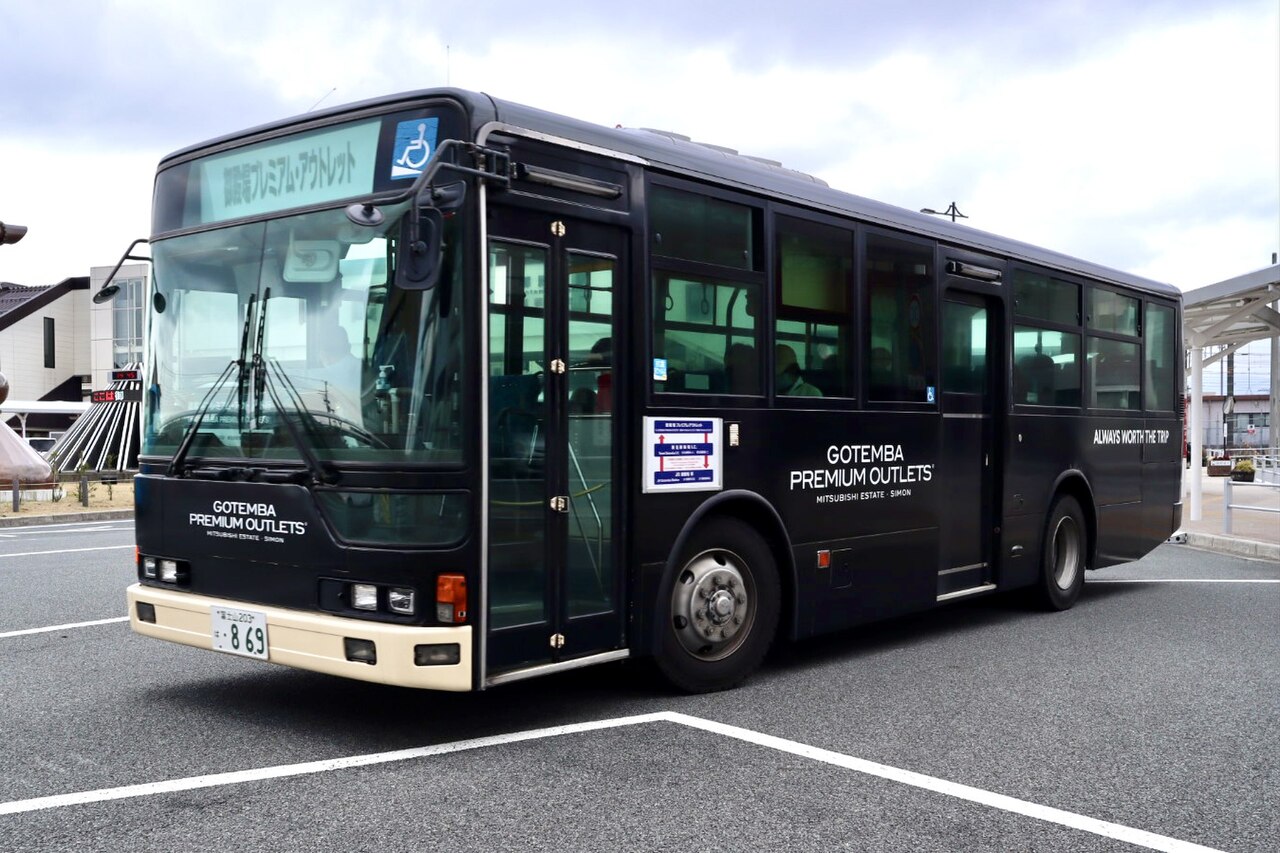
Odakyu long-distance buses use stop ③ at Gotemba Station; the free shuttle uses ②. If some companions arrive by long-distance bus and others reach the station first, specify “Hakone Otome Exit, stop ②” for the meeting. Check the destination and shuttle signs before queuing. Keep large luggage clear of the queue’s passage, and do not open a suitcase by the bus doors or block boarding.
The outlets’ transport page lists outward shuttles from 30 minutes before opening until 30 minutes before closing. Return services run from 10 minutes after opening until 40 minutes after closing, normally leaving the outlets at 10, 25, 40 and 55 minutes past each hour. Busy periods can bring departures at irregular intervals, and a full bus means waiting for the next. For a fixed train, allow at least one extra shuttle interval. This is a planning buffer; choose the actual train from that day’s railway timetable.
WEST is the return point for the station: learn the layout here first
The free shuttle arrives at the WEST ZONE bus roundabout. Use stop ① to return to Gotemba Station. On arrival, locate that stop, toilets and luggage storage before shopping. If two people split up, agree a specific shop entrance near the WEST information centre rather than simply “the bus stop”. HILL SIDE also has a bus area, and direct buses and free shuttles use different stops.
Official service landmarks in WEST include the information centre beside Tory Burch and the alterations and delivery counter behind Gap. Use the shop numbers on your own list for designer shops or particular brands. Zone names organise the day; they do not mean every product category sits in one zone. Start with the one or two shops most likely to meet your needs. If the size fits, finish the purchase so you do not have to cross the whole site to try the same coat again that afternoon.
If you decide after lunch to return to the station early, finish the final purchase near WEST, collect luggage and take the shuttle from ①. Allow extra time to return from another zone. Bags, a toilet stop or a child’s change of clothes make it too tight to count remaining minutes only after paying. Set the final fitting cut-off at about an hour before departure, earlier if your zone requires it.
EAST and the connecting bridge: group shops in the same direction
The bridge is the turning point from WEST towards EAST. The website states that the WEST–EAST bridge has no roof; some passages and slopes are also uncovered. In rain, put paper bags and phones away before crossing, then check shop numbers on the far side. Do not stop in the middle to search bags or take a group photograph. Fewer crossings matter if companions feel the cold, need a pushchair or have just bought something that must stay dry.
Use EAST’s Food Bazaar as a lunch and meeting landmark. Lockers, alterations and delivery services are also behind Swarovski. Group fittings in one area, eat on that side, then move on. This saves walking compared with returning to WEST after every shop to compare prices. For similar products at two shops, note size, price, product code and whether an item can be held before deciding to go back. Without a promised hold, assume it may sell.
If one person continues shopping while another rests, agree a named shop entrance or dining area and a meeting time, and preserve phone battery. EAST’s tourist information desk is at the Food Bazaar entrance. The official listing says it closes an hour before the outlets. Ask about transport to other Gotemba sights early in the afternoon. Settle the next route before splitting up rather than searching for a closed counter at the end of shopping.
Leave HILL SIDE for the afternoon and decide after lunch whether to go
HILL SIDE has its own bus area and Welcome Center. The official service page places the centre in front of the bus area, offering advice, wheelchair loans and a lounge with power sockets. Decide whether your list warrants this zone after finishing the main purchases. If every remaining shop is in WEST or EAST, there is no need to walk an extra circuit just to cover all three zones.
For lunch in HILL SIDE, locate Itadaki Terrace food court on the official map and find meals the group will eat before ordering. Each restaurant has its own queues and last orders. Find usable seats and a meeting point before splitting up to buy food. Over lunch, compare the remaining time with your aims: if two shops still need size checks, keep shopping; if you are finished, sit for a drink or leave.
HOTEL CLAD and Konohana-no-Yu are on this side of the site, but a bath adds changing, time inside and the walk back to your bus stop. With a fixed return booking, do not suddenly turn a spare hour here into bathing time. If your evening bus leaves WEST, let the final afternoon shops lead back towards WEST rather than starting a long fitting session at the other end.
Finish priority shopping in the morning and allow a lunchtime exit without buying
For an example arrival at WEST around 10:00, spend 20 minutes finding stops, storing luggage and arranging a small bag, then give the two priority shops until 11:40. Replace this sample arrival with your own. If queues are long, keep only one shop. With a specific size in mind, ask about stock before deciding whether to join a fitting queue.
Allow 11:40–13:00 for lunch and a seated rest. Decide together whether you have bought what you wanted, found nothing, or still have a specific target. The first two outcomes can both mean returning to Tokyo early. If the ticket permits a change, complete it before leaving. For the station shuttle, check the next train and allow for missing the first shuttle. A midday finish still completes a purposeful shopping trip. More spending is not needed to justify the return fare.
For those continuing, use 13:00–15:30 for targets in another zone and final purchases. After 15:30, start organising bags, collecting luggage and heading back to the stop. To see three zones, use WEST in the morning, EAST for lunch and HILL SIDE in the afternoon as a direction guide, adjusting to actual priority shop locations. If the return is later, add a seated rest rather than converting every extra minute into more shops.
Arriving after noon: choose one main shopping zone and a meal
For an afternoon arrival, work backwards from the return stop and departure time. An arrival at 13:00 and departure at 17:00 gives less than four hours for relaxed fittings after orientation, lunch, luggage collection and waiting. Eat a simple meal, then choose the zone with the most priority shops. Cross to neighbouring shops only if time remains. Making all three zones the goal often pushes the items you actually need to try to the end.
If congestion delays arrival, use the original priority list rather than rushing to recreate the entire morning plan. Two adults can each complete one shop separately, then compare remaining time at the agreed meeting point. If you need to try sizes together or share childcare, keep everyone on one shorter route. Prioritise specific sizes and items that cannot be substituted. Souvenirs, general clothing and coffee can wait for other Tokyo days.
For shops you cannot reach before returning to the station, save the official shop page or number and finish the day. Compare the rest of your plans with Tokyo accommodation and neighbourhoods; some shopping can return to the city itinerary. Bringing suitable purchases home and reaching your accommodation on time matter more than making a short half-day resemble a tour of every zone.
Measure locker width rather than relying on suitcase inches
WEST has lockers of different sizes near Mama no Reform. Official dimensions for the extra-large flat-rate locker are 116.2 cm high, 46.1 cm wide and 64.5 cm deep, costing ¥1,200. Another large locker is 86.8 cm high, 35.5 cm wide and 64.5 cm deep, costing ¥600. Include wheels, handles and expanded pockets in measurements. A suitcase’s advertised inch size does not replace its usable locker-width requirement.
The same location has cashless timed lockers. The large size measures 89.4 cm high, 34.2 cm wide and 66.3 cm deep, at ¥100 per 30 minutes, capped at ¥800 per six hours. Small lockers cost ¥100 per 60 minutes, capped at ¥400 per six hours. Charges begin accumulating again in the next six-hour period. For more than six hours, compare flat-rate and timed machines and check you have an accepted payment method. “Maximum ¥800” is not an all-day cap.
Cash lockers behind Swarovski in EAST include a medium size measuring 53 cm high, 35.5 cm wide and 43 cm deep for ¥400. HILL SIDE also has large, medium and small lockers in front of Tully’s Coffee & Tea. With a large suitcase, start with WEST’s larger options. If they are full, sort out the luggage before crossing zones. Note the zone, locker number and payment receipt. Before splitting up, tell anyone who may need access who holds the key or operating screen.
| Location/type | Dimensions (cm) | Charge |
|---|---|---|
| WEST extra-large, flat rate | 116.2 × 46.1 × 64.5 | ¥1,200 per use |
| WEST large, flat rate | 86.8 × 35.5 × 64.5 | ¥600 per use |
| WEST large, cashless | 89.4 × 34.2 × 66.3 | ¥100 per 30 minutes; maximum ¥800 per six hours |
| EAST medium, cash | 53 × 35.5 × 43 | ¥400 per use |
Plan hotel delivery, coach hold luggage and hand luggage separately
Paid delivery is available at Mama no Reform behind Gap in WEST and behind Swarovski in EAST. It does not cover refrigerated, frozen or international shipments. For bulky purchases or thick coats sent to Japanese accommodation, take the address, recipient name and stay date to the counter. Ask about delivery dates and charges, then confirm receipt arrangements with the hotel. If leaving Japan early the next morning, choose items you can carry yourself.
Odakyu buses have luggage holds, but keep valuables and fragile items with you. Oversized or long items also face carriage limits. Before buying, consider the return packing: one bag that closes is easier to handle than several loose paper bags. Ask shops to pack glass and ceramics for transport. For unusually long or bulky items, check with the actual operator first. Paying for an item and getting it onto a bus are separate steps.
Do not leave repacking to the final five minutes. Put tickets, passport, wallet, phone, medication and anything needed that day into a small carry-on bag. Store only items you will not need en route in the large case. If you need to repack by a locker, find a spot clear of pedestrian traffic and do it in one go. In Tokyo, you still carry bags through underground transfers, station stairs or the hotel lobby. Choose purchase volumes you can manage over that whole journey.
Ask about fitting, discounts and tax-free shopping in the same shop
Outlet stock may vary by year, size and selling conditions. Start with the actual price, required size and item condition, then compare with what you intended to pay. Choose sizes and styles you will wear. If you buy an extra item to reach a spending threshold, divide the full cost by the items you will actually wear to assess the deal. If companions want to pay together, ask whether that promotion allows combined purchases.
Try shoes on both feet, stand and walk within the permitted area to assess the fit. Try coats over the inner layers you will wear on the trip. Check the zip, sleeve length, shoulder movement and washing label too. Do this in the morning while there is time to decide. Near the return meeting time, do not start a fitting round that needs several changes and stockroom size searches, leaving everyone to rush as staff bring items out.
For tax-free shopping or visitor offers, bring your own valid documents and ask the individual shop before payment about eligible products, spending thresholds and procedures. Keep receipts and return or exchange terms. Confirm collection, alteration and exchange rules for the same transaction. Tax exemption and promotions are separate processes; one does not replace the other. Buying an unwanted item for tax exemption still increases spending.
If trousers need shortening, ask before payment for the earliest collection date, location and delivery options. If same-day collection is impossible and delivery inconvenient, choose a size needing no alteration. If you proceed, keep the shop’s receipt and fix collection before leaving. Paid alterations do not necessarily mean immediate completion; your return departure still follows the booking.
With children, wheelchairs or rain, reduce crossings between zones
Official wheelchair loan points include the WEST information centre and HILL SIDE Welcome Center, with powered wheelchairs also listed. Ask about availability on the day, then choose a route you can manage. Pushchairs can also be borrowed, but may all be out on weekends or over New Year, and cannot be reserved. If your child needs a pushchair for naps, bring the usual equipment and allocate luggage and shopping bags separately.
One adult resting with a child in a dining area while another completes a nearby shop is often easier than repeated family fittings and bridge crossings. At lunch, replenish nappies, water and outer layers before deciding how much longer to stay. If the child is tired, return and let anyone still shopping arrange a short Tokyo session. For step-free access, follow lifts, ramps and toilet symbols on the official digital map rather than stair shortcuts.
In rain, reduce the day to several indoor shops and a seated meal in one zone rather than a walk through all three. Some inter-zone sections have no roof. Protect paper bags with waterproof bags and keep one hand free for an umbrella or pushchair; use easily stowed rainwear in wind. If clothes are wet or the weather makes companions uncomfortable, finish at the lunchtime decision point. Handle the return according to the original ticket.
Let Konohana-no-Yu replace afternoon shopping rather than fill the last gap
Konohana-no-Yu is a day-use hot spring within the outlet grounds, connected to HOTEL CLAD. It suits people making bathing their main afternoon activity. Odakyu’s facility guide lists 10:30–22:00, last admission 21:00, and describes indoor communal baths, open-air baths and private open-air baths. Evening opening and your Tokyo-bound bus are separate timetables.
If you finish shopping by lunch and want a bath, choose communal or private bathing first. Select an available plan using Konohana-no-Yu’s official daily charges and conditions. Allow about two to three hours for admission, changing, bathing and rest. Replace the afternoon shopping round with this time rather than entering with only 40 minutes left. Families needing a private bath should settle group size, time slot and booking first, rather than assuming a slot will be free on arrival.
After leaving, you still need to reach the correct bus stop, collect stored luggage and wait. If luggage is in WEST, finish there. If your return ticket says Outlet B, do not wait elsewhere just because the hotel has a nearby bus stop. For a trip centred on accommodation and bathing, compare whether to allocate a night using Hakone bases and touring routes. For a shopping day, keep a clear route to an on-time return.
Shop closing and bus departure are two separate deadlines
The official site map dated 9 October 2026 lists normal hours of 10:00–20:00, changing to 10:00–19:00 from December to February, with one annual closing day in February. For winter shopping, use the current notice for your date. Do not use October’s 20:00 closing to push December lunch, fittings and luggage collection later. Restaurant last orders are earlier than overall closing. For dinner on site, check the chosen restaurant’s hours before deciding whether you can return after shopping.
For a 17:00 return booking, a sample shopping cut-off is 16:00. Use 16:00–16:20 to organise purchases and receipts, 16:20–16:40 to collect luggage and walk to the stop, and the rest for the toilet and waiting. Work backwards from your own booking. Stop earlier if you are in HILL SIDE, walk slowly or have large cases. A shop assistant’s willingness to fetch another size does not mean you have time to try it and pay.
If connecting from Shinjuku to a long-distance service or flight, allow separately for possible road delays throughout the journey. If you must fly that day, move shopping to the previous day so the last day covers checkout and airport travel. If same-day shopping is fixed, choose a sufficiently early return and drop afternoon shopping. The more important connections a day contains, the more useful it is to treat the outlets as a stop you can finish early rather than shop until the final shuttle.
Budget for two: separate fares, lockers and purchases
At standard Odakyu fares, two adults pay ¥8,000 in total for return travel between Shinjuku and the outlets. Add a shared WEST large flat-rate locker at ¥600 and a planning allowance of ¥2,000 each for lunch and drinks: ¥12,600 in total. The ¥4,000 food allowance is a budget, with actual orders priced by menus. List shopping, bathing, delivery and Tokyo travel to the bus stop separately to see what the day costs even without purchases.
For a large suitcase needing an extra-large locker, change storage from ¥600 to ¥1,200, making the otherwise identical total ¥13,200. A large cashless timed locker is capped at ¥800 within six hours. Seven hours incurs charges in the next period; the six-hour cap no longer covers it all. If two people each use a locker, count both rather than treating one locker as storage for the entire group.
Set individual shopping budgets first and preserve money for return travel, meals and necessary transport. If an item exceeds the original budget, sit down and decide whether you want it before paying. If the intended size is unavailable, return to town with the unspent money. Keep the lunchtime exit, final fitting cut-off and booked return ticket on one itinerary. Shopping can then end naturally when purchases are complete or energy runs out.
A few useful answers
Where do I board Gotemba Station’s free shuttle?
Use stop ② in the Hakone Otome Exit bus roundabout. Departures are normally at 00, 15, 30 and 45 minutes past each hour. Odakyu long-distance buses use stop ③ outside the station; check the full destination before queuing.
Do buses from the outlets to Gotemba Station and Shinjuku use the same stop?
The free shuttle uses WEST bus roundabout stop ①. Odakyu lists boarding point B for Shinjuku. Follow your ticket and the stop signs, and find the return location when you arrive.
Can I skip HILL SIDE on a half-day visit?
Yes. Choose the zone with the most priority shops and add one meal. If you have finished or cannot find your size by lunch, change the return booking or check the next train and leave.
Does the ¥800 locker maximum cover a whole day?
WEST’s large cashless timed locker is capped at ¥800 per six hours. Charges start accumulating again in the next six-hour period. Flat-rate machines are also available; check the machine, size and payment method.
How can I return to Shinjuku early on Odakyu if I get tired?
Use the original purchase channel for changes or refunds. Specified online payments can be handled on the member page before the deadline in the payment email, based on the service’s first-stop departure time. Other channels follow their cancellation and repurchase rules.
Can I bathe at Konohana-no-Yu after shopping?
Decide at lunch to replace afternoon shopping with a bath. Allow about two to three hours for admission, changing, bathing and rest, plus luggage collection and the walk to the stop stated on your ticket.
Official information and references
Sources used in this guide.
- Gotemba Premium Outlets | official digital map
- Gotemba Premium Outlets | site map dated 9 October 2026
- Gotemba Premium Outlets | Gotemba Station shuttle and transfers
- Gotemba Premium Outlets | lockers, delivery, wheelchairs and dining services
- Odakyu Highway Bus | Shinjuku–Gotemba/Hakone route, fares, changes and refunds
- Odakyu HAKONE TRIP | Konohana-no-Yu
- Konohana-no-Yu | charges and conditions
- MIRU tube JAPAN: a walk around Gotemba Premium Outlets