Lake Kawaguchiko cherry blossoms typically peak in mid-April. From the north shore's Enkei Hall and Ubuyagasaki to Yagisaki Park on the south shore, here is how to plan Red and Green Line buses, the 398 steps to Chureito Pagoda, and trips before or after peak bloom.
- Region & Focus
- Lake Kawaguchiko and Mount Fuji
- Reading Scope
- 22 min read · 11 chapters · 6 Q&As
- Official Verification
- 24 official sources checkedUpdated November 22, 2026
- Key Topics
- SeasonsItinerariesRail travel
Chapter Route Map (tap any stop)
- When Do Kawaguchiko Cherry Blossoms Bloom? Aim for Mid-April First
- How to Cover the North Shore Blossom Walk, Ubuyagasaki, and Nagasaki Park
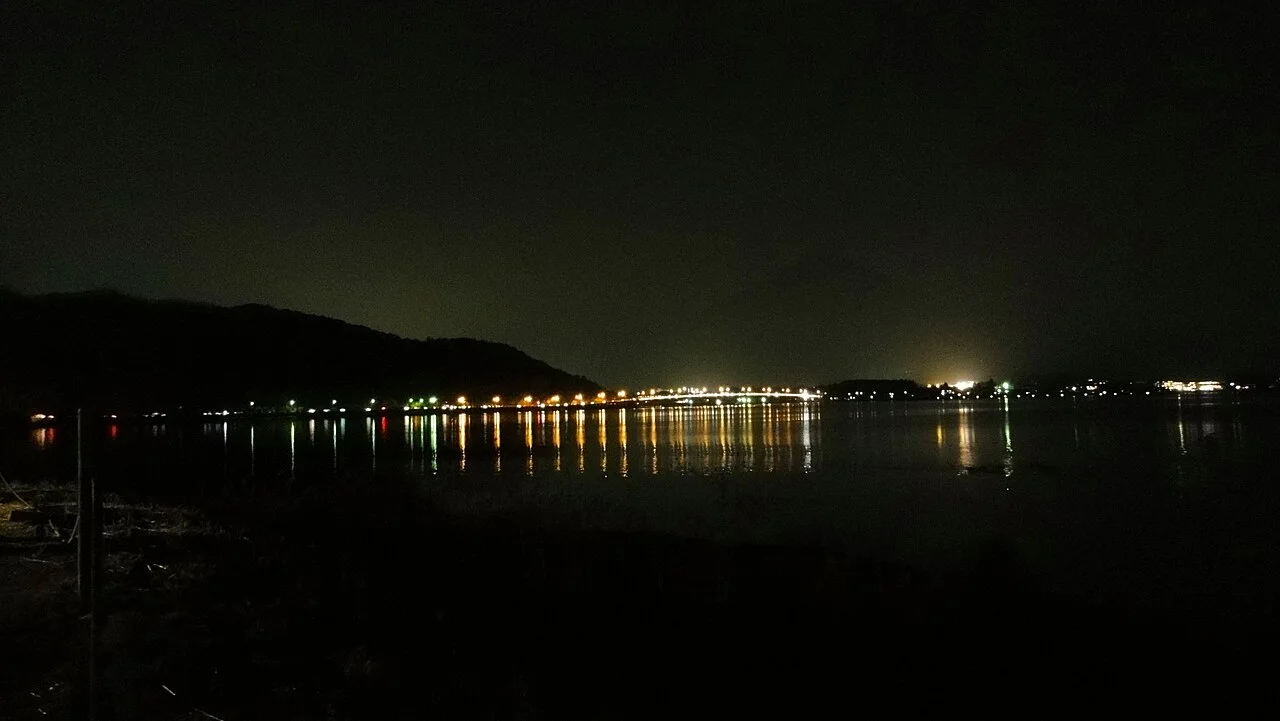
- Planning the North Shore Festival and Evening Illuminations
- South Shore: Yagisaki Park, Fuji Omuro Sengen Shrine, and Katsuyama
- Kawaguchiko Sightseeing Bus: Single Rides vs. Day Passes
- Chureito Pagoda at Arakurayama Sengen Park: Walking Time from Shimoyoshida Station
- From Tokyo: Should You Book to Shimoyoshida or Kawaguchiko First?
- How to Pace a Day Trip vs. an Overnight Stay
- What to Do If It Is Cloudy, Rainy, or Past Peak Bloom
- Still Want Cherry Trees? Check Fuji Cherry Blossoms at Naka-no-Chaya
- Late April to May: Switch to Shibazakura Near Lake Motosu
- Quick Q&A
Yoshino cherry trees (Somei-Yoshino) along the shores of Lake Kawaguchiko typically reach peak bloom around mid-April. For a day trip from Tokyo, start near Enkei Hall on the north shore, where a lakeside walkway frames cherry blossoms, water, and Mount Fuji in one stretch. If your priority is the classic shot of the five-story pagoda with Mount Fuji behind it, book your train to Shimoyoshida Station in Fujiyoshida and head up to Arakurayama Sengen Park. If you want to cover both areas without rushing, stay one night. When locking in dates, track blossom progress, Mount Fuji visibility, and festival schedules separately, and avoid treating a festival's opening day as peak bloom.
When Do Kawaguchiko Cherry Blossoms Bloom? Aim for Mid-April First
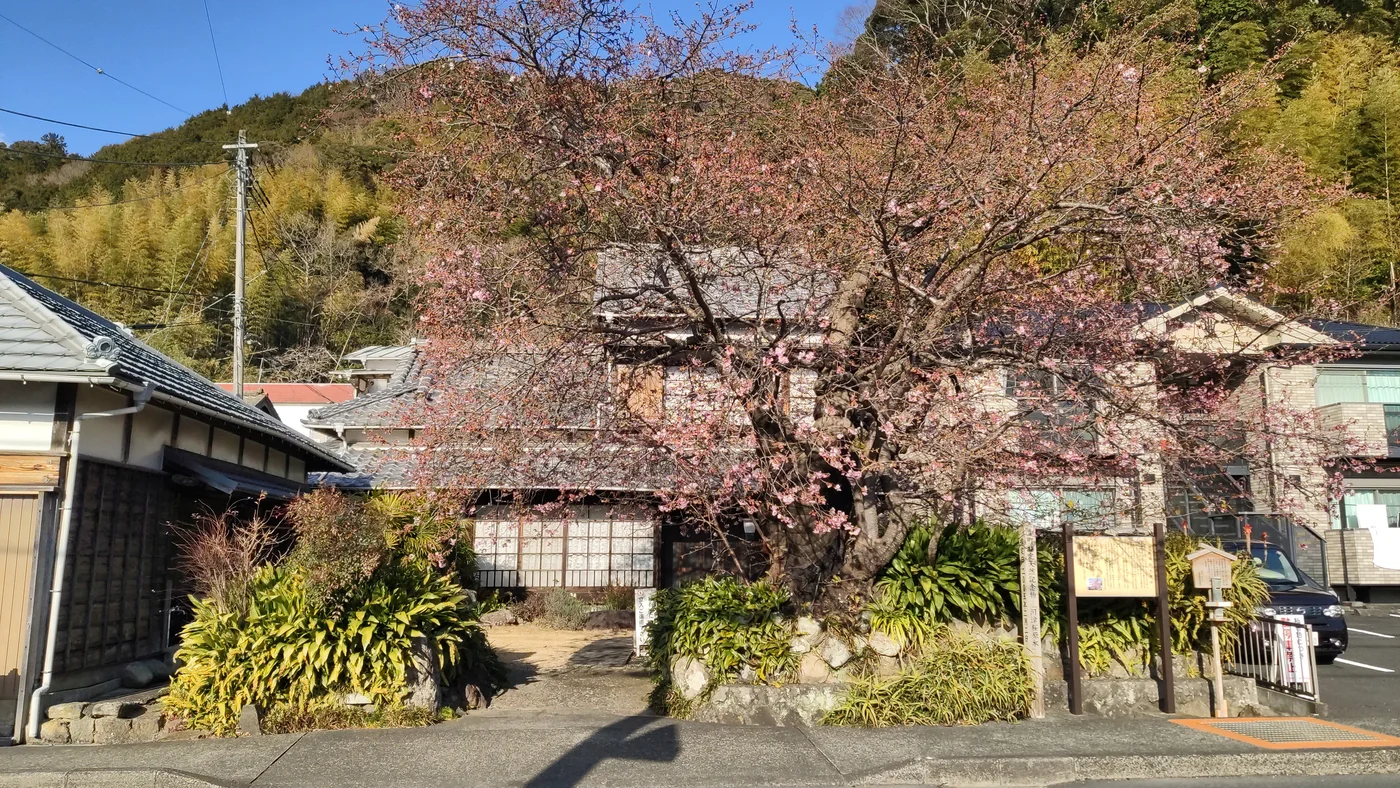
Fujikawaguchiko Town's nature calendar puts the average peak bloom for lakeside Somei-Yoshino cherry trees around mid-April. If you need to lock in flights or time off early, look for a two-day stay window around that timeframe. Meanwhile, Fujiyoshida Tourism places the city's Somei-Yoshino bloom window from early to mid-April. Even though the two areas sit side by side, one can already be shedding petals while the other hits peak bloom. Official records even note that Arakura Fuji Sengen Shrine at the base of the hill typically blooms slightly earlier than the park higher up the slope.
In 2026, the Fuji Kawaguchiko Cherry Blossom Festival was originally scheduled from March 28 to April 12, and the Kita-Kawaguchiko Tourism Association later extended it through April 15. Yet Fujiyoshida City's bloom log noted that trees around Chureito Pagoda had already reached hazakura (mostly leaves) by April 16. In a warm spring, booking solely on an assumption of mid-April puts you at risk of missing Somei-Yoshino the closer your trip gets to the end of the month. For 2027, use the official portals listed at the end of this guide to track each area's events and bloom updates separately. If you need to lock in your travel week early, group the lakeside and Arakurayama into one stay window and decide which spot to visit first closer to arrival.
Japanese bloom reports commonly use four stages: sakihajime (first blooms), mankai (full bloom), chirihajime (petals starting to fall), and hazakura (mostly new green leaves after petals drop). To capture a continuous canopy of pale pink along the north shore, aim for just before or at mankai. When flowers are only starting to open, the shoreline can look sparse from a distance, so focus your time on the few trees in full bloom within the same area. Once photos show more green leaves than blossoms, cut that stop short and follow whichever spot is peaking that week.
Bloom photos and Mount Fuji live webcams answer two different questions. Recent photos show how much of the canopy is in flower, while live cameras tell you right before heading out whether the summit is visible. At daybreak, check the official live streams before deciding whether to ride over and queue for Chureito Pagoda. Staying right by the lake makes adjusting easy: take a short morning stroll along the shore and head out once the mountain clears. Even when the daily forecast calls for clear skies, a single cloud bank parked over the peak means waiting for a full-mountain shot. If you only have half a day, cover the spots currently in peak bloom rather than staking out one fixed photo angle.
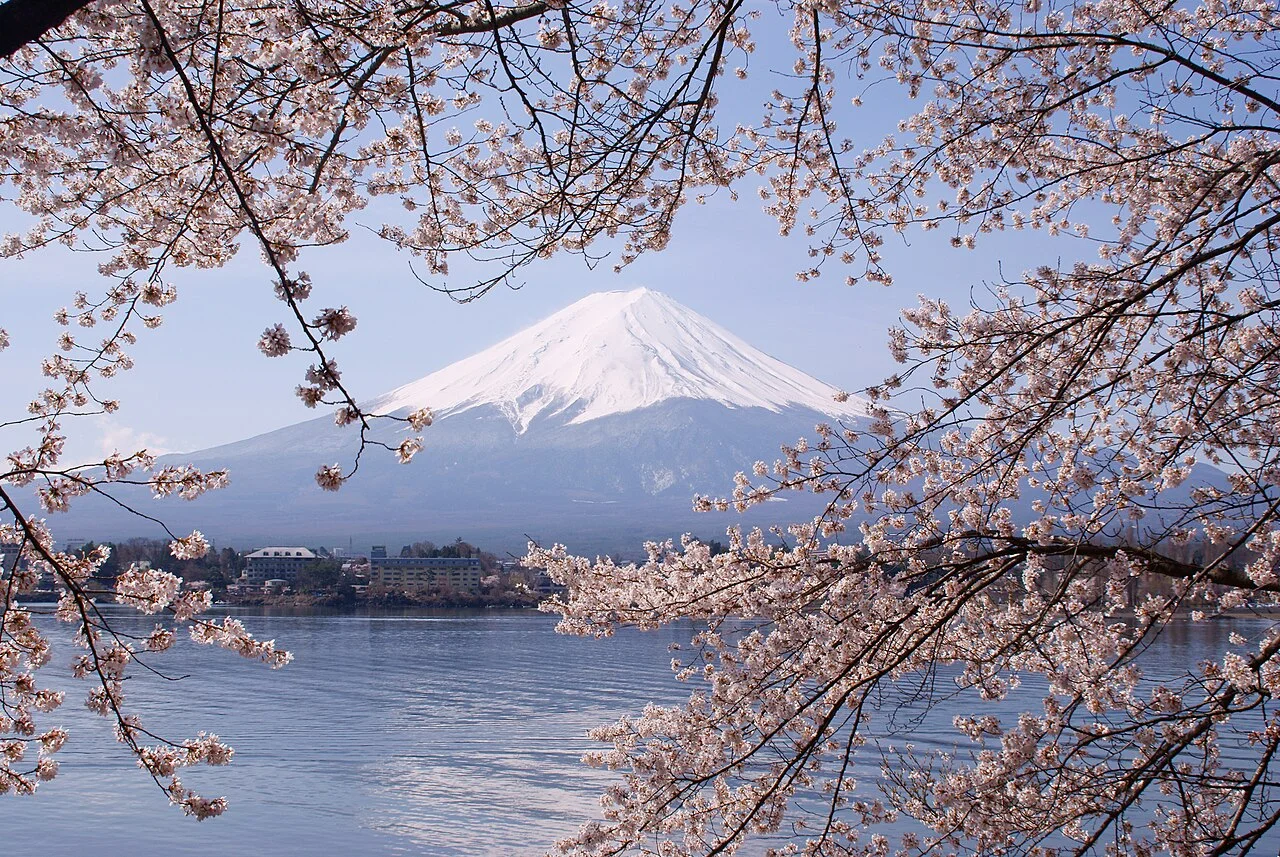
Lake Kawaguchiko cherry blossoms typically peak in mid-April. From the north shore's Enkei Hall and Ubuyagasaki to Yagisaki Park on the south shore, here is how to plan Red and Green Line buses, the 398 steps to Chureito Pagoda, and trips before or after peak bloom.
How to Cover the North Shore Blossom Walk, Ubuyagasaki, and Nagasaki Park
For a first visit to Lake Kawaguchiko's cherry blossoms, the north shore offers the cleanest lakeside route. From Kawaguchiko Station, board the Kawaguchiko Sightseeing Bus Red Line bound for Kawaguchiko Natural Living Center and get off at Kawaguchiko Sarumawashi & Konohana Art Museum. Fujikawaguchiko Town tourism info estimates the ride takes about 20 minutes. Kawaguchiko Enkei Hall sits in this area; head down toward the water to join the lakeside promenade, where the festival grounds stretch along the path. During the day, you can stroll as far as you like and walk back to the bus stop when you are ready, and anyone planning to return for night illuminations can scout the return stop in daylight.
Ubuyagasaki sits at the north end of Kawaguchiko Ohashi Bridge; take the Red Line to the Ubuya-mae stop. Here the lake opens out wide, and standing on the headland lets you frame overhanging blossom branches with the opposite shore in the background. Coming from Kawaguchiko Station on the Red Line, the bus reaches the bridge area first before continuing to Enkei Hall. If you want two stops on the north shore, shoot Ubuyagasaki first and then walk over to the main festival promenade at an unhurried pace. If you are tight on time on the way back, finish your walk around Enkei Hall first and catch a Kawaguchiko Station-bound bus that stops at Ubuya-mae.
Nagasaki Park sits on a point farther west along the north shore; from near Enkei Hall, ride the Red Line toward Oishi Park and look for the Sunny Day-mae / Nagasaki Park Entrance stop. The curve of the shoreline here makes it easier to compose sweeping water views. Rather than taking ten identical phone shots under the same tree pointing straight at Mount Fuji, walk along the park's public path to change your angle, leaving open water below the distant mountain and keeping cherry branches in one foreground corner. For a half-day on the north shore with children, older travelers, or a stroller, pick two out of Ubuyagasaki, Enkei Hall, and Nagasaki Park. Although lakeside landmarks look connected on a map, narrow roads and roadside stretches between them make hopping on the bus far easier than forcing the entire route on foot.
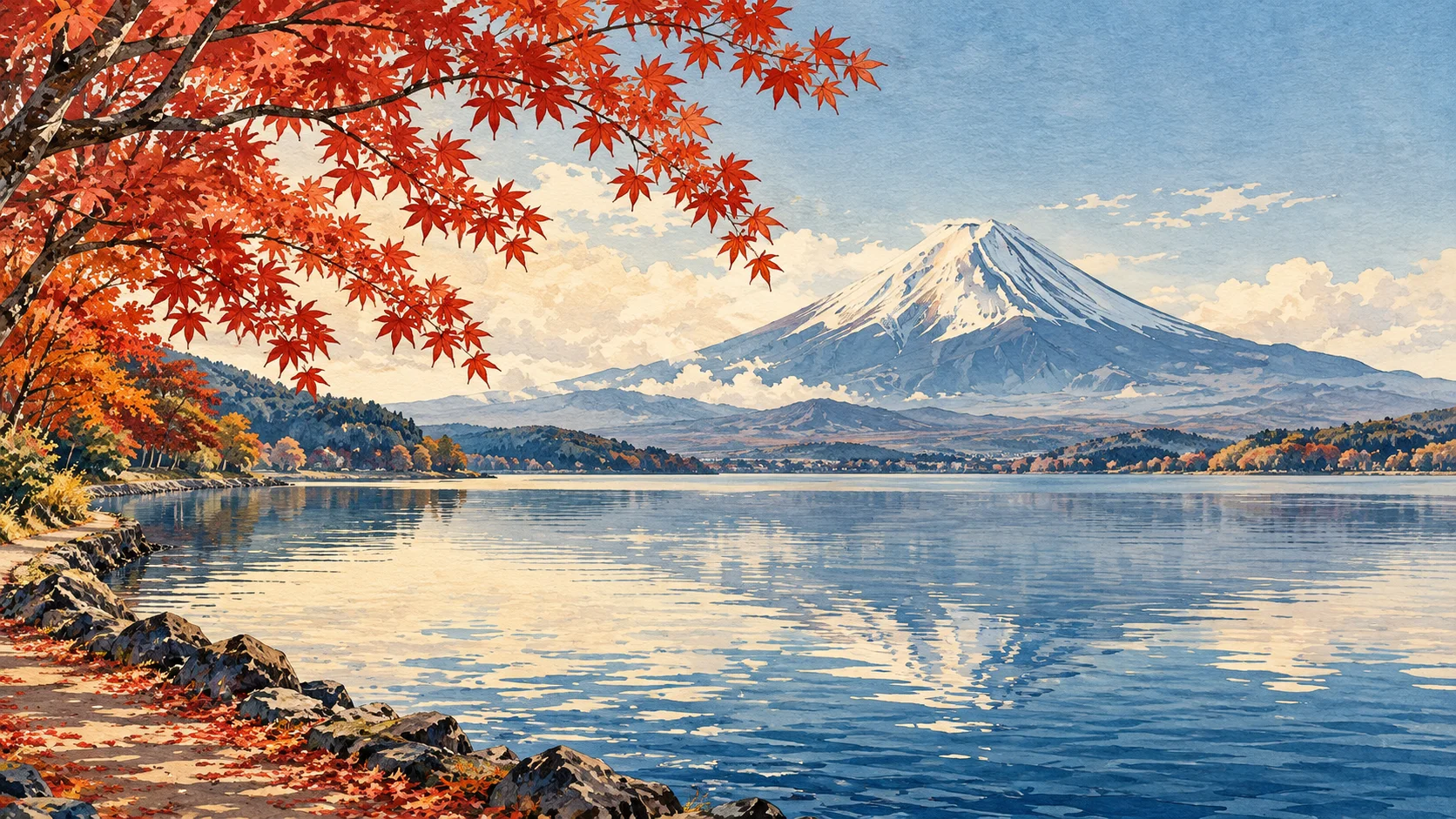
If you are shooting with a compact camera or smartphone, check the wind as soon as you reach the water. In calm air, wait for the surface to settle so you can capture more of Mount Fuji's reflection. When ripples pick up, move closer to the blossom branches and keep just enough of the mountain's recognizable silhouette in the background. If foot traffic backs up under a popular tree, step off the center of the walkway and pause at the next open pocket instead. Near the bridge especially, find a designated public pullout so pedestrians can keep moving through. Lakeside breezes here can chill your hands quickly, so keep a light jacket in your daypack rather than checking it with your luggage at the station.
Planning the North Shore Festival and Evening Illuminations
The Fuji Kawaguchiko Cherry Blossom Festival takes place along the north shore lakeside promenade in Fujikawaguchiko Town. In 2026, entry to the main venue was free, with official daytime programming listed from 10:00 AM to 5:00 PM and evening illuminations running from sunset until 9:00 PM. That year also featured a craft market and a stamp rally in the Katsuyama area on the south shore. If you want to browse the stalls, time your arrival around the official event hours published for the year. If you only care about walking along the blossoms in daylight, follow bloom photos instead and skip extra rides timed just for the market.
Between dinner, illuminations, and heading back to Tokyo, figure out your final ride before sunset. If you are staying near Kawaguchiko Station, you will still need a plan to get back from the north shore venue. Even if you book on the north shore, check the walking route on a map between your hotel and Enkei Hall, paying attention to whether there is a continuous sidewalk and which side of the building the entrance faces. Bus riders should save the exact return stop and direction beforehand, while hotel guests should check their property's shuttle schedule. If local bus service ends too early for the illumination window you want, booking a taxi, staying within walking distance, or leaving earlier beats standing at the venue waiting for a last bus.
Mount Fuji's outline is the first thing to vanish after dusk, so anyone hoping to photograph both cherry blossoms and the mountain should arrive by the water while it is still light and stay nearby for the illuminations. That also saves you from rushing across from the opposite shore at dusk. For a day trip from Tokyo with an early train or bus ticket home, stick to daytime viewing on the north shore and head back to the station for dinner and souvenirs before departure. If you want to visit the market, enter and exit via the closest bus stop so food and walking stay on the same side. Drivers should follow the organizer's designated parking areas for the current year, and move on to their next pre-planned lakeside spot if a lot is full rather than circling the venue.
South Shore: Yagisaki Park, Fuji Omuro Sengen Shrine, and Katsuyama
Yagisaki Park is ideal when you want cherry blossoms and downtime in the same stop. Located on the south shore, the park has a lakeside walkway, open lawns, pavilions, and accessible restrooms. From Kawaguchiko Station, take the Saiko Sightseeing Bus Green Line and get off at Yagisaki Park. Fujikawaguchiko Town tourism info estimates the ride at about 15 minutes, with the bus stop right next to the park. Families can walk the shoreline first and then sit on the grass for a break. There are no trash cans in the park, so bring a small bag for any snacks or drinks and pack your trash out. Because the trip to and from the station is easy to time, you can also head back toward the station for lunch.
Continue along the Green Line toward Katsuyama to Fuji Omuro Sengen Shrine, where you can combine a shrine approach with lakeside paths. Walk under the Somei-Yoshino trees along the shrine grounds first, then head over to nearby Shikkogo Park for open lawns and a waterside path connecting onward to Koumi Park. Shifting from the shaded tree canopy of the shrine to the open shoreline gives you close-up angles that still photograph well under overcast skies. If someone in your group prefers less walking, meet back at the shrine before catching the bus. Walkers can split their drop-off and pickup stops by checking both directions and stop times on the Green Line in advance. Save the exact locations of the shrine and parks separately on your map, and do not confuse Kawaguchi Asama Shrine on the north shore with Fuji Omuro Sengen Shrine on the Green Line.
If you are still choosing where to stay, look at Fuji View Hotel in Katsuyama. The hotel's official site lists more than 300 cherry trees on the grounds, including weeping cherry, Somei-Yoshino, and Fuji cherry, with garden blossom walks highlighted for guests. Staying there lets you stroll the garden before breakfast and then take the Green Line to Yagisaki Park or the shrine. If you are only visiting the south shore for the day, the public parks and shrine grounds are more straightforward. Later in the season, check the hotel's current bloom photos to see how different varieties are holding up rather than showing up and hunting for a single late-blooming tree.
You can also spend part of a spring day at the western end of the lake. Oku-Kawaguchiko Sakuranosato Park in Nagahama is listed in town tourism guides as having around 200 Somei-Yoshino trees that typically peak around mid-April. Branches reach out over the water along a quiet path where you can stay in one spot instead of hopping stop by stop along the north-shore festival route. If you rely on public transit, check return bus times to Kawaguchiko Station before deciding how long to stay, since traveling between the western end and the north shore adds a transfer or backtrack through the station. After seeing peak blossoms on the north shore in the morning, spending the afternoon solely at Yagisaki Park leaves more room to walk and rest.
Kawaguchiko Sightseeing Bus: Single Rides vs. Day Passes
According to the Fujikyu Bus route map checked in November 2026, both the Red Line and Green Line depart from Bay 1 at Kawaguchiko Station, sharing the stop with the Blue Line and other routes. When lining up, check the line color and destination displayed on the front of the bus. Take the Green Line bound for Saiko to reach Yagisaki Park, and the Red Line bound for Kawaguchiko Natural Living Center to reach Enkei Hall. On the return trip from the lakeshore, you may need to cross to the opposite side of the road. Note the return stop right after getting off so you can head straight there whenever you are ready to leave.
Fujikyu's regular sightseeing buses do not require reservations, and single rides are distance-based starting at ¥180 for adults. Checked in November 2026, the shared pass covering the Red, Green, and Blue Lines costs ¥1,500 for adults and ¥750 for children for a 1-day pass, or ¥2,000 for adults and ¥1,000 for children for a 2-day pass. You can buy the 1-day pass on board the bus, while the 2-day pass is sold at the Kawaguchiko Station bus counter or through the operator's online channels. These passes only cover the sightseeing bus lines; train fares to Shimoyoshida must be paid separately.
If you are only taking a round trip by bus to Enkei Hall, price out single fares first. If you plan to hop on and off frequently in one day, or ride the Blue Line out to Lake Motosu the next day, add up the segments you are sure to ride and compare them against the pass price. When your schedule is still flexible, pick an acceptable return departure first. A pass lets you change which stop you get off at on the fly, though you still need to reach the stop on time in the evening when buses run less frequently.
When checking timetables, start from the return stop you plan to use and filter for buses heading toward Kawaguchiko Station. If you are switching from the Green Line to the Red Line in the afternoon, compare transferring at Kawaguchiko Station versus near Kawaguchiko Herb Hall. If you have a limited express train or highway bus booked back to Tokyo, build buffer time at Kawaguchiko Station to locate your platform, pick up luggage, and use the restroom. During peak blossom crowds, catch one bus earlier than your last possible connection so a long queue, a full bus, or slow road traffic still leaves you a backup option.
Chureito Pagoda at Arakurayama Sengen Park: Walking Time from Shimoyoshida Station
Ride the Fujikyuko Line to Shimoyoshida Station and follow the signs for Arakurayama Sengen Park. Fujiyoshida Tourism's walking route starts at the station, passes beneath the Chuo Expressway overpass, and joins the approach to Arakura Fuji Sengen Shrine. After passing through the torii gate into the shrine plaza, climb the Sakuya-hime Stairs on the right side of the grounds. That staircase has 398 steps up to Chureito Pagoda, followed by a side path and one last short flight of stairs to the observation deck. The official walking map estimates about 25 minutes from the station to the deck. Allow extra time if you are traveling with kids, need rest breaks, or hit entry controls during bloom season.
The classic postcard angle is taken from the upper observation deck, placing the five-story pagoda in the foreground, Fujiyoshida's townscape below, and Mount Fuji in the distance. You can still see the pagoda and nearby blossoms from the plaza in front of the pagoda, though the perspective differs from the deck. Anyone in your group who needs to avoid stairs should agree on a meetup plan before leaving Shimoyoshida Station. You can already see Mount Fuji from the shrine plaza below, though reaching the shrine itself still involves steps along the approach. For a flat route with easy places to sit, skip the climb and take the Green Line to Yagisaki Park or stay along the north-shore promenade.
In 2026, Fujiyoshida City canceled the Arakurayama Sengen Park Cherry Blossom Festival, though traffic restrictions and timed rotation at the observation deck still operated during the bloom season. Officials estimated wait times of 1 to 3 hours at peak. Calculating your return train from the deck based on a 25-minute walk will leave you short if timed queues are active. Arriving earlier in the day lets you check whether Mount Fuji is out and how fast the line is moving before committing to the wait. On the tight, crowded deck, carrying a long tripod that blocks other visitors is often less practical than using a phone. The city also asks visitors to stick to public roads and stay out of nearby residential property.
Spring traffic controls in 2026 closed Parking Lot 1 next to the park and directed drivers to farther lots. If you are driving in spring and want to include Arakurayama, it works better to park at a legal lot you already plan to use along your route—such as near Kawaguchiko Station or another nearby station—and take the train over. Driving up toward the pagoda at the last minute just adds detours and parking lines, and anyone with lower stamina still has to walk uphill. If you stay near Shimoyoshida, you can walk up to the park early in the morning, grab your bags at noon, and transfer toward Kawaguchiko Station or the north shore without getting stuck in town parking traffic.
If you decide not to climb all the way to the observation deck, there is another blossom stop nearby. Fujiyoshida Tourism highlights a large weeping cherry tree at the entrance of Nyorai-ji Temple, about a 5-minute walk from the park. You can pair it with the shrine and torii gate in one short loop before taking the train back to Kawaguchiko for lunch. The weeping cherry tree's progress is tracked separately on Fujiyoshida City's bloom page; in 2026, it was already recorded as hazakura by April 12. If you arrive in late April, check Naka-no-Chaya for fresher bloom updates.
From Tokyo: Should You Book to Shimoyoshida or Kawaguchiko First?
If Chureito Pagoda comes first, book the Fuji Excursion limited express to Shimoyoshida and walk up the hill from there. If you want to start by the lake, ride straight to the terminus at Kawaguchiko Station and transfer to the Red or Green Line. Along the line, the stops run in order: Shimoyoshida, Fujisan, Fuji-Q Highland, and Kawaguchiko. Two stops separate Shimoyoshida and Kawaguchiko, so going to the lake first and doubling back to Arakurayama means factoring in train wait times at Kawaguchiko Station. Also note that Fujisan Station sits in central Fujiyoshida and is separate from both Kawaguchiko Station and Shimoyoshida Station—double-check all three station names before booking round-trip tickets.
The Fuji Excursion train typically takes about two hours from Shinjuku to Kawaguchiko Station. To guarantee seats on a specific departure, check reserved seats through official rail channels such as Ekinet; reserved seats generally go on sale at 10:00 AM JST one month prior to travel. Fuji Excursion also offers unreserved-seat tickets, which let you take any open seat on board until a passenger holding a reservation for that seat boards. If you want children and older relatives seated together, booking reserved seats is worth the effort. When direct trains sell out, ride JR from Shinjuku to Otsuki and transfer to the Fujikyuko Line for Shimoyoshida or Kawaguchiko. When checking two-leg schedules, look specifically at the Otsuki-to-Shimoyoshida connection time so total travel estimates do not hide a long layover.
Highway buses depart from the 4th floor of Busta Shinjuku at Shinjuku Station's South Exit; Fujikyu Bus lists the ride from Shinjuku to Kawaguchiko Station at about 1 hour 45 minutes, though highway traffic can stretch that significantly. If you are only visiting the lakeshore, a direct bus to Kawaguchiko Station connects smoothly to the sightseeing buses. If you want to visit Chureito Pagoda first, compare schedules for transferring to the Fujikyuko Line at Fujisan Station. On weekends, if highway congestion looks likely to put you in Shimoyoshida around noon, head to the lakeshore first or make Chureito Pagoda your sole focus. If you have a Shinkansen or flight to catch later that evening, leave extra buffer for road delays or favor the train. You can compare operators and booking links in our guide to Tokyo to Mount Fuji highway buses.
Starting early gives you room to pivot if conditions change. On the November 2026 timetable, the first Fuji Excursion leaves Shinjuku at 7:30 AM and reaches Shimoyoshida around 9:13 AM, which sets up a morning visit to the park; if you want to arrive right at sunrise, staying nearby the night before is far more realistic. If you plan to take an early local train from Kawaguchiko Station to Shimoyoshida, confirm the next morning's departure times at check-in. When tour buses pack the park or queues run longer than expected, save the afternoon for a stretch near Enkei Hall instead of adding another cross-lake transfer.
If you are traveling straight from Tokyo to Shimoyoshida with luggage, Fujiyoshida Tourism notes paid baggage storage at the Shimoyoshida Station ticket counter. Coin lockers are also available outside the Fujisan Station bus ticket office and at the entrance of the Q-STA station building. If you plan to pick up bags after coming down the hill, match the ticket counter's operating hours against your return train. Storing luggage at Shimoyoshida works well if you are continuing from Arakurayama onward to Kawaguchiko for the night. If you plan to head to Lake Motosu the same day, however, staying near Kawaguchiko Station or dropping bags at your hotel first is much easier than hauling luggage before tackling the stairs.
How to Pace a Day Trip vs. an Overnight Stay
For a day trip, starting on the north shore keeps things simplest. Take the Red Line from Kawaguchiko Station to the Enkei Hall area, walk the lakeside path, and have lunch nearby. If Mount Fuji is clear and your legs still feel fresh, continue to Ubuyagasaki for wide water views. If you need to catch an earlier train or bus back, drop the second stop and walk back to your original stop for a bus toward Kawaguchiko Station. If you are pushing a stroller or moving at a slower pace, switch from the start to the south-shore Green Line pairing of Yagisaki Park and Katsuyama, riding the bus between stops. Having lunch near the station is another option so you are not stacking restaurant queues on top of lakeside transit and return departure times.
To combine Arakurayama Sengen Park and the lakeshore in a single day, make Shimoyoshida your first stop and book your return from Kawaguchiko Station. If you come down from the park past noon, eat lunch in Shimoyoshida, take the train to Kawaguchiko, and limit your afternoon to the main north-shore promenade. If clouds cover Mount Fuji while you are in Shimoyoshida and lake blooms look stronger anyway, shift the hours you budgeted for the pagoda queue over to the lakeshore. If skies clear in the afternoon, check whether your return ticket still leaves time to swing back. Avoid packing four timed stops into one day: once the Arakurayama queue eats into your schedule, missed trains and buses push every subsequent stop back even if distances look short.
For an overnight stay, two bases work especially well. If you have luggage from the train or bus and want to visit Arakurayama the next morning, staying within walking distance of Kawaguchiko Station simplifies arrivals and check-out logistics, letting you head out to Shimoyoshida or the lake from one hub. If you plan to spend your first day on the north shore and stay for evening illuminations, sleeping on the north shore saves a late trip back to the station. When booking a lakeside hotel, choose a room category with confirmed Mount Fuji views if that matters to you, and check the walking route between the property and the festival promenade if you want an evening stroll. If your lodging sits well away from the station, arrange arrival shuttle pickup in advance and factor the return transfer into your check-out schedule. For area breakdowns, see our guide to Kawaguchiko lodging areas and transfers.
When traveling with family, ask your hotel in advance whether it holds bags before check-in or after check-out. Before check-in, stick to one shore you can reach easily, drop bags at your hotel or near the station, and head out to see the blossoms. The next morning after check-out, visit your top-priority spot first and stay close to your departure station in the afternoon. If you are continuing from the south shore to Lake Motosu, starting Day 2 from Kawaguchiko Station is far easier to manage than hauling luggage between different lakeside bus routes. If you visit Arakurayama on your second morning, leave your bags at your hotel before heading over, then collect them on your way back through the lake area.
What to Do If It Is Cloudy, Rainy, or Past Peak Bloom
On overcast days, stick to the lakeshore or under the trees, since soft diffused light still brings out close-up blossom detail. When Mount Fuji stays hidden in clouds, the north shore still gives you flower branches over open water, while on the south shore you can pair Yagisaki Park with the neighboring Kawaguchiko Muse Museum. Dedicated to doll artist Yuki Atae, the museum is an indoor stop requiring separate admission; town tourism info notes it is regularly closed on Thursdays unless a national holiday falls on Thursday. Because it sits right beside the park, you can step out to see the blossoms whenever rain eases and use the same Green Line stop for both.
If rain catches you on the north shore, consider ducking into the Kawaguchiko Museum of Art and taking the Red Line back to the station or a closer lakeside stop. Exhibitions change periodically, so verify that the museum is open on your travel dates before heading over. If you planned an early climb up to Chureito Pagoda but wake up to wet paths and gusty wind, push the stairs to the next day. Grab a hot meal near Kawaguchiko Station first, and if a dry window opens in the afternoon, pick a single lakeside stop with a direct return bus so energy and transit stay easy to manage.
Once petals start falling, shift your focus to petals drifting onto the water in the breeze. Sheltered bays and the south-shore promenade make it easier to watch calmly, and you can zoom in on any late-blooming branches still holding flowers. When official photos show most of an area has turned to hazakura, moving to a different location that is peaking that week pays off more than hopping one bus stop down the same shore. Before spending transit time traveling to a backup blossom site, look for recent photos with clear dates attached so you can tell whether the whole area is blooming, only one pocket opened early, or the season is winding down.
Still Want Cherry Trees? Check Fuji Cherry Blossoms at Naka-no-Chaya
Naka-no-Chaya in Fujiyoshida sits along the Yoshida Trail on Mount Fuji's lower slopes, near a grove of Fuji cherry (Fujizakura) designated as a natural monument. Compared with the rows of Somei-Yoshino lining the north shore of Lake Kawaguchiko, this route follows a forest trail through wild-growing mountain cherry trees, making it a rewarding detour for travelers willing to walk a wooded stretch. In 2026, the local Fuji Cherry Blossom Festival ran from April 17 to 29, though the bloom tracker already listed both the corridor and the grove as hazakura by April 26. Check current bloom reports before locking in a day here.
Take the Umagaeshi Line bus from Fujisan Station and get off at Naka-no-Chaya; the ride takes about 20 minutes. In spring 2026, the operator ran service only on weekends and national holidays, leaving roughly 30 minutes between the morning outbound arrival and the morning return bus before the next departure in the afternoon. If 2027 follows a similar schedule, morning visitors should arrange a return taxi in advance or pair the outing with a half-day visit to Kitaguchi Hongu Fuji Sengen Shrine. If you only have one night at Lake Kawaguchiko and also plan to visit Chureito Pagoda, wait for live bloom updates from both spots before choosing between them.
Late April to May: Switch to Shibazakura Near Lake Motosu
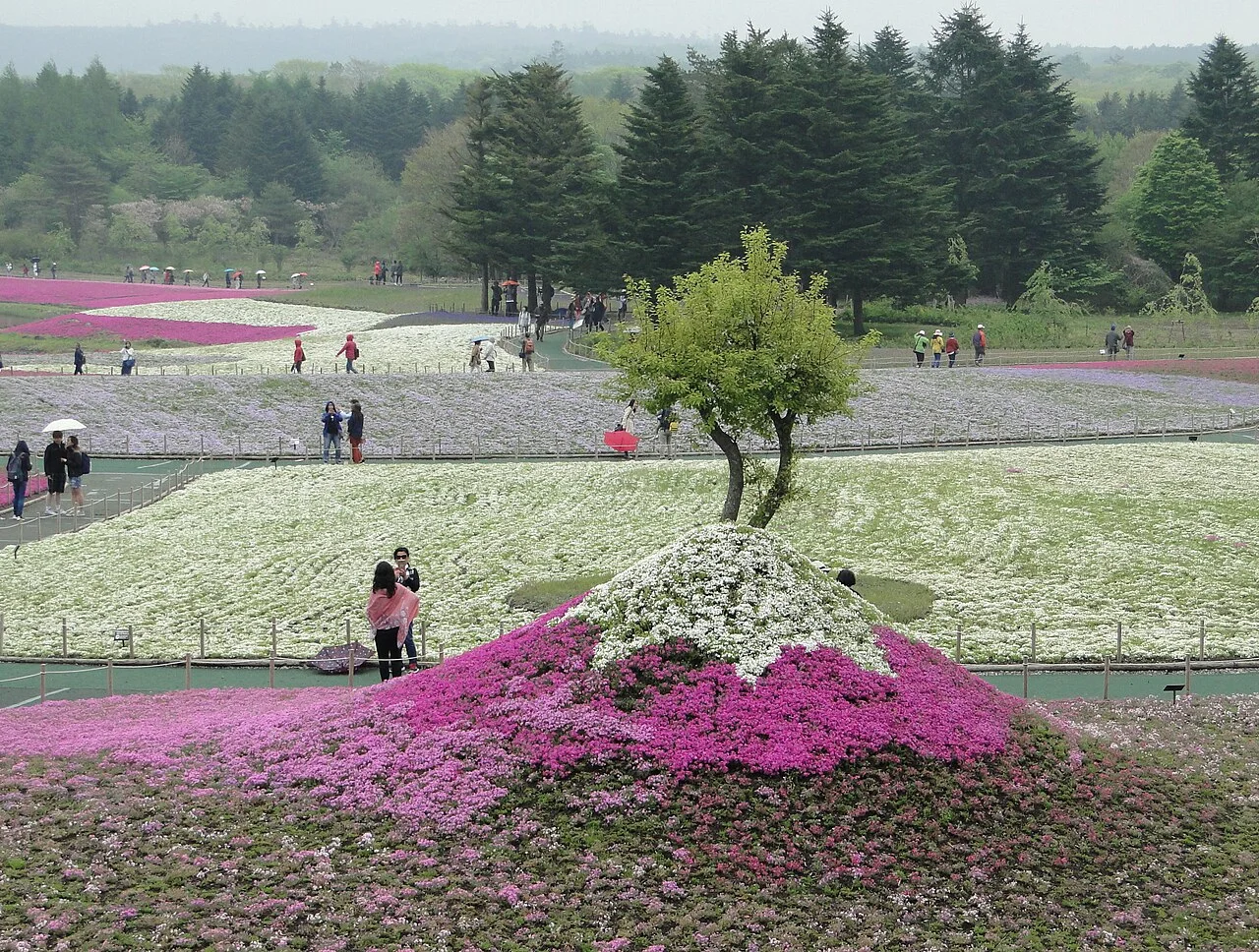
The Fuji Shibazakura Festival takes place at Fuji Motosuko Resort (212 Motosu, Fujikawaguchiko-machi). Unlike Somei-Yoshino cherry trees, shibazakura (moss phlox) grows low across the ground in dense pink and white carpets, creating a completely different landscape with its own bloom updates. In 2026, the festival ran from April 11 to May 24. For trips in late April through May 2027, treat shibazakura as a dedicated half-day outing and check the organizer's official announcements for opening dates, tickets, and bloom progress. If your visit falls during Japan's Golden Week, securing festival transport matters far more than squeezing in a few extra lakeside cherry trees.
To reach the festival grounds from Lake Kawaguchiko, check schedules and boarding details for the Fuji Shibazakura Liner shuttle, which took about 40 minutes from Kawaguchiko Station in 2026. Regular buses to Lake Motosu and festival shuttles often get mixed together in search results, so verify the exact stop list for Fuji Shibazakura Festival Venue or Fuji Motosuko Resort before boarding. Fujikyu's Blue Line also passes through the Motosuko area; the resort's access page notes that the venue stop only operates during the festival, and getting off at Kenzakai outside those dates requires about a 20-minute walk. For car navigation, enter Fuji Motosuko Resort or Motosu Highland. If you are returning to Tokyo the same day, dedicate most of your daylight hours to shibazakura and leave transfer cushion back at Kawaguchiko Station; when shuttle intervals have gaps, pick your return departure first and choose your outbound bus to match.
If your group mainly wants to see cherry trees, focus on both shores of Lake Kawaguchiko and Shimoyoshida around mid-April. If you arrive in May, review updated photos of the different shibazakura color zones before buying tickets for that day. For Tokyo day-trippers, direct highway buses ran from Shinjuku to the festival venue during the 2026 event; if similar routes operate in 2027, compare total travel time against transferring at Kawaguchiko Station. If your ticket routes you back through Kawaguchiko Station and you end up with extra time before departure, take a short walk over to the nearby Funatsu lakeside area.
A few useful answers
When is the best time to see cherry blossoms at Lake Kawaguchiko in 2027?
Yoshino cherry blossoms along the lake typically peak around mid-April. Book lodging around those dates, then use Fujikawaguchiko Town's bloom updates to plan the north and south shores, and Fujiyoshida City's bloom tracker for Chureito Pagoda.
Are the Kawaguchiko Cherry Blossom Festival and the Arakurayama Cherry Blossom Festival the same event?
No. The Fuji Kawaguchiko Cherry Blossom Festival takes place along the north shore near Enkei Hall in Fujikawaguchiko Town. Arakurayama Sengen Park is in Fujiyoshida City, which canceled its park festival in 2026 while keeping traffic controls and observation-deck crowd management in place during bloom season.
For a day trip to Lake Kawaguchiko, should I choose Chureito Pagoda or the north shore?
If your priority is photographing the five-story pagoda with Mount Fuji, take the Fuji Excursion train to Shimoyoshida Station and start there. If you want to see more cherry trees, stroll easily, and take breaks, take the Red Line bus from Kawaguchiko Station to the north shore for fewer transfers and easier stroller access.
How do I take the bus from Kawaguchiko Station for cherry blossom viewing?
Take the Red Line toward the north shore for Ubuyagasaki and Enkei Hall. Take the Green Line toward the south shore and get off at Yagisaki Park or Fuji Omuro Sengen Shrine. If you want to visit both shores, check return schedules to a shared stop where you can transfer lines.
How many steps do I have to climb at Arakurayama Sengen Park?
The Sakuya-hime Stairs from the shrine plaza up to Chureito Pagoda have 398 steps. There are additional steps along the shrine approach from the station and from the pagoda up to the observation deck. The official walking map estimates about 25 minutes on foot from Shimoyoshida Station to the deck, plus queue time during peak bloom.
What flowers can I see after the Lake Kawaguchiko cherry blossoms finish?
From late April through May, check the moss phlox (shibazakura) bloom status at Fuji Motosuko Resort. The resort is outside the main lake loop and requires a separate bus or shuttle from Kawaguchiko Station.
Official information and references
Sources used in this guide.
- Fujikawaguchiko Town Tourism Information (Typical Lakeside Somei-Yoshino Peak Bloom)
- Fujikawaguchiko Town Tourism Information (Fuji Kawaguchiko Cherry Blossom Festival Notice and Map)
- Fujikawaguchiko Town Spring Event Notice (2026 Festival Dates, Hours, and Blossom Map)
- Kita-Kawaguchiko Tourism Association (2026 Cherry Blossom Festival Extended Through April 15)
- Fujikawaguchiko Town Tourism Information (Enkei Hall, North Shore Promenade, and Red Line Bus Stop)
- Fujikawaguchiko Town Tourism Information (Yagisaki Park Facilities and Green Line Bus Stop)
- Fujikawaguchiko Town Tourism Information (Shikkogo Park Next to Fuji Omuro Sengen Shrine)
- Fujikawaguchiko Town Tourism Information (Oku-Kawaguchiko Sakuranosato Park)
- Fujiyoshida Tourism (Walking Map from Shimoyoshida Station to Chureito Pagoda Observation Deck)
- Fujiyoshida Tourism (Arakurayama Sengen Park Bloom-Season Restrictions)
- Fujiyoshida Tourism (Chureito Pagoda, Shrine, and Nyorai-ji Temple Bloom Status and Live Camera)
- Fujisanroku Electric Railway (Fuji Excursion Stops, Timetable, and Tickets)
- Fujikyu Bus (Shinjuku to Kawaguchiko and Fujisan Station Timetables and Reservations)
- Fujikyu Bus (Kawaguchiko Sightseeing Red and Green Line Route Maps and Timetables)
- Fuji View Hotel (Garden Cherry Blossoms and Guest Walking Information)
- Fujikawaguchiko Town Tourism Information (Kawaguchiko Muse Museum and Closed Days)
- Fuji Motosuko Resort (Shibazakura Festival, Bloom Status, and Venue Buses)
- Fujikyu (2026 Shibazakura Festival Dates and Shuttle Schedules)
- Fujikyu Bus (October 2026 Sightseeing Bus Route Map and Kawaguchiko Station Boarding Bays)
- Fujikyu Bus (Ubuyagasaki Location and Ubuya-mae Bus Stop)
- Fujiyoshida Tourism (Typical Bloom Timing and Shimoyoshida Station Luggage Storage)
- Fujiyoshida Tourism (Naka-no-Chaya Fuji Cherry Blossom Festival and Access)
- Fuji Motosuko Resort (Festival Venue Bus Stop and Kenzakai Stop)
- Fujikyu Yamanashi Hire (2026 Umagaeshi Line Operating Days and Schedules to Naka-no-Chaya)