Cherry blossoms around Lake Kawaguchi typically reach peak bloom in mid-April. This guide covers the North Shore's Enkei Hall and Ubuyagasaki, Yagizaki Park on the South Shore, Red and Green Line sightseeing buses, the 398 steps to Chureito Pagoda, and late-season alternatives.
- Region & Focus
- Lake Kawaguchiko and Mount Fuji
- Reading Scope
- 22 min read · 11 chapters · 6 Q&As
- Official Verification
- 24 official sources checkedUpdated 22 November 2026
- Key Topics
- SeasonsItinerariesRail travel
Chapter Route Map (tap any stop)
- When Do Lake Kawaguchi Cherry Blossoms Bloom? Aim for Mid-April
- North Shore Cherry Blossom Promenade, Ubuyagasaki & Nagasaki Park
- Planning for the North Shore Festival & Night Illuminations
- South Shore: Yagizaki Park, Fuji Omuro Sengen Shrine & Katsuyama
- Kawaguchiko Sightseeing Buses: Single Fares or Day Passes?
- Chureito Pagoda at Arakurayama Sengen Park: How Long Is the Walk from Shimoyoshida?
- Getting There from Tokyo: Should You Book to Shimoyoshida or Kawaguchiko?
- Pacing a Day Trip vs. an Overnight Stay
- What to Do If It Is Overcast, Raining, or Past Peak
- Still Looking for Blossoms? Check Fuji Cherries at Naka-no-Chaya
- Late April to May: Switch to Fuji Shibazakura Near Lake Motosu
- Quick Q&A
Somei-Yoshino cherry trees along Lake Kawaguchi usually reach peak bloom around mid-April. For a day trip from Tokyo, start near Enkei Hall on the North Shore, where a lakeside walk pairs blossoms with water views and Mount Fuji. If your priority is photographing the five-storey pagoda with Mount Fuji behind it, book your train to Shimoyoshida Station in Fujiyoshida and head up to Arakurayama Sengen Park. Visitors hoping to see both areas will find an overnight stay far more relaxed. When locking in travel dates, separate blossom forecasts, Mount Fuji visibility, and festival schedules—and never assume a festival's opening day coincides with full bloom.
When Do Lake Kawaguchi Cherry Blossoms Bloom? Aim for Mid-April
Fujikawaguchiko Town's nature calendar places peak bloom for lakeside Somei-Yoshino trees around mid-April. When booking flights or taking time off work, look for a two-day stay window around that period. Fujiyoshida Tourism, meanwhile, places the city's Somei-Yoshino season from early to mid-April. Because the two areas sit so close together, one side can be at peak bloom while the other is already shedding petals; official records even note that Arakura Fuji Sengen Shrine at the base of the hill typically blooms slightly earlier than the park further up the slope.
In 2026, the Fuji Kawaguchiko Cherry Blossom Festival was originally scheduled from 28 March to 12 April before the Kita-Kawaguchiko Tourism Association extended it to 15 April. Fujiyoshida City's bloom log recorded that the area around Chureito Pagoda had already turned to leafy green (hazakura) by 16 April that year. In a warm spring, relying blindly on the usual 'mid-April' rule of thumb increases the risk of missing the Somei-Yoshino display the closer you get to the end of the month. For 2027, track both areas' festival announcements and blossom updates separately via the official portals listed at the end of this guide. If you need to lock in a fixed week early on, book accommodation within easy reach of both the lakeshore and Arakurayama, and leave the order of your sightseeing days until closer to arrival.
Japanese blossom forecasts commonly use four terms—sakihajime, mankai, chirihajime, and hazakura—referring respectively to first blooms, full bloom, petals starting to fall, and post-peak trees where new green leaves outnumber flowers. If you are heading to the North Shore for sweeping rows of pale-pink canopies, timing your visit around mankai comes closest to the classic view. Early in the season, the shoreline can look sparse from a distance, so focus your time on whichever individual trees in the area have opened fully. Once photos show more green leaves than blossoms, travellers primarily after flowers should shorten that stop and follow that week's strongest bloom reports instead.
Bloom photos and Mount Fuji live webcams answer two different questions. Photos from the preceding few days tell you how full the canopies are, while live cameras checked right before you set out reveal whether the summit is clear. At daybreak, check the official live streams before committing to the train ride and queue for Chureito Pagoda. Travellers staying right on the lake can adapt easily: take a short morning stroll along the water and head up once the mountain's silhouette appears. Even when the day's weather forecast promises clear skies, a stubborn cloud bank over the peak still means waiting for a full-mountain shot. If you only have half a day, cover the locations already in full bloom rather than gambling everything on a single viewpoint.
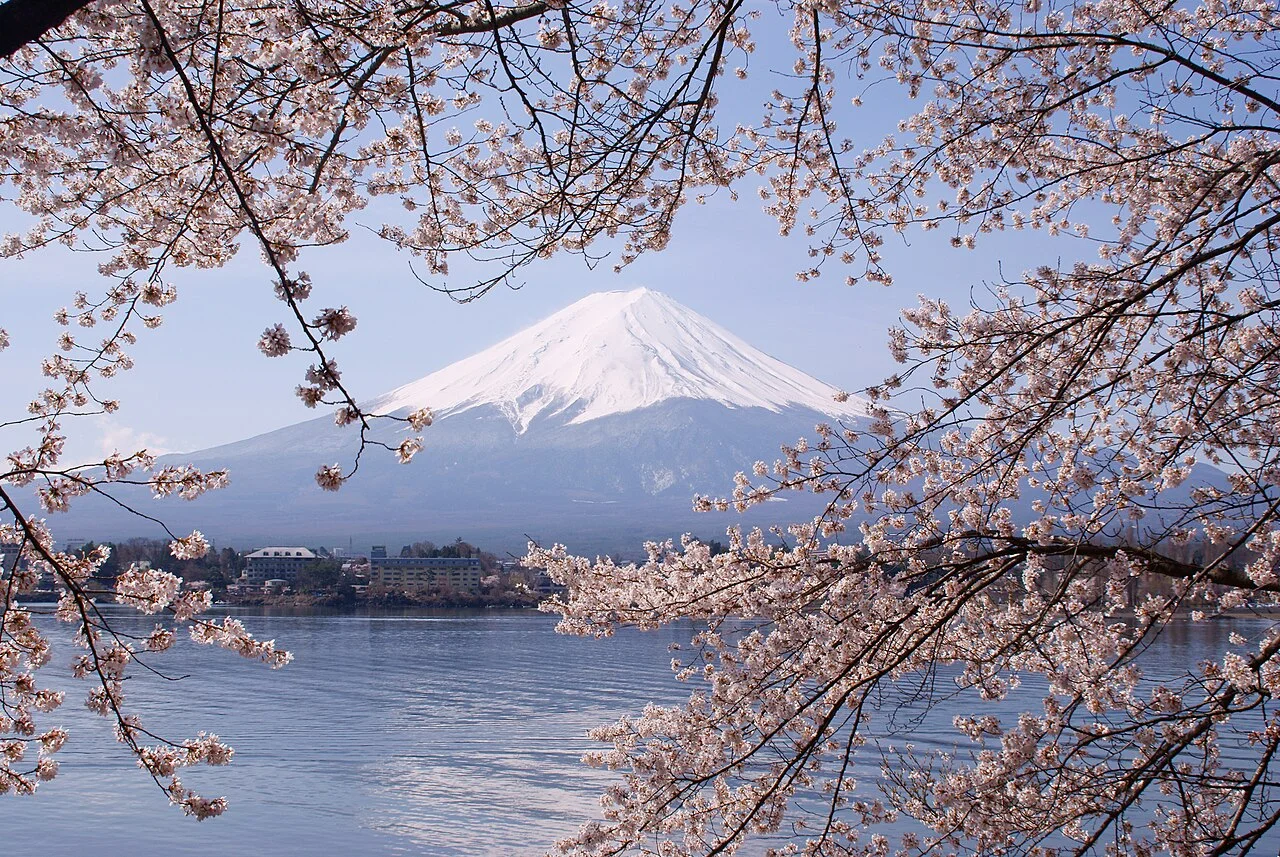
Cherry blossoms around Lake Kawaguchi typically reach peak bloom in mid-April. This guide covers the North Shore's Enkei Hall and Ubuyagasaki, Yagizaki Park on the South Shore, Red and Green Line sightseeing buses, the 398 steps to Chureito Pagoda, and late-season alternatives.
North Shore Cherry Blossom Promenade, Ubuyagasaki & Nagasaki Park
For first-time visitors to Lake Kawaguchi's cherry blossoms, the North Shore offers the most straightforward, continuous lakeside route. From Kawaguchiko Station, board the Kawaguchiko Sightseeing Bus Red Line bound for Kawaguchiko Natural Living Center and alight at Kawaguchiko Sarumawashi & Konohana Museum. Fujikawaguchiko Town tourism information estimates the journey at roughly 20 minutes. Kawaguchiko Enkei Hall (the circular concert hall on local maps) sits right in this zone; step off the bus, walk towards the water to join the lakeside promenade, and you will find the festival grounds stretching along the path. During the day you can stroll as far as you like before heading back to the bus stop, and anyone planning to stay for the evening illuminations can scout the return stop in daylight.
Ubuyagasaki sits at the northern end of Kawaguchiko Ohashi Bridge; alight from the Red Line at the Ubuya-mae stop. Here the lake opens out in a wide sweep, allowing you to frame blossom branches against the opposite shore from the headland. Heading out from Kawaguchiko Station on the Red Line, you pass the bridge area first before reaching Enkei Hall. If you want two stops on the North Shore, photograph Ubuyagasaki first and then continue to the main festival promenade for a leisurely walk. If you are pressed for time on the way back, reverse the order—finish your blossom walk around Enkei Hall, then check whether the bus heading back to Kawaguchiko Station serves Ubuya-mae on your return.
Nagasaki Park occupies a quieter lakeside corner further west along the North Shore; from near Enkei Hall, take the Red Line towards Oishi Park and look for the Sunnide-mae / Nagasaki Park Entrance stop. The curve of the shoreline here makes it easier to compose sweeping waterside shots. Rather than snapping ten identical phone photos beneath the same tree facing Mount Fuji, follow the public lakeside path to change your angle, letting the open water lead towards the distant peak while cherry branches frame the foreground corner. For a half-day North Shore itinerary with children, older relatives, or a pushchair, picking two stops out of Ubuyagasaki, Enkei Hall, and Nagasaki Park is plenty. Although these landmarks look connected on a map, narrow lanes and roadside sections lie between them, making short bus hops far more comfortable than walking the entire stretch end to end.
If you are shooting with a compact camera or smartphone, check the wind as soon as you reach the water's edge. On calm days, wait for the surface to settle so you can capture more of Mount Fuji's reflection. When ripples break up the water, move closer to the blossom branches and let the recognisable mountain silhouette sit cleanly in the background. If a stretch beneath the trees gets crowded with steady foot traffic, step off the main path and wait until you reach the next open clearing. Around the bridge in particular, look for designated public viewing spots so you leave clear passage for pedestrians. The lakeside breeze can chill your hands, so keeping a light jacket in your daypack is much more practical than leaving it inside a station locker with your luggage.
Planning for the North Shore Festival & Night Illuminations
The Fuji Kawaguchiko Cherry Blossom Festival runs along the North Shore lakeside promenade in Fujikawaguchiko Town. In 2026, entry to the main grounds was free, with official daytime programme hours listed from 10:00 to 17:00 and evening illuminations running from sunset until 21:00. The programme also included a handmade craft market and a stamp rally extending to the Katsuyama area on the South Shore. If you want to browse the stalls, time your arrival around that year's published market hours. If you simply want a daytime blossom walk by the water, base your schedule on bloom photos alone and skip extra bus journeys timed solely around the market.
Before balancing dinner, illuminations, and your train or bus back to Tokyo, decide how you will make the final leg back from the lakeside. If your hotel is beside Kawaguchiko Station, you will usually need to plan return transport from the festival grounds separately. Even if you are staying on the North Shore, check a map for the walking route between your accommodation and Enkei Hall, paying close attention to continuous pavements and which side of the building the entrance faces. Bus passengers should note the exact return stop and direction beforehand, while hotel guests relying on shuttle buses should verify their property's timetable. If scheduled buses stop running before the illuminations end, booking a taxi, staying within walking distance, or leaving a little early beats standing by the roadside waiting for a late-night service.
After dark, the mountain's outline is the first thing to disappear, so anyone hoping to photograph cherry blossoms with Mount Fuji should arrive while it is still light and linger for the illuminations. That also saves a rush across the lake at dusk. On a day trip from Tokyo with an early evening departure, stick to the North Shore blossoms during the day and head back to the station area for dinner or souvenir shopping before boarding. Visitors focusing on the craft stalls can use the closest bus stops to keep food, shopping, and strolling on the same side of the lake. Drivers should follow that season's official announcements for designated car parks, and move straight on to another pre-planned lakeside spot if a lot is full rather than circling the festival area.
South Shore: Yagizaki Park, Fuji Omuro Sengen Shrine & Katsuyama
Yagizaki Park works well when you want blossom viewing and downtime in the same place. Set on the South Shore, the park features a lakeside path, open lawns, sheltered pavilions, and accessible toilets. Take the Saiko Sightseeing Bus Green Line from Kawaguchiko Station and alight at Yagizaki Park; Fujikawaguchiko Town tourism information estimates a 15-minute ride, and the bus stop sits close to the grounds. Families travelling with children can stroll along the water first and then settle on the grass for a break. Note that the park has no litter bins, so pack a small rubbish bag if you bring snacks or drinks and take everything out with you. Returning straight to the station by bus keeps timings predictable, making it easy to have lunch near the station afterwards.
Continuing along the same Green Line towards Katsuyama, alight at Fuji Omuro Sengen Shrine to combine a shrine approach with lakeside views. Walk beneath the Somei-Yoshino trees lining the shrine grounds before crossing to nearby Shikkogo Park, which offers grassy open space and connects via a waterside path to Koumi Park. Shifting from the tree-lined shrine approach to the open shoreline gives you close-up angles that still photograph well under overcast skies. If someone in your group prefers less walking, arrange to meet back at the shrine before catching the bus together. Those happy to walk further can board at a different stop down the route—just check the Green Line's loop direction and stop times ahead of time, and pin both the shrine and the parks separately on your map so you do not confuse the South Shore's Fuji Omuro Sengen Shrine with Kawaguchi Asama Shrine on the North Shore.
If you are still choosing where to stay, look at Fuji View Hotel in Katsuyama. The hotel's official website notes more than 300 cherry trees on its grounds—including weeping cherries, Somei-Yoshino, and Fuji cherries—and highlights garden walks for staying guests. Booking a room here lets you stroll the gardens before breakfast and then hop on the Green Line to Yagizaki Park or the shrine. For non-guests simply visiting the South Shore, the public parks and shrine grounds are more convenient. Later in the season, checking the hotel's current bloom updates or garden photos helps you judge how different cultivars are holding up before heading out in search of late-blooming trees.
Spring visitors can also set aside time for the western end of the lake. Oku-Kawaguchiko Sakura no Sato Park lies in the Nagahama area, where town tourism information lists around 200 Somei-Yoshino trees typically peaking in mid-April. With branches leaning out over the water along a quiet promenade, it suits travellers happy to linger in one spot rather than hopping between stops on the North Shore. If you rely on public transport, check the return bus timetable to Kawaguchiko Station before deciding how long to stay, as moving between the western shore and the North Shore festival grounds requires an extra transfer or a loop back via the station. If you have already seen peak blossoms on the North Shore in the morning, spending the afternoon solely at Yagizaki Park leaves plenty of breathing room for a relaxed stroll and rest.
Kawaguchiko Sightseeing Buses: Single Fares or Day Passes?
On the Fujikyu Bus route map verified in November 2026, both the Red Line and the Green Line depart from Stop 1 at Kawaguchiko Station, alongside the Blue Line and other services. When queuing, check the route colour and destination board on the front of the bus: take the Green Line bound for Saiko to reach Yagizaki Park, and the Red Line bound for Kawaguchiko Natural Living Center for Enkei Hall. On the return journey from the lakeside, you will often need to cross to the opposite side of the road. Make a mental note of the return bus stop as soon as you get off so you can head straight there once you finish taking photos.
Fujikyu's regular sightseeing buses require no advance reservation, with single fares calculated by distance starting from ¥180 for adults. As verified in November 2026, the shared sightseeing pass covering the Red, Green, and Blue Lines costs ¥1,500 for adults (¥750 for children) for a 1-day pass, and ¥2,000 for adults (¥1,000 for children) for a 2-day pass. One-day passes can be bought on board the bus, while two-day passes are sold at the Kawaguchiko Station bus ticket counter or via the operator's online channels. Keep in mind that these passes cover only the sightseeing bus lines; train tickets to Shimoyoshida must be bought separately.
If you are only taking the bus out and back to Enkei Hall, add up the single fares first. If you plan to hop on and off several times in one day—or ride the Blue Line out to Lake Motosu the following day—total the segments you know you will ride and compare that figure with the pass price. Even if your itinerary is still flexible, pick an acceptable return departure before heading out. A pass gives you the freedom to change where you alight on a whim, though late in the afternoon—when intervals widen—you still need to reach the bus stop on time.
When checking timetables, start from your intended return stop and select services bound for Kawaguchiko Station. If you are switching from the Green Line to the Red Line in the afternoon, compare whether changing at Kawaguchiko Station or near Kawaguchiko Herb Hall works better for your schedule. When connecting to a limited express train or highway bus for the trip back to Tokyo, build in extra buffer time at Kawaguchiko Station to locate your platform, collect luggage, and use the toilets. During peak blossom crowds, aim for one bus earlier than the last possible connection so a long queue, a full bus, or slow traffic does not derail your journey.
Chureito Pagoda at Arakurayama Sengen Park: How Long Is the Walk from Shimoyoshida?
Take the Fujikyuko Line to Shimoyoshida Station and follow the signs for Arakurayama Sengen Park. Fujiyoshida Tourism's walking route starts at the station, passes beneath the Chuo Expressway viaduct, and joins the approach to Arakura Fuji Sengen Shrine. After walking through the torii gate into the shrine courtyard, climb the Sakuyahime Steps on the right—398 steps in total—to reach Chureito Pagoda, then continue along the side path and final flight of stairs to the observation deck. The official walking guide puts the walk from the station to the deck at around 25 minutes. Leave a wider margin if you are travelling with children, need rest stops along the way, or encounter entry controls during peak bloom.
The classic photograph is taken from the upper observation deck, placing the five-storey pagoda in the foreground, Fujiyoshida's rooftops below, and Mount Fuji rising in the distance. Reaching the plaza directly in front of the pagoda still gives you close-up blossoms and the tower, though the composition differs from the upper deck. Anyone in your group who needs to avoid steep climbs can agree at Shimoyoshida Station where to wait. Views of Mount Fuji are already visible from the lower shrine courtyard, though the approach into the shrine still involves stairs. If you need a level route with easy places to sit, take the Green Line straight to Yagizaki Park or stay near the North Shore festival promenade instead.
In 2026, Fujiyoshida City cancelled the Arakurayama Sengen Park Cherry Blossom Festival itself, though vehicle restrictions and timed entry rotations at the observation deck remained in place during the bloom period. Officials estimated queue times of roughly one to three hours at peak. Calculating your return train strictly off the 25-minute walking time leaves no room for that rotation queue. Arriving earlier in the day lets you check whether Mount Fuji is visible and how fast the line is moving before joining it. When space on the deck is tight and crowds build, a bulky tripod that blocks other visitors is often far less practical than a smartphone. The city also reminds visitors to stick to public roads and keep out of neighbouring residential streets and gardens.
During spring traffic controls in 2026, the first car park beside the park was closed and visitors were directed to more distant parking areas. If you are driving in spring and want to include Arakurayama, the smoothest tactic is to park at a legal car park you already plan to use—such as near Kawaguchiko Station or another nearby station—and ride the train in. Driving straight towards the pagoda in search of spaces usually trades convenience for traffic queues and detours, while less mobile passengers still face the uphill climb. Staying near Shimoyoshida lets you visit the park first thing in the morning, pick up your bags around midday, and move on to Kawaguchiko Station or the North Shore without city parking delays.
If you decide not to climb all the way to the observation deck, there is still an easy blossom stop nearby. Fujiyoshida Tourism highlights a large weeping cherry tree at the entrance to Nyoraiji Temple, roughly a five-minute walk from the park, which pairs neatly with the lower shrine and torii gate before you catch a train back towards Kawaguchiko for lunch. You can track the weeping cherry's status separately on Fujiyoshida City's bloom page; in 2026, Fujiyoshida Tourism already listed Nyoraiji as past peak (hazakura) on 12 April. If you are visiting towards late April, check recent bloom reports for Naka-no-Chaya instead.
Getting There from Tokyo: Should You Book to Shimoyoshida or Kawaguchiko?
If Chureito Pagoda is your first stop, book the Fuji Excursion limited express to Shimoyoshida and walk straight up the hill from the station. If you are starting by the lake, ride all the way to the Kawaguchiko terminus and transfer to the Red or Green Line. Along the line, stations run in order: Shimoyoshida, Fujisan, Fuji-Q Highland, and Kawaguchiko. Because two stops separate Shimoyoshida and Kawaguchiko, backtracking from the lake to Arakurayama means factoring in train waiting times at Kawaguchiko Station. Note also that Fujisan Station lies in central Fujiyoshida and is separate from both Kawaguchiko Station and Shimoyoshida Station—double-check all three station names before booking outbound or return tickets.
The Fuji Excursion takes roughly two hours from Shinjuku to Kawaguchiko Station. To secure a specific departure, search reserved seats through official railway channels such as Ekinet. Reserved seats typically go on sale one month before the travel date at 10:00 JST. The Fuji Excursion also offers unreserved seating tickets (zaseki mishitei-ken), allowing you to sit in any vacant seat until a passenger holding a reservation for that seat boards. If you want children or older family members seated together reliably, booking reserved seats in advance is well worth it. When direct trains sell out, take a JR train from Shinjuku to Otsuki and change to the Fujikyuko Line for Shimoyoshida or Kawaguchiko; when checking two-leg journeys, inspect the Otsuki-to-Shimoyoshida timetable segment separately so overall journey times do not hide a long platform wait.
Highway buses depart from the fourth floor of Busta Shinjuku at Shinjuku Station's South Exit. Fujikyu Bus lists the Shinjuku-to-Kawaguchiko Station journey at around 1 hour 45 minutes, though weekend traffic can stretch that considerably. For a lakeside-only day, arriving directly at Kawaguchiko Station and stepping onto the sightseeing bus is very straightforward. Visitors heading to Chureito Pagoda first can compare connections onto the Fujikyuko Line via Fujisan Station. On weekends with heavy road congestion, if it looks like you will not reach Shimoyoshida until midday, consider shifting straight to the lakeshore or focusing on Chureito Pagoda alone. Leave generous road and transfer buffers if you have an onward Shinkansen or flight the same evening, or prioritise rail over road. Operators, timetables, and booking portals are compared in our Tokyo to Mount Fuji highway bus guide.
An early start gives you the widest margin to adjust your route on the fly. Based on timetables verified in November 2026, the first Fuji Excursion leaves Shinjuku at 07:30 and reaches Shimoyoshida around 09:13—ideal for a morning visit to the park, though photographers aiming for dawn light will find it far more realistic to stay locally the night before. If you are travelling from Kawaguchiko Station to Shimoyoshida on an early morning train, verify the next day's timetable when you check into your hotel. Should coach tour groups flood the park or queues move slower than expected, dedicate the afternoon to the lakeside promenade around Enkei Hall rather than forcing another cross-lake transfer.
If you are arriving from Tokyo with luggage and heading straight to Shimoyoshida, Fujiyoshida Tourism notes paid baggage storage at Shimoyoshida Station's ticket window. Coin lockers are also available outside the bus ticket office at Fujisan Station and at the entrance to the Q-STA station building. If you plan to collect your bags after descending from the pagoda, align the ticket window's opening hours with your onward train departure. Dropping bags at Shimoyoshida works smoothly if you are continuing from Arakurayama to stay overnight around Lake Kawaguchi. If you are also heading out to Lake Motosu the same day, however, staying near Kawaguchiko Station or dropping bags at your hotel first is far easier than tackling steep steps with heavy packs.
Pacing a Day Trip vs. an Overnight Stay
For a day trip, starting on the North Shore keeps things simplest. From Kawaguchiko Station, ride the Red Line to the Enkei Hall area, walk along the water, and have lunch nearby. If Mount Fuji is clear and your legs still feel fresh, continue to Ubuyagasaki for wider lake views. If your return departure is earlier than planned, drop the second stop and walk back to your arrival stop for a bus to the station. Visitors with pushchairs or anyone preferring a slower pace can switch from the outset to the South Shore Green Line pairing Yagizaki Park and Katsuyama, riding between stops and eating lunch near the station so restaurant queues and return connections do not collide.
To combine Arakurayama and the lakeside in a single day, make Shimoyoshida your arrival stop and book your return from Kawaguchiko Station. If it is already past midday when you come down from the park, eat lunch around Shimoyoshida before taking the train to Kawaguchiko, then limit your afternoon to the main North Shore promenade. If heavy cloud hangs over the mountain when you arrive in Shimoyoshida while blossoms are looking better by the lake, shift the time you had reserved for the pagoda queue straight to the shoreline. Should the skies clear later in the afternoon, check whether your return ticket leaves enough time to double back. Avoid locking the day into four rigid checkpoints: once the queue at Arakurayama eats up the gap between stops, even short hops nearby get pushed out by missed trains and buses.
For an overnight stay, two bases stand out. Travellers arriving by train or bus with suitcases—especially those planning Arakurayama the next morning—will find staying within walking distance of Kawaguchiko Station easiest, as both Shimoyoshida trains and lakeside buses depart from the same hub after check-out. If you want to explore the North Shore on day one and stay for evening illuminations, sleeping on the North Shore cuts out a late return trip to the station. When booking a lakeside hotel, pick a room category that explicitly states a Mount Fuji view if you want mountain scenery from your window, and check the walking route to the festival promenade for evening strolls. Properties located further from the station require planning arrival shuttle pickups in advance and factoring check-out transfers into your departure buffer; compare neighbourhoods and shuttle access in our Lake Kawaguchi areas and hotel shuttle guide.
When travelling as a family, ask your hotel beforehand if they hold luggage before check-in or after check-out. Before your room is ready, drop bags at the hotel or station and focus on one lakeshore easily reached by direct bus. The next morning after check-out, tackle your top-priority spot first and spend the afternoon close to your departure station. If you are connecting from the South Shore onwards to Lake Motosu, setting off from Kawaguchiko Station on day two is far simpler to manage than hauling bags between separate lakeside bus lines. Similarly, if you are visiting Arakurayama on your second morning, leave luggage at your hotel beforehand and pick it up on your way back to the station.
What to Do If It Is Overcast, Raining, or Past Peak
On overcast days, start along the lakeshore or under the trees, as soft, diffused light still shows off close-up blossoms clearly. When Mount Fuji hides behind cloud, the North Shore still delivers compositions pairing branches with the lake, while on the South Shore you can anchor your visit at the Kawaguchiko Muse Museum next to Yagizaki Park. The museum showcases dolls by artist Yuki Atae and requires a separate admission ticket; town tourism listings note its regular closing day is Thursday, though it opens on public holidays. Sitting right beside the park, it shares the same Green Line bus stop, letting you step back outside among the blossoms as soon as showers pass.
If rain catches you on the North Shore, shelter indoors at the Kawaguchiko Museum of Art and use the Red Line to return to the station or a nearby lakeside stop; because exhibitions change periodically, check that your dates fall within an open exhibition window before heading over. If you wake up to wet paths and gusty winds on a morning earmarked for Chureito Pagoda, move that climb to the following day. Stay around Kawaguchiko Station for a warm meal, and if the rain eases in the afternoon, pick a single lakeshore stop with a direct return bus so energy and transport stay easy to manage.
Once petals begin falling, shift your focus to drifting blossoms gathering along the water's edge when the breeze picks up. Sheltered South Shore coves and calm lakeside stretches reward unhurried watching, and you can look for late-opening buds on individual trees for close-up frames. When official photos show most trees in an area have already turned to green leaves, travelling to another site enjoying better blooms that week makes more sense than moving one stop down the same shore. Before committing to a bus ride to an alternative spot, look for clearly dated recent photographs—they quickly show whether an entire grove is out, just one corner has opened, or the season is winding down.
Still Looking for Blossoms? Check Fuji Cherries at Naka-no-Chaya
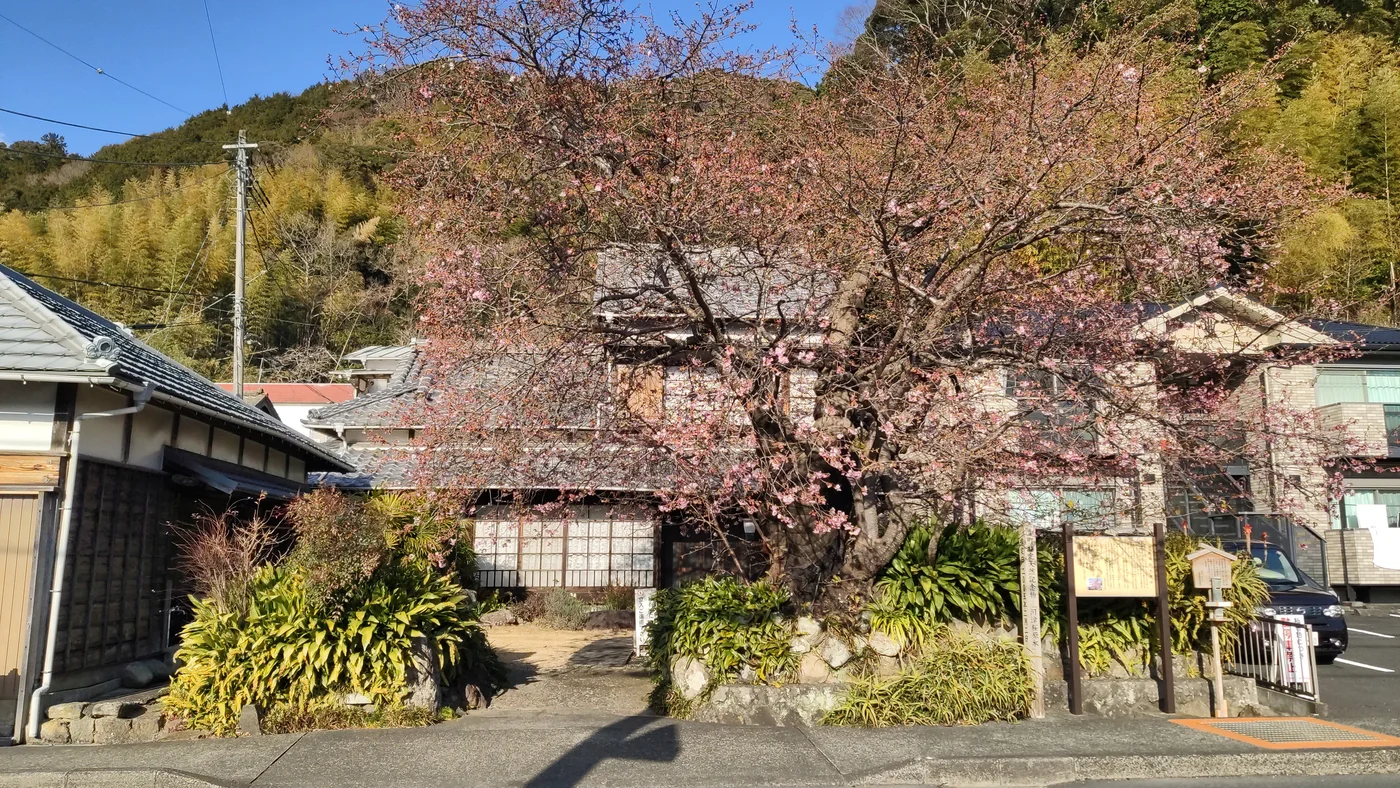
Naka-no-Chaya in Fujiyoshida City sits along the Yoshida Trail mountain approach, surrounded by wild Fuji cherry (mamezakura) groves designated as a natural monument. Compared with the planted rows of Somei-Yoshino lining the North Shore, this stop follows forest footpaths through natural stands of smaller mountain blossoms—ideal for visitors keen to extend cherry season on foot. In 2026, the local Fuji Cherry Festival ran from 17 to 29 April, though bloom logs showed both the floral corridor and wild groves already at hazakura by 26 April. Check current bloom updates before locking in your dates here.
Ride the Umagaeshi Line bus from Fujisan Station and alight at Naka-no-Chaya, a roughly 20-minute trip. In spring 2026, the operator ran services only on weekends and national holidays, leaving roughly 30 minutes between the morning outbound arrival and the morning return bus—with the next bus not running until the afternoon. If 2027 follows a similar timetable, early-morning bus passengers should pre-arrange a return taxi or pair the trip separately with a half-day visit to Kitaguchi Hongu Fuji Sengen Shrine. Travellers spending only one night at Lake Kawaguchi who also plan to climb Chureito Pagoda should wait for fresh bloom reports from both sites before choosing between them.
Late April to May: Switch to Fuji Shibazakura Near Lake Motosu
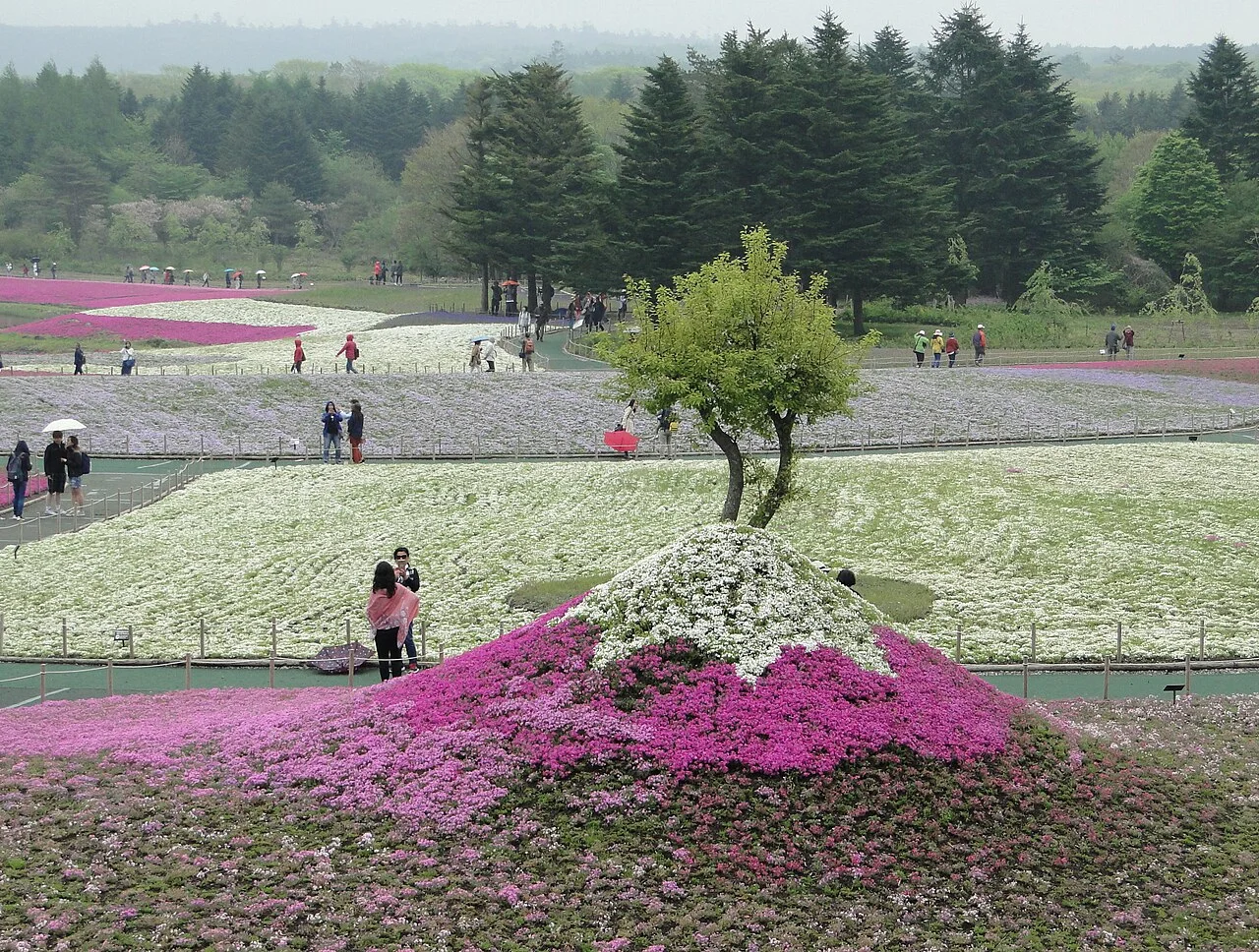
The Fuji Shibazakura Festival takes place at Fuji Motosuko Resort (212 Motosu, Fujikawaguchiko Town). Unlike towering Somei-Yoshino trees, shibazakura (moss phlox) grows low across the ground in sweeping carpets of pink and white, with its own separate bloom updates. In 2026, the festival ran from 11 April to 24 May. If you are travelling between late April and May 2027, treat the moss phlox fields as a standalone half-day excursion and check the organiser's announcements for that year's opening dates, tickets, and bloom reports. Over Japan's Golden Week holiday period, securing festival transport in advance matters far more than squeezing in a few remaining lakeside cherry trees.
To reach the grounds from Lake Kawaguchi, look up the official Fuji Shibazakura Festival Liner timetable and boarding details; in 2026, shuttle buses from Kawaguchiko Station took about 40 minutes. Regular buses towards Lake Motosu and dedicated festival shuttles often appear mixed together in search results, so verify that your chosen bus stops specifically at the Fuji Shibazakura Festival grounds or Fuji Motosuko Resort. Fujikyu's Blue Line also passes the Lake Motosu area, though the resort's access guide notes that the festival stop operates only during the event period; outside those dates, alighting at Kenkyo requires around a 20-minute walk. For sat-nav when driving, enter Fuji Motosuko Resort or Motosu Highland. Day-trippers returning to Tokyo should allocate most of the daytime to the flower park and allow breathing room for the bus transfer back at Kawaguchiko Station—check your preferred return shuttle first if departures have wide gaps.
If your companions are mainly set on traditional cherry trees, focus on both shores of Lake Kawaguchi and Shimoyoshida around mid-April. Arriving in May instead, inspect updated photos of the moss phlox beds before buying dated entry tickets. For Tokyo day trips, direct highway buses ran between Shinjuku and the resort during the 2026 festival; if similar services run in 2027, compare the total door-to-door time against transferring at Kawaguchiko Station. If your ticket routes via Kawaguchiko Station and you have spare time after returning from the resort, take a relaxed walk along the nearby Funatsu lakeside.
A few useful answers
When is the best month to see cherry blossoms at Lake Kawaguchi in 2027?
Lakeside Somei-Yoshino trees typically reach peak bloom around mid-April. Book accommodation around that window, then use Fujikawaguchiko Town's bloom reports to time the North and South Shores, and Fujiyoshida City's updates for Chureito Pagoda.
Are the Lake Kawaguchi Cherry Blossom Festival and the Arakurayama festival the same event?
No. The Fuji Kawaguchiko Cherry Blossom Festival takes place around Enkei Hall on the North Shore in Fujikawaguchiko Town. Arakurayama Sengen Park is in Fujiyoshida City; the city cancelled its formal park festival in 2026, though traffic controls and observation-deck rotations still applied during bloom season.
For a Lake Kawaguchi day trip, should I choose Chureito Pagoda or the North Shore?
If your main goal is photographing the five-storey pagoda with Mount Fuji, take the Fuji Excursion to Shimoyoshida first. If you prefer wandering past more cherry trees with easier strolling and rest stops, taking the Red Line from Kawaguchiko Station to the North Shore saves transfers and works far better with a pushchair.
How do I take the bus from Kawaguchiko Station for cherry blossom viewing?
The Red Line serves the North Shore, including Ubuyagasaki and Enkei Hall. The Green Line heads along the South Shore for Yagizaki Park and Fuji Omuro Sengen Shrine. If you plan to visit both shores, check timetables for buses returning to the shared hub to switch lines.
How many steps do you have to climb at Arakurayama Sengen Park?
The Sakuyahime Steps leading up from the shrine courtyard to Chureito Pagoda total 398 steps. Additional stairs lead up the shrine approach and from the pagoda to the upper observation deck; official guides estimate roughly 25 minutes on foot from Shimoyoshida Station, plus extra time for queues in peak season.
What flowers can you see after the Lake Kawaguchi cherry blossoms finish?
From late April into May, check the shibazakura (moss phlox) bloom reports at Fuji Motosuko Resort. The resort sits near Lake Motosu and requires a separate shuttle or bus ride from Kawaguchiko Station.
Official information and references
Sources used in this guide.
- Fujikawaguchiko Town Tourism Information (Typical Peak Bloom for Lakeside Somei-Yoshino Cherry Blossoms)
- Fujikawaguchiko Town Tourism Information (Fuji Kawaguchiko Cherry Blossom Festival Notice & Event Map)
- Fujikawaguchiko Town Spring Event Notice (2026 Festival Dates, Hours & Cherry Blossom Map)
- Kita-Kawaguchiko Tourism Association (2026 Cherry Blossom Festival Extended to 15 April)
- Fujikawaguchiko Town Tourism Information (Enkei Hall, North Shore Promenade & Red Line Stops)
- Fujikawaguchiko Town Tourism Information (Yagizaki Park Facilities & Green Line Bus Stop)
- Fujikawaguchiko Town Tourism Information (Shikkogo Park beside Fuji Omuro Sengen Shrine)
- Fujikawaguchiko Town Tourism Information (Oku-Kawaguchiko Sakura no Sato Park)
- Fujiyoshida Tourism (Walking Map from Shimoyoshida Station to Chureito Pagoda Observation Deck)
- Fujiyoshida Tourism (Arakurayama Sengen Park Cherry Blossom Season Controls)
- Fujiyoshida Tourism (Bloom Updates & Live Cameras for Chureito Pagoda, Shrine & Nyoraiji Temple)
- Fujisanroku Electric Railway (Fuji Excursion Stops, Timetables & Tickets)
- Fujikyu Bus (Shinjuku to Kawaguchiko & Fujisan Station Timetables and Reservations)
- Fujikyu Bus (Kawaguchiko Sightseeing Red Line & Green Line Route Maps and Timetables)
- Fuji View Hotel (Garden Cherry Blossoms & Guest Walking Information)
- Fujikawaguchiko Town Tourism Information (Kawaguchiko Muse Museum & Closing Days)
- Fuji Motosuko Resort (Fuji Shibazakura Festival, Bloom Updates & Shuttle Buses)
- Fujikyu (2026 Shibazakura Festival Dates & Shuttle Bus Timetables)
- Fujikyu Bus (October 2026 Sightseeing Bus Route Map & Kawaguchiko Station Boarding Stops)
- Fujikyu Bus (Ubuyagasaki Location & Ubuya-mae Bus Stop)
- Fujiyoshida Tourism (Typical Bloom Dates & Shimoyoshida Station Luggage Storage)
- Fujiyoshida Tourism (Naka-no-Chaya Fuji Cherry Festival & Access)
- Fuji Motosuko Resort (Seasonal Festival Bus Stop & Kenkyo Bus Stop Access)
- Fujikyu Yamanashi Hire (2026 Umagaeshi Line Operating Days & Timetables to Naka-no-Chaya)