The 2027 Kawaguchiko Winter Fireworks run across 11 nights from 23 January to 23 February (20:00–20:20 JST). Compare Oike Park, north-shore photo spots, last trains to Tokyo, and lakeside stays.
- Region & Focus
- Lake Kawaguchiko and Mount Fuji
- Reading Scope
- 18 min read · 8 chapters · 6 Q&As
- Official Verification
- 27 official sources checkedUpdated 22 November 2026
- Key Topics
- WinterSeasonsChubu & Hokuriku
Chapter Route Map (tap any stop)
- When are the 2027 Kawaguchiko Winter Fireworks?
- Three south-shore launch sites: choose Oike Park first
- Day trips from Tokyo: work backwards from Otsuki connections
- Where to stay: south shore, station area, or north shore?
- Photographing Mount Fuji and the fireworks from the north shore
- Sightseeing buses, winter driving, and walking safely at night
- How to plan a 2-day, 1-night itinerary around the 20:00 show
- What to do in snow or high winds
- Quick Q&A
In 2027, the Kawaguchiko Winter Fireworks run on Saturdays and Sundays from 23 January to 21 February, plus a final display on Tuesday 23 February for Mount Fuji Day, making 11 nights in total. Each show lasts 20 minutes from 20:00 to 20:20 JST. For a first visit, head to Oike Park on the south shore, about a 20-minute walk from Kawaguchiko Station. If you are heading back to Tokyo the same night, check Fujikyuko Line connections to JR trains at Otsuki in advance; if you want north-shore lake views, are travelling with children, or prefer an unhurried dinner afterwards, staying overnight makes the evening far easier.
When are the 2027 Kawaguchiko Winter Fireworks?
In its winter events update on 20 November 2026, the Fuji Five Lakes Tourism Federation listed the Kawaguchiko Winter Fireworks for Saturdays and Sundays from late January to late February, plus 23 February. Both Fujikanko Travel and Fuji Lake Hotel publish the exact same 2027 dates, with Oike Park as the main venue. When booking accommodation, match your check-in date to the 20:00 showtime first, then work backwards to plan your departure from Tokyo and the following morning. Remember that all event times are in Japan Standard Time (JST), so switch to local phone time as soon as you arrive.
Travellers building a long weekend around National Foundation Day on 11 February will find displays on Saturday 13 and Sunday 14 February. There is no display on Monday 22 February, so anyone arriving at the lakeside that evening will have to wait until the following night. If you want to avoid Saturday room rates, consider centring your stay around Tuesday 23 February instead. Bear in mind that 23 February is also The Emperor's Birthday, a Japanese public holiday, so check bus, train, and shop schedules under weekend and holiday timetables.
When searching Japanese announcements, include "fuyuhanabi" (winter fireworks) alongside 2027. Searching only for Kawaguchiko fireworks often pulls up the summer Kawaguchiko Lake Festival, such as the 5 August 2026 display, which also draws crowds to Oike Park and nearby Funatsuhama. Before relying on any notice for road closures, extra trains, or food stalls, confirm the month and exact event name at the top of the page. Save Oike Park, Kawaguchiko Station, and your hotel as three separate pins on your phone—and share those exact names with your companions—so nobody accidentally navigates to Oishi Park on the north shore.
- January: 23 (Sat), 24 (Sun), 30 (Sat), and 31 (Sun).
- February: 6 (Sat), 7 (Sun), 13 (Sat), 14 (Sun), 20 (Sat), and 21 (Sun).
- Final night: 23 February (Tue, Mount Fuji Day). All 11 nights run 20:00–20:20 JST.
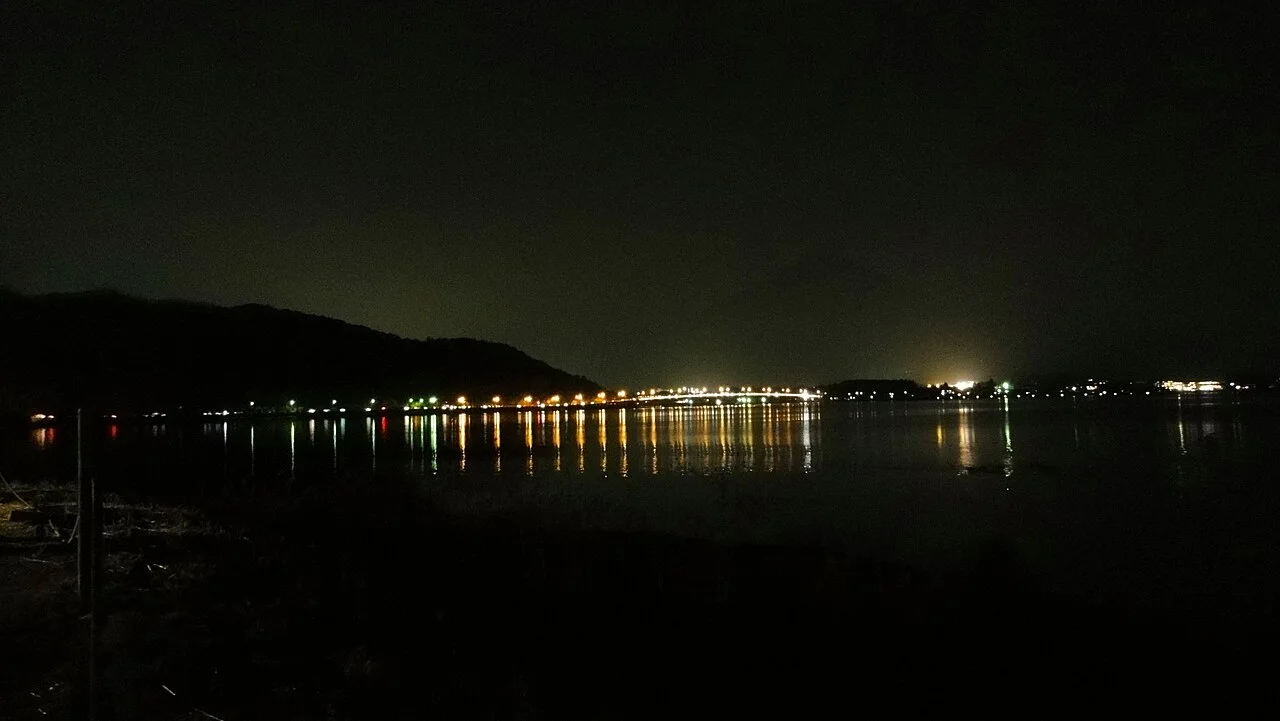
The 2027 Kawaguchiko Winter Fireworks run across 11 nights from 23 January to 23 February (20:00–20:20 JST). Compare Oike Park, north-shore photo spots, last trains to Tokyo, and lakeside stays.
Three south-shore launch sites: choose Oike Park first
Oike Park sits on the south shore of Lake Kawaguchiko, just east of the Kawaguchiko Ohashi Bridge. Its lakeside edge puts you close to the launch point and has the most straightforward entrances to spot. By day, you can ride either the Kawaguchiko Sightseeing Bus Red Line or the Saiko Sightseeing Bus Green Line to the Kawaguchiko Herb Hall stop and walk through the herb hall grounds. On foot from Kawaguchiko Station, allow roughly 20 minutes plus extra margin for pedestrian crossings and slower crowds. On your first visit, walk down to the water in daylight to note the herb hall and the turning back towards the station so you can retrace your steps easily after dinner.
The other two launch sites firing on the same evenings are Tatami-iwa, next to the lakeside prefectural car park, and Yagisaki Park in the Kodachi area on the west side of the bridge. Tatami-iwa's car park is easy to find on a map, though you will need to keep lanes clear for traffic and stand in the designated pedestrian areas as directed. Travellers staying in Kodachi who do not need to cross the bridge on the way back can comfortably watch near Yagisaki Park. Anyone based in Funatsu or returning to Kawaguchiko Station should stick to Oike Park to avoid a longer walk in the dark.
Because each show lasts only 20 minutes, save the walk between Oike Park and Yagisaki Park for daytime. That lakeside path crosses from the east to the west side of the bridge, and on fireworks nights you would be pushing through entrance crowds—or slowing down further if the pavement is icy. Starting halfway through often leaves you with partial views and the risk of missing the finale while hunting for a spot. If the waterfront at the main site looks packed, step slightly back along the open paths where the bursts rise cleanly above the front rows, giving yourself an easier exit towards the street afterwards.
Fujikawaguchiko Town lists Oike Park as a free public park open at all hours, and Yamanashi Prefecture's 2026 event notice likewise confirmed free viewing. The park has paved paths, benches, and public toilets. If anyone in your group dislikes loud bangs, pick a vantage point near one of the outer park exits where the sky is still clear; stepping out to the perimeter is much quicker for restless children than fighting back against the lakeside crowd.
If you are staying near Yagisaki, use the hotel loos and fill water bottles before heading down to the water. Yagisaki Park offers lakeside footpaths and raised ground looking towards Mount Fuji, so a quick daylight stroll helps you memorise the entrances and turnings back to your lodge. Inside the park, the Kawaguchiko Muse Museum displays works by doll artist Yuki Atae (separate admission applies) and makes a pleasant afternoon stop while exploring Kodachi. If your group splits up for viewing, agree on a specific park name and exit gate beforehand rather than vaguely saying "meet by the lake".
Day trips from Tokyo: work backwards from Otsuki connections
Getting to Kawaguchiko from Tokyo is straightforward. Highway buses depart from Shinjuku Expressway Bus Terminal (Busta Shinjuku); check your booking screen to make sure the terminus is Kawaguchiko Station rather than confusing it with Fuji-Q Highland or Fujisan Station. By rail, the direct Fuji Excursion limited express requires both a base fare ticket and either a reserved-seat limited express ticket or an unreserved-seat ticket. Alternatively, change at Otsuki onto a local Fujikyuko Line train—handy if you want to hop off at Shimoyoshida for Arakurayama Sengen Park earlier in the day before continuing along the same line to Kawaguchiko.
Rule out impossible return options right away. Under Fujikyu Travel's Shinjuku highway bus timetable effective from November 2026, the last bus from Kawaguchiko Station to Shinjuku leaves at 20:15, five minutes before the fireworks end. Anyone planning to watch the full display should look to the trains instead. If you are already committed to that late bus, finish your evening near the station and save the fireworks for another trip; trying to watch the opening volley by the lake and sprint back leaves less time than the standard daytime walk.
Under the Fujikyuko Line timetable for Kawaguchiko Station effective 14 March 2026, evening trains towards Otsuki depart at 20:38, 21:16, and 22:10. That 20:38 service leaves just 18 minutes after the finale—shorter than Yamanashi Prefecture's reference walking time from the main site—so plan around the 21:16 train if you want to watch the entire show at Oike Park. Next, check JR East's eastbound services from Otsuki towards Hachioji, Takao, or Shinjuku. After the late Fujikyuko arrival at Otsuki, you still need time for the transfer walkway and waiting on the JR platform, and some connections require another change at Takao. Always search through to the station nearest your Tokyo hotel so you can see the final arrival time.
When looking up your return journey, enter your intended show night, "Kawaguchiko" as the origin, your final destination, and your target departure window, then save a screenshot of the entire itinerary. Mobile signal can stutter right after the finale, and having the train numbers, transfer points, and directions offline saves guesswork. Searching right down to your hotel's nearest station matters especially if you are staying in Ueno, Asakusa, or around Tokyo Bay, where you still have a cross-city ride after Shinjuku. If your accommodation is near a station, check whether its main entrance locks late at night.
Starting from Oike Park and aiming for the 21:16 train, buy your return tickets before the fireworks begin and pick a viewing spot on the side closest to the station walk. As soon as the finale finishes, pack your camera and retrace the route you scouted in daylight. If you are navigating with a wheelchair or pushchair, build in extra minutes for pedestrian crossings, crowds, and station lifts—if the schedule looks tight, staying overnight on the south shore is the better choice.
Day-trippers carrying bags need to line up storage closing times against the 20:20 finale. At Fujikanko Travel's counter opposite Kawaguchiko Station, luggage storage operates from 09:00 to 17:30 at ¥500 for small items and ¥800 for bags 60 cm or taller. Their coin lockers on the ground floor of the Fujikan Building are listed as open until 20:00. Both options require you to collect your bags before the fireworks start. If your luggage is too bulky to take down to the park, arrange overnight-accessible storage or leave main suitcases at your Tokyo hotel and travel light with a daypack.
Using JR East's December 2026 weekend and holiday timetable as a benchmark, the final eastbound departures from Otsuki at 22:24 and 22:56 both terminate at Takao. Under that schedule, any Kawaguchiko departure reaching Otsuki after 22:56 will not connect through, and even catching the 21:16 train requires checking both the Otsuki transfer margin and onward trains east from Takao. If you want to watch all 20 minutes and cannot find a clean end-to-end connection, switch to an overnight stay in Kawaguchiko early. If friends in your group are staying in different parts of Tokyo, have everyone check their own final station first and agree on a strict cut-off time to leave the waterfront.
Fujikyu Bus lists the standard adult one-way fare between Shinjuku and Kawaguchiko at ¥2,200, or ¥2,000 when paid online. If you take the bus out and return by train after the fireworks, price those two single legs separately. Since October 2026, online bookings on the Shinjuku line have been split by operating company, so identify your chosen bus operator on the route page first to select the right booking portal. Even if you plan to take the train home, you can still book a single outbound bus seat without tying it to a return ticket.
Where to stay: south shore, station area, or north shore?
If your main goal is watching the fireworks comfortably, start by looking at south-shore stays within walking distance of the launch site. A hotel that looks close to the water on a map may still have its entrance facing away on a back street, so plot a walking route from the actual front door to check for busy main roads, steep slopes, or long detours around the shore. Staying on the south shore also helps couples or groups with different plans: one person can linger for the last burst while another heads back early, and you do not have to haul a tripod around all afternoon when you can pick it up after dinner.
Station-area hotels suit travellers catching an early morning bus or train the next day. You can drop bags in the morning, explore the lake by sightseeing bus or on foot, watch at Oike Park, and walk straight back towards the station afterwards. If you are leaving on one of the first departures, check room rates, check-out procedures, breakfast hours, and luggage storage on a single comparison page before booking. Planning to eat before walking to the shore? Check restaurant last-order times in advance, and rely on places actually open late near your hotel if you want a warm snack afterwards.
The north shore shines the next morning, giving you immediate views across the lake towards Mount Fuji—ideal if daytime strolls around Oishi Park or Ubuyagasaki are top of your list. If you stay on the north shore and want to watch from the south shore, sort out late-evening transport before arriving. Ask shuttle-equipped hotels separately about daytime station pick-ups and post-20:20 returns from Oike Park, as they are often different services. If you plan to take a taxi afterwards, pre-arrange both the time and a pick-up point outside the traffic-restricted lakeside car parks so driver and passengers meet without confusion.
Before paying extra for a "fireworks-view" room, ask the property two direct questions: which launch site does that specific room category face, and which communal areas can guests use during the display? Fuji Lake Hotel's 2027 announcement, for example, explicitly notes that guests can watch the winter fireworks from its on-site Lakeside Terrace ("Kojo Terrace"). If you are happy using a shared terrace, you can choose your room based on space, beds, and meal plans instead; if you are paying specifically for a private window view, get written confirmation for the exact room type you booked.
At ryokan and hotels serving half-board meals, work backwards from the 20:00 showtime when picking a dinner slot. Multi-course kaiseki dinners take time, and you still need a few minutes afterwards to return to your room for extra layers and walk out to the water, so take an earlier seating whenever available. When comparing prices, stack the full dinner-and-breakfast total against a room-only rate plus separate evening dining and night transport costs.
When travelling in a mixed group—say, some keen on the fireworks and others prioritising hot-spring baths and a lie-in—split your room choices accordingly. In a two-room family booking, put older relatives close to the dining room and lifts, while parents with young children choose an earlier dinner and a shorter walk to the park. Always enter the exact headcount including children in the booking widget and compare final total prices rather than the headline per-person rate; for half-board plans, verify how many diners are included so you do not miscalculate the upgrade cost.
If the winter fireworks are the single non-negotiable highlight of your trip, check the free-cancellation deadline before adding an extra night. Cancellation cut-offs usually fall well before reliable evening weather forecasts arrive, so build an enjoyable daytime itinerary away from the water in case clouds roll in. When booking two nights, try to stay at the same property throughout—even if you spend one evening on the north shore, keeping one base means your luggage stays put all day.
Photographing Mount Fuji and the fireworks from the north shore
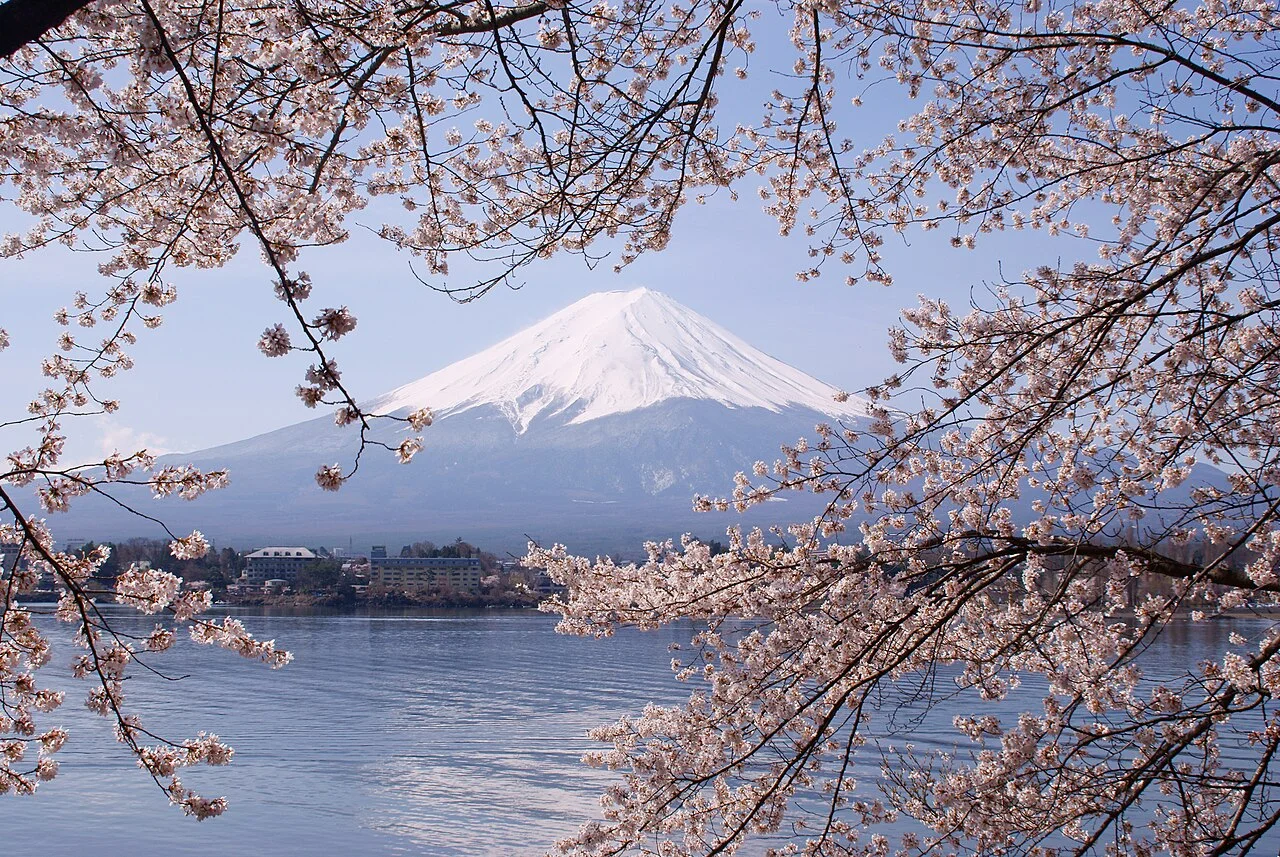
Standing at Oike Park, the lake lies to your north and Mount Fuji rises behind you to the south—putting you right below the bursts, but forcing you to look away from the mountain. To fit both Mount Fuji and the fireworks into one frame, cross to the north shore and look south. Ubuyagasaki sits at the northern end of the Kawaguchiko Ohashi Bridge, making it easy to scout the ridgeline and opposite shore by day, while Oishi Park lies further west off the Red Line at the Kawaguchiko Natural Living Center stop. The two spots are some distance apart with noticeably different angles, so pin Oike Park, Tatami-iwa, Yagisaki Park, and Mount Fuji on a map beforehand rather than shifting locations at the last minute.
Good composition balances burst height, where the mountain sits in the frame, and whether shoreline trees or streetlamps cause glare. Oishi Park gives a direct daytime view of Mount Fuji, though at night the three launch sites are spread far across the lake, making the fireworks appear smaller in the frame. Nearer the northern end of the bridge, bridge lights help lead the eye across the water—take a test shot to check whether nearby streetlamps overpower the scene. If you want Mount Fuji larger in the shot, test a slightly tighter focal length first, gauge the vertical gap between the opening bursts and the summit, and adjust your zoom or headroom accordingly.
After dark, Mount Fuji's silhouette depends on twilight glow, moonlight, or ambient sky brightness. Even when the mountain looks crisp on daytime webcams, it may drop to a faint dark outline by 20:00. With the naked eye, the bright bursts and reflections stand out most, whereas a longer camera exposure can pull more detail from the mountain and water. If you mainly want big overhead bursts, stay on the south shore; save the cross-lake framing decision until you have checked the daytime skyline and confirmed your return transport.
Shoot a clean test frame before the fireworks begin to lock in your water-to-sky ratio, bridge placement, and manual focus. On a phone, choose a wide frame with clear landmarks and avoid zooming digitally mid-show; keeping a strip of lake and steady shoreline lights in frame also helps you spot camera shake right away. On a dedicated camera, focus on distant shoreline lights first and dial in exposure as the light fades. Keep tripod legs tucked close so pedestrians have room to pass behind you. If strong gusts rattle the tripod, switch to shorter exposures or handheld video near a lit walkway.
Reflections and mountain silhouettes favour different conditions. On a calm evening, distant shoreline lights mirror cleanly on the water, rewarding a wider slice of foreground lake. When wind ripples the surface, reflections break into scattered streaks—crop tighter on a thin dark band of shoreline and give most of the frame to the fireworks in the sky. Rather than waiting the whole time for the wind to drop or the clouds to part, capture a few crisp bursts early and give yourself the final minutes to lower your camera and simply watch the last volley fade over the water.
Sightseeing buses, winter driving, and walking safely at night
Sightseeing buses are ideal for daytime exploring around the lake. From Kawaguchiko Station to Oike Park, both the Red Line and Green Line stop at Kawaguchiko Herb Hall; for Oishi Park on the north shore, check the Red Line timetable for Kawaguchiko Natural Living Center. Whenever you look up an outbound bus, check the return timetable from the same stop in the opposite direction at the same time. Plan your lakeside sightseeing for daylight, then settle on your chosen shore before dusk so you are not relying on daytime loop routes after dinner.
Fujikawaguchiko Town warns of event traffic restrictions on fireworks nights. If you are driving, choose a car park from the current year's official venue map before setting off and verify whether the exit and return route use the same road. Satnavs often try to route drivers down narrow lakeside lanes; if a road is closed on the night, follow marshal directions instead. Park early and walk to dinner and your viewing spot rather than cruising along the south shore just before 20:00 hunting for a space. Keep coats and gloves accessible rather than buried in boot luggage so you can layer up before leaving the car.
For winter drives on the Chuo Expressway or around the Fuji Five Lakes, confirm with your hire company that the vehicle has winter tyres and carry compatible snow chains. Japan's Ministry of Land, Infrastructure, Transport and Tourism mandates fitting chains during official chain-control restrictions even on vehicles equipped with winter tyres. If you have never fitted snow chains in freezing conditions, swap to trains and local walking instead. Even roads that felt fine in daylight can ice over after dark where meltwater refreezes. If snow is forecast, build extra buffer into your car-return drive—especially if you have a morning flight, vehicle inspection, and airport transfer the next day.
On foot, keep well back from the water's edge, wear grippy soles on damp paths, and walk around any shiny patches that could be black ice. Choose touchscreen-compatible gloves so you are not peeling them off every time you take a photo, and fasten collars, hats, and cuffs before stepping out of warm restaurants. If your phone battery is running low in the cold, save offline screenshots of the route back to your hotel or station before topping up from a power bank. Point any torch downward at your own footing—never into oncoming walkers' eyes or across cameras lined up on the shore.
Families with young children can plan ahead for noise and waiting. Walk through Oike Park right after dinner to check your bearings; if the opening bursts feel too loud, shift back towards the outer edge where you can step onto the street quickly. Have children try on earmuffs or ear defenders before leaving the hotel, and keep one adult hand free rather than juggling hot drinks in both. Pushchairs roll easiest along the outer paved paths—agree on a well-lit park gate as your fallback meeting point in case faster walkers get separated.
When travelling with older relatives, factor in seating while waiting and easy access between toilets and your viewing spot. Enter the park on the flattest side; if the first benches are taken, follow the path slightly further along—you only need an unobstructed patch of sky. If anyone uses a wheelchair and snow is on the ground, keep routes short near your hotel or book a property with an accessible guest viewing area. Before booking, share your wheelchair dimensions with the hotel and ask directly about every doorway, step, and lift between the guestroom, viewing terrace, and accessible toilets.
How to plan a 2-day, 1-night itinerary around the 20:00 show
If you are travelling from Tokyo and staying the first night at Kawaguchiko, you can stop at Shimoyoshida in the morning. Fujiyoshida's official walking route from Shimoyoshida Station to the Arakurayama Sengen Park viewpoint passes through Sengen Shrine and climbs 398 steps. Stash large bags beforehand—especially after snow when steps turn slick and you need both hands free for railings rather than hauling luggage. If morning train connections run late, head straight to Kawaguchiko to drop your bags and spend a relaxed afternoon on the south shore instead, leaving plenty of time for an early dinner and the evening walk.
Once you have dropped bags at your hotel, take a short walk around Oike Park and the herb hall to lock in your landmarks. Eat an early dinner, swing back to pick up extra layers—or grab hot canned drinks near the station—and head down to the shore. Keep the next morning on the same side of the lake. From the south shore, ride the Mount Fuji Panoramic Ropeway up Mount Tenjo if visibility is clear and winds are calm; ropeway services suspend during strong winds or storms, so check operating status before setting out and swap to a lakeside stroll or indoor museum if it is closed. From the north shore, walk along Oishi Park or the nearby waterfront before picking up your bags and heading back to Kawaguchiko Station.
If your fireworks night falls on a Sunday, save longer museum visits or the north shore for Saturday, then keep Sunday anchored on the south shore. Staying two nights across consecutive show dates lets you watch on the first clear evening and use the next day freely—or wait for better clouds and wind on the second night if needed. Remember the final show falls on a Tuesday: anyone arriving in late February specifically for the fireworks should double-check their check-out date so they do not leave a day early.
On a single-day trip returning to Tokyo at night, skip crossing the lake altogether. Visit Mount Tenjo or the south shore on arrival, walk past Oike Park's entrances during the afternoon, eat dinner on the station side, and walk to the water afterwards. Always note both your preferred evening train and the following backup service; if the later option terminates at Otsuki without onward Tokyo connections, decide during the afternoon whether to book a room or head back to Tokyo early.
Between 6 and 14 February, you can pair a weekend fireworks night with the Saiko Ice Festival by day. Fujikanko Travel's 2027 schedule includes four fireworks shows over 6, 7, 13, and 14 February, while the ice festival takes place at Yacho no Mori Park (Wild Bird Forest Park) on the western shore of Lake Saiko—a different lake from Oike Park. Take the Green Line sightseeing bus from Kawaguchiko Station; Fujikawaguchiko Town estimates about 45 minutes each way. Visit the ice formations in the early afternoon and catch one of the more frequent mid-afternoon Green Line buses back to Kawaguchiko so you still have breathing room for dinner and warm layers.
Saiko Ice Festival illuminations run from sunset until 19:00. If you stay until the lights switch off, you will have barely an hour to get from Lake Saiko back to Kawaguchiko's south shore, park or walk from the bus, and reach the viewing area. Drivers must also allow time to walk from the car park to the water. If you want both evening displays without rushing, stay two nights and split them across separate evenings; with only one night, see the ice by day and the fireworks at night—or visit Lake Saiko the following morning before leaving.
What to do in snow or high winds
First, verify whether the display is still going ahead. Fujikawaguchiko Town posts event and traffic updates and answers daytime enquiries through its Tourism Division on 0555-72-3168. Previous 2026 notices also warned that dry-weather forest fire alerts can force cancellations. When searching same-day Japanese updates—such as "Kawaguchiko fuyuhanabi kaisai" (held as planned) or "chushi" (cancelled) plus the date—double-check the year at the top so you do not mistake an old cancellation notice for tonight's show. If it is cancelled, overnight guests can still enjoy dinner, hot springs, and clear morning views, while day-trippers can catch an earlier train back to Tokyo rather than waiting in the cold.
According to Japan Meteorological Agency 1991–2020 climate normals for Kawaguchiko, average daily minimum temperatures sit at −5.7°C in January and −4.8°C in February. Those are overnight lows, so check the hourly forecast and wind speed for 20:00 before deciding what to wear. Standing still by the lake feels far colder than brisk walking: pack thermal base layers for your legs and a windproof outer jacket at minimum, and swap out damp socks or shoes at your hotel if you walked through snow earlier. If face masks fog up your glasses, wipe lenses clean before walking down towards the water so you can spot icy patches underfoot.
Once you know the show is on, decide whether it is worth chasing a Mount Fuji backdrop. Check UTY Yamanashi Broadcasting's live webcams at Kawaguchiko Station or the Panoramic Ropeway during the day, or walk out to your chosen viewpoint to gauge tree cover, bridge lights, and paths. If the summit stays buried in cloud, stay on the south shore for close-up bursts and save Mount Fuji sightseeing for the next morning. In brisk winds, step away from exposed bridges and open piers towards sheltered spots that still offer clear sky and a quick retreat to lit streets.
If rain keeps you on the south shore while waiting for evening, spend the afternoon at the Yamanashi Gem Museum. Located in Funatsu just like Oike Park, it sits right beside the Yamanashi Gem Museum stop on the Red Line. Winter hours run 09:30–17:00 (last entry 30 minutes before closing), closed Wednesdays, with admission at ¥600 for adults and ¥300 for primary and junior high school students. Inside you can browse raw crystals and cut gemstones while waiting for the weather to clear without trekking across the lake, leaving a natural gap afterwards for an early dinner before the fireworks.
When frost or snow coats the walk from your hotel, skip map shortcuts that use unlit steps in favour of wider main roads. Before anyone splits up, save the lead person's phone number and agree to wait inside a sheltered, easy-to-spot entrance if delayed. Should severe weather suspend buses or trains, overnight guests can coordinate onward plans from their hotel, while day-trippers should re-check whether both bus and rail links remain open. If it is your first time catching a highway bus from Shinjuku, read our guide to Mount Fuji highway bus routes and reservations to distinguish Shinjuku, Kawaguchiko Station, and other Fuji Five Lakes stops.
A few useful answers
Which dates are the 2027 Kawaguchiko Winter Fireworks held?
Shows run on 23, 24, 30, and 31 January, and on 6, 7, 13, 14, 20, 21, and 23 February 2027, making 11 nights in total. Every display runs from 20:00 to 20:20 JST.
How do I get from Kawaguchiko Station to Oike Park?
According to Yamanashi Prefecture tourism information, it is roughly a 20-minute walk from Kawaguchiko Station. During the day, you can also take the Red Line or Green Line sightseeing bus and alight at Kawaguchiko Herb Hall. Oike Park is on the south shore, whereas Oishi Park is on the north shore.
Can I catch a bus back to Shinjuku after watching the fireworks?
No. Under current timetables, the last highway bus from Kawaguchiko Station to Shinjuku leaves at 20:15, five minutes before the fireworks finish. To return to Tokyo the same night, check Fujikyuko Line trains to Otsuki along with connecting JR and Tokyo local last trains.
Who is Oishi Park on the north shore best suited for?
It suits photographers who want Mount Fuji and the fireworks in the same frame across the lake, can scout angles in daylight, and either walk back to nearby accommodation or have evening transport arranged. If it is your first visit and you simply want an easy walk from the station, stick to Oike Park on the south shore.
Is there an entry fee for Oike Park?
Oike Park is free to enter year-round, and Yamanashi Prefecture's 2026 event listing also notes free viewing for the display. Hotels and operators charge separately for room packages, dinner plans, or guest-only viewing terraces.
How do I check if the fireworks are cancelled in snow or high winds?
Check the official same-day updates from Fujikawaguchiko Town and the tourism federation. Search online for "Kawaguchiko fuyuhanabi chushi" with the date, or telephone the Fujikawaguchiko Town Tourism Division during daytime hours.
Official information and references
Sources used in this guide.
- Fuji Five Lakes Tourism Federation – 20 November 2026 Winter Events Notice
- Fujikawaguchiko Town Tourism Information – Winter Fireworks Times, Launch Sites, and Traffic Restrictions
- Fujikawaguchiko Town Tourism Information – 2026 Summer Kawaguchiko Lake Festival
- Fujikanko Travel – 2027 Winter Fireworks 11 Dates and Venues
- Fuji Lake Hotel – 2027 Winter Fireworks Dates and Lakeside Terrace
- Yamanashi Prefecture Official Tourism Guide – 2026 Winter Fireworks and Walking Route from Kawaguchiko Station
- Fujikawaguchiko Town Tourism Information – Oike Park
- Yamanashi Prefecture Official Tourism Guide – Yagisaki Park
- Fujikawaguchiko Town Tourism Information – Kawaguchiko Muse Museum
- Fujikawaguchiko Town Tourism Information – Oishi Park
- Fujikyu Bus – Kawaguchiko and Saiko Sightseeing Buses
- Fujikyu Bus – Shinjuku to Kawaguchiko Route, Fares, and Reservations
- Fujikyu Travel – Shinjuku Line Detailed Timetable Effective November 2026
- Fujikyu Bus – Update on Shinjuku to Kawaguchiko Highway Bus Reservation Channels
- Fujikanko Travel – Station Counter Luggage Storage Fares and Opening Hours
- Fujikanko Travel – Fujikan Building Coin Lockers Opposite Kawaguchiko Station
- Fujikyuko Line – Kawaguchiko Station Timetable
- JR East – Otsuki Station Chuo Main Line Eastbound Timetable (December 2026 Weekends and Holidays)
- UTY Yamanashi Broadcasting – Lake Kawaguchiko Live Webcams
- Ministry of Land, Infrastructure, Transport and Tourism (MLIT) – Snow Chain Regulations and Winter Tyres
- Fujiyoshida City Tourism Guide – Walking Route from Shimoyoshida Station to Arakurayama Sengen Park Viewpoint
- Mount Fuji Panoramic Ropeway – Operations, Access, and FAQs
- Cabinet Office of Japan – 2027 National Public Holidays
- Japan Meteorological Agency – Kawaguchiko 1991–2020 Monthly Temperature Climate Normals
- Fujikawaguchiko Town Tourism Information – Saiko Ice Festival and Yacho no Mori Park
- Yamanashi Gem Museum – Winter Opening Hours and Admission Fares
- Fujikawaguchiko Town Tourism Information – Kawaguchiko Ohashi Bridge and Ubuyagasaki Map