A three-day Kawaguchiko driving itinerary arranged by direction: Day 1 for Arakurayama and Fujiyoshida, Day 2 for Oshino Hakkai, Subashiri and Lake Yamanaka, and Day 3 along Kawaguchiko's north shore. Includes licence translation details, car hire and parking, autumn foliage illuminations, and public transport swaps for snow.
- Region & Focus
- Lake Kawaguchiko and Mount Fuji
- Reading Scope
- 24 min read · 9 chapters · 7 Q&As
- Official Verification
- 44 official sources checkedUpdated 22 November 2026
- Key Topics
- ItinerariesSeasonsWhere to stay
Chapter Route Map (tap any stop)
- Fix Your Car Return Time First, Then Pick Tokyo or Kawaguchiko for Pick-Up
- Day 1: Climb Arakurayama from Shimoyoshida, Then Visit Kitaguchi Hongu
- Day 2: Oshino Hakkai to Subashiri, Returning via Lake Yamanaka
- Save the Maple Corridor Illuminations for Your Second Evening
- Day 3: Kawaguchiko North Shore or Lake Saiko Before Afternoon Drop-Off
- Choosing Where to Stay for Two Nights by Meal Times and Room Aspect
- Driving Licence Translation, Car Hire Extras and Budgeting
- Which Stretches to Drop in Snow, Low Cloud or with Older Travellers
- Trimming Rental Days and Public Transport Passes
- Quick Q&A
For a first driving trip around the Fuji Five Lakes, basing yourself in Kawaguchiko for two consecutive nights keeps things simple. Spend Day 1 at Arakurayama's Chureito Pagoda, strolling through Fujiyoshida and visiting Kitaguchi Hongu Fuji Sengen Jinja. On Day 2, drive from Oshino Hakkai across the prefectural border to Subashiri in Shizuoka, return via Lake Yamanaka and, if time allows, stop at Kawaguchi Asama Shrine on Kawaguchiko's north shore. Keep Day 3 around Lake Kawaguchi—choosing between Oishi Park, the Kawaguchiko Music Forest Museum or Lake Saiko—and leave plenty of time in the afternoon to refuel and return the car. If cherry-blossom traffic controls or heavy snow intervene, both Arakurayama on Day 1 and the north shore on Day 3 can easily be swapped for trains and buses.
Fix Your Car Return Time First, Then Pick Tokyo or Kawaguchiko for Pick-Up
For a round trip from Tokyo with two or three travellers travelling light, picking up and dropping off your hire car in Kawaguchiko works best. From Shinjuku, the Fuji Excursion limited express runs directly to Shimoyoshida, Fujisan and Kawaguchiko stations. If you collect your car at Kawaguchiko—for instance at the Toyota Rent a Car Fuji-Kawaguchiko branch on Route 137, listed as a seven-minute walk from Kawaguchiko Station and open 08:00 to 20:00—and are travelling with heavy luggage, young children or anyone who struggles with walking, send one driver to complete the paperwork while everyone else waits at the station pick-up area and follows the branch's shuttle instructions. If you plan to get off at Shimoyoshida Station first on Day 1, arrange left-luggage storage beforehand so you are not hunting for lockers before heading up the hill.
Always weigh the hire branch location alongside your hotel. Travellers arriving late into Kawaguchiko can stay near the station on the first night and collect the car when branches open the next morning. If Day 1 only leaves enough time for dinner and check-in, move Chureito Pagoda to the morning of Day 3 and pick just one stop along Kawaguchiko's north shore. For three or four adults with checked suitcases, driving straight from Tokyo saves a baggage transfer, though the trade-off is urban traffic, return tolls on the Chuo Expressway and potential congestion when dropping the car back in Tokyo. When using the Chuo Expressway, remember to enter your drop-off branch and your final-night accommodation as two separate sat-nav destinations.
For a three-day, two-night trip, compare two rental durations. Picking up at midday on Day 1 and returning at midday on Day 3 keeps the booking close to 48 hours, leaving just one morning stop on Day 3. If you want the full afternoon of Day 3, price out your exact pick-up and return times to compare the hourly extension fee against an extra full day. Alternatively, cover Shimoyoshida by rail on Day 1 and collect the car on the morning of Day 2: this reserves your rental period for Oshino, Lake Yamanaka and Subashiri—where a car makes the biggest difference—while still giving you the north shore before midday on Day 3. Both approaches let you stay in the same hotel for both nights.
If you are catching the Fuji Excursion train back to Tokyo, work backwards from departure time to allow separate buffers for refuelling en route, unloading bags, the branch inspection and walking to the station. Treat 'arriving at Kawaguchiko Station' and 'reaching the hire branch' as two distinct milestones in your schedule. On a Sunday during autumn foliage season when traffic backs up towards Tokyo, the easiest item to trim is the lakeside stroll on Day 3; lock in your car return and train times first, and avoid scheduling evening illuminations on your departure day.
| Day | Main Stop Sequence | If Delayed or Weather Turns |
|---|---|---|
| Day 1 | Arakurayama Sengen Park → Fujiyoshida Honcho Street & lunch → Kitaguchi Hongu → Kawaguchiko check-in | Have lunch first, then choose either Kitaguchi Hongu or the Mount Fuji Radar Dome |
| Day 2 | Oshino Hakkai → Subashiri Higashiguchi Hongu → Lake Yamanaka Nagaike Water Park → Kawaguchi Asama Shrine | Trim to central Oshino Village plus one shrine; keep the Autumn Leaves Festival illuminations for this evening |
| Day 3 | Oishi Park or Music Forest Museum → lunch → refuel and return car | In rain, pick the Music Forest Museum or Yamanashi Prefectural Fujisan World Heritage Center; only continue to Lake Saiko with time to spare |
A three-day Kawaguchiko driving itinerary arranged by direction: Day 1 for Arakurayama and Fujiyoshida, Day 2 for Oshino Hakkai, Subashiri and Lake Yamanaka, and Day 3 along Kawaguchiko's north shore. Includes licence translation details, car hire and parking, autumn foliage illuminations, and public transport swaps for snow.
Day 1: Climb Arakurayama from Shimoyoshida, Then Visit Kitaguchi Hongu
On a clear day, make Arakurayama Sengen Park your first stop. Set your sat-nav to the municipal car parks and walk up from the park entrance; Fujiyoshida City asks drivers not to attempt to drive up to the Chureito Pagoda plaza, and kerbside parking on surrounding roads is prohibited. During regular periods, municipal car parks No. 1 and No. 4 charge ¥1,500 per standard car for six hours, while No. 2 and No. 3 charge ¥1,000 for six hours. Car park No. 1 sits closest to the park and frequently queues out to the entrance during cherry blossom and autumn foliage seasons. If you see a queue, head straight to No. 2 or No. 3—city guidance estimates a five- to ten-minute walk from car parks No. 2 to No. 4 to the park entrance, before the uphill climb begins.
During the 2026 cherry blossom traffic controls (1 to 19 April), municipal car park No. 1 was closed, No. 2 and No. 3 charged ¥1,000 per standard car, No. 4 was restricted to motorcycles, and select residential streets required a resident permit. If you are visiting in spring 2027, consider taking the Fujikyuko Line straight to Shimoyoshida on Day 1 and picking up your car on Day 2, saving the hassle of parking for the rest of the itinerary. Fujiyoshida's tourist office estimates a 25-minute walk from Shimoyoshida Station to the observation deck, plus extra time for queues and the descent. Travellers with limited mobility can wait at Arakura Fuji Sengen Shrine at the foot of the hill or swap this stop for a flat lakeside walk at Kawaguchiko.
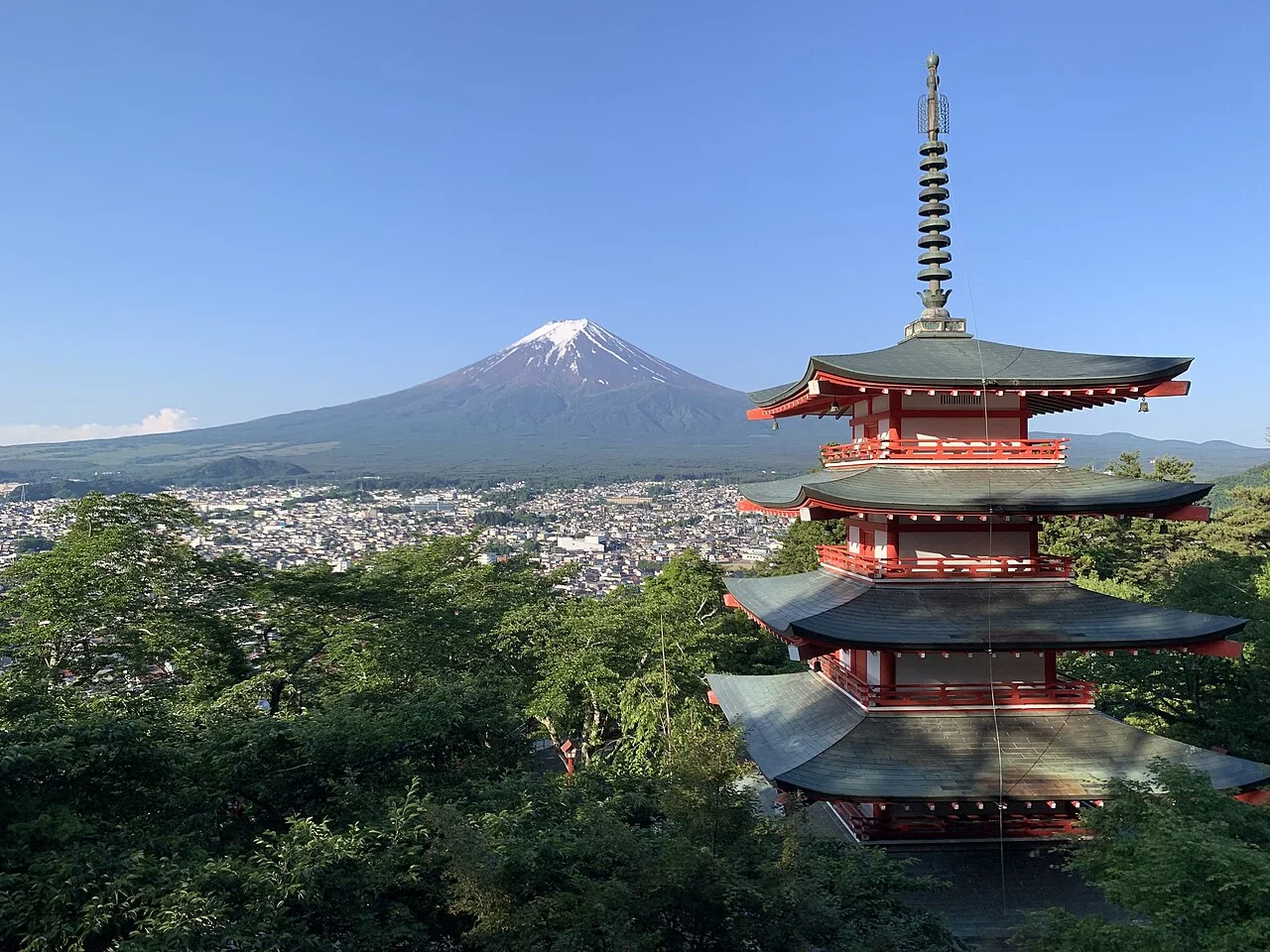
The Sakuya-hime Steps consist of 398 stairs. The classic composition—framing the five-storey pagoda, the town below and Mount Fuji—is taken from the viewing deck above Chureito Pagoda. With toddlers, a baby carrier is far easier to manage on the steps than a pushchair. After rain, use the handrails on damp corners and descents, and keep your camera packed away until you reach the deck. The city has also issued bear sighting notices around the park; in the quieter hours before sunrise or at dusk, check the city's same-day entry advisories and stick to open main paths. Swapping this stop for the Mt. Fuji Panoramic Ropeway at Kawaguchiko gives you lake-and-mountain views from another angle, though the pagoda itself is only here in Shimoyoshida.
Back down the hill, stop for lunch along Fujiyoshida's Honcho Street. Flanked by vintage shop signs and traces of the town's textile heritage, the street offers dramatic Mount Fuji backdrops—shoot strictly from the pavement and keep the pedestrian crossing clear whenever the green man turns. Local speciality Yoshida udon is known for its famously firm noodles, typically topped with boiled cabbage and sweet-savoury braised horsemeat. Many shops also offer pork, tempura or plain broth variations; if you like to taste the soup first, save the spicy suridane chilli paste on the table for the second half of your bowl. If morning parking or queues eat into your schedule, prioritise lunch and hotel check-in and keep street photography brief.
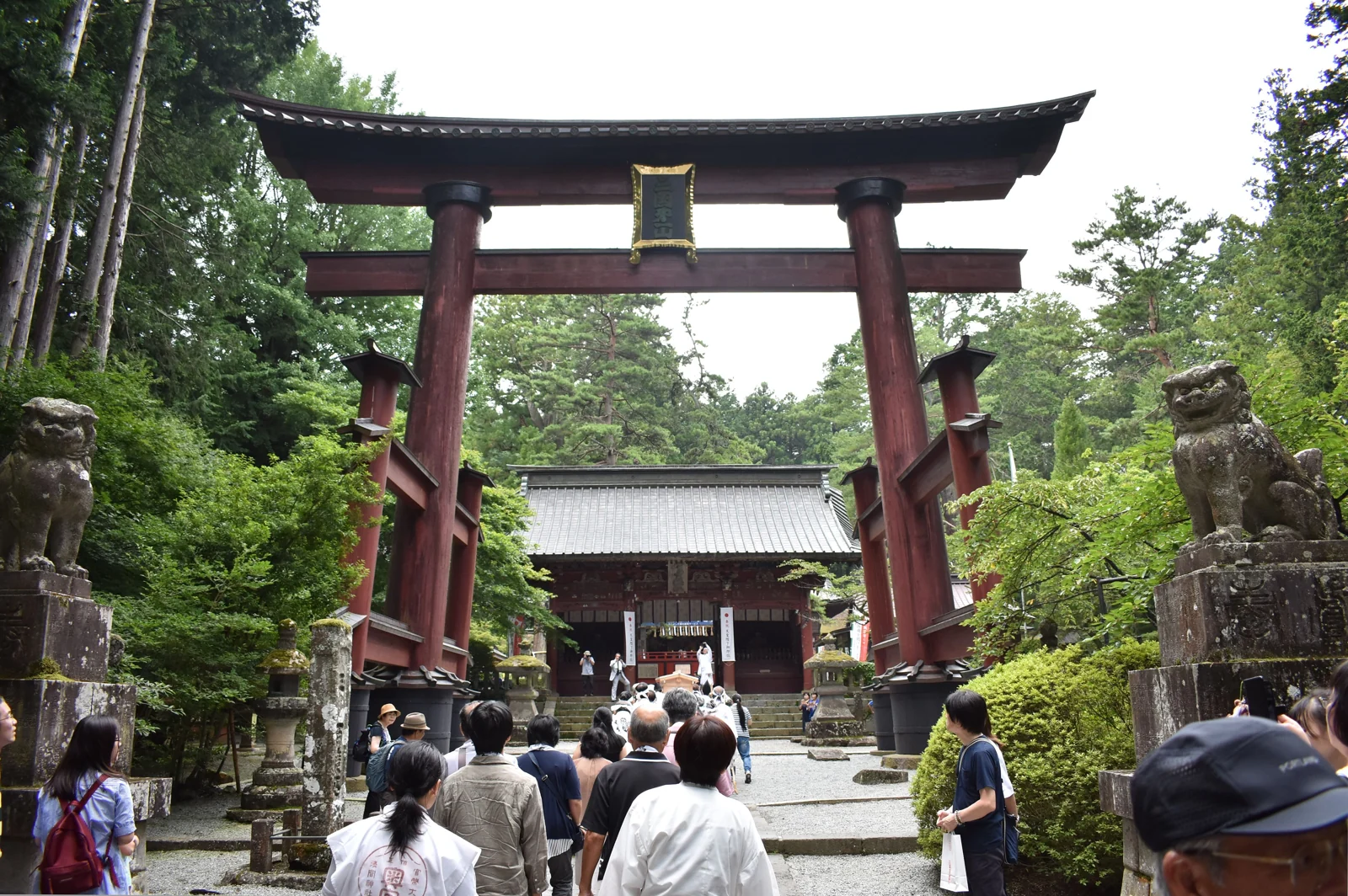
In the afternoon, navigate to 'Kitaguchi Hongu Fuji Sengen Jinja' in Kamiyoshida, Fujiyoshida—a separate shrine from the one at the base of Arakurayama. From the national highway entrance, a cedar-lined approach flanked by stone lanterns leads to a towering wooden torii gate, with sacred trees such as the Fujitaro Cedar and the Husband-and-Wife Cypress standing beside the worship hall. This is the traditional starting point of the Yoshida climbing trail, and official tourism pages list free parking on site. Because the approach is flat and shaded, it is easy for older travellers to stroll at their own pace. If you set off late from Tokyo on Day 1, stop here once before checking in at Kawaguchiko.
In rain or low cloud, the Mount Fuji Radar Dome Museum—located between Kamiyoshida and Oshino—slots neatly into Day 1's afternoon. Inside, you can see the actual radar dome that once stood atop Mount Fuji alongside weather-observation exhibits. According to the Fujiyoshida tourist guide, the museum is open 09:00 to 17:00 (last entry 16:30), with adult admission at ¥630. It is normally closed on Tuesdays (except public holidays), open daily throughout August, and closed over the New Year holiday from 29 December to 1 January. Taking this wet-weather option leaves the next morning open to catch Mount Fuji from Lake Yamanaka if the skies clear.
Day 2: Oshino Hakkai to Subashiri, Returning via Lake Yamanaka
Start by driving to central Oshino Village, where one parking space lets you cover the main spring-fed ponds on foot. Oshino Village lists around ten private car parks around the centre charging roughly ¥300 per standard car, though exact rates vary slightly by lot. Keep some Japanese yen in cash in the car and check the fee board and entry-exit lane before pulling in. If part of your group wants to browse shops while others visit extra ponds, use the main street beside Waku-ike Pond as your meeting zone before heading back to the car. The village is a working neighbourhood of homes, irrigation channels and shops, so step aside for residents and delivery vehicles when taking photos and stay outside the pond railings.
Oshino Hakkai is a cluster of eight springs fed by Mount Fuji's underground snowmelt and forms part of the mountain's World Cultural Heritage site. The village office's walking route runs from Okama-ike through Choshi-ike, Sokonashi-ike, Nigori-ike, Waku-ike, Kagami-ike and Shobu-ike, finishing at Deguchi-ike. If you only have half a morning, explore the dense cluster of ponds in the village centre first before deciding whether to add Deguchi-ike, which sits on the outer edge beside woodland and an Inari shrine and requires extra walking time. Several ornamental ponds also sit beside shops around Waku-ike; following the village map and individual pond plaques is far more reliable for identifying all eight springs than trailing the crowds.
The public pond paths are open all day, whereas Sokonashi-ike sits inside the Hannoki Bayashi Shiryokan open-air museum, which the village lists as open 09:00 to 17:00 with adult admission at ¥300 and age-based child tickets. Early-morning photographers can cover the free central ponds for reflections first, then wait for the museum gates to open to tick off all eight. If you are driving on to Subashiri in the afternoon, avoid cramming parking, toilet breaks, lunch hunting and the walk to Deguchi-ike into one tight window. Travellers who prefer an unhurried village stroll can skip the afternoon Lake Yamanaka stop and spend a relaxed morning in Oshino.
From Oshino, cross into Oyama Town, Shizuoka Prefecture, setting your sat-nav specifically to 'Higashiguchi Hongu Fuji Sengen Jinja' at Subashiri 126. As the historic religious and trailhead hub for the Subashiri route, it sits roughly one minute off the Subashiri Interchange on the Higashi-Fujigoko Road according to Shizuoka Prefecture guidance, with parking on site. Compared with Kitaguchi Hongu on Day 1, the focus here is the Subashiri climbing heritage and shrine architecture. Searching only for 'Fuji Sengen Shrine' risks sending your sat-nav back to Fujiyoshida or all the way to Fujinomiya. Double-check your return direction before heading back to Kawaguchiko, and note that private-car restrictions apply in summer on the uphill road towards the Subashiri 5th Station.
Returning from Subashiri into Yamanashi along Lake Yamanaka, pull in once at Nagaike Water Park on the lake's north shore. Lake Yamanaka tourism information lists free parking here, with broad views across the water towards Mount Fuji in clear weather. If a breeze picks up and breaks the reflection, take a short shoreline walk and head on. You can slot lunch into Oshino, Subashiri or Lake Yamanaka depending on when your group prefers to eat. If afternoon cloud has already swallowed the mountain, skip Nagaike and put the spare time towards Kawaguchi Asama Shrine.
Kawaguchi Asama Shrine sits slightly inland from Kawaguchiko's northern shore. Local tourism records note it was founded following the Jogan eruption of 864, and its seven giant cedars are designated a Yamanashi Prefectural Natural Monument. Stop for the cedar grove, shrine halls and historic approach. The viral view of Mount Fuji framed through a red torii gate belongs to a separate site known as the 'Tenku no Torii' (Torii in the Sky), operated independently; adding that requires extra time for the climb up and down. During the autumn foliage season, visit Kawaguchi Asama Shrine in daylight so that after dark you can stay right by the Maple Corridor festival area without navigating hillside roads back to your hotel.
Save the Maple Corridor Illuminations for Your Second Evening
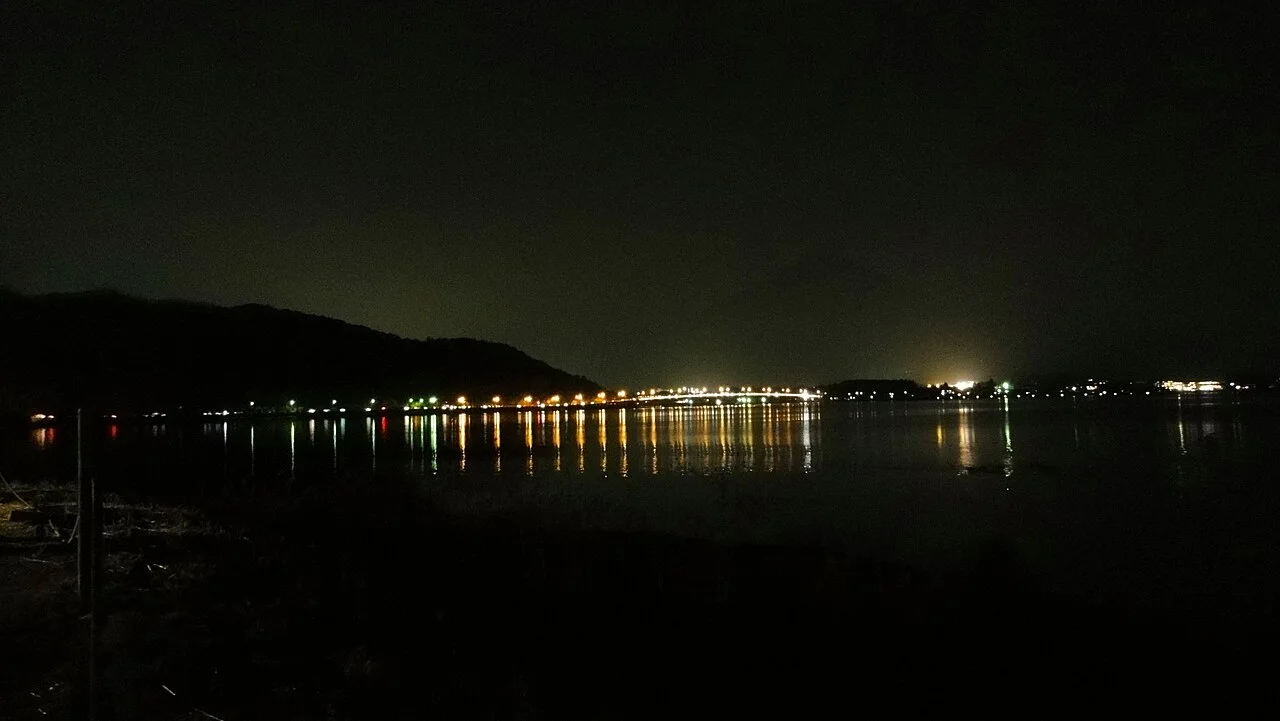
In 2026, the Fuji Kawaguchiko Autumn Leaves Festival runs from 7 to 29 November. Fujikawaguchiko Town's event notice states that illuminations run from sunset until 21:00, and also notes that Car Park No. 1 introduces parking fees from 2026 at ¥1,000 for standard cars and ¥3,000 for large buses, accepting cashless payment only. Walking the Maple Corridor itself is free. Switch your sat-nav to the designated festival car parks before setting off; if the lot nearest the entrance is full on arrival, follow that year's event map straight to another site—organisers also list pre-bookable parking options.
To capture both natural leaf colour and night-time lighting in one trip, arrive shortly before dusk so you see the corridor before and after dark. Walk the tree-canopied canal once in daylight, grab a hot snack around twilight, and loop back when the lights come on. Footbridges and canal banks are narrow, so step into a wider clearing before pausing for photos. Families who only want daytime autumn colour can visit on a weekday morning or early afternoon, which fits much more smoothly around standard hotel dinner times. Local tourism guidance usually puts peak colour between early and mid-November, with fallen leaves carpeting the ground later in the month.
If you have booked half-board (two meals included), plan around your dinner slot first. Staying for the illuminations works best if you book room-only on the north shore, or take hotel dinner on Night 1 instead. If you are staying on the south shore, factor in bridge traffic, the walk back to the car park and downtown restaurant hours when timing your return. Drivers can also dine first and head out afterwards, working backwards from the 21:00 lights-out. Travellers using the sightseeing bus should check the last bus departure first: the end of illuminations and the final bus are independent timings, so choose walkable accommodation or pre-book a taxi if you plan to stay until the end.
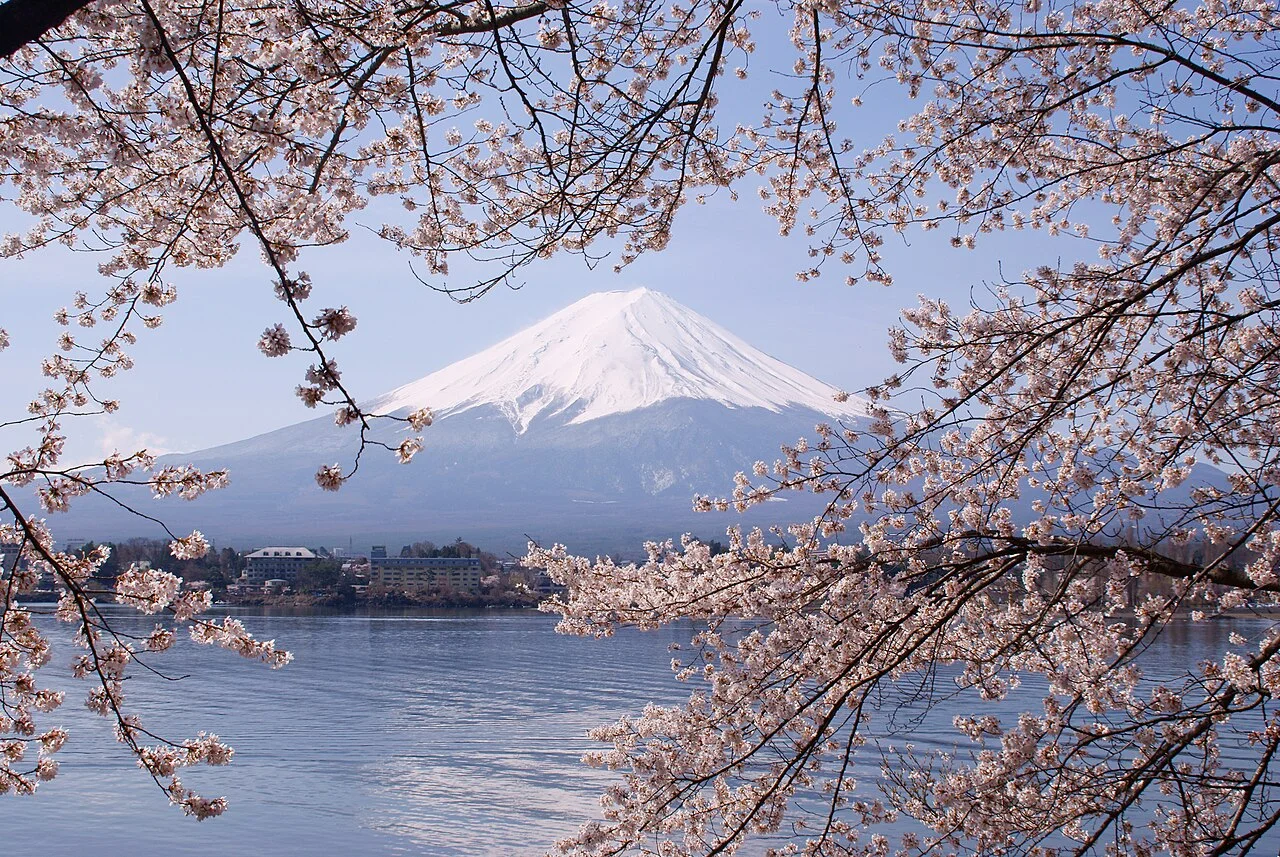
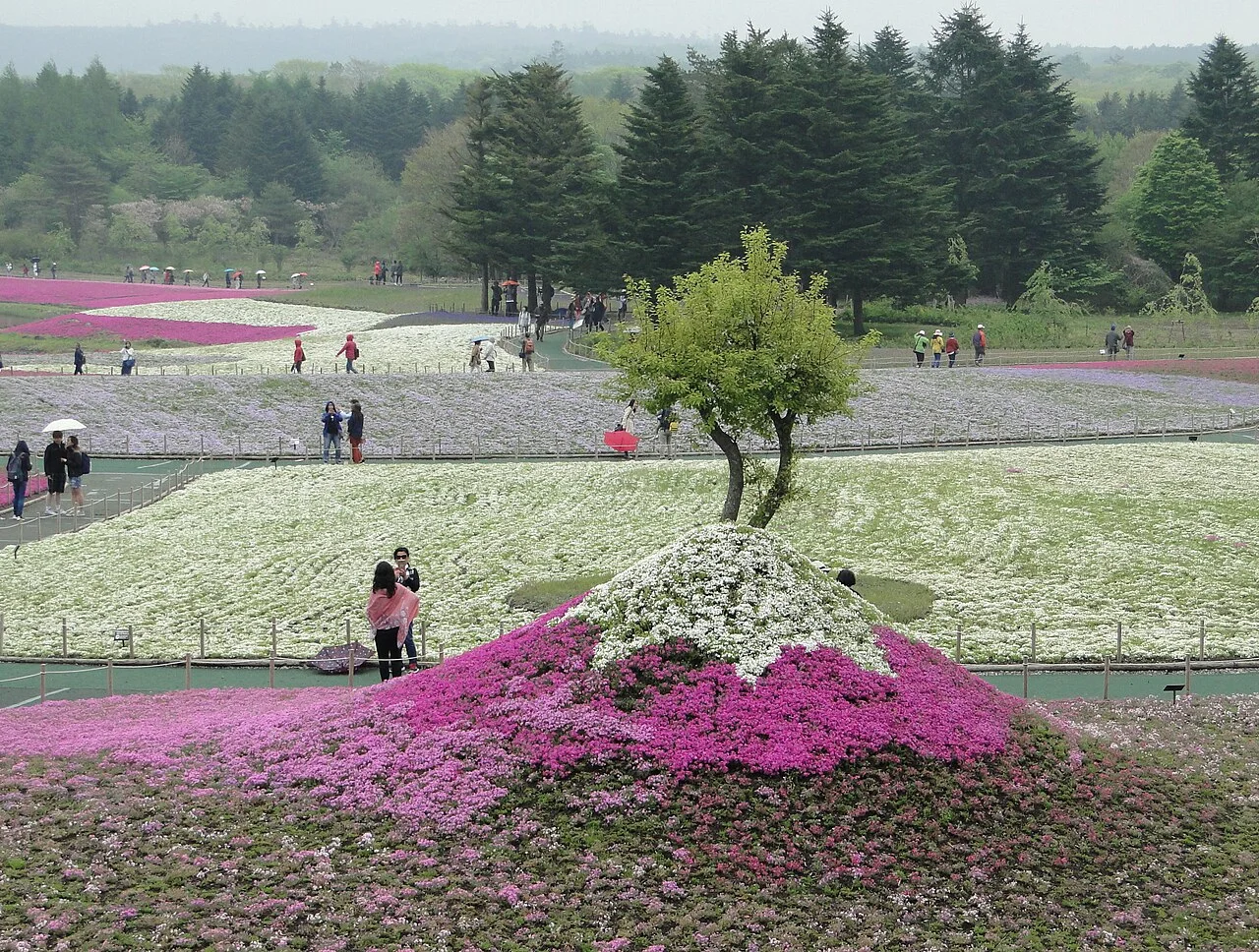
On a spring trip focused on cherry blossoms, keep Arakurayama and Kawaguchiko's north shore on separate parts of your schedule. Blossoms on the Shimoyoshida hillside and along Lake Kawaguchi can peak at slightly different times, while the shibazakura (moss phlox) towards Lake Motosu is a different bloom altogether. Give your first clear morning to whichever end pairs open blossoms with a clear view of Mount Fuji, and save the other for the afternoon or the following day. For spring lakeside routes, see our Fuji Five Lakes cherry blossom guide.
Day 3: Kawaguchiko North Shore or Lake Saiko Before Afternoon Drop-Off
In fine weather, save Oishi Park for the morning of Day 3. Sitting on Kawaguchiko's north shore, it offers lakeside walking paths with sweeping views across the water to Mount Fuji, right next to the Kawaguchiko Natural Living Center for local produce and light refreshments. When travelling with older relatives, a gentle stroll along the shore and a sit-down break can comfortably fill a whole morning. If you already caught mountain reflections at Lake Yamanaka on Day 2, pick a shorter section of the north shore so you have plenty of time for lunch after hotel check-out. Enter either 'Oishi Park' or 'Kawaguchiko Natural Living Center' into your sat-nav—they sit side by side.
On a rainy Day 3, head to the Kawaguchiko Music Forest Museum and check that day's automated instrument performances and live concert timetable first before deciding how long to spend in the gardens. Opening hours are normally listed as 10:00 to 17:30 (last entry 17:00), with regular closures on Tuesdays and Wednesdays alongside a date-specific calendar. Standard adult admission is ¥1,800 on weekdays, ¥2,100 at weekends and on public holidays, and ¥2,300 during designated peak periods; primary and junior high school pupils pay ¥1,000 across all three tiers, and pre-school children enter free. Peak surcharge dates include 1 to 3 January, 1 to 5 May and 11 to 15 August 2027. If you are coming for a specific concert, work backwards from the performance start rather than closing time.
If the museum is closed, divert to the nearby Yamanashi Prefectural Fujisan World Heritage Center near the national highway. Both the South and North Halls are free to enter, and the exhibits tie together the shrines and Oshino Hakkai springs from your previous two days by showing how they form part of Mount Fuji's pilgrimage network. The South Hall closes on the fourth Tuesday of each month (or the following day if that Tuesday is a public holiday); if it is shut, visit the North Hall instead. Travellers catching an afternoon train can keep their suitcases in the boot right up until car return, then meet the rest of the group at the station.
If you prefer thatched-roof heritage houses, craft workshops or a quieter shoreline, spend Day 3 morning at Saiko Iyashi-no-Sato Nemba on Lake Saiko. This open-air village reconstructs the thatched hamlet lost to a 1966 typhoon, with exhibits housed across individual cottages—easy to duck between in light drizzle, though indoor museums are better in heavy wind and rain. Town tourism listings give hours as 09:00 to 17:00 (last entry 16:30) from March to November, and 09:30 to 16:30 (last entry 16:00) from December to February. Stay for lunch on site if time allows; pushing further west to Lake Shoji and Lake Motosu adds considerable mileage, so keep the morning strictly to the west side and drop the north-shore museums if you choose Lake Saiko.
If you want to add Gotemba Premium Outlets, the natural place is straight after Subashiri on Day 2, dropping either Lake Yamanaka's Nagaike Park or Kawaguchiko's evening activities that day. When you still need to return your car in Kawaguchiko for a Shinjuku-bound train on Day 3, staying close to Lake Kawaguchi flows far better. If you are continuing onwards to Gotemba, Hakone or Shizuoka anyway, price out a one-way rental between the two branch addresses and move Higashiguchi Hongu to after you leave Kawaguchiko.
Choosing Where to Stay for Two Nights by Meal Times and Room Aspect
Night 1 is the evening most easily squeezed by mountain arrival times. Travellers arriving late, collecting a car on Day 2 or catching an early Day 3 train save a room move by staying both nights around Kawaguchiko Station or Funatsu. When booking near the station, check how guest parking is accessed, late check-in cut-offs and whether there is a lift for heavy bags. Staying on the north shore puts Oishi Park, the Music Forest Museum and the Maple Corridor on the same side of the lake, simplifying autumn-evening logistics—just verify on a map whether you can actually walk back from the illumination site, as stretches of shoreline are longer than they look.
If you want Mount Fuji views from your bedroom, compare Fuji View Hotel on the southwest shore with Konansou in Funatsu. Under the same room category, Fuji View Hotel typically distinguishes between Mount Fuji-side and Lake Kawaguchi or Garden-side aspects, and offers a complimentary shuttle from Kawaguchiko Station. When booking platforms only display the parent category, click into the specific rate plan to select 'Mt. Fuji Side'. If you plan to photograph sunrise from your room, checking whether windows open and how beds face the glass matters more than raw floor space. This southwest location also sets you up neatly for driving towards Lake Saiko on Day 3.
Konansou lists its Mount Fuji-side and Lake Kawaguchi-side rooms separately, and on its official site the Mount Fuji-side rooms all feature open-air baths. Guests wanting real hot-spring water inside their room should check the bath water source carefully: the hotel's FAQ specifies that the open-air baths in the 'Rin' and 'Kohaku' rooms use natural hot-spring water, while all guests can use the communal baths. Drivers can park in the prefectural car park opposite, where the hotel lists 40 free spaces. Room type, bath type and meal plan are separate selections—if you want a private bath, mountain view and dinner, make sure all three are included in the same booking package.
If you only splurge on one night in a view room, Night 2 is usually better value than Night 1 because you are already in the area and can easily check in before dinner. On a half-board plan, put Subashiri—your furthest point from town—in the morning or around lunch on Day 2, trim one or two afternoon stops, and leave the evening free for dinner and soaking. If half your group wants to see the Maple Corridor lights while others prefer to stay in, booking two nights at the same hotel with dinner on just one night avoids packing up mid-trip. Leaving the car parked at the hotel and sorting out walking routes or taxis beforehand lets diners return on their own schedule.
Driving Licence Translation, Car Hire Extras and Budgeting
Visitors driving in Japan on a Taiwanese driving licence must carry their valid original Taiwanese licence, an official Japanese translation issued by an authorised body, and their passport. Under the Taiwan-Japan reciprocity agreement, you may drive for up to one year from your date of entry, provided the underlying Taiwanese licence remains valid. Before leaving Taiwan, bring your national ID card and original licence to a Highway Bureau motor vehicles office—the translation fee is TWD 100, and postal applications are also available via the online Motor Vehicle Driver Information Service. If multiple people will share the driving, every driver needs their own complete set of documents and must be registered on the rental agreement at pick-up. If your name or address on an existing translation differs from your current licence, update it at the motor vehicles office before travelling.
If you are already in Japan, you can apply online through the Japan Automobile Federation (JAF), which states that applications submitted from within Japan can be printed at Japanese convenience stores. Processing a Taiwanese licence translation takes an average of two to three working days and costs ¥6,000 for short-term visitor driving, plus ¥20 per page for convenience-store printing (the ¥6,600 fee taking effect from July 2026 applies to converting to a Japanese driving licence). If you arrive at the weekend and plan to visit Oshino Hakkai the very next day, processing could span your entire trip—in that case, stick to the Fujikyuko Line and sightseeing bus plan instead.
Choose your hire car by cabin and boot space with passengers and bags loaded. Two travellers with two large suitcases should check whether both fit flat in the boot; three or four adults plus a child seat require checking rear-seat width and legroom too. Japanese law requires child seats for children under six years old, so select the right seat by your child's height and weight when booking. Check the ETC toll transponder and the ETC payment card separately: reserving a car equipped with an ETC unit still requires inserting a valid ETC card to pay tolls automatically. Otherwise, use general cash or card toll lanes—check your planned expressway exits in advance, as some smart interchanges are ETC-only. For Chuo Expressway round-trip toll estimates, plug your exact interchanges, vehicle class and travel dates into NEXCO Central's route calculator.
Compare the base rental rate alongside Collision Damage Waiver (CDW) and Non-Operation Charge (NOC) coverage. Check your excess after an accident, how tyre and windscreen damage are handled, and when towing or loss-of-use fees apply before choosing a protection tier. At pick-up, walk around the car to photograph existing scratches and locate the fuel-flap release, handbrake and demister switches. Under a full-to-full fuel policy, fill up near the drop-off branch and keep the receipt—if you are coming back from Lake Yamanaka, leave refuelling until the national highway stretch approaching the depot. Keep passports and luggage stowed rather than spread across the seats, and if any passengers get off early to catch a train, check under the seats and in the boot before parting ways.
When budgeting, split per-car costs—rental, ETC tolls, petrol and parking—from per-person costs such as admission tickets, meals and hotel dining. As a sample calculation for two people sharing one car: municipal parking at Arakurayama runs ¥1,000 to ¥1,500, private parking at Oshino Hakkai around ¥300, and Autumn Leaves Festival Car Park No. 1 ¥1,000, totalling ¥2,300 to ¥2,800 (or ¥1,150 to ¥1,400 each). Add per-person tickets separately if you enter Sokonashi-ike on Day 2 and the Music Forest Museum on Day 3. Divide total vehicle costs by the number of passengers, then add individual rail or bus fares and attraction tickets to compare fairly against travelling entirely by public transport.
For meals, plan Yoshida udon in Fujiyoshida on Day 1 and hoto noodle hotpot in Kawaguchiko for lunch on Day 3. Hoto simmers flat wheat noodles with pumpkin and seasonal vegetables in a miso broth; if you have a noon car return, refuel and hand back the car first, then walk to a restaurant near the station. On Day 2, eat before leaving Oshino for Subashiri so you are not detouring back and forth looking for lunch. If your hotel rate includes dinner, keep the afternoon light with just a small snack and a rest stop.
Which Stretches to Drop in Snow, Low Cloud or with Older Travellers
In winter, make sure four-wheel studless winter tyres are written into your hire booking. Driving conditions on both the Chuo Expressway and the Higashi-Fujigoko Road can deteriorate rapidly with snow or black ice. NEXCO Central distinguishes between winter-tyre regulations and stricter snow-chain regulations during heavy snowfall: under chain regulations, even vehicles fitted with winter tyres must carry and fit snow chains to use restricted sections. Hiring a car with winter tyres only covers part of winter readiness; if roads close or you have no snow-driving experience, drop the cross-border drive to Subashiri on Day 2. Staying in Kawaguchiko keeps you off icy mountain roads at night.
Icy car parks can be more tiring than the drive itself. Lakeside edges, slopes and shaded patches under trees freeze first; if morning windscreen defrosting eats into your schedule, wait for main roads to clear and shorten the day's mileage. At Arakurayama, watch both the steps and the icy walkway between the car park and the park entrance. If anyone uses a walking stick or pushes a pram, stick to cleared flat paths or swap the climb for the Mount Fuji Radar Dome Museum or the Fujisan World Heritage Center. During sustained heavy snow, check live train and bus service notices before leaving the station area.
Under low cloud, flip the order of Day 1. Visit Kitaguchi Hongu's cedar forest or an indoor museum in the morning, head up Arakurayama in the afternoon if the clouds lift, or shift the climb to Day 3 morning if rain persists. Oshino Village's springs and waterways remain rewarding to walk even when Mount Fuji is hidden, whereas stopping at Lake Yamanaka's Nagaike Park relies heavily on visibility. If you collect your car in pouring rain, keep suitcases under cover at the station or the branch's designated waiting spot and load everyone in one go instead of reopening doors repeatedly.
With young children, Day 2 can easily be trimmed to central Oshino Hakkai and Lake Yamanaka, saving Subashiri for another visit. If little ones need an afternoon nap, schedule longer drives right after lunch and skip the walk out to Deguchi-ike in the morning. For older travellers who enjoy shrines, keep Kitaguchi Hongu on Day 1 and Kawaguchi Asama Shrine on Day 2, trading steep stairs and long queues for level walks. If just one photographer in your group is determined to shoot Chureito Pagoda, they can hop on the train to Shimoyoshida while everyone else explores the Kawaguchiko lakeside and meets back at the hotel or station in the afternoon.
Trimming Rental Days and Public Transport Passes
Shimoyoshida and Kawaguchiko's north shore are both well served by public transport, making it straightforward to concentrate car hire on Day 2. On the Fuji Excursion limited express, official fares from Shinjuku are ¥4,010 one-way for adults to Shimoyoshida and ¥4,200 to Kawaguchiko, including both the base fare and limited express supplement. JR reserved seats generally go on sale at 10:00 JST one month prior to departure. Travellers stopping at Shimoyoshida first can continue on to Kawaguchiko via the Fujikyuko Line, while those with bulky bags can ride straight to Kawaguchiko, drop luggage at their hotel and double back. For expressway coaches, buses depart from Shinjuku Expressway Bus Terminal (Busta Shinjuku) to Kawaguchiko Station: from 1 October 2026, online bookings for Fujikyu Bus services shifted to Fujiyama Connect, while Keio Bus services remain bookable on Highwaybus.com—check the operator listed on your chosen departure in the Fujikyu timetable.
From Kawaguchiko Station, the Red Line sightseeing bus serves the museum district and Oishi Park, the Green Line heads to Lake Saiko, and the Blue Line runs via Narusawa to Lakes Shoji and Motosu. Official fares for the three-line sightseeing bus pass are ¥1,500 (adults) and ¥750 (children) for a 1-day pass, or ¥2,000 (adults) and ¥1,000 (children) for a 2-day pass. For a single return hop, compare point-to-point fares first; the day pass pays off if you cross to Lake Saiko or hop on and off multiple times. If buying a 2-day pass, map out the actual journeys across both days beforehand rather than realising late on Day 1 that you want to ride another line. If you are only heading out for the Maple Corridor night illuminations, identify a workable return Red Line departure before leaving.
Going completely car-free on Day 2, ride the Fujikyu 'Fujikko-go' sightseeing bus linking Fujiyoshida, Oshino and Lake Yamanaka, or check regular route buses running from Kawaguchiko and Fujisan stations via Oshino to Lake Yamanaka. Focusing on Oshino Hakkai and Lake Yamanaka, choose a morning departure that connects both stops smoothly and note the exact onward bus stop before exploring. Save Subashiri's Higashiguchi Hongu for another trip on the eastern flank—or if you must visit the same day, limit yourself to one Yamanashi stop and plan transfers and return departures strictly around the bus timetables. To compare Shinjuku–Kawaguchiko coach schedules, booking portals and luggage rules, see our Mount Fuji highway bus guide.
A few useful answers
Can we stay at the same hotel in Kawaguchiko for both nights of a three-day drive?
Yes. Using Kawaguchiko as your base works cleanly: cover Fujiyoshida on Day 1, Oshino and Lake Yamanaka on Day 2, and Kawaguchiko's north shore on Day 3. If you want one night in a mountain-view room, book it for Night 2 and tackle Subashiri—the furthest stop from town—during the day.
What licence translation is required if driving on a Taiwanese licence?
Before travelling, apply at a Taiwan Highway Bureau motor vehicles office for an official Japanese translation of your valid Taiwanese driving licence (fee TWD 100). Carry your original valid Taiwanese licence, the Japanese translation and your passport whenever driving in Japan, and register every additional driver at pick-up.
Can I drive up to Chureito Pagoda at Arakurayama Sengen Park?
No—park in the municipal car parks below and walk up. Fujiyoshida City asks visitors not to drive up to the Chureito Pagoda plaza. There are 398 steps up the Sakuya-hime Steps, and local tourism guidance estimates about a 25-minute walk from Shimoyoshida Station to the viewing deck.
Can I park once and walk all of Oshino Hakkai?
Yes. Private car parks around the village charge roughly ¥300 for standard cars. Most of the eight springs are clustered in the village centre, with Deguchi-ike slightly further out. Sokonashi-ike sits inside the paid Hannoki Bayashi Shiryokan museum, open 09:00 to 17:00.
What time do the 2026 Maple Corridor illuminations switch off?
Fujikawaguchiko Town's event page lists the 2026 Autumn Leaves Festival from 7 to 29 November, with illuminations running from sunset until 21:00. Car Park No. 1 charges ¥1,000 for standard cars via cashless payment only.
What names should I enter in the sat-nav for the three Sengen shrines?
Search for 'Kitaguchi Hongu Fuji Sengen Jinja' in Fujiyoshida, 'Kawaguchi Asama Shrine' on Kawaguchiko's north shore, and 'Higashiguchi Hongu Fuji Sengen Jinja' in Subashiri, Oyama Town (Shizuoka). Note that 'Arakura Fuji Sengen Shrine' at the foot of Arakurayama is a separate shrine.
If snow-chain regulations are enforced in winter, can a car with winter tyres still pass?
On roads under snow-chain regulations, even vehicles equipped with winter tyres must fit snow chains to proceed. If you had planned to drive out to Subashiri or Lake Yamanaka, scale back your itinerary to Kawaguchiko and stations along the Fujikyuko Line instead.
Official information and references
Sources used in this guide.
- Ministry of Transportation and Communications Highway Bureau | Taiwan-Japan Driving Licence Reciprocity and Japanese Translation
- Japan Automobile Federation (JAF) | Licence Translation Applications and 2026 Fees
- Toyota Rent a Car | Fuji-Kawaguchiko Branch
- Fujiyoshida City | Arakurayama Sengen Park, Steps and Municipal Parking
- Fujiyoshida Tourism Guide | Arakurayama Car Park Addresses and Six-Hour Rates
- Fujiyoshida City | 2026 Spring Park Traffic Controls and Parking
- Fujiyoshida Tourism Guide | 2026 Spring Traffic Control Map and Temporary Parking
- Fujiyoshida Tourism Guide | Shimoyoshida Station Walking Route
- Fujiyoshida Tourism Guide | Honcho Street
- Fujiyoshida Tourism Guide | Yoshida Udon and Local Cuisine
- Yamanashi Prefecture Official Tourism | Kitaguchi Hongu Fuji Sengen Jinja
- Fujiyoshida Tourism Guide | Mount Fuji Radar Dome Museum
- Oshino Village | Oshino Hakkai Walking Route
- Oshino Village | Private Car Park Fees
- Oshino Village Tourism Association | Private Car Park Map and Rates
- Oshino Village | Waku-ike Opening Access and Sokonashi-ike Admission
- Oshino Village Tourism Association | Sokonashi-ike and Hannoki Bayashi Shiryokan Admission
- Shizuoka Prefecture | Mount Fuji World Heritage Constituent Assets and Subashiri Shrine
- Shizuoka Prefecture | Access to Subashiri Higashiguchi Hongu Fuji Sengen Jinja
- Oyama Town, Shizuoka | Subashiri Trail 5th Station Private Vehicle Restrictions
- Lake Yamanaka Tourism Information | Nagaike Water Park and Free Parking Map
- Fujikawaguchiko Town Tourism Information | Kawaguchi Asama Shrine
- Fujikawaguchiko Town Tourism Information | 2026 Autumn Leaves Festival Illuminations and Parking
- Fujikawaguchiko Town Tourism Information | Oishi Park
- Kawaguchiko Music Forest Museum | Opening Hours and Operating Days
- Kawaguchiko Music Forest Museum | Admission Fees and 2027 Peak Dates
- Yamanashi Prefectural Fujisan World Heritage Center | Admission and Closure Information
- Fujikawaguchiko Town Tourism Information | Saiko Iyashi-no-Sato Nemba
- Fuji View Hotel | Room Aspects
- Fuji View Hotel | Access and Shuttle Bus
- Konansou | Mount Fuji-Side and Lake Kawaguchi-Side Guest Rooms
- Konansou | Parking and Arrival
- Konansou | Open-Air Bath Hot-Spring Water Details
- NEXCO Central | Winter Tyre and Snow-Chain Regulations
- NEXCO Central | Expressway Toll and Route Calculator
- Fujisanroku Electric Railway | Fuji Excursion Timetable and Fares
- JR East Official Media | Reserved Seat Release and Advance Applications
- Fujikyu Bus | Reservation Changes for Busta Shinjuku to Kawaguchiko Line
- Fujikyu Bus | Kawaguchiko, Saiko, Shoji and Motosu Sightseeing Buses
- Fujikyu Bus | Fujiyoshida, Oshino and Lake Yamanaka Sightseeing Bus
- Kawaguchiko Music Forest Museum | Regular Closed Days and FAQ
- National Police Agency of Japan | Child Seat Regulations
- Toyota Rent a Car | Rental Insurance and Coverage
- Ministry of Agriculture, Forestry and Fisheries of Japan | Yamanashi Regional Dish Hoto