The Fuji Shibazakura Festival takes place at Fuji Motosuko Resort in Yamanashi Prefecture. This guide covers 2026 ticket and shuttle examples, 2027 announcement status, choosing peak bloom dates, Golden Week return travel, the Peter Rabbit English Garden and staying around Lake Kawaguchiko.
- Region & Focus
- Lake Kawaguchiko and Mount Fuji
- Reading Scope
- 22 min read · 9 chapters · 7 Q&As
- Official Verification
- 25 official sources checkedUpdated 22 November 2026
- Key Topics
- SeasonsItinerariesChubu & Hokuriku
Chapter Route Map (tap any stop)
- How to Choose Your Dates for Shibazakura
- Tickets, Opening Hours and Advance Passes
- From Shinjuku: Choosing Between Direct Buses and Trains
- Shuttles from Kawaguchiko, Shin-Fuji and Fujinomiya
- Driving Access, Parking Fees and Golden Week
- Navigating the Grounds and Framing Mount Fuji
- Peter Rabbit English Garden, Food and Family Visits
- Rain Plan: Braving the Fields, Returning to the Lake or Heading Indoors
- Tokyo Day Trip vs Overnight Stay at Lake Kawaguchiko
- Quick Q&A
The Fuji Shibazakura Festival is held at Fuji Motosuko Resort in Yamanashi Prefecture. For a day trip from Tokyo, booking a direct highway bus that stops at the festival grounds saves you a transfer. Staying overnight at Lake Kawaguchiko lets you check bloom conditions and cloud cover over Mount Fuji before catching the festival shuttle from outside the station. The 2026 festival ran from 11 April to 24 May, with the Lake Kawaguchiko shuttle scheduled at roughly 40 minutes. As of 22 November 2026, the organisers are still displaying 2026 event details, and 2027 dates, ticket prices and shuttle timetables have yet to be announced.
How to Choose Your Dates for Shibazakura
Shibazakura (moss phlox) is a low-growing perennial groundcover. Its small blooms resemble cherry blossoms, and when planted in sweeping beds, deep pink, white and purple spread right across the earth. For 2026, the organisers listed a planting area of around 15,000 square metres, with roughly 500,000 plants across six varieties. Bloom density varies from section to section on any given day. When checking recent photos, look first for wide-angle shots showing paths, trees or distant mountain ridges so you can judge how much of the main flower fields is actually in bloom.
For carpets of flowers in your photographs, aim for flexible dates between late April and early May. This window spans Japan's Golden Week, when public holidays make boarding buses and finding parking much harder than on weekdays in the same week. If you visit during the opening week, build in a lakeside stroll or the Peter Rabbit English Garden so there is plenty to explore even before the beds fill out completely. If maximum bloom is your priority, wait until the organisers post wide-area flower updates before picking a day from your available dates.
The organisers' event page links to bloom update photographs. When comparing two photos taken a few days apart, check which patches have filled in with fresh colour. In 2026, the white Mont Blanc and large deep-pink McDaniel's Cushion varieties stood out clearly from a distance, while the pink-and-white petals of Tama no Nagare rewarded a closer look. If companions simply want sweeping views of the fields, pick a few stopping points where white and pink borders meet, and let close-up photographers hunt for individual blooms along the same stretch of path.
Judge Mount Fuji visibility and bloom progress separately. Use the official live webcam to see how much of the mountain is clear from summit to flank, then check dated bloom photos to see whether the flower beds have joined into solid colour. Even if only a sliver of the peak appears on the webcam, shifting cloud bands can open brief photo windows. When the forecast shows rain throughout your window, weigh up the journey purely on the strength of the flowers or a family walk.
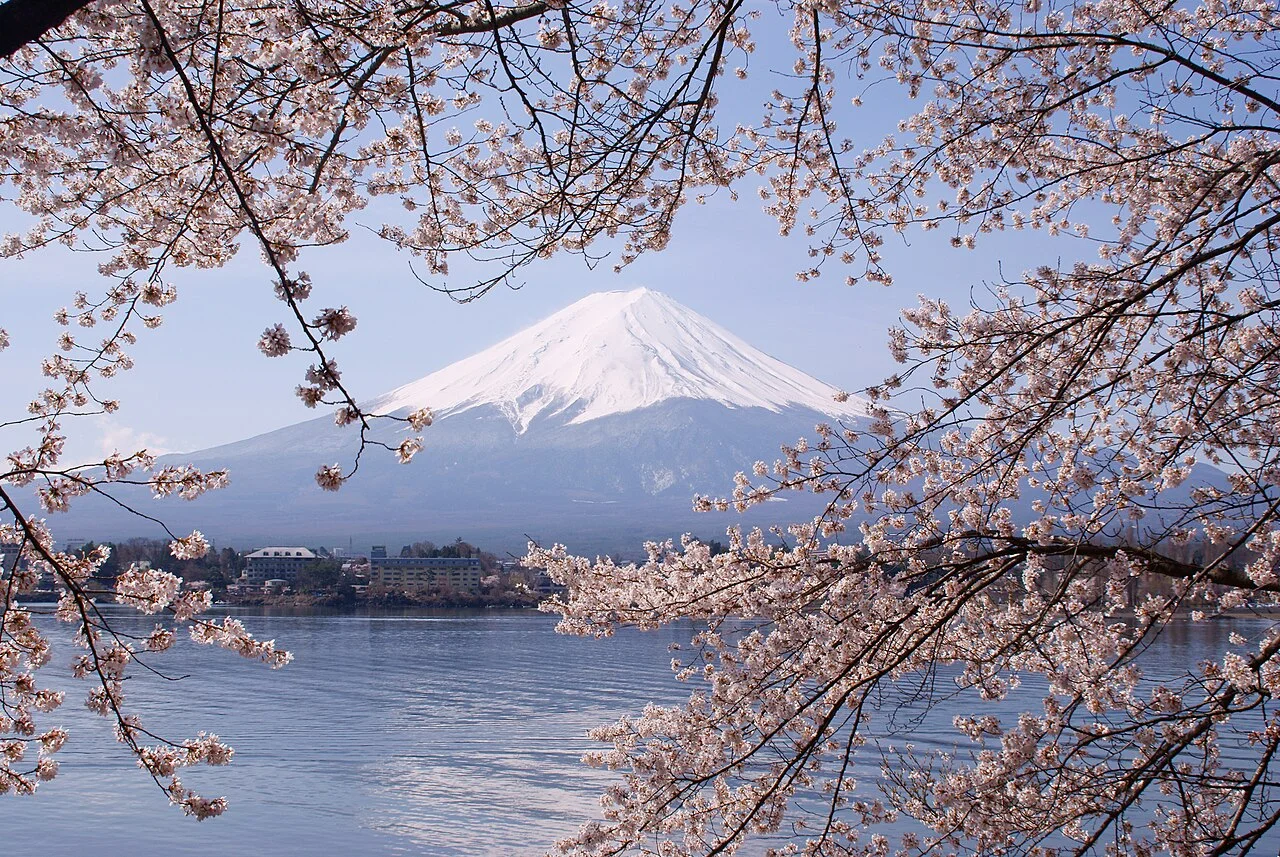
Long-distance transport and accommodation must be decided well ahead of on-the-day bloom conditions. If you only have one weekend, look for flexible accommodation bookings and keep both Saturday and Sunday mornings free. If your Japan trip also includes cherry trees around Lake Kawaguchiko, treat the two as separate blossom seasons: along the Kawaguchiko shore you look up at Yoshino cherry branches, whereas at the Shibazakura Festival the colour sits at your feet. When combining both on the same trip, see our Fuji Five Lakes cherry blossom guide.
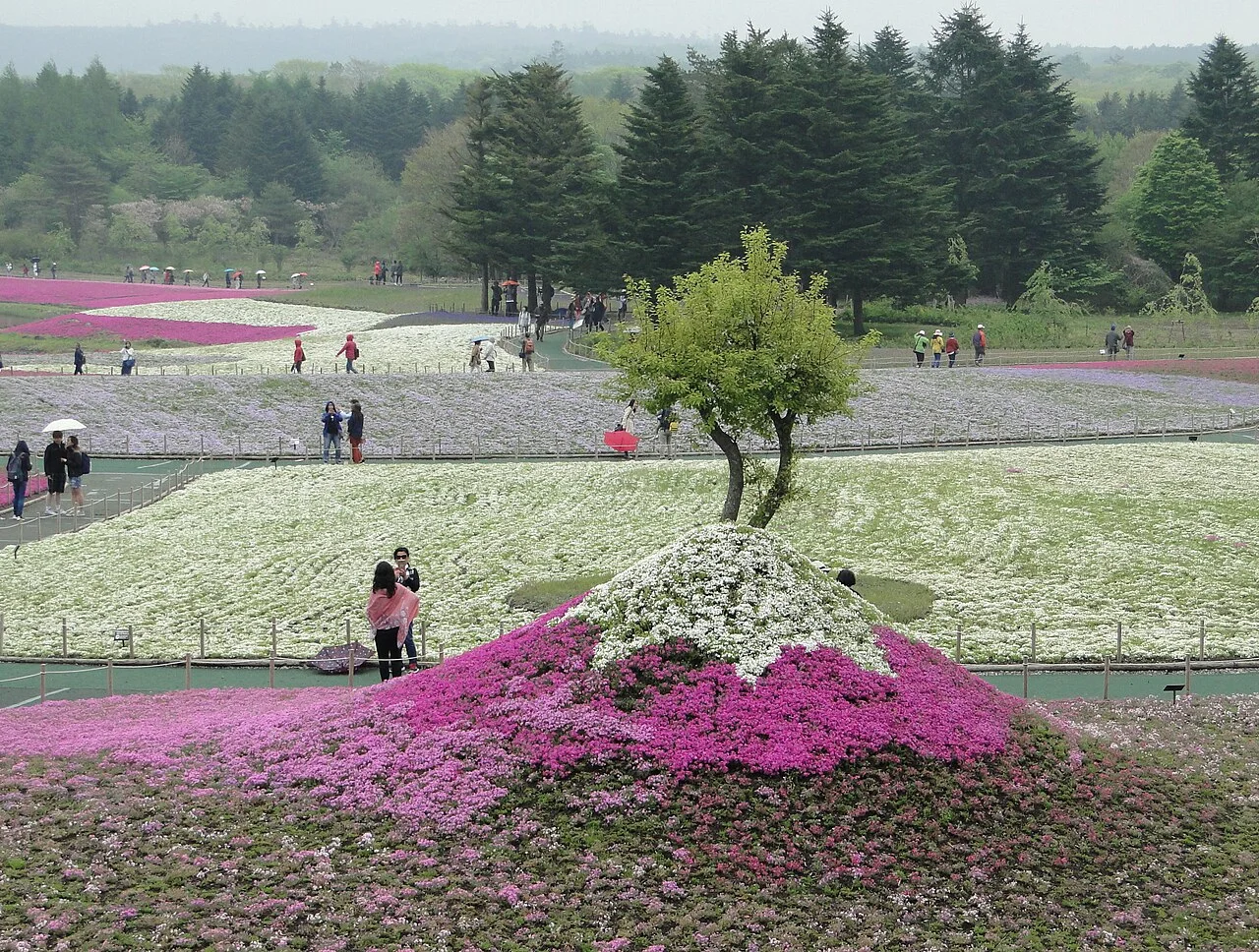
The Fuji Shibazakura Festival takes place at Fuji Motosuko Resort in Yamanashi Prefecture. This guide covers 2026 ticket and shuttle examples, 2027 announcement status, choosing peak bloom dates, Golden Week return travel, the Peter Rabbit English Garden and staying around Lake Kawaguchiko.
Tickets, Opening Hours and Advance Passes
The 2026 festival ran for 44 consecutive days, with standard published opening hours of 08:00 to 16:00 and adjustments on select dates. For example, the organisers' 2026 hot-air balloon page listed 06:00 openings from 29 April to 6 May. If you are planning an early-morning arrival or a late-afternoon entry, check your specific date on the operating calendar. There are normally no evening illuminations on site, so heading back towards Lake Kawaguchiko is far more convenient for dinner after dark.
On-the-day admission in 2026 varied by date. Adult tickets (junior high school age and above) cost ¥1,000 to ¥1,300, while child tickets (aged 3 and above) cost ¥500 to ¥700. For two adults and one ticketed child, gate admission totalled ¥2,500 to ¥3,300. If you are travelling with a 12-year-old, check the organisers' junior high school threshold before selecting their ticket tier.
In 2026, the organisers sold advance entry tickets under the name Shiba-chike through Fujiyama Connect. Buying at least one day ahead saved ¥100 per person off the standard gate price and granted access via the advance-ticket entrance lane, bringing adult tickets to ¥900–¥1,200 and child tickets to ¥400–¥600. Keep your paid digital tickets ready and separate from highway bus booking confirmations so you can easily tally everyone's tickets at the gate when travelling with children.
Open up similarly named transport bundles to check exactly what they include. In 2026, options paired festival admission with local buses around Kawaguchiko, Shin-Fuji or Fujinomiya, alongside bundles combining greater-Tokyo highway buses with the Fuji Shibazakura Liner. Another option labelled as a direct venue tour bus (Kaijo Chokutsu Tour Bus) was a reservation-only chartered coach. If you are departing from Shinjuku in the morning and staying at Lake Kawaguchiko that night, confirm your return destination first: a round-trip bundle to and from the same city may leave half your return journey unused on an open-jaw itinerary.
When you are still weighing up afternoon plans around Kawaguchiko, buying a standalone festival ticket gives you more flexibility. In 2026, the official site also offered combination tickets bundling entry with sightseeing boats, the Fugaku Wind Cave or the Narusawa Ice Cave. Only compare bundle pricing against separate tickets once you are certain you will visit both sights. If there is only one return bus left that suits your schedule, factor in walking time, bus waits and last-entry cut-offs for the second attraction first.
| Ticket Type | Standard Gate Price | Advance Purchase (Day Before or Earlier) |
|---|---|---|
| Adult (Junior High School & Above) | ¥1,000 to ¥1,300 | ¥900 to ¥1,200 |
| Child (Aged 3 & Above) | ¥500 to ¥700 | ¥400 to ¥600 |
From Shinjuku: Choosing Between Direct Buses and Trains
Based on official 2026 festival figures, the direct highway bus from Shinjuku to the venue took roughly 2 hours 25 minutes. Busta Shinjuku (Shinjuku Expressway Bus Terminal) sits right by JR Shinjuku Station's South Exit, with departures on the 4th floor. When checking fares or seat availability, make sure you select Fuji Shibazakura Festival Venue (Fuji-Shibazakura-Matsuri-Kaijo) as your destination. The same route list also shows Kawaguchiko Station (Kawaguchiko-eki) and Fuji-Q Highland: booking the former requires an onward transfer, while services calling at the latter may detour into the theme park before reaching the lake area.
Fujikyu Bus's seasonal route page currently lists the adult single fare between Lake Motosuko and Shinjuku at ¥2,750 standard or ¥2,450 online. Seats are reserved, with bookings opening one calendar month before the travel date and closing 10 minutes before the coach departs its origin stop. Double-check your travel dates and stop names across both legs before paying. If you travel straight to the festival grounds on the way out but board at Kawaguchiko on the way back, the two reservations will use different origin and destination stops.
If you can only get a ticket from Shinjuku to Kawaguchiko, the operator's standard journey time is around 1 hour 45 minutes, followed by the festival bus from the station. For departures from 1 October 2026 onwards, Keio-operated and Fujikyu-operated coaches on the same Shinjuku–Kawaguchiko route use different online booking platforms: Fujikyu services are booked via Fujiyama Connect, whereas Keio services are mainly sold on Highwaybus.com with selected seats also available on Fujiyama Connect. Any timetable change must be handled through the platform where you originally booked; switching to a service sold on the other platform requires cancelling your original booking—potentially incurring a cancellation fee—and rebooking.
Time lost in traffic on the Chuo Expressway is hard to make up from the Tokyo end. If your trip falls on a public holiday weekend, taking the train shields the Shinjuku–Kawaguchiko leg from motorway congestion. The Fuji Excursion limited express runs direct from Shinjuku to Kawaguchiko in around 1 hour 55 minutes. Operators currently list the adult single fare at ¥4,200, made up of a ¥2,580 base fare and a ¥1,620 limited express supplement, with reserved seats going on sale one month before travel at 10:00 JST. When comparing fares, remember to add the Kawaguchiko shuttle leg to calculate the true door-to-door cost from Tokyo to the festival.
If the Fuji Excursion is sold out, you can change at Otsuki Station onto the Fujikyuko Line. Travellers setting out from Tokyo or staying west of Shinjuku can combine JR Chuo Line trains from their nearest station without heading back to the highway bus terminal. Changing at Otsuki involves moving between platforms, so if your group has large luggage, allow buffer time for both the next Fujikyuko Line departure and the shuttle connection at Kawaguchiko. Ticket collection, waiting on platforms and queues at the festival entrance all sit outside the train's published arrival time.
If your Tokyo transport is already booked, focus your planning on the connection at Kawaguchiko. Once on the road outside the station, shuttles face the same tailbacks approaching the venue as private cars. Travellers with a fixed return departure to Tokyo should aim for an earlier shuttle back from the festival grounds. To compare departures from other Tokyo terminals or different coach operators, check our Mount Fuji highway bus guide.
Shuttles from Kawaguchiko, Shin-Fuji and Fujinomiya
Outside Kawaguchiko Station, look for two names: Fuji Shibazakura Liner and Fuji Shibazakura Festival Venue (Fuji-Shibazakura-Matsuri-Kaijo). Both the direct festival shuttle and regular local buses can stop at the grounds; in 2026, scheduled journey times from Kawaguchiko were roughly 40 minutes and 62 minutes respectively. Pay close attention to the full bus stop name. Timetables also list Motosuko and Motosuko Iriguchi, so get off at Fuji Shibazakura Festival Venue to enter the grounds directly.
Station forecourt maps published by Fujisanroku Electric Railway previously marked the festival Liner at stop 7 outside Kawaguchiko Station, while regular Red, Green and Blue Line sightseeing buses depart from stop 1 and regular Shin-Fuji Line buses use stop 4. If you plan to rely on regular buses as a backup, identify both boarding bays as soon as you arrive and check the day's signage before joining a line. When you see buses signed for Mount Fuji 5th Station or Motosuko, verify the stops and departure time first—with services heading up the mountain, around the lakes and to the festival all loading simultaneously, queue positions alone are only a rough clue.
Using the 2026 Kawaguchiko round-trip timetable as a benchmark, the first daily direct shuttle left the station at 08:35, reaching the park at 09:15, with an extra 08:05 outbound departure (arriving 08:45) added from 29 April to 6 May. Return direct shuttles ran on several hourly intervals, with the final regular departure leaving the venue at 16:00 and a 17:00 bus running only during the extended-service period. These are the previous season's times and work well for estimating how much of a half-day itinerary the shuttle occupies.
Working backwards from the 2026 schedule, arriving at the venue at 09:15 and catching the 13:00 direct return shuttle gets you back to Kawaguchiko at 13:40 on paper—plenty of time to photograph the flowers, stroll through the garden and grab something to eat. However, if you hold a 14:00 long-distance bus or train ticket out of Kawaguchiko, a 20-minute buffer is easily eaten up by traffic delays and walking from the bus bay, so take an earlier shuttle or book a later onward departure. Likewise, if you linger in the grounds until 16:00 before heading to the bus stop, you will miss the last standard departure even on a 16:00 closing day.
Travellers staying in Fujiyoshida and starting from Mt. Fuji Station have two options. In 2026, a daily local bus departed Mt. Fuji Station at 08:57, calling at Kawaguchiko Station before reaching the festival venue at 10:07. For an earlier start, take the train to Kawaguchiko to catch the first Liner instead. Note that the return Liner terminates at Kawaguchiko Station, so allow extra time for the Fujikyuko Line train back to Mt. Fuji Station and factor both evening transfers and luggage storage into stays near Mt. Fuji Station.
Arriving from Shizuoka or Nagoya, connecting by bus from Shin-Fuji Station on the Tokaido Shinkansen brings you straight up to the venue from the south. In 2026, the daily direct Liner departed Shin-Fuji at 10:15 and Fujinomiya at 10:50, arriving at 11:30; early birds could take the 07:16 local bus from Shin-Fuji to reach the park at 08:30. Heading back towards Shin-Fuji, the 13:30 direct shuttle ran only on weekends and public holidays during the festival, while the 15:00 service ran daily, scheduled to reach Shin-Fuji Station at 16:15.
Shin-Fuji and Fuji are two separate stations. On the Tokaido Shinkansen, Kodama trains call at Shin-Fuji Station, whereas Fuji Station sits on the JR Tokaido Main Line and Minobu Line. Fujikyu Shizuoka Bus lists local services from Shin-Fuji towards Fujinomiya and Kawaguchiko at stop 5 outside the station; travellers already along the Minobu Line can board the same route at Fujinomiya Station. If you are catching a Shinkansen out of Shin-Fuji, work backwards from your return bus when planning the afternoon—especially lunch, café queues and family photo stops—or you may discover after lunch that long afternoon headways force you to cut a second stop short.
Outside the festival dates, the bus stop right in front of the resort operates only during specific event periods listed by the venue. To visit the Peter Rabbit English Garden on its own, the official access page outlines a roughly 20-minute walk from the Kenzakai bus stop. Check the local bus timetable for your exact travel date—confirming departure stop, operating days and return times—and add walking time so you are back at the bus stop well before sunset.
Driving Access, Parking Fees and Golden Week
Set your satnav to Fuji Motosuko Resort or Motosu Highland, at 212 Motosu, Fujikawaguchiko-machi, Minamitsuru-gun, Yamanashi. The venue sits roughly 3 km from Lake Motosuko along National Route 139 towards Fujinomiya; entering just Lake Motosuko may route you to the lakeshore instead. Approaching from Kawaguchiko via the Chuo Expressway Kawaguchiko IC and National Route 139 takes around 25 minutes according to the organisers, while coming from Tomei Fuji IC or Shin-Tomei Shin-Fuji IC takes roughly 50 minutes.
In 2026, admission and parking were charged separately: ¥500 to ¥1,000 per standard car, ¥2,000 for large vehicles and ¥500 for motorcycles. Even if you buy admission tickets in advance, parking is still paid on site. For a family of two adults and one child arriving by car, combined gate admission and parking in 2026 came to between ¥3,000 and ¥4,300—before adding expressway tolls and car hire—whereas public transport scales per passenger.
Japanese public holidays in 2027 include 29 April and 3 to 5 May, with 1 and 2 May falling on a Saturday and Sunday. To target quieter weekdays during the bloom season, look first at 26 to 28 April or dates from 6 May onwards. Those windows are based purely on the Japanese holiday and weekend calendar; once you find dates with promising bloom updates, check the opening hours and transport timetables for that day.
Golden Week traffic has two easily overlooked pinch points. As more cars converge on the venue in the morning, National Route 139 and the car park entrance back up quickly; later in the afternoon, heavy outbound departures create delays along the same highway. If you have a dinner reservation in Tokyo, a flight or a fixed Shinkansen connection that evening, build the time saved on an early start into your return buffer. Rather than rushing right up to closing time, agree on the latest departure time everyone is comfortable with before you set off.
If you are staying near Kawaguchiko Station, check the shuttle schedule before deciding whether to hire a car for flower-viewing day. Having a car gives real flexibility if you are continuing onwards to the Lake Motosuko shore, Lake Saiko or the Asagiri Plateau. If you are simply heading out and back along the same road, the trade-off comes down to parking queues and driver fatigue versus keeping an eye on bus departure times—though travelling with toddlers, a wheelchair or luggage for an awkward-to-reach lodge tips the balance towards door-to-door driving.
If your schedule is flexible, save peak Golden Week hours for sights within walking distance of your hotel. If those are your only dates, arriving early puts you in the main flower fields first and keeps you ahead of lunch and toilet queues. If Mount Fuji visibility is not your main goal, entering after midday is workable as long as your exit is secure—bear in mind that last buses heading south to Fujinomiya and north to Kawaguchiko depart at different times, which matters especially for afternoon arrivals.
Navigating the Grounds and Framing Mount Fuji
The organisers estimate roughly 60 minutes for a basic walk around the grounds. That is a sensible baseline for a single loop through the main flower beds to Ryujin Pond and back to the entrance. If you plan to wait for gaps in the crowd at two or three viewpoints, browse the English Garden and sit down to eat, allow two to three hours—counting from once your ticket is scanned at the gate, with bus rides, ticket office queues and entry lines on top.
On the 2026 official park map, the main entrance sits next to the ticket booths and leads directly into the primary flower beds; if you prefer an elevated overview, follow Area A on the map up towards the observation deck. For a compact route, loop back from the flower beds towards the souvenir shops near the entrance, whereas food stalls and the English Garden cluster towards the opposite side. If you arrived by bus, note which side of the map faces the highway so you allow enough walking time from the café and garden back to the stop.
When the first broad sweep of blooms comes into view from the entrance, head for a path with a clear line of sight to the summit and get that shot in the bag early. Shooting from a low angle uses foreground blossoms and the distant peak to push passing pedestrians towards the edges of the frame. To show how the colour blocks sit together, step back to an open vantage point that includes the winding paths; a wide-angle lens captures the scale of the beds, while a tighter focal length centres Mount Fuji and its cloud cover.
The water feature inside the park is Ryujin Pond. From the water's edge you can frame the bankside flowers with reflections whenever the surface is calm, or shift along the path in a breeze to pair ripples with bands of colour. If you want photographs of Lake Motosuko itself, treat the lakeshore as a separate stop by checking which return buses serve the lakeside or driving over—each viewpoint needs its own dedicated time.
Photo installations in 2026 included a small boat moored in pink blooms, heart-shaped benches and Mount Fuji-themed props. Groups wanting a full-party portrait should save these photo spots for after the main flower fields rather than splitting up in queues right at the start. Set your meeting point at the entrance gate or a named landmark on the map, which is far clearer than saying "by the pink flowers", and step aside promptly from path edges once you have your shot so others can pass.
If Mount Fuji is your sole reason for coming, keep your schedule flexible before arrival and shoot the mountain the moment it appears. When clouds veil the upper slopes, spend your walking time on close-ups of individual blooms, contrasting white-and-pink borders or elevated angles across the flower beds. If you still need the summit in your shot, finish your close-ups first and leave a window to revisit your viewpoint and check the cloud break before heading to your return bus.
Peter Rabbit English Garden, Food and Family Visits
The Peter Rabbit English Garden shares the resort grounds with the shibazakura fields. Planted with around 300 species of flowers and shrubs under the supervision of garden designer Mark Chapman, it pairs neatly with a woodland walk along the Peter Rabbit Story Trail beside Ryujin Pond, dotted with Beatrix Potter characters and scenes. Group the garden, shop and café together as one relaxed block, turning back partway along the trail if young children tire.
The two attractions keep different seasonal calendars. In 2026, the Shibazakura Festival closed on 24 May, whereas the English Garden opened alongside it on 11 April and was scheduled to stay open until 23 November. Anyone planning a summer garden visit should check the resort's operating calendar and current bus page, as spring tickets, festival shuttles and special extra departures generally end when the Shibazakura Festival wraps up.
The official FAQ lists the Koppe Stand takeaway counter and a café, with standard café hours of 09:00 to 16:00 subject to seasonal changes; 2026 food stalls also served local favourites such as Fujinomiya yakisoba and Yoshida udon. The garden page's "The Cafe" section posts any café closure notices. If you want a sit-down lunch, check the day's notices and queue lengths as you enter—if you are catching a bus around midday, grabbing takeaway on site or eating back in Kawaguchiko is easier to time, and families buying from different stalls should agree on a seating area or meeting point beforehand.
You may bring your own food and drinks, and benches are provided around the park, though spreading out picnic mats for dining and using portable gas stoves or burners are prohibited. Bringing snacks works well to bridge the gap between shuttles and proper meals. If anyone in your group has strict dietary requirements, packing suitable food and waiting until your return to dine at a restaurant is far easier on your schedule than checking ingredients at every stall.
The park lists four toilet blocks, three of which include accessible facilities, though no wheelchairs are available for hire on site. If you are bringing a wheelchair or pushchair, mark the toilets, dining area and exit on the park map early, visit the main flower fields first, and continue to the pond only if energy allows. When people move at different paces, let keen photographers go ahead to find angles while others rest on benches before walking back to the bus stop together.
Dogs are permitted under the FAQ rules for small and medium breeds measuring 50 cm or less at the shoulder. During the 2026 holiday restriction window (25 April to 6 May), dogs had to enter in a carrier, pet buggy or sling bag, with none available to hire on site. Pet-friendly seating at the café is on the terrace; mark the dog run area on the map and pick an easy meeting spot near the entrance so the whole family does not have to queue together at the café.
Fuji Motosuko Resort sits at an altitude of roughly 1,000 metres. Morning breezes across the highland plateau can be brisk, so keep a light jacket to hand when leaving Tokyo that children can peel off once they warm up walking. In light rain, a hooded raincoat keeps a hand free for holding onto little ones, and grippy soles matter more than upper fabric. Keep the jacket accessible after taking it off in midday warmth in case the wind picks up while you wait for the return shuttle.
Rain Plan: Braving the Fields, Returning to the Lake or Heading Indoors
The organisers state that the festival remains open in the rain. If there is only light drizzle when you set off and the blooms are worth seeing, trim your visit to a walk through the main flower beds and round the pond, then head back to Kawaguchiko for lunch. Anyone staying two nights in Kawaguchiko who sees steady morning rain on the forecast can simply swap flower viewing to the clearer morning. If you only have one day set aside from Tokyo, weigh up the long coach journey depending on whether you care more about the flowers or seeing Mount Fuji.
Back at Lake Kawaguchiko, the Yamanashi Gem Museum can fill the rest of a rainy half-day. Typical spring hours are 09:00 to 17:30 (last entry 30 minutes before closing), with admission at ¥600 for adults and ¥300 for primary and junior high school pupils. It normally closes on Wednesdays, though it opens on public holidays and during Golden Week. The Kawaguchiko Sightseeing Bus stops right outside at Yamanashi Gem Museum / Kawaguchiko—just make sure you have plenty of margin before your train or bus back to Tokyo.
Drivers travelling via the Chuo Expressway can also add the Yamanashi Prefectural Fujisan World Heritage Centre to their return leg. Admission to both wings is free: the South Hall covers Mount Fuji's sacred traditions and art, while the North Hall (the former Fuji Visitor Centre) provides general exhibits. The South Hall closes on the fourth Tuesday of each month (or the following day if that Tuesday is a public holiday), whereas the North Hall opens year-round. For travellers curious about volcanology, traditional Fuji-ko pilgrimage culture or regional maps, this beats another open-air viewpoint on a grey day.
If the rain stops while Mount Fuji stays hidden, check the wind before queuing for the Mt. Fuji Panoramic Ropeway, as strong gusts or thunderstorms can suspend operations. If you are already back near Kawaguchiko Station with only a short gap to fill, a brisk lakeshore stroll and return is easy to time accurately. Should wind and rain persist by the lake, finish your meal and head straight to your booked departure, saving indoor museums for a day when you have time to spare.
Tokyo Day Trip vs Overnight Stay at Lake Kawaguchiko
When you have to return to Tokyo the same day, a direct round-trip highway bus involves the fewest transfers. It suits visitors focusing purely on the shibazakura and the Peter Rabbit English Garden, or those arriving in the morning and leaving after lunch. Book your return bus around the time you must be back in Tokyo, then verify that the remaining hours on site are realistic; if you have an onward intercity train later that afternoon, even catching the earliest coach out of Tokyo requires leaving slack on the return for delays along National Route 139 and the expressway.
To give yourself room to play the weather, spend the night before at Lake Kawaguchiko. Taking an early shuttle from outside the station lets you head straight to the festival whenever both blooms and Mount Fuji are clear; if low cloud hangs over the lake, have breakfast nearby and wait an hour, or shift Oishi Park and station-area dining to day one and let the forecast dictate day two's flower visit. The advantage of staying overnight is waking up already in the lakes district, though you still need to budget for the shuttle out to Motosuko—if your hotel is further from Kawaguchiko Station, catching the first shuttle hinges on your morning transfer to the station.
Take Fuji Lake Hotel on the southern shore of Lake Kawaguchiko, roughly a 10-minute walk from Kawaguchiko Station. Its morning shuttle to the station starts at 08:15 on request at reception, so if you are aiming for an 08:05 holiday-period festival shuttle like the one in 2026, it is easiest to walk to the station yourself. When choosing rooms, note that the Mt. Fuji-side View Bath Suite frames the mountain from a standard tap-water bath, whereas guests wanting hot-spring water with a mountain view should look at the Mt. Fuji View Open-Air Bath Suite, which pairs a lake-view living area with an open-air thermal bath facing Mount Fuji.
Travellers focusing on Fujiyoshida can base themselves right by Mt. Fuji Station, such as at Fujisan Station Hotel, around two minutes from the station on foot. You can explore central Fujiyoshida the afternoon before, then take the local bus from Mt. Fuji Station or hop on the train to Kawaguchiko to connect the next morning. If your hotel breakfast starts late and you want an early shuttle, opt for a takeaway breakfast, eat elsewhere, or check out and leave your bags at reception before setting off.
For classic views framing Mount Fuji across the waters of Lake Kawaguchiko, dedicate a separate half-day to Oishi Park on the northern shore, right beside the Kawaguchiko Natural Living Center. Ride the Red Line sightseeing bus from Kawaguchiko Station and alight at Kawaguchiko Natural Living Center. Giving the Shibazakura Festival and Oishi Park a morning each avoids bouncing back and forth through Kawaguchiko Station on the same day; if you decide to tack Oishi Park onto the afternoon after returning from the festival, check the time of the last Red Line bus so you are not stranded waiting for a taxi.
The official site currently prices the Kawaguchiko Sightseeing Bus pass—covering the Red, Green and Blue lines—at ¥1,500 for adults and ¥750 for children for a one-day pass, or ¥2,000 for adults and ¥1,000 for children for a two-day pass. If you are only riding the Shibazakura Liner, compare the festival's own admission-plus-bus bundle first; only weigh up the sightseeing pass against point-to-point fares if you are continuing on the Red Line to Oishi Park or taking the Green Line to Lake Saiko on another day. Note that the Blue Line serves the festival grounds, so verify that day's stops and final return departure before relying on it.
If you are travelling with large suitcases, store them at your hotel or around Kawaguchiko Station before heading south to the festival. Anyone collecting bags in Kawaguchiko later that day for a different coach operator should confirm collection hours with their hotel in advance and set a clear rendezvous point. For help choosing a base by lakeshore views, dining or shuttle convenience, see our Lake Kawaguchiko accommodation guide—and if your ryokan or hotel includes dinner, work backwards from your meal sitting when choosing your return bus.
A few useful answers
When is the 2027 Fuji Shibazakura Festival?
As of 22 November 2026, the organisers have not yet announced the 2027 dates. The 2026 festival ran from 11 April to 24 May, and dated official bloom photos from roughly late April onwards are the best guide for choosing peak viewing days.
Is the Fuji Shibazakura Festival right on the shore of Lake Motosuko?
The venue is Fuji Motosuko Resort, located roughly 3 km from Lake Motosuko along National Route 139 towards Fujinomiya. The water feature inside the park is Ryujin Pond; by bus, alight at Fuji Shibazakura Festival Venue (Fuji-Shibazakura-Matsuri-Kaijo).
How long is the bus ride after reaching Kawaguchiko Station?
In 2026, the direct Fuji Shibazakura Liner took around 40 minutes, while regular local buses were scheduled at roughly 62 minutes. Allow extra time for boarding queues and road congestion, and confirm that your return bus specifically serves the festival venue stop.
What is the difference between advance tickets and bus bundles?
In 2026, standalone advance tickets covered park admission only and saved ¥100 per person when bought at least one day ahead. Transport bundles vary by product—combining entry with specific local buses, highway coaches or direct tour buses—so check both outbound and return stops before purchasing.
Does the festival stay open in the rain, and can I bring food?
Yes, the organisers state that the festival operates as normal in the rain. You may bring your own food and drinks to eat on the park benches, though picnic mats for dining and portable gas stoves or burners are prohibited.
Are wheelchairs available to hire on site?
No, wheelchairs are not available for hire at the venue, so please bring your own. The site has four toilet blocks, three of which include accessible toilets.
Can I visit the Peter Rabbit English Garden after the festival ends?
Yes, you can visit according to the garden's own operating calendar; in 2026 it was scheduled to remain open until 23 November. Festival shuttles run to a separate timetable, while the official access page notes a roughly 20-minute walk from the Kenzakai bus stop.
Official information and references
Sources used in this guide.
- Fuji Motosuko Resort: Fuji Shibazakura Festival Dates, Plantings and Park Map
- Fuji Motosuko Resort: 2026 Fuji Shibazakura Liner and Local Bus Timetables
- Fuji Motosuko Resort: Advance Admission Tickets, Transport and Attraction Bundles
- Fuji Motosuko Resort: 2026 Opening Hour Examples and Hot-Air Balloon Experience
- Fuji Motosuko Resort: Facilities, Rain Policy, Dining and Accessibility FAQ
- Fuji Motosuko Resort: Access and Off-Season Bus Stop Information
- Fuji Motosuko Resort: Peter Rabbit English Garden and Story Trail
- Fujikyu: 2026 Fuji Shibazakura Festival Opening Announcement, Fares, Access and Dining
- Fujikyu Bus: Shinjuku to Fuji Five Lakes Timetables, Fares and Bookings
- Fujikyu Bus: Shinjuku–Kawaguchiko Line Booking Channels from 1 October 2026
- Fujisanroku Electric Railway: Fuji Excursion Limited Express and Express Tickets
- Fujikyu Bus: Kawaguchiko, Saiko, Narusawa, Shojiko and Motosuko Sightseeing Buses
- Fujikawaguchiko Tourism League: Oishi Park and Kawaguchiko Natural Living Center
- Mt. Fuji Panoramic Ropeway: Operations FAQ
- Yamanashi Gem Museum: Opening Hours, Admission and Access
- Yamanashi Prefectural Fujisan World Heritage Centre: Visitor FAQ
- Fuji Lake Hotel: Walking Directions and Shuttle Service from Kawaguchiko Station
- Fujisan Station Hotel: Access from Mt. Fuji Station
- Fuji Lake Hotel: Room Orientations, View Baths and Open-Air Bath Suites
- Fujisanroku Electric Railway: Kawaguchiko Station Forecourt Bus Boarding Bays
- Fujikyu Shizuoka Bus: Shin-Fuji Station Local Bus Boarding Bays
- JR Central: Shinkansen Services Calling at Shin-Fuji Station
- Cabinet Office of Japan: 2027 National Holidays Calendar
- Fuji Motosuko Resort: Official Live Webcam Portal
- Fuji Motosuko Resort: Park Elevation Details