Held at Fuji Motosuko Resort in Yamanashi, the Fuji Shibazakura Festival pairs pink moss phlox fields with Mount Fuji views. Covers 2026 ticket and shuttle benchmarks, 2027 schedule status, timing the bloom, Golden Week traffic, Peter Rabbit English Garden, and Kawaguchiko stays.
- Region & Focus
- Lake Kawaguchiko and Mount Fuji
- Reading Scope
- 22 min read · 9 chapters · 7 Q&As
- Official Verification
- 25 official sources checkedUpdated November 22, 2026
- Key Topics
- SeasonsItinerariesChubu & Hokuriku
Chapter Route Map (tap any stop)
- How to Pick Your Dates for the Shibazakura Bloom
- Tickets, Opening Hours, and Advance Passes
- Getting There from Shinjuku: Direct Buses vs. Trains
- Shuttles from Kawaguchiko, Shin-Fuji, and Fujinomiya
- Driving In, Parking Fees, and Golden Week
- Navigating the Grounds and Framing Mount Fuji
- Peter Rabbit English Garden, Dining, and Visiting with Kids or Dogs
- Rainy-Day Options: Flower Fields, Lakeside Walks, or Indoor Stops
- Day Trip from Tokyo vs. Overnight in Kawaguchiko
- Quick Q&A
The Fuji Shibazakura Festival takes place at Fuji Motosuko Resort in Yamanashi Prefecture. On a day trip from Tokyo, catching a direct highway bus to the venue eliminates a transfer. Staying in Kawaguchiko lets you check both the bloom status and Mount Fuji's cloud cover first, then catch the festival shuttle from outside the station. The 2026 festival ran from April 11 to May 24, with the Kawaguchiko shuttle scheduled at roughly 40 minutes. As of November 22, 2026, the organizer's website still displays 2026 event details, and the 2027 dates, ticket prices, and shuttle timetables have not yet been announced.
How to Pick Your Dates for the Shibazakura Bloom
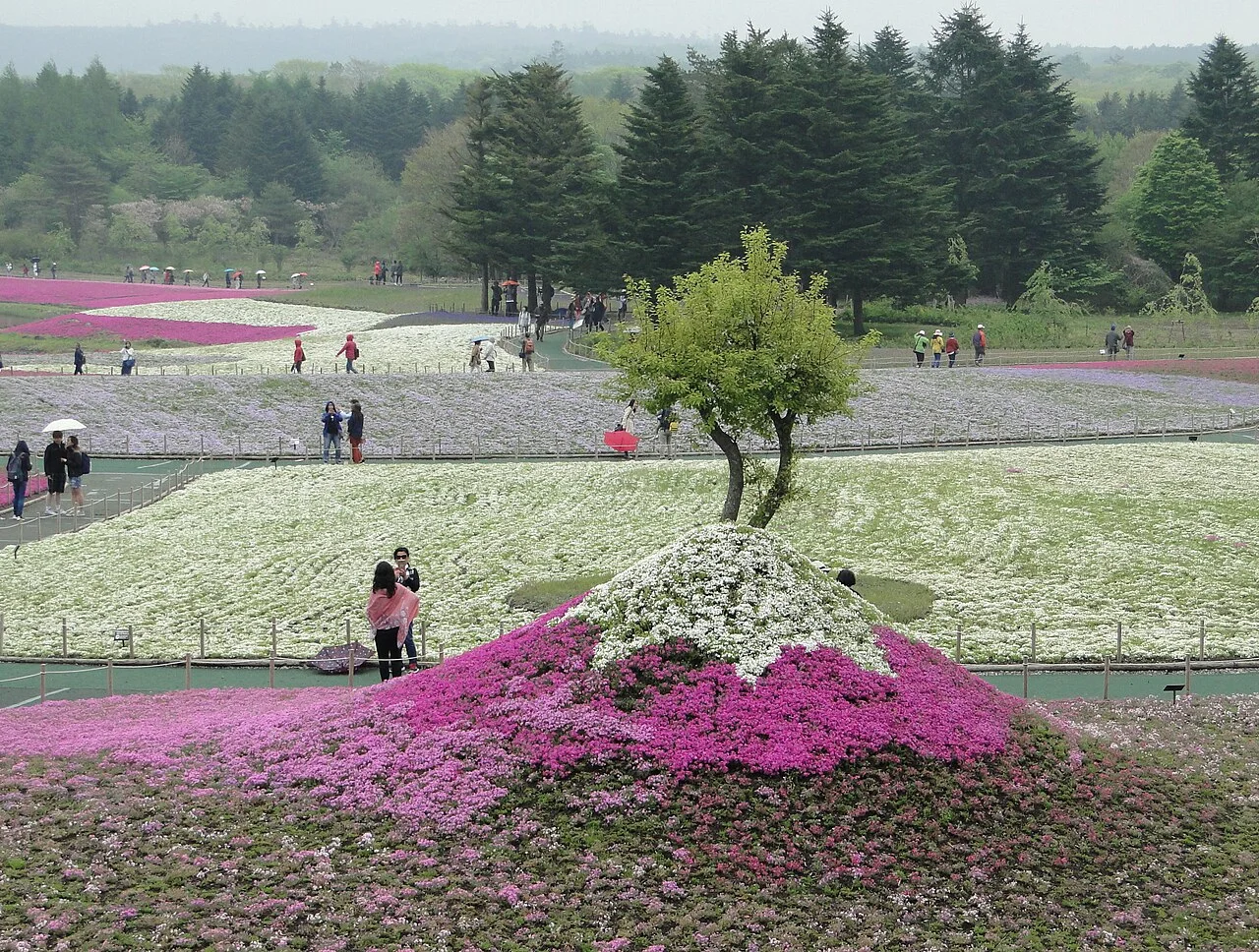
Shibazakura (moss phlox) is a low-growing perennial whose small blossoms resemble cherry blossoms; planted en masse, deep pink, white, and purple varieties carpet the ground. For 2026, the organizer listed a planting area of roughly 15,000 square meters with about 500,000 plants across six varieties. Bloom density can vary significantly from zone to zone on the same day. When checking recent photos, look for wide-angle shots that include walkways, trees, or distant ridgelines so you can tell how much of the main flower beds has actually filled in.
If you want full flower carpets for photos, aim for flexible dates between late April and early May. That window overlaps with Japan's Golden Week, when public holidays make buses and parking noticeably tighter than on weekdays of the same week. Visitors arriving during opening week can pair the grounds with a lakeside walk or the Peter Rabbit English Garden while the blooms are still filling out. If peak coverage is your priority, wait until the organizer posts wide-field updates and pick a day from your available window.
The official festival page links to dated bloom photos. When comparing shots taken a few days apart, check which sections have gained color. In 2026, the white Mont Blanc and large deep-pink McDaniel's Cushion stood out easily from afar, while the pink-and-white edged Tama-no-Nagare required a closer look. Companions who just want the sweeping landscape can pick a few vantage points where white and pink bands meet, while anyone shooting close-ups can work along the same path for individual blossoms.
Track Mount Fuji's visibility separately from the flower bloom. Use the official livestream to see how much of the peak and upper slopes are clear, then check dated bloom photos to confirm whether the fields have connected into solid color. Even if only a corner of the summit is visible on the webcam, shifting cloud bands may open a brief photo window. If the forecast calls for rain all day, decide whether seeing the flowers or taking a relaxed family stroll justifies the ride.
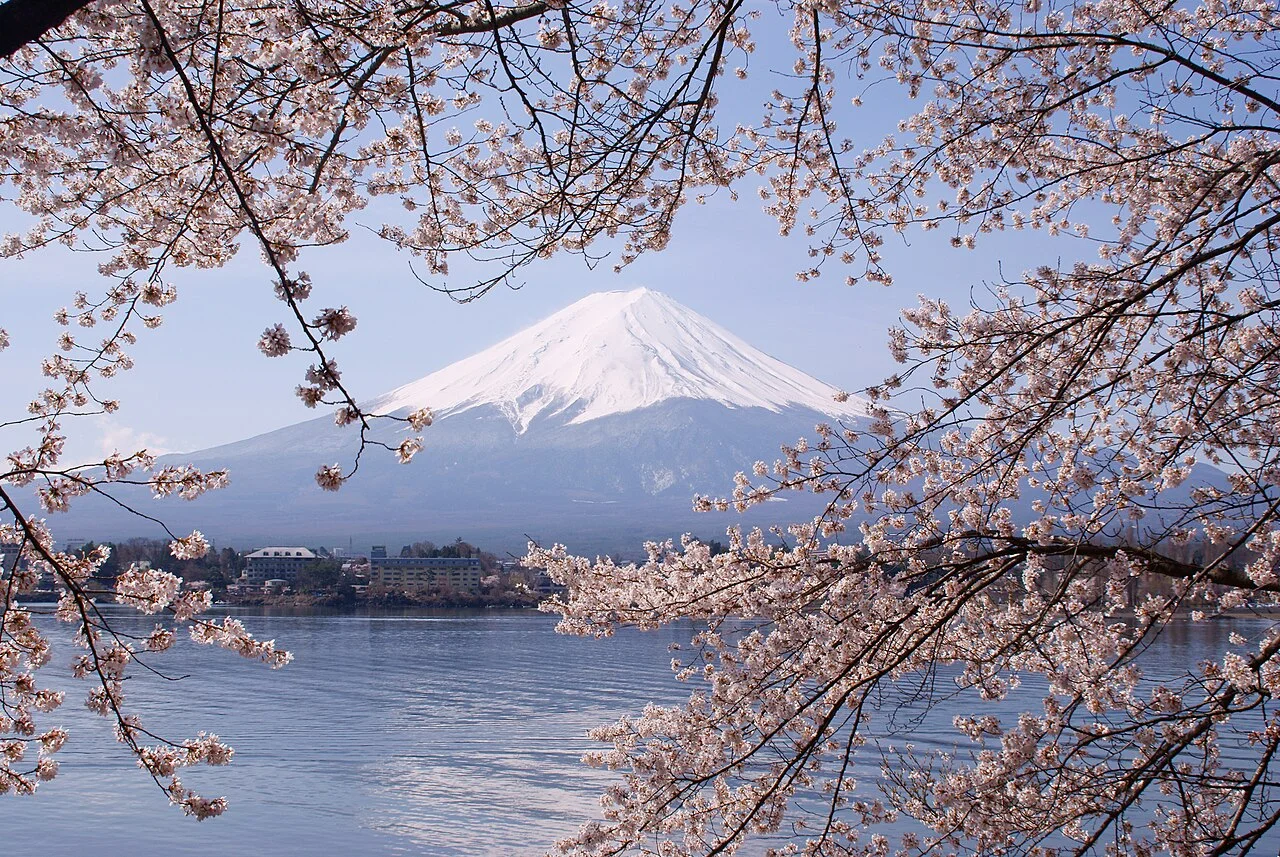
Intercity buses, trains, and hotels sell out well before same-day bloom updates drop. If you only have one weekend, lock in a refundable room first and keep Saturday and Sunday mornings open. If your Japan itinerary also includes cherry trees around Lake Kawaguchiko, treat them as two separate flower seasons: the Somei-Yoshino along the lakeshore bloom overhead on branches, while shibazakura grows at ground level. If you are planning both in one trip, check our Fuji Five Lakes cherry blossom guide.
Held at Fuji Motosuko Resort in Yamanashi, the Fuji Shibazakura Festival pairs pink moss phlox fields with Mount Fuji views. Covers 2026 ticket and shuttle benchmarks, 2027 schedule status, timing the bloom, Golden Week traffic, Peter Rabbit English Garden, and Kawaguchiko stays.
Tickets, Opening Hours, and Advance Passes
In 2026, the festival ran for 44 consecutive days, with standard operating hours listed as 8:00 AM to 4:00 PM and adjusted hours on select dates. For example, the organizer's 2026 hot-air balloon page listed a 6:00 AM opening from April 29 through May 6. If you plan to arrive at dawn or late in the afternoon, click your exact date on the operating calendar before heading out. There is no evening illumination at the venue, so returning to Kawaguchiko is easier if you want dinner after dark.
Same-day admission in 2026 varied by date. Adult tickets (junior high school age and older) ranged from ¥1,000 to ¥1,300, while child tickets (ages 3 and up) ranged from ¥500 to ¥700. For two adults and one child of ticketed age, walk-up admission totaled ¥2,500 to ¥3,300. If you are traveling with a 12-year-old, check whether they fall under the organizer's junior high school adult threshold before buying.
In 2026, the organizer sold advance admission tickets—branded as Shiba-Ticket—through Fujiyama Connect. Buying at least one day ahead saved ¥100 per person off the standard gate price and granted access through the advance-ticket entrance lane: ¥900 to ¥1,200 for adults and ¥400 to ¥600 for children. Keep your digital payment confirmation handy and separate from highway bus reservations so it is easy to verify ticket counts at the gate when traveling with kids.
Always read the fine print on bundled transit packages, even when they share a similar name. In 2026, bundles paired park admission with local buses from Kawaguchiko, Shin-Fuji, or Fujinomiya, alongside separate packages combining metropolitan highway buses with the Fuji Shibazakura Liner. Another option labeled as a direct venue tour bus required advance reservation. If you depart Shinjuku in the morning and stay in Kawaguchiko that night, settle your return destination before buying—a round-trip bundle back to the same origin may leave half the ticket unused on an open-jaw route.
If you are still deciding how to spend your afternoon around Kawaguchiko, buying a standalone admission ticket keeps your schedule flexible. The 2026 official site also sold combo tickets with sightseeing boats, Fugaku Wind Cave, and Narusawa Ice Cave. Only buy a combo pass once both stops are confirmed, and compare the bundle price against separate tickets. If only one late bus remains for your return, factor in walking time, queues, and last-entry cutoffs at the second attraction.
| Ticket Type | Same-Day Gate Ticket | Purchased 1+ Day Ahead |
|---|---|---|
| Adult (Junior high school and older) | ¥1,000 to ¥1,300 | ¥900 to ¥1,200 |
| Child (Ages 3 and up) | ¥500 to ¥700 | ¥400 to ¥600 |
Getting There from Shinjuku: Direct Buses vs. Trains
Based on official 2026 festival materials, direct highway buses from Shinjuku to the venue take about 2 hours 25 minutes. Busta Shinjuku sits right outside the JR Shinjuku Station South Exit, with departures on the 4th floor. When checking fares or seat availability, select Fuji Shibazakura Festival Venue (Fuji-Shibazakura-Matsuri Kaijo) as your destination. The same route also lists Kawaguchiko Station and Fuji-Q Highland; booking the former requires a bus transfer, and stops at the latter may swing through the theme park before reaching the lake area.
Fujikyu Bus's seasonal route page currently lists the Motosuko-to-Shinjuku adult one-way standard fare at ¥2,750 and the web fare at ¥2,450. Seats are reserved, with bookings opening on the same calendar date one month prior to travel and closing 10 minutes before the bus departs its origin terminal. Double-check travel dates and stop names on both legs when purchasing: if you ride straight to the venue on the way out and board at Kawaguchiko on the way back, you will be booking two different origin-destination pairs.
If direct buses are sold out and you can only book Shinjuku to Kawaguchiko, operators list a normal run time of about 1 hour 45 minutes before you transfer to a festival bus at the station. For departures from October 1, 2026 onward, Keio and Fujikyu departures on the Shinjuku-Kawaguchiko line use split online booking platforms: Fujikyu buses use Fujiyama Connect, while Keio buses mostly sell through Highwaybus.com with select seats on Fujiyama Connect. Schedule changes must be made on the site where you booked; switching to a departure on the other platform requires canceling the original order—potentially with a cancellation fee—and rebooking from scratch.
Time lost to traffic on the Chuo Expressway is hard to make up back in Tokyo. If your trip falls on a long weekend, taking the train helps bypass highway congestion between Shinjuku and Kawaguchiko. The Fuji Excursion limited express runs directly from Shinjuku to Kawaguchiko in about 1 hour 55 minutes. Operators currently list the adult one-way fare at ¥4,200 (¥2,580 base fare plus ¥1,620 limited express charge). Reserved seats go on sale one month ahead at 10:00 AM JST. When comparing prices, add the Kawaguchiko shuttle leg to calculate the true door-to-door cost from Tokyo.
If the Fuji Excursion is sold out, ride the JR Chuo Line to Otsuki Station and transfer to the Fujikyuko Line. Travelers starting from central Tokyo or staying west of Shinjuku can piece together JR Chuo Line trains from their nearest station instead of backtracking to the Shinjuku bus terminal. The transfer at Otsuki involves moving between platforms; if your group has large suitcases, buffer extra time for the next Fujikyuko departure and the shuttle queue at Kawaguchiko. Ticket pickup, boarding queues, and gate lines are not built into published train arrival times.
Once your Tokyo leg is locked in, shift your planning focus to the Kawaguchiko transfer. Even after boarding the station shuttle, buses and private cars share the same approach road and can hit queues outside the resort. Travelers with a fixed departure back to Tokyo should book an earlier return bus from the venue as a cushion. If you are departing from other Tokyo terminals or comparing bus operators, see our Mount Fuji highway bus guide.
Shuttles from Kawaguchiko, Shin-Fuji, and Fujinomiya
Outside Kawaguchiko Station, look for two labels: Fuji Shibazakura Liner and Fuji Shibazakura Festival Venue (Fuji-Shibazakura-Matsuri Kaijo). Both the direct festival shuttle and regular local buses can serve the grounds; 2026 schedules listed roughly 40 minutes for the Liner and about 62 minutes for the local bus. Check the full stop name before boarding—route tables also list Lake Motosu (Motosuko) and Motosuko Iriguchi, so choose Fuji Shibazakura Festival Venue to get off at the park.
Station maps published by Fujisanroku Electric Railway placed the festival Liner at Kawaguchiko Station Bus Stop 7, while regular Red, Green, and Blue sightseeing buses used Stop 1 and local buses toward Shin-Fuji used Stop 4. If you plan to use a regular route bus as a backup, locate both stops as soon as you arrive and verify the day's posted signage. Buses marked Mt. Fuji 5th Station or Lake Motosu also queue out front, so check the destination board and timetable rather than relying on the line alone.
As a 2026 benchmark for Kawaguchiko round-trips, the first daily direct shuttle departed the station at 8:35 AM and arrived at 9:15 AM, with an extra 8:05 AM departure (arriving 8:45 AM) added from April 29 to May 6. Return shuttles ran mostly hourly, with the last regular bus leaving the venue at 4:00 PM and a 5:00 PM bus running only during the peak extension period. Use these previous-season times to gauge how much of a half-day itinerary the shuttle occupies.
Working backward from the 2026 timetable, arriving at 9:15 AM and catching the 1:00 PM direct shuttle back puts you at Kawaguchiko Station at 1:40 PM—plenty of time to photograph the fields, walk the English Garden, and grab a bite. However, if you booked a 2:00 PM long-distance bus out of Kawaguchiko, that 20-minute buffer can disappear fast in road delays and station walking; take an earlier return shuttle or push back your highway bus. If you linger until the 4:00 PM closing bell before walking to the stop, you will miss the last 4:00 PM shuttle.
Travelers staying in Fujiyoshida and starting from Mt. Fuji Station (Fujisan Station) have two ways in. In 2026, a daily local bus departed Mt. Fuji Station at 8:57 AM, passed through Kawaguchiko Station, and reached the festival venue at 10:07 AM. To arrive earlier, take the train one stop to Kawaguchiko and catch the first Liner. Note that return Liner shuttles terminate at Kawaguchiko Station, so leave time for the Fujikyuko Line train back to Mt. Fuji Station—and factor in evening transit and luggage storage if your hotel is there.
Arriving from Shizuoka or Nagoya via the Tokaido Shinkansen lets you approach from the south via Shin-Fuji Station. In 2026, the daily direct Liner left Shin-Fuji at 10:15 AM, stopped at Fujinomiya at 10:50 AM, and arrived at 11:30 AM. For an earlier start, a local bus departed Shin-Fuji at 7:16 AM and reached the resort at 8:30 AM. Heading back toward Shin-Fuji, a 1:30 PM direct bus ran only on weekends and national holidays during the festival, while a 3:00 PM direct bus ran daily, arriving at Shin-Fuji Station at 4:15 PM.
Keep Shin-Fuji Station and Fuji Station distinct: Tokaido Shinkansen Kodama trains stop at Shin-Fuji, whereas Fuji Station serves the JR Tokaido Main Line and Minobu Line. Fujikyu Shizuoka Bus lists local buses from Shin-Fuji toward Fujinomiya and Kawaguchiko at Stop 5 outside the station; travelers already on the Minobu Line can board the same route at Fujinomiya Station. When connecting to a long-distance Shinkansen at Shin-Fuji, plan your entire afternoon around the return bus schedule—especially lunch, cafe lines, and photo stops—because wide afternoon headways mean missing a bus can force you to cut a second stop short.
Once the festival ends, the bus stop in front of the resort operates only during specific official event periods. If you want to visit the Peter Rabbit English Garden outside the festival window, the official access page notes an approximately 20-minute walk from the Kenzakai bus stop. Check the active local bus timetable for your exact travel date, stop coverage, and return schedule, and build in enough time to walk back before sunset.
Driving In, Parking Fees, and Golden Week
Enter Fuji Motosuko Resort or Motosu Highland in your car navigation—the address is 212 Motosu, Fujikawaguchiko-machi, Minamitsuru-gun, Yamanashi. From Lake Motosu, follow National Route 139 toward Fujinomiya for about 3 kilometers to reach the entrance; typing only Lake Motosu may route you to the lakeshore instead. Coming from Kawaguchiko, the organizer estimates about 25 minutes from Kawaguchiko IC on the Chuo Expressway via National Route 139, and about 50 minutes from either Fuji IC (Tomei Expressway) or Shin-Fuji IC (Shin-Tomei Expressway).
In 2026, parking was charged separately from admission at ¥500 to ¥1,000 per standard passenger car, ¥2,000 for large vehicles, and ¥500 for motorcycles. Even if you purchase advance admission tickets, parking is still paid on site. For a family of two adults and one child arriving by car, combined walk-up admission and parking came to between ¥3,000 and ¥4,300—before factoring in expressway tolls and car rental, compared to per-person transit fares.
In 2027, Japan's national holidays fall on April 29 and May 3 to May 5, while May 1 and May 2 fall on Saturday and Sunday. For quieter weekdays during the bloom season, look first at April 26 to 28 or dates from May 6 onward. Once you narrow down a window using the holiday calendar and bloom photos, verify that specific day's operating hours and shuttle schedules.
Golden Week traffic creates two predictable bottlenecks. As morning arrivals converge, National Route 139 and the parking entrance lanes back up quickly; in the afternoon, mass departures slow down the highway again. If you have a dinner reservation in Tokyo, a flight, or a timed Shinkansen departure the same day, shift your buffer time from the morning arrival to the afternoon exit. Agree on a hard latest departure time with your group rather than pushing to stay until closing.
If you are staying near Kawaguchiko Station, check the shuttle schedule before deciding whether to rent a car for the day. A car pays off if you plan to continue onward to the Lake Motosu shoreline, Lake Saiko, or the Asagiri Plateau; if you are only going out and back on the same road, driving mostly trades shuttle convenience for parking queues, fatigue, and watching the clock. Prioritize a car mainly when traveling with toddlers, a wheelchair, or staying at a property with limited bus access.
When your dates are flexible, save the peak Golden Week hours for spots within walking distance of your hotel. If you have no choice but to visit during the holiday rush, arrive early to hit the main flower beds first and stay ahead of lunch and restroom lines. If clear mountain views are not essential, entering after midday is an option—just verify your return logistics first, since the last buses south to Fujinomiya and north to Kawaguchiko depart at different times.
Navigating the Grounds and Framing Mount Fuji
The organizer estimates about 60 minutes for a basic walk through the grounds. That works as a baseline if you simply loop past the main flower fields to Ryujin Pond and back to the entrance. Allow two to three hours if you want to wait for crowds to clear at two or three photo spots, tour the English Garden, and sit down for food. Count that time from when you scan your ticket at the gate—bus rides, ticket window lines, and entry queues are extra.
Looking at the 2026 official park map, the main entrance sits right next to the ticket booths and opens onto the primary flower beds. For an elevated view, follow Zone A up toward the observation deck. To keep your flower loop compact, swing back from the fields toward the souvenir shops near the entrance; dining stalls and the English Garden sit further across the grounds. If you arrived by bus, remember the stops sit on the National Route 139 side of the map, and build the walk back from the cafe and garden into your boarding buffer.
When you reach the first broad carpet of blooms near the entrance, find a path with a clear sightline to the summit and lock in your Mount Fuji shot first. Shooting from a low angle fills the foreground with blossoms and pushes walking crowds toward the edges of the frame. To show how the different color blocks relate, step back to an open stretch that frames the walkways too. A phone's ultra-wide lens captures the scale of the fields, while a tighter focal length centers the mountain silhouette and clouds.
Ryujin Pond provides the park's main water feature. From the shoreline, you can frame the lakeside flower bands and try for reflections when the water is calm. On windy days, shift along the path to catch ripples alongside the colors. If you want true lakefront views of Lake Motosu itself, add a separate stop along the shore—either by checking bus routes that stop lakeside or by driving—since each viewpoint requires its own time block.
In 2026, themed photo props included a small boat moored in a sea of pink blooms, a heart-shaped bench, and a Mount Fuji-shaped installation. Groups wanting a full-family photo should save these props until after viewing the main flower fields so nobody gets split up in photo queues right after entering. Pick an unmistakable meeting point like an exit gate or a landmark on the map rather than just saying near the pink flowers. Stick to designated walkways along the field edges and step aside after shooting so traffic keeps moving.
Visitors focused purely on photographing Mount Fuji should keep their arrival schedule flexible and shoot the peak the moment it appears. If clouds obscure the upper slopes, use the walking time for macro shots of individual blossoms, the crisp borders between white and pink plantings, or higher-angle views across the flower beds. If a summit shot is a must, finish your close-ups first, then loop back to your vantage point to check the clouds before your return bus deadline.
Peter Rabbit English Garden, Dining, and Visiting with Kids or Dogs
The Peter Rabbit English Garden shares the same resort grounds as the shibazakura fields. Designed by landscape gardener Mark Chapman, it features around 300 varieties of plants and flowers. Beyond the main flower beds, look for the Peter Rabbit Story Trail through the woods beside Ryujin Pond, lined with characters and scenes from Beatrix Potter's books. Grouping the garden, shop, and cafe into one stop makes it easy to turn back partway along the trail if younger kids run low on steam.
The two attractions keep different seasonal calendars. In 2026, the Shibazakura Festival closed on May 24, whereas the English Garden opened alongside it on April 11 and was scheduled to stay open through November 23. If you plan a summer visit to the garden, check the resort's regular operating calendar and current-season bus pages—spring admission tickets, festival shuttles, and seasonal extra buses can all end as soon as the flower festival wraps up.
The park's official FAQ lists the Koppe Stand takeout counter and a cafe, with standard cafe hours from 9:00 AM to 4:00 PM subject to seasonal shifts. Food stalls in 2026 served local staples like Fujinomiya yakisoba and Yoshida udon, while the garden's The Cafe page posts separate closure notices. If you want a sit-down lunch, check daily operating notices and line lengths once inside. If you are catching a bus around noon, grabbing takeout in the park or waiting until Kawaguchiko is easier to time. When family members want food from different stalls, agree on a seating area or meetup spot before splitting up.
Outside food and drinks are permitted, and benches are scattered around the grounds. However, spreading out picnic blankets to eat and using portable gas stoves or burners are prohibited. Bringing your own snacks is handy for bridging the gap between shuttle rides and proper meals. If anyone in your group has strict dietary restrictions, pack food they can safely eat and save restaurant stops for after you leave the park rather than checking ingredients stall by stall.
The official site lists four restroom locations, three of which have accessible stalls, and notes that wheelchair rentals are not available on site. If you are bringing your own wheelchair or stroller, mark the restrooms, dining zone, and exits on the park map right away; on a shorter visit, prioritize the main flower beds and decide whether to continue to the pond based on energy levels. If your group moves at different paces, let the photographers scout angles ahead while everyone else rests at a bench, then regroup for the walk back to the bus stop.
Per the resort's FAQ, dogs are permitted if their shoulder height is 50 cm or less (small to medium breeds). During the 2026 holiday restriction window (April 25 to May 6), dogs had to stay inside a carrier, pet stroller, or sling bag upon entry, with no rentals available on site. Pet-friendly cafe seating is limited to the outdoor terrace. Locate the dog run area on the map ahead of time and pick a meeting spot near the entrance so the whole family does not end up waiting together at the cafe.
Fuji Motosuko Resort sits at an elevation of roughly 1,000 meters. Morning winds on the plateau can feel brisk, so pack a light jacket you can peel off once kids warm up from walking. In light rain, a hooded raincoat leaves one hand free to hold a child's hand, and grippy shoe soles matter more than water-resistant uppers. Shed layers when the afternoon warms up, and keep that jacket handy in case the breeze picks up while waiting for the return shuttle.
Rainy-Day Options: Flower Fields, Lakeside Walks, or Indoor Stops
The organizer states that the festival runs rain or shine. If it is only drizzling when you set out and the bloom is near peak, shorten your plan to a loop through the main flower beds and Ryujin Pond, then head back to Kawaguchiko for lunch. If you are staying two nights in Kawaguchiko and rain settles over one morning, push the flower visit to the clearer morning. Travelers with just one day from Tokyo should weigh whether seeing the flowers without Mount Fuji is worth the long ride in steady rain.
Back in Kawaguchiko, the Yamanashi Gem Museum can fill the rest of your afternoon. Typical spring hours run 9:00 AM to 5:30 PM with last admission 30 minutes before closing; tickets are ¥600 for adults and ¥300 for elementary and junior high students. It generally closes on Wednesdays, though it stays open during public holidays and Golden Week. Ride the Kawaguchiko Sightseeing Bus to the Yamanashi Gem Museum / Kawaguchiko stop—just make sure you have enough margin before your train or bus back to Tokyo.
If you are driving back via the Chuo Expressway, the Yamanashi Prefectural Fujisan World Heritage Center makes an easy stop along the way. The South Hall houses exhibits on Mount Fuji's cultural faith and art, while the North Hall (the former Fuji Visitor Center) covers natural history; admission is free at both. The South Hall closes on the fourth Tuesday of each month (or the following day if that Tuesday is a holiday), while the North Hall is open year-round. If anyone in your group is curious about volcanology, Fujiko pilgrimage traditions, or regional maps, this beats another windswept outdoor lookout on a gray day.
If the rain stops while clouds still hide the mountain, check wind speeds before heading up the Mt. Fuji Panoramic Ropeway, as strong gusts or thunderstorms can suspend service. When you are already back at Kawaguchiko Station with just a short gap left, a brief walk along the lakeshore and back keeps your timing predictable. If wind and rain persist by the lake, finish a warm meal and head straight for your booked departure, saving indoor museums for a day with more breathing room.
Day Trip from Tokyo vs. Overnight in Kawaguchiko
If you must return to Tokyo the same day, round-trip direct buses require the fewest transfers. That setup fits travelers focusing strictly on the shibazakura fields and the Peter Rabbit English Garden, or anyone entering early and leaving right after lunch. Lock in your return bus first based on when you need to be back in Tokyo, then check how many hours you actually get on the ground. For instance, if you have an afternoon intercity train to catch, even the earliest bus out of Tokyo needs enough cushion on the return leg for Route 139 and expressway delays.
If you would rather let the weather guide your timing, stay overnight in Kawaguchiko the night before. Taking an early shuttle from the station lets you go straight to the venue when both flowers and mountain views line up. Under heavy morning clouds, grab breakfast nearby to see if the sky clears, or swap Oishi Park and station dining to day one and time the flower beds for day two. Sleeping by the lake puts you close to the action, though you still have to factor in the shuttle out to Motosuko; at farther hotels, catching the earliest bus depends on how smoothly you get to Kawaguchiko Station.
Take Fuji Lake Hotel on the southern shore, about a 10-minute walk from Kawaguchiko Station. Its morning shuttle to the station starts at 8:15 AM by request at the front desk—meaning if you want an early departure like 2026's holiday-period 8:05 AM bus, you should walk to the station yourself. When picking rooms, the Mt. Fuji View Bathroom Suite features a bathtub facing Mount Fuji using standard heated water; if you want natural hot spring water while looking at the mountain, the hotel's room listings separately offer a Mt. Fuji View Open-Air Bath Suite where the living area overlooks the lake and the outdoor tub faces the peak.
If your itinerary centers on Fujiyoshida, staying near Mt. Fuji Station—such as at Fujisan Station Hotel, roughly two minutes from the station—keeps logistics simple. You can explore central Fujiyoshida on your first afternoon, then catch the direct morning local bus or hop on the train to Kawaguchiko the next day. If your hotel breakfast starts late, early shuttle riders should pick a room with grab-and-go options, eat out, or check out and store luggage before boarding.
For classic reflections of Mount Fuji across Lake Kawaguchiko, set aside a separate half-day for Oishi Park on the north shore, right next to the Kawaguchiko Natural Living Center. Ride the Red Line sightseeing bus from Kawaguchiko Station and get off at Kawaguchiko Natural Living Center. Giving the park and the shibazakura fields separate mornings cuts down on repeated transfers through Kawaguchiko Station in a single day. If you add Oishi Park after returning from the festival, check the time and note the last Red Line departure so you are not stranded waiting for a taxi.
Official listings for the Kawaguchiko Sightseeing Bus multi-line pass currently show 1-day passes at ¥1,500 for adults and ¥750 for children, and 2-day passes at ¥2,000 for adults and ¥1,000 for children, covering the Red, Green, and Blue Lines. If you are only riding the Shibazakura Liner, compare the festival's own admission-plus-shuttle bundle first. The multi-line pass mainly makes sense if you also plan to ride the Red Line to Oishi Park or the Green Line to Lake Saiko on another day; the Blue Line serves the festival venue as well, so confirm active stops and last-bus times for your travel date.
If you are traveling with large suitcases, leave them at your hotel or in lockers around Kawaguchiko Station before heading south to the park. When retrieving bags in Kawaguchiko before catching a different operator's highway bus, confirm hotel luggage-pickup cutoff times and set a clear meetup spot with your group. To choose a base by lake view, dinner plans, or shuttle access, check our Lake Kawaguchiko hotel guide—and if you book a ryokan with dinner included, work backward from your assigned dining slot to pick your return shuttle.
A few useful answers
When is the 2027 Fuji Shibazakura Festival?
As of November 22, 2026, the organizer has not announced the 2027 dates. The 2026 festival ran from April 11 to May 24, and travelers can check dated official bloom photos starting around late April to pick the best viewing day.
Is the Fuji Shibazakura Festival right on the shore of Lake Motosu?
The venue is Fuji Motosuko Resort, located roughly 3 kilometers from Lake Motosu along National Route 139 toward Fujinomiya. The pond inside the park is Ryujin Pond; if arriving by bus, get off at Fuji Shibazakura Festival Venue (Fuji-Shibazakura-Matsuri Kaijo).
How long is the bus ride from Kawaguchiko Station?
In 2026, the direct Fuji Shibazakura Liner took about 40 minutes, while regular local route buses were scheduled at roughly 62 minutes. Add extra time for boarding queues and road traffic, and check that your return bus specifically stops at the festival venue.
What is the difference between advance admission tickets and bus packages?
Standalone advance tickets (Shiba-Ticket in 2026) cover park entry only and save ¥100 per person when bought at least one day ahead. Transit packages bundle admission with specific local buses, highway buses, or direct tour buses, so check the exact departure and return stations on each product.
Is the park open in the rain, and can I bring outside food?
The organizer states that the festival operates rain or shine. You can bring outside food and drinks to enjoy on the park benches, though spreading out picnic blankets and using portable gas stoves are prohibited.
Are wheelchair rentals available inside the venue?
Wheelchair rentals are not provided on site, so please bring your own. The official site lists four restroom locations across the park, three of which include accessible stalls.
Can I visit just the Peter Rabbit English Garden after the festival ends?
Yes—check the garden's own operating calendar. In 2026, it was scheduled to stay open through November 23. Festival shuttles run on a separate seasonal timetable, and the official access page notes an approximately 20-minute walk from the Kenzakai bus stop outside the festival period.
Official information and references
Sources used in this guide.
- Fuji Motosuko Resort | Fuji Shibazakura Festival Dates, Plantings & Park Map
- Fuji Motosuko Resort | 2026 Fuji Shibazakura Liner & Local Bus Timetables
- Fuji Motosuko Resort | Advance Admission Tickets, Transit & Facility Bundles
- Fuji Motosuko Resort | 2026 Opening Hour Examples & Hot-Air Balloon Experience
- Fuji Motosuko Resort | On-Site Facilities, Rain Policy, Dining & Accessibility FAQ
- Fuji Motosuko Resort | Access & Off-Season Bus Stop Guide
- Fuji Motosuko Resort | Peter Rabbit English Garden & Story Trail
- Fujikyuko | 2026 Fuji Shibazakura Festival Opening Release, Fares, Access & Dining
- Fujikyu Bus | Shinjuku to Fuji Five Lakes Timetables, Fares & Reservations
- Fujikyu Bus | Shinjuku-Kawaguchiko Booking Channels Effective October 1, 2026
- Fujisanroku Electric Railway | Fuji Excursion Limited Express & Express Tickets
- Fujikyu Bus | Kawaguchiko, Saiko, Narusawa, Shojiko & Motosuko Sightseeing Buses
- Fujikawaguchiko Tourism Association | Oishi Park & Kawaguchiko Natural Living Center
- Mt. Fuji Panoramic Ropeway | Operating FAQ
- Yamanashi Gem Museum | Hours, Admission & Access
- Yamanashi Prefectural Fujisan World Heritage Center | Visitor FAQ
- Fuji Lake Hotel | Walking Time & Shuttle Service from Kawaguchiko Station
- Fujisan Station Hotel | Access from Mt. Fuji Station
- Fuji Lake Hotel | Room Orientations, Scenic Baths & Open-Air Bath Suites
- Fujisanroku Electric Railway | Kawaguchiko Station Bus Stop Platform Map
- Fujikyu Shizuoka Bus | Local Bus Boarding Stops at Shin-Fuji Station
- JR Central | Shinkansen Trains Stopping at Shin-Fuji Station
- Cabinet Office of Japan | 2027 National Holidays Calendar
- Fuji Motosuko Resort | Official Live Camera Portal
- Fuji Motosuko Resort | Park Elevation Details