Ashikaga Flower Park's Flower Fantasy runs from October 17, 2026, through February 14, 2027. Check lighting hours, closure dates, night tickets, the Miracle Great Wisteria, pond reflections, Oyama transfers, and trains back to Tokyo.
- Region & Focus
- Ashikaga
- Reading Scope
- 23 min read · 11 chapters · 9 Q&As
- Official Verification
- 19 official sources checkedUpdated November 22, 2026
- Key Topics
- WinterSeasonsRail travel
Chapter Route Map (tap any stop)
- Ashikaga Flower Park Lighting Hours and the Final Week of December
- Night Ticket Only or Separate Day and Night Sessions
- Autumn Blooms, Christmas, or Winter Peonies: Choosing Your Dates
- Great Wisteria Trellis and the Ponds: Where to Start
- How to Pace a One-Hour vs. Two-Hour Visit
- Taking JR from Tokyo: Why the Oyama Transfer Matters Most
- Three Dates with Direct Limited Express Trains—Otherwise Check Oyama Connections
- Driving In: Which Expressway Exit and Where to Park
- Cold Weather, Rain, Strollers, and Night Photography
- Spring Great Wisteria Festival: A Different Night Illumination
- Combining Downtown Ashikaga: Put the Park at Dusk
- Quick Q&A
The 2026–27 Flower Fantasy illumination at Ashikaga Flower Park runs from October 17, 2026, through February 14, 2027, closing only on December 31. For a day trip from Tokyo, take JR to Oyama, transfer to the Ryomo Line, and get off at Ashikaga Flower Park Station, about a 3-minute walk from the gate. Night admission opens at 15:30 at ¥1,500 for adults and ¥800 for children ages 4 through elementary school. Start at the Great Wisteria trellis as the light strands illuminate cluster by cluster, then head to the pond for reflections. Check your return train back to Tokyo in advance and pick a Ryomo Line departure that still connects at Oyama—one earlier than the final option of the night.
Ashikaga Flower Park Lighting Hours and the Final Week of December
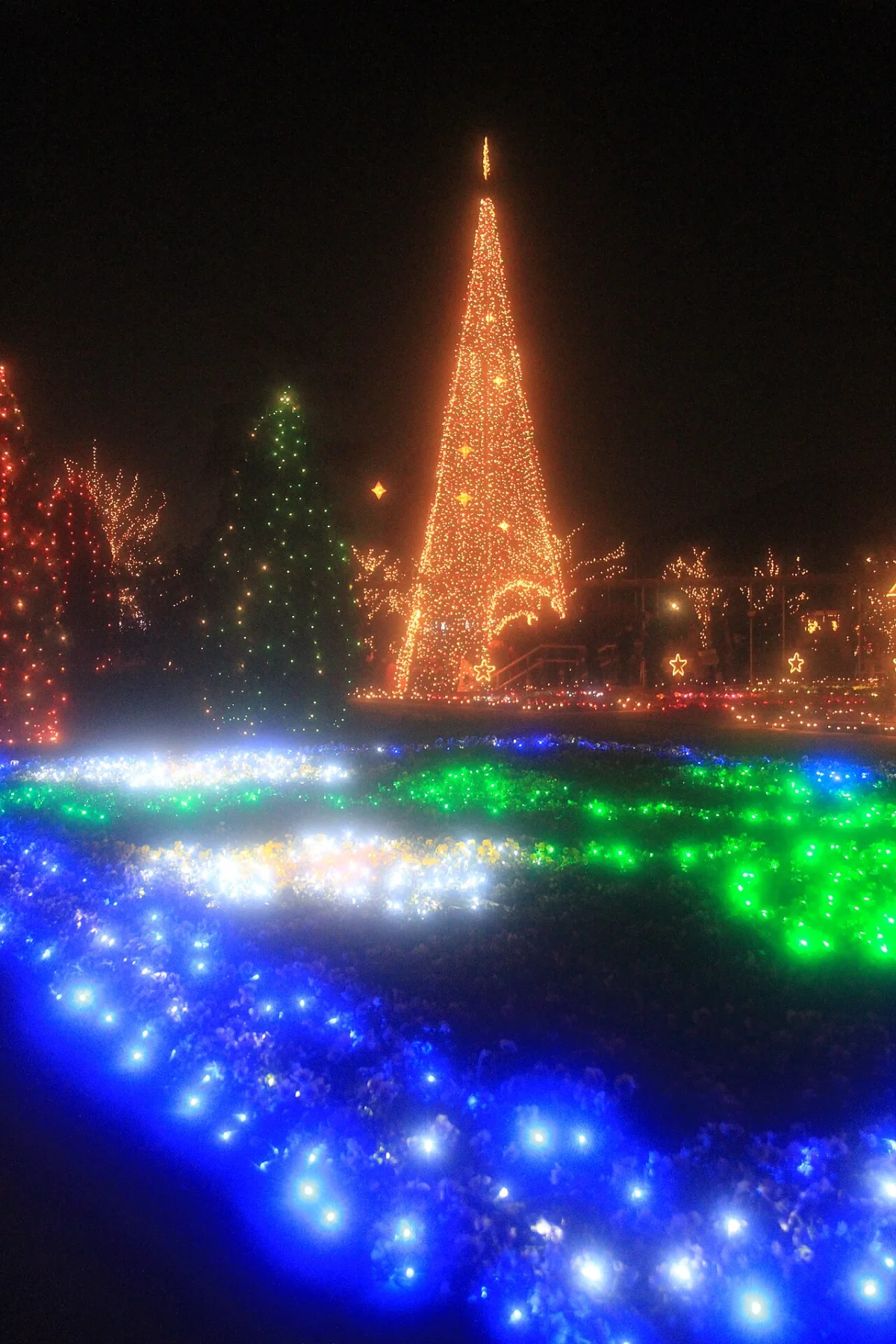
The 25th edition of Flower Fantasy packs more than 5 million lights across roughly 100,000 square meters of park grounds. Displays are spread across wisteria trellises, gardens, ponds, and hillsides, so waiting near the entrance for dark won't show you much. If you only have one evening, first check which operating schedule your visit date falls under, then pick two or three spots you want to see. For first-timers, the Great Wisteria and one pond display capture the heart of Ashikaga.
The night session gate opens at 15:30. Lights turn on around 16:30 or 17:00, depending on whether your visit falls within the extended season from November 7 through January 3. If you're visiting with kids or older travelers, entering a bit early lets you spot restrooms, benches, and the path back to the exit while you can still see the walkways. If you're traveling solo just for night photography, time your train arrival closer to the lighting hour so you spend less time waiting outdoors.
A park notice on November 20 added extended hours until 21:30 every day from December 24 through December 30, including weekdays that week. The park is closed on December 31, reopens on New Year's Day, and remains in the extended hours window through January 3. When plotting a New Year's trip, track your schedule by exact calendar date. If you are only free on the evening of December 30 and staying in Ashikaga the next night, only December 30 is open for entry.
The park's same-day admission and hours page shows today's schedule only. When planning for other months, combine the annual event schedule with any seasonal notices for specific dates. Same-day ticket sales stop 30 minutes before closing, and re-entry is not permitted during the night session. If closing is at 20:30, 20:00 is the ticket cutoff—and with only half an hour left, stick to one or two displays.
| Dates | Lights On (Approx.) | Night Session Hours |
|---|---|---|
| Oct 17–Nov 6, 2026; Jan 4–Feb 14, 2027 | 17:00 | 15:30–20:30 (until 21:00 on weekends and national holidays) |
| Nov 7, 2026–Jan 3, 2027 | 16:30 | 15:30–21:00 (until 21:30 on weekends and national holidays) |
| Dec 24–Dec 30, 2026 | 16:30 | Scheduled until 21:30 daily per park notice |
| Dec 31, 2026 | Closed | Park closed |
Ashikaga Flower Park's Flower Fantasy runs from October 17, 2026, through February 14, 2027. Check lighting hours, closure dates, night tickets, the Miracle Great Wisteria, pond reflections, Oyama transfers, and trains back to Tokyo.
Night Ticket Only or Separate Day and Night Sessions
In winter, buying just the night session ticket is enough. From October 17 through February 14, the park splits day and night into separate sessions, with the day session ending at 15:00. Starting November 24, the day session doesn't open until 11:00. Seeing flowers by day and staying for illuminations at night requires two tickets: you must exit at the break and re-enter at 15:30 with a night ticket. Daytime pricing tracks flower conditions, with general adult day tickets ranging from ¥400 to ¥900 between July 2026 and December 30, 2026. Winter night adult admission is a flat ¥1,500.
During the night session, even the shopping area requires a ticket. If one person in your group only wants to browse souvenirs while another tours the lights, decide beforehand whether you're both entering. Because the park includes the shops and garden sales zone inside the night ticket perimeter, forgetting your wallet or jacket in the car after entry runs straight into the no-re-entry rule. If you already hold e-tickets, pull up the ticket screen, verify the headcount, and walk in together.
Advance convenience-store tickets cost ¥1,450 for adults and ¥750 for children, while date-specific e-tickets are linked from the park's advance-ticket notice. The practical upside of buying ahead is heading straight to the gate for ticket scanning. If you're solo and keeping your itinerary flexible, paying the extra ¥50 at the gate is an easy trade-off. For larger groups, skipping the outdoor ticket line makes advance purchase worthwhile. When using Japanese convenience-store tickets, follow that vendor's pickup and entry instructions carefully, and don't mix up the payment receipt with the actual admission ticket.
Some bundle tickets include park shopping credit. At 7-Eleven, a pair of adult tickets with a ¥500 merchandise voucher costs ¥3,300, compared with ¥2,900 for two standard advance tickets—if you'll spend the full voucher, you pay ¥400 extra for ¥500 in value. A parent-and-child bundle (one adult, one child, plus a ¥500 voucher) is ¥2,600 versus ¥2,200 for two separate advance tickets. If you plan to eat dinner in town and skip souvenirs, standard advance tickets are cleaner. Vouchers from both bundles are valid through February 14, 2027.
Students past elementary school age no longer qualify for the child rate, and children under age 4 enter free. The park's FAQ also notes a disability discount: presenting a disability certificate at the ticket window takes ¥200 off for the holder and one companion, though it cannot be combined with other discounts. If you plan to use an overseas-issued certificate, check with the park beforehand on accepted documentation.
Autumn Blooms, Christmas, or Winter Peonies: Choosing Your Dates
The first seasonal chapter runs from October 17 through mid-November, spotlighting upright spikes of Mexican bush sage (amethyst sage) across the garden beds. If you want to see real blossoms alongside the lights, arrive while there is still daylight to catch the natural plant colors before dusk settles in. Park flower logs from late October have also featured autumn roses and cosmos. For planning specific blooms in future years, the date-stamped park diary is more reliable than rough monthly labels.
For Christmas decorations, target late November through late December. While the main event overview lists 'late November,' the park's November 18 diary confirmed the Christmas theme was already underway. This season features a 21-meter metasequoia outside the main gate shop dressed as a Christmas tree, alongside a new Flower Road leading to the Flower Castle. Both fit naturally into one evening: admire the towering tree from below first, then follow the lit Flower Road toward the castle. If you only have one Christmas weekend night, agree on your photo spots before entering so you spend less time coordinating by phone.
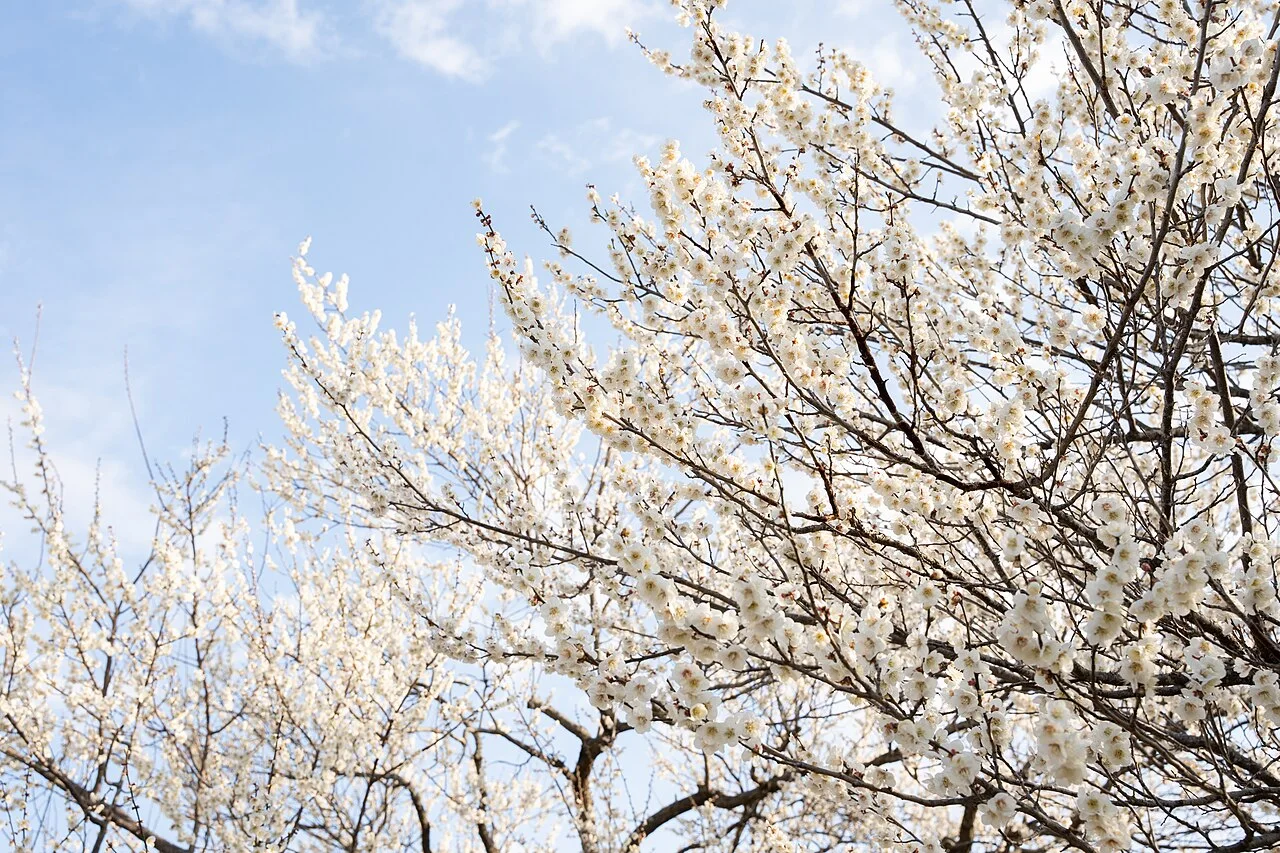
New Year's illuminations and winter peonies take over from January 1 through February 14. Winter peonies sit much closer to the ground than the towering Light Castle, so you have to step up close to appreciate them. If flowers interest you more than Christmas displays, check the flower diary and aim for dates with fresh peony updates. To catch crisp pond reflections too, low-wind evenings keep the water calmer and the reflections sharper. If your travel dates are flexible, weather and bloom updates matter more than locking in Valentine's Day.
If your travel dates are already fixed, treat the seasonal sub-themes as a bonus. Visitors coming mainly for the Miracle Great Wisteria, the Rose Garden of Lights, or Snow World should simply pick a day when they can arrive early and make a comfortable train back. If you have reason to visit twice, pairing one evening during the autumn blooms with another during winter peonies lets you see entirely different real flowers beneath the lights.
Great Wisteria Trellis and the Ponds: Where to Start
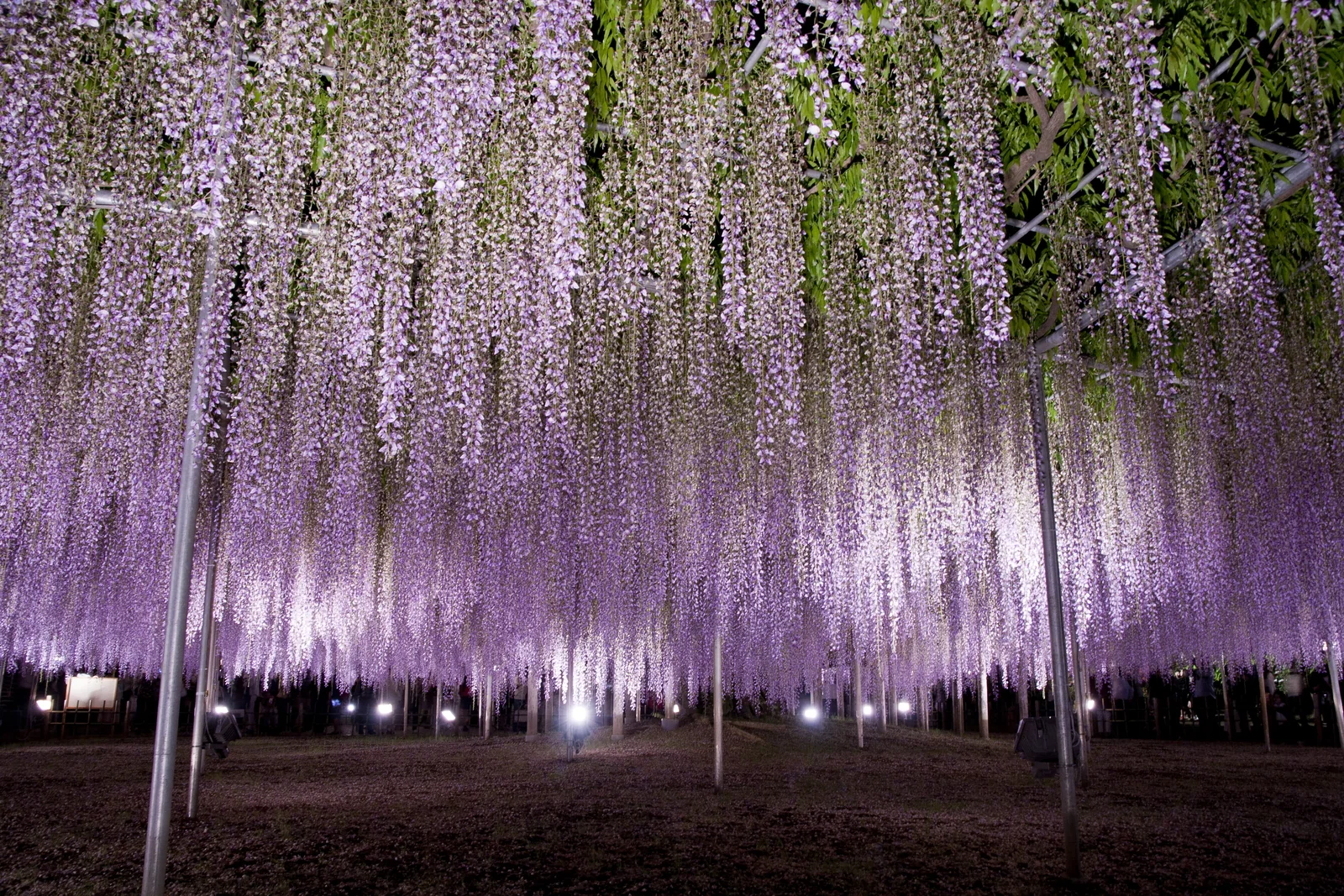
The park's signature piece is the Miracle Great Wisteria. Having grown from about 72 square meters in the park's early years to roughly 1,000 square meters today, its winter light strands cycle through the stages of wisteria from first bud to full bloom and falling petals. This season also adds the scent of spring wisteria around the trellis. Find a steady spot along the edge and watch a small corner light up before sweeping across half the canopy, then decide which phase you want to shoot. If you catch the entire trellis glowing at once, put your phone down for a moment and take in how far it stretches.
The White Wisteria Tunnel strings lights overhead along a walkway, whereas the Great Wisteria is a broad canopy you can view from the side or look up into from beneath. If you want photos of both, save your wide-angle shots for the Great Wisteria. People are constantly moving through the tunnel, so if you want a portrait under the lights, wait until your companions reach a natural pause and take one or two quick frames. When others are shooting at the tunnel entrance, slipping past along the edge keeps foot traffic moving better than planting a tripod in the middle.
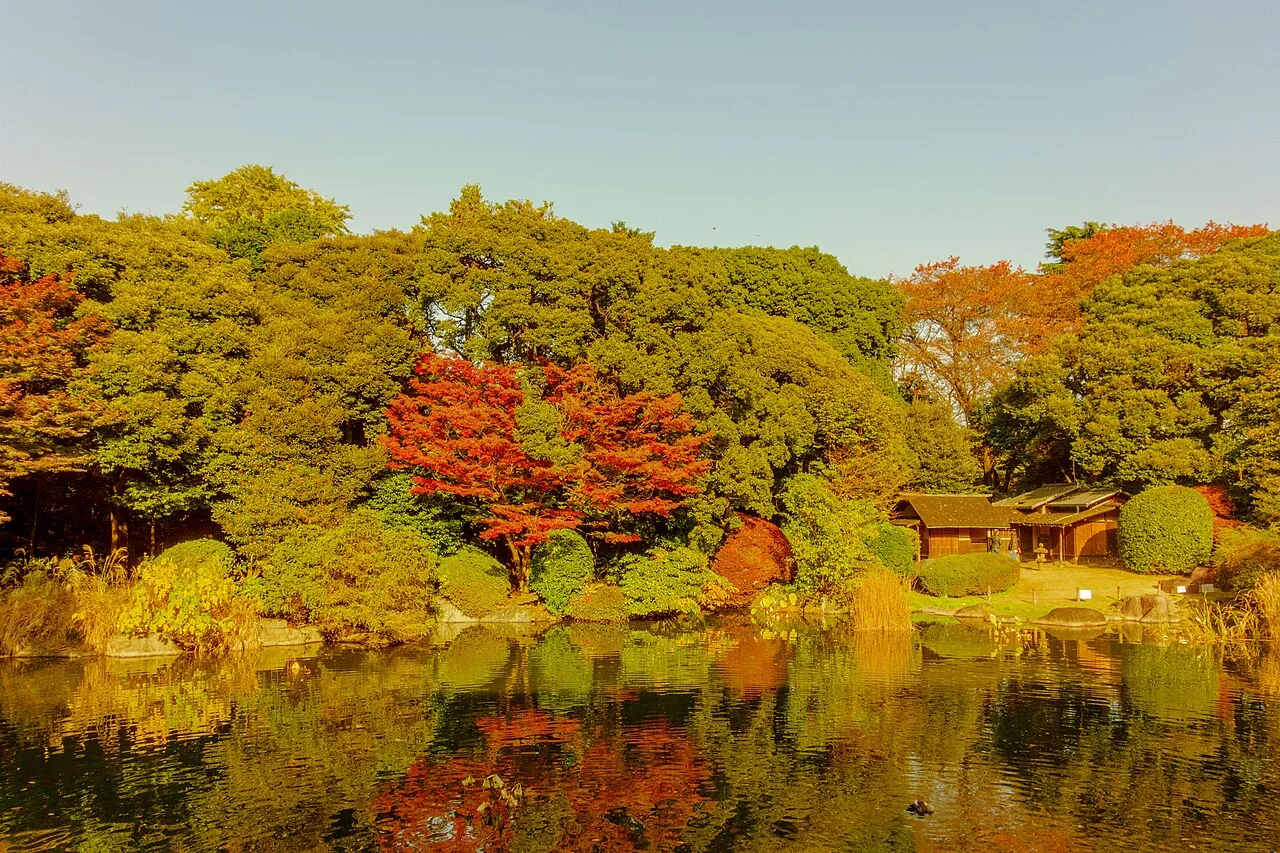
The park's 'Everyone's Earth' installation uses a pond surface to mirror its lights, letting you view both the structure and its reflection together. Stepping back for a wider angle that captures the full reflection usually works better than crowding the shoreline and getting only the top half. Because different ponds host different displays, snap a photo of the park map labels as you go so you remember later whether a shot is Everyone's Earth or another waterside piece. When wind ripples the water, switch to close-ups of the lights and waves instead of waiting around for a mirror-still surface.
The redesigned Snow World uses a hillside backdrop for snowmen, snowflakes, and aurora-style lighting announced by the park. If you're visiting with family, stand farther back so you can take in the full slope from top to bottom. When the cold sets in late in the evening, choose either Snow World or the Flower Castle as your final stop. Kids eager for snowmen will enjoy the hillside, while groups wanting a shot along the lit promenade should finish on the Flower Road in front of the castle.
For finer light details between the big installations, slot in the Rose Garden of Lights. Individual lit blossoms rise at staggered heights from the flower beds, making them easy to inspect up close or view from the park's designated lookout spots. When paths get busy, there's little reason to backtrack the way you came—chain the rose garden, white wisteria, or another display along the loop so you work steadily back toward the station.
How to Pace a One-Hour vs. Two-Hour Visit
Arriving by rail, the park estimates a 3-minute walk from Ashikaga Flower Park Station. Once inside, it's still a walk from the gate to the wisteria trellis and ponds, and groups often get sidetracked by the giant entrance tree or the shops. If you only have one hour between entering and heading back to the train, grab one quick photo near the entrance and head straight to the Great Wisteria. After watching one full color cycle, pick one nearby zone in the same direction—the pond for reflections, or the snowmen if you have kids. You'll still see a complete show without sprinting.
With two hours, you can pair a stretch of twilight with two or three rounds after dark. Use the daylight to orient yourself, locate restrooms, and take a few dusk shots with color left in the sky before moving to the wisteria trellis as the lights come on. Loop past the pond, Flower Castle, or Rose Garden, then circle back for a second look at your favorite display. Build hot snacks, shopping, or diaper changes right into those two hours. Keep your walking route flexible, and anchor your exit time backward from your target train.
For families wanting a clue-hunting game, the seasonal night mystery event runs from November 4, 2026, through February 14, 2027. A ¥500 game booklet is sold separately starting at 15:30. The game requires an internet-connected device with LINE, takes an estimated 1.5 to 2 hours, and the park recommends buying it no later than two hours before closing. If you have to catch a train before 19:00, pick either the lights or the mystery game rather than squeezing both in. With enough time, start the puzzle during the first half of your walk to cover part of the grounds, then wander freely through the remaining zones afterward.
When you pick up a park map, immediately note the Front Gate (Shomen Gate), the West Gate, the train station, and your parking lot if driving. At the end of the night, simply following the crowd out of the main area can easily funnel you toward the wrong exit or a tour bus pickup zone. Save a digital map to your phone, and if your group splits up, pick a clear landmark near your intended exit that doesn't block foot traffic. If you drop something near a pond or misplace an item, the park's lost-and-found desk is at the administration office inside the shopping building.
Photo stops are what throw schedules off fastest. When several people want the same spot, wait off to the side of the walkway rather than crowding the edge. Keep both the photographer and the subject on the same side of the path instead of stretching across narrow lanes. In groups with two cameras, take turns shooting one after another rather than holding everyone in place. And if you plan to buy snacks or souvenirs before catching a train, shop early in your visit instead of browsing flavors in the final ten minutes.
Taking JR from Tokyo: Why the Oyama Transfer Matters Most
Enter 'Ashikaga Flower Park' as your train destination. The station sits in Hasama-cho, Ashikaga, Tochigi Prefecture. JR Ashikaga Station is one stop west, and Tobu Ashikaga-shi Station sits across the Watarase River. When your maps app pops up three similar results, read the JR or Tobu prefix before tapping. Entering just 'Ashikaga' will route you into downtown, where you still have to ride the Ryomo Line one stop back toward Oyama to reach the park.
From Tokyo or Ueno, the standard route is a JR Utsunomiya Line train that stops at Oyama, transferring there to the JR Ryomo Line bound for Sano and Ashikaga (the stop right before the park is Tomita). You can also take a Tohoku Shinkansen from Tokyo, Ueno, or Omiya—just confirm your train stops at Oyama—and transfer to the same Ryomo Line. Because Oyama serves several conventional lines, follow the Ryomo Line signs directly along the transfer concourse. Leave a few extra minutes to walk, especially if anyone in your group needs an elevator or has to pick up Shinkansen tickets first.
When planning the outbound trip, work backward from the Ryomo Line train that matches your desired arrival time, then pick a trunk-line train that connects to it. Some Shinkansen departures reach Oyama earlier only to feed into the exact same Ryomo Line train as a later conventional express, adding nothing but platform wait time. Conversely, if a conventional train into Oyama misses the last connection before the lights switch on, paying extra for an Oyama-stopping Shinkansen buys you real viewing time inside the park.
Coming from along the Tobu network, you can transfer to JR at Kuki for Oyama, or ride to Tatebayashi, switch to the Tobu Sano Line, and connect to the JR Ryomo Line at Sano. Tobu limited expresses from Asakusa to Ashikaga-shi work well if you're visiting downtown first, but there is no park shuttle from Tobu Ashikaga-shi Station. If friends are coming from different hotels, meet at Ashikaga Flower Park Station or the park gate itself so nobody on a Tobu train assumes 'Ashikaga' drops them at the park entrance.
| Station | Best Used For |
|---|---|
| Ashikaga Flower Park (JR) | Closest station to the park; about a 3-minute walk from the exit |
| Ashikaga (JR) | Starting point for downtown walks; one stop east to the park |
| Ashikaga-shi (Tobu) | Tobu Line access to central Ashikaga; requires another transfer to reach the park |
| Oyama (JR) | Main transfer hub from Tokyo and Ueno onto the Ryomo Line |
Three Dates with Direct Limited Express Trains—Otherwise Check Oyama Connections
JR East is running the seasonal 'Kirakira Ashikaga Illumi' direct limited express on three dates: December 12, 2026; December 19, 2026; and February 14, 2027. It operates round-trip between Nishi-Funabashi and Ashikaga with a stop at Ashikaga Flower Park Station, letting travelers along the Omiya corridor ride straight to the park. If you're staying in eastern Tokyo or Chiba, compare these boarding stops against a normal Oyama transfer. If you're based near Ueno and flexible on timing, regular service gives you far more departure choices.
All three dates share the same timetable. Outbound departs Nishi-Funabashi at 14:31, calls at Shin-Matsudo, Minami-Nagareyama, Yoshikawaminami, Minami-Koshigaya, and Minami-Urawa, departs Omiya at 15:25, and arrives at Ashikaga Flower Park Station at 16:45. The return train leaves Ashikaga Flower Park Station at 20:05, arriving at Omiya at 21:30 and Nishi-Funabashi at 22:31. On the two December dates, the lights will already be on as you arrive; on February 14, when lighting starts around 17:00, you can step off the train and catch the initial illumination. Travelers heading back to Tokyo via Omiya can ride the Nishi-Funabashi-bound train as far as Omiya—search and book directly to your actual transfer station. If you reserve this return train, you'll need to wrap up inside the park for the 20:05 departure even on nights the park stays open until 21:30.
This limited express is all-reserved seating, and reserved-seat express tickets go on sale at 10:00 JST one month prior to travel via Ekinet or participating ticket offices. Ashikaga Flower Park Station does not sell these limited express tickets and cannot issue Ekinet paper tickets. If you're using physical tickets, pick up both outbound and return passes at a major station before heading out. If you'd rather spend the afternoon in town first, you can also book one direction on the limited express and ride local trains the other way instead of locking both legs to one schedule.
For regular return trains after the park, first select the correct weekday or holiday schedule on JR East's Ashikaga Flower Park Station timetable. Look for 'Oyama direction (outbound)' to connect back toward Tokyo; 'Kiryu/Takasaki direction (inbound)' goes through JR Ashikaga Station and suits downtown stays. Once you find a Ryomo Line arrival at Oyama, always check the second leg from Oyama to Tokyo. Even the final Ryomo Line train reaches Oyama, whether you can still make it back to your Tokyo hotel depends on catching an onward train there.
If you catch the first light cycle around 17:00 and visit one pond and the hillside display, the 18:30 to 19:30 window is a practical range to start looking up return trains on that day's timetable. Only plan on eating dinner inside the park if you're sure of your connection afterward. On New Year's trips or when traveling with kids or older adults, lock in your target train and note one backup option before leaving the station platform—that way, if photos or food run long, you won't be rebuilding your route in the dark.
The park warns that Ashikaga Flower Park Station can get heavily crowded at closing time, so top up your IC transit card beforehand. Remember that the 3-minute figure only covers walking from the park to the station; you still need time to clear the gate, reach the correct platform, and queue to tap through if crowds build. If anyone in your group walks slowly, set a meetup time outside the exit with enough buffer for station congestion, and take one connection earlier than the very last feasible option so a slow line doesn't strand your return.
Driving In: Which Expressway Exit and Where to Park
For car navigation, enter '607 Hasama-cho, Ashikaga, Tochigi.' Coming up the Tohoku Expressway, take the Sano-Fujioka IC, estimated at about 20 minutes under normal traffic. From the Kita-Kanto Expressway, choose based on your approach: Izuruhara Smart IC (about 15 minutes), Sano-Tanuma IC (about 17 minutes), Ashikaga IC (about 20 minutes), or Ota-Kiryu IC from the Gunma side (about 25 minutes). Smart ICs are ETC-only, so make sure your rental car has an ETC reader and card installed before taking that exit.
Normal parking holds about 300 free standard spaces, expanding to roughly 6,000 spaces with overflow lots during peak season. Per the park's FAQ, the front lot is sometimes reserved for tour buses, so follow roadside signs to the designated passenger-car lot. Arriving ahead of the main evening rush is far easier than creeping in with the peak traffic wave. Before walking to the gate, take a quick photo of your lot number, nearest fence marker, or exit lane—fields and shrubs you used as daytime landmarks blend into rows of taillights after dark.
Sort out heavy coats, walking shoes, and kids' gear at the car before heading to the gate. Anything you want from the car has to come with you before ticket scanning, since no-re-entry applies once you're inside. Beyond admission, driving adds expressway tolls, rental fees, and gas, whereas the train drops you a 3-minute walk away with zero parking hassle. Driving makes the most sense if you're hauling bulky purchases or chaining stops around Sano.
If you'd rather skip both rail transfers and driving, the park lists seasonal bus tours departing from Tokyo. When comparing tour itineraries, check both how long you actually get inside the park and where the drop-off is back in Tokyo. If you want to watch a full cycle at the Great Wisteria and linger by the pond, make sure the tour's meetup schedule leaves room for both. For travelers who simply want transport and parking handled, a bus tour eliminates the Oyama transfer.
Cold Weather, Rain, Strollers, and Night Photography
This is a fully outdoor walking event. Windproof outer layers, a warm hat, and touchscreen-friendly gloves beat bulky outfits that force you to bare your hands every time you take a photo. With kids along, take breaks early as soon as someone starts getting cold; if everyone runs out of steam, settling into one spot with a clear view of a major display lets you finish watching a cycle comfortably. In rain, cut your time on the pond edges and slopes short, grab a few reflection shots on the wet pavement, and stick to wider walkways. If you're carrying a child while holding an umbrella, rain ponchos free up your hands.
The park lends manual wheelchairs free of charge on a first-come, limited-supply basis. Strollers are not available for rent, and pull-along wagons, camping carts, and wagon-style strollers are prohibited inside. If someone in your group needs handrails, ramps, or frequent restroom access, grab a park map at entry to locate accessible restrooms and plan around the major displays. JR Ashikaga Flower Park Station has a step-free route between the ticket gate and platforms, though the station itself has no accessible restroom—contact JR ahead of time if you need boarding assistance.
There is a nursing room inside the park, though hot water for formula is not provided. Outside food and drinks are prohibited; plan meals inside the park's designated dining areas. If you need to prep baby food, ask staff about nursing-room access before entering. Coin lockers sit next to the main gate shopping building—¥300 for small, ¥500 for large—in limited numbers. If you're in transit with large suitcases, leave them at your hotel or a major city station locker rather than rolling them to the park hoping for an open large locker.
Cameras and camcorders are welcome. Tripods are allowed as long as they don't block walkways, though you must fold the legs while moving and put them away if staff direct you to in crowded areas. Lighting rigs, reflectors, and step ladders are prohibited, and livestreaming is banned throughout the park. On a smartphone, drop your exposure slightly so the brightest wisteria strands hold their color instead of blowing out. For pond reflections, brace both hands steadily and watch for dark steps and other visitors. When a hillside display won't fit cleanly in frame, step back to capture the full sweep first before grabbing close-ups.
Spring Great Wisteria Festival: A Different Night Illumination
While Flower Fantasy uses light strands to evoke blooming wisteria, the spring Great Wisteria Festival illuminates real flower clusters after dark. Visitors traveling specifically for spring blooms should time their trip to their preferred wisteria color and the park's bloom updates. Winter instead transforms the entire park with illuminated paths, snowmen, and pond installations.
Keep the two seasons' ticketing rules separate when planning. The 2026 spring festival page lists April 11 through May 20, with evening lighting starting April 15—and daytime spring visitors are allowed to stay on into the evening illumination. For the 2026–27 winter season, day and night sessions require separate tickets. Relying on a spring blog post is the easiest way to overlook the separate night ticket required from 15:30 right at the shopping area.
If you want both real flowers and winter lights in one day, two windows work best without rushing. In early autumn (mid-October to mid-November), enter right when the night gate opens at 15:30 to see the real blooms in fading daylight before heading to the Great Wisteria. In the New Year period, start up close with the winter peonies and surrounding lights before walking out to the big ponds. If your real goal is photographing living wisteria cascading from the trellis, save that trip for spring.
Combining Downtown Ashikaga: Put the Park at Dusk
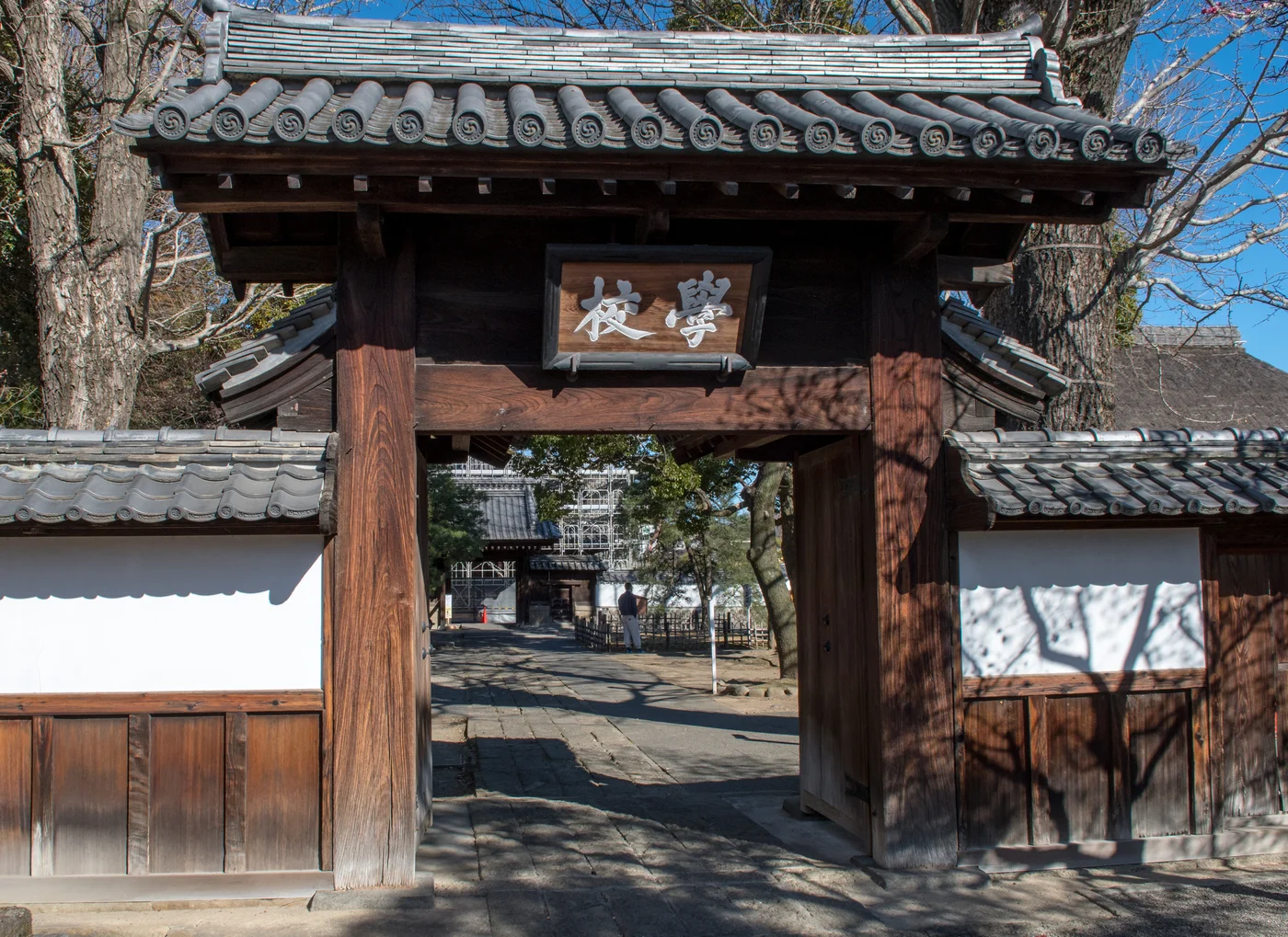
With a full day to spare, start your morning from JR Ashikaga Station to visit Ashikaga School and Bannaji Temple, then have lunch in the historic district. Before dusk, hop on the Ryomo Line from JR Ashikaga Station for one stop toward Oyama to reach the park. Coming from Tokyo, you can ride past the park via Oyama into downtown first, then double back one stop for the evening lights—just store your bags based on where you're sleeping that night. For walking routes and station connections downtown, see our Ashikaga School and Bannaji Temple walk.
From October through March, Ashikaga School's last admission is at 16:00, and it is closed December 29–31, 2026. On December 29 and 30, when the flower park is still open for night viewing, spend the day strolling around Bannaji Temple instead. Visitors entering the school will also see thatched-roof restoration work scheduled through March 25, 2027. Fixing your target arrival time at Flower Fantasy in advance gives a natural cutoff for lunch, coffee, and downtown sightseeing.
Between December 1 and February 14, you can also pair Flower Fantasy with JR East's winter Tochigi stamp rally. Stamps are placed at Ashikaga Flower Park, Wakatake no Mori Wakayama Farm in Utsunomiya, and the gyoza hall Kirasse Main Store—park and farm admission apply separately, and the gyoza stamp requires dining at the rotating daily counter. On a single Tokyo day trip, give the park your full evening and save the two Utsunomiya stops for the next day if you're heading north. Pick up rally sheets at major Tokyo-area stations beforehand or look for them at participating Tochigi checkpoints.
On a one-day family trip, one downtown stop in the morning is plenty. Eat an early meal, ride to the park before full dark for a short walk, and prioritize the Light Castle if the kids have their hearts set on it. If you're visiting Ashikaga School the next morning, take the Ryomo Line toward Kiryu/Takasaki to JR Ashikaga Station and stay on the old-town side for easy walking access. If you're taking Tobu back to Asakusa the next day, consider staying south of the Watarase River near Tobu Ashikaga-shi Station, since coming from JR Ashikaga Station means crossing the river with luggage. For an early start on the Tohoku Shinkansen or Utsunomiya Line, staying near Oyama trims your morning commute. See our Ashikaga stays and town planning guide for neighborhood options.
A few useful answers
When do the Ashikaga Flower Park lights turn on, and when is it closed?
Flower Fantasy runs from October 17, 2026, through February 14, 2027, and is closed on December 31. Lights turn on around 16:30 from November 7 through January 3, and around 17:00 on all other dates.
What age does night admission start costing money?
Same-day night tickets at the gate are ¥800 for children ages 4 through elementary school, free for ages 3 and under, and ¥1,500 for adults. Official convenience-store advance tickets are ¥50 cheaper per ticket.
Can a daytime ticket stay inside for the winter illumination?
No. During Flower Fantasy, day and night sessions are ticketed separately. The day session ends at 15:00, and the night session opens at 15:30—anyone visiting both must exit and re-enter with a night ticket.
Do I get off at JR Ashikaga Station for the park?
Get off at Ashikaga Flower Park Station on the JR Ryomo Line. JR Ashikaga Station is one stop west of the park, and Tobu Ashikaga-shi Station is a separate station with no park shuttle.
Can I enter just the gift shop during the night session without a ticket?
No. During Flower Fantasy, night ticket checks begin at the shopping area perimeter, so plan any souvenir shopping as part of your ticketed visit.
Do I need to bring a tripod for night photos?
Handheld smartphone shots work fine. Tripods are permitted if they don't block walkways, though legs must be folded while walking and staff may restrict them in crowds. Livestreaming, lighting rigs, reflectors, and step ladders are prohibited.
Are wheelchairs or strollers available to rent?
Manual wheelchairs are available to borrow free of charge on a first-come, limited-supply basis. Strollers are not rented, so bring your own; pull-along wagons and wagon-style strollers are not permitted.
Which dates does the direct limited express train run to Ashikaga Flower Park?
JR East operates the all-reserved limited express on December 12, 2026; December 19, 2026; and February 14, 2027. Outbound departs Nishi-Funabashi at 14:31 and Omiya at 15:25, arriving at Ashikaga Flower Park Station at 16:45; the return train departs at 20:05.
If I step out to the car during the night session, can I re-enter?
No. Re-entry is not permitted once you leave. Make sure you have your coat, e-tickets, and any required IDs before scanning in.
Official information and references
Sources used in this guide.
- Ashikaga Flower Park | Flower Fantasy 2026–2027 Official Special Page
- Ashikaga Flower Park | November 20 Notice on Sessions and Year-End Extended Hours
- Ashikaga Flower Park | Same-Day Admission, Hours, Ticket Cutoff, and Re-Entry Rules
- Ashikaga Flower Park | Night Session Advance Tickets and Bundle Notice
- Ashikaga Flower Park | New Installations for the 25th Illumination
- Ashikaga Flower Park | Night Mystery Event Dates, Pricing, and Participation
- Ashikaga Flower Park | November 18 Diary on Christmas Theme and Bloom Updates
- Ashikaga Flower Park | Access and Parking
- NEXCO East | Kita-Kanto Expressway Izuruhara Smart IC and ETC Requirements
- Ashikaga Flower Park | FAQ on Photography, Strollers, Wheelchairs, and Lockers
- Ashikaga Flower Park | Park Map
- Ashikaga Flower Park | Seasonal Bus Tours from Tokyo
- JR East | Winter Direct Limited Express, Reserved Seats, and Ticket Pickup Rules
- JR East | Ashikaga Flower Park Station Weekday and Holiday Train Timetables
- JR East | Ashikaga Flower Park Station Layout and Accessibility Information
- Ashikaga Flower Park | 2026 Great Wisteria Festival and Spring Night Lighting
- City of Ashikaga | Ashikaga School Visiting Information and Roof Restoration
- City of Ashikaga | FY2026 Ashikaga School Closure Calendar
- JR East | 2026 Winter Tochigi Tourism Campaign and Stamp Rally Terms