Ashikaga Flower Park's Flower Fantasy illumination runs from 17 October 2026 to 14 February 2027. Check lighting times, closure dates, evening tickets, the Miracle Great Wisteria and pond displays, plus Oyama transfers and limited express trains back to Tokyo.
- Region & Focus
- Ashikaga
- Reading Scope
- 23 min read · 11 chapters · 9 Q&As
- Official Verification
- 19 official sources checkedUpdated 22 November 2026
- Key Topics
- WinterSeasonsRail travel
Chapter Route Map (tap any stop)
- Ashikaga Flower Park illumination hours and the final week of December
- Evening ticket only, or both day and night sessions?
- Autumn flowers, Christmas displays or winter peonies: which period to pick
- The Great Wisteria and lakeside displays: where to start
- How to pace a one-hour or two-hour visit
- Taking JR from Tokyo: why the Oyama transfer matters more than train speed
- Three direct limited express dates, and checking Oyama connections on other nights
- Driving routes, motorway junctions and finding your car park
- Cold weather, rain, pushchairs and night photography
- Spring's Great Wisteria Festival also lights up the trellises
- Adding central Ashikaga: save late afternoon for the park
- Quick Q&A
The 2026–27 Flower Fantasy illumination at Ashikaga Flower Park runs from 17 October 2026 to 14 February 2027, closing only on 31 December. For a day trip from Tokyo, take a JR train to Oyama and change onto the Ryomo Line to Ashikaga Flower Park Station, a three-minute walk from the gates. Evening admission opens at 15:30 at ¥1,500 for adults and ¥800 for children aged four to primary-school age. Head to the Great Wisteria trellis first to watch the light strands bloom cluster by cluster, then continue to the ponds for water reflections. Check your return train in advance and pick an earlier Ryomo Line service that still connects comfortably at Oyama rather than relying on the last departure of the night.
Ashikaga Flower Park illumination hours and the final week of December
The 25th edition of Flower Fantasy spreads more than five million lights across roughly 100,000 square metres of grounds. Because the installations are scattered across wisteria trellises, flower beds, ponds and hillsides, waiting near the entrance until dark means missing most of the show. If you only have one evening, check which operating schedule applies to your visit date and pick two or three areas to focus on. For a first visit, the Great Wisteria and one of the lakeside displays already capture the essence of Ashikaga.
Gates open for the evening session at 15:30, though the lights are switched on around 16:30 or 17:00 depending on whether your visit falls within the extended season from 7 November to 3 January. If you are travelling with young children or older relatives, arriving a little early lets you locate toilets, benches and the path back to the exit while you can still see the ground clearly. Independent travellers focused purely on night photography can time their train arrival closer to dusk to spend less time waiting outdoors.
An official park notice issued on 20 November added extended hours until 21:30 every day from 24 to 30 December, including weekdays during that week. The park closes on 31 December, reopens on New Year's Day, and remains on the extended schedule through 3 January. When planning a New Year itinerary, double-check exact dates: if you only have the evening of 30 December free and are staying in Ashikaga the following night, only 30 December is open for viewing.
The daily admission and opening-hours page displays only today's schedule. To plan ahead for a different month, check the annual events calendar alongside any seasonal notices for specific dates. On-site ticket sales close 30 minutes before closing time, and re-entry is not permitted during the evening session. On a 20:30 closing night, last admission is at 20:00, leaving just half an hour to see one or two highlights.
| Dates | Lights on (approx.) | Evening opening hours |
|---|---|---|
| 17 Oct–6 Nov 2026; 4 Jan–14 Feb 2027 | 17:00 | 15:30–20:30 (until 21:00 on weekends and public holidays) |
| 7 Nov 2026–3 Jan 2027 | 16:30 | 15:30–21:00 (until 21:30 on weekends and public holidays) |
| 24–30 Dec 2026 | 16:30 | Scheduled until 21:30 daily per official notice |
| 31 Dec 2026 | Closed | Park closed |
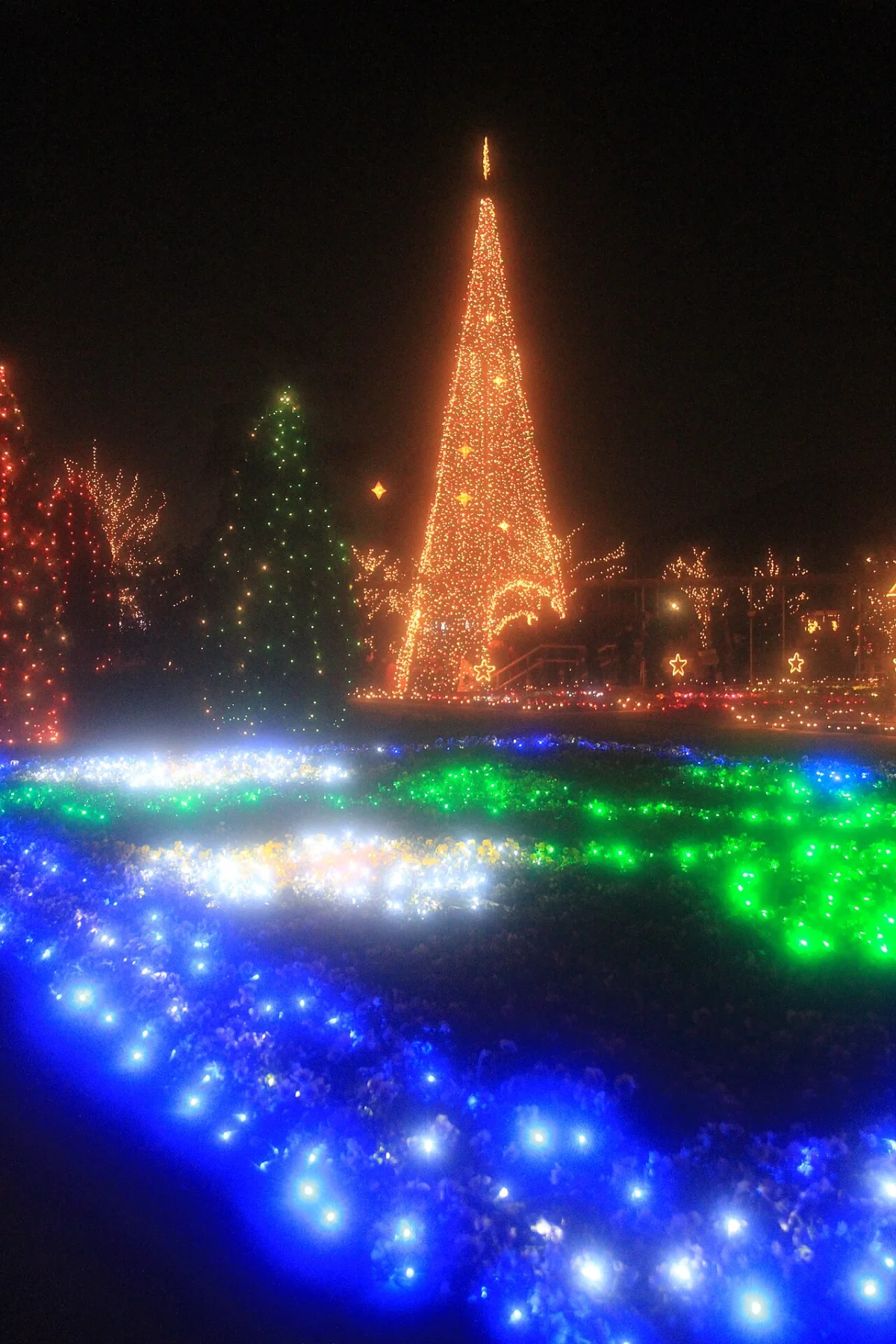
Ashikaga Flower Park's Flower Fantasy illumination runs from 17 October 2026 to 14 February 2027. Check lighting times, closure dates, evening tickets, the Miracle Great Wisteria and pond displays, plus Oyama transfers and limited express trains back to Tokyo.
Evening ticket only, or both day and night sessions?
For winter illuminations, an evening session ticket is all you need. From 17 October to 14 February, daytime and evening admissions are sold separately: the day session ends at 15:00, and from 24 November onwards the park does not open until 11:00. Visitors wanting both daytime blooms and evening lights must buy two separate tickets, leave the park at changeover, and queue again for ticket inspection at 15:30. Daytime admission fluctuates with seasonal flower conditions—between July and 30 December 2026, adult day tickets range from ¥400 to ¥900—whereas winter evening admission is fixed at ¥1,500.
During the evening session, even the shopping area requires a valid ticket. If one member of your group only wants to browse for souvenirs while another explores the gardens, decide beforehand whether you are entering together. Because the shops and flower zones sit inside the same evening ticket barrier, stepping back out to your car for a wallet or coat means forfeiting re-entry. If you have e-tickets ready, pull up the ticket screen, confirm the headcount in your party, and head inside together.
Advance tickets sold at Japanese convenience stores cost ¥1,450 for adults and ¥750 for children, while date-specific e-tickets are linked from the park's advance-ticket announcement page. The main advantage of buying ahead is walking straight to the admission gate. Solo travellers with flexible plans can easily pay the extra ¥50 at the gate, whereas groups benefit most from skipping outdoor ticket queues. If you collect convenience-store tickets in Japan, follow the ticket agency's redemption instructions carefully and make sure you keep the admission voucher rather than just the payment receipt.
Several bundled sets include in-park spending credit. 7-Eleven offers a pair of adult tickets with a ¥500 merchandise voucher for ¥3,300; compared with ¥2,900 for two standard advance tickets, you pay ¥400 extra for ¥500 of shopping value if you plan to spend it anyway. A family pair bundle (one adult, one child, plus a ¥500 voucher) costs ¥2,600 against ¥2,200 for two individual advance tickets. If you intend to dine in town and skip park shopping, plain advance tickets are simpler. Vouchers from both bundles are valid until 14 February 2027.
Children who have finished primary school pay the adult fare, while children under four enter free. According to the park's FAQ, visitors presenting a disability certificate at the ticket counter receive a ¥200 discount for both themselves and one companion, which cannot be combined with other offers. Travellers holding certificates issued outside Japan should contact the park before purchasing to confirm which documents are accepted.
Autumn flowers, Christmas displays or winter peonies: which period to pick
The first phase runs from 17 October to mid-November, spotlighting upright purple spikes of Mexican bush sage across the flower beds. If you want to see real blooms alongside the illuminations, arrive while there is still daylight to appreciate the plants' natural colours before dusk settles. Park updates from late October also feature autumn roses and cosmos, so checking dated garden logs gives a much sharper guide to bloom timing than broad monthly labels.
For festive Christmas displays, aim for late November to late December. While the main event calendar lists 'late November', the park's 18 November garden journal confirms the Christmas theme was already underway. This season centres on a 21-metre dawn redwood outside the main gate shop dressed as a giant Christmas tree, alongside a new Flower Road leading towards the Flower Castle. Both fit neatly into a single evening: look up at the full tree near the gate first, then follow the illuminated walkway to the castle. On a busy December weekend, agree on your priority photo spots before entering so you spend less time calling each other in the crowd.
From New Year's Day until 14 February, the park shifts to New Year illuminations and winter peonies. Because winter peonies sit much lower to the ground than the illuminated castle, they are best appreciated up close along the paths. If flowers matter more to you than Christmas motifs, watch the park's bloom diary and go when fresh peony photos appear. For sharp pond reflections, calm evenings with minimal wind produce the clearest mirror-like surfaces—two factors worth prioritising over squeezing into Valentine's Day if your dates are flexible.
If your travel dates are already locked in, treat the seasonal overlay as a bonus. Visitors mainly coming for the Miracle Great Wisteria, the Rose Garden of Light or Snow World should simply choose a day when they can arrive early and make a smooth train connection home. If you ever return for a second evening, pairing an autumn-flower visit with a winter-peony visit lets the living plants beneath the lights change completely.
The Great Wisteria and lakeside displays: where to start
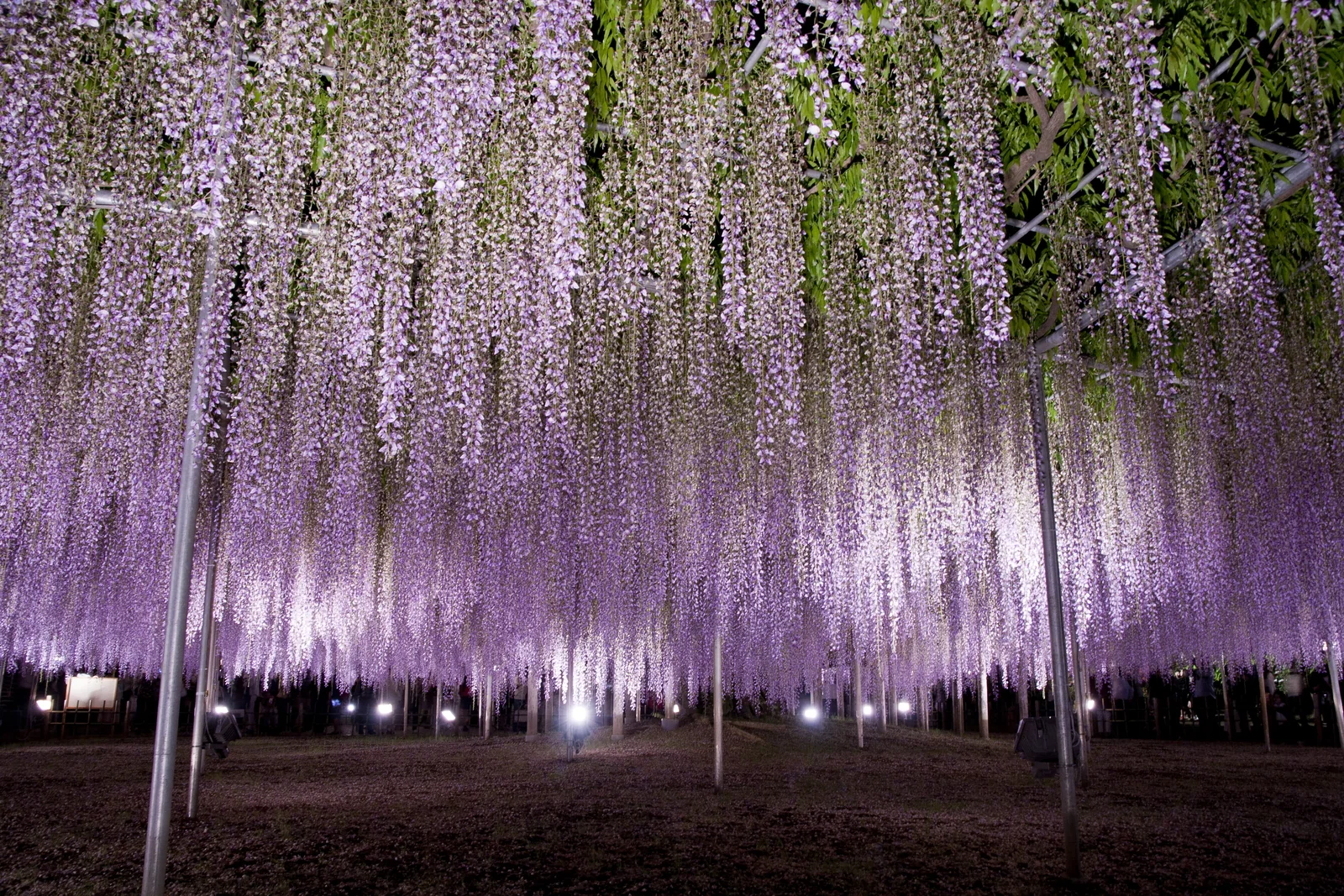
The park's signature installation is the Miracle Great Wisteria. Having grown from roughly 72 square metres when the park opened to around 1,000 square metres today, the vast trellis is strung with lights that cycle through budding, full bloom and falling petals—enhanced this season with the scent of spring wisteria. Find a steady spot beside the pergola and watch the sequence build from the first glowing cluster to half the canopy before deciding which phase to photograph. If you catch the entire trellis lit at once, lower your phone for a moment just to take in how far the canopy stretches.
The White Wisteria Tunnel frames the pathway overhead, whereas the Great Wisteria forms an open pergola best viewed both from the side and looking straight up. If you want shots of both, save your wide-angle lens for the Great Wisteria. Because visitors constantly move through the tunnel in both directions, wait for a natural pause when taking portraits of companions, and step to the side rather than setting up a tripod squarely across the entrance.
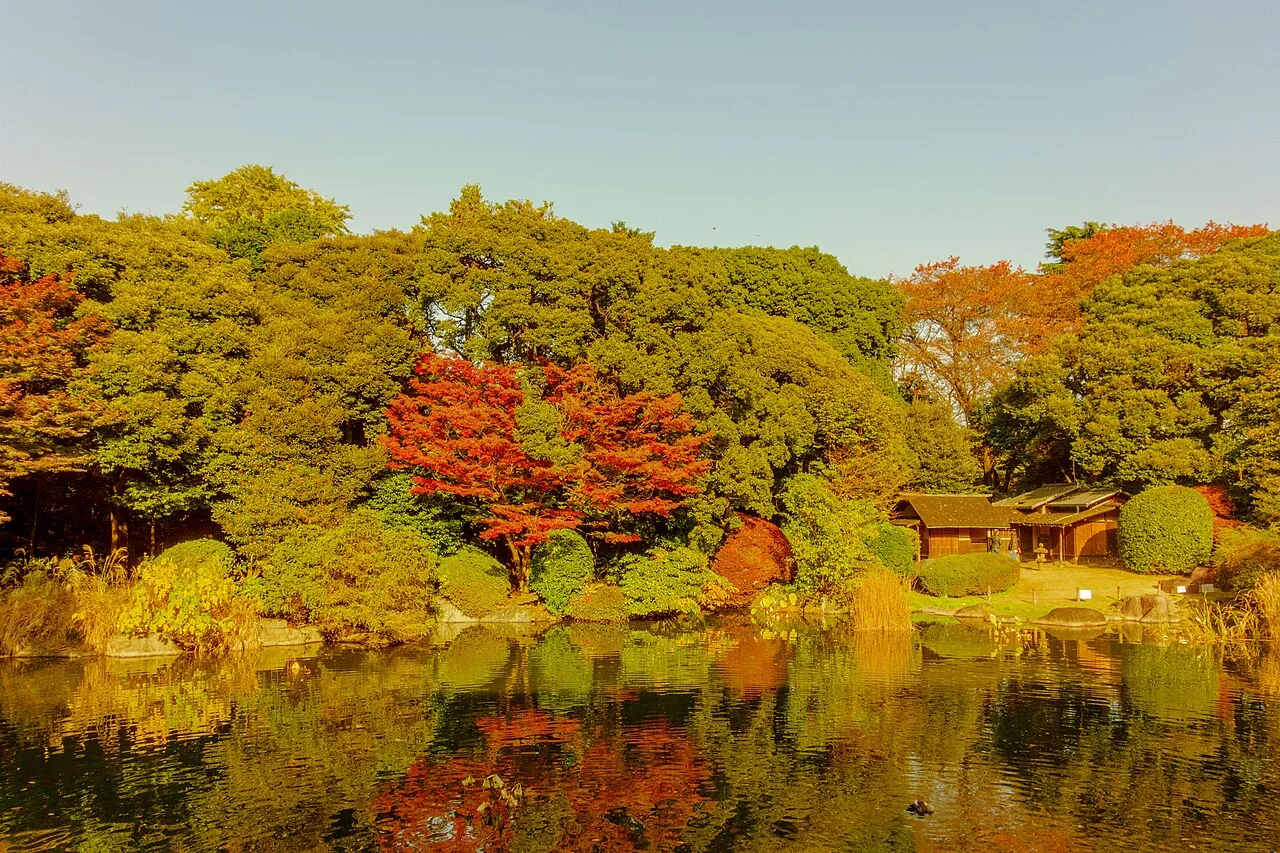
The lakeside display Everyone's Earth uses the water to complete a glowing sphere, showing both the illuminated structure above and its reflection below. Stepping slightly further back along the bank usually captures the full reflection better than standing right at the water's edge, where only the upper half fits in frame. Since each pond hosts a different installation, snap a quick photo of the park map labels so you can tell which lakeside scene is which later on. On breezy nights when ripples break up the mirror effect, switch to close-ups of light glinting across the waves rather than waiting indefinitely for calm water.
Redesigned for this season, Snow World uses the hillside as a backdrop for snowmen, snowflakes and the park's aurora lighting effect. Families should stand back far enough to take in the full slope from top to bottom. If the cold starts biting late in the evening, pick either Snow World or the Flower Castle as your final stop: head up the slope if children want to see the snowmen, or walk the Flower Road in front of the castle for group portraits.
To slow down and examine finer details between the headline installations, weave the Rose Garden of Light into your route. Illuminated blooms rise at varying heights through the beds, making individual petals easy to distinguish up close, and designated viewing points offer broader views across the garden. When paths get busy, there is little need to backtrack; simply link the rose garden, white wisteria or another nearby display into a loop back towards the exit.
How to pace a one-hour or two-hour visit
The park lists the walk from Ashikaga Flower Park Station at about three minutes, though reaching the wisteria pergola and ponds still takes extra time—and companions are easily sidetracked by the huge tree and shops near the entrance. If you only have an hour between arriving and catching your train back, take one photo near the gate and walk straight to the Great Wisteria. Once you have watched its lighting cycle, pick a single nearby zone in the same direction—the lakeside displays for reflections, or the snowmen if you have children. That still gives you a complete view of the show without rushing.
With two hours to spare, aim for a stretch of twilight followed by two or three blocks after dark. Use the early light to orient yourself, locate toilets and take a few shots while colour remains in the sky, then move to the wisteria trellis as the lights come on. Follow the ponds past the Flower Castle or the Rose Garden before circling back to your favourite spot for a second look. Factor any hot food, shopping or nappy changes directly into those two hours, keeping your route flexible and counting backwards from your planned return train.
Families looking for an interactive trail can try the evening puzzle game, Travelling Picture Book and the 5 Princesses, running from 4 November 2026 to 14 February 2027. The booklet costs ¥500 on top of admission and goes on sale from 15:30. It requires a smartphone with internet access and the LINE app; the park estimates 90 minutes to two hours and recommends buying no later than two hours before closing. If you need to leave before 19:00, prioritise either the lights or the game, while visitors with ample time can tackle the clues during the first half of their walk and mop up remaining displays afterwards.
As soon as you pick up a park map, note the Front Gate, West Gate, railway station and your car park. At the end of the night, simply following the crowd can easily lead you towards the wrong exit or tour-bus bays. Save a digital copy of the map on your phone, and if travelling in separate groups, agree on an obvious landmark near the exit that does not block foot traffic. Should anything go missing near the ponds, the lost-property desk is inside the administration office within the main shopping building.
Photo stops are what stretch schedules most. If several groups want the same viewpoint, wait in an open pocket beside the path, and keep photographer and subject on the same side of narrow walkways rather than shooting across the flow of foot traffic. Groups carrying two cameras will move faster if one person shoots before handing over the spot instead of holding everyone stationary. If you want souvenirs before catching a train, shop near the start of your visit rather than browsing flavours in the final ten minutes.
Taking JR from Tokyo: why the Oyama transfer matters more than train speed
Enter Ashikaga Flower Park Station as your rail destination—located in Hasama-cho, Ashikaga, Tochigi Prefecture. JR Ashikaga Station sits one stop further west, while Tobu Ashikaga-shi Station lies on the opposite bank of the Watarase River. When all three appear in a map search, check the railway operator before tapping: searching simply for 'Ashikaga' routes you to the town centre, from where you still have to backtrack one stop on the Ryomo Line towards Oyama to reach the park.
From Tokyo or Ueno stations, the standard route uses a JR Utsunomiya Line train that stops at Oyama, transferring there to the JR Ryomo Line bound for Sano and Ashikaga; Tomita is the stop immediately before the park. Alternatively, take a Tohoku Shinkansen stopping at Oyama from Tokyo, Ueno or Omiya—checking train types and stopping patterns carefully—and transfer to the same Ryomo Line. Because Oyama serves several conventional lines, follow the Ryomo Line signs along the transfer concourse and leave a small buffer if anyone in your party needs lifts or must collect Shinkansen tickets first.
Plan your outward journey backwards from your target arrival time at the park, checking the Ryomo Line departure first and matching a Tokyo-to-Oyama train to it. Sometimes an earlier Shinkansen reaches Oyama only to connect with the exact same Ryomo Line train as the next conventional service, leaving you waiting on the platform for no gain. Conversely, if a conventional train misses the last connection before dusk, paying extra for a Shinkansen to Oyama buys genuine extra viewing time inside the park.
Travellers starting along the Tobu network can change to JR at Kuki for Oyama, or ride to Tatebayashi, switch to the Tobu Sano Line, and join the JR Ryomo Line at Sano. Tobu limited express trains from Asakusa to Ashikaga-shi work well if you are visiting central Ashikaga first, but Tobu Ashikaga-shi Station has no shuttle bus to the flower park. If friends are converging from different hotels, meet at Ashikaga Flower Park Station or the park entrance so nobody mistakenly rides a Tobu train expecting to step out by the gates.
| Station | Role in your journey |
|---|---|
| Ashikaga Flower Park (JR) | Closest station to the park; roughly a 3-minute walk from the exit |
| Ashikaga (JR) | Starting point for old-town walks; one stop eastbound to the park |
| Ashikaga-shi (Tobu) | Tobu Railway gateway to central Ashikaga; requires onward local transport |
| Oyama (JR) | Main interchange from Tokyo and Ueno onto the Ryomo Line |
Three direct limited express dates, and checking Oyama connections on other nights
JR East is operating the direct Kirakira Ashikaga Illumi limited express on three dates this season: 12 December 2026, 19 December 2026 and 14 February 2027. Running between Nishi-Funabashi and Ashikaga with a stop at Ashikaga Flower Park Station, it lets passengers along the Omiya corridor board directly for the park. Travellers staying in eastern Tokyo or Chiba will find it worth comparing against a standard Oyama transfer, whereas anyone based near Ueno with a flexible schedule gets far more departure choices on regular trains.
All three dates follow the same timetable. Outbound, the train leaves Nishi-Funabashi at 14:31, calls at Shin-Matsudo, Minami-Nagareyama, Yoshikawa-Minami, Minami-Koshigaya and Minami-Urawa, departs Omiya at 15:25, and reaches Ashikaga Flower Park at 16:45. On the return leg, it leaves Ashikaga Flower Park at 20:05, reaching Omiya at 21:30 and Nishi-Funabashi at 22:31. On the two December dates the lights are already on when you arrive, while on 14 February—when dusk falls around 17:00—you can still catch the switch-on shortly after entering. Passengers returning to central Tokyo via Omiya can ride the Nishi-Funabashi train as far as Omiya and book tickets directly to their intended alighting station; just bear in mind the 20:05 departure means leaving early even when the park stays open until 21:30.
Seats on this limited express are 100% reserved, with limited-express tickets going on sale at 10:00 JST one month before the travel date via Ekinet or staffed JR ticket offices. Ashikaga Flower Park Station neither sells these limited-express tickets nor issues paper tickets booked on Ekinet, so collect both outward and return paper tickets at a major station beforehand. If you plan to spend the afternoon in central Ashikaga, you can also book the limited express in just one direction and use regular local trains for the other leg.
For regular departures after the show, open JR East's timetable for Ashikaga Flower Park Station and select the correct weekday or weekend/holiday tab. Services marked Oyama-bound (outbound) are the direction for Tokyo transfers, while Kiryu and Takasaki-bound (inbound) trains serve JR Ashikaga Station for hotels in town. If you are heading to Oyama, always check the second leg from Oyama to Tokyo as well—the last Ryomo Line train will get you to Oyama, but reaching your hotel the same night depends on catching an onward Tokyo service.
Visitors who finish their first circuit around 17:00 and add one lakeside stop plus the hillside displays typically aim for return trains between 18:30 and 19:30—use that window against the day's live timetable, and only plan dinner inside the park once you know your train timing holds. When travelling with children or older relatives over New Year, pick a primary train and note one viable backup option so nobody has to rebuild the entire route in the dark if photos or dinner run long.
Park guidance warns that Ashikaga Flower Park Station grows very busy around closing time, so top up your IC travel card in advance. Remember that three minutes only covers walking from the garden to the station building—you still need time to clear the park exit, follow signs to the right platform and queue to enter the gates if crowds build. Agree on a clear exit meeting time with slower walkers and aim for a connection earlier than the final option of the night so a single queue cannot derail your journey home.
Driving routes, motorway junctions and finding your car park
Set your satnav to 607 Hasama-cho, Ashikaga, Tochigi. Drivers coming via the Tohoku Expressway should exit at Sano-Fujioka IC, roughly 20 minutes away in normal traffic. From the Kita-Kanto Expressway, the park estimates 15 minutes from Izuruhara Smart IC, 17 minutes from Sano-Tanuma IC, 20 minutes from Ashikaga IC, or around 25 minutes from Ota-Kiryu IC on the Gunma side. Because Izuruhara Smart IC is exclusively for ETC-equipped vehicles, ensure your hire car has both an onboard ETC unit and an active ETC card before taking that exit.
The park provides roughly 300 free standard parking spaces, expanding to around 6,000 spaces including temporary lots during peak season. Its FAQ notes that the front car park is sometimes reserved for tour coaches, so passenger cars should follow roadside marshals to the designated lots. Arriving ahead of the main evening rush is noticeably easier than joining the 15:30 traffic queue. Before leaving your car, take a quick photo of your parking zone sign, fencing or exit lane—fields and low trees you noticed in daylight vanish behind rows of brake lights after dark.
Sort out heavy coats, spare shoes and children's gear at the car before heading to the gate, as items left behind cannot be retrieved once you pass ticket inspection without forfeiting entry. Factor motorway tolls, car hire and fuel into your budget alongside tickets; by contrast, the station sits three minutes away on foot with no traffic or parking queues. Driving makes the most sense if you expect bulky shopping or plan to combine the park with sights around Sano.
If you prefer neither rail transfers nor driving, the park lists seasonal coach tours departing from Tokyo. Before booking, check how long the tour actually stays inside the park and where it drops off in Tokyo on return. If you hope to linger at the Great Wisteria and revisit the ponds for photos, verify that the tour's fixed meeting time leaves room for both—in exchange, someone else handles parking and eliminates the Oyama rail transfer.
Cold weather, rain, pushchairs and night photography
Because the entire route is outdoors, a windproof outer layer, warm hat and touchscreen gloves make photography far easier than heavy bulk that forces you to bare your hands repeatedly. When children get cold, pause at the nearest rest spot; if they tire quickly, staying put at one open viewpoint lets you enjoy a complete lighting sequence without rushing. In wet weather, keep lakeside and hillside stops brief—capture a few reflections on wet paths before moving to wider walkways—and pack waterproof coats instead of umbrellas if you need hands free to carry a child.
Manual wheelchairs are loaned free of charge on a first-come, first-served basis in limited numbers, whereas pushchairs are not available for hire and pull-along wagons, camping carts and wagon-style strollers are prohibited. Visitors needing handrails, step-free paths or accessible toilets should collect a park map at the entrance, mark the accessible toilet icons first, and focus on the main displays. Ashikaga Flower Park Station provides step-free access between the ticket gates and platforms, but has no accessible toilet inside the station; passengers needing boarding assistance should contact JR East when planning their journey.
A nursing room is available inside the park, though hot water for mixing infant formula is not supplied. Outside food and drinks are prohibited, and meals should be eaten in designated dining areas; parents needing to warm or prepare baby food should ask staff at the gate about nursing-room arrangements before entering. Coin lockers sit beside the main gate shop (¥300 small, ¥500 large, limited availability), so travellers carrying suitcases are better off leaving luggage at their hotel or in city lockers rather than hunting for space on arrival.
Cameras and camcorders are welcome, and tripods are permitted provided they do not obstruct walkways—fold the legs when moving and pack them away in crowded spots if staff ask. Supplementary lights, reflectors, step ladders and live-streaming are all prohibited. On a smartphone, dial down exposure slightly so bright LED wisteria clusters retain their colour rather than blowing out to white. Brace both hands against a railing when shooting pond reflections in the dark, watch for unlit steps and fellow visitors, and step back a few paces before framing the entire hillside in a single shot.
Spring's Great Wisteria Festival also lights up the trellises
While Flower Fantasy animates the winter trellises with LED strands, the spring Great Wisteria Festival (Fuji no Hana Monogatari) illuminates real flower clusters after dark. Spring visitors should time their trip around peak bloom colours and the park's daily flower updates, whereas winter's Flower Road, snowmen and pond displays are built for travellers wanting the entire park transformed in light.
Be careful not to mix up entry rules between the two seasons. The official 2026 spring festival page covers 11 April to 20 May, with spring evening illuminations starting on 15 April—and daytime spring visitors are allowed to stay on into the evening lights. For the 2026–27 winter illumination, day and evening tickets are strictly separate, so anyone following a spring blog post for a winter trip can easily overlook the 15:30 evening ticket required even to enter the shops.
If you want real blooms alongside winter lights in a single visit, two timings work neatly. Early in the autumn season, enter as soon as the 15:30 gate opens to catch the sage and roses in fading daylight before shifting to the Great Wisteria after dusk. In the New Year period, start with the low winter peonies and surrounding garden lights before finishing with panoramic views over the main pond—or save the blossoming wisteria canopies themselves for a spring return.
Adding central Ashikaga: save late afternoon for the park
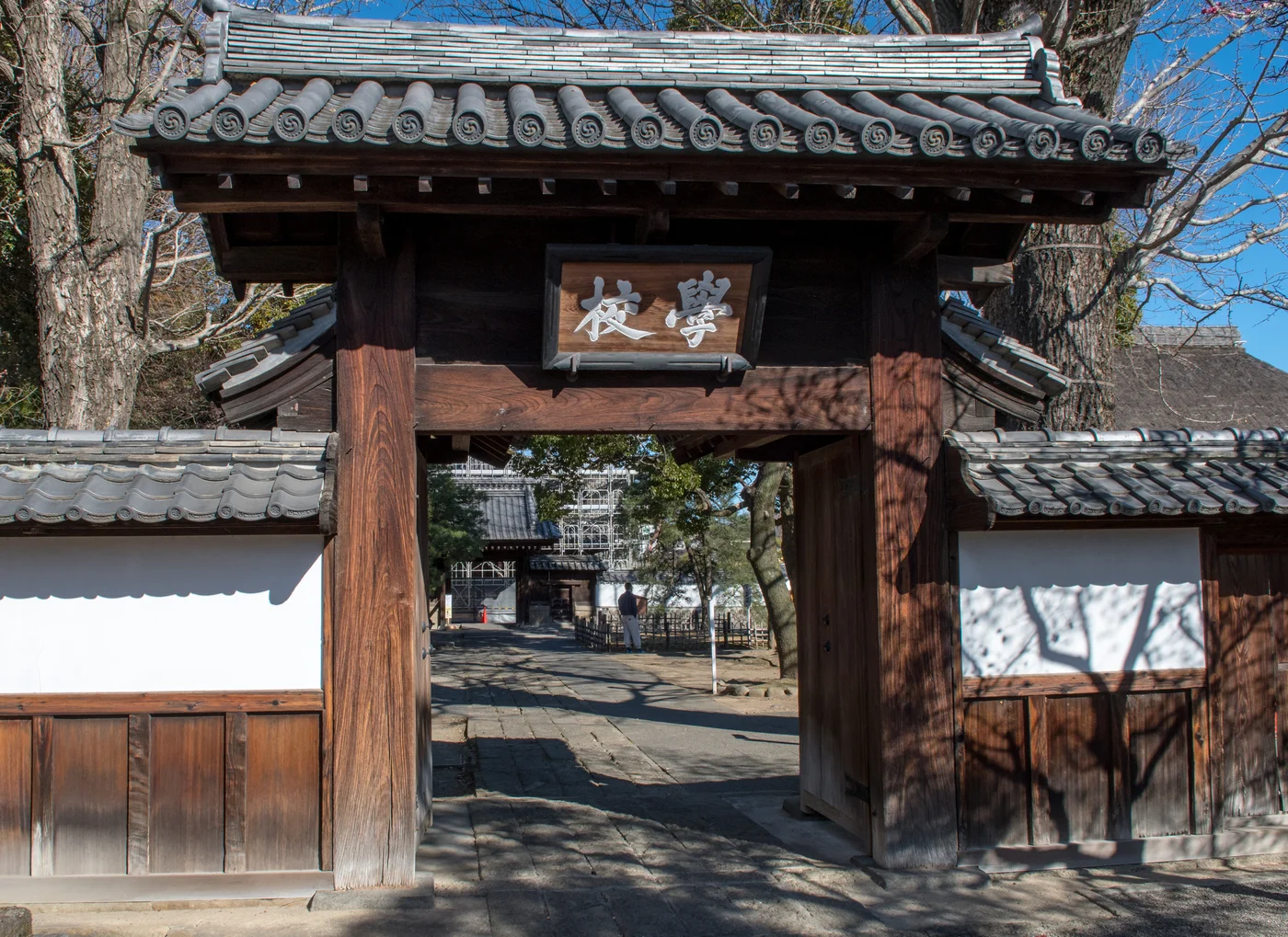
With a full day to spare, arrive at JR Ashikaga Station in the morning for Ashikaga Gakko and Bannaji Temple, then stay in the historic quarter for lunch. In the late afternoon, ride the Ryomo Line one stop east towards Oyama to Ashikaga Flower Park Station. Travellers coming from Tokyo can ride straight through Oyama to central Ashikaga first and backtrack one stop for the evening lights, choosing luggage lockers based on where they plan to sleep. For detailed town routes and walking distances between stations, see our Ashikaga Gakko and Bannaji town walk guide.
From October to March, last entry to Ashikaga Gakko is at 16:00, and the site closes from 29 to 31 December 2026. On 29 and 30 December—when the flower park's evening lights are still running—focus your daytime sightseeing around Bannaji Temple instead. Visitors touring Ashikaga Gakko should also note ongoing thatched-roof restoration works scheduled through 25 March 2027. Fixing your target arrival time at the illumination beforehand keeps lunch, coffee and old-town wandering on a relaxed but clear timetable.
Between 1 December and 14 February, you can pair your visit with JR East's winter Tochigi stamp rally. Stamps are placed at Ashikaga Flower Park, Wakatake no Mori Wakayama Farm in Utsunomiya and the gyoza hall Kirasse Honten—note that the park and farm each require admission and the gyoza stamp requires dining at the rotating daily counter. On a single day trip from Tokyo, give the evening completely to the flower park and save the two Utsunomiya stops for a northbound leg the next day. Rally booklets can be picked up at major Greater Tokyo stations before departure or at participating Tochigi venues.
For a one-day family outing, limit the morning to a single town stop, eat lunch early, and reach the park while some daylight remains—prioritising the Flower Castle if children have their hearts set on it. If you plan to visit Ashikaga Gakko the next morning, take an inbound train towards Kiryu and Takasaki to stay near JR Ashikaga Station on the old-town side. If you are returning to Asakusa on the Tobu line the next day, booking near Tobu Ashikaga-shi Station on the south bank of the Watarase River avoids hauling suitcases back across the bridge; conversely, if you need an early Tohoku Shinkansen or Utsunomiya Line connection, moving towards Oyama after the lights cuts down morning travel. Compare station bases in our Ashikaga stays and town planning guide.
A few useful answers
When are the lights switched on at Ashikaga Flower Park, and which day is it closed?
Flower Fantasy runs from 17 October 2026 to 14 February 2027 and closes only on 31 December. Lights switch on around 16:30 from 7 November to 3 January, and around 17:00 on all other dates.
From what age do children need an evening illumination ticket?
Children aged four through primary school pay ¥800 at the gate, children aged three and under enter free, and adult tickets cost ¥1,500. Advance convenience-store tickets announced by the park save ¥50 per ticket.
Can I buy a daytime ticket and stay inside for the winter evening lights?
No. During Flower Fantasy, day and evening sessions are ticketed separately. The daytime session closes at 15:00 and the evening session opens at 15:30, so you must exit and re-enter using an evening ticket.
Is JR Ashikaga Station at the flower park entrance?
No. Take the train to Ashikaga Flower Park Station. JR Ashikaga Station is one stop further west, while Tobu Ashikaga-shi Station is a separate station across the river with no shuttle bus to the park.
Can I visit only the souvenir shop during the evening without buying a ticket?
No. During Flower Fantasy evening hours, ticket inspection starts before the shopping area, so anyone wanting to browse the shops must hold an evening admission ticket.
Do I need a tripod for the illuminations?
A handheld smartphone is enough for most shots. Tripods are allowed as long as you fold the legs when walking and put them away in crowded zones when asked. Live-streaming, fill lights, reflectors and step ladders are prohibited.
Can I hire a wheelchair or pushchair at the park?
Manual wheelchairs can be borrowed free of charge in limited numbers on a first-come, first-served basis. Pushchairs are not available for hire—bring your own, noting that pull-along wagons and wagon-style strollers are not permitted.
Which dates does the direct limited express to Ashikaga Flower Park run?
JR East schedules the all-reserved limited express on 12 December 2026, 19 December 2026 and 14 February 2027. Outbound it leaves Nishi-Funabashi at 14:31 and Omiya at 15:25, arriving at Ashikaga Flower Park at 16:45; the return train departs at 20:05.
If I leave something in my car during the evening session, can I go back and re-enter?
No, re-entry is not permitted. Make sure coats, e-tickets and any concession certificates are with you before passing the ticket barrier.
Official information and references
Sources used in this guide.
- Ashikaga Flower Park | Flower Fantasy 2026–2027 Official Special Page
- Ashikaga Flower Park | 20 November Notice on Session Times and Year-End Extended Hours
- Ashikaga Flower Park | Same-Day Admission, Opening Hours, Last Ticket Sales and Re-entry Rules
- Ashikaga Flower Park | Evening Advance Tickets and Bundled Ticket Notice
- Ashikaga Flower Park | New Installations for the 25th Season
- Ashikaga Flower Park | Evening Puzzle Game Dates, Fees and Participation Guide
- Ashikaga Flower Park | 18 November Christmas Theme and Garden Report
- Ashikaga Flower Park | Access and Parking
- NEXCO East | Kita-Kanto Expressway Izuruhara Smart IC and ETC Requirements
- Ashikaga Flower Park | Photography, Pushchairs, Wheelchairs and Lockers FAQ
- Ashikaga Flower Park | Park Map
- Ashikaga Flower Park | Seasonal Coach Tours from Tokyo
- JR East | Winter Direct Limited Express, Reserved Seating and Ticket Collection Rules
- JR East | Ashikaga Flower Park Station Weekday and Holiday Timetables
- JR East | Ashikaga Flower Park Station Layout and Accessibility Information
- Ashikaga Flower Park | 2026 Great Wisteria Festival and Spring Night Illuminations
- City of Ashikaga | Ashikaga Gakko Visiting Information and Roof Restoration Notice
- City of Ashikaga | Ashikaga Gakko 2026 Closure Dates
- JR East | Winter 2026 Tochigi Tourism Campaign and Stamp Rally Conditions