Walk the Gyoko-dori ginkgos and Shinobazu Pond from JR Ueno Station's Park Gate, with 2026 foliage updates, swan boat fares, Tokyo National Museum Garden hours, and ZEN NIGHT TOKYO dates, plus Kyu-Iwasaki-tei, Yanaka, and rainy-day options.
- Region & Focus
- TokyoAutumn leaves
- Reading Scope
- 19 min read · 12 chapters · 5 Q&As
- Official Verification
- 26 official sources checkedUpdated 22 November 2026
- Key Topics
- SeasonsItinerariesNeighbourhoods
Chapter Route Map (tap any stop)
- Start with the Gyoko-dori ginkgos, then save the maples for the garden
- Which Ueno Station exit to pick depends on starting high or by the water
- Shinobazu Pond has three basins; walk to the Boat Pond to hire a boat
- Climb from Kiyomizu Kannon-do to Fountain Square
- The Tokyo National Museum Garden closes at 17:00; catch the autumn leaves before the galleries
- ZEN NIGHT TOKYO 2026: evening tickets and entry times
- Kyu-Iwasaki-tei southwest of Shinobazu Pond: visit by day for the Western house and ginkgos
- With children or older relatives, pick either the zoo or the science museum
- Where to go in the rain and how to plan a Monday
- Head on to Yanaka and leave via Nippori or Sendagi
- Save Ameyoko for the walk back to the station, and pick your hotel by tomorrow's plan
- Keep arrival day to a single loop, and save illuminated maples for another evening
- Quick Q&A
For an autumn half-day in Ueno Park, enter via JR Ueno Station's Park Gate, follow Gyoko-dori for the ginkgo trees, and continue past Kiyomizu Kannon-do to Shinobazu Pond. If you want maples and teahouses, set aside daytime hours for the Tokyo National Museum Garden. On 19 November 2026, the Tokyo Metropolitan Park Association reported that the Gyoko-dori ginkgos were roughly 30 to 40 per cent turned. If your trip is already booked for late November, check the park's latest foliage update to decide how long to linger under the ginkgos, then pair the walk with either boating, a museum visit, or Yanaka.
Start with the Gyoko-dori ginkgos, then save the maples for the garden
Ginkgos are the standout colour shift on this walk. The Tokyo Metropolitan Park Association tracks Ueno Onshi Park as an official yellow-foliage observation point, pinpointing Gyoko-dori in its park-by-park notes. When searching for updates, look up "Ueno Onshi Park Gyoko-dori" — this avenue sits inside Ueno Park, running from Takenodai Square towards the Tokyo National Museum. Searching broadly for Ueno Station, Shinobazu Pond, or the park as a whole pulls in photos from the ponds, the zoo, and even past years, so match the location to Gyoko-dori first when reading that week's foliage report.
If you are planning a trip for 2027, pencil in late November to early December for yellow foliage in central Tokyo and pick your actual walking day from the park association's reports. In 2026, updates run every Monday and Thursday through 17 December. The 19 November notice also recorded that only some maple trees had begun to turn, placing them in the early stage of autumn colour alongside the ginkgos. If your itinerary has a spare day, keep two mornings in the same week interchangeable for the park and shopping, then pick the park day once a fresh update lands.
You can time your visit by the shots you want. While the branches still hold a mix of green and yellow, a short return stroll along Gyoko-dori rewards close-ups of the changing avenue. For full golden canopies, check the management office's on-site photos before heading out. Once the leaves begin to thin, watch for fallen foliage along the paths and head into the garden behind the main museum building for pondside maples. Combining both in a single morning ensures that if one spot is still muted, the other still offers trees and architecture worth lingering over.
Wind and rain change where you will want to stop. When gusts sweep across the pond, shorten the waterside loop to Bentendo and the Lotus Pond side, saving your reflection shots for the upper paths or the museum garden. After rain, view the fallen leaves on Gyoko-dori from the pavement and take care on wet, leaf-covered stone steps. Taking one frame from the high ground looking towards the museum and another from the water's edge reveals far more than chasing colour-graded posts of the same tree on social media.
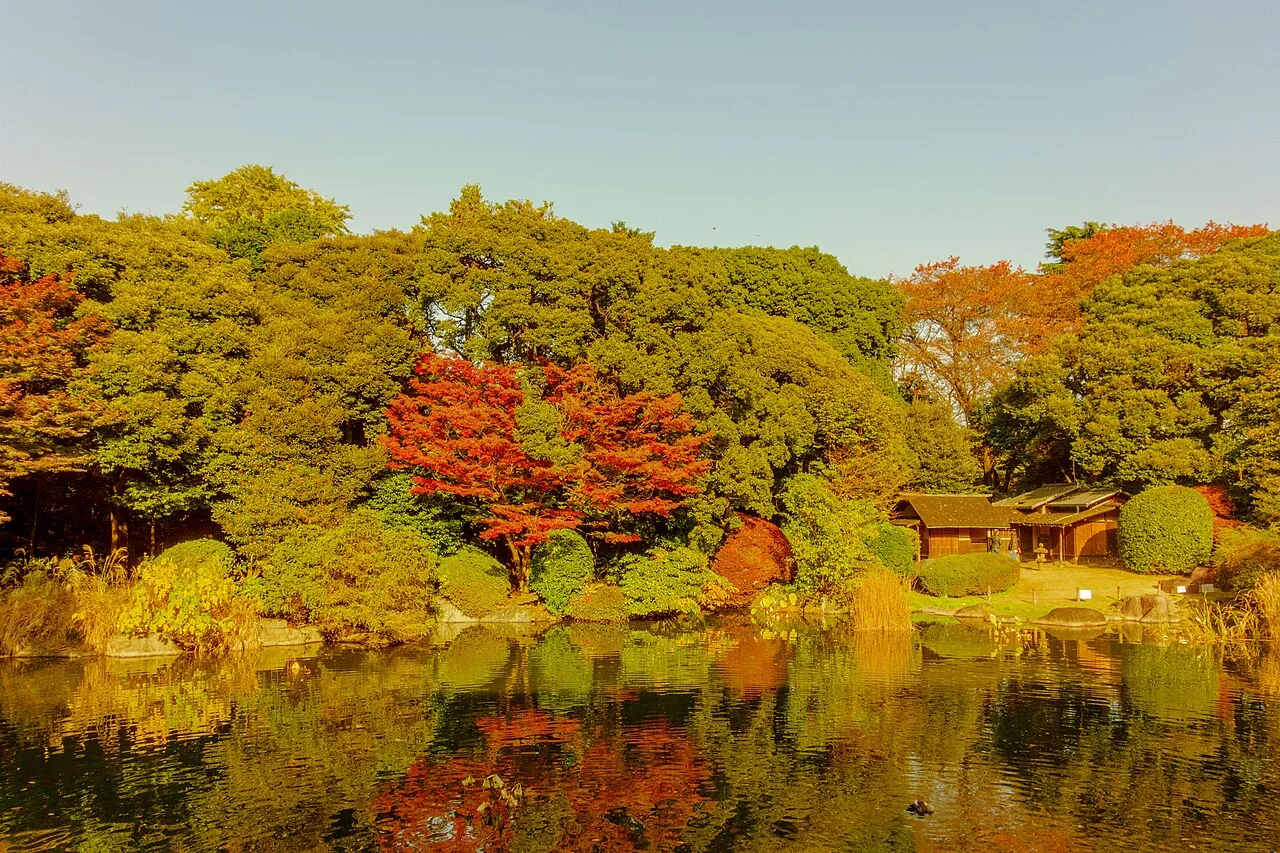
Walk the Gyoko-dori ginkgos and Shinobazu Pond from JR Ueno Station's Park Gate, with 2026 foliage updates, swan boat fares, Tokyo National Museum Garden hours, and ZEN NIGHT TOKYO dates, plus Kyu-Iwasaki-tei, Yanaka, and rainy-day options.
Which Ueno Station exit to pick depends on starting high or by the water
Ueno Onshi Park's public grounds are free to enter, with Tokyo Metropolitan Government Bureau of Construction hours listed as 5:00-23:00. Spanning around 54 hectares, the park has a noticeable slope between Shinobazu Pond and the museum precinct. For the ginkgos first, follow signs for the Park Gate inside JR Ueno Station; you step straight out onto the upper terrace towards the National Museum of Western Art and Takenodai Square. For the boats or Bentendo first, take JR's Shinobazu Gate and Shinobazu Exit towards Keisei-Ueno Station and the water. Choosing the right exit saves an extra climb or descent.
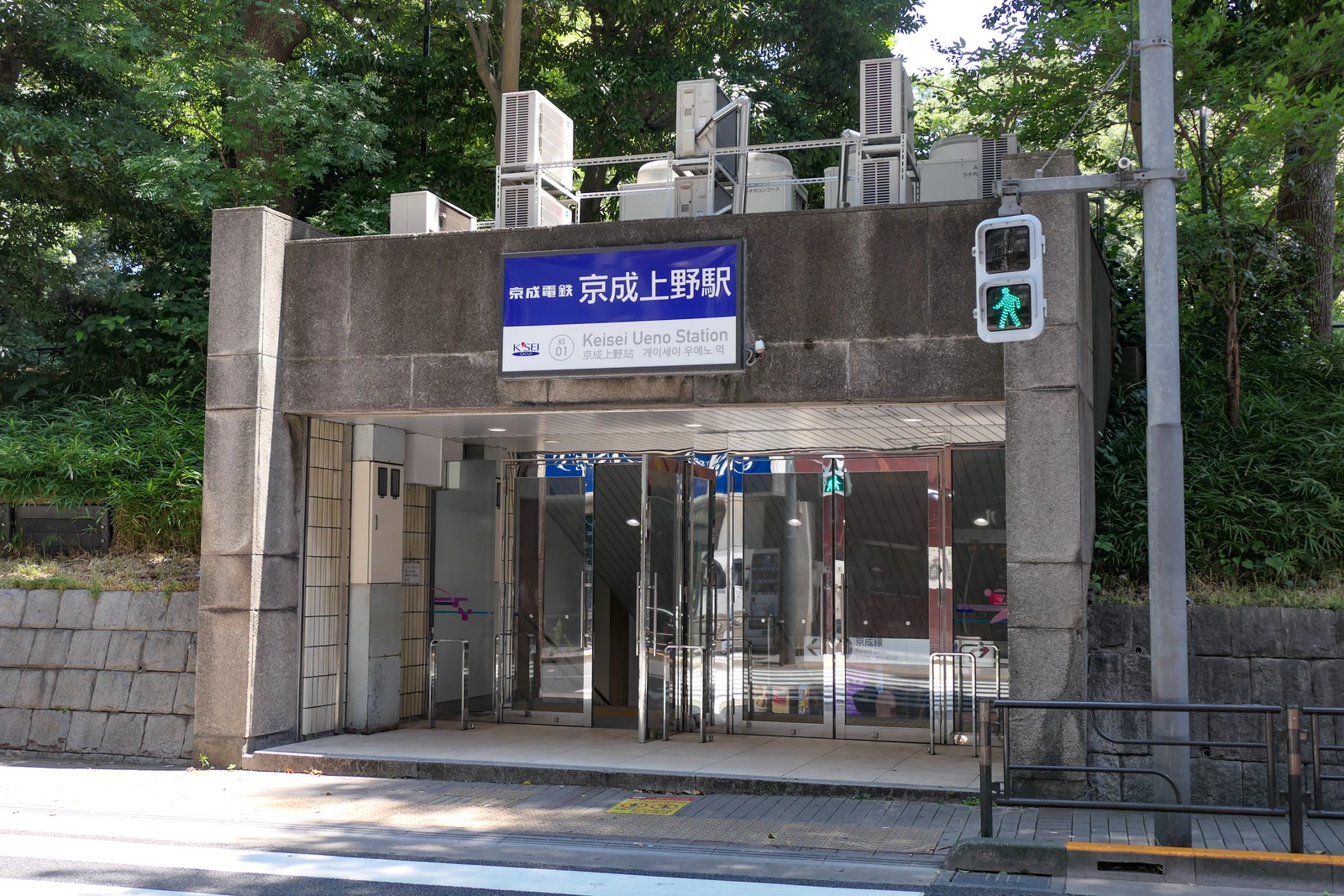
Keisei-Ueno Station sits apart from JR Ueno Station. Travellers riding the Keisei line from Narita to its terminus can step straight out and start at Shinobazu Pond. If you are meeting friends arriving by JR, set a concrete landmark such as Keisei-Ueno Station's street-level entrance, the approach to Bentendo, or the entrance to the National Museum of Western Art on the terrace. Naming an actual building lets each group follow its own line's station signs.
Arriving on the Ginza or Hibiya lines, follow Tokyo Metro Ueno Station's signs towards Ueno Park. Tokyo Metro's accessibility map marks a lift from the Ueno Park-bound ticket gate to Exit 5a. If you are pushing a buggy and heading to the museums first, JR's Park Gate is easier on the legs: the direct line from Kannon-do down to Shinobazu Pond hits flights of steps, whereas the main park roads offer gentler gradients. For companions using mobility scooters, JR's published station routes permit access via the Central, Park, or Iriya gates.
If a taste of both the ginkgos and the water is plenty, start on the terrace from the Park Gate in the morning, finish beside Shinobazu Pond, and leave from Keisei-Ueno or near the Shinobazu Exit. If you want a museum to anchor the end of your walk, reverse the route from the pond so you only climb the slope once. Slower-paced travellers can split the two areas across separate days: explore around the Park Gate today, and stroll the pond shore tomorrow before visiting Kyu-Iwasaki-tei.
Shinobazu Pond has three basins; walk to the Boat Pond to hire a boat
Though it looks like one large body of water on a map, Shinobazu Pond is divided into the Lotus Pond, Cormorant Pond, and Boat Pond. First-timers can walk from the Keisei-Ueno side towards Bentendo. The Lotus Pond blooms in summer, while in late autumn its dried lotus stalks frame the octagonal temple hall in the distance. From there, look for the boat hire pier on the Boat Pond. If you are only walking, pause before Bentendo to look back across the water, then climb towards Kiyomizu Kannon-do to join the upper park paths.
Swan boats and standard pedal boats both cost ¥1,000 per boat for 30 minutes, capped at two adults plus one child. Rowboats are ¥800 per boat for 30 minutes for up to three adults. Three adults wanting to share one vessel should pick a rowboat; insisting on two swan boats comes to ¥2,000 for the half-hour. Families should settle on the boat split before joining the queue rather than reorganising at the ticket counter.
From November to February, the boat house opens 9:30-16:50 with last hire at 15:50, and closes on Wednesdays from December through February. If your train pulls into JR Ueno Station at 15:30, exiting, walking to the pier, and queuing makes it hard to get out on the water in time. Companions keen on boating should head to the pier right after seeing the Lotus Pond in the morning, or straight after lunch, rather than leaving it until after an afternoon exhibition.
On a day with timed museum tickets, budget 30 minutes on the water plus extra leeway for boarding, docking, and walking to your next stop. The boats are clearly visible from the bank, where you can also photograph the trees beyond. If your group splits up, arrange to wait at a clear spot just outside the pier so everyone stays easy to find near the Boat Pond. In cold or gusty weather, families with toddlers are better off sticking to the shore path. If you still have the Tokyo National Museum or Yanaka ahead before dusk, the view around Bentendo gives plenty of pond scenery without eating up the rest of the daylight with a full circuit.
Climb from Kiyomizu Kannon-do to Fountain Square
Climbing up from the pond to Kiyomizu Kannon-do, head near the wooden stage first to look back down. The circular Moon Pine frames Bentendo on Shinobazu Pond, a view captured in Hiroshige's ukiyo-e prints. Anyone who has just walked past Bentendo will immediately pick out their earlier route from above. Travellers staying in Ueno with only a short gap to spare can pair the pond edge with Kannon-do to take in both waterside views and elevated trees.
The bronze statue of Saigo Takamori stands on the side closer to Ueno Station. Climbing up from the Shinobazu Exit, Saigo and his dog are an easy landmark to spot. Leave the statue for the return leg if you plan to head straight back to the station or eat at Ameyoko. If the Tokyo National Museum is next, cut straight from Kannon-do towards Takenodai Square and give Gyoko-dori a proper stretch of time. The square's large fountain and the museum facade facing it make obvious meeting points if anyone wanders off.
This upper plateau once formed the grounds of Kanei-ji Temple. In 1873, Ueno was designated one of Japan's first public parks alongside Shiba, Asakusa, Fukagawa, and Asukayama. With Kiyomizu Kannon-do and Bentendo still anchoring the walk, moving from the old temple precinct into the open plaza lets you read both eras in the landscape. To visit Kanei-ji's Konpon Chudo hall as well, continue north past the museum and on towards Yanaka; to loop back to Kyu-Iwasaki-tei near the pond, turn around at the square and save Kanei-ji for your Yanaka day.
To fit the Tokyo National Museum into a three-hour half-day, reach the Park Gate around 9:30, see the ginkgos, then enter the museum with about 90 minutes for the garden and the ground-floor galleries of the Honkan. Afterwards, stroll down to Kiyomizu Kannon-do and Shinobazu Pond, and break for lunch around Keisei-Ueno. Travellers focused on boating should start from the Shinobazu Exit at 9:30, take to the water first, then climb to the upper terrace, keeping the museum visit to a brief look around its garden.
When a family plans to split up around midday, Takenodai Square works cleanly as the dividing line. The National Museum of Western Art, the National Museum of Nature and Science, and the Tokyo National Museum all sit on the terrace, so people visiting different venues can still regroup at the Park Gate. If the other half of your group heads to Shinobazu Pond or Kyu-Iwasaki-tei, meet for lunch near the Shinobazu Exit to avoid trudging up and down the hill again after eating.
The Tokyo National Museum Garden closes at 17:00; catch the autumn leaves before the galleries
The Tokyo National Museum Garden lies on the north side of the Honkan (Main Gallery) and is accessed from inside the museum grounds. It generally opens 9:30-17:00, with paths passing the exteriors of five historic teahouses around a central pond. Walking up Gyoko-dori to the main gate, if pondside maples are your priority, pass the Honkan first and head straight out to the garden before turning back to the indoor galleries. If you are heading on to Nippori or the airport later, keep your indoor viewing to the Honkan's ground floor to cut down on walking between buildings.
General admission to the museum's Regular Exhibition is ¥1,000 for adults and ¥500 for university students, while high school students and younger, visitors under 18, and seniors aged 70 or over enter free with ID showing age. Regular hours are 9:30-17:00, extending until 20:00 on Fridays, Saturdays, and Sundays when the following Monday is a public holiday, with last entry 30 minutes before closing. If you plan to stay outdoors until dusk, use Friday or Saturday evening for the indoor galleries and schedule the daytime garden before 17:00.
You can order the same afternoon in different ways. For both the garden and Japanese art, walk the garden first and then head to the Honkan's second floor, which the museum recommends as a chronological introduction for first-time visitors. If you have specific works on your list, go straight to those gallery rooms first and head out to the rear garden while daylight lasts. Special exhibition tickets include same-day Regular Exhibition entry; if one person wants galleries and another wants a stroll, arrange to meet back in front of the Honkan.
From 30 November to 31 December 2026, the Toyokan (Asian Gallery) and Honkan Rooms 17 to 20 are closed for gallery maintenance, and the entire museum closes on 15 December for facility inspection. From 22 to 25 December, only the Gallery of Horyuji Treasures and the Kuroda Memorial Hall open; the museum closes for year-end holidays from 26 to 31 December, and opens 12:00-20:00 on New Year's Day 2027. If you visit Ueno between 22 and 27 December and want a fuller museum visit, put the National Museum of Western Art or the National Museum of Nature and Science first before walking the park. For building breakdowns and ticket types, see our Tokyo National Museum visit guide.
For visits after New Year, Hasegawa Tohaku's Pine Trees screens are displayed in Honkan Room 12 from 1 to 17 January 2027. On New Year's Day, stroll Shinobazu Pond in the morning and climb up to the museum after lunch. Unlike late autumn, when foliage sets the pace, a single must-see work dictates how long you spend in Ueno, with just a brief walk along the park paths.
ZEN NIGHT TOKYO 2026: evening tickets and entry times
In 2026, ZEN NIGHT TOKYO lights up the Tokyo National Museum Garden from 14 October to 6 December alongside the Daitokuji special exhibition, featuring illuminated paths and soundscapes around the rear pond and teahouses. Among late-November dates, the event opens on Mondays 23 and 30 November and closes on Tuesday 24 November. Standard evening hours run 17:30-19:30, extending to 21:00 on Fridays, Saturdays, and 22 November, with last admission 30 minutes before close. As the daytime garden closes at 17:00 and the night event begins at 17:30, plan each as a separate slot.
Combined tickets including the Daitokuji exhibition cost ¥4,200 for adults, ¥3,200 for university students, and ¥2,800 for high school students. Visitors who already hold a Daitokuji special exhibition ticket can add evening garden entry for ¥1,900 by presenting that ticket (even if already used) at admission. From 20 November, a standalone evening garden ticket is available for ¥2,500. Junior high school students and younger, as well as visitors with disabilities plus one accompanying carer, enter free. Tickets are sold via the official booking site and cannot be cancelled, rescheduled, or refunded.
On Fridays, Saturdays, and 22 November, holders of the ¥2,500 standalone evening ticket can only enter from outside the museum from 20:00, with last entry at 20:30. To get into the night event before 20:00 on those nights, you must pair it with a separately bought Regular or Special Exhibition ticket and enter the museum grounds by 19:30. Combining the exhibition and evening walk works best by seeing the Daitokuji show in the Heiseikan first; if arriving after dinner, eat near the Park Gate, enter when the standalone slot opens, and work backwards from closing time for your train home.
If you only care about daytime autumn colour and the surrounding trees, a daytime visit takes less time and costs less. At night you see lit scenery, so reserve daytime hours if you want a clear look at the teahouse roofs and pondside branches. After 6 December, the garden reverts to daytime-only admission; spend dusk in Yanaka or Ameyoko instead of waiting around for nightfall.
| Your current ticket or plan | How to book the evening garden |
|---|---|
| Both the Daitokuji exhibition and evening garden | Combined ticket: ¥4,200 adult, ¥3,200 university student, ¥2,800 high school student |
| Already hold a Daitokuji special exhibition ticket | ¥1,900 add-on ticket; show your exhibition ticket or stub at entry |
| Evening garden only | ¥2,500 standalone ticket; note the 20:00 entry rule on Fridays, Saturdays, and 22 November |
Kyu-Iwasaki-tei southwest of Shinobazu Pond: visit by day for the Western house and ginkgos
Kyu-Iwasaki-tei Gardens fit neatly before or after a walk along Shinobazu Pond. From the south side of the Lotus Pond, follow Shinobazu-dori towards Yushima and check the map for the main entrance. On the Chiyoda Line, it is roughly a three-minute walk from Yushima Station Exit 1, with a lift at Exit 3 for buggies or wheelchairs. If you only want the historic Western-style house and ginkgos, link Yushima, the gardens, Shinobazu Pond, and Ueno Station — saving the upper-park museums for another day so you skip the climb.
The gardens open 9:00-17:00 (last entry 16:30) and close from 29 December to 1 January. Admission is ¥400 for adults and ¥200 for seniors aged 65 or over; primary school pupils and younger enter free, as do junior high students living or studying in Tokyo. Date-specific e-tickets launched on 17 August 2026, bookable up to 31 days in advance and until 16:00 on the day; eligible unused tickets can be cancelled online up to 16:30 on the visit date, while the on-site ticket window remains open.
Once inside, look back at the timber Western-style mansion from the far edge of the lawn to frame the facade alongside nearby ginkgos. Designed by Josiah Conder, the estate brings together the Western-style house, the Japanese-style Ohiroma wing, and a separate billiard house. Do not leave ticket purchase until 16:25 if you want to look inside at leisure. Shoes come off indoors, and visitors are asked to wear socks to protect the floors, so leave plenty of time for the stairs, interior rooms, and the walk back across the lawn.
Step-free access is available into the Western-style house for wheelchair users: the lawn garden and ground floor of the Western-style house are accessible, while entering the Japanese-style wing requires transferring to an indoor wheelchair provided on site. Other companions can explore the second floor of the Western-style house and the billiard house interior. If your group wants to linger over Western architectural details together, spend longer on the ground floor before stepping outside to admire the veranda columns and timber facade.
Choosing between Kyu-Iwasaki-tei and the Tokyo National Museum comes down to the architecture you want to see. Pick the former estate for Meiji-era timber joinery and residential interiors; choose the museum if time is tight and you want Japanese art alongside pondside teahouses. You can also combine both over a full day: enter Kyu-Iwasaki-tei from Yushima in the morning, stroll Shinobazu Pond with lunch by the water, and climb up to the Tokyo National Museum in the afternoon.
With children or older relatives, pick either the zoo or the science museum
Animal-loving children can head straight into Ueno Zoo after opening. For elephants, polar bears, or gorillas, walk from JR's Park Gate to the Main Gate into the East Garden. Coming from Bentendo or Keisei-Ueno, enter the West Garden via the Benten Gate, or use the Ikenohata Gate near Nezu to see giraffes and shoebills first. If you plan to cover both halves, mark your must-see animals on the map beforehand and choose which exit brings you back into the park — moving between the East and West Gardens takes longer than it looks on paper.
Ueno Zoo normally opens 9:30-17:00, with last entry and ticket sales at 16:00. Admission is ¥600 for adults, ¥300 for seniors aged 65 or over, and ¥200 for junior high students; primary school pupils and younger, plus junior high students living or studying in Tokyo, enter free. Individual animal houses close at varying times, so see top priorities early. Giant pandas Xiao Xiao and Lei Lei returned to China from Ueno in January 2026, so plan family routes around the current exhibits rather than following outdated guidebooks to the panda house.
Up on the park plateau, the National Museum of Nature and Science opens 9:00-17:00 (last entry 16:30). Regular admission is ¥630 for adults and university students, and free for primary to high school students as well as seniors aged 65 or over with ID. Children keen on dinosaurs should head straight to the Global Gallery's dinosaur exhibits; anyone interested in the formation of the Japanese archipelago, natural specimens, and historic architecture can linger in the Japan Gallery. Note that Global Gallery B3F has been closed for exhibition renewal since 8 September 2026, while the dinosaur hall sits on B1F.
To keep things under a full day, two adults and one primary school pupil pay ¥1,260 in total for the science museum's Regular Exhibition after a park walk. Swapping that for a swan boat followed by the zoo brings boat hire plus three zoo tickets to ¥2,200, excluding lunch and train fares. If grandparents want autumn leaves while children want animals, split up briefly and regroup at an easily reached public landmark outside the gates rather than inside a ticketed venue.
Where to go in the rain and how to plan a Monday
If heavy rain greets you in the morning, head straight from JR Ueno's Park Gate into the National Museum of Western Art or the National Museum of Nature and Science, then step out to Takenodai Square for the ginkgos once the skies clear. The National Museum of Western Art's Permanent Collection costs ¥500 for adults and ¥250 for university students, normally opening 9:30-17:30 (until 20:00 on Fridays and Saturdays; last entry 30 minutes before close). Adults drawn to Western painting and sculpture can browse until the weather eases, while families needing a long indoor stretch with children are better served by the science museum's dinosaurs and taxidermy galleries.
When you hold timed-entry tickets, anchor your park walk around that slot. Regular exhibition tickets allow flexible entry if a downpour arrives early, whereas timed special exhibition tickets are safest approached straight from the station exit. After rain around Shinobazu Pond, pause briefly on the station side of the Lotus Pond before ducking into a nearby restaurant; when the wind picks up and companions feel the chill, swapping a full wet lap under umbrellas for a hot meal keeps the day enjoyable.
If you finish a morning circuit of the National Museum of Nature and Science just as the rain stops near lunchtime, step out for a short park stroll and come back inside afterwards. Same-day re-entry is available for the Regular Exhibition by arranging it at the Japan Gallery B1F information desk before stepping out — ideal when half your group prefers the Global Gallery and half prefers the Japan Gallery, with a break for fresh air and lunch in between.
The Tokyo National Museum, National Museum of Nature and Science, National Museum of Western Art, and Ueno Zoo all typically close on Mondays. When Monday is a public holiday, the Tokyo National Museum and National Museum of Western Art usually close on the following weekday instead, the zoo typically closes the next day, and the science museum also adjusts for holidays. For an outdoor-only Monday, Kyu-Iwasaki-tei only closes routinely over the New Year period, making it easy to pair with Shinobazu Pond and Ameyoko for a half-day.
Over the final days of 2026, check opening calendars before locking in museum visits. The National Museum of Western Art and the National Museum of Nature and Science follow a standard year-end closure from 28 December to 1 January, and Ueno Zoo closes from 29 December to 1 January, alongside the individual Tokyo National Museum dates noted earlier. Staying in Ueno between 29 and 31 December works best if you keep daytime hours for the open park paths and shopping streets, saving indoor sightseeing for confirmed open dates.
Head on to Yanaka and leave via Nippori or Sendagi
If daylight remains after a morning by Shinobazu Pond and an afternoon museum visit, walk north out of the park towards Yanaka. Kanei-ji Temple and Yanaka Cemetery lie along the same line, making the cemetery a natural waymarker. Remember it is an active burial ground: stick to the main avenue and pass quietly around graves and visitors paying respects. Continuing towards Nippori Station's West Exit and walking down Gotenzaka into Yanaka Ginza flows far better than doubling back to Ueno Station for a one-stop ride.
Taito City's tourist guide puts the walk from Nippori's West Exit to Yanaka Ginza at roughly five minutes, leading to a shopping street around 170 metres long. On a first visit, follow Gotenzaka from the Nippori side to the top of the Yuyake Dandan steps for the classic view straight down the lane. Go in daylight for street scenes and snacks, as some shops close early rather than staying open until sunset. Allow half an hour to browse down to the far end and finish at Sendagi Station on the Chiyoda Line.
Travellers with buggies, luggage, or anyone preferring fewer steps can enter and exit via Sendagi instead, browsing the shops below the staircase before returning to the underground. Going down Yuyake Dandan from Nippori only to climb back up with shopping bags makes a bigger difference to older companions than the street's short length suggests. If walking up from Ueno's north end already leaves you tired, call it a day at Nippori Station and save the shopping street for another trip rather than forcing it onto the return leg.
Save Ameyoko for the walk back to the station, and pick your hotel by tomorrow's plan
When Shinobazu Pond is your final stop, it is an easy detour past Keisei-Ueno or JR Ueno's Shinobazu Exit into Ameyoko. Stretching between Ueno and Okachimachi, the market street has plenty of sit-down spots where you can eat and then catch a train from whichever station is closer. If you are heading back to the Tokyo National Museum after lunch, pick a place near the Ueno Station end rather than wandering all the way down to Okachimachi and backtracking. If you just want snacks to take back to your hotel after a museum, leave shopping until last so you carry bags for less distance.
For groups, choosing between an afternoon in Yanaka or a turn into Ameyoko is the main fork in the road. Pick Ameyoko near Ueno Station if you want a warm meal, a rest, or an easy train connection the next morning. If Yanaka's old townhouses appeal more, head north from the park plateau and have lunch around the park or museums. To fit both in without rushing, eat and browse in Ameyoko the evening before, leaving the next day's daylight for museums and Yanaka; our Ueno food guide breaks down what is on offer.
You can also base your hotel choice on your first morning stop. With an early Skyliner and heavy luggage the next day, staying on the Keisei-Ueno side gives the cleanest walk to the airport train. If you are riding JR lines two days running, focus on the walk to your preferred ticket gate and lift — staying right by JR Ueno saves dragging cases around. Around Okachimachi puts dinner and shopping on your doorstep while setting up an easy morning stroll into Shinobazu Pond from the south; sketch out the walks to both Keisei and JR entrances and compare options in our Keisei-Ueno, JR Ueno, and Okachimachi hotel guide.
Keep arrival day to a single loop, and save illuminated maples for another evening
The Keisei Skyliner runs directly from Narita Airport to Keisei-Ueno at a standard adult single fare of ¥2,580. Keisei also lists a discounted online adult single at ¥2,310, though you still select a specific train and seat according to the ticket rules. Fastest services cover Narita Airport Terminal 2-3 Station to Nippori in 36 minutes; when continuing to Keisei-Ueno, plan around your actual arrival time. Once you factor in immigration, baggage claim, and reaching the platform, any museum visit with a timed-entry slot is far safer saved for the day after landing.
If decent daylight remains when you arrive, take a loop around Shinobazu Pond and decide on the spot whether you have the energy to climb the hill. If large bags are left in lockers near Keisei-Ueno, leave time to collect them and finish on the southeast side of the pond rather than hauling purchases back from Nippori. Touching down later in the afternoon, grab dinner in Ameyoko, check in, and keep your autumn-leaf walk for the next morning.
Before an evening flight home, leave bags at your hotel, start from Shinobazu Pond towards Yushima for Kyu-Iwasaki-tei, and loop smoothly back to Ueno. Anyone heading into the National Museum of Nature and Science first thing should schedule bag collection before lunch so timings stay predictable. Guests staying near Nippori who already have their luggage can board the Keisei line directly at Nippori, cutting out a backtrack to Keisei-Ueno.
If you only have one slot for autumn colour in Tokyo and want an unbroken tunnel of ginkgo canopies, Meiji Jingu Gaien's avenue runs for roughly 300 metres from Aoyama-guchi with a denser concentration of trees. Ueno shines when part of your group wants foliage and part wants museums, allowing both walks to meet up again. For paid evening illuminations in a landscape garden, Rikugien's 2026 autumn night viewing runs from 25 November to 6 December, 18:00-20:30 (last entry 19:30), requiring a separate night ticket and entry via the Main Gate. Take the Yamanote Line from JR Ueno to Komagome to give Ueno your daytime hours and a ticketed garden your evening.
A few useful answers
When is the best time to see autumn leaves in Ueno Park?
Aim for late November to early December and check the Tokyo Metropolitan Park Association's foliage updates before you go. On 19 November 2026, the Gyoko-dori ginkgos were roughly 30 to 40 per cent turned, and some maples were just beginning to change colour.
How much do the Shinobazu Pond swan boats cost, and what is the last hire time?
Swan boats cost ¥1,000 per boat for 30 minutes, for up to two adults and one child. From November to February, last hire is at 15:50 and closing time is 16:50, with Wednesday closures from December through February.
Which JR Ueno Station exit should I use for the ginkgos and Shinobazu Pond?
Use the Park Gate if you want the ginkgos and museums first. Use the Shinobazu Gate and Shinobazu Exit for Shinobazu Pond or the boats. Travellers arriving on the Keisei Skyliner from Narita are best placed starting at the pond straight from Keisei-Ueno Station.
Can I visit the Tokyo National Museum Garden on a Friday evening?
Regular garden hours end at 17:00. In 2026, the separately ticketed ZEN NIGHT TOKYO event runs until 6 December; on Fridays and Saturdays, holders of the ¥2,500 standalone evening ticket may enter from 20:00.
Can you cover Yanaka and Kyu-Iwasaki-tei Gardens in one half-day?
Starting from Shinobazu Pond, choose either Kyu-Iwasaki-tei and Yushima for the historic Western house, or head north into Yanaka for temples and the shopping street before leaving via Nippori or Sendagi. Give yourself another half-day if you want to explore both thoroughly.
Official information and references
Sources used in this guide.
- Tokyo Metropolitan Government Bureau of Construction | Ueno Onshi Park grounds, opening hours, and park map
- Tokyo Metropolitan Park Association | 2026 autumn foliage tracking and Gyoko-dori updates for Ueno
- Tokyo Metropolitan Park Association | Supplemental foliage reports by park
- Tokyo Metropolitan Park Association | Shinobazu Pond boat hire fees and operating hours
- Taito City | Shinobazu Pond and its three basins
- Taito City | Ueno Park Kiyomizu Kannon-do, Saigo statue, and cultural walking route
- Tokyo National Museum | The Garden and Teahouses
- Tokyo National Museum | Visitor information, admission fees, and gallery maintenance schedule
- Tokyo National Museum | 2026 ZEN NIGHT TOKYO ticket types and entry conditions
- Tokyo Metropolitan Park Association | Kyu-Iwasaki-tei Gardens entry rules and access
- Tokyo Metropolitan Park Association | Kyu-Iwasaki-tei date-specific e-tickets
- Ueno Zoological Gardens | Opening days and admission fees
- Ueno Zoological Gardens | Three entrance gates and nearby animal exhibits
- Ueno Zoological Gardens | Return record for giant pandas Xiao Xiao and Lei Lei
- National Museum of Nature and Science | Ueno Main Building admission and gallery closure updates
- National Museum of Western Art | Opening hours and admission fees
- Taito City | Yanaka Ginza, Yuyake Dandan steps, and nearby stations
- Ameyoko Shopping Street | District location and shop directory
- JR East | Ueno Station map and accessibility information
- Tokyo Metro | Ueno Station lifts and step-free access
- Keisei Electric Railway | Skyliner discounts and fastest Narita-to-Nippori journey times
- Meiji Jingu Gaien | Ginkgo avenue section
- Tokyo Metropolitan Park Association | 2026 Rikugien Gardens autumn evening illumination
- Tokyo National Museum | 2027 New Year exhibition and Pine Trees screens
- Tokyo Metropolitan Park Association | Kyu-Iwasaki-tei wheelchair-accessible areas
- National Museum of Nature and Science | Global Gallery B1F dinosaur exhibition