Ashikaga Flower Park's 25th Flower Fantasy illumination runs from 17 October 2026 to 14 February 2027 (closed only on 31 December). Evening admission is ¥1,500 for adults, with over five million LEDs lighting up 100,000 square metres and the Miracle Great Wisteria display spanning 1,000 square metres. A 3-minute walk from JR Ashikaga Flower Park Station, this guide covers the three seasonal themes, transport, local stays and historic town sights.
- Region & Focus
- Ashikaga
- Reading Scope
- 13 min read · 6 chapters · 4 Q&As
- Official Verification
- 11 official sources checkedUpdated 20 November 2026
- Key Topics
- ItinerariesWinterTokyo & Kanto
Chapter Route Map (tap any stop)
- Flower Fantasy 2026-27: Dates, Fares and Three Seasonal Themes
- Dual Night View Heritage Status: Two Certificates for Winter and Spring
- Getting There: 3 Minutes from JR Ashikaga Flower Park Station and Routes from Tokyo
- Where to Stay: Seven Listed Properties in Ashikaga and Nearby Alternatives
- Town Pairing: Ashikaga Gakko, Bannaji Temple and Orihime Shrine
- Itinerary Blueprint and Seasonal Trade-Offs
- Quick Q&A
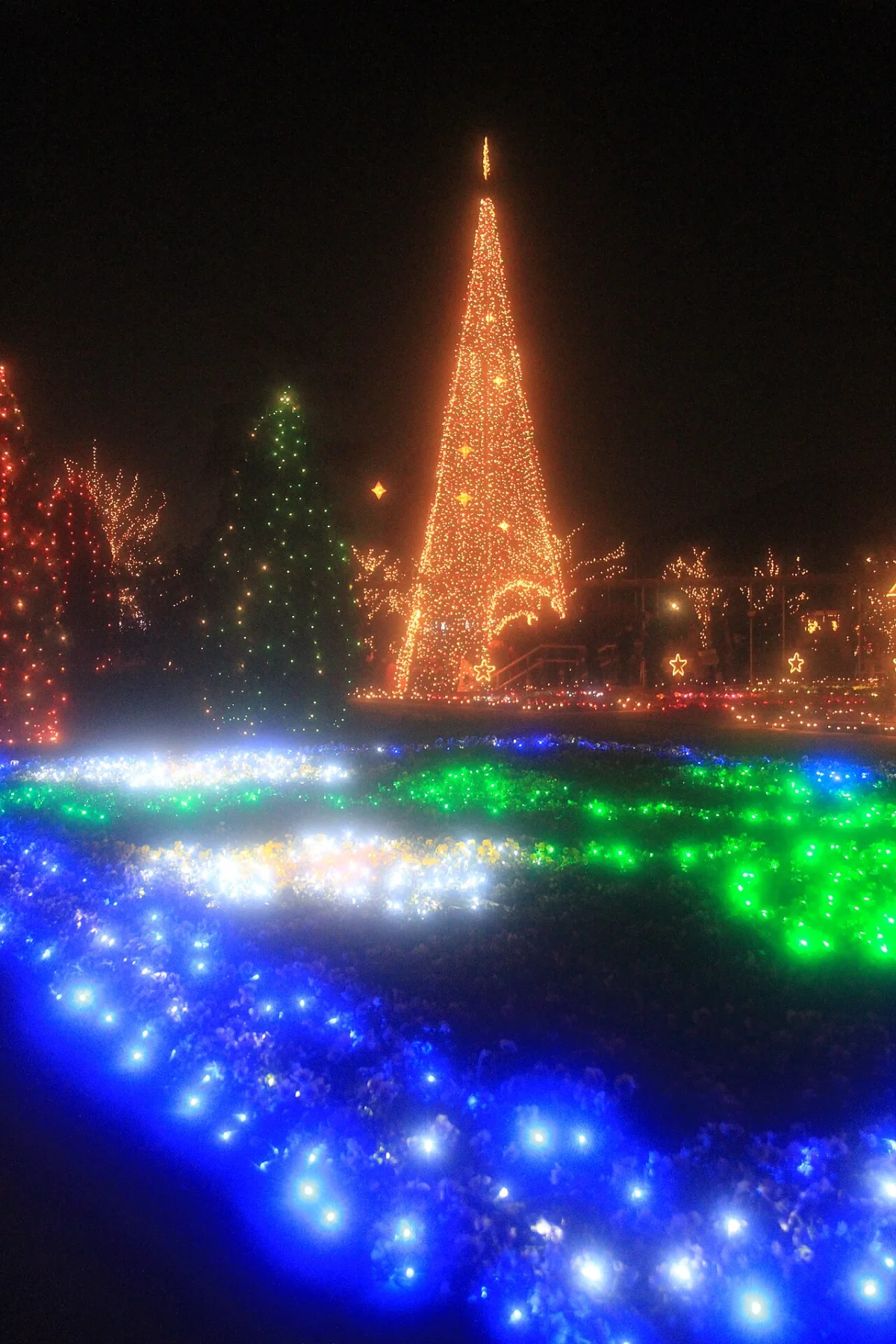
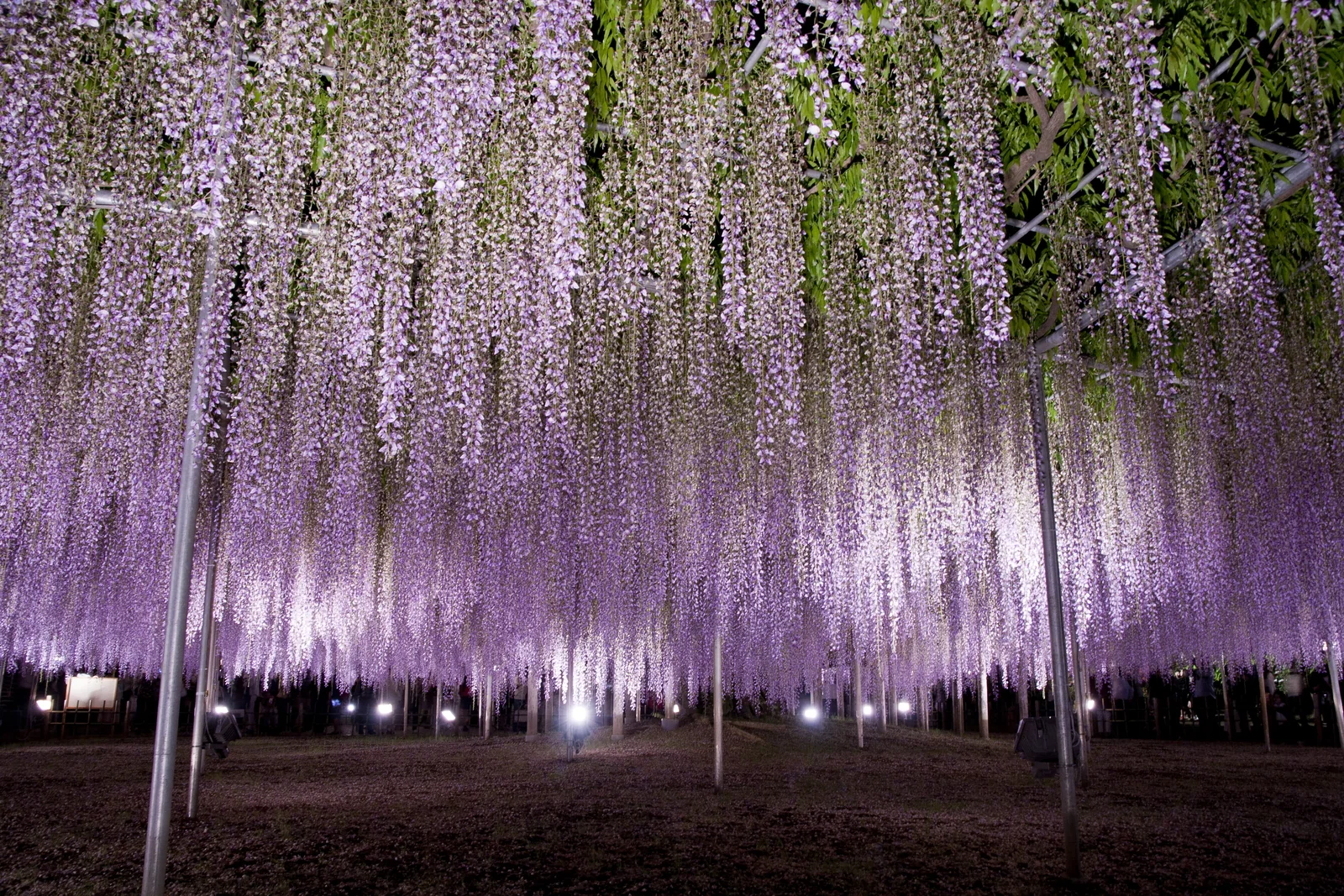
As autumn deepens, Ashikaga Flower Park shifts from a famed flower garden into one of Kanto's largest night-time light displays. The 25th edition of Flower Fantasy runs from 17 October 2026 to 14 February 2027, closing only on 31 December, and blankets 100,000 square metres of grounds in more than five million LEDs. At its heart, the Miracle Great Wisteria uses a 1,000-square-metre light canopy to re-enact the full life cycle of wisteria, from tight buds and peak bloom to falling petals. It is also the only venue in Japan to hold two Night View Heritage of Japan light certifications simultaneously (for its winter illuminations and its spring wisteria night light-up, recognised in 2011). Getting here is far easier than in years past: JR Ashikaga Flower Park Station, opened in 2018 right outside the gates, puts you a 3-minute walk from the entrance. This guide covers the three seasonal themes, evening admission rules and re-entry policies, rail and driving routes from Tokyo, the seven officially listed places to stay in Ashikaga, and how to pair the park with historic sights such as Ashikaga Gakko and Bannaji Temple — plus the mid-November Ashikaga Akari Monogatari light event in town, letting you combine large-scale illuminations with historic evening scenery in a single day.
Flower Fantasy 2026-27: Dates, Fares and Three Seasonal Themes
The 25th winter illumination runs from 17 October 2026 to 14 February 2027, with 31 December as the sole closure day. Standard evening hours are 15:30 to 20:30 on weekdays and until 21:00 on weekends and public holidays; during the peak season from 7 November to 3 January, closing extends to 21:00 on weekdays and 21:30 on weekends and holidays, with lights switching on earlier at around 16:30. Evening entry uses a flat fare of ¥1,500 for adults and ¥800 for children (aged four through primary school), a sharp contrast to spring wisteria season when day tickets fluctuate between ¥900 and ¥2,300 depending on bloom conditions.
The season unfolds across three themed chapters: from 17 October to mid-November, 'Fusion of Light and Sage' pairs the illuminations with 20,000 purple Mexican bush sage plants carpeting the autumn grounds; from late November to late December, the mood turns festive for 'Christmas Fantasy'; and from New Year's Day to 14 February, 'New Year Illumination' shares the stage with winter peonies. Visiting in late November catches the overlap of extended opening hours and the Christmas theme, giving you the most generous viewing window of the season.
In November 2025, the park won the top honour (ranked first in Japan) at the International Illumination Awards and has three times been named one of Japan's Three Great Illuminations, covering 100,000 square metres with over five million nearly all-LED lights. The park's 2026 official page highlights five signature zones: the Miracle Great Wisteria (a 1,000-square-metre light canopy), Flower Castle, Rose Garden of Light, Everyone's Earth (which doubles the visual brilliance through water reflections), and Snow World (a hillside light mural with snowman displays). Note that 'Wisteria of Light', a name sometimes seen in older online posts, does not appear on this season's official site, so follow these five official names when reading the park map.
Keep three ticketing rules in mind before you arrive. Daytime and evening sessions operate on a strict clear-out and rotation system with no re-entry on a single ticket: daytime tickets are sold until 14:30, daytime visitors must exit by 15:00, and evening ticket holders enter from 15:30. Access to the on-site shopping area at night also requires a valid evening admission ticket, and ticket counters close 30 minutes before closing time. Photographers planning to capture both day and night must purchase two separate tickets.
At 100,000 square metres, a full circuit at an unhurried pace takes at least an hour. Most visitors head straight to the Miracle Great Wisteria for its light-canopy show, then loop past Flower Castle, Rose Garden of Light, and the mirrored water displays of Everyone's Earth before finishing on the slopes of Snow World. The Miracle Great Wisteria runs on a continuous loop, subtly shifting light colours to trace the spring trellises from budding and full bloom to drifting petals — a narrative touch that sets Ashikaga apart from venues that simply string up bulbs.
Winter night temperatures in Ashikaga regularly drop below freezing, and the entire park is an open-air walking trail rather than an indoor exhibition, so a windproof coat, gloves, hat, and thermal base layers are essential. Cold weather drains smartphone batteries rapidly; bring a power bank and keep it in an inner pocket to stay warm while taking photos. Hot drink stalls and indoor shops (requiring an evening ticket) are dotted around the grounds when you need to step inside and thaw out.
The expansion of the Miracle Great Wisteria encapsulates the event's growth: when it first debuted, the light canopy covered just 72 square metres, growing steadily over the years to 1,000 square metres and serving as the centrepiece of each October's launch campaign. For smoother pacing on site, note that the canopy show runs on a fixed loop and the prime front-row spots fill quickly before each cycle; touring the other zones first and doubling back later is often more efficient than waiting in one spot. Families with children tend to linger longest at the vivid reflections of Everyone's Earth and the playful wintry scenes of Snow World.
Evening tickets are available on the day or online in advance, and booking ahead lets you skip ticket-booth queues on busy December weekends. Entering right at 15:30 is also a smart tactic: you can take in the trellises and garden structures in fading daylight, then walk a second loop once the lights come on between 16:30 and 17:00, capturing both moods on one evening ticket. Gentle gradients make the park manageable with pushchairs, though stone paving and boardwalks turn slick with evening condensation in winter, so pushchairs and wheelchairs should stick to the marked paved routes.
Whereas central Tokyo shopping centres offer free, convenient urban light-ups you can drop into en route, Ashikaga Flower Park sells sheer scale — five million lights across vast grounds — paired with its signature wisteria storytelling. Making the trip out here pays off most when you pair the park with Ashikaga's historic quarter or stay overnight, treating the illumination as the anchor of an Ashikaga trip rather than a quick add-on.
Ashikaga Flower Park's 25th Flower Fantasy illumination runs from 17 October 2026 to 14 February 2027 (closed only on 31 December). Evening admission is ¥1,500 for adults, with over five million LEDs lighting up 100,000 square metres and the Miracle Great Wisteria display spanning 1,000 square metres. A 3-minute walk from JR Ashikaga Flower Park Station, this guide covers the three seasonal themes, transport, local stays and historic town sights.
Dual Night View Heritage Status: Two Certificates for Winter and Spring
In the official Night View Heritage of Japan registry (Northern Kanto region), Ashikaga Flower Park holds a rare double distinction in the light-up category: one certification for its winter illuminations (named one of Kanto's Three Great Illuminations in 2012 and Japan's Three Great Illuminations in 2017) and another awarded earlier in 2011 for its spring wisteria night light-up. It was the first facility in Japan to earn dual Night View Heritage certifications, underscoring that spring's illuminated blooms and winter's Flower Fantasy are two separate night-time productions rather than the same event rebranded.
Comparing spring and winter side by side sharpens the contrast. The 2026 spring 'Tale of Wisteria: Great Wisteria Festival' runs from 11 April to 17 May (subject to bloom progress), with adult day tickets fluctuating between ¥900 and ¥2,300 based on flowering. More than 350 wisteria trees across four colours and 11 cultivars bloom in sequence over roughly a month — pale pink, purple, white, and yellow — led by a 150-to-160-year-old great wisteria (both ages appear in official park copy) spanning 600 tatami mats, plus an 80-metre white wisteria tunnel designated a Tochigi Prefecture Natural Monument. In winter, five million LEDs take over those same trellises to retell the wisteria story in light: real blossoms in spring, illuminated storytelling in winter, under two distinct ticketing philosophies.
Online articles often blend various accolades together, so it helps to separate their sources. The park's own 2026 page highlights the International Illumination Awards and Japan's Three Great Illuminations, while the Night View Heritage title comes from the official Night View Heritage of Japan registry. Meanwhile, the widely quoted 'CNN Dream Destinations' mention comes from the Ashikaga Tourism Association's attraction page rather than the park's own website.
Looking across the full floral calendar makes it easier to time your visit. From mid-April to mid-May, 350 wisteria trees in four colours and 11 cultivars take centre stage (blooming sequentially in pale pink, purple, white, and yellow around the 600-tatami-mat great wisteria and the 80-metre white wisteria tunnel), accompanied by 5,000 azaleas and 1,500 rhododendrons. In autumn, 20,000 Mexican bush sage plants turn the earth purple, seamlessly leading into the opening winter illumination theme, 'Fusion of Light and Sage', from 17 October to mid-November. Every season has its own headline act, and winter's light show is just one chapter of the park's annual rhythm.
Historical entries in the Night View Heritage archives also reveal dramatic growth: when the winter illumination was originally registered, it featured roughly 2.1 million lights, a figure that has more than doubled to over five million today. By contrast, the spring wisteria light-up recognised in 2011 relies on around 300 lighting fixtures to sculpt depth and shadow across real flowering trellises — a completely different lighting philosophy from winter's vast LED canvas.
Getting There: 3 Minutes from JR Ashikaga Flower Park Station and Routes from Tokyo
The most convenient gateway is JR Ryomo Line's Ashikaga Flower Park Station, which opened in April 2018 as Tochigi Prefecture's first new JR station in 35 years and stands just a 3-minute walk from the park gate. From Tokyo, two main rail routes are officially recommended. From Asakusa, take the Tobu Isesaki Line Limited Express Ryomo (Revaty) direct to Ashikagashi Station in about 70 minutes (around 60 minutes from Kita-Senju), then transfer for roughly 30 minutes to reach Ashikaga Flower Park Station. Alternatively, take the Tohoku Shinkansen or Utsunomiya Line from Ueno to Oyama Station and transfer to the JR Ryomo Line for about 40 minutes — a particularly smooth option if you hold a JR Pass.
Note an important official warning for Tobu Line passengers: there is no shuttle bus running between Tobu Ashikagashi Station and the park. After alighting at Ashikagashi Station, you must transfer to the JR Ryomo Line for two stops or catch a local city bus — do not rely on outdated blog posts and wait outside the station for a shuttle. Drivers can exit the Tohoku Expressway at Sano-Fujioka IC (18 to 20 minutes away) or the Kita-Kanto Expressway at Ashikaga IC (about 20 minutes). Free permanent parking accommodates 300 cars and 40 coaches, expanding with temporary lots during peak season to roughly 6,000 spaces, including 24-hour access at the West Gate car park. A 6,000-space capacity gives a clear sense of weekend traffic volume, so leave plenty of buffer time to queue for entry on holidays.
Last train departures after the 20:30 to 21:30 evening close make or break a day trip. Always double-check both the final JR Ryomo Line train from Ashikaga Flower Park Station and the last Tobu Limited Express Ryomo from Ashikagashi Station before setting out, as post-closing crowds versus tight connections are the easiest place for an evening itinerary to come unstuck. Staying overnight in Ashikaga eliminates that rush entirely.
If the Tobu Limited Express sells out, two backup rail transfers work well: change at Tatebayashi onto the Sano Line to Sano and then the Ryomo Line, or take the Tohoku Main Line from Kuki to Oyama to meet the Ryomo Line — less frequent than the main express, but reliable fallbacks. Travellers with a JR Pass save the most by riding via Oyama on the Ryomo Line, whereas Tobu services require a separate fare. After winter evening sessions close, Ryomo Line trains typically run only once or twice an hour, with station staff marshalling queues on the platform, so check exact departure times on JR East's official website ahead of your trip.
Drivers have extra flexibility beyond Sano-Fujioka IC (around 20 minutes) thanks to several Kita-Kanto Expressway exits: Izuruhara Smart IC (roughly 15 minutes), Sano-Tanuma IC (17 minutes), Ashikaga IC (20 minutes), and Ota-Kiryu IC (25 minutes). Having five interchanges helps spread traffic, and the 24-hour West Gate car park takes the stress out of leaving late. Because mountain-edge roads in Tochigi freeze earlier in winter evenings than central Tokyo, ease off the accelerator when merging back onto national highways after closing.
Riding the all-reserved Limited Express Ryomo from Asakusa reaches Ashikagashi Station in about 70 minutes on timetables well suited to leisure trips; slower commuter trains require multiple changes and double the journey time, taking a noticeable toll on energy during a day trip. Via Ueno and Oyama, you can choose between speed on the Shinkansen or savings on regular Utsunomiya Line services depending on which rail pass or tickets you carry.
Where to Stay: Seven Listed Properties in Ashikaga and Nearby Alternatives
The Ashikaga Tourism Association's official accommodation directory currently lists seven properties within the city, led by practical business hotels alongside traditional inns: in central Ashikaga, New Miyako Hotel Ashikaga Honkan, Hotel Route-Inn (both Ashikaga Ekimae and Dai-2 Ashikaga branches), Business Hotel New Daiei, and Hotel Wakasa; and in the ryokan and guesthouse category, Jizo no Yu Toyokan to the west, and Gankaen and Ryokan Fujuso to the north. Ashikaga is not a hot-spring resort town — its accommodation strength lies in convenient transport and everyday practicality rather than resort amenities.
For an overnight trip centred on the evening illuminations, a central business hotel near JR Ashikaga Station or Tobu Ashikagashi Station is the most stress-free choice: you can ride the Ryomo Line a few minutes back to town after closing, then walk straight to Ashikaga Gakko and Bannaji Temple the next morning. There are no large hotels within walking distance of the park itself, making the short train hop back to central Ashikaga the most sensible base. Because the tourism association directory does not list room rates, compare prices directly on each property's website or booking platforms.
If you prefer a broader base, three nearby areas work well. Just east, Sano offers Sano Premium Outlets and the Kurita Museum (both featured on the park's official surrounding-area page), with rooms bookable via major accommodation sites (Sano City does not publish an official hotel list). To the southeast, Oyama is a major junction linking the Ryomo Line and Tohoku Shinkansen, offering easy connections to both Tokyo and Ashikaga (Oyama City likewise lacks an official directory). If you want to combine winter lights with an onsen soak, the park's own regional guide points directly to Tochigi hot springs such as Kinugawa, Kawaji, Yunishigawa, Shiobara, and Nasu Yumoto, plus Gunma resorts including Kusatsu, Manza, Shima, Ikaho, and Isobe — making Ashikaga an effortless stop along a wider hot-spring journey, with hot-spring stays and routes covered in our separate Ikaho guide.
Splitting the illuminations and nearby sights over two days gives the trip far more breathing room: spend the first evening dedicated to the park's light displays and sleep in central Ashikaga, explore Ashikaga Gakko and Bannaji Temple the next morning, browse Sano Premium Outlets in the afternoon, and either return to Tokyo by evening or continue on to Northern Kanto onsen towns such as Kinugawa or Ikaho. That blend of lights, heritage, shopping, or hot springs makes for a rewarding winter itinerary.
Looking at the layout on a map makes the logistics clear. Central hotels cluster in the old town between JR Ashikaga Station and Tobu Ashikagashi Station, placing Ashikaga Gakko, Bannaji Temple, and Ishidatami-dori within easy walking distance; from 14 to 23 November, walking back from JR Ashikaga Station to your hotel even takes you right past the Ashikaga Akari Monogatari venues. Ashikaga Flower Park sits northwest by JR Ashikaga Flower Park Station, linked directly by the Ryomo Line or a short drive. If you hope to catch the rare evening opening of the historic Butsugaiken teahouse, aim specifically for its two-day window on 21 and 22 November.
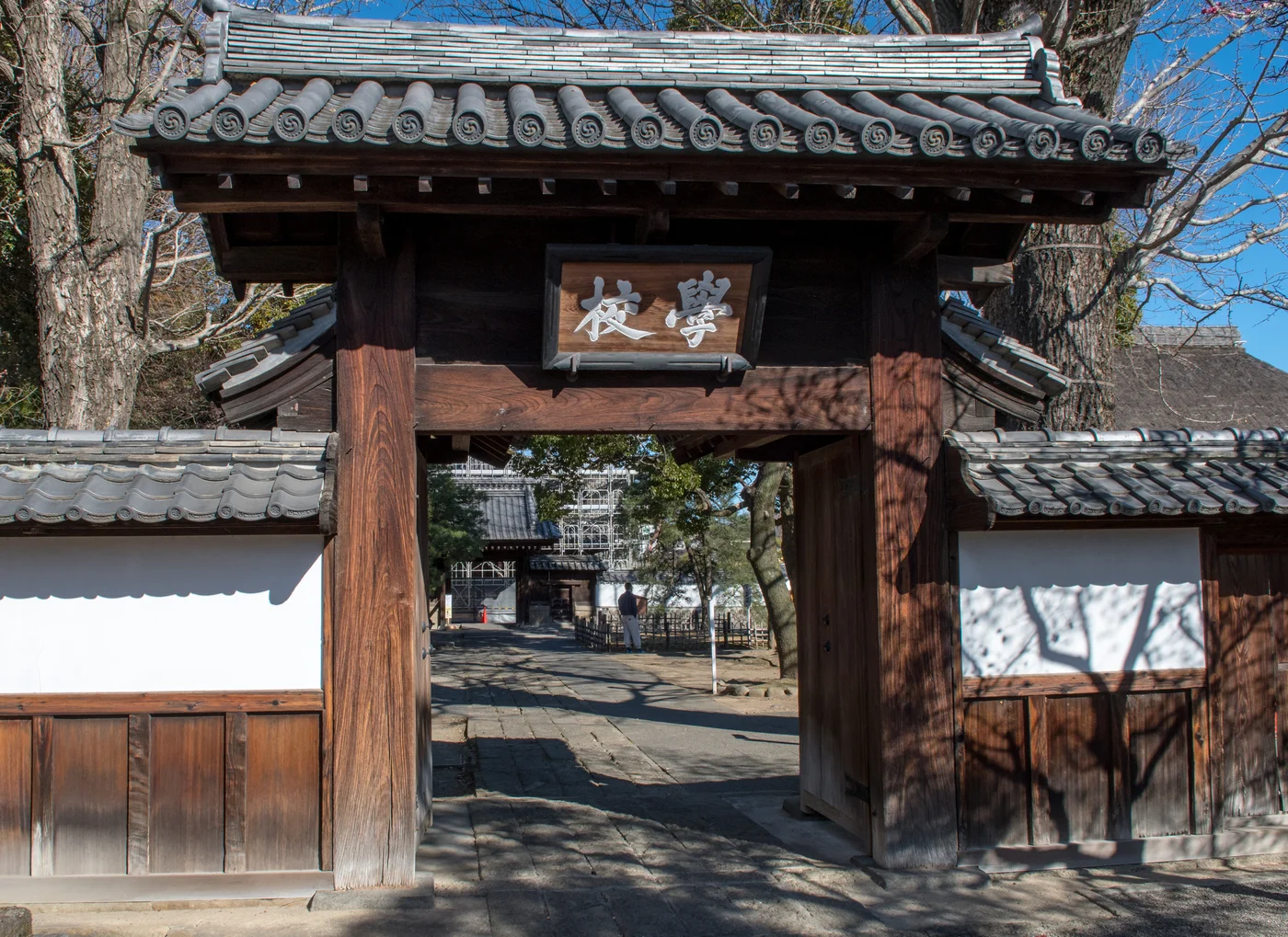
Stepping into Ashikaga Gakko in the old quarter reveals far deeper history than an ordinary regional monument: by the early 16th century it drew roughly 3,000 students, and the missionary Francis Xavier introduced it abroad as 'the University of Japan', cementing its reputation as Kanto's centre of learning during the Warring States period. Today's reconstructed Edo-period buildings centre on the Hojo Garden and the Shoin study housing its historic collection. Because thatched-roof replacement works run from 21 August 2026 to 25 March 2027, standard admission still applies while certain areas are restricted — follow on-site signage for viewing routes.
For an easygoing second day, a half-day Sano pairing works smoothly: Sano Premium Outlets beside Sano-Fujioka IC on the Tohoku Expressway sits a 20-to-30-minute drive from the park, close to the Kurita Museum (also listed on the park's official sightseeing page), which houses one of the world's largest collections of Imari and Kakiemon porcelain. Keeping shopping and an indoor museum for day two ensures rainy or snowy weather will not dampen your plans.
Town Pairing: Ashikaga Gakko, Bannaji Temple and Orihime Shrine
Outside the park's daytime hours (10:00 to 15:00), the morning and early afternoon belong to central Ashikaga's three landmark heritage sites. First is the Historic Site Ashikaga Gakko, celebrated as one of Japan's oldest academic sites (with competing founding traditions linked to a Nara-period provincial school, Heian scholar Ono no Takamura, and Kamakura-period Ashikaga Yoshikane), expanded under Muromachi-era patron Uesugi Norizane and educating around 3,000 students by the early 16th century. From October to March it opens 9:00 to 16:30 (last entry 16:00), admission is ¥480, and it closes on the third Wednesday of each month and over year-end. Note that thatched-roof restoration runs from 21 August 2026 to 25 March 2027, restricting access to parts of the grounds during the illumination season.
A short walk away, Bannaji Temple (the Ashikaga Clan Residence and Daiomido) was founded in 1196 by Ashikaga Yoshikane, and its roughly 40,000-square-metre grounds still preserve the earthen ramparts and moat of a Kamakura samurai residence. The Daiomido main hall is a National Treasure and entry to the precinct is free; the Issaikyodo sutra hall opens only on Sundays and public holidays (¥300), while interior tours of the main hall require advance paid booking with the resident priest (¥5,000 for 1 to 10 people). Located within a 10-minute walk of JR Ashikaga Station alongside Ashikaga Gakko, the temple offers a vivid look at the birthplace of the Ashikaga clan.
Further uphill stands Orihime Shrine, established in 1879 and dedicated to the deities of Ashikaga's textile industry and matchmaking. It is roughly a 25-minute walk from either JR Ashikaga Station or Tobu Ashikagashi Station, with free admission. Its seven-coloured torii gates climbing the Enmusubi-zaka slope are unmistakable, and in 2014 the shrine earned dual recognition as a Night View Heritage of Japan site and a Lovers' Sanctuary — offering sweeping views across the lights of the Kanto Plain that contrast completely with the floral lightscapes at the park.
If your trip falls between 14 and 23 November, you can layer on the town's limited-run Ashikaga Akari Monogatari 2026 event. Running from 17:00 to 20:00 across Ashikaga Gakko, Bannaji Temple, Ishidatami-dori, and Orihime Shrine (¥600 entry, required only for admission inside Ashikaga Gakko), it overlaps neatly with the park's winter illuminations, letting you pair five million LEDs with softly lit historic monuments in a single mid-November day.
When planning your walking times in town, Ashikaga Gakko and Bannaji Temple both sit roughly 10 minutes on foot from JR Ashikaga Station (about 15 minutes from Tobu Ashikagashi Station) and only a few minutes apart via cobblestone Ishidatami-dori. Only hillside Orihime Shrine requires a 25-minute walk or a short taxi ride. Covering all three town sights plus the flower park in one day inevitably means relying on train or car transfers between the two hubs, which is why staying one night feels noticeably more relaxed than a same-day return. Ashikaga Gakko also accepts Suica, PASMO, and PayPay, making ticket purchases straightforward for overseas visitors.
Daytime plans are easy to tailor to your group. Families worried that historic sites might feel dry for younger children can buy a daytime park ticket (10:00 to 15:00, dynamic adult pricing from ¥700) to enjoy real gardens and burn off energy before buying a separate ticket for the evening illuminations. Photographers visiting before mid-November often spend daylight hours shooting the purple sage and bare trellises, then re-enter at 15:30 to focus on the Miracle Great Wisteria and the water reflections of Everyone's Earth; follow on-site notices regarding tripod use.
Year-end and New Year visits each carry their own trade-offs. Late December brings the climax of Christmas Fantasy with the richest festive atmosphere alongside the heaviest crowds — and remember the park closes entirely on 31 December for New Year's Eve. From 1 January through 14 February, New Year Illumination paired with real winter peonies takes over to gentler crowds, while extended hours and early 16:30 light-ups remain in place until 3 January, turning early winter dusk into an extra half-hour of viewing time.
Day-trippers heading back to Tokyo should work backwards from closing time: after a 20:30 exit, it is a 3-minute walk to JR Ashikaga Flower Park Station for the Ryomo Line. If you plan to change back at Ashikagashi Station for a Tobu Limited Express, bear in mind that JR Ashikaga Station and Tobu Ashikagashi Station are not connected and lie about a 15-minute walk apart — factor that trek in if you are pulling luggage. Staying overnight in Ashikaga removes that last-train pressure completely and gives you a relaxed morning to finish seeing Ashikaga Gakko, an extra hour that makes all the difference between a rushed day trip and an unhurried overnight stay.
If you plan to return for spring wisteria season, the exact same ticketing logic applies in reverse: daytime tickets fluctuate from ¥900 to ¥2,300 with bloom progression, making peak bloom both the priciest and most crowded window. Aiming for early bloom in mid-April (when pale pink and purple wisteria begin opening) saves a price tier and cuts crowds roughly in half, or you can buy a spring evening light-up ticket (open until 21:00 under the same rotation system) solely for illuminated blossoms — once you understand the winter rules, both seasons follow the same playbook.
Itinerary Blueprint and Seasonal Trade-Offs
The smoothest day-trip blueprint starts in Tokyo in the morning (about 70 minutes on the Limited Express from Asakusa, or from Ueno via Oyama), arriving in Ashikaga before noon to tour Ashikaga Gakko and Bannaji Temple and eat lunch along the old streets, then entering Ashikaga Flower Park promptly at 15:30 for the evening session (lights on around 16:30 from late November) before choosing between an overnight stay or the last train back after the 20:30 or 21:00 close. Stretching it to two days feels even better: devote day one to the three town landmarks and the evening illuminations, then spend the second morning exploring Ashikaga Gakko at leisure or heading to Sano Premium Outlets — Ashikaga easily has enough density to justify an overnight stay.
Across the full calendar, mid-November (purple sage paired with Ashikaga Akari Monogatari) and early December (Christmas Fantasy with extended hours) mark the twin peaks for both illumination quality and itinerary variety, followed by New Year lights and winter peonies from January until 14 February. Mid-February to early April is the quiet transition between seasons, leaving only the town's historic sights open. From mid-April to mid-May during wisteria season, if daytime tickets sell out or feel too busy, targeting the evening light-up until 21:00 remains just as striking — the smartest way to use that 2011 Night View Heritage recognition.
With wisteria's four seasons retold in light, a dedicated JR station right outside its gates, historic town landmarks minutes away, and seven officially listed places to stay, Ashikaga Flower Park has all the infrastructure to anchor a standalone getaway. A Tokyo day trip is certainly doable, yet spending one night in Ashikaga lets you enjoy closing time without checking your watch and wake up to the finer details of a centuries-old castle town.
A few useful answers
What are the 2026-27 Ashikaga Flower Park illumination dates and ticket prices?
The 25th Flower Fantasy runs from 17 October 2026 to 14 February 2027, closing only on 31 December. Evening admission is fixed at ¥1,500 for adults and ¥800 for children. Standard hours are 15:30 to 20:30 (until 21:00 on weekends and public holidays), extending during the peak 7 November to 3 January period to 21:00 on weekdays and 21:30 on weekends and holidays, with lights on from around 16:30. Daytime and evening sessions require separate tickets with a full clear-out between them and no re-entry.
How do I get from Tokyo to Ashikaga Flower Park?
Take the Tobu Limited Express Ryomo from Asakusa direct to Ashikagashi Station (about 70 minutes), then transfer for roughly 30 minutes to JR Ashikaga Flower Park Station, a 3-minute walk from the entrance; or ride the Tohoku Shinkansen or Utsunomiya Line from Ueno to Oyama Station and change to the JR Ryomo Line (about 40 minutes). There is no official shuttle bus from Tobu Ashikagashi Station to the park. Drivers exit the Tohoku Expressway at Sano-Fujioka IC (about 20 minutes); 300 permanent free parking spaces expand to around 6,000 spaces in peak season.
Where should I stay in Ashikaga?
The Ashikaga Tourism Association lists seven properties in the city: central business hotels New Miyako Hotel Ashikaga Honkan, Route-Inn (Ashikaga Ekimae and Dai-2 Ashikaga), New Daiei, and Wakasa, plus ryokan and guesthouses Toyokan, Gankaen, and Fujuso. If you are visiting specifically for the evening illuminations, staying near JR Ashikaga Station saves you from racing for the last train after the 20:30 to 21:30 close. Alternatively, base yourself in Sano or Oyama for transit, or pair the trip with onsen towns such as Kinugawa, Kusatsu, or Ikaho.
What else is there to see in Ashikaga outside illumination season?
In town, visit Ashikaga Gakko (one of Japan's oldest school sites; ¥480; open until 16:30 from October to March; closed the third Wednesday; partly restricted from August 2026 to March 2027 for thatched-roof works), Bannaji Temple (Ashikaga Clan Residence; National Treasure Daiomido; free precinct entry), and Orihime Shrine (seven-coloured torii gates; free entry; certified Night View Heritage site). From 14 to 23 November, the town also hosts Ashikaga Akari Monogatari (¥600). Spring wisteria season runs from mid-April to mid-May (11 April to 17 May in 2026), with evening light-ups until 21:00.
Official information and references
Sources used in this guide.
- Ashikaga Flower Park | Flower Fantasy 2026 Special Page (Dates, Fares, Three Themes, Five Zones)
- Ashikaga Flower Park | Admission Fees (¥1,500/¥800 Evening, Dynamic Wisteria Pricing, Session Rotation)
- Ashikaga Flower Park | Access (3-Minute Walk from Station, No Shuttle from Ashikagashi, Parking)
- Ashikaga Flower Park | Nearby Sightseeing (Kinugawa, Kusatsu, Ikaho Onsen Guide & Sano Premium Outlets)
- Night View Heritage of Japan | Ashikaga Flower Park Dual Light-Up Certifications (Northern Kanto)
- Ashikaga Tourism Association | Accommodation Directory (Seven Listed Properties in the City)
- Ashikaga Tourism Association | Ashikaga Flower Park (Wisteria Season, Tree Age, CNN Mention, Access)
- Ashikaga City Official | Ashikaga Gakko (¥480 Admission, Hours, Closures, 2026-27 Roof Works)
- Ashikaga Tourism Association | Bannaji Temple (National Treasure Daiomido, Ashikaga Clan Residence, Guided Tours)
- Ashikaga City Official | Ashikaga Akari Monogatari 2026 (14-23 Nov, ¥600, Five Venues)
- Orihime Shrine | Official Website (Seven-Coloured Torii, 2014 Night View Heritage & Lovers' Sanctuary)