Ashikaga Flower Park's 25th "Flower Fantasy" runs Oct 17, 2026 to Feb 14, 2027 (closed Dec 31 only). Night admission is ¥1,500 for adults, with 5 million LEDs lighting 100,000 sq m and a 1,000 sq m Miracle Great Wisteria display. Reachable in 3 minutes on foot from JR Ashikaga Flower Park Station—complete guide to the three seasonal themes, transit, local stays, and historic downtown pairings.
- Region & Focus
- Ashikaga
- Reading Scope
- 13 min read · 6 chapters · 4 Q&As
- Official Verification
- 11 official sources checkedUpdated November 20, 2026
- Key Topics
- ItinerariesWinterTokyo & Kanto
Chapter Route Map (tap any stop)
- Flower Fantasy 2026–27: Dates, Tickets, and Three Themes
- Dual Night View Heritage: Two Certifications Across Winter and Spring
- Getting There: 3 Minutes from JR Ashikaga Flower Park Station and Tokyo Routes
- Where to Stay: 7 Official Ashikaga Options and Nearby Alternatives
- Downtown Pairing: Ashikaga Gakko, Bannaji Temple, and Orihime Shrine
- Sample Itineraries and Choosing Your Season
- Quick Q&A
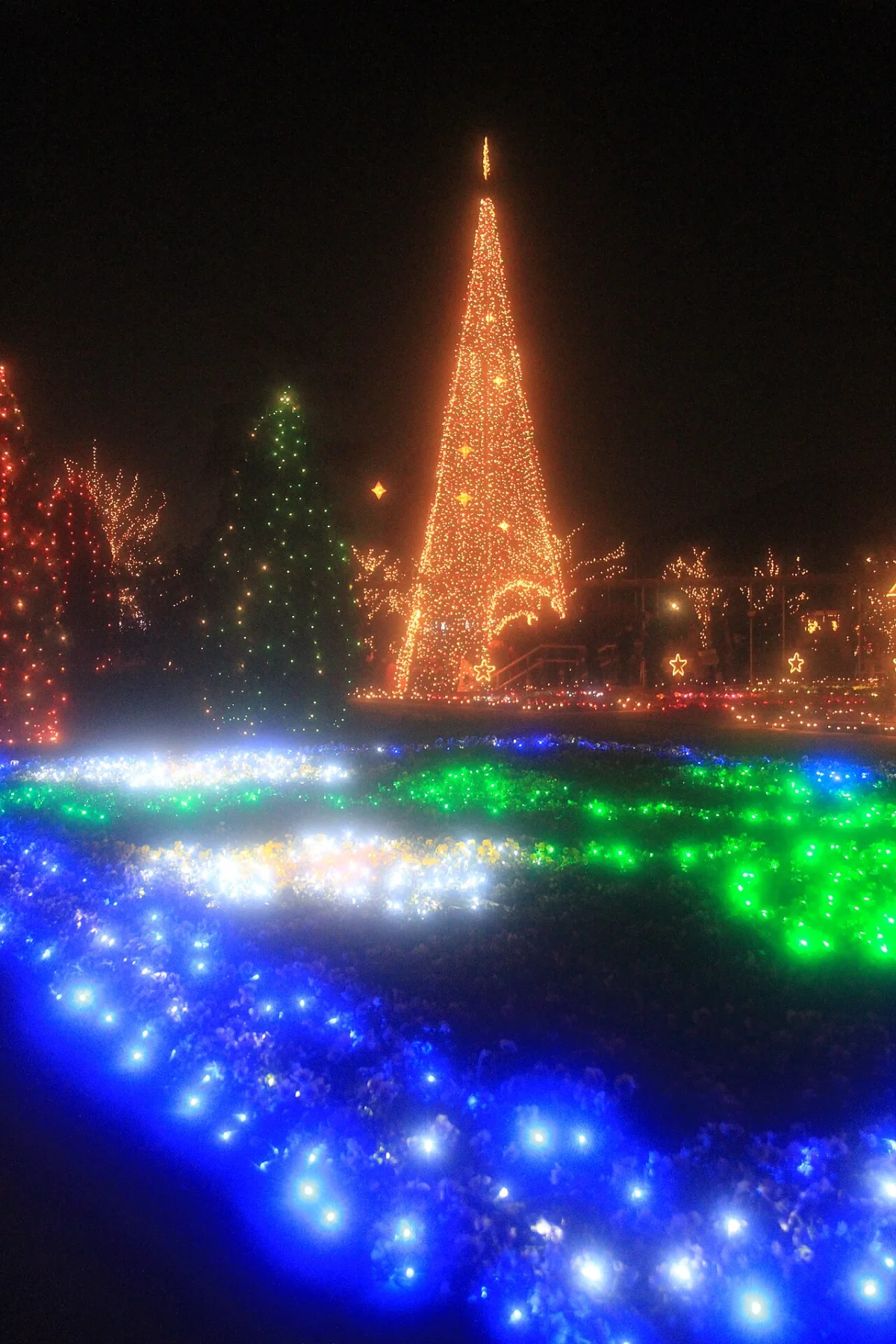
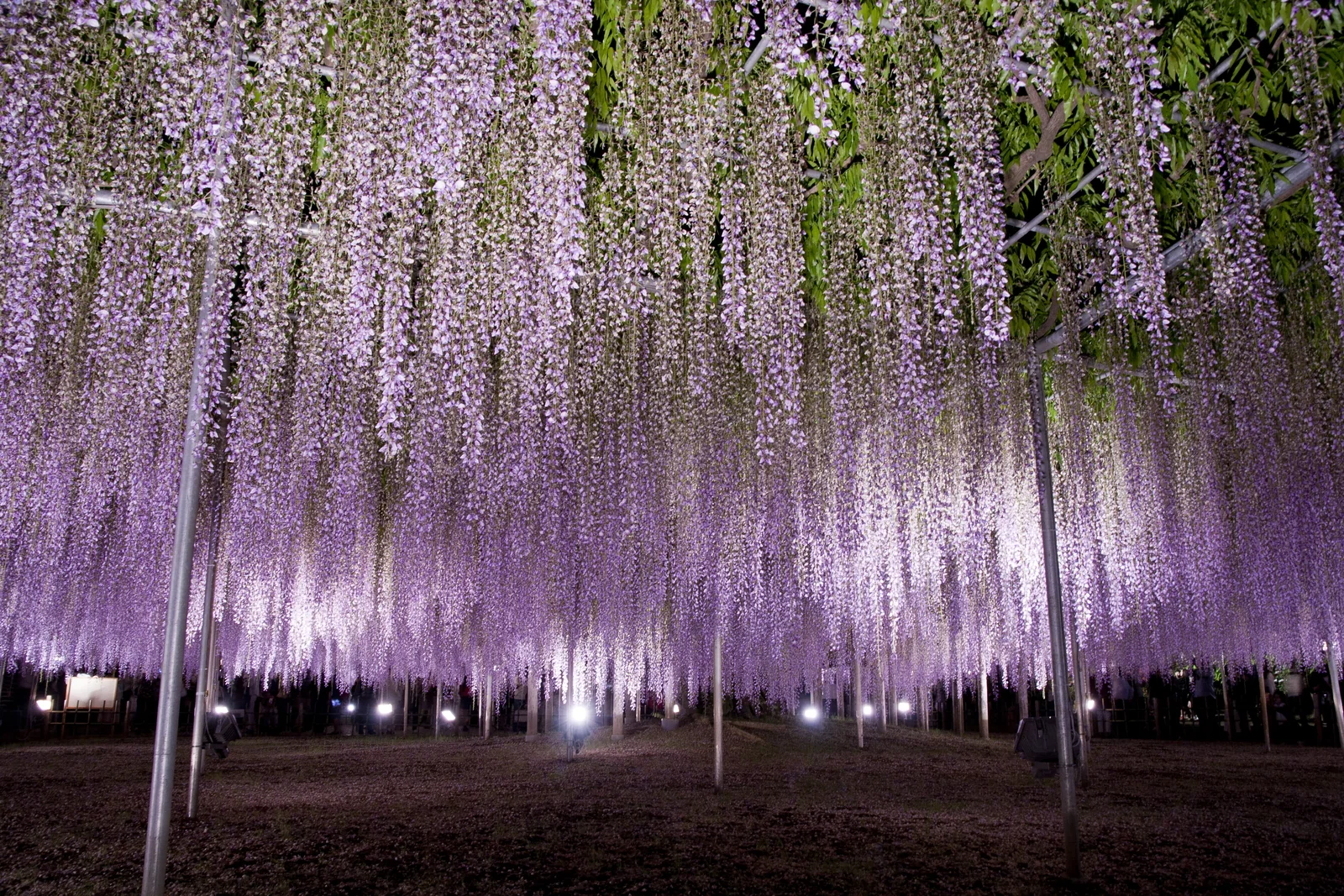
Once late autumn arrives, Ashikaga Flower Park pivots from a celebrated flower garden into the Kanto region's largest sea of night lights. The 25th edition of "Flower Fantasy" runs continuously from October 17, 2026 through February 14, 2027—closing only on December 31—blanketing 100,000 square meters with more than 5 million LEDs. Its centerpiece, the "Miracle Great Wisteria," uses a 1,000-square-meter light canopy to reenact the full life cycle of wisteria from budding to full bloom and drifting petals. It is also the only park in Japan to hold two separate "Light Night View Heritage" certifications (one for winter illuminations, plus its 2011 certification for spring wisteria night lighting). Getting here is far easier than in years past: JR Ashikaga Flower Park Station, opened in 2018 directly outside the grounds, puts you at the entrance in three minutes on foot. This guide covers the three seasonal themes, night admission rules, rail and driving routes from Tokyo, the seven officially listed stays in Ashikaga, and how to pair the park with historic downtown sites—including the mid-November "Ashikaga Akari Monogatari" heritage light-up.
Flower Fantasy 2026–27: Dates, Tickets, and Three Themes
The 25th winter illumination runs from October 17, 2026 to February 14, 2027, closing only on December 31. Standard evening hours are 15:30 to 20:30 on weekdays and 21:00 on weekends and national holidays. During the November 7 to January 3 peak season, hours extend to 21:00 on weekdays and 21:30 on weekends and holidays, with lights switching on earlier around 16:30. Night admission uses a flat rate of ¥1,500 for adults and ¥800 for children (ages 4 through elementary school), a sharp contrast to spring wisteria season when daytime fares fluctuate between ¥900 and ¥2,300 depending on bloom conditions.
The season unfolds across three distinct themed chapters: October 17 through mid-November spotlights the "Fusion of Light and Mexican Bush Sage," pairing the illuminations with 20,000 purple sage plants blanketing the autumn grounds; late November through late December shifts into "Christmas Fantasy" holiday displays; and January 1 through February 14 presents "New Year Illumination & Winter Peonies." Visiting in late November hits the sweet spot where extended hours overlap with the Christmas theme transition, giving you the longest evening viewing window of the season.
In November 2025, the display won the top prize at the International Lighting Awards (No. 1 in Japan) and holds a three-time designation as one of the "Three Great Illuminations of Japan," with over 5 million predominantly LED bulbs spread across 100,000 square meters. The official 2026 site highlights five flagship zones: Miracle Great Wisteria (a 1,000-square-meter light canopy), Flower Castle, Rose Garden of Light, Our Earth (which doubles light intensity through water reflections), and Snow World (sloped light murals and snowman installations). Note that "Wisteria of Light," a name still seen in older online posts, does not appear on this season's official map—stick to these five official zone names when navigating the park.
Keep three ticketing rules in mind before you go: daytime and nighttime sessions operate on a complete clearing-and-replacement system with no re-entry on a single ticket (daytime tickets sell until 14:30, daytime visitors must exit by 15:00, and night entry opens at 15:30); entering the on-site shopping area at night also requires a valid admission ticket; and ticket windows close 30 minutes before closing time. Photographers hoping to capture both daylight and evening views in one day will need two separate tickets.
Covering 100,000 square meters takes at least an hour at an unhurried walking pace. Most visitors head straight to the Miracle Great Wisteria light-canopy show upon entry, then loop past Flower Castle, the Rose Garden of Light, and the mirrored reflections of Our Earth before finishing on the hillside slopes of Snow World. Rather than simply stringing bulbs everywhere, the Miracle Great Wisteria runs on a timed loop that choreographs color shifts from budding to full bloom and falling petals—that narrative arc is what separates Ashikaga from ordinary light displays.
Winter night temperatures in Ashikaga routinely drop below freezing, and the entire park is an open-air walking course rather than an indoor exhibition. Pack a windproof coat, gloves, a warm hat, and thermal base layers. Cold air also drains smartphone batteries fast, so keep a portable charger handy and store your phone in an inside pocket between shots. Warm drink stalls and indoor shops (which require an admission ticket at night) offer places to thaw out when the wind picks up.
Tracing the growth of the Miracle Great Wisteria captures the whole history of the event: it started as a modest 72-square-meter canopy before expanding year by year to today's 1,000 square meters, a milestone highlighted in every October launch. To save time on crowded nights, keep in mind that the best front-row spots fill right before each timed cycle starts—touring the other zones first and circling back between shows is often faster than waiting in place. If you are visiting with kids, the crisp water reflections at Our Earth and the playful scenes in Snow World tend to hold their attention best.
Night tickets can be bought at the gate or reserved online; booking ahead skips ticket-booth lines on busy December weekends. Entering right at 15:30 is also a smart tactic: you get a clear look at the plant trellises and garden structures in late-afternoon light before walking a second loop once the lights come on between 16:30 and 17:00, capturing both versions in a single visit. Slopes across the grounds are gentle enough for strollers, though evening condensation can make stone paths and wooden boardwalks slick in winter—stick to the main paved routes with strollers or wheelchairs.
Unlike Tokyo shopping-center displays built around free, casual drop-ins, Ashikaga Flower Park trades on sheer 5-million-bulb scale and wisteria storytelling. Make the illumination the centerpiece of a dedicated Ashikaga trip—paired with downtown heritage sites or an overnight stay—and the travel time pays off in full.
Ashikaga Flower Park's 25th "Flower Fantasy" runs Oct 17, 2026 to Feb 14, 2027 (closed Dec 31 only). Night admission is ¥1,500 for adults, with 5 million LEDs lighting 100,000 sq m and a 1,000 sq m Miracle Great Wisteria display. Reachable in 3 minutes on foot from JR Ashikaga Flower Park Station—complete guide to the three seasonal themes, transit, local stays, and historic downtown pairings.
Dual Night View Heritage: Two Certifications Across Winter and Spring
On the official Japan Night View Heritage registry (Northern Kanto division), Ashikaga Flower Park holds a rare double distinction: one "Light Night View Heritage" certification for its winter illumination (named one of Kanto's Three Great Illuminations in 2012 and Japan's Three Great Illuminations in 2017), and an earlier 2011 certification for its spring wisteria night light-up—making it the first venue in Japan to earn two Night View Heritage titles. Those two plaques underscore that spring's illuminated blossoms and winter's Flower Fantasy are distinct nocturnal productions, not the same show under different names.
Comparing the two flagship seasons side by side makes the contrast obvious. In 2026, the spring "Wisteria Story – Great Wisteria Festival" runs from April 11 to May 17 (adjusted for bloom pace), with adult day passes fluctuating between ¥900 and ¥2,300 as blossoms peak. More than 350 wisteria trees across four colors and 11 varieties bloom sequentially—pale pink, purple, white, and yellow—over roughly a month, anchored by a 150-to-160-year-old Great Wisteria trellis (both figures appear in official materials) covering 600 tatami mats and an 80-meter White Wisteria Tunnel designated a Tochigi Prefectural Natural Monument. Come winter, 5 million LEDs take over those trellises to retell the bloom story in light. Real petals in spring, luminous canopies in winter—two completely different reasons to buy a ticket.
Online guides often mash together the park's accolades, so it helps to separate the sources. The park's own 2026 campaign highlights the International Lighting Award and "Three Great Illuminations of Japan," while the "Light Night View Heritage" title sits on the official Japan Night View Heritage registry. As for the widely quoted "CNN Dream Destination" label, that appears on the Ashikaga Tourism Association's attraction page rather than the park's official website.
Looking across the annual bloom calendar helps match your trip to the right star attraction: mid-April to mid-May belongs to those 350 wisteria trees, alongside 5,000 azaleas and 1,500 rhododendrons blooming in relay. By autumn, 20,000 purple Mexican bush sage plants carpet the ground, flowing directly into the winter illumination's opening theme from October 17 through mid-November. Every season has its own headliner; knowing the calendar keeps you from arriving between peaks.
Historical entries in the Japan Night View Heritage archive also reveal dramatic expansion: the winter illumination originally registered at roughly 2.1 million bulbs, meaning current official counts above 5 million have more than doubled over the past decade. Meanwhile, the 2011 spring certification relied on around 300 lighting fixtures to sculpt depth across live blossom trellises—showing from the hardware count alone how differently the park approaches spring and winter nights.
Getting There: 3 Minutes from JR Ashikaga Flower Park Station and Tokyo Routes
The most direct gateway is JR Ryomo Line's Ashikaga Flower Park Station, which opened in April 2018 as Tochigi Prefecture's first new JR station in 35 years and drops you a three-minute walk from the main gate. From Tokyo, two main rail routes stand out: take the Tobu Isesaki Line limited express "Ryomo" (Revaty) from Asakusa directly to Ashikaga-shi Station (about 70 minutes; roughly 60 minutes from Kita-Senju), then transfer for about 30 minutes to Ashikaga Flower Park Station; or ride the Tohoku Shinkansen or Utsunomiya Line from Ueno to Oyama Station and change to the JR Ryomo Line (about 40 minutes), a seamless option for JR Pass holders.
Tobu Line riders should heed an official warning: no shuttle bus runs between Tobu Ashikaga-shi Station and the park. Once you step off at Ashikaga-shi Station, transfer to the JR Ryomo Line for two stops or catch a local city bus rather than waiting outside for a non-existent shuttle mentioned in outdated blogs. Drivers can exit the Tohoku Expressway at Sano-Fujioka IC (18 to 20 minutes) or the Kita-Kanto Expressway at Ashikaga IC (about 20 minutes). Permanent free parking covers 300 regular spaces and 40 bus bays, expanding with seasonal lots to roughly 6,000 spaces—and the West Gate lot stays open 24 hours. That 6,000-car capacity tells you how heavy weekend illumination traffic gets, so pad your schedule for entry queues on holidays.
Last-train schedules after the 20:30 to 21:30 closing rush make or break a Tokyo day trip. Double-check the final JR Ryomo Line departure from Ashikaga Flower Park Station and the last Tobu "Ryomo" limited express out of Ashikaga-shi Station before you leave Tokyo—getting caught between exit crowds and sparse late-evening trains is the classic pitfall here. Staying overnight in Ashikaga eliminates that clock-watching altogether.
If the Tobu limited express sells out, two backup rail transfers work: change at Tatebayashi onto the Tobu Sano Line to Sano, then switch to the Ryomo Line; or ride to Kuki on the Tohoku Main Line, continue to Oyama, and connect to the Ryomo Line. Both run less frequently than the main route, though JR Pass holders get full coverage via Oyama at zero extra fare, whereas Tobu trains require separate tickets. After winter closing, the Ryomo Line drops to roughly one or two trains per hour, with station staff managing platform queues—verify exact departures on the JR East website ahead of your trip.
Drivers have five highway exits to spread out arrival traffic: beyond Sano-Fujioka IC (about 20 minutes) on the Tohoku Expressway, the Kita-Kanto Expressway offers Izuruhara Smart IC (about 15 minutes), Sano-Tanuma IC (about 17 minutes), Ashikaga IC (about 20 minutes), and Ota-Kiryu IC (about 25 minutes). Paired with 24-hour access at the West Gate lot, late departures pose no parking curfew issues. Just ease off the throttle when merging onto national highways after closing—mountain-fringe roads in Tochigi freeze earlier in the evening than Tokyo streets.
Taking the all-reserved Tobu "Ryomo" limited express from Asakusa puts you in Ashikaga-shi in roughly 70 minutes on schedules tailored to leisure travelers; attempting the same run on local commuter trains piles on transfers and roughly doubles travel time, draining energy on a day trip. Going via Ueno and Oyama lets you choose freely between saving time on the Shinkansen or saving money on the local Utsunomiya Line depending on what rail pass you hold.
Where to Stay: 7 Official Ashikaga Options and Nearby Alternatives
The Ashikaga Tourism Association's official accommodation directory currently lists seven local properties, led by practical business hotels alongside a handful of traditional inns: downtown (Machinaka) hosts New Miyako Hotel Ashikaga Honkan, Hotel Route Inn (Ashikaga Ekimae and Dai-2 Ashikaga branches), Business Hotel New Daiei, and Hotel Wakasa, while ryokan and inn options include Jizo-no-Yu Toyokan to the west, Gankaen to the north, and Ryokan Fukujuso. Ashikaga is not a resort hot spring town—its lodging strength is convenient transit and solid everyday functionality.
For an overnight illumination trip, booking a downtown business hotel near JR Ashikaga Station or Tobu Ashikaga-shi Station is the smoothest move. After the lights go out, a short Ryomo Line hop returns you straight to your room, and the next morning you can walk straight to Ashikaga Gakko and Bannaji Temple. Because there are no large hotels within walking distance of the flower park itself, riding the train back into central Ashikaga for the night is the most practical setup. The tourism association directory does not publish room rates, so compare nightly prices directly on each property's website or booking platforms.
To widen your lodging net, consider three nearby bases. Eastward in Sano, home to Sano Premium Outlets and the Kurita Museum (both featured on the park's official sightseeing page), you can search hotels via major booking sites since the city lacks an official stay directory. Southeast in Oyama, the major junction between the JR Ryomo Line and Tohoku Shinkansen makes transfers to Tokyo and Ashikaga effortless (like Sano, Oyama has no official municipal stay list). Or turn the evening lights into a stop on an onsen getaway: the park's sightseeing page lists major hot spring towns across Tochigi (Kinugawa, Kawaji, Yunishigawa, Shiobara, Nasu Yumoto) and neighboring Gunma (Kusatsu, Manza, Shima, Ikaho, Isobe).
Splitting the park and nearby stops into a two-day, one-night loop keeps the pace relaxed: devote your first evening exclusively to the illumination and sleep in downtown Ashikaga, tour Ashikaga Gakko and Bannaji Temple the next morning, swing by Sano Premium Outlets in the afternoon, and either return to Tokyo or continue to Northern Kanto hot springs like Kinugawa or Ikaho. That "lights, heritage, shopping or onsen" sequence holds up remarkably well in winter.
A glance at the map clarifies the layout: downtown hotels cluster in the old quarter between JR Ashikaga Station and Tobu Ashikaga-shi Station, placing Ashikaga Gakko, Bannaji Temple, and Ishidatami-dori all inside a single walkable pocket—and between November 14 and 23, walking back from the station leads you right past the "Ashikaga Akari Monogatari" venues. Ashikaga Flower Park sits northwest by JR Ashikaga Flower Park Station, linked by the Ryomo Line or a quick drive. If you want to catch the special night opening of the historic teahouse Butsugaiken, aim specifically for November 21 or 22, the only two evenings it opens.
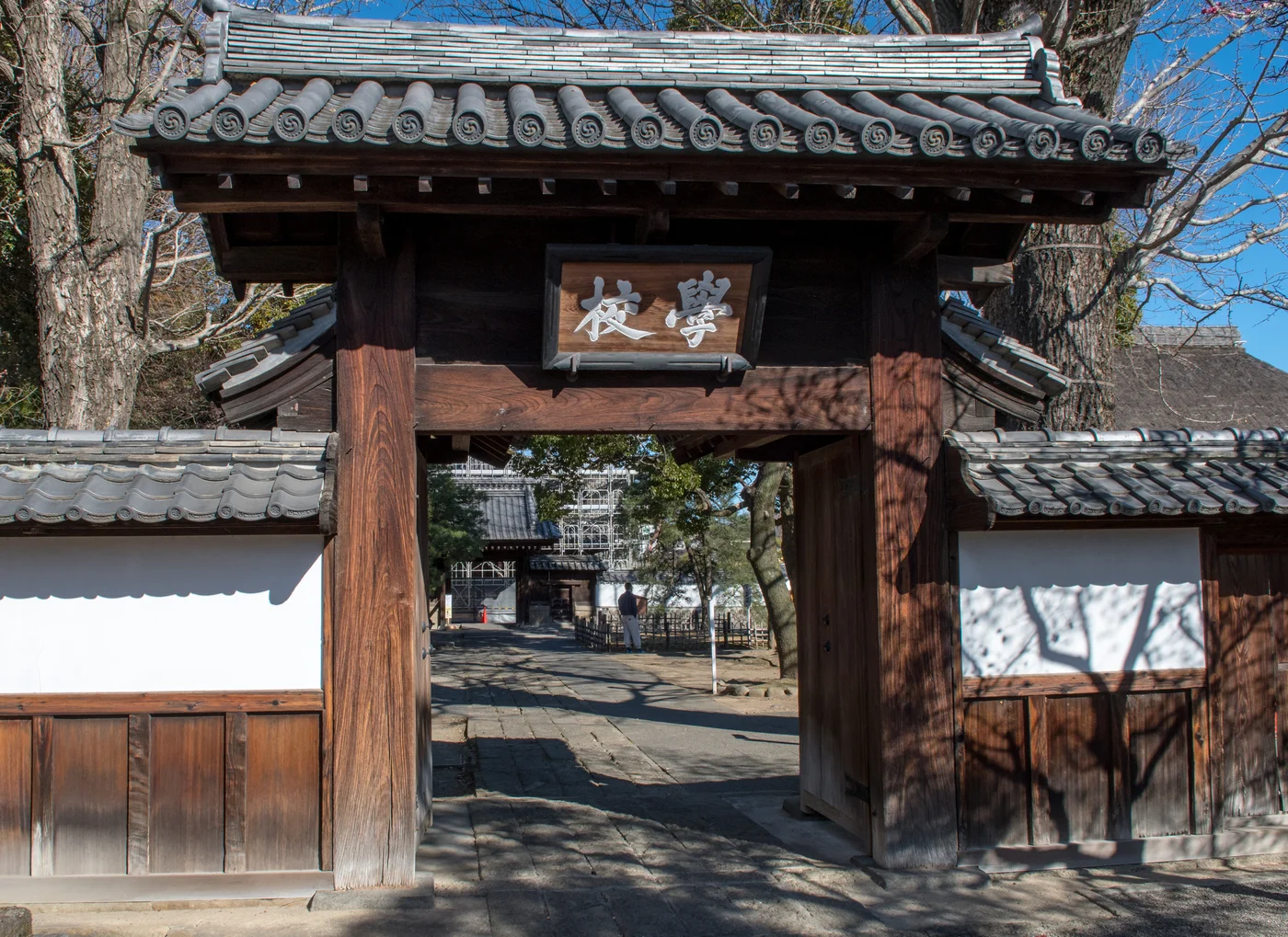
Step inside downtown's Ashikaga Gakko and the historical weight goes far beyond a typical regional sight: by the early 16th century, roughly 3,000 students studied here, and missionary Francis Xavier introduced it overseas as "the University of Japan," cementing its status as Warring States-era Kanto's premier center of learning. Today's buildings reflect Edo-period reconstructions centered on the Hojo garden and the Shoin library hall. Note that thatch roof replacement runs from August 21, 2026 to March 25, 2027—standard admission still applies, with certain areas cordoned off as posted on site.
For an easygoing second day, a half-day Sano loop fits neatly: Sano Premium Outlets right off Sano-Fujioka IC sits 20 to 30 minutes by car from the flower park, right next to the Kurita Museum and its world-class collection of Imari and Kakiemon porcelain (also listed on the park's sightseeing page). Pairing outlet shopping with a ceramic museum keeps day two rewarding even if rain or snow rolls in.
Downtown Pairing: Ashikaga Gakko, Bannaji Temple, and Orihime Shrine
Outside the park's daytime hours (10:00–15:00), central Ashikaga offers three anchor heritage stops. First is the historic site of Ashikaga Gakko, counted among Japan's oldest school grounds (with origin accounts spanning Nara-era provincial academies, Heian scholar Ono no Takamura, and Kamakura founder Ashikaga Yoshikane), expanded with books by Uesugi Norizane in the Muromachi period to roughly 3,000 students by the early 1500s. From October through March it opens 9:00 to 16:30 (last entry 16:00), with general admission at ¥480 and closures on the third Wednesday of each month plus year-end; thatch roof repairs from August 21, 2026 to March 25, 2027 restrict part of the route.
A short walk away, Bannaji Temple (the Ashikaga Clan Residence and Dai-mido Hall) was founded in 1196 by Ashikaga Yoshikane and still preserves the earthen ramparts and moat enclosing a 40,000-square-meter Kamakura samurai compound. The Dai-mido main hall is a designated National Treasure and temple grounds are free to enter; the Issaikyo-do sutra hall opens only on Sundays and holidays (¥300), while viewing inside the main hall requires a paid advance reservation for a priest-led tour (¥5,000 for 1 to 10 people). Together with Ashikaga Gakko, it sits within a 10-minute walk of JR Ashikaga Station, unpacking the Ashikaga clan's roots in one sweep.
Higher up the hillside stands Ashikaga Orihime Shrine, established in 1879 to honor deities of the local textile industry and matchmaking, roughly a 25-minute walk from either JR Ashikaga Station or Tobu Ashikaga-shi Station with free admission. Its row of seven-colored torii gates climbing Enmusubi-zaka slope is unmistakable, and in 2014 the shrine earned dual certification as a Japan Night View Heritage site and a Lovers' Sanctuary—looking out over the scattered lights of the Kanto Plain offers a striking contrast to the engineered light fields at the flower park.
Time your trip between November 14 and 23 to catch "Ashikaga Akari Monogatari 2026," a limited downtown heritage illumination running 17:00 to 20:00 across Ashikaga Gakko, Bannaji Temple, Ishidatami-dori, and Orihime Shrine (¥600 entry; only Ashikaga Gakko normally charges daytime admission). Because it overlaps directly with Flower Fantasy, mid-November gives you a rare one-day double feature of 5 million park LEDs and softly lit centuries-old architecture.
Factor walking times carefully when planning downtown: Ashikaga Gakko and Bannaji Temple sit about 10 minutes on foot from JR Ashikaga Station (around 15 minutes from Tobu Ashikaga-shi Station) and just minutes apart along scenic Ishidatami-dori, whereas hillside Orihime Shrine takes 25 minutes on foot or a short taxi ride. Covering all three downtown sights plus the evening park illumination in one day practically demands strategic transit or taxis—another strong reason staying overnight beats rushing back to Tokyo. On the bright side, Ashikaga Gakko accepts Suica, PASMO, and PayPay at the ticket counter.
You can also tailor the daytime half to your group. Families worried that historic sites might feel dry for younger kids can buy daytime park tickets (10:00–15:00, adults from ¥700 variable pricing) to run around the real gardens first, then re-enter separately at night for the lights. Photographers visiting before mid-November often shoot the purple bush sage and bare wisteria trellises by day before re-entering at 15:30 to focus on the Miracle Great Wisteria and Our Earth reflections—just check posted on-site rules for tripod use.
Late December and early January each carry clear trade-offs. Late December delivers peak holiday energy for Christmas Fantasy alongside the heaviest crowds, and remember the entire park closes on December 31 for New Year's Eve. From January 1 through February 14, New Year displays pair with blooming winter peonies and noticeably thinner crowds—plus through January 3, extended hours and early 16:30 lighting let early sunset work in your favor with an extra half hour of darkness.
Tokyo day-trippers should work backward from closing time: after a 20:30 exit, it takes three minutes to walk back to JR Ashikaga Flower Park Station for the Ryomo Line. If you plan to transfer at Ashikaga onto the Tobu limited express, keep in mind that JR Ashikaga Station and Tobu Ashikaga-shi Station are separate buildings about a 15-minute walk apart—factor that gap in if you are hauling luggage. Spending one night in town removes that last-hour scramble entirely and frees up the next morning to finish Ashikaga Gakko at ease.
If you plan to return in spring for the wisteria, the exact same crowd-beating logic applies: daytime tickets fluctuate from ¥900 to ¥2,300 by bloom stage, peaking in price and congestion at full bloom. Target mid-April's early bloom (when pale pink and purple clusters first open) for lower fares and roughly half the crowds, or buy the dedicated spring night-illumination ticket (open until 21:00, also on a separate-entry system) to see lit blossoms after dark—mastering winter's rules sets you up for both seasons.
Sample Itineraries and Choosing Your Season
For the cleanest one-day blueprint, leave Tokyo in the morning (about 70 minutes from Asakusa via Tobu limited express or from Ueno via Oyama), reach Ashikaga before noon to tour Ashikaga Gakko and Bannaji Temple with lunch along the old streets, enter Ashikaga Flower Park promptly at 15:30 (lights turn on around 16:30 from late November onward), and stay until 20:30 or 21:00 before either checking into a local hotel or catching the last train back. Stretch it to two days for breathing room: pair the three downtown landmarks with the evening park on day one, then spend day two morning wrapping up Ashikaga Gakko or browsing Sano Premium Outlets—Ashikaga easily rewards an overnight stay.
Across the calendar, mid-November (purple sage plus Ashikaga Akari Monogatari) and early December (Christmas Fantasy with extended hours) mark the twin high points for both lighting variety and itinerary density, while January through February 14 trades crowds for New Year lights and winter peonies. From mid-February through early April sits a quiet transition window when only downtown historic sites are in play. Once mid-April to mid-May wisteria season returns, skipping daytime sellouts in favor of the 21:00 night light-up gives you the full drama backed by that 2011 Night View Heritage credential.
With LED storytelling over real wisteria trellises, a dedicated JR station right outside the gate, walkable historic quarters, and seven officially listed local stays, Ashikaga Flower Park's winter illumination stands easily on its own as a dedicated mini-trip. A day trip from Tokyo works, yet staying one night lets you trade closing-time train anxiety for the quiet details of a centuries-old castle town.
A few useful answers
When is the 2026–27 Ashikaga Flower Park illumination, and how much are tickets?
The 25th "Flower Fantasy" runs from October 17, 2026 to February 14, 2027 (closed December 31 only). Fixed night admission is ¥1,500 for adults and ¥800 for children. Standard evening hours are 15:30–20:30 (until 21:00 on weekends and national holidays), extending during the November 7–January 3 peak season to 21:00 on weekdays and 21:30 on weekends and holidays, with lights turning on earlier around 16:30. Daytime and nighttime sessions operate on a complete clearing-and-replacement system with no re-entry on a single ticket.
How do you get to Ashikaga Flower Park from Tokyo?
Take the Tobu limited express "Ryomo" from Asakusa directly to Ashikaga-shi Station (about 70 minutes), then transfer for about 30 minutes to JR Ashikaga Flower Park Station (a 3-minute walk to the gate). Alternatively, take the Tohoku Shinkansen or Utsunomiya Line from Ueno to Oyama Station and transfer to the JR Ryomo Line (about 40 minutes) straight to Ashikaga Flower Park Station. There is no official shuttle bus from Tobu Ashikaga-shi Station to the park. By car, it is about 20 minutes from Sano-Fujioka IC on the Tohoku Expressway, with 300 free permanent spaces expanding to roughly 6,000 temporary spaces during peak season.
Where should you stay in Ashikaga?
Ashikaga Tourism Association officially lists seven local properties: downtown business hotels including New Miyako Hotel Ashikaga Honkan, Hotel Route Inn (Ashikaga Ekimae and Dai-2 Ashikaga), Business Hotel New Daiei, and Hotel Wakasa, alongside ryokan and inns Jizo-no-Yu Toyokan, Gankaen, and Ryokan Fukujuso. If you are visiting specifically for the night illumination, staying near JR Ashikaga Station lets you skip the last-train rush after closing (20:30–21:30). Depending on your route, you can also base yourself in Sano or Oyama, or combine the trip with hot spring towns like Kinugawa, Kusatsu, or Ikaho.
What else is there to see in Ashikaga besides the winter illumination?
Downtown highlights include Ashikaga Gakko (one of Japan's oldest school sites; ¥480, open until 16:30 from October to March, closed the third Wednesday of the month; partial access restrictions apply during thatch roof work from August 2026 to March 2027), Bannaji Temple (the moated Ashikaga clan residence featuring the National Treasure Dai-mido hall; grounds are free), and Orihime Shrine (famous for its seven-colored torii gates, free entry, and Japan Night View Heritage status). From November 14 to 23, the downtown heritage light event "Ashikaga Akari Monogatari" runs for ¥600. Spring wisteria season runs mid-April to mid-May (April 11 to May 17 in 2026), with evening light-ups until 21:00.
Official information and references
Sources used in this guide.
- Ashikaga Flower Park | Flower Fantasy 2026 Special Page (Dates, Fares, Three Themes, Five Performance Zones)
- Ashikaga Flower Park | Admission Fees (Night ¥1,500/¥800, Variable Wisteria Pricing, Session Replacement Rules)
- Ashikaga Flower Park | Access (3-Minute Walk from Ashikaga Flower Park Station, No Shuttle from Ashikaga-shi Station, Parking)
- Ashikaga Flower Park | Nearby Sightseeing (Kinugawa, Kusatsu, Ikaho Onsen Options, Sano Outlet)
- Japan Night View Heritage | Ashikaga Flower Park Dual Light Night View Heritage Certifications (Northern Kanto)
- Ashikaga Tourism Association | Accommodation Directory (7 Officially Listed Local Properties)
- Ashikaga Tourism Association | Ashikaga Flower Park Spot Guide (Wisteria Season, Tree Age, CNN Reference, Transit)
- City of Ashikaga Official | Ashikaga Gakko (¥480, Hours, Closures, 2026–27 Roof Repairs)
- Ashikaga Tourism Association | Bannaji Temple (National Treasure Dai-mido, Ashikaga Clan Residence, Guided Tour Reservations)
- City of Ashikaga Official | Ashikaga Akari Monogatari 2026 Event Page (Nov 14–23, ¥600, Five Venues)
- Orihime Shrine | Official Website (Seven-Colored Torii, 2014 Night View Heritage & Lovers' Sanctuary Certifications)