Walk from JR Ashikaga or Tobu Ashikagashi to the school gates, Confucius temple and Bannaji’s moats and halls. Includes 2026 Hojo repairs, admission, closures and Orihime Shrine’s 229 steps.
- Region & Focus
- Ashikaga
- Reading Scope
- 27 min read · 15 chapters · 4 Q&As
- Official Verification
- 12 official sources checkedUpdated 22 November 2026
- Key Topics
- ItinerariesNeighbourhoodsTokyo & Kanto
Chapter Route Map (tap any stop)
- Allow a day for old Ashikaga and check the school’s repair area first
- JR Ashikaga is on the north bank; Tobu Ashikagashi is on the south
- Follow pedestrian signs through the Nakabashi works
- Follow the school’s three gates towards the Confucius temple
- Start with the 1439 revival and the surviving books
- Use the plan to understand the living quarters during Hojo repairs
- Pause at the Jifurimatsu pine and Chinese pistache
- Leave time for the lanes between school and temple
- Read Bannaji’s former warrior residence from its outer boundary
- Distinguish viewing the halls outside from entering them
- Pause beneath the ginkgo to see the buildings’ relationships
- For a river afternoon, distinguish Watarasebashi from Nakabashi
- Orihime Shrine adds a hill climb: 229 steps or Enmusubizaka
- A day’s timetable: school first, then choose one afternoon
- School tickets, closure dates and a shorter family route
- Quick Q&A
Old Ashikaga fills a leisurely day. Start with the gates, Confucius temple and book preservation at Ashikaga School. Walk through the streets to Bannaji around lunchtime, then follow its moat and earthworks to understand the former Ashikaga residence. Choose the river or Orihime Shrine for the afternoon. The school’s Hojo is under repair in autumn and winter 2026, so focus on the open gates, temple and Bannaji grounds. The two stations stand on opposite banks of the Watarase River; choose your arrival and departure directions together.
Allow a day for old Ashikaga and check the school’s repair area first
Ashikaga School and Bannaji work well together in one day. At the school, gates, the Confucius temple and preserved books explain its educational role. At Bannaji, a moat and earthworks lead into the Ashikaga family temple. Walk between them, with lunch and small shops along the way, then choose the Watarase riverbank or Orihime Shrine to the west. If you enjoy historic buildings and reading interpretation panels, this gives you more time than squeezing the town into an hour before flower viewing.
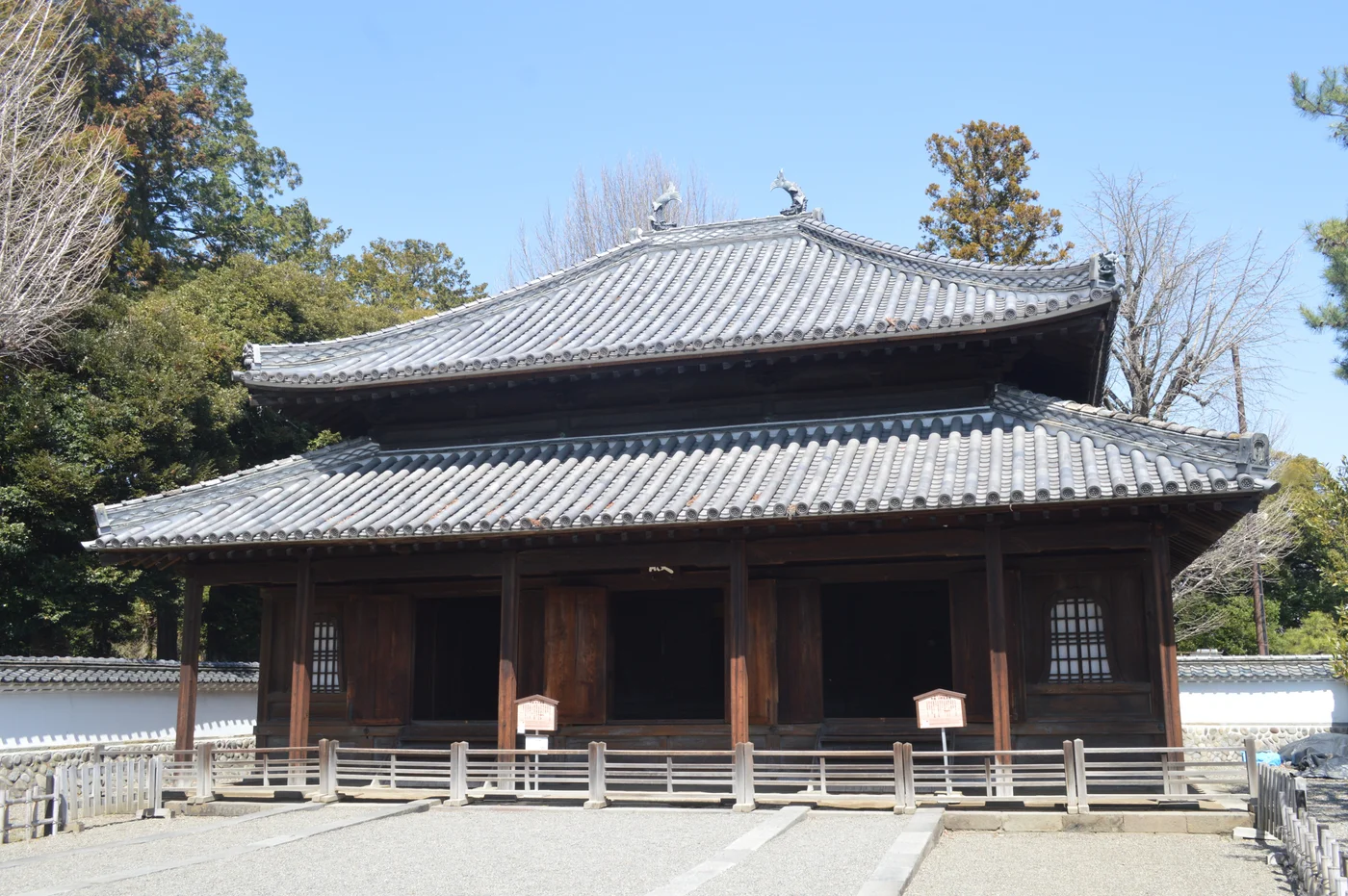
For an autumn or winter 2026 visit, first identify the work area. Ashikaga City’s site map schedules replacement of the Hojo’s thatched roof from 21 August 2026 to 25 March 2027. Access is restricted inside the Hojo, along the path in front of the south garden and around its north side. The entrance hall is also marked as under construction, and the south garden and vegetable garden views are obstructed. Focus on the gates, Confucius temple, historic library building and available information. If you hoped to sit in the Hojo and see the whole garden, spend longer at Bannaji or visit after the work finishes and access resumes.
Allow five to six hours in town for the school and temple, a meal, streets and riverbank. Adding Orihime Shrine extends this to six or seven hours. These are suggested sightseeing times; rail travel to and from Tokyo is additional. With only three hours, visit the school and Bannaji, have a short meal and return to your arrival station. To compare other directions from Tokyo, read Tokyo day trips and overnight stays, then reserve this day for old Ashikaga.
Walk from JR Ashikaga or Tobu Ashikagashi to the school gates, Confucius temple and Bannaji’s moats and halls. Includes 2026 Hojo repairs, admission, closures and Orihime Shrine’s 229 steps.
JR Ashikaga is on the north bank; Tobu Ashikagashi is on the south
Save both stations under their full names. JR Ashikaga Station is on the Ryomo Line, north of the Watarase River, on the same side as the school and Bannaji. Tobu Ashikagashi Station is on the Isesaki Line on the south bank, so reaching the old town involves crossing the river. The school’s official access information gives walks of about ten minutes from JR Ashikaga and fifteen minutes from Tobu Ashikagashi. JR lets you head straight towards the school; Tobu puts the river crossing and town panorama at the start.
From Asakusa or Kita-senju, compare Tobu’s Ryomo limited express to Ashikagashi. The Ashikaga tourism association’s access page gives about seventy minutes from Asakusa and sixty from Kita-senju as rail journey references. Add time from your accommodation to the departure station, waiting and crossing the river. To start at the school around 10:00, look for a train arriving at Ashikagashi around 09:30. This leaves time to find the route and cross. When booking a limited express, identify the basic fare and limited-express supplement separately.
By JR, change to the Ryomo Line at Oyama; the association gives about forty minutes from Oyama to Ashikaga. From Takasaki, it gives about sixty minutes. Both figures start at the interchange, so the Tokyo–Oyama or Tokyo–Takasaki leg is additional. If you are already visiting Tochigi, Sano or Kiryu, the Ryomo Line can fit your existing direction. From Tokyo, compare the complete accommodation-to-Ashikaga arrival time with Tobu’s route.
Return from the same station or arrive by JR and leave by Tobu to include the river at the end. For a cross-town departure, plan your return ticket, luggage and afternoon route together. A backpack makes this easier; if you leave a large case near JR Ashikaga, return there to collect it. The stations are a town walk apart. A departure shown for the other station is not the next train from the platform in front of you.
Follow pedestrian signs through the Nakabashi works
Walking north from Tobu Ashikagashi brings you to the Watarase River and Nakabashi area. Embankment and bridge reconstruction is under way, so follow the pedestrian signs on site. The city’s May 2025 opening notice records that pedestrians and cyclists moved from the temporary passage to the relocated three-arch bridge. The city works index consulted in October 2026 also lists construction on the northern overpass and changes to access. These notices establish the sequence of relocation and subsequent works. Follow the signs on arrival and allow for barriers and turns at entrances.
This itinerary allows twenty-five to thirty minutes to walk and find the school from the Tobu station, adding a buffer to the official fifteen-minute reference. On a first visit, with children or when stopping for river views, treat this as part of the walk. Allow the same crossing time on the return. Reach the station before buying a drink or waiting for your train, so the afternoon feels less rushed.
From a permitted stopping point, look at the repeated arches, river width and streets on each bank. This makes the two stations’ positions clear: trains arrive on different banks, while the main old-town cultural sites lie to the north. Pedestrians and cyclists share the bridge passage. Step out of the flow for photographs, and keep outside work areas and restricted river flats.
Follow the school’s three gates towards the Confucius temple
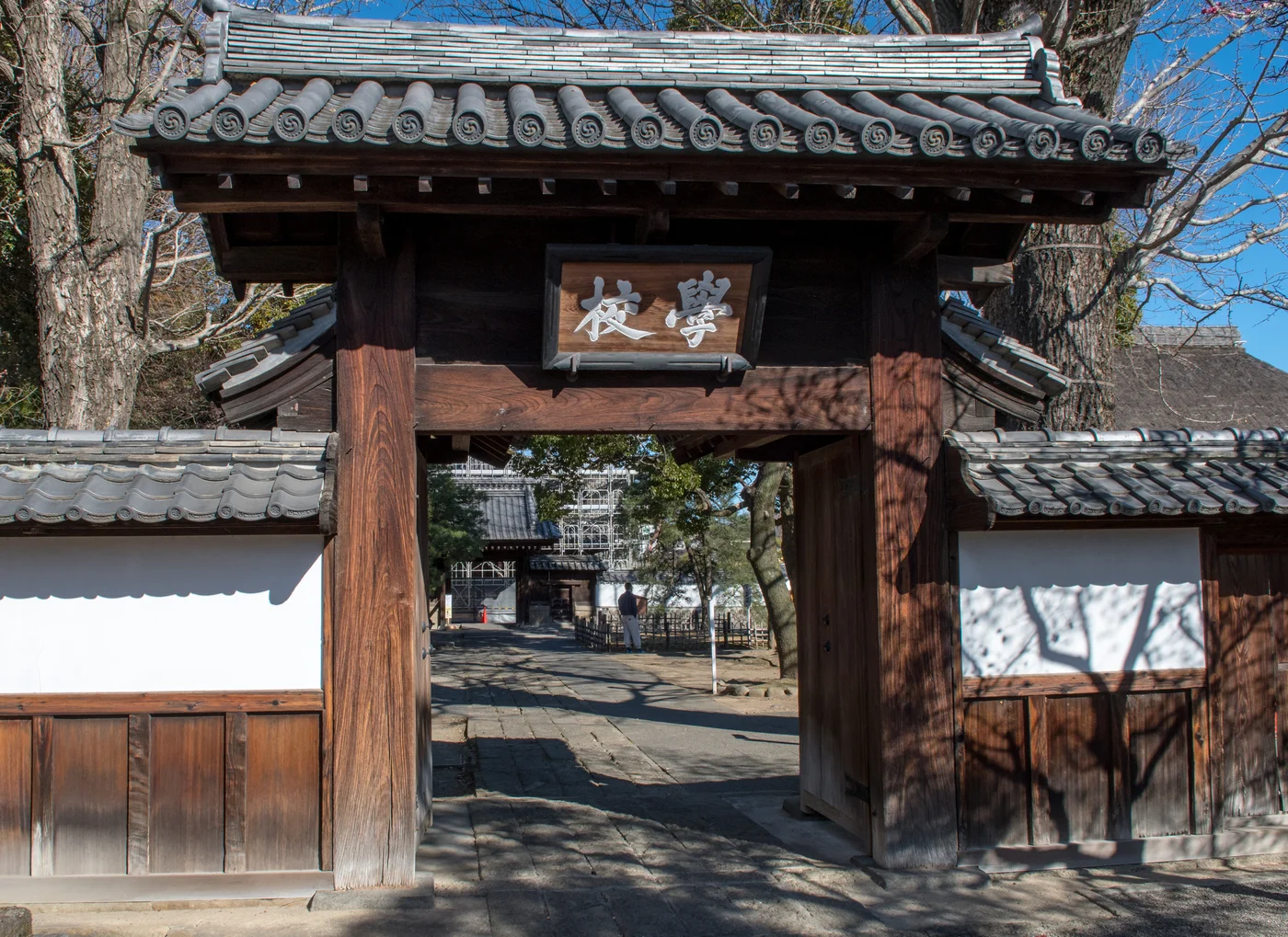
Start by identifying each entrance gate. First comes Nyutoku-mon, then Gakko-mon with its “School” plaque, followed by Kyodan-mon before the Confucius temple. As you move from the street towards the temple, the gates mark successive spaces and their plaques change the focus. Linking the three names helps you distinguish the school’s emblematic gate from the entrance to its Confucian worship space.
Gakko-mon was built in 1668. The city explains that its prominent “School” characters reproduce, at reduced scale, the calligraphy of the Ming calligrapher Jiang Longxi. Look first at the characters’ position, then step back to see the frame, roof and buildings behind it overlap. Face-on, you can read the plaque; at an angle, you can see the gate’s depth and the distance beyond. A few minutes here gives a clear image of the site rather than treating it as a photographic backdrop to pass through.
Kyodan-mon was also built in 1668. Its roof and doors burned in 1892 and were rebuilt; the city’s explanation says fire marks remain on the pillars. Compare the surviving members with the interpretation panel. Do not touch the wooden pillars or assume every dark area is a burn mark. Repairs from different periods give this gate a visible history.
The Confucius temple beyond is formally called Taiseiden. Built in 1668, it is said in the city’s account to follow the form of a Ming sacred temple. Follow the open route to see its front, plaque and forecourt, and its place in the school’s worship. It occupies a separate area from reception, dining and accommodation buildings. Compare the spaces needed for study, daily life and ritual with the site plan.
Start with the 1439 revival and the surviving books
Ashikaga School is often introduced as Japan’s oldest school. The city lists different foundation theories in the Nara, Heian and Kamakura periods. A clearly documented starting point is its revival in 1439, when Uesugi Norizane donated books and invited the monk Kaigen from Engakuji in Kamakura to become shoshu. This title means headmaster; learning it helps connect people with building functions later.
The revival involved both books and someone to run the school. Remember both. When you see “National Treasure”, identify whether it means books or a building: the school’s National Treasure volumes and Bannaji’s National Treasure main hall are different objects. Read the full cultural-property name before deciding whether to study a display or examine a building outside. This gives each place a more precise identity.
The historic library adds another chapter. It was established in 1903 to preserve books handed down by the school; its present building was completed and opened in 1915. See the building and site interpretation to understand why the inherited books needed a separate preservation institution. After the Confucius temple, place this modern building in the site’s chronology to distinguish medieval collections from modern conservation.
The school’s original educational role ended in 1872. Local people later promoted its preservation, and restoration was completed in 1990. These dates distinguish the old buildings, later library and reconstructed facilities. Read individual building dates to understand the different conservation periods. Book enthusiasts can spend longer at displays; those interested in architecture can focus on the gates’ relationship with the temple.
The city’s introduction to the school’s history, to accompany the section on its revival and book preservation.
Use the plan to understand the living quarters during Hojo repairs
The Hojo follows a building form common in Zen temples and has a hipped, thatched roof. This is the building being rethatched. Its interior, the path before the south garden and the northern area are restricted during the work. Read the access information at the entrance, then follow open routes. Historical-use notes on the map explain areas temporarily out of view.
The city’s account of the kuri links an earthen-floored space with hearths, a wooden-floored kitchen and tatami rooms, and describes the headmaster and students living here. Inside the thatched roof, round pine beams overlap and the thatch is tied to bamboo. These details make the school’s daily life tangible: where food was prepared, where people moved and how the roof stood above them. Locate them on the plan during the works and view the accessible parts to understand each building’s function.
The shoin received the headmaster’s guests. The city lists its tokonoma alcove, staggered shelves and attached writing recess; the shuryo served as monks’ quarters or student accommodation. Together with the kuri, the plan separates reception, sleeping and food preparation. If you enjoy floor plans, mark these names and compare them with the Confucius temple’s ritual space. There is no need to keep companions at one panel while you read every Japanese explanation.
The gardens have different forms. The north garden has a pond, landscaped hill and turtle-shaped central island; the south garden features large rocks and old pines. Autumn and winter 2026 works obstruct the south and vegetable garden views, with restrictions to the north too. A complete view of both gardens is therefore outside this day’s plan. Garden enthusiasts can shorten this stop and spend longer by the river. For reconstructed architecture, compare uses on the city map and plan a fuller visit after access resumes.
Pause at the Jifurimatsu pine and Chinese pistache
The school map also marks Jifurimatsu and the Chinese pistache tree. The pine’s story concerns Kyuka, the seventh headmaster: students supposedly tied papers with unfamiliar characters or words to its branches, then found readings or explanations the next day. Read this as a legend attached to a place, rather than an invitation to tie paper there today. The sign, tree and surroundings show how a story about asking questions gained a recognisable location.
The Chinese pistache has a different connection. The city says it was grown from seed from a tree beside Confucius’s tomb in China and planted here in 1922. It is a Tochigi Prefecture Natural Monument. Tree, temple and Kyodan-mon extend Confucian associations from architecture to plants within the same grounds. Observe its shape and seasonal leaves after the gates and temple. Autumn colours in photographs belong to their shooting dates; look at the tree as it is on your visit.
With children, begin by finding the “School” characters, then identify the temple and living areas, and finish with one tree story. School-age children can choose a gate, building and question to discuss over lunch without reading every historical panel. If family interests differ, let keen readers stay another ten minutes while others rest in a permitted place, then walk together to Bannaji.
Leave time for the lanes between school and temple
The Ashikaga Chamber of Commerce’s walking route gives about 200 metres and three minutes between school and Bannaji, or 300 metres and five minutes by another connection. Allow fifteen to twenty minutes for shopfronts and finding your way at junctions. Their proximity does not make three minutes enough for everything between leaving the school and entering the temple.
Turning from the school towards the temple’s south side brings gates, boundaries, shops and lanes into view together. Near the temple, shopfronts give way to water and the entrance gate, giving the street a clear endpoint. For an entrance photograph, stand safely and frame the bridge, gate and buildings behind. Vehicles and pedestrians still use the street, so keep out of its centre while waiting for an empty scene.
Have lunch around here; soba is one local option. The chamber’s walk links Yasuo Katakura’s post-war business in Ashikaga with the town’s soba culture. Choose a restaurant open that day with a suitable menu. Allow forty-five to sixty minutes for a noodle lunch. If you enjoy shops, leave free time afterwards so browsing and cultural visits each have space.
Matsumura Memorial Museum is also on this walking route, listed by the chamber about 100 metres from Bannaji. If you want another museum, arrange it separately around its published opening days and ticket rules. The standard day can focus on school and temple, with street exteriors in between. Adding an indoor visit is easiest by reducing the river or Orihime Shrine portion, while keeping lunch and the school visit intact.
Read Bannaji’s former warrior residence from its outer boundary
Bannaji stands at 2220 Ietomicho. The tourism association explains that Yoshikane, the second generation of the Minamoto-line Ashikaga family, built a private worship hall for Dainichi Nyorai within his residence in 1196. Third-generation Yoshiuji added temple buildings, establishing the clan temple. Before entering, look at the moat and earthworks to understand why the temple also appears in the history of the Ashikaga residence.
The approximately 40,000-square-metre precinct is roughly square, surrounded by earthworks and a water-filled moat. You can understand it without completing a full circuit. Near the entrance, follow the water along the boundary and see how the earth bank separates temple and street. Crossing the entrance bridge changes the scale from street to open grounds and clarifies the worship route. Moving from outside to inside helps explain the residence plan.
The Ashikaga residence site became a National Historic Site in 1922. Visitors interested in castle remains can focus on this lowland residence’s outline, entrances and boundaries. There is no need to search for an imagined tall tower. For those familiar with Japanese temples, compare it with sites climbing a hillside: at Bannaji, first read the horizontal enclosure, then turn to the halls and towers. Viewing the south entrance and one adjacent side is enough to see the outline.
Bring your memory of the school across. Its named gates lead towards Confucian worship and education; Bannaji’s moat, banks and family-residence boundary explain its origins before the temple buildings inside. Although close on the map, each deserves time at its entrance and internal layout.
Distinguish viewing the halls outside from entering them
Start with the main hall, then follow open paths to the bell tower, sutra hall and tahoto pagoda. The tourism association’s cultural-property list names the main hall as a National Treasure, the bell tower and sutra hall as National Important Cultural Properties, and the tahoto, two-storey gate, east and west gates and arched bridge as prefectural cultural properties. Match those names to signs on site.
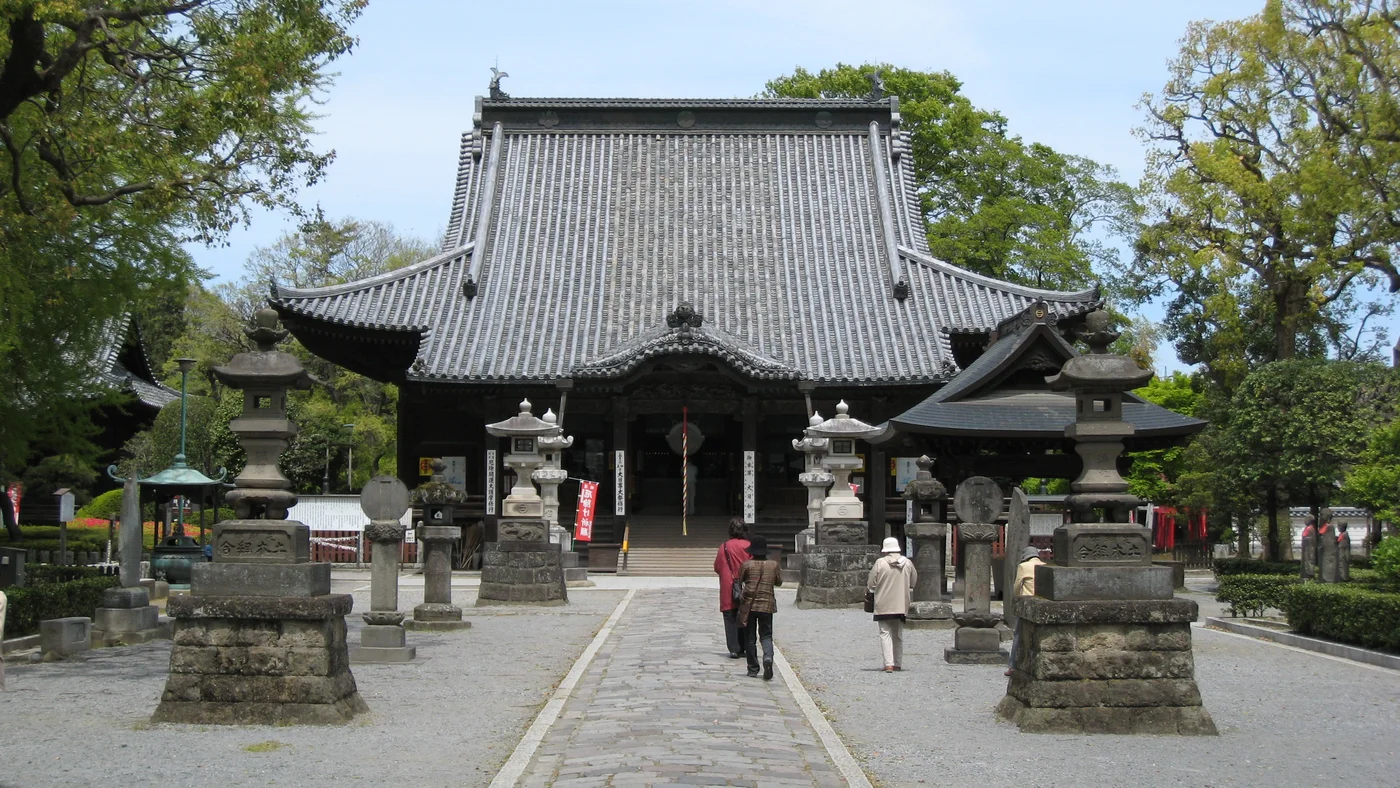
View the main hall’s roof and worship space from the front, then look from the side at the eaves’ depth, columns and overall mass. Stepping back for the whole building and examining columns and under-eave members from permitted close positions give different views. Companions less interested in details can make one full stop at the front. Architecture enthusiasts can spend longer on the side and neighbouring buildings along public paths.
The sutra hall’s function connects with the morning’s preserved books. Both places retain a book culture, with different institutions, uses and preservation histories. In the interpretation, look for book titles, building functions and repair records. Outside, regard the sutra hall as a building in its own right: note its distance from the main hall and the direction of its entrance.
The grounds are free to enter. Main-hall interior visits require advance booking and an additional fee. For an ordinary walk, focus on grounds and exteriors; arrange ahead for a specific interest in statues or interiors. The association lists the Issaikyodo sutra hall at ¥300 per person, on Sundays and public holidays when it opens that day. A Sunday is a starting point for choosing a date; admission still depends on the temple’s operation that day. This ¥300 is separate from school admission.
For a priest-led visit to the main hall and Issaikyodo, the association lists a flat ¥5,000 for one to ten people, with advance booking. Weekdays are for groups only, and acceptance depends on temple duties and events. Two people using this option also pay ¥5,000. It suits visitors who want to explore the interiors and plan the day around a booking. On a first town walk, the free grounds show the residence boundary and principal buildings.
Pause beneath the ginkgo to see the buildings’ relationships
Bannaji’s ginkgo is a Tochigi Prefecture Natural Monument. Start at the trunk and branch divisions, then step back to include its crown and nearby buildings. This gives a sense of place beyond waiting for fallen yellow leaves. Colour changes with the season and weather. Plan around the cultural buildings and treat the tree as an additional observation on the day.
The precinct also forms the urban park called Dainichien, allowing a slower pace than a ticketed museum. After the main hall, sit somewhere permitted, then look again at the spaces between buildings. This rest works well for families: the school involved reading, while the temple after lunch offers outdoor space and larger views. It also helps you decide whether to climb the hill later.
Temple worship and park walks share these grounds. Leave active hall fronts, reception areas and worship routes available for their intended use. Choose an unobstructive position for ginkgo photographs. If a viewpoint is busy, see other buildings and return. Allow forty-five to sixty minutes for the main-hall exterior, neighbouring buildings, earthworks, moat and a short rest. Add time for a booked interior visit or detailed reading.
For a river afternoon, distinguish Watarasebashi from Nakabashi
For an easier afternoon, return from the temple to the Watarase River for river views and streets. Nakabashi links the Tobu station with the old town. Watarasebashi is a different bridge further west; retain its full name when searching for the song landmark or monument. The distance west affects your final walk to either station, so decide before reaching the bridge.
The chamber’s half-day route lists about 800 metres and ten minutes from the Watarasebashi song monument to Tobu Ashikagashi, or one kilometre and twelve minutes to JR Ashikaga. These are movement-only references. Allow twenty to thirty minutes for junctions, works diversions and river stops, plus the earlier walk from the old town to the monument. If tired, stop on the river nearer your chosen departure station and return from there.
The riverbank opens up the view after a morning inside enclosed sites. Look at the relationship between streets, bridges and river. On a cold autumn or winter afternoon, keep the stop short and return for a hot drink. With shorter daylight, photograph the river before dark. Use designated walking spaces; you need not descend to the water. In heavy rain, strong wind or river restrictions, omit this stretch and rest in town.
For a Tobu departure, cross south from the old town to finish on the opposite bank. For JR, stay north and walk towards its station. Choosing this ending in advance avoids retracing a crossing. Visitors to Watarasebashi need not make a long detour simply to use Nakabashi; follow the bridges and road signs actually available that day.
Orihime Shrine adds a hill climb: 229 steps or Enmusubizaka
If you still have energy and want a hillside view, choose Ashikaga Orihime Shrine for the afternoon. Linked to Ashikaga’s textile industry, it enshrines deities associated with industrial prosperity and matchmaking. Its vermilion buildings stand partway up Mount Orihime, unlike Bannaji’s level grounds. The chamber’s walk connects Bannaji via Kofukuji, a church and Hogenji to the foot of the shrine steps. Its listed legs total about 800 metres and eleven minutes, reaching only the hill’s base.
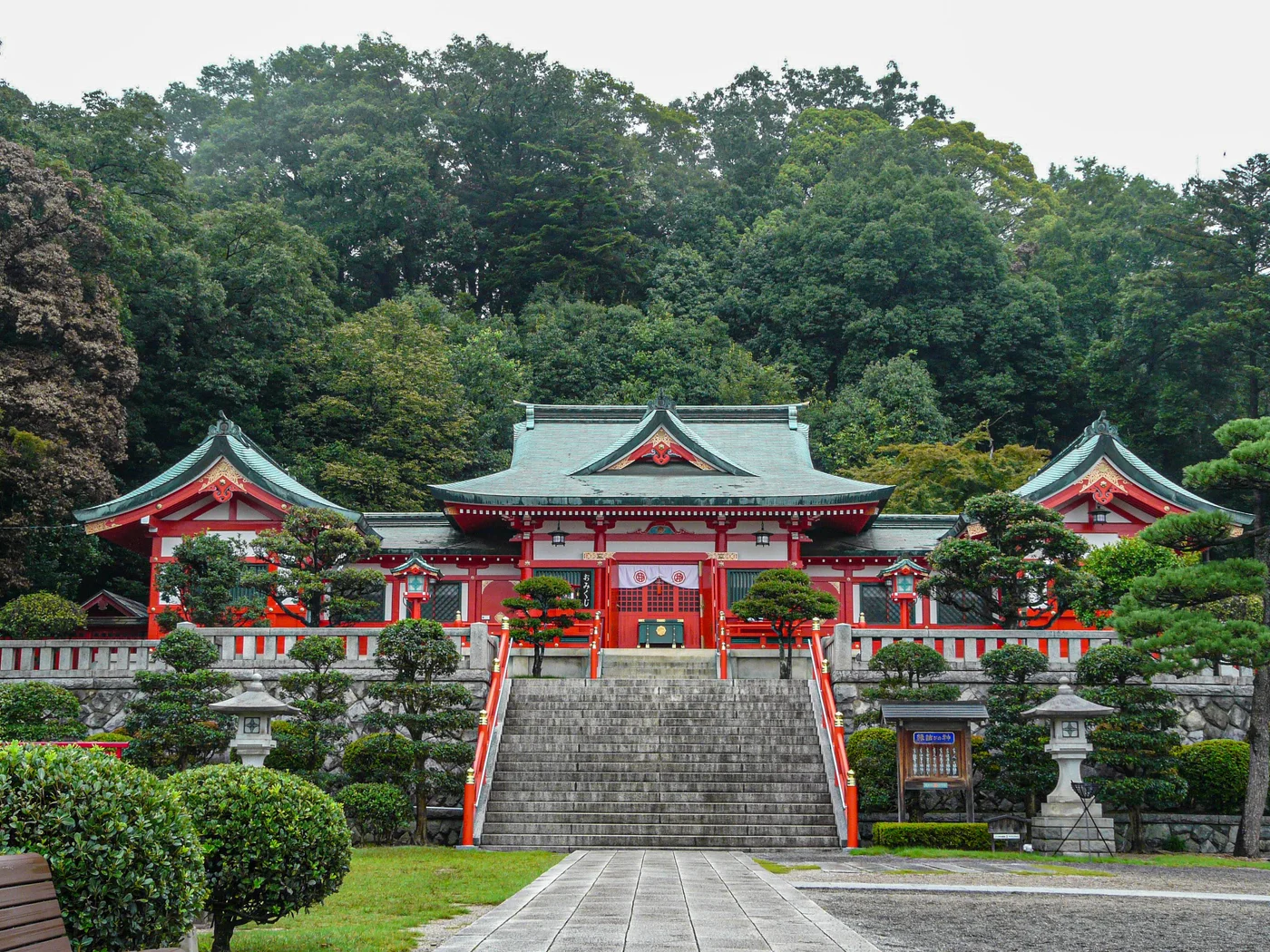
The shrine’s official grounds guide lists 229 steps on Honzaka from the first torii to the precinct, with handrails. Enmusubizaka is a gentler hillside path without handrails. The shrine recommends Honzaka with its rails for visitors less confident in their legs. Choose using your need for support, footwear and stability on slopes, as well as gradient.
The seven-colour torii stand along Enmusubizaka, each colour corresponding to one of seven divine blessings. Choose it for torii and plants, or Honzaka for handrails and pauses on the steps. Save energy and time for descending. Visitors with sore knees or pushchairs can stay in the old town and by the river. For vehicle access to the hillside parking area, arrange the actual drop-off and remaining walk with the shrine separately; this walking itinerary does not use the mountain path as a pushchair route.
Allow seventy-five to ninety minutes from Bannaji for the approach, climb, worship, view and descent to the hill’s base, then about thirty minutes more to the station. Adding the shrine replaces a longer river and shopping stop. In rain or late in the day, omit the hill; school and temple still form a complete theme. Arrange lighting, descent and rail connections separately for a night view.
A day’s timetable: school first, then choose one afternoon
For a 10:00 school start, aim to reach Tobu Ashikagashi around 09:30, leaving thirty minutes for crossing and finding the entrance. Arrive at JR Ashikaga around 09:40 for twenty minutes of walking and ticket buying. These are target arrival times for choosing trains, not specified services. Allocate 10:00–11:15 to the school, following the construction-period access. Spend longer at open displays if you want to read; otherwise head into the streets earlier.
From 11:15, allow twenty minutes through the streets, then lunch from 11:35 to 12:35. Keep 12:35–13:45 for Bannaji and its moat, including the approach, worship and rest. Both main sites are then complete early in the afternoon, leaving later choices to your energy rather than rushing towards the school’s last admission.
For the river version, browse after 13:45, head towards the water around 14:30 and return to your chosen station between 15:00 and 15:30. Reduce the westward distance if you want to sit longer. For the shrine version, leave at 13:45, finish climbing, worship and descent around 15:15, then allow thirty minutes to the station and search departures after 16:00. Once you select an actual train, move the station arrival earlier to allow waiting and platform access.
If you arrive in the afternoon, shorten the route to school, temple and a meal. From October to March, school admission ends at 16:00. To spend about an hour there, reach the entrance before 15:00; arrive earlier to read and study the gates and temple. Alighting at the Tobu station at 15:00 leaves little school time after the crossing. Temple and streets then make a more relaxed main route.
Choose either river or shrine as the main afternoon, then use any time left. Ashikaga Flower Park lies in another station direction. Visit on another day or reduce town to a half-day for flowers or illuminations; Ashikaga evening transport and accommodation planning covers park arrangements. Nikko’s shrines and temples, Oya’s quarry and Sano shopping each need their own travel and visit time. This day is for old Ashikaga.
School tickets, closure dates and a shorter family route
The city’s visitor information, consulted on 29 October 2026, lists individual school admission at ¥480 for general visitors, ¥240 for senior high school students and ¥120 for primary and junior high school pupils from outside the city. Preschool children enter free. Payment options include Suica, PASMO and PayPay. Two adults and one primary pupil from outside the city pay ¥480 × 2 + ¥120 = ¥1,080. Adding Bannaji’s free grounds gives the main route a clear admission budget. List food, rail and separately booked interiors as additional items.
School admission runs 09:00–16:30 from April to September and 09:00–16:00 from October to March. These are admission cut-offs, so work backwards from your required visit time. The 2026 financial-year closure calendar extends to March 2027. Remaining 2026 dates listed are 18 November, 16 December and 29–31 December; 2027 dates are 20 January, 17 February and 17 March. Use this announced calendar directly when choosing a date.
On school closure days, Bannaji and the streets remain options. If the school’s gates and temple are your priority, choose an open day. For older relatives or young children, allow sixty to seventy-five minutes at the school, an hour for lunch, forty-five minutes at Bannaji and station walks. Skip the hill and rest near the temple. For step-free entrances or wheelchair routes, give the school office your date and needs and plan around open construction-period routes. Check usable passage across the temple entrance bridge, gates and hall fronts in turn.
In light rain, shorten the connecting streets and retain open school areas, temple exteriors and a seated meal. The school entrance and part of the visit are outdoors; bring footwear and rainwear suitable for wet surfaces. In heavy rain, omit Orihime Shrine and the river and return to the station.
A few useful answers
Which railway station is best for Ashikaga School?
JR Ashikaga station is on the north bank of the Watarase River, about 10 minutes from the school on foot. Tobu Ashikagashi station is on the south bank, normally a 15-minute walk away. While work is under way around Nakabashi Bridge, allow 25 to 30 minutes from the Tobu station and follow the signs for pedestrians.
What is there to see at Ashikaga School while the roof is being repaired?
You can still see the gates, the Confucius Temple and the historic library building. The Hōjō roof is due to be rethatched from 21 August 2026 to 25 March 2027. During the work, access is restricted inside the Hōjō, on the path in front of the south garden and to the north of the building.
Is there an admission charge for Ashikaga School and Bannaji Temple?
Ashikaga School charges ¥480 for adults, ¥240 for upper secondary pupils and ¥120 for primary and lower secondary pupils from outside the city. Pre-school children go free. Bannaji’s grounds are free to enter, while a visit inside the main hall must be booked in advance and paid for separately.
Can I see Ashikaga School, Bannaji Temple and the Watarase River in a day?
Start at Ashikaga School in the morning, stop for lunch in the old town, then walk to Bannaji Temple. Allow 5 to 6 hours in town with a stroll along the Watarase River in the afternoon, or 6 to 7 if you spend the afternoon at Orihime Shrine. Allow extra time for the train journeys to and from Tokyo.
Official information and references
Sources used in this guide.
- Ashikaga City | School site map, buildings and 2026–2027 Hojo works
- Ashikaga City | School revival, preservation and visits
- Ashikaga City | School tickets and admission hours
- Ashikaga City | School closures, April 2026–March 2027
- Ashikaga Tourism Association | Bannaji cultural properties, grounds and paid visits
- Ashikaga City | Visitor guide and walks from both stations
- Ashikaga Tourism Association | Access from Asakusa, Kita-senju, Oyama and Takasaki
- Ashikaga City | Opening the relocated Nakabashi three-arch bridge to pedestrians and cyclists in 2025
- Ashikaga City | Nakabashi replacement and northern overpass works
- Ashikaga Chamber of Commerce | Characters, language and the Sakasagawa walk
- Ashikaga Orihime Shrine | Honzaka’s 229 steps, handrails and Enmusubizaka
- Ashikaga Orihime Shrine | Industry, matchmaking and seven-colour torii