Planning a trip to Lake Toya? Compare Mount Usu's two observation decks, summer and winter Nakajima boat routes, fireworks and winter illuminations, with driving and JR-plus-bus itineraries, fares and rainy-day alternatives.
- Region & Focus
- HokkaidoAttractions
- Reading Scope
- 23 min read · 10 chapters · 6 Q&As
- Official Verification
- 29 official sources checkedUpdated 22 November 2026
- Key Topics
- ItinerariesRail travelSeasons
Chapter Route Map (tap any stop)
- Separate JR Toya Station, Toyako Onsen and Showa-shinzan on your map
- On Mount Usu, decide between the lake lookout and the crater trail
- View Showa-shinzan at the foot before choosing how to explore the volcano
- Look for Ekimae Pier first when boarding the Nakajima sightseeing boat
- Long-Run Fireworks move across the lake, offering different views from shore and boat
- From November onwards, visit lakeside foot baths before the evening illuminations
- Visit the Volcano Science Museum on rainy days, and save eruption trails for dry weather
- Driving for a day: slot north-shore lookouts into your arrival or departure
- By JR train or Donan Bus, calculate your return gaps before setting off
- On a short stay, choose sights by the views you most want to see
- Quick Q&A
A day trip to Lake Toya works neatly by taking the Usuzan Ropeway from Showa-shinzan before returning to the south-shore hot spring town for lunch and boarding a sightseeing boat from Ekimae Pier. If you are travelling by JR train, plan your return bus times between the onsen town and Showa-shinzan in advance. With only half a day, pick Mount Usu in clear weather, or stay along the lakeside if low cloud hides the summit. From November, sightseeing boats switch to a winter route with no landing on Nakajima; the 2026 Long-Run Fireworks have ended, and evenings shift to the illumination tunnel in the onsen town.
Separate JR Toya Station, Toyako Onsen and Showa-shinzan on your map
JR Toya Station sits outside the lake basin. From the station forecourt, take a Donan Bus to Toyako Onsen (¥400 one way for adults; roughly 16 to 27 minutes depending on the service). Once in the onsen town, the south-shore boat pier, the Volcano Science Museum and the lakeside promenade are all linked on foot. The ropeway's lower station is at Showa-shinzan in Sobetsu on the south-eastern side of the lake, reached by connecting onto the Showa-shinzan bus line. Save the train station, the pier and the ropeway lower station as separate pins on your map so transfers are straightforward. Toyako Onsen Tourist Association access map
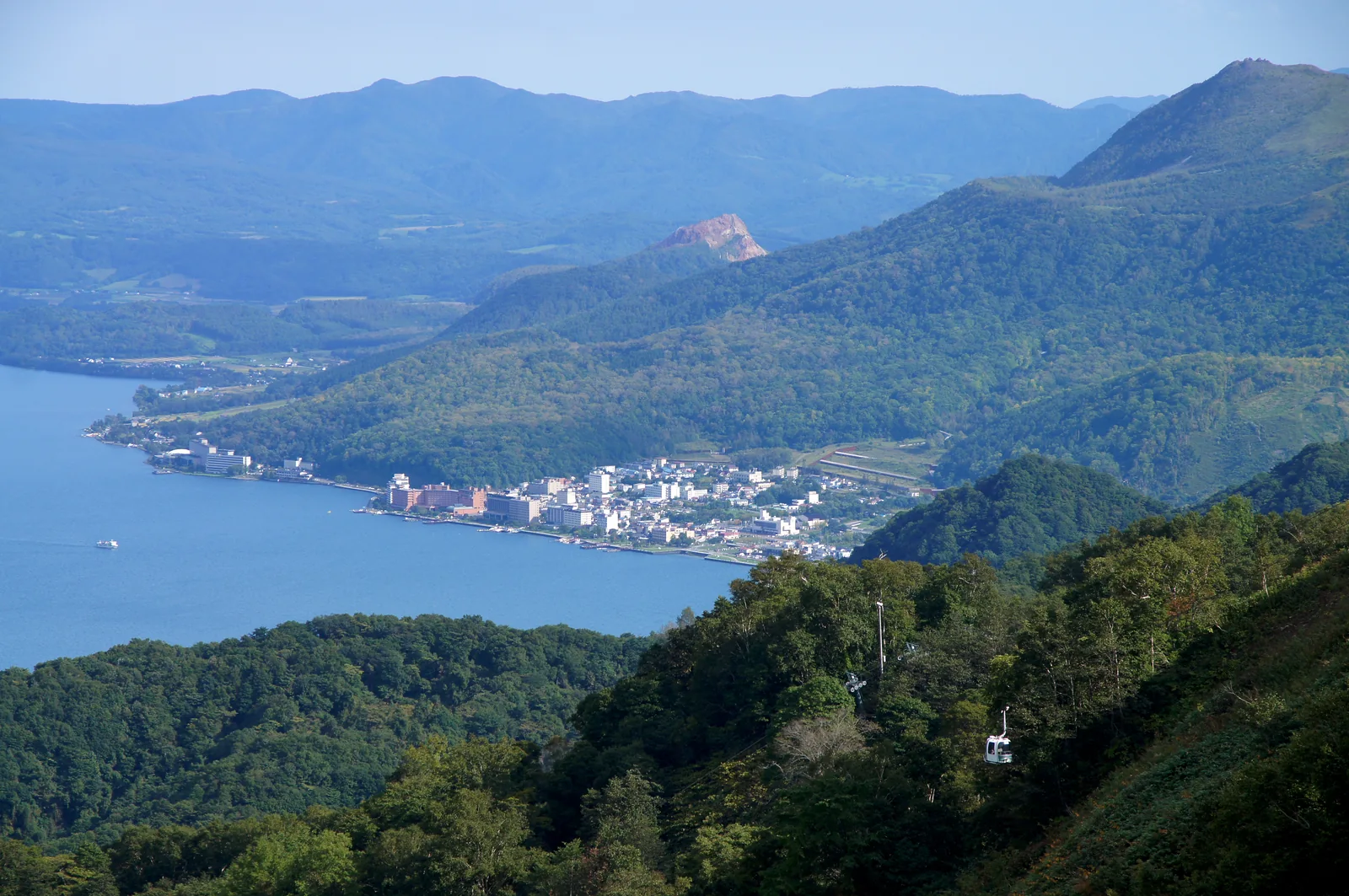
From the south shore, the small peaks rising out of the water are Nakajima, with Mount Yotei visible across the lake on clear days. To photograph the onsen town against the shoreline, head up to the Lake Toya Observatory on Mount Usu. To frame Nakajima, Mount Usu and Showa-shinzan in a single view, stop at the Silo Observatory beside National Route 230 on the north-western shore, which slots easily into a drive towards Rusutsu or Sapporo. If you only have a morning at Lake Toya, choose the angle you want first to avoid driving around extra stretches of the lake.
Your budget also depends on how many areas you cover. At standard adult rates, a return ropeway ticket plus the daytime boat comes to ¥3,800, rising to ¥5,700 only if you add the evening fireworks cruise. Strolling the shore and watching the Long-Run Fireworks from land cost nothing, though drivers visiting Showa-shinzan should factor in passenger-car parking. Junior high school students pay adult fares on the mountain, while the Volcano Science Museum still offers primary and junior high rates. To keep costs down, pick either the daytime boat or the ropeway and spend the rest of the day along the south shore.
| Location | Access point | How to choose |
|---|---|---|
| Usuzan Ropeway & Showa-shinzan | Showa-shinzan Foot Station | Go up in clear weather; stay at the Lake Toya Observatory if you want less walking |
| Daytime sightseeing boat & Nakajima | Ekimae Pier behind Hotel Grand Toya | Land on the island in summer; stay on board for a loop in winter |
| Long-Run Fireworks & lakeside promenade | South shore of Toyako Onsen | Free from the shore; board the fireworks boat at Honsha-mae Pier |
| Volcano Science Museum & Visitor Centre | West end of the onsen town | Ideal for rainy days; closed Mondays and over New Year |
Planning a trip to Lake Toya? Compare Mount Usu's two observation decks, summer and winter Nakajima boat routes, fireworks and winter illuminations, with driving and JR-plus-bus itineraries, fares and rainy-day alternatives.
On Mount Usu, decide between the lake lookout and the crater trail
Set your satnav to Usuzan Ropeway Sanroku Station or Showa-shinzan (184-5 Showa-shinzan, Sobetsu-cho, Usu-gun, Hokkaido); the operator lists passenger-car parking at ¥500 per day. Standard return fares are ¥2,000 for junior high school students and above and ¥1,000 for primary school children, for a six-minute ride running roughly every 15 minutes. Once you park and step out, allow time for buying tickets, waiting to board in both directions and walking around the upper station rather than counting the ride time alone. Usuzan Ropeway fares, timetable and live camera
Stepping out of the summit station, the Lake Toya Observatory sits right beside the terminal. It looks across the lake, Toyako Onsen and Showa-shinzan, and lets you loop back easily to meet anyone in your group who prefers to rest. For this lookout alone, the operator estimates about 40 minutes including the ropeway rides. To see the Mount Usu crater, continue to the Crater Basin Observatory (USU 360), which brings the official estimate for the ropeway and both lookouts to around 60 minutes. Because the crater path involves slopes and roughly 130 steps, visitors with pushchairs or anyone uncomfortable with steep descents can stick to the lake-facing deck without missing the signature view.
Beyond the Crater Basin Observatory, another flight of roughly 600 steps drops towards the Outer Rim Walking Trail, which you must climb back up on the return. The operator's full trekking route takes around three hours including the ropeway and closes for snow from November to April. Set aside a dedicated half-day if you want to walk the outer rim past Ginnuma Crater from the 1977 eruption. Squeezing both this hike and a Nakajima island landing into one afternoon usually runs short on descent and boat times. Stick to open visitor routes; restricted summit zones and closed areas around the 2000 craters are off-limits. Outer Rim Walking Trail and staircase guide
From 16 November to 31 December 2026, the ropeway runs from a first ascent at 09:00 to a final descent at 16:00, and the Japanese timetable notes that the last upward cabin departs 15 minutes earlier. If you plan to walk to the crater side, aim for a morning or pre-lunch ascent rather than treating 15:45 as having an hour left to explore. Taking an earlier service also helps if cloud rolls in: you can view Showa-shinzan at the base and check the summit webcam before buying tickets upstairs. Even in sunshine, crosswinds can be brisk, so keep a light jacket handy.
View Showa-shinzan at the foot before choosing how to explore the volcano
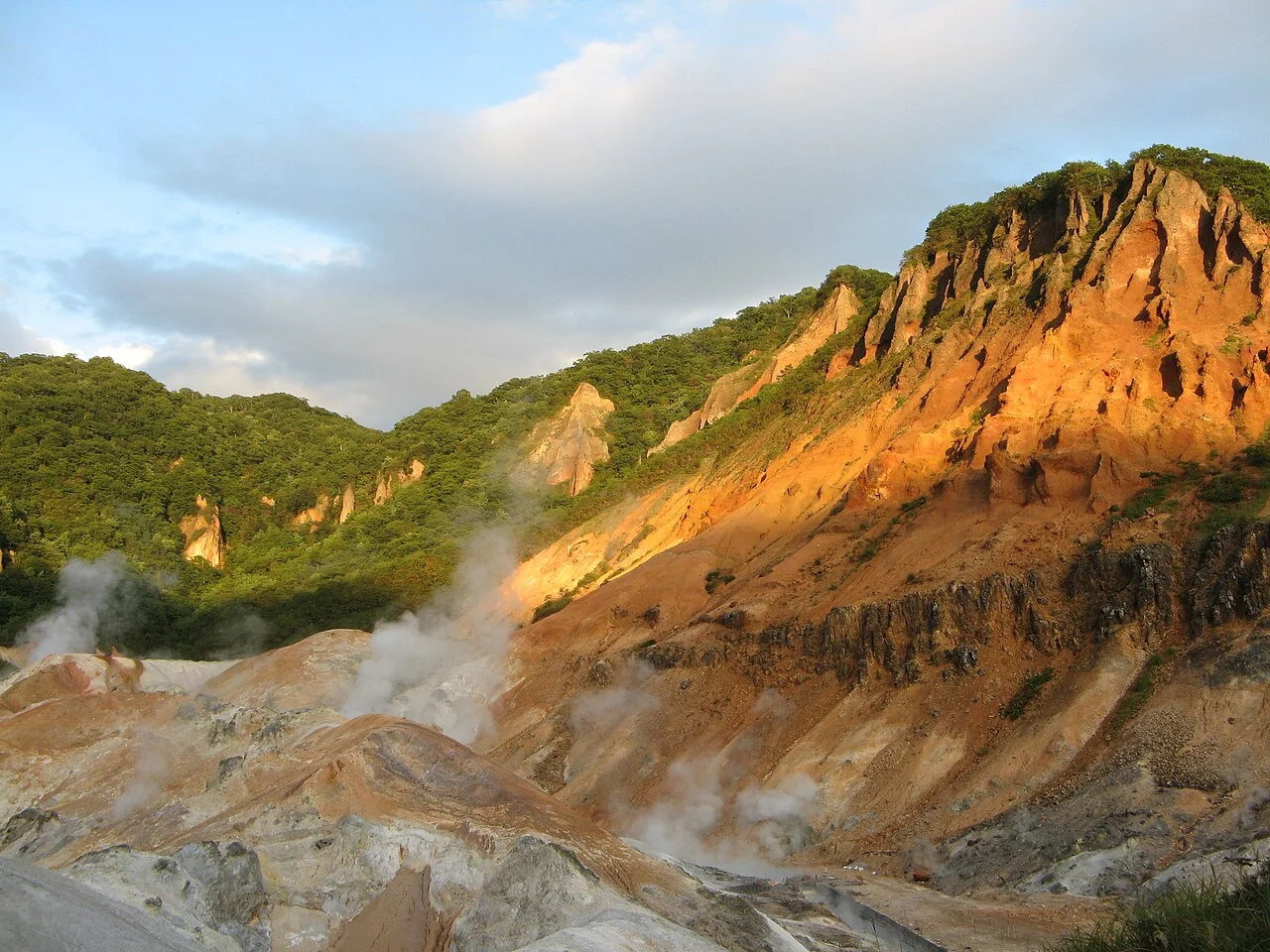
Showa-shinzan is visible directly from the ropeway's base park. Earthquakes began around here in late 1943, lifting the ground the following year before a lava dome broke through the raised surface in December 1944 and continued growing into 1945. From the foot, you see a broad uplifted mound topped by reddish-brown rock walls, tinted by intense heat baking the surface soil and clay. Start by spotting the boundary between bare rock and woodland in the park, then look down from the ropeway cabin to appreciate how close the dome rose to the lakeshore. Toyako-Usu UNESCO Global Geopark Showa-shinzan dossier
Understanding how quickly the mountain grew is far more rewarding than rushing a quick photo. Local postmaster Masao Mimatsu repeatedly sketched the changing silhouette, leaving a detailed record of the dome rising step by step. If archival photographs, drawings and field observations appeal, stop at the Masao Mimatsu Memorial Museum at the foot of the mountain. On a tighter schedule, compare the exposed rock face in the park with the geological displays inside the lower station while waiting for the next cabin.
Lake Toya's basin itself is volcanic, formed when a massive eruption roughly 110,000 years ago left a vast caldera that later filled with water. Nakajima emerged from later volcanic activity as lava domes, while Showa-shinzan formed only in modern times—so the hills and water you see in a single day span three distinct eras. To help children connect the landscape, trace the caldera rim from the mountain in the morning, then spot the wooded islands and the red-walled young dome from the boat in the afternoon. Toyako-Usu UNESCO Global Geopark geological timeline
Even if you stay only at the base, the park is worth a walk. Should high winds suspend the ropeway, treat the base park as a short stop and head back to Toyako Onsen. Conversely, when summit visibility is crisp but time is tight, save the deeper volcanic history for the science museum afterwards or another trip—both stops adjust easily without jeopardising an afternoon boat sailing.
Look for Ekimae Pier first when boarding the Nakajima sightseeing boat
Daytime sightseeing boats depart from Ekimae Pier behind Hotel Grand Toya (36-4 Toyako Onsen); despite the name 'Ekimae' ('station-front'), JR Toya Station remains outside the lake basin. Drivers can search for the Toyako Kisen Nakajima sightseeing boat boarding area, while walkers from the onsen street should head behind the hotel towards the water. Even online ticket holders must exchange vouchers for paper tickets at the counter, and the operator requires exchange to be completed 10 minutes before departure—so avoid cutting bus arrival times too close. Toyako Kisen piers and locations
Standard daytime fares are ¥1,800 for adults and ¥900 for primary school children. From late April to late October, the summer timetable runs every 30 minutes from 08:30 to 16:30: staying on board takes about 50 minutes, while disembarking on Oshima to catch a boat half an hour later makes an 80-minute round trip. Under the 2026–27 winter schedule (1 November to 28 April), sailings run hourly from 09:00 to 16:00, take roughly 45 minutes and do not stop at Nakajima, though earlier sunsets can bring the final departure forward. Toyako Kisen daytime, winter and fireworks routes
Plan earlier over the New Year period. Toyako Kisen lists hourly sailings from 09:00 to 15:00 on 31 December 2026, shifting to 10:00 to 15:00 from 1 to 3 January 2027 before normal winter hours resume on 4 January. To combine both main sights on New Year's Day, take the 10:00 boat first and head to Showa-shinzan afterwards; if you go up the mountain first, leave ample margin after lunch to return to the onsen town, walk to the pier and exchange tickets, as 15:00 is the final sailing. Toyako Kisen winter and New Year special timetable
Nakajima comprises four islands—Oshima, Bentenjima, Kannonjima and Manjushima—with daytime boats crossing the lake to berth at Oshima. A quick stop covers the pier area, whereas visiting the Nakajima Lake Forest Museum or sitting down for a coffee requires catching an earlier boat and budgeting for more than one interval. The 80-minute summer timing only includes 30 minutes ashore, which also covers queuing to disembark and walking back from the museum, so check the berth and next departure before heading towards the forest.
To walk the island's forest trail, enter through the Nakajima Lake Forest Museum. Oshima has rocky terrain, and the full 7.6 km loop takes around three hours—factor in the museum entrance and the last return sailing. The tourist association lists general trail-entrance closing at 14:30, moving forward to 14:00 in October for earlier sunset, so tackle the full loop on a morning boat. Check the geopark trail map to pick a turnaround point before setting off, and bring water and lunch on board; if you arrive in the afternoon and stay overnight, save the island walk for the next morning and stroll the onsen town on day one. Geopark Nakajima trail entrance and route
If children want to look for deer on the island, treat it as quiet habitat watching: stop where you are when you spot wildlife, and never chase, feed or step off the path. If you simply want to watch the islands pass the rail, the winter cruise is enough on its own. Older travellers or anyone prone to headaches in cold wind should pick indoor cabin seats first and step out onto the deck briefly, while anyone catching a long-distance train immediately afterwards is also better off staying on board to avoid an extra transfer risk.
Travellers arriving from Sapporo in the afternoon often drop their bags only to find a late sailing close to sunset, just as staying on Mount Usu until the last ropeway leaves few boats left on the water. In winter, anchor your schedule around the hourly departures on the hour rather than strolling the shore first and checking the clock too late for ticket exchange.
Long-Run Fireworks move across the lake, offering different views from shore and boat
The 45th Toyako Long-Run Fireworks ran from 28 April to 31 October 2026, launching from 20:45 for roughly 20 minutes, and has now concluded for the year. Organisers run the display in rain but may cancel if wind speed or direction turns unstable. When planning a stay for 2027, align your dates with the next season's announced schedule; for late 2026 or early 2027 visits, swap in the evening illumination tunnel covered below. Toyako Onsen Tourist Association Long-Run Fireworks page
According to the boat operator, the fireworks are launched while moving along roughly two kilometres of water. Watched from the south shore in Toyako Onsen, bursts shift direction across your field of view; any open stretch of public promenade or lakeside square works well, though hotels and trees block parts of the skyline. Families heading straight back to their rooms afterwards should pick a spot close to their hotel, and tripod photographers should leave clear pavement space for pedestrians passing through.
The fireworks boat boards at Honsha-mae Pier between Toyako Manseikaku and Nonokaze Resort (29 Toyako Onsen). The timetable lists departure at 20:35 and return around 21:20, at ¥1,900 for adults and ¥950 for primary school children. Because the vessel tracks the launch barge across the lake, it suits anyone wanting closer views of several segments; if weather cancels the display, the night sailing is also cancelled. Guests on half-board dinner plans should check restaurant seating times against the walk to the pier—20:45 is when the first shell goes up from shore, whereas boat passengers must leave earlier.
If you are leaving Lake Toya with luggage that same evening, lock in your onward transport first. The night boat disembarks after 21:00, leaving a transfer from the onsen town back to JR Toya Station, and highway coach passengers likewise need to check evening departure points. Day-trippers from Sapporo are better off keeping Mount Usu and daytime cruises to daylight hours, saving the night boat for overnight stays or pre-arranged transfers. If you hope to watch from a hotel room, room orientation matters—see Toyako Onsen hotels and lake-view rooms.
From November onwards, visit lakeside foot baths before the evening illuminations
From 1 November 2026 to 27 April 2027, Nigiwai Hiroba in the onsen town hosts a roughly 70-metre illumination tunnel. It lights up daily from 17:00 to 22:00 through 28 February 2027, shifting to an 18:00 start from March. You can catch a late-afternoon boat before sunset, have dinner and stroll to the square, or view the lights before eating and head straight indoors. With young children who feel the cold, walking through both ends of the tunnel is plenty without covering the whole shoreline. 2026–27 Toyako Onsen illumination tunnel
Toryu no Yu foot bath sits on the lakeside promenade in front of Toya Kanko Hotel with an open water view. The tourist association lists hours as 09:00 to 22:00 from 28 April to 31 October, and 10:00 to 16:00 for the rest of the year—so in winter, warm up with a hot drink between soaking your feet and waiting for the illuminations. Along Hokkaido Prefectural Route 2, Yakushi no Yu stays open until 20:00 outside summer, making an easy pre- or post-dinner stop if you are staying in town. Bring a small towel and wear trousers that roll up easily so you can dry off right away. Toyako Onsen foot bath locations and opening hours
There is no need to walk the entire lake perimeter. For a strong foreground, stroll towards the sculpture Kaisei in Lake Toya Gurutto Sculpture Park, framing the water and Nakajima behind it. Anyone who tires easily should stick to stretches with benches and quick links back to the main street. If sudden gusts make the shore bitingly cold, turn back into town for a warm drink or indoor break rather than lingering by the water; in winter, photographers can also keep a spare camera battery in an inside pocket until needed.
Spring transitions do not happen on the same date across every attraction. Wait until both the Nakajima landings and Toryu no Yu switch to summer hours if you want to pair an island stop with an evening foot bath, or take the winter boat earlier in spring to photograph lingering snow around the lake. In autumn, reserve the shortest daylight window for the mountain and near-shore foliage—since fireworks run at night, they never compete with daytime views.
Visit the Volcano Science Museum on rainy days, and save eruption trails for dry weather
From the Toyako Onsen bus terminal, it is an easy walk to the Toyako Visitor Centre and the adjoining Volcano Science Museum. The visitor centre is free and covers local wildlife, topography and geology, while the museum charges ¥800 for high school students and above and ¥400 for primary and junior high pupils (free for preschoolers) for eruption films and exhibits. Museum hours are 09:00 to 17:00 from April to September and 10:00 to 16:00 from October to March; it closes on Mondays (moving to the following weekday on public holidays) and over the New Year period. If rain coincides with a closure day, have an early lunch and wait for a lighter spell to walk outside. Hokkaido Official Tourism site Volcano Science Museum listing
With only half an hour before catching a bus from the terminal, focus on the visitor centre's taxidermy specimens and landform models. Inside the paid museum, check the film screening times first after buying your ticket, then head to the vehicles damaged in past eruptions—an accessible way for primary-age children to grasp volcanic impact before stepping out to see the rebuilt town by the shore. On wet days, cover the indoor galleries first and walk down to the lake once the rain eases.
Viewing footage of the 2000 eruption inside the museum also sets up a direct comparison with outdoor remnants. New craters opened on the western flank of Mount Usu that year, buckling roads, burying buildings and reshaping streams with mudflows. Link the indoor exhibits to the Konpira Foot Route near the visitor centre, or take the Nishiyama Foot Route to see deformed roads and neighbourhoods that once crossed the western slope. The Nishiyama entrance lies between Toyako Onsen and JR Toya Station via the Nishiyama Yuhodo bus stop—check return bus times before getting off.
Both trails normally stay open through 30 October in 2026 from 09:00 to 16:00, entering winter closure on 31 October. Outside those hours and during winter, entry requires a special permit reviewed by purpose and safety conditions; regular travellers should switch to indoor venues or the open lakeside promenade instead. When they reopen in spring, decide which end of the Nishiyama route you will enter and exit from—drivers leaving a car at one end must allow time to return, making an out-and-back walk to a turnaround point simpler. Geopark walking trail seasons and entry rules
Heavy rain and low cloud can be handled flexibly without writing off the whole day. If cloud hides only the summit while Nakajima remains visible and boats are running, keep the cruise on your plan. When strong wind suspends both the ropeway and boats, start with the caldera displays at the visitor centre, continue to the 2000 eruption exhibits at the museum, have lunch and take a brief stroll along an open stretch of shore; drivers facing greyed-out lake views can skip north-shore lookouts and move straight on to their next destination.
Driving for a day: slot north-shore lookouts into your arrival or departure
Arriving by car from Date or Noboribetsu, drive straight to Showa-shinzan in the morning to view the lava dome from the park before taking the ropeway. In clear summit weather, allow roughly 90 minutes round-trip for walking and boarding queues. Return to Toyako Onsen for lunch, parking close to the daytime pier so you can exchange boat tickets right after eating—that keeps the afternoon open for an extra interval on Oshima and an easy return to the south shore. If you only plan to cruise and stroll, use the free car park at Ekimae Pier and check the walk to nearby restaurants.
Drivers approaching from Sapporo along National Route 230 can stop at the Silo Observatory on the way into the lake basin. Parking is free, and it is a short walk from the car park to the courtyard viewpoint. While both this lookout and the Usuzan Ropeway frame the lake, the light and terrain angles are completely different: Silo Observatory captures Nakajima across the water and suits a brisk stop. If you have only one clear spell and want to see the craters, drive directly to Showa-shinzan instead to save a stop and spend longer up the mountain. Silo Observatory parking and viewing area details
For an indoor stop on the eastern shore, head to Michi-no-Eki Sobetsu Johokan i in Takinomachi, Sobetsu. The ground floor houses a local farm shop, while the volcano disaster-prevention learning hall upstairs displays Mount Usu materials. From 16 November 2026 to 31 March 2027, it opens from 09:00 to 17:00, closing on non-holiday Tuesdays and from 31 December to 5 January. On Mondays when the onsen town's science museum is closed, drivers on the eastern side can use this as a volcanic alternative, and visitors coming from Noboribetsu can make it a rest stop before choosing between the ropeway base and Toyako Onsen. Sobetsu Tourism Association roadside station hours
Winter road trips work best with one fewer stop than summer itineraries. Schedule both the ropeway and the afternoon sightseeing boat in daylight, and start longer drives towards Noboribetsu or Sapporo while it is still light. If you are staying overnight at Lake Toya, park once and link dinner, foot baths and the illuminations on foot to avoid extra cold-weather drives; driving another half-loop for fresh angles is best left to dry days or two-day stays.
Splitting two days between Lake Toya and Noboribetsu lets you spend day one on Mount Usu, the lake and the onsen town, sleep by the lake and drive to Jigokudani (Hell Valley) the next morning. If high winds close the ropeway on day one, check the summit webcam early on day two for a clear window before continuing past Showa-shinzan towards Noboribetsu. To fit in the trails behind Hell Valley as well, leave the lake earlier in the morning and plan around Noboribetsu Hell Valley and nearby sights.
Winter transfers between the two spa towns also affect dinner timing. From 13 November 2026, Hokkaido Prefectural Route 2 between Lake Toya and Noboribetsu closes overnight across Orofure Pass from 17:00 to 09:00, with reopening scheduled for 09:00 on 16 April 2027. If you explore Lake Toya until late afternoon before staying in Noboribetsu, detour via Date and Muroran onto the Do-O Expressway—and if your hotel includes dinner, build in the extra motorway time before adding another afternoon stop. Hokkaido Iburi Subprefecture winter road closure notice
By JR train or Donan Bus, calculate your return gaps before setting off
From New Chitose Airport, take a train to Minami-Chitose and transfer to a limited express for JR Toya Station; the tourist association estimates about 90 minutes on the rails, excluding the onward connection from the station. Travellers arriving from Hakodate can also ride a limited express to Toya Station and board the forecourt bus into Toyako Onsen. From Sapporo, Donan Bus operates the fully reserved Sapporo–Toyako line (¥3,700 one way for adults; scheduled at roughly 2 hours 45 minutes), running straight to the hot spring district without a rail-to-bus transfer; online bookings must be completed at least two hours before the coach departs its origin stop. Donan Bus Sapporo–Toyako line timetable and booking
Some buses from JR Toya Station to Showa-shinzan pass through Toyako Onsen, so check the Donan Bus JR Toya Station departure timetable to see where each service terminates. Once your luggage is stored at a hotel, the Showa-shinzan line from the onsen town takes roughly 15 minutes at ¥400 one way for adults. Prioritise picking your departure bus back from Showa-shinzan over your outbound time—headways can exceed an hour, and a long wait will quickly eat into strolling and lunch.
Using Donan Bus's listed morning services as an example, departing Toyako Onsen at 10:13 reaches Showa-shinzan at 10:28, and returning on the 11:45 bus arrives back in town at 12:01, leaving 77 minutes at the base. On a clear day, that gives a relaxed pace for the lake-facing lookout, whereas adding the Crater Basin requires factoring in ticket queues and both ropeway waits. Missing that bus pushes the return to 13:15, forcing a later afternoon boat; anyone connecting to a JR train must also verify whether the return service continues to the station. Donan Bus Showa-shinzan to Toyako Onsen timetable
If you plan to take a taxi back, arrange pickup at the ropeway's lower station. The operator notes that taxis do not normally wait on a rank at Showa-shinzan, though the ticket counter can help call one; book ahead if you are catching a limited express train. Travellers coming from Sapporo for an overnight stay in Toyako Onsen can limit local fares to a single return trip to Showa-shinzan and cover everything else around the lake on foot, which is far easier than chaining buses all the way around Lake Toya in one day. Usuzan Ropeway guidance on calling taxis at the base
For a single-day return trip by rail, lock in your homebound train on JR Hokkaido's timetable first. All Hokuto limited express services stopping at Toya are fully reserved-seat trains, so book your seat and work backwards from a bus that reaches JR Toya Station with time to spare before picking afternoon activities. The same logic applies to reserved highway coaches: confirm your boarding stop name and direction before committing to an island landing. Returning early to Toyako Onsen leaves flexible time for a meal, lakeside views or the visitor centre, and a shoreline walk lets you control exactly when you leave. JR Hokkaido all-reserved limited express information
If you are staying overnight by public transport, arrival day easily fills up around Toyako Onsen: drop large bags at your hotel, then walk to the daytime or fireworks pier. If the summit is clear the following morning, fit Mount Usu in around check-out, collect your bags and continue to the station; conversely, if day one has clear skies and the forecast deteriorates for day two, move the ropeway to arrival afternoon and keep an adaptable indoor stop in reserve. Before moving bags between zones, confirm which shops, piers or stations you are visiting so you leave luggage on the right side—lakeside or JR station.
On a short stay, choose sights by the views you most want to see
For a first visit of around three hours during a clear spell, the Lake Toya Observatory on Mount Usu paired with the Showa-shinzan base park is plenty. When distant ridges are visible outside the summit station, trace Showa-shinzan and Toyako Onsen step by step from the lake-facing deck. If part of your group wants to walk to the crater while others prefer sitting by the view, agree to meet back at the summit station before a set descent cabin; anyone tackling the three-hour outer rim trail should take a separate half-day and reunite in town for a meal afterwards.
Another compact half-day pairs a lake cruise with one small landmark—for instance, the 80-minute summer trip with a short stop on Oshima followed by a promenade stroll to a foot bath, or the 45-minute winter loop plus 30 minutes of indoor exhibits. If your last bus or train back to Sapporo leaves early, swap the island stop for a non-landing boat ride so you still have time along the shore. When gusty winds turn the lake choppy and cancel sailings, stick with the indoor museums and foot baths rather than crossing to another shore in search of a windy viewpoint.
Photographers can vary the perspective across seasons. In summer, shoot low across the water towards Nakajima from the shore, then climb to the summit to capture Toyako Onsen curving along the south bank. In autumn, split the crater rock faces and lakeside foliage across two half-days to wait for good light at each. In snow, start from practical footing—stick to shoreline stretches close to shops and return transport—and on calm, ripple-free mornings wait a few minutes for Nakajima's reflection before heading back for breakfast.
To experience both the mountain and an island landing without rushing, the most flexible option is adding a second morning. Use whichever daytime window gives clearer summit visibility for Mount Usu, and slot Nakajima into that afternoon or the other morning. If you only get one clear day before a fixed train departure, spend it on whichever highlight—the crater path or the island landing—you have waited longest to see, and leave the other for a future visit.
A few useful answers
How should I plan a one-day Lake Toya itinerary?
In clear visibility, go up Mount Usu in the morning, return to Toyako Onsen for lunch and take the Nakajima sightseeing boat in the afternoon. In summer you can land briefly on Oshima; in winter stay on board for the lake loop, then visit a foot bath or the evening illuminations.
Do the Lake Toya sightseeing boats run in winter?
Yes. Under the 2026–27 winter schedule from 1 November to 28 April, boats normally run hourly from 09:00 to 16:00 for a 45-minute circuit with no landing on Nakajima. Over the New Year holiday, the last sailing is at 15:00.
How much time should I allow for the Usuzan Ropeway?
The operator estimates around 40 minutes for the ropeway and the Lake Toya Observatory, or about 60 minutes if you continue to the Crater Basin Observatory. Descending onto the Outer Rim Walking Trail takes roughly three hours including the ropeway and is closed from November to April.
Can I still see the Lake Toya Long-Run Fireworks in November 2026?
No. The 2026 Long-Run Fireworks season ended on 31 October. From 1 November 2026 to 27 April 2027, you can visit the evening illumination tunnel in Toyako Onsen instead.
Are there good rainy-day attractions at Lake Toya?
The Toyako Visitor Centre on the west side of the onsen town is free, and the adjoining Volcano Science Museum charges admission for eruption films and exhibits. It closes on Mondays (moving to the next weekday on public holidays) and over the New Year holiday.
Can I walk from JR Toya Station to the sightseeing boat pier?
No—Ekimae Pier is on the lakeshore in Toyako Onsen. Take a Donan Bus from JR Toya Station for roughly 16 to 27 minutes to Toyako Onsen, then walk behind Hotel Grand Toya.
Official information and references
Sources used in this guide.
- Toyako Onsen Tourist Association access guide
- Usuzan Ropeway timetable, fares, live camera and access (Traditional Chinese)
- Usuzan Ropeway Japanese timetable (including final ascent)
- Usuzan Ropeway Outer Rim trekking route
- Usuzan Ropeway USU 360 crater-side staircase notes
- Toyako Kisen operating hours, fares and ticket exchange
- Toyako Kisen daytime and fireworks boat piers
- Toyako Onsen Tourist Association 45th Long-Run Fireworks
- Toyako Onsen Tourist Association 2026–27 illumination tunnel
- Toyako Onsen Tourist Association foot baths and lakeside facilities
- Toyako-Usu UNESCO Global Geopark Showa-shinzan formation dossier
- Toyako-Usu UNESCO Global Geopark volcanic and caldera timeline
- Toyako-Usu UNESCO Global Geopark walking trail hours and closure rules
- Hokkaido Official Tourism website: Toyako Visitor Centre and Volcano Science Museum
- Silo Observatory official FAQ
- Donan Bus Sapporo–Toyako line
- Donan Bus JR Toya Station to Toyako Onsen timetable
- Donan Bus Toyako Onsen to Showa-shinzan timetable
- Donan Bus Showa-shinzan to Toyako Onsen timetable
- Toyako Kisen winter operations and New Year notice
- Toyako-Usu UNESCO Global Geopark Nakajima walking route
- Toyako Onsen Tourist Association Nakajima trail distance and general entry hours
- Sobetsu Tourism Association roadside station opening hours
- Sobetsu Tourism Association 2026–27 winter hours and road notice
- Usuzan Ropeway visitor FAQ (calling taxis at the base)
- Toyako-Usu UNESCO Global Geopark general entry and guided tour rules
- Toyako-Usu UNESCO Global Geopark volcano exhibits and Masao Mimatsu Memorial Museum
- Hokkaido Iburi General Subprefectural Bureau winter road regulations
- JR Hokkaido all-reserved limited express and seat booking information