Take Dohoku Bus 39 or 42 from Biei Station to Blue Pond and Shirahige Falls. Includes half-day timetables, fares, the ¥1,000 car park fee, 2026–27 illumination hours, and routes to Shirogane Onsen and Furano.
- Region & Focus
- Furano and Biei
- Reading Scope
- 22 min read · 12 chapters · 5 Q&As
- Official Verification
- 20 official sources checkedUpdated 22 November 2026
- Key Topics
- ItinerariesWinterSeasons
Chapter Route Map (tap any stop)
- How Blue Pond, Shirahige Falls and Shirogane Onsen fit together
- Buses 39 and 42 from Biei Station: check the return stop first
- Single fares from ¥800, and when the day pass pays off
- Morning bus loop for pond and falls, with lunch back in town
- Driving and parking: ¥1,000 per entry for standard cars
- 2026–27 illumination hours and two after-dark parking options
- Winter Biei View Bus for Blue Pond and Biruke Forest
- Shoot blue water on still mornings, and snow after dark
- Choosing between Shirogane Onsen, Biruke Station and Bogakudai
- Family pacing, pushchairs and winter evening timing
- Combining with Furano: put either day or night in Shirogane
- Wet weather, missed buses and deep snow backups
- Quick Q&A
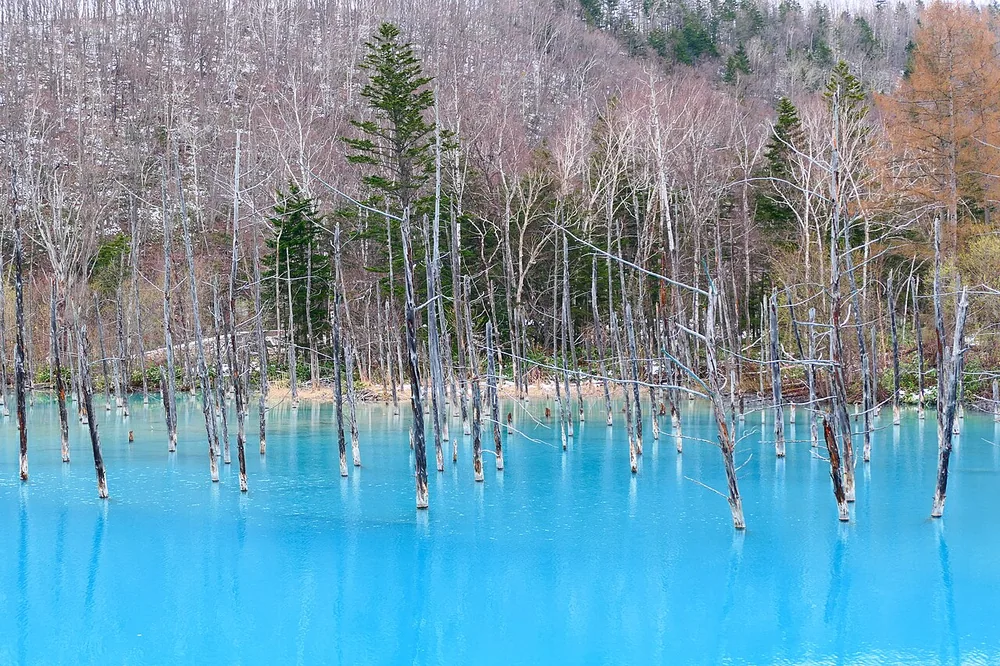
For bare larch trunks mirrored in blue water, visit Shirogane Blue Pond on a windless morning before heading upstream to Shirahige Falls. Once the pond freezes and fills with snow in winter, the focus after dark shifts to floodlights sweeping across the snow and standing timber. Dohoku Bus takes around 22 minutes from Biei Station to Blue Pond, and another 4 minutes between the two sights. Public buses easily link both stops by day, whereas winter evening trips must be planned around the last bus back. Following the October 2026 timetable revision, the last regular bus from Blue Pond to Biei Station departs at 18:05—meaning the March and April illumination start times fall right on or after the final departure.
How Blue Pond, Shirahige Falls and Shirogane Onsen fit together
Heading out from Biei Station towards the Shirogane area, the route passes Michi-no-Eki Shirogane Biruke, Shirogane Blue Pond, and finally Shirogane Onsen. Both Blue River Bridge and Shirahige Falls sit at the hot-spring village stop. Biei Town maps put the distance from the roadside station to Blue Pond at roughly 1.8 km, and from Blue Pond to Shirahige Falls at about 2.5 km. Drivers can pull in at each stop in turn, while bus passengers need to treat every hop as a timed connection: the ride between stops takes only a few minutes, yet services can be over an hour apart. It pays to save the romanised Japanese stop names alongside your navigation pins and timetable notes.
Shirogane Blue Pond (Shirogane Aoiike) formed as a by-product of erosion-control works tied to Mount Tokachidake. Water pooled behind a check dam, gradually submerging and killing the larch trees standing in the basin. Upstream at Shirahige Falls, the scenery opens onto an active gorge. Groundwater seeps straight from cracks in the cliff face, dropping roughly 30 metres in slender white streams into the Biei River below. Seeing both together shows first how the basin holds stillness and tree reflections, then how the same mountain water cuts through the valley from the bridge.
On a first visit, allow 30 to 45 minutes at Blue Pond, covering the walk between the car park or bus stop and the viewing path. Shirahige Falls is mainly viewed from the bridge—about a 3-minute walk from the bus stop—where 20 to 30 minutes is plenty to take it in unhurriedly. These are active sightseeing times: add time for entering and exiting the car park if driving, or waiting between buses. If the pond looks murky straight after heavy rain, trim your time by the water and spend the daylight examining the waterfall's rock face and river gorge instead.
Take Dohoku Bus 39 or 42 from Biei Station to Blue Pond and Shirahige Falls. Includes half-day timetables, fares, the ¥1,000 car park fee, 2026–27 illumination hours, and routes to Shirogane Onsen and Furano.
Buses 39 and 42 from Biei Station: check the return stop first
Biei Station on the JR Furano Line connects Asahikawa and Furano. Leave the station and look for the bus stop beside Asahikawa Shinkin Bank signed for Shirogane Onsen and Aoiike, rather than lingering in the taxi rank outside the forecourt. Route 39 (Shirogane Line) runs from Asahikawa via Biei Station to Shirogane, while Route 42 (Biei Shirogane Line) can be boarded at Biei Station. Both services drop passengers at Shirogane Aoiike Iriguchi (Blue Pond Entrance) for the pond and Shirogane Onsen for the falls. Check timetables carefully so you do not confuse Michi-no-Eki Shirogane Biruke with Shirogane Aoiike Iriguchi—alighting early at the roadside station leaves you around 1.8 km short of the pond.
Bus stops heading towards Shirogane and those returning to Asahikawa sit on opposite sides. When continuing from Blue Pond to the falls, wait on the side bound for Shirogane Onsen or Seishonen Koryu no Ie; for Biei, take the opposite direction. As soon as you step off at Blue Pond, note the return stop, the road-crossing point, and snow conditions underfoot—especially after dark, when you should work backwards from the walking time to leave the water's edge. Save your itinerary in Japan Standard Time (JST) and take a screenshot showing the date, stop names, and return direction, as zoomed-out maps make it easy to mistake the roadside station, Blue Pond Entrance, and upstream stops along the same road for one another.
If you are staying in Asahikawa, you can also board Route 39 directly from Stand 9 outside Asahikawa Station. Under the 1 October 2026 timetable, for example, the 09:40 departure from Asahikawa Station calls at Biei at 10:34 and reaches Blue Pond at 10:56—ideal if you want a single-seat ride up the mountain. Travelling both ways via Biei lets you pair JR Furano Line arrivals with either Route 39 or 42, giving two return options. Keep in mind that Route 42 terminates at Biei Station, which matters if you plan to dine back in Asahikawa: on the regular timetable, the last direct bus from Blue Pond to Asahikawa leaves at 14:45, more than three hours earlier than the final bus back to Biei.
Station boards for Dohoku Bus indicate payment by cash or supported contactless payment cards, while standard transport IC cards are not accepted. If paying in cash, carry small change, take a numbered boarding ticket (seiriken) as you get on, and check the overhead fare chart against your ticket number before alighting. Zone-pass holders should show their pass to the driver as instructed. Keep paper or mobile bus tickets separate from your JR rail tickets—riding the train from Asahikawa does not include the bus leg to Blue Pond.
Single fares from ¥800, and when the day pass pays off
According to the Dohoku Bus board at Biei Station, adult single fares are ¥800 from Biei Station to Blue Pond, ¥900 from Biei Station to Shirogane Onsen, and ¥220 between Blue Pond and Shirogane Onsen. A simple return to Blue Pond costs ¥1,600, while a return to Shirahige Falls alone is ¥1,800. Travelling Biei to Blue Pond, transferring up to the falls, and riding straight back from Shirogane Onsen to Biei totals ¥1,920 across three legs. Only if you stop at Blue Pond again on the way back—making four separate rides at ¥2,040 total—does the ¥2,000 adult day pass beat buying single tickets.
The Biei-Shirogane Area 1-Day Free Pass allows unlimited boarding and alighting on Routes 39 and 42 between Biei Station and Shirogane Onsen on the date of use, priced at ¥2,000 for adults and ¥1,000 for children. It is sold at Shiki no Johokan, GIOVANNI near the station, and on the official Dohoku Bus ticket page. Even if you visit the pond and falls just once each, paying ¥80 above the three-leg total buys the flexibility to hop off at Michi-no-Eki Shirogane Biruke for lunch or to wait out passing weather—and if you plan a fourth ride, buying the pass upfront saves money. The pass simply covers repeated rides on the same day; you still travel on the exact same timetable.
Direct buses from Asahikawa Station cost ¥1,600 to Blue Pond and ¥1,630 to Shirogane Onsen. Anyone using the Biei-Shirogane day pass will still need a separate ticket between Asahikawa and Biei. For groups, tallying adult and child point-to-point fares against car hire, fuel, and parking fees gives a much clearer cost picture than comparing a single bus pass alone. Evening sightseeing buses are separate tours booked on their own reservation page.
Morning bus loop for pond and falls, with lunch back in town
On the regular weekday and weekend timetable effective 1 October 2026, you can catch the 10:34 Route 39 bus from Biei Station to reach Blue Pond at 10:56, take the 11:27 Route 42 bus towards Shirogane arriving at Shirogane Onsen at 11:31, and return on the 12:02 Route 39 bus, reaching Biei Station at 12:30 (with the bus continuing to Asahikawa Station for 13:27). That gives roughly half an hour between bus times at each sight, suited to a brisk stroll and a few photographs. In winter, snow slows walking down, so both the walk to the water and the return to the bus stop come out of that 30-minute window.
To linger longer by the pond after arriving at 10:56, wait for the 12:16 Route 39 bus to Shirogane, arriving at Shirogane Onsen at 12:20, then catch the 13:16 Route 42 bus back to Biei Station for 13:44. That adds nearly an hour at Blue Pond while leaving just under an hour at the falls; if you also want a meal or a hot-spring soak, pick a later return bus. Always lock in your return stop and departure time first, then calculate how long you can spend by the water. Special timetables apply over the New Year period, so check Dohoku Bus's seasonal notice if travelling around then.
If you have large luggage, leave it in lockers at Asahikawa or Biei before heading to the bus stop. Because this loop involves several boardings, a light daypack makes moving between stops far easier. Save lunch for the area around Biei Station, where you can sit down comfortably rather than eating out of a box at the Blue Pond bus stop. Travellers continuing to Furano should treat 12:30 or 13:44 strictly as arrival times at Biei Station, leaving buffer time to cross to the platform for a local JR Furano Line train towards Furano. If an inbound train runs late and you miss the 10:34 bus, shorten your Blue Pond stop and reschedule the waterfall leg rather than trying to force the original timetable.
Driving and parking: ¥1,000 per entry for standard cars
Driving from central Biei to Blue Pond takes about 20 minutes along Hokkaido Prefectural Route 966 towards Shirogane. Turn left at the junction near Kaikugama onto the Bibogahara Biruke Line, then follow signs left into the Blue Pond car park. Returning from Shirogane Onsen, turn right at the Kaikugama junction onto the same town road. Traffic islands sit near the car park entrance; if your satnav tells you to cut right straight in from the near junction, follow the road signage around to the official entrance instead. Save separate pins for the viewpoint and the car park so navigators do not steer towards a marker sitting in the middle of the water.
From 1 July 2026, the Blue Pond car park charges per vehicle, per entry: ¥1,000 for standard, compact, and kei cars; ¥300 for motorcycles; and ¥6,000 for large vehicles over 6 metres long. Standard cars and large vehicles use separate entrances. Take a ticket on entry, pay at the pre-payment machine after your walk, and drive to the exit barrier. If you visit in the morning for reflections and return after dark for the illuminations, budget for two entries; driving back down from the waterfall car park to Blue Pond also crosses the barrier afresh.
Biei Town sets car park opening hours at 07:00 to 19:00 from 23 April to 21 October 2026, shifting to 08:00 to 21:30 from 22 October 2026 to 21 April 2027. At Shirahige Falls, use the free public car park in front of Shirogane Tourist Centre; for Biruke Forest, park at Michi-no-Eki Shirogane Biruke. Both facilities have separate entrances and dedicated parking. According to the tourist association, sunny days see peak crowding at Blue Pond between 13:00 and 15:00. Check Biei Town's live attraction crowd map before setting out—if Blue Pond has a queue while Shirogane is clear, head upstream to the falls first and double back.
Mountain roads turn colder than town after dark, bringing black ice and reduced visibility in falling snow. If it is your first time driving on snow, keep driving to daylight hours and use a sightseeing bus or pre-booked taxi at night, making sure any winter hire car is fitted with winter tyres. Should blizzards obscure road markings and verges, stay in your accommodation area rather than chasing illumination cut-off times based on optimistic satnav estimates. Clear all snow and ice from headlights, wing mirrors, windows, and the roof before pulling out so you can spot pedestrians and snow-pole markers around the car park.
2026–27 illumination hours and two after-dark parking options
For the 2026–27 season, both Blue Pond and Shirogane Biruke Forest are lit from 22 October 2026 to 21 April 2027, switching off at 21:00 each night. Lights come on at 17:00 in October and November, move earlier to 16:30 in December, return to 17:00 in January, then shift to 17:30 in February, 18:00 in March, and 18:30 in April. The lighting sequence at Blue Pond cycles roughly every 15 minutes, with a seasonal programme change once snow settles and the water freezes over. Deduct the walk to and from the path when timing your visit, and leave extra slack for boarding the bus or returning to your car if you want to watch a full cycle.
Shirahige Falls is illuminated year-round from sunset until 21:00, meaning its switch-on time tracks dusk rather than Blue Pond's fixed monthly schedule. Visitors with a car or pre-arranged transfer in December can see Blue Pond at 16:30 first, then drive up to Shirogane Tourist Centre to look down on the lit gorge from the bridge. In other months, anchor a two-stop evening around Blue Pond's predictable start time and build transfer time around it. If Biei Town cancels the Blue Pond illumination due to severe weather, divert your evening transfer back to your hotel or town centre and save the falls for daylight.
Using regular public buses from Biei Station after dark, the 17:15 Route 42 service arrives at Blue Pond at 17:37, followed by the final 18:05 departure from Blue Pond Entrance back to Biei at 18:30. From December to February the lights are already on when you arrive, giving 28 minutes total between buses—enough for a brief walk and quick photos tailored around the return departure once you subtract path walking, finding a spot, queueing, and waiting at the stop. In February the arrival precedes switch-on by just 7 minutes, and taking an earlier bus means planning where to wait beforehand. In March, lights come on at 18:00—just 5 minutes before the last bus—leaving far too little time on the path; in April they miss each other completely. In both months, pre-book a return taxi or drive yourself.
Anyone staying in Asahikawa or Furano must check JR Furano Line connections after 18:30 first. Dohoku Bus and JR run on separate timetables, so if there is a long wait for the evening train, plan dinner near Biei Station. To stay out photographing past 20:00, fix your pick-up time, car park meeting point, and destination before leaving in the afternoon; stops around Shirogane are spread out at night, making ad-hoc transport much harder to arrange than at Biei Station. Travelling by public transport on winter evenings is far less rushed when you visit Shirahige Falls by day and reserve the night for Blue Pond alone.
| Dates | Illumination hours |
|---|---|
| 2026/10/22–11/30 | 17:00–21:00 |
| 2026/12/01–12/31 | 16:30–21:00 |
| 2027/01/01–01/31 | 17:00–21:00 |
| 2027/02/01–02/28 | 17:30–21:00 |
| 2027/03/01–03/31 | 18:00–21:00 |
| 2027/04/01–04/21 | 18:30–21:00 |
Winter Biei View Bus for Blue Pond and Biruke Forest
Biei Town Tourism Association's Biei View Bus illumination tour runs on Fridays and Saturdays from 20 November 2026 to 13 February 2027, excluding 1 and 2 January 2027. Meeting at Shiki no Johokan beside Biei Station, it departs at 16:35 and is scheduled back in Biei at 18:30 from November to January, or 19:00 in February with an added stop at Biei Senka. The itinerary covers Biruke Forest and Blue Pond—allowing around 30 minutes at the pond, or 35 minutes in February—leaving Shirahige Falls for a separate daytime trip on Route 39 or 42.
Fares start from ¥4,000 for ages 12 and over and ¥2,000 for ages 4 to 11; children aged 3 and under travel free on a lap, or at the child rate if occupying a seat. Online bookings close two days before departure, with the final price confirmed on the booking page once you select your date and party size. If your train connection risks missing the 16:35 departure, compare the 17:15 Dohoku Bus and 18:05 return instead, noting they are ticketed separately. Families with young children can sort out winter layers inside Shiki no Johokan before boarding on time, knowing stop durations at both sights are pre-scheduled.
Cancellations made two or more days before departure incur a ticketing fee of ¥400 per adult and ¥200 per child; cancelling the day before costs 40% including the ticketing fee, rising to 50% on the day and 100% for no-shows or post-departure cancellations. If severe weather prevents safe operation, cancellations follow the organiser's official notice. Note that the tourism association also operates a separate Christmas Tree Shuttle visiting farmland tree spots—make sure you book the Light-up Course explicitly if you want Blue Pond.
Shoot blue water on still mornings, and snow after dark
According to the Biei Town Tourism Association, aluminium-rich streams from the Shirogane area mix with the Biei River, creating microscopic particles that scatter short-wavelength light and give the pond and nearby river their distinctive blue cast. Whether the water reads turquoise, emerald, or milky grey shifts with cloud cover, wind ripples, snowmelt, and recent rainfall. Spring snowmelt and heavy rain can turn the pond cloudy; for mirror reflections, target a clear, calm morning rather than picking a calendar month off social media.
Once on the viewing path, scan with your eyes first to see which bank holds the cleanest reflections. Moving just a few paces along the open trail changes how the vertical trunks align with their reflections—include the far tree line for wide views, or frame more water to isolate individual trunks. Front lighting brings out water colour cleanly, whereas backlighting and side light pick out fine twigs and bright glints across the surface. Midday still works for trees and water; under harsh summer sun, wait for a passing cloud to soften highlights or crop tighter to exclude the brightest glare.
On a smartphone, tap to focus on the brightest patch of water or sunlit opposite bank, then pull the exposure slider down slightly to hold surface texture. With a camera polarising filter, take one frame keeping the reflections before rotating the filter to compare: cutting glare can deepen the water's colour while muting the tree reflections, so choose according to what you want to emphasise. Even overcast skies can bring out vivid blue-green tones in close-ups without forcing every frame into the same saturated hue.
In autumn, frame the water with warm foliage along the banks—the side with the best leaf colour often matters more than chasing the sun on the opposite edge. Early winter can combine open water, thin ice, and fresh bank snow in a single frame, producing three distinct textures of light on clear days. Once snow blankets the pond completely, focus on beams sweeping between the trees and long shadows cast across the snow. Cold drains batteries fast, so keep spares in an inside pocket and seal cameras and phones in a bag before stepping into heated interiors to prevent condensation.
After dark, it is easy to watch your screen and lose track of footing. Plant your feet on level ground first, hold your phone with two hands or pause briefly to compose, and step aside once you have your shot. When tour groups gather, drop back to a quieter stretch further along the path while waiting for the next lighting cycle. Whatever the snow depth, stay strictly within the marked viewing area and never step off the trail onto the frozen pond. Aerial filming requires advance permission—check the Biei Town Tourism Association's Blue Pond drone-permit page and apply to the managing authority beforehand.
Choosing between Shirogane Onsen, Biruke Station and Bogakudai
Shirahige Falls pairs naturally with a wander through the hot-spring village. Shirogane Tourist Centre offers public toilets, and signs at the falls point straight onto Blue River Bridge. A short pause on the bridge is enough to shoot the white cascades dropping down the cliff face upstream and the narrow gorge downstream. In snowy conditions, check the bridge deck for ice first; slower walkers can pause near the near end and wait for crowds to thin before moving on, rather than bunching up in the middle of the bridge. Keep young children away from the railings, and stay firmly inside the walkway if lifting them up for photos.
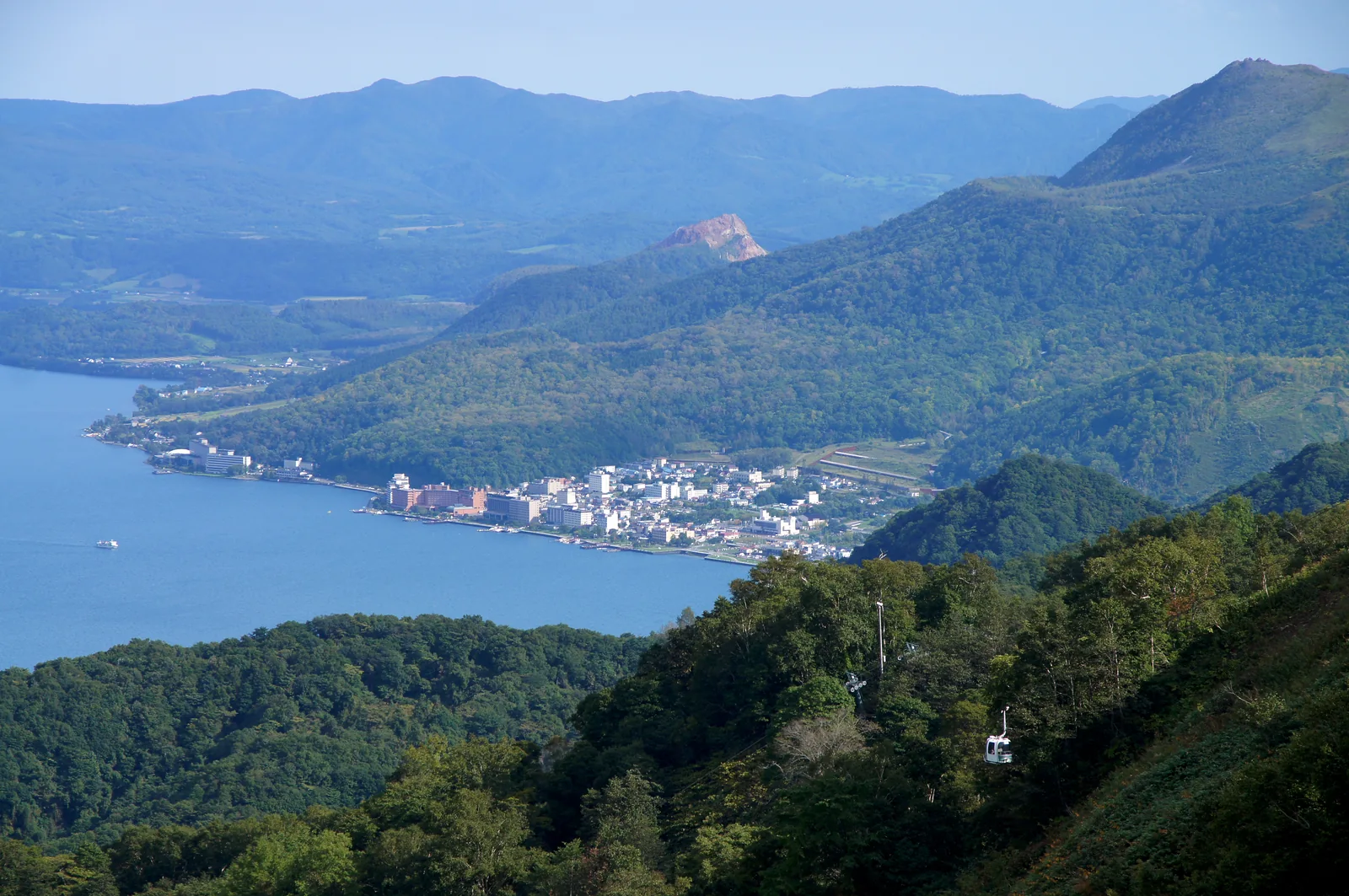
To linger longer in Shirogane, plan a daytime hot-spring soak after seeing the falls. Day-visit bathing hours vary by ryokan and hotel: confirm last entry times, whether drop-in guests are accepted that day, and which bus gets you back down before riding up from Blue Pond. Overnight guests should schedule around check-in and dinner times first, and check bath closing hours if going back out for night photos. If you have an early train the next morning, verify shuttle times, booking requirements, and direction to Biei Station before reserving your room.
Michi-no-Eki Shirogane Biruke sits on the Biei side of Blue Pond, making it a handy stop for toilets on the way up or a break on the drive down. Tourism association hours are 09:00–18:00 from June to August, 09:00–17:00 from March to May and September to November, and 10:00–17:00 from December to February; it closes from 31 December to 3 January and opens mornings only on 30 December. The pond-side shop opens 11:00–16:00 from December to March, closing on 31 December and 1 January. Both follow daytime schedules unrelated to the outdoor illuminations, so buy hot drinks or eat dinner in Biei before coming out at night.
Higher up past Shirogane Onsen sits Tokachidake Bogakudai, worth adding on clear days when the road is open and you have ample daylight. For 2026–27, Hokkaido Prefectural Route 966 closes in stages: Hakugin Gate to Bogakudai Gate closes from 11:00 on 19 October 2026, and Shirogane Onsen Gin'ei Gate to Bogakudai Gate closes from 11:00 on 1 December 2026, with both sections scheduled to stay shut until 11:00 on 23 April 2027. The mountain pass between Shirogane and Kamifurano is impassable during this window—return from Shirogane Onsen via central Biei to rejoin National Route 237. Closures begin above the hot-spring village, leaving the approaches from Biei to Blue Pond and the falls open on the lower side.
Family pacing, pushchairs and winter evening timing
Both water and trees are visible right from the entrance to Blue Pond, so you do not have to walk all the way to the far end of the viewing path for a view. Travelling with children or older relatives, stop first at the nearest open viewpoint overlooking the pond and let keen photographers continue along the trail alone. Agree on a clear meeting point—by the shop, trailhead, or return bus stop—so younger or slower members are not pulled along narrow paths with the crowd. At Shirahige Falls, keep things compact between Shirogane Tourist Centre and Blue River Bridge: use the toilets first, step onto the bridge, and head straight back to warm up.
Visitors using wheelchairs or pushchairs should check the Biei Town Tourism Association's accessibility notes and Blue Pond walking map ahead of time to confirm gradients, surfacing, and turning points from the drop-off area. If anyone in your group needs extra time boarding and alighting, pick a daytime bus window longer than a single 30-minute hop so you can comfortably make it back to the stop. When snow piles up, keep your walk short and only take off gloves to shoot once standing on flat ground. Waterproof boots with solid grip and a windproof jacket matter far more here than carrying an extra lens. Sightseeing buses cut waiting times, though you still walk after alighting—save hurried shots until you reach stable footing.
If your group only wants one evening outing, Shirahige Falls makes the simpler pick on windy or slushy nights, as the lit gorge is just a short walk from the hot-spring village onto the bridge. Save the full Blue Pond trail at night if snow-covered trees and illuminations are the main draw of your trip. When combining daytime water views and evening lights in a single day, schedule an indoor break in between—lunch in central Biei, checking into a Shirogane hotel, or soaking in an onsen beats waiting outside at a bus stop until switch-on.
Combining with Furano: put either day or night in Shirogane
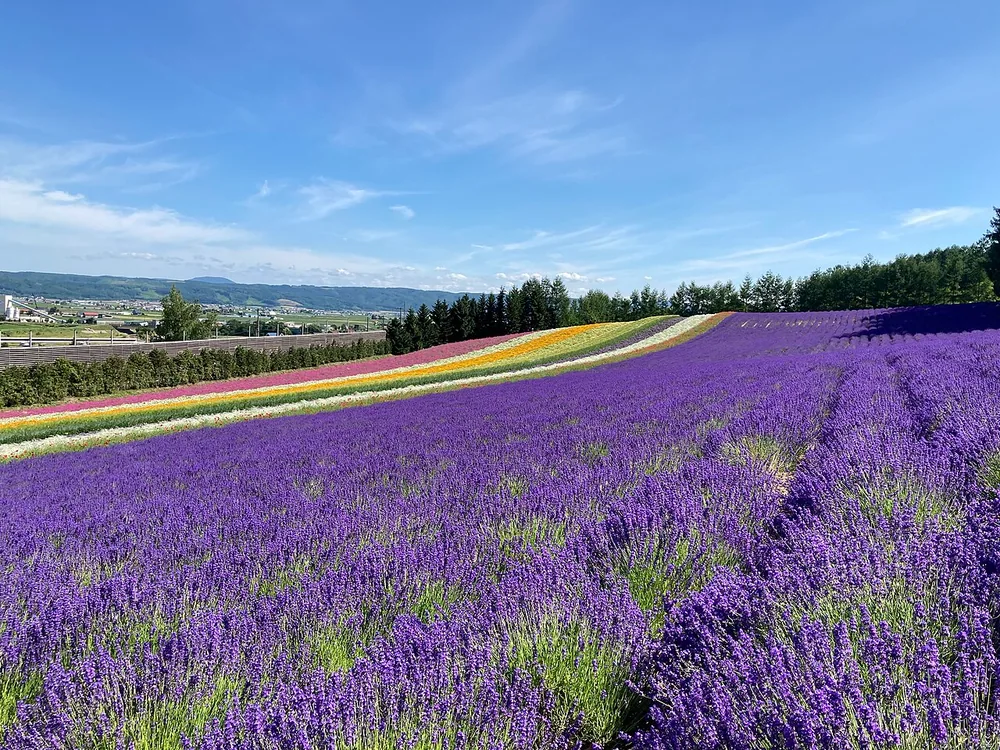
For drivers from late spring through early autumn, the smoothest route puts Blue Pond and Shirahige Falls in the morning, returns through Biei after lunch to head south on National Route 237, stops at either Shikisai-no-oka or a Nakafurano flower farm, and finishes around central Furano or the New Furano Prince Hotel area. Staying in Furano until dusk lets you stroll Ningle Terrace's forest cabins and boardwalks before dinner. Keeping Blue Pond in the morning lets you linger at the flower fields later without pushing the pond into its afternoon peak. For public transport itineraries aligned with peak bloom dates, see our car-free Furano and Biei flower routes guide.
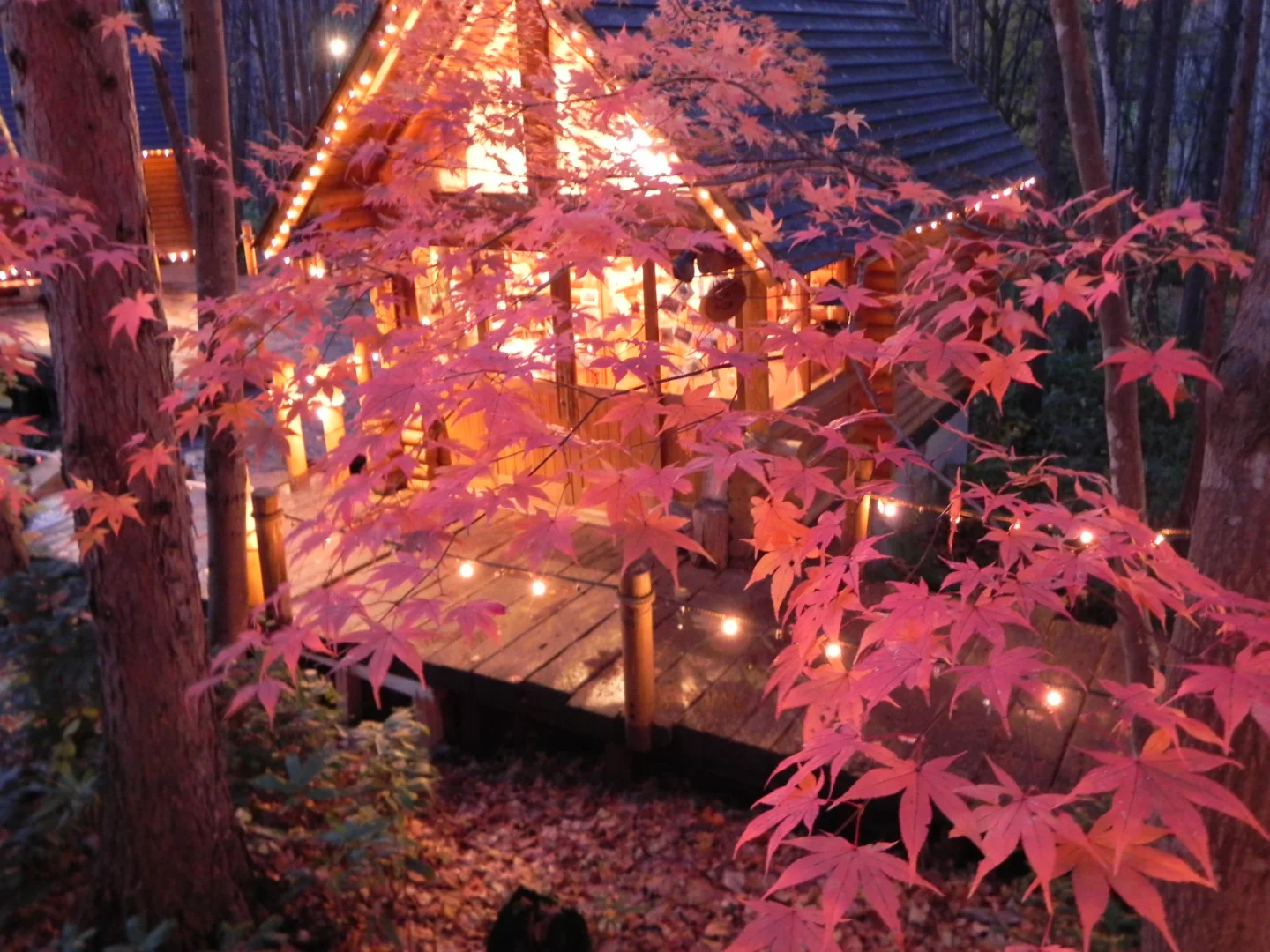
To do both in one day without a car, lock in a daytime bus back from Shirogane to Biei first, then connect by JR train to Furano. Ningle Terrace sits within the hotel grounds roughly 6 km from JR Furano Station—about 12 minutes by taxi according to the hotel—or reachable via Furano Bus's Lavender-go services calling at New Furano Prince Hotel. Check return bus times from the forest before setting out so you know when to wrap up. According to the hotel's maintenance schedule, Ningle Terrace closes from 5 to 26 November 2026 and reopens at 12:00 on 27 November, while individual craft cabins also keep separate closing days; during late-November closures, put your evening focus on the Shirogane illuminations instead.
In winter, staying in Furano while visiting Blue Pond after dark takes at least two transit legs each way via Biei. Because sightseeing buses return to Biei at 18:30 or 19:00, planning dinner in Furano leaves little margin for the onward connection. Alongside JR trains, Furano Bus's Lavender-go timetable (April 2026 edition) includes a 20:17 departure from Biei Station reaching Furano Station at 21:03, boarding from the Biei-eki bus stop on the opposite side of the tracks via the pedestrian footbridge. If you are staying in central Furano, eating dinner in Biei takes the pressure off. Better still, if you want both night spots without rushing, split them across two evenings—one night in Shirogane and one in Furano, visiting Ningle Terrace the following afternoon—so you hit each site's lighting hours comfortably.
From an Asahikawa base, Shirogane works neatly as a standalone half-day trip with direct daytime buses back to town. If you also have a flight or reserved long-distance train that day, tackle the longer Shirogane leg first and keep afternoon sightseeing inside Asahikawa. For a wider loop linking Asahikawa, Furano, and Daisetsuzan, plan your overnight bases using our Asahikawa, Furano and Daisetsuzan itinerary. Day-trippers from Sapporo in winter should work backwards from their reserved Sapporo train out of Asahikawa, locking in the connecting Furano Line train and Shirogane bus legs so daytime visits to Blue Pond and the falls keep generous transfer buffers.
Wet weather, missed buses and deep snow backups
The evening before you go, save a single screenshot with your outbound and inbound Blue Pond Entrance stops, return bus times from Shirogane Onsen to Biei, and your hotel shuttle's contact details. If JR delays hit between Sapporo and Asahikawa, you will see at a glance whether to adjust the outbound bus or the return from Shirogane. If you simply reach Blue Pond late, skip any planned stop at Michi-no-Eki Shirogane Biruke. Should a later arrival near 16:00 mean you miss the last direct bus to Asahikawa, ride down to Biei Station and take the JR Furano Line back instead.
If morning brings steady rain, pack the camera away early and make Shirahige Falls your main stop. When low cloud hides the mountains, save peak views for a clearer day and shift murky-water pond time towards Biei's station streets or a hot spring. Light snow still rewards a quick look from the nearest viewpoint, whereas deep drifts or poor visibility mean dropping mountain roads and forest detours from your evening plan. If you miss the 17:15 bus out of Biei Station, stay in town or take the train back to your base—and if switching to a night taxi, agree on outbound, return, and pick-up details upfront.
When making impromptu stops in the rolling hills for landscape shots, tell farmland apart from public roads. Biei Town Tourism Association's visitor guidelines ask travellers to stay on roads and designated viewpoints rather than stepping across field edges for closer tree shots. Boundary lines disappear under snow, so pull completely into marked parking bays to keep lanes clear for traffic and pedestrians. Fold away tripods before walking across icy stretches so one hand stays free for handrails.
A few useful answers
Do Shirogane Blue Pond and Shirahige Falls require admission tickets?
General entry to both sights is free. From 1 July 2026, the Blue Pond car park charges ¥1,000 per entry for standard cars, while Shirahige Falls has free public parking outside Shirogane Tourist Centre.
Can you walk from Blue Pond to Shirahige Falls?
They are roughly 2.5 km apart. After dark, in snow, or when catching the last bus, ride Dohoku Bus or arrange a transfer instead—the bus takes around 4 minutes towards Shirogane Onsen and 3 minutes coming back.
Can I see the March 2027 Blue Pond illuminations by public bus from Biei Station?
In March the lights come on at 18:00 and the last regular bus leaves Blue Pond Entrance at 18:05, leaving only enough time to walk straight to the stop. Pre-book a return taxi or drive if you want a proper look.
Does the winter Biei View Bus illumination tour stop at Shirahige Falls?
The 2026–27 winter illumination tour visits Shirogane Biruke Forest and Blue Pond, adding Biei Senka in February. Take Dohoku Bus to Shirogane Onsen separately for Shirahige Falls.
Will Blue Pond still look blue if it rains?
Spring snowmelt or heavy rain can turn the water cloudy. Check recent photos from the Biei Town Tourism Association once the rain passes, and save bright, windless hours for reflections.
Official information and references
Sources used in this guide.
- Biei Town | 2026–27 Illumination Schedule for Blue Pond, Biruke Forest and Shirahige Falls
- Biei Town | Blue Pond Car Park Fees and Seasonal Opening Hours
- Dohoku Bus | 1 October 2026 Weekday Timetable: Kaguraoka, Biei and Shirogane
- Dohoku Bus | 1 October 2026 Weekend and Holiday Timetable: Kaguraoka, Biei and Shirogane
- Biei Town Tourism Association | 1 October 2026 Biei Station Bus Boarding Guide and Fares
- Biei Town Tourism Association | Biei-Shirogane Area 1-Day Free Pass
- Biei Town Tourism Association | 2026–27 Winter Sightseeing Bus Routes, Fares and Bookings
- Biei Town Tourism Association | Shirogane Blue Pond Formation, Access and Accessibility Map
- Biei Town Tourism Association | Current Seasonal Conditions at Shirogane Blue Pond
- Biei Town Tourism Association | Driving Route and Junction to Blue Pond Car Park
- Biei Town Tourism Association | Shirahige Falls, Shirogane Tourist Centre and Bus Stops
- Biei Town Tourism Association | Michi-no-Eki Shirogane Biruke Opening Information
- Biei Town Tourism Association | Blue Pond Shop Opening Hours and Holidays
- Hokkaido Kamikawa General Subprefectural Bureau | 2026–27 Winter Road Closures (Items 13 & 33: Route 966)
- New Furano Prince Hotel | Autumn 2026 Maintenance Closures Including Ningle Terrace
- New Furano Prince Hotel | Access from JR Furano Station
- Furano Bus | Lavender-go and Local City Routes
- Biei Town Tourism Association | Walking, Cycling and Visitor Etiquette Pamphlets
- Biei Town | Live Attraction Crowd Status and Visitor Guidelines
- Biei Town Tourism Association | Blue Pond Drone Permits and Facility Information