Compare the two Sumida River display areas and five citizen supporter seating venues using the completed 2026 edition: capacity, children, convenience-store tickets, non-refundable donations and one-way bridges around Asakusa.
- Region & Focus
- TokyoFestivals and fireworks
- Reading Scope
- 29 min read · 18 chapters · 5 Q&As
- Official Verification
- 14 official sources checkedUpdated 26 October 2026
- Key Topics
- SeasonsBookingRail travel
Chapter Route Map (tap any stop)
- Choose a display area, then choose your bank
- The first area’s competition rewards time spent watching the details
- Five supporter venues serve the two launch areas
- Five-person mats: count people, ground seating and the full unit price
- Chair seating: Soyokaze in the north, Kuramae and Ryogoku in the south
- From application units to paper tickets in everyone’s hands
- Children count from age one, and the applicant counts too
- Supporter venues opened at 16:00 or 16:30; traffic restrictions began at 18:00
- Five one-way bridges and a separate closure at Sakura Bridge
- First area, Taito bank: find the northern entrance for your exact ground
- First area, Sumida bank: Soyokaze Hiroba and the Skytree station choices
- Second area: Kuramae on the Taito bank, Ryogoku on the Sumida bank
- Without supporter seats, watch while walking; no mats on roads
- Clear the exits, then follow the official departure-station plan
- Road closures affect buses and taxis
- Food, toilets and access needs depend on your venue
- Rain, cancellation and non-refundable donations
- Choose accommodation for a same-bank return, and explore the next day
- Quick Q&A
For the Sumida River Fireworks, first decide whether you want a seat or are happy to watch while moving with the crowd. Then keep the evening on one bank. The first display area has a fireworks competition; the second is nearer Kuramae and Ryogoku. The five citizen supporter venues have different seating, capacities and approaches. Choosing one area and one route back to your accommodation makes it easier to enjoy the display than chasing two stretches of river in one evening.
Choose a display area, then choose your bank
The 49th Sumida River Fireworks Festival took place on 25 July 2026. The organiser’s event outline gave an overall time of 19:00–20:30: the first display area started at 19:00, the second at 19:30, and both finished at 20:30. For a future trip, use this geography to choose an accommodation area, then follow the new edition’s announcements for dates, seat types and sales. Thinking of the first area as the northern stretch and the second as the southern stretch makes ticket pages easier to read than the loose label “Asakusa fireworks”.
The first launch area lies downstream of Sakura Bridge and upstream of Kototoi Bridge. The second lies downstream of Komagata Bridge and upstream of Umaya Bridge. City streets, bridges and restricted areas separate them. Trying to watch one and then follow the river to the other spends viewing time moving through crowds. Choose the first area for the competition; compare the second if its shorter display period better suits your evening. Then keep dinner, entry and departure on the same bank.
Work backwards from your companions’ needs. If you need to sit, start with supporter seating. If everyone can keep moving and mainly wants a Tokyo summer evening, compare ordinary walking viewing. Next consider which bank your accommodation is on and which line takes you back. If two people are staying in different directions, agree on a shared seating area and departure route, then separate after leaving the dense crowd rather than trying to find each other at a bridge approach.
Video of the 48th Sumida River Fireworks Festival in 2025, published by Taito City’s official channel.
Compare the two Sumida River display areas and five citizen supporter seating venues using the completed 2026 edition: capacity, children, convenience-store tickets, non-refundable donations and one-way bridges around Asakusa.
The first area’s competition rewards time spent watching the details
The two areas have different programmes. In 2026, the first area hosted a competition between ten fireworks companies. TV Tokyo’s programme for that edition listed the competition from 19:40, entries launching in sequence from 19:42 and the competition segment ending at 20:04. Other displays followed, with the finale starting at 20:24. If you are travelling to see the makers’ work, choose the first area and protect that settled viewing time, rather than comparing only the total number of fireworks.
Watch the shape after a firework opens, then how its colours change and when the points of light fade. Each entry has a name, and the programme helps identify the order. You do not need specialist vocabulary to notice different ways of holding and closing a display in the same sky. Holding a phone up throughout can keep your attention on the frame. Record a short passage if you wish, then look up directly for the rest.
The second area launched a series of themed displays from 19:30 to 20:30 in 2026. If you mainly want a seated summer evening with companions and a convenient trip back, rather than particular competition entries, compare chair seating on both banks of the southern stretch. Each area has its own view and programme. Once you choose, keep your time in that area.
The 2026 figures also changed between publication stages. The April plan gave about 9,350 fireworks for the first area; July’s programme listed 9,507, including 157 character fireworks. The second area listed 10,650. These were successive figures for the same edition. Venue, seating type and return direction remain the more practical bases for choosing a place.
Five supporter venues serve the two launch areas
The citizen supporter scheme is a personal donation to the festival, with special viewing places offered in return. In 2026 there was more than one kind of “Sumida River ticket”. Two sports grounds on the Taito bank and Soyokaze Hiroba in Sumida Park on the Sumida bank served the first display area. Kuramae Riverside Terrace on the Taito bank and Ryogoku Riverside Terrace on the Sumida bank served the second. The supporter scheme outline published by Taito City set out each pairing. Read the venue name, bank and number of people together when booking.
The table retains prices from the completed 2026 edition to compare different purchase units. Mat spaces were sold as one five-person unit; chairs as one person per unit. Unused capacity remained part of the full unit price. A family of exactly five can divide the mat cost easily. Two people need to compare the full amount paid for a mat with two chair places, rather than treating a five-way share as their checkout price.
| Special venue / display area | Seating and capacity | Donation / units allowed |
|---|---|---|
| Taito Riverside Sports Centre baseball ground / first area, Taito bank | Mat, 5 people | ¥25,000; 1, 2 or 4 units |
| The centre’s youth baseball ground / first area, Taito bank | Mat, 5 people | ¥25,000; 1 unit only |
| Kuramae Riverside Terrace / second area, Taito bank | Chair, 1 person | ¥9,000; up to 4 units |
| Sumida Park Soyokaze Hiroba / first area, Sumida bank | Chair, 1 person | ¥8,000; up to 4 units |
| Ryogoku Riverside Terrace / second area, Sumida bank | Chair, 1 person | ¥8,000; up to 4 units |
Five-person mats: count people, ground seating and the full unit price
The Taito Riverside Sports Centre baseball ground and its youth baseball ground both serve the first display area, but are separate invitation areas. The official location map put the baseball ground north of Sakura Bridge and the youth ground nearby to its south. An address naming the same sports centre does not make the other ground your entrance. Match the full venue name on the ticket to the map, then choose a meeting point on the same approach.
In 2026, one ¥25,000 unit produced five tickets, each with a ¥275 issuing fee, for a total of ¥26,375. Split between five people, that was ¥5,275 each. Four users still paid ¥26,375. Two units produced ten tickets, and four produced twenty, with donations and issuing fees multiplying accordingly. The baseball ground allowed 1, 2 or 4 units; the youth ground allowed one only. This arrangement suits a family or friends’ group with confirmed members, with one person managing the count and payment before distributing paper tickets.
The organiser’s FAQ described a five-person mat as about 1.8 by 1.8 metres, around 3.3 square metres. Cushions were allowed, but chairs and tables were not. It is easiest for people who can sit down on the ground and get up again. If you need a backrest or cannot bend your knees comfortably, compare chair places directly. The five-person space also has to hold everyone’s belongings. Keep backpacks within your area and large luggage at your accommodation to leave room for your feet.
Chair seating: Soyokaze in the north, Kuramae and Ryogoku in the south
For a chair at the first display area, compare Sumida Park Soyokaze Hiroba on the Sumida bank. In 2026 it cost ¥8,000 per person per unit, with up to four units, or ¥8,275 each including the issuing fee. It is across the river from the Taito sports grounds. Keep daytime plans and the journey home on the Sumida bank so that travel, food and entry all move towards one destination. For someone wanting the first display area and a chair, that distinction matters before comparing nearby bridges.
Chair seating for the second area was split between Kuramae Riverside Terrace and Ryogoku Riverside Terrace. Including issuing fees, Kuramae cost ¥9,275 per person and Ryogoku ¥8,275, a total difference of ¥2,000 for two people. If your accommodation and return route are on the Taito bank, an extra river crossing and backtracking may be a poor trade for saving ¥1,000 each. If you already need a train from the Sumida bank, Ryogoku follows your existing departure direction.
The riverside terraces shown on the map are specific stretches connected to street level by entrances. Treat chair seating as a defined venue, rather than looking for chairs somewhere by the river. Find the meeting and entry details on the ticket, walk through the neighbourhood to that entrance, then enter the terrace. For access needs, ask about steps, ramps and companion arrangements at that exact entrance so that the chair you choose connects to a route you can use.
From application units to paper tickets in everyone’s hands
The 2026 citizen supporter application terms used Ticket Pay for first-come, first-served online applications from noon on 10 May, with membership registration required beforehand. After applying, tickets were issued at FamilyMart or 7-Eleven. Two five-person units produced ten tickets. The transaction used donation units, while admission used individual tickets. The group organiser needed to connect those two stages.
First list everyone’s age, seating type, venue and total ticket count on paper, then have the organiser place the order. After payment, keep the application number and collection information. Collect the complete number of tickets at the designated convenience store and check the date and venue on each. Distribute admission information with the paper tickets. If someone reaches Japan on another day, arrange the handover in advance rather than leaving the only stack of tickets with someone who has not yet arrived at the venue.
The terms invalidated multiple applications by the same person. All seats were assigned, with no seat choice during application. Combine the group within the number of units allowed in one application. International visitors should place convenience-store collection in the time available after arrival and before fireworks day. If a member can no longer come, the organiser’s FAQ prohibited auction-site listings, resale for profit and other paid transfers. Breaches could lead to refusal of admission.
Children count from age one, and the applicant counts too
Under the 2026 rules, children aged one or over on event day counted as one person. The invitation total also included the lead applicant. Two adults and three children aged at least one made exactly five; three adults and three children made six and did not fit one five-person unit. Calculate this before choosing units. Whether a child is happy to sit on an adult’s lap did not change the count. Use actual birthdays for pre-school children instead of importing free-admission ages from other attractions.
A mat does not suit every family. If a child needs to get up frequently, consider surrounding paths and other spectators. If an older relative needs a chair, the whole family can choose chair seating. Soyokaze Hiroba serves the first area; Kuramae or Ryogoku Riverside Terrace serves the second. Families with different needs can also choose separate viewing places and eat together before the fireworks. Separate arrangements can be more comfortable than everyone using unsuitable seating merely to stay in one area.
The organiser’s FAQ said seats in separate applications were assigned randomly by the system. Friends booking separately should not rely on swapping seats on site to reunite. Put shared activities before entry. Once everyone has a ticket and knows their seating area, they can enter independently even if queues separate them. Meet at a clear street corner or lawful space outside a shop away from the main entrance flow. Keep the entrance itself available for ticket checks and passage.
Supporter venues opened at 16:00 or 16:30; traffic restrictions began at 18:00
The 2026 scheme outline put opening at 16:00 for the three Taito-bank venues and 16:30 for Soyokaze Hiroba and Ryogoku Riverside Terrace on the Sumida bank. The organiser arranged for spectators to enter before traffic restrictions began at 18:00. Use the afternoon to collect tickets, eat, use the toilet and find the entrance, then settle in while daylight fades. The 19:00 launch start is not a suitable target arrival time at the riverbank.
The official FAQ allowed entry after 18:00 and re-entry under staff instructions. Late arrivals still had to be able to reach their entrance. If your companions eat on the Taito bank but hold Sumida-bank tickets, one-way bridges after 18:00 may require a detour. The simplest option is to eat the last meal on the ticket’s bank and approach directly along streets on that side.
The 2026 FAQ listed credit cards or PayPay for payment. A place was secured after application and payment, and cancellation was not allowed after payment. New supporter applications were not accepted on the day. Before paying, the organiser of your group should check the date, venue and unit count. Save the application number afterwards and collect the correct number of tickets using the collection information. If payment is incomplete, check the order status and ticket-system messages before doing anything else, to avoid invalidating the booking with a duplicate application by the same person.
Five one-way bridges and a separate closure at Sakura Bridge
Taito City’s 2026 traffic restriction notice gave pedestrian bridge directions for approximately 18:00–21:30. Kototoi, Komagata and Kuramae bridges ran from the Sumida bank to the Taito bank. Azuma and Umaya bridges ran from Taito to Sumida. These directions alternated. Even if your entrance looked close across the river, you had to find a bridge running the right way, cross, then use streets on that bank to reach it.
For example, going from Taito to Sumida, you could not join the Kototoi Bridge queue simply because it was close to the first area. Find a permitted crossing in your direction, then continue to the east-bank destination. In reverse, someone heading from Sumida to Kuramae Riverside Terrace had to note that Umaya Bridge ran the other way. Navigation may draw a line across a bridge, but the actual route depends on restrictions and police directions.
Sakura Bridge was closed approximately 13:00–21:30 in 2026, so it was not a shortcut across the river after the northern display. Red no-entry areas beside the river were also distinct from blue vehicle-restriction areas. Pedestrians could move through blue areas as directed, but could not enter red areas simply because no cars were present. Read the colours first, then the arrows.
People may also be allowed across bridges in batches. Before crossing, put cameras away and keep tickets and phones easy to reach. Adults should walk with young children. If you need to stop and adjust clothing, first reach a staff-permitted space where you will not block people. Let passage take priority over photography, and wait until you are clear of the bridge approach to photograph the city at night.
First area, Taito bank: find the northern entrance for your exact ground
With a ticket for the baseball or youth baseball ground, keep daytime activities on the Taito bank and gradually move towards Imado and the sports centre. If you visit Senso-ji in the morning, reduce extra stops after the temple and lunch, leaving the afternoon for entry. Some riverside paths used on ordinary Asakusa walks close on fireworks day. Head north using streets and ticket-area directions, rather than testing every path with a water view.
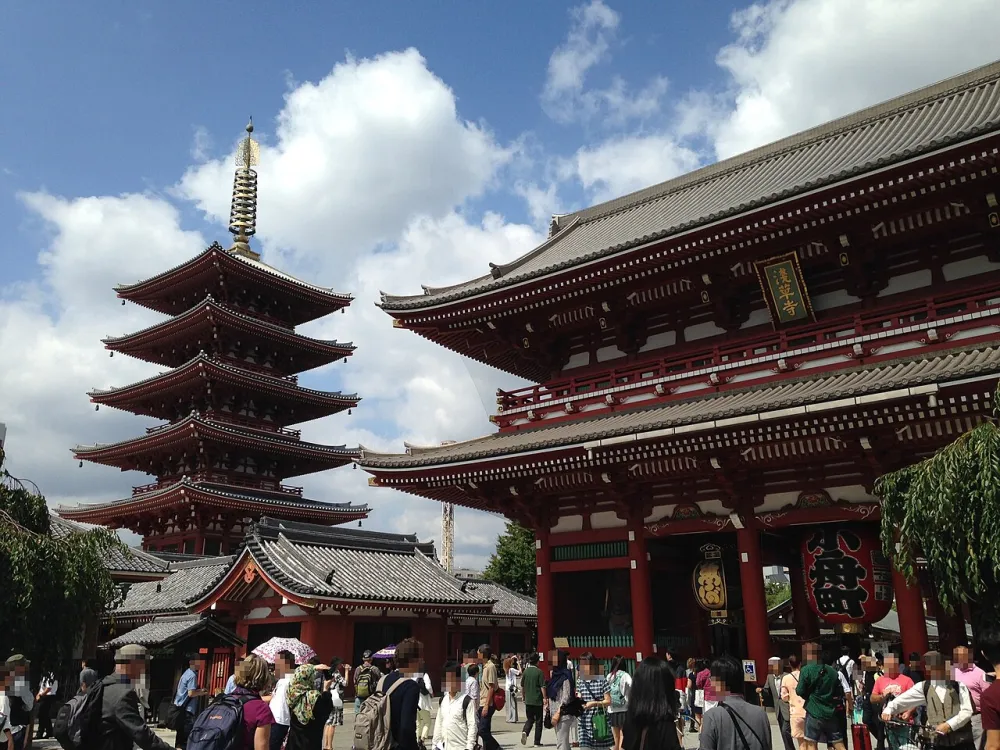
The official invitation-area map placed the two grounds in different positions near Sakura Bridge. Baseball-ground ticket holders should not reach the youth ground before checking their ticket. Save the same entrance map on everyone’s phone, enlarged to show the venue name and nearby junctions. That is clearer than sending a single sports-centre search pin. Map search can identify buildings; follow ticket instructions and signs for the final approach into the correct area.
After the event, remain on the Taito bank and choose Iriya, Tsukuba Express Asakusa or another station on the official dispersal plan. You avoid a river crossing to catch a train, but still have a walk from the northern grounds to a suitable station. Choose shoes and pace with departure in mind, and avoid accumulating shopping bags all day. If a companion walks slowly, reduce afternoon walking and save energy for the seating period and night-time exit.
First area, Sumida bank: Soyokaze Hiroba and the Skytree station choices
Soyokaze Hiroba lies on the Sumida bank, with approaches towards Honjo-azumabashi, Tokyo Skytree Station or Oshiage. The organiser’s venue guide listed Asakusa, Oshiage, Tokyo Skytree and Hikifune as stations near the first area. Compare these access points, then find a same-bank route for your ticket venue. Lunch near Skytree lets the final walk head towards the river, avoiding a last-minute crossing from Asakusa.
Treat Tokyo Skytree Station and Oshiage Station as different transport choices. The former serves Tobu; the latter connects to routes including the Hanzomon Line. The line you need for your hotel affects which entrance and walking direction suit you. Write down the station nearest your accommodation, then choose a departure station with fewer changes. That explains why a slightly longer walk can make the overall journey more direct.
You do not need to add an observation deck or cross-bridge photo stop to this bank’s evening. Walking from your seat to the station is already a stage of the itinerary. Buy a few items before entry if needed, or shop the next day. Put your pre-entry meeting point and first direction after departure in one note, so you can move straight out without restarting the discussion at the exit.
Second area: Kuramae on the Taito bank, Ryogoku on the Sumida bank
For Kuramae Riverside Terrace, eat your last meal towards Kuramae, then approach the Taito-bank entrance. The second display starts at 19:30, but still needs afternoon entry time. Use the extra half-hour to settle and organise water instead of adding a distant attraction. After leaving the terrace, follow that edition’s directions towards Taito-bank stations such as Asakusabashi, keeping the whole evening off the east bank.
For Ryogoku Riverside Terrace, save JR Ryogoku and Toei Oedo Line Ryogoku separately. Their station structures and entrances are in different places. If your accommodation is along the JR Sobu Line, use the JR station; if it is along the Oedo Line, study the underground entrance. The ticket area is a strip along the river. Leave through its exit to the street before heading to the required station. A navigation label saying only “Ryogoku” does not identify the operator.
Friends with Kuramae and Ryogoku tickets can eat together earlier in the afternoon on one bank, then each reach their own bank before bridge restrictions begin. Returning separately and meeting the next day is more practical than regrouping in the middle of a bridge. If you must travel home together, make the same bank and exit direction part of your ticket choice.
Without supporter seats, watch while walking; no mats on roads
The organiser’s 2026 homepage said there were no seated viewing places outside the citizen supporter venues. Ordinary spectators watched while walking along permitted roads in the arrow directions, keeping bridges moving. Mats, chairs and place-holding on roads were prohibited. This can offer a free taste of the display, but everyone must accept standing and slow movement. Do not expect a riverside picnic.
Both the northern and southern stretches have riverside no-entry areas. Cherry-blossom photo spots, everyday jogging paths and terrace entrances may become closed areas or supporter venues on fireworks day. On arrival, read junction signs and police directions, then follow open roads. Keep moving when fireworks appear. Do not form a stationary row at a bridge approach or slip past barriers towards the water.
This viewing style suits adults who can walk independently and accept a shorter stay. If your main wish is a whole family sitting through the full display, prioritise supporter seating. If no suitable places are available, keep the daytime Asakusa visit and make different evening plans. Matching expectations to the viewing method avoids walking into ever denser crowds while searching for somewhere to sit.
Clear the exits, then follow the official departure-station plan
The official 2026 departure-station map highlighted severe crowding at Asakusa stations on the Ginza, Asakusa and Tobu lines from about 20:30 to 23:00. It suggested Honjo-azumabashi, Tokyo Skytree, Oshiage and Ryogoku on the Sumida bank, and Iriya, Tsukuba Express Asakusa, Asakusabashi and Ueno on the Taito bank. Reading it by bank reduces unnecessary returns to Asakusa merely because the name is familiar.
Tsukuba Express Asakusa is in a different location from the Ginza, Toei Asakusa and Tobu Asakusa stations by the river. If you plan to take Tsukuba Express, write the full line name and include “つくばエクスプレス” in map searches. If you need the Ginza Line, use its station. An agreement to meet simply at “Asakusa Station” can send friends to different places that evening.
On the Taito bank, compare the walk and required return line together for Iriya or Ueno. Do the same for Oshiage or Ryogoku on the Sumida bank. Save one main station and one alternative on the same bank, then follow police directions to an available entrance after the event. This avoids recalculating the whole family’s trip on a phone outside a station.
If you delay taking a train, first leave the venue exits and bridge approaches, then rest or eat in a business that is still open and accepting customers. The supporter venue outline required an orderly exit after the fireworks. Taking a later train did not mean continuing to occupy your seat until crowds dispersed. Check late-night opening hours and return transport too, as you still need to complete the last leg after resting.
Road closures affect buses and taxis
Toei’s 2026 bus service changes listed split, shortened or suspended routes, including To 42, Ue 23 and Kusa 24. A normal stop at Asakusa Kaminarimon or beside the river might not be served on fireworks evening. Check the day’s stops before arriving by bus. For departure, use the walking route to the station you have already chosen.
Drivers and last-minute taxis also face the restricted area. The official 2026 arrangements provided no dedicated festival car park, and the supporter scheme outline did not allow arrival by car or bicycle. Leave luggage at the hotel, take a train to a station on the same bank and walk to the entrance. For a pick-up, choose a lawful stopping point outside road closures, then establish whether everyone can complete the walk between it and the venue.
The extra-train notice for the 2026 Sumida event focused on the Toei Asakusa Line: eight extra trains, plus seven Airport Limited Express services towards Narita Airport departing Sengakuji between 14:42 and 18:42 that made all stops between Sengakuji and Oshiage. The Oedo Line retained its normal Saturday and holiday timetable. If you use Kuramae or Ryogoku, identify your line so that extra Asakusa Line trains are not mistaken for extra Oedo services. You still need to enter stations with the departing crowd. Put fixed Shinkansen or airport-coach departures on the next day, leaving fireworks evening for the journey within Tokyo.
Food, toilets and access needs depend on your venue
The 2026 supporter venues allowed ordinary personal luggage and reasonable amounts of food and drink. Each had general, women-only and wheelchair-accessible toilets. These facilities support the afternoon wait, but connect your needs to the correct entrance. For step-free access, ask about the continuous route between the ticket area and the street. If you need help sitting down or getting up, choose suitable seating and arrange a companion.
Eat the main meal before entry. Bring small, easy-to-handle portions and water, bag your rubbish to take away, and keep belongings within your seat area. The organiser’s viewing rules warned that fireworks debris could fall because launch areas were close to spectators, and suggested protection such as towels and glasses. Seek a nearby first-aid point for an injury. During the afternoon wait, replenish water and salt and take breaks. Keep protective items within reach, and leave paths clear beside both chairs and mats.
Walking spectators can use the toilet at their arrival station before entering dense streets. The organiser publishes a toilet map. Check the bank and restricted areas as well as the location, avoiding a toilet trip across the river that sends you along a one-way route. With young children, deal with food, spare clothes and rest together. If a child is frightened by the noise or already tired, follow staff directions out of the crowd and end the evening somewhere you can care for one another.
Rain, cancellation and non-refundable donations
The 2026 plan cancelled the event in severe weather and similar circumstances, with no postponement date. The decision was normally due at 08:00 on the day. Sudden weather changes could still prompt homepage updates. Check official notices before leaving and follow on-site directions after entry. Choose compact rainwear that leaves your hands available, and keep your attention on the people ahead on bridges and at entrances.
The 2026 application terms made donations and handling fees non-refundable, including if the festival was cancelled. One five-person unit therefore meant accepting a full cost of ¥26,375. Two ¥8,000 chair places totalled ¥16,550 including issuing fees, which also needed to be assessed in full. This donation condition was known before payment. A traveller choosing not to attend because plans changed could not recover the amount either.
Hotels, transport and restaurant reservations have their own cancellation deadlines. If fireworks are an optional addition, keep a viable daytime Tokyo plan and spend a cancelled evening near your accommodation. If they are your main reason for travelling, compare the surrounding two nights and onward travel together, avoiding several inflexible bookings for one evening. Accept the overall cost before paying so you can focus on enjoying the event.
Choose accommodation for a same-bank return, and explore the next day
Put the supporter venue exit, departure station and hotel entrance on one map before choosing accommodation. For Taito-bank tickets, compare Asakusa, Ueno or places along your return line. For the Sumida bank, compare Oshiage, Ryogoku or another convenient base. If you are already staying several nights in Tokyo, check the return from a same-bank station to your existing hotel before deciding whether moving is worthwhile. Avoiding one luggage move often saves a task on fireworks afternoon.
Assess a “walk back to the hotel” by the actual bank and streets. A hotel across the river may require a detour to an open bridge even if it has a river view. A hotel on the same bank still requires open streets out of the restricted area. Check the address and night entrance before booking, ask the accommodation about late returns, and save the route in an offline phone note.
Use the next day for a relaxed half-day in eastern Tokyo. If you stayed on the Taito bank, finish the Asakusa streets you wanted to explore; on the Sumida bank, have breakfast before looking around locally. For a long-distance departure, collect luggage and eat first. Separating the late-night exit from an early long-distance journey lets the festival fit an existing Tokyo trip without keeping the whole family on a rushed schedule the next day.
A few useful answers
When is the 2027 Sumida River Fireworks Festival?
The 49th event took place on 25 July 2026. The next edition’s date awaits a new organiser announcement. For accommodation planning, first choose the area and bank for your preferred display.
Does a one-year-old count towards a five-person space?
The 2026 rules counted children aged one or over on event day as one person. The invitation total included the lead applicant. Two adults and three children aged at least one made five people.
Can I sit on a mat in the road without supporter seating?
Mats, chairs and seated viewing on roads are prohibited. Ordinary spectators watch while walking on open roads in the arrow directions, keeping bridges moving. Citizen supporter venues provide assigned places.
Are donations refunded if the event is cancelled?
The 2026 terms made donations and fees non-refundable, including festival cancellation. Hotels and transport follow their own booking conditions.
Must I return to Asakusa Station afterwards?
The official 2026 departure map suggested nearby stations by bank. On the Sumida bank, compare Honjo-azumabashi, Tokyo Skytree, Oshiage and Ryogoku. On the Taito bank, compare Iriya, Tsukuba Express Asakusa, Asakusabashi and Ueno.
Official information and references
Sources used in this guide.
- Sumida River Fireworks Festival: 2026 completion and citizen supporter notices
- Sumida River Fireworks Festival: event plan outline
- 2026 citizen supporter application terms: capacity, ticket issuing and costs
- Taito City: 2026 supporter scheme outline and venue facilities
- Taito City newsletter, 20 April 2026: prices for the five supporter venues
- Taito City newsletter, 5 July 2026: programme and one-way bridge restrictions
- Sumida River Fireworks Festival: venue, toilet and departure maps
- Sumida River Fireworks Festival: 2026 departure-station map
- Sumida River Fireworks Festival: FAQ
- Sumida River Fireworks Festival: viewing rules
- Toei Transportation: bus changes for the 2026 Sumida fireworks
- Toei Transportation: extra trains for the 2026 fireworks
- TV Tokyo: 2026 programme for both display areas
- Taito City: event plan announcement dated 7 April 2026