Use the official 2026 60th-edition details to compare SS to flat-ground seats, resident and general sales, free riverside entrances, and returns via Kanamachi, Shin-Shibamata, Aoto or Keisei Koiwa.
- Region & Focus
- TokyoFestivals and fireworks
- Reading Scope
- 34 min read · 15 chapters · 6 Q&As
- Official Verification
- 15 official sources checkedUpdated 7 November 2026
- Key Topics
- SeasonsRail travelBooking
Chapter Route Map (tap any stop)
- Identify the Shibamata event: the 60th edition in 2026 has finished
- Locate the Joban Line, Hokuso Line and Taishakuten on the venue map
- SS and S seats: front-facing views and a surface you can sit on all evening
- A, B and flat-ground seating: compare angles, chairs and whole-group prices
- Resident priority and general sales: visitors use the general ticket route
- Free riverbank entry: head upstream or downstream beyond the paid-seat frontage
- Remove the Matsudo bank, bridges and Yagiri ferry from the evening plan
- Arrive at Shibamata by day, visit Taishakuten, then head to your area
- Three nearby arrival stations: Shibamata, Kanamachi and Shin-Shibamata
- Disperse before departure: nearby queues and longer walks have different costs
- Returning across Tokyo: connect stations to your existing accommodation base
- Children, pushchairs and wheelchairs: plan tickets, seating and access together
- Eat before entry and keep riverside supplies light
- Vehicle restrictions last until about 22:00: arrange collection outside the zone
- Cancellation and two day plans: keep non-refundable costs manageable
- Quick Q&A
To combine Shibamata’s old shopping street with an evening of fireworks, distinguish ticketed and unticketed riverbank entrances first, then choose a return station. Central paid seats, upstream and downstream free areas, and restrictions across the river each have boundaries. Taking the right route saves effort before you reach the river and start looking for space.
Identify the Shibamata event: the 60th edition in 2026 has finished
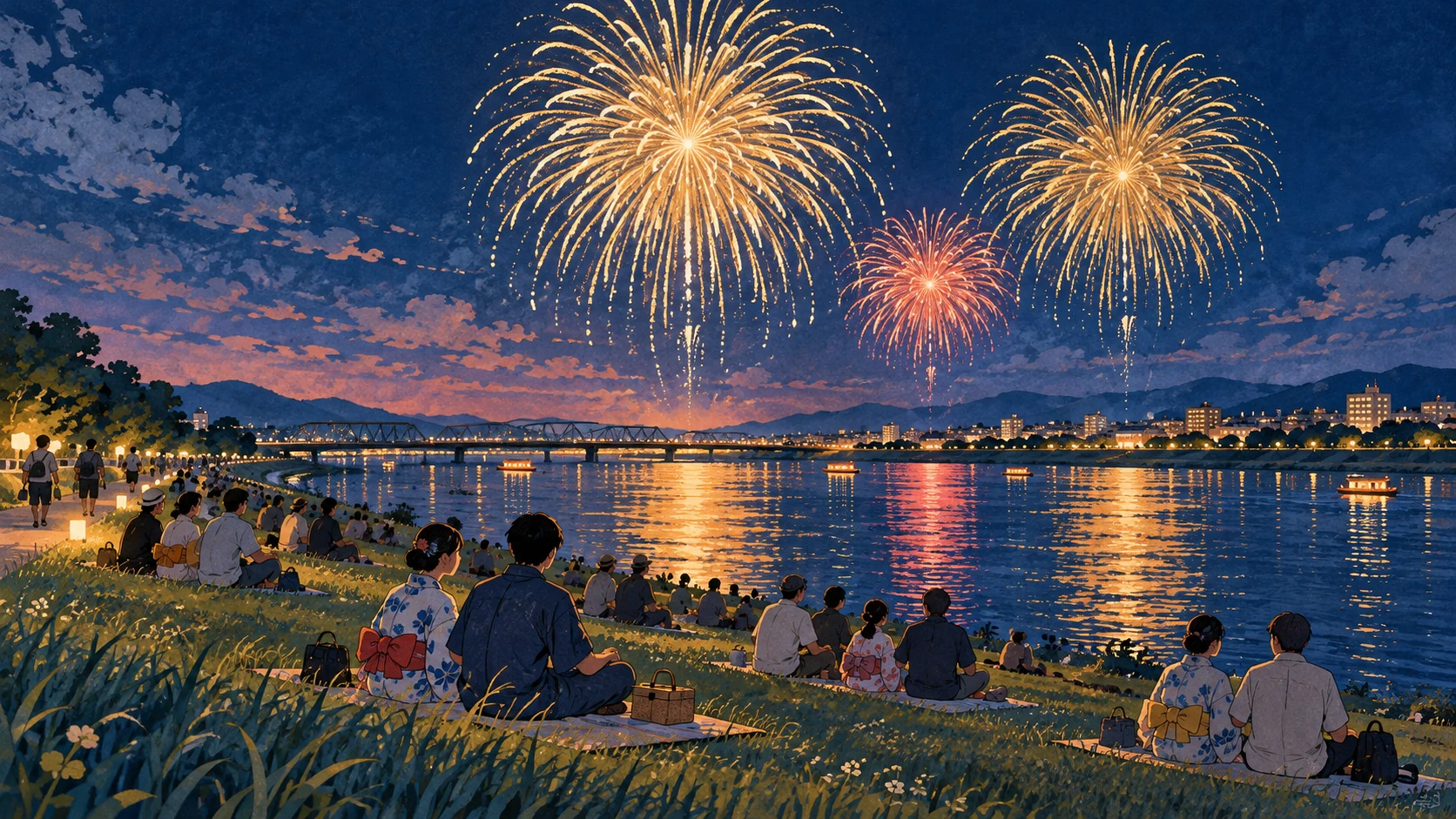
The Katsushika Fireworks Festival takes place at Shibamata Baseball Ground in Katsushika, Tokyo, along the Edogawa riverbed. The walk from Shibamata Station passes the Taishakuten approach, making it easy to connect a daytime old-town stroll with evening fireworks. Use the full Japanese name “葛飾納涼花火大会” with “柴又野球場” when buying tickets or searching maps to find the correct entrance information. Other fireworks events along the Edogawa have separate tickets and restrictions.
The Katsushika notice for the 60th edition lists 28 July 2026, 19:20–20:30, with about 20,000 fireworks. Tokyo’s official tourism page marks that year’s event as finished.
If you simply want to add a fireworks evening to a Tokyo trip, first shortlist return stations by how far your companions can walk, then choose seats. Shibamata is nearest, Kanamachi connects to JR, Shin-Shibamata is downstream, and Aoto and Keisei Koiwa need longer walks. These route differences affect the evening more directly than the apparent size of fireworks in promotional photographs. With young children or older relatives, acceptable walking and queuing times change the suitable seating area and arrival time.
A broadcast of the 60th event in 2026, published by J:COM Channel and J:Tele.
Use the official 2026 60th-edition details to compare SS to flat-ground seats, resident and general sales, free riverside entrances, and returns via Kanamachi, Shin-Shibamata, Aoto or Keisei Koiwa.
Locate the Joban Line, Hokuso Line and Taishakuten on the venue map
The official 2026 venue map places the Joban Line upstream and the Hokuso Line downstream, with Shibamata Taishakuten and Yamamoto-tei inland from the embankment. Paid seats lie mainly between the railway lines. From S1 on the Kanamachi side, they run past central SS and downstream through S2, S3, A and B. Flat-ground seating occupies a separate part of the riverbed. Establish these relative positions, then link your area to its access route.
The map pin for Katsushika’s Shibamata Baseball Ground identifies the event area. Entry also needs your ticket’s seat type and block plus the official stairway map. The upper cycle path, sloped seating and lower baseball ground are at different levels. Two points that appear close side by side may require a detour to usable stairs. If companions arrive from different stations, meet at a clear landmark outside the same entrance rather than vaguely “by the river”.
From Taishakuten, identify the former Kawajin Street first. It leads from near the temple towards the embankment and ends at the paid reserved-seat zone. Unticketed visitors crowding this way meet paid-area and crowd restrictions near the river. The 2026 map also marks Kanamachi Water Purification Plant as off limits and prohibits viewing from Shin-Katsushika Bridge. Distinguish places where you can watch, roads for passage only and fully prohibited areas on the same map.
SS and S seats: front-facing views and a surface you can sit on all evening
In 2026, SS faced the launch site. Two-person box spaces cost ¥16,000 and four-person spaces ¥30,000; chairs cost ¥12,000 each. Box spaces are blue groundsheets on the embankment slope, while chairs stand on the upper cycle path. The same SS label therefore covers different sitting positions and elevations. Two people who want a central view and are comfortable on the ground can compare a two-person box first. If bending knees or sitting cross-legged is difficult, start with chairs.
S1 lies slightly towards Kanamachi from the central view and offered only two-person boxes in 2026, at ¥14,000 per box. S2 and S3 on the other side also cost ¥14,000 for two-person boxes and ¥26,000 for four-person boxes. For a pair, the face-value difference between SS and S boxes is ¥2,000. Choose here if you want to spend more for the central angle. A group of four should first decide whether it needs one shared box or two separate boxes; the ticketing system allocates positions.
The 2026 reserved-seat product details state that buyers cannot select seat numbers. Trees and other natural features may obstruct some positions, without entitlement to an exchange or refund. Photographers must also consider shooting height. Tripods and tall chairs are restricted; handheld shooting within eye level is allowed.
A, B and flat-ground seating: compare angles, chairs and whole-group prices
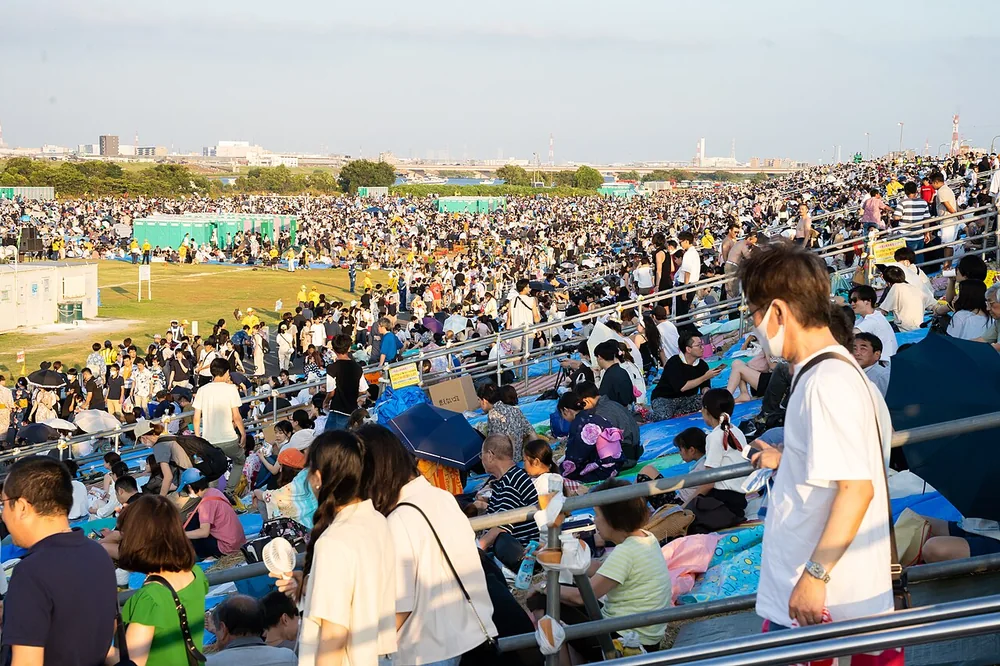
In 2026, Area A viewed diagonally from the right of the central position and cost ¥12,000 for two-person boxes or ¥22,000 for four-person boxes. B was further to one side, at ¥11,000 for two or ¥20,000 for four. The ticket page also listed toilets reserved for paid-seat users within B. Both remain sloped groundsheet seating. Below an S-level budget, first accept the viewing-angle trade-off, then compare whole-group prices. “Paid seating” alone does not tell you the sitting position or direction.
Flat-ground seats view the launch site from the side. In 2026, boxes cost ¥10,000 for two, ¥18,000 for four and ¥27,000 for six; individual chairs cost ¥5,000. This adds options for groups of three or more and visitors who want chairs. Two adults pay ¥10,000 for two flat-ground chairs, the same as a two-person flat-ground box. The choice is between a chair each and a shared groundsheet, along with accepting the side view.
The seat descriptions show whole-box prices, while transaction notes specify one ticket per person, sold in units of two, four or six for the corresponding box. Compare the whole-group price first, then actual ticket count and fees. A four-person B box at ¥20,000 comes with four tickets; retain the complete set for refunds. Three people needing seats in a four-person box must arrange the whole box and four tickets. The spare ticket cannot be resold separately.
For shared costs, choose one person to handle the complete order and collect the group’s payment. Separate purchases for the same seat type may fall in different blocks. Buy together in one order if you need to sit together. The organiser prohibits resale of reserved seats, including spare tickets split from a box.
Resident priority and general sales: visitors use the general ticket route
The 2026 resident priority sale ran from 10:00 on 5 June to 23:59 on 14 June. It was first come, first served for Katsushika residents only, limited to one seat type and up to 12 people per ID. Payment was by credit card only. All tickets were delivered to the registered Katsushika address, with postage paid by the organiser. Both eligibility and delivery address were restricted. Short-term overseas visitors use the later general sale.
General sales began at 10:00 on 22 June 2026 through the Pia website and 7-Eleven stores. Online Pia purchases require free membership. Products offer credit-card or convenience-store payment and convenience-store collection or delivery, with actual options determined by the chosen sales channel. Overseas visitors should find a workable route in the general sales rules and complete member verification, payment and collection together. Distribute paper tickets to companions after collecting them.
The 2026 page lists an issue fee of ¥165 per ticket, system fee of ¥330 per ticket, payment fee of ¥330 per transaction and delivery fee of ¥990 per order, charged according to purchase method. Use these to break down that year’s order. The final payment screen shows the combination for store or online purchase, credit card or convenience-store payment, and collection or delivery. Keep a six-person box’s face value separate from its six ticket-issue fees so a per-person note does not understate group costs.
After collection, check the date, seat type and number of tickets and keep each ticket intact. Re-entry to paid reserved seats requires the ticket. Take your own ticket stub when leaving to shop or use the toilet. If the group will enter at different times, collect and distribute tickets before meeting. Leaving the group’s only collection details with a late arrival can prevent everyone else from entering.
Free riverbank entry: head upstream or downstream beyond the paid-seat frontage
Katsushika retains free viewing areas. In 2026, the official guidance directed unticketed visitors downstream beyond the Hokuso Line viaduct or upstream beyond the Joban Line viaduct. The downstream Shibamata sports and baseball grounds also allow viewing. Routes and controlled areas separate these from central paid seats. Choose one end on reaching the river and continue that way rather than searching back and forth in front of the paid seats.
Unticketed visitors from Taishakuten should decide their turn before reaching former Kawajin Street and the embankment. The official map points towards the Hokuso Line side for free areas. After traffic restrictions start at 17:30, follow staff directions downstream along the metropolitan road. Enter free viewing through areas marked open on the map. Where central stairs are paid-seat-only, keep heading to an entrance you can use rather than reversing against queues.
Place-saving starts only on the event day. All items left the previous day are removed. As there is little night lighting, the organiser asks visitors to wait until daylight before seeking a place. Lay out only the sheet area your actual party needs. Ground pegs are prohibited on the pitches, as are stones or bricks brought as weights. In strong wind, pack the sheet away or manage it with personal belongings. Take it and rubbish away afterwards so the grounds can be used again.
For a less cramped position, use the two railway lines as direction markers, then choose an actual place to sit within permitted areas. Keep roads and cycle paths clear. Staff control access when free areas reach crowd limits. If settled downstream, connect your return towards Shin-Shibamata or Keisei Koiwa to avoid another crossing of central Shibamata crowds. Free viewing saves ticket costs, while every companion must accept longer walks and earlier waiting.
Remove the Matsudo bank, bridges and Yagiri ferry from the evening plan
Katsushika’s 2026 rules explicitly close the opposite Matsudo riverbed on the event day, with the road below the embankment restricted from about 17:30 to 22:00. The official map also includes the opposite-bank Edogawa cycle route and embankment-top road in the no-entry notice. Visitors staying in Matsudo or arriving from Chiba should route to an open viewing area on the Katsushika bank, rather than treating the opposite bank as free alternative seating.
Stopping to watch fireworks on Shin-Katsushika Bridge is prohibited. Bridges serve movement. Move out of vehicle and pedestrian routes to take photographs or wait for companions. The upstream free area is on the riverbed ground; choose a sitting place there and keep the bridge clear.
The map marks the Yagiri ferry, which can tempt visitors to combine normal ferry sightseeing with fireworks departure. The evening’s opposite-bank no-entry rule rules out that cross-river return. Use rail and walking on the Katsushika side for this trip. Visit the ferry on a normal operating day and walk directly to your chosen station that evening. Waterside restricted zones are for the display and safety work; spectators remain in open seating areas.
Arrive at Shibamata by day, visit Taishakuten, then head to your area
Shibamata Station is on the Keisei Kanamachi Line. The Tora-san and Sakura statues, Taishakuten shopping approach and temple form a clear daytime walk from the station. The Keisei Shibamata Station page provides a station map and timetable. Arrive early in the afternoon to explore the old street, eat a meal and continue to your chosen riverbank entrance.
Shibamata Taishakuten’s formal temple name is Daikyoji. The temple’s sculpture-gallery information lists admission from 09:00 to 16:00 and closing at 16:30. Adults pay ¥400 and primary and junior high school pupils ¥200, covering the sculpture gallery and garden. Ten wooden panels outside Taishakudo depict Lotus Sutra stories. Allow time if you enjoy architecture and craft. For worship alone, keep the stop shorter and save indoor viewing for another day.
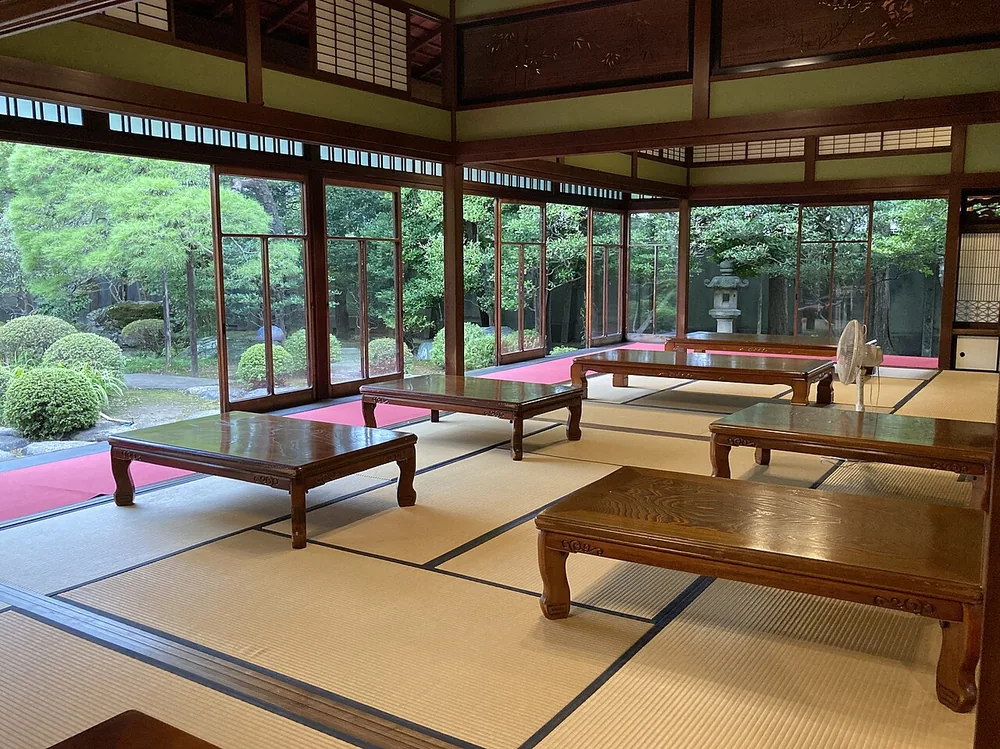
Yamamoto-tei is another daytime option. Katsushika’s facility information lists 09:00–17:00 opening and ¥100 admission, with junior high school pupils and younger free. It normally closes on the third Tuesday, moving to the next day after a holiday, with additional consecutive closures in December. This Japanese–Western house has a shoin-style interior, stained glass and a garden. Place it in the afternoon before entry if you want a seated rest. Admission and refreshments are charged separately.
Ticket holders need not spend the whole afternoon holding a slope position. Reserved-seat reception began at 16:00 in 2026, allowing daytime visits first. Unticketed visitors must trade sightseeing time against finding free space. Visiting the shopping street, temple and garden before the river reduces time to choose a position. One main visit plus a meal gives the easiest connection. Buy water and food and use the toilet before entry, then remain in your chosen area that evening.
Three nearby arrival stations: Shibamata, Kanamachi and Shin-Shibamata
The organiser gives ordinary walks of about ten minutes from Shibamata Station, 20 minutes from JR Kanamachi and 15 minutes from Hokuso Line Shin-Shibamata. The first neighbourhood map also marks Shibamata at about 1.0 km and Kanamachi at about 1.6 km. These are normal station-to-event-area estimates. Your stairs, ticket check and seat add further travel. Choose Shibamata for the temple approach; Kanamachi gives a straightforward arrival from the JR Joban Line.
Shin-Shibamata is downstream. The Hokuso Railway station page identifies it as HS01 and links to timetables towards Keisei Takasago/Nihombashi and towards Shin-Kamagaya/Narita Airport. The organiser lists it as a relatively less-used nearby station. For downstream free areas, arriving here reduces the backtracking involved in going first to central Shibamata.
The names are similar but the lines differ. Shibamata is on the Kanamachi Line; Shin-Shibamata is on the Hokuso Line. Use full names, preferably with the railway company, in hotel details, meeting messages and maps. Companions arriving at JR Kanamachi should also know that Keisei Kanamachi has a separate entrance. Meet at a clear place outside the station you actually use and gather everyone before moving on. This is easier for children and people carrying bags.
There is a wait between 16:00 reception and the 19:20 start. Arrive earlier if you want to sit down; reduce sun exposure by spending the earlier period at a daytime attraction or meal, while leaving enough time to walk in. The organiser has warned of severe crowding near the start, when even ticket holders may not reach their seats in time. Finish dinner and transport earlier. A ticket cannot speed up the entry crowd.
Disperse before departure: nearby queues and longer walks have different costs
Katsushika controls departure. Paid-seat spectators must wait for the announcement before standing to leave. The first stage after the display is leaving the seats and access routes; only then comes the station walk. Treating the 20:30 finish as a 20:40 station arrival underestimates both. The 2026 neighbourhood map notes past entry restrictions at Kanamachi and Shibamata and concentrated departure flows along former Kawajin Street. You may still queue near the station.
The Katsushika dispersal notice also suggests Aoto and Keisei Koiwa. The second official map gives about 3.3 km/40 minutes in normal conditions to Aoto, 2.4 km/35 minutes to Keisei Koiwa and 1.3 km/15 minutes to Shin-Shibamata. These suit people who can walk continuously in comfortable shoes. Decide whether the walk is physically suitable before weighing possible savings in nearby-station queues.
The Aoto route heads inland. Blue dots on the official map show a detour via the Takasago area, with a warning that Keisei Takasago itself may restrict entry. If everyone chooses Aoto, follow that map and evening guidance for the whole route rather than reconsidering at each nearby entrance. On a longer walk, keeping the same pace is simpler than sending one person ahead to queue while others try to catch up.
If you sit downstream in a free area, stay along the Keisei network and can walk comfortably, compare Shin-Shibamata and Keisei Koiwa in advance. Keisei Koiwa and JR Koiwa are different stations; the official dispersal map recommends Keisei Koiwa. Keep “Keisei” in navigation searches. Ordinary vehicles use the roads towards it. Continue obeying traffic signals after leaving the riverbank rather than treating the carriageway as an extension of pedestrian viewing space.
For tired children, favour a shorter return the whole group can complete. An extra three kilometres does not suit every family. Before joining a nearby-station queue, pack sheets and put shoes on properly in an area where you can stop, leaving hands free to care for companions. If you need a final connecting service or have a fixed accommodation curfew, decide the latest time you can leave the seats in advance. Leave early as directed by the organiser so the essential journey remains manageable.
Returning across Tokyo: connect stations to your existing accommodation base
If already staying in Tokyo, keep your hotel initially and choose a fireworks return station around it. For Ueno or Nippori, compare actual transfers from Kanamachi to JR and from Keisei stations. For Asakusa or Nihombashi, compare routes into central Tokyo from Shin-Shibamata or Aoto. Enter the full hotel address and expected departure time. Include platform changes, the hotel’s exit and the final walk, so reaching a major station extends to actually reaching your room.
Changing accommodation after leaving the crowd adds luggage collection and check-in. If your current hotel works and you remain in Tokyo the next day, taking a small bag and returning to the same room is usually easier. If moving to a nearby suburb, check the exact railway station, late check-in and luggage storage times. Rooms near Kanamachi, Shin-Shibamata or Aoto have different benefits for different seating areas.
Budget for the actual Hokuso or Keisei fare separately. A JR pass alone does not cover every operator used from Shin-Shibamata or Shibamata; pay according to each segment’s coverage. Prioritise a workable return and top up your IC card sufficiently before departure to avoid ticket-machine queues afterwards. You can then use a prepared alternative if you change stations.
With an early flight or long intercity journey the next day, avoid making a full fireworks evening the one activity you cannot shorten. Watch only the earlier part and leave through available routes, or allow another night before leaving Tokyo. Tokyo accommodation areas can help choose the base for the whole trip, with Shibamata as one evening excursion. This avoids moving all your luggage merely to shorten one night’s walk.
Children, pushchairs and wheelchairs: plan tickets, seating and access together
In 2026, one preschool child per adult could watch free on the adult’s lap. A child needing a separate seat requires a ticket. Two adults with two preschool children using the lap allowance should first consider whether they can hold them continuously on a groundsheet or chair. Count school-age children and anyone needing their own seat in the ticket total. Buy boxes in complete sale units so the family has consistent entry arrangements.
Pushchairs can enter the venue, but must be folded inside paid areas and kept within the box or where they do not obstruct passage. Slopes, stairs, a pushchair requiring both hands to fold and the child’s walking ability affect entry together. Assigning one adult the pushchair and another tickets and children works better than deciding at the stairs. Leave large luggage at the hotel and reduce pushchair contents to a load you can lift at once, without spreading items across a route while folding.
The ticket FAQ lists limited wheelchair spaces on top of the embankment, outside paid reserved seating, with no advance reservations. Four accessible toilets are provided. This differs from ordinary sloped box seating. Use the official map to connect wheelchair space, ramps and toilets, then add the journey from the station. A chair within a reserved area does not itself solve wheelchair access to that area.
The venue map marks three first-aid stations, with lost-person assistance above Stairway K. The organiser generally does not broadcast missing-child announcements during the display. Ask nearby staff or go to the marked lost-child tent if separated. Before entry, make sure children know the caregiver’s name, accommodation name and how to seek help. Save the same venue map on every adult’s phone so you share reference points even when communications are congested.
Eat before entry and keep riverside supplies light
The 2026 ticket FAQ states that there are no food stalls within the venue, only soft-drink sales. The drink stand at Shibamata Junior Baseball Ground also attracts queues. Eat dinner before entry or bring suitable food and water. The Taishakuten approach suits a daytime meal and snacks, but event-night crowds change waiting times. If someone needs regular meals, schedule dinner before heading to the embankment.
Even with a yukata, choose shoes for the actual return distance. Walking from downstream to Keisei Koiwa or from central seating to Aoto takes longer than a short stroll along the temple approach. Test unfamiliar wooden sandals during the day and bring flat replacement shoes if needed. Divide food, rubbish and rainwear into small bags accessible from inside the box, rather than standing to search a large rucksack each time.
The organiser asks spectators not to use umbrellas; use a raincoat in rain. Tall chairs, tripods and other items that block those behind are also restricted. Bring a thin seat cushion for sloped groundsheet seating if needed and keep belongings within your space. Glasses, a towel and enough water have practical uses. The organiser warns that burning firework fragments can drift down and asks visitors to drink before they feel thirsty. If unwell, go directly to a mapped first-aid station or staff and leave sun-exposed, crowded positions.
Smoking, pets and privately operated drones are prohibited in and around the venue. The ticket FAQ exempts guide, assistance and hearing dogs. Take rubbish away from the riverbed and sort it after leaving dense passageways. Pack phones and belongings after the final scene so everyone can move together when released.
Vehicle restrictions last until about 22:00: arrange collection outside the zone
The 2026 traffic notice prohibits vehicle traffic in and around the venue from 17:30 to about 22:00 on 28 July, with reopening directed by police on site. Edogawa Dotedori and Takasagodori have road closures. Cars and motorcycles cannot enter the zone except qualifying permitted vehicles such as residents’. Some riverside roads remain inaccessible even with a permit. Driving straight to the embankment to watch the show runs into these restrictions.
The ticket FAQ states there is no spectator parking near the venue and prohibits fireworks parking at nearby businesses, facilities or on residential roads. For a car collection, choose a legal stopping place outside the restrictions with a walk everyone can complete. Taxis also face road closures and traffic. Calling one to former Kawajin Street after leaving simply postpones the pedestrian and vehicle congestion problem until everyone is tired.
Bicycles and mopeds also face entry restrictions; cyclists must dismount and push. Delivery and takeaway vehicles are included in the controlled area. Local cyclists should use the organiser’s temporary cycle parking and walk in. Visitors can use rail and walking to avoid finding and pushing a bicycle through crowds. The route-bus notice states normal operation. Plan both directions using that edition’s stops and times and retain a rail return option.
Cancellation and two day plans: keep non-refundable costs manageable
The 2026 Katsushika event proceeds in rain but is cancelled in severe weather, without postponement. Ticket rules provide refunds for cancellation for organiser-side reasons before fireworks begin. There is no refund for termination after starting, personal non-attendance or cancellation of the drone show alone. Refunds require every ticket in the purchased set: two for a pair box, four for a four-person box. Calculate fireworks, transport and accommodation cancellation terms separately. An event refund does not handle other bookings automatically.
For two adults wanting Shibamata sightseeing and chairs, arrive at Shibamata Station in the afternoon, eat on the approach, choose Taishakuten or Yamamoto-tei, then enter after 16:00 reception opens. Using two 2026 flat-ground chairs, face value totals ¥10,000. Add one paid daytime attraction, food, return transport and actual fees. Two SS chairs instead total ¥24,000, a ¥14,000 difference. That buys a different position and view; both products provide chairs.
For lower spending without tickets, arrive via Shin-Shibamata and pair the downstream free area with a return on the same side. Shorten daytime sightseeing, prepare food and water, then choose a permitted place. Follow evening directions back to Shin-Shibamata, keeping Keisei Koiwa as an alternative for those able to walk further. This exchanges ticket costs for waiting and walking, suiting visitors comfortable outdoors and willing to adapt to capacity on the day.
For a family, decide children’s seating and walking distance first, then adapt either plan. Reduce daytime visits for children who need lap seating. For wheelchair needs, locate embankment-top space first. Even when saving on tickets, retain a budget for water, food and transport.
A few useful answers
Are Katsushika and Edogawa fireworks the same event?
They have different organisers. The Katsushika event in this guide takes place at Shibamata Baseball Ground.
Can I enter the riverbank behind Taishakuten without a fireworks ticket?
In 2026, the end of former Kawajin Street led into paid reserved seating. Unticketed visitors use open free areas upstream or downstream; the Hokuso Line side downstream is one official direction.
Can I watch Katsushika fireworks free from the Matsudo bank?
The Matsudo-side riverbed was closed on the 2026 event day, with the road below the embankment separately restricted from about 17:30 to 22:00. Plan viewing in open areas on the Katsushika side.
Does a preschool child need a Katsushika fireworks ticket?
In 2026, one preschool child per adult could watch free on the adult’s lap. A child needing a separate seat requires a ticket. Boxes are sold in complete two-, four- or six-person units.
Which station should I use after Katsushika fireworks?
Shibamata, Kanamachi and Shin-Shibamata are nearby. The 2026 organiser also recommended dispersal towards Aoto and Keisei Koiwa, about 40 and 35 minutes away on foot in normal conditions. Choose by seating area, accommodation and walking ability.
Can I cancel Katsushika fireworks tickets after buying?
The 2026 tickets could not be voluntarily cancelled. Cancellation for organiser-side reasons before fireworks start qualifies for refunds. Termination after starting or cancellation of the drone show alone does not. Keep the complete ticket set.
Official information and references
Sources used in this guide.
- Katsushika | 2026 60th-edition overview
- Katsushika | 2026 venue, seating and viewing rules
- Ticket Pia | 2026 reserved seats, sales eligibility and FAQ
- Katsushika | Official 2026 venue map
- Katsushika | 2026 neighbourhood maps and dispersed departure
- Katsushika | 2026 Kanamachi and Shibamata neighbourhood map
- Katsushika | 2026 Aoto, Shin-Shibamata and Keisei Koiwa neighbourhood map
- Katsushika | 2026 traffic restrictions and Matsudo bank closure
- Shibamata Taishakuten | Sculpture-gallery hours and tickets
- Katsushika | Yamamoto-tei facilities, admission and closing days
- Keisei Railway | Shibamata Station and station map
- Hokuso Railway | Shin-Shibamata Station and directional timetables
- GO TOKYO | 2026 Katsushika fireworks marked as finished
- J:COM | Official broadcast of the 60th Katsushika fireworks
- Katsushika | 2026 event-day operating notice