Kankakei Gorge entered peak autumn foliage across the entire valley on 19 November 2026. This guide covers ropeway fares and last departures, Kusakabe Port buses, the Omote-Junikei and Ura-Hakkei trails, plus day trips from Takamatsu and overnight island itineraries.
- Region & Focus
- Shodoshima
- Reading Scope
- 24 min read · 11 chapters · 5 Q&As
- Official Verification
- 21 official sources checkedUpdated 22 November 2026 at 08:00 GMT+8
- Key Topics
- SeasonsItinerariesChugoku & Shikoku
Chapter Route Map (tap any stop)
- Two Stations at Kankakei: Which End to Start From
- Where the 2026 Autumn Colour Peaks in Kankakei
- Ropeway Timetables, Fares, and On-Site Queues
- Takamatsu Port to Tonosho Port: Ferry vs High-Speed Boat
- Car-Free in November: Changing at Kusakabe Port for the Kankakei Line
- Omote-Junikei and Ura-Hakkei: Choosing a Trail to Pair with the Ropeway
- At the Summit: Viewpoints and Stops for Young Children or Older Travellers
- Driving Yourself: Parking and Return Ferry Timing
- Takamatsu Day Trip: Gorge First, Coast Second
- Staying Overnight: Separating Mountain Trails, Coast, and Tides
- Plan B: What to Do When Wind or Cloud Hits the Summit
- Quick Q&A
Travellers heading from Takamatsu to Shodoshima's Kankakei Gorge by bus need to remember one time above all: 16:00. That is the final November 2026 bus from Kountei back down to Kusakabe Port, a full hour before the last ropeway departure. The ropeway takes roughly 5 minutes each way and costs ¥2,700 for an adult return in November. With operators reporting valley-wide peak colour on 19 November, the neatest way to catch both the sheer rock faces and full autumn foliage is to schedule the ropeway and summit in the morning, leaving the afternoon for a section of trail or a coastal stop.
Two Stations at Kankakei: Which End to Start From
Kankakei Gorge sits inland on Shodoshima. Its ropeway links Koun Station at the base with Sancho (Summit) Station at the top, gliding past jagged rock walls and dense forest canopy. Buses from Kusakabe Port terminate at "Kountei", which is the base ropeway entrance. Enter the station name directly when using satnav: the base station is at Otsu 327-1 Kankakeidori, Shodoshima-cho, and the summit station is on the same road at Otsu 168, about a 20-minute drive apart by mountain road.
For an effortless leaf-peeping trip by bus, take a return ropeway ride from Koun Station, stroll between the First and Second Observation Decks at the top, and ride back down to the same bus stop. No scheduled public buses serve the summit station. Hikers keen to tackle a trail can buy a single ride up from Koun Station and walk back to Kountei via the Omote-Junikei (Front 12 Views) trail. Those who prefer saving their knees on descents can climb the front trail on foot first and take the ropeway down.
If anyone in your group uses a wheelchair, drive straight to the summit station. Stairs separate the base car park from the platform, so the operator advises wheelchair users to board and alight at the summit, where staff can assist with boarding. Drivers short on time can also treat the summit viewpoints as a standalone stop, or allow time for a full return ride to pass between the rock pillars.
Designated a National Place of Scenic Beauty in 1923 under the name Kankake-yama, the gorge later became a signature landscape of Setonaikai National Park. Its dramatic pillars and cliffs were sculpted over millennia by weathering and erosion of andesite and volcanic breccia. Kountei stands at roughly 295 metres above sea level and the summit station at 612 metres—a 317-metre vertical climb across a 917-metre cable span. On a first visit, watch from the cabin window to spot the recesses in the cliff walls, the tips of the stone pillars, and the tree line; once you step onto the trail, the rock names on the signposts immediately click into place.
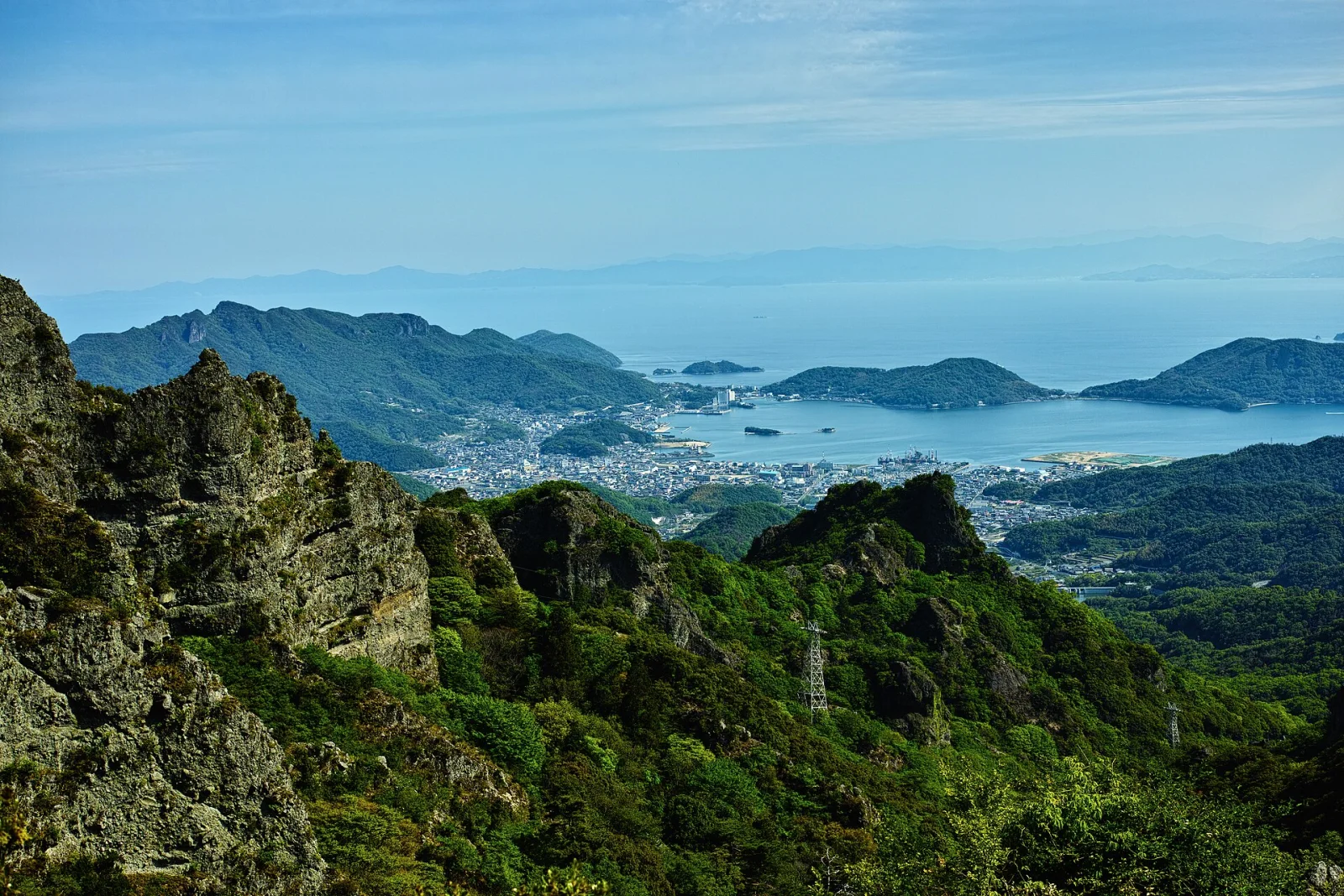
Kankakei Gorge entered peak autumn foliage across the entire valley on 19 November 2026. This guide covers ropeway fares and last departures, Kusakabe Port buses, the Omote-Junikei and Ura-Hakkei trails, plus day trips from Takamatsu and overnight island itineraries.
Where the 2026 Autumn Colour Peaks in Kankakei
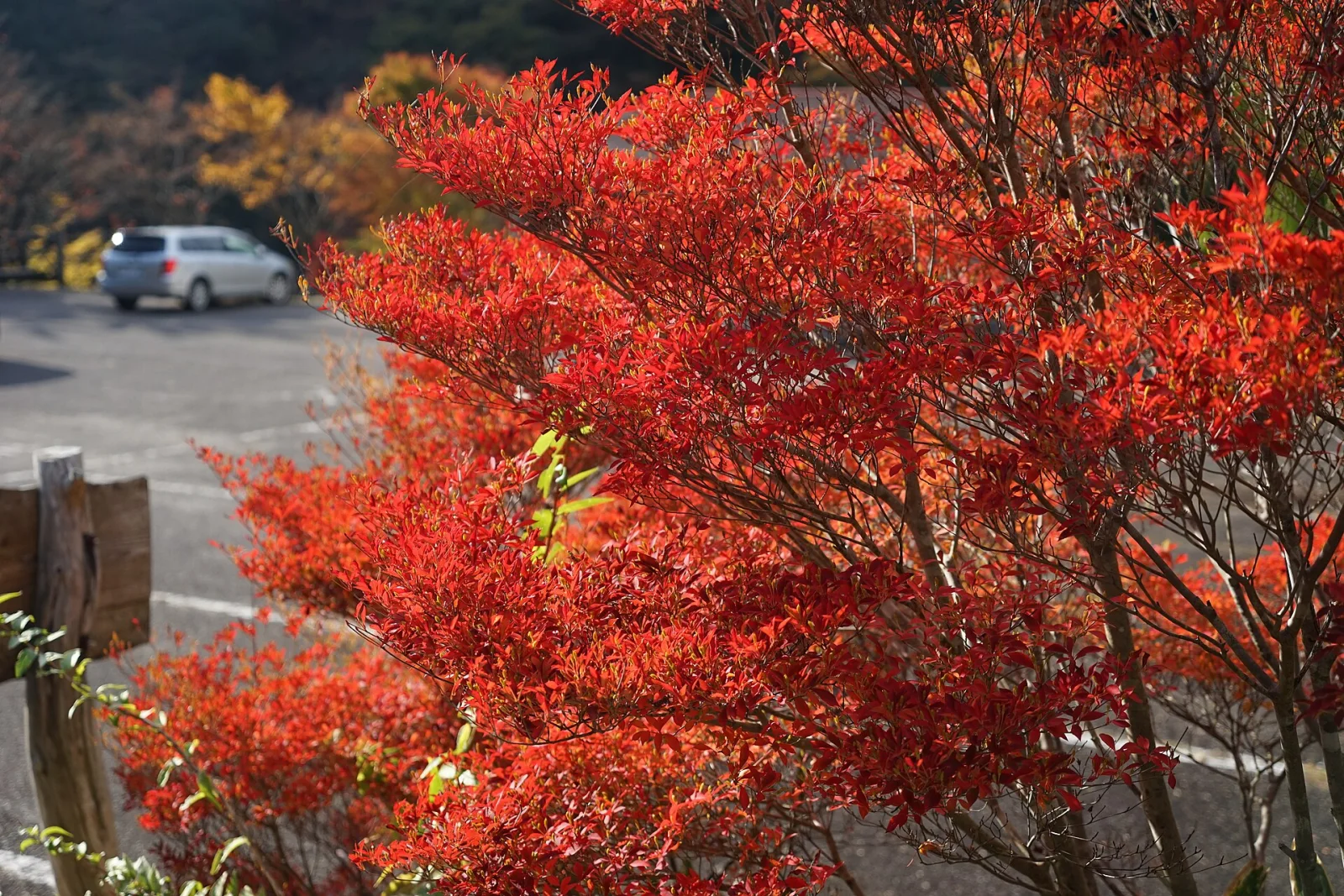
The ropeway operator first photographed turning leaves on 28 October around the summit's First Observation Deck and higher up at Shihozashi Taikanbo. By 19 November, its update confirmed that the whole gorge had reached peak autumn colour, sharing same-day photographs from around Shibocho, along the ropeway line, and at Rosugi-do—a report also reposted by Shodoshima Town. If you are visiting in late November, compare those same-day images side by side to gauge which elevation holds the best colour.
To check how thickly the foliage drapes the rock pillars, rely on photographs taken from inside the ropeway cabin. Bare rock breaks up the tree canopy, making it easy to spot bands of crimson and gold as well as shadowed slopes from the air. For trail-level conditions, focus on close-ups near Shibocho or the mid-mountain slopes; wide shots taken from afar rarely show how many leaves remain along the footpaths themselves.
In a typical year, peak colour runs from early to late November, starting at the summit before working down through the mid-slopes to the base. Visiting in late October means focusing on the summit and upper viewpoints. By late November, if leaves at the top have begun to drop, walk the lower stretch of the Omote-Junikei trail near Kountei or admire the lower slopes from the ropeway. The 19 November 2026 notice estimates that colour will hold until late November or early December.
On weekends and Japanese public holidays, enter the gorge in the morning. Operators specifically warn that both the ropeway and car parks bottleneck around midday. If your group wants an unhurried lunch and photos at the top, let the live queue length and waiting times dictate where you eat rather than locking yourself into a rigid schedule. Note also that the annual Kankakei Autumn Foliage Tea Gathering has been cancelled this year, so plan your day around a standard viewing schedule.
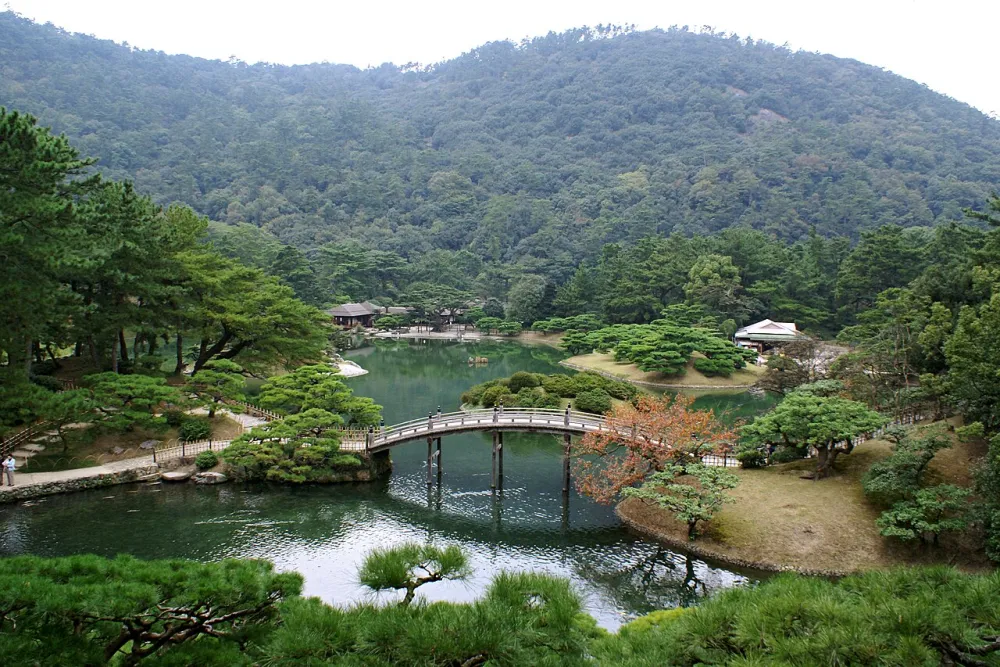
If you have a spare day after touring the gorge, spend it in central Takamatsu at Ritsurin Garden. While Kankakei's foliage climbs vertical cliff faces, Ritsurin invites slow strolls around lakeside paths where maples mirror in the water beside stone bridges and banks. Splitting the two spots across separate days avoids rushing your morning ferry or Kusakabe Port bus connection just to squeeze in another garden.
Ropeway Timetables, Fares, and On-Site Queues
From 21 October to 30 November, the ropeway opens at 08:00, with the first cabin at 08:00 and the last at 17:00. From 21 March to 20 October, and again from 1 to 20 December, the first departure is at 08:36 and the last at 17:00. From 21 December to 20 March, the first departure remains 08:36, while the last moves up to 16:30. Keep in mind that the final posted departure is strictly one-way, so return ticket holders must allow enough time for the trip back.
Cabins normally run every 12 minutes, tightening to every 6 minutes during busy periods, with a capacity of 40 passengers per cabin. Individual travellers board in arrival order without reservations. On peak days, factor in queue time for buying tickets, waiting to board up, walking at the summit, and queuing again for the descent. The crossing itself takes only 5 minutes; missed buses almost always stem from pre-boarding queues and leaving too little buffer between connections.
November fares are ¥1,500 single and ¥2,700 return for adults (junior high school students and older), and ¥750 single and ¥1,350 return for elementary school pupils; the one-day ropeway pass is suspended throughout November. One child under six rides free per paying adult. From 21 March to 31 October and 1 to 10 December (Season A), adult return fares are ¥2,340; from 11 December to 20 March (Season C), they drop to ¥2,160. Notice that December switches fares and timetables on different dates: lower winter fares start on 11 December, whereas earlier 16:30 closing begins on 21 December.
Before buying tickets, confirm whether everyone in your party is up for walking the full mountain trail. If you know you will ride both ways, a November adult return saves ¥300 over two singles. For a gentle summit stroll sticking solely to the observation decks by the station, set aside around 90 minutes. When crowds build and you need to catch an afternoon bus, visit the closest observation deck first and gauge the return queue before wandering further.
Check the operating calendar on the ropeway website for scheduled maintenance or closures, and check the live service status page on the day of travel for weather alerts such as high-wind suspensions. If the status page indicates that only the ropeway is suspended, cross it off your itinerary straight away and either drive up to the summit or pivot to the southern coast—public buses terminate at Kountei and do not continue up the mountain.
| Valid dates | Adult (single / return) | Elementary pupil (single / return) | 1-day pass (adult / pupil) |
|---|---|---|---|
| 21 Mar–31 Oct & 1–10 Dec | 1,300 / 2,340 | 650 / 1,170 | 3,000 / 1,500 |
| 1–30 Nov | 1,500 / 2,700 | 750 / 1,350 | Not sold |
| 11 Dec–20 Mar | 1,200 / 2,160 | 600 / 1,080 | 3,000 / 1,500 |
Takamatsu Port to Tonosho Port: Ferry vs High-Speed Boat
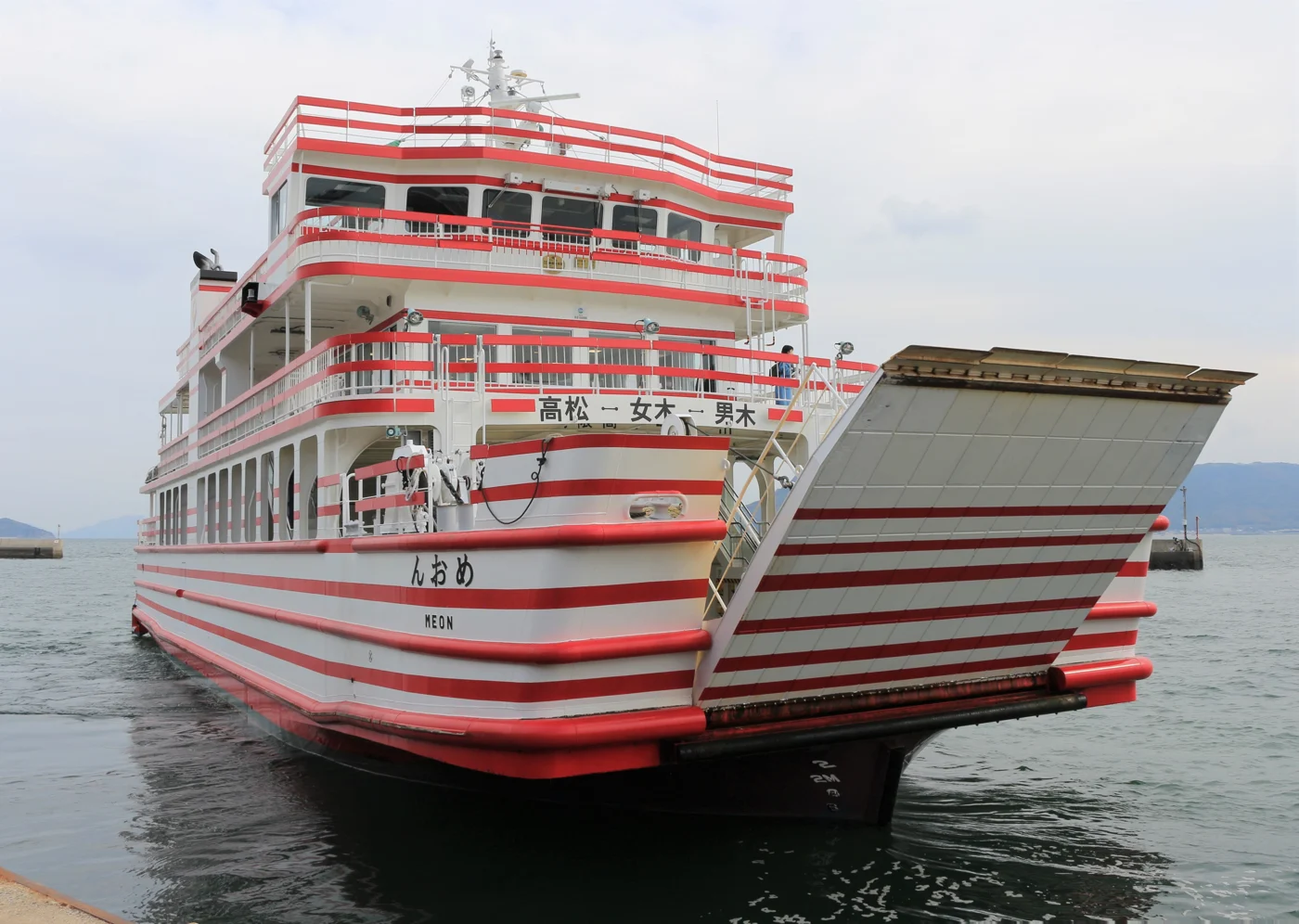
Both vessels dock at Tonosho Port on Shodoshima. The Shodoshima Ferry takes roughly 60 minutes, carries cars, and costs ¥700 single or ¥1,330 return for adults. The high-speed boat cuts the crossing to around 35 minutes at ¥1,400 single or ¥2,660 return for adults, though cars, motorcycles, and bicycles must all use the car ferry. Foot passengers buy tickets on the day and board in order of arrival for both services.
If you are staying near JR Takamatsu Station, you can walk straight into the port area. The ferry ticket office is at the Ferry Terminal (Sunport 8-22), while high-speed boat tickets are sold at Sunport 8-1. Down by the water, check signage for "Tonosho" and match your boarding gate to your ticket type, factoring in walking and ticketing time when planning early departures. If you hold a return ferry ticket on this route and decide to switch to the high-speed boat on the way back, operator rules allow you to pay a supplement of ¥700 for adults or ¥350 for elementary pupils.
Evaluate the 25 minutes saved on the high-speed boat alongside the bus timetable. On the official schedule, for instance, the 08:02 ferry reaches Tonosho at 09:02, whereas the 09:10 high-speed boat does not arrive until 09:45. Whenever both crossings feed into the exact same Kusakabe Port bus departure, the cheaper car ferry does the job just as well. Alternatively, the early 07:40 high-speed boat from Takamatsu arrives at 08:15, handy for travellers aiming to pick up a hire car ahead of the rush.
Since 16 May 2026, the Takamatsu–Tonosho high-speed boat has operated eight sailings each way per day. Confusing the final sailings is an easy way to get stranded: the last high-speed boat back from Tonosho to Takamatsu leaves at 17:50, whereas the last car ferry departs at 20:10. If you plan to stay on the island for dinner, check your route back to the port and your check-out or car drop-off arrangements before deciding which vessel to rely on.
Car-Free in November: Changing at Kusakabe Port for the Kankakei Line
From 1 to 30 November 2026, Shodoshima Olive Bus runs the seasonal Kankakei Line exclusively between Kusakabe Port and Kountei. Older guides mentioning direct buses from Ikeda Port are out of date; even if you land at Ikeda, you must transfer at Kusakabe Port. From Tonosho, take any coastal bus running via Kusakabe Port—such as the Sakate Line, South-loop Fukuda Line, or Tanoura Eigamura Line—and look for signs pointing to "Kountei" when you alight. When checking timetables, select the pier stop "Kusakabe Port" rather than the next stop, Kusakabe Honmachi.
In November, buses leave Kusakabe Port for Kountei at 10:30, 11:10, 12:50, 14:00, and 14:50, taking around 12 minutes. To catch the 10:30 departure, pick a coastal bus that matches your weekday or weekend schedule and leaves ample transfer margin before 10:30. Missing the 11:10 bus creates a long wait until 12:50; should that happen, grab an early lunch around Kusakabe Port or limit your afternoon to the ropeway and summit decks.
Return buses depart Kountei at 11:40, 13:10, 14:20, 15:20, and 16:00. When connecting back to Tonosho for a ferry, start from the Kusakabe Port-to-Tonosho departures and work backwards to pick one of these five mountain buses. Treat the 15:20 bus as your target if you want the 16:00 as a safety net—after 16:00, there are no buses and you will need to arrange alternative transport. Several coastal lines serve the Kusakabe–Tonosho corridor, so save both relevant afternoon timetables to your phone before setting out.
In November, the single fare between Kusakabe Port and Kountei is ¥500 for adults. The November 2026 Olive Bus 1-Day Pass costs ¥2,000 for adults and ¥1,000 for children and covers the Kankakei Line during that month. To decide if the pass pays off, start with the ¥1,000 return fare on the mountain shuttle, then add your return coastal fare from Tonosho plus any extra stopovers. Visitors staying near Kusakabe Port who only ride up and down Kankakei are better off paying single fares. When a day pass makes sense, buy it at the Tonosho Port bus ticket office or directly on board an Olive Bus.
From April to October and December to March, Shodoshima Town takes over the Kankakei route under its municipal bus timetable between the same two terminals. The town has announced that this municipal shuttle is running fare-free on a trial basis this fiscal year, and it is not covered by the Olive Bus 1-Day Pass. If you arrive in early December, swap your saved November timetable for the municipal schedule, and match it against the Season A ropeway fares and 17:00 closing time.
Omote-Junikei and Ura-Hakkei: Choosing a Trail to Pair with the Ropeway
The Omote-Junikei (Front 12 Views) trail measures around 2 km, with an official single-way estimate of roughly 1 hour. Walking uphill from Kountei towards the summit, you pass named landmarks including Eboshi-iwa, Nishiki-byobu, Rosugi-do, and Tsuten-mado. From a ropeway cabin, you only see how the rock spires line up along the ridge; on foot, you can inspect the fissures, shadows, and textures of each outcrop up close. Remember to add extra time for reading rock plaques and taking photos rather than treating one hour as a strict cap.
For first-time visitors catching an afternoon bus, riding the ropeway up and walking down the Omote-Junikei trail works best. You get the sweeping valley panorama from the summit decks first, then descend straight to Kountei in time for your bus. Uphill and downhill routes tax different muscles: descending puts repeated strain on knees over steps and slopes, so anyone with sensitive knees should stick to a return ropeway ticket. Curious walkers can also stroll partway up from Kountei and turn back whenever time or stamina dictates, returning comfortably to the base station.
The Ura-Hakkei (Back 8 Views) trail is about 1.8 km long, also officially estimated at roughly 1 hour one way, passing a natural stone gate and Sekimondo. Its lower trailhead sits on the Sekimondo side, which requires an extra connecting walk to reach Kountei. If you are returning by bus, allow time after exiting the back trailhead to follow the map back to Kountei—the 200-metre shorter trail length does not offset the detour back to the bus stop.
The official Traditional Chinese trail pamphlet breaks down ascent and descent times separately: Omote-Junikei takes about 60 minutes uphill and 45 minutes downhill, running along paved surfaces from Kountei to Shibocho before joining a dirt path towards Mikasa Enchi. Ura-Hakkei takes around 75 minutes uphill and 50 minutes downhill, with paved sections near Sekimondo giving way to stone-flagged paths up to Mikasa Enchi. While the ropeway website lists roughly an hour each way for both routes as a broad benchmark, use those directional differences when deciding whether to leave the summit early or aim for the next Kountei bus.
Ambitious hikers can link both trails by climbing Omote-Junikei from Kountei, resting at the summit, and descending via Ura-Hakkei. That means two roughly one-hour hikes plus the walk back from the back trailhead to Kountei, on top of lunch and viewpoint stops. If you also want to add the Hoshigajo trail to Shodoshima's highest peak—listed as roughly 2.3 km and 90 minutes each way from the summit—set aside half a day and only tackle it if you reach the top early with a full return buffer.
Inside the gorge, expect uneven rock, fallen leaves, and stone steps; slow down on wet leaves after rain. Along Ura-Hakkei, damp flagstones call for grippy footwear and careful flat-footed steps. Carry drinking water, pack a windproof outer layer, and save the operator's trail map before heading up. As a special protection zone within a national park, all plants must be left untouched, fires are strictly prohibited, and all litter must be carried back down; if wildlife crosses your path, keep your distance and wait for it to move on.
| Trail | Official single-way spec | Itinerary planning notes |
|---|---|---|
| Omote-Junikei (Front 12 Views) | Approx. 2 km / 1 hr | Kountei to summit; Traditional Chinese trail map estimates 60 min uphill, 45 min downhill |
| Ura-Hakkei (Back 8 Views) | Approx. 1.8 km / 1 hr | Summit to Sekimondo area; Traditional Chinese trail map estimates 75 min uphill, 50 min downhill |
| Hoshigajo | Approx. 2.3 km / 1 hr 30 min | From the summit to Shodoshima's highest peak; allow time to return the same way |
At the Summit: Viewpoints and Stops for Young Children or Older Travellers
Two observation decks sit right beside the summit station. While the cabin frames the cliffs immediately ahead and the canopy below, stepping up to the summit railings opens the view southwards across Uchinomi Bay and the Seto Inland Sea to the distant mountains of Shikoku. On overcast days, focus on the nearer rock spires. For autumn photography, frame one wide shot taking in the bay, then move closer to the trees to juxtapose grey stone pillars against bright foliage.
Noe Aoki's sculpture *Sora no Tama / Kankakei* (Sky Sphere / Kankakei), installed for the 2022 Setouchi Triennale, remains on display at a rocky viewpoint near the summit; check the station's summit map to fold it into your walk. Be careful not to confuse Shibocho—one of the Omote-Junikei landmarks—with the higher Shihozashi Taikanbo viewpoint: in Japanese their names differ by only a single character, so double-check which spot a foliage photo or driving pin actually refers to.
If you spot Takatori Observation Deck or Shibocho named in autumn leaf updates, locate them on the official summit map after stepping off the ropeway rather than trying to replicate the exact angle from the First Observation Deck. When shooting both wide landscapes and close-ups of the same cliff face, orient yourself by Uchinomi Bay from the deck railings before wandering away from the station. Bus passengers should set a phone alarm for their return departure and save the bus timetable while they have reliable signal by the station.
When travelling with toddlers or older relatives, keep things simple: ride the ropeway, enjoy the station-side viewpoints, and pick one rest stop. The restaurant and souvenir shop stand right in front of the summit station, and toilets are available at both base and summit terminals. The summit's accessible toilet includes a baby-changing table, though there is no dedicated nursing room on site—handle nappy changes and snacks at the top so you can walk straight to the bus stop upon returning to Kountei.
Wheelchair users arriving by car should treat the summit station as both start and finish, following staff directions for assisted boarding; one loaner wheelchair is available at the summit. Travellers without a car who require step-free access will need to pre-arrange a vehicle that can drive all the way to the summit. To check which standard buses accommodate specific wheelchair dimensions, contact Shodoshima Olive Bus directly on 0879-62-0171, as not all vehicles in the fleet are wheelchair-equipped.
Pets may ride the ropeway inside a carrier for an extra ¥100 single or ¥200 return, with guide dogs and assistance dogs travelling free; a small number of carriers are available to borrow on site. During busy departures, carrier dimensions can affect whether you fit into a crowded cabin. Groups travelling by car have more flexibility—some members can ride the ropeway while someone stays with the pet at the station.
Driving Yourself: Parking and Return Ferry Timing
Hiring a car in Takamatsu and bringing it across by ferry covers one driver in the vehicle fare, with additional passengers billed separately. For a car under 4 metres in length, the Takamatsu–Tonosho ferry charges ¥5,030 single or ¥9,560 return. Vehicle spaces on reservable sailings open online two months ahead and close four hours before departure, while the 06:25 and 07:20 sailings from Takamatsu run first-come, first-served year-round. When planning later crossings, check both outbound and inbound ferry times together and work backwards from your rental branch's closing time if you must return the car in Takamatsu.
If you only need a car on Shodoshima, renting around Tonosho Port saves the vehicle ferry fee. Bear in mind that picking up the car, inspecting it, and returning it eat into sightseeing time, and early ferry arrivals still depend on rental office opening hours. For multi-day road trips or wider Shikoku itineraries, keeping one car from Takamatsu saves an extra handover. Lay out rental rates, vehicle ferry tickets, extra passenger fares, and drop-off deadlines side by side before deciding.
Both terminals are accessible by road, with roughly 200 free parking spaces at the summit and about 40 at Koun Station. Park at the summit if you only want the viewpoints or need to avoid the stairs at the base platform. If you plan to hike down Omote-Junikei without stranding the driver, park at Koun Station, take the ropeway up, and walk back down straight to your car. Conversely, parking at the summit and walking down means queuing for a return ropeway ride back to your vehicle.
Arriving at Koun Station around noon on an autumn weekend means following marshal directions and waiting patiently for a space. If Olive Park is also on the same day's list, weigh switching up to the summit car park or shifting your coastal stop to the morning. Leaving the ropeway for the afternoon requires generous buffers for mountain traffic and return queues—and remember to factor in refuelling, unloading, and port check-in, as a vehicle ferry reservation does not let you roll straight onto the boat at the last minute.
Takamatsu Day Trip: Gorge First, Coast Second
The most reliable car-free day trip starts with an early ferry to Tonosho, connecting onto a coastal bus to Kusakabe Port in time for the 10:30 or 11:10 Kankakei Line shuttle. Ride the ropeway from Kountei to the summit and take in the views first. If you plan to walk down Omote-Junikei, eat an early lunch or wait until Kusakabe Port, timing your summit departure to catch either the 14:20 or 15:20 bus from Kountei. Travellers riding the ropeway both ways who finish early can even hop off at Olive Park on the coastal bus back.
Starting down Omote-Junikei at 12:30 puts you back at Kountei around 13:15 based on the official descent estimate, giving you plenty of breathing room to linger at rock viewpoints before the 14:20 bus. By contrast, catching the 11:10 bus from Kusakabe Port drops you at Kountei at 11:22—just 18 minutes before the 11:40 return bus—so plan on a return ropeway ride and aim for the 13:10 bus down instead.
For a compact seaside stop in the afternoon, return to Tonosho and visit Angel Road. The sandbar emerges only at low tide, so consult Tonosho Town's annual tide table first to find a walkable crossing window and match it against your ferry back. On days when low tide falls solely in the morning, skip the scramble—focus on Kankakei by bus and save the sandbar for another day, or climb the Yakusoku no Oka Observation Deck overlooking the water and islets if the tide has already come in.
Drivers can start straight at the base station, finishing the ropeway, summit decks, and Omote-Junikei before heading south to the coast. The operator estimates a 20-minute drive from Koun Station to Roadside Station Shodoshima Olive Park—make sure your satnav specifies the "Roadside Station" site if you want the Greek windmill, as the neighbouring Shodoshima Olive Garden carries a similar name. If photography is your sole focus, use the car's flexibility to stop at varying elevations along the mountain road and pick just one coastal spot for late afternoon.
For a single adult's November day-trip transport budget, tally the return ferry, bus pass, and ropeway separately. Riding the ropeway one way and hiking the other works out at ¥1,330 + ¥2,000 + ¥1,500, or ¥4,830 in total; taking the ropeway both ways brings it to ¥6,030, and upgrading both ferry crossings to the high-speed boat adds another ¥1,330. Mixed groups where some hike down and others ride can arrange to meet at Koun Station, buy single or return ropeway tickets accordingly, and catch the bus back to Kusakabe Port together.
A half-day visit is possible if you trim the schedule ruthlessly. With only a morning free, catch an early bus from Tonosho to meet the 10:30 ascent shuttle, take a return ropeway ride, and stick to the station-side decks. If the 11:40 return bus cuts things too fine, take the 13:10 instead and connect at Kusakabe Port. Anyone holding timed onward tickets or evening plans in Takamatsu should always keep one fallback bus and one fallback ferry in reserve before heading up the mountain.
Staying Overnight: Separating Mountain Trails, Coast, and Tides
Spending a night on Shodoshima unlocks a genuinely unhurried morning at Kankakei. Without a car, basing yourself around Tonosho Port simplifies luggage, ferry connections, and Angel Road visits the next morning. Staying near Kusakabe Port or along the southern coast of Shodoshima-cho cuts the shuttle ride up to Kankakei and puts coastal sights along one straightforward bus corridor. When choosing accommodation, check both the nearest bus stop and walkable dinner options—the base ropeway station area makes a poor hub for a two-day public-transport stay.
Pair Kankakei and Olive Park on day one, then save the Nijushi no Hitomi (Twenty-Four Eyes) Movie Village on the south-eastern peninsula for day two, where wooden schoolhouses sit right along the shoreline. The tourism association lists a 20-minute drive from Olive Park, while bus users have the dedicated Tanoura Eigamura Line. Note the final bus back towards Tonosho before setting off so you can pace lunch or a stroll through the soy sauce district around it. If low cloud hides the summit on day one, simply flip the two days and tackle coastal walks and indoor exhibits first.
Staying near Kusakabe Port lets you trade an early Tonosho-to-Kusakabe bus ride for extra sleep or a proper breakfast before boarding the morning mountain shuttle. To save a longer hike for day two, drop your bags at your lodgings on arrival, spend day one on the south coast, then hike light on the second morning with enough margin to collect luggage, transfer buses, and catch your ferry. Bases at Tonosho work in reverse: hike with a light daypack on day one, then catch a morning low-tide window at Angel Road on day two before picking up your bags right by the port.
Using Takamatsu as a continuous base works just as smoothly. Port-side hotels make early ferries effortless, while staying near JR Takamatsu Station or Takamatsu-Chikko Station connects easily into town. Travellers arriving from elsewhere in Shikoku can sleep in Takamatsu the night before to separate intercity travel from gorge day. If you are adding Naoshima to the trip, dedicate a full separate day to its galleries and ferries; our Seto Inland Sea island selection guide compares routes, time allocations, and bases across both islands.
Plan B: What to Do When Wind or Cloud Hits the Summit
Check Shodoshima Ferry service notices as soon as you wake up, followed by the Kankakei Ropeway live status page. Rough seas or fog require sorting out your crossing first; if ferries run normally but high winds threaten the mountain, line up a coastal fallback before buying tickets at Takamatsu Port. Should the ropeway suspend after you reach Kusakabe Port, confident hikers can still check trail conditions on foot, while others can pivot straight along the south coast rather than waiting around at Kountei until afternoon—freeing up a proper block of time for Olive Park or the soy sauce breweries.
Overcast skies still flatter autumn leaves up close, making damp foliage and crisp cliff details ideal for the base and lower trail sections. When summit winds whip up and rainwater streams down the stone steps, skip the hike in favour of the station-side decks or coastal sights. Pack a compressible windproof waterproof shell you can pull on across exposed summit railings and peel off once you warm up on the trail.
When midday queues peak, prioritise what matters most. If you are purely after panoramic foliage views, secure your ropeway slot first and save lunch for after you come down. If you walked up and only a late bus remains, check the ropeway boarding queue first; walking back down Omote-Junikei is an alternative only if daylight, footing, stamina, and your remaining margin clearly line up with the final bus departure.
Visiting during the first week of December? Scan the operator's final late-November photos to gauge how much foliage remains on the mid-slopes and around Kountei. Later in winter, aim for the brightest midday hours at the summit to take in the rock spires and Uchinomi Bay. Back at Tonosho Port, any wait before the ferry is easily spent eating near the pier or picking up island soy sauce and olive goods—far less stressful than squeezing in one last coastal detour.
A few useful answers
When is the best time to see autumn leaves at Kankakei Gorge in 2026?
On 19 November 2026, the ropeway operator announced that the entire valley had entered its peak viewing window, with the best colour expected over the following week. Typically, foliage runs from early to late November, starting at the summit before descending towards the base.
Do I need to book the Kankakei Ropeway in advance, and how much is it in autumn?
Individual passengers buy tickets on site and board in order of arrival. In November, adult fares are ¥1,500 single and ¥2,700 return; elementary school pupils pay ¥750 single and ¥1,350 return.
How do I get from Takamatsu to Kankakei Gorge without a car?
Cross from Takamatsu Port to Tonosho Port, catch a coastal bus that serves Kusakabe Port, and transfer there to the Kankakei Line bound for Kountei. In November 2026, the first bus from Kusakabe Port to Kountei departs at 10:30, and the last return bus from Kountei leaves at 16:00.
Can I take the Kankakei Ropeway one way and walk the other?
Yes, single tickets are sold at both the base and summit stations. First-time hikers often ride the ropeway up from Koun Station to the summit and walk down the Omote-Junikei (Front 12 Views) trail back to Kountei. The front trail is around 2 km one way and officially takes about an hour.
Which station should wheelchair users take for the Kankakei Ropeway?
Use the summit station for both boarding and alighting. Drive straight up to the summit car park and ask station staff for assistance. The base car park at Koun Station has stairs leading to the platform, and there is no scheduled public bus service to the summit station.
Official information and references
Sources used in this guide.
- Kankakei Ropeway | Operating Hours, Fares, and Boarding Rules
- Kankakei Ropeway | Homepage Operating Calendar
- Kankakei Ropeway | Live Service Status
- Kankakei Ropeway | 28 October 2026 Autumn Foliage Report
- Kankakei Ropeway | 19 November 2026 Autumn Foliage Report
- Shodoshima Town | 2026 Kankakei Ropeway Latest Information
- Kankakei Ropeway | Autumn Foliage Tea Gathering Cancellation Notice
- Kankakei Ropeway | Omote-Junikei, Ura-Hakkei, and Hoshigajo Hiking Trails
- Kankakei Ropeway | Traditional Chinese Hiking Trail Map (PDF)
- Kankakei Ropeway | Summit Map, Observation Decks, and Art Installations
- Kankakei Ropeway | Mountain Access and Nearby Sights
- Shodoshima Olive Bus | Official Timetables and Kankakei Line
- Shodoshima Olive Bus | 2026 Route Revisions and November 1-Day Pass
- Shodoshima Olive Bus | 1-Day Pass Sales Locations
- Shodoshima Olive Bus | Kankakei Line Fare Chart (PDF)
- Shodoshima Town | Municipal Kankakei Bus Service
- Shodoshima Ferry | Takamatsu–Tonosho Car Ferry and Vehicle Reservations
- Shodoshima Ferry | Takamatsu–Tonosho High-Speed Boat
- Shodoshima Ferry | 2026 High-Speed Boat Frequency Reduction Notice
- Shodoshima Tourism Association | Angel Road, Olive Park, and Movie Village
- Shodoshima Tourism Association | Tonosho Town 2026 Angel Road Tide Table (PDF)