Choose a gate by your arrival station, then link South Pond, Hiraiho, Kikugetsu-tei and the North Garden into half a day. Includes 2026 autumn illuminations, different day and night boat age rules, tea prices, breakfast bookings and Takamatsu transport.
- Region & Focus
- Takamatsu
- Reading Scope
- 34 min read · 18 chapters · 4 Q&As
- Official Verification
- 11 official sources checkedUpdated 7 November 2026
- Key Topics
- ItinerariesSeasonsBooking
Chapter Route Map (tap any stop)
- Choose two hours or half a day, with separate time for tea and a boat
- The entrances are East Gate and North Gate: match them to your station
- From JR Takamatsu, Kawaramachi or the airport, choose different transport
- From the East Gate into the South Garden: pines first, then South Pond
- South Pond, Engetsukyo and Hiraiho: separate the overview from close views
- Kikugetsu-tei: matcha or sencha, at ¥800 or ¥600 for adults in 2026
- Higurashi-tei, Old Higurashi-tei and Hanazono-tei serve different purposes
- Reserve breakfast porridge by 17:00 the previous day; choose main-building chairs or Hankatei floor seating
- Daytime South Pond boats: ages 3 and over, with reservations before on-site payment
- Save the North Garden for later: different views at Fuyoho and Gunochi
- Fit Shoko Shoreikan, the Sanuki Folk Craft Museum and Ritsurinan into your exit route
- Autumn illuminations 2026: 20–29 November, 17:00–21:00
- Evening-boat reservations open at 13:00 on 1 November; preschool children cannot ride
- Two half-day routes: morning tea or afternoon into the autumn evening
- Families, wheelchairs and older companions can see the main garden without climbing hills
- Calculate admission, tea and boat fares separately
- Luggage and driving: remember your collection gate; parking is charged per 25 minutes
- Change the route for season and weather, while keeping time for pines and water
- Quick Q&A
On a first visit to Ritsurin Garden, start in the South Garden and let tea, a traditional boat ride and the North Garden determine how long you stay. Kotoden and bus arrivals usually suit the East Gate; JR Ritsurin-koen-kitaguchi arrivals can start at the North Gate by day. For the classic South Pond and Engetsukyo view, leave a morning without a hurried connection. To add the 20–29 November 2026 autumn illuminations, arrange dinner and an evening-boat reservation within a Takamatsu overnight stay. South and North Gardens are visiting areas inside; East and North Gates are entrances. Distinguish them when arranging transport.
Choose two hours or half a day, with separate time for tea and a boat
For a first introduction to Ritsurin Garden, make the South Garden your main route. Allow about two hours from the East Gate through the pines, teahouses and South Pond, then back to the East Gate. These two hours are a planning allowance including pauses and finding your way. Slow walkers, photographers and those sitting down for tea should allow three hours to half a day. Fitting ticket buying, a boat ride and tea into the official walking-route time often means checking your watch as soon as you sit down.
The South Garden combines ponds, stonework, pines and landscaped hills, making it the first-visit priority. The North Garden has broader water and more modern park space. It suits extra time, waterbird watching or fewer rapid changes between sights. Takamatsu City’s cultural-property account explains their development separately: the south retains the layout of a daimyo garden, while the north was a duck-hunting ground before later redevelopment. They are not two parks needing separate tickets.
With one full Takamatsu day, give the garden the morning and return to the centre in the afternoon. During the autumn illuminations, place the garden in the afternoon and evening, leaving the port or further travel for the next day. Yashima and offshore islands have their own final transport connections and do not fit well between a daytime garden visit and an evening boat. Use the two-day Takamatsu guide for accommodation and other city activities. If taking an evening garden boat, stay in central Takamatsu and return directly to your room afterwards.
Choose a gate by your arrival station, then link South Pond, Hiraiho, Kikugetsu-tei and the North Garden into half a day. Includes 2026 autumn illuminations, different day and night boat age rules, tea prices, breakfast bookings and Takamatsu transport.
The entrances are East Gate and North Gate: match them to your station
The East Gate is on the garden's east side. It suits arrivals from Kotoden Ritsurin-koen Station or Ritsurin-koen-mae bus stop, and offers a convenient start for storing luggage, collecting a map and heading to the South Garden. The North Gate is near JR Ritsurin-koen-kitaguchi Station, making it convenient for daytime JR arrivals. Choose by the whole journey, rather than only the shortest distance from a station to the boundary wall.
Three names are easily confused: JR Ritsurin-koen-kitaguchi, JR Ritsurin and Kotoden Ritsurin-koen. The first two are different stations on JR's Kotoku Line. Kotoden Ritsurin-koen belongs to a separate railway. Garden operating information gives about three minutes' walk from Kitaguchi station and about 10 minutes from the Kotoden station. Allow extra for children, traffic lights or a slow pace. Save the station-to-gate route rather than typing only “Ritsurin” and choosing the first result.
Entering east and leaving north can reduce some retracing, but luggage and return transport must change with it. If bags are at the East Gate, you still need to return after the North Garden, so use a loop. With only a small bag and JR Takamatsu Station next, a daytime North Gate exit connects more easily to JR. Put entrance, exit and luggage location on one line so companions know where to meet afterwards.
Night events use only the East Gate for entry and exit, as stated in garden visitor information. Arrange evening meetings and return travel there, connecting to the bus in front of the garden. Daytime North Gate entrants must also leave on the east side at night. After the evening boat, there is still the walk out, finding the crossing and waiting at the stop. Visitors staying in Kawaramachi can budget for a taxi to avoid another transfer afterwards.
From JR Takamatsu, Kawaramachi or the airport, choose different transport
Near JR Takamatsu Station, compare local Kotoku Line trains to Ritsurin-koen-kitaguchi. The official garden visitor information gives about three minutes on foot from Ritsurin-koen-kitaguchi Station to the garden. Allow separately for waiting. Visitors returning through Takamatsu Port can also walk to JR first. If the next train involves a long wait, compare city buses to Ritsurin-koen-mae instead. A short train ride alone need not determine the choice.
From Kawaramachi, the Kotoden Kotohira Line to Ritsurin-koen Station connects conveniently to the East Gate. From Takamatsu-chikko, follow the Kotohira Line south. Read both line and station names. For dinner in Kawaramachi on the return, get off there rather than travelling back to the port and retracing. For a simple garden-and-centre return, calculate single tickets or use an existing IC card first. This short journey alone does not require a multi-day pass. Your other actual destinations determine whether a pass helps.
The Ritsurin-koen-mae bus stop is near the East Gate. Official garden operating information gives the westbound Rainbow Loop bus from Takamatsu Station to the garden, and the eastbound service back. Compare other routes stopping here too. The wrong loop direction may first take you around another part of town. After getting off, note the return stop, direction and crossing so you need not find them again in evening crowds.
From Takamatsu Airport, the airport bus stops at Ritsurin-koen-mae. The airport’s official access page gives about 23 minutes as a guide. From 1 October 2026, fares are ¥1,000 for adults and ¥500 for children. Landing, immigration, luggage collection and waiting for the bus are outside those 23 minutes. If arriving late in the afternoon, leave bags at your accommodation and keep a full garden visit for the next day. For a fixed evening boat, favour a plan that already has you staying in Takamatsu the previous night.
From the East Gate into the South Garden: pines first, then South Pond
On a first East Gate visit, collect a map and identify Shoko Shoreikan and the South Garden direction. Follow the paths past pruned pines such as Tsurukame-matsu and Hako-matsu. Although the garden's name refers to chestnuts, many of the trees shaping the scene are pines. Compare branch directions, canopy heights and the mountain behind them. This reveals more of the garden than looking only for a maple turning red. If you want tea, save energy and sit down at Kikugetsu-tei.
Continue from the pines towards Old Higurashi-tei and Oketoi Waterfall, then Kikugetsu-tei and South Pond. This is a useful first-visit main route, also linking points in the garden's common suggested order. If tired, omit the landscaped hills and continue along gentler pondside paths. At branches involving steps, read the map's access markings before deciding to climb.
Small paths and pond banks turn often. At junctions, use the map, buildings and water to identify your direction. Stand clear of the main path for photographs or to let a guided group pass. Keep bridges and passages open to other walkers.
For garden-making detail, choose a guided day. Garden operating information says volunteer tours require contact at least a week ahead, with no more than 10 people per group and tour times between 9:00 and 16:00. There is also a regular Sunday tour meeting outside the East Gate ticket office at 10:30, lasting about 60 minutes, except some Sundays during Obon and year-end holidays. Build the route around the meeting time if you want commentary. If you prefer to stop freely, walk independently; there is no need to schedule both.
South Pond, Engetsukyo and Hiraiho: separate the overview from close views
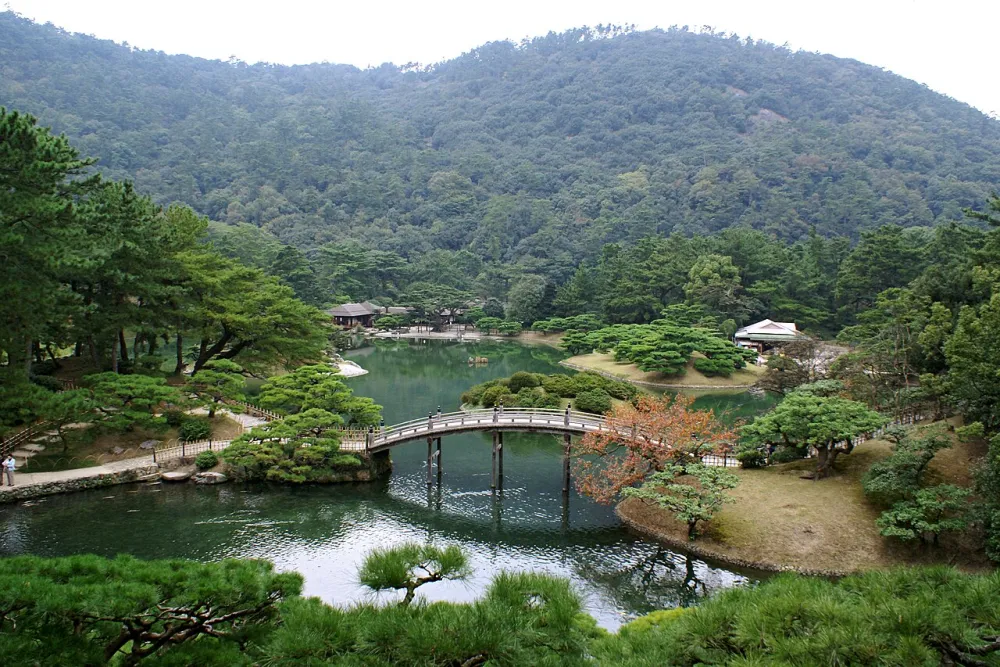
South Pond deserves time on a first visit. From the bank, see islands and pines in the water. A different path reveals the relationship between teahouses, bridges and Mount Shiun behind them. The curve of Engetsukyo Bridge is an easy landmark. Rather than lingering on the bridge, cross and look back at how it links the banks. Autumn combines pines, maples and water; you need not follow only red leaves.
For the elevated composition of South Pond and Engetsukyo, choose Hiraiho. This landscaped hill viewpoint adds climbing and descending. Companions with pushchairs, wheelchairs or sore knees can remain by the pond below while others make a short climb and return to meet them. Replacing “walk the entire garden” with one overview and one close pondside view gives everyone a way to appreciate it.
After the panorama, leave time for a pondside walk without searching for another angle. Up close, you can see pine pruning, stone placement and the distance between teahouses and water. If a traditional boat passes, watch the surface change after it. Reflections move with wind and boats. Photography need not become a compulsory itinerary check. Companions who are not taking pictures can rest for those minutes.
If viewing by day and night on an autumn visit, complete climbs and sections needing clear ground visibility in daylight. Keep the evening for the illuminated route and water. The section towards Fugan is good for looking at the canopy, but do not enter closed side paths to find an empty view. Follow that event's night route. Places saved by day can help orientation without becoming a reason to go against the flow.
Kagawa Prefecture’s 360-degree film lets you drag the view in your browser to look around the garden.
Kikugetsu-tei: matcha or sencha, at ¥800 or ¥600 for adults in 2026
Kikugetsu-tei provides a proper pause in a garden walk. Look first at the building's relationship with South Pond, then decide whether to enter. Seated at a lower eye level, notice how door frames and eaves frame different parts of the garden. The value is the time spent here rather than finishing a cup and racing onwards. If you have a boat reservation, tea after check-in and the ride makes it easier to sit without concern.
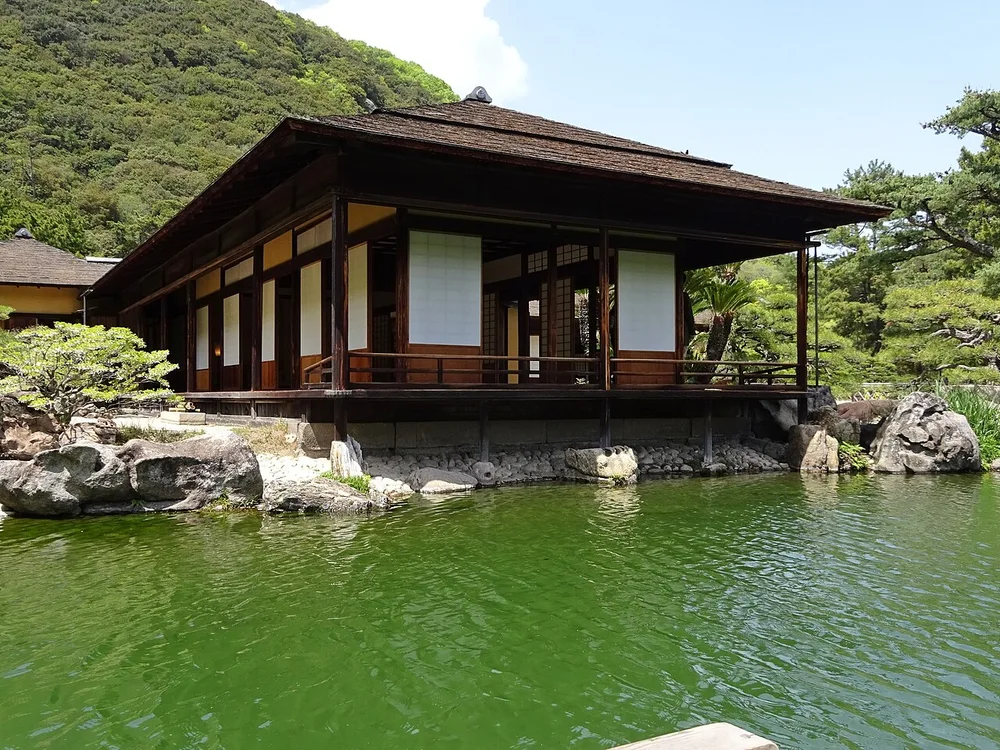
An April 2026 announcement from Ryotei Nicho, the operator commissioned by Kagawa Prefecture, gives matcha and a sweet at Kikugetsu-tei as ¥800 for adults and ¥500 for primary and lower-secondary pupils. Sencha and a sweet cost ¥600 for adults or ¥400 for those pupils. Normal hours are 9:00–16:30, with last entry at 16:00. Garden admission is separate. Choose matcha for a fuller tea flavour, or sencha for a lower-priced seated break. Family members can each choose according to their tastes.
The tea pavilion is not a general lunch restaurant. For lunch in the garden, Nicho separately offers reserved meals in spring, March–June, and autumn, September–November, served 11:00–15:00. Its website lists a seasonal bento with matcha and a sweet at ¥3,500, and a tenmaki bento with matcha and a sweet at ¥3,000. Book by phone or online by the previous morning; from noon to 17:00 the previous day, use the phone. If lunch is a main activity, arrange the walk around it rather than pursuing another udon queue after leaving.
Higurashi-tei, Old Higurashi-tei and Hanazono-tei serve different purposes
Higurashi-tei and Old Higurashi-tei are separate buildings. Higurashi-tei is a thatched tea room built in 1898. Nicho's website lists weekend and public-holiday hours of 10:00–16:00, with last entry at 15:30. Matcha and a sweet cost ¥700; ice desserts and drinks are also available. On weekdays, Kikugetsu-tei is easier to plan as your main tea stop. At weekends, choose one by the building you want to see and your route. Old Higurashi-tei is primarily a historic building to view, not the same catering location under a similar name.
Hanazono-tei is another dining facility. Its official information places it about 50 metres south of the East Gate ticket office along the pine avenue. Breakfast porridge, lunch and dinner have their own booking arrangements. For a sweet before leaving, use that day's café offering. Decide whether you want tea, breakfast or a full meal, then identify the right establishment. That avoids asking Kikugetsu-tei about Hanazono-tei's seating when phoning.
One seated stop usually keeps a two-hour garden walk manageable. After a reserved porridge breakfast, you can omit a second tea stop following South Pond. If arriving in the afternoon, see the pond in daylight first, then reach Kikugetsu-tei before last entry. Each establishment's last reception is earlier than garden closing. Recording “last entry 16:00” helps decide where to start more than knowing only that the garden closes at 17:00 in November.
Reserve breakfast porridge by 17:00 the previous day; choose main-building chairs or Hankatei floor seating
For an early Takamatsu garden visit, reserve breakfast porridge at Hanazono-tei. The official menu lists 7:15, 8:00, 8:45 and 9:30 slots, with breakfast last orders at 9:30. Book by 17:00 the previous day. Solo bookings are accepted. A 7:15 booking leaves a short walk after November's 6:30 opening. For less early travel, choose 8:45 or 9:30 and set your departure from your accommodation accordingly.
There are two breakfasts and seating arrangements. Goishicha tea porridge costs ¥1,650 in the main building's hall, with tables and chairs. The special breakfast set in the separate Hankatei tea room costs ¥2,500, beside North Pond with floor cushions. With sore knees or difficulty sitting on tatami, request main-building chairs when booking. For the pondside tea room, specify Hankatei. These are different breakfasts, not one meal under two names. Garden admission is extra for both.
With breakfast reserved, take your seat at the booked time before deciding the full walk. If you have only half an hour beforehand, stay near the East Gate pines and leave South Pond and climbs until afterwards. This avoids walking too far and hurrying back. In winter, the garden opens at 7:00, making ticket buying and walking time more important for a 7:15 meal. Wear socks for tatami dining. Use the establishment's telephone for cancellation or number changes so food and seating preparations can follow.
Daytime South Pond boats: ages 3 and over, with reservations before on-site payment
The daytime traditional boat tours South Pond with commentary from the boatman. Including boarding and disembarking, it takes about 30 minutes, with capacity for six. Garden operating information lists ¥850 for adults and ¥420 for lower-secondary pupils and younger, plus garden admission. Children under 3 cannot ride; primary-school children and younger need a guardian. Children aged 3 or over who have not started primary school enter the garden free but still pay the daytime child boat fare. Calculate that separately from admission. Non-riders can walk along the shore and meet at the landing.
Reservations open on the first day of the previous month and continue until the day before use. The daytime telephone is 087-833-7413, staffed 8:30–17:00; there is also an official online booking page. Same-day reservations are not accepted by phone or online. Ask at the boat ticket office about remaining places. Same-day ticket sales start at 8:30 and continue until full. Reserve first if the boat is your main activity. For a flexible visit, accept that no suitable same-day slot may remain.
Reserved passengers must pay and collect tickets at the boat ticket office 30 minutes before sailing. The reservation expires if that deadline is missed. Write the plan as two events, such as “10:30 buy tickets; 11:00 sail”, rather than arriving at the East Gate at 11:00. Collect tickets first, then walk nearby and use the toilets. Rushing back from a distant teahouse can turn a relaxed water activity into a chase.
The boat offers another garden viewpoint. You can choose it or a more extensive walk as the deeper part of your visit. If an older companion has difficulty boarding, tell staff what assistance is needed. Others should not pull at the boat edge or hurry to step aboard. If rain or strong winds affect operation, walk permitted pondside paths instead. In waiting families, one adult can make enquiries while another watches the children, avoiding divided attention beside the boat.
Save the North Garden for later: different views at Fuyoho and Gunochi
After enough time in the South Garden, decide whether to extend north. From Fuyoho towards North Pond, look for the red Umebayashi Bridge and pines behind it. This is a different viewpoint from Hiraiho over South Pond. Those comparing garden perspectives can climb both. With limited energy, choose one and see the other pond at ground level. Choosing the composition you most want instead of climbing both hills makes a shared family route easier.
Continue towards Gunochi and Kankokaku for a more open area than the South Garden. Kagawa's official feature explains its former use as a duck-hunting ground. The pond suits waterbird watching, particularly as a winter activity. With children, first locate resting birds, then compare how they swim. Observe from garden paths, without chasing, catching or entering the pond-edge vegetation.
After the North Garden, leave through the North Gate for JR Ritsurin-koen-kitaguchi Station. If bags are at the East Gate, follow the map back east to collect them. Finish any South Garden teahouse stop before moving towards Gunochi and the North Gate.
Fit Shoko Shoreikan, the Sanuki Folk Craft Museum and Ritsurinan into your exit route
After outdoor scenery, the Sanuki Folk Craft Museum offers an indoor stop near the East Gate. Kagawa's official feature introduces its folk crafts, roof-tile building and old folk craft building. Admission is free. Shoko Shoreikan has garden- and craft-related displays. These buildings suit an interest in objects or architecture; a first visit need not enter every one. If rain increases slightly, take a short break in one before deciding on more pondside walking. That is easier than changing transport to another district in a hurry.
For Kagawa food and souvenirs, Ritsurinan is beside the East Gate, outside the paid garden. Its official access page explicitly says no garden ticket is needed to enter the shop. Shoppers can go directly; garden visitors can buy after leaving to avoid carrying purchases throughout. Check room-temperature or chilled storage, best-before dates and onward travel when choosing food. If taking a boat or train that evening, favour items that pack easily.
For displays and shopping around departure, visit the indoor garden venues by day, then leave east for Ritsurinan. If luggage is at the North Gate, collect it there first. Night illuminations centre on garden views; schedule exhibition buildings and shops in daylight.
Autumn illuminations 2026: 20–29 November, 17:00–21:00
Kagawa Prefecture’s autumn 2026 notice lists this year's illuminations from Friday 20 to Sunday 29 November, 10 days in all. The 28 September evening-boat notice gives hours of 17:00–21:00, with last garden entry at 20:30. This is special autumn night opening. Normal November hours remain 6:30–17:00. To see the evening views, choose one of those 10 days. A daytime visit can still follow normal admission and hours.
For a first illuminated visit, arrive before full darkness to identify the East Gate, South Garden main paths and toilets, then follow that event's lit route. Lighting directs attention to different parts of water, pines and bridges seen by day. There is no need to repeat the whole daytime route. Photographers should complete slopes and viewpoints needing clear footing in daylight, keeping the evening to pondside and bridge views on the open route.
With older companions or children, eat before entering, or view early and return to the centre for dinner afterwards. Last entry at 20:30 is not a suitable start for a slow family walk. Closing at 21:00 still leaves the exit walk and journey to your accommodation. With an evening boat booked, organise the night around ticket collection and sailing, fitting tea and dinner into non-conflicting slots.
Leave paths and bridges clear while photographing, and put phones away before moving. If companions separate for photographs, meet at the next named junction and wait away from the pond edge. Leave through the East Gate for city transport.
Evening-boat reservations open at 13:00 on 1 November; preschool children cannot ride
Reservations for the 2026 autumn South Pond evening boats open at 13:00 on Sunday 1 November, through the official online booking page or the evening-boat line, 087-833-7414. Telephone hours are 13:00–17:00 on 1 November and 8:30–17:00 from 2 November. This number differs from the ordinary daytime line. Have your date, time and adult and child numbers ready for an autumn evening sailing. Families travelling together should choose one sailing before one person books, reducing the chance of being separated.
Evening departures run every 15 minutes from 17:30, with 11 sailings and the last at 20:00. Fares are ¥850 for adults and ¥420 for primary and lower-secondary pupils, plus garden admission. This year's evening boats admit primary-school age and above only. Preschool children aged 3 and over can take a daytime boat but must stay on shore at night. Two adults with one primary-school child pay ¥1,170 garden admission and ¥2,120 boat fares, totalling ¥3,290. A family with preschool children is better suited to the daytime boat.
The 17:30 or 17:45 sailing puts the ride early in the evening, leaving a gentle walk to the exit and dinner near your accommodation afterwards. For departures after 19:00, eat before arrival for a more relaxed evening. After the final 20:00 boat, little time remains to explore the whole garden, so make the water view the night's focus. Avoid booking a late dinner while filling the same evening with boat, tea pavilion and the entire night route.
Save the confirmation screen, booking name and contact details, and add the confirmation's ticket-collection deadline to your calendar. If the party changes or cannot attend, use the booking channel to change or cancel. Do not have another companion reserve a duplicate group. Places are limited. Treat the sailing as a fixed event and adjust other garden time around it, rather than repeatedly checking the time all evening.
Two half-day routes: morning tea or afternoon into the autumn evening
For daylight scenery and a teahouse, an example starts at the East Gate at 9:00. See the pines and South Garden, reach South Pond around 10:00, choose the shore or Hiraiho, then sit at Kikugetsu-tei. Follow the route back east around 11:30 and shop and eat lunch outside. This is a self-planned time allowance. For long photography stops, omit the North Garden. For waterbirds, omit tea and give the latter part to Gunochi, then leave north.
For a boat-centred visit, select the sailing and 30-minute-early ticket collection first. Divide the 9:00–11:30 walk into before collection, before sailing and after landing. For an 11:00 daytime boat, complete ticket buying at 10:30 and stay nearby. Visit Kikugetsu-tei after the ride to avoid worrying about returning to the landing during tea. With breakfast porridge, reverse the priority: eat at the booked time, then begin the full South Garden walk. These versions need not share one morning.
For the autumn evening route, arrive around 14:30 and visit the South Garden and Hiraiho first. For tea, complete reception before the 16:00 last entry, then wait for the 17:00 illuminations. Eat a late lunch before entering and bring a simple meal that is easy to eat to preserve evening garden time. A 17:30 boat needs its own ticket-collection and assembly slots. If you want a restaurant dinner, view early and return to the centre to eat after leaving.
With young children, older relatives or anyone sensitive to cold, choose either the morning or early-evening version. Daytime tea and night views are both appealing, but can leave a waiting gap between them. If staying nearby, split them across two days to avoid tiring waits outside. If arrival from another city is uncertain, put the night visit on an evening when you are already staying in Takamatsu. Reservations and return travel are easier to manage.
Families, wheelchairs and older companions can see the main garden without climbing hills
Ritsurin's paths include gravel, slopes and changes of level. Garden information lists free loans of wheelchairs, pushchairs and walking trolleys for older people; ask at the entrance ticket office. The map marks some difficult-access sections. Start at the ticket office if borrowing equipment and ask staff to identify a suitable route before entering the South Garden. Use pond banks, pines and teahouses as the main route, adding climbs such as Hiraiho according to stamina. The principal garden scenery remains visible.
For young children, use a rhythm of walking, looking for one thing and sitting down. Follow a pine's branches, find bridges and boats at South Pond, and spot waterbirds in the North Garden before a snack or rest. Running, jogging and ball-play equipment are prohibited. These are conditions of using a cultural-property garden. Arrange running play somewhere suitable elsewhere; here, stay together on open paths.
Nursing spaces can be requested in Shoko Shoreikan's East Building, the Kobusha toilets and the tourist office. Mark them on your map when entering, and change nappies and use toilets before walking far. Ordinary pets cannot enter; assistance dogs for disabled people are excepted. Travellers with pets need care arrangements first. With older companions, consider teahouse seating before the drink choice: a chair-seated breakfast and tatami tea demand different physical effort.
Calculate admission, tea and boat fares separately
Ordinary admission is ¥500 for adults and ¥170 for primary and lower-secondary pupils; preschool children enter free. Groups of 20 or more pay ¥400 per adult or ¥140 per child. Admission is free on New Year's Day and the opening anniversary, 16 March. Ordinary short-stay visitors can start with single admission, comparing multi-entry or annual tickets only for repeated visits. Local free-entry concessions for ages 65 and over are subject to conditions such as Kagawa residence. Overseas visitors cannot budget for them on age alone.
One adult's garden-only visit costs ¥500. Adding Kikugetsu-tei sencha and a sweet makes ¥1,100; matcha makes ¥1,300. Adding one boat ride brings these to ¥1,950 and ¥2,150 respectively. Two adults and one primary-school child pay ¥1,170 for entry alone. Matcha for all three adds ¥2,100, totalling ¥3,270. These figures exclude transport to the garden and lunch. Add only the activities you want to keep family costs clear.
An adult main-building porridge breakfast costs ¥1,650 plus ¥500 admission, totalling ¥2,150. Hankatei's special breakfast set at ¥2,500 plus admission totals ¥3,000. If you enjoy a seated breakfast, use it instead of accommodation breakfast and another tea stop rather than adding all three. For autumn scenery as the main aim, admission and walking time are enough. The views do not require a complete package of extras.
Luggage and driving: remember your collection gate; parking is charged per 25 minutes
Gravel paths add resistance to wheeled cases and make passing on narrow paths harder. Store cases at your hotel or entrance lockers first. Garden operating information lists 30 lockers beside the East Gate and six by the North Gate, costing ¥200, ¥300 or ¥400 by size. If bags do not fit or lockers are full, the tourist office offers paid storage at ¥400 per item. For a one-way walk, decide how to collect bags first. If they are east, finish east.
Drivers can use the prefectural East Gate or North Gate-front car parks. Ordinary cars cost ¥100 per 25 minutes. For a two-hour estimate, 120 minutes requires five charging units, so allow ¥500. Tea, luggage collection and shopping also count as parking time. Listed ordinary-car spaces are 30 east and 32 north. These small car parks are not reserved capacity for autumn evening crowds. From central accommodation, public transport reduces the parking search on illumination dates.
Check parking arrangements separately from night-event access. Before entering, note your car park entrance, space and exit route. Garden information also gives a separate overnight-stay rate and says entry and exit are unavailable at night, with prior contact to the tourist office required. If driving away that evening, choose parking compatible with your actual garden exit time. Nearby shop spaces are for their customers. If full, use legal parking rather than waiting on the road to hold a place.
Change the route for season and weather, while keeping time for pines and water
October opening is 6:00–17:30; November is 6:30–17:00; December and January are 7:00–17:00. Spring and summer open earlier and close later. In autumn, the key is how much uninterrupted garden time remains as daylight shortens. Mornings suit a slow walk and tea. In the afternoon, start with your most wanted South Pond view rather than leaving every side path until closing. Illuminations are night events on specified dates. Plan separately for special evening opening and normal daytime walks.
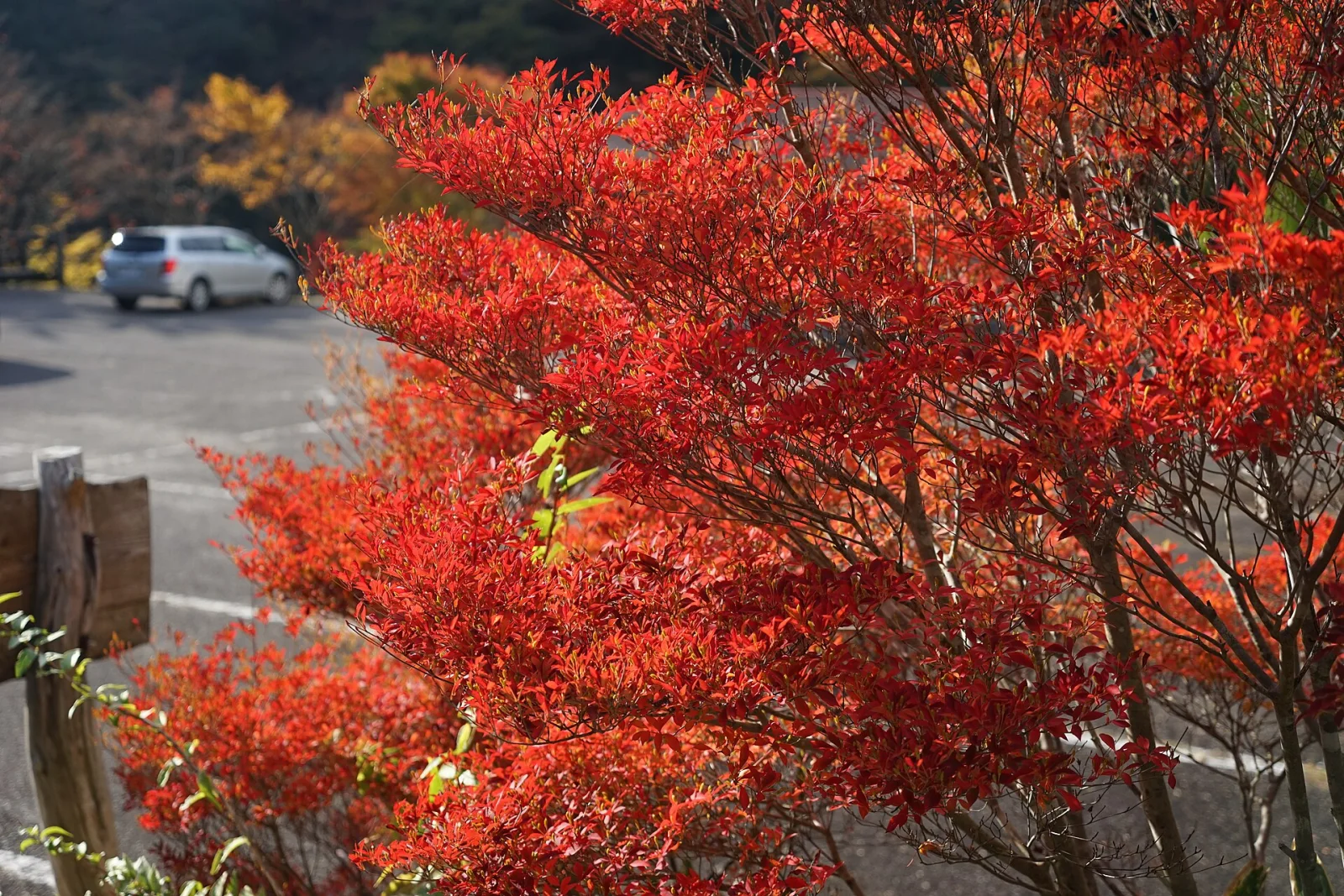
Autumn leaves add layers around South Pond, teahouses and Fugan, while pines and Mount Shiun remain the background to the whole garden. On arrival, see which colour and light attract you that day, then choose how long to stay. After the main views, leave some time simply to walk beside the water. If the whole garden has not changed colour, look at branches, water and stonework. The differences between south and north are still visible.
In light rain, shorten hill and step sections and retain pond banks, teahouses and available exhibition buildings. Do not let your umbrella hide the ground ahead, and give way on narrow paths. The garden closes temporarily when storm or snowstorm warnings are issued for the Takamatsu area. Stay near your accommodation that day and deal separately with reserved activities. Before a departing flight, return first to the luggage-collection and airport-bus route. End garden time while you can still make the journey calmly.
A few useful answers
Does Ritsurin Garden have a South Gate, and which entrance should I use first?
For ordinary tourist entry, identify the East and North Gates. South and North Gardens are internal areas. Kotoden Ritsurin-koen Station and Ritsurin-koen-mae bus stop suit the East Gate. JR Ritsurin-koen-kitaguchi Station suits daytime North Gate entry.
How do the 2026 autumn illuminations and evening-boat reservations work?
Illuminations run 20–29 November, 17:00–21:00, with last entry at 20:30. Evening-boat reservations open at 13:00 on 1 November online or on 087-833-7414. Boats leave every 15 minutes from 17:30, with the final departure at 20:00.
Can young children take a Ritsurin Garden boat?
Daytime boats exclude children under 3, and primary-school children and younger need a guardian. Autumn evening boats in 2026 admit primary-school age and above only. Choose daytime boats for eligible preschool children and view from shore at night.
Do I need a Takamatsu transport pass just for Ritsurin Garden?
First total the single fares between your accommodation and the garden. For this one city return, use ordinary tickets or an existing IC card. Compare a suitable pass if you will also take Kotoden elsewhere.
Official information and references
Sources used in this guide.
- Takamatsu City: Ritsurin Garden cultural property and south and north gardens
- Ritsurin Garden operating information: hours, admission, boats, transport and facilities
- Kagawa Prefecture: autumn 2026 illumination dates
- Kagawa Prefecture: 2026 autumn South Pond evening-boat reservations and age rules
- Ryotei Nicho: Kikugetsu-tei, Higurashi-tei and lunch in 2026
- Hanazono-tei: breakfast porridge, Hankatei and reservations
- Takamatsu Airport: bus journey times and fares from October 2026
- Kotoden Bus: current airport-bus fares by stop
- Official Kagawa feature: Ritsurin teahouses, South Pond and North Garden
- Ritsurinan: access, location outside the garden and shop entry
- Kagawa Prefecture: official Ritsurin Garden information and notices