How to plan a self-drive trip in Shikoku: Taiwanese driving licence translation rules, Takamatsu and Matsuyama one-way hire, SEP expressway pass pricing, and routes through Iya Valley, Mount Ishizuchi, and Shodoshima.
- Region & Focus
- ShikokuTransport and passes
- Reading Scope
- 22 min read · 11 chapters · 6 Q&As
- Official Verification
- 31 official sources checkedUpdated 22 November 2026
- Key Topics
- First tripItinerariesBooking
Chapter Route Map (tap any stop)
- Which Days Are Worth Hiring a Car
- Documents Required for Taiwanese Licence Holders
- Takamatsu and Matsuyama Pick-Up Desks and Return Hours
- How to Price a Cross-Prefecture One-Way Return
- Calculating Whether the SEP Express Pass Pays Off
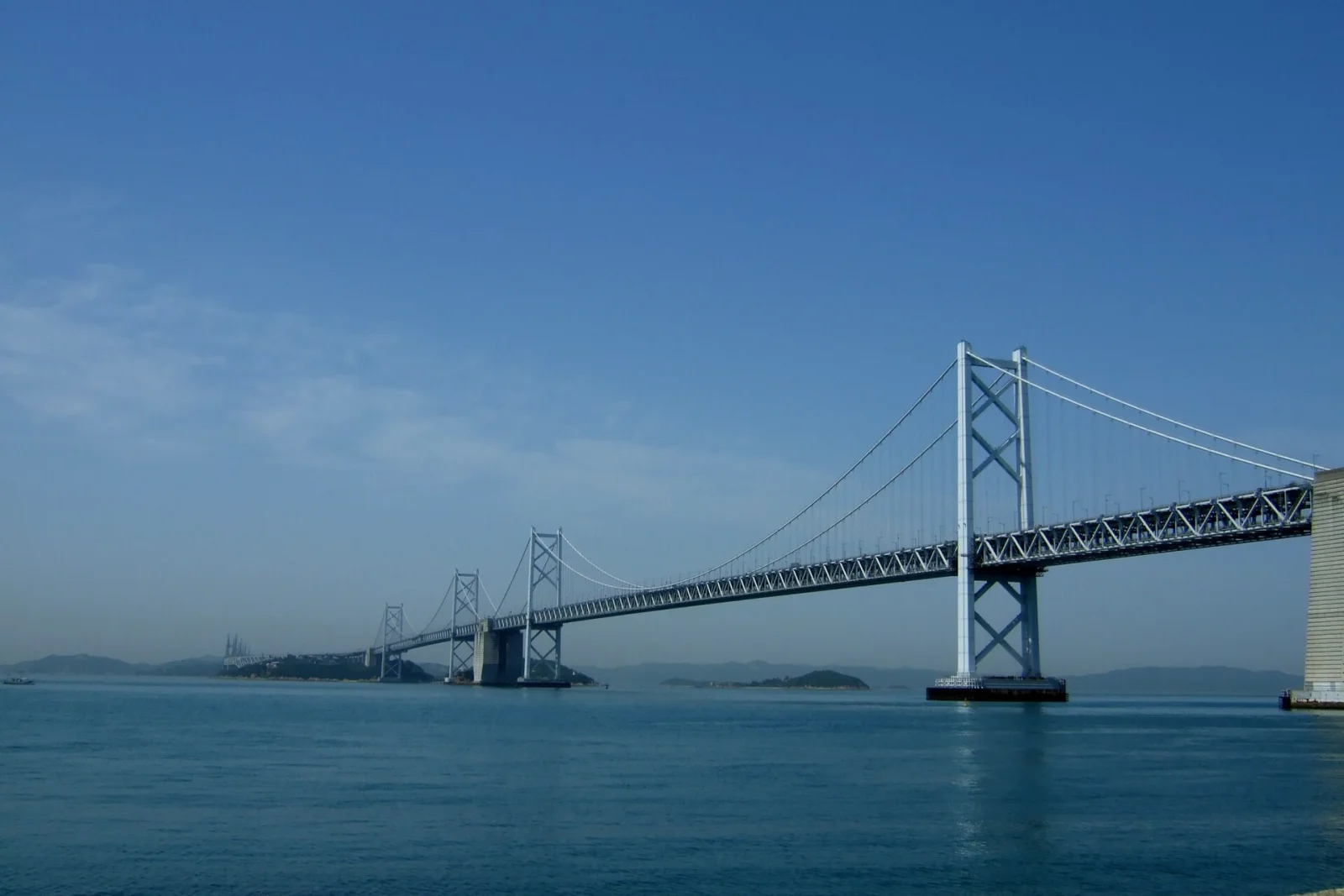
- Driving Across the Seto Ohashi Bridge from Honshu
- Iya Valley Routes and Where to Stay
- Mount Ishizuchi's Ropeway Base and Ridgeline Road Need Separate Pins
- Taking a Car by Ferry to Shodoshima vs Hiring in Tonosho
- How to Structure a Four- to Five-Day One-Way Itinerary
- Narrow Roads, Supplies, and Handling Accidents
- Quick Q&A
A hire car in Shikoku earns its keep in the mountains. Driving from Oboke to Iya Kazurabashi Vine Bridge and continuing into Ochiai Village in the afternoon is far easier to time by car than waiting between two bus services. If you are only exploring central Takamatsu, Matsuyama, and Kochi, save your hire days for the countryside or arrive by train first and hire locally for a shorter stretch. Flying into Takamatsu and out of Matsuyama lets you weigh a cross-prefecture one-way drop-off directly against driving back to your original branch. Anyone considering the SEP expressway pass should first count how many days they will actually use expressways, and budget separately for the three Honshu-Shikoku sea-crossing bridges such as the Seto Ohashi.
Which Days Are Worth Hiring a Car
On a first trip to Shikoku, start by pinning your accommodation and must-visit stops on a map. Takamatsu Port, Matsuyama's castle district, and central Kochi can each be covered on foot or by tram and local bus. If you spend two consecutive days in the same city centre, picking up a car at the airport simply adds overnight parking fees plus the time spent retrieving the vehicle each morning and finding a space again at night. By contrast, if you plan to drive from Oboke up to Iya Kazurabashi and on to Ochiai Village in Higashi-Iya on the same day, a car eliminates the long gaps between bus connections and lets you stay overnight in the mountains.
Sometimes the tidiest booking is just a single day. You might base yourself in Takamatsu first, walk the Kotohira approach, or take a boat from the port, and only pick up a car when heading into the Iya Valley, visiting suburban udon shops, or travelling west from Kochi towards the Shimanto River. When your overnight stops span two prefectures, an inter-prefectural one-way drop-off saves a long return drive. If you still have two nights left in your final city, returning the car before checking into town trims two days off the hire.
Travellers entering Shikoku by rail from Okayama or Hiroshima can begin their hire on the Takamatsu or Matsuyama side, avoiding the toll for driving across the Honshu-Shikoku bridges. If you are driving over from Kansai, link your route across the Akashi Kaikyo and Onaruto bridges and start in Tokushima. Which gateway you choose dictates where you sleep on the first two nights and changes how much toll value the SEP genuinely offsets. Keeping a car for an extra night merely to match a multi-day pass often incurs overlooked vehicle rental and parking costs.
| Trip Scope | Pick-Up & Drop-Off Strategy | How to Schedule |
|---|---|---|
| Central Takamatsu plus Kotohira | Use rail or buses first | Group suburban stops or mountain roads into a single hire day |
| Oboke plus Nishi-Iya and Higashi-Iya | Pick up before entering the mountains | Allow at least half a day for side roads and reach your inn before dinner |
| In via Takamatsu, out via Matsuyama | Cross-prefecture one-way drop-off | Put both branches, the vehicle class, and the one-way fee into one booking |
| Takamatsu Port to Shodoshima | Take the car by ferry or hire on the island | Compare return vehicle ferry spaces and passenger fares against sailing schedules |
How to plan a self-drive trip in Shikoku: Taiwanese driving licence translation rules, Takamatsu and Matsuyama one-way hire, SEP expressway pass pricing, and routes through Iya Valley, Mount Ishizuchi, and Shodoshima.
Documents Required for Taiwanese Licence Holders
Short-term visitors driving in Japan on a Taiwanese licence must carry their valid original Taiwanese driving licence, an official Japanese translation issued by an authorised body, and a passport showing their entry date for inspection. Highway Bureau motor vehicle offices in Taiwan issue the Japanese translation upon presentation of the original licence and national ID card, for a statutory fee of TWD 100. An International Driving Permit issued in Taiwan is not valid in Japan, nor is a self-made translation. You may reuse a translation from a previous trip provided the details on your driving licence remain unchanged; if your licence has been renewed with updated details, apply for a matching new translation.
Short-term visitors may drive for up to one year from their date of entry into Japan, provided their Taiwanese driving licence also remains valid. If you use automated immigration gates on arrival, ask a Japanese immigration officer how to obtain an entry stamp so car hire staff and traffic police can verify your arrival date. If two people plan to share the driving, both must bring complete documents, check in together at pick-up, and be registered on the rental agreement. Any additional driver must be added before departure: if you swap seats at a motorway service area, the person taking the wheel must already be listed on the contract.
Multi-generational groups often choose a vehicle by seat count first and check licence limits afterwards. The Japan-Taiwan Exchange Association notes that a standard Taiwanese passenger-car licence covers vehicles of nine seats or fewer, and cannot be used to hire a ten-seater that a regular Japanese licence permits. Groups of six to eight also need room for pushchairs, child seats, and everyone's luggage; with all three rows upright, some people carriers leave very little vertical boot space. When booking, ask about the boot depth with every seat in use. If you need two child seats, check with the branch which rows can accommodate them while keeping an aisle clear for older passengers to get in and out.
Families travelling with young children can add child seats when booking, selecting an infant, child, or junior booster seat according to height and weight. Taking Toyota Rent a Car's published option rates as a benchmark, infant and child seats cost ¥1,650 per hire, while junior seats cost ¥1,100. Per-hire option fees are easily confused with daily insurance cover charges, so on multi-day trips note the billing unit for each item on your itinerary to see clearly how quotes from different companies compare.
Takamatsu and Matsuyama Pick-Up Desks and Return Hours
Car hire reception desks at Takamatsu Airport sit on the ground floor in the arrivals lobby. At Toyota Rent a Car's Takamatsu Airport branch (open 08:00–20:00), you check in at the arrivals counter first and then ride a shuttle bus roughly 700 metres north of the terminal to the depot. Between landing and driving away, allow time for baggage claim, the shuttle queue, contract paperwork, fitting child seats, and inspecting the bodywork. If your flight lands in the afternoon, make your first stop near your hotel or in flat urban areas, and leave the mountain roads until the following morning.
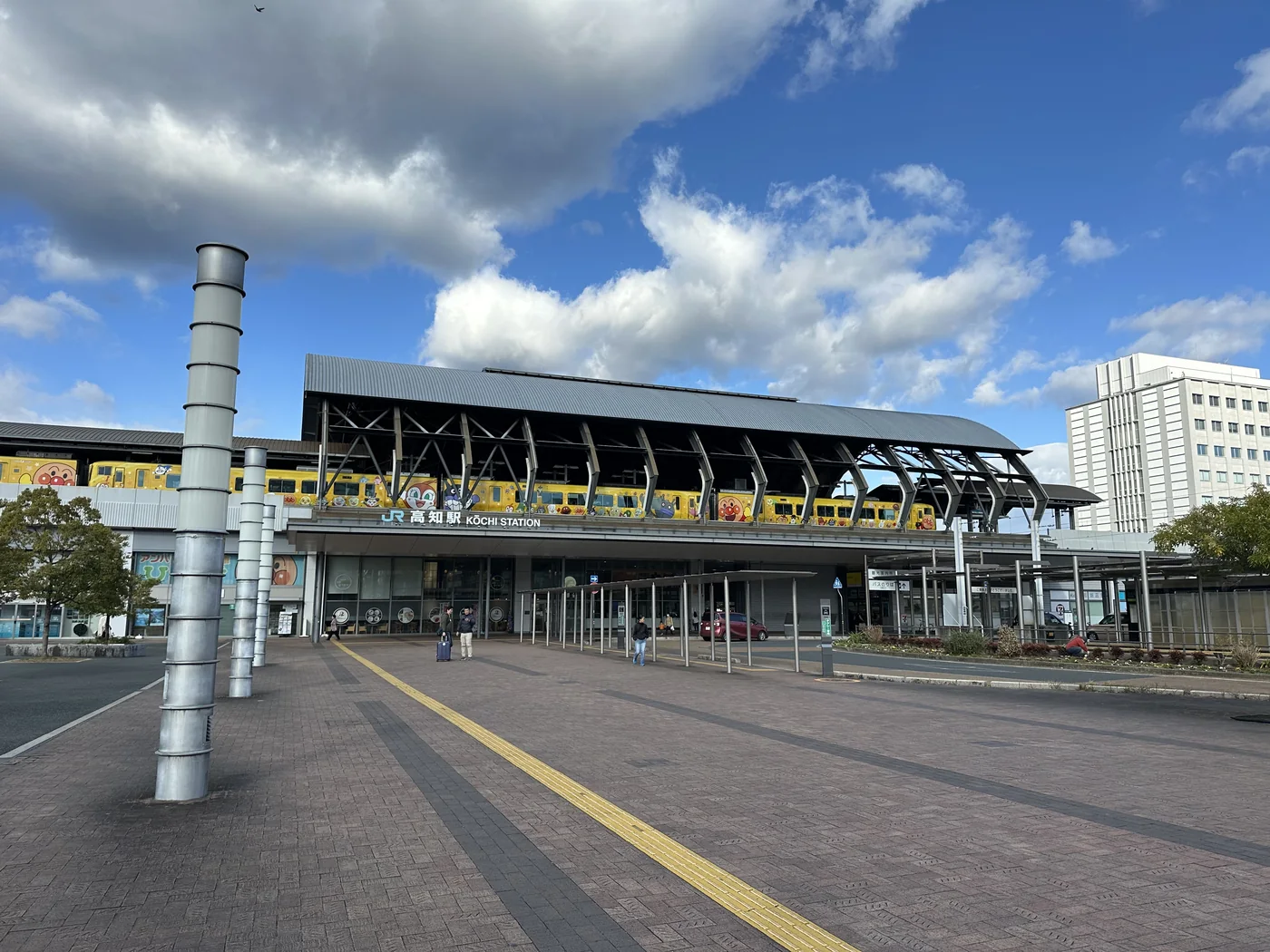
For late arrivals into Takamatsu, airport buses into the city depart from Stand 2. The airport's official timetable lists ¥1,300 for adults and ¥650 for children to Takamatsu Station or the ferry terminal (around 45 minutes), and ¥1,000 for adults to Kawaramachi. Staying near Takamatsu Station or Sunport puts you right by the ferry piers for the next morning and works well if you collect a car at the station before driving west towards Sakaide or Marugame. Staying near Kawaramachi gives easier access to dinner spots and shopping arcades, letting you schedule car pick-up for the morning you actually hit the road. Airport and station branches calculate vehicle availability and return deadlines separately, so double-check the exact branch name when booking.
Toyota Rent a Car's Matsuyama Airport branch offers a complimentary shuttle; exit the arrivals hall and turn right to the dedicated desk at the far end. Nishi-Shikoku Toyota lists hours as 08:00–20:00 from 4 January to 29 December, closing early at 16:00 from 30 December to 3 January. The depot has an on-site petrol station. If you are catching an evening flight over the New Year period, return the car early, head upstairs in the terminal for dinner while waiting for check-in, and avoid rushing back just before the desk closes. Build in buffer time before drop-off for unloading bags, settling ETC tolls, and waiting for the shuttle.
If your final two days are dedicated to Dogo Onsen or Matsuyama Castle, you can choose a downtown Matsuyama drop-off instead. Toyota's Matsuyama branch is about a five-minute walk north of JR Matsuyama Station along the Matsuyama Port line, giving easy rail connections. Staying around Okaido puts the castle and evening dining within walking distance, while staying in Dogo lets you rest at your ryokan between baths and dinner. Airport buses stop right in front of Dogo Onsen Station, and on the outbound leg from Matsuyama Airport into town, limousine buses board at Stands 4 and 5. Travellers dropping the car off in the city to spend their final night at a hot-spring inn will usually benefit more from a room with an easy luggage route to the bus stop than from a hotel with parking.
How to Price a Cross-Prefecture One-Way Return
To pick up in Takamatsu and return in Matsuyama, request a quote between two branches of the same operator, entering both exact branch locations and your chosen vehicle class together. Both Toyota's Takamatsu Airport and Matsuyama Airport branches support cross-prefecture one-way returns and appear on NEXCO West's list of participating Toyota SEP locations. While standard hires allow one-way drop-offs, using an SEP requires specifying the pick-up branch, return branch, and pass dates in the same booking so both depots can reconcile the designated ETC card seamlessly.
A full loop across Shikoku's four prefectures involves several distinct cost components. The base vehicle rate depends on pick-up/return times, car class, and season, while the one-way drop-off fee is charged separately. Collision damage waiver cover is priced per rental period, whereas an ETC card, child seats, or other accessories may be billed either per hire or per day. Also factor in overnight hotel parking—especially if you drive out again to fetch something or grab a late-night meal, as partner car parks sometimes charge per entry. When comparing two hire companies, add matching cover, child seats, and drop-off locations before judging which is cheaper.
Whether a one-way fee is worth paying depends on which return leg it spares you. If you drive from Takamatsu to the Iya Valley, continue to Kochi, and finish in Matsuyama to fly home, returning the car to Takamatsu adds a long drive back east. If your return flight also leaves from Takamatsu, weigh your arrival time and public transport options from Matsuyama back to Takamatsu before deciding whether to drop the car in Matsuyama or drive back yourself. Anyone planning to return a car in Okayama or Hiroshima should add a separate line for bridge tolls. Crossing an extra sea bridge or motorway, or leaving the mountains a day early to meet a return deadline, usually affects a trip far more than a small difference in daily hire rates.
Calculating Whether the SEP Express Pass Pays Off
NEXCO West's SEP stands for the San'in–Setouchi–Shikoku Expressway Pass, covering selected expressways across San'in, Setouchi, and Shikoku. Passes start at ¥10,700 for 3 days, ¥11,700 for 4 days, and ¥12,700 for 5 days, rising up to ¥17,700 for 10 days. Eligibility covers travellers holding a foreign passport and a driving licence valid in Japan. Add the SEP when reserving at a participating branch listed on the official website, and collect the dedicated ETC card at pick-up. Remember that the onboard ETC reader and the card are separate: a vehicle fitted with an ETC unit still needs an active card inserted. Travellers who prefer pay-as-you-go tolls can rent a standard ETC card at the counter—for instance, Toyota publishes a fee of ¥550 per hire, with actual tolls billed separately.
The SEP is counted in consecutive calendar days, from 00:00 to 23:59 each day. If you collect a car on Thursday afternoon and return it at noon on Sunday, total hire time is under 72 hours, yet using covered expressways on all four dates requires a 4-day pass. If you stay solely within central Takamatsu after landing on Thursday and only join tolled expressways from Friday, compare Friday-to-Sunday tolls against a 3-day pass. Likewise, if your final day is spent strolling around Matsuyama, or your second day takes the car onto Shodoshima with no expressway driving, leave those days out of your toll calculation.
To run the numbers, enter your actual entry and exit interchanges, vehicle class, dates, and travel times into NEXCO West's toll and route calculator. Visiting three sights inside one prefecture rarely requires three separate expressway legs: on a Takamatsu-in, Matsuyama-out itinerary, the approach to Kazurabashi in Iya uses local roads, and both central Kochi and Katsurahama can be reached via ordinary highways. Total the covered expressway tolls and compare them against an SEP for the same dates. Sections outside the pass network must be budgeted separately, and whether the interchanges at both ends of a sea bridge fall inside the coverage zone affects billing: if both ends sit outside the pass area, the entire trip is billed separately even if you cross a covered stretch in the middle; if only one end crosses into a non-covered zone, that external portion is charged on top.
In practice, a two-day Kagawa itinerary usually works better with pay-as-you-go ETC. Once a three-to-five-day trip makes repeated runs on the Takamatsu, Tokushima, Kochi, or Matsuyama expressways, running a proper comparison becomes worthwhile. Before setting off, check with the counter how the card status and active pass dates are confirmed, and settle any out-of-zone tolls when returning the vehicle. Keep in mind that the pass does not cover Shodoshima car-ferry tickets, attraction parking fees, or mountain inn shuttles, so larger groups should still keep those costs in their budget.
Several interchanges in Shikoku now accept ETC only. On NEXCO West's April 2026 list, Tsuda-Sangawa on the Takamatsu Expressway, Niihama on the Matsuyama Expressway, and Otoyo on the Kochi Expressway are all designated ETC-only exits and entrances. When driving from the Iya Valley towards Kochi and planning to join the expressway at Otoyo, confirm at pick-up that the onboard reader recognises the card. Drivers paying cash should use the route planner beforehand to select an interchange with staffed lanes. If you accidentally enter an ETC-only tollgate, pull up along the Support or ETC/Support lane and follow the intercom instructions—never reverse.
| Consecutive Calendar Days | Pass Price |
|---|---|
| 3 days | ¥10,700 |
| 4 days | ¥11,700 |
| 5 days | ¥12,700 |
| 6 days | ¥13,700 |
| 7 days | ¥14,700 |
| 8 days | ¥15,700 |
| 9 days | ¥16,700 |
| 10 days | ¥17,700 |
Driving Across the Seto Ohashi Bridge from Honshu
Hiring a car in Okayama to enter Kagawa takes you across the E30 Seto-Chuo Expressway, linking at Sakaide with the road network towards Takamatsu or Matsuyama. Driving from Kobe via Awaji Island to Tokushima uses the Kobe-Awaji-Naruto Expressway, while crossing from Onomichi in Hiroshima Prefecture to Imabari in Ehime uses the Nishiseto Expressway—better known as the Shimanami Kaido. All three are JB Honshi Expressway sea crossings, and SEP holders must pay the toll for these bridge sections separately. When weighing a Honshu pick-up against hiring directly in Shikoku, the extra rental days, which bridge you cross, and where you drop the car off carry more weight than slight differences in daily rates.
Taking the Seto-Chuo Expressway as an example, the official tariff from Hayashima IC to Sakaide IC for a standard car is ¥2,310 on weekdays with ETC. When eligible for weekend/holiday discounts, the standard-car ETC toll drops to ¥1,990. For fiscal 2026, holiday discounts are excluded during Golden Week, the summer Obon period, autumn holiday breaks, the New Year period, and three-day weekends—so do not assume discounted rates for a year-end crossing. Without an ETC card, the standard non-ETC cash toll from Hayashima IC to Sakaide IC is ¥4,300, so add a separate column when estimating costs. Navigation apps only display the bridge crossing as part of total journey time; if you plan to stop at a service area mid-bridge, factor that into your drop-off schedule.
To admire the bridge itself, turn off mid-crossing at Yoshima Parking Area. From its viewing deck you can look out over the Kita-Bisan and Minami-Bisan Seto Ohashi spans and watch trains passing along the lower railway deck. Note that if you make Yoshima a half-day excursion out from Sakaide and return via the same exit, the operator adds the toll from the entry gate to Yoshima and from Yoshima back to the exit—a different calculation from simply stopping once while continuing across the strait. In high winds, check JB Honshi's live traffic restrictions first. If road closures halt a crossing while you already hold a car-hire reservation in Shikoku, use any rail services still running across the bridge and contact your branch to adjust your pick-up time.
Iya Valley Routes and Where to Stay
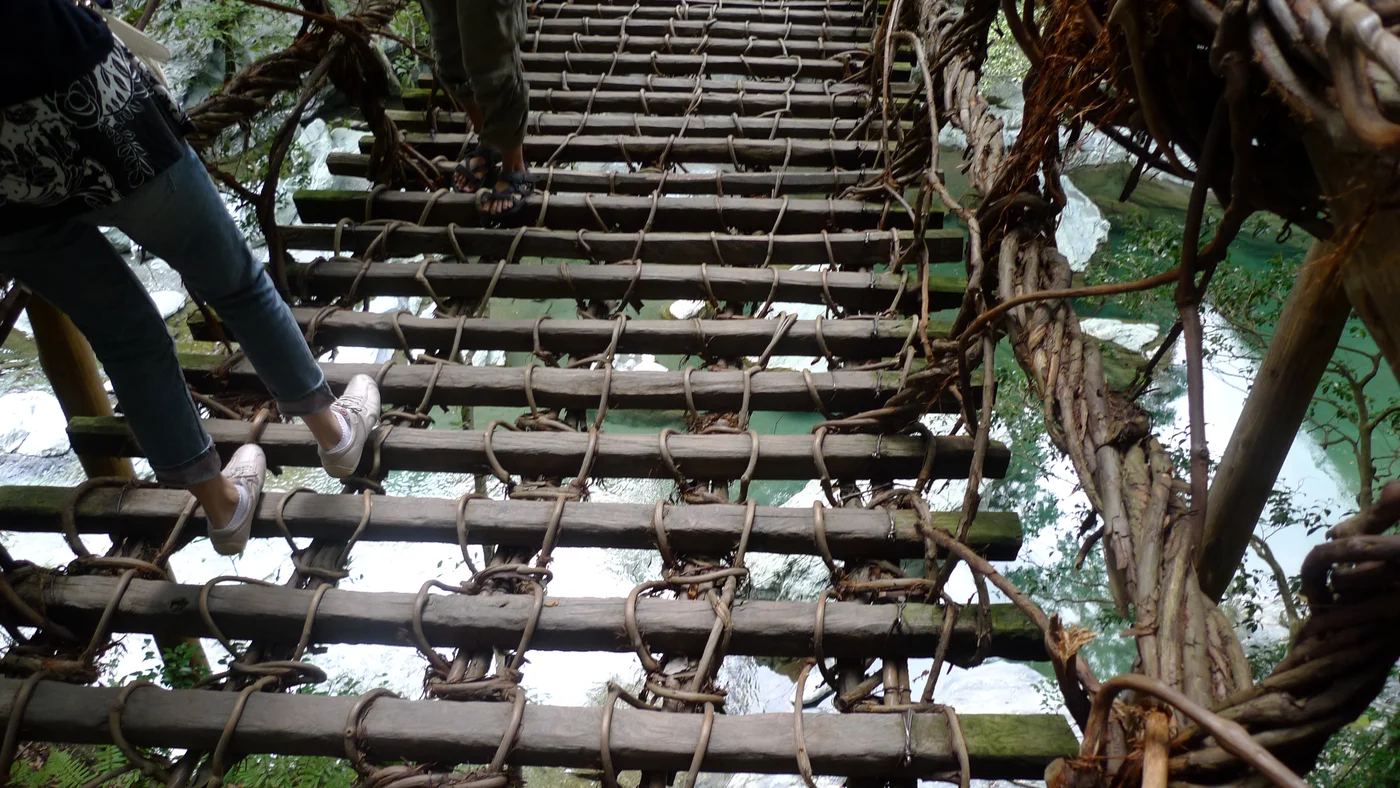
From the Ikawa-Ikeda IC on the Tokushima Expressway to Iya Kazurabashi Vine Bridge, Miyoshi City's official driving directions follow National Route 32 towards Kochi, then Prefectural Route 45, Prefectural Route 32, and municipal roads to Kazurabashi Yumebutai. The official estimate is around one hour, followed by a five-minute walk from the car park. First-time drivers heading into the mountains can set Oboke on Route 32 as an intermediate waypoint so navigation stays on the city-recommended approach. If your satnav tries to divert onto narrower valley shortcuts, check which roads it selects before accepting—shorter distance often means far more single-track bends.
Standard-car parking at Kazurabashi Yumebutai costs ¥500 with no advance booking; for satnav phone-number search, enter 0883-87-2200. Crossing the vine bridge itself carries a separate admission fee of ¥550 for junior high school students and adults, ¥350 for primary school pupils, and free entry for pre-schoolers. Opening hours run 08:00–17:00 from September to March, extending to 18:00 from April to June, and 07:30–18:30 in July and August, though heavy rain warnings may trigger temporary closures. The bridge and product hall keep separate hours, and the Yumebutai restaurant is officially listed as open 11:00–15:00, allowing visitors eating lunch before crossing to leave their car in the same car park.
Ochiai Village lies in Higashi-Iya, deeper up the valley beyond Kazurabashi in Nishi-Iya. Anyone hoping for a panoramic view of the hillside hamlet should save the opposite-bank viewpoint coordinates ahead of time. If you plan to walk through the village itself, park only in designated spaces and explore on foot rather than spending all your time and energy on the vine bridge. Those visiting solely for Kazurabashi and nearby Biwa Waterfall can manage a day trip from Takamatsu or Tokushima. However, if you want to include Ochiai Village in the afternoon or stay at a mountain inn, make Kazurabashi your morning centrepiece. On spring and autumn weekends, traffic slows around the first stop, so dropping Higashi-Iya keeps the mountain drive back and dinner check-in from colliding.
When driving into the Iya Valley from Takamatsu or Tokushima, convenient bases include the area around Awa-Ikeda Station or Oboke. Awa-Ikeda works well if you want to pick up supplies in the evening, leave luggage in the boot the next morning, and head up into the mountains without racing a ryokan's dinner cut-off on pick-up day. Oboke positions you neatly for continuing south down Route 32 towards Kochi the following day and also offers local buses up to Kazurabashi. Iya Onsen suits travellers who want dinner and hot-spring bathing at the same property—when booking, note both the latest dinner seating and where guests park. Weighing room-rate differences alongside extra petrol, winding return drives, and early starts makes the best choice clear.
Without a driving licence, you can still take Shikoku Kotsu buses from JR Oboke Station to Kazurabashi Yumebutai or on services continuing past Kazurabashi to Hotel Iya Onsen. On Miyoshi City's October 2026 quick-reference timetable, departures from outside Oboke Station at 08:58, 10:08, and 11:08 serve the Kazurabashi area, alongside a Higashi-Iya service running from Yumebutai to Ochiai Bridge. Anchor your time at each stop around your chosen return bus. Travellers moving luggage between hotels or linking both valleys in one day can leave bags at their inn and book a taxi for one leg, while those focusing purely on Oboke and Nishi-Iya can plan transfers using the two-day car-free Oboke and Iya Valley itinerary.
Mount Ishizuchi's Ropeway Base and Ridgeline Road Need Separate Pins
The Ishizuchi Tozan Ropeway ascends from Shimotani Station in Saijo, Ehime Prefecture, reached via Prefectural Route 12 with private paid car parks near the valley station. The UFO Line, by contrast, refers to the Kamegamori and Kamegamori West forest roads managed by Ino Town in Kochi Prefecture, leading towards the Old Kanpuzan Tunnel and Tsuchigoya. Both attractions require completely different entry points. If you simply want to ride the ropeway and take in the alpine views, set your satnav directly to Ishizuchi Tozan Ropeway Shimotani Station. If your goal is driving the ridgeline, consult official road maps for open entry and exit gates and only pull over at the handful of marked lay-bys along the route.
The announced winter closure for the UFO Line begins at noon on 30 November 2026 and is scheduled to run until mid-April 2027. Ino Town's 20 November road map already marked the stretch between the Old Kanpuzan Tunnel car park and Tsuchigoya as fully closed due to snow, with no reopening date specified. Treating the ridgeline road as an inter-prefectural shortcut in late November risks leaving you stranded at a locked barrier. Even between late summer and autumn, check Ino Town's road bulletins for construction zones and timed restrictions; if one end is closed completely, scrap the cross-mountain transit and explore the lowlands of Ehime and Kochi separately.
During seasonal transitions, mountain weather differs sharply from Saijo or central Kochi, so check road authorities' snow and restriction maps before ascending. If the mountain road is shut, Saijo offers the Railway History Park just east of Iyo-Saijo Station. One combined ticket covers both the North and South buildings of the Shikoku Railway Cultural Museum at ¥300 for high school students and adults, ¥100 for primary and junior high pupils, and free for pre-schoolers (open 09:00–17:00, last entry 16:30; closed Wednesdays, or the following day if a public holiday falls on Wednesday). Travellers with bulky luggage—or passing through on a Wednesday—can continue straight to Matsuyama to stroll Okaido and the castle town. If low cloud hides the ridge while the road remains safe, shorten the detour to low-elevation stops and a soak at Dogo Onsen. When booking a car, add winter tyres to match your route and check whether any section mandates snow chains; winter tyres handle moderate wintry surfaces, but closed roads always require rerouting in the valley. During typhoons or heavy rain, calling off a mountain crossing early gives you far more leeway to rejoin the expressway or switch to rail.
Taking a Car by Ferry to Shodoshima vs Hiring in Tonosho
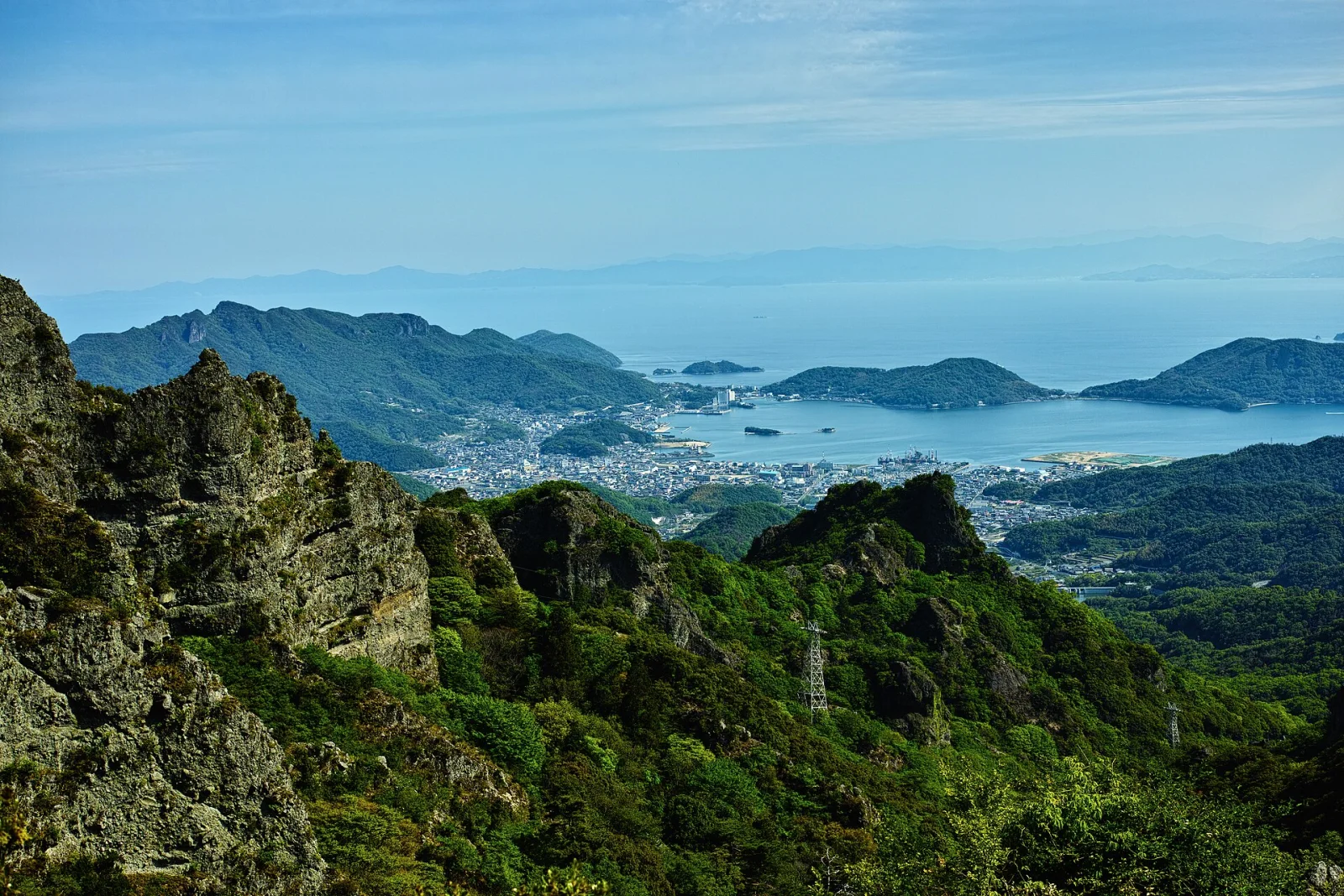
Once you leave Tonosho Port on Shodoshima, having a car makes it far easier to link Kankakei Gorge, Olive Park, and different stretches of coast on the same day. The car ferry from Takamatsu to Tonosho takes roughly 60 minutes. Vehicle fares include one driver, with additional passengers ticketed separately and vehicles priced by length bracket. Before reserving a car space on the Takamatsu–Tonosho ferry, verify with your mainland rental branch that taking the hire car onto a ferry is permitted, and add boarding queues and disembarkation time into your hire window. If you intend to return the car in Takamatsu that evening, leave enough margin between ferry arrival and branch closing time to disembark, refuel, and complete the handover.
Online vehicle reservations for the Shodoshima Ferry open two months before the sailing date and close four hours before departure. The 06:25 and 07:20 sailings from Takamatsu normally operate on a first-come, first-served basis without advance bookings. Anyone bringing a car both ways should secure the return sailing at the same time as the outbound crossing. Foot passengers taking the high-speed boat board at the high-speed pier at Takamatsu Port and pick up a vehicle from an island branch upon reaching Tonosho. Marine Rent-a-car, operated by the ferry company, sits right at Tonosho's ferry terminal; its website lists opening hours of 08:00–18:00, with telephone bookings open two months ahead. Separating ferry and car bookings lets you pick different return sailings, though you will have to carry your own luggage on and off the boat.
If Kankakei Gorge is your sole target on the island, refer directly to the Kankakei Gorge ropeway and bus guide and work backwards from your preferred mountain slot to choose a sailing. In rough weather or high winds, check the ferry operator's service status before deciding whether to cross, keeping flexibility on same-day car pick-ups and the last ferry back. Staying two nights in Takamatsu lets you swap your island day with your Kotohira day if forecasts shift. And if you want a shorter main-island car hire, renting for half a day out of Tonosho avoids tying a mainland vehicle to two ferry crossings.
How to Structure a Four- to Five-Day One-Way Itinerary
On a four-day route starting in Takamatsu and finishing in Matsuyama, devote Day 1 to Kagawa. After landing during the day and picking up your car, stop at a convenient udon shop en route to Kotohira. If evening is already drawing in, stay in Kotohira or Marugame and climb the approach road the next morning. The stone steps up to Kotohira-gu stretch out walking time, so if anyone in your party moves at a gentler pace, set aside a separate half-day for central Takamatsu instead of cramming parks, shrines, and the waterfront into arrival day. Staying near Takamatsu Station suits travellers still using ferries or trains, whereas Marugame sets you up for an early run onto the Tokushima Expressway without doubling back to Takamatsu.
Make Oboke and the Iya Valley your main Tokushima stops on Day 2. Those keen to visit Tokushima City's Awa Odori Kaikan can stay near Tokushima Station the night before, or spend the morning in the city and limit the afternoon to Nishi-Iya. Heading into the mountains from Tokushima City and driving back down for an evening performance means climbing and descending mountain roads twice in one day, adding substantial time behind the wheel. Families continuing onwards to Kochi will have a far calmer rhythm if they sleep in Oboke or the Iya Valley and follow National Route 32 smoothly south the next morning.
Enter Kochi on Day 3 for lunch in town, Hirome Market, or Kochi Castle, driving down to Katsurahama if the skies are clear. Staying near Kochi Station keeps north–south road links and hotel parking straightforward, while staying around Obiyamachi or Ohashi-dori lets you leave the car parked and walk straight to the market for dinner. The Shimanto River lies further west in Kochi Prefecture; if you want to see its submersible bridges and spend a night in Nakamura or beside the river, stretch the trip to five days to cover the distance comfortably. If your drop-off in Matsuyama is fixed for late afternoon on Day 4, point Day 4 straight towards Matsuyama rather than detouring via Shimanto before racing north to make branch closing time.
On the final day into Ehime, early risers without a flight to catch—and with clear mountain weather—can approach Mount Ishizuchi via the Saijo ropeway. Otherwise, choose one main focus from Dogo Onsen, Matsuyama Castle, and returning the car. Travellers on an early-morning flight home can pick a hotel near an airport bus stop the night before, hand the car back early, and keep the morning purely for getting to the terminal. If you have a same-location return hire and still want to cover all four prefectures, build in an extra transit day from Matsuyama back to Takamatsu, stopping along the Seto Inland Sea coast for lunch with generous padding for traffic, refuelling, and drop-off.
Narrow Roads, Supplies, and Handling Accidents
Slow down before entering mountain bends. When meeting oncoming traffic, use wider passing bays with clear sightlines rather than sending a passenger out to stand in the opposite lane and direct. If a scenic viewpoint lacks marked bays, an official lookout, or a roadside lay-by, drive past rather than stopping on the carriageway. Let the front passenger photograph signposts or check maps, and wait until you have pulled over safely before adjusting the satnav. Junctions between expressways and prefectural roads are common spots for signal drops or sudden rerouting, so save branch, car park, and hotel phone numbers and addresses in advance. Entering only a sight's name into a Japanese satnav can drop the pin at a trailhead or across a river—in the Iya Valley especially, search by car park name.
Top up fuel and buy drinking water in town before climbing into the mountains, and build in a rest stop with toilets and space to stretch your legs. If you are travelling with elderly relatives or children prone to travel sickness, break the drive along National Route 32 and decide after walking Kazurabashi whether to push further into Higashi-Iya. Pairing Iya and Mount Ishizuchi on a single day looks like one neat connecting line on a map, yet in real driving requires leaving main highways and climbing back up twice. In winter, once the sun drops, valley floors turn dark fast. Anyone with a ryokan dinner booking should subtract mountain driving time and the walk from the car park from the inn's latest check-in time to decide when to leave their final sight.
At pick-up, inspect the bumpers, alloy wheels, and wing mirrors alongside the staff and ensure every pre-existing scuff is marked on the handover sheet. Check collision cover separately for third-party property damage, vehicle excess, and the Non-Operation Charge (NOC). On Toyota's standard passenger-car example, Collision Damage Waiver (CDW) costs ¥1,100 per 24 hours, while the Safety W Plan—which also waives the NOC—costs ¥1,650. Without NOC waiver cover, returning a drivable car to the scheduled branch normally incurs ¥20,000, rising to ¥50,000 if the car cannot be driven back to the branch. In an accident, see to everyone's safety first, call 119 for medical emergencies if needed, report the incident to police on 110, and then ring the accident hotline on your rental contract so the hire firm can arrange towing or a replacement vehicle. Settling privately with the other party without notifying police can leave your insurance claim without an official police record.
Before returning the car, sort out your toll receipts and check the fuel requirement. Most agreements require returning the vehicle with a full tank, though some branches settle fuel by distance or a set rate under their terms. Ask at pick-up whether the branch requires a specific petrol station or receipt, and check both the fuel flap and rental folder before filling up. On departure day, if your previous stop was in the mountains, check expressway statuses and branch closing hours before setting out, and skip remaining sights immediately if a closure threatens your schedule. After handing back the ETC card at the counter, settle any non-SEP tolls and extra charges before boarding the airport shuttle.
A few useful answers
What documents do Taiwanese-licensed drivers need to hire a car in Shikoku?
Bring your original valid Taiwanese driving licence, an official Japanese translation issued by an authorised body, and your passport. If multiple people will share the driving, every driver must bring complete documents and register at the branch. Taiwanese International Driving Permits cannot be used in Japan.
Is the SEP expressway pass worth buying for a two-day Shikoku trip?
The minimum SEP duration is 3 days at ¥10,700. For a two-day Kagawa itinerary or a single-day drive into the Iya Valley, calculate pay-as-you-go expressway tolls first before deciding on a pass. Sea-crossing expressways must also be paid separately.
Can I pick up a hire car at Takamatsu Airport and return it at Matsuyama Airport?
Both Toyota branches support cross-prefecture one-way returns. Specify your pick-up branch, drop-off branch, and car class when booking so the system includes the one-way fee. Note that the Matsuyama Airport branch closes early at 16:00 from 30 December to 3 January.
What should I enter into the satnav for Iya Kazurabashi Vine Bridge?
Enter Kazurabashi Yumebutai or the telephone number 0883-87-2200. Standard-car parking is ¥500, followed by roughly a five-minute walk to the bridge.
Can I drive the UFO Line to Mount Ishizuchi in winter?
Ino Town's 20 November 2026 road map already lists the section between the Old Kanpuzan Tunnel car park and Tsuchigoya as closed due to snow, with this season's winter closure announced through mid-April 2027. The Ishizuchi Ropeway from Shimotani Station on the Ehime side is reached separately via Prefectural Route 12.
Can I take a hire car onto the Shodoshima ferry?
Confirm first that your car-hire branch permits ferry crossings, then book a vehicle space on the Shodoshima Ferry between Takamatsu and Tonosho. The vehicle fare includes one driver, while extra passengers require separate tickets. Alternatively, cross as a foot passenger and hire a car near Tonosho Port.
Official information and references
Sources used in this guide.
- Taiwan Highway Bureau | Taiwan–Japan Driving Licence Reciprocity and Japanese Translations
- Japan-Taiwan Exchange Association | Eligible Documents, Validity Period, and Vehicle Classes for Taiwanese Licences
- NEXCO West | SEP Pass Pricing, Eligibility, and Covered Expressways
- NEXCO West | Participating Toyota Branches for the SEP
- NEXCO West | Expressway Toll and Route Calculator
- JB Honshi Expressway | Seto Ohashi ETC Tolls and Holiday Discounts
- JB Honshi Expressway | Seto Ohashi Non-ETC Standard Car Cash Tolls
- JB Honshi Expressway | Seto Ohashi Yoshima Parking Area
- Toyota Rent a Car | Takamatsu Airport Branch
- Nishi-Shikoku Toyota Rent a Car | Matsuyama Airport Branch
- Toyota Rent a Car | Matsuyama Branch near JR Matsuyama Station
- Toyota Rent a Car | Collision Damage Waiver (CDW) and NOC
- Toyota Rent a Car | ETC Card and Child Seat Hire Fees
- Takamatsu Airport | Airport Bus Stops and Fares
- Matsuyama Airport | Limousine and Route Bus Boarding Stands
- Miyoshi City Tourism | Iya Kazurabashi Opening Hours, Admission, and Access
- Miyoshi City Tourism | Kazurabashi Yumebutai Parking and Restaurant
- Miyoshi City Tourism | October 2026 Oboke and Iya Bus Timetable
- Ino Town | UFO Line and Ishizuchi Koen Line Road Status
- Ino Town | 20 November 2026 Snow Closure Map
- Ishizuchi Mountain Range Partnership Council | 2026–2027 UFO Line Winter Closure Notice
- Ishizuchi Tozan Ropeway | Shimotani Station and Prefectural Route 12 Parking
- Railway History Park | Shikoku Railway Cultural Museum Visitor Information
- Shodoshima Ferry | Takamatsu–Tonosho Car Ferry and Bookings
- Shodoshima Ferry | Takamatsu–Tonosho High-Speed Boat
- Shodoshima Ferry | Marine Rent-a-car Tonosho Branch
- NEXCO West | ETC-Only Tollgates and Support Lanes
- NEXCO West | 8 April 2026 List of ETC-Only Tollgates
- Tokushima Prefecture Tourism | Iya Kazurabashi Hours and Fares
- Tokushima Prefecture Tourism | Kazurabashi Yumebutai Parking Fee
- JNTO | Accidents and Emergency Telephone Numbers