Choose Sapporo autumn foliage spots by month, from Hokkaido University ginkgo and Nakajima Park to Hokkaido Shrine and Mount Moiwa, with underground exits, ropeway fares, wet-weather backups and Jozankei buses.
- Region & Focus
- Sapporo
- Reading Scope
- 24 min read · 11 chapters · 5 Q&As
- Official Verification
- 46 official sources checkedUpdated 22 November 2026 at 08:00 GMT+8
- Key Topics
- SeasonsItinerariesRail travel
Chapter Route Map (tap any stop)
- Which Week in October to Visit Sapporo
- Hokkaido University Ginkgo Avenue: Entering via Kita 13-jo Gate
- Nakajima Park: Shobuike Pond, the Japanese Garden and Hoheikan
- Maruyama Park, Hokkaido Shrine and Maruyama Zoo
- Mount Moiwa: Two-Stage Ropeway, Shuttle Start Times and Parking
- Odori Park and Asahiyama Memorial Park for Spare Gaps in Your Schedule
- Pairing Hokkaido University and Nakajima Park in Half a Day
- A Sunny One-Day Itinerary and Sapporo Underground Fares
- Where to Go in Rain, Low Cloud or Early Snow
- Choosing Where to Stay: Sapporo Station, Odori, Susukino or Nakajima Park
- Adding a Day in Jozankei and Booking Your Return Bus
- Quick Q&A
Sapporo's city autumn foliage generally enters its viewing season from mid-October, while Hokkaido University's ginkgo avenue usually turns gold between late October and early November. If you only have half a day, pick either the lakeside paths at Nakajima Park or the ginkgo-lined avenue at the university. Add Hokkaido Shrine for a morning walk around Maruyama, or ride the Mount Moiwa ropeway during the clearest visibility window for sweeping city views. Jozankei's gorge foliage peaks earlier and rewards a dedicated day trip by bus.
Which Week in October to Visit Sapporo
Official Sapporo tourism guidance places the usual viewing period for central city spots in mid-to-late October. Pairing Nakajima Park and Maruyama works well if you want varied autumn colour in one trip. Both parks contain multiple tree species, so sunny slopes, woodland paths and lakeside banks can peak at slightly different times. When checking recent dated photos from park management, look closely at the landmarks in frame: if trees by the pond have already shed, Japanese maples inside the garden may still be vivid, requiring only a change of path rather than rushing across town.
Head into the mountains in early October. Jozankei Onsen town typically peaks around mid-October, while Sapporo Kokusai Ski Resort sits higher up, and the Jozankei Tourist Association updates the two separately. Decide before setting off whether to walk the valley or ride the autumn gondola, as the ski resort lies a bus ride beyond the hot spring town and its gondola runs only on designated dates. If you have only booked the bus from Sapporo to the onsen town, focus on the Futami Suspension Bridge area instead of burning daylight waiting for onward connections.
From late October into early November, ginkgo trees take centre stage: start at Hokkaido University's Kita 13-jo avenue, then continue to Nakajima Park for Shobuike Pond and the park paths. If your visit straddles the turn of the month, check the final opening dates for the Japanese Garden and Hokkaido University Botanic Garden. Staying two nights lets you save sunlit mornings for peak-colour spots and keep markets or indoor museums for wind and rain. If choosing just one area, Hokkaido University is easiest from Sapporo Station, while guests around Susukino or Nakajima Park can step straight out by the pond.
If your travel companions have one specific shot in mind, pick your dates around that backdrop. For red maples against traditional garden buildings, follow recent updates from Nakajima Park's management; for a golden canopy flanking a straight road, watch Hokkaido University. Arriving in mid-October when the university ginkgos are still mostly green? Visit Hokkaido Shrine and Nakajima Park first, leaving the ginkgos for your final morning in Sapporo. On a short two-day, one-night stay, lock in the more reliable spot and treat the second as an optional stroll if time allows.
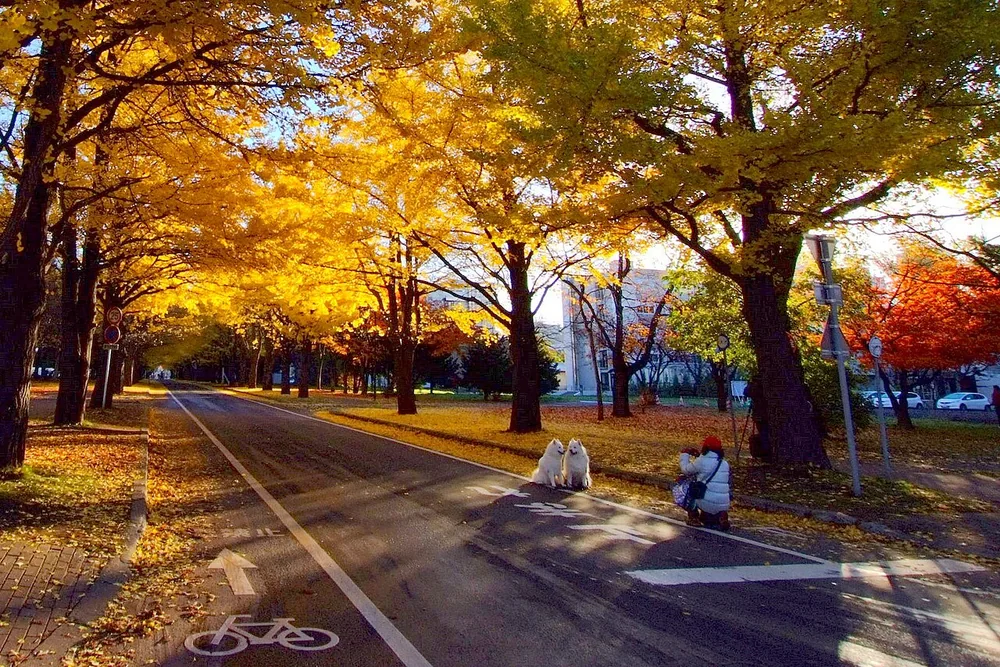
Choose Sapporo autumn foliage spots by month, from Hokkaido University ginkgo and Nakajima Park to Hokkaido Shrine and Mount Moiwa, with underground exits, ropeway fares, wet-weather backups and Jozankei buses.
Hokkaido University Ginkgo Avenue: Entering via Kita 13-jo Gate
Hokkaido University's ginkgo avenue runs along Kita 13-jo Street inside the Sapporo campus, stretching from Kita 13-jo Gate on the east side towards Chuo-dori, the central avenue. Around 70 ginkgo trees line roughly 380 metres of roadway. Ride the Namboku Line to Kita-12-Jo Station—take Exit 1 if you need a lift—then walk towards Kita 13-jo Gate and pass through the stone gateposts to reach the eastern end of the avenue. From JR Sapporo Station, leave via the North Exit, enter through the Kita 8-jo main gate and follow campus paths northwards; Hokkaido's official tourism board estimates a 15-minute walk from the North Exit.
For classic perspective shots down the avenue, walk to the junction with Chuo-dori and turn back along the pavement. Campus service vehicles and bicycles use the road, so keep photography to the footways and choose wider sections for group photos. Hokkaido University bans tourist vehicles year-round, and the university hospital car park is reserved for patients. Travellers arriving straight from Sapporo Station with suitcases should leave luggage in station lockers before strolling through the campus.
To add an indoor stop, turn south onto Chuo-dori at the western end of the ginkgo avenue and walk to the Hokkaido University Museum. Entry is free, with regular hours from 10:00 to 17:00; it closes on Mondays, or on the first weekday following a Monday public holiday. Exhibits span three floors, so if you only have an hour, pick specific specimen halls or academic galleries in advance. Afterwards, exit via the main gate towards JR Sapporo Station's North Exit for lunch or onward trains.
For evening illuminations, check the university's Hokudai Golden Leaf Festival page. The 15th edition takes place on 31 October and 1 November 2026, with differing traffic restrictions announced at Kita 13-jo Gate for each day. To capture both natural daytime colour and night lighting, split the visit in two: shoot the avenue in the morning, head back near the station for food, and return later carrying only essentials. If companions plan to see different stretches, arrange to meet outside Kita 13-jo Gate rather than searching against the flow of pedestrians under the trees.
When you only have one morning for the campus, enter from Kita-12-Jo and exit towards Sapporo Station to link the avenue, museum and lunch smoothly without backtracking. Save Poplar Avenue for extra time if you have it; official tourism guides list the ginkgo and poplar avenues separately, and Kita 13-jo remains the signature golden corridor during ginkgo season. In heavy rain, start straight at the museum from Sapporo Station's North Exit and see whether the downpour eases before walking up to Kita 13-jo.
Nakajima Park: Shobuike Pond, the Japanese Garden and Hoheikan
Leave Namboku Line Nakajima-Koen Station by Exit 3 and walk past the Sapporo Park Hotel into the grounds. Start at Shobuike Pond, following the path to admire the foliage reflected across the water. Need a lift? Use Exit 1 and enter from the Minami 9-jo Square side. For a 40-to-50-minute stroll, loop around the northern end of the pond back to your entrance; for a longer walk, continue south and depart from Horohira-bashi Station Exit 1 to catch the Namboku Line back towards Odori or Sapporo Station.
Near Hoheikan, the Japanese Garden offers free daytime entry and normally opens from late April to early November, with official city listings noting 9:00 to 17:00 visiting hours. In 2026 it remains open until 3 November before closing for winter. With an hour to spare, follow the waterside paths and pass the outside of Hasso-an teahouse before continuing to Shobuike Pond. If the garden has already closed for winter, connect the lakeside walk directly to Hoheikan and pause along the park's broad main avenues where tree colour holds up best; the park's official tree map marks ginkgos and other species.
Originally built by the Kaitakushi (Hokkaido Development Commission) as a wooden Western-style hotel, Hoheikan stands out with its crisp white walls and pale-blue window frames, roughly a 5-minute walk from Nakajima-Koen Station Exit 3. Regular hours run 9:00 to 17:00 (last entry 16:30), costing ¥350 for adults, ¥150 for high school and university students, and free for junior high school pupils and younger. It closes on the second Tuesday of each month (shifting to the following weekday on public holidays) and occasionally holds evening openings. If a breeze ripples the pond late in the afternoon, photograph the exterior while daylight lasts before stepping inside to explore the historic layout and displays.
Organised by the Sapporo Chamber of Commerce and Industry, the 2026 Nakajima Park autumn illuminations run from 23 October to 3 November, with main lighting on from 17:00 to 21:00. Night admission to the Japanese Garden runs from 17:15 with last entry at 20:45, priced at ¥600 on the day or ¥500 in advance (plus booking fee), and free for primary school age and under. Shobuike Pond and the ginkgo avenue are also lit up. If your group splits up, regroup at Exit 3—or Exit 1 for the lift—and check the organiser's current site map for free zones versus ticketed entrances when planning future editions.
Maruyama Park, Hokkaido Shrine and Maruyama Zoo
Take the Tozai Line to Maruyama-Koen Station for a roughly 15-minute walk to Hokkaido Shrine, or ride a bus to the Jingumae stop, just 1 minute away on foot. Staying near Sapporo Station or Susukino? Take the Namboku Line to Odori and change onto the Tozai Line. Walk through Maruyama Park onto the shrine approach, then exit near the bus stop. In wet weather, stick to the main stone approach rather than slippery woodland tracks—especially with older travellers—and return towards Maruyama-Koen Station for lunch.
Official Hokkaido and Sapporo tourism pages list shrine gate hours as 6:00 to 17:00 in October, shortening to 7:00 to 16:00 in November. Aim to reach the main gate before 16:00 in late autumn if you want to enter the main sanctuary. On afternoon visits, head straight to the sanctuary first and admire the trees flanking the approach on your walk back out. When crowds build along the path, step aside from the central thoroughfare to frame photos, and skip extra climbs into the Maruyama forest trails if time is tight.
Families with children can add Maruyama Zoo. From Bay 4 of the bus terminal linked to Maruyama-Koen Station, JR Hokkaido Bus route Maru 15 reaches Maruyama Zoo West Gate in about 5 minutes. October hours are normally 9:30 to 16:30 (last entry 16:00), closing 30 minutes earlier from November. Admission is ¥800 for adults, ¥400 for high school students presenting a student ID, and free for junior high school pupils and younger (the zoo asks junior high visitors to carry student ID). It usually closes on the second and fourth Wednesdays of the month, plus consecutive weekdays during the week of the second Wednesday in November—check the city's annual calendar before setting dates.
For a relaxed family morning, pair a short visit to Hokkaido Shrine with lunch and the afternoon at the zoo. If pushing a buggy or avoiding uphill stretches, arrive via the West Gate bus stop and decide afterwards whether to catch the bus back from the same gate or stroll through the park. On zoo closure days, split a half day between Maruyama Park and Hokkaido Shrine before heading back towards Odori or Sapporo Station, leaving energy for indoor stops rather than rushing to a second hillside.
Mount Moiwa: Two-Stage Ropeway, Shuttle Start Times and Parking
Mount Moiwa takes two stages: the aerial ropeway from Sanroku (Base) Station to Chufuku (Mid-way) Station, followed by the Morris Car mini cable car up to the summit. In October the lower ropeway normally runs 10:30 to 22:00 (last ascent 21:30), and the mini cable car runs 10:30 to 21:50 (last ascent 21:40). Combined return fares are ¥2,100 for adults and ¥1,050 for primary school children and younger, with up to two pre-schoolers travelling free per paying adult. Drivers arriving at Chufuku via the scenic road can buy a separate return ticket for the mini cable car at ¥700 for adults and ¥350 for children.
From Susukino, ride the streetcar to Ropeway Iriguchi and walk 1 minute to the free shuttle bus stop. The shuttle reaches the base station in roughly 2 minutes, running about every 15 minutes from 17:17 on weekdays, 10:17 on weekends and public holidays, and 10:47 on winter holidays. Visiting on a weekday afternoon for autumn leaves? Walk uphill from the shuttle stop to Sanroku Station in about 10 minutes, or take Exit 2 at Maruyama-Koen Underground Station and catch JR Hokkaido Bus Junkan Maru 11 directly to Moiwayama Ropeway.
To photograph the forested slopes in daylight, time your ascent well before sunset. According to the National Astronomical Observatory of Japan's 2027 Sapporo almanac, sunset shifts from roughly 16:53 on 15 October to 16:29 by 31 October—half an hour makes the difference between queueing below and standing on the observation deck. Check the summit live camera first; if cloud blankets the peak, move Mount Moiwa to a clearer day. Coming down after dark, allow time for queues on both mountain lifts plus the shuttle, and remember that the tram stop sits a short walk below the base station.
From 7 September 2026, Sanroku Station's car park charges ¥1,000 per entry for standard cars, waived when you spend a combined ¥3,000 or more at designated summit shops, restaurant or takeaway counters. Separately, the Mount Moiwa Scenic Road reaches only as far as Chufuku and charges its own toll; in 2026 it was scheduled to run until 20 November (though closed all day due to snow on that date), entering its regular winter closure from 21 November until around late April. For the full two-stage ropeway ride in a hire car, set your satnav to Sanroku Station; look up the tollgate only if driving up to Chufuku.
Planning dinner up the mountain requires balancing booking slots with ascent times. The summit restaurant serves dinner from 17:00 to 21:00 (last orders 19:30) and closes dine-in service between 14:30 and 17:00. If heading up at midday for foliage views, eat before boarding or dine back in Susukino afterwards. With a mixed-pace group, it is simpler for everyone to explore around the summit deck at their own speed than to negotiate walking down woodland paths—especially once dusk settles.
Odori Park and Asahiyama Memorial Park for Spare Gaps in Your Schedule
If you are staying near Odori with just an hour to spare, take the Tozai Line to Nishi-11-Chome Station, emerge from Exit 4 into Nishi 10-chome and stroll west. On 15 October 2026, park management highlighted mountain maples and painted maples turning in Nishi 10- and 11-chome. Prefer starting from the east? Take Exit 2 from Odori Station to Nishi 5-chome and walk west towards Nishi-11-Chome. Because city roads divide each block, families with young children should pick just two or three blocks rather than racing traffic lights.
Continue west past Nishi 12-chome to reach the former Sapporo Court of Appeal, built in 1926 and now housing the Sapporo City Archive Museum. Inside you can see a reconstructed courtroom free of charge from 9:00 to 19:00 (closed Mondays, or the next weekday after a public holiday). Even after the rose garden at the western tip undergoes winter preparation, surrounding trees still show autumn colour, making an easy loop back to Nishi-11-Chome Station. On rainy days, walk a brief western stretch outdoors before ducking into the museum and riding the underground back to Odori.
From Maruyama, travellers wanting another hillside viewpoint without a ropeway ticket can head to Asahiyama Memorial Park. From Maruyama-Koen Station, JR Hokkaido Bus Maru 13 or Junkan Maru 13 reaches Asahiyama Koen-mae in around 15 minutes, followed by a 4-minute walk to the rest house—paid only at regular underground and bus fares. Drivers have two free car parks open 6:00 to 22:00: upper Car Park 1 stays open year-round, while lower Car Park 2 closes in winter.
Asahiyama Memorial Park borders Mount Moiwa's brown bear habitat. Always check the park management's homepage for trail closures and recent wildlife sightings before entering woodland paths; if closed, return to Maruyama-Koen Station and ride the Tozai Line to Odori Park instead. For city skyline views, stick to the main observation plaza and broad road during bright daylight, and tackle Hokkaido Shrine first if you also want to beat the afternoon gate closure.
Pairing Hokkaido University and Nakajima Park in Half a Day
On a crisp late-October morning, pair Hokkaido University with Nakajima Park via the Namboku Line. With only around three hours, focus on the Kita 13-jo Gate to Chuo-dori stretch at the university, then explore the northern shore of Shobuike Pond and the Japanese Garden. Trains from Kita-12-Jo bound for Makomanai call directly at Sapporo, Odori and Susukino on the way to Nakajima-Koen. Older travellers can take the university at a gentler pace and meet the rest of the group at Nakajima-Koen Station, sticking to the northern entrance to save walking around the full park perimeter.
When you only have two hours before leaving Sapporo, stick to Hokkaido University rather than crossing to the south side of town. Walk out from JR Sapporo Station's North Exit and return the same way—or exit down Chuo-dori via the main gate—since buses from the South Exit require crossing back through the station anyway. Museum visits, meals and locker retrieval all eat into the same short window, so skip extras if time gets tight. Where left-luggage counters require same-day collection, picking bags up from your hotel first and boarding from the nearest exit can be smoother.
A western-side half day works cleanly too: walk Maruyama Park and Hokkaido Shrine in the morning, then catch the bus from Maruyama-Koen Station to Mount Moiwa's base station without doubling back via Odori for the tram. If low cloud rolls in, keep the Maruyama walk short and return to Odori after lunch. Where companions depart in different directions afterwards, split up at a major underground station rather than trekking back together.
A Sunny One-Day Itinerary and Sapporo Underground Fares
To fit shrine grounds, lakeside colour and summit views into one sunny day, start in Maruyama for the morning, take lunch around Odori, visit Nakajima Park in the afternoon and finish by tram at Mount Moiwa. The two real time constraints are Hoheikan's last admission and remaining daylight on the summit. If forested mountain slopes matter most, ride up Mount Moiwa at midday instead and save Nakajima Park or dinner for later; if ginkgos are your priority, give Hokkaido University a full morning and keep Maruyama for another half day so you end naturally near central dining.
Sapporo Municipal Subway single fares start from ¥210 for adults depending on distance, while the streetcar charges a flat ¥230 adult single. A regular one-day underground pass costs ¥830 for adults, dropping to ¥520 with the Donichika Kippu on weekends, public holidays and designated year-end/New Year dates. Three minimum-fare underground rides already total ¥630, making the holiday pass good value—though remember that if you only ride the underground twice and take the tram to Mount Moiwa, tram and ropeway fares are separate.
From 26 March 2026, Sapporo's municipal underground introduces daily fare capping with eligible contactless credit cards and devices, capped at ¥830 on weekdays and ¥520 on applicable holidays. To trigger the adult cap, tap the exact same physical card or mobile device on every journey—using your phone in the morning and the corresponding physical card in the afternoon counts separately. Children's fares use Transport Bureau tickets, underground-to-tram transfer discounts follow specific payment rules, and travelling adults must each tap their own card or device to accrue their own cap.
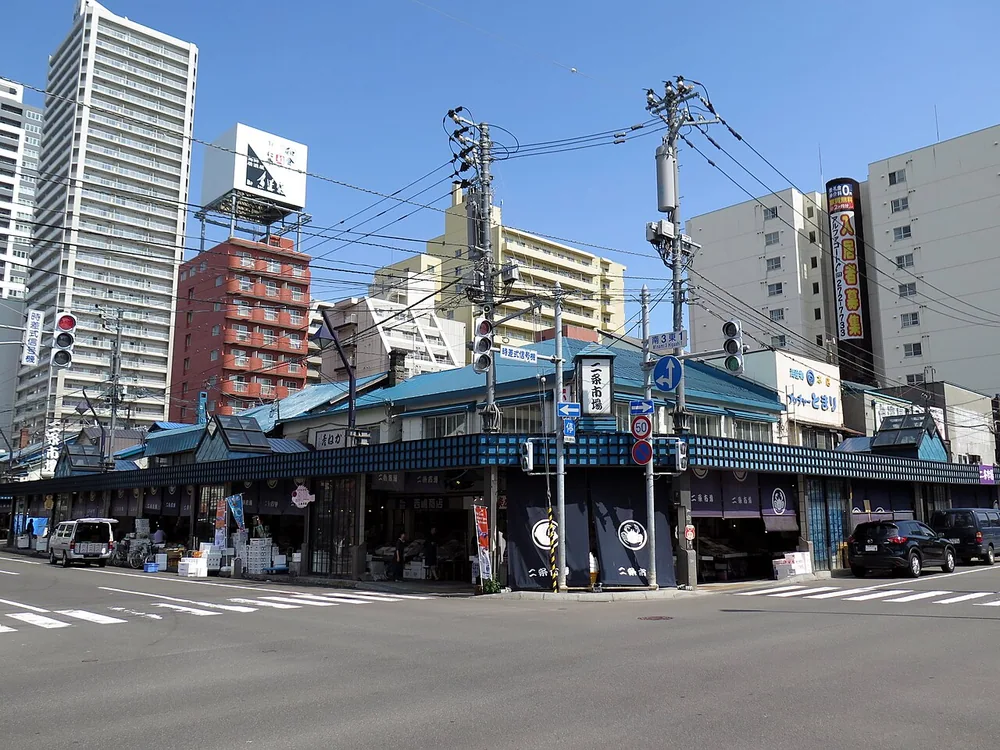
Work lunch into an interchange at Odori or Susukino. If you have booked soup curry or Jingisukan grilled lamb for dinner, anchor your afternoon finish near that restaurant so you can work backwards on timing. Nijo Market and the Curb Market (Jogai Market) sit on opposite sides of town, so choose whichever lies closer to your morning route for breakfast: Maruyama pairs well with lunch near Maruyama-Koen Station, whereas Hokkaido University sets up an easy meal back at Sapporo Station before hopping on the Namboku Line. For additional meal planning, see our guide to Sapporo markets and food routes.
Where to Go in Rain, Low Cloud or Early Snow
In light drizzle, trim the outdoor loops. Walk only the Kita 13-jo Gate end of Hokkaido University's ginkgo avenue before stepping inside the university museum, or take Exit 3 at Nakajima-Koen straight to Hoheikan and return along the wider park paths. If Mount Moiwa disappears into cloud or pauses operations in bad weather, stay central and swap your pre-dinner slot for the Former Hokkaido Government Office (Red Brick Office)—adjusting only part of the day without derailing the rest.
Standing at Kita 3-jo Nishi 6-chome, roughly 8 minutes on foot from JR Sapporo Station's West Concourse South Exit, the Red Brick Office opens from 8:45 to 21:00 (last entry 20:30). Entry costs ¥300 for adults, ¥200 for high school and university students, and is free for junior high pupils and under, with separate tickets for the octagonal tower. Stay dry walking to Odori via Chi-Ka-Ho (the Sapporo Ekimae-dori Underground Walkway, open 5:45 to 00:30), then continue south to Susukino through Pole Town—just keep an umbrella handy for the short outdoor stretch to the building entrance.
West of the Red Brick Office, and some distance from the Kita 13-jo ginkgo avenue, lies the Hokkaido University Botanic Garden—a 10-minute walk from JR Sapporo Station's South Exit, or reached from Sapporo Underground Station Exit 10 or Odori Exit 2. From 1 October to 3 November it opens 9:00 to 16:00 (last entry 15:30), costing ¥420 for high school age and over, ¥300 for primary and junior high age, and free for pre-schoolers. It closes on Mondays (opening on public holidays and closing the following day), with the ageing conservatory currently shut and full winter closure running from 4 November to 28 April. Because most of the garden is open-air, favour the Red Brick Office during heavy rain.
Japan Meteorological Agency 1991–2020 climate normals show Sapporo's average daily minimum temperature dropping from 8.0°C in October to 1.6°C in November. Brisk walking warms you up during the day, yet standing still for ropeway queues or summit photos chills fast. Pack a compressible windproof shell, thin gloves and grippy shoes. When fallen leaves turn slick, steer clear of stone step edges and icy puddles along lakeside tracks, stick to main park avenues and use underground exits with lifts when carrying bags.
If high winds persist all day, start with indoor attractions around Sapporo Station, ducking briefly into the Red Brick Office forecourt if gusts ease before heading back underground and continuing to Susukino for dinner. When the Hokkaido University Museum closes on Mondays, shift focus to the Red Brick Office corridor. Calm windows are best spent by the open water of Shobuike Pond for crisp reflections, keeping hilltop viewpoints for clearer skies the next day.
Choosing Where to Stay: Sapporo Station, Odori, Susukino or Nakajima Park
For a one- or two-night stay with early JR departures to Asahikawa, Otaru or New Chitose Airport, staying by Sapporo Station saves hauling luggage across town. JR Tower Hotel Nikko Sapporo notes roughly a 3-minute walk from JR Sapporo Station's East Ticket Gate towards the South Exit and into the East Shopping Mall passage. If leaf-peeping is your focus and both days begin along the Namboku Line, basing yourself at Nakajima Park lets you stroll around Shobuike Pond before breakfast and pop back to add layers at midday.
Sapporo Park Hotel sits right beside Nakajima-Koen Station Exit 3, with step-free access via the lift at Exit 1. For foliage views from your window, book a Park View room facing Nakajima Park: pairs can weigh up the 24 sq m Superior Double against the 31 sq m Superior Large Twin on the park side, while Standard Twin rooms also include city-facing options—check bed setup, occupancy and view carefully when booking. If you expect to be out all day, choosing a hotel near a lift exit often saves more energy than paying extra for a view.
Odori makes an ideal hub for weaving autumn stops into city sightseeing, giving direct Tozai Line access to Maruyama and Namboku Line links to Hokkaido University or Nakajima Park—plus underground arcades whenever weather turns. Susukino suits travellers who want to walk straight back after dinner and hop on the streetcar for Mount Moiwa. Families making multiple trips in and out should trace exact walking routes from the station exit, checking lift access, main road crossings and tram stops; compare other districts in our Sapporo accommodation neighbourhoods guide.
Factor hotel-switching time against multi-night discounts before splitting a short stay. Changing hotels just one or two stops apart along the Namboku Line means re-packing, dropping bags and checking in again—easily eating into the one sunny window for a park walk. Moving base only pays off ahead of an early JR train or if you plan to linger in Jozankei past dinner.
Adding a Day in Jozankei and Booking Your Return Bus
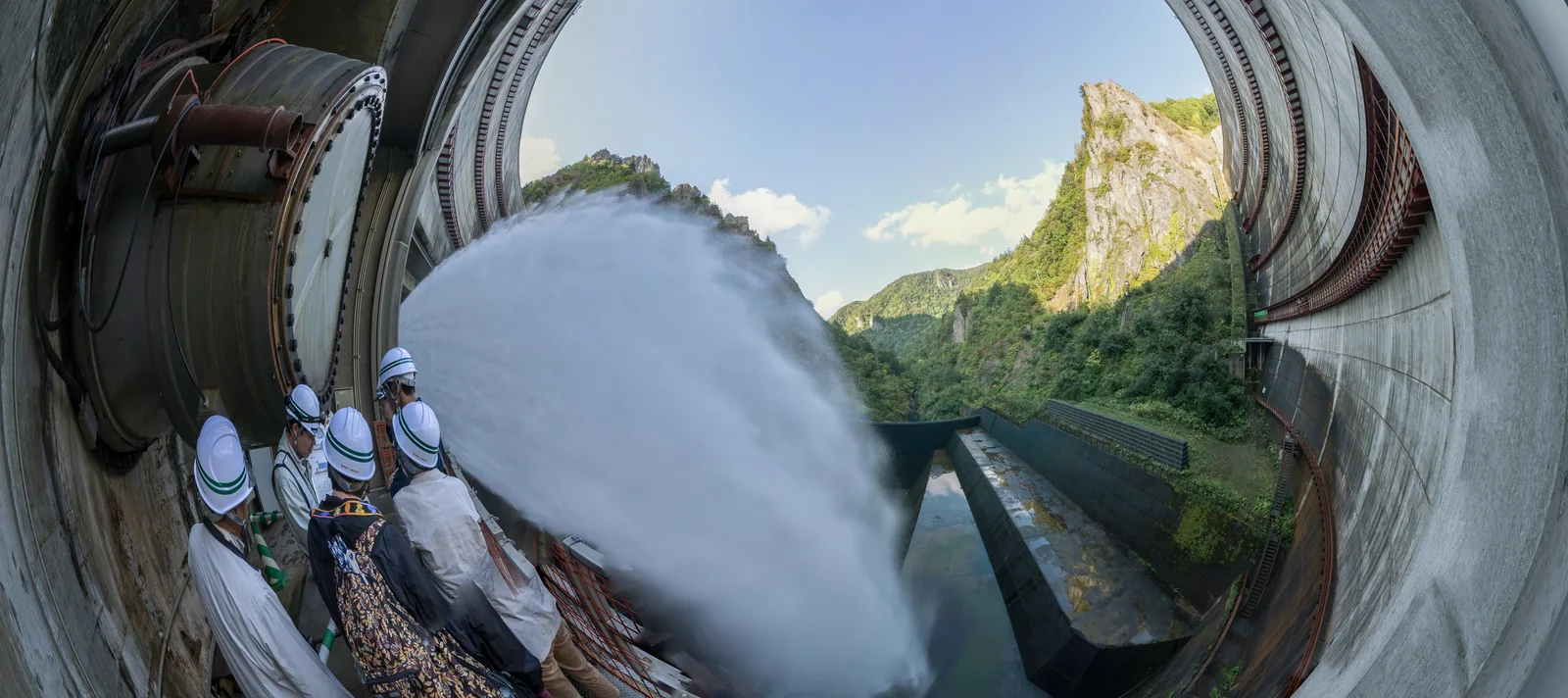
The Jozankei Tourist Association puts the onsen town's usual autumn peak around mid-October, publishing separate foliage updates for the hot spring town, Hoheikyo Gorge and the ski resort. Step off the bus at Jozankei Yu no Machi to stroll through Futami Park and across Futami Suspension Bridge for gorge views before returning to town for lunch or a soak. Adding Hoheikyo Dam requires splitting the leg from the onsen town to the dam entrance and the walk or shuttle into the dam itself; see our Hoheikyo Dam and Jozankei access guide for step-by-step timings.
From central Sapporo, ride Jotetsu Bus's reservation-only Kappa Liner. Its 1 October 2026 to 31 March 2027 timetable lists Sapporo Station Stop 27 outside the Hokuren Building, with pick-ups also at Odori Nishi 1 and Susukino. Reservations open one month before travel and close at 17:00 JST the previous day. Listed single fares between Sapporo Station and Hoheikyo Onsen or Jozankei Shako-mae are ¥1,700 standard, or ¥1,460 prepaid via the designated website. For a day trip, lock in your return bus before scheduling lunch or bathing.
In 2026, Jozankei's seasonal buses serving its Five Great Autumn Foliage Spots run on varying dates, with the guided Koyo Kappa Bus around the onsen town operating until 21 October. That local loop departs within Jozankei, whereas the Kappa Liner handles the main link from Sapporo. Arriving later in the day, stick to the onsen town and suspension bridge rather than chasing seasonal shuttles between buses. To walk two trails and stay for dinner at an inn, spend the night and return to Sapporo the next morning; check stop locations and walks in our Jozankei onsen stays guide.
Leave generous buffer time in Sapporo if connecting from Jozankei to the airport or long-distance trains, as autumn traffic can stretch road journeys well beyond timetable estimates. Travelling on an early flight out? Put Jozankei earlier in your itinerary, or keep a daytime bath for before your bus back if staying in Sapporo that night. Overnight visitors with suitcases should pick a hotel by its nearest bus stop so they are not dragging bags uphill after viewing the bridge.
If adding the autumn gondola at Sapporo Kokusai Ski Resort, check the Jozankei Tourist Association's operating calendar and shuttle page first. The gondola climbs to a roughly 1,100-metre summit on its own autumn festival schedule; in 2026 it operates until 20 October, ending one day before the town's guided autumn bus. Return gondola fares for that season are ¥1,500 for adults and ¥800 for primary school pupils, with the last ascent at 15:00. Shuttles from the Jozankei Tourist Information Centre sell same-day queue tickets at the counter for matched outbound and return runs. Should high-altitude services already be closed for the season, staying around Futami Suspension Bridge and the riverside saves an unnecessary mountain transfer.
A few useful answers
When should I visit to catch both Sapporo autumn leaves and Hokkaido University's ginkgo trees?
Aim for late October onwards, when the city's main foliage spots are in their latter phase and Hokkaido University's ginkgo avenue typically turns gold.
Can I still visit the Japanese Garden in Nakajima Park in early November?
The Japanese Garden closes for winter around early November, staying open until 3 November in 2026. Once it shuts, you can still stroll along Shobuike Pond's main paths or visit Hoheikan.
Is there a free shuttle bus to Mount Moiwa on weekday afternoons?
On weekdays the operator's timetable starts at 17:17. During the day, walk roughly 10 minutes from Ropeway Iriguchi tram stop to Sanroku Station, or take the Junkan Maru 11 bus from Maruyama-Koen Station.
Which spot suits travellers needing lifts and a short, flat walk?
Take the lift at Exit 1 of Nakajima-Koen Station on the Namboku Line, walk a short loop along the northern side of Shobuike Pond, then return the same way or dine nearby.
Is Jozankei doable as a day trip from Sapporo for autumn leaves?
Yes. Book return seats on the reservation-only Kappa Liner direct bus in advance, leaving the day free for the onsen town, Futami Suspension Bridge and lunch. Allow extra time for transfers and walking if adding Hoheikyo Dam.
Official information and references
Sources used in this guide.
- Sapporo Official Tourism | Sapporo Autumn Foliage Season
- Visit Hokkaido | Hokkaido University Ginkgo and Poplar Avenues
- Hokkaido University | 2026 Kita 13-jo Street Traffic Restrictions
- Hokkaido University | 15th Hokudai Golden Leaf Festival
- The Hokkaido University Museum | Visitor Information
- Sapporo Official Tourism | Nakajima Park and Japanese Garden
- Sapporo Park and Greenery Association | Nakajima Park Autumn Leaves and Garden Opening Hours
- Sapporo Park and Greenery Association | Nakajima Park Tree Map
- Hoheikan | Admission, Hours and Access
- Sapporo Chamber of Commerce and Industry | Nakajima Park 2026 Autumn Illuminations
- Visit Hokkaido | Hokkaido Shrine Opening Hours and Access
- Sapporo Maruyama Zoo | Opening Hours and 2026–2027 Calendar
- Sapporo Maruyama Zoo | Admission Fees
- Sapporo Maruyama Zoo | Access
- Mt. Moiwa Ropeway | Operating Hours and Fares
- Mt. Moiwa Ropeway | Streetcar and Free Shuttle Bus
- Mt. Moiwa Ropeway | Underground and Route Bus Access
- Mt. Moiwa Ropeway | Scenic Road and Winter Closure
- Mt. Moiwa Ropeway | Sanroku Car Park Fee Notice
- Sapporo City Transportation Bureau | Fares
- Sapporo City Transportation Bureau | One-Day and Weekend Passes
- Sapporo City Transportation Bureau | Contactless Underground Payment
- Sapporo City Transportation Bureau | Underground Station Maps
- Former Hokkaido Government Office (Red Brick Office) | Hours and Admission
- Sapporo Ekimae-dori Underground Walkway (Chi-Ka-Ho) | Opening Hours
- Sapporo Official Tourism | Underground Shopping Arcades
- Hokkaido University Botanic Garden | Hours, Fees and Winter Closure
- Hokkaido University Botanic Garden | Access
- Japan Meteorological Agency | Sapporo Monthly Climate Normals
- Sapporo Park Hotel | Underground Exits and Lift Access
- Sapporo Park Hotel | Park-Side Guest Rooms
- JR Tower Hotel Nikko Sapporo | Sapporo Station Access Route
- Jozankei Tourist Association | Typical Autumn Foliage Viewing Period
- Jozankei Tourist Association | Futami Suspension Bridge Walk
- Jozankei Tourist Association | Five Great Autumn Foliage Spots and Seasonal Shuttles
- Jotetsu Bus | Autumn 2026–Spring 2027 Direct Bus Timetable
- Jotetsu Bus | Kappa Liner Reservations and Fares
- Jotetsu Bus | Sapporo Station Stop 27 Map
- Sapporo Park and Greenery Association | Odori Park Underground Exits
- Odori Park Management Office | 2026 Nishi 10- and 11-chome Foliage Log
- City of Sapporo | Sapporo City Archive Museum Visitor Information
- Sapporo Park and Greenery Association | Asahiyama Memorial Park Access
- Sapporo Park and Greenery Association | Asahiyama Memorial Park Notices
- National Astronomical Observatory of Japan | October 2027 Sapporo Sunset Times
- Jozankei Tourist Association | Sapporo Kokusai Ski Resort Autumn Gondola
- Sapporo Official Tourism | Hokkaido Shrine Gate Hours