Choose Nijo or Sapporo Jogai Market by hotel location, meal time and winter walking. Combine Ohiso, Kita no Gourmet-tei, Susukino ramen, Suage soup curry and Sapporo Beer Garden across one to three days with room to enjoy the food.
- Region & Focus
- Sapporo
- Reading Scope
- 32 min read · 18 chapters · 5 Q&As
- Official Verification
- 19 official sources checkedUpdated 25 November 2026
- Key Topics
- FoodItinerariesRail travel
Chapter Route Map (tap any stop)
- Choose the market, then the day's second meal
- Walking to Nijo Market: eastern Odori or Bus Center-mae
- Ohiso: three branches with different morning opening times
- Choose the seafood for your meal, then shop after eating
- Two approaches to Jogai Market: Soen from Sapporo, Nijuyonken from Odori
- Kita no Gourmet-tei: last food orders at 14:30, seasonal shop hours
- Keep Jogai Market for the morning, then go west or return to Sapporo Station
- A central half-day: seafood breakfast, then Sosei River to Odori
- A dedicated market morning: in via Soen, out via Nijuyonken
- Winter routes: count outdoor walks and where you will wait
- Ramen in Susukino: compare the shops, then choose your bowl
- Choose soup curry by branch: Susukino's Suage+ or Suage4 south of Sapporo Station
- Ordering soup curry: main, broth and rice separately
- Give Genghis Khan lamb a full meal: choose the Beer Garden building and plan
- Getting to the Beer Garden, with the museum before dinner
- Two or three nights: divide four food styles across the stay
- Choose transport tickets for your route; you do not need a day pass every day
- Meal budgets: list mains before drinks, extras and shopping
- Quick Q&A
If staying in Odori or Susukino and wanting one meal to explore a Sapporo market, choose Nijo. Consider Jogai Market if staying near Sapporo Station and willing to devote the morning to seafood shopping. Choose one market and leave the afternoon and evening for soup curry, ramen or grilled lamb. It is easy to plan too much: a full hotel breakfast, a seafood rice bowl across town, soup curry for lunch and a buffet booking that evening. Treat the market as a full meal and give each half-day one dining aim, so you have time to travel and an appetite for the next meal.
Choose the market, then the day's second meal
Nijo Market is east of the Sosei River, close to the eastern ends of Odori Park and Tanukikoji. Sapporo Jogai Market is northwest of the centre. You will need to take JR or the subway, then walk at street level. Nijo lets you fit a seafood breakfast into a morning walk in the centre. Jogai suits a dedicated seafood-shopping visit before returning to town. Visiting both mainly adds another journey and another similar meal. Unless markets are the trip's theme, save the time for different food.
Check whether breakfast is included in your hotel booking. If not yet booked, consider a room-only rate for the night before a market breakfast. With breakfast already included, eat lightly and order the market dish you most want. To enjoy the full hotel breakfast, visit the market for lunch and keep a planned walk between them. For a two-night stay, the timing can matter more to your enjoyment than a restaurant's reputation.
Solo travellers can find portion sizes restrictive: a seafood rice bowl, ramen and soup curry are generally each a complete main meal. Even two people should not assume every restaurant permits one shared order. Check seating, ordering rules and the menu before choosing the meal. To compare similar dishes, spread them across days instead of forcing a walk between meals to make room.
Choose Nijo or Sapporo Jogai Market by hotel location, meal time and winter walking. Combine Ohiso, Kita no Gourmet-tei, Susukino ramen, Suage soup curry and Sapporo Beer Garden across one to three days with room to enjoy the food.
Walking to Nijo Market: eastern Odori or Bus Center-mae
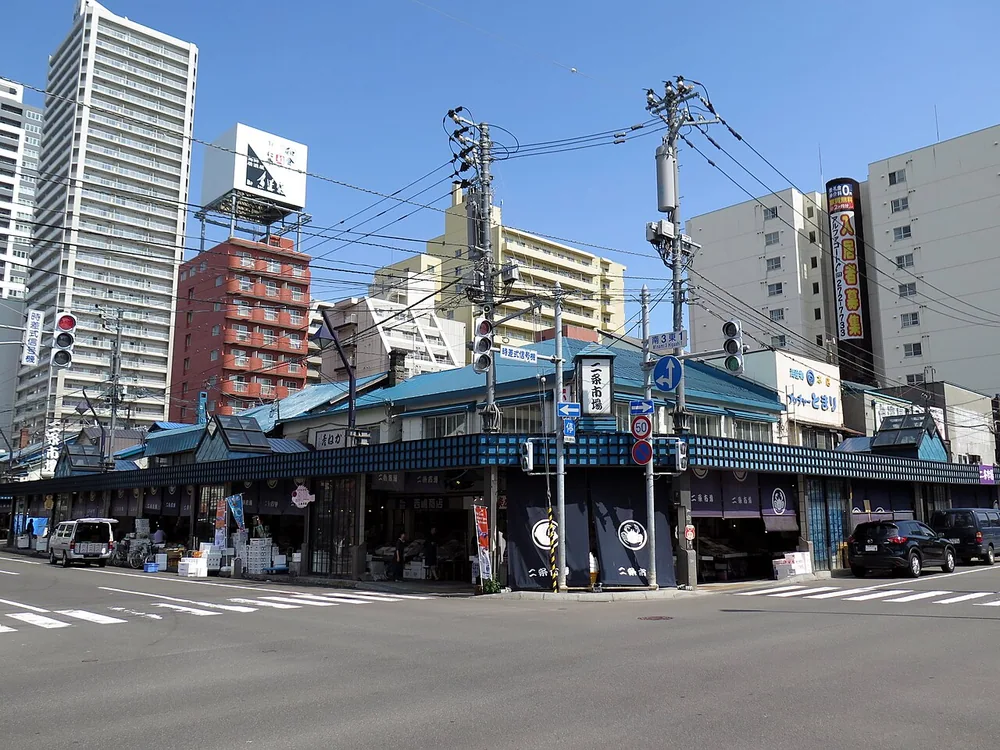
The official Nijo Market access map gives walks of about five minutes from Odori Station exit 34 and Tozai Line Bus Center-mae exit 3, and about five minutes from Sapporo TV Tower. These are exit-to-market estimates. Platforms and passages add time inside Odori Station. From eastern Odori accommodation, walk at street level towards the Sosei River. From Sapporo Station, first decide whether to include an Odori Park walk after the meal. Then choose whether to take the subway or walk.
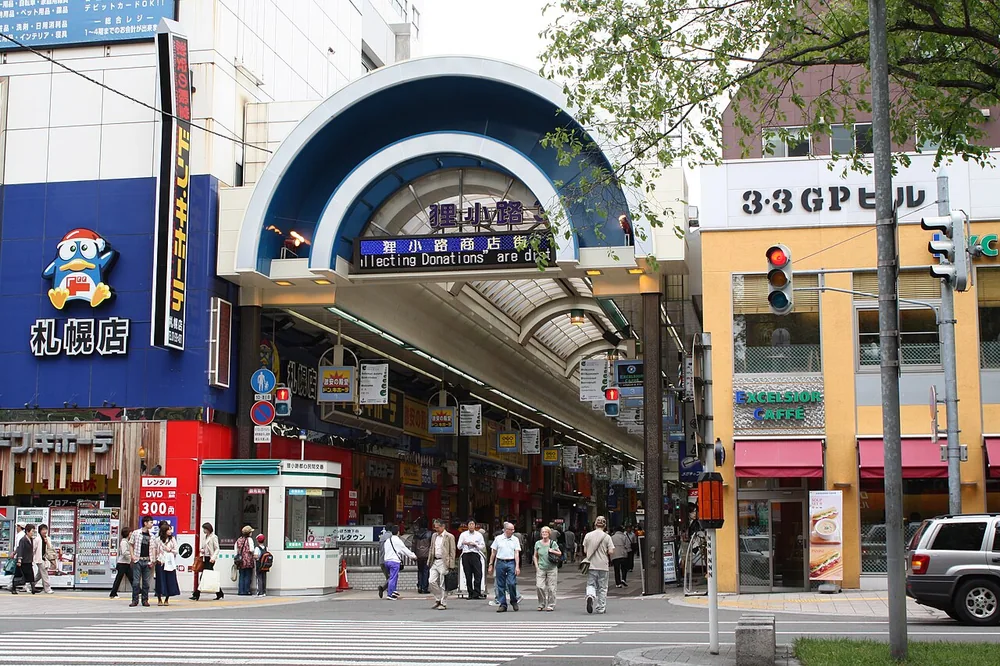
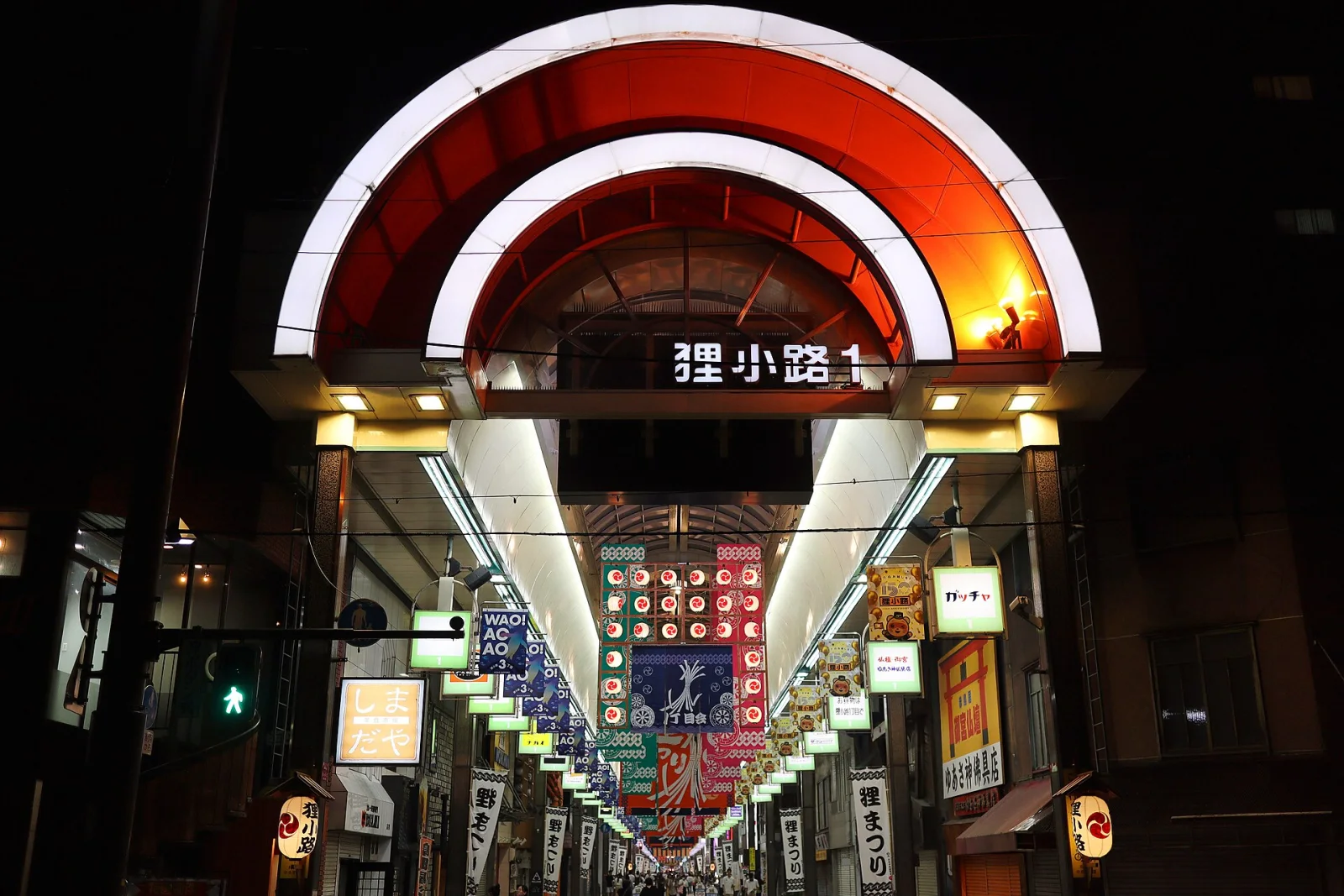
From Tanukikoji, identify the block direction first. The official one-minute walk from Tanukikoji 1-chome means the arcade's eastern end. From West 5-chome or West 7-chome, you first need to walk several blocks through the arcade. In snow, walk east through the covered arcade before crossing to the market rather than cutting diagonally along open streets. Put the phone away at crossings and check the map again at the next corner.
The market is at Minami 3-jo Higashi 1–2-chome. Search for 札幌二条市場 or a restaurant's full branch name rather than the market association office. For a pushchair or wheelchair, find a street-level lift on the station map and connect it to the market entrance. Exits 34 and 3 are the standard walking routes; step-free access needs a route based on lift locations. Leave large luggage at the hotel for an easier morning.
Ohiso: three branches with different morning opening times
Start comparing Nijo Market meals with Ohiso's official three-branch information. The main restaurant is at Minami 3-jo Higashi 2-chome and normally opens at 7:30. Branch 2 is also in Higashi 2-chome, on level 1 of the GC Building, normally opening at 8:00. Branch 3, on Soseigawa-dori in Higashi 1-chome, normally opens at 10:30. Save the main restaurant or branch 2 for breakfast; compare branch 3 for a later start after a morning walk.
The main restaurant's daytime hours normally end at 15:30, with last orders at 15:00. It closes on Wednesdays, opening when Wednesday is a national holiday. It also lists Monday–Saturday dinner from 17:00 to 21:00, last orders 20:30; Sundays and public holidays are listed for daytime opening. Branch 2 normally opens 8:00–15:00, last orders 14:30, and closes on Tuesdays except holidays. Branch 3 normally opens 10:30–17:30, last orders 17:00, with grilled-food orders ending earlier at 16:30. It also closes on Tuesdays except holidays. The weekday can rule out an unsuitable branch before you plan further.
Apply these differences to the route. For an early Wednesday meal, check branch 2 first. For the main restaurant on Tuesday, follow its notice for that day. Near afternoon, check which food categories are still taking orders instead of only the map's closing time. The website introduces rice bowls, grilled dishes and other food separately. For someone who avoids raw food, find an acceptable main dish before deciding to eat together there.
Wait where staff direct you. Let one person ask about registration, then seat the whole group as instructed. Do not hold a queue place while sending someone to queue at a distant second restaurant. A goal such as sea urchin or grilled fish with rice is easier to order than reproducing every photographed item. If the actual menu suits, sit down and save market browsing for after the meal.
Choose the seafood for your meal, then shop after eating
For a seafood bowl, start with the seafood you most want, then the whole combination. For salmon roe, choose a bowl with a larger share; for different textures, compare mixed bowls. Abundant toppings make attractive photographs, but check rice quantity, soup inclusion and substitutions too. For a smaller appetite, look for a listed small portion or individual dishes. Explain substitutions and sharing when ordering.
Compare sea urchin, crab and daily fish at the same portion size, preparation and meal combination. For seafood sold by weight, ask the unit, weight and total before deciding whether to eat it there, have it cooked or have it packed to take away. Check the unit beside an eye-catching price. For a shared crab, include preparation charges, side dishes and drinks in the table total. This controls spending better than assuming markets are always cheap.
Eating before buying avoids large purchases while hungry and shows whether you like a flavour. For chilled or frozen goods, arrange collection just before returning to the hotel. Explain the remaining travel time and ask for suitable packaging. For a central walk, small room-temperature packs are easier. Before paying for fresh food to take home, settle transport and your destination's entry rules.
Two approaches to Jogai Market: Soen from Sapporo, Nijuyonken from Odori
The Sapporo Jogai Market shopping district's access map gives two final approaches: about seven minutes from Tozai Line Nijuyonken exit 5, or about nine minutes from the left-hand exit beyond JR Soen's west ticket gate. It is the retail and dining district beside the central wholesale market. For breakfast, set the destination to Sapporo Jogai Market or a named restaurant, then follow shopping-street signs.
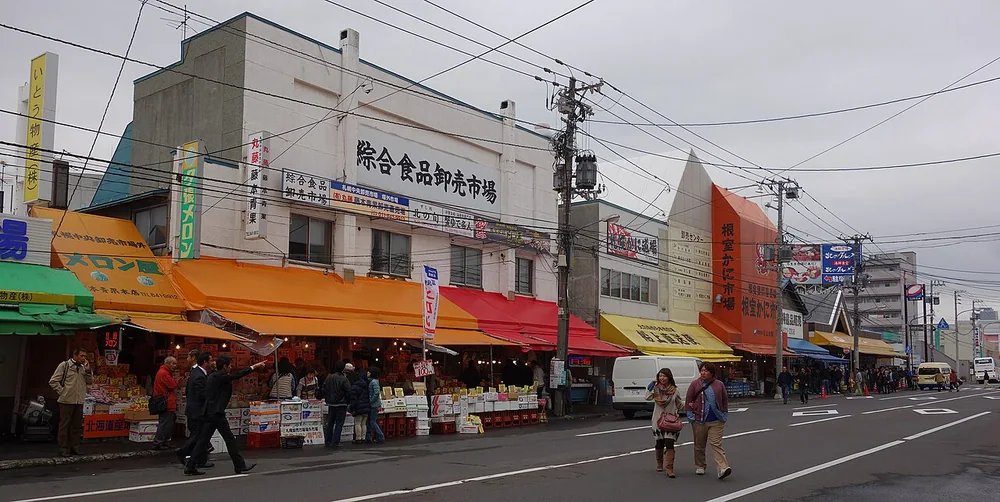
Near Sapporo Station, the JR approach via Soen is straightforward: board at JR Sapporo, alight at Soen and follow the listed final walk. Check stopping patterns and choose a train that stops at Soen, rather than any train towards Otaru. From Odori, take the Tozai Line towards Miyanosawa to Nijuyonken to avoid a Sapporo Station transfer. From Susukino, include the walk to change at Odori.
From Nijuyonken exit 5, turn left on emerging, left at the traffic lights and right at the second set. From Soen, use the left-hand exit after the west ticket gate, turn right at the first road and left at the lights about 100 metres later. Save the market and return station on an offline map so you can retrace the route. Snow, shopping bags and crossings add time. Official minutes help compare distance; allow a margin in the actual plan.
Sapporo City's official short film visits Jogai Market and introduces this seafood shopping and dining district.
Kita no Gourmet-tei: last food orders at 14:30, seasonal shop hours
For a specific Jogai Market destination, use Kita no Gourmet's shop information. Seafood Market Kita no Gourmet sells seafood and contains the restaurant Kita no Gourmet-tei, at Kita 11-jo Nishi 22-chome 4-1. Official restaurant hours are 7:00–15:00, last orders 14:30, suitable for breakfast or lunch. If visiting somewhere else first, work back from being able to order before 14:30.
The shop normally opens 6:00–17:00 from 1 May to 31 October and 7:00–16:00 from 1 November to 30 April. Restaurant and shop hours differ; use the correct seasonal row in late autumn and early winter. After eating, compare goods in the same shop or browse the wider street, paying for chilled items last.
The official information lists 320 restaurant seats and a barrier-free interior. For older relatives, larger parties or anyone using a pushchair, this is an option to enquire about in advance. Tell the restaurant your seating needs, group size and meal requirements in concrete terms. The shop's website has a link to its shuttle service. To use it, follow the shop's current timetable and booking process. You can also make the trip independently by JR or subway.
Keep Jogai Market for the morning, then go west or return to Sapporo Station
The market's official FAQ says shops open early and gradually close after 15:00; many restaurants finish around 15:00 too. Put even a shopping-only visit before midday, as there are fewer shops to compare in the afternoon. If your flight lands at noon, the following day's breakfast is more practical than rushing from the airport across Sapporo.
Choose the afternoon direction before returning. For Sapporo Station shopping, use Soen back to JR. If already planning the Tozai Line towards Maruyama or Miyanosawa, board at Nijuyonken. After a substantial seafood meal, walk or shop in the afternoon and save soup curry for dinner. Removing the second market gives you time to sit and eat according to appetite.
The shopping district has free parking; drivers should follow its and the shops' instructions. In winter, weigh up collecting the car, clearing snow, parking and returning it for a single breakfast. Public transport is generally simpler from central accommodation. Drivers should choose alcohol-free drinks. For a Beer Garden dinner, leave the car at your accommodation and use public transport.
A central half-day: seafood breakfast, then Sosei River to Odori
This route suits Odori or Susukino accommodation and a day with city-centre shopping. An arrival window of 8:00–9:00 at Nijo Market is a planning suggestion. Eat a full seafood meal at the chosen branch, then browse. For Ohiso branch 3, move the whole visit to after 10:30 as brunch. Rest near your hotel beforehand instead of waiting outside an unopened restaurant because markets suggest an early start.
After eating, follow Soseigawa Park north to eastern Odori Park to see the exterior of Sapporo TV Tower. To go up, allow time to buy a ticket and visit; a ground-level walk still connects the locations. The practical advantage is a market, river and park within the same central area. If tired, return directly to nearby accommodation without an out-of-town return journey. Extend the park walk in good weather; in heavy snow, use a known entrance back underground.
Do not rush a second full meal into midday. Return to your room with purchases, visit planned shops or stop for a hot drink. If breakfast was early and small, choose soup curry for lunch. For Susukino dinner, pick either Ramen Yokocho or Suage+. With barbecue already booked, leave both for other days.
This also suits your final morning in Sapporo if luggage is stored at accommodation or a station on the return route. Collect it after eating, then take airport transport. For a fixed airport arrival, settle luggage retrieval before adding another street. If chilled market goods would accompany a long journey, eat them at the meal instead and remove a storage task.
A dedicated market morning: in via Soen, out via Nijuyonken
From Sapporo Station accommodation, leaving around 8:00 for a morning meal and shopping at Jogai Market is a loose framework. Take JR to Soen, follow the west-exit route and eat at Kita no Gourmet-tei or your chosen restaurant first. Use that day's JR timetable. With late-rising companions, a departure around 10:00 and meal before midday is easier than pursuing the first opening.
For the Tozai corridor, walk from the market to Nijuyonken and continue towards your afternoon destination. Different entry and exit stations make a convenient morning for visitors confident in navigation and carrying few bags. For fewer variables, use Soen both ways. The extra return walk should improve the next connection, rather than create a detour solely to avoid retracing steps.
After shopping near Sapporo Station, Suage4 in miredo is a dinner option. After moving to Susukino, compare Suage+ with Ramen Yokocho. With only one full Sapporo day, this market route is easiest with dinner in the centre. Sapporo Beer Garden is in a different part of the city; give it a separate evening or replace a distant afternoon attraction with it.
Plan payment while shopping. The shopping district FAQ says some shops accept credit cards and others do not. Ask before choosing goods. With chilled items, go directly to the hotel; with heavy bags, omit the next walk. Only with small room-temperature packs should you keep the original afternoon direction. Adjust payment, bags and storage to the actual purchases.
Winter routes: count outdoor walks and where you will wait
Nijo fits a central route; Jogai requires a street walk beyond the station on every arrival and departure. In winter, consider hotel door to platform, market exit to restaurant and restaurant to return station separately. For cold-sensitive companions, pushchairs or older relatives, start with Nijo closer to your hotel. For a dedicated Jogai visit, shorten afternoon outdoor activities and allow a full seated meal.
On snowy days, restaurant queueing is part of the outdoor activity. Have an alternative that is actually open before leaving. Ask about registration and queues on arrival. If the wait exceeds your party's tolerance, use the alternative. You can decide even without a time estimate: a fixed return, hungry children or uncomfortable hands and feet are reasons to change restaurants.
Underground passages from Odori to Susukino shorten some exposure, but markets, restaurant entrances and crossings remain above ground. The Sapporo underground shopping area's service FAQ says it has no direct street-level lifts of its own; wheelchair and pushchair users need adjoining facilities. Save suitable entrances, put coats on indoors before emerging and return to a familiar route after eating instead of searching another unfamiliar area.
Ramen in Susukino: compare the shops, then choose your bowl
Ganso Sapporo Ramen Yokocho is on level 1 of the N. Grande Building, Minami 5-jo Nishi 3-chome 8. If you are staying in Susukino or plan an evening walk nearby, compare its shops for one ramen meal. Save the full name and address, then compare menus and open shops. Each restaurant sets its own hours and closing days; choose one open at your intended daytime or evening visit.
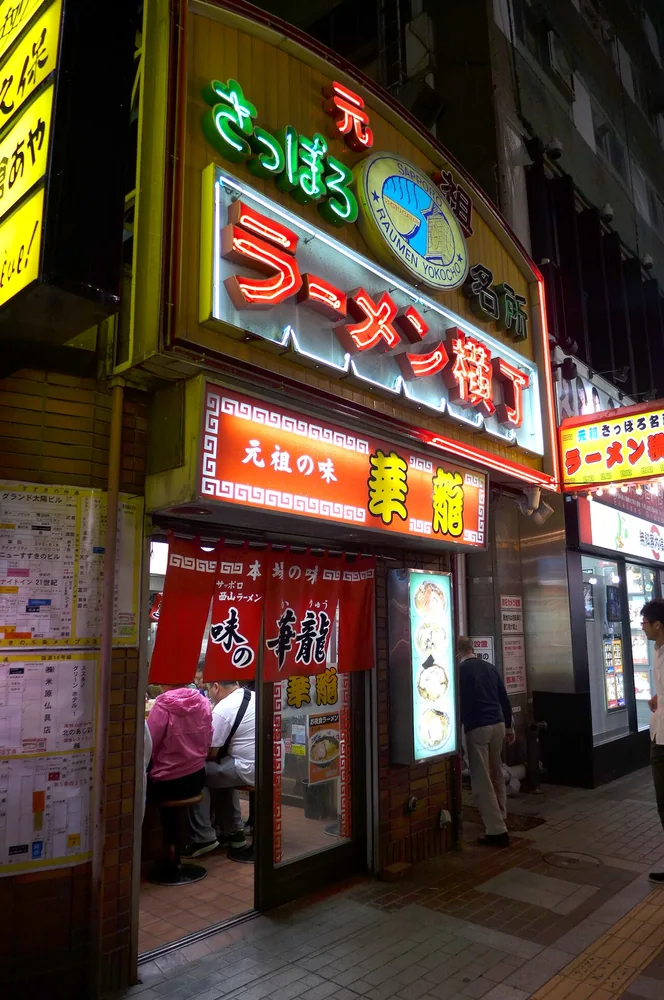
Choose broth and toppings before queuing. For miso, compare miso bowls on the entrance menus. If you do not want a large serving of chashu pork or butter and sweetcorn, choose a simpler bowl. After a substantial seafood breakfast, leave ramen for evening and order the basic version. Every extra topping leaves less room for other food; you need not stack all Hokkaido ingredients into one bowl when more meals follow.
The alley management warns that the close shopfronts make it easy for one queue to block a neighbouring entrance. Follow staff directions, keep companions together and do not spread luggage or unfold a pushchair across the passage. If you want to sit for longer, or your group needs to sit together, ask whether the restaurant can accommodate you before joining the queue. After eating, move conversation and next-stop planning to a wider place outside so others can sit down.
Choose soup curry by branch: Susukino's Suage+ or Suage4 south of Sapporo Station
Soup curry fits a meal separate from the market. Suage+ is on level 2 of 都志松ビル, Minami 4-jo Nishi 5-chome, for a Susukino route. Suage4 is on level 2 of miredo in the Daido Life Sapporo Building, Kita 3-jo Nishi 3-chome, for an afternoon between Sapporo Station and Odori. Choose the branch closest to where the day's activities end before comparing special dishes. This avoids crossing the city again for the same brand.
Payment differs. Suage+ currently lists cash and PayPay and does not accept credit cards. Suage4 lists cash, PayPay, credit cards and specified electronic payments. Overseas visitors relying on cards should prepare yen before Suage+. Neither branch takes table reservations. Leave room to eat elsewhere after arrival; if another dinner has a fixed booking, move soup curry to a different day.
Suage+ normally opens at 11:30 on weekdays and 11:00 on Saturdays, Sundays and public holidays. It closes at 21:00, with last orders at 20:30 every day. Suage4 normally opens daily 11:00–21:00, last orders 20:30. The branch pages list special arrangements for 18 November 2026: Suage+ only 11:30–15:00, last orders 14:30, while Suage4 is closed all day. On that date, choose lunch at the correct branch.
Ordering soup curry: main, broth and rice separately
Suage separates main dish, broth, spice level, extras and rice quantity. For a first visit, start with familiar chicken or vegetables and the basic broth, selecting spice by the restaurant's scale. Let children and spice-sensitive diners choose individually and give the staff everyone's requirements when ordering. For strict ingredient restrictions, discuss the main, broth, sauces and extras instead of deciding from photographs alone.
Both branches' menus dated 26 October 2026 list crispy Sakurahime chicken and vegetable curry at ¥1,650, with no supplement for basic Suage broth. Small rice, 130 g, or medium, 180 g, has no extra charge; large rice, 300 g, adds ¥100. Suage+ adds ¥200 each for squid-ink black broth or prawn broth. Suage4 offers prawn or sesame-soya milk broth at ¥200 extra. To control cost, calculate the main with basic broth and ordinary rice first, then choose an addition you actually want.
For example, two adults each ordering that chicken and vegetable curry, basic broth and small or medium rice have a menu subtotal of ¥3,300. One upgraded broth makes it ¥3,500, before drinks or extra toppings. If both upgrade, add another ¥200. After a large market breakfast, small rice is more comfortable than loading toppings and forcing yourself to finish.
Takeaway also differs. Suage+ lists ordering at the shop and no telephone takeaway orders; Suage4 permits shop or telephone orders. Both currently list a ¥140 container charge. If simply avoiding a queue, first check whether takeaway is available that day and whether the hotel has somewhere suitable to eat. You need to carry hot soup securely; in snow, eating inside is usually easier.
Give Genghis Khan lamb a full meal: choose the Beer Garden building and plan
For grilled lamb and red-brick buildings in one evening, choose Sapporo Beer Garden. Its restaurant comparison page separates Kaitakushi-kan, Lilac, Garden Grill and others. For a classic beer hall and all-you-can-eat food, compare Kaitakushi-kan first. For differently seasoned lamb and other dishes, look at Lilac. For à la carte, private rooms or reserved courses, compare Garden Grill. Choose the dining style before booking the building.
Poplar Hall closed for renovation from 25 October 2026, with the notice extending to around mid-January 2027. The operator will arrange the reopening date later. Choose another open building during this period, and reserve indoors in winter. The outdoor summer beer garden's 2026 season has ended. For next summer, use the new season's reservation calendar when it opens.
The Beer Garden FAQ says all-you-can-eat, all-you-can-drink and set-course selections generally need to be the same across a group. If some people eat little, do not drink or have special dietary needs, compare the full party and plan together. Garden Grill has no all-you-can-eat plan and is a starting point for leisurely à la carte dining. Buildings have children's chairs and tableware, and some provide children's meals. Select needed equipment and seats when booking.
Give that evening to barbecue. A seafood breakfast followed by a light lunch or afternoon rest leaves more appetite than a full soup curry at midday. For red-brick night photographs, handle arrival and dining first, then allow a short walk. Record the building, arrival time, plan and cancellation conditions with the reservation. If group numbers change, follow the instructions in your booking to contact the restaurant. Everyone needs more detail than ‘Beer Garden tonight’.
Getting to the Beer Garden, with the museum before dinner
The Beer Garden access page gives walks of about eight minutes from JR Naebo's north exit and 10 from Toho Line Higashi-Kuyakusho-mae exit 4. It also lists route 188 from stand 2 at Sapporo Station's north exit. Near Sapporo Station, compare JR plus walking with the bus. From the Toho corridor, use Higashi-Kuyakusho-mae. A subway pass still leaves the outdoor walk; for less walking, check the day's bus stops and timetable.
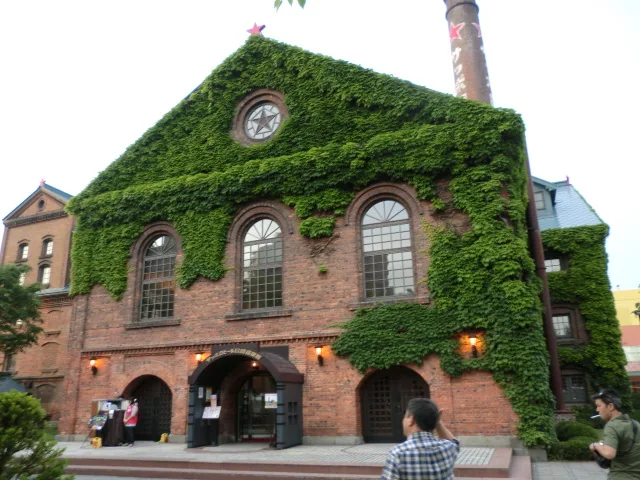
Restaurants normally open 11:30–21:00, last orders 20:40, and close on 31 December. Nearby Sapporo Beer Museum has separate entry and tour arrangements. Visit it before the restaurant. Its current visitor guide lists self-guided admission 11:00–18:00, last entry 17:30, at ¥1,000 for adults, ¥500 from junior-high age to under 20, and free for primary-school children and younger. Bring a phone and earphones for the multilingual audio guide.
Self-guided visits need no reservation. The museum estimates 15–30 minutes, or 15–40 with audio guidance. A regular Japanese-language tour including tasting costs adults ¥2,000 and lasts about 55 minutes. It normally does not run on Mondays, moving the closure to the following day when Monday is a holiday. Online booking ends at 9:30 that day; if places remain, the Tour Desk accepts bookings until 20 minutes before the start. Choose the visit type before working back from dinner check-in. For barbecue only, go directly to the restaurant; meals are charged separately.
Choose self-guided admission with pre-school children, who cannot join the regular tour. Primary-school children can join that tour free with one soft drink. From junior-high age to under 20, admission is ¥1,000 with two soft drinks. Adults who do not drink can take part and choose two non-alcoholic beers or soft drinks. Drivers, motorcyclists, cyclists, pregnant visitors and those breastfeeding cannot taste beer. For exhibition commentary outside Japanese, choose the self-guided audio tour covering 15 stops; both guided tours are in Japanese.
For the recreated Sapporo Seibakushu beer, choose a tasting tour: the Premium Lounge at the end serves one glass each of the recreated beer and Black Label. The separate paid Tasting Hall after a self-guided visit has a ¥1,200 three-beer set of Black Label, Classic and Kaitakushi Beer. Use the Tasting Hall after viewing the museum. Seating is limited to 30 minutes, and no one can join its waiting list after last orders at 18:00. Allow this time before a dinner reservation too.
If everyone is at least 20 and wants more on ingredients, compare the roughly 70-minute, ¥3,000 Black Label THE PERFECT TOUR. It runs on one weekday each month and links the museum with the Kamifurano Raw Material Development Research Institute, where a researcher explains barley and hops. Under-20s cannot participate or accompany visitors, including infants. Online booking ends two hours before the start.
Fit prepaid-ticket cancellation terms to the route. The ticket terms say self-guided tickets are non-refundable for personal cancellations after purchase. Tasting tours must be cancelled by 15:00 the previous day through the URL in the purchase-confirmation email; telephone and email cancellations are not accepted. After that deadline, transport delay, missing the start or non-attendance generally does not qualify for a refund. If the museum has to close, the tour ticket is refunded.
Choose the return station or stop in advance. If it is dark or snow intensifies after dinner, use the route you noted on arrival instead of researching walking directions for the first time after closing. Drinkers should take public transport or a taxi; drivers choose alcohol-free drinks. For Susukino accommodation, change in the centre and return directly to the room, saving ramen for another evening.
Two or three nights: divide four food styles across the stay
On a two-night stay, the first day usually includes airport travel. Drop luggage at your accommodation and choose nearby soup curry or ramen for dinner. Have seafood at one market the following morning, follow the planned afternoon attractions and keep a booked evening for Genghis Khan lamb. Before leaving on day three, have an ordinary breakfast or another desired dish, rather than putting two markets at the end. This gives distinct meals and keeps the most time-sensitive booking on the full Sapporo day.
Three nights allow more room: ramen on the first evening, market and barbecue on day two, soup curry for lunch on day three. If day three is Otaru, move soup curry to another meal after returning. With seafood already eaten in Otaru, replace the Sapporo market with walking and shopping or save it for next time. The four-day Sapporo and Otaru itinerary helps divide city and excursion days. These food routes take only one morning or evening within it.
For different preferences, let each person choose the main meal they most want. Put those on a timeline before filling the rest. With one essential restaurant, make it that half-day's centre. Without a specified restaurant, eat near the activity's endpoint. A lunch extending into the afternoon naturally delays dinner, so choices must follow opening hours. Treat the list as options and leave room for what you actually want during the trip.
Choose transport tickets for your route; you do not need a day pass every day
A Nijo, Odori and Susukino day can be mainly on foot; paying per ride by transport card is straightforward. Add up fares for Jogai Market followed by several subway rides before buying a pass. The Sapporo City Transportation Bureau ticket page lists the subway-only one-day pass at ¥830 for adults and ¥420 for children. Donichika, valid on Saturdays, Sundays, national holidays and 29 December–3 January, costs ¥520/¥260. These cover subway only; JR, buses and trams are separate.
Adults can also consider the contactless credit-card fare cap. From 26 March 2026, Sapporo municipal subway rides using the same physical card, or the same card on the same device, stop accumulating charges after ¥830 on weekdays or ¥520 on Donichika-eligible days. A day runs from 3:00 to 2:59 the following morning. Physical cards, phones and watches accumulate separately, even with the same underlying card; each person uses their own card.
Children should use child tickets or an eligible IC card; credit-card contactless travel charges the standard adult fare. For JR to Soen in the morning and JR to Naebo in the evening, count JR costs separately. Dining spend and the subway cap are separate too. To compare market routes, write the full hotel-to-restaurant-to-planned-activity journey and see the extra transport cost of that meal.
Meal budgets: list mains before drinks, extras and shopping
Use one budget row per meal, with diners, mains, supplements and transport. At seafood markets, set a limit by the seafood you want and compare menus at the same portion size. Use the chicken example above for soup curry, actual basic and topping prices for ramen, and the à la carte or all-you-can-eat plan actually booked for barbecue. This is more accurate than applying someone else's whole-trip average to your list.
For two people, small additions multiply. Record each drink, upgraded broth and extra meat plate under its meal so the bill is easy to match. The savings choice also becomes clearer: retain the main you most want and remove toppings added only for photographs. Give market gifts a separate column so shopping does not quietly consume dinner's budget.
On a day with a fixed dinner booking, leave afternoon time to drop off purchases at the hotel. Without a reservation, save alternatives in the same area and their last-order times. Ensure companions can access the restaurant's full name, address and return stop before leaving, so separate browsing still leads to the same meeting place. If your flight on the final day is earlier, keep breakfast near the hotel so you can eat comfortably and still catch your transport.
A few useful answers
For a first visit, should I choose Nijo or Sapporo Jogai Market?
For Odori or Susukino accommodation and one central morning, Nijo is easier. Near Sapporo Station, for a dedicated seafood meal and shopping, choose Jogai via JR Soen or subway Nijuyonken. Pick one and leave the other meal for different food.
Can I still eat at Jogai Market in the afternoon?
Morning offers more choice. The shopping district says shops gradually close after 15:00, and Kita no Gourmet-tei takes last orders at 14:30. For lunch there, allow for travel time and arrive before last orders.
Do all Suage soup curry branches accept credit cards?
Suage+ currently lists cash and PayPay and does not accept credit cards. Suage4 lists credit cards and specified electronic payments. Choose the branch before preparing payment.
Must I visit the museum before eating at Sapporo Beer Garden?
You can book a restaurant directly. Museum admission and visit time are separate. If doing both, visit before dinner; last entry for self-guided admission is 17:30.
What is the fastest way to reach Sapporo Curb Market by train, underground, taxi or free shuttle?
From Sapporo Station, take the JR Hakodate Line one stop (3 min) to Soen Station West Exit and walk 9–10 minutes; from Odori or Susukino, ride the Tozai Line to Nijuyonken Station Exit 5 and walk 7 minutes. In winter snow or with family, a taxi from Sapporo Station North Exit takes around 10 minutes, or book a free morning hotel shuttle through market operators such as Kita no Gourmet.
Official information and references
Sources used in this guide.
- Nijo Market: location and walking routes
- Ohiso: locations and opening hours of three branches
- Sapporo Jogai Market: Nijuyonken and Soen access map
- Sapporo Jogai Market: closing times, dining and parking
- Kita no Gourmet: seasonal shop and restaurant hours
- Sapporo underground shopping area: lifts and services
- Ganso Sapporo Ramen Yokocho: address and individual opening hours
- Ganso Sapporo Ramen Yokocho: queueing notices
- Suage+: menu, payment and hours
- Suage4: menu, payment and hours
- Sapporo Beer Garden: restaurant comparison and closure notices
- Sapporo Beer Garden: reservations, children and ordering rules
- Sapporo Beer Garden: access and restaurant hours
- Sapporo Beer Museum: current admission and tours
- Sapporo City Transportation Bureau: day passes and Donichika
- Sapporo City Transportation Bureau: contactless credit-card travel and daily caps
- Tanukikoji shopping arcade: location and access
- Sapporo Beer Museum: July 2026 changes and tasting eligibility
- Sapporo Beer Museum ticketing: prepaid cancellation and refund terms