Take the bus from Otaru to Yoichi for the no-reservation Nikka Museum, lunch at RITA’s KITCHEN and the Space Dome. Includes services for 5 November 2026 and an alternative for a booked production-area tour.
- Region & Focus
- Yoichi
- Reading Scope
- 26 min read · 15 chapters · 4 Q&As
- Official Verification
- 15 official sources checkedUpdated 22 November 2026
- Key Topics
- ItinerariesFoodRail travel
Chapter Route Map (tap any stop)
- Choose the museum or the production site first
- The weekday route from Otaru: reserve 9:30 for the bus
- For rail, consider the gaps west of Otaru
- After the bus, use the shop-side entrance and begin with the museum
- The blending desk and four brands: distinguish the work on display
- Put paid tasting and shopping near lunch
- Sit down at RITA’s KITCHEN around 11:40
- Walk to the Space Dome for a 13:05 afternoon marker
- Mohri’s objects, life in space and a scale Hubble telescope
- Choose the 14:30 star commentary together with the 15:19 bus
- Use return bay 5, with a fallback after 15:19
- With a tour reservation, replace the afternoon with the production area
- Kiln, mashing and fermentation: follow materials between buildings
- Still house and warehouse: focus on heat and casks
- The old office and Taketsuru house: work and home separately
- Quick Q&A
Even without a Yoichi Distillery tour reservation, you can take a bus from Otaru to Nikka Museum for the blending desk, films of whisky makers and Masataka Taketsuru displays, have lunch at RITA’s KITCHEN and walk to Yoichi Space Dome in the afternoon. This no-reservation route uses Thursday 5 November 2026 as its example, with a separate production-area option for visitors who have a booking.
Choose the museum or the production site first
Yoichi Distillery separates two kinds of visit. The free Japanese-language tour requires a reservation, takes visitors through the outdoor production area with staff and ends with tasting. Without a reservation, you can use Nikka Museum, the paid tasting bar, RITA’s KITCHEN and the shop, entering from the shop side. If you remember this only at the stone main gate, time intended for the exhibition can go on finding the right entrance.
This day puts the no-reservation facilities in the morning and Yoichi Space Dome in the afternoon. It suits a first visit, companions with different interests or a date for which you have not secured a tour. The morning considers how whisky becomes different products; the afternoon switches to life in space and objects associated with Mamoru Mohri.
For the kiln, mashing building, still house and warehouses in person, centre the day on a booked tour. The production buildings are spread out and serve separate stages, offering a site visit the museum cannot replace. Once booked, adjust lunch and travel to the session. The Space Dome is the first afternoon stop to remove so the main visit remains complete.
No-reservation entry is limited to groups of one to nine, with last entry at 15:30. The distillery closes from 23 December to 7 January and on 11 June. The 5 November example avoids these dates and the Space Dome’s regular Monday closure. In December, the Space Dome has stopped general exhibition visits. Change the day to Nikka and Otaru rather than copying this afternoon.
Take the bus from Otaru to Yoichi for the no-reservation Nikka Museum, lunch at RITA’s KITCHEN and the Space Dome. Includes services for 5 November 2026 and an alternative for a booked production-area tour.
The weekday route from Otaru: reserve 9:30 for the bus
Thursday 5 November 2026 uses Chuo Bus’s Monday–Friday column. Take route 18, the Yoichi Line, leaving Otaru Station at 9:30 and reaching Yoichi Station Crossroads at 10:09, a 39-minute journey. Board at bay 5 of the station bus terminal, towards Yoichi Umekawa Depot. You leave before the terminus.
These times come from the 2026 summer timetable linked by Chuo Bus’s current Otaru route page, marked revised on 1 April. “Summer” is the timetable’s name and does not itself mean school summer holidays only. Use its weekday column for 5 November and the Saturday, Sunday and holiday column for weekends. On weekends, the same 9:30 service arrives at 10:11; use the other return column too.
The bus table lists ¥560 one way between Otaru and Yoichi, or ¥1,120 return. Transport IC cards including SAPICA are accepted. Separate this transport cost from lunch, paid tasting and purchases to see which spending is necessary for travel and which depends on choices. Non-drinkers can follow the same route.
Arriving at Otaru’s terminal around 9:15 gives a calmer start. The 15 minutes are a suggested allowance for finding the stop and waiting. From Sapporo, use 9:15 at Otaru as the connection target. Nikka lists about 35 minutes by rail from Sapporo to Otaru, but add travel from accommodation to Sapporo Station, waiting and station exits. Leave a long market breakfast for another day; use any early spare time near Otaru Station.
For rail, consider the gaps west of Otaru
JR Hokkaido’s official station page lists trains from Otaru towards Yoichi under Shikaribetsu and Kutchan. For 5 November 2026, morning local departures from Otaru include 8:06, 9:36 and 10:59. Nikka’s roughly 30 minutes from Otaru to Yoichi is an approximate journey time. With the 9:36 train, the morning still centres on museum and lunch. Missing it and waiting until 10:59 noticeably reduces the afternoon.
For travel from Sapporo, treat Sapporo–Otaru and Otaru–Yoichi as two legs. East from Otaru leads towards Sapporo and New Chitose Airport; west leads to Yoichi. On platform displays, look for Shikaribetsu or Kutchan. Most return local trains from Yoichi end at Otaru, where you connect towards Sapporo. Starting in Sapporo does not mean the whole route is direct.
Yoichi Station’s official facilities list shows no Kitaca-compatible ticket gates, so prepare a suitable rail ticket. This differs from the bus’s IC-card rules. Compare the roughly 30-minute rail ride and 39-minute bus example together with service frequency. Without a fixed tour slot, matching outward and return buses is usually easier.
Afternoon local trains from Yoichi towards Otaru on 5 November include 13:43, 15:02, 16:01 and 17:11. This route chooses the 15:19 bus because the 14:30 star commentary ends around 14:50 and the crossroads stop is closer. To take the 15:02 train, skip that commentary and leave the museum earlier for Yoichi Station. Transport changes the final programme, so choose before setting out.
After the bus, use the shop-side entrance and begin with the museum
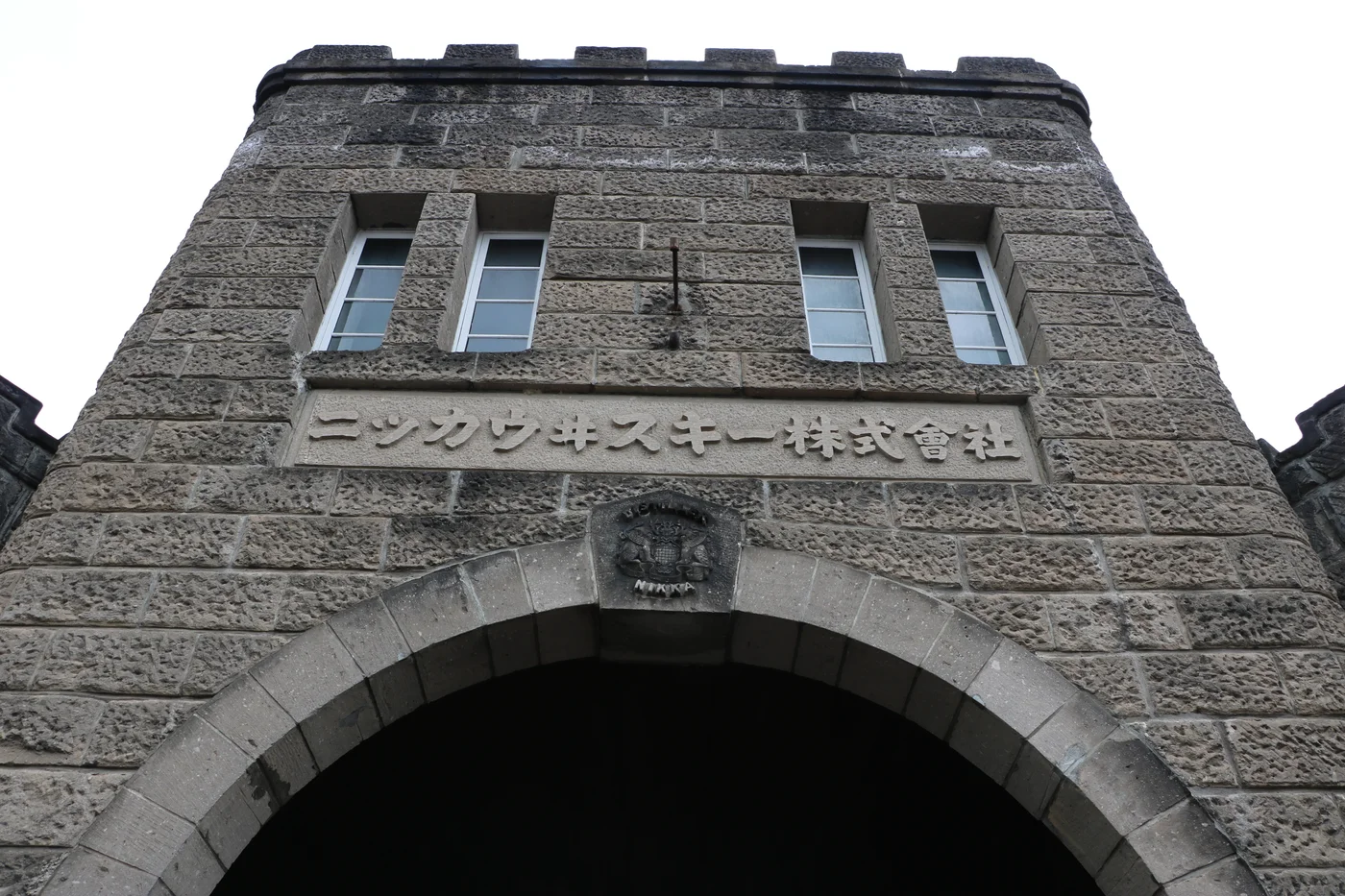
Nikka’s access page gives about two minutes on foot from Yoichi Station Crossroads and about five from JR Yoichi Station. These are approximate walks to the distillery. Without a reservation, follow signs to the shop-side entrance; the main gate handles booked-tour check-in. Each entrance serves a different visit. After photographing the main gate, return to your own entry route.
After the 10:09 arrival, plan to start the museum at 10:20. Those 11 minutes include crossing, finding the entrance and getting ready. This is more useful than turning “about two minutes on foot” directly into a 10:11 start. In poor weather or if you need a toilet first, shorten shop time to keep lunch and the afternoon film connected.
Allocate Nikka Museum’s four themes according to your questions. Blender’s Lab examines blending; Story of Nikka Whisky introduces four brands; Distiller’s Talk presents staff discussing their work on film; Taketsuru-ism returns to Masataka Taketsuru’s upbringing, study in Scotland and founding of the business. Giving the displays about 80 minutes before lunch makes choosing purchases easier than shopping immediately.
The 80 minutes are an itinerary allowance, not an official tour length. Move planned shop time into the brand displays for close reading. For basic production concepts, begin with the blending desk and production films, then the biographical section. Companions can see their preferred themes and meet before lunch without all following one slow sequence through every label.
The blending desk and four brands: distinguish the work on display
Blender’s Lab recreates the desk used in the blending room in Kashiwa, Chiba. Starting with that work surface can be easier than memorising whisky names. After distillation and maturation, people still assess spirit and combine products, connecting production with a bottle’s style. This is one of the no-reservation visit’s strongest reasons to slow down.
Story of Nikka Whisky uses Yoichi, Taketsuru, Black Nikka and From the Barrel to discuss history and products. Start with a familiar name, then compare the others to connect shop labels with the exhibition. If you have tried none, begin with the place name Yoichi and see why distillery, spirit and product names recur in one visit.
Distiller’s Talk includes filmed conversations with whisky makers, including blenders. The earlier desk is a static display; here staff explanations introduce the work. Give the films the more attentive part of the morning, with space films later in the afternoon. Separate the two rather than compressing every viewing into a hurried afternoon sequence.
Taketsuru-ism uses panels and film to describe his life, study in Scotland and business. RITA’s KITCHEN is named for his wife Rita. The restaurant explains that they met in Scotland and returned to Japan in autumn 1920 after marrying. Seeing the biography before a lunch with British and Scottish culinary influences connects person and restaurant name without requiring a long corporate chronology.
Hokkaido Fan Magazine filmed Nikka Museum in 2021, exploring Yoichi Distillery’s whisky history through exhibits and production explanations.
Put paid tasting and shopping near lunch
The museum’s paid tasting bar has a pot still at its centre. This object helps identify the still’s form. Use a booked tour for production-area equipment and buildings. The two places offer different subjects, while museum visitors can use this object to understand the pot still mentioned in the process sections below.
Tasting on the no-reservation route is paid. Tasting after the free guided tour belongs to a separate visiting process. To keep time for the Space Dome, decide after the displays whether to taste, then go to the restaurant without a later return trip. The bar and restaurant drinks are ordered separately; calculate spending from what you select on site.
Drivers of cars, motorcycles or bicycles, people under 20, and pregnant or breastfeeding visitors cannot taste alcohol. The regular tour also provides soft drinks. This day uses public transport, but companions can still choose not to drink according to their circumstances. Those tasting should do so with seating and sufficient time, then keep the planned return bus.
The shop sells distillery-exclusive whisky, regular bottles, sweets and merchandise. Nikka says exclusive products have limited production, irregular deliveries and no delivery-status enquiry service. For a museum-focused visit, allow a little over ten minutes for shopping and add spending only if something appeals. There is more walking in the afternoon, so include bottle numbers and package size in what you can carry.
Sit down at RITA’s KITCHEN around 11:40
RITA’s KITCHEN opens 10:00–15:50, with last orders at 15:20 and 80 seats. Place lunch around 11:40–12:35, then allow shop and walking time before the 13:05 3D film. Although the restaurant takes orders later, a 15:00 main meal would overlap the return journey and final Space Dome activities.
The official menu lists an original plate with half a roast chicken, a pot-still smoked-food plate, Hokkaido pork ribs braised in Nikka Cidre with baked apple and potato, homemade corned beef and smoked-egg potato salad, and Golden Pudding. For a full lunch, choose a plate or the ribs. After an earlier breakfast, lighter food and dessert can make a meal break. Avoid planning large amounts of Otaru sweets before ordering a full main course here.
Lunch keeps the route compact. Museum, restaurant and shop all share the no-reservation area, so there is no need to find a distant place before leaving in the afternoon. Food gives non-drinking companions their own reason to visit through cooking and the personal story. Choose drinks to suit yourself; every meal need not include alcohol.
If waiting or eating takes longer, drop the 13:05 3D film first and keep the 14:05 showing, or just see objects and the 14:30 star commentary. Do not hurry the meal to protect every programme. Outside food is prohibited in the distillery, so packed lunches and snacks cannot replace a meal inside the grounds.
Walk to the Space Dome for a 13:05 afternoon marker
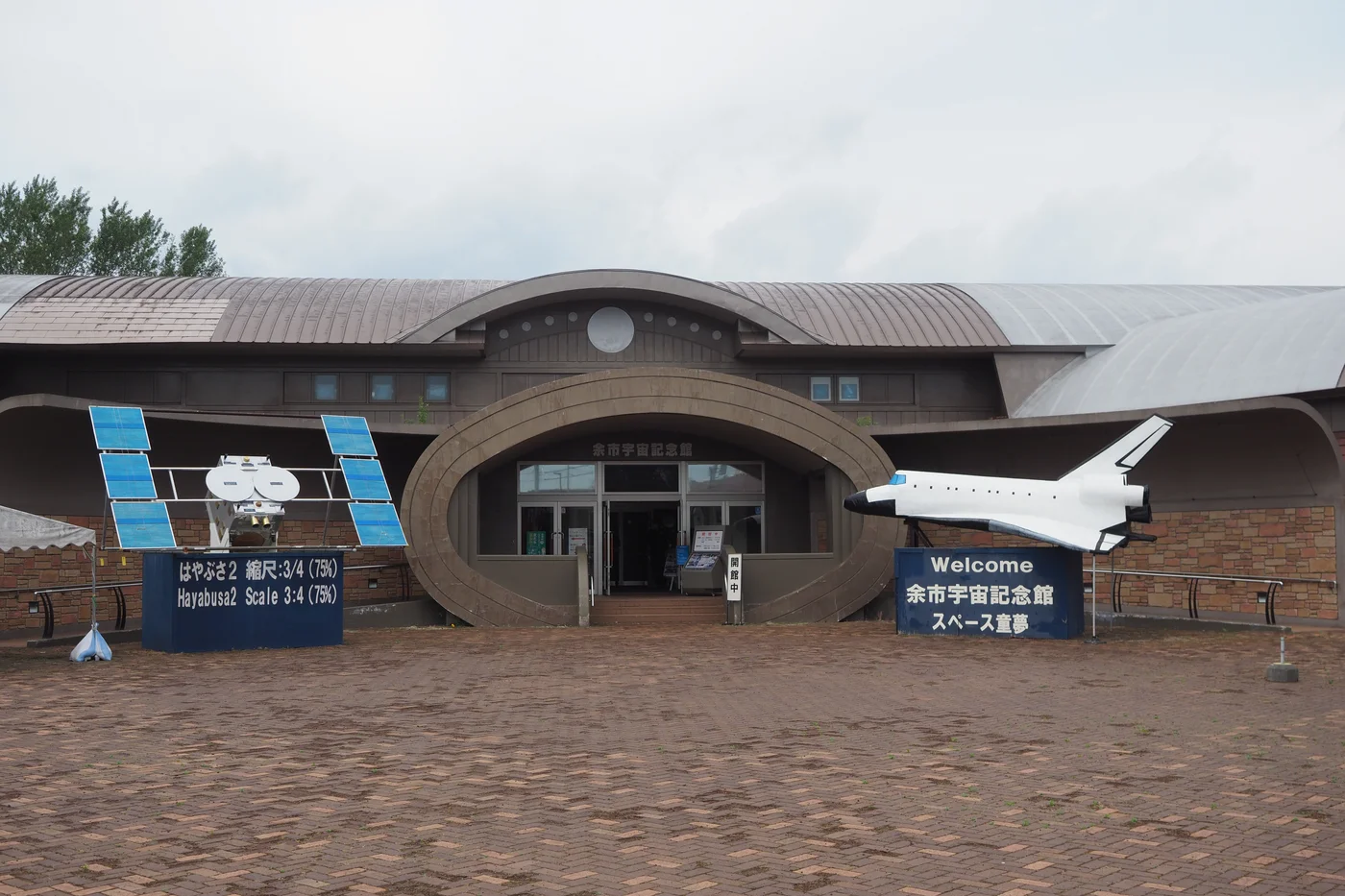
Yoichi Space Dome is within the Space Apple Yoichi roadside station at 6-4 Kurokawacho. Its website lists about five minutes on foot from Yoichi Station Crossroads and seven from JR Yoichi Station. Leave Nikka from the shop side, head back towards the crossroads and turn towards the museum. Plan to leave Nikka around 12:45, giving about 15 minutes for movement, tickets and finding the screening area.
If still in the restaurant at 12:45, switch to 14:05. The 3D film starts at five minutes past each hour and lasts about 15 minutes. Knowing this marker lets you move between objects and films without hurrying through every display after reaching the entrance.
The general visiting season in 2026 runs 18 April–30 November. Hours are 9:00–17:00, with last admission at 16:00. It closes Mondays, moving to the next day when Monday is a holiday. Thursday 5 November fits a normal visiting day. General exhibition visits stop from 1 December to 16 April 2027. Winter space classes and observing events have different participation arrangements from this walk-in day.
Admission is ¥500 from senior high school age, ¥300 for primary and junior high school pupils, and free for preschool children, paid in cash. It includes the 3D film, shuttle-launch footage and available indoor displays. For an adult, the return bus from Otaru plus admission totals ¥1,620. Add lunch, paid Nikka tasting and shopping as chosen to establish the day’s basic cost.
Mohri’s objects, life in space and a scale Hubble telescope
The route leads from the entrance through the Warp Tube into the displays. A space inspired by Japan’s Kibo experiment module introduces clothing, food and living in space. Start with everyday questions about living there, then move to rockets and observation equipment. After Nikka’s production and blending work, the afternoon changes scale and gives children a new subject.
The Hubble Space Telescope area recreates the telescope at three-quarter scale. Compare the instrument’s overall form with the living space in a module: one observes, the other holds human activity. The scale comes from the museum’s display account. Models, flown objects and personal belongings differ in nature, so read labels before treating them all as original machines.
The JAXA area uses spaceflight objects, rocket scale models and films to introduce Japan’s space development. The Mohri Museum shows the blue work suit worn by Mamoru Mohri and belongings from his youth. Give it more time for objects directly linked with a Yoichi figure. For rockets, move time to models and film. Both fit this afternoon.
The 3D film, “2041: Space Elevator”, imagines departure from Yoichi Bay by space elevator. It is the museum’s created future scenario. From 1 October to 29 November, the programme covers space solar power generation and lunar exploration. The 13:05 showing ends around 13:20, leaving over an hour to return to displays before the 14:30 star commentary. The objects need not become a passage rushed through for the film.
Choose the 14:30 star commentary together with the 15:19 bus
The digital planetarium shows “Tonight’s Starry Sky” at 10:30 and 14:30 for about 20 minutes, with 14 places. The website announces that the programme, previously suspended by equipment failure, resumed on 23 October. This is smaller than the 100-seat 3D theatre. Check the session arrangements on entry before allocating exhibition time around 14:00.
Preschool children cannot enter the star commentary, and there is no entry or exit during projection. With preschoolers, choose the 3D film and general displays, then return to the crossroads earlier. If carers split up for the commentary, agree a meeting point inside first. Free admission for preschool children and exclusion from the planetarium are separate conditions; make the afternoon choice clear when buying tickets.
The 14:30 session should end around 14:50. Plan to leave at 15:00, reach the return stop before 15:10 and take the 15:19 bus. The museum’s roughly five-minute walk to the crossroads covers walking only. The 15:00–15:19 interval also allows for finding the stop, crossing and waiting. Skip the 15:05 film, which would consume this margin.
For an earlier return, omit the star commentary and take the 13:59 or 14:29 from Yoichi Station Crossroads, reaching Otaru at 14:39 or 15:12 respectively. The 13:59 is route 20, Shakotan Line; the 14:29 is route 18, Yoichi Line. Both head to Otaru.
Use return bay 5, with a fallback after 15:19
This route returns on route 20, Shakotan Line, towards Otaru Station. It leaves Yoichi Station Crossroads bay 5 at 15:19 and arrives at 15:59. It is a through service from Bikuni, so look for the destination “小樽駅前”. Chuo Bus also has a similarly named Yoichi Station stop. Wait at crossroads bay 5 rather than outside the JR entrance at a different stopping point.
If you miss 15:19, the next useful fallback is route 18 at 15:59, reaching Otaru at 16:42. Both use crossroads bay 5. Waiting in the station area for 40 minutes is easier than returning to the museum for another programme. If dinner in Sapporo was planned before 17:00, move it later with this fallback; the effect extends beyond the extra 40-minute wait.
You could instead take the 16:01 local train from Yoichi to Otaru. This requires moving from the bus-stop area to the JR station and preparing a ticket. The 15:59 bus and 16:01 train are not alternatives you can choose while standing still. The bus timetable gives the Otaru arrival; rail adds station movement. Check both services’ operation, choose, then wait at the corresponding place.
After returning, eat in Otaru or travel back to Sapporo. Save Sakaimachi, a canal cruise or Mount Tengu for another Otaru day if you want full visits. It is nearly evening after Yoichi, so arrange dinner and transport to your accommodation first.
With a tour reservation, replace the afternoon with the production area
Check in at the main gate for the free tour. Begin at the Visitor Center with an introduction film and process displays, then follow staff through the outdoor production area and finish at the Tasting Hall. Regular tours are in Japanese only, accepting one to nine people including children. A group made up solely of under-20s is not permitted. Fit outward travel to your actual booking rather than retaining the full no-reservation two-museum day.
The public FAQ says regular tours accept bookings for the next four weeks. Telephone bookings handle same-day vacancies, with no waiting list. Online changes and cancellations close at noon the previous day; same-day changes or cancellations are by telephone. Keep confirmation and check-in time easy to find on your phone. If travel is delayed, call 0135-23-4611 directly.
Photography is allowed during the tour; video and audio recording are prohibited. The site is entirely non-smoking. Outside food is prohibited. Pets are not admitted, except assistance dogs. Booked visitors can use a limited number of ¥100 deposit lockers, refunded after use; do not count on these for the no-reservation route. Deal with large luggage at your accommodation first. Yoichi Station’s official facilities list includes lockers, but plan around belongings you can carry yourself.
The production area involves outdoor movement. In winter snow, Nikka does not recommend touring with a wheelchair or pushchair. Prioritise the no-reservation indoor displays if using these aids, and allow time for transport and entrance walks. With a booked tour, give the afternoon to tour and museum, placing lunch before or after as needed and saving the Space Dome for another visit.
Kiln, mashing and fermentation: follow materials between buildings
The pointed kiln once used peat to smoke-dry germinated barley into malt. It is now disused. Read it at the process’s beginning to understand the unusual roof and tower as an early raw-material facility. On the production tour, move next to milling, mashing and fermentation buildings, where each name corresponds to a material change.
The milling and mashing building contains a malt mill and mash tun. Warm water is added to crushed malt to make sweet wort. In the fermentation building, yeast produces a wash of about 8% alcohol. Mashing supplies wort for fermentation; fermentation produces alcoholic wash. Distinguishing these stages makes the distillation equipment easier to read than treating every machine as something that cooks alcohol out.
The wash travels by underground pipe to the still house. Visitors move between buildings above ground, while materials follow their own transfer route. Connect each building’s input and output: malt into mashing, wort into fermentation, wash into distillation. This process is easier to remember than building dates alone and connects back to museum and product displays.
Still house and warehouse: focus on heat and casks
Yoichi distils twice in pot stills and retains direct coal firing. Nikka describes straight-necked stills with downward lyne arms, linking equipment and method with Longmorn, where Taketsuru studied in Scotland. Identify the heat source, then the still shape to understand Yoichi’s features beyond photographing a row of metal vessels.
The company says the still’s base exceeds 1,000°C. Workers add coal and regulate combustion to maintain suitable heat; the figure refers to the equipment’s base. Nikka also connects direct coal firing with a full-bodied, toasted spirit character. Knowing the method before visiting helps connect the Japanese term for direct coal-fired distillation with the heat source and operation you see.
Clear new spirit is filled into casks in the blending building, which also handles emptying matured casks and blending. Warehouse No. 1 occupies a former island in the Yoichi River. The company highlights an earthen floor maintaining suitable humidity and stone walls retaining cool air in summer. Here attention changes from heating to long storage. Floor, walls and casks each have a role, shifting the pace from earlier processing.
The Agency for Cultural Affairs dates Warehouse No. 1 to around 1939 and describes timber-framed stone construction. Nikka also explains that Taketsuru brought a cooper familiar with beer barrels to Yoichi to study whisky casks, with skills later passed to Miyagikyo and Tochigi. Read this history while looking at casks. The distillery needed both spirit and containers for holding it over years, bringing production, architecture and time together.
The old office and Taketsuru house: work and home separately
The old office was built in July 1934 and served as Masataka Taketsuru’s office. The old laboratory was built in 1931 and used for research until 1984. They connect with founding and research work, over different spans of time. Read use and dates together to understand the site as a group of working buildings gradually used and preserved.
The old Taketsuru house was moved from the outskirts of Yoichi into the distillery in 2002. Its mixed Japanese and Western design opens its entrance hall and garden to visitors. Its domestic focus differs from the office’s working role. The Agency for Cultural Affairs also explains the group’s value through preserved facilities spanning raw-material processing, preparation, fermentation, distillation and storage.
Nikka’s chronology records ten Yoichi Distillery buildings designated as Important Cultural Properties in 2022.
A few useful answers
Can I visit the Nikka distillery in Yoichi without booking?
Parties of one to nine can use the shop-side entrance for the Nikka Museum, paid tasting bar, RITA’s KITCHEN and shop. Last admission is at 15:30. For the outdoor production area, book the free tour in Japanese and check in at the main gate.
Where do I get on and off the bus from Otaru to the Yoichi distillery?
For 5 November 2026, the timetable shows the number 18 leaving stand 5 at Otaru Station bus terminal at 9:30 and reaching Yoichi Ekimae Jujigai at 10:09. The number 20 back leaves stand 5 there at 15:19 and reaches Otaru at 15:59. A single costs ¥560.
When should I have lunch at RITA’s KITCHEN to catch the 3D film at the Space Dome?
Aim to have lunch at about 11:40 to catch the 13:05 3D film. RITA’s KITCHEN opens from 10:00 to 15:50, with last orders at 15:20. If there’s a queue for a table, go to the 14:05 screening instead.
Is the Yoichi Space Dome open in winter, and how much are tickets?
The regular exhibitions are closed from 1 December 2026 to 16 April 2027 inclusive. Entry is cash only at ¥500 for upper secondary pupils and older visitors or ¥300 for primary and lower secondary pupils. Pre-school children go free, and admission covers the 3D film and space shuttle launch footage.
Official information and references
Sources used in this guide.
- Nikka: Yoichi environment, direct coal firing and coopering
- Nikka: visiting methods and entrances
- Nikka: reservations, companions and visiting rules
- Nikka: Yoichi visiting facilities and museum
- Nikka: access and entrances
- Nikka: company history
- Agency for Cultural Affairs: Yoichi Distillery office building
- Agency for Cultural Affairs: Warehouse No. 1
- Nikka: RITA’s KITCHEN
- Hokkaido Chuo Bus: 2026 summer Yoichi and Shakotan Line timetable
- JR Hokkaido: Yoichi Station facilities and directions
- JR Hokkaido: Yoichi departures towards Otaru
- JR Hokkaido: Otaru departures towards Shikaribetsu and Kutchan
- Yoichi Space Dome: 2026 season, admission and access
- Yoichi Space Dome: display objects and screening times