Hoheikyo Dam is a 102.5-metre parabolic concrete arch dam whose reservoir, Lake Jozan, ranks among Japan's Top 100 Dam Lakes and Top 100 Water Source Forests. Sightseeing water discharges run from 1 June to 31 October (peaking at 2.0 cubic metres per second on July and August weekends), while the electric shuttle bus operates from 2 May to 3 November 2026 (¥1,000 return). Roughly an hour from Sapporo via Jozankei, private vehicles must stop at Hiyamizu Car Park. This guide covers discharge timetables, electric bus fares, and winter road closures.
- Region & Focus
- SapporoTransport and passes
- Reading Scope
- 12 min read · 5 chapters · 4 Q&As
- Official Verification
- 12 official sources checkedUpdated 20 November 2026
- Key Topics
- ItinerariesSeasonsHokkaido
Chapter Route Map (tap any stop)
- The Essentials: Arch Dam, Lake Jozan, and Sapporo's Water Supply
- Sightseeing Water Discharge: June–October Flood-Control Demo and Timetable
- The Electric Shuttle Bus: Schedules and Fares for the Only Route to the Dam
- Getting There from Sapporo: Complete Transport Guide
- Itinerary Blueprint: Standard Half-Day Plan and Autumn Foliage Upgrade
- Quick Q&A
Tucked into a national park valley upstream from Jozankei Onsen, Hoheikyo Dam is one of only two parabolic concrete arch dams on the entire island of Hokkaido. Standing 102.5 metres tall—roughly equivalent to a 34-storey building—it impounds Lake Jozan, a reservoir named to both Japan's Top 100 Water Source Forests and Top 100 Dam Lakes. Travellers make the detour here for two clear reasons. First is the scheduled sightseeing water discharge held from 1 June to 31 October, when spillway gates release water to demonstrate flood control, peaking at 2.0 cubic metres per second on July and August weekends. Second is the strict environmental protection inside the national park: private vehicles must stop year-round at Hiyamizu Car Park, leaving the final 2 kilometres to the dam crest accessible only by electric shuttle bus or on foot. Because no public bus serves the dam entrance directly and roads close entirely in winter, planning the connection from Sapporo (about an hour via Jozankei) is essential. Below is a complete breakdown of discharge timetables, electric bus schedules and fares, the autumn Dam Liner shuttle, and official winter closure dates.
The Essentials: Arch Dam, Lake Jozan, and Sapporo's Water Supply
According to engineering records published by Japan's Ministry of Land, Infrastructure, Transport and Tourism (MLIT), Hoheikyo Dam sits on the Toyohira River within the Ishikari River system in Jozankei 7-ku, Minami-ku, Sapporo. Designed as an arch dam standing 102.5 metres high with a crest length of 305 metres and a concrete volume of 285,000 cubic metres, construction began in 1967 and finished in October 1972 as a multipurpose dam. Across all of Hokkaido, only Hoheikyo and Hokkaido Electric Power's Okuniikappu Dam use this arch design. In 2008, Kamui Nisei Bridge was built directly atop the dam crest—the first bridge of its kind in Japan—while an observation deck beside the information gallery overlooks the upper valley of Lake Jozan (Jozanko).
The dam plays a vital role in Sapporo's municipal water supply. The official electric shuttle bus website notes that 98% of Sapporo's water demand is covered by the Toyohira River system, while MLIT figures state that Jozankei Dam and Hoheikyo Dam together secure roughly 80% of the city's water supply—two official figures using different measurement scopes. Beyond drinking water, the dam handles flood control and hydroelectric generation (with Hoheikyo Power Station producing up to 51,900 kW). Inside the dam structure, the Rim Tunnel maintains a constant temperature of roughly 10°C and nearly 100% humidity, and since 2015 has been used in partnership with the City of Sapporo for wine and tea ageing experiments.
Recognised for both scenery and public engagement, Lake Jozan is listed among Japan's Top 100 Dam Lakes, while its surrounding woodland is designated one of the Forestry Agency's Top 100 Water Source Forests. Hoheikyo Dam Open Day also won the Japan Dam Award 2014 Event Prize, granting visitors rare access along the maintenance catwalk right up to the sightseeing discharge outlets.
Dam enthusiasts will find two worthwhile keepsakes and experiences on site. The first is the free official Dam Card, distributed one per person at both the Hoheikyo Dam Information Gallery and the Management Branch Office (in 2026, the gallery opens weekdays from 30 April to 30 October, 09:00–16:30, closed weekends and public holidays; the branch office continues handing out cards until 3 November). The second is the award-winning Dam Open Day, when visitors can step onto the inspection catwalk into the spray of the outlets—alongside the unusual Rim Tunnel wine and tea storage trials.
Building an arch dam here was dictated by the geology. This upper V-shaped gorge along the Toyohira River features hard bedrock and steep, narrowing valley walls, allowing an arch structure to transfer immense water pressure directly into the mountainsides. Using just 285,000 cubic metres of concrete, it impounds up to 47.1 million cubic metres of water across a 1.5-square-kilometre reservoir with an effective drawdown depth of 37.2 metres. Since 1972, it has underpinned flood mitigation, hydroelectric power, and Sapporo's upstream municipal intake (supplying up to 528,000 cubic metres per day).
Before calling or researching ahead of your trip, note how management duties are divided between two organisations. The dam structure, water discharge operations, and information gallery are run by MLIT's Hokkaido Regional Development Bureau (Toyohira River Dam Integrated Management Office; Hoheikyo Dam Management Branch Office tel. 011-598-2621). Park guiding, the electric shuttle bus, and Hiyamizu Car Park are operated by Sapporo Resort Development Corporation (houheikyou.jp). Contact the corporation for transport and visitor logistics, and MLIT for dam operations or hydrological data.
Plan your pacing before heading up the valley. Civil engineering and hydrology enthusiasts can easily spend half a day exploring the gallery and dam crest, whereas general sightseers need only one to two hours timed around the 10:00–15:00 water discharge. Families with toddlers should note that neither the electric shuttle buses nor the crest walkways have dedicated pushchair lanes, so a baby carrier is far more practical. Hoheikyo is a working mountain engineering site rather than a commercial theme park, and once you adjust expectations accordingly, it often becomes the quietest highlight of a Jozankei stay.
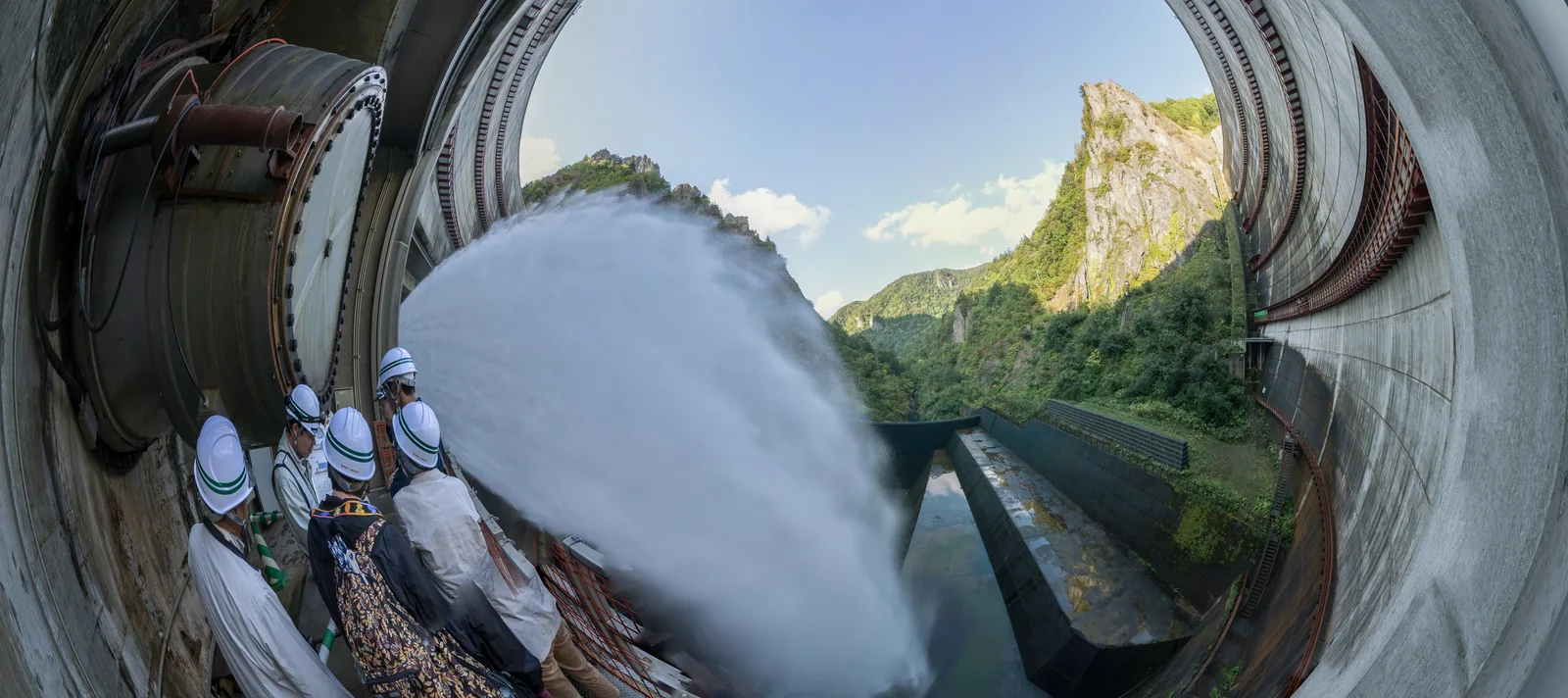
Hoheikyo Dam is a 102.5-metre parabolic concrete arch dam whose reservoir, Lake Jozan, ranks among Japan's Top 100 Dam Lakes and Top 100 Water Source Forests. Sightseeing water discharges run from 1 June to 31 October (peaking at 2.0 cubic metres per second on July and August weekends), while the electric shuttle bus operates from 2 May to 3 November 2026 (¥1,000 return). Roughly an hour from Sapporo via Jozankei, private vehicles must stop at Hiyamizu Car Park. This guide covers discharge timetables, electric bus fares, and winter road closures.
Sightseeing Water Discharge: June–October Flood-Control Demo and Timetable
Held annually from 1 June to 31 October, the sightseeing water discharge is not a purely decorative fountain show; it opens the dam's routine flood-control operations to public view so visitors can see how spillway gates regulate river flow. According to MLIT's official discharge table (measured in cubic metres per second), on weekends and public holidays in June, September, and October the gates release 0.3 m³/s from 09:00–10:00, 1.0 m³/s from 10:00–15:00, and 0.3 m³/s from 15:00–16:00, whereas weekdays see only 0.3 m³/s from 10:00–15:00. During midsummer weekends and public holidays in July and August, the 10:00–15:00 peak rises to 2.0 m³/s—the highest output of the year.
MLIT's full schedule spans 09:00–16:00 (summarised as 10:00–16:00 on the Jozankei Tourist Association's listing, though the ministry's table is authoritative), and during the autumn foliage season when the Dam Liner operates, the tourist association notes that sightseeing discharges run daily. If heavy rainfall forces an operational flood-control release, sightseeing discharge is cancelled immediately and warning sirens sound before gates open. Entry to the rocky riverbed directly below the dam is strictly prohibited year-round, with no public path leading down.
Ignore exaggerated figures circulating online and rely strictly on MLIT's cubic-metres-per-second timetable. Midday on July and August weekends (2.0 m³/s) delivers the most dramatic spectacle, while weekday visits show a gentler demonstration flow. For pre-trip inquiries, contact the Toyohira River Dam Integrated Management Office (011-583-8110) or the Hoheikyo Dam Management Branch Office (011-598-2621).
Choosing your date directly from the timetable makes planning straightforward: weekend and public holiday flows are three to ten times higher than weekday volumes (0.3 m³/s vs 1.0 m³/s at midday in June; 1.0 m³/s vs 2.0 m³/s at midday in July and August). Pick a summer weekend noon for sheer volume, a June or September weekday for peaceful photography, or an October weekend to pair 1.0 m³/s flows with autumn foliage. With the main discharge concentrated between 10:00 and 15:00, catching the 08:45 first electric shuttle bus puts you on the crest with plenty of time to spare.
Standing atop the dam, you will hear the roar of opening gates and feel drifting mist. Anyone joining a Dam Open Day catwalk tour right beside the outlets is almost certain to get damp, so pack a light waterproof jacket. Warning sirens sound before each release begins—if you hear them, ensure you stay well clear of restricted downstream zones. Three reliable camera angles cover the highlights: looking down at the discharge plume from the dam crest, framing Lake Jozan from Kamui Nisei Bridge, and gazing up the gorge from the information gallery terrace.
Most Japanese dams restrict visitors to distant viewpoints, which is why Hoheikyo won its Japan Dam Award Event Prize for opening the maintenance catwalk right beside the discharge chutes on special open days. Catwalk access is strictly limited to scheduled tour events with management-supplied safety gear and routing. On ordinary days, views from the dam crest and Kamui Nisei Bridge are still close enough to feel the force of 2.0 cubic metres per second.
Beyond the spillway, Lake Jozan's shifting water levels are fascinating to watch across the seasons. With an available drawdown depth of 37.2 metres, the gap between high and low water marks alters the shoreline dramatically: snowmelt fills the basin to its highest point in June, then summer water demand gradually lowers the surface until sloped access ramps emerge in autumn. Returning to the same viewpoint in different months reveals a completely transformed lake.
Understanding how the dam operates also deepens the visit. Hoheikyo never wastes water purely to entertain crowds; instead, it puts its routine river-maintenance and reservoir-regulation releases on a public schedule, meaning discharge rates fluctuate with seasonal water demand rather than tourist numbers. Reading the discharge table as operational transparency makes the visit far richer than simply watching falling water.
The Electric Shuttle Bus: Schedules and Fares for the Only Route to the Dam
Access to the dam site is tightly controlled. To protect the national park environment, private cars, motorcycles, and bicycles may drive no further than the free Hiyamizu Car Park (250 spaces) at any time of year. From there, the final 2 kilometres of forest road and tunnels to the dam crest are restricted exclusively to the dedicated electric shuttle bus or pedestrians (a 20–30 minute walk). Operated by Sapporo Resort Development Corporation, the service introduced electric buses back in 1976 and is now in its third generation, running a fleet of five BYD J6 compact electric buses (around 30 seats each, 200-kilometre range, including one fitted with a wheelchair lift).
In 2026, the electric shuttle bus operates from 2 May to 3 November (weekends and public holidays only during May), running daily from 08:45 to 16:00 with the final uphill departure at 15:30. Buses depart roughly every 15 to 30 minutes, with extra services added flexibly during the late September to October autumn foliage rush; the ride from Hiyamizu Car Park to the dam takes 7 to 8 minutes. Official fares for the regular season (2 May to 30 September) are ¥1,000 return or ¥600 single for adults, rising during peak autumn season (1 October to 3 November) to ¥1,200 return or ¥700 single. Children travel half-price, seniors aged 65 and over with proof of age pay ¥900 return (¥1,100 peak), and visitors with disability certificates plus one companion pay ¥500 return. Note that the Jozankei Tourist Association page erroneously lists the October–November single fare as ¥600; the official ¥700 rate applies on site.
The short bus ride is a highlight in itself: sit on the left heading uphill to spot Kudan-no-Taki Waterfall, and sit on the left again coming downhill to look up at Senjo-iwa Cliff—neither landmark has a walking trail, so the shuttle bus offers the only view. Once at the crest, stroll across Kamui Nisei Bridge, take in the reservoir from the information gallery terrace, and stop inside the Management Branch Office building to visit the Hoheikyo Dam Information Gallery (open weekdays 09:00–16:30 from 30 April to 30 October 2026; closed weekends and public holidays) to pick up your Dam Card.
Each BYD J6 bus carries up to about 40 passengers including standing room, with a top speed of 70 km/h capped strictly below 30 km/h inside the park. Having pioneered electric transit in Hokkaido as early as 1976 (Showa 51), the fleet earned a Minister of the Environment Commendation in 2007. Official FAQs spell out accessibility and transport rules clearly: Bus No. 5 has a wheelchair lift and free wheelchairs are available to borrow at the dam crest; pets must travel inside a secure carrier; and bicycles are banned entirely on board. Remember to claim a left-hand window seat in both directions for the waterfall and cliff views.
The shuttle is managed by Sapporo Resort Development Corporation's Hoheikyo Office (tel. 011-598-3452, fax 011-598-3454). Groups of 15 or more seeking discounted return fares from ¥950 must reserve in advance by fax, while disability discounts (¥500 return) require presenting an official certificate. The lower terminal provides public toilets, 250 free parking spaces, and complimentary wheelchair loans. Note that the autumn Dam Liner arriving from Jozankei Onsen departs from the Jozankei Tourist Information Centre—a separate stop from the Hiyamizu Car Park electric bus bay—so line up at the appropriate boarding point when transferring.
Timing your stay at the dam is effortless. With a 7–8 minute ride and departures every 15–30 minutes, allowing 40 to 60 minutes at the crest makes for an unhurried visit. If you want a bit of exercise without the climb, a popular hybrid approach is to ride the electric bus uphill and walk the gentle 20–30 minute descent back down. There are no restaurants inside the dam precinct (and no toilets inside the information gallery), so bring your own water and snacks and carry all litter out in line with national park rules.
Viewed in historical context, this short shuttle route becomes even more impressive. Adopting battery-electric buses in 1976 predated the mainstream EV era by decades, earning the third-generation fleet national environmental recognition in 2007. Keeping exhaust fumes out of Sapporo's water catchment and banning private vehicles share the exact same conservation logic—riding this quiet shuttle up the gorge means taking part in a half-century effort to protect the city's drinking water.
Getting There from Sapporo: Complete Transport Guide
Reaching the dam crest from Sapporo by public transport requires three separate stages. First, travel from Sapporo Station to Jozankei via Jotetsu's express Kappa Liner (departing Bay 27 at Sapporo Station, roughly 60 minutes, ¥1,700, advance reservation required; nine daily services run directly to Hoheikyo Onsen), a regular Jotetsu local bus (about 80 minutes), or the Sapporo Municipal Subway Namboku Line to Makomanai Station connecting to a local bus (47–50 minutes). Second, continue from Jozankei Onsen to Hiyamizu Car Park—a 15-minute drive by car, but public buses terminate at Hoheikyo Onsen, leaving roughly 3 kilometres of mountain road to the electric bus terminal (official sources quote either 30 or 60 minutes on foot, so budget 30–60 minutes). Third, board the electric shuttle bus for the final 7–8 minute ride to the dam.
In short, no bus runs directly from Sapporo Station to Hoheikyo Dam, and that 3-kilometre gap past Hoheikyo Onsen is the main hurdle for independent travellers without a car. Authorities offer two clean solutions: catch the autumn-only Hoheikyo Dam Liner (operating 3–25 October 2026), which runs directly between Jozankei Tourist Information Centre and the dam car park without stopping at Hoheikyo Onsen (three return trips daily, ¥1,000 return, or ¥2,200 adult combo ticket including the electric shuttle bus), or rent a car and drive straight to Hiyamizu Car Park.
The season dictates whether you can visit at all. MLIT explicitly states that the access road to Hoheikyo Dam is completely closed from early November through April with no public entry permitted—a schedule mirrored in 2026 by the electric bus closing on 3 November, the information gallery shutting on 30 October, and Dam Card distribution ending on 3 November. Leave Hoheikyo off any winter itinerary. Note also that the Hokkaido Chuo Bus Rapid 7 occasionally mentioned on older blogs does not appear on the Jozankei Tourist Association's current access page; stick to the Kappa Liner and regular Jotetsu routes.
Driving times are easy to estimate: roughly 60 minutes from JR Sapporo Station, 70 minutes from Otaru, 15 minutes from Jozankei Onsen town, 70 minutes from Lake Toya, and 30 minutes from Nakayama Pass (via Hokkaido Prefectural Route 18 off National Route 230), with all vehicles parking at the free 250-space Hiyamizu Car Park. If you fancy a hot spring soak and meal afterwards, Hoheikyo Onsen offers adult combo packages until 30 September (such as curry lunch plus bathing for ¥3,250), pairing smoothly with a dam visit.
Budget-conscious travellers can save money by combining subway and local bus. Ride the Namboku Line to Makomanai Station and transfer at Bay 4 to a Jotetsu local bus into Jozankei (47–50 minutes; check segmented fares via Buskita), then make your way to Hiyamizu Car Park for the electric shuttle. It costs less than the Kappa Liner, though officials caution that subway and bus timetables are not always tightly synchronised, meaning short waits at Makomanai. Travellers continuing towards Lake Toya can also link with the Donan Bus Sapporo–Lake Toya line via Nakayama Pass (about 60 minutes).
When booking the Kappa Liner, check each departure's terminus carefully. Out of 11 daily return services, only nine extend to Hoheikyo Onsen while two terminate at Jozankei Onsen. All seats require reservation (open from the same calendar date one month ahead until 17:00 JST the day prior) and sell out rapidly during autumn foliage season—make sure your ticket specifies Hoheikyo Onsen. Never haul large suitcases along the 3-kilometre road between Hoheikyo Onsen and Hiyamizu Car Park; leave luggage at your Jozankei ryokan or town lockers and travel light.
Finally, don't overlook two rules highlighted in the official FAQ. Bicycles are prohibited along the 2-kilometre road between Hiyamizu Car Park and the dam crest, so cyclists riding into Jozankei must park at Hiyamizu and walk up. Pets are welcome in the park grounds, but must be placed inside a carrier before boarding the electric shuttle bus—prepare one ahead of time to avoid being turned away at the platform.
Itinerary Blueprint: Standard Half-Day Plan and Autumn Foliage Upgrade
Between May and October, a classic half-day itinerary runs like clockwork. Catch the 09:10 Kappa Liner from Sapporo Station (ensuring you select a service extending to Hoheikyo Onsen and departing before 14:30), or drive straight to Hiyamizu Car Park. Board the electric shuttle bus before 10:00, spend roughly 40 minutes admiring the arch dam, Lake Jozan, and Kamui Nisei Bridge, and stay for the 10:00–15:00 sightseeing water discharge from the crest or catwalk. Head back down for lunch and a soak at Hoheikyo Onsen before returning effortlessly to Sapporo in the evening—keeping one eye on the 15:30 last uphill electric bus.
Early to mid-October, when autumn colours peak, transforms the gorge into Hoheikyo's finest edition of the year. Electric bus fares move to peak-season pricing (¥1,200 return), supplemented by the autumn-only Dam Liner from 3 to 25 October (¥1,000 return) and Jozankei's Five Great Autumn Foliage Tour Buses, while sightseeing water discharges run daily (peaking at 1.0 m³/s on weekends). Crowds and transport costs rise together, yet the reward is a sweep of crimson valley walls framing the spillway spray.
Timing the season prevents disappointment. Roads close from early November to April, ruling out winter altogether, whereas July and August weekend middays bring the thundering 2.0 m³/s release alongside summer heat and heavier visitor numbers. Decide whether your priority is maximum water volume or autumn foliage, then pair your timing with a Jozankei Onsen stay for accommodation and hot spring bathing.
On the crest, follow the official Hoheikyo Dam walking map downloadable from the homepage: cross Kamui Nisei Bridge (Japan's first dam-top bridge), visit the information gallery terrace overlooking the upper reservoir, and join the catwalk if visiting on an open day. Afterwards, take advantage of Hoheikyo Onsen's adult-only curry-and-bath combo (¥3,250, available until 30 September). Observe one non-negotiable safety boundary: the rocky gorge directly below the dam is closed year-round with no footpath—never venture off-route for a photo.
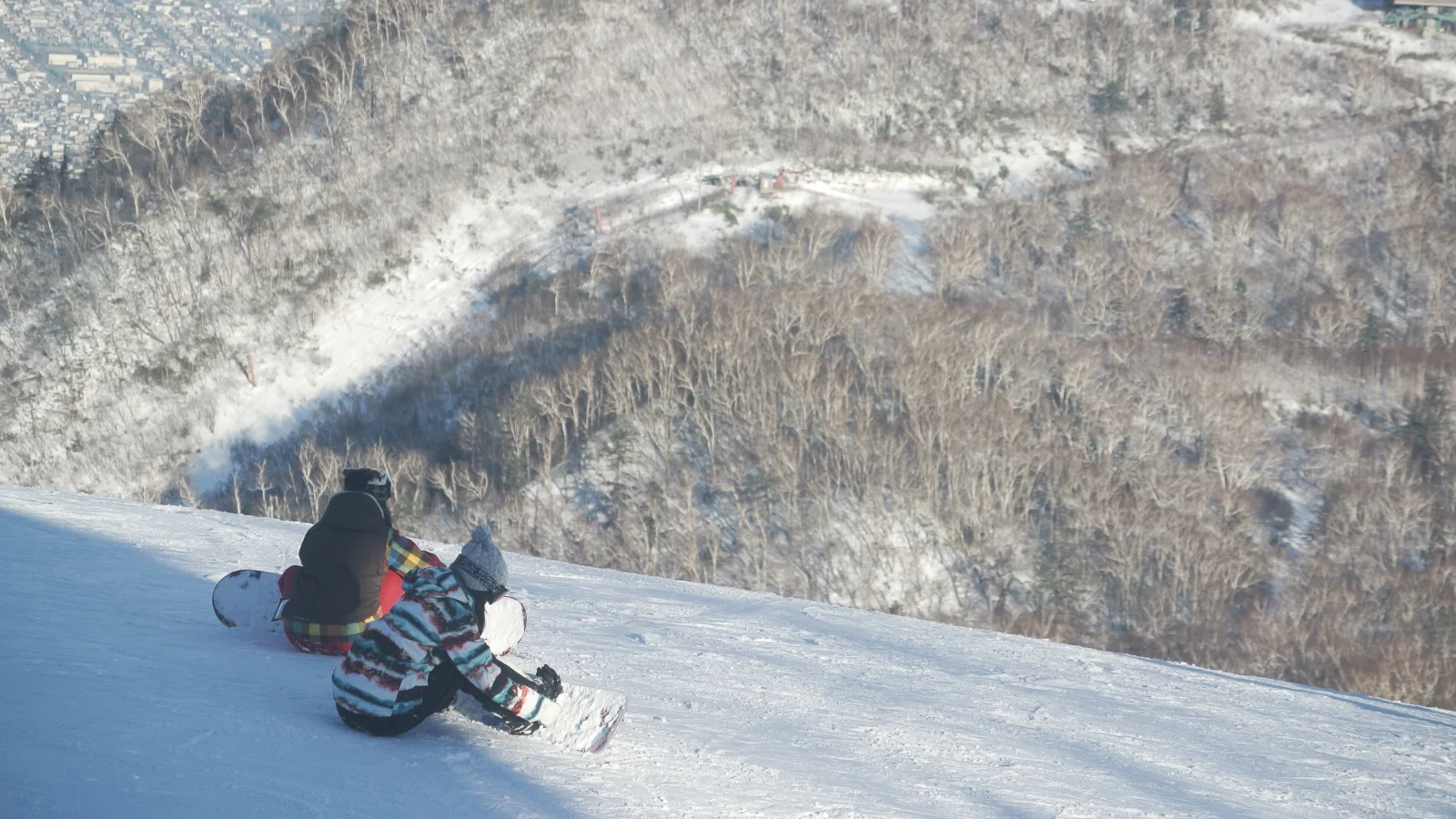
Plotted on a single annual calendar, Hoheikyo and neighbouring Jozankei split neatly between summer water and winter snow. When Hoheikyo closes for winter, nearby Sapporo Kokusai Ski Resort—just 30 minutes away—takes over; and from late September through mid-October, Hoheikyo's early autumn foliage overlaps with the ski resort's autumn gondola, making that three-week window arguably the richest time of year to visit the valley.
Breaking the half-day down hour by hour keeps logistics tight. Drivers should reach Hiyamizu Car Park before the 08:45 first shuttle (bus travellers should finish the 3-kilometre walk before 09:00), watch the 0.3 m³/s warm-up flow from 09:00–10:00, and catch the peak release after 10:00. Ride back down around 11:30 for lunch and hot springs at Hoheikyo Onsen, return to the boarding area before 14:00, and keep the 15:30 last uphill shuttle firmly in mind—every step aligns cleanly with official timetables.
First-time visitors frequently confuse the two major dams sitting upstream: Hoheikyo Dam (impounding Lake Jozan) and Jozankei Dam (impounding Lake Sapporo). While both dams jointly secure roughly 80% of Sapporo's water, visitor infrastructure—electric shuttle buses, the information gallery, and scheduled sightseeing discharges—is concentrated at Hoheikyo. Jozankei Dam primarily focuses on water supply and flood control without a dedicated sightseeing circuit, so focus your itinerary on Hoheikyo.
If you are already staying overnight in Jozankei Onsen, the smoothest sequence is an unhurried morning enjoying the town's free footbaths and lunch, heading towards Hoheikyo Onsen and Hiyamizu Car Park before 13:00, riding the electric bus up to the dam before 14:00 to catch the afternoon discharge, returning to the car park before the 15:30 cutoff, and arriving back at your ryokan in time for an evening soak and dinner. Slotting Hoheikyo into the afternoon of an overnight Jozankei trip ties both destinations together naturally.
Ultimately, Hoheikyo Dam appeals most to three kinds of travellers: engineering buffs drawn to arch dams, spillway releases, and catwalk tours; hot spring guests staying in Jozankei who want a scenic valley excursion; and October leaf-peepers chaining together the Dam Liner, electric shuttle, and autumn tour buses. Anyone expecting winter access or sprawling shopping complexes will find it closed or too spartan—embrace its pure mountain scenery and quiet electric shuttle, and it stands out as one of the best-value half-day escapes near Sapporo.
A few useful answers
When does Hoheikyo Dam hold its sightseeing water discharge, and when is the flow strongest?
Sightseeing water discharges take place annually from 1 June to 31 October between 09:00 and 16:00 across three time blocks set by the Ministry of Land, Infrastructure, Transport and Tourism. The largest flow of the year is 2.0 cubic metres per second between 10:00 and 15:00 on weekends and public holidays in July and August. On weekdays in June, September, and October, discharge is limited to 0.3 cubic metres per second during the midday block. If full-scale flood-control release is required due to heavy rain, sightseeing discharge is halted immediately and an on-site siren sounds in advance.
How do I reach Hoheikyo Dam, and can I drive up to the dam crest?
No. Under national park conservation rules, private cars, motorcycles, and bicycles may go no further than the free Hiyamizu Car Park (250 spaces) year-round. For the remaining 2 kilometres up to the dam crest, visitors must take the electric shuttle bus (7–8 minutes) or walk (20–30 minutes). In 2026, the electric bus runs from 2 May to 3 November (weekends and public holidays only in May) between 08:45 and 16:00. Standard adult return fares are ¥1,000, rising to ¥1,200 during the October peak season.
How do I get to Hoheikyo Dam from Sapporo?
By public transport, it takes three legs: first take the Kappa Liner express bus from Sapporo Station to Jozankei (around 60 minutes, ¥1,700, advance reservation required; nine daily services continue to Hoheikyo Onsen), then walk roughly 3 kilometres (30–60 minutes) from Hoheikyo Onsen bus stop to the electric bus terminal, or drive straight to Hiyamizu Car Park. No public bus runs directly from Sapporo to the dam site. From 3 to 25 October, the autumn-only Hoheikyo Dam Liner operates directly between Jozankei Tourist Information Centre and the dam car park (¥1,000 return, or ¥2,200 bundled with the electric shuttle bus).
Can I visit Hoheikyo Dam in winter?
No. The Ministry of Land, Infrastructure, Transport and Tourism closes the access road to Hoheikyo Dam completely from early November through April, making visits impossible. In 2026, the electric shuttle bus ends service on 3 November and the information gallery closes on 30 October. Skip the dam in winter and visit nearby Sapporo Kokusai Ski Resort (around 30 minutes away by car) or Jozankei Yukitouro (Snow Candle Way) instead.
Official information and references
Sources used in this guide.
- MLIT Hokkaido Regional Development Bureau | Hoheikyo Dam Specifications (Arch Dam, 102.5m Height, Lake Jozan)
- MLIT | Sightseeing Water Discharge (1 June–31 October, Official Discharge Table)
- MLIT | Dam Tour Guide (Winter Closure Notice, Hiyamizu Car Park, Electric Bus Route)
- MLIT | Visitor Guidelines (Lake Jozan, ~80% Water Supply, Downstream Entry Ban, Discharge Sirens)
- MLIT | Dam Card Distribution (Information Gallery and Management Branch Office Hours)
- MLIT | Rim Tunnel Wine and Tea Ageing Utilisation
- Hoheikyo Dam Electric Bus Official | Operating Season and Schedule (2 May–3 November 2026, 08:45–16:00)
- Hoheikyo Dam Electric Bus Official | Fare Table (Regular ¥1,000 Return, Peak ¥1,200 Return, Concessions)
- Hoheikyo Dam Electric Bus Official | 2026 Season Closure Notice (Ending 3 November; 2027 TBA)
- Jotetsu | Kappa Liner Express Bus (Sapporo Station Bay 27, Hoheikyo Onsen Direct Services, ¥1,700)
- Jozankei Tourist Association | Hoheikyo Dam Spot Guide (Five Great Autumn Foliage, Dam Liner)
- Jozankei Tourist Association | Five Great Autumn Foliage (Dam Liner 3–25 October, ¥1,000 Return)