Sapporo Snow Festival runs 4–11 February 2027. Plan a half-day, family day or two days across Odori, Susukino and Tsudome, with Sakaemachi access, subway day tickets, evening walks, six location photographs, maps and past HTB reporting.
- Region & Focus
- Sapporo
- Reading Scope
- 30 min read · 17 chapters · 7 Q&As
- Official Verification
- 14 official sources checkedUpdated 9 November 2026
- Key Topics
- ItinerariesSeasonsHokkaido
Chapter Route Map (tap any stop)
- Locate the three venues before deciding how many days to stay
- 2027 dates and Odori zones: mark the five large snow sculptures
- Enter central Odori and decide later how far to walk
- Look closely at smaller sculptures and contest works
- See carving by day and lighting at night, with a seated meal between
- Combine Susukino ice sculptures with dinner, from South 4 to South 6
- Keep Tsudome for daytime and count the walk from Sakaemachi
- Change wet gloves after snow play and keep the evening short
- Use the Toho Line for Tsudome and choose central lines by your walk's endpoint
- Count subway rides and compare weekday and weekend day tickets
- Beyond free admission, budget for transport and seated meals
- Use underground passages for travel, then go above ground for sculptures
- Half a day: central Odori, dinner and Susukino ice sculptures
- A family day: Tsudome in the morning and a short Odori evening
- Two days: separate outdoor activities and choose accommodation by evening endpoints
- Walk slowly on snow and prepare footwear and the next indoor break
- Pack what you will use before returning to the room
- Quick Q&A
Split the festival's three venues into two types of outing: Odori and Susukino for city-centre walks, and Tsudome for daytime snow play. The 2027 festival runs from 4 to 11 February. For children wanting snow tubing, take the Toho Line to Sakaemachi in the morning, return to the hotel to change in the afternoon, then visit Odori at night. With half a day, combine Odori, Susukino and dinner along one route. This keeps travel and outdoor time manageable.
Locate the three venues before deciding how many days to stay
Odori extends east–west along Odori Park; Susukino occupies Sapporo Ekimae-dori from South 4 to South 6. Both are central. Tsudome is a sports exchange facility in Higashi Ward, reached by subway to Sakaemachi and a walk. Mark this more distant daytime outing first. Save Odori and Susukino for the same evening to avoid repeated trips to Higashi Ward.
For a first visit focused on giant snow sculptures, one afternoon and evening gives a clear plan. See snow surfaces and carving at Odori by day, then ice sculptures at Susukino after dinner. For children's snow play too, allow two days: make Tsudome one day's main activity and walk Odori slowly on the other. This also gives sculpture enthusiasts and playground users enough time for their different interests.
You need not walk from morning to night every day. Include a seated indoor lunch and hotel rest before going out again. This is particularly useful with pushchairs or little snow-walking experience: organise coats, shoes, socks and gloves, and sort photographs while sitting, leaving attention for scenery and footing at night.
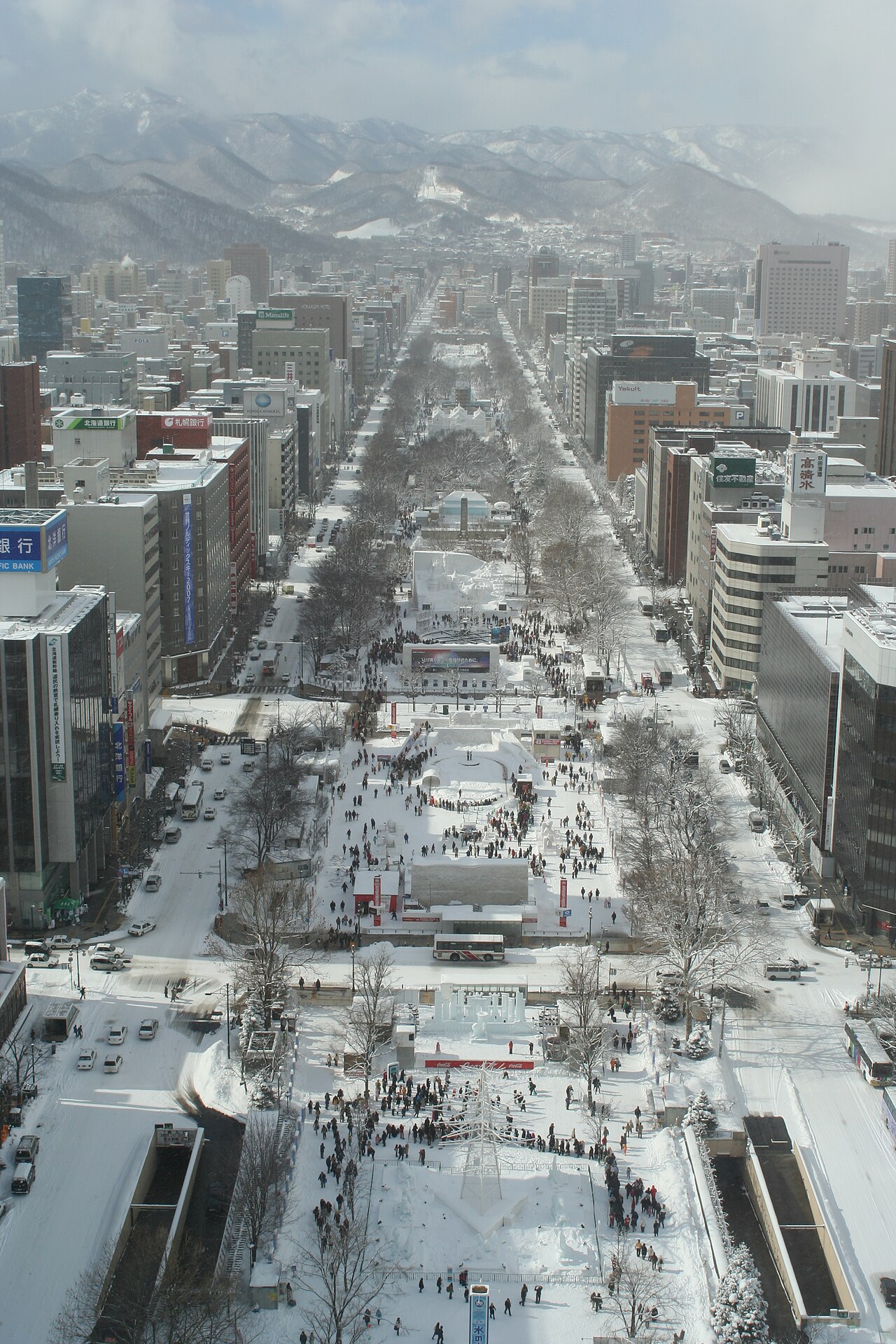
Snow sculptures and visitors at Odori during the opening of Sapporo Snow Festival 2025.
Sapporo Snow Festival runs 4–11 February 2027. Plan a half-day, family day or two days across Odori, Susukino and Tsudome, with Sakaemachi access, subway day tickets, evening walks, six location photographs, maps and past HTB reporting.
2027 dates and Odori zones: mark the five large snow sculptures
The organiser's 2027 outline lists all three venues from Thursday 4 to Thursday 11 February, National Foundation Day, for eight days. Odori covers West 1 to West 11, with large snow sculptures planned at blocks 4, 5, 7, 8 and 10. Mark these five locations and choose a section from your arrival direction without filling every performance slot first.
The outline also assigns block 2 to Sapporo International Art Festival 2027 and block 11 to the international snow sculpture contest and other activities. For carving techniques, spend longer at the western competition area. For a first large-sculpture visit, start at 4 and 5, then continue towards 7 and 8. This route follows announced locations; adjust stops to crowds and the works that interest you.
Detailed 2027 information for the three venues is scheduled to appear from mid-December 2026. Use the announced eight-day period for accommodation and flights, then add performances to your chosen venue times once programmes appear. A partner event, Sapporo Snow Sports Park 2027, runs at Daiwa House PREMIST DOME on 12–14 February. To see Odori snow sculptures, include 4–11 February in your stay.
Enter central Odori and decide later how far to walk
The festival stretch of Odori Park is about 1.1 km, with stops for photographs, traffic lights and sculpture fronts. For a first walk, start at Odori Station and focus on blocks 4–8. Large works stand a few blocks apart, giving clear targets and easy opportunities to return to the subway or a restaurant when tired.
If one companion photographs every sculpture while another wants only a few large works, agree on the next block where you will meet. Avoid calling it the Odori Park entrance: the park is long and different subway exits lead to different first works. Use a block, crossroads or precise map pin rather than only a sculpture photograph. Meet beside the path so others can pass.
Walking east to west passes the planned 2027 large sculptures towards the western contest area. Starting at Nishi-juitchome Station lets you see contest works first, then the concentration of large sculptures. The first suits arrivals from Sapporo Station or Odori's shopping area; the second suits a detailed block 11 visit ending with a central meal. One direction saves walking compared with repeatedly returning to the other end.
With a short gap, see blocks 4 and 5, then eat. Afterwards, choose blocks 7 and 8 or go straight to Susukino. An extra half-hour standing in snow feels different from ordinary city walking. Divide the route into complete short sections so you can linger at a favourite rather than chase the next number.
Look closely at smaller sculptures and contest works
Step back for large sculptures and look for details in smaller works within the guided viewing areas. The 2027 outline lists small sculptures at block 3, medium and small works at 6 and 9, and the international contest and other events at 11. Interleave these with large sculptures for a mix of wide and close views. Following only the large-work numbers makes smaller pieces easy to miss.
Ask children to choose a favourite, then find another expression or animal nearby. This holds interest better than demanding a group photograph at every work. Photograph title signs with the sculptures and sort them at your accommodation rather than stopping in the main path to search names. One overall view and one detail also help distinguish the works later.
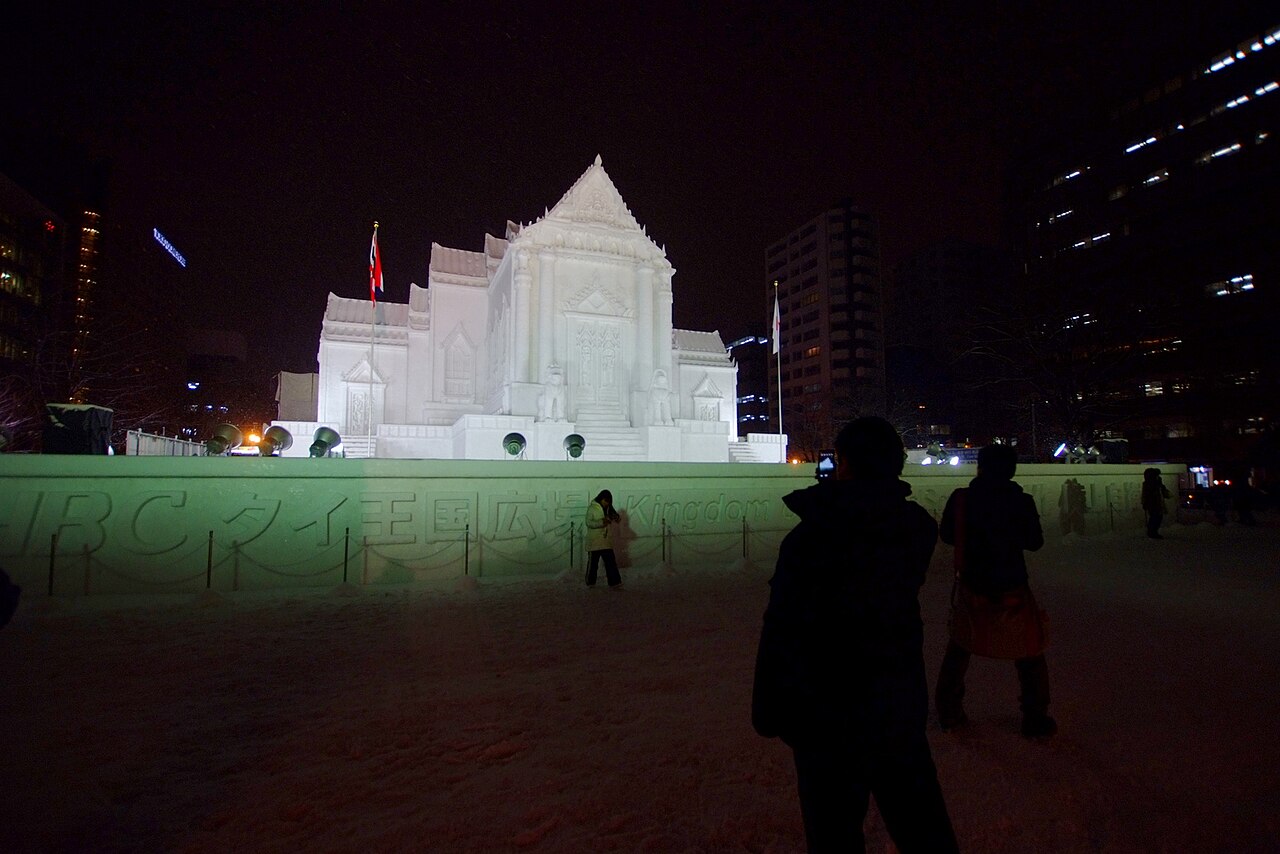
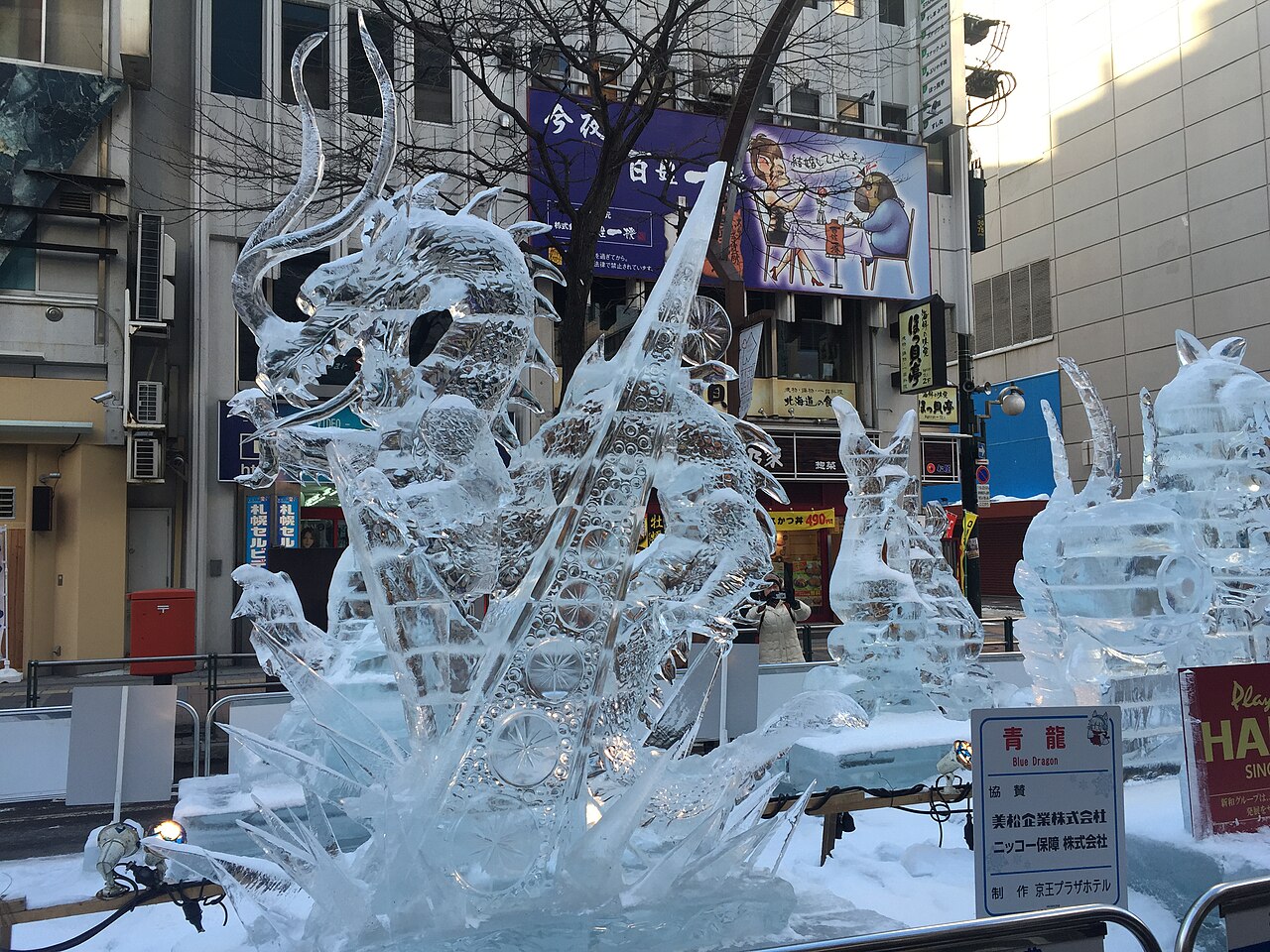
At Susukino, change position to see light pass through transparent ice carvings. The blue dragon photograph, taken in 2016, shows scales, whiskers and layered transparent outlines. The 2013 Thai temple photograph at Odori shows the thickness of white roofs and walls. Their dates let you use them to compare materials and carving at the two venues before choosing current-year works for your walk.
See carving by day and lighting at night, with a seated meal between
Daylight makes outlines, relief and surface details easier to see. Night lighting separates large works from surrounding streets and changes their photographic effect. Arrive in the afternoon, choose two works to revisit after lighting, then eat. Clear targets after dinner save another walk along the whole park.
Odori's official venue page currently lists lighting until 22:00. Visit earlier in the evening after dinner to leave time for the hotel return. For longer stops, companions can take photographs and rest in turns. Put the phone away before moving and stop beside the path for photographs to avoid watching the screen while stepping across uneven snow.
Choose food near the walk's start or finish. If walking west from Odori Station, eat near where you finish. For Susukino afterwards, return towards the centre and continue south. With a restaurant booking, include walking from the last sculpture and removing coats. One fewer work is more comfortable than hurrying over ice.
Combine Susukino ice sculptures with dinner, from South 4 to South 6
Susukino's venue runs along Sapporo Ekimae-dori from South 4 to South 6, focusing on ice sculptures. Transparent ice reflects shop and street lights, offering a different experience from Odori's solid snow. For both in one evening, finish your main Odori works or meal first, then move to Susukino and look slowly along its blocks to retain both materials' impressions.
Susukino Station on the Namboku Line serves the area, while Hosui-Susukino on the Toho Line lies on another side. Compare restaurant or hotel addresses with the line you will use. The Toho Line is direct for Sakaemachi towards Tsudome; central Susukino venue access often uses Namboku Line Susukino. These similarly named stations have exits suited to different streets.
Read the on-site entrance guidance and follow pedestrian areas. The organiser's venue page lists pedestrian-only times; 2026 dates and times remain in its historical section. For 2027, reserve a viewing period around dinner, then choose the precise approach when traffic restrictions are published. If staying south of Susukino, continue south after viewing rather than crossing the venue twice.
With children, see a short ice-sculpture section before dinner and return to your accommodation afterwards. A booked restaurant can anchor the route through this nightlife dining district. Meet at a precise address instead of exchanging messages at crowded crossings. Put phones away before crossing, and move slowly where roadside meltwater and ice alternate.
Keep Tsudome for daytime and count the walk from Sakaemachi
Tsudome suits families making snow play their main activity. The official venue page lists 10:00–16:00, indoor space, and past activities including tubing, snow games, rest and food areas. Unlike walking between city-centre sculptures, allow time to enter, get ready, queue, play and organise clothing afterwards. Visiting Odori first can leave only a hurried afternoon choosing equipment.
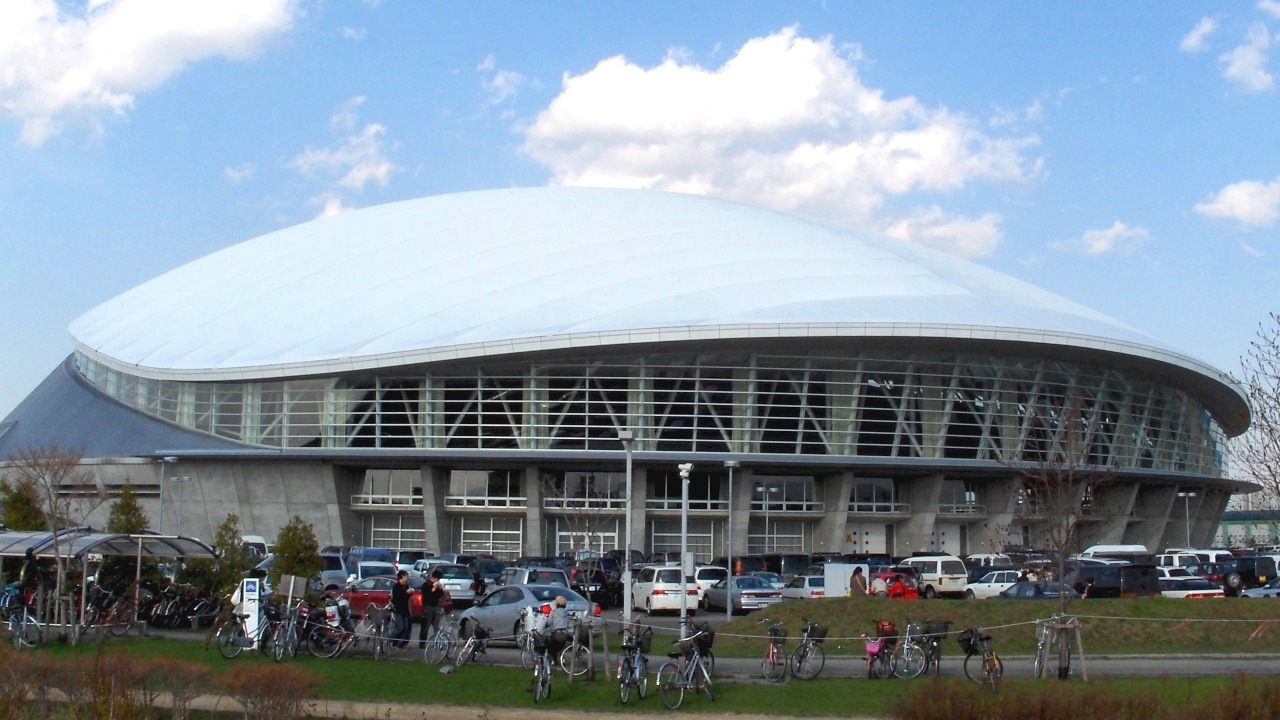
Take the Toho Line towards Sakaemachi and get off at the terminus. The facility operator gives about 15 minutes on foot from exit 2. Count this as outdoor time with children: put on coats and gloves before leaving the station, secure belongings, then walk. Reaching the subway terminus does not yet mean reaching the play area.
Before leaving, let children choose one priority, such as tubing or general snow play, and check that area's arrangements first on arrival. Treating every attraction as compulsory lets queues control the day. Complete the favourite, warm up and eat indoors, then add another activity according to energy, leaving enough for the return journey.
Tsudome has had shuttle buses in past years. The published 2026 notice shows previous stop arrangements. For 2027, plan around Sakaemachi subway plus walking for now, then choose a shuttle once its new notice appears. Families wanting less outdoor waiting can travel between station and venue by day, then walk around Odori or the hotel at night.
Change wet gloves after snow play and keep the evening short
Tubing and snow play put clothing in contact with snow. Carry dry gloves, socks and a separate wet-clothing bag so you can change straight away at the hotel. Wear adjustable layers; loosen scarves and open outer clothing indoors, then dress again before leaving, rather than sweating continuously in heavy clothing.
Hats and gloves have also been conditions for using Tsudome equipment in past years. Try children's items at your accommodation to check grip and ear coverage. Count gloves before leaving indoor areas; losing one takes time to replace. Prepare adults' hand warmth too, since accompanying children often means standing in queues.
With a pushchair, put the final snowy walk and subway lift locations on one route. Sapporo City Transportation Bureau station plans show exits at Sakaemachi, Odori, Sapporo and Hosui-Susukino. Find the lift, then the street it reaches. Even nearby destinations may require another block because of lift locations.
After returning to the hotel, seeing only two large snow sculptures that evening is enough. Change, enter Odori near your accommodation and turn back at the chosen works. After a full Tsudome day, eat near the hotel rather than adding another distant attraction. Leave Susukino ice sculptures for another night to give each day its own focus.
Use the Toho Line for Tsudome and choose central lines by your walk's endpoint
Sapporo's Namboku, Tozai and Toho subway lines all meet at Odori. Underground walking space also links Sapporo and Odori, allowing alternating subway and walking in the centre. For Tsudome, identify the Toho Line towards Sakaemachi. On returning, choose your stop for the evening's Odori block or Susukino restaurant.
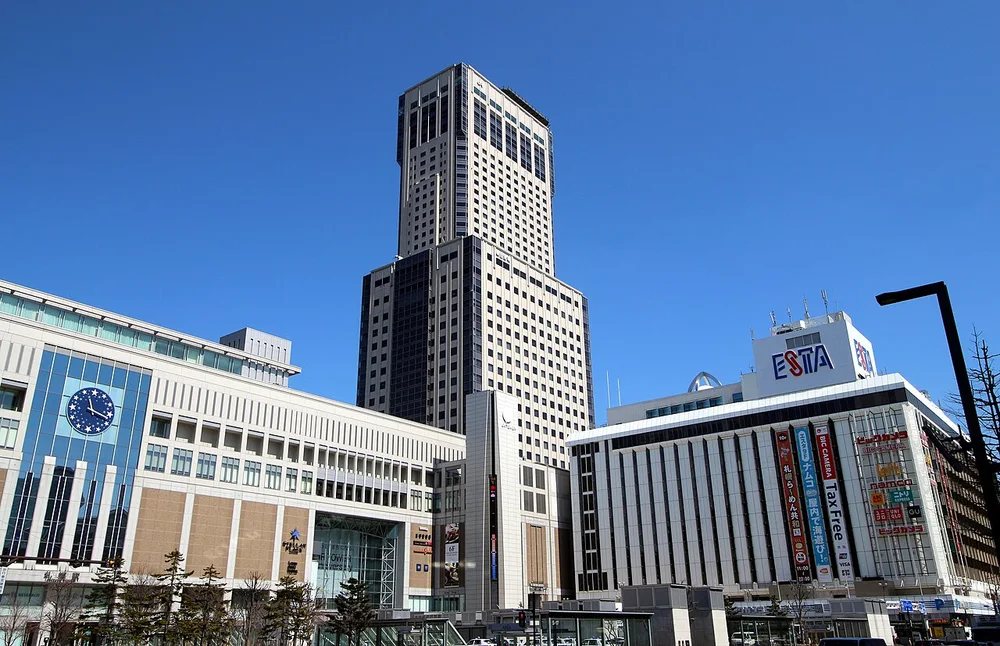
The bureau's journey-time table gives about 11 minutes from Sapporo to Sakaemachi and 13 from Odori on the Toho Line. Add platform access, waiting and the roughly 15-minute outdoor walk. Allow a full travel period from your hotel door before getting ready for snow play rather than planning only around train time. At Sakaemachi, organise bags and clothing together before heading to the surface.
Odori's Toho platforms are a walk from the Namboku and Tozai platforms. Trace the full entrance, passage and platform route on the station plan. With pushchairs or older relatives, prioritise fewer changes and easier streets after the exit. An extra stop on the train can save effort finding lifts and moving luggage underground.
Nishi-juitchome on the Tozai Line serves western Odori and suits starting with contest works. From the Toho Line, change at Odori or leave the station and walk west according to how many works you want to see along the way. Adding a change for a small saving above ground can make the route harder to remember.
Write the return simply: boarding station, line direction and alighting station. Save the hotel address and nearest lift exit before leaving, then follow that route after viewing. Meet at a specific station exit to reduce time searching beside sculptures. A familiar route frees attention for the next day's activities.
Count subway rides and compare weekday and weekend day tickets
The bureau's current tickets list a subway-only day ticket at ¥830 for adults and ¥420 for children. Donichika, valid on Saturdays, Sundays and Japanese national holidays, costs ¥520 and ¥260. During the 2027 festival, 6, 7 and 11 February are Saturday, Sunday and a national holiday. Consider this when choosing a snow-play day.
For a walk around Odori and Susukino with only one subway ride out and one back, compare those singles first. A morning Sakaemachi trip, afternoon hotel change and evening Odori return create more rides, making a day ticket more useful. List each journey and distinguish subway from JR: subway tickets cover three subway lines, while airport JR fares are separate.
For two adults and two primary pupils each using child tickets, weekday subway day tickets total ¥2,500; weekend or holiday Donichika tickets total ¥1,560, a ¥940 difference. This compares four subway tickets and helps choose which of two days should have more rides. Adding a hotel night to save that amount creates a different total-cost comparison. Choose the ticket valid for your planned dates.
The bureau lists cash purchase for both tickets; IC balance and credit cards cannot pay directly. Prepare yen and buy everyone's tickets before passing the gates. If paying per ride by IC card, keep enough balance for Sakaemachi and the evening hotel return to reduce top-up stops in busy stations.
Beyond free admission, budget for transport and seated meals
The festival FAQ lists free admission to all three venues. Choose how much of Odori and Susukino to view according to your time. Budget accommodation, airport transport, local transport and meals first, then souvenirs and venue food. Add current-year Tsudome activity charges and use arrangements when details appear, keeping basic travel costs separate from optional activities.
Rest time is easily overlooked. An afternoon restaurant stop followed by evening viewing connects the daytime and night sections. Skip a distant famous restaurant if necessary and choose one near your walk's endpoint that everyone likes. Allow for the booking and return subway. After a long outdoor day, eat earlier and decide afterwards whether to see nearby sculptures again.
Use underground passages for travel, then go above ground for sculptures
Chi-Ka-Ho, the Sapporo Ekimae-dori underground walkway, links the Sapporo Station area with Odori and is useful for central travel. In poor weather, walk underground close to your destination before surfacing. Save the first target block and choose a nearby exit rather than emerging at every exit, saving repeated glove adjustments and map checks.
Distinguish underground-walkway signs from subway-transfer signs. At Odori's underground shopping area, you may still need to walk to your line's platform; for sculptures, follow exit signs. If shopping separately, agree on an underground junction or a particular block above ground. Odori Station alone is too broad a meeting point across three lines.
Pushchair and wheelchair users can choose lift exits on station plans and add the final street section. Odori sculptures lie along the park and usually require road crossings after leaving the station. If an exit is crowded, move to a spacious area and regroup before approaching works. Underground passages provide travel options; keep actual viewing time for outdoors.
Half a day: central Odori, dinner and Susukino ice sculptures
Leave luggage at the hotel in the afternoon and put the evening's coat, gloves and power bank in a small bag before going to Odori. Start with large works at blocks 4 and 5, then decide after 7 and 8 whether to continue west. Priorities come first, so snow or a companion's need for rest still leaves a substantial festival walk completed.
Eat between Odori and Susukino or in Susukino, then see the ice sculptures. If you have seen enough Odori works, continue straight there. For night snow photographs, return to a specific work after dinner, then walk or ride to Susukino. Choose one version to keep the evening's outdoor route simple.
If your arrival flight is delayed, drop the western Odori extension and keep central sculptures and dinner. If landing very late, eat and check in, leaving the festival for daylight. View when rested and give first-time snow walkers time to adjust. After a Sapporo night, you can revisit a favourite work after breakfast.
A family day: Tsudome in the morning and a short Odori evening
After breakfast, go straight to Sakaemachi on the Toho Line, arrange hats and gloves before exiting, then walk to Tsudome. Put children's favourite activity first, then eat, rest and check clothing. Stay for afternoon play or return early according to energy. One daytime venue makes adjustments much easier.
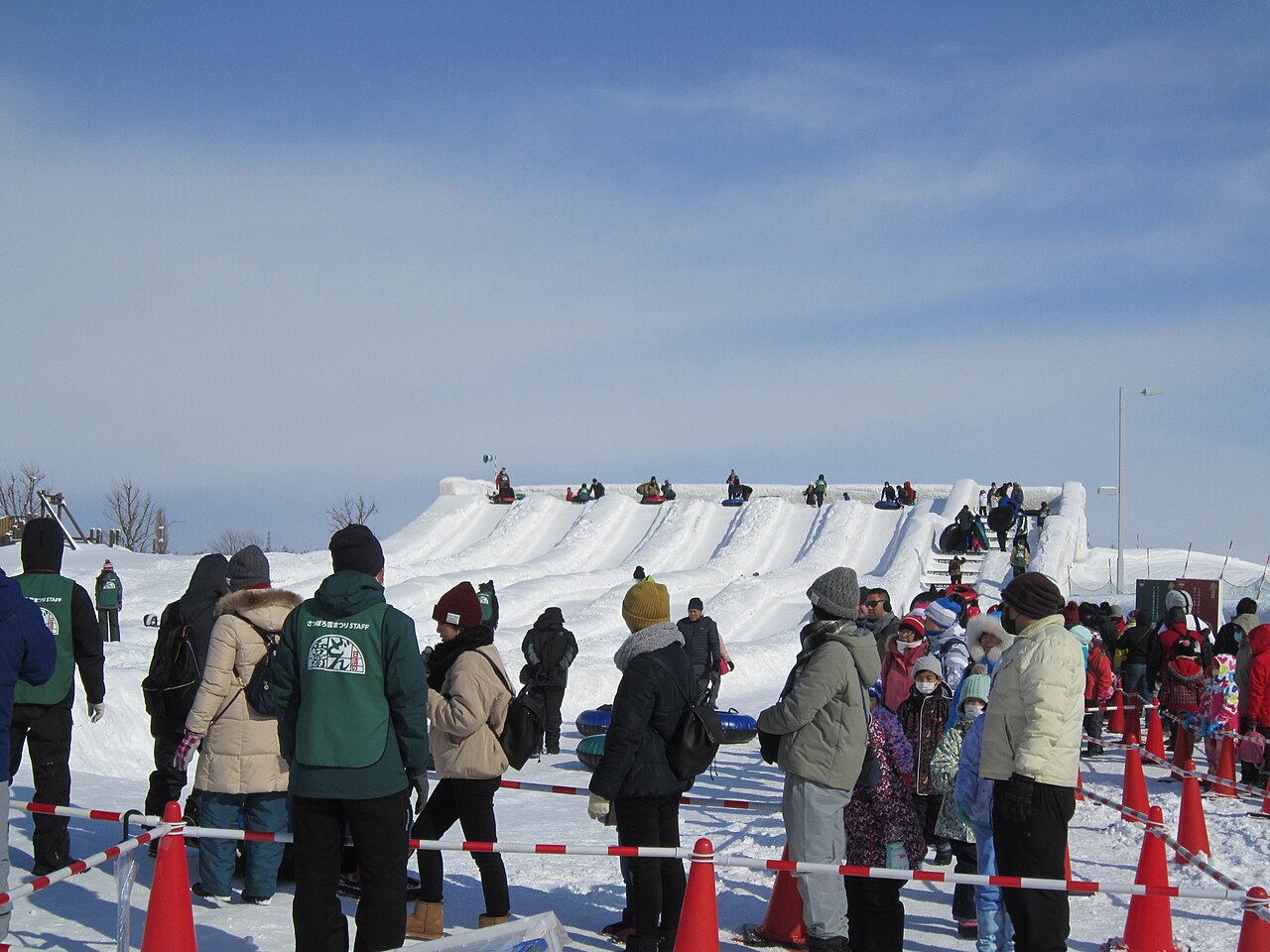
Return to change, spread out wet gloves and socks, then eat near the hotel. At night, choose only two neighbouring Odori blocks. If children are tired, one adult can take them back while another photographs nearby. Agree the meeting point and hotel route first so nobody waits at a sculpture to regroup.
If children prefer snow play to sculpture, Tsudome alone can fill the festival day. After enthusiastic daytime play, a short walk near the hotel after dinner is enough. For a group of adult street photographers, focus on Odori details by day, Susukino at night and a chosen restaurant. Let companions' interests decide rather than fitting all three venues into one all-day timetable.
Two days: separate outdoor activities and choose accommodation by evening endpoints
One option is Odori and Susukino on day one and Tsudome on day two. Learn subway routes and snow walking centrally first, then leave directly for snow play after breakfast. If flying home on day two, put Tsudome first and stay central on the final day for luggage and airport transport, avoiding another Higashi Ward return.
Stay near Sapporo Station for easier luggage movement on arrival and departure, returning there after evening visits. Near Odori, divide daytime and night sculptures into two visits with a room break. Susukino or Hosui-Susukino suits more dinners and ice viewing. Choose the evening area you will return to most, then compare rooms and prices rather than only distance from the city centre.
Compare the nearest subway line, lift exit and hotel-front street. Direct Toho access on Tsudome day reduces changes; from Namboku, change at Odori or Sapporo. Leave luggage at the hotel and carry a light bag through gates, snow and restaurants. Continue with the Sapporo accommodation area guide for room types and station approaches.
Give Otaru, Mount Moiwa or Jozankei a separate substantial period. Two festival days already include snow play and evening walks; another distant destination adds transport and clothing changes. Put your preferred extra before or after the festival, leaving city details for gaps. Use the four-day Sapporo and Otaru itinerary for the wider trip.
Walk slowly on snow and prepare footwear and the next indoor break
Snow-sculpture visits often involve more standing than walking. Prepare hat, gloves and winter shoes as well as a warm coat. The organiser's icy-road walking guidance highlights uneven crossings and edges of heated snow-melting areas. Put phones away at crossings and step slowly. Separating photography from walking helps you see the ground.
Grip and waterproofing do different jobs: one helps on ice, the other keeps meltwater out. For removable traction aids, choose a size fitting your shoes and read the product instructions for indoor tiles and other surfaces. First-time users should try them near the accommodation and check for slipping off before a long walk.
After each section, find an indoor seat and review the next route before leaving. Eat after reaching western Odori, organise clothes indoors after a Tsudome activity, and return by your chosen hotel route after Susukino. Rest points after each activity shorten outdoor spells naturally and make tired children easier to notice.
Pack what you will use before returning to the room
Keep phone, power bank, dry gloves, tissues and transport tickets easy to reach, with a separate wet bag. Use a secure coin purse to avoid opening the whole backpack in snow. Put removed scarves and gloves into the same bag so items are less easily lost when entering heated spaces.
Each traveller should save the hotel address, meeting station and first venue. Keep children's contact details where an adult can find them quickly. Locate the information point and toilets on arrival before viewing or queuing. If separated, returning to an agreed place is easier than searching while moving through crowds.
On the final day, reserve the hotel luggage-collection time and choose only a nearby sculpture section. For New Chitose Airport, use the airport and Sapporo transport guide to choose JR or bus. After the final work, follow the planned route to collect luggage and reach the station.
A few useful answers
When is Sapporo Snow Festival 2027?
All three venues open from Thursday 4 to Thursday 11 February 2027, eight days. Odori covers West 1 to West 11, alongside Susukino and Tsudome venues.
Should a first visit cover all three venues in one day?
With half a day, choose Odori snow sculptures, dinner and Susukino ice sculptures. For children's snow play, allow a separate daytime visit to Tsudome, return to change, then see a short Odori section at night.
How do I reach Tsudome?
Take the Toho subway line from central Sapporo towards Sakaemachi and get off at the terminus. The operator gives about 15 minutes on foot from exit 2 to 885-1 Sakaemachi, Higashi Ward, Sapporo.
How late can I see Odori's illuminated sculptures?
The official venue page lists lighting until 22:00. See carving details in the afternoon, revisit a few works after dinner and return by your chosen subway route.
What do festival admission and subway day tickets cost?
The official FAQ lists free entry to all three venues. Subway-only day tickets cost ¥830 for adults and ¥420 for children. Donichika for Saturdays, Sundays and Japanese national holidays costs ¥520 and ¥260. Both subway tickets are purchased with cash.
Which festival dates in 2027 allow Donichika?
Saturday 6, Sunday 7 and the national holiday on 11 February. List actual subway journeys before comparing singles with a day ticket.
How should I plan with a pushchair?
Check lift exits on bureau station plans before connecting the street sections to each venue. Visit Tsudome by day and divide Odori into neighbouring blocks, with hotel or indoor rests between.
Official information and references
Sources used in this guide.
- Sapporo Snow Festival: 2027 dates and Odori zone outline
- Sapporo Snow Festival: Odori and lighting hours
- Sapporo Snow Festival: Tsudome venue
- Sapporo Snow Festival: Susukino venue
- Sapporo Snow Festival: free admission, access and winter FAQ
- Sapporo Snow Festival: historical 2026 Sakaemachi shuttle notice
- Sapporo Health and Sports Foundation: Tsudome location and walk from Sakaemachi
- Sapporo City Transportation Bureau: subway day tickets and Donichika
- Sapporo City Transportation Bureau: station plans
- Sapporo City Transportation Bureau: subway times and distances
- Sapporo Tourism Association: Sapporo Ekimae-dori underground walkway
- Sapporo Snow Festival: winter clothing
- Sapporo Snow Festival: walking on icy roads
- HTB Hokkaido News: 2025 festival opening report