Plan Kuji–Miyako with the 2026 Sanriku Railway timetable. Compare day trips in both directions, Miyako Fish and Vegetable Market and lunch at Kuji Dofukan, with weekday Jodogahama return buses, local tickets and an overnight option.
- Region & Focus
- Miyako
- Reading Scope
- 30 min read · 12 chapters · 5 Q&As
- Official Verification
- 12 official sources checkedUpdated 29 October 2026 at 19:36 GMT+8
- Key Topics
- ItinerariesRail travelTohoku
Chapter Route Map (tap any stop)
- Choose Kuji or Miyako as your starting point: each gives a different day
- An early Kuji start: market lunch, then an afternoon at Jodogahama
- Miyako to Kuji: arrive at eleven for lunch and Dofukan together
- Miyako Fish and Vegetable Market: closed Wednesdays; separate breakfast from shopping
- Kuji Dofukan has two buildings, and Sankairi offers cooked food too
- For Jodogahama, check separate station-to-visitor-centre outbound and return tables
- Allow walking time for the white-rock coast; plan boat trips separately
- Before an intermediate stop, calculate the next train; small stations are not quick photo stops
- Compare one-way, weekend day and whole-line two-day tickets for this section
- One night in Miyako gives both lunches and the coast proper time
- A later Miyako arrival can still make a complete one-way day
- Connect Hachinohe and Tohoku with another coastal travel day
- Quick Q&A
To combine Sanriku Railway, a seafood market and Jodogahama in one day, an early start from Kuji works best: board at 08:06, reach Miyako at 09:42, eat at the market and continue to the coast. From Miyako towards Kuji, use the 09:22–11:05 train for lunch at Dofukan, focusing on the railway and Kuji town. To sit down for a meal at both ends, stay one night in Miyako and visit the coast the next day. Train times follow the revision of 14 March 2026; bus examples use the weekday timetable checked on 29 October 2026.
Choose Kuji or Miyako as your starting point: each gives a different day
Direct daytime Sanriku Railway trains between Kuji and Miyako take about 1 hour 30 minutes to 1 hour 50 minutes. A same-day return already uses more than three hours on trains, and every intermediate stop adds a wait for the next service. I would choose one end as the day’s main destination: the market and Jodogahama at Miyako, or Dofukan and lunch at Kuji. Choosing restaurants at both ends, the coast and small stations soon lets connections consume the day.
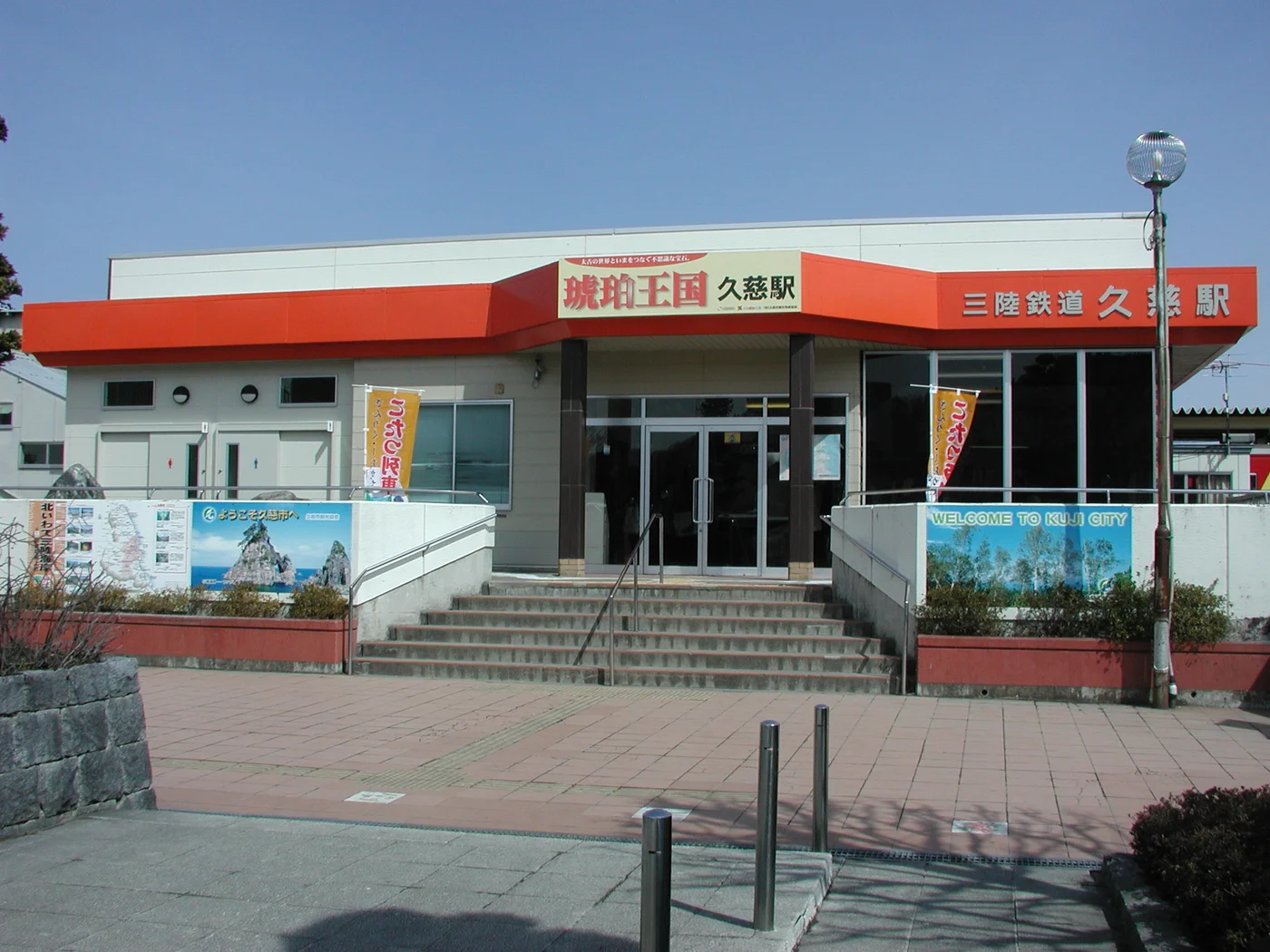
Heading south from Kuji, the 08:06 service 108D reaches Miyako at 09:42, preserving the morning in town. Even with the market first, lunch and the afternoon coast can remain separate. The later 10:21 service 110D arrives at 12:01. Make the market your lunch stop and the coast an afternoon visit. If returning to Kuji that day, decide how much seaside time you want to keep.
Heading north from Miyako, the 09:22 service 1109D reaches Kuji at 11:05, fitting Sankairi restaurant’s 11:00 opening. After lunch, shop and browse visitor information at Dofukan, then return to Miyako at 13:50. This is a return day without a pre-dawn start, focused on rail travel and food. Leave Jodogahama for another morning rather than chasing the final connections after returning to Miyako.
If travelling through from Hachinohe, write your Kuji arrival into the plan first. Kuji is the northern end of this route; JR trains from Hachinohe to Kuji are a separate journey. Walking the Hachinohe coast also needs its own buses and walking time. For a southbound continuation from Hachinohe, use Kuji as a connection or overnight stop. A continuous coastal journey preserves local time more easily than returning to Hachinohe every day.
Plan Kuji–Miyako with the 2026 Sanriku Railway timetable. Compare day trips in both directions, Miyako Fish and Vegetable Market and lunch at Kuji Dofukan, with weekday Jodogahama return buses, local tickets and an overnight option.
An early Kuji start: market lunch, then an afternoon at Jodogahama
The fullest day return begins at Kuji at 08:06. After reaching Miyako at 09:42, leave the station, organise belongings and head for Miyako City Fish and Vegetable Market at 1-1 Satsukicho. Allow 20 minutes each way between station and market, including finding the exit, identifying streets and organising shopping bags. Starting with the market avoids rushing for the seaside bus that already left at 09:30.
Browse seafood stalls, food shops and the producers’ sales area in the morning, then choose a market dining venue for your meal. For the 12:40 bus to the coast, aim to be back outside the station by 12:10 so tickets, toilets and finding the stop are finished before boarding. This part is easier to extend if you want more market time. If you discover the return interval is too short only after reaching the coast, the part you cut is often the walk you most wanted.
On weekdays, C04 leaves Miyako Station at 12:40 and reaches Jodogahama Visitor Centre at 12:57. This stop combines the visitor centre and a coastal walk in one visit. Use the same stop name for the return search. To catch the 16:15 train to Kuji, take A03 from the visitor centre at 15:18, arriving outside Miyako Station at 15:40. This leaves 35 minutes to change.
Count your coastal stay from getting off at 12:57. It includes walking to the sea, returning to the stop and waiting. For a 15:18 return, I would begin walking back towards the visitor centre at 14:45. Start earlier for slower walkers. Buying drinks and sorting out shoes take time too; do not spend every return-journey minute taking photographs.
The 16:15 service 117D reaches Kuji at 17:58. You will have completed two rail journeys, a market meal and a coastal walk. Sankairi at Kuji Dofukan will already be closed, so arrange dinner near your accommodation. If Sankairi is a particular aim, put it at lunch on another day or use the overnight plan below. Do not put two cities’ lunches into one day.
| Time | Plan | Connection detail |
|---|---|---|
| 08:06–09:42 | 108D Kuji → Miyako | Walk to the market after arrival |
| Morning to before 12:10 | Market shopping and lunch, then back to the station | Allow 20 minutes each way between station and market |
| 12:40–12:57 | C04 Miyako Station → Jodogahama Visitor Centre | Add the coastal walk after getting off |
| 15:18–15:40 | A03 visitor centre → Miyako Station | Start walking back from the sea around 14:45 |
| 16:15–17:58 | 117D Miyako → Kuji | 35-minute station connection |
Miyako to Kuji: arrive at eleven for lunch and Dofukan together
If staying in Miyako, have breakfast at your accommodation and take the 09:22 service 1109D to Kuji, arriving at 11:05. There is no need for a dawn train just to meet the restaurant opening. Walk from the station to Roadside Station Kuji, Yamase Dofukan, eat at Sankairi in Tsuchi-no-Yakata, then explore the same complex. Eating on arrival avoids combining a restaurant queue, shopping and route-finding just before the return train.
Sankairi currently opens 11:00–17:00, with last orders at 16:30. Seafood choices include Ryoshi Nagekomi-don and Sanriku Himatsubushi; for a local hot dish, look for Kuji Mamebu soup. The restaurant also lists meat dishes and children’s meals for companions who prefer cooked food. Everyone at one table can choose a suitable main course rather than the whole group eating sashimi.
For the 13:50 service 114D back to Miyako, you have a little over two hours for lunch and the complex. Set 13:20 as your planned departure from Dofukan towards the station. These 30 minutes allow for walking, toilets and station entry. Buy small, shelf-stable food gifts first so the afternoon train trip does not become a task of looking after a chilled bag.
After leaving at 13:50 and reaching Miyako at 15:23, use the rest of the day for town shopping or rest. There is a C04 coast bus at 15:40, but only 17 minutes from train arrival, followed by walking at the coast and the return service interval. For a first visit, luggage or a slow look at the white rocks, I would save Jodogahama for the next day instead of exchanging a long rush for a short coastal stay.
If lunch and Dofukan take longer than expected, the next option is the 16:17 service 116D, reaching Miyako at 17:50. This adds 2 hours 27 minutes in Kuji, but brings you back near evening. It suits a deliberate afternoon in Kuji. If collecting luggage in Miyako before another departure, work backwards from that onward service.
Miyako Fish and Vegetable Market: closed Wednesdays; separate breakfast from shopping
Miyako City Fish and Vegetable Market is at 1-1 Satsukicho, Miyako. Its official site gives opening hours of 06:30–17:30 and a regular Wednesday closure. This town retail market combines seafood, vegetables, meat and everyday food, so a meal and souvenir shopping fit together. Save the full name “Miyako City Fish and Vegetable Market” for navigation. The similarly named Miyako Fish Market is a different place, not this shopping destination in Satsukicho.
06:30 is the overall market opening time. The official guide lists dining venues as separate businesses, including Don no Mise Oikawa and OiOi Shokudo. Early visitors can browse stalls already selling; for a seated meal, check the dining venues’ serving signs. Do not assume every restaurant opens with the market, especially on a morning with only a short interval before the next train.
Start in the seafood area to see whole fish, slices and processed products, then continue to food shops and the producers’ area. If going to Jodogahama next, buy food to eat immediately first. Leave fresh seafood until you can arrange cooling, delivery or storage at your accommodation. Prices and portions vary by stall. Choose a main meal before adding side dishes rather than buying a box at every stall, which becomes harder to carry.
The official market guide lists a parcel delivery counter. For delivery within Japan, prepare the hotel name, postcode, recipient and expected check-in date, then ask which delivery temperature suits the goods. Fresh fish, dried goods and shelf-stable snacks need different handling. Add delivery fees to your shopping budget and ensure the destination can receive the parcel. Newly bought fish is not automatically a souvenir you can carry across several days.
The market’s barbecue area has closed.
The official page still uses the guide name “Gyosai Hiroba”, but explicitly says the barbecue corner is closed. Do not follow old travel accounts by buying seafood and then looking for a grill. Plan this Miyako meal at a dining venue or buy ready-to-eat food. Hachinohe’s Shichirin-mura is in a different city with different facilities; its buy-and-grill process does not apply here.
If visiting on Wednesday, go from the station directly to the coast, choose another restaurant open that day and save the market for a different date. For one night in Miyako, a Wednesday stay allows a Thursday morning market visit. A Tuesday stay followed by a Wednesday departure puts your market morning on the closure day. When dates change, adjust the accommodation and transport sequence, rather than moving the market name to another box in the same day’s plan.
Kuji Dofukan has two buildings, and Sankairi offers cooked food too
Roadside Station Kuji, Yamase Dofukan, consists of Tsuchi-no-Yakata and Kaze-no-Yakata. Tsuchi-no-Yakata is the local products hall, currently open 09:00–18:00. Kaze-no-Yakata is the tourism exchange centre, open 09:00–19:00, closing earlier at 18:00 from November to March. Lunch in Tsuchi-no-Yakata followed by the other building makes a compact visit. Check floors and business locations on arrival so you do not circle the wrong building when ready to eat.
Use Kaze-no-Yakata for visitor information after lunch, and Tsuchi-no-Yakata for shopping. If reaching Kuji at 11:05, eat first and explore afterwards. With an early train, shop between the products hall’s 09:00 opening and the restaurant’s 11:00 start. Match the order to arrival time rather than waiting outside the restaurant to follow a fixed checklist.
Sankairi’s official introduction describes Ryoshi Nagekomi-don as a seafood rice bowl and Sanriku Himatsubushi as a seafood dish that can also be eaten as hand rolls. Check the day’s menu portions before adding Kuji Mamebu soup. The restaurant also describes takeaway Mamebu soup. Arrange that here rather than adding a large hot soup to shopping begun on the walk back to the station.
The train leaving Miyako at 15:01 and reaching Kuji at 16:45 misses Sankairi’s 16:30 last orders. Eat in Miyako first and use Kuji for a short products-hall visit before 18:00. For Sankairi, choose a train arriving at 11:05 or 12:30.
A northern Sanriku introduction published by Machi no Eki Kuji Co., Ltd., operator of Tsuchi-no-Yakata.
For Jodogahama, check separate station-to-visitor-centre outbound and return tables
Between Miyako Station and Jodogahama Visitor Centre, C04 runs via Naado, with other routes via Kuwagasaki and elsewhere. In the official weekday search on 29 October 2026, C04 outbound departures were 09:30, 10:40, 11:40, 12:40, 13:40 and 15:40, each reaching the visitor centre 17 minutes later. The adult single fare was ¥250. Budget ¥500 return separately from rail travel.
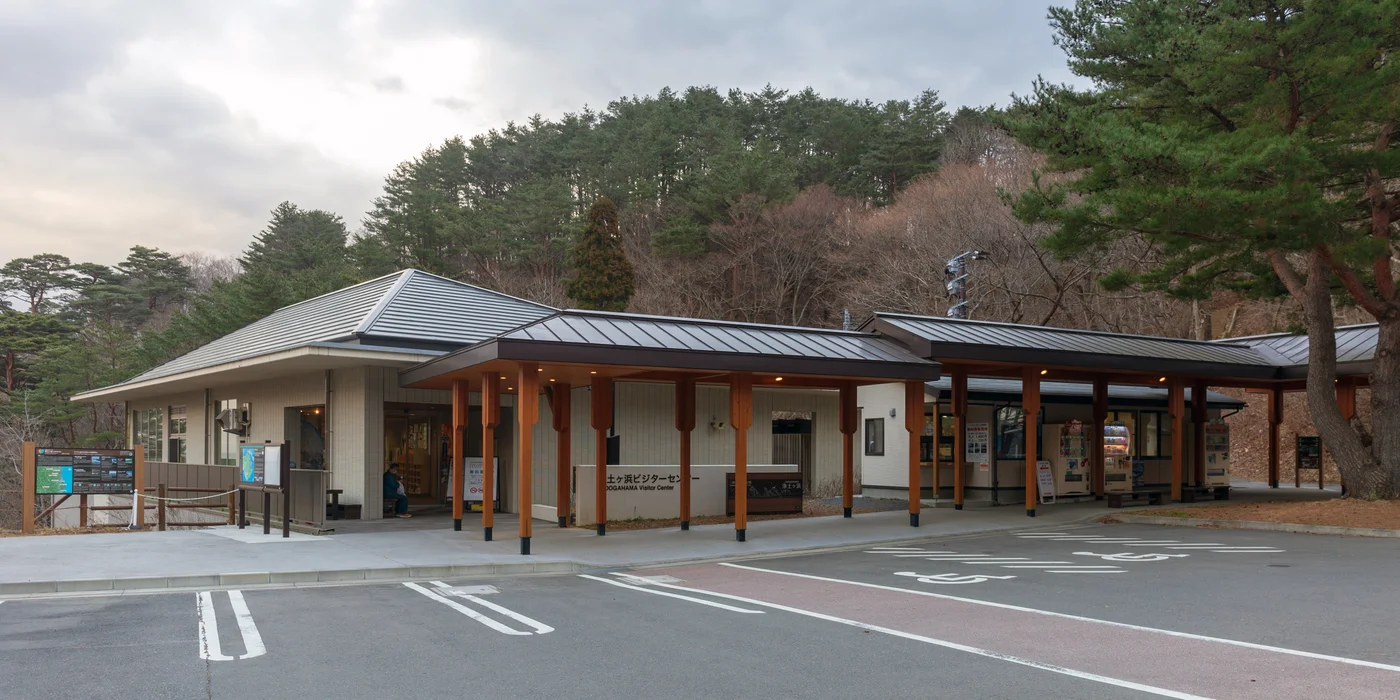
The same weekday search lists other services including A02, A03 and C11. Fix your boarding and alighting stops first, then choose the arrival time that works best. This is more useful than remembering only “the Jodogahama bus”. If leaving from Miyako Station, search the return to Miyako Station too. After walking from the visitor centre to the sea, keep the original stop saved on your phone so you do not improvise another return boarding point.
Weekday C04 returns from the visitor centre to Miyako Station include 13:15–13:36, 14:15–14:36 and 16:15–16:36. A03 also runs 15:18–15:40. To catch the 16:15 Sanriku Railway train, leave the visitor centre at 15:18 or earlier. A bus leaving the coast at 16:15 and a train leaving Miyako at 16:15 depart simultaneously and cannot connect.
The date type changes available services. Check the actual travel date, especially when using A03 for the return. Miyako Tourism and Cultural Exchange Association also lists “Oku-Jodogahama” as a stop close to the shore. If using it instead, search both directions for that stop anew. This article’s examples use the visitor centre as the fixed point and include walking in the stay.
| Direction | Route | Departure | Arrival | Suggested connection |
|---|---|---|---|---|
| Miyako Station → visitor centre | C04 | 11:40 | 11:57 | After a morning market visit |
| Miyako Station → visitor centre | C04 | 12:40 | 12:57 | After market lunch |
| Miyako Station → visitor centre | C04 | 13:40 | 13:57 | One-way day arriving in Miyako at 12:01 |
| Visitor centre → Miyako Station | C04 | 14:15 | 14:36 | 25 minutes before the 15:01 Kuji train |
| Visitor centre → Miyako Station | A03 | 15:18 | 15:40 | 35 minutes before the 16:15 Kuji train |
| Visitor centre → Miyako Station | C04 | 16:15 | 16:36 | Later return when staying in Miyako |
Allow walking time for the white-rock coast; plan boat trips separately
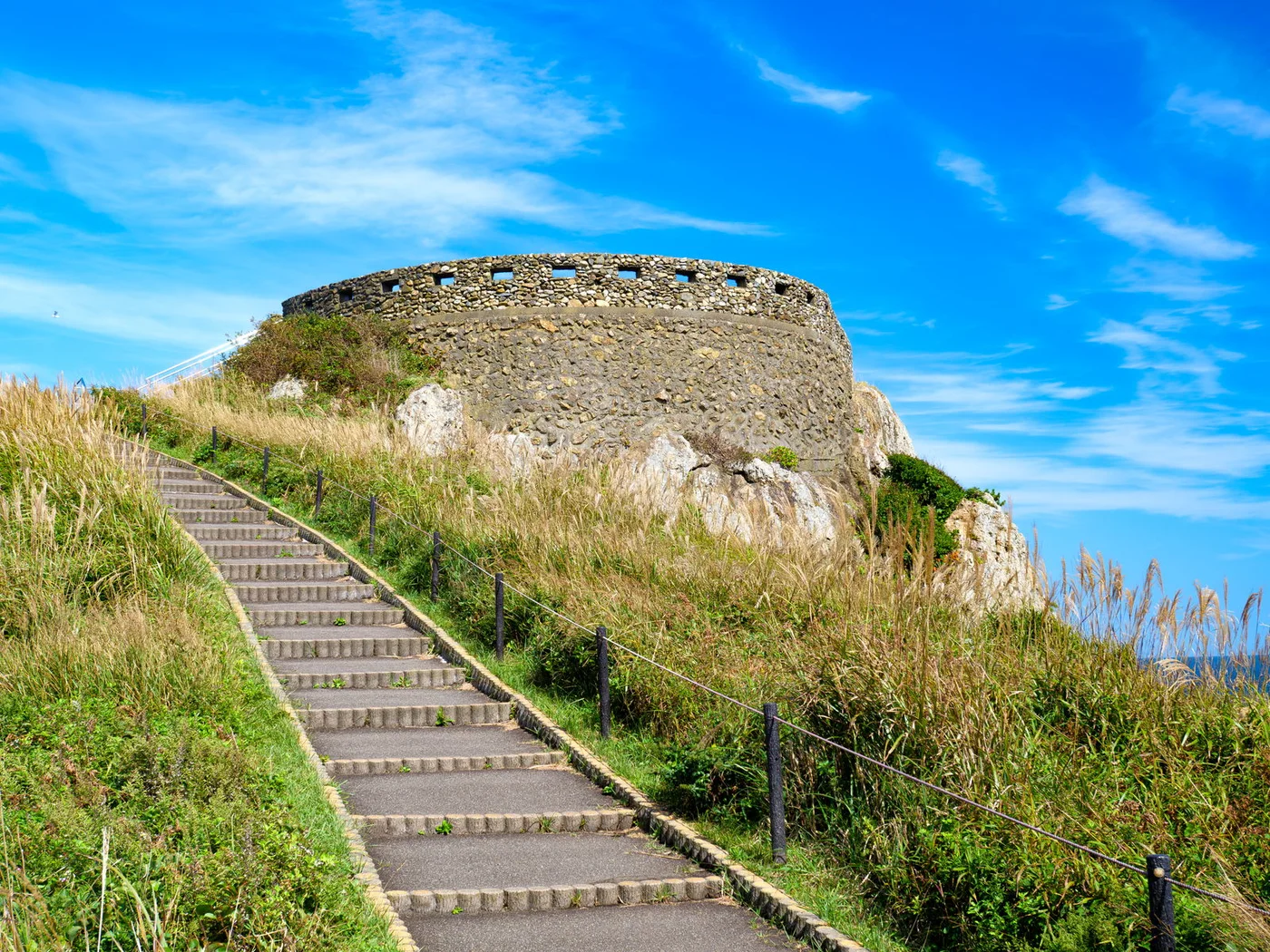
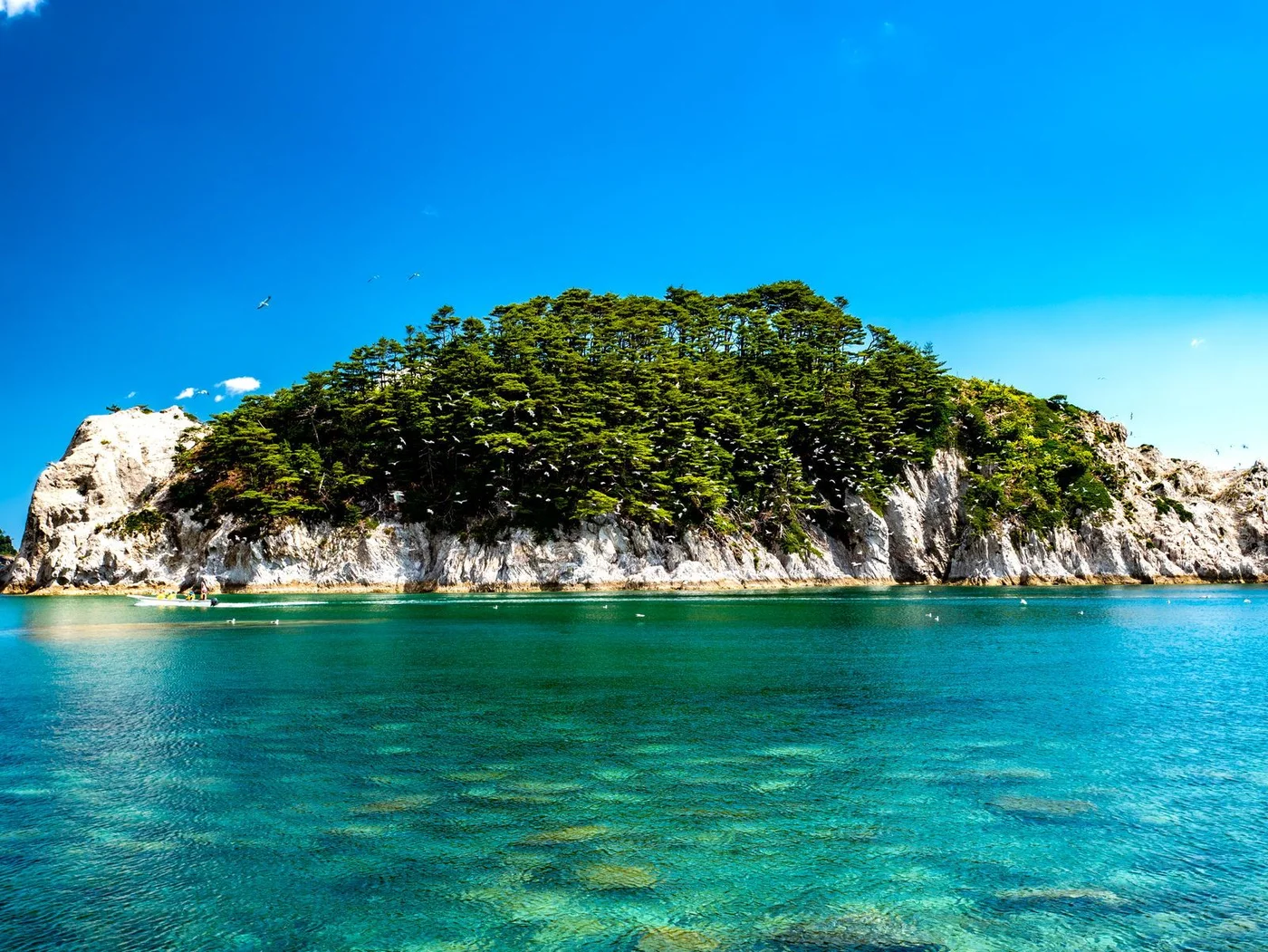
Jodogahama’s main scenery is white rhyolite, pine trees and sea. After the bus reaches the visitor centre, the coastal walking part begins. Seeing the rocks, pausing for photographs and returning to the bus stop need one complete time block. After taking the 08:06 train south from Kuji, about two afternoon hours at the coast become worthwhile without rushing to another coastal town.
For a first walk, make the shore with views of white rocks and sea your turnaround target. Follow signs, sit and look for a while on arrival, then decide how far to go. Turns in the terrain change the relationship between rocks and sea, giving different angles even within one area. Start with a broad photograph including both water and rocks, then look for details. This helps you remember the way rather than concentrating on framing until it is time to return.
The visitor-centre-to-shore walk also affects what older people and children can manage. If companions are tired after the station-market walk, shorten the coast to the same out-and-back stretch and rest on reaching the sea. Do not make a distant, unseen viewpoint another compulsory target. Return first to a stop with a confirmed service, then sort photographs while seated or waiting rather than watching the phone while finding the route.
The tourism association gives about 15 minutes on foot from the general car park to the shore. From April to October, ordinary vehicles face restrictions on the road from Car Park 1 towards Oku-Jodogahama. Entry is restricted year-round from 18:00 to 08:00 the next morning. A taxi approach should follow locally permitted vehicle routes. Rental-car visitors must still include walking after parking; a shoreline map pin is not automatically a place ordinary cars can stop.
If you want a boat trip after the walk, allow a separate half-day in Miyako. Check-in, waiting and sailing add another block of time and cannot all fit into the same “two hours at Jodogahama” used for the station return. The main rail-and-market day here keeps flexibility with a shore walk. To make the boat the focus, reduce same-day rail backtracking and stay in Miyako for a longer coast visit next day.
Before an intermediate stop, calculate the next train; small stations are not quick photo stops
Sanriku Railway works well for travel along the line, but the timetable sets the cost of getting off. On Kuji’s 10:21 service 110D, Tanohata departure is scheduled at 11:14. The next southbound service, 5112D, leaves Tanohata at 12:57 and reaches Miyako at 13:50. Getting off changes the direct 12:01 Miyako arrival to 13:50, shifting both market and coast later. The two scheduled Tanohata departures are 1 hour 43 minutes apart, leaving a little over an hour at the stop. If you only want a station-name photograph, the extra wait may not suit you. With a specific activity outside the station, finish the approach, activity and return before the 12:57 departure. Choose a destination before getting off rather than searching for nearby things afterwards.
Northbound stops carry the same time cost. Miyako’s 09:22 service 1109D has a scheduled Horinai departure of 10:38. The next northbound service, 5111D, leaves Horinai at 11:59 and reaches Kuji at 12:30. Getting off delays Kuji arrival from 11:05 to 12:30. Lunch still fits, but shorten the complex visit before the 13:50 return. For a full Dofukan afternoon, leave for Miyako at 16:17 instead.
A ticket allowing stopovers only grants the right to leave and re-enter; waiting time remains. To try a stopover in one day, choose one station, write the arrival and next boarding times, then check whether the destination fits that interval. This matches actual line travel better than buying a day pass and circling every coastal station.
If the market and Jodogahama are your aims, I would take a direct train on the first trip and save intermediate stations for another visit or the return after an overnight stay. Spending more than an hour at a small station and then squeezing the coast can leave every place visited but every moment watched against a clock. Give one chosen station a full stay, or keep this journey to views through the window. Both are clear choices.
A 2012 reopening promotional film made by Sanriku Railway and local residents, introducing the Tanohata–Rikuchu-Noda section.
Compare one-way, weekend day and whole-line two-day tickets for this section
Sanriku Railway’s official special-ticket page lists one-way stopover tickets from Miyako to Kuji and Kuji to Miyako at ¥2,080 per adult and ¥1,040 per child. They are valid on the day and sold at the respective departure station, Miyako or Kuji. They suit a one-way journey with intermediate stops. They do not cover a reverse return; use stops and direction according to your one-way plan.
On Saturdays, Sundays and public holidays, a Miyako–Kuji section day rover costs ¥2,900 per adult and ¥1,450 per child. For a complete same-day return, it is ¥1,260 less than two adult one-way stopover tickets totalling ¥4,160. For only Kuji to Miyako, the ¥2,080 adult single remains cheaper. Check whether you will actually travel back that day before buying a rover.
Day rover sales stations include Miyako, Iwaizumi-Omoto, Shimanokoshi, Tanohata, Fudai, Rikuchu-Noda and Kuji. Starting from either end, buy there without adding an intermediate stop just for purchase. For the weekday plan, use singles or a valid pass you already hold. Do not put weekend/public holiday rover prices into a Thursday budget.
The whole-line rover costs ¥6,500 per adult and ¥3,250 per child, valid on the full Sakari–Kuji line for two consecutive days and available for use any day. For one Kuji–Miyako journey and a return next day, two adult one-way stopover tickets total ¥4,160, which is ¥2,340 less. Add confirmed journeys towards Kamaishi or Sakari, or repeated returns, before comparing. An overnight stay alone does not make a two-day pass necessary.
For holders of a valid new JR EAST PASS, JR East’s current coverage lists Sanriku Railway, so ordinary trains on this section can form part of the existing pass itinerary. Iwate Kenpoku buses from Miyako Station to Jodogahama cost extra.
On non-JR East lines using JR EAST PASS, show the pass to staff at a staffed gate and carry your passport. For whether to buy JR EAST PASS for the whole Tohoku trip, return to the Japan rail pass comparison. Put this section’s actual ¥2,080 one-way ticket or ¥2,900 weekend/public holiday return ticket into the total first.
| Product | Adult | Child | Suitable plan |
|---|---|---|---|
| Miyako–Kuji one-way stopover ticket | 2,080 | 1,040 | One specified direction, valid that day |
| Miyako–Kuji section day rover | 2,900 | 1,450 | Weekend/public holiday same-day return or repeated travel |
| Sakari–Kuji whole-line rover | 6,500 | 3,250 | Two consecutive days; usable any day |
One night in Miyako gives both lunches and the coast proper time
The main value of an overnight stay is separating Kuji lunch from Miyako’s coast across two days. Arrive in Kuji in the morning, eat at Sankairi after 11:00, explore Dofukan, then take the 13:50 service 114D to Miyako, arriving at 15:23. Check in and walk around town without immediately chasing the 15:40 coastal bus. The walk to your accommodation and luggage organisation get their own time.
Visit the market next morning for shopping, arranging a full meal during the dining venues’ serving times. Make the coast the day’s focus with C04 at 11:40, reaching the visitor centre at 11:57. The 13:15 return is earlier; the 14:15–14:36 return gives an extra hour by the sea. Connect with the 15:01 service 115D to Kuji, arriving at 16:45, to finish the circuit in the afternoon.
This two-day plan places the first lunch in Kuji and the next day’s market and coast in Miyako, giving both ends a reason to stay. If continuing south of Miyako, head south on the second afternoon and remove the return to Kuji. If returning to Hachinohe, use the second day’s northbound train as onward travel. Let accommodation follow your next direction rather than adding a train just to return to the itinerary’s starting point.
Choose Miyako accommodation with the station, market and coast in mind. All these connections use the station. Staying within walking distance makes a morning market visit and afternoon luggage collection straightforward. For a coastal hotel, include check-in, checkout and luggage in its transport arrangements. A scenic coastal stay gives more seaside time, but changes the market and rail connections.
For one night, match breakfast arrangements to the market date. A Wednesday stay allows a Thursday morning market visit. On Wednesday morning the market is closed, so have breakfast at your accommodation and go directly to the coast. This is a date-and-meal decision; an overnight stay does not require a market breakfast and another early cross-city trip.
If Jodogahama is fixed for day two, pair the return bus and Miyako departure train the night before. A 14:36 station arrival leaves 25 minutes for the 15:01 train, suitable if luggage can be collected quickly and you know the station transfer. For more time, use the 13:15–13:36 return. Collecting luggage from a room, retrieving a locker bag and simply changing trains are different tasks. Include your actual task when choosing the service.
A later Miyako arrival can still make a complete one-way day
The 10:21 departure from Kuji, reaching Miyako at 12:01, suits a day without a return to Kuji. Have lunch at the market, then return to the station for C04 at 13:40, reaching the visitor centre at 13:57. Return by bus at 16:15, arriving outside the station at 16:36, and stay in Miyako. You need not cut the coast short to chase the 16:15 train.
This changes a return day into a travel day with one fewer journey, while giving market and coast separate time. Leave Kuji later and deal with luggage on reaching Miyako. If check-in is not open, use an accepted storage arrangement before the market. Reduce what you carry to a manageable coastal walking load, making afternoon choices easier.
If reaching Miyako at 13:50, for example on Kuji’s 12:02 train, choose either market or coast as the day’s main visit. For a meal and shopping, stay in town and visit Jodogahama next day. To use fine weather by the sea, go to the coast and move the market to the next open day. Reaching both entrances does not mean having enough time at both places. An overnight stay resolves this clash.
In rain, preserve indoor visits such as the market and Dofukan, and shorten or postpone the coastal walk. For official suspensions, road controls or closures, follow that day’s open routes. There is still a bus journey between station and coast; trains running does not mean the whole original plan remains workable. When changing plans, protect accommodation and onward departure first, then decide which visit can fit.
Connect Hachinohe and Tohoku with another coastal travel day
For Tatehana Wharf Morning Market, Mutsuminato breakfast, Hasshoku Centre and Tanesashi Coast, use the two-day Hachinohe markets and Tanesashi Coast guide by date. Before connecting to Sanriku Railway, decide where to spend the final Hachinohe night and which JR Hachinohe Line train reaches Kuji, then connect to the southbound service here. Finish the Hachinohe coast as the previous part of the trip, with Miyako’s market and white-rock coast beginning after Kuji for a varied journey.
Inland Tohoku cherry-blossom bases are another type of itinerary. For Hirosaki, Kakunodate and Kitakami, use the Tohoku cherry-blossom rail bases itinerary. This coastal section needs its own Kuji or Miyako stay and transport time. With only a few holiday days, keep the end and meal you most want rather than making long daily returns just to draw a loop on the map.
Before Sanriku, save the market closure dates, train departures and coastal outbound and return stops. On the official rail timetable, Kuji to Miyako is “up” (上り), and Miyako to Kuji is “down” (下り). Stations south of Miyako also appear, so find your start and end before reading one column. Saved timetables let you compare service numbers such as 108D, 1109D, 114D and 117D and identify your train at the station.
A few useful answers
Can I return between Kuji and Miyako in one day and visit Jodogahama?
Take the 08:06–09:42 train from Kuji to Miyako, visit the market in the morning and take the 12:40 bus to the visitor centre. Return on the 15:18 bus, reaching the station at 15:40, then take the 16:15 train to Kuji, arriving at 17:58. These buses use the weekday timetable checked on 29 October 2026; coastal walking is included in the stay.
Is Miyako Fish and Vegetable Market open on Wednesday?
It regularly closes on Wednesdays and opens 06:30–17:30 on trading days. Visit the coast on Wednesday and move the market to another day. Market dining venues have their own serving times, so separate morning shopping from a seated meal.
Can I eat at Sankairi after reaching Kuji in the evening?
It opens 11:00–17:00, with last orders at 16:30. The 15:01 Miyako departure reaching Kuji at 16:45 misses last orders. For this meal, choose the 09:22–11:05 or 10:48–12:30 train from Miyako to Kuji.
Do I need the whole-line two-day rover just for Kuji–Miyako?
An adult one-way stopover ticket costs ¥2,080. For a same-day weekend/public holiday return, compare the ¥2,900 section day rover. One journey each way over two days totals ¥4,160 in singles, below the ¥6,500 whole-line two-day rover.
Do I need a Sanriku Railway ticket with the new JR EAST PASS?
The new JR EAST PASS lists Sanriku Railway in its coverage, so ordinary trains on this section can be included in a valid pass itinerary. Iwate Kenpoku buses between Miyako Station and Jodogahama cost extra: the visitor-centre return example here is ¥500 per adult.
Official information and references
Sources used in this guide.
- Sanriku Railway | Up timetable revised 14 March 2026
- Sanriku Railway | Down timetable revised 14 March 2026 (current official link)
- Sanriku Railway | Special tickets, one-way stopover tickets and rovers
- Miyako City Fish and Vegetable Market | Address, hours and closure day
- Miyako City Fish and Vegetable Market | Stalls, dining and barbecue closure
- Roadside Station Kuji, Yamase Dofukan | Building and restaurant hours
- Sankairi | Dishes and last orders
- Iwate Kenpoku Bus | Weekday Miyako Station to Jodogahama Visitor Centre search
- Iwate Kenpoku Bus | Weekday Jodogahama Visitor Centre to Miyako Station search
- Miyako Tourism and Cultural Exchange Association | Jodogahama scenery, access and vehicle restrictions
- JR East | New JR EAST PASS route coverage
- JR East | JR EAST PASS conditions and staffed gates