Plan a Matsushima day trip from Sendai: walk from JR Matsushima-Kaigan Station to board the Niomaru sightseeing boat, and visit Zuiganji and Godaido. Includes paper and IC card fares, Fukuura Bridge tolls, winter sailings, 2026–27 Oyster Hut bookings, wet-weather ideas, and one-way Shiogama routes.
- Region & Focus
- TohokuAttractions
- Reading Scope
- 22 min read · 11 chapters · 9 Q&As
- Official Verification
- 30 official sources checkedUpdated 22 November 2026
- Key Topics
- First tripItinerariesRail travel
Chapter Route Map (tap any stop)
- Sendai to Matsushima-Kaigan: Check Where Your Train Stops
- Choosing a Route by Arrival Time
- Boarding the Niomaru Cruise and Whether to Upgrade to the Upper Deck
- One-Way Sailings Between Shiogama and Matsushima
- Zuiganji: From the Cedar Approach to the Main Hall and Treasure Museum
- Godaido and Kanrantei Along the Waterfront
- Fukuura Island and Oshima: Pick One for an Afternoon Walk
- The Matsushima Oyster Hut: Check Dates First, Then Pick a Lunch Slot
- Rainy Days, Winter Chill, and Autumn Illuminations
- Elevated Views of the Bay: Picking One of the Four Great Views
- Driving, Overnight Stays, and What a Day Costs
- Quick Q&A
A Matsushima day trip from Sendai starts on the JR Senseki Line to Matsushima-Kaigan Station, where the bay sightseeing pier, Zuiganji Temple, and Godaido all sit within easy walking distance. For a first visit, lock in a morning boat sailing and your Zuiganji entry time first, then cross Fukuura Bridge in the afternoon if time allows. In winter, book the tourism association's all-you-can-eat grilled oyster hut before finalising your boat time. Because both cruises and temple gates close early, leaving a clear window for lunch ensures you still have daylight for an island walk afterwards.
Sendai to Matsushima-Kaigan: Check Where Your Train Stops
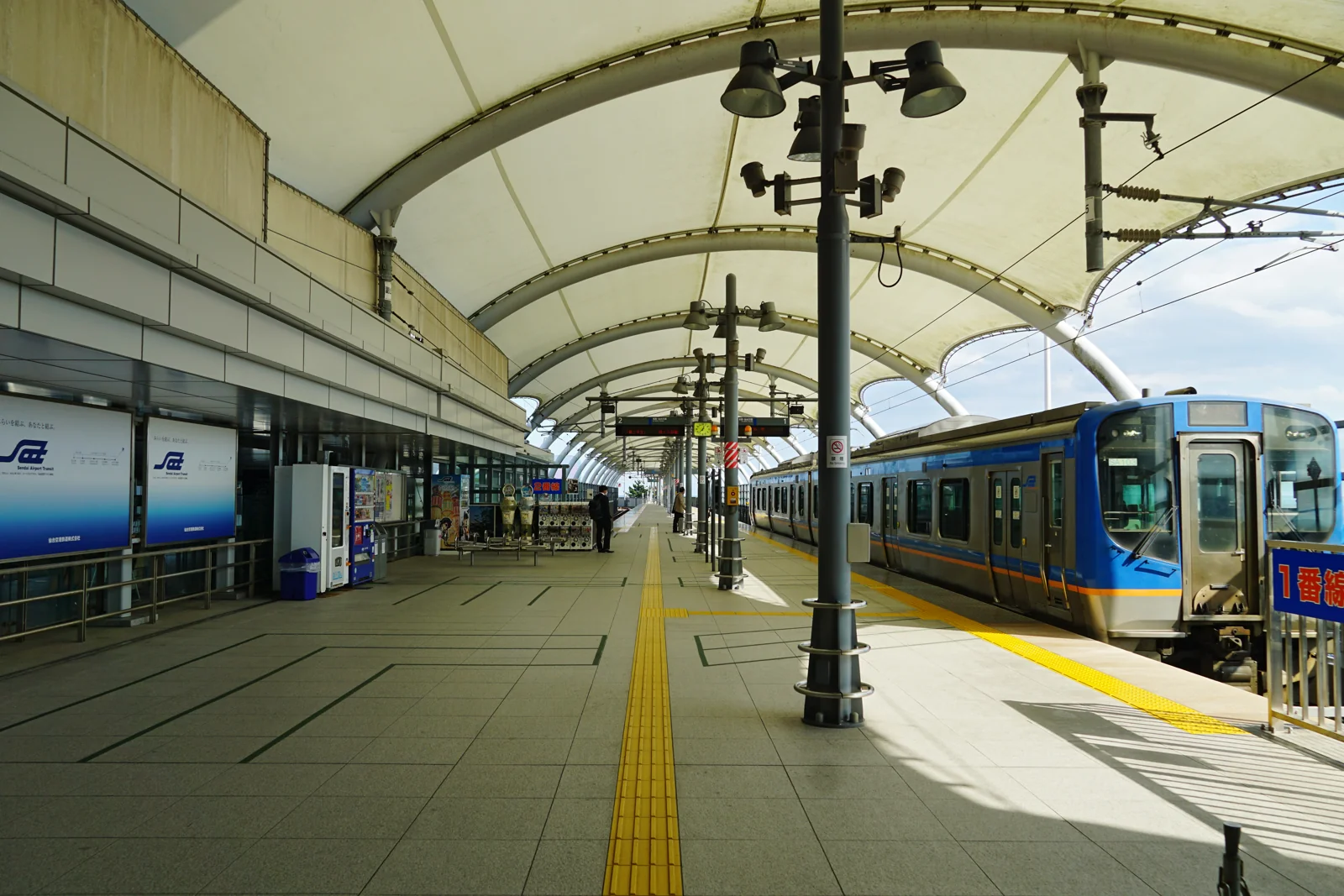
Follow signs for the "Senseki Line" at JR Sendai Station down to the underground platforms for trains bound for Matsushima-Kaigan and Ishinomaki. The Senseki Line uses underground Platforms 9 and 10, separate from the ground-level Tohoku Main Line and Senseki-Tohoku Line. For Shinkansen connections, JR East lists a standard transfer time of 10 minutes to the Senseki Line. Allow extra time for lifts and waiting if you have bulky luggage, particularly if you have pre-booked a specific boat departure. Direct local Senseki Line trains from Sendai take around 40 minutes, and an adult one-way fare is ¥440 whether you buy a paper ticket or tap a travel IC card.
Check destination boards carefully: trains marked for Ishinomaki, Takagimachi, and Matsushima-Kaigan will all get you there, whereas services bound for Tagajo or Higashi-Shiogama turn back before Matsushima-Kaigan. If you board a short-turn train by mistake, you can change at its terminus for the following Matsushima-Kaigan service, though seeing "Ishinomaki" on a board still requires checking the route. Senseki-Tohoku Line trains for Ishinomaki also depart from the ground-level Tohoku Main Line platforms and bypass Matsushima-Kaigan altogether. With the March 2026 timetable update adding more daytime services turning back at Tagajo, do not rely on frequent departures alone — check the stopping pattern and pick a direct train that explicitly lists Matsushima-Kaigan.
There is another station called "Matsushima Station" on the Tohoku Main Line, around 25 minutes from Sendai, followed by roughly a 20-minute walk to the waterfront sightseeing area. It works as a starting point if you are staying near a Tohoku Main Line stop or heading straight to Shin-Tomiyama Observatory first, though it is still a walk from Shin-Tomiyama down towards the coast. For a straightforward day trip — especially if you are catching a timed boat, pushing a buggy, or only have half a day — start at Matsushima-Kaigan Station. Walking between the two stations only eats into time you could spend over lunch or inside the temples.
Outside Matsushima-Kaigan Station, look for the Matsushima-Kaigan Rest House and the Central Pier. The boat operator's access map puts the walk at around 6 minutes, while its timetable advises allowing 10–15 minutes to catch a sailing — and at weekends or public holidays you should factor in road crossings, ticket collection, and queues. For the return journey, head to the platform for "Sendai / Aoba-dori"; both termini stop at Sendai Station. Save the return timetable on your phone so you can pick your next stop as soon as you step off Fukuura Island or leave Kanrantei.
Plan a Matsushima day trip from Sendai: walk from JR Matsushima-Kaigan Station to board the Niomaru sightseeing boat, and visit Zuiganji and Godaido. Includes paper and IC card fares, Fukuura Bridge tolls, winter sailings, 2026–27 Oyster Hut bookings, wet-weather ideas, and one-way Shiogama routes.
Choosing a Route by Arrival Time
Allow five to six hours from arriving at Matsushima-Kaigan Station to fit in a bay cruise, Zuiganji's National Treasure main hall, lunch, and a bridge walk. If you arrive before 9:30am, walk straight to the pier for the 10:00am sailing, disembark at 10:50am for an early lunch — or pop over to Godaido before eating — then make Zuiganji your first afternoon stop, followed by Entsuin or Fukuura Island depending on the clock. Most lost time here comes from hourly gaps between boats and lunchtime restaurant queues. Keeping one optional stop you can drop on the fly prevents you from chasing the clock all day.
If you step out of the station closer to 10:00am, aim for the 11:00am or noon sailing instead. With an 11:00am booking, head straight to the pier to collect tickets and join the queue. If you take the noon boat, visit Zuiganji first and walk back to the waterfront once you have seen the main hall. Travellers planning to linger inside the treasure museum should schedule Zuiganji after the cruise rather than discovering too late that they still have to cross the grounds, queue at the ticket desk, and hurry back to the pier. Once you have your boarding ticket in hand, waiting around the waterfront plaza makes it easy to spot where the boarding queue forms.
With only three hours to spare, pair Zuiganji and Godaido in a single block; take the boat if the timetable lines up, or swap in Kanrantei for sea views if it does not. If you have a fixed lunch reservation or arrive in the afternoon, work backwards from Zuiganji's last admission time and knock out gated sights first. When travelling with older relatives, agree on a seated meeting point early on. If half the group wants to walk Fukuura Island while the rest head back to the station, parting ways near Godaido is far easier than dragging everyone to the bridge entrance only to turn back.
If you need to catch a Shinkansen or airport train afterwards, target the train one departure earlier than you strictly need from Matsushima-Kaigan and keep the following one as backup. Remember to add the waterfront walk and station wait onto your schedule; pencilling in only the 40-minute train ride leaves out the walk up from the underground platforms at Sendai to the transfer gates. On a flight departure day, stow large bags in lockers at Sendai Station first, collect them on your return, and follow the Sendai Airport transport guide so you can stroll Zuiganji's approach and Fukuura Island hands-free.
If you have already brought oversized luggage to Matsushima, head to the tourism association counter inside the Rest House. Bags too big for station lockers can be left here during opening hours for ¥700 per piece: 9:00am–4:00pm from April to November, and 9:00am–3:30pm from December to March. Anyone staying for Entsuin's autumn evening illuminations should pick up bags in the afternoon or leave them in Sendai from the start. The Rest House also has a nursing room and accessible toilets — use them while waiting for your boat so you do not have to walk back off Fukuura Island mid-stroll. The tourism association lends wheelchairs here as well, making the Rest House a practical first checkpoint for the day.
Boarding the Niomaru Cruise and Whether to Upgrade to the Upper Deck
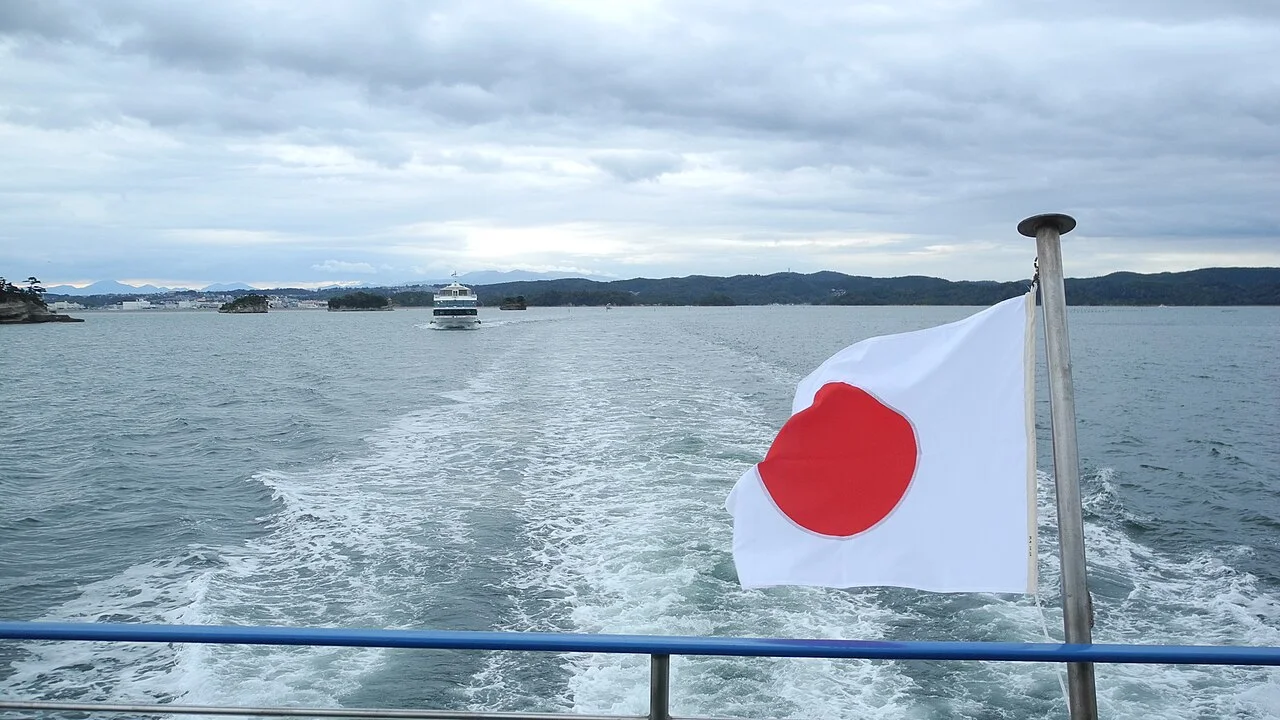
Operated by Matsushima Island Cruise, the "Niomaru" departs from the Central Pier and returns to the same berth after roughly 50 minutes. The highlight is the 17km loop through the bay: islands that appear stacked together from shore separate into distinct channels once the boat circles alongside them. Look for the four sea-carved arches on Kane-jima's cliff face and the craggy silhouette that gives Nio-jima its name. Towards the end, as you pass between Katsurajima and Nonoshima, notice the contrast between inhabited islands and the smaller rocky outcrops seen earlier. Following along on the operator's route map makes it far easier to match each island to its name. This loop makes no stops along the way; if you want to walk on an island, head to Fukuura Island or Oshima in the afternoon.
The Niomaru normally sails on the hour from 9:00am to 4:00pm, though the 4:00pm departure is suspended in winter, making 3:00pm the usual last boat. In winter, the 9:00am sailing may also be operated by a smaller, roughly 70-seat vessel, while peak periods such as Golden Week and Obon see extra departures. Check the operator's homepage for same-day running status before checking available slots on the booking page. At the waterfront, look specifically for the "Niomaru Course" ticket desk and queue: several companies operate out of the Central Pier area, each with its own check-in point. Even when tickets all promise a 50-minute bay loop, you must queue for the specific vessel printed on yours.
Standard first-floor tickets cost ¥1,500 for secondary school pupils and adults, and ¥750 for primary school children; preschoolers usually travel free, though operators may charge if one guardian brings several young children. Tickets can be bought on the day or reserved online for a specific sailing. Seating is unreserved, allocated strictly in queue order on the pier before departure. For families hoping to sit together or older travellers wanting a window seat, arriving early beats waiting an hour for the next boat. If your preferred sailing sells out, use the extra hour to see Godaido, take tea at Kanrantei, or have an early lunch.
On the large vessels, the second-floor cabin and open-air deck cost an extra ¥600 for adults and ¥300 for primary school children, sold onboard until full and reached via stairs only. Save the upgrade for a clear, calm day when you want to stand outside and frame both nearby islets and the wider coastline in one shot. In biting winter wind, with toddlers, or if you just want to rest your legs, the main deck already has picture windows and wheelchair priority seating. Upper-deck tickets are sold per person, and primary-age children or younger must be accompanied by a guardian. If your group simply wants a relaxed scenic loop, the standard ticket covers the entire route comfortably.
If the Niomaru times do not suit, another round-trip option from the same pier area is Marubun Matsushima Kisen's "Masamune Course", taking about 50 minutes on large boats or 40 minutes on mid-sized vessels. It also passes Nio-jima while swinging closer to Kabutojima and Yoroijima. Regular departures run hourly from 10:00am to 3:00pm, with 9:00am and 4:00pm listed as seasonal or extra sailings. If you switch plans at the pier, confirm which vessel you are boarding and its exact return time before counting backwards to temple gates or Oyster Hut slots. Rain and sea conditions affect all operators across the bay, so compare fares and routes first, then verify both companies' live running status on the morning itself.
One-Way Sailings Between Shiogama and Matsushima
To include Shiogama on the same day, use Marubun Matsushima Kisen's "Basho Course" as one-way transport. Ride the Senseki Line from Sendai to Hon-Shiogama Station, walk to Marine Gate Shiogama, and sail straight to Matsushima's Central Pier, disembarking steps from Godaido and Zuiganji. Crossing time is roughly 50 minutes on large vessels (40 minutes on mid-sized boats), at ¥1,500 for adults and ¥750 for primary school children on the main deck. You can also sail in reverse from Matsushima back to Shiogama, though the regular departure times differ in each direction — toggle to your chosen embarkation port when checking the timetable.
Both directions take in the island-studded bay; the choice comes down to where you want to eat and catch the train. If you want to visit Shiogama Shrine or graze along the harbour in the morning, take a midday boat across to Matsushima and head straight into the temples on arrival. If you prefer Shiogama later in the day, finish Matsushima's ticketed and early-closing sights first, then sail out in the afternoon. Should sailings be cancelled, walk back to Matsushima-Kaigan Station and take the Senseki Line to Hon-Shiogama instead — the same railway connects both towns to Sendai, so you only ever need one boat leg in a day.
Zuiganji: From the Cedar Approach to the Main Hall and Treasure Museum
Zuiganji's entrance sits just inland from the coastal road. Pass through the outer Somon gate and walk up the cedar-lined approach, where cave shrines carved into the cliffside remain visible along the public path. Stepping out of the sea breeze into tall cedars and rock walls is well worth taking slowly; if you also explore the caves at Oshima, you will notice how both sites weave natural rock faces into spaces for memorial offerings and ascetic practice. Stay on the marked route past any restricted areas. Collectors of temple stamps (goshuin) should drop off their stamp book at the desk to the left of the ticket gate before entering and collect it on the way out.
Following the fare revision on 1 April 2026, admission is ¥1,000 for adults (including senior high school students) and ¥500 for junior high and primary school pupils. Gates open daily at 8:30am and close at 3:30pm in December and January, 4:00pm in February and November, 4:30pm in March and October, and 5:00pm from April to September, with last admission 30 minutes before closing. The temple estimates 30–40 minutes for a standard visit, so arrive earlier if you want to browse the treasure museum or wait for a handwritten goshuin. In December, a 2:00pm boat returns at 2:50pm, cutting it perilously close to the 3:00pm last entry — on winter days, put the temple before the cruise.
Completed in 1609, the Main Hall (Hondo) rewards a slow walk along the veranda. At the central Shitchu (Peacock Room), look first at the fusuma sliding-door paintings of pines and peacocks before tilting your gaze up to the intricately carved ranma transoms above. Room by room along the suite, motifs and ceiling styles shift according to ceremonial rank. Next door stands the Kuri, the former temple kitchen: step outside to see its roof smoke vents, white plaster walls, and arabesque carvings under the eaves. Both the Main Hall and the Kuri are National Treasures, and the contrast between state reception chambers and a working kitchen in a single compound is striking.
Most sliding-door panels inside the Main Hall are restored reproductions; to see how the originals are preserved, continue to the Seiryuden Treasure Museum. It recreates the elevated Jodan-no-ma and Jojodan-no-ma chambers and displays original Important Cultural Property screen paintings, with rotating special exhibitions listed in temple notices. Photography is forbidden inside the Main Hall, Kuri, and Treasure Museum, and check posted signs before photographing the gardens or exteriors. The Treasure Museum is wheelchair-accessible, whereas the Main Hall and Kuri are not. If your group splits up at the gate, agree to meet near the ticket reception before walking back down to the water.
Godaido and Kanrantei Along the Waterfront
Leaving Zuiganji's Somon gate, return to the waterfront road and follow signs for Godaido, perched on a rocky islet right beside the Central Pier. Entry is free, reached over wooden sukashi-bashi bridges with open gaps between the planks. Watch your footing if carrying a toddler, pushing a buggy, or walking in the rain; if crossing feels awkward, both the hall and red bridges are clearly visible from the shore while companions walk over. Because Godaido sits outside Zuiganji's paid precinct, factor in the short street walk between the two gates if you are aiming for a boat departure.
Built by Date Masamune in 1604, the current Godaido is the oldest surviving Momoyama-style building in the Tohoku region. Under the eaves, look for the twelve zodiac carvings arranged by compass direction, and check the plaque above the entrance — the middle character is inscribed as "tai" (meaning great) rather than the standard "dai". The Five Wisdom Kings inside are kept hidden from public view, with the next scheduled unveiling in 2039, so everyday visits focus on the timber joinery, the slatted bridges, and the tide swirling beneath. Yield to oncoming visitors on the narrow spans; for a group photo that frames the treetops and hall together, step back towards the pier side.
When you are ready to sit down, head to Kanrantei, around 7 minutes on foot from Matsushima-Kaigan Station in the same walkable loop as the pier. Originally a Date clan teahouse, it now serves matcha and traditional sweets (wagashi) alongside the Matsushima Museum's local artefacts. Admission to Kanrantei and the museum is ¥300 for adults and ¥100 for high, junior high, and primary school students, with tea and sweets paid separately. With a garden between the tatami terrace and the bay, it makes a sheltered final stop on blustery days. Municipal hours run to 5:00pm from April to October and 4:30pm from November to March, so leave enough time to enter and place your tea order.
Fukuura Island and Oshima: Pick One for an Afternoon Walk
For a longer woodland stroll, follow the coast east from Godaido to Fukuura Bridge. Starting right beside Cafe Bayland, the 252-metre vermilion bridge crosses over to Fukuura Island. Under Matsushima Town's April 2026 fee schedule, crossing costs ¥300 for adults and ¥100 for high, junior high, and primary school students. Opening hours are 8:30am–5:00pm from April to October and 8:30am–4:30pm from November to March, ticketed separately from boat fares. Even when the red bridge is lit up at dusk, plan your island walk strictly within daytime opening hours.
If you only have half an hour in the afternoon, walk across for a quick look near the island entrance and head back. Allowing 45–60 minutes lets you follow the woodland trails out to the viewpoints and the plaza in front of Bentendo Hall, plus extra time for the walk back to the station. Because Fukuura Island lies further from Matsushima-Kaigan Station than Godaido, subtract the return walk first if you hold a timed train ticket. Seen from the bay, the bridge looks like a thin red line; only when you step onto it do you sense the sweep of water on both sides. Stop once on the span for photos rather than blocking both directions, or frame the railing sweeping across to the island from the shore approach.
For a brief stroll right before catching your train, choose Oshima instead — just 6 minutes on foot from Matsushima-Kaigan Station according to the tourism association. Cross the red Togetsu Bridge to find stone memorial stupas tucked inside cliffside caves and short rock-cut tunnels along the path. Because this bridge is also painted red, follow signs explicitly marked "Togetsu Bridge" and "Oshima" rather than heading east to Fukuura. Its proximity to the station makes it ideal before the first morning cruise or just before an evening train, though after rain the rock surfaces, dirt paths, and bridge planks turn slick — swap it for the paved promenade or Kanrantei if you are wearing smooth shoes or pushing a buggy.
The Matsushima Oyster Hut: Check Dates First, Then Pick a Lunch Slot
Run directly by the tourism association, the Matsushima Tourism Association Oyster Hut (Kaki-goya) opens for the 2026–27 season from 6 November 2026 through 15 March 2027. It operates on Mondays, Wednesdays, Fridays, Saturdays, Sundays, and public holidays, closing on Tuesdays, Thursdays, and over the New Year break from 29 December to 7 January. The menu is a 40-minute all-you-can-eat grilled oysters-in-the-shell session at ¥3,800 for secondary school pupils and adults, and ¥1,900 for primary school children. Located at 12-1 Higashihama, Matsushima, near Komatsukan Kofutei, it lies beyond the Central Pier and Godaido from the station — factor in that extra walk so your boat disembarkation time is not mistaken for your check-in time.
Bookings open online with advance card payment from the same calendar date one month ahead (JST) until the morning before your meal. Regular opening-day slots are 11:00am, noon, and 1:00pm, with an extra 2:00pm sitting on weekends and public holidays. Walk-in places are handled from 10:45am on weekdays and 10:30am on weekends and holidays, though there is no waitlist if sessions are booked out or walk-ins are suspended. Coming from Sendai for the 10:00am Niomaru cruise, a noon sitting pairs cleanly once the boat returns at 10:50am. If you book 11:00am instead, head straight to Higashihama on arrival and save the pier for the afternoon; on an oyster-focused winter trip, Kanrantei and Fukuura Bridge sit along the same coastal axis.
Oysters are grilled in the shell on shared griddles across each table; raw oysters are not served, and the meal centres squarely on grilled oysters. The venue asks that infants under one year old and anyone unable to eat oysters do not enter, and wheelchair or buggy users should note this when booking. Operations may also pause mid-season if shellfish toxins halt harvesting, or close for severe weather and equipment maintenance. For mixed-age groups or tables where someone dislikes oysters, skip the hut and head to one of the waterfront restaurants offering full main menus so non-oyster eaters can order individual grilled or fried oyster sides alongside their own rice dish.
If you reach the waterfront near midday at a weekend, decide upfront whether your group wants a proper sit-down meal or snacks to tide you over after buying boat tickets. Between Zuiganji's gate and Godaido, casual spots serve oyster rice bowls (kaki-don) and conger eel bowls (anago-don or anago-ju). For a hands-on snack children enjoy too, the tourism association lists hand-grilling sasa-kamaboko (bamboo-leaf fishcakes) over charcoal — a handy stopgap alongside matcha if restaurant queues are long.
Families or groups wanting broader seafood choices can walk just behind Godaido to the Matsushima Fish Market (Matsushima Sakana Ichiba). The main hall serves tuna bowls, sushi, and ramen, while an adjacent outdoor stall, Yakigaki House, grills oysters by the market car park — distinct from the tourism association's seasonal hut over in Higashihama. Last orders for sushi and rice bowls in the main hall are listed at 3:00pm, so eat first if you are visiting Zuiganji after 2:00pm. Walking between the temple and the market brings you back along the coast road; pairing it with Godaido or Fukuura Bridge avoids doubling back past Zuiganji's entrance.
Rainy Days, Winter Chill, and Autumn Illuminations
Bay weather can alter sailings at short notice. In heavy rain or high wind, check the Niomaru's daily operating status first; if boats are cancelled, walk up Zuiganji's approach to the Treasure Museum, then settle into Kanrantei or a waterfront restaurant for tea and lunch. Both offer indoor shelter, though getting between them still means short stretches outdoors, so a water-resistant jacket paired with an umbrella works far better than an umbrella alone. Because Fukuura Bridge is exposed to the east and Oshima has slick rock steps to the west, drop the island walks in gusty downpours. When boats do run in brisk wind, choose a window seat on the lower deck and tuck hats and phones safely away before stepping outside.
To combine daytime temple architecture with evening gardens, head to Entsuin right next to Zuiganji's entrance. Centred on the Sankei-den Mausoleum for Date Masamune's grandson Mitsumune, its grounds blend a dry stone garden, pond, and wooded structures. Daytime admission is ¥500 for adults and ¥300 for junior high and primary school students, open 9:00am–4:00pm from April to November and until 3:30pm from December to March, with the temple asking visitors to enter at least 30 minutes before closing. The paths are outdoors — manageable in drizzle, though in heavy rain your time is better spent inside Zuiganji's Treasure Museum. If you only want one paid temple visit, pick Zuiganji for its National Treasure halls, or give Entsuin extra time if classic Zen gardens are your priority.
In 2026, Entsuin's autumn foliage illuminations run from 24 October to 23 November, 5:30pm–9:00pm (last entry 8:45pm). Separate evening tickets cost ¥1,500 for junior high students and above, and are free for primary school children and younger; advance daytime sales run 10:00am–4:00pm at Senshin-an, switching after 4:00pm to Matsushima Momiji-an in front of Sanseido. During peak foliage weekends, the temple notes heavy crowding between 5:30pm and 7:00pm. For a day trip back to Sendai without standing in the longest queue, have an early dinner on the waterfront and enter after 7:00pm — just check your return train times first, and leave steady time inside to line up reflections over the heart-shaped Shinji-ike pond. In spring, pair daytime cherry blossoms with bay views at Saigyo Modoshi no Matsu Park; in winter, tackle your longest walks in the bright early afternoon.
If rain clears and children have energy left before the train home, stop at Miyagi Matsushima Rikyu on the western side of the waterfront. The complex combines a museum on Matsushima Bay and Tohoku's geography with gardens, a rooftop terrace, and craft workshops — shelter inside the exhibits or cafes during downpours, then head up to the roof once the sky clears. Sitting right near the station, it feeds straight onto your return train to Sendai. If your companions would rather focus on Edo-period heritage, devote that spare hour to Zuiganji's Kuri and Treasure Museum instead.
Elevated Views of the Bay: Picking One of the Four Great Views
Ranked among the Three Views of Japan alongside Amanohashidate in Kyoto and Miyajima in Hiroshima, Matsushima Bay scatters more than 260 islands across the water. From sea level, larger islands often hide the smaller ones behind them. Saigyo Modoshi no Matsu Park climbs the hillside above town for sweeping views over the archipelago, framed by cherry blossoms in spring. Taking a taxi up from Matsushima-Kaigan Station saves your legs; if you walk up, remember to allow time for the descent back to the station. When a first-timer's itinerary already includes a boat and two temples, swap Fukuura Island for this hilltop park so you save energy for the climb. In spring, the cherry trees sit directly in the same line of sight as the bay — head up for photos first, then stroll down to the coast for lunch.
Beyond the central waterfront, the "Four Great Views" (Shidaikan) frame the bay from four compass points, so pick the angle that fits your transport. Drivers around Matsushima-Kaigan can reach Ogidani (Yukan) in roughly 5 minutes by car, followed by a 3-minute climb up stone steps to see the bay narrow like an open folding fan — though the car park fits only a handful of vehicles, so have a backup if it is full. Tomiyama (Reikan) pairs a temple with a broader panoramic vista about 16 minutes up steps from its small car park; arriving by train via Rikuzen-Tomiyama Station on the Senseki Line involves roughly a 45-minute walk each way according to the tourism association, making it better suited to replacing the cruise or Fukuura Island than squeezing in before departure.
Further out in Higashi-Matsushima's Miyatojima, Otakamori (Sokan) sits about a 15-minute drive from Nobiru Station plus a 20-minute uphill walk, best treated as a standalone half-day trip to Oku-Matsushima. To the south in Shichigahama, Tamonzan (Ikan) is roughly a 15-minute drive from Tagajo Station and a 10-minute walk, looking out over shipping lanes into Shiogama Port; both require a car or planned local transport. If you are staying two days in Matsushima, explore the islands at water level on day one and climb a contrasting vantage point on day two to spot the pier, red bridges, and channels you crossed the day before.
Driving, Overnight Stays, and What a Day Costs
Driving in via the Matsushima-Kaigan Interchange on the Sanriku Expressway takes around 5 minutes to reach the centre, according to Zuiganji's official access guide. A car shines for reaching hillside viewpoints and Oku-Matsushima; around the Central Pier, Godaido, Zuiganji, and Kanrantei, park once and explore on foot. Save Prefectural Matsushima Park Car Park No. 5 in your satnav — it has larger capacity than Car Park No. 1. If you prefer to start on the bay and drive up to Saigyo Modoshi no Matsu Park later, the park has its own car park as well. On long weekends or peak cherry blossom days, taking the train cleanly skips motorway exit queues and full car park bottlenecks if you are sticking to the coast.
If you want dinner back in Sendai or have an early Shinkansen the next morning, staying within walking distance of Sendai Station is the easiest base: leave bags at your hotel and return at your own pace. Stay overnight in Matsushima itself if you want seaside dining, dawn light over the bay, or hot-spring baths. Walkers sticking to the waterfront loop can look at Higashihama near Fukuura Bridge, strolling east from Godaido before dinner. Further north, Matsushima Ichinobo sits closer to Tohoku Main Line Matsushima Station; its website lists guest shuttle pick-ups between 2:30pm and 4:00pm upon calling from either Matsushima or Matsushima-Kaigan Station, plus scheduled morning drop-offs calling past the Matsushima Rest House. When booking half-board stays with dinner included, treat your check-in deadline like a last boat sailing — drop your luggage first, then head back out to finish your daytime loop. If Zao or Ginzan Onsen comes next, align this evening's return train with our Sendai and Yamagata itinerary.
On a standard adult day trip, a return Senseki Line fare (¥880), a Niomaru main-deck ticket (¥1,500), and Zuiganji admission (¥1,000) total ¥3,380, or ¥3,680 with Fukuura Bridge added. Factoring in the seasonal Oyster Hut brings the core total to ¥7,480, excluding optional upper-deck upgrades, extra temples, or matcha and sweets. Watch the age brackets if travelling with junior high school pupils: boats and the Oyster Hut charge adult rates from secondary school upwards, while Zuiganji still gives them the ¥500 student rate, so do not assume one flat child price covers the whole day. Put your main budget towards the two signature experiences on a first visit — the Niomaru cruise for bay views and Zuiganji for cultural heritage — as walking across to Godaido and Oshima costs nothing.
A few useful answers
Which station should I get off at for a Matsushima day trip from Sendai?
Take the JR Senseki Line to Matsushima-Kaigan Station. The ride takes around 40 minutes, and an adult one-way fare is ¥440 with either a paper ticket or a travel IC card. Matsushima Station on the Tohoku Main Line is roughly a 20-minute walk from the waterfront sights.
Do I need to book the Matsushima sightseeing boat in advance?
You can buy Niomaru tickets on the day or book a specific departure ahead on the operator's website. Upper-deck tickets on large boats are purchased onboard after boarding, while standard main-deck seats are unreserved and chosen in pier queue order.
What time is the last Niomaru sailing in winter?
The 4:00pm departure is suspended in winter, making 3:00pm the usual final sailing. The 9:00am boat may also switch to a mid-sized vessel, so check same-day operating updates on the operator's homepage before setting off.
How much is Zuiganji admission for adults, and what is the last entry time?
From 1 April 2026, admission is ¥1,000 for high school students and adults, and ¥500 for junior high and primary school pupils. Last admission is 4:30pm from April to September, 4:00pm in March and October, 3:30pm in February and November, and 3:00pm in December and January.
Do both Godaido and Fukuura Bridge require tickets?
Godaido is free to enter. Fukuura Bridge charges a separate toll of ¥300 for adults and ¥100 for high, junior high, and primary school students.
When is the Matsushima Oyster Hut open in 2026–27?
The 2026–27 season runs from 6 November 2026 to 15 March 2027, open Mondays, Wednesdays, Fridays, weekends, and public holidays, and closed Tuesdays, Thursdays, plus 29 December to 7 January. A 40-minute all-you-can-eat grilled oyster session is ¥3,800 for secondary school students and adults, and ¥1,900 for primary school children.
What can I do in Matsushima if the boats are cancelled?
Visit Zuiganji's Main Hall and Treasure Museum first, then warm up with matcha at Kanrantei or a seafood lunch along the coast. Families with children can also add the Miyagi Matsushima Rikyu museum before heading back to the station.
Can I take a sightseeing boat from Shiogama to Matsushima?
Yes. Board Marubun Matsushima Kisen's Basho Course from Marine Gate Shiogama and disembark at Matsushima's Central Pier. Large vessels take around 50 minutes, with standard main-deck adult fares at ¥1,500.
Which parts of Matsushima's waterfront are wheelchair accessible?
Matsushima-Kaigan Station and the nearby Rest House have accessible toilets. Large Niomaru vessels offer priority wheelchair seating on the first floor (the upper deck is stairs-only). At Zuiganji, wheelchairs can enter the Seiryuden Treasure Museum, but not the Main Hall or Kuri.
Official information and references
Sources used in this guide.
- Matsushima Tourism Association: JR, Driving & Parking Access
- JR East: Sendai Station Map & Transfer Times
- JR East: Senseki Line March 2026 Timetable Revision
- JR East: 2026 Fare Revision & Standard Fare Table
- JR East: Matsushima-Kaigan Station Timetable
- Matsushima Island Cruise: Niomaru Timetable, Fares & Upper Deck
- Matsushima Island Cruise: Pier Access Map
- Matsushima Island Cruise: Niomaru Route & Islands
- Matsushima Island Cruise: Daily Operations & Booking Portal
- Marubun Matsushima Kisen: Shiogama–Matsushima Basho Course
- Marubun Matsushima Kisen: Matsushima Bay Masamune Course
- Zuiganji Temple: Admission, Hours & Accessibility
- Zuiganji Temple: Main Hall, Kuri & Grounds
- Zuiganji Temple: Seiryuden Treasure Museum & Exhibitions
- Zuiganji Temple: Photography Rules on the Grounds
- Zuiganji Temple: Godaido Architecture & Unveiling Schedule
- Matsushima Town: Kanrantei & Matsushima Museum
- Matsushima Town: Seasonal Hours for Kanrantei & Fukuura Bridge
- Matsushima Town: Fukuura Bridge Tolls & Opening Hours
- Matsushima Tourism Association: Oshima & Togetsu Bridge
- Matsushima Tourism Association: 2026–27 Oyster Hut Details
- Matsushima Fish Market: Opening & Dining Hours
- Entsuin Temple: Daytime Visiting Information
- Entsuin Temple: 2026 Autumn Foliage Illuminations
- Matsushima Tourism Association: Saigyo Modoshi no Matsu Park
- Matsushima Tourism Association: Four Great Views & Trailhead Access
- Matsushima Tourism Association: Rest House Luggage Storage
- Matsushima Tourism Association: Accessible Toilets, Nursing Room & Crafts
- Matsushima Tourism Association: Miyagi Matsushima Rikyu Museum
- Matsushima Ichinobo: Guest Shuttle Service