Read the former Kikuchi house’s added stable, paired sacred figures and cloth offerings, then explore Tono’s oral traditions through Kizen Sasaki, Kanori Ino and museum objects. Includes choosing between two sites and autumn–winter 2026 visiting conditions.
- Region & Focus
- Tono
- Reading Scope
- 34 min read · 19 chapters · 4 Q&As
- Official Verification
- 10 official sources checkedUpdated 22 November 2026
- Key Topics
- ItinerariesTohoku
Chapter Route Map (tap any stop)
- A stable and a pair of sacred figures in the same day
- The former Kikuchi residence began as a straight-plan house
- Rooms, earth floor and stable: begin at the entrance corner
- The roof frame also records alterations
- Horses supplied labour and cash income
- Paired sacred figures and a display of a thousand have different scales
- Story 69, the park’s version and worship today
- Adding new cloth makes prayer a visible action
- Behind The Legends of Tono, Kizen Sasaki kept collecting
- An introduction in 1894, before the book
- A tengu’s clogs and teacup: objects carry legends too
- A model’s chosen period differs from an old house’s age
- Mountain work had its own rituals
- Itagura’s removable boards combine storage and work
- Waterwheel, wells and teppo bath: tools for everyday actions
- Rag weaving and storytelling involve different skills
- Preserving thatch depends on Tono’s materials and workers
- Autumn and winter 2026: match the exhibitions with opening days
- From Tono Station: tickets and a day plan
- Quick Q&A
Spend the morning at Tono Municipal Museum exploring horses’ work, objects of prayer and the recording of stories. In the afternoon, visit Denshoen to see how a stable was added to the former Kikuchi family’s straight-plan house, then continue to Oshirado and the Kizen Sasaki Memorial Museum. One relationship runs through the day: horses in the household economy, stories and sacred figures in worship, and their collection, preservation and display today.
A stable and a pair of sacred figures in the same day
The south-projecting wing of the former Kikuchi residence at Tono Denshoen includes a stable. From inside the magariya, or L-shaped farmhouse, the visitor route continues to Oshirado, where Oshirasama figures are enshrined. These connected spaces bring together the local story of a horse and a young woman with household prayers for silk production and good harvests. Ask how horses entered farmers’ homes and livelihoods, then became subjects of stories and worship.
Visit Tono Municipal Museum in the morning for its votive pictures, horse-shaped objects, religious materials and folklore images, then Denshoen in the afternoon for the house and Oshirado. The museum places objects in local history and the history of recording them. Denshoen combines houses, worship and present-day storytelling in one park. The two sites let you pursue the same question through different materials: where did the horses and beliefs in display cases fit within a home, and who told and compiled the familiar stories?
With only half a day, choose Denshoen for architecture and household beliefs, retaining the magariya, Oshirado and Kizen Sasaki Memorial Museum. Choose the municipal museum to understand how The Legends of Tono relates to local life, or for multilingual tablet guidance. Link both only for a full day, with lunch and travel from the town centre to Tsuchibuchi between them. Decide whether you want to encounter a house and take part in a cloth offering, or read objects, images and research records. Equal time at both is unnecessary.
A Niconico Museum programme uploaded by Niconico News’ culture department, featuring a folklorist’s reading of Tono Municipal Museum and The Legends of Tono, to accompany the morning museum visit.
Read the former Kikuchi house’s added stable, paired sacred figures and cloth offerings, then explore Tono’s oral traditions through Kizen Sasaki, Kanori Ino and museum objects. Includes choosing between two sites and autumn–winter 2026 visiting conditions.
The former Kikuchi residence began as a straight-plan house
The former Kikuchi residence originally stood in Otomocho, Tono. By comparing its form and construction methods with other farmhouses, the city dates it to no later than the mid-18th century. Its present name comes from a later owner: the Kikuchi family acquired it in 1924. Its age, family name and current location belong to different stages. The preserved building at Denshoen was dismantled and relocated in 1978; its original inhabited site was in Otomocho. Tono City’s survey and repair record
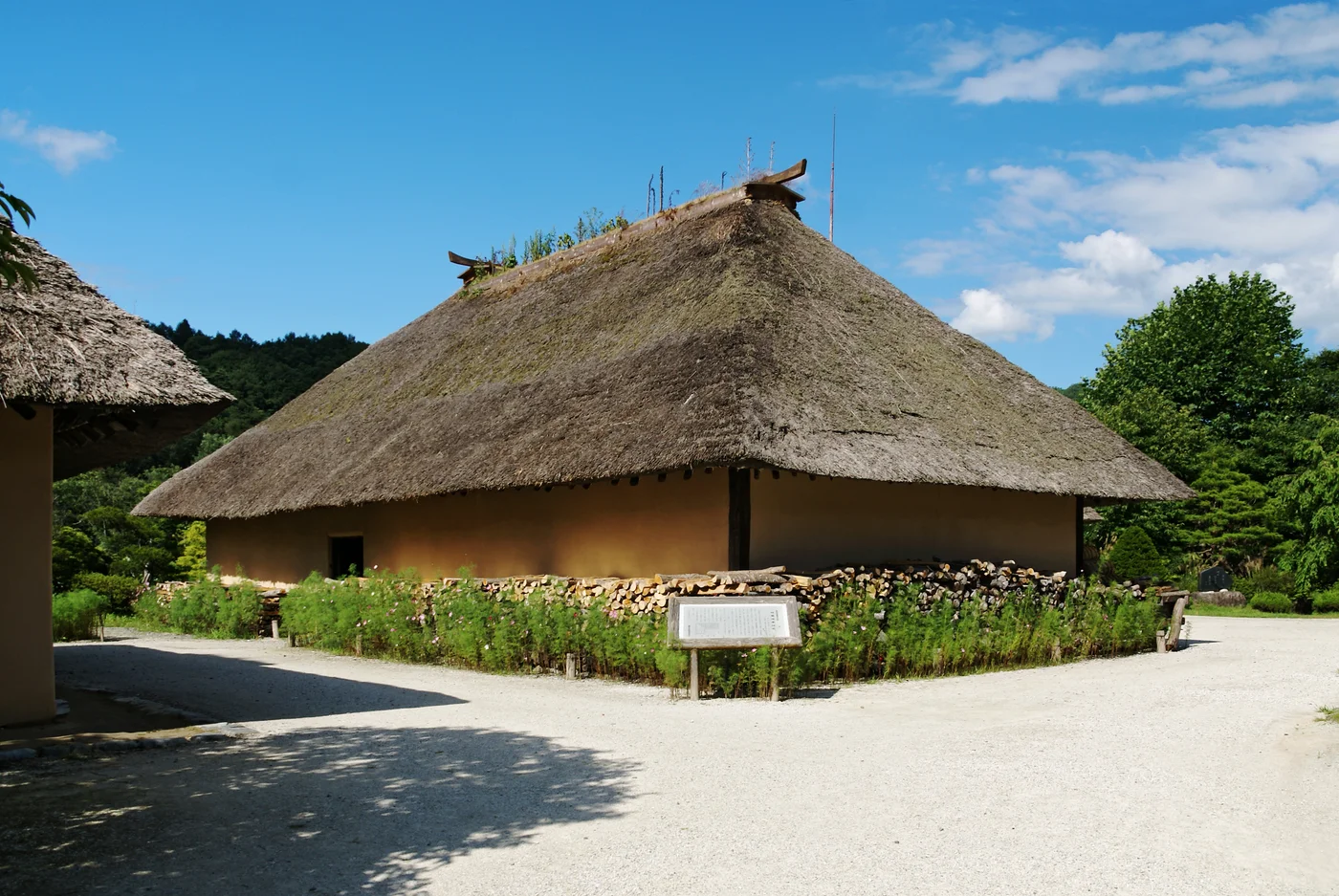
The most interesting change occurred earlier. The city explains that it began as a straight-plan house without a projecting wing. The earth-floored area was later enlarged and a bent section added, forming today’s magariya. Surviving evidence suggests that the original main building was about 17.6 metres long, with the earth-floored area extended outwards by about 2.9 metres. The L-shape records an extension: the household attached new working space to the existing structure, incorporating a stable into the home.
The Agency for Cultural Affairs also locates its value in the formation of the magariya: a straight house became an L-shaped house at an early stage, leaving evidence of the change. Designated a national Important Cultural Property on 3 February 1976, it preserves more than a recognisable outline. It retains evidence of successive forms in one building. Take this point into the visit: look at the relationship between the main range and projecting wing, and read when they were joined.
Rooms, earth floor and stable: begin at the entrance corner
The city’s plan describes the projecting wing as earth-floored, with part used as a stable. The main entrance opens on the inner side of the bend. Human access and horse accommodation therefore cluster around this corner. The L-shape acquires a practical meaning: the wing handles entry and earth-floor work, while the main range contains a sequence of living rooms. The entrance position explains the connection more clearly than guessing which side looks like a sitting room from outside.
At the upper end of the main range are two zashiki rooms, one behind the other. Towards the lower end come two sleeping rooms and the torinoma, followed by the wider joi at the rear and chanoma at the front. The daidokoro projects towards the earth-floored area. These local room names preserve distinctions within the living space. Read them alongside the earth floor and stable to see how people and horses shared one roof while living and working areas remained subdivided.
Both the main range and south-projecting wing have hipped, thatched roofs. The cultural-property summary gives the main range as 20.3 metres long and 9.1 metres deep, and the wing as 8.6 by 7.6 metres. The stable side has substantial size, beyond a small shed attached to a corner. At Denshoen, the interior also displays household furnishings and folk tools. Distinguish the original building, later exhibition arrangements and today’s route to Oshirado as material from different times.
The roof frame also records alterations
The structural account identifies the north-east and north-west corners as parts of the old straight house, where hiuchi beams remove the need for upper structural posts, a rare arrangement. The roof uses a sasu frame without ridge posts; timber surfaces retain work with an adze or yoki axe. These observations take the investigation from plan to individual members and tool marks. The city cites the 1979 Report on Conservation and Repair Work at the Important Cultural Property Kikuchi Residence as a major basis for its plan and structural account. Repair work also created records for later readers.
Horses supplied labour and cash income
In its “Prayers to horses” display, Tono Municipal Museum lists farming, packhorse transport and mountain work. Packhorse work carried goods on horses’ backs, extending their role from fields and woodland into transport. The museum also notes that horse markets provided valuable household cash income. The stable in a magariya thus belongs within a fuller livelihood: horses worked and contributed to earnings. The museum’s account of horses and local life
The same display connects work and prayer. People hoped horses would breed successfully and grow healthy; Komagata shrines were built in many places and received numerous ema votive pictures. The museum introduces the belief through Tono’s ema and horse-shaped objects. Pictures and model forms gave prayers a durable physical form. They concerned horses actually used in farming, carrying goods and trade, giving affection for horses a concrete household and economic setting.
The house plan records extensions and places of use; votive pictures and horse forms record prayer. Moving from museum to the former Kikuchi house joins these different parts of the human–horse relationship. Horses had accommodation indoors, work in farming and transport, a place in trade, and prayers offered through objects. The horse-and-daughter story circulated in a place where horses were part of family livelihoods.
Paired sacred figures and a display of a thousand have different scales
The museum explains Oshirasama as sacred figures made from mulberry wood and other materials, in pairs. Mainly household, silkworm and eye deities, they are worshipped chiefly in north-eastern Japan. “A pair” describes their grouping; mulberry and other woods describe their material. Household and silk deities are roles assigned through belief. Read material, paired form and ritual use together to understand the figures beneath their cloth garments.
Oshirado at Denshoen houses about 1,000 Oshirasama figures in a relocated farm storehouse with earthen walls. Entry is through the former Kikuchi residence. The park describes the hall as about six tatami mats in size, a striking contrast with the dense display. The hall presents the figures as a concentrated group; the museum’s paired-figure account explains an individual set. Each number refers to something different: a thousand is the hall’s total, while two is the paired form.
The earthen storehouse, magariya and figures now form a connected visit, but have different origins. The Kikuchi residence has an original Otomocho site and a recorded 1978 relocation. Oshirado adapts another type of farm building for worship. The narrow passage from house to hall is Denshoen’s present way of bringing visitors close to the objects. Understanding that combination lets you appreciate the architecture and dense display while retaining each preserved object’s history.
Story 69, the park’s version and worship today
Denshoen’s Oshirasama legend tells of a farmer’s daughter who fell in love with the family horse. After her father killed it, she clung to the horse and ascended to heaven with it, becoming Oshirasama. She later appeared in her father’s dream, gave him silkworms and taught him to rear them. This is the park’s version explaining the origin of sericulture. It connects a household’s human–horse relationship, conflict between father and daughter and a new livelihood, giving the deity’s origin a setting of family feeling and loss. Denshoen’s Oshirasama legend
Tono City’s tourism information links the horse-and-daughter story to story 69 of The Legends of Tono. The museum explains that Kunio Yanagita’s book made this account of sericulture’s origin widely known. Story 69 locates the tradition in the book; Denshoen supplies the telling used at this site; the museum adds the history of its circulation. Book, site interpretation and research each present the relationship between horse, daughter and silk production in their own way.
Oshirado’s name focuses on silkworms, while the park describes Oshirasama beliefs concerning agriculture, horses, eyes, women’s illnesses and divine messages. The museum likewise lists household, silk and eye deities together. These names express different wishes arising in daily life alongside the story’s single origin line. Begin with the hall’s name, then read the cloth-offering and object explanations to understand the deity’s wider household role.
Adding new cloth makes prayer a visible action
The museum explains that on festival days a new piece of cloth called osendaku is placed on Oshirasama, with prayers for a good harvest and household safety. Adding cloth is a central action: people express prayer by dressing the figures, which continue to receive care. The relationship has actual materials and methods. The colours and layers of fabric can be connected with acts of worship.
Denshoen currently offers visitors the chance to write a wish on cloth and dress an Oshirasama figure. Its experience page lists ¥100 per piece. This public activity makes writing and adding cloth actions visitors can perform, while the museum’s festival account explains the local ritual setting. Read the two together to understand both what you can join during a visit and the belief the action carries.
If you want to offer cloth, decide on your wish before entering the hall and budget ¥100 in addition to admission. Those who do not take part can still see the figures and read the legend, leaving more time for the memorial museum or farmhouse.
Behind The Legends of Tono, Kizen Sasaki kept collecting
Kizen Sasaki was born in 1886 in what is now Tsuchibuchicho, Tono. He met Kunio Yanagita on 4 November 1908 and told him Tono traditions that became an important source for The Legends of Tono, published in 1910. Remember the exchange alongside both names: Kizen brought local stories into conversation, and Yanagita made them into a book that reached distant readers. The museum’s biographical account also places Kizen within this relationship behind the book.
Kizen continued collecting folklore, researching Oshirasama and zashiki-warashi household spirits and writing tale collections including Esashi-gun Mukashibanashi, Rouya Yatan and Kikimimi Zoshi. Denshoen’s memorial museum displays his publications, materials and personal connections; the park describes his collection of more than 400 folk tales. Being a narrator behind The Legends of Tono is only the starting point. The displays reveal a continuing collector and researcher. Its location in his birthplace of Tsuchibuchi connects the books and exchanges to a specific place.
An introduction in 1894, before the book
The museum dates the first nationwide introduction of Oshirasama to 1894, by the Tono-born anthropologist Kanori Ino. This preceded The Legends of Tono in 1910 by 16 years. Together the dates show different stages in outside readers’ encounters with the belief: investigation and introduction first, then the wider circulation of the horse-and-daughter story through the book. The belief itself and the dates when people wrote about it have separate histories.
Ino later conducted research in Taiwan and, after returning to Tono, continued exchanges with Yanagita, Kizen Sasaki and others. This dual focus offers a specific thread through the biographical material: one researcher worked on both Taiwan and his home region’s folklore. Different people’s journeys, exchanges and records lie behind Tono’s presentation through text, photographs and research. Follow those relationships through the displays.
A tengu’s clogs and teacup: objects carry legends too
The museum’s first exhibition room presents “relics of a tengu” associated with story 98 of The Legends of Tono: Supplement. In the tradition recounted by the museum, the rice merchant Mankichi befriended a tengu at Hanamaki Onsen, and it later visited his home repeatedly. The displayed clogs, teacup and calligraphy are said to have been left on its final visit. A named story, a specific story number and displayable objects together form the museum’s presentation.
Clogs relate to walking, a teacup to drinking, and calligraphy preserves handwriting and words. The story attributes them to a tengu, giving ordinary objects extraordinary origins as they pass down. Compare them with Oshirasama: on one side are sacred figures made, dressed and worshipped in particular ways; on the other are utensils that acquired special identities through a household story. Shapes provide clues, while names and origins depend on telling and preservation.
The same area connects divine and Buddhist images once worshipped by the Yamaguchi Magosaemon household with the zashiki-warashi in story 18 of The Legends of Tono. A household becomes a traceable source: what it worshipped and which text records the tradition are placed side by side. The strange tales acquire relationships between objects, families and written records. The question can move beyond plot to why a household treasured and continued to tell a story.
A model’s chosen period differs from an old house’s age
The museum’s seven-metre-long “Four seasons of daily life” diorama centres on a Tono household’s year during the Showa 30s and 40s, approximately 1955–1974, accompanied by folklore photographs and objects. This is far removed from the 18th-century formation of the Kikuchi house. Visiting both sites lets you compare a long-used house form with records of more recent life as different exhibition materials, rather than placing every scene in one vague “olden days”.
The “Town” display evokes a busy market-day street in the Meiji to Taisho periods. It introduces Tono as a staging point between inland and coast for people, goods and information. This adds regional transport and trade to the earlier packhorse story. Street imagery, household models, photographs and objects each explain different things. Knowing the model’s period helps place the old house, horse markets and daily farm work in context.
Projection onto a terrain model places creation myths and phrases from The Legends of Tono within the basin. The audiovisual room offers adaptations in animation and folk-tale works. These are present-day interpretive media, adding another comparison with books in the memorial museum and objects inherited through households. Oral accounts became collected books, then images and projections. Each medium changes the pace and information through which viewers encounter the subject.
Mountain work had its own rituals
The museum describes Tono’s yamabushi mountain practitioners in the Edo period as mostly living in villages in daily life. They prayed, divined, distributed talismans, guided pilgrimages to Tono’s three mountains and officiated at small shrines. This makes the relationship between mountain and village concrete. Practitioners moved between them and addressed illness, disaster and the need to enter the mountains. Alongside household Oshirasama, they offer another way people sought protection.
Teppou-uchi is Tono’s term for hunters, earlier also called yamadachi. The museum says they hunted in winter and farmed or undertook other mountain work at other times. After taking an animal, they performed an indo-watashi rite to pacify its soul and prevent harm from its spirit. Secret texts recorded ritual words and hunting methods. These materials connect labour, life and ritual, showing belief within the practice and teaching of a trade.
Itagura’s removable boards combine storage and work
Back at Denshoen, the itagura board storehouse deserves close attention after the farmhouse. The park explains that its walls are entirely boarded and that it served farm work. Boards were removed when light was needed or crops required drying. The wall itself took part in work: fitted boards enclosed storage, removed boards created working conditions. Compare this with the enlarged earth floor and added stable of the farmhouse to see how different farm buildings were adapted to work. Denshoen’s buildings and tools
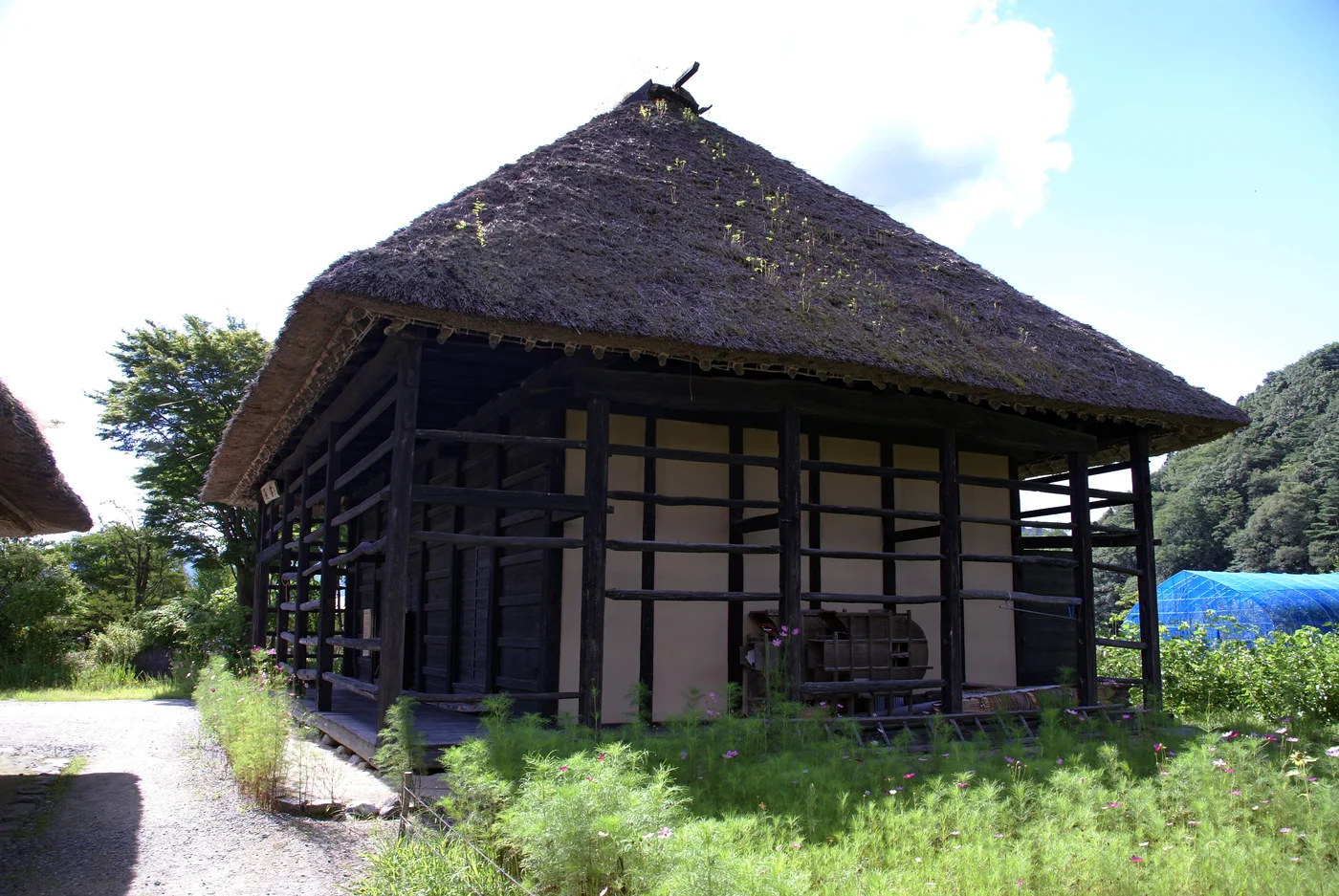
The itagura also stored possessions. According to the park, households without an earthen storehouse used it in that role; those with one kept less important possessions in the board storehouse. Board and earthen storehouses occupied different positions in safeguarding household goods. Read this alongside Oshirado’s relocated earthen storehouse to connect today’s exhibition buildings with earlier storage choices.
The itagura now has a fitted interior displaying The Legends of Tono and kappa, including a map of reported kappa sightings in Tono and a photo setting. The entrance building, Norikomi Nagaya, was also relocated from a farm barn dating to about 1850. Formerly storage, workshop and gateway, it is now a shop connected to the dining area. These adaptations combine preserved structures with present visitor arrangements. Original uses still help explain their shapes and positions.
Waterwheel, wells and teppo bath: tools for everyday actions
The park’s waterwheel account describes a facility once shared by a settlement. Users brought materials on their assigned day for threshing, processing straw or milling flour. Shared use is social knowledge beyond the mechanism: production needed power, and communal facilities supported the work. Its scale differs from one household’s stable or storehouse, extending labour from a home to a settlement’s shared equipment.
The tsurube well draws water with a pulley. The park explicitly describes it as recreating a method from around 1950, with a hand-pump well beside it. The two wells compare water-drawing devices and date one method’s presentation. Set against the museum’s household model centred on life around 1955–1974, these small implements acquire a period that can be compared.
The bathhouse’s teppo bath has a metal cylinder fitted to the tub, presenting bathing equipment once placed outdoors at farmhouses. The park also describes a charcoal kiln still operated by local residents, supplying charcoal used at Denshoen. The well recreates a past method, while the kiln continues fuel production. These are different forms of preservation. Distinguish use, represented period and whether an object still works today to understand each clearly.
Rag weaving and storytelling involve different skills
Denshoen explains saki-ori rag weaving as ordinary yarn used for the warp and torn cloth strips for the weft. Yarn runs one way, and strips enter from the other to become part of a new fabric. The current experience makes a coaster in about 30 minutes, costs ¥1,100 and requires booking one week ahead. If textiles and tools interest you, allow time for this practical work of interlacing warp and weft.
Folk tales in the farmhouse are told by a storyteller. The regular bookable session lasts about 30 minutes and costs ¥7,000; the information page requires booking one week ahead. Its pace differs from a fixed audiovisual work: a person tells stories while listeners remain in the house. If this is your main afternoon activity, secure the booking first, then arrange travel between the sites. A normal independent visit can focus on public displays.
For non-Japanese visitors, the municipal museum provides multilingual tablets with audio and subtitles for the permanent exhibition. Use them to establish the relationship between stories and objects before encountering Japanese names and buildings at Denshoen. Make a reserved live session central if hearing storytelling is your aim. If the multilingual tablet is your main support, leave longer for the museum’s records and images so that the itinerary matches what you can understand.
Preserving thatch depends on Tono’s materials and workers
Tono City acquired the Kikuchi house in 1977 and moved it to Denshoen in 1978. Thatch was subsequently patched according to roof condition. By 2014, 36 years after relocation, deterioration led to complete rethatching. Work ran from July to November that year, using mostly thatch produced within Tono. The building thus tells both of its 18th-century formation and of local material supply and continuing maintenance.
The city’s project record includes thatching from the eaves and replacing the turf ridge, and names the designers, supervisors and contractors. The roof survives through materials, skills and identifiable workers. The interior closed during repair and reopened in December 2014. Conservation time is part of the destination’s history: after relocation, the house still needed care to support today’s visits and use.
Autumn and winter 2026: match the exhibitions with opening days
The summer 2026 exhibition The Legends of Tono and Oshirasama ended on 27 September. The municipal museum announced the autumn exhibition Divination and Charms from 1 November to 11 January 2027. Exhibition talks are scheduled for 13:30–14:00 on 20 November, 25 December and 8 January, without booking. Match these dates with the two-site itinerary for a closer introduction to folk prayers. The permanent exhibition and Denshoen provide the basic Oshirasama connection. Current museum exhibition announcement
The municipal museum opens 09:00–17:00, with last entry at 16:30. Its general seasonal rule is no closure in April and May, month-end closure from June to October, and Mondays and month-end closure from November to March, with specified holiday exceptions. This autumn exhibition separately lists opening on 2 November and closure on 24–27 November and 28 December–4 January. For a late-2026 trip, avoid these closure periods and give the museum a full morning.
Denshoen opens 09:00–17:00 from March to November, last entry 16:30. From December to February it closes at 16:00, last entry 15:30. It closes on Tuesdays in January and February and over New Year. For a winter two-site day, enter the museum in the morning and start towards Tsuchibuchi before midday, leaving daylight for the house, Oshirado and memorial museum. If you arrive in Tono only in the afternoon, choose one site. Entering just before winter’s last admission leaves little visiting time.
From Tono Station: tickets and a day plan
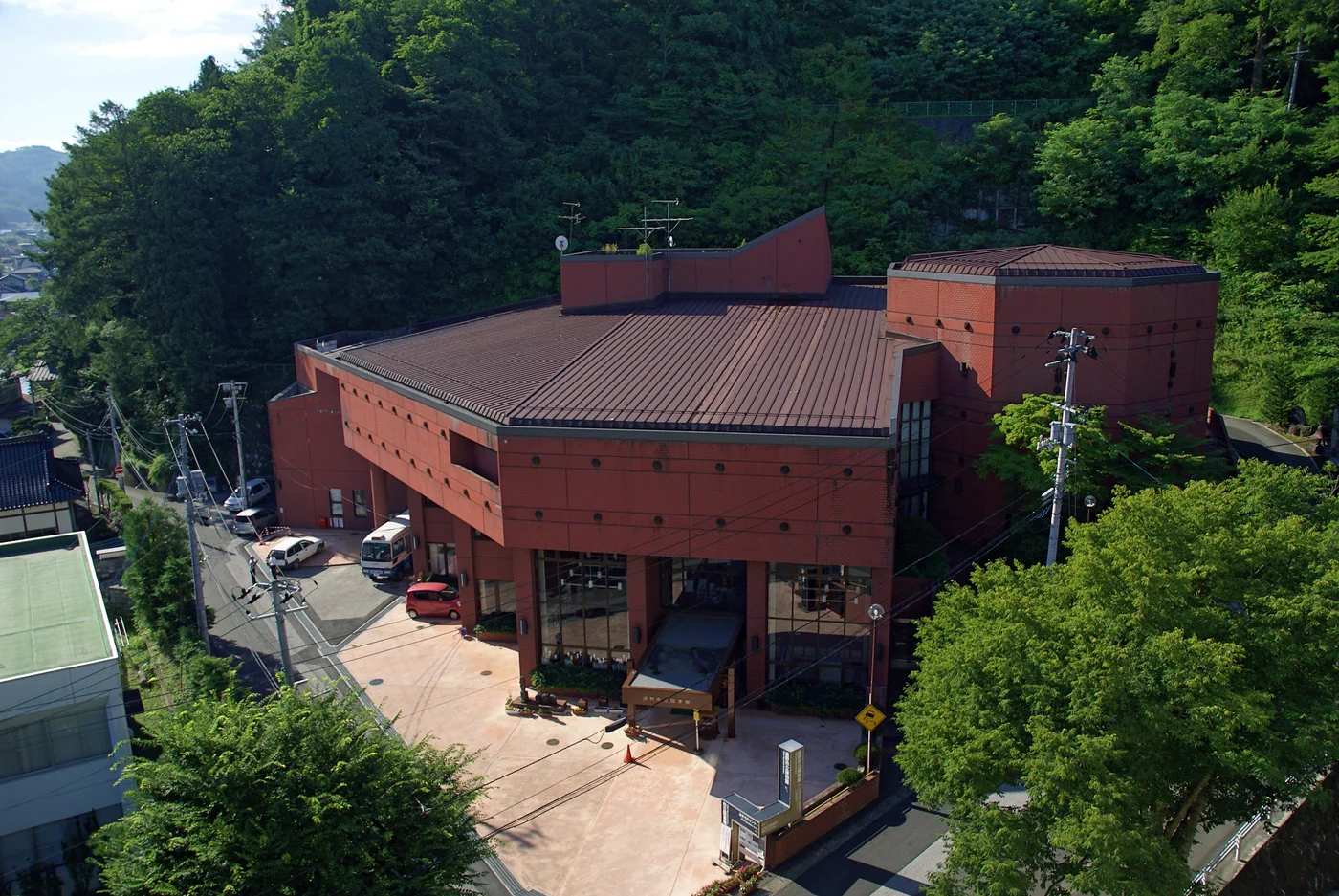
The museum is at 3-9 Higashidatecho, about nine minutes or 0.7 kilometres on foot from JR Tono Station according to its information. Denshoen is in Tsuchibuchicho, about 4.9 kilometres from the station in tourism information. Begin with the town-centre museum; arrange onward transport separately. Denshoen currently lists the Denshoen stop on the Tsuchibuchi Line towards Nishinai, or Ashiaraigawa on the Tsukimoushi Line towards Sakanoshita. Choose according to that day’s route and return services.
Standard adult admission is ¥310 at the museum and ¥450 at Denshoen, totalling ¥760. For senior high school pupils and younger, the respective prices of ¥160 and ¥350 total ¥510; preschool children enter both free. Cloth offerings cost another ¥100 each, while weaving and reserved storytelling have separate charges. Start with ¥760 for an adult visiting both, then add transport, food and chosen activities to decide what to prioritise in the afternoon.
Lunch can fit between visits at Denshoen’s Oshira-tei. The current menu lists hittsumi at ¥800, a local dish of dough pieces in chicken-stock soup. Keiran is a local sweet made by boiling rice-flour dumplings filled with smooth red-bean paste. Both are served in the park and fit a morning museum visit followed by an afternoon reading the house. Winter dining hours are 11:00–15:30, last orders 15:00. Eat before or after the farmhouse visit rather than reaching the ordering deadline after seeing the entire park.
For a start around 09:30, allow about two hours at the municipal museum, then travel to Denshoen for lunch and spend about two afternoon hours on the farmhouse, Oshirado and Kizen memorial museum. These are suggested stays allowing for reading. Reorder around any storytelling booking. In winter, include the 15:00 last food order and 16:00 park closure, and choose your return service before setting out so that both house and stories receive a full visit.
A few useful answers
Should I go to Tono City Museum or Denshoen if I only have half a day?
Go to Tono City Museum for the objects and films that explain The Tales of Tono, or to use the multilingual tablet guide. Choose Denshoen to see the former Kikuchi farmhouse with its stable and the hall dedicated to Oshirasama.
How do I reach Tono City Museum and Denshoen from JR Tono Station, and what do they cost?
Tono City Museum is about nine minutes’ walk from JR Tono Station. Denshoen is about 4.9 km away and has a bus stop of the same name. An adult ticket costs ¥310 at the museum and ¥450 at Denshoen, so entry to both comes to ¥760.
Why does the former Kikuchi house at Denshoen have an L-shaped plan?
The originally straight farmhouse took on its L shape when the area with an earth floor was enlarged and a wing containing a stable was built. The family’s rooms are in the main house, with the entrance on the inner side of the wing.
Where can I see Oshirasama at Denshoen, and can I make a cloth offering?
Walk through the former Kikuchi house to reach the hall with around 1,000 Oshirasama figures. You can write a wish on a piece of cloth and add it to one of the figures. Each piece costs ¥100 in addition to the entry fee.
Official information and references
Sources used in this guide.
- Tono Municipal Museum: permanent displays, religious objects and recorders
- Tono City: former Kikuchi residence plan, extension and conservation
- Tono Municipal Museum: admission, opening hours and access
- Tono Denshoen: Oshirado, folk tales and park introduction
- Tono Denshoen: buildings, folk tools and present uses
- Tono Denshoen: storytelling, rag weaving and cloth offerings
- Tono Municipal Museum: 2026 exhibitions, closures and multilingual guidance
- Tono City tourism: Denshoen seasonal opening and access
- Agency for Cultural Affairs, Cultural Heritage Online: former Kikuchi residence
- Tono Denshoen: local food at Oshira-tei