Compare Tatehana Wharf’s Sunday market, a pick-your-own breakfast in Mutsuminato and charcoal grilling at Hasshoku Center. Plan short walks at Ashigezaki, Osuka and Tanesashi, and choose a central or station base around early transport.
- Region & Focus
- Hachinohe
- Reading Scope
- 27 min read · 15 chapters · 4 Q&As
- Official Verification
- 21 official sources checkedUpdated 22 November 2026
- Key Topics
- ItinerariesRail travelTohoku
Chapter Route Map (tap any stop)
- Stay in the centre or by Hachinohe Shinkansen station?
- Tatehana Wharf: start breakfast before 08:00
- The 2026 calendar: November Sundays and an extra market on 30 December
- Isaba-go uses different return stops; 08:03 is the last bus back
- Allow 20 minutes from Mutsuminato to the wharf
- Mutsuminato on weekdays and Saturdays: buy dishes, then rice and soup
- Record market closures and dining-area closures separately
- Shichirinmura: buy ingredients and grill indoors on a rainy day
- Shichirinmura registration starts at 09:00; Wednesdays are closed
- Kabushima: nesting gulls in spring and summer, harbour views in autumn
- First short walk: Ashigezaki Observatory to Nakasuka and Osuka Coast
- Second short walk: station, information centre and Tanesashi Natural Lawn
- Coastal Umineko-go switches to weekends from 9 November
- Arrive Saturday, leave Sunday: save the Sunday market for day two
- On other days, connect Mutsuminato breakfast to the same coast
- Quick Q&A
For one night in Hachinohe, plan the market morning and coastal walk separately. On Sunday, eat from stalls at Tatehana Wharf. On weekdays and Saturdays, choose your own breakfast dishes in Mutsuminato. For indoor charcoal grilling, choose Shichirinmura at Hasshoku Center. Focus the coast visit on two short stretches: Ashigezaki to Osuka, and the Tanesashi Natural Lawn, using Same and Tanesashi-Kaigan stations. The Sunday market bus leaves from the city centre, while the Shinkansen station at Hachinohe is convenient for Hasshoku Center and departure trains. Choose accommodation around the earliest transport leg.
Stay in the centre or by Hachinohe Shinkansen station?
For the Sunday market, I would choose the city centre for the previous night. Mikkamachi and Yoka-machi are outbound Isaba-go stops, so you can board directly in the early morning. From Hachinohe Shinkansen station, take the Hachinohe Line to Mutsuminato and walk into the harbour. Both bases work. The centre has a bus to the wharf, while Hachinohe Station reduces luggage handling on arrival and departure. Choose how to reach breakfast before comparing room rates and breakfast plans.
Hon-Hachinohe Station is still a walk from the city centre; the tourism transport page gives about 10 minutes. Save the hotel entrance, early-morning bus stop and Hon-Hachinohe Station as three separate locations. A hotel described as “Hon-Hachinohe” is not necessarily outside Mikkamachi bus stop. If staying centrally before the Sunday market, leave breakfast for the market instead of eating the hotel buffet first. For an early Shinkansen next day, stay near Hachinohe Station, visit the coast on arrival day and save the market for a day with a full morning.
Hasshoku Center uses another transport route. A ¥150 bus leaves from east-exit stop 4 at Hachinohe Station. A separate bus costing no more than ¥250 serves the centre and Hon-Hachinohe Station. Since April 2026, the latter has served Hon-Hachinohe’s north exit, but it does not go to the Shinkansen station. A Hachinohe Station base makes Shichirinmura easier before leaving with luggage. From central accommodation, use the Hon-Hachinohe, Mikkamachi or Muikamachi route and choose the bus by destination.
Compare Tatehana Wharf’s Sunday market, a pick-your-own breakfast in Mutsuminato and charcoal grilling at Hasshoku Center. Plan short walks at Ashigezaki, Osuka and Tanesashi, and choose a central or station base around early transport.
Tatehana Wharf: start breakfast before 08:00
Tatehana Wharf morning market turns a working fishing harbour into about 800 metres of stalls, with around 300 vendors along the quay. Seafood, vegetables, bread, cooked dishes and everyday goods share the market. It works like a street for buying and eating as you go. Divide breakfast into several purchases to enjoy the changes between stalls. Stop for a small portion that appeals, then rest at a noodle stall or coffee stand with seats. The tourism guide allows about an hour for a leisurely circuit; add seated eating time if breakfast is the purpose of your visit.
The organiser currently describes opening from sunrise, roughly 04:00–08:30, while the tourism page says until around 09:00. Plan breakfast around the earlier packing-up time. Crowds concentrate between 06:00 and 07:00, and some stalls sell out and pack away after 08:00. A bus reaching the harbour around 06:00 usually gives more choice than leaving after 07:00. If companions cannot rise early, make Hasshoku Center lunch the main meal instead of forcing the whole group into an early start.
Begin with two different kinds of food. Shioteba, salted chicken wings highlighted as a market speciality, make a portion to share. Hachinohe senbei-jiru is a hot soup that turns hand-held snacks into a seated breakfast. Fresh bread, soba and udon stalls provide other options. Choose by the seats and food available when companions want hot noodles or coffee. Tables belong to stalls offering eat-in service; check whose seats they are before buying and follow that stall’s arrangements.
The market also sells fish, vegetables and souvenirs to take away. If the coast comes next, make this round breakfast and leave fresh-food shopping for a time when purchases can go back to your accommodation or be sent by a shop. The tourism page lists domestic Japanese shipping at market headquarters. Bring the Japanese delivery address and explain the goods and delivery arrangement there. Carrying only food you can finish leaves you free to browse without holding fresh fish in one hand and hot soup in the other.
The 2026 calendar: November Sundays and an extra market on 30 December
For a November 2026 trip, Tatehana Wharf’s notice lists markets on 1, 8, 15, 22 and 29 November. December dates are 6, 13, 20 and 27, plus an extra market on the 30th. The regular season runs from mid-March through December. Read dates alongside transport: the market opens on 30 December, but Isaba-go does not run. A year-end plan combining the extra market with the market bus would lack its early harbour connection. Use a train and walk, or arrange a vehicle, that day.
The extra market on 30 December falls on Wednesday. Other extra dates during the year were 5 May and 13 August; the market closed on 17 May for the Umineko Marathon. These announced exceptions show why checking that year’s date is more precise than putting the market into any weekend morning because it is described as weekly on Sundays.
Isaba-go uses different return stops; 08:03 is the last bus back
The transport department’s 2026 timetable lists departures from Mikkamachi at 05:56, 05:59, 06:36 and 06:46, reaching Tatehana Gyoko-mae at 06:11, 06:14, 06:51 and 07:01 respectively. Jusannichimachi is one minute earlier. For over an hour of browsing, take 05:59 and arrive at 06:14. The 06:46 bus allows a later start and arrives at 07:01, but focus browsing and breakfast on your priorities. Early buses can be crowded; the tourism page specifically suggests the second bus, three minutes later.
The four return departures from Tatehana Gyoko-mae are 06:13, 06:23, 07:23 and 08:03. The 08:03 departure is this morning-market loop’s final bus back to the centre that day. The 07:23 reaches Tsuitachimachi at 07:39 and Muikamachi at 07:40; the 08:03 reaches them at 08:19 and 08:20. If you boarded at Mikkamachi or Yoka-machi, choose a return stop such as Tsuitachimachi or Muikamachi according to your hotel. One-way streets make outbound and return stops different.
Adult fares start at ¥150 and are capped at ¥200; child fares start at ¥80 and are capped at ¥100. Pay when leaving, using cash, Hachica, Suica or another accepted method. The department lists operation on market Sundays from 15 March to 27 December 2026, excluding 17 May. There is no service for the extra market on 30 December. This bus handles the early centre-to-market round trip. The coast needs the Hachinohe Line and Umineko-go separately. To continue directly from the market to the coast, walk to Mutsuminato Station instead of returning to the centre first.
Allow 20 minutes from Mutsuminato to the wharf
Mutsuminato has its own market outside the station; Tatehana Wharf is farther into the harbour. The city lists the Fish and Vegetable Retail Market as a one-minute walk from Mutsuminato Station, while the wharf organiser lists a 20-minute walk. Allow 20 minutes to the wharf plus time to get off the train, leave the station and find breakfast. Save “Tatehana Wharf morning market” and Shinminato 3-chome in navigation.
The JR Hachinohe Line links Hachinohe, Hon-Hachinohe, Mutsuminato, Same and Tanesashi-Kaigan. For the coast, look for trains towards Same and Kuji; for the Shinkansen station, look towards Hachinohe. Some trains terminate at Same. To go straight from the market to Tanesashi-Kaigan, choose one continuing towards Kuji. For Kabushima first, Same is the appropriate stop. This matters more than whether a station has “coast” in its name, since an Ashigezaki–Osuka short walk still needs a bus or a separate approach walk.
Mutsuminato on weekdays and Saturdays: buy dishes, then rice and soup
Shops along the Mutsuminato station-front morning market start very early. The municipal Fish and Vegetable Retail Market has clearer breakfast hours: the market overall runs roughly 03:00–14:00, fresh-fish and sashimi shops finish around 11:00, and the dining area runs roughly 05:00–10:00. Arrive within dining hours for a seated breakfast. A market closing time of 14:00 does not make the breakfast a lunch option. Catering businesses also shop early. Keep routes clear for deliveries and buyers, and stand close to the stall you are choosing from.
For breakfast, choose sashimi, cooked food or other dishes from stalls and pay each seller separately. Then buy rice and miso soup at the dining area, Asameshidokoro Gyosai. Sit down with the dishes, rice and soup together. Put purchased sashimi on rice for a seafood bowl, or keep the small plates separate to compare each dish. Purchases are made from individual shops, so calculate the budget from your selected plates. You do not first buy the food vouchers used for nokkedon in Aomori City.
Start with one kind of squid, flatfish or tuna, then let companions add a different plate. Sharing makes differences easier to taste. Those who prefer fully cooked food can choose grilled fish from the dining area or cooked market dishes and eat alongside sashimi breakfasts. Tourism information also lists fish roe such as sujiko. Keep these foods as small rice accompaniments rather than buying a main-course portion of everything. Decide whether to add more after rice and soup are in place.
“Isaba no Katcha” is the local name for the women fish sellers. The city highlights face-to-face trade as a feature of the market. It began in 1953 as a municipal retail market to support people in difficulty, including post-war repatriates. As Hachinohe’s fishing industry and urban consumption grew, it became a local shopping place. Major renovation finished in December 2022, improving hygiene and accessibility while retaining the market atmosphere. Breakfast continues within this everyday trading space. Leave time to see cutting and buying at the counters rather than photographing the bowl and leaving.
Record market closures and dining-area closures separately
The municipal market normally closes on Sundays, the second Saturday each month and 1–2 January, with possible additional New Year closures. In November 2026, the second Saturday is the 14th. The market notice separately lists the dining area as closed on Friday 13 November. A pick-your-own breakfast that morning would lack the intended rice-and-soup dining facility even if the market itself were open. Move the complete meal to another time and place. Being able to buy fish does not mean being able to sit down for breakfast.
Year-end exceptions also apply. The market opens specially on Sunday 27 December 2026 and normally from 28 to 31 December. It closes specially on 4–5 January 2027, then the dining area closes on 6–8 January. Record dates down to dining-area level around New Year. The city page updated on 8 October 2026 says some shops accept cashless payment as well as cash. Small-denomination yen helps with separate stall payments. Check each selected shop’s signs for card or electronic payment.
Shichirinmura: buy ingredients and grill indoors on a rainy day
Shichirinmura at Hasshoku Center provides indoor charcoal-grill places, letting you replace a seaside meal with shopping and cooking. First pay the per-person fee at its counter and receive a place, seasonings and basic equipment. Then buy ingredients from shops inside the centre. The two-hour limit starts when you receive your place and includes shopping. Browse enough to know what you want first, then register and make focused purchases, leaving most of the time for grilling and eating.
The fee is ¥500 per adult, ¥200 per primary-school child and free for younger children; ingredients cost extra. Two adults and one primary-school child therefore pay ¥1,200 in facility fees before adding ingredients, rice, soup and drinks from the shops. This differs from buying a finished set meal: ¥500 is not the whole meal price. Shichirinmura sells rice, rice balls, soups and drinks; choose fish, meat and vegetables for grilling from shops inside Hasshoku Center.
For a first purchase, try scallops or oysters in their shells with a little meat or vegetables. The official guide also lists seafood sets for Shichirinmura if you prefer less stall-by-stall selection. Tell the seller “Shichirinmura de tabemasu” — you will eat it at Shichirinmura — and ask for preparation suitable for grilling there. Market sashimi is ready to eat, while shellfish and meat need heating time. One shareable plate of shellfish plus meat your companions want is easier to fit on a shared grill than a full set for everyone.
Official advice is to grill shellfish first, then fish and meat. Vegetables can go directly on the grill or in foil. Basic tableware, tongs and seasonings are available to borrow, so you need no stove of your own. Ask staff if unfamiliar with the equipment. Afterwards, clear the table, return tongs and seasoning sets to the collection counter, and sort rubbish into the designated bins. Leave the charcoal stove for staff. Shopping, eating and clearing up share the same time allowance, so buy an amount you can cook without rushing.
Hasshoku Center’s official introduction to choosing ingredients and charcoal grilling at Shichirinmura.
Shichirinmura registration starts at 09:00; Wednesdays are closed
Shichirinmura accepts equipment hire from 09:00 to 17:00 and normally closes on Wednesdays. Visits are limited to two hours under the current guide; do not plan an extension. Weekday reservations are available by calling 0178-29-4451. Reservations are not accepted on Saturdays, Sundays, public holidays or during busy periods. If fitting a weekend meal before your departure train, include waiting time. If too little time remains, change the meal format before buying ingredients that require a grill and finding no seat.
Only food and drinks bought inside Hasshoku Center are allowed at Shichirinmura. Seafood bought at Tatehana Wharf the previous day cannot be brought in to grill. Ingredient purchases and the facility fee are separate transactions. Shichirinmura lists cards, PayPay, Suica and WAON among payment methods; each ingredient shop uses its own posted arrangements. The market building usually opens 09:00–18:00, and Kuriya Stadium usually 09:00–21:00. Evening restaurant hours are separate from Shichirinmura’s registration hours.
A Wednesday alternative must be checked by facility. In the October 2026 calendar, the market building and Aji Yokocho closed on 7, 21 and 28 October, opened on the 14th, and also closed on Tuesday the 27th. Shichirinmura’s own page separately lists Wednesday closure. Choose a day when Shichirinmura is open for this rainy-day meal. Another part of Hasshoku Center staying open late does not establish grilling availability. Keeping this meal in the half-day when you arrive at or leave Hachinohe Station is usually simpler than returning from the coast midway.
Kabushima: nesting gulls in spring and summer, harbour views in autumn
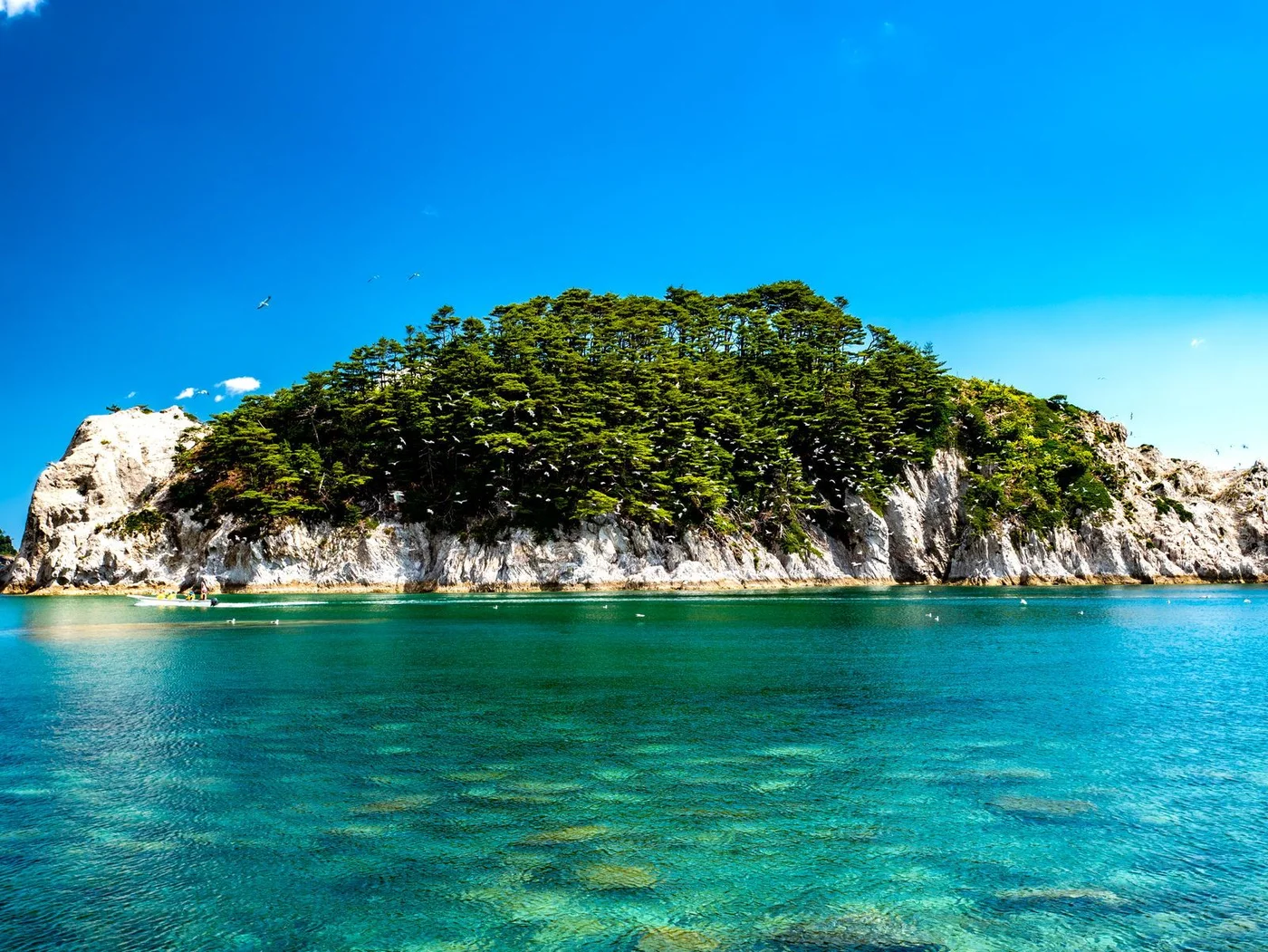
Kabushima is about 15 minutes on foot from Same Station, making an easy first coastal stop. Now joined to the mainland, it is a breeding site for black-tailed gulls, known as umineko, and a designated Japanese Natural Monument. Tourism information records their arrival in March, egg-laying from late April, incubation in May, chick-rearing in June, flight practice in July and departure through August. Choose spring or summer for adults and chicks. In late October and November, focus on the island, harbour and coastal landforms.
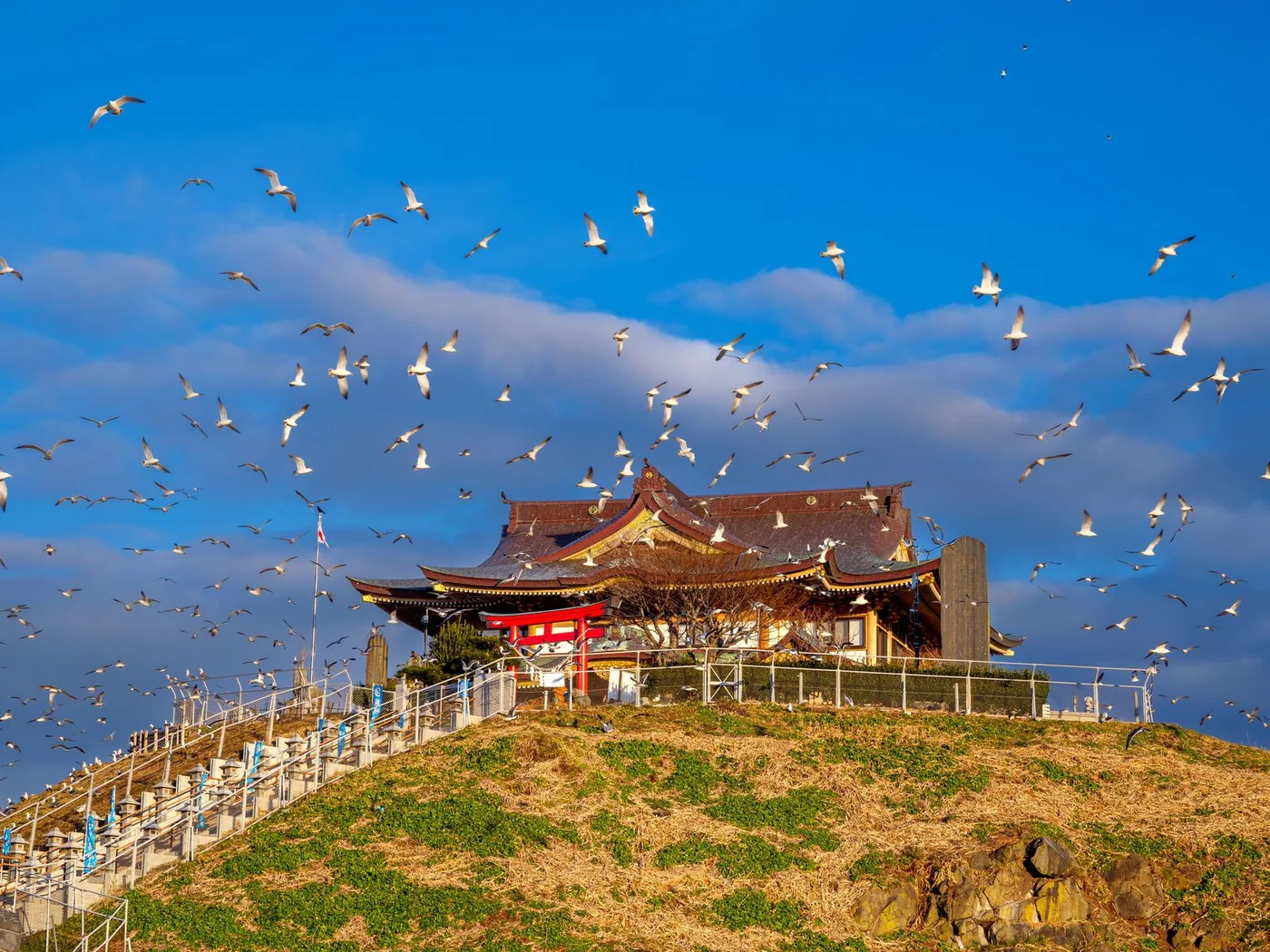
During breeding season, watch the established paths and the ground around your feet. Official information specifically warns that eggs may be on the ground in May and that approaching too closely alarms adult birds. With children, stop to locate birds before passing slowly; do not chase chicks. Allow time for observation rather than setting a few minutes for a photograph. Companions who prefer distance from the birds can watch the island’s outline, then rejoin the group for a southbound bus.
Kabushima’s religious history is also tied to the fishing port. VISIT Hachinohe records the longstanding local view of black-tailed gulls as messengers of Benzaiten at Kabushima Shrine, pointing to fishing grounds. After the market, fish sellers, harbour and birds become connected clues to coastal life. The shrine stands at the top; decide the length of the stop according to whether you want to climb the steps to worship. To save walking energy for Nakasuka, view the island and surrounding sea first, then join the coastal bus at Kabushima Kaihin Koen.
First short walk: Ashigezaki Observatory to Nakasuka and Osuka Coast
For one coastal walk with clear changes of scenery, I would leave the bus at Ashigezaki Tenbodai-mae, walk through Nakasuka and finish at Osuka Kaigan stop. The sightseeing-bus guide gives about 30 minutes’ walking, plus time at the observatory, observation stops and photographs. Bus stops frame both ends, taking you from an elevated cape to rocky inlets and sand without walking all the way from Same Station to the observatory or covering the whole Osuka beach.
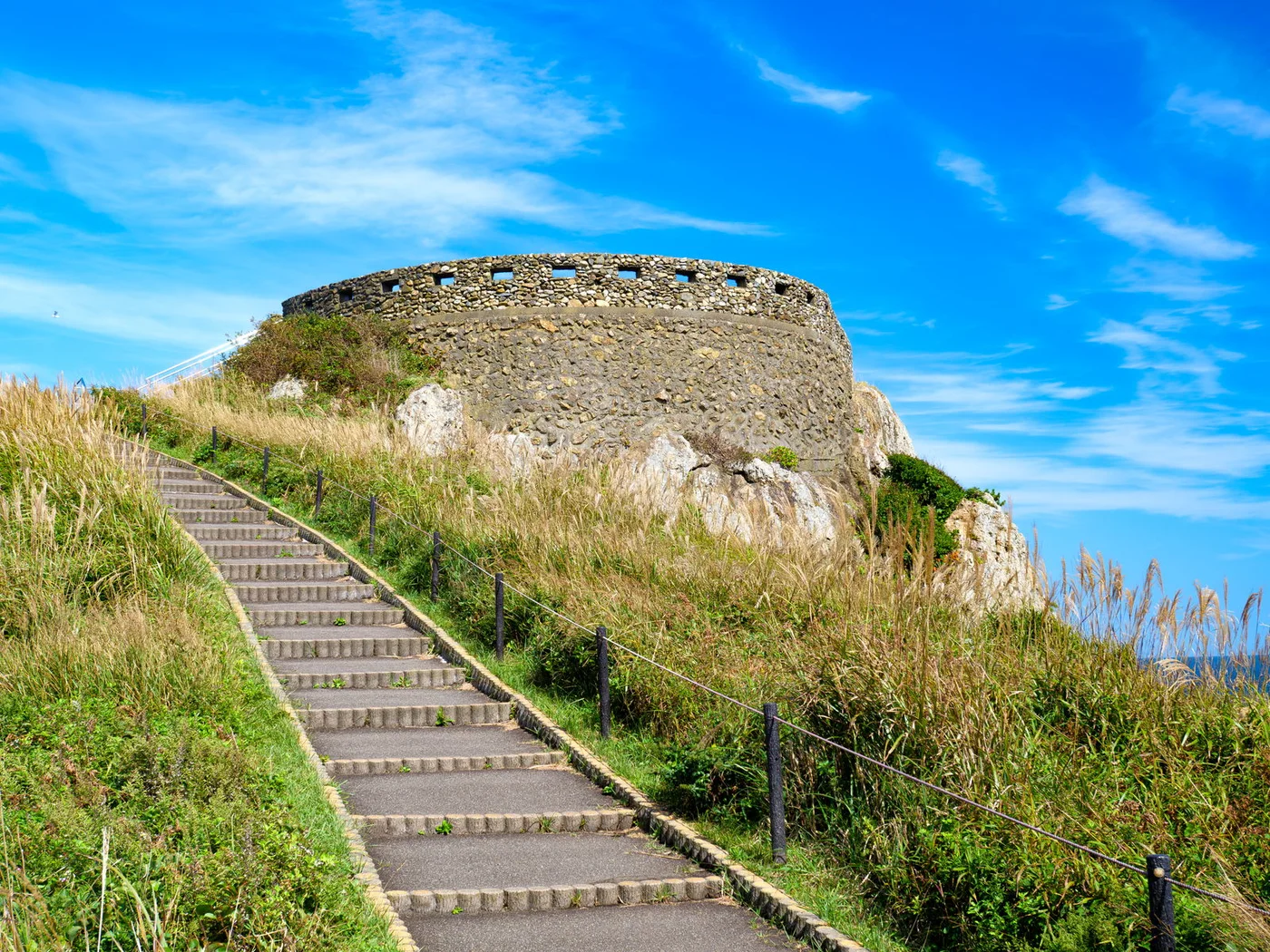
Ashigezaki Observatory resembles a fortress projecting from the cape. The coastal-bus page records its wartime military background. Identify the bay and rocky shore from the viewpoint before entering the path. Your focus then shifts from the distant Pacific to nearby rocks and plants. Nakasuka has maintained paths beside rocky inlets. In early summer, beach morning glory and coastal lilies grow near day lilies, irises and other plants. Choose spring or summer flowers for plant viewing; in autumn, focus on rock shapes and changes in the coastline.
Near the large rock called Kamanokuchi, the view opens onto Osuka’s broad sandy beach. It is known for singing sand, a sound official information links to sand with few impurities. At the beach entrance, the surface and waves show its difference from the preceding rocky stretch. The beach extends over 2 km, and walking on sand takes more effort than the path. End a short walk at this side of Osuka and continue by bus from the stop of the same name. Give a beach walk separate energy and time as the main walk of the day.
With older companions or a pushchair, choose stretches by surface. Nakasuka’s path, the observatory and Osuka’s sand are different terrain. Wheels become harder to push in loose sand. For less walking, take the bus directly to Osuka for a beach view, then continue to the Natural Lawn. In strong wind, rain or slippery conditions, shorten the outdoor distance and remain at safely accessible viewpoints and stops. Do not continue merely to connect the two stops on foot.
Second short walk: station, information centre and Tanesashi Natural Lawn
Start the second stretch at Tanesashi Kaigan Information Center bus stop, or walk there from JR Tanesashi-Kaigan Station. Take a short walk on the Natural Lawn, then return to the centre or station. The area page gives three minutes from station to lawn and the transport overview gives five. Both place the station close to the main scenery. Allow five minutes for the approach, then extend the visit according to where you want to stop. This suits slow walking, sitting by the sea or a visit with only an hour available.
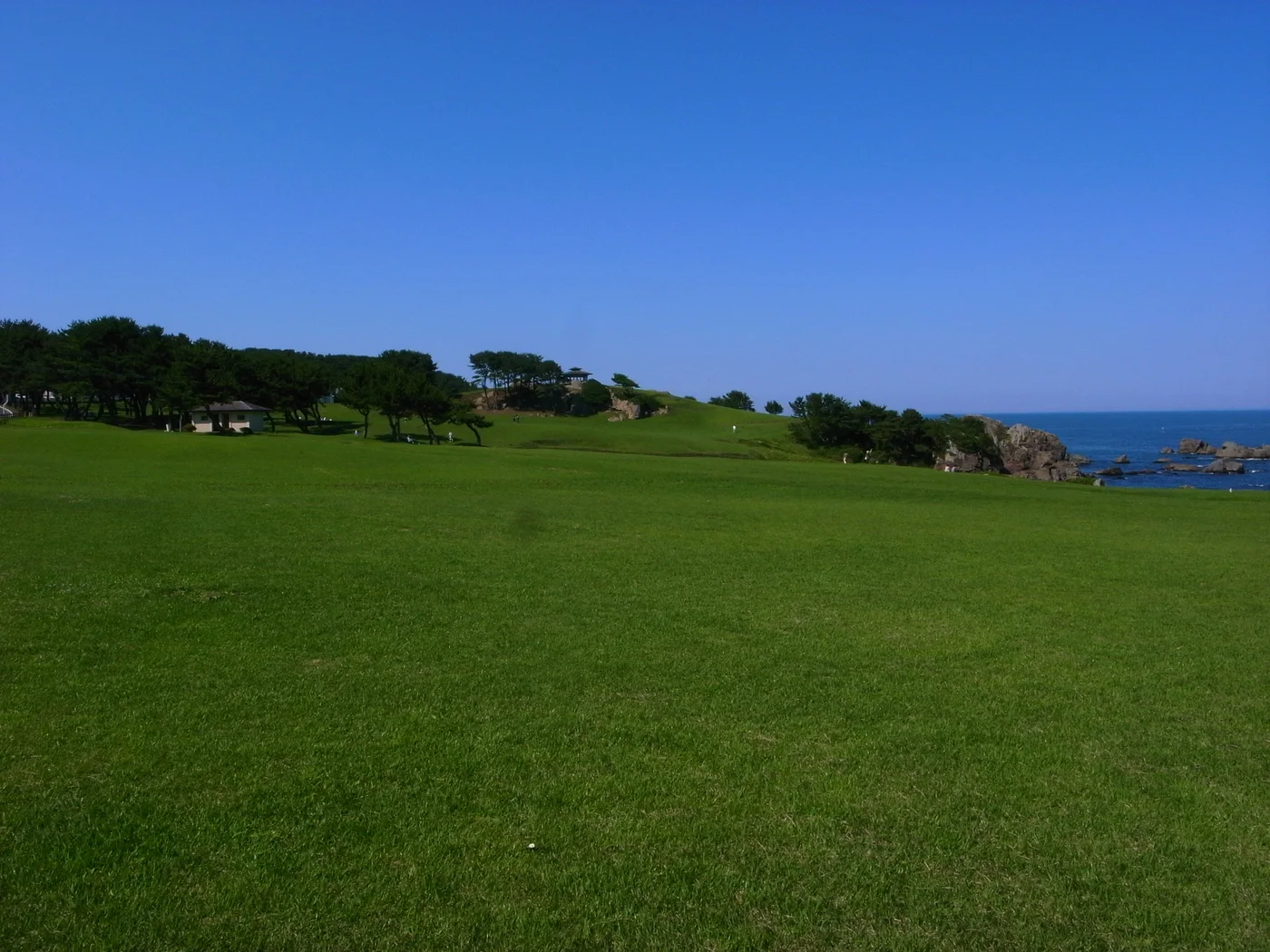
The Natural Lawn runs straight towards the sea, with gentle grassy slopes and nearby rocks in view together. First look at how the grass meets the shore rather than immediately walking to the farthest point. Stay within an easy return distance and come back to the information centre. This differs from Ashigezaki’s elevated view and Osuka’s sand. For just one coastal stop, I would choose the lawn for minimal movement, or Ashigezaki–Osuka for changing scenery on foot.
Add Yodo Pine Grove only if you want more woodland walking. Official descriptions give an undulating path with views of rocks and Shiroiwa through the trees. Shiroiwa, near Fukakubo fishing port, is about 20 metres high and whitened by cormorant droppings. This woodland section needs additional walking capacity; coastal grassland does not make every route flat. After Nakasuka, or when companions want a rest, keep the lawn and information centre without extending into the pines.
The information centre introduces nature and local life in Sanriku Fukko National Park, Tanesashi and Mount Hashikami, with interpretation and activity information. It opens 09:00–17:00 from April to November and 09:00–16:00 from December to March, closing over New Year. A free rest area and sea-view café beside it look over the lawn and provide approaching-bus information. Regroup at this fixed point after the walk. Those wanting more sea views and those needing seats can each do so, with a clear meeting place for the next transport leg.
Coastal Umineko-go switches to weekends from 9 November
The coastal Umineko-go, operated by Hachinohe City Transportation Department, connects Same and Tanesashi-Kaigan Station in about 28 minutes one way. From 1 April to 8 November 2026, it runs seven services each way daily, except 17 May. From 9 November to 31 March 2027, it runs four each way on Saturdays, Sundays and public holidays only, excluding 1–3 January. On winter weekdays, use JR directly to Tanesashi-Kaigan and return around the lawn, or walk out and back between Same and Kabushima, avoiding the missing bus connection between the stations.
The Same bus stop is not directly outside the station. The tourism page directs passengers left for about 80 metres. For the Natural Lawn, the information-centre stop is most convenient, beside the main visiting area. Some coastal stops have a sign on only one side of the road. The department tells passengers travelling the other way to wait opposite the sign. Identify the bus direction and service on arrival, and stand somewhere safe. Adult fares start at ¥150, capped at ¥200; child fares start at ¥80, capped at ¥100. Pay on leaving with cash, a transport IC card or another accepted method.
Search the full name “Tanesashi Coast sightseeing bus Umineko-go”. A separate long-distance Umineko-go between Hachinohe and Sendai is operated by Nanbu Bus and others; the transport overview lists it under Sendai connections. It serves central Mikkamachi, not the Same-to-coast hop-on route. The three services for this two-day trip are JR Hachinohe Line, Isaba-go between the centre and morning market, and coastal Umineko-go between Same and Tanesashi. Save the operator and endpoints with each timetable.
Arrive Saturday, leave Sunday: save the Sunday market for day two
Arriving on Saturday 31 October 2026, you could eat at Shichirinmura first, then leave luggage at your accommodation and rest, visiting Tatehana Wharf on 1 November. If already in Hachinohe early on Saturday, substitute a Mutsuminato breakfast for the Hasshoku lunch and visit the coast that day, then leave after Sunday’s market. The market choice depends on arrival time and food preferences. There is no need to eat a meal at all three places in two days. Leave time for one meal you can complete slowly, seated.
To combine market and coast on 1 November, take the 05:59 bus from Mikkamachi, reaching Tatehana Gyoko-mae at 06:14. After eating, allow enough time to walk back to Mutsuminato Station. JR local train 435D leaves Hachinohe at 09:29 and Hon-Hachinohe at 09:37, then Mutsuminato at 09:44, reaching Same at 09:50. You need not wait for the market to close. A full breakfast period among the stalls followed by the station walk connects with this train. To return to the hotel first, board at Hon-Hachinohe at 09:37 instead.
From Same, walk to Kabushima first. Then board the coastal bus at Kabushima Kaihin Koen at 11:13, reaching Ashigezaki Tenbodai-mae at 11:22. Walk through Nakasuka to Osuka, with stopping time beyond the roughly 30-minute walking baseline, then take the 12:18 Tanesashi-bound bus at Osuka Kaigan and reach the information centre at 12:29. This suggested route combines the seven-service spring–autumn timetable for 1 November 2026. Shorten outdoor stops for weather and energy. To skip the first walk, remain on the same bus to the lawn.
After about an hour at the lawn, take the 13:29 bus towards Same, arriving at 13:56. The department’s connections table gives a train leaving Same at 14:24, passing Hon-Hachinohe at 14:36 and reaching Hachinohe at 14:45. For more coastal time, a 15:32 bus reaches Same at 15:59; the table gives a 16:34 train reaching Hachinohe at 16:58. Choose the return station according to where you must collect luggage. Add separate time for a departing Shinkansen connection. The 13:29 return better suits an afternoon departure that day.
On other days, connect Mutsuminato breakfast to the same coast
The basic weekday or Saturday plan is breakfast at Mutsuminato during dining hours, 05:00–10:00, then a train from the same station towards the coast. For an unhurried meal, aim to arrive around 07:00–08:00, allowing time to select dishes, buy rice and sit down. That is a scheduling suggestion; the dining area opens at 05:00. Leave at Same for Kabushima first, or choose a train continuing towards Kuji to reach Tanesashi-Kaigan with fewer changes. November’s Saturday and holiday timetable has a 09:44 local from Mutsuminato towards Kuji, reaching Same at 09:50 and Tanesashi-Kaigan at 10:01.
If you visit the coast first and want Shichirinmura for lunch, you must return to the urban transport routes between them. With limited time, I would keep Shichirinmura for another half-day and complete only market breakfast and one or two coastal stretches that day. In rain too heavy for walking, keep an indoor grilled meal and cancel the divided coast walk. For a brief shower, go directly to the information centre for displays and rest, then take a short lawn walk when it stops.
Without the coastal sightseeing bus on winter weekdays, JR directly to the lawn makes the simplest contained visit. The station, information centre and lawn are close; let companions decide the distance. Visit Kabushima separately from Same rather than placing a cape route without buses between the two stations. If the municipal market or dining area is closed that day, have an ordinary breakfast and visit Hasshoku after 09:00, also retaining Shichirinmura’s Wednesday closure condition.
A few useful answers
What time is best for breakfast at Tatehana Wharf’s Sunday market?
Get there around 6am while there’s still plenty of choice. Some stalls sell out and start packing up after 8am. In the 2026 timetable, the last Isaba bus back to central Hachinohe leaves the Tatehana Fishing Port stop at 8.03am.
How do I buy a pick-your-own breakfast at Mutsuminato market?
Choose sashimi or cooked dishes and pay at each stall. Then buy rice and miso soup at the dining counter, which opens from about 5am to 10am. The market usually closes on Sundays and the second Saturday of each month.
How much does a barbecue at Shichirin-mura cost, and where do I buy the food?
At the Shichirin-mura counter, seats cost ¥500 per adult and ¥200 per primary school pupil, and are free for younger children. Buy ingredients separately inside Hasshoku Centre, within the two hours you get once you’re given a seat. Shichirin-mura closes on Wednesdays.
Which part of the Tanesashi Coast is good for a short walk?
Take the coastal bus to Ashigezaki Viewpoint and walk through Nakasuka to the Osuka Coast bus stop, about 30 minutes on foot. For an easier stroll, take the JR train to Tanesashi Coast Station. It’s about a five-minute walk to the natural lawn.
Official information and references
Sources used in this guide.
- VISIT Hachinohe | Isaba-go Sunday morning-market loop bus
- Hachinohe City Transportation Department | Isaba-go Sunday market bus
- VISIT Hachinohe | Transport access overview
- Hasshoku Center | Access
- VISIT Hachinohe | Tatehana Wharf morning market
- Tatehana Wharf morning market | Official website
- Hachinohe City | Fish and Vegetable Retail Market
- JR East | Mutsuminato Station, Hachinohe Line timetable
- JR East | Mutsuminato Station, Hachinohe Line timetable
- JR East | Train stops between Hachinohe and Kuji
- VISIT Hachinohe | Tanesashi Coast sightseeing bus Umineko-go
- VISIT Hachinohe | Mutsuminato station-front morning market
- Hasshoku Center | Guide to Shichirinmura
- Hasshoku Center | Shichirinmura shop information
- Hasshoku Center | Opening calendar
- VISIT Hachinohe | Kabushima: gulls and faith
- VISIT Hachinohe | Tanesashi Coast
- VISIT Hachinohe | Ashigezaki Observatory and Osuka Coast
- VISIT Hachinohe | Tanesashi Natural Lawn
- VISIT Hachinohe | Tanesashi Kaigan Information Center
- Hachinohe City Transportation Department | Coastal Umineko-go