Compare Tatehana Wharf’s Sunday market, a pick-your-own breakfast in Mutsuminato and charcoal grilling at Hasshoku Center’s Shichirin-mura. Plan short walks at Ashigezaki, Osuka and Tanesashi, and choose your hotel by the early transport you need.
- Region & Focus
- Hachinohe
- Reading Scope
- 27 min read · 15 chapters · 4 Q&As
- Official Verification
- 21 official sources checkedUpdated November 22, 2026
- Key Topics
- ItinerariesRail travelTohoku
Chapter Route Map (tap any stop)
- Stay downtown or near Shinkansen Hachinohe Station?
- Tatehana Wharf: start eating before 08:00
- The 2026 calendar: November Sundays and an extra December 30 market
- Isaba-go uses different return stops; 08:03 is the last bus back
- Allow 20 minutes from Mutsuminato to the wharf; station breakfast is one minute away
- Mutsuminato on weekdays and Saturdays: buy side dishes, then rice and soup
- Record market closures and dining-area closures separately
- Shichirin-mura at Hasshoku Center: buy ingredients and grill indoors on a rainy day
- Shichirin-mura accepts customers from 09:00, closes Wednesdays and uses walk-in seating on weekends
- Kabushima’s gulls: spring and summer breeding, autumn harbor views
- First short walk: Ashigezaki Observatory through Nakasuka to Osuka
- Second short walk: Tanesashi-Kaigan Station, information center and natural lawn
- Coastal Umineko-go switches to weekends from November 9; the Sendai coach shares its name
- Arrive Saturday and leave Sunday: save the Sunday market for day two
- On other days, connect Mutsuminato breakfast to the same coast
- Quick Q&A
For one night in Hachinohe, plan the market morning and coastal walk separately. On Sunday, eat from stalls at Tatehana Wharf. On weekdays and Saturdays, choose your own breakfast dishes in Mutsuminato. For indoor charcoal grilling, use Shichirin-mura at Hasshoku Center. Focus the coast visit on two stretches: Ashigezaki to Osuka, and the Tanesashi natural lawn, using Same and Tanesashi-Kaigan stations. The Sunday market bus leaves from central Hachinohe. Shinkansen Hachinohe Station is convenient for Hasshoku Center and trains out of town. Choose accommodation around your earliest transport leg.
Stay downtown or near Shinkansen Hachinohe Station?
For a trip centered on the Sunday morning market, I would stay downtown the night before. Mikkamachi and Yokamachi are outbound Isaba-go stops, so you can board directly early in the morning. From Shinkansen Hachinohe Station, take the Hachinohe Line to Mutsuminato and walk into the harbor. Both bases work. Downtown offers a market bus to the wharf; Hachinohe Station means moving luggage one fewer time on arrival and departure. Choose how you will reach breakfast before comparing room prices and breakfast packages.
Hon-Hachinohe Station is still a walk from downtown; the tourism transport page gives about 10 minutes. Save three separate locations when booking: your hotel entrance, early-morning bus stop and Hon-Hachinohe Station. “Hon-Hachinohe” in a hotel description does not put Mikkamachi outside the door. For a downtown night before the Sunday market, leave breakfast to the market rather than eating a hotel buffet first. If you need an early Shinkansen the next morning, stay near Hachinohe Station, visit the coast on arrival day and save the market for a day with a full morning.
Hasshoku Center is on a different transport route. A ¥150 bus leaves Hachinohe Station’s east exit, boarding point 4. Downtown and Hon-Hachinohe Station have a bus costing no more than ¥250. Since April 2026, the latter serves Hon-Hachinohe Station’s north exit but does not go to Shinkansen Hachinohe Station. A Hachinohe Station base makes Shichirin-mura easier before leaving with luggage. From downtown, use the route through Hon-Hachinohe Station, Mikkamachi or Muikamachi. Choose the bus for the actual destination.
Compare Tatehana Wharf’s Sunday market, a pick-your-own breakfast in Mutsuminato and charcoal grilling at Hasshoku Center’s Shichirin-mura. Plan short walks at Ashigezaki, Osuka and Tanesashi, and choose your hotel by the early transport you need.
Tatehana Wharf: start eating before 08:00
Tatehana Wharf Morning Market turns a working fishing harbor into roughly 800 meters of stalls, with about 300 vendors along the wharf. Seafood, vegetables, bread, cooked food and household goods share the market. It works like a street where you buy and eat as you go. To enjoy the changes between stalls, buy breakfast in several small portions. Stop for something that appeals, then rest at a noodle or coffee stall with seats. The tourism guide suggests about one hour for a leisurely circuit. Allow extra sitting and eating time for a dedicated breakfast visit.
The organizer’s current guide describes trading from sunrise, roughly 04:00–08:30; the tourism page says until around 09:00. Plan breakfast around the earlier packing-up pattern. Crowds concentrate at 06:00–07:00, and some stalls sell out and pack up after 08:00. A bus arriving around 06:00 usually gives more choice than leaving after 07:00. If companions cannot get up early, make lunch at Hasshoku Center the main meal. The wharf market need not become a difficult wake-up task for the whole group.
Begin with two different food formats. Shioteba chicken wings are a specialty named in the market guide and work as a first portion to share. Hachinohe senbei-jiru is a hot soup that can turn handheld snacks into a seated breakfast. Fresh bread, soba and udon stalls provide other choices. Choose by seating and menu if someone wants hot noodles or coffee. Tables belong to stalls offering eat-in service; identify which stall owns the seats before buying and follow its dining arrangements.
The market also sells fish, vegetables and souvenirs to take away. If the coast is next, treat this visit as breakfast and save fresh-food shopping for a time when purchases can go back to your accommodation or be shipped by a shop. The tourism page lists domestic shipping at market headquarters. Bring the Japanese delivery address and discuss the goods and receiving arrangements there. Keeping only food you can finish leaves you free to browse rather than carrying raw seafood in one hand and hot soup in the other.
The 2026 calendar: November Sundays and an extra December 30 market
For a November 2026 trip, the Tatehana Wharf notice lists markets on November 1, 8, 15, 22 and 29. December dates are 6, 13, 20 and 27, plus an extra market on the 30th. The regular season runs from mid-March through December. Read market dates alongside transport: the market opens on December 30, but Isaba-go does not run. A year-end plan combining that extra market with the market bus would lack its early harbor connection. Arrange a train and walk or a vehicle instead.
December 30’s extra market falls on Wednesday. Other extra 2026 markets were May 5 and August 13; May 17 was closed for the Umineko Marathon. These announced exceptions show why choosing the correct year’s date is more precise than reading “every Sunday” and assigning any weekend morning to the market.
Isaba-go uses different return stops; 08:03 is the last bus back
The transport department’s fiscal-2026 timetable lists Mikkamachi departures at 05:56, 05:59, 06:36 and 06:46, reaching Tatehana Gyoko-mae at 06:11, 06:14, 06:51 and 07:01. Jusannichimachi departures are one minute earlier. For over an hour of browsing, choose 05:59 and arrive at 06:14. The 06:46 bus still gets you there at 07:01 if you want to rise later, but focus food and shopping on your priorities. Early buses can be crowded; the tourism page specifically suggests the second service, three minutes after the first.
Four return buses leave Tatehana Gyoko-mae at 06:13, 06:23, 07:23 and 08:03. The 08:03 departure is this market loop’s final service back downtown that day. The 07:23 bus reaches Tsuitachimachi at 07:39 and Muikamachi at 07:40; the 08:03 bus reaches them at 08:19 and 08:20. If you boarded at Mikkamachi or Yokamachi, choose a return stop such as Tsuitachimachi or Muikamachi for your hotel. Downtown one-way streets mean outbound and return stops differ.
Adult fares start at ¥150 and are capped at ¥200; child fares start at ¥80 and are capped at ¥100. Pay when leaving, using cash, Hachica, Suica or another accepted method. The department lists service on market Sundays from March 15 to December 27, 2026, except May 17. There is also no service for the extra December 30 market. This bus handles the early downtown–harbor round trip. Use the Hachinohe Line and coastal Umineko-go separately for the coast. To continue directly there after the market, walk to Mutsuminato Station rather than returning downtown first.
Allow 20 minutes from Mutsuminato to the wharf; station breakfast is one minute away
Mutsuminato has its own station-front market. Tatehana Wharf requires a further walk into the harbor. The city lists the fish and vegetable retail market as one minute on foot from Mutsuminato Station; the wharf organizer lists a 20-minute walk. Allow those 20 minutes for the wharf, plus room for getting off the train, leaving the station and finding breakfast. Save “Tatehana Wharf Morning Market” and Shinminato 3-chome in navigation.
The JR Hachinohe Line links Hachinohe, Hon-Hachinohe, Mutsuminato, Same and Tanesashi-Kaigan. For the coast, look for the Same/Kuji direction; for the Shinkansen station, use the Hachinohe direction. Some trains terminate at Same. To go directly from the market to Tanesashi-Kaigan Station, choose a train continuing toward Kuji. Same is the right stop if Kabushima comes first. This distinction matters more than whether a station name contains “coast,” because short walks around Ashigezaki and Osuka still need a bus connection or an approach walk.
Mutsuminato on weekdays and Saturdays: buy side dishes, then rice and soup
Shops along Mutsuminato’s station-front market street begin very early. The municipal fish and vegetable retail market has clearer breakfast hours: the market as a whole operates roughly 03:00–14:00, fresh-fish and sashimi shops finish around 11:00, and the dining area runs roughly 05:00–10:00. Arrive within dining hours for a seated breakfast. A 14:00 market closing time does not turn the breakfast service into lunch. Food businesses also shop early; leave passages clear for buyers and deliveries, and stand close to the stall you are examining.
Build breakfast by choosing sashimi, prepared food or other side dishes from market stalls and paying each seller separately. Then buy rice and miso soup at the dining area, Asameshidokoro Gyosai. Sit down with the dishes, rice and soup together. Put sashimi over the rice for a seafood bowl, or keep separate small plates to compare each item. Purchases are based on individual shop products, so calculate your budget from the plates you choose. You do not first buy a set of Aomori City Nokkedon meal coupons.
Start with one fish choice, such as squid, flatfish or tuna, and let a companion add a different plate. Sharing makes the differences easier to taste. Those who prefer fully cooked food can choose grilled fish from the dining area and prepared market dishes, then sit with companions eating sashimi. The tourism guide also lists salted salmon roe and other roe. Foods suited to a little rice can remain a small side portion rather than every purchase becoming a main dish. Decide whether to add more after you have rice and soup.
“Isaba no Katcha” is the local name for the women fish sellers. The city highlights face-to-face trading as a market feature. Established in 1953, the municipal retail market originally supported people in hardship, including postwar repatriates. It later became a local shopping place as Hachinohe’s fishing industry and urban consumption grew. A major renovation finished in December 2022, retaining the market atmosphere while improving hygiene and accessibility. Breakfast remains part of this everyday trading space. Allow time to watch cutting and buying at the stalls rather than leaving as soon as you photograph the bowl.
Record market closures and dining-area closures separately
The municipal market normally closes on Sundays, the second Saturday of each month and January 1–2, with possible longer New Year closures. The second Saturday in November 2026 is the 14th. The market notice also lists a dining-area closure on Friday, November 13. A self-selected breakfast that morning would lack the place to buy rice and soup even if fish sellers were open. Move the full meal to another time and venue. Being able to buy fish does not mean you can sit down for that breakfast.
Year-end arrangements differ: the market opens specially on Sunday, December 27, 2026, and operates normally December 28–31. It closes specially on January 4–5, 2027, with the dining area closed January 6–8. Record the dining-area calendar for year-end travel. On payment, Hachinohe City’s page updated October 8, 2026 says some shops offer cashless payment as well as cash. Small-denomination yen makes separate purchases easier. Follow each chosen shop’s signs for cards or electronic payment.
Shichirin-mura at Hasshoku Center: buy ingredients and grill indoors on a rainy day
Shichirin-mura provides indoor charcoal-grill seating at Hasshoku Center, allowing a coastal meal to become shopping and cooking instead. First pay the per-person fee at its counter and receive a seat, seasonings and basic equipment. Then buy ingredients from shops inside the center. The two-hour use period begins when you receive the seat, so shopping counts within it. Browse first to identify likely purchases, then register and shop efficiently to keep most of the time for grilling and eating.
The facility fee is ¥500 per adult, ¥200 per elementary-school child and free for younger children; ingredients cost extra. Two adults and one elementary-school child pay ¥1,200 before adding stall purchases, rice, soup and drinks. This differs from buying a ready-made set meal: ¥500 is not the whole meal price. Shichirin-mura sells rice, rice balls, soups and drinks. Choose fish, meat and vegetables for grilling at Hasshoku Center’s shops.
For a first purchase, choose scallops or oysters in their shells with a little meat or vegetables. The official guide also lists seafood sets for Shichirin-mura if you want fewer separate choices. Tell the seller “Shichirin-mura de tabemasu” and ask for preparation suitable for grilling there. Market sashimi is ready to eat, while shellfish and meat need cooking time. One shareable shellfish plate plus the meat companions want is easier on a shared grill than a full separate set for everyone.
Official guidance recommends grilling shellfish first, then fish and meat. Vegetables can go directly on the grill or in foil. Basic tableware, tongs and seasonings are available to borrow; you do not need to bring a stove. Ask staff for help if unfamiliar with the equipment. Clear the table afterward, return tongs and seasonings to the collection counter, and sort rubbish into designated places. Leave the charcoal grill for staff. Shopping, eating and clearing up share one use period, so buy an amount you can cook without rushing.
Hasshoku Center’s official introduction to choosing ingredients and charcoal grilling at Shichirin-mura.
Shichirin-mura accepts customers from 09:00, closes Wednesdays and uses walk-in seating on weekends
Grill rental reception runs 09:00–17:00, with regular Wednesday closure. Use is limited to two hours under the current guide; do not plan an extension. Weekday reservations are available at 0178-29-4451. Reservations are not accepted on Saturdays, Sundays, public holidays or busy periods. Before a weekend train out of town, include any seating wait within your available time. If time is short, change the meal format before buying ingredients that need a grill and discovering there is no seat.
Only food and drink bought inside Hasshoku Center may be consumed at Shichirin-mura. Seafood bought at Tatehana Wharf the previous day cannot be brought in for grilling. Ingredients and facility fees are separate transactions. Shichirin-mura lists credit cards, PayPay, Suica, WAON and other methods; individual food stalls have their own payment signs. The market building usually runs 09:00–18:00 and Kuriya Stadium usually 09:00–21:00. Evening restaurant hours and Shichirin-mura reception hours must be read separately.
A Wednesday alternative needs a facility-specific check. On the October 2026 calendar, the market building and Aji Yokocho closed on October 7, 21 and 28, but opened on the 14th; Tuesday the 27th was also closed. Shichirin-mura’s own shop page separately lists Wednesdays as closed. For the rainy-day plan, first choose a day when Shichirin-mura operates. Another area of Hasshoku Center opening into the evening does not establish grill availability. Keeping this meal in the half-day when you arrive at or leave Hachinohe Station is usually simpler than returning from the coast mid-visit.
Kabushima’s gulls: spring and summer breeding, autumn harbor views
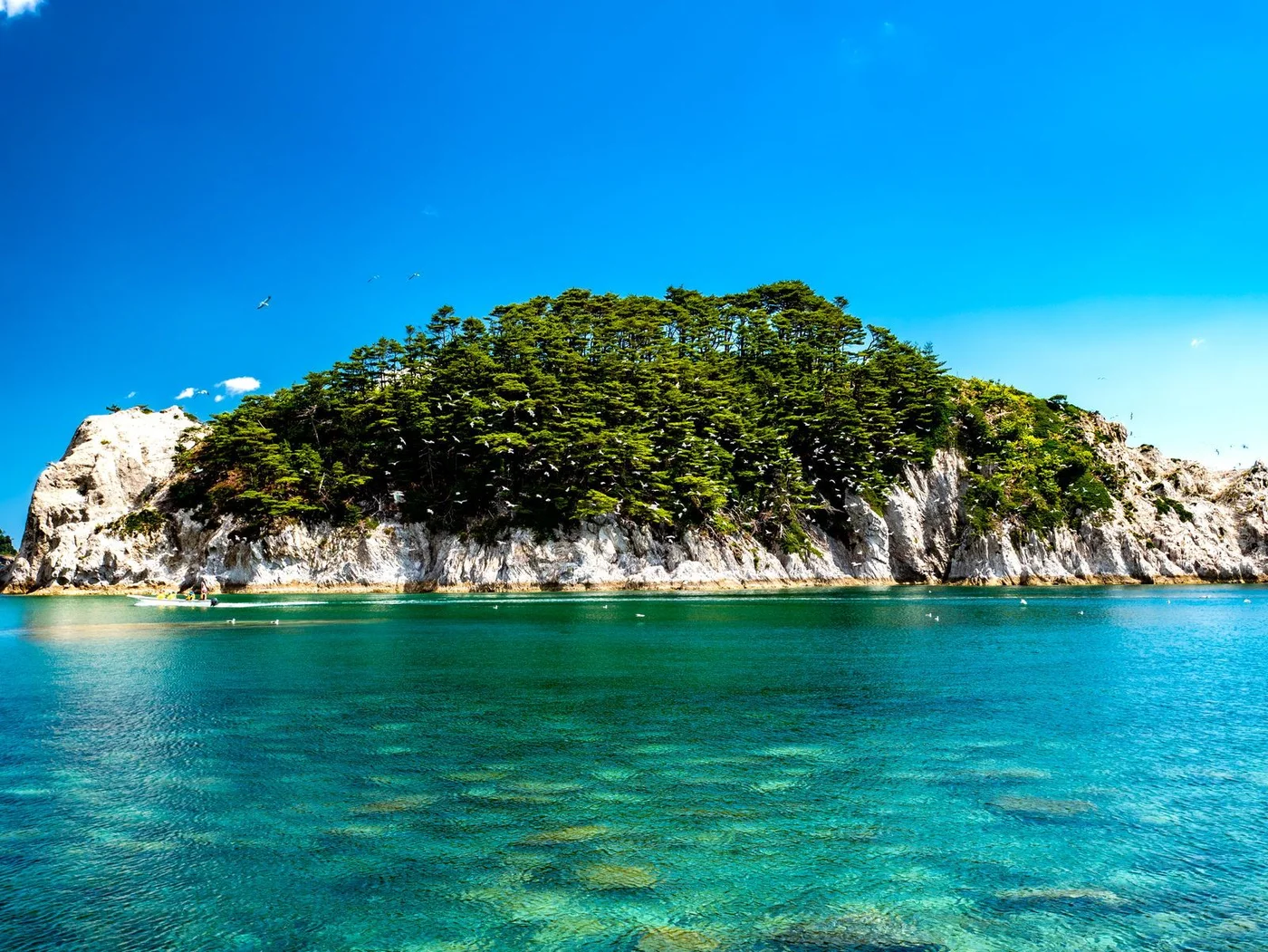
Kabushima is about 15 minutes on foot from Same Station, making it an easy first coastal stop. It is now connected to the mainland. Its umineko are black-tailed gulls, and the breeding ground is a Japanese Natural Monument. The tourism organization records arrival in March, egg laying from late April, incubation in May, chick rearing in June, flight practice in July and gradual departure in August. Choose spring or summer for parents and chicks. In late October and November, focus on the island, harbor and coastal landforms.
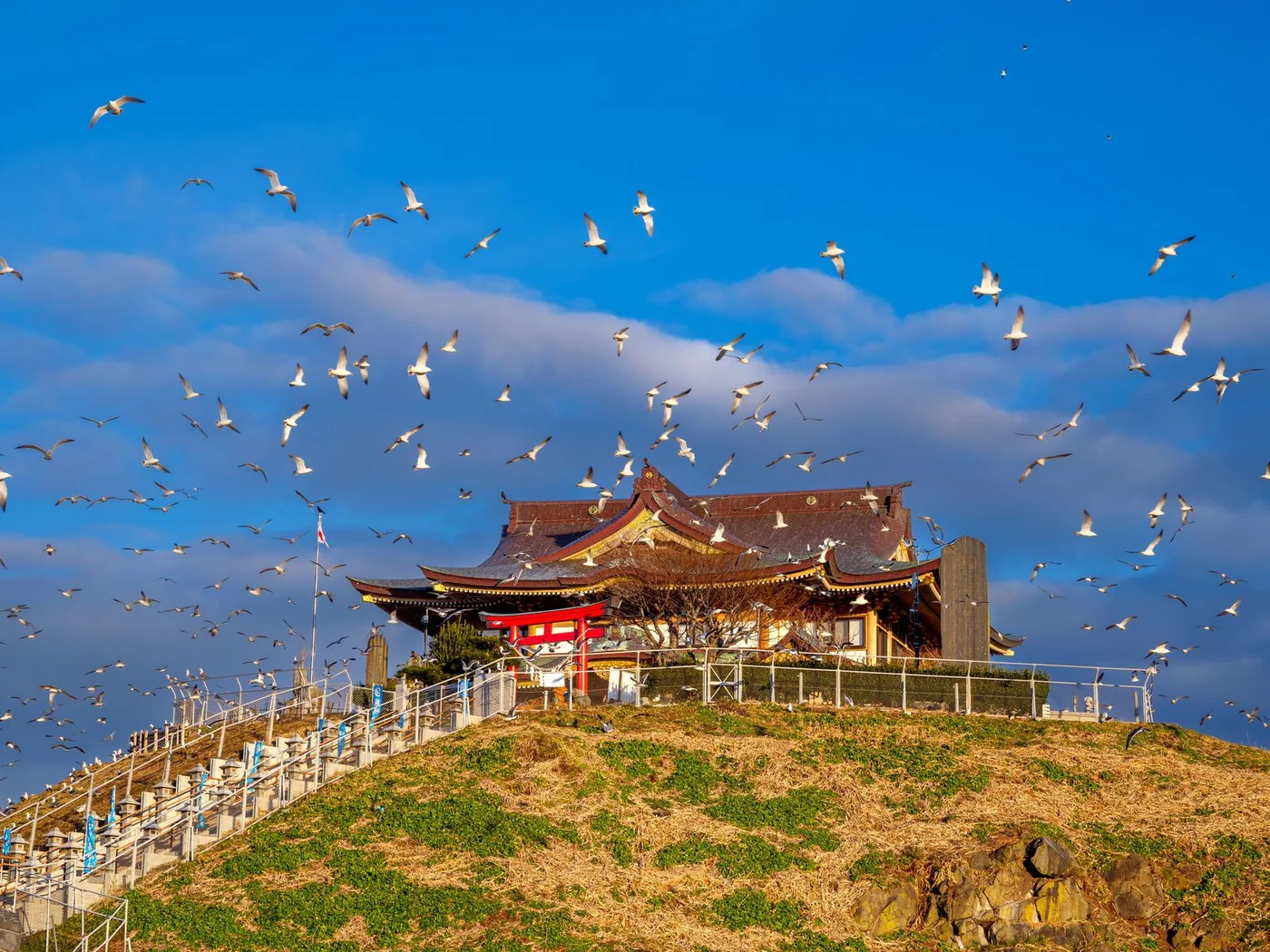
During breeding season, pay attention to established paths and the ground near your feet. Official guidance particularly notes that eggs may be on the ground in May and that approaching too closely alarms parents. With children, stop to locate birds before passing slowly; do not follow chicks. Treat this as an observation stop rather than a photograph to finish in a set number of minutes. Companions who prefer distance from the birds can watch the island’s outline, then join the bus south.
Kabushima’s religious history is tied to the fishing harbor. VISIT HACHINOHE records the long-held local view that black-tailed gulls indicate fishing grounds and serve Benzaiten at Kabushima Shrine. Coming after the market connects fish sellers, harbor and birds as parts of coastal life. The shrine stands on the island’s top; decide whether to climb its steps to worship. To save walking energy for Nakasuka, see the island and surrounding sea first, then take the coastal bus from Kabushima Kaihin Koen.
First short walk: Ashigezaki Observatory through Nakasuka to Osuka
For one coastal stretch with clear changes of scenery, I would get off at Ashigezaki Tenbodai-mae, walk through Nakasuka and finish at Osuka Kaigan bus stop. The sightseeing bus guide uses about 30 minutes of walking as its baseline. Add time for the lookout, observation and photographs. Bus stops anchor both ends, so you can go from a high headland view to reefs and sand without first walking from Same Station to the lookout or covering the whole Osuka beach.
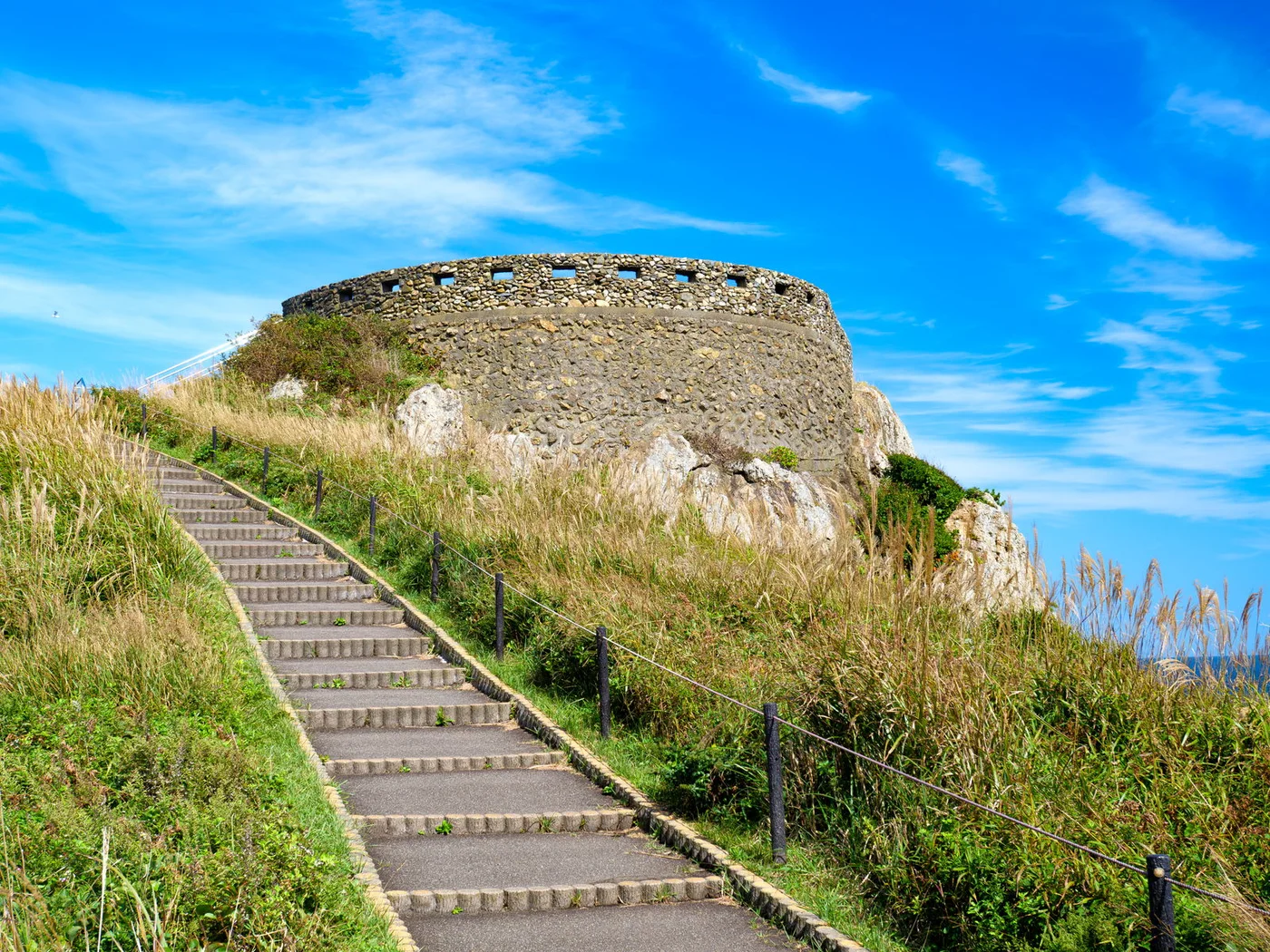
Ashigezaki Observatory resembles a stone fort projecting over the headland. The coastal bus page records its wartime military use. Identify the bay and rocky shore from the lookout before entering the trail. The view then shifts from the distant Pacific to nearby rocks and plants. Nakasuka has maintained paths beside reef-lined inlets. In early summer, beach morning glory and coastal lilies grow alongside plants such as daylilies and Japanese irises. Choose spring and summer for flowers; in autumn, study rock shapes and turns in the coastline.
Near the large Kama-no-kuchi rock, the scenery opens into Osuka’s broad sandy beach. It is known for singing sand, which the official guide links to sand with few impurities. Looking at the surface and waves from the beach entrance reveals its difference from the preceding rocks. The full beach exceeds two kilometers, and sand takes more effort than a trail. For a short walk, finish at this end of Osuka and continue by bus from its namesake stop. Allow separate time and energy if beach walking will be the day’s main activity.
With older companions or a stroller, use the surface as a route-selection condition. Nakasuka’s trail, the lookout and Osuka’s beach have different ground. Wheels become harder to push in loose sand. For less walking, take the bus directly to Osuka to see the beach, then continue to the natural lawn. In strong wind, rain or slippery conditions, shorten the outdoor distance and stay within safely accessible viewing and bus-stop areas. Do not continue simply to connect two stops on foot.
Second short walk: Tanesashi-Kaigan Station, information center and natural lawn
Start by getting off at Tanesashi Kaigan Information Center, or walk there from JR Tanesashi-Kaigan Station. Choose a short stretch of natural lawn, then return to the center or station. The area guide gives three minutes from station to lawn, while the transport overview gives five. Both place the station beside the main scenery. Allow five minutes for the approach and extend the visit according to where you want to stop. This suits slow walking, sitting by the sea or a visit with only one hour left.
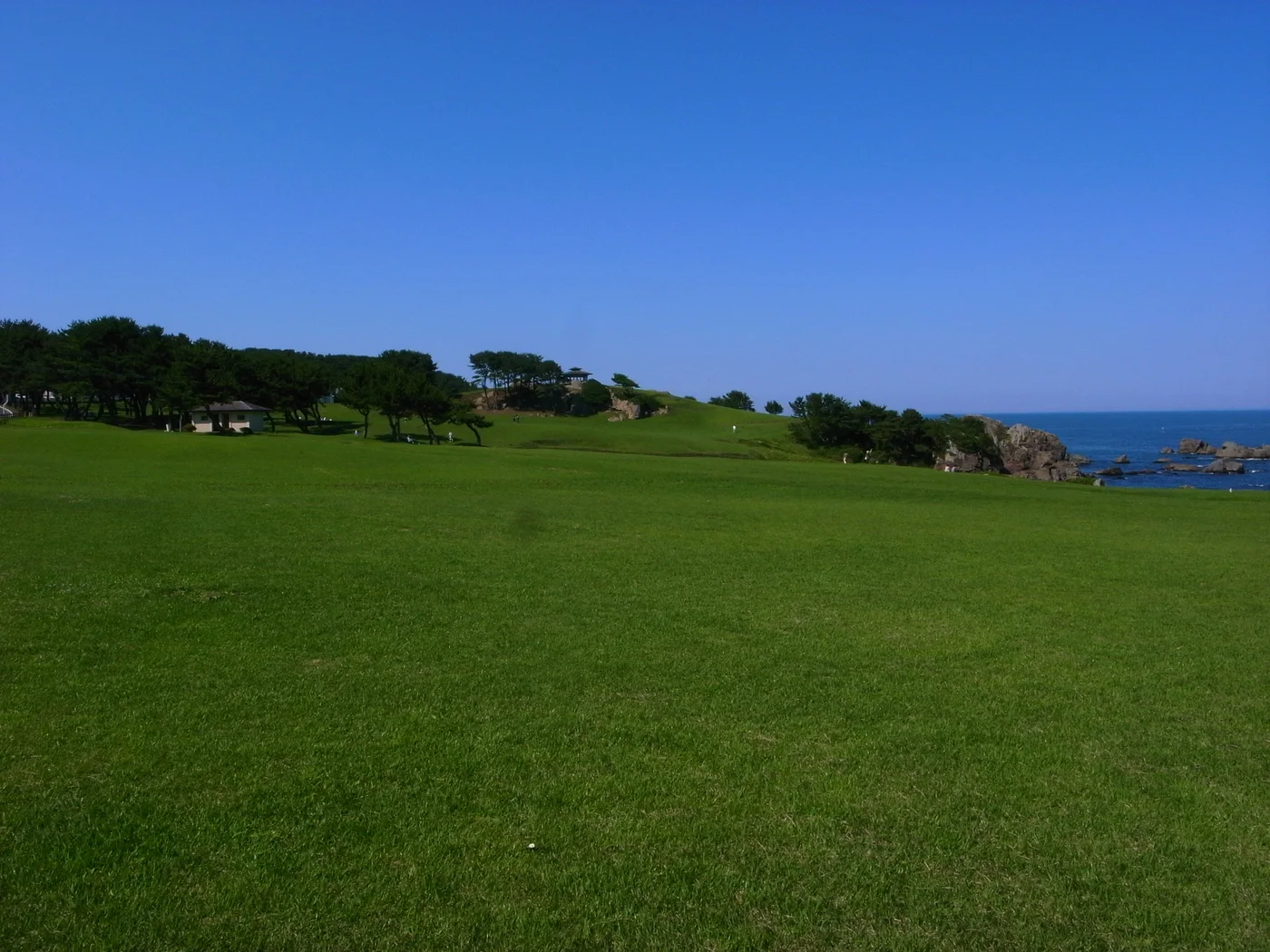
The lawn’s defining feature is grass extending directly toward the sea, with gently rolling green slopes and nearby rocks in the same view. First look at how the lawn meets the water rather than heading for the farthest point. Walk within an easy return distance, then go back to the information center. This differs from Ashigezaki’s elevated view and Osuka’s sand. For just one coast stop, I would choose the lawn for low movement and Ashigezaki–Osuka for people who want changing scenery on foot.
Add Yodo Pine Grove only if you want more woodland walking. Official sources describe an undulating forest trail with glimpses of rocky shore and Shiraiwa. Near Fukakubo fishing harbor, the roughly 20-meter-high Shiraiwa is white from cormorant droppings. This forest section needs extra walking capacity; “seaside grassland” does not make every route flat. After Nakasuka, or if companions want rest, keep to the lawn and information center rather than extending into the pine grove.
The information center introduces nature and daily life around Sanriku Fukko National Park, Tanesashi and Mount Hashikami, with interpretation and activity information. It opens 09:00–17:00 from April through November and 09:00–16:00 from December through March, closing over New Year. A free rest area and seaside café next door overlook the lawn and provide approaching-bus information. Regroup at this fixed point after walking. Those wanting more sea views and those needing seats can each do so, with a clear meeting place for the next transport leg.
Coastal Umineko-go switches to weekends from November 9; the Sendai coach shares its name
The coastal Umineko-go is operated by Hachinohe City’s transport department between Same and Tanesashi-Kaigan Station, taking about 28 minutes one way. From April 1 to November 8, 2026, it runs seven services in each direction daily, except May 17. From November 9 to March 31, 2027, it runs four each way on Saturdays, Sundays and public holidays, with no service January 1–3. On winter weekdays, use JR directly to Tanesashi-Kaigan for a lawn-area return walk, or walk from Same to Kabushima and back. This avoids the missing bus between stations.
The Same boarding stop is not directly in front of the station. The tourism page says to turn left outside and walk about 80 meters. For the lawn, the information-center stop is most convenient, directly beside the main visiting area. Some coastal stops have a sign on only one side of the road. The transport department asks passengers for the opposite direction to wait across from the sign. Check the bus’s destination and service, and stand where there is safe space. Adult fares start at ¥150 and cap at ¥200; child fares start at ¥80 and cap at ¥100. Pay on exit with cash, an accepted transport IC card or another listed method.
Search the full name “Tanesashi Kaigan sightseeing bus Umineko-go.” A separate long-distance Umineko-go coach connects Hachinohe and Sendai, operated by Nanbu Bus and others. The transport overview lists it under Sendai access. It serves downtown Mikkamachi, not short coastal connections from Same. This two-day trip uses three distinct services: JR Hachinohe Line, Isaba-go between downtown and the market, and coastal Umineko-go between Same and Tanesashi. Save the operator and endpoints with each timetable.
Arrive Saturday and leave Sunday: save the Sunday market for day two
Arriving on Saturday, October 31, 2026, you could first eat at Shichirin-mura, then leave bags at your accommodation and rest before Tatehana Wharf on November 1. If already in Hachinohe early Saturday, replace the Hasshoku lunch with Mutsuminato breakfast, visit the coast Saturday and leave after Sunday’s market. Market choice depends on arrival time and desired food. You do not need a meal at all three in two days. One meal with time to sit and finish slowly is more comfortable.
To combine the market and coast on November 1, take the 05:59 bus from Mikkamachi, arriving Tatehana Gyoko-mae at 06:14. After eating, allow the full walk back to Mutsuminato Station. JR local 435D leaves Hachinohe at 09:29 and Hon-Hachinohe at 09:37, departing Mutsuminato at 09:44 and arriving Same at 09:50. You do not need to wait until the market closes. Browse during a full breakfast period, then walk back for this train. To organize belongings at your hotel first, board at Hon-Hachinohe at 09:37 instead.
From Same, walk to Kabushima first. Then take the 11:13 coastal bus from Kabushima Kaihin Koen, reaching Ashigezaki Tenbodai-mae at 11:22. Walk through Nakasuka to Osuka, allowing observation time beyond the roughly 30-minute baseline. Take the 12:18 bus from Osuka Kaigan toward Tanesashi, reaching the information center at 12:29. This suggested route combines the spring–autumn seven-service timetable for November 1, 2026. Shorten outdoor stops for weather and energy. To skip the first walk, remain on the bus to the lawn.
After about an hour at the lawn, take the 13:29 bus from the information center toward Same, arriving at 13:56. The transport department’s connection table lists a train leaving Same at 14:24, passing Hon-Hachinohe at 14:36 and reaching Hachinohe at 14:45. For longer by the sea, another bus leaves the center at 15:32 and reaches Same at 15:59; the connection table lists a 16:34 train to Hachinohe, arriving at 16:58. Choose your return stop for luggage collection and allow separate Shinkansen transfer time. The 13:29 return better suits an afternoon departure from town.
On other days, connect Mutsuminato breakfast to the same coast
The weekday or Saturday basic plan is breakfast at Mutsuminato within the dining area’s 05:00–10:00 hours, then a coastbound train from the same station. For an unhurried meal, aim to arrive at 07:00–08:00, leaving time to choose ingredients, buy rice and sit. This is a scheduling suggestion; the dining area opens at 05:00. Get off at Same for Kabushima, or choose a train continuing toward Kuji to reach Tanesashi-Kaigan with fewer transfers. November’s Saturday and holiday timetable has a Kuji-bound local at Mutsuminato at 09:44, reaching Same at 09:50 and Tanesashi-Kaigan at 10:01.
If the coast comes first and Shichirin-mura is lunch, you must return to the city transport routes between them. With limited time, I would save Shichirin-mura for another half-day and complete only market breakfast plus one or two coastal stretches. In rain too heavy for walking, keep an indoor grill meal and cancel the divided coastal route. For a brief shower, go directly to the information center for exhibits and rest, then walk a small lawn circuit when it stops.
On winter weekdays, with no sightseeing bus, JR directly to the lawn is the simplest plan to finish. The station, center and lawn are close together, and companions can decide how much to walk. Visit Kabushima as a separate return walk from Same. Do not insert an unserved headland section between the stations. If the municipal market or its dining area is closed that day, have an ordinary breakfast and visit Hasshoku after 09:00, while retaining Shichirin-mura’s Wednesday closure condition.
A few useful answers
What time should I get to the Tatehana Wharf Sunday market?
Aim for around 6 a.m. for a wider choice of breakfast food. Some stalls sell out and start packing up after 8 a.m. In the 2026 timetable, the last Isaba shuttle back downtown leaves the Tatehana Fishing Port stop at 8:03 a.m.
How do I put together breakfast at Mutsuminato market?
Pick sashimi or cooked dishes from the stalls and pay each vendor directly. Get rice and miso soup at the dining counter, open from about 5 to 10 a.m. The market usually closes on Sundays and the second Saturday of each month.
How much does grilling at Shichirin-mura cost, and where do I buy the food?
At the Shichirin-mura counter, seats cost ¥500 per adult and ¥200 per elementary school student, and are free for preschoolers. Buy food separately inside Hasshoku Center within the two hours you get once you’re given a seat. Shichirin-mura closes on Wednesdays.
Where can I take a short walk on the Tanesashi Coast?
Get off the coastal bus at Ashigezaki Viewpoint and walk via Nakasuka to the Osuka Coast stop, about 30 minutes. For a shorter walk, take the JR train to Tanesashi Coast Station. The natural lawn is about five minutes away on foot.
Official information and references
Sources used in this guide.
- VISIT HACHINOHE | Sunday market loop bus Isaba-go
- Hachinohe City Transport Department | Sunday market loop Isaba-go
- VISIT HACHINOHE | Transport access overview
- Hasshoku Center | Access
- VISIT HACHINOHE | Tatehana Wharf Morning Market
- Tatehana Wharf Morning Market | Official website
- Hachinohe City | Fish and vegetable retail market
- JR East | Mutsuminato Station Hachinohe Line timetable
- JR East | Mutsuminato Station Hachinohe Line timetable
- JR East | Stops between Hachinohe and Kuji
- VISIT HACHINOHE | Tanesashi Coast sightseeing bus Umineko-go
- VISIT HACHINOHE | Mutsuminato station-front morning market
- Hasshoku Center | Shichirin-mura visitor guide
- Hasshoku Center | Shichirin-mura shop page
- Hasshoku Center | Opening calendar
- VISIT HACHINOHE | Kabushima: gulls and island faith
- VISIT HACHINOHE | Tanesashi Coast
- VISIT HACHINOHE | Ashigezaki Observatory and Osuka Coast
- VISIT HACHINOHE | Tanesashi natural lawn area
- VISIT HACHINOHE | Tanesashi Coast Information Center
- Hachinohe City Transport Department | Coastal sightseeing bus Umineko-go