The Randen 1-Day Pass costs ¥700 for adults and ¥350 for children, paying off from your third paid ride. Check the four ticket-window stations, Katabiranotsuji transfers, Arashiyama footbath and Kitano Line temples, plus Kyoto Subway and Eigamura combo passes.
- Region & Focus
- Kyoto
- Reading Scope
- 19 min read · 11 chapters · 5 Q&As
- Official Verification
- 30 official sources checkedUpdated 22 November 2026
- Key Topics
- Rail travelTravel budgetItineraries
Chapter Route Map (tap any stop)
- When the Randen 1-Day Pass Pays Off From Ride Three
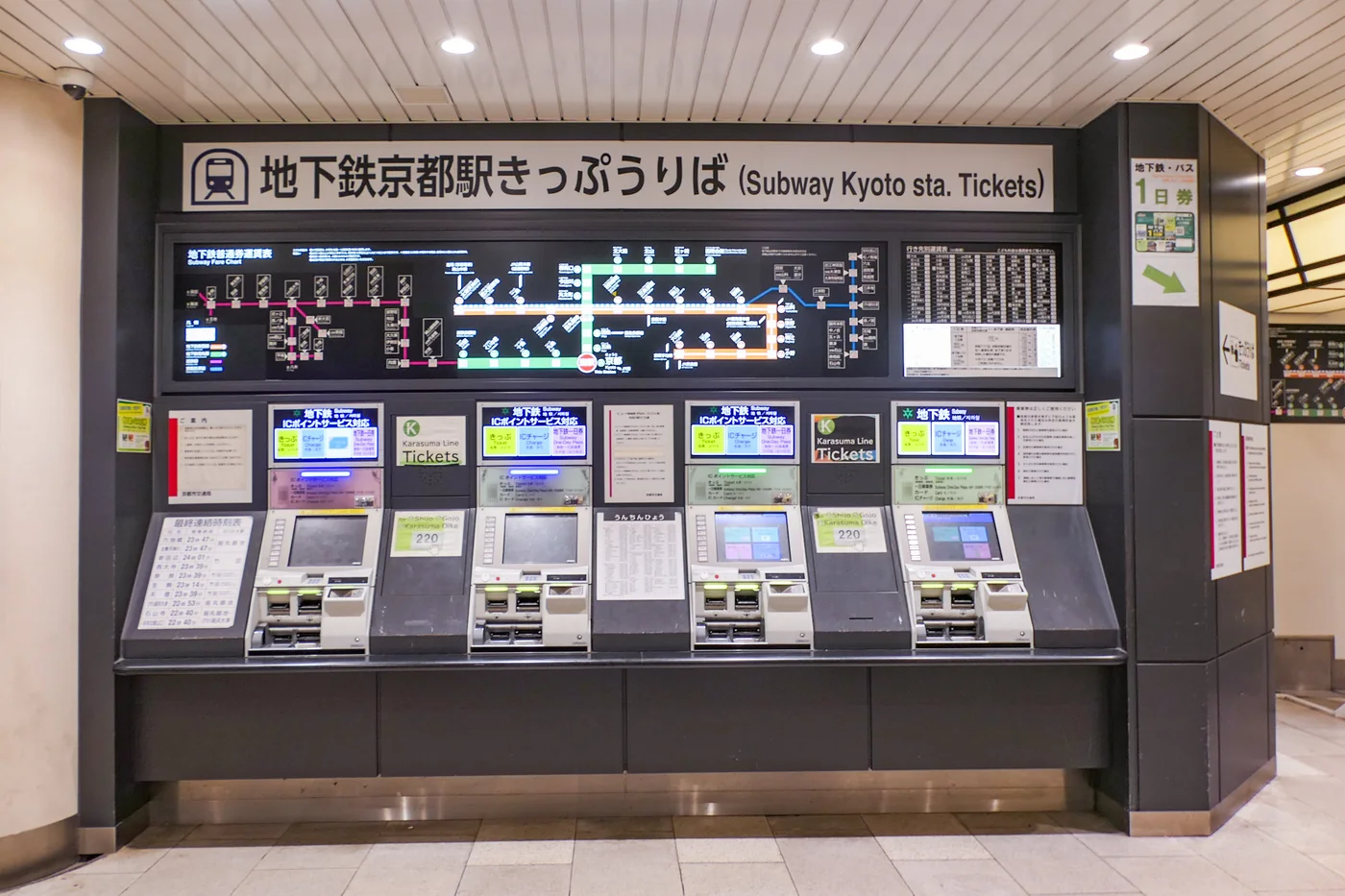
- Where to Buy Tickets and How to Pay When Alighting
- Changing Lines at Katabiranotsuji: Check Platform Destinations First
- Connecting From Kyoto Station, Shijo-Kawaramachi and the Underground
- When the Subway Combo Pass and Autumn Hankyu Pass Make Sense
- Allow Half a Day for the Main Line: Visit Tenryu-ji Before the Footbath
- Two Temples on the Kitano Line: Prioritise Your Favourite Garden
- Full-Day Routes in Either Direction: Lock In Your Final Stop First
- Toei Kyoto Studio Park Has Two Entrances: Use the Main Gate After 17:00
- Spring Cherry Blossoms From the Kitano Line and Autumn Night Foliage at Kitano Tenmangu
- Allow Extra Time to Reach the Platform for Reserved Sagano Scenic Railway Trains
- Quick Q&A
The Randen 1-Day Pass costs ¥700 for adults and ¥350 for children, covering both the Arashiyama Main Line and the Kitano Line. For a simple return trip between Shijo-Omiya and Arashiyama, tapping an IC card costs an adult ¥500 in total. If you hop off along the way at Kurumazaki-Jinja, or continue from Arashiyama to Ninna-ji and Kitano Tenmangu, the day pass starts saving on fares alone from your third separate paid ride of the day. When changing lines at Katabiranotsuji, staying inside the ticketed area to board the connecting tram keeps the adult fare at ¥250. Getting that transfer count right tells you which ticket to buy and which station to start from.
When the Randen 1-Day Pass Pays Off From Ride Three
At the ticket window, the pass is sold as the Randen 1-Day Free Ticket. It costs ¥700 for adults and ¥350 for children, allowing unlimited hop-on, hop-off travel on the Arashiyama Main Line and the Kitano Line on the day of use. Standard single fares are flat across the entire network at ¥250 for adults and ¥120 for children, whether you ride one stop or to the terminus. Kyoto City Tourism Association lists the child day pass as for primary school pupils, while Keifuku Electric Railroad's fare table defines the child single fare as ages 6 to 11. If a child is right on the age or school-year boundary, state their age and school stage directly at the ticket window.
Travelling out from Shijo-Omiya, exploring Arashiyama and returning directly to Shijo-Omiya costs ¥500 for an adult and ¥240 for a child across the day. Adding a stop at Kurumazaki-Jinja on the same main line brings the total to three separate fares: ¥750 for adults and ¥360 for children, costing ¥50 and ¥10 more than the day pass respectively. From the fourth ride onwards, the savings widen noticeably. If one adult and one child take only two rides together, paying individually totals ¥740, whereas two day passes cost ¥1,050. Calculate tickets based on each person's actual route; anyone heading back to the hotel early can simply tap a card.
When counting rides, treat each time you leave a station to visit somewhere as one segment. Travelling from Arashiyama to Omuro-Ninnaji involves changing to the Kitano Line inside Katabiranotsuji Station, which still counts as a single paid journey despite the transfer. However, if you exit the station at Katabiranotsuji to pick up shopping and then re-enter, Arashiyama to Katabiranotsuji and Katabiranotsuji to Omuro-Ninnaji count as two separate rides.
Boarding at Shijo-Omiya, stopping at Kurumazaki-Jinja, continuing to Arashiyama and riding straight back to Shijo-Omiya makes three rides on the main line alone. Conversely, riding from Shijo-Omiya to Ninna-ji, walking directly to Ryoan-ji after your visit and taking the Randen back from Ryoan-ji to Shijo-Omiya later involves crossing between the two lines twice, yet counts as only two paid rides all day. Circling the temples you plan to link on foot and writing down your return journey makes the maths far clearer than counting station stops.
| Separate Paid Rides | Adult Single Fares | Child Single Fares | Best Ticket Choice |
|---|---|---|---|
| 1 ride | ¥250 | ¥120 | Pay per ride |
| 2 rides | ¥500 | ¥240 | Pay per ride |
| 3 rides | ¥750 | ¥360 | Day pass saves ¥50 / ¥10 |
| 4 rides | ¥1,000 | ¥480 | Day pass saves ¥300 / ¥130 |
The Randen 1-Day Pass costs ¥700 for adults and ¥350 for children, paying off from your third paid ride. Check the four ticket-window stations, Katabiranotsuji transfers, Arashiyama footbath and Kitano Line temples, plus Kyoto Subway and Eigamura combo passes.
Where to Buy Tickets and How to Pay When Alighting
Keifuku Electric Railroad staffs ticket windows at four stations: Shijo-Omiya, Katabiranotsuji, Arashiyama and Kitano-Hakubaicho. Kyoto City Tourism Association also lists a window at Saiin Station. If you transfer from the underground in the morning at Randen-Tenjingawa, or walk from JR Uzumasa Station to Satsueisho-mae, your starting stop is not on Keifuku's four-station list. Those wanting the day pass from ride one can head to a staffed window first, or begin their itinerary at Shijo-Omiya or Kitano-Hakubaicho. If you board at a smaller unstaffed stop, pay the standard single fare when alighting and decide whether to buy the pass once you reach a ticket-window station based on your remaining rides.
For standard rides, board through either the front or rear door of the tram and pay at the end—there is no need to tap ICOCA, Suica or other IC cards when getting on. When alighting at Shijo-Omiya, Katabiranotsuji, Arashiyama or Kitano-Hakubaicho, pay or show your pass at the station ticket gates. At all other smaller stops, alight via the front door beside the driver and pay using the onboard fare box or card reader. If holding a paper day pass, turn it so the ticket type and date face up and show it as you step off. Travellers in a group can each hold their own pass and have it ready before approaching smaller stops so everyone can file off smoothly from the front.
Keifuku Electric Railroad's day-pass page also lists partner attractions. Benefits range from showing your pass for a discount to handing over tear-off vouchers. If you have your heart set on one of those venues, factor the attraction discount into your single-fare versus pass calculation before buying. The fare break-even table covers tram rides only; budget separately for museum exhibitions or seasonal special openings. Note that the Kyoto Subway combo ticket follows its own rules and Keifuku states it is not eligible for the partner discounts tied to the standalone Randen 1-Day Pass.
If a family member joins around midday, do not buy them a full-day pass in advance. For example, if they meet you at Arashiyama and ride with you to Omuro-Ninnaji and then Kitano-Hakubaicho, they take only two segments costing ¥500 on standard fares. If you already rode from Shijo-Omiya to Arashiyama in the morning, your three segments make the day pass worthwhile. When some people take the tram back to Shijo-Omiya in the evening while others catch a bus directly from Kitano, work out the final leg for each person individually.
Changing Lines at Katabiranotsuji: Check Platform Destinations First
The Arashiyama Main Line runs from Shijo-Omiya to Arashiyama via Saiin, Randen-Tenjingawa, Uzumasa-Koryuji, Katabiranotsuji and Kurumazaki-Jinja. The Kitano Line branches from Katabiranotsuji to Kitano-Hakubaicho, calling at Satsueisho-mae, Tokiwa, Narutaki, Utano, Omuro-Ninnaji, Myoshinji, Ryoanji and Tojiin Ritsumeikan University. Both lines meet and transfer at Katabiranotsuji. If you are heading for the temples, follow the platform signs marked for Kitano-Hakubaicho.
From Arashiyama towards the Kitano Line, board a tram bound for Shijo-Omiya first, alight at Katabiranotsuji and change to a tram for Kitano-Hakubaicho. Going from Kitano-Hakubaicho to Arashiyama, ride the Kitano Line to Katabiranotsuji and look for an Arashiyama-bound tram. If you are connecting to Hankyu Omiya after visiting Kitano, change at Katabiranotsuji for Shijo-Omiya. Passengers transferring within the station stay inside the paid zone and settle the full journey upon finally exiting. If travelling early in the morning or late at night, check the departure timetable first—Keifuku's Shijo-Omiya main-line timetable marks in red the services arriving at Katabiranotsuji that have no onward Kitano Line connection.
Keifuku's timetable lists roughly 16 minutes from Shijo-Omiya to Katabiranotsuji and around 24 minutes to Arashiyama. Scheduled riding time from Shijo-Omiya is about 23 minutes to Omuro-Ninnaji and 28 minutes to Kitano-Hakubaicho, both before adding your wait at Katabiranotsuji. Taking a winter afternoon trip from Shijo-Omiya to Ninna-ji as an example, temple last entry is 16:00, with around 23 minutes on the tram plus a 3-minute walk from Omuro-Ninnaji Station to the gate. Leaving Shijo-Omiya at 15:30 leaves only about 4 minutes for the transfer and the walk to the ticket booth, so allow an extra tram ahead of schedule.
If carrying a pushchair or using a wheelchair, check the station facilities column on Keifuku's timetable to verify ramps and accessible toilets on both platforms. Should you need assistance boarding between the tram door and platform, ask staff at a manned station in advance. Even if someone in your group has already used the opposite platform at the same stop, check the other side separately, as facilities for each direction are listed independently.
Connecting From Kyoto Station, Shijo-Kawaramachi and the Underground
If staying near Kyoto Station and visiting only the bamboo grove, Tenryu-ji or the Sagano Scenic Railway, the JR Sagano Line to Saga-Arashiyama requires the fewest transfers. Tenryu-ji lists a roughly 13-minute walk from the JR station. Only switch to the Karasuma underground line to Karasuma Oike, change to the Tozai Line for Uzumasa Tenjingawa and walk up to Randen-Tenjingawa if you specifically want to alight right outside Tenryu-ji's main gate. Arriving by JR also lets you explore Saga first and hop on the Randen at nearby Randen-Saga or Arashiyama Station. JR segments are paid separately, so if you only take one Randen ride afterwards and return to the city by bus, an IC card covers everything.
From the Shijo-Kawaramachi area, travellers heading to the south bank of Togetsukyo Bridge can take the Hankyu Kyoto Line to Katsura and change to the Hankyu Arashiyama Line. Hankyu Arashiyama and Keifuku's Randen Arashiyama are two distinct stations: Hankyu sits south of Togetsukyo Bridge, while the Randen stop stands north of the bridge, a walk apart. To start near Tenryu-ji or stop by Kurumazaki-Jinja on the way, ride the Hankyu Kyoto Line to Omiya and transfer at street level to Randen Shijo-Omiya. If you want a loop route starting south of the bridge, arrive via Hankyu and leave via Randen, paying on the north side according to your remaining tram rides.
You can also transfer between Hankyu and Randen at Saiin. Both operators spell the station Saiin in Japanese characters, though Hankyu pronounces it Sai-in while Randen calls it Sai. Keifuku Electric Railroad notes that the two sets of platforms are linked by step-free facilities. Starting from Shijo-Omiya is more intuitive if you have breakfast plans around Hankyu Omiya, whereas if your day begins at Saiin, transfer directly there rather than riding east to Omiya only to double back west. Include the operator name when searching on map apps so your meeting pin points to the right entrance.
Watch the slight name difference at the Tozai Line interchange. The underground station is Uzumasa Tenjingawa, while the tram stop at street level outside is Randen-Tenjingawa. Since the tram stop sits on the Arashiyama Main Line, anyone bound exclusively for the Kitano Line still changes once at Katabiranotsuji. When returning towards Nijo Castle or Higashiyama, the underground station is often closer to your accommodation than Hankyu Omiya. Factor in the walk from your hotel to the underground entrance and the corridor transfer—saving three minutes on board rarely beats skipping a major road crossing.
Occasionally the bus drops you closer to the gate. Kyoto City Tourism Association puts the Ryoanji-mae bus stop about 1 minute from the temple, markedly shorter than the roughly 8-minute walk from Randen Ryoanji Station. If you are visiting only Ryoan-ji or travelling with slower walkers, taking the bus straight to the gate makes sense. At the far end at Kitano Tenmangu, you can also switch to Kyoto City Bus from Kitano Tenmangu-mae: the shrine lists Route 50 to Kyoto Station, Route 55 to Nijo or Omiya, and Route 203 to Enmachi or Imadegawa. Buses are subject to road traffic, so if you have a timed train to catch later in the afternoon, head towards a railway station with predictable connections.
| Origin or Destination | Route | Arrival Station |
|---|---|---|
| Kyoto Station, Sagano Scenic Railway | JR Sagano Line | Saga-Arashiyama, beside Torokko Saga Station |
| Shijo-Kawaramachi, south side of Togetsukyo Bridge | Hankyu Kyoto Line, change at Katsura to Arashiyama Line | Hankyu Arashiyama |
| Shijo-Omiya, Tenryu-ji main entrance | Randen Arashiyama Main Line | Randen Arashiyama |
| Tozai underground line, Tenryu-ji main entrance | Uzumasa Tenjingawa to Randen-Tenjingawa | Randen Arashiyama |
| Ninna-ji and Ryoan-ji | Change at Katabiranotsuji to Kitano Line | Omuro-Ninnaji or Ryoanji |
When the Subway Combo Pass and Autumn Hankyu Pass Make Sense
At ticket windows you may also spot a ¥1,300 day pass called the Kyoto Subway & Randen 1-Day Ticket. This adult pass covers both lines of the Kyoto Municipal Subway and the entire Randen network. For the 2026 fiscal year, it is on sale until 31 March 2027 and valid until 30 April 2027 for any single day within that window. It is sold at all underground station windows, the Transport Bureau's City Bus & Subway information centres and commuter pass offices, and Randen's four staffed station windows. Pass through the automatic ticket gates on the underground and insert the ticket into the card reader when alighting from the Randen.
To judge the combo pass, use the ¥600 difference between ¥1,300 and ¥700 as your underground benchmark—assuming you already take three Randen rides so the standalone Randen pass pays off. Two underground rides at ¥260 each plus the ¥700 Randen pass comes to ¥1,220, still ¥80 cheaper than the combo. Add one more ¥220 underground journey after exiting a gate, however, and individual fares reach ¥1,440, making the combo ¥140 cheaper. Changing between the Karasuma and Tozai lines inside the ticket gates at Karasuma Oike counts as a single underground journey, not a second fare.
If you take only two Randen rides (¥500 in single fares), the underground gap needed for the combo pass to break even rises to ¥800. For example, riding the underground to Uzumasa Tenjingawa in the morning and returning from there the same way in the evening while spending the rest of the day around the Kitano Line temples is usually cheaper paid per exit. Kyoto City Buses are not covered; if your day relies heavily on buses serving Ryoanji-mae, Omuro-Ninnaji or Kitano Tenmangu-mae, see the Kyoto Subway, Bus Passes and Sightseeing Express guide for those separate pass rules.
For autumn 2026, a digital QRtto pass called the Kyoto & Arashiyama 1-Day Pass is sold from 1 October to 6 December. The Hankyu version costs ¥1,400 and covers all Hankyu lines (excluding the Kobe Kosoku Line), the full Randen network, and designated Kyoto Bus sections in Arashiyama and Saga. Travellers making a Hankyu return trip from Osaka plus several Randen hops in western Kyoto can weigh their combined single fares against ¥1,400. Anyone travelling straight from Kyoto Station to Saga-Arashiyama should stick with JR, as this seasonal pass does not cover JR lines.
Allow Half a Day for the Main Line: Visit Tenryu-ji Before the Footbath
Arriving at Randen Arashiyama Station in the morning, cross Nagatsuji-dori first for Tenryu-ji. Regular garden hours are 8:30–17:00 with last admission at 16:50; admission is ¥500 for high school students and adults, and ¥300 for primary and junior high pupils. Entering the temple halls costs an extra ¥300, with last entry at 16:30. Visiting only Sogenchi Pond Garden gives you ample time to stroll towards the North Gate and step straight into the bamboo grove, then return to Nagatsuji-dori for lunch. From 14 to 30 November 2026, early-morning garden entry opens at 7:30 via the main garden reception, while the North Gate still opens at 8:30.
If you do not reach Arashiyama until the afternoon, prioritise your top must-do first. Arriving at 16:10 with both Tenryu-ji's garden and the station footbath on your list, cross over to buy your garden ticket first and head to the footbath counter once you come back out. If you arrive after 16:50, stroll down Nagatsuji-dori towards Togetsukyo Bridge before walking back to the station. Tenryu-ji's garden, restaurants near the main gate and shops inside the station keep different hours, so leave shopping for gaps with no admission deadline. If you prefer eating before your walk, pick a spot on the same side as the station or bridge from the Arashiyama dining guide.
The footbath sits right on the platform at Randen Arashiyama Station, with tickets sold at the station information counter for ¥300 including a towel. The station's Japanese page lists hours as 9:30–18:00, with last admission at 17:30. Even if you arrived by JR or Hankyu, you can still buy a footbath ticket. Families with young children or older relatives will find soaking their feet just before leaving Arashiyama works best, as you can board the tram steps away afterwards. The ticket covers footbath entry only; settle your next Randen fare with an IC card or pass when alighting.
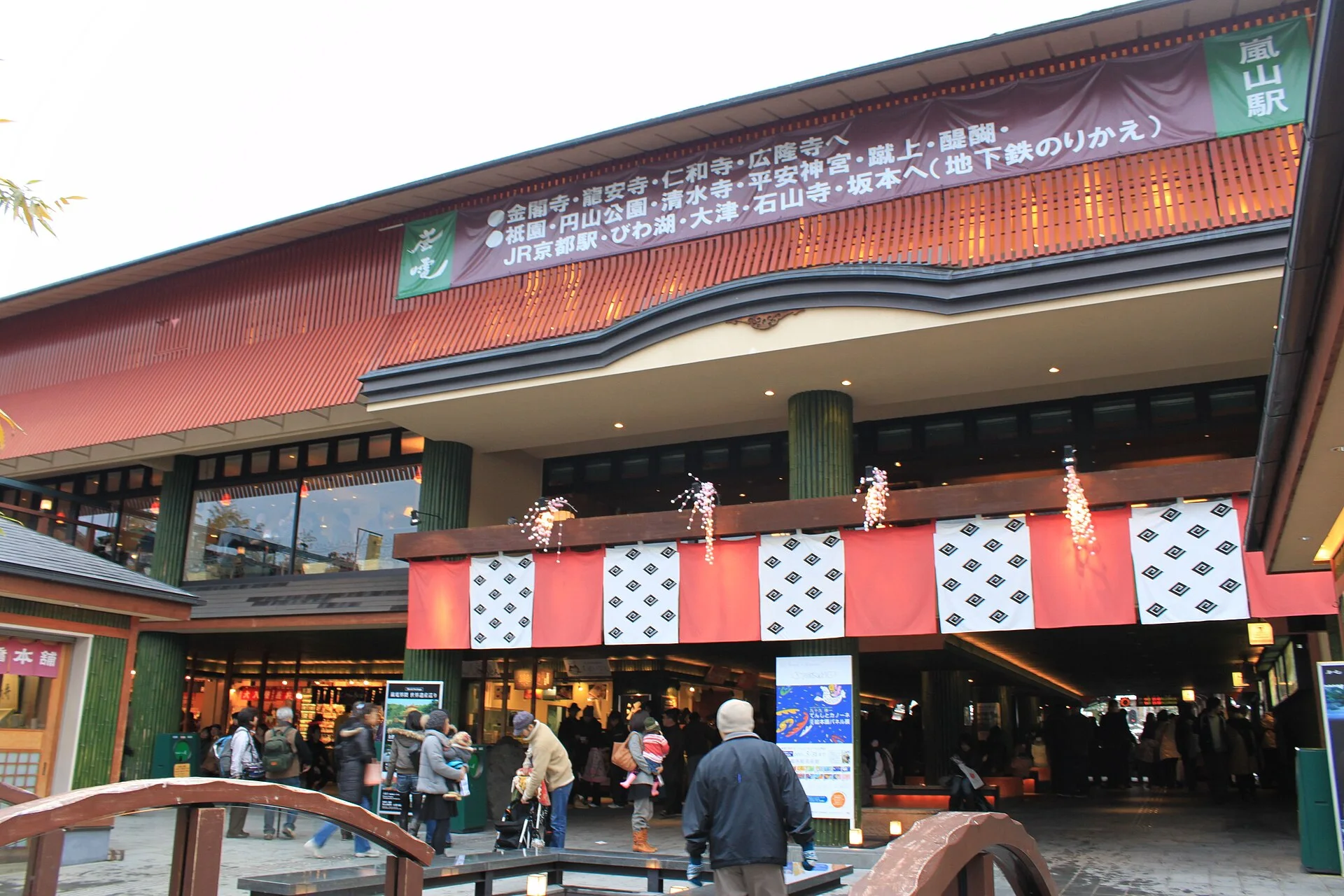
Inside the station grounds, the Kimono Forest features 600 pillars wrapped in Kyo-Yuzen patterned textiles. Follow the path towards Dragon's Pond and keep the main walkway clear when framing photos of passing trams and fabric patterns. Anyone in your group who only wants to sit and rest before the return ride can wait out front while others take a quick loop, then everyone boards together. You do not need to treat the station, Togetsukyo Bridge and the bamboo grove as three separate tram hops—this pocket is explored almost entirely on foot.
For one quick stop along the main line, pick Kurumazaki-Jinja. Stepping off the tram brings you directly to the rear approach; the main approach on the opposite side leads out to bus stops on Sanjo-dori. If you are travelling onward by tram, returning to the platform the way you came is faster. The precinct's Geino Shrine features bright vermilion fences inscribed with performers' and donors' names; plan your visit during the shrine office hours of 9:30–17:00 if you want amulets or a goshuin stamp. When aiming for early-morning entry at Tenryu-ji, ride straight to Arashiyama first and stop at Kurumazaki-Jinja on the way back so waiting for the shrine office to open does not delay your first stop.
On rainy or windy days when the riverside is exposed, swap a bridge walk for Tenryu-ji's temple halls and the covered corners of Arashiyama Station. Crossing the road from the station takes you straight into Tenryu-ji, where outdoor garden paths continue towards the bamboo grove—judge how far to walk based on your group's footwear. In the afternoon, linger along the station's Yuzen walkway, take turns at the footbath and meet near the information counter before heading back. A pared-back wet-weather plan often needs only two Randen rides, so paying per trip makes sense if rain is already forecast.
Two Temples on the Kitano Line: Prioritise Your Favourite Garden
Alight at Omuro-Ninnaji Station and walk around 3 minutes to Ninna-ji. Enter through the Niomon Gate facing the main road; inside you can choose the Goten Palace garden's Shoin halls and north-south gardens, or stroll along the approach to view the five-storey pagoda and Kondo Hall from outside. Goten garden entry is ¥800 for adults and free for high school students and younger, open 9:00–17:00 (last entry 16:30) from March to November, and closing earlier at 16:30 (last entry 16:00) from December to February. If you arrive with barely half an hour to spare, pick a single highlight and use the precinct map at the gate to divide your time between the garden and the pagoda path.
To see the low-growing, late-blooming Omuro cherry blossoms in spring, note the separate festival admission. Ninna-ji lists Goten garden, the seasonal Reihokan Treasure House and the Flower Festival grounds separately at ¥800, ¥500 and ¥800 for adults. If you are picking just one paid area in spring, blossom watchers should prioritise the festival route, as these trees bloom later than central Kyoto's other cherry spots. For garden architecture or visits outside blossom season, focus on the Goten garden—see our Ninna-ji Omuro Sakura visit guide for details.
For Ryoan-ji, alight at Ryoanji Station on the Kitano Line; Kyoto City Tourism Association puts the walk at around 8 minutes. The famous rock garden sits beside the Hojo Hall, with 15 stones set in raked white gravel. Find a spot along the veranda to sit and take in the stone arrangement before walking down to Kyoyochi Pond. If you have time for only one of the two temples in the afternoon and your priority is the Hojo rock garden, ride straight from Katabiranotsuji to Ryoanji rather than losing time detouring from an intermediate stop. Travelling from Kitano-Hakubaicho towards Arashiyama, you can equally visit Ryoan-ji first and continue to Omuro-Ninnaji on the same direction's platform.
Ryoan-ji's standard admission is ¥600 for adults, ¥500 for high school students and ¥300 for primary and junior high pupils. It opens 8:00–17:00 from March to November, and 8:30–16:30 from December to February. In winter, if you start from the Kitano end hoping to see both temples' gardens, visit Ryoan-ji in the morning and reach Ninna-ji just after midday rather than having lunch in Arashiyama first and rushing into the Kitano Line later. Leaving Ninna-ji till last means counting backwards from its 16:00 last entry, allowing extra minutes to walk through the Niomon Gate to the ticket booth.
To avoid waiting for another tram between the two temples, walk along the road linking their gates instead of doubling back to the stations twice. If walking is tiring for your group, take Kyoto City Bus Route 59 bound for Utano and Yamakoshi from Ryoanji-mae to Omuro-Ninnaji, paid separately. Switching the hop between the two temples to a walk can drop an adult's Randen count from three rides to two, changing which ticket saves money.
With half a day on the Kitano Line, you can also keep just one temple and leave time for Kitano Tenmangu, a roughly 5-minute walk from Kitano-Hakubaicho Station according to the shrine. Extending onward to Kinkaku-ji involves another leg of transport—check the Kinkaku-ji and Northern Kyoto route guide before adding it. Paired with Arashiyama on the same day, seeing one temple garden properly beats rushing past three gates just for quick photos, especially on a first trip.
Full-Day Routes in Either Direction: Lock In Your Final Stop First
Starting from a stay near Shijo-Omiya or Saiin, run the loop as Shijo-Omiya -> Arashiyama -> Omuro-Ninnaji -> Ryoanji -> Kitano-Hakubaicho. Change inside Katabiranotsuji Station when heading from Arashiyama to Omuro-Ninnaji. Taking the Randen between the two temples makes four paid rides (¥1,000 in adult single fares), while walking between them makes three rides (¥750). If you want more of the morning in Arashiyama, visit just Omuro-Ninnaji or Ryoan-ji and ride onward to Kitano-Hakubaicho—that still equals three rides. Finishing at Kitano Tenmangu and leaving by bus marks the end of your Randen route.
If your main goal is collecting charms at Kitano Tenmangu or browsing its market held on the 25th of each month, reverse the route and start from Kitano-Hakubaicho in the morning. Visit the shrine first, return to the station for Ryoan-ji, continue to Omuro-Ninnaji and transfer at Katabiranotsuji in the afternoon towards Arashiyama. Should you want to return to Kyoto Station by JR in the evening, walk from Randen Arashiyama to JR Saga-Arashiyama and pay that JR fare separately. Heading back to Shijo-Kawaramachi by Hankyu instead means crossing Togetsukyo Bridge to the south bank's Hankyu station and changing at Katsura.
When a family can only spend the morning together before splitting up after lunch, finish the joint route in Arashiyama. Taking the tram from Shijo-Omiya to Kurumazaki-Jinja and onward to Arashiyama costs ¥500 per adult, letting anyone staying for lunch or leaving via JR stop at two rides. Those continuing by Randen to Ninna-ji should buy their day pass at the start. If everyone is happy to walk a little further, meet up at Randen Arashiyama Station and walk together up Nagatsuji-dori towards JR Saga-Arashiyama, saving anyone from buying another tram ride just to regroup.
To beat the weekend crowds along Arashiyama's main street, arrive early at Tenryu-ji and decide after the garden whether to loop through the bamboo grove. If lunch rolls around as you finish Tenryu-ji, lock in your top-priority Kitano Line temple and decide after eating whether to add the second. In autumn or winter, anyone planning evening illuminations around Kitano can visit the earlier-closing gardens soon after noon and follow the Kitano Line onward. This order packs daytime-only sights into the first half of the day while lining up evening visits with opening hours.
If you have a Shinkansen or dinner reservation later, work backwards from the time you leave your final temple. Getting from Kitano-Hakubaicho back to Shijo-Omiya requires riding the Kitano Line to Katabiranotsuji and changing to the main line. For dinner around Kyoto Station, City Bus Route 50 from Kitano Tenmangu-mae also runs direct, though you should build in a buffer for peak-hour queues and traffic. And if you stored luggage at one particular station, plan your return around that locker location rather than travelling straight to Kyoto Station from the opposite end.
Toei Kyoto Studio Park Has Two Entrances: Use the Main Gate After 17:00
From Uzumasa-Koryuji Station on the Arashiyama Main Line, it is a 5-minute walk to the main entrance of Toei Kyoto Studio Park (Eigamura). From Satsueisho-mae Station on the Kitano Line, a 2-minute walk brings you to the Studio Entrance, which closes for entry at 17:00 and for exit at 18:00. Coming from Arashiyama, stay on the main line; arriving from Kitano-Hakubaicho, use the Kitano Line entrance. If you are staying for evening shows or after 18:00, leave via the main entrance and board at Uzumasa-Koryuji. Re-entry is not permitted once inside, so eat lunch beforehand if you plan to dine outside the park.
Following completion of its first renovation phase in March 2026, the park lists regular opening hours as 10:00–21:00, with last entry at the main gate one hour before closing. It closes on Tuesdays except in March, April, November and on public holidays. On 12 and 13 December 2026, the Uzumasa Edo Sakaba event limits full-day ticket validity to 17:00, with regular evening tickets suspended on those two nights. Some zones also close at 18:00 on standard days, so explore earlier-closing areas first before heading to evening shows.
Until the second phase opens in spring 2027, standard full-day admission is ¥2,800 for adults and ¥1,600 for children aged 3 to primary school age. Keifuku's bundle combining full-day admission with a Randen 1-Day Pass costs ¥3,200 for adults and ¥1,770 for children aged 3 to primary school. At standard adult rates, one Randen ride plus park entry totals ¥3,050, while two rides plus entry reach ¥3,300—meaning an adult taking at least two tram rides saves ¥100 with the combo. Tickets can be bought online via the park's ticket page or in person at Randen's four staffed station windows.
For children, compare both operators' age brackets carefully. A primary school pupil paying standard Randen fares spends ¥1,720 for one ride plus park entry and ¥1,840 for two rides, so the ¥1,770 combo saves ¥70 from two rides onwards. Children aged 3 to 5 pay park admission but follow Randen's separate infant-fare rules. Families should state the number of adults, school-age pupils and pre-schoolers at the window to see who benefits from the bundle. If buying a standalone evening ticket for entry after 17:00 (¥2,000 adults, ¥1,300 children), simply pay standard tram fares or buy a separate day pass.
Spring Cherry Blossoms From the Kitano Line and Autumn Night Foliage at Kitano Tenmangu
Between Narutaki and Utano on the Kitano Line lies the Cherry Blossom Tunnel, famed for Somei-Yoshino trees arching right past the tram windows. Keihan Group's 2026 sakura page lists the typical peak window from late March to early April. To experience it, simply stay aboard between those two stops—you can pass through on your way to Ninna-ji or Ryoan-ji, keeping tram-window blossom viewing separate from temple visits. One plays out along the tracks, while the other requires walking from the station and queuing at the gate.
For illuminated autumn leaves, choose between Kitano Tenmangu and Ninna-ji. In 2026, Kitano Tenmangu's Historic Site Odoi Momijien Maple Garden opens from 31 October to 6 December, with evening illuminations running from 13 November to 6 December. During illumination dates, garden entry runs 9:00–20:00 (last entry 19:40) at ¥1,500 for adults (junior high school and older) and ¥700 for primary school pupils, separate from general shrine entry. Enter before dusk if you want to make out the two-level earthwork contours along the maple path, then linger for the night views after sunset. For the journey back, ride from Kitano-Hakubaicho to Katabiranotsuji and change to the main line towards your accommodation.
Ninna-ji also stages its Autumn Leaves Sea of Clouds Illumination in 2026 on Fridays, Saturdays, Sundays and Japanese public holidays between 24 October and 13 December, excluding 8 and 28 November. Hours run 18:30–21:00 (typically admitting from 18:00, last entry 20:30), at ¥2,800 for adults and free for high school students and younger. Once Kitano Tenmangu's maple garden closes after 6 December, Ninna-ji's scheduled dates from 11 to 13 December remain an option. If you also want to see the Goten garden in daylight, note that winter daytime last entry is 16:00.
In 2027, Kitano Tenmangu will hold the Kanko 1,125th Anniversary Hanmanto Festival. If structuring a Kitano Line day around the festival, start at Kitano-Hakubaicho so you can visit the shrine first and still ride from the same station towards the temples or Arashiyama later on.
Allow Extra Time to Reach the Platform for Reserved Sagano Scenic Railway Trains
The Sagano Scenic Railway is run by a separate operator, serving Torokko Saga and Torokko Arashiyama stations. First-time visitors arriving from Kyoto Station will find changing from JR Saga-Arashiyama directly to the adjacent red-brick Torokko Saga Station most straightforward. If arriving by Randen, alight at Randen-Saga Station and walk around 5 minutes to Torokko Saga. Anyone with a pre-booked train should head straight to the station printed on their ticket first, saving the footbath and Tenryu-ji until after the train ride.
Standard individual tickets on the official website go on sale at 00:00 JST one month before the travel date, and all seats are normally reserved. Torokko Arashiyama Station—located right beside the bamboo grove—has roughly 60 steps between the entrance and platform with no lift, so travellers with pushchairs or reduced mobility are better off boarding at Torokko Saga. Walking from Torokko Saga takes about 10 minutes to the bamboo grove and roughly 20 minutes to Torokko Arashiyama Station. In autumn, when both your train departure and temple last-entry times are fixed, lock those two times in first and adjust any short stops along the way to match your walking pace.
Randen passes cover only the Arashiyama Main Line and the Kitano Line; trips through Hozukyo Gorge to Kameoka on the scenic train require separate tickets. When riding back from Kameoka towards Kyoto, alight at Torokko Saga to transfer directly onto the JR Sagano Line to Kyoto Station, or walk to Randen-Saga Station if continuing around Arashiyama and onward to Kurumazaki-Jinja. Note that the open-sided Car 5 gets breezy in autumn and winter and lets rain in, and umbrellas are prohibited on board—pack a waterproof coat instead, or book a regular enclosed carriage if you need warmth or are holding a small child.
A few useful answers
How much is the Randen 1-Day Pass and when does it save money?
It costs ¥700 for adults and ¥350 for children. With standard flat fares at ¥250 for adults and ¥120 for children, the pass begins saving money from your third separate paid ride.
Do I need to tap my IC card again when changing lines at Katabiranotsuji?
No—when transferring between the Arashiyama Main Line and the Kitano Line inside Katabiranotsuji Station, you pay once upon finally exiting. If you leave the station mid-journey and re-enter, the two legs are charged separately.
Which stations serve Ryoan-ji and Ninna-ji?
Alight at Ryoanji Station for roughly an 8-minute walk to Ryoan-ji, and at Omuro-Ninnaji Station for around a 3-minute walk to Ninna-ji. Both stops are on the Kitano Line.
Can I use the Arashiyama Station footbath without riding the Randen?
Yes. Tickets are sold at the Randen Arashiyama Station information counter for ¥300, including a towel. Regular hours are 9:30–18:00, with last entry at 17:30.
Which entrance should I use at Toei Kyoto Studio Park in the evening?
The Studio Entrance closes for entry at 17:00 and for exit at 18:00. After those hours, use the main entrance, which is roughly a 5-minute walk from Uzumasa-Koryuji Station on the Randen.
Official information and references
Sources used in this guide.
- Keifuku Electric Railroad | Randen Ticket Types & Fares
- Keifuku Electric Railroad | How to Ride, Pay & Transfer
- Keifuku Electric Railroad | Randen Route Map & Station Timetables
- Kyoto City Tourism Association | Transport Passes Overview
- Kyoto Municipal Transportation Bureau | Kyoto Subway & Randen 1-Day Ticket
- Kyoto Municipal Transportation Bureau | Standard Subway Fares
- Kyoto City Tourism Association | Getting to Saga & Arashiyama
- Randen Arashiyama Station | Footbath Hours & Station Facilities
- Kyoto Prefecture Tourism Federation | Arashiyama Onsen Footbath Ticket Info
- Randen Arashiyama Station | Kimono Forest & Station Design
- Tenryu-ji Temple | Visiting Hours, Admission & Access
- Kurumazaki-Jinja Shrine | Station & Front/Rear Approach Access
- Kyoto Prefecture Tourism Federation | Kurumazaki-Jinja Shrine Office
- Ninna-ji Temple | Admission Fees & Access
- Ninna-ji Temple | Precinct Map & Seasonal Entry Hours
- Kyoto Municipal Transportation Bureau | City Bus Route 59: Ryoanji-mae to Omuro-Ninnaji
- Kyoto City Tourism Association | Ryoan-ji Access & Opening Hours
- Kyoto Prefecture Tourism Federation | Ryoan-ji Admission & Accessibility Info
- Kitano Tenmangu Shrine | Visiting Hours & Access
- Keifuku Electric Railroad | 2026 Autumn Line-Side Events Announcement
- Kitano Tenmangu Shrine | 2026 Historic Site Odoi Momijien Maple Garden
- Kitano Tenmangu Shrine | 2027 Hanmanto Festival
- Toei Kyoto Studio Park | Entrance Access
- Toei Kyoto Studio Park | Admission, Closing Days & Re-Entry
- Toei Kyoto Studio Park | Operating Calendar, Fares & Combo Tickets
- Toei Kyoto Studio Park | Opening Hours Notice for 12–13 December 2026
- Ninna-ji Temple | 2026 Autumn Leaves Sea of Clouds Illumination
- Keihan Group | Randen Kitano Line Cherry Blossom Tunnel
- Sagano Scenic Railway | Torokko Saga Station
- Sagano Scenic Railway | Ticketing, Carriages & Station Information