The Randen 1-Day Pass costs ¥700 for adults and ¥350 for children, paying off from your third separate paid ride. Check the four ticket windows, Katabiranotsuji transfers, Arashiyama Station footbath, Kitano Line temples, plus subway and Studio Park combo passes.
- Region & Focus
- Kyoto
- Reading Scope
- 19 min read · 11 chapters · 5 Q&As
- Official Verification
- 30 official sources checkedUpdated November 22, 2026
- Key Topics
- Rail travelTravel budgetItineraries
Chapter Route Map (tap any stop)
- When the Randen 1-Day Pass Pays Off (Starting Ride Three)
- Where to Buy the Pass and How to Pay When Exiting
- Transferring at Katabiranotsuji: Check Platform Destinations First
- Connecting from Kyoto Station, Shijo-Kawaramachi, and the Subway
- When the Subway Combo Pass or Autumn Hankyu Pass Makes Sense
- Half a Day on the Main Line: Visit Tenryu-ji Before the Footbath
- Two Temples on the Kitano Line: Prioritize One Garden First
- Two Directions for a Full-Day Loop: Lock In Your Final Stop
- Toei Kyoto Studio Park: Two Entrances, Use the Front Gate After 5:00 PM
- Cherry Blossom Tunnel on the Train, Autumn Night Lights at Kitano Tenmangu
- Booking the Sagano Romantic Train? Leave Extra Time to Reach Its Platform
- Quick Q&A
The Randen 1-Day Pass costs ¥700 for adults and ¥350 for children, covering unlimited rides on both the Arashiyama Main Line and the Kitano Line. A simple round-trip between Shijo-Omiya and Arashiyama costs ¥500 total for an adult using an IC card. Once you add a stopover at Kurumazaki-jinja Shrine or continue from Arashiyama to Ninnaji and Kitano Tenmangu, the pass pulls ahead on fare value alone on your third separate ride of the day. When switching lines inside Katabiranotsuji Station, staying within the fare zone keeps the entire trip at a single ¥250 adult fare. Getting that transfer rule right is the key to deciding whether to buy the pass and which station to start from.
When the Randen 1-Day Pass Pays Off (Starting Ride Three)
At station ticket windows, the pass is sold as the Randen 1-Day Free Kippu (¥700 for adults, ¥350 for children) for unlimited hop-on, hop-off rides across the Arashiyama Main Line and Kitano Line on the date of issue. Standard fares are flat across the entire network—¥250 for adults and ¥120 for children—whether you ride one stop or end to end. Kyoto City Tourism Association lists the child day pass for elementary school students, while Keifuku Electric Railroad's regular fare table defines children as ages 6 through 11 (under 12). If your child sits near the age or school-grade boundary, state their age and school status at the ticket window.
A round-trip from Shijo-Omiya to Arashiyama and back totals ¥500 for an adult and ¥240 for a child. Stopping at Kurumazaki-jinja Shrine along the same main line adds a third paid segment, bringing pay-as-you-go totals to ¥750 for adults and ¥360 for children—¥50 and ¥10 more than the day pass, respectively. From a fourth ride onward, the savings widen noticeably. If one adult and one child take only two rides, their combined single fares come to ¥740, compared with ¥1,050 for two day passes. Price out each person's actual route individually; anyone heading back to the hotel early can just tap an IC card.
Count segments by each time you exit the station to visit a stop. Traveling from Arashiyama to Omuro-Ninnaji requires changing to the Kitano Line inside Katabiranotsuji Station, which counts as one transfer within a single ¥250 fare. If you exit the station at Katabiranotsuji to grab something from a shop and re-enter afterward, Arashiyama to Katabiranotsuji and Katabiranotsuji to Omuro-Ninnaji count as two separate paid rides.
Boarding at Shijo-Omiya, stopping at Kurumazaki-jinja Shrine, continuing to Arashiyama, and riding straight back to Shijo-Omiya equals three rides despite never leaving the main line. Conversely, riding from Shijo-Omiya to Ninnaji, walking to Ryoan-ji, and taking the tram back to Shijo-Omiya from Ryoan-ji involves two line transfers yet only two paid rides all day. Mapping out which temples you will link on foot—plus your final ride home—makes fare math far clearer than counting stations.
| Separate Paid Rides | Adult Single Fares | Child Single Fares | Best Ticket Choice |
|---|---|---|---|
| 1 ride | ¥250 | ¥120 | Pay per ride |
| 2 rides | ¥500 | ¥240 | Pay per ride |
| 3 rides | ¥750 | ¥360 | Day pass saves ¥50 / ¥10 |
| 4 rides | ¥1,000 | ¥480 | Day pass saves ¥300 / ¥130 |
The Randen 1-Day Pass costs ¥700 for adults and ¥350 for children, paying off from your third separate paid ride. Check the four ticket windows, Katabiranotsuji transfers, Arashiyama Station footbath, Kitano Line temples, plus subway and Studio Park combo passes.
Where to Buy the Pass and How to Pay When Exiting
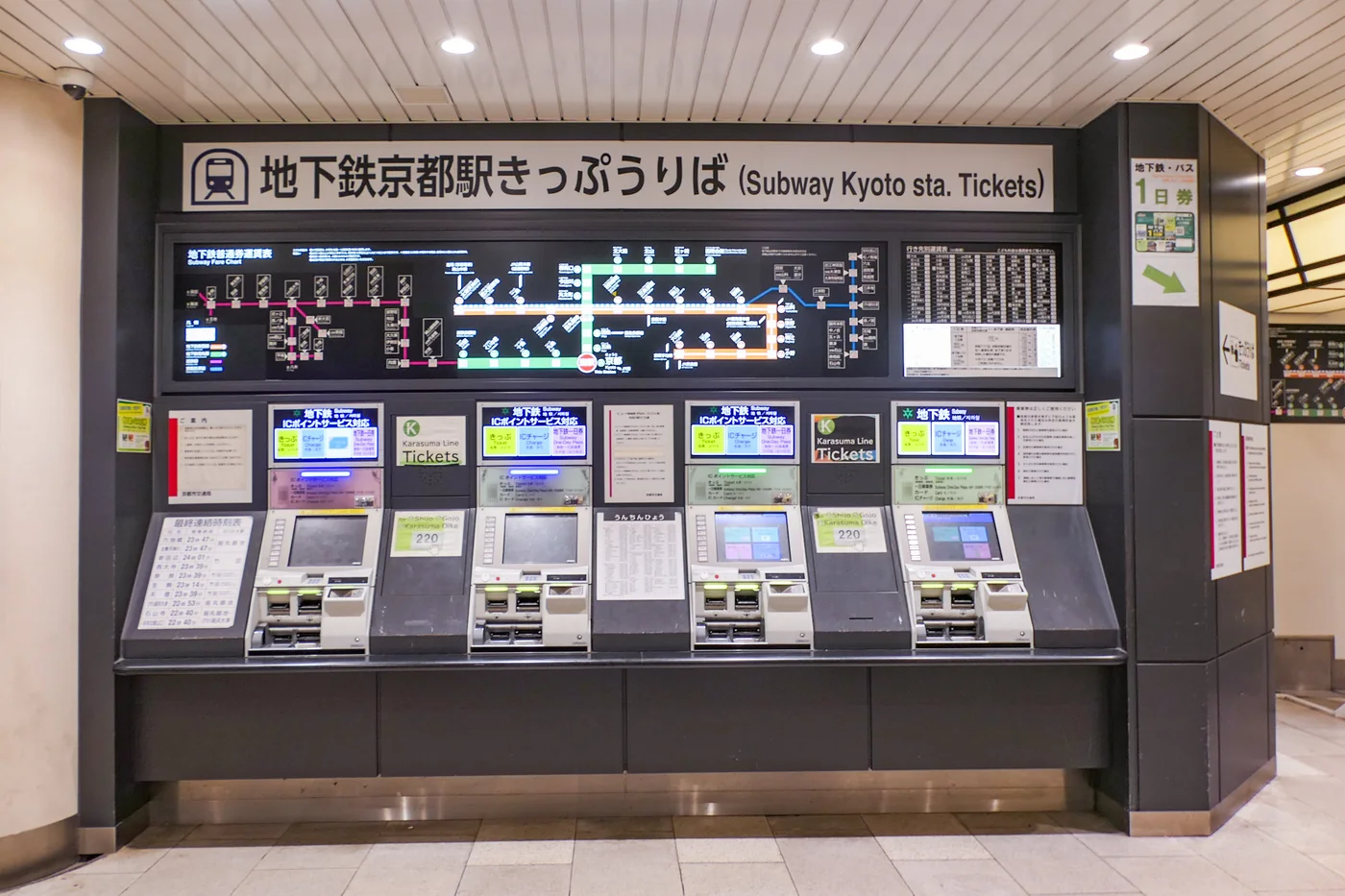
Keifuku Electric Railroad operates ticket windows at four stations: Shijo-Omiya, Katabiranotsuji, Arashiyama, and Kitano-Hakubaicho. The Kyoto City Tourism Association also lists a sales counter at Sai Station. If your morning starts by transferring from the subway at Randen-Tenjingawa or walking from JR Uzumasa Station to Satsueisho-mae, you will not pass any of Keifuku's four main ticket windows at boarding. Travelers who want the pass from ride one should either head to a staffed window first or start at Shijo-Omiya or Kitano-Hakubaicho. If you board at an unstaffed stop, pay the regular fare on that trip and decide at your first staffed station whether the remaining rides justify a pass.
For standard rides, you can board through either the front or rear doors; fares are paid upon exiting, so do not tap ICOCA, Suica, or other IC cards when getting on. When alighting at Shijo-Omiya, Katabiranotsuji, Arashiyama, or Kitano-Hakubaicho, pay or show your pass at the station ticket gates. At all other stops, exit via the front door next to the driver and pay using the onboard fare box or IC card reader. If using a paper day pass, fold or hold it so the ticket type and date face upward and show it to the driver. Keep each traveler's pass in their own hand as you approach smaller stops so everyone can step off smoothly through the front door.
Keifuku's day-pass page also lists partner attractions offering perks—either discounts shown upon presenting the pass or detachable coupons you hand over at admission. If one of those venues is a must-visit on your itinerary, factor that discount into your math against standard single-ride fares before buying. Transit break-even tables only reflect tram fares; special exhibitions and seasonal temple areas require separate admission budgets. Note that Keifuku explicitly states the subway-plus-Randen combo pass does not include the partner-facility perks attached to the standalone Randen 1-Day Pass.
If family members are meeting you around noon, hold off on buying them a full-day pass. Say they meet you at Arashiyama, ride together to Omuro-Ninnaji, and continue to Kitano-Hakubaicho—that is just two paid rides totaling ¥500. Meanwhile, if you already rode from Shijo-Omiya to Arashiyama that morning, your third ride makes the day pass worthwhile. When part of the group takes a tram back to Shijo-Omiya at night while others hop on a bus from Kitano, calculate that final leg per person.
Transferring at Katabiranotsuji: Check Platform Destinations First
The Arashiyama Main Line runs from Shijo-Omiya to Arashiyama via Sai, Randen-Tenjingawa, Uzumasa-Koryuji, Katabiranotsuji, and Kurumazaki-jinja. The Kitano Line branches from Katabiranotsuji to Kitano-Hakubaicho via Satsueisho-mae, Tokiwa, Narutaki, Utano, Omuro-Ninnaji, Myoshinji, Ryoanji, and Tojiin Ritsumeikan University. Both lines meet at Katabiranotsuji. If you are heading toward the Kitano Line temples, follow the platform signs marked for Kitano-Hakubaicho.
Coming from Arashiyama toward the Kitano Line, board a tram bound for Shijo-Omiya, get off at Katabiranotsuji, and switch to a Kitano-Hakubaicho train. Going the opposite way from Kitano-Hakubaicho to Arashiyama, ride the Kitano Line to Katabiranotsuji and transfer to an Arashiyama-bound tram. If you finish at Kitano and want to connect to Hankyu Omiya, change at Katabiranotsuji to a tram for Shijo-Omiya. As long as you remain inside the paid zone during the transfer, you settle the entire journey when exiting at your destination. For very early or late rides, check the departure timetable first—Keifuku's Shijo-Omiya main-line schedule marks trains in red that reach Katabiranotsuji without an onward Kitano Line connection.
Keifuku's timetable lists roughly 16 minutes from Shijo-Omiya to Katabiranotsuji and about 24 minutes to Arashiyama. Scheduled onboard travel time from Shijo-Omiya is around 23 minutes to Omuro-Ninnaji and 28 minutes to Kitano-Hakubaicho, not counting wait time at Katabiranotsuji. In winter, for example, Ninnaji closes admission at 4:00 PM; with 23 minutes on the tram and a 3-minute walk from Omuro-Ninnaji Station to the gate, leaving Shijo-Omiya at 3:30 PM leaves only about 4 minutes for transferring and reaching the ticket booth—build in at least one extra train's buffer.
If you are traveling with a stroller or wheelchair, check the station facility column on Keifuku's timetable, which notes ramps and restrooms separately for each platform direction. When you need boarding assistance across the gap between tram and platform, ask station staff in advance at a staffed station. Even if someone in your group has already used the opposite-direction platform at the same stop, verify accessibility on the other side too, as facilities are listed independently.
Connecting from Kyoto Station, Shijo-Kawaramachi, and the Subway
If you are staying near Kyoto Station and only visiting the Bamboo Grove, Tenryu-ji, or the Sagano Scenic Railway, taking the JR Sagano Line directly to Saga-Arashiyama requires the fewest transfers. Tenryu-ji lists the walk from JR Saga-Arashiyama at roughly 13 minutes. To step off right outside Tenryu-ji's main gate instead, take the Karasuma Subway Line to Karasuma Oike, switch to the Tozai Line to Uzumasa Tenjingawa, and cross to street-level Randen-Tenjingawa. Arriving via JR also works well if you tour Saga first and start using Randen later from nearby Randen-Saga or Arashiyama Station. Because JR segments are billed separately, an IC card covers everything cleanly if you only need one Randen ride in western Kyoto followed by a city bus back downtown.
From the Shijo-Kawaramachi area, travelers heading to the south side of Togetsukyo Bridge can ride the Hankyu Kyoto Line to Katsura and switch to the Hankyu Arashiyama Line. Note that Hankyu Arashiyama Station and Keifuku's Randen Arashiyama Station are two different stations: Hankyu sits south of Togetsukyo Bridge, while Randen sits north of it, separated by a brisk walk. To start near Tenryu-ji or stop at Kurumazaki-jinja along the way, ride the Hankyu Kyoto Line to Omiya and transfer at street level to Randen Shijo-Omiya. You can also make a loop—arriving south of the bridge on Hankyu and departing north of the bridge on Randen—paying per ride once you finish exploring the northern bank.
You can also transfer between Hankyu and Randen at Sai Station (written identically in Japanese for both lines, though Hankyu pronounces it Sai-in and Randen pronounces it Sai). Keifuku notes that the two operators' platforms are linked by step-free walkways. If you are grabbing breakfast around Hankyu Omiya, boarding at Shijo-Omiya makes more sense; if your morning starts near Sai, transfer directly there instead of riding east to Omiya only to backtrack west. When sharing a meeting pin on a map app, include the railway operator's name so everyone ends up at the same entrance.
Keep an eye on the slight name difference at the Tozai Subway Line transfer: the underground subway station is Uzumasa Tenjingawa, while the surface tram stop outside is Randen-Tenjingawa. Since Randen-Tenjingawa sits on the Arashiyama Main Line, heading solely to the Kitano Line still requires one transfer at Katabiranotsuji. When returning toward Nijo Castle or Higashiyama, the subway often drops you closer to your hotel than Hankyu Omiya does. Factor in both the walk from the hotel to the subway entrance and station corridors—saving three minutes on the train rarely beats skipping a major street crossing.
Occasionally a city bus brings you closer to the temple gate. Kyoto City Tourism Association notes the Ryoanji-mae bus stop is about 1 minute from Ryoan-ji, far shorter than the roughly 8-minute walk from Randen Ryoanji Station. If Ryoan-ji is your sole destination or someone in your party walks slowly, taking the bus straight to the gate makes life easier. At the Kitano end of the line, Kitano-Tenmangu-mae bus stop connects to Kyoto City Bus Route 50 (to Kyoto Station), Route 55 (to Nijo or Omiya), and Route 203 (to Enmachi or Imadegawa), as listed on the shrine's website. Since buses are subject to traffic delays, head toward a rail station whenever you have a fixed afternoon train to catch.
| Starting Point or Target Area | Best Route | Arrival Station |
|---|---|---|
| Kyoto Station / Sagano Romantic Train | JR Sagano Line | JR Saga-Arashiyama (next to Torokko Saga) |
| Shijo-Kawaramachi / South of Togetsukyo Bridge | Hankyu Kyoto Line, change at Katsura to Arashiyama Line | Hankyu Arashiyama |
| Shijo-Omiya / Tenryu-ji Main Gate | Randen Arashiyama Main Line | Randen Arashiyama |
| Tozai Subway Line / Tenryu-ji Main Gate | Uzumasa Tenjingawa to Randen-Tenjingawa | Randen Arashiyama |
| Ninnaji and Ryoan-ji | Change at Katabiranotsuji to Kitano Line | Omuro-Ninnaji or Ryoanji |
When the Subway Combo Pass or Autumn Hankyu Pass Makes Sense
At station windows you may also spot a ¥1,300 adult pass called the Kyoto Subway & Randen 1-Day Ticket. It covers both Kyoto Municipal Subway lines and the entire Randen network. For fiscal 2026, it is on sale through March 31, 2027 and valid for any single day through April 30, 2027. Tickets are sold at subway station windows, Kyoto Municipal Transportation Bureau bus/subway information and commuter pass counters, and Randen's four staffed stations. Tap or insert it at automatic subway gates, and feed it into the fare reader when exiting a Randen tram.
To evaluate the combo pass, compare the ¥600 difference between ¥1,300 and the ¥700 standalone Randen pass against your subway fares—assuming you already have at least three Randen rides so the ¥700 base makes sense. Two subway rides at ¥260 each add ¥520 to the ¥700 Randen pass (¥1,220 total), leaving you ¥80 ahead without the combo. Add one more ¥220 subway trip, however, and separate fares hit ¥1,440, so the ¥1,300 combo saves ¥140. Note that changing between the Karasuma and Tozai lines inside the ticket gates at Karasuma Oike counts as a single subway fare, not two separate rides.
If you are taking only two Randen rides (¥500 pay-as-you-go), the break-even bar for subway fares jumps to ¥800. Taking the subway to Uzumasa Tenjingawa in the morning, returning the same way in the evening, and walking or using the Kitano Line in between is usually cheaper paid per exit. Kyoto City Buses are excluded; if your day relies heavily on buses between Ryoanji-mae, Omuro-Ninnaji, and Kitano-Tenmangu-mae, look at Kyoto Subway, Bus Passes, and Sightseeing Express Buses, which covers a different transit bundle.
In autumn 2026, a digital QRtto pass called the Kyoto-Arashiyama 1-Day Pass is also sold from October 1 through December 6. The Hankyu edition costs ¥1,400 and covers all Hankyu lines (excluding the Kobe Kosoku Line), all Randen lines, and designated Kyoto Bus sections around Arashiyama and Saga. Travelers commuting round-trip from Osaka on Hankyu and adding several Randen rides in western Kyoto should compare their combined single fares against ¥1,400. If you are riding JR straight from Kyoto Station to Saga-Arashiyama and back, stick to standard JR tickets—this seasonal pass does not include JR.
Half a Day on the Main Line: Visit Tenryu-ji Before the Footbath
Arriving at Randen Arashiyama Station in the morning, cross Nagatsuji-dori Street straight to Tenryu-ji. Regular garden hours are 8:30 AM–5:00 PM (last admission 4:50 PM), with admission at ¥500 for high schoolers and adults and ¥300 for elementary and junior high students. Adding access to the temple buildings costs ¥300 extra, with last entry at 4:30 PM. Focusing solely on the Sogenchi Pond Garden gives you plenty of time to stroll out through the North Gate straight into the Bamboo Grove before circling back to Nagatsuji-dori for lunch. From November 14 to 30, 2026, early-morning garden entry opens at 7:30 AM via the main garden ticket gate, though the North Gate still opens at 8:30 AM.
If you reach Arashiyama in the afternoon, tackle your top priority first. Arriving at 4:10 PM with both Tenryu-ji's garden and the station footbath on your list, buy your garden ticket across the street first, then return to the station for the footbath before closing. Past 4:50 PM, stroll down Nagatsuji-dori toward Togetsukyo Bridge and loop back to the station. Tenryu-ji, restaurants near the main gate, and station shops keep different hours, so save browsing for moments when you aren't racing a cutoff. To lock in a meal before walking, pick a spot on the same side of the river or station from the Arashiyama Dining Guide.
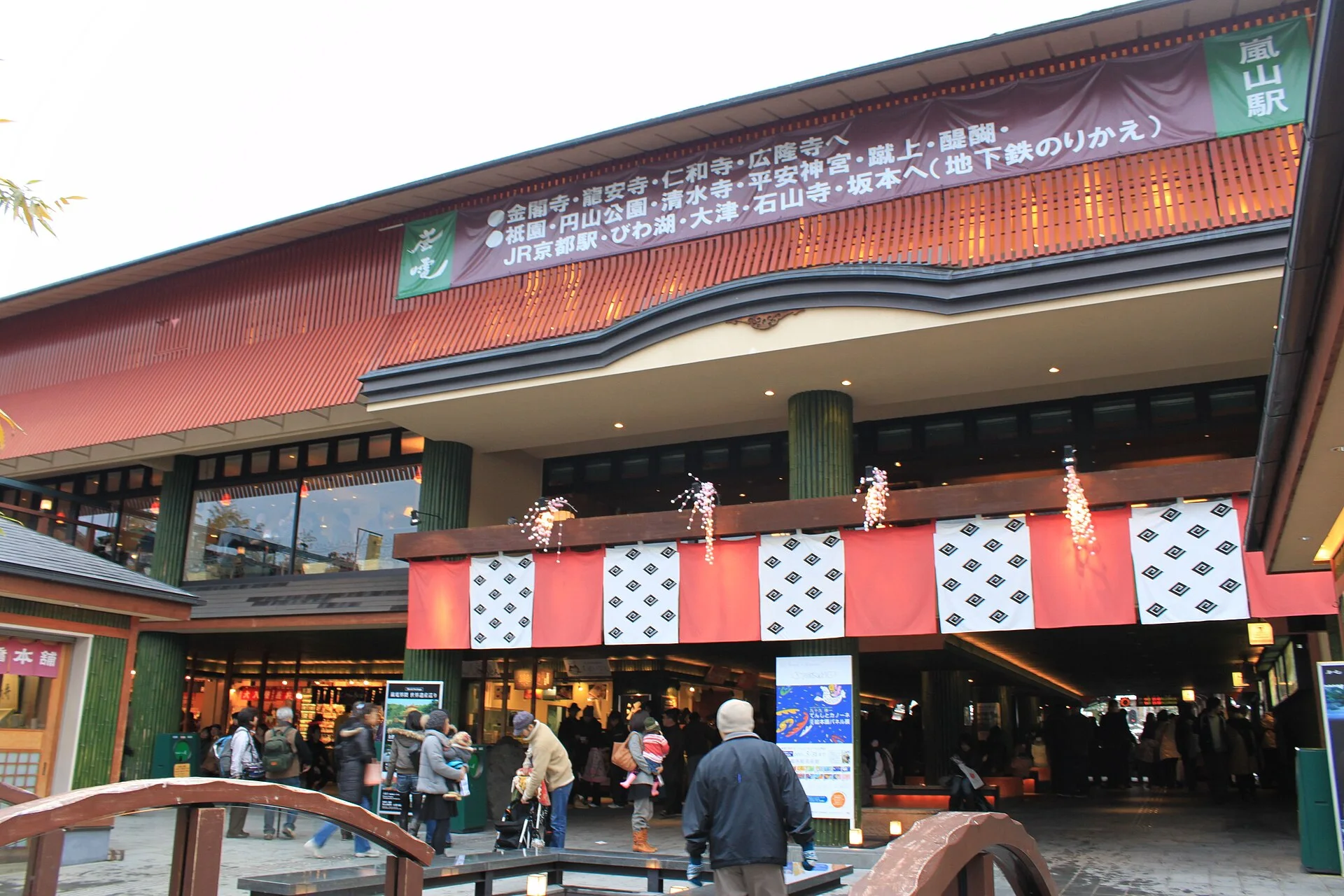
The footbath sits right on the platform inside Randen Arashiyama Station; buy tickets (¥300 including a towel) at the station information desk. According to the station's Japanese webpage, hours run 9:30 AM–6:00 PM with last entry at 5:30 PM. You do not need to arrive by Randen to use it—JR and Hankyu riders can buy a footbath ticket too. Families with kids or older travelers often find it easiest to soak right before leaving Arashiyama, then step straight onto the train. The ¥300 fee covers only the footbath; pay your tram fare as usual when exiting your next stop.
Inside the station grounds, the Kimono Forest features 600 illuminated pillars wrapped in Kyo-Yuzen kimono fabrics. Follow the pathway toward the Dragon's Pool and leave the main walkway clear when stopping to frame photos of passing trams and textile patterns. Anyone in your group who prefers to rest can wait out front while others take a quick walk through before boarding together. Treat the station, Togetsukyo Bridge, and Bamboo Grove as one walkable loop rather than three separate tram rides.
For a short stopover on the way, Kurumazaki-jinja Shrine sits right beside its station. The gate facing the tram platform is the rear approach (Ura-sando), while the main front approach (Omote-sando) leads out to the bus stop on Sanjo-dori. If you are hopping back on the next tram, returning to the platform the same way is faster. Inside the grounds, the sub-shrine Geino-jinja is lined with vermilion fence slats inscribed with performers' names; schedule your stop during shrine office hours (9:30 AM–5:00 PM) if you want amulets or a goshuin stamp. When prioritizing early-morning entry at Tenryu-ji, ride straight to Arashiyama first and save Kurumazaki-jinja for the return trip so waiting for the shrine office doesn't delay your morning.
On rainy, windy days along the river, swap a back-and-forth walk over Togetsukyo Bridge for Tenryu-ji's interior halls and the Arashiyama Station complex. Crossing to Tenryu-ji takes just one street crossing, and you can gauge how far to continue toward the Bamboo Grove based on everyone's footwear along the outdoor garden paths. In the afternoon, linger under cover at Arashiyama Station among the Yuzen pillars and footbath, meeting at the information desk before heading back. Because that pared-back plan often requires only two Randen rides, pay-as-you-go fares usually win when rain is in the forecast.
Two Temples on the Kitano Line: Prioritize One Garden First
Step off at Omuro-Ninnaji Station and walk roughly 3 minutes to Ninnaji's main Nio-mon Gate facing the road. Inside, you can tour the Goten Palace shoin halls and North/South Gardens, or walk the grounds to admire the five-story pagoda and Kondo Hall exteriors. Goten Palace and Garden admission is ¥800 for adults and free for high school students and younger; hours run 9:00 AM–5:00 PM (last entry 4:30 PM) from March through November, shifting earlier to 4:30 PM close (4:00 PM last entry) from December through February. If you only have an extra half hour, pick one area using the site map at the gate rather than rushing both.
In spring, Ninnaji's famously low-branched, late-blooming Omuro Sakura come with a separate Flower Festival admission fee. The temple lists distinct tickets for the Goten Garden (¥800), the seasonal Reihokan Treasure House (¥500), and the Flower Festival grounds (¥800 for adults). If you are only paying for one area, blossom chasers in spring should pick the Flower Festival route, as these trees bloom later than central Kyoto's cherry spots. Visitors prioritizing historic gardens—or visiting outside blossom season—should focus on the Goten Garden; see our Ninnaji Omuro Sakura Visitor Guide for details.
For Ryoan-ji, exit the Kitano Line at Ryoanji Station and walk about 8 minutes, per the Kyoto City Tourism Association. The famous kare-sansui rock garden sits along the Hojo hall's veranda, displaying 15 stones set in raked white gravel; take a moment to find a quiet viewing spot before strolling around Kyoyochi Pond below. If you only have time for one temple in the afternoon and Ryoan-ji's rock garden is the goal, ride straight from Katabiranotsuji to Ryoanji Station instead of stopping midway. Coming from Kitano-Hakubaicho toward Arashiyama, you can also visit Ryoan-ji first and continue to Omuro-Ninnaji, reboarding on the same side of the tracks afterward.
Ryoan-ji general admission is ¥600 for adults, ¥500 for high school students, and ¥300 for elementary and junior high students, open 8:00 AM–5:00 PM from March through November and 8:30 AM–4:30 PM from December through February. In winter, if you are starting near Kitano and hoping to see both gardens, tour Ryoan-ji in the morning and arrive at Ninnaji just after midday rather than having lunch in Arashiyama first. Putting Ninnaji second means counting backward from its 4:00 PM last entry, remembering you still need time to walk through Nio-mon Gate to the ticket booth.
To skip waiting for a tram between the two temples, walk along the street linking their gates instead of doubling back to each station twice. If walking feels like too much, City Bus Route 59 (bound for Utano/Yamagoe) runs from Ryoanji-mae directly to Omuro-Ninnaji for a separate bus fare. Turning that middle segment into a walk often drops an adult itinerary from three Randen rides to two, changing which ticket makes the most sense.
With half a day on the Kitano Line, another smart option is visiting just one temple and saving time for Kitano Tenmangu Shrine, about a 5-minute walk from Kitano-Hakubaicho Station according to the shrine's website. Adding Kinkaku-ji afterward requires another transit leg—check Kinkaku-ji and Northern Kyoto Route to decide whether to tack it on. Paired with Arashiyama on the same day, enjoying one temple garden at an unhurried pace beats rushing past three gates just for quick photos.
Two Directions for a Full-Day Loop: Lock In Your Final Stop
If you are staying near Shijo-Omiya or Sai, a classic west-to-north loop runs Shijo-Omiya to Arashiyama, transfers inside Katabiranotsuji to Omuro-Ninnaji, continues to Ryoan-ji, and ends at Kitano-Hakubaicho. Riding the tram between the two temples makes four paid segments (¥1,000 adult single fares); walking between them trims it to three segments (¥750). To linger longer in Arashiyama during the morning, choose either Ninnaji or Ryoan-ji and ride onward to Kitano-Hakubaicho, still totaling three rides. After visiting Kitano Tenmangu, switch to a city bus to exit the Randen network.
If picking up amulets at Kitano Tenmangu or browsing its 25th-of-the-month Tenjin market is your main draw, reverse the route and start at Kitano-Hakubaicho in the morning. Visit the shrine first, catch the tram back toward Ryoan-ji and Omuro-Ninnaji, and change at Katabiranotsuji for Arashiyama in the afternoon. To return to Kyoto Station on JR in the evening, walk from Randen Arashiyama to JR Saga-Arashiyama and pay the JR fare separately. Heading back to Shijo-Kawaramachi via Hankyu means crossing Togetsukyo Bridge to the south-bank Hankyu station and changing at Katsura.
When a multi-generational group is only together for the morning, wrap up the shared segment in Arashiyama before splitting after lunch. Riding from Shijo-Omiya with a stop at Kurumazaki-jinja and continuing to Arashiyama costs ¥500 per adult—two rides—if they stay for lunch or exit via JR. Anyone continuing on Randen to Ninnaji should pick up a day pass at the start. If everyone wants one more stroll together before parting ways, meet at Randen Arashiyama Station and walk down Nagatsuji-dori toward JR Saga-Arashiyama so no one has to buy an extra tram ticket just to regroup.
On weekends, beat the main-street crowds by reaching Tenryu-ji early, then deciding whether to loop through the Bamboo Grove afterward. If you emerge from Tenryu-ji close to lunchtime, pick one top-priority temple on the Kitano Line and decide after eating whether to add the second. In autumn or winter, visitors aiming for evening illuminations near Kitano can schedule an earlier-closing temple garden right after lunch and ride straight up the Kitano Line when exiting. Front-loading daytime gardens keeps your evening flexible for illuminated grounds.
If you have a Shinkansen train or dinner reservation later, plan backward from the moment you leave your final temple. Heading back from Kitano-Hakubaicho to Shijo-Omiya requires riding the Kitano Line to Katabiranotsuji and transferring to the main line. For dinner near Kyoto Station, City Bus Route 50 from Kitano-Tenmangu-mae also runs direct, though you should pad your schedule for wait times and rush-hour traffic. And if you stored luggage in lockers at one station, anchor your return route around that stop rather than taking a different rail line straight to Kyoto Station.
Toei Kyoto Studio Park: Two Entrances, Use the Front Gate After 5:00 PM
Toei Kyoto Studio Park (Eigamura) is a 5-minute walk to its Main Entrance from Uzumasa-Koryuji Station on the Arashiyama Main Line, or a 2-minute walk to the Satsueisho Studio Gate from Satsueisho-mae Station on the Kitano Line. Note that the Studio Gate closes for entry at 5:00 PM and closes for exit at 6:00 PM. Coming from Arashiyama, stay on the main line; coming from Kitano-Hakubaicho, use the Kitano Line entrance. If you plan to catch an evening show or stay past 6:00 PM, exit through the Main Entrance and walk back to Uzumasa-Koryuji Station. Re-entry is not allowed once inside, so eat lunch outside beforehand if you want external dining options.
Following its first-phase renovation completed in March 2026, standard park hours are listed as 10:00 AM–9:00 PM, with last entry at the Main Entrance one hour before closing. The park is closed on Tuesdays except during March, April, November, and on national holidays. On December 12 and 13, 2026, due to the Uzumasa Edo Sakaba evening event, regular day tickets end at 5:00 PM and standard night admission is suspended. Even on normal days, some attractions close at 6:00 PM, so explore those areas first before heading to late-evening shows.
Until Phase 2 opens in spring 2027, standard full-day admission is ¥2,800 for adults and ¥1,600 for children ages 3 through elementary school. Keifuku's combo ticket bundling full-day Studio Park entry with a Randen 1-Day Pass costs ¥3,200 for adults and ¥1,770 for children (ages 3 through elementary school). Comparing regular adult rates, one tram ride plus admission totals ¥3,050, while two rides plus admission hit ¥3,300—so an adult taking at least two Randen rides saves ¥100 with the combo. Studio Park's ticket page offers online advance purchase, while the combo pass is sold in person at Randen's four staffed station windows.
For kids, check both operators' age cutoffs separately. An elementary school student paying single tram fares spends ¥1,720 for one ride plus admission or ¥1,840 for two rides plus admission, meaning the ¥1,770 combo saves ¥70 starting from ride two. Children ages 3 to 5 pay Studio Park admission but follow Randen's preschool passenger rules on the tram. Families should tell the station agent how many adults, elementary schoolers, and preschoolers are in their group to compare who actually benefits from the combo. If you are buying a standalone Night Ticket for entry after 5:00 PM (¥2,000 adults, ¥1,300 children), just pay tram fares per ride or buy a separate day pass.
Cherry Blossom Tunnel on the Train, Autumn Night Lights at Kitano Tenmangu
Between Narutaki and Utano on the Kitano Line runs the famous Sakura no Tunnel, lined with Somei-Yoshino cherry trees brushing past the tram windows. Keihan Group's 2026 cherry blossom guide lists typical peak viewing from late March to early April. All you need to experience it is a normal ride between those two stations—easy to fold into a trip toward Ninnaji or Ryoan-ji. Treat the blossom tunnel as an en-route highlight rather than a substitute for temple gardens, which still require walking in from the station and queuing for tickets.
For illuminated autumn foliage, choose between Kitano Tenmangu and Ninnaji. In 2026, Kitano Tenmangu's Historic Site Odoi Momiji-en maple garden is open October 31 through December 6, with evening illuminations running November 13 through December 6. During illumination nights, hours run 9:00 AM–8:00 PM (last admission 7:40 PM); separate garden admission costs ¥1,500 for adults (junior high and up) and ¥700 for elementary students, apart from free shrine grounds. Enter while there is still daylight if you want a clear look at the two-tiered Odoi earthen embankment before staying past sunset for the lights. Afterward, ride from Kitano-Hakubaicho back to Katabiranotsuji and switch to the main line toward your hotel.
Ninnaji also hosts its 2026 Autumn Leaves & Sea of Clouds Illumination on Fridays, Saturdays, Sundays, and Japanese national holidays from October 24 through December 13 (closed November 8 and 28). Event hours run 6:30 PM–9:00 PM (check-in typically opens at 6:00 PM and closes at 8:30 PM); admission is ¥2,800 for adults and free for high schoolers and younger. Once Kitano's Momiji-en closes after December 6, Ninnaji's December 11–13 dates are the remaining late-season option. If you plan to pair this with a daytime visit to the Goten Garden, remember winter daytime admission closes at 4:00 PM.
In 2027, Kitano Tenmangu will observe the 1,125th Sugawara no Michizane Memorial Han-Manto-sai Festival. When building a Kitano Line day around the festival, start at Kitano-Hakubaicho to visit the shrine first, then use the rest of your day riding from the same station toward the temples or Arashiyama.
Booking the Sagano Romantic Train? Leave Extra Time to Reach Its Platform
The Sagano Scenic Railway (Romantic Train) is a separate operator with stations at Torokko Saga and Torokko Arashiyama. First-time visitors coming from Kyoto Station get the cleanest connection by riding the JR Sagano Line to Saga-Arashiyama, right beside Torokko Saga's red-brick station building. If arriving by Randen instead, exit at Randen-Saga Station and walk roughly 5 minutes to Torokko Saga. Travelers holding timed tickets should head straight to their departure station listed on the ticket, saving the Arashiyama footbath and Tenryu-ji for after the train ride.
Standard individual tickets on the official website go on sale at midnight (00:00 JST) one month prior to the travel date, and all seats are reserved on regular runs. Keep in mind that Torokko Arashiyama Station—next to the Bamboo Grove—has roughly 60 stairs between the street entrance and platform with no elevator, so travelers with strollers or limited mobility are better off boarding at Torokko Saga. Walking from Torokko Saga takes about 10 minutes to the Bamboo Grove or 20 minutes to Torokko Arashiyama. When pairing timed autumn departures with temple closing cutoffs, lock in both fixed times on your schedule first and adjust smaller stops around your walking pace.
Randen passes cover only the Arashiyama Main Line and Kitano Line; rides on the Romantic Train through Hozukyo Gorge to Kameoka require separate tickets. On the return from Kameoka, exiting at Torokko Saga puts you directly beside the JR Sagano Line for a fast ride back to Kyoto Station—or walk over to Randen-Saga if you want to continue exploring Arashiyama and Kurumazaki-jinja. In autumn and winter, open-air Car 5 gets breezy and exposes riders to rain (umbrellas are prohibited onboard, so pack a raincoat). If anyone in your group needs warmth or is holding a small child, book a standard enclosed window car.
A few useful answers
How much is the Randen 1-Day Pass, and when does it save money?
It costs ¥700 for adults and ¥350 for children. Since standard single fares are ¥250 for adults and ¥120 for children, the pass begins saving money on your third separate paid ride.
Do I need to tap my IC card again when transferring at Katabiranotsuji?
No, as long as you stay inside the station when switching between the Arashiyama Main Line and the Kitano Line at Katabiranotsuji—you pay once when exiting at your final stop. Exiting the station to shop and re-entering splits the trip into two separate fares.
Which stations should I use for Ryoan-ji and Ninnaji?
Get off at Ryoanji Station for about an 8-minute walk to Ryoan-ji, and Omuro-Ninnaji Station for about a 3-minute walk to Ninnaji. Both are on the Kitano Line.
Can I use the Arashiyama Station footbath without riding Randen?
Yes. Footbath tickets are sold at the Randen Arashiyama Station information desk for ¥300, including a towel. Regular hours are 9:30 AM–6:00 PM, with last entry at 5:30 PM.
Which gate should I use at Toei Kyoto Studio Park in the evening?
The Satsueisho Studio Gate stops admitting visitors at 5:00 PM and closes for exit at 6:00 PM. Later in the evening, use the Main Entrance, about a 5-minute walk back to Randen Uzumasa-Koryuji Station.
Official information and references
Sources used in this guide.
- Keifuku Electric Railroad | Randen Tickets and Fares
- Keifuku Electric Railroad | How to Ride, Pay, and Transfer
- Keifuku Electric Railroad | Randen Route Map and Station Timetables
- Kyoto City Tourism Association | Transit Passes Overview
- Kyoto Municipal Transportation Bureau | Kyoto Subway & Randen 1-Day Ticket
- Kyoto Municipal Transportation Bureau | Standard Subway Fares
- Kyoto City Tourism Association | Getting to Saga and Arashiyama
- Randen Arashiyama Station | Footbath Hours and Station Facilities
- Kyoto Prefecture Tourism Federation | Arashiyama Onsen Footbath Ticket Info
- Randen Arashiyama Station | Kimono Forest and Station Design
- Tenryu-ji Temple | Hours, Admission, and Access
- Kurumazaki-jinja Shrine | Station and Approach Entrances
- Kyoto Prefecture Tourism Federation | Kurumazaki-jinja Shrine Office
- Ninnaji Temple | Admission Fares and Access
- Ninnaji Temple | Precinct Map and Seasonal Hours
- Kyoto Municipal Transportation Bureau | City Bus 59 Ryoanji-mae to Omuro-Ninnaji
- Kyoto City Tourism Association | Ryoan-ji Access and Opening Hours
- Kyoto Prefecture Tourism Federation | Ryoan-ji Admission and Accessibility
- Kitano Tenmangu Shrine | Visiting Hours and Access
- Keifuku Electric Railroad | Autumn 2026 Line Events Announcement
- Kitano Tenmangu Shrine | 2026 Historic Site Odoi Momiji-en
- Kitano Tenmangu Shrine | 2027 Han-Manto-sai Festival
- Toei Kyoto Studio Park | Entrance Access
- Toei Kyoto Studio Park | Admission, Closures, and Re-entry
- Toei Kyoto Studio Park | Operating Calendar, Tickets, and Combos
- Toei Kyoto Studio Park | December 12-13, 2026 Operating Hours Notice
- Ninnaji Temple | 2026 Autumn Leaves & Sea of Clouds Illumination
- Keihan Group | Randen Kitano Line Sakura Tunnel
- Sagano Scenic Railway | Torokko Saga Station
- Sagano Scenic Railway | Tickets, Carriages, and Station Info