2027 Yodogawa Fireworks dates are not yet out. Use 2026 (38th edition) details to compare Juso paid and free viewing areas, Umeda closures, ticket collection, and Hankyu, JR, and Osaka Metro routes.
- Region & Focus
- OsakaFestivals and fireworks
- Reading Scope
- 15 min read · 10 chapters · 6 Q&As
- Official Verification
- 19 official sources checkedUpdated 22 November 2026 at 08:00 GMT+8
- Key Topics
- SeasonsBookingRail travel
Chapter Route Map (tap any stop)
- Which bookings to keep flexible before 2027 dates drop
- Finding the right bank, bridges, and entrances on the Juso map
- Comparing sponsor seats by chairs, tables, and numbering
- Buying tickets from abroad and collecting paper tickets in Japan
- What you see from free areas and when to claim space
- Which station to use: Juso, Tsukamoto, Minamikata, or Nishinakajima-Minamigata
- Waiting at your seat or leaving early when the show ends
- Choosing entrances for families, older travellers, and wheelchair users
- Watching water-level fireworks, photography zones, and phone tips
- Staying in Umeda or Shin-Osaka, and pacing your Osaka itinerary
- Quick Q&A
Dates for the 2027 Naniwa Yodogawa Fireworks Festival have not yet been announced. The most recent edition took place on 17 October 2026 from 19:00 to 20:00 JST along the Yodo River in Osaka. Entry that year was limited to the Juso-side right bank, as the Umeda-side riverbed was closed for construction. For first-time visitors, start by picking a ticket tier that seats everyone together, then choose your station by ticket block. Even if you stay in Umeda, you can take Hankyu or JR trains across the river and back after the finale.
Which bookings to keep flexible before 2027 dates drop
The organiser's latest news page remained on the completed 38th edition as of 22 November 2026. When checking Japanese listings, search under the official name Naniwa Yodogawa Hanabi Taikai. In 2025, the 37th edition moved to 18 October to tie in with Expo 2025 Osaka, Kansai. The 38th edition stayed in autumn: the date was announced on 13 January, online ticket launch times followed on 1 June, and general sales opened on 1 August at 10:00 JST. Use those milestones as calendar reminders, leaving the festival evening itself blank until the next date is confirmed.
If the fireworks are the centrepiece of your trip to Japan, hold off on non-refundable flights and hotels until the official date is out. Travellers already planning a Kansai itinerary can leave two flexible nights in Osaka and book rooms with clear free-cancellation terms. Save the booking confirmation email rather than the search summary, and put the cancellation cut-off in Japan Standard Time (JST) on your calendar. Once that deadline approaches, you only need to decide whether to keep the room rather than scrambling for accommodation while tickets go on sale.
Make your logistics decisions in three stages. Once the festival date is announced, lock in where you will stay. When ticket details arrive, pick a seat type suited to everyone's age and budget, and check how easy the entrance is to reach. Only finalise your station exit, approach route, and return leg once the traffic control map is updated. In 2026, the traffic restrictions page was updated on 16 September -- more than a month after tickets went on sale. Check your exact ticket block against that map rather than relying on shortcuts sent by friends from earlier years.
Under 38th-edition rules, the display goes ahead in light rain and is cancelled without a rain date in severe weather. According to the official FAQ, a cancellation decision is made by 11:00 JST the day before and posted on the website, though lightning or a sudden rise in river levels on the night can still force a pause or abandonment. Check official notices before setting out so you know whether to pack a raincoat. If the show is called off, switch to dinner near your hotel or an indoor shopping centre, and keep the next day's itinerary intact.
| Announcement or milestone | Date and time | What travellers can do |
|---|---|---|
| Scheduled date announced | 13 January 2026 | Plan hotel stays and intercity travel dates |
| Official online ticket sales open | 1 August 2026, 10:00 JST | Select seats by block and note ticket collection steps |
| Traffic restrictions updated | 16 September 2026 | Confirm venue entrance and post-show return route |
| Festival held | 17 October 2026, 19:00–20:00 JST | 38th edition concluded |
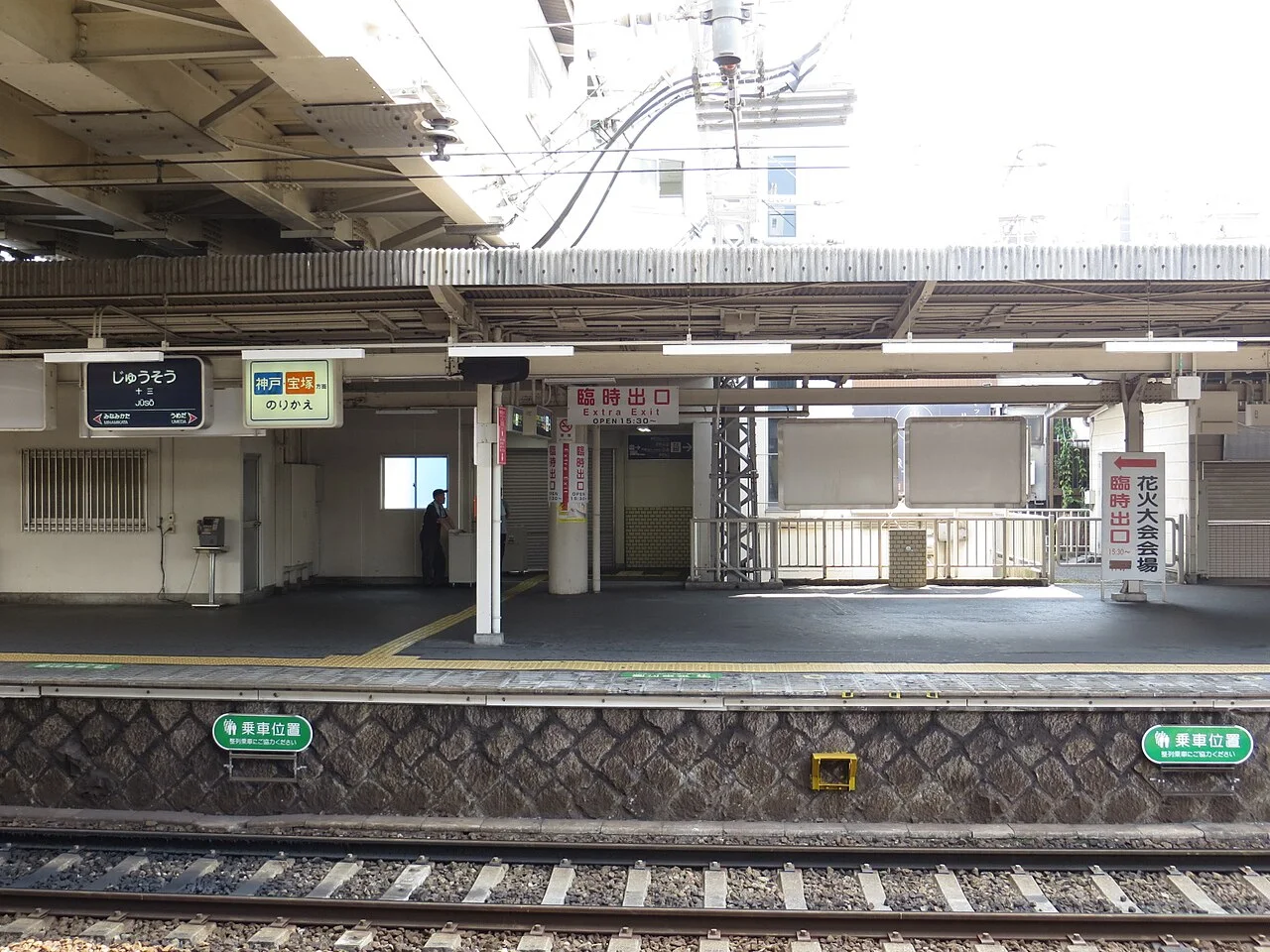
2027 Yodogawa Fireworks dates are not yet out. Use 2026 (38th edition) details to compare Juso paid and free viewing areas, Umeda closures, ticket collection, and Hankyu, JR, and Osaka Metro routes.
Finding the right bank, bridges, and entrances on the Juso map
The Yodo River flows through central Osaka towards Osaka Bay, and the 38th-edition venue occupied the northern right bank -- the Juso and Tsukamoto side. The official site spanned from Shin-Yodogawa Ohashi Bridge on Shin-Midosuji upstream down to Yodogawa Ohashi Bridge on National Route 2. According to the organiser's FAQ, fireworks are launched roughly between National Route 176's Juso Ohashi Bridge and the JR Kobe Line railway viaduct. Pinpoint both ends of the venue, the launch zone, and your ticket block on the map so your riverbank landmark lines up with the exit from your station.
In 2026, expressway construction closed the Umeda-side left bank between Nakatsu and Noda to the public. Walking down from central Umeda or booking near Nakatsu to get close to the water only led to fenced-off riverbanks. You can still stay in Umeda for the rest of your trip and take the train over to Juso on festival evening. Anyone planning to cross the river on foot needs the current traffic control map to see which footpaths stay open, and stopping to watch from bridge decks or embankment crests is prohibited.
Save both the official venue map and traffic control map offline. On the 38th-edition venue map, orange zones mark paid sponsor seats and green zones mark free areas; red arrows guide ticket holders from stations, while blue arrows lead to free viewing areas. The separate traffic control map shows closed junctions, walkable bridges, and active restriction times. Keep the map legend and station names visible in screenshots. Simply navigating to "Naniwa Yodogawa Fireworks Festival" in a map app usually drops you at a single generic pin; navigating by riverbank and ticket block is far more reliable.
Three nearby bridges are easy to mix up in search results: Juso Ohashi Bridge, Shin-Juso Ohashi Bridge on the Juso Bypass, and Shin-Yodogawa Ohashi Bridge on Shin-Midosuji. Match Juso Ohashi Bridge to National Route 176, and match the JR viaduct to the JR Kobe Line. If a map marks both upstream and downstream directions, read "towards Shin-Midosuji" as upstream and "towards National Route 2" as downstream. Sharing those fixed landmarks makes meeting companions much easier than sending a blue dot on a phone map.
The 38th-edition venue map marked the Central Stairs, East Stairs, and Tsukamoto Slope as dedicated entrances for sponsor-seat ticket holders from 14:00 JST. Ticket holders show their pass at the riverbank entrance and only have the stub torn at their specific block gate. Unpaid spectators enter the free zones via the general entrances shown on the map. If your group holds mixed tickets, eat together in the shopping arcades beforehand, split up for your respective riverbank entrances, and meet back at a station near your hotel afterwards -- the foot of the Central Stairs must stay clear, and the organiser advises against waiting at entrances.
Comparing sponsor seats by chairs, tables, and numbering
If you are travelling with older relatives or young children, look at seating type before price. In the 38th edition, both Stage Seats and Premier Seats provided tables and chairs with seat numbers assigned by the organiser. Choose the same block when booking so you sit in your allocated spots on arrival. The organiser warns that separate orders may be split up, so families and groups wanting the same table should book in a single transaction within one block. Stage Seats also feature a short live programme before the fireworks, giving early arrivals somewhere comfortable to wait.
Exciting Seats sit close to the central launch point and include tables, chairs, a bento box, and tea. Although the 38th-edition adult advance price matched Stage Seats at ¥14,000, this tier grants entry to a zone rather than a numbered chair, with seats taken first come, first served. Companions arriving late may struggle to find space next to you. If you want a close view while keeping a family seated together, compare Stage Seats at the same price or step up to Premier Seats.
On a tighter budget, Panorama Seats cost ¥5,000 for adults and ¥2,500 for children in the 38th edition. Tickets are divided into several left and right blocks, with unreserved cushion seating along the sloped embankment. Check the colour-coded block names carefully before checkout so you do not misread the Japanese katakana labels for "left" (refuto) and "right" (raito) as the left or right banks of the river. Anyone prone to backache or needing armrests to stand up will feel a long evening on cushions -- for them, a chair in Stage Seats is worth more than a shorter walk.
Noryosen (riverfront viewing boat) tickets were ¥28,000 per adult in the 38th edition, offering assigned tables and chairs aboard a vessel permanently moored to the bank. It suits travellers wanting a low, water-level perspective on surface bursts, though the boat does not cruise the river during the night. Specific weather rules apply to this tier, so save the cancellation terms before booking and compare boarding, sailing, and refund rules carefully against third-party river dinner cruises.
For 2026, child tickets across these official tiers covered ages three through primary school. Children under three entered free on an adult's lap, though a child ticket was required if they needed their own seat. Junior high school students and older count at the higher bracket when budgeting. Panorama Seats supply a cushion, whereas chaired tiers such as Stage Seats include a bento and tea. Check meal inclusions, seating, and designated entrances against the ticket price before paying.
Using 38th-edition official online rates, Panorama Seats for two adults and one primary-school child totalled ¥12,500 at face value, rising to ¥13,490 with three sets of official online and issuing fees. Putting the same three people in Stage Seats came to ¥35,990. That extra spend buys assigned seat numbers, tables and chairs, and meals, ensuring relatives arriving separately still have guaranteed places. If your group is happy sitting on cushions all evening, Panorama leaves more budget for trains or accommodation.
| Ticket tier | Adult / Child (¥) | Seating arrangement |
|---|---|---|
| Panorama Seats | 5,000 / 2,500 | Block-restricted, unreserved cushion seating |
| Exciting Seats | 14,000 / 7,000 | Zone-restricted, unreserved table and chair seating |
| Stage Seats | 14,000 / 7,000 | Tables and chairs, organiser-assigned seat numbers |
| Premier Seats | 20,000 / 10,000 | Tables and chairs, organiser-assigned seat numbers |
| Noryosen (Viewing Boat) | 28,000 / 14,000 | Assigned seating on a moored riverboat |
Buying tickets from abroad and collecting paper tickets in Japan
Access the official ticketing portal via the organiser's sponsor viewing seat purchase page. Buying official online tickets in 2026 required member registration, though existing accounts could be reused. Test your login and read the payment screen in advance to confirm confirmation emails reach your inbox. The ticketing guide lists credit card and convenience-store payment methods; check the active order screen for transaction deadlines and accepted cards. If you plan to pay in Japan, ensure the payment cut-off does not fall before you land; paying online by card leaves only paper ticket collection for your arrival.
In the 38th edition, official online purchases were printed at FamilyMart multi-copy machines in Japan using an exchange reference number. Your confirmation email explains how to retrieve the tickets, so save both the collection start date and the reference number offline. Print your tickets at a branch near your hotel or along your airport route after landing rather than queuing beside Juso Station right before entry. In 2026, official online bookings added a ¥220 system fee and a ¥110 convenience-store issuing fee per ticket -- factor the full total into group comparisons before checking out.
The official portal, Ticket Pia, e+ (eplus), and Lawson Ticket (Loppi) each run separate pages, so follow the block designations and collection steps of whichever seller you use. When official stock sells out, check the other authorised agencies listed on the same page. In the 38th edition, extra Exciting Seats near the centre were released later, but the organiser announced a complete sell-out on 16 October. Pick a fallback tier or free viewing plan in advance; unauthorised paid resale is prohibited.
Confirm your final headcount before booking, especially if companions are flying in on different days or entering separately. Once you have the paper tickets, hand each person their own ticket and send a photo of the block name. Leaving all tickets with one person forces the rest of the group to wait around entrance stairs that must stay clear. Re-entry was permitted for paid seats in the 38th edition, provided you collect a re-entry pass when stepping out and show both your ticket stub and re-entry pass to come back in -- anyone popping out for food or drinks should carry their own ticket.
Official ticketing terms state that no refunds are issued for personal circumstances or late arrivals when the display goes ahead. Refunds apply only if the entire festival is cancelled, processed through the original sales channel; hold on to paper tickets, stubs, and payment receipts during any announced suspension while waiting for updates. Hotel rooms still follow their own cancellation cut-offs. The 38th edition published dedicated refund dates and channels, so save the latest terms whenever you buy for the next festival.
What you see from free areas and when to claim space
For one or two travellers keen on high-altitude aerial bursts and comfortable walking to a station, the free viewing zones are a practical choice. Outside sponsor seats in the 38th edition, space saving was banned before 12:00 JST on festival day -- mats laid down earlier were removed even if someone stayed beside them. Even after noon, unoccupied mats cannot hold space, and occupied space is capped at 1 square metre per person. Free areas on the 38th-edition venue map lay along the right bank upstream towards Juso and Nishinakajima, and downstream near National Route 2, with warnings that areas may close early once full. Sitting on embankment crests, stairs, walkways, or restricted zones is forbidden; arrive early for a closer spot and pack a mat that folds to match your headcount.
Pay attention to bridges, embankment slopes, and distance on the map. High bursts rise well above the river and remain visible from further back, whereas water-level effects demand a clear line of sight to the river surface. Test the view sitting down so you are not staring into the slope, trees, or standing spectators -- standing up to take photos from a seated patch blocks everyone behind you. Pick a family spot at seated eye level and walk the route to the toilets while it is still light.
If friends arrive hours apart, share three map cues beforehand: bridge, riverbank, and entrance. Juso Ohashi Bridge and the JR Kobe Line viaduct are both on the right bank yet require a long walk between them; scanning the embankment for a matching picnic mat after dark is far harder than meeting at a clear landmark before entering the venue. Give anyone racing in late from Kyoto or Kobe a spot they can legally reach rather than pulling them into the packed middle of the riverbank.
The 38th-edition official FAQ splits food stalls across two zones: upstream of Juso between the Juso Bypass and Nishinakajima / Shin-Midosuji, and on the Tsukamoto side downstream from the JR Kobe Line viaduct towards National Route 2, plus stalls inside sponsor areas. Buy food on your own side before entering to avoid fighting cross-traffic crowds. The organiser permits bringing outside food and alcoholic drinks into sponsor seats, though open flames are prohibited, so stick to ready-to-eat items.
Bring a hands-free raincoat if rain threatens, as the organiser asks spectators not to use umbrellas. Riverbanks turn breezy after sunset, so a dry cushion and light jacket make the wait easier. Use toilets and fill water bottles before the display begins, and fold up your mat promptly if crowd-control staff ask your area to queue and move. In the 38th edition, the organiser instructed visitors to leave festival rubbish at the riverside rather than taking it out, following staff directions before departing.
Which station to use: Juso, Tsukamoto, Minamikata, or Nishinakajima-Minamigata
Taking Hankyu from Umeda to Juso puts you close to the entrances near Juso Ohashi Bridge. Bear in mind that Hankyu Osaka-umeda Station and JR Osaka Station are separate complexes connected by underground shopping arcades or street crossings, so choose which line to board before leaving your hotel. If a friend texts to meet at Umeda, name a hotel lobby or a specific operator and ticket gate rather than relying on the area name.
JR Tsukamoto Station connects towards Osaka and Shin-Osaka, making it the first stop to check for downstream blocks. JR West station maps separate platforms bound for Osaka, Shin-Osaka, and Kyoto from those heading towards Amagasaki and Sannomiya. After the show, follow signs for the Osaka, Shin-Osaka, and Kyoto platform if returning to JR Osaka Station. The same applies at Juso Station: check Hankyu line and destination boards carefully, especially if changing trains at Osaka-umeda.
Travellers staying around Shin-Osaka or along the Midosuji Line with upstream seats should look at Osaka Metro Nishinakajima-Minamigata Station, while those arriving on the Hankyu Kyoto Line can check Hankyu Minamikata Station. The two stations share nearly identical names in Japanese -- Osaka Metro's Nishinakajima-Minamigata and Hankyu's Minamikata -- yet belong to different operators, so save both Japanese names on your phone to show station staff if you need directions home. Because they sit in the same neighbourhood, crowds leaving the riverbank often funnel down the same streets, meaning they do not act as completely separate escape routes.
The 38th-edition guide also listed JR Mitejima on the JR Tozai Line and Hanshin Himejima, which suit downstream seats or accommodation along those lines. Cross-check the traffic control map against your entrance before choosing; walking to a distant station at the opposite end of the right bank often forces you through heavy crowds only to double back. Pick one primary station aligned with your return direction and one accessible backup from your designated exit in case routes are diverted.
For 2026, the organiser asked sponsor-seat holders to reach their nearest station by 17:30 JST and the riverbank by 18:00 JST, noting the walk from station to river can take 15 to 30 minutes. Complete convenience-store ticket collection, family pick-ups, and dinner well before that window. Venue gates also staggered entry: Central Stairs opened from 14:30, Panorama Seat gates from 15:00, and other organiser tiers from 16:00. Plan an afternoon arrival if you want time to settle in; latecomers after launch in the 38th edition could still enter under staff guidance, though reaching seats took longer than usual.
| Area to check first | Nearest station | Return direction |
|---|---|---|
| Around Juso Ohashi Bridge | Hankyu Juso | Hankyu Osaka-umeda / Hankyu lines |
| Right bank downstream | JR Tsukamoto | JR Osaka, Shin-Osaka, or Amagasaki |
| Upstream near Shin-Midosuji | Hankyu Minamikata / Metro Nishinakajima-Minamigata | Hankyu Kyoto Line / Midosuji Line |
| Further downstream | JR Mitejima / Hanshin Himejima | JR Tozai Line / Hanshin Railway |
Waiting at your seat or leaving early when the show ends
Once the finale finishes, pack away tickets, raincoats, and mats and listen for your block's release order. Paid-seat dispersal in the 38th edition ran by block, with gates opening and closing to regulate crowd density; the venue guide advises avoiding the initial rush and waiting roughly an hour before moving. Stay inside your designated area when asked to hold. Moving onto stairs or standing near gates to wait for companions only slows the outflow for everyone else -- follow staff out to an open holding area before checking your group's location.
If children or older relatives run out of stamina, leaving slightly early is workable. The 38th-edition FAQ noted that exits switched to controlled status roughly 15 minutes before the scheduled 20:00 JST finish. Anyone aiming to beat the crowd must leave enough time to walk from their seats and clear their block gate before around 19:45 JST. Once staff begin controlling exits, follow directions rather than pushing through narrowing walkways.
Your outbound and return stations do not have to match. You might enter via Hankyu Juso, sit downstream near the JR viaduct, follow dispersal towards Tsukamoto, and ride JR back to Osaka Station. Keep in mind that single-operator rail passes will not cover a different railway company, so you will need a standard fare or IC card for the return leg. Check exit corridors on the traffic control map first to avoid walking against one-way crowds on the street.
In the 38th edition, Shin-Juso Ohashi Bridge's east footpath closed from 13:00 JST, and both footpaths on Juso Ohashi Bridge closed from 17:30 JST with the northbound traffic lane opened to pedestrians -- stopping on bridges to watch was strictly prohibited. Always compare train routes against officially open footpaths rather than assuming any bridge on a standard map is walkable. The organiser requires public transport and provides no car parks or bicycle parking; travellers with luggage, pushchairs, or pre-arranged taxis should set pick-up points outside the traffic-restricted zone so areas near Juso Station exits and Yodogawa bridges remain passable.
If you need to catch a Shinkansen or reach Kansai Airport the same night, count backwards from departure to allow for station queues, slow-moving crowds, and transfers. As an example of station friction, Hankyu's 38th-edition measures for PRiVACE reserved-seat cars suspended on-board ticket sales from Juso after 19:30 and asked wheelchair users to transfer at Osaka-umeda after 15:00. Relying on tight transfers at Juso carries real risk -- staying an extra night and catching intercity trains with luggage the next morning is far less stressful.
Choosing entrances for families, older travellers, and wheelchair users
The 38th-edition FAQ listed two wheelchair-accessible ramps into the Juso venue: one on the Tsukamoto Station side near the JR Kobe Line, and another along National Route 176. Contact the organiser with your ticket block beforehand to verify whether a ramp connects to that block's entrance and exit. Stage Seats and Noryosen were highlighted as closest to accessible toilets, with staff available to guide you -- ask in advance how boarding and disembarking work for the boat. If anyone in your party can only walk short distances, verify whether your entry ramp also operates as an exit afterwards.
With a pushchair, routes that appear level on a flat map often include steps climbing up the embankment. Agree among adults before reaching the venue who will carry the child and who will fold the buggy at stairs. If switching to a baby carrier, calculate how many hours you will wear it and bring a compact cushion so adults can rest inside the viewing block. Avoid exhausting anyone by standing along the riverbank for hours just to secure a front row.
On a first trip with children, locate the nearest toilets right after entering and show children what event staff vests look like if they get lost. Pack child-sized ear defenders, choose seats slightly back from the noise with clear exit access, and look for spots beside -- not blocking -- walkways if holding unreserved tickets. Paying for proper chairs makes waiting for the closing water-level display much easier than keeping children settled on crowded grass.
When people split up to buy drinks or queue for toilets, agree on a fixed landmark inside your own block and keep at least one adult with anyone needing support. Mobile signal can drop in dense crowds, so save your block name, meeting time, and hotel address in Japanese offline. If a child gets separated or someone feels unwell, notify nearby staff immediately so they can escort you to a safe rest spot rather than pushing backwards down crowded stairs.
If someone in your group needs frequent toilet breaks, note two options before entry: one at the station or restaurant, and one inside your viewing block. Official guidance warns of queues at riverbank toilets, making an unobstructed walking route from your seat more valuable than mere proximity on a map. Arriving early in numbered-seat blocks lets you handle toilet trips before the start. Watch wind direction near the water too: the organiser warns falling ash or debris can blow across the bank, and anyone spotting a suspected unexploded shell must never touch it and should alert staff right away.
Watching water-level fireworks, photography zones, and phone tips
Born out of a local Juso neighbourhood festival, the event began in 1989 as the Heisei Yodogawa Fireworks Festival before taking its current name, run with local volunteers. Look at the official programme for water-level sequences when choosing spots: the 38th edition featured five acts, opening with music-timed shells and building to a finale with underwater fireworks bursting across the river surface. From an embankment seat, you need an unobstructed view of the water directly ahead of the launch zone to catch those surface reflections.
If you want to set up a tripod, start with the official FAQ's photography-zone rules for that year. In 2026, Ticket Pia, e+ (eplus), and Lawson Ticket sold designated photography areas, while tripods and selfie sticks were banned across Exciting, Group, Stage, Panorama, and Noryosen seats. Entry rules for photography zones follow the issuing platform. Standard ticket holders must shoot handheld from their own seats, keeping aisles and stairs clear and packing kit away before block dispersal.
For smartphone shots, test a horizontal frame that includes a strip of the riverbank before the low-altitude bursts begin. Zooming in tight on single high shells misses wide displays opening across both sides of the river. Lower your screen brightness before the start and record a few clips rather than filming continuously, keeping the view clear for neighbours behind you. If smoke drifts across your lens, stay in place for the next act instead of moving into walkways.
Unauthorised drones were prohibited over the riverbank and venue airspace in the 38th edition, including sub-100g models. Configure your main camera before dusk, pack a lens cloth for mist or spray, and put phones away in light drizzle instead of raising an umbrella in seated blocks.
After the festival, official event galleries and original news articles show how riverbanks, bridges, and sightlines shift from different vantage points. Social feeds often show clips taken from apartment or hotel windows, so if you plan to watch from a room, ask the hotel directly about the exact room category, floor, and orientation -- specifically whether you can see the launch zone while seated and which windows face the Yodo River.
Staying in Umeda or Shin-Osaka, and pacing your Osaka itinerary
The main draw of staying in Umeda is stepping off the train directly into your hotel district, as long as you pair Hankyu Osaka-umeda or JR Osaka with the right exit. Both stations sit a short walk from most hotels, so save an above-ground walking route beforehand if travelling with children to skip hunting for underground exits late at night. If you are still comparing neighbourhoods, our Umeda accommodation area guide compares walking access across Hankyu, JR, and Metro stations -- leave extra time and check last-order hours if meeting friends for a late meal.
Staying around Shin-Osaka makes next-day Shinkansen departures and heavy luggage easier, while on festival night you can use Midosuji Line Nishinakajima-Minamigata or JR Tsukamoto depending on your block. From Namba, the Midosuji Line gives a direct ride to upstream blocks, or you can take Hankyu back to Umeda and transfer if sitting in Juso Stage Seats. If companions are heading back to different hotels, save each person's return route during the day and agree on a single post-show meeting spot well outside the traffic control zone.
Keep daytime sightseeing light so the afternoon stays free for ticket collection, an early meal, and getting to the riverbank. Fitting Osaka Castle, Umeda shopping, and Tennoji into one busy day before heading out to Juso quickly eats into queue buffers, while Universal Studios Japan works far better on its own full day. When planning ahead before the next festival date drops, sketch two swappable daytime plans using our three-day Osaka itinerary so you can shift one evening once the official date lands.
If you want to explore Osaka's other major celebrations, treat Tenjin Matsuri at Osaka Tenmangu Shrine separately: its Yoimiya eve falls on 24 July and the main Honmiya festival on 25 July, featuring land and boat processions alongside dedication fireworks over the Okawa River. Check our Osaka summer festivals guide for schedules around the city, or compare ticketing and transport across Japan in our Japan fireworks planning guide.
A few useful answers
When is the 2027 Naniwa Yodogawa Fireworks Festival?
As of 22 November 2026, the organiser has not yet announced the 2027 date. The 38th edition took place on 17 October 2026.
Can you watch the Yodogawa fireworks for free from the Umeda riverbank?
No — entry to the Umeda-side left bank was prohibited for the 38th edition in 2026. Free viewing zones were located on the Juso-side right bank, accessed via the general entrances marked on the official venue map.
Are Panorama Seats allocated?
In the 38th edition, Panorama Seats restricted entry to the block printed on your ticket, with unreserved seating on cushions inside that block. Choose Stage Seats or Premier Seats if you want assigned individual seat numbers.
Can I enter using my ticket purchase confirmation screen?
Official online tickets for the 38th edition had to be printed as paper tickets at FamilyMart stores in Japan. For tickets bought through other authorised sellers, follow the collection instructions on your booking confirmation.
Is the festival postponed to the next day if it rains?
For the 38th edition, the display went ahead in light rain and was cancelled outright without a rain date in severe weather. Cancellations or pauses are announced on the official website.
Which ticket allows tripods for photography?
For the 38th edition, the organiser listed designated photography areas sold via Ticket Pia, e+ (eplus), and Lawson Ticket. Check the photography area (shashin satsuei area) details on each ticketing platform when booking.
Official information and references
Sources used in this guide.
- Naniwa Yodogawa Fireworks Festival official news and 38th edition conclusion notice
- 38th Naniwa Yodogawa Fireworks Festival date, launch times, and venue overview
- 38th edition date announcement
- 37th edition date announcement
- 38th edition official ticket launch announcement
- Venue guide map, free-zone space rules, and entry safety guidelines
- 38th edition traffic restrictions and space-saving hours
- 38th edition joint Osaka Prefectural Police and organiser traffic control map
- Official FAQ (cancellations, entry, accessibility, photography, and dispersal)
- 38th edition sponsor viewing seats, sales channels, and advance ticket prices
- Sponsor viewing seat admission, seating, and refund rules
- Official ticketing guide and FamilyMart ticket collection
- 38th edition programme and underwater fireworks
- History of the Naniwa Yodogawa Fireworks Festival
- Hankyu Juso Station map and platform directions
- Hankyu PRiVACE reserved-seat measures for the 38th fireworks day
- JR West Tsukamoto Station layout map
- Osaka Metro Nishinakajima-Minamigata Station layout map
- Osaka Tenmangu Shrine Tenjin Matsuri schedule and Funatogyo river procession