Plan a family visit around free entry for children aged 15 and under, hippo feeding, three floors of Wonder Museum, weekend NIGHT ZOO and the water-screen show. Includes buses from Naha, driving, pushchairs and wheelchairs.
- Region & Focus
- Okinawa Main Island
- Reading Scope
- 32 min read · 19 chapters · 4 Q&As
- Official Verification
- 12 official sources checkedUpdated 31 October 2026
- Key Topics
- ItinerariesTravel budgetOkinawa
Chapter Route Map (tap any stop)
- Daytime animals or an evening visit: choose the focus of your day
- One ticket includes Wonder Museum: work out your family budget by age
- Weekdays close at 17:30; weekends and Japanese public holidays at 21:00
- Walk from Nakanomachi bus stop, and allow for the walk back
- Driving and pushchairs: arrange parking, entry and hire separately
- The Ryukyu Arc area: learn about Okinawa through its islands and native livestock
- Hippos at 11:00, native horses at 12:00: build a route around a feeding observation
- For elephants on weekdays, note 15:30 and 16:30
- Start with one floor of Wonder Museum, then decide how far to explore
- Light, sound and making in the basement levels: allow a full indoor stretch on rainy days
- Budget separately for the carousel, miniature train and mini cars
- Water play in summer, swings in autumn and winter: pack for the activity
- Wheelchairs and pushchairs: arrange the services you need at the entrance
- NIGHT ZOO: choose feeding, a guided walk or quiet observation
- Water and Green Plaza: make the water-screen show one of your stops
- Restaurants and the children’s centre are in the free area; zoo admission still applies
- Heat, rain and typhoons: when to move the visit indoors
- A half-day with toddlers: one favourite animal and indoor play
- Afternoon into evening: see early-finishing animals before the water screen
- Quick Q&A
For a family day at Okinawa Zoo and Museum, first choose between morning animals followed by an afternoon in Wonder Museum, and a weekend visit that continues into the evening. Entry is free for children aged 15 and under, and the children’s museum is included. Your children’s routine, animal viewing times and the journey back to your hotel will shape the day. The daytime and evening routes below make room for meals, pushchairs and rest as you move from the entrance to the exhibits.
Daytime animals or an evening visit: choose the focus of your day
The first decision for a family visit is when to leave. Arrive in the morning to see hippos, native horses and elephants before trying ball tracks and light exhibits indoors. For NIGHT ZOO, use the afternoon for animals whose viewing hours end early, then visit the night exhibits after dinner. Both routes use the same grounds, but move at very different paces. This choice is especially useful for families with toddlers who need a nap.
In Goya, Okinawa City, the site brings together a zoo, the Wonder Museum children’s museum and a park with play areas. From Chatan or Okinawa City, you can spend most of the day or early evening here. If you stay in Naha and travel by bus, include both the outward and return bus journeys and the walk from Nakanomachi bus stop. If you are moving to a hotel in northern Okinawa that day, choose a daytime visit and continue north after the main exhibits. A long drive after a night visit leaves less rest for adults and children. For accommodation areas and travel between north and south, see our Okinawa main island itinerary and accommodation guide.
With three or four hours, choose one animal route and some museum time. For an evening visit, arriving in the afternoon, eating and resting before the night exhibits gives you more breathing space. Mark your priority animals on the park map, then decide whether to visit the museum before or after lunch. Asking everyone which animal they most want to see, and whether they want to try the indoor exhibits, is usually more useful than copying every programme into a long timetable.
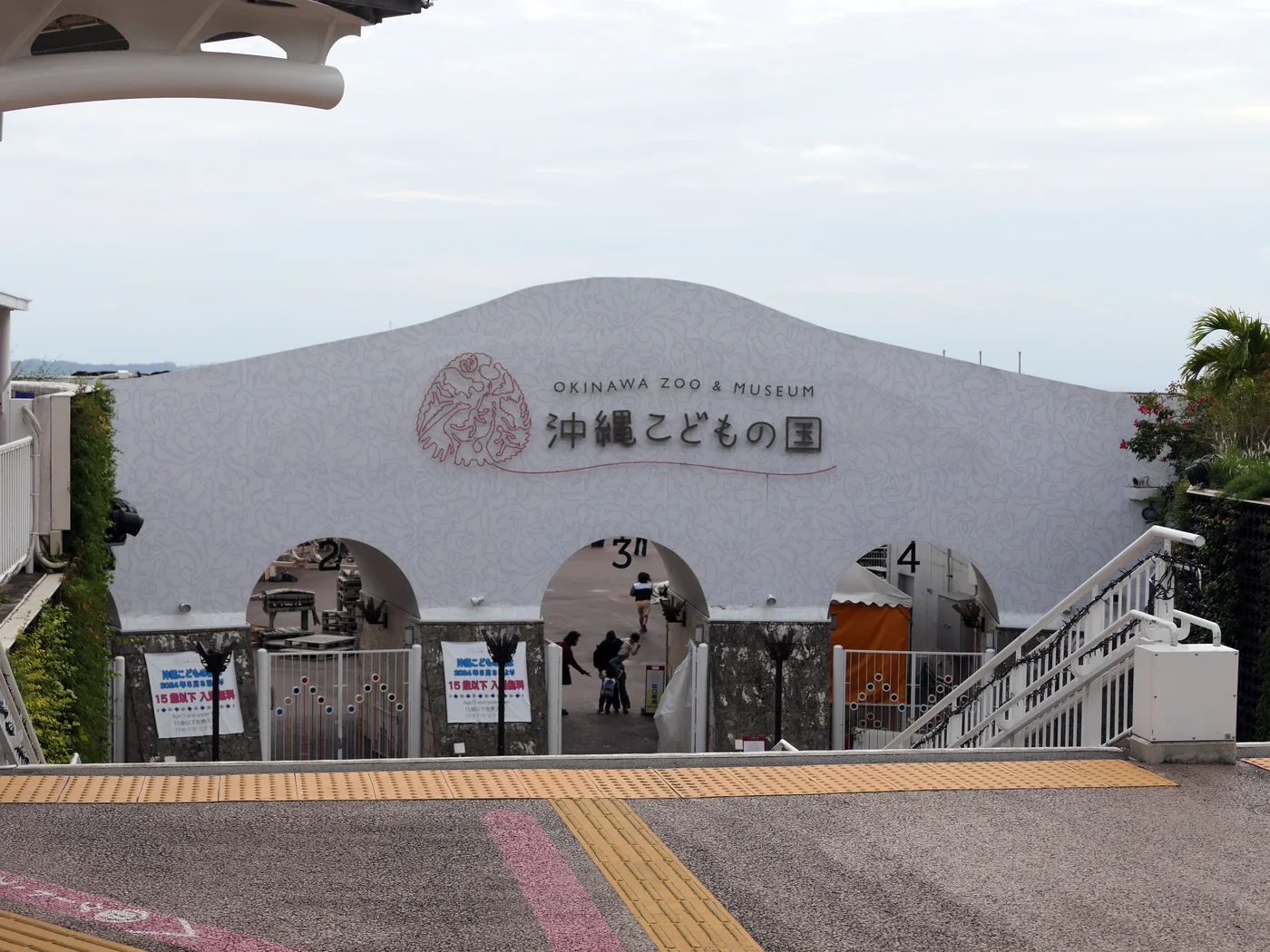
Plan a family visit around free entry for children aged 15 and under, hippo feeding, three floors of Wonder Museum, weekend NIGHT ZOO and the water-screen show. Includes buses from Naha, driving, pushchairs and wheelchairs.
One ticket includes Wonder Museum: work out your family budget by age
Standard admission is currently ¥1,000 per person aged 16 and over. Children aged 15 and under enter free, and Wonder Museum admission is included.
For two adults and two children aged 15 or under, standard admission totals ¥2,000. Hiring one pushchair adds ¥500, bringing those costs to ¥2,500. Budget separately for food, paid experiences and rides. The Japanese ticket and hire information lists pushchair hire at ¥500.
The student concession is ¥500 with a student card; the Wonder Museum is charged separately (adults ¥200, ages 16–18 ¥100, 15 and under free; advance set tickets save up to ¥100). The zoo’s official overseas visitor information also explains the use of an ISIC international student card for overseas students. Have documents ready if your group includes secondary school or university students. List paid admissions, pushchair hire and chosen experiences separately. You can then put the money saved on children’s entry towards an experience and keep track of the total.
Annual passes cost ¥4,000 for adults and ¥2,000 for students, last one year and can only be used by the named holder. A standard ticket is enough for a single visit on a short holiday. Compare annual passes if you will stay longer in Okinawa and return several times. You can re-enter on the same day by showing your ticket to entrance staff, useful if your hotel is nearby and the family needs a break. Keep tickets in an easy-to-reach pocket when leaving so you do not have to search through everyone’s bags on your return.
Weekdays close at 17:30; weekends and Japanese public holidays at 21:00
The zoo closes on Tuesdays. If Tuesday is a Japanese public holiday, it opens and the closure moves to the next weekday. Regular year-end closures are 30 and 31 December and 1 January. See the official opening days and hours. On a phone, swipe the table sideways to see last admission and closing times.
Wonder Museum closes 30 minutes before the zoo: normally 17:00 on weekdays and 20:30 on weekends and public holidays. The final half-hour before the park closes is too short to begin a full round of indoor exhibits. Leave children an uninterrupted stretch after the animal route. If arriving in the afternoon, you could visit the museum first and then animals still on display, or make the evening programme the main purpose of the visit.
Last admission, museum closing and the end of individual animal viewing periods are separate times. Remembering only “open until 21:00” makes it easy to leave elephants or the monkey house too late. Save the times for your two or three priorities on your phone and fit other exhibits around them. A weekday visit can still combine the zoo and children’s museum; there is no need to rearrange all your accommodation for the evening lights.
| Day | Opens | Last admission | Closes |
|---|---|---|---|
| Weekdays | 9:30 | 16:30 | 17:30 |
| Saturdays, Sundays and Japanese public holidays | 9:30 | 20:00 | 21:00 |
Walk from Nakanomachi bus stop, and allow for the walk back
The official access guide lists routes including buses 23, 27 and 31 from Naha Bus Terminal to Nakanomachi, followed by a walk. The official overseas access information gives a bus journey of about one hour and a walk of about 15 minutes from the stop to the zoo. Include this final stretch in your arrival time if you have a pushchair or large bags. Before boarding, check your departure stop, Nakanomachi and the direction of travel. Save the return stop location separately.
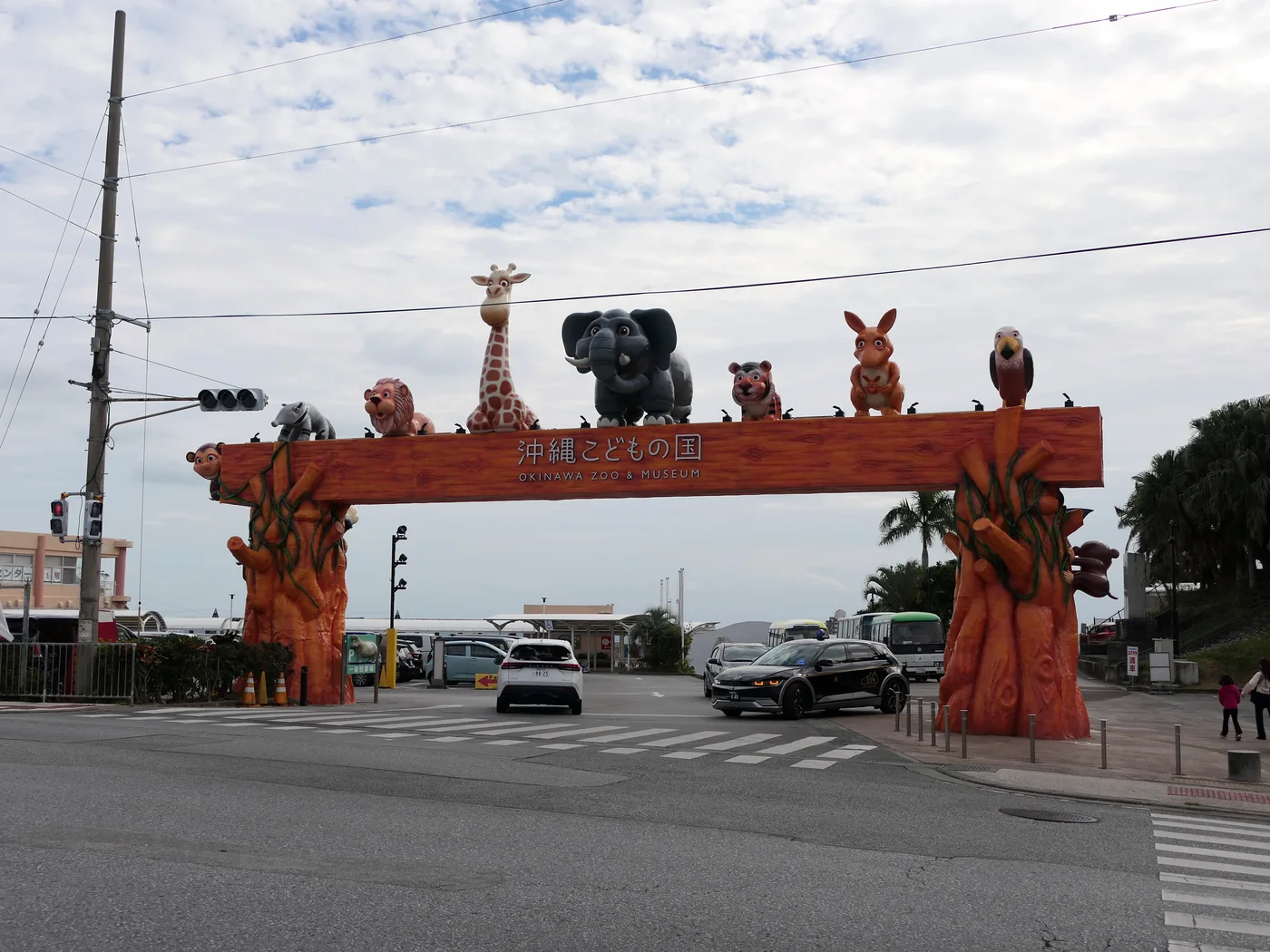
The road arch near the entrance is easy to spot, with animal statues on top. You still need to follow the road from the arch to the actual admission entrance. If your child is already tired, get water, hats and the pushchair ready before leaving the bus, rather than opening the whole backpack beside the road. Once inside, use the map to choose a route; it is easier to look after your group than searching for animals as you walk.
For an evening visit, check the journey home before entering. Treat leaving the park, walking to Nakanomachi, waiting for the bus and reaching your hotel as one block of time. If a change is needed, allow for that connection before deciding how long to stay after the water-screen show. A daytime return trip is easier with early-sleeping toddlers staying in Naha. From Okinawa City or Chatan, it is easier to spend the whole early evening at the zoo.
Driving and pushchairs: arrange parking, entry and hire separately
The address is 5-7-1 Goya, Okinawa City. The official access page gives about 50 minutes from Naha Airport on ordinary roads, about 10 minutes from Okinawa-Minami Interchange, and parking for around 700 vehicles. Set your navigation to Okinawa Zoo and Museum, then follow entrance and parking directions on arrival. For weekend evening programmes, keeping dinner and rest breaks inside the park reduces the need to move the car again at dusk.
Payment at the East No. 2 entrance is in cash. Have cash ready if you plan to enter there. For online tickets, follow the zoo’s link to the advance sales page, choose the correct ticket and save it somewhere easy to open on your phone. Shops inside have their own lists of accepted payment methods. Prepare separately for tickets and meals, and keep some yen in cash for small purchases.
Pushchair hire costs ¥500; manual wheelchairs are free. Read hire and service information alongside the park map. The grounds have changes in level. With a toddler, start with one animal route, return to a rest point and then choose the next stretch. Arrange hire before your child is too tired to walk deep inside the park. For a wheelchair user, ask at the entrance about suitable paths and toilets, then connect the animal and indoor exhibits.
The Ryukyu Arc area: learn about Okinawa through its islands and native livestock
Elephants and giraffes may be children’s first choices, but the Ryukyu Arc area deserves time. The zoo’s nature and culture of the Ryukyu Arc places island ecology and native livestock in the same context. Island species, Yonaguni horses, island goats and Okinawan native pigs offer ways to learn about Okinawa. Later encounters with goats, horses or cultural displays around the islands can then connect with what you have seen here.
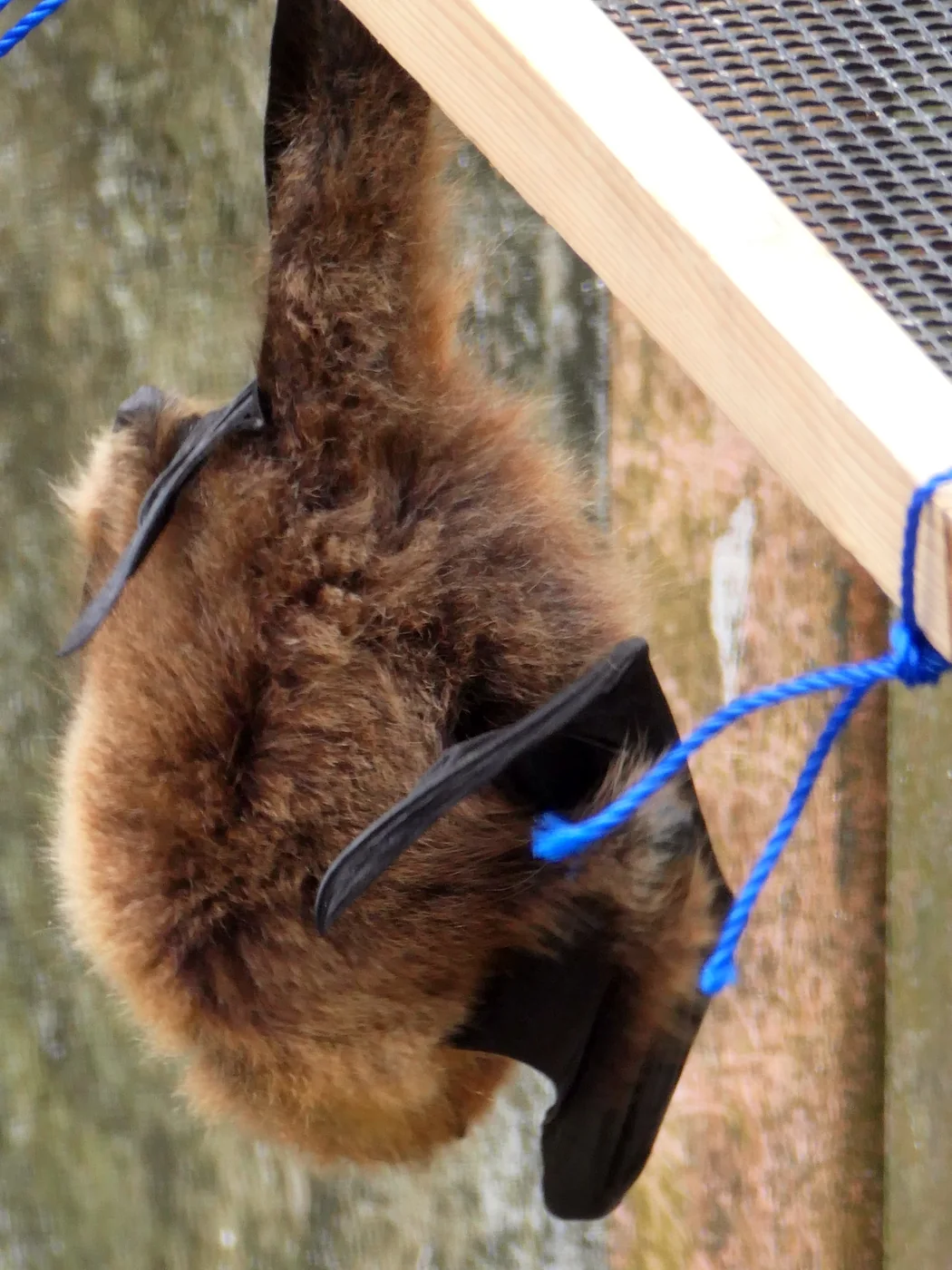
With primary school children, find the animals’ home islands on the signs and compare them with places on your trip. For younger children, start with physical features: a horse’s build, a goat’s horns or the folded wings of a hanging bat. Choose one question and let them look for a while. That is more likely to stick than an adult reading every word of a sign.
The photographs here can also start an observation. In the hanging bat image, the wings rest beside the body, with brown fur and dark wing membranes clearly visible. At the enclosure, ask children to find which part grips the perch. For a travel notebook, record the posture and the name on the sign; take photos of the positions you most want to remember.
Hippos at 11:00, native horses at 12:00: build a route around a feeding observation
“Kuwacchi Time” is a chance to watch animals eat. The zoo timetable lists hippos at 11:00, Yonaguni horses at 12:00, island goats at 15:00 and giraffes at 16:30. Choose one for your walk. With an early arrival, visit your chosen areas first, then return near the hippo enclosure for 11:00. Follow with the native horses or lunch at midday, and switch to the museum in the afternoon.
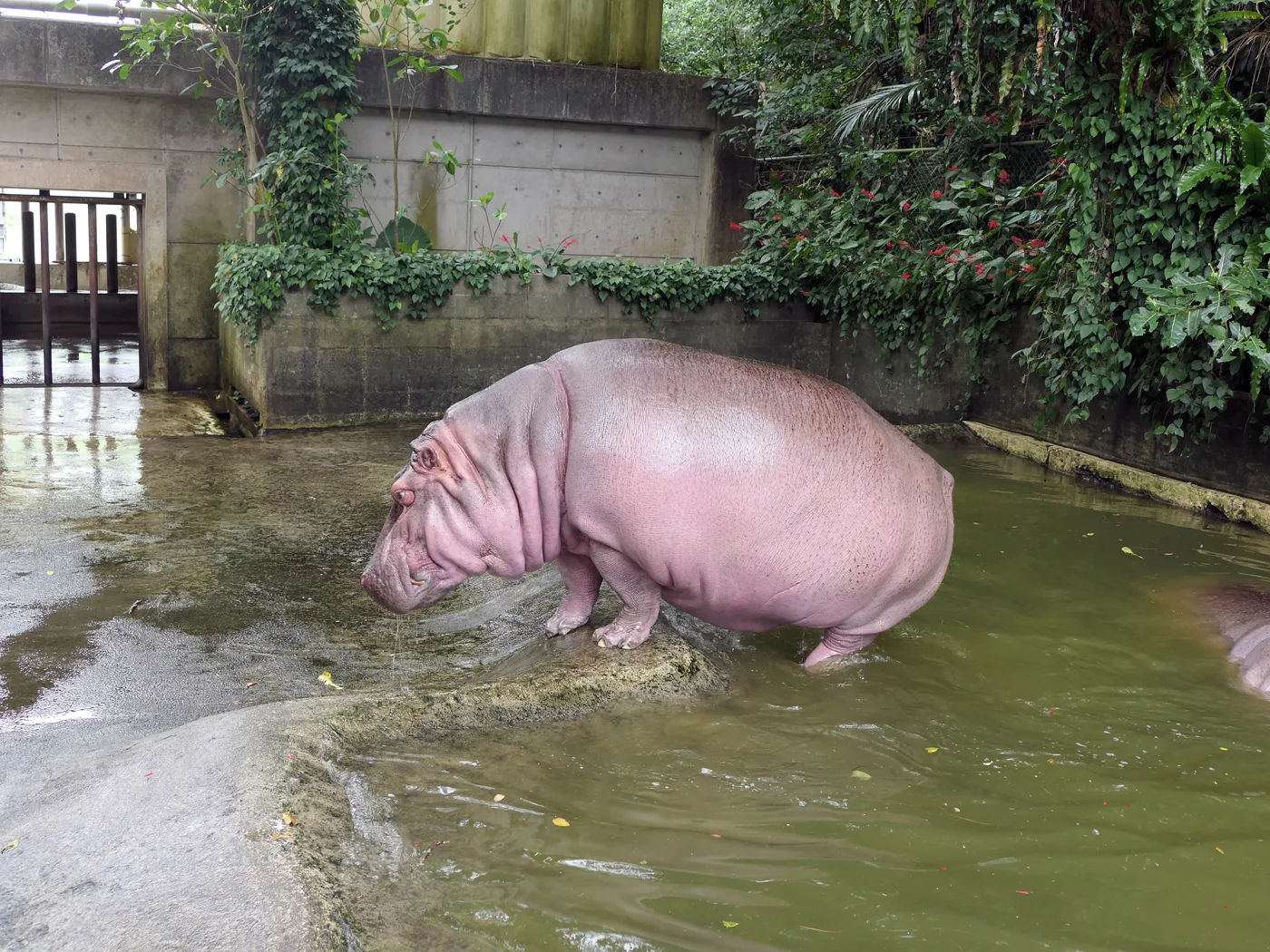
Watching staff feed animals and paying to feed them yourself are different activities. The former lets you watch how animals find food and move their heads and bodies while eating. To feed them yourself, follow the experience’s ticketing, feed and staff instructions. Keep your own snacks in your bag and leave the animals’ food to the zoo.
Spend a little longer with the hippos. Look at the back, ears and nostrils above the water, then move to another angle to see how the pool connects with dry land. Children may not want a full ecology explanation, but may enjoy comparing where the animal was before with where it is now. Choosing a favourite and returning later is another way to explore without rushing.
For elephants on weekdays, note 15:30 and 16:30
Weekday animal viewing ends at different times. The female elephant Ryuka is outside until 15:30 and can be seen in her sleeping quarters from 16:30 to 17:30. The male, Ryuto, is on display until 16:30. The monkey house, some native livestock, wildcats and other animals also finish before the park closes. Visit elephants in the early afternoon, then use the remaining time for other areas, rather than leaving the elephant house until after a full circuit. See weekday viewing times by animal.
If someone particularly wants to see elephants, let that set the first half of your route. Ball tracks and souvenir shopping are easier to move later. If your child wants to stay at the elephant house, slow down and remove one or two other stops. There is no need to hurry everyone away from their favourite place just to follow the original order.
Start with one floor of Wonder Museum, then decide how far to explore
Wonder Museum is a hands-on children’s museum. The official floor guide divides floor 1 (the ground floor) into the Forest of Discovery and ball exhibit area. Basement level 1 has making, experiment and light exhibits; basement level 2 provides imagination and creative spaces. Let children choose one exhibit to try, learn how it works, then move to nearby installations. On a first visit, enjoying one floor fully is an easier starting point than trying to cover every corner.
Ground-floor ball tracks, ball lifts and mirrors let children see how actions change things. Send a ball upwards and watch it travel down the track. Then see which step another child changes and how the result differs. Adults can try once alongside them, then step back and let them repeat it. If others are waiting, agree on one more turn before changing over; avoid holding up the exhibit to film a complete demonstration.
Language is not the first obstacle at every exhibit. Moving balls and changing mirror images give children a chance to discover rules for themselves. For experiments or workshops that need explanation, read the activity page for ages, fees and booking. The zoo also offers Japanese-language workshops for families willing to follow demonstrations. Plan free exploration separately from a making session so check-in times do not break the whole afternoon into small fragments.
Light, sound and making in the basement levels: allow a full indoor stretch on rainy days
Basement level 1’s Atelier of Light has exhibits about colour, vision and sensation, alongside rope waves, gears, pinholes and other themes. Basement level 2 includes body-controlled images, a shadow table and creative spaces. With children of different ages, agree on a meeting point on the same floor and have adults accompany them separately. Everyone need not share the same interest in each exhibit. See Wonder Museum exhibits by floor.
On wet or very hot days, make the museum the longest stop. Finish a short animal route, drink and eat before entering, and children can settle into exhibits that need hands-on attention. If you enter already looking for the next animal, the museum can become little more than a passage through its floors. Taking time to follow a ball’s movement or a changing shadow makes a more satisfying half-day.
If one child likes making things and another wants free play, check that day’s workshops and use exhibits on the same floor before and after check-in. Leave a dry space in your bag for finished work. If a night animal route follows, pack away cut-and-paste projects or fragile pieces first so your hands are free to help the children.
Budget separately for the carousel, miniature train and mini cars
Ride Park has a carousel, the Texas miniature train and mini cars. The official ride list prices the carousel and Texas train at ¥400 each, and mini cars at ¥100. The first two accept riders until 16:45 on weekdays and 20:15 on weekends and Japanese public holidays. Mini cars finish at 17:00 and 20:30 respectively. For the train, leave a gap between the animal walk and indoor exhibits to combine a ride with a rest.
A child who likes vehicles could choose the train or a mini car. Watch one round first, then decide whether to ride; this also helps control spending. Treat the museum included in admission and the extra-charge rides as separate choices. If they want another ride, decide from the time and budget left rather than committing to every attraction in advance.
If children of different ages want different things, split up for rides and animals around the same time, then meet at an agreed place. Train admission ends before the park closes. If it is a priority for your evening visit, ride before the water-screen show. Afterwards, heading straight towards the entrance makes departure easier to time than returning to the rides.
Water play in summer, swings in autumn and winter: pack for the activity
Splash Park offers sprays and water play in warmer months, switching to swings and other play equipment in autumn and winter. The park area guide lists a summer maximum water depth of about 20 cm, with arched fountains and mist. Bring spare clothes, towels and a wet-clothes bag for water play. If combining animals, the museum and water play, drop one activity that requires a fixed check-in time.
The water play rules prohibit use by children wearing nappies and require children to wear clothing. Adults in swimwear must add a T-shirt. Change in the simple changing tents beside the splash area; keep toilets and nursing rooms available for their intended uses. Preparing for these conditions lets you decide on arrival who will play and who will rest nearby.
Adults must supervise children throughout water play. If the family splits into a water group and an animal group, agree on a meeting place so the supervising adult can concentrate on the children. Swings and nearby rest areas in autumn and winter let you carry less. Skipping water play also leaves more zoo or museum time for a favourite exhibit.
Wheelchairs and pushchairs: arrange the services you need at the entrance
The park provides wheelchairs, accessible toilets, accessible parking and baby-care facilities. If bringing your own pushchair, find ramps, toilets and rest points on the map when you enter, then choose a manageable continuous animal route. Paths change level, and some viewpoints look down into enclosures. Anyone avoiding steps should get route guidance at the entrance before choosing exhibits. See facilities and entrance services.
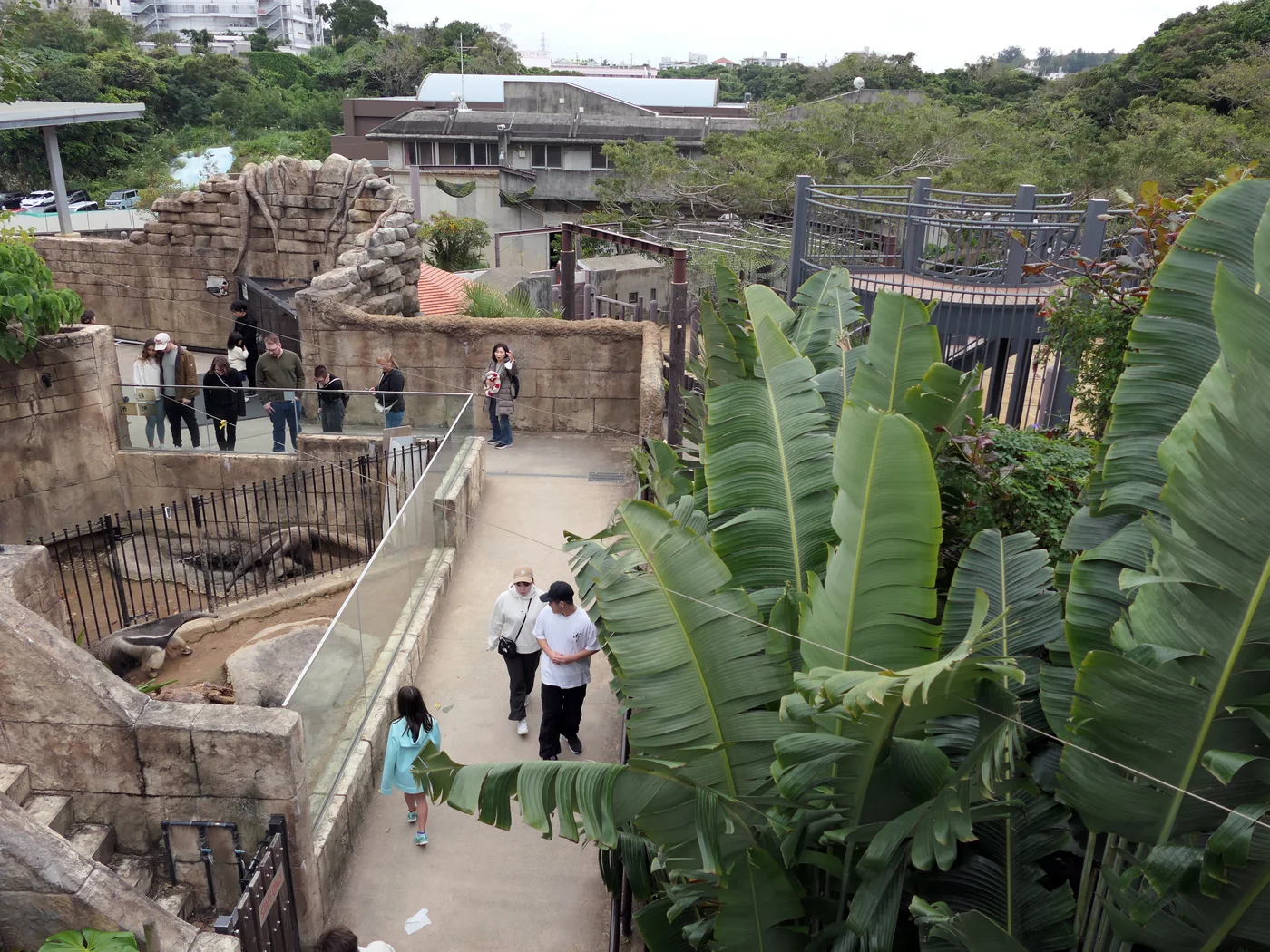
Powered mobility equipment is also available on weekdays from 9:30 to 17:00, with last applications at 16:00. It is not hired out on Saturdays, Sundays or public holidays. Bookings take priority and must be made two days before use. The reception point is beside the main entrance. Arrange this support before planning animal and museum stops; manual wheelchairs and powered equipment are separate services. See powered mobility hours and reservations.
Carers need rest too. Fit nappy changes, toilet visits and water breaks between exhibits rather than waiting until everyone needs facilities at once. When a child sleeps, one adult can stay at a rest point while the others visit a short nearby section and return. Taking turns to pause is often easier than keeping the whole family on one long route.
NIGHT ZOO: choose feeding, a guided walk or quiet observation
For weekend and Japanese public holiday evenings, choose one item from the night animal programme as a fixed appointment. It currently lists native horse feeding at 18:00 for ¥300, ending when the limited allocation sells out. Winter also lists lion feeding at 18:30 for ¥500. Pick one and use nearby exhibits to fill the waiting time.
The night tour of the Hidden Realm of Hunters runs at 18:30 and 19:30. The Satoyama Maze also has specimen displays and explanations from 18:00 to 20:30. If children are interested in animal behaviour, a keeper-led programme offers more than simply following the lights. With toddlers, choose the earlier session and leave time afterwards for food and travel home.
After dark, slow down and observe how the same animal’s posture changes with the light. Turn off flash, find the animal with your own eyes, then decide whether to raise your phone. Leave room for people arriving after you when others are waiting quietly nearby. Small movements are part of the appeal. If children are tired, finish with a short route; you can leave before the 21:00 closing time.
Water and Green Plaza: make the water-screen show one of your stops
A highlight of the night park area is the water-screen projection at Water and Green Plaza. The night park area guide describes images projected onto a screen of water about 30 metres wide and 15 metres high, with lighting and food areas nearby. Save the plaza location and that evening’s programme times when you enter. Place it between the animal area and the route back to the entrance to reduce trips back and forth.
The digital stamp activity lets visitors collect designs in the animal area, and customised animals may appear in the water-screen show. Children who enjoy interactive activities can share a phone with an adult and collect stamps along their planned route. For a walk and animal viewing, simply going to the plaza for the show also makes a complete visit. Keep the phone screen off between uses to save battery for the journey home and give children time to see the actual night scenery.
Waiting for the show is a good time to sit down. Feed children and use the toilet first, then choose a place to stay together. If adults take turns buying food, agree on the meeting point. After the show, head towards the entrance or take one more short illuminated walk. Letting one performance set the evening’s pace is more comfortable than chasing every marker on a phone map.
Water-screen projection and plaza performances in the zoo’s 2024 introductory video.
Restaurants and the children’s centre are in the free area; zoo admission still applies
The official ticket page lists the children’s centre, Okinawa Prefectural Regional Environment Centre and restaurants in the free area. Family members staying only in these areas can arrange to meet those entering the zoo. To see animals and enter Wonder Museum, buy tickets under the normal admission rules. Distinguishing the free area from exhibits beyond admission helps when some people want to sit while others continue exploring.
For the 11:00 hippos and 12:00 native horses, eat after one session before moving indoors. Afternoon arrivals can first see animals whose viewing ends early, then eat before the night experiences. Budget separately for meals and experiences, and avoid squeezing a meal between two back-to-back programmes. If children eat slowly, removing a stop gives that time back to lunch.
Before splitting up to buy meals or take children to the toilet, choose a fixed meeting point on the map. Then decide whether the next part will be together or apart. Restaurants and rest areas can bridge animals and indoor exhibits and restore energy before the evening. If staying nearby and returning to the hotel during the day, use same-day re-entry to separate a nap from the evening programme.
Heat, rain and typhoons: when to move the visit indoors
In summer or strong sunshine, see animals in the morning and enter Wonder Museum after lunch. Hats, drinking water and comfortable walking shoes are more useful than adding another activity. Keep air circulating inside the pushchair and stop regularly for water. For an afternoon-to-evening visit, remember the walk from the bus stop or car park to the entrance and have what you need ready before arrival.
In rain, shorten the outdoor route and spend longer with ball tracks, mirrors, light and making activities. The museum offers a continuous indoor stay, but travel between animal exhibits, the entrance and bus stop still includes outdoor stretches. Leave somewhere for wet clothes and rain gear. Families interested mainly in indoor play can make the museum the focus rather than rushing through the zoo under umbrellas.
The zoo closes temporarily when Okinawa’s main island enters a typhoon’s storm zone. After the storm warning is lifted, damage checks must finish before reopening. Plan from the closure rules and operational notices on the home page. Treat restored transport and a reopened park as separate matters. Stay near your accommodation that day and visit after the park reopens.
A half-day with toddlers: one favourite animal and indoor play
A sample family route starts at 9:30 with the Ryukyu Arc or your priority animal, hippo feeding at 11:00, then lunch. Leave an uninterrupted afternoon stretch for Wonder Museum. The point is the move from morning outdoors to afternoon indoors. If the first enclosure holds your child’s attention, skip a later stretch; lunch and indoor play still make a complete half-day.
Two- and three-year-olds may not need many species. Choose a horse, hippo or giraffe, allow time to find it and watch it move, then try a repeatable museum exhibit. That often gives them something to talk about back at the hotel. Ask “Where did you see it just now?” and let them answer in their own way, or ask them to draw the posture they saw.
If your child naps, leave before their usual tired period. Use same-day re-entry if returning after a hotel rest. Carry mainly water, care items and spare clothes needed for the next few hours. Before heading home, organise the children, pushchair and your belongings, then walk from the entrance to the car park or bus stop.
Afternoon into evening: see early-finishing animals before the water screen
To combine day and night on a weekend, arrive in the afternoon, see your priority daytime exhibits, then choose an early-evening feeding observation or night tour. Fit Wonder Museum into a gap before the evening programme, or shorten the animal route. After dinner, visit Water and Green Plaza for the water screen, then move towards the entrance to keep the return journey manageable.
Arrive early enough if elephants matter to your family. If you can only come at night, focus on night programmes and the park area. Choosing between these aims reduces extra backtracking to fit in daytime sights. For children who like keeper explanations, choose the 18:30 tour. For lights and images, save energy for the water screen and plaza. One evening highlight can be enough.
You can leave before closing. If returning to Naha by bus, let the timetable determine your final walk’s length. Drivers can prepare navigation and hotel parking details before walking slowly to the exit with the children. With an early flight or long journey next morning, choose a daytime visit and save the night programme for a trip based in central Okinawa.
A few useful answers
If entry is free for children aged 15 and under, does Wonder Museum cost extra?
Entry is free for children aged 15 and under, and Wonder Museum is included in general admission. Standard tickets for ages 16 and over cost ¥1,000. Paid workshops, feeding experiences and rides cost extra.
Can we visit NIGHT ZOO on a weekday evening?
Normal weekday hours end at 17:30. Saturdays, Sundays and Japanese public holidays run until 21:00. Choose an open weekend or Japanese public holiday for night animal exhibits and the water-screen show.
How far is the walk after the bus from Naha?
The zoo lists routes including 23, 27 and 31 from Naha Bus Terminal to Nakanomachi, taking about one hour, followed by about 15 minutes on foot. Include the walk again when timing your return bus.
Can we hire pushchairs and wheelchairs?
Pushchairs cost ¥500 to hire; manual wheelchairs are free. Powered mobility equipment is available on weekdays from 9:30 to 17:00, with last applications at 16:00. This hire is unavailable on weekends and Japanese public holidays. Apply beside the main entrance.
Official information and references
Sources used in this guide.
- Okinawa Zoo and Museum: tickets, opening days, re-entry and hire
- Okinawa Zoo and Museum: access, entrances and facilities
- Okinawa Zoo and Museum official visitor information
- Weekday animal viewing and feeding observation timetable
- Nature, culture and native animals of the Ryukyu Arc
- Wonder Museum floor exhibits and activities
- NIGHT ZOO animal area and experiences
- NIGHT ZOO park area and water-screen show
- Okinawa Zoo and Museum map and facilities
- Okinawa Zoo and Museum official home page and operational notices
- Ride Park, water play and paid experience hours and rules
- Park area rides and seasonal activities