Plan a manageable day in Naha: compare Makishi Market’s cooking service with its restaurants, have a Pork Tamago breakfast and learn how to order Okinawa soba, then add Tsuboya pottery street, Shuri Castle reservations, Tamaudun and the Kinjocho stone road. Includes half-day choices and ticket calculations.
- Region & Focus
- Naha
- Reading Scope
- 38 min read · 20 chapters · 5 Q&As
- Official Verification
- 28 official sources checkedUpdated 28 October 2026
- Key Topics
- FoodNeighbourhoodsItineraries
Chapter Route Map (tap any stop)
- Build the day around market lunch or a Shuri reservation
- Find the right entrances to the market, Tsuboya and the monorail
- Plan Makishi Market for lunch, and distinguish closing time from last orders
- For the market cooking service, discuss the dish before buying the ingredients
- Order to suit a solo diner, a couple or a family
- Have Pork Tamago for breakfast, and keep it simple before a market lunch
- Choose Okinawa soba by its noodles, meat and broth
- Separate the day’s main meals, snacks and food to take away
- Walk slowly from Heiwa-dori to Tsuboya after lunch
- Before buying pottery, decide where you will use it at home
- Shuri Castle in 2026: check your date before planning the route
- Reaching Shuri by monorail: allow for the final leg after the station
- Look separately at Shuri’s gates, castle grounds and Seiden
- Choose Tamaudun for royal history without a full castle schedule
- Kinjocho stone road: choose the return route before walking downhill
- A day route: market first or Shuri first
- Travelling together with older relatives, a pushchair or different walking speeds
- Adjusting for Sunday closures, rain or an extra bag of shopping
- Calculate the tickets you will use, and budget for one main meal first
- Save the Japanese names you will need for the next part of the day
- Quick Q&A
If you want market seafood, pottery shopping and Shuri in one day, fix one main meal and one visit first, then fit the monorail journey between them. For Makishi Market’s cooking service, keep lunch at the market. If you have a timed reservation to enter the Seiden main hall, work backwards from Shuri. Kokusai-dori, Tsuboya and Shuri each give you a reason to stop; you do not need to tick off every pin on the map.
Build the day around market lunch or a Shuri reservation
One easy way to overfill a Naha food day is to eat a full breakfast, buy rice balls and sweets before lunch, then order a whole fish when you reach the market. Choose one proper sit-down meal first, and share the other food. For a closer look at the fish and a discussion of cooking methods, choose First Makishi Public Market. To save your energy for Shuri, have noodles or a set meal with a clear portion size, then take the monorail up the hill.
Entry to Shuri Castle’s Seiden main hall is booked for a specific date and time, so that ticket sets the order of your morning or afternoon. With a morning booking, go to Shuri first and eat at the market later. If seafood is your priority, take a short city walk in the morning and visit Shuri after lunch. To explore both in depth, split them over two days: the market and Tsuboya on one, then Shuri Castle, Tamaudun and the stone road on the other.
For a first visit with one full day, a shorter plan is to choose Shuri Castle or Tamaudun, return to the market for lunch, then walk around Tsuboya. If your Seiden booking is in the afternoon, skip the full length of Kokusai-dori that morning. Decide in advance which stops you can drop. That leaves room for a queue, another pottery shop or a sudden shower.
| Main priority | Fix first | What you can shorten or leave out |
|---|---|---|
| Ingredients bought and cooked at the market | Lunch and ingredients your companions will eat | The far end of Kokusai-dori; Shuri’s paid area |
| Seiden interior visit | The booked date and entry time | Choose a market restaurant menu; save Tsuboya for another visit |
| Pottery and neighbourhoods | Tsuboya shops’ opening hours | Leave out Shuri and keep the afternoon for choosing pottery |
| Older relatives or a pushchair | Seats for rests and the return journey | Kinjocho’s slopes and repeated backtracking |
Plan a manageable day in Naha: compare Makishi Market’s cooking service with its restaurants, have a Pork Tamago breakfast and learn how to order Okinawa soba, then add Tsuboya pottery street, Shuri Castle reservations, Tamaudun and the Kinjocho stone road. Includes half-day choices and ticket calculations.
Find the right entrances to the market, Tsuboya and the monorail
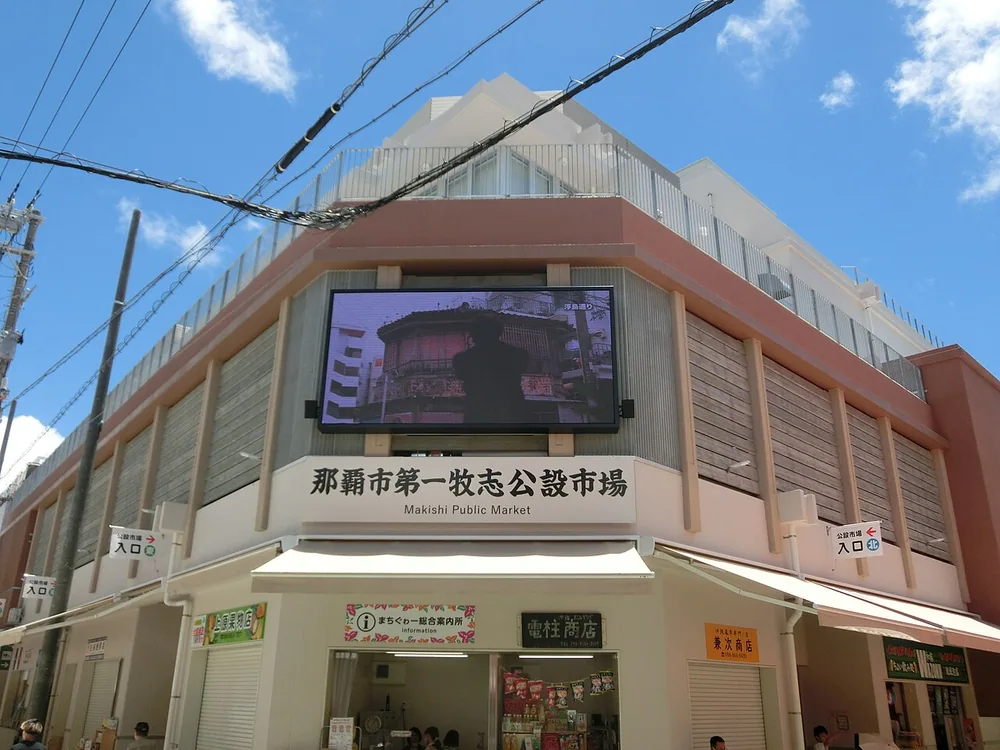
First Makishi Public Market is at 2-10-1 Matsuo, Naha, with shopping streets and lanes between it and Kokusai-dori. Naha City gives a walking time of about nine minutes from Makishi Station or ten minutes from Miebashi Station. These estimates are for a direct walk. Browsing each stall, pushing a pushchair or carrying shopping will make the same route take longer. Enter the market’s full name and address in your navigation app to avoid pins for the former market building or a different market.
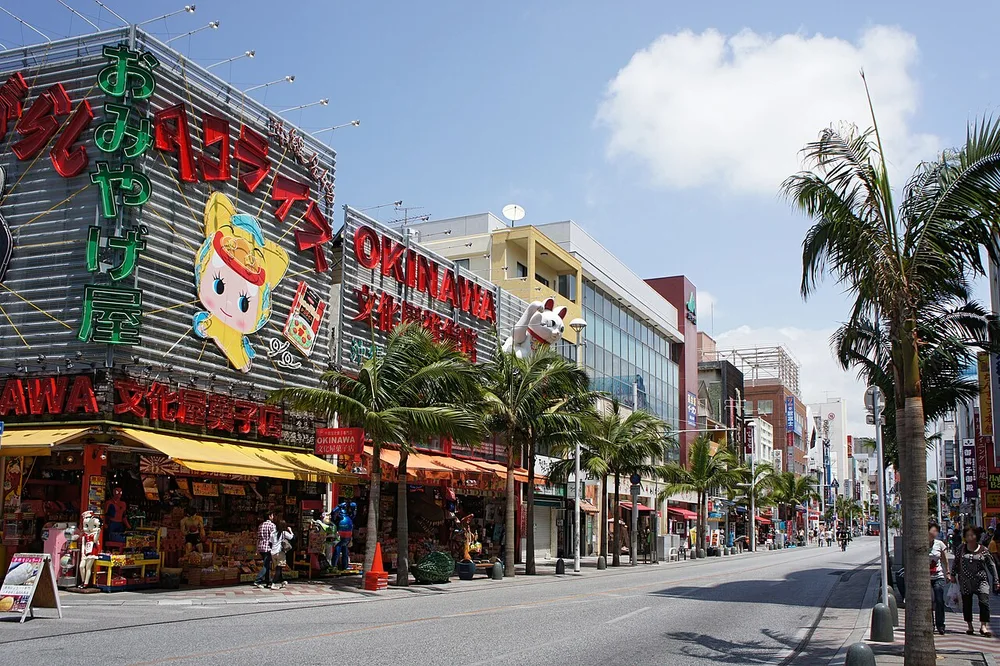
Makishi Station is at the northern approach to Kokusai-dori and Kencho-mae Station at the southern approach; the monorail operator publishes information for both station areas. Start at the end nearer your accommodation. If you visit Shuri first and return for a market meal, there is no need to travel to Kencho-mae and walk the full street beforehand. Entering from Makishi or Miebashi saves your walking energy for the market and Tsuboya.
Choose your arrival and departure stations separately to make the route easier. After lunch and pottery shopping in Tsuboya, you can finish towards Makishi Station. If your purchases are heavy, dropping them at your accommodation before dinner is easier than carrying them all the way to Shuri. Leave suitcases at your accommodation or a suitable luggage store first. Narrow shops need room for people to turn, browse and pass, and pulling a case around the market soon becomes tiring.
The official Makishi Station page lists lockers in several sizes, with use ending at the last train that day. Measure the depth of your luggage, then check available lockers and the collection deadline on arrival. If you will collect your case in the evening, choose a station you will pass through again. Treat the luggage stop as a required return visit when judging any shortcut on the map.
Plan Makishi Market for lunch, and distinguish closing time from last orders
Naha City’s market information lists building hours of 8:00–22:00, with individual shops setting their own hours. Last orders for cooking ingredients bought on the ground floor are at 19:45; the upstairs restaurants take last orders at 20:00. For choosing ingredients, discussing the cooking and sitting down to eat, come at lunchtime or for an early dinner, with time to ask prices and wait for the food. If you arrive after an evening shopping trip, head straight to a restaurant that is still taking orders.
Choosing ingredients downstairs and eating upstairs is a different meal from buying snacks along the street. With children or older relatives, first go upstairs to find suitable food and seating, then decide whether to return downstairs to choose fish. This reduces the time everyone spends standing at a stall while a decision is made. Anyone who does not eat seafood can order from a restaurant menu, so the whole group can still sit down for a market lunch.
Check the closure calendar first. The city lists the fourth Sunday of each month, except December, plus 1–3 January and the 16th and 17th days of the seventh lunar month. Other shops in the surrounding streets may be open, so a busy street does not tell you whether the market building is open for meals. Before planning a Sunday walk along Kokusai-dori, check whether it is the fourth Sunday and choose your market day accordingly.
For the market cooking service, discuss the dish before buying the ingredients
The mochiage service lets you buy certain ingredients at the market and pay a restaurant to cook them. A fish stall’s display may tempt you to choose the largest or brightest fish first, but the meal depends on its size, how it is cooked and how much your group will eat. Decide whether you want raw seafood, steamed fish, soup or fried food, then ask the stallholder which ingredients suit it. Explaining the dishes you want is more useful than asking for a whole table of food to match an online photograph.
Before paying, ask the seller to write down the total ingredient price, whether it is charged by weight or by the item, how many dishes it will make and which restaurant will prepare it. Then ask about the cooking fee, the size of each dish and how to order rice and drinks. If you want one fish prepared in two ways, establish which preparation is included before buying it. When ingredients and cooking are charged separately, check each bill so that you know the full cost of the meal.
Save “食材と調理代を合わせて、全部でいくらですか” (“How much is everything, including the ingredients and cooking?”) and “この人数で多すぎませんか” (“Is this too much for this many people?”) on your phone. Establish the total first, then discuss portions. If the cooking fee is quoted per person, give the actual number of diners. Explain whether children will share, only have soup or order a separate meal.
A whole fish plus a large plate of shellfish may be too much for two people who want variety. Choose the main ingredient you most want, then add vegetables and rice from the restaurant menu. For four people, decide whether to share a main dish before each person buys ingredients. If someone needs fully cooked food, arrange dishes everyone can share and order a small raw dish separately. That avoids swapping food around when the meal arrives.
If the quoted total exceeds your budget, order from the restaurant menu instead. Looking at the fish, learning about ingredients and talking to stallholders are part of the market visit too. Menu dishes make time and spending easier to manage for anyone with a small appetite, limited time to eat or a booking to reach. Make mochiage the day’s main meal when you have time to choose ingredients and discuss the cooking.
Order to suit a solo diner, a couple or a family
For a solo market lunch, start with noodles, rice or a set meal with a clear portion size, then decide after eating whether to add a side dish. Before buying a whole item, ask whether it can be portioned and what the full price will be, so the seller can advise for one person’s appetite. If there is no suitable small portion, choose a menu dish. Ordering too much to reproduce a photograph leaves less appetite for snacks later.
For two people, first compare what each of you wants and will not eat. If one wants noodle soup and the other seafood, leave room in the lunch budget for both. You could each order a main dish and share something new, or share a main dish with separate bowls of rice. Distinguish the food that makes a full meal from the small dishes you want to try, so that everyone gets enough to eat.
For a family meal, deal with the wait before the food arrives. Order water, cutlery and a main dish the children can eat while the rest of the group considers the other dishes. Naha City lists a nursing room, an accessible toilet and wheelchairs to borrow, but no pushchair hire. Families who need a pushchair should bring their own, and take care when moving it with heavy shopping bags attached.
Have Pork Tamago for breakfast, and keep it simple before a market lunch
The Pork Tamago Makishi Market branch is at 2-8-35 Matsuo, Naha. Its official page lists 7:00–20:00 every day of the year; these hours apply to this branch. It is about nine minutes on foot from Makishi Station or ten from Miebashi. It works well for breakfast before browsing the market, or as a substantial start before spending the morning in Shuri.
The basic pork tamago is a sandwich of pork luncheon meat and egg wrapped in rice and nori. The Makishi menu also includes abura miso, mentaiko mayonnaise, bitter-gourd tempura, deep-fried shima-dofu with abura miso, and prawns with tartare sauce. On a first visit, with seafood still to come at lunch, start with the basic version and let companions choose different flavours. If this is your lunch, choose an option with extra fillings to suit your appetite.
Decide how long you are willing to wait before joining the breakfast queue. One person can read the menu while the others sort out the day’s route, rather than searching for all the sights while standing in line. If your Seiden entry time is close, choose breakfast you can get promptly along the way. Leave the rice sandwich for another city morning so that breakfast does not squeeze the walking time you need in Shuri.
Choose Okinawa soba by its noodles, meat and broth
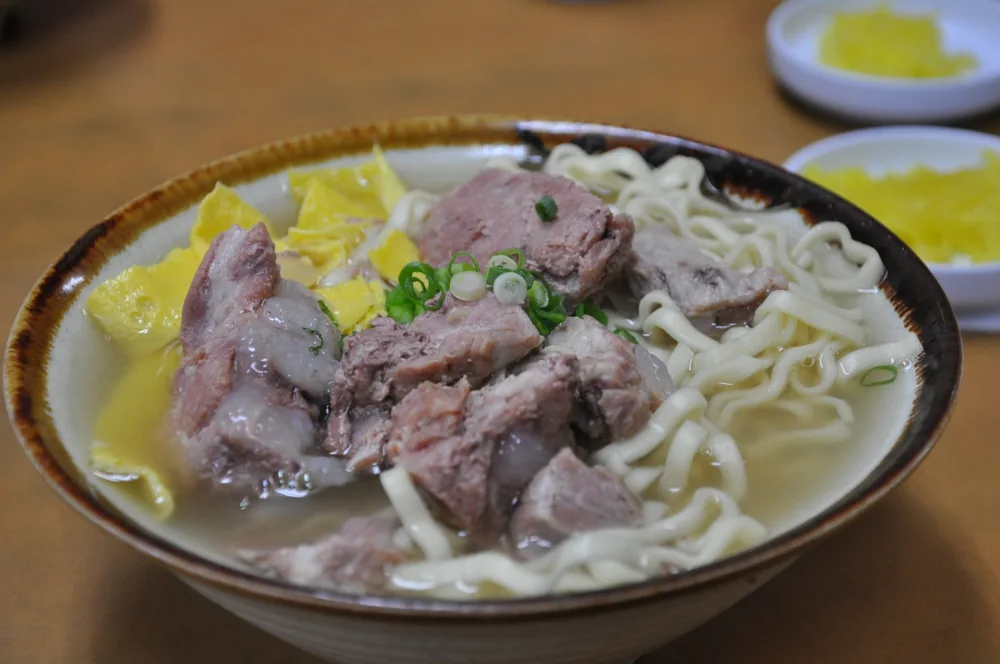
The Ministry of Agriculture, Forestry and Fisheries’ guide to Okinawa soba describes noodles made from wheat flour and alkaline water, often served in pork-bone and bonito broth. Here, soba names this local noodle dish. Look at the noodles and toppings when reading the menu. Sanmainiku (三枚肉) is pork belly, soki (ソーキ) is pork rib, and nankotsu soki (軟骨ソーキ) includes cartilage. Check the toppings before deciding what to share.
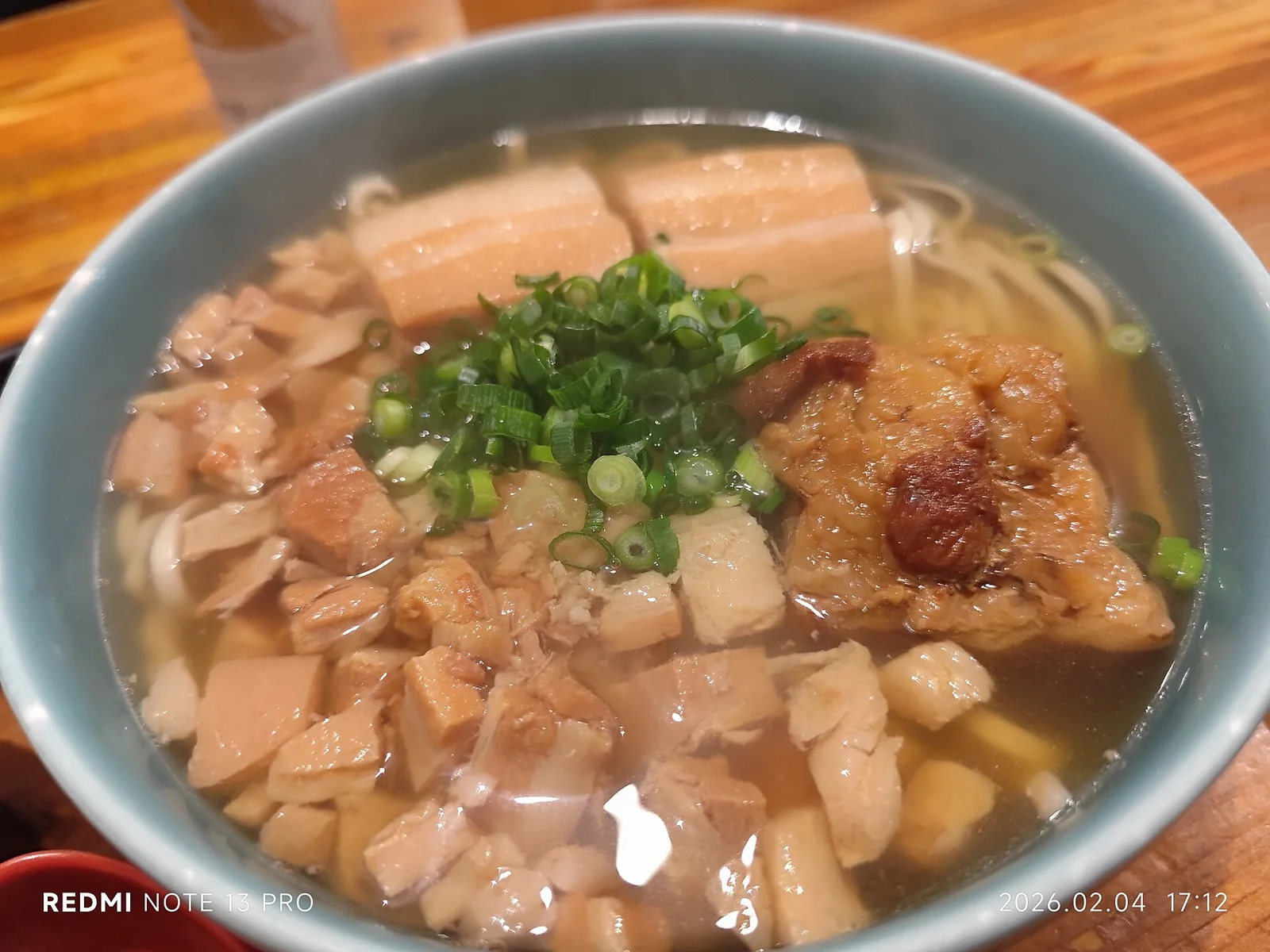
For a simple meal, choose a bowl with clearly listed toppings and a serving size you can judge, including the broth and noodles. Someone who enjoys eating meat from the bone can order differently from someone who wants an easier-to-eat topping; the whole table need not choose the most popular dish. Before adding rice or side dishes, consider whether a bowl of noodles will be enough. After a late breakfast, noodles in the afternoon leave dinner free for a different kind of food.
The koregusu (コーレーグース) on the table is a condiment made by steeping local chillies in awamori. To try it, add a little to your own spoon or bowl first, rather than pouring it into shared soup. When sharing with children, serve their portion before the adults add seasoning.
If you have dietary restrictions, ask about the stock, meat, fish cake and seasonings rather than only naming a dish you do not eat. Jimami tofu (ジーマーミ豆腐) is made mainly from peanuts, as the ministry’s regional food information also records. People with a peanut allergy should avoid it and explain the allergy and any precautions needed to avoid contact with peanuts. For a vegetarian meal, first find a restaurant that can clearly explain its stock and cooking methods, then plan the nearby walk around that meal.
To make EIBUN one of your meals, choose the branch by the time you want to eat. STAND EIBUN, at 1-1-18 Tsuboya, Naha, usually opens 8:00–15:00 and closes early if the broth sells out. It accepts cash, cards and electronic payments. On opening days, a waiting list is placed outside at about 8:00; go to the shop to add your name. It suits breakfast before a Tsuboya walk. Have these noodles instead of Pork Tamago to keep lunch free for the market, or make them brunch after a late start. STAND normally opens throughout the year, with a few closures announced on its official Instagram.
The OKINAWA SOBA EIBUN main restaurant is at 1-5-14 Tsuboya, Naha. Usual hours are 11:00–20:00, with last orders at 19:30. Cash, cards and electronic payments are accepted, and closures are announced on the restaurant’s Instagram. If lunch is devoted to market mochiage, visit the main restaurant for dinner after your Tsuboya walk. If you choose it for lunch, keep the market visit to browsing fish and buying snacks so you still have an appetite for noodles.
EIBUN Tsuboya is also at 1-5-14 Tsuboya, with the address specifying the left-hand side of the ground floor. Usual hours are 11:00–15:00; it closes on Wednesdays and some other dates. It is a standing restaurant, is entirely cashless and does not use a written waiting list. Choose the main restaurant if you want to sit and rest. Choose Tsuboya for a noodle lunch if you are happy to stand and have a cashless payment method. At the shared street address, identify the branch by its name and the left-hand ground-floor location, and follow that branch’s payment rules.
The main restaurant’s TableCheck FastPass releases bookings at midnight each day for seven days ahead. You can choose an arrival time and receive priority entry, though there can still be a wait at busy times. The booking page on 28 October 2026 listed a ¥390 fee per person, non-refundable once booked, including if you cancel. Meals are paid for separately; the fee is not deducted from the bill. To change the date, time or party size, cancel and book again, paying a new booking fee. A no-show without contact incurs a further ¥1,000 cancellation charge per person. If a Shuri booking or flight leaves little time for a meal, move EIBUN to another meal rather than placing another fixed appointment immediately after priority entry.
The restaurant’s FAQ lists online booking times for the main restaurant as 11:00–16:00. Walk-in customers can put their names down at the shop from 8:00, while dinner uses walk-in entry. Main-restaurant FastPass customers must gather five minutes before their booked time and report directly to staff on arrival. The 45-minute dining period starts at the booked time, and groups of three or more may be seated separately. If you expect to be more than ten minutes late, email the restaurant first and explain to staff when you arrive; no cancellation charge applies in that situation. None of the three branches accepts bookings by email or Instagram direct message. Each diner aged ten or over must order a bowl of noodles, so consider actual appetites when fitting this meal around a market meal with children.
Separate the day’s main meals, snacks and food to take away
Before buying food to take away, check its storage temperature, shelf life after opening and whether the packaging suits the rest of your route. If you still have several hours of walking in Shuri, buy chilled items just before returning to your accommodation. Browse first, note the shop’s location and buy later. Pack pottery and food in separate bags. A heavy bag makes stairs and station changes on the way back more work than the map suggests.
Plan a dinner with alcohol after the day’s longer journeys, and decide how you will return to your accommodation first. One benefit of a day without a car is being able to choose a restaurant without changing plans for parking. If you stay outside the Kokusai-dori area, you can place the final meal near your departure station. Linking food, shopping and the return to your room in one direction saves another trip with heavy purchases.
Walk slowly from Heiwa-dori to Tsuboya after lunch
Heiwa-dori is a covered shopping street with clothing, everyday goods and souvenirs just off Kokusai-dori. There are many turns around the market. Save the market entrance and the direction of Tsuboya on your map, then follow the shops that interest you. For a short visit, turn back at an entrance you can easily recognise. A shorter out-and-back walk makes your return time to Kokusai-dori easier to judge.
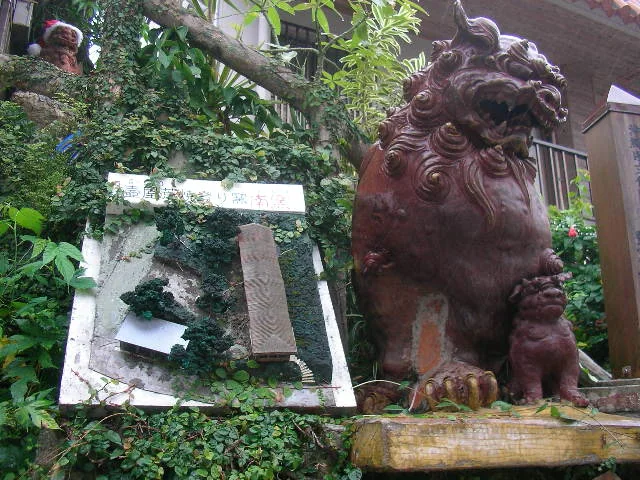
The Naha City Tourism Association describes Tsuboya Yachimun Street as about 400 metres long, with kilns, shops and cafés. Yachimun (やちむん) means pottery in the Okinawan dialect. This is a place to examine shapes, compare glazes and choose something you will use at home. Leave a proper stretch of time after lunch for the walk, including a seated rest, so that you do not have to decide quickly in every shop.
Tsuboya asks for a different pace from the market. Slow down to look at buildings, stone walls and pottery in shops, while the market’s food and signs tend to draw your attention from one stall to the next. After a long morning walk in Shuri, choose just a short stretch of Tsuboya. If pottery shopping is your main purpose, leave Shuri for another time so that you have room to choose, pack and carry your purchases.
The covered shopping streets allow a short browse in rain, but reaching Tsuboya still involves uncovered stretches. In light rain, start with the market and nearby shops, then extend the walk when it stops. If the rain gets heavier, stop somewhere with seats rather than rushing for transport on wet roads with pottery in your arms. With a pushchair or wheelchair, first choose accessible shops along the main streets; companions can make brief visits into the lanes. Everyone need not follow exactly the same route.
Before buying pottery, decide where you will use it at home
Start choosing yachimun by its purpose. A daily tea cup, a small breakfast plate and a shisa guardian lion for the entrance hall each need a different size. Ask the shop before picking up a cup to test its grip, then consider the rim, handle and weight. For plates, think about your storage shelf and usual meals. A glaze may catch your eye on holiday, but one piece you will use often is more practical than a set that becomes too heavy to carry.
Ask the seller of that particular piece whether it can go in a dishwasher or microwave, and how to wash it before first use. Materials and surface finishes differ, so the shop’s instructions are more useful than a general online rule. If you want shipping, check destinations, packing materials, charges and how breakage is handled. If you will carry it yourself, allow packing time rather than asking staff to wrap a whole bag of pottery just before the last train.
Tsuboya Pottery Museum is closed for building work from 1 September 2026 to 31 March 2027. The Naha City notice gives 1 April 2027 as the planned reopening date. During the closure, focus your Tsuboya visit on the streets, shops and available activities; choose another date if you want to see the collection. Leave time to choose pottery or stop for tea rather than making a special trip after lunch to the closed museum entrance.
Shuri Castle in 2026: check your date before planning the route
The official Seiden completion commemoration website announces that the main hall opens to the public at noon on 23 November 2026, with advance reservations required to visit the interior. For October and visits before the opening, focus on the park areas open at the time and the streets of Shuri. To enter the Seiden from 23 November onwards, first secure an interior visit for your travel date, then plan your market meal.
When booking, distinguish admission to the paid area from entry inside the Seiden. Check whether the ticket includes “正殿内観覧予約あり” (a reservation to view the Seiden interior), along with the date, time and number of visitors, then save the order. If you only have general admission but have planned on entering the hall, you may have to rearrange the afternoon on arrival. If the interior visit is the family’s priority, choose a date with availability and fit the market and Tsuboya into other gaps.
The Naha City Tourism Association’s Shuri Castle guided-tour listing gives individual admission through 21 November as ¥400 for adults, ¥300 for senior high school pupils and ¥160 for primary and junior high school pupils. From 23 November, these become ¥1,000, ¥760 and ¥370. It also states that the neighbourhood tour does not include guiding inside the Seiden. Reserve the Seiden interior viewing slot separately. Keep the guide booking and the Seiden reservation as two separate arrangements.
A special Shuri Castle Park notice states that the entire park is closed all day on 22 November 2026. On 23 November, the free castle grounds open at 11:15, the paid area at 12:00, and the Seiden opens to the public at noon. Plan these two days around the special arrangements. If you have an interior ticket during the initial opening period, make Shuri the day’s main visit, choose a simpler market meal and leave Tsuboya for another day.
Reaching Shuri by monorail: allow for the final leg after the station
Shuri Station is the starting point for the eastern side of Shuri Castle Park; the station and castle gate are in different places. The Naha City Tourism Association gives about 15 minutes on foot from Shuri Station to Shureimon Gate. After reaching the gate, you still need time to enter the park, reach the ticket counter or ticket check and make the visit itself. For a timed interior reservation, read the ticket’s arrival instructions first, then allow for transfers and walking. Do not place your booking immediately after the monorail’s arrival time.
To reduce the walk, compare buses from outside Shuri Station. The official visitor transport page lists Shureimon as about one minute on foot from the Shurijo-mae stop, or five minutes from Shurijo Koen Iriguchi. Use the full stop name and check the direction. Boarding merely because a stop name includes Shuri Castle can turn the saved walk into a longer detour.
Waiting for a bus takes time too. If the next one is some way off, your group has enough energy and the weather is suitable, you can walk to Shureimon. If young children have already walked all morning, the final fare can buy them a rest. Wait or arrange a vehicle somewhere that allows safe boarding and alighting. Avoid trying to hail a vehicle on the road in front of the gate or blocking an entrance.
The official Shuri Station page lists lifts and a multipurpose toilet. If you need a lift, follow the station signs first, then decide how to cover the final leg to the park. Plan the station’s accessible facilities separately from the surfaces inside the castle and in Kinjocho. Omitting the steep side route still leaves room for Shuri’s main sights.
Look separately at Shuri’s gates, castle grounds and Seiden
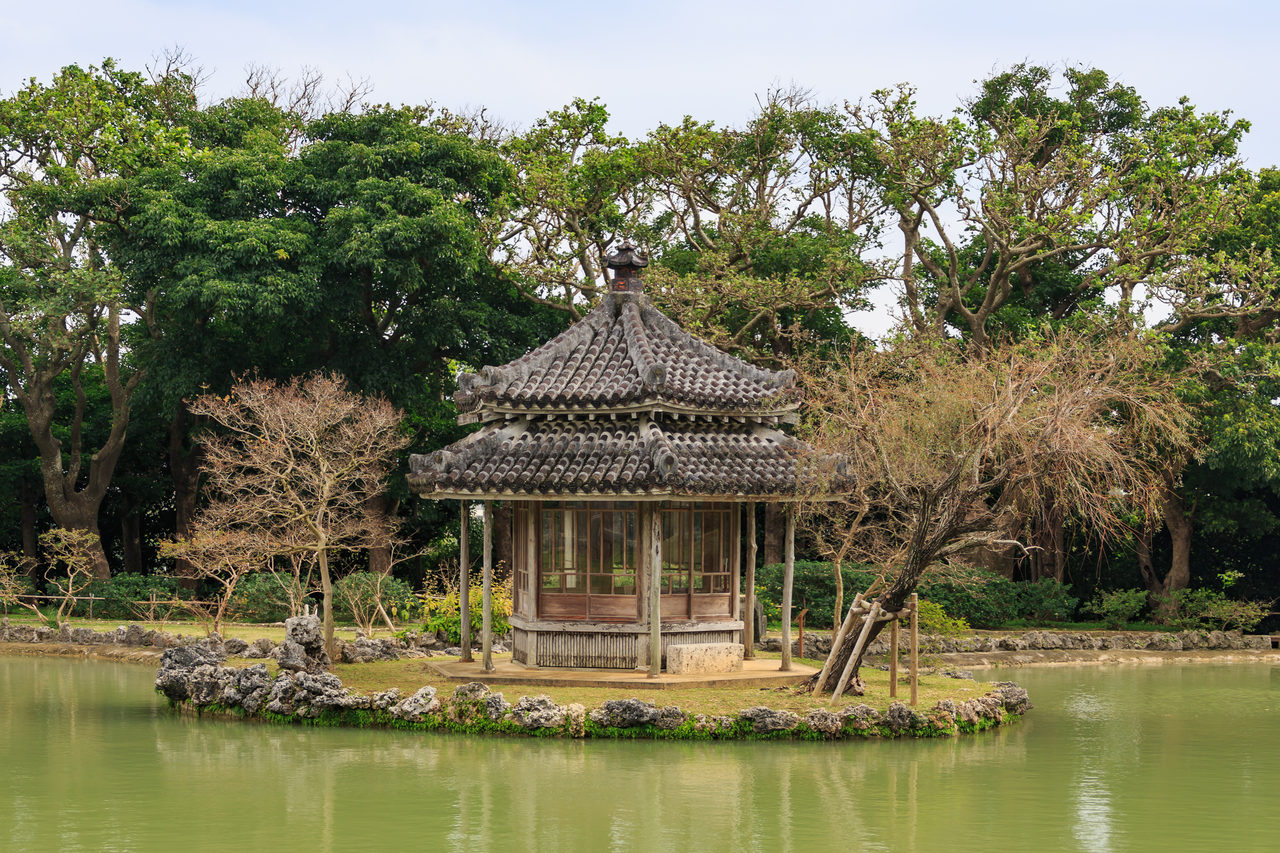
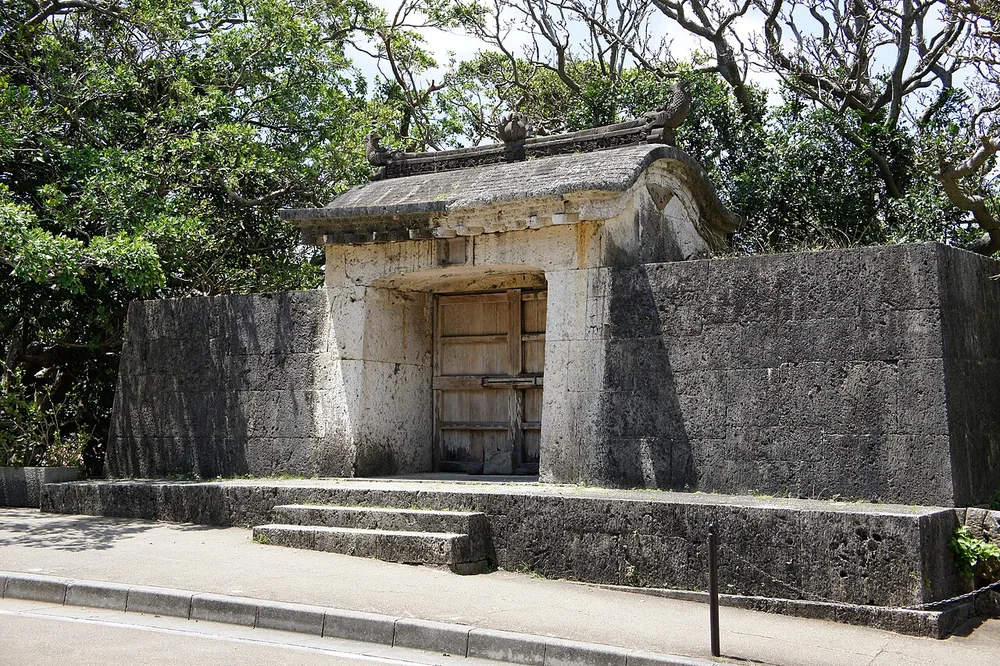
Shureimon makes a useful transition between the neighbourhood and the park. As you walk in, stop at Sonohyan Utaki Ishimon, the stone gate. Okinawa Prefecture’s cultural-property description explains that everything except the doors is made of stone. The woodland behind is sacred, and the king prayed here for a safe journey before travelling. Look at the trees behind the gate as well as the stonework to understand its position as a place of worship.
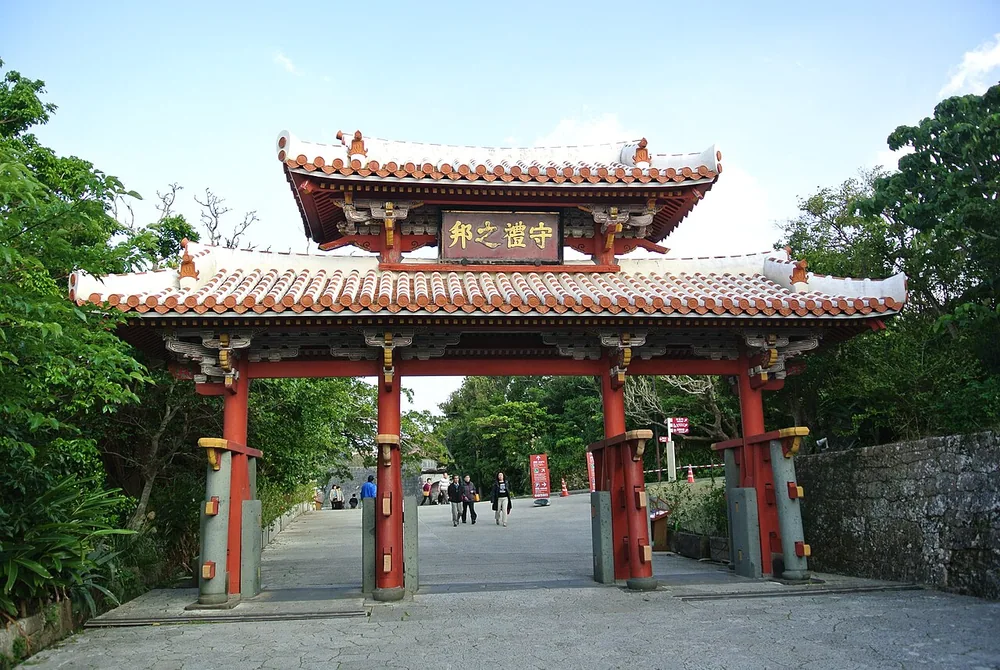
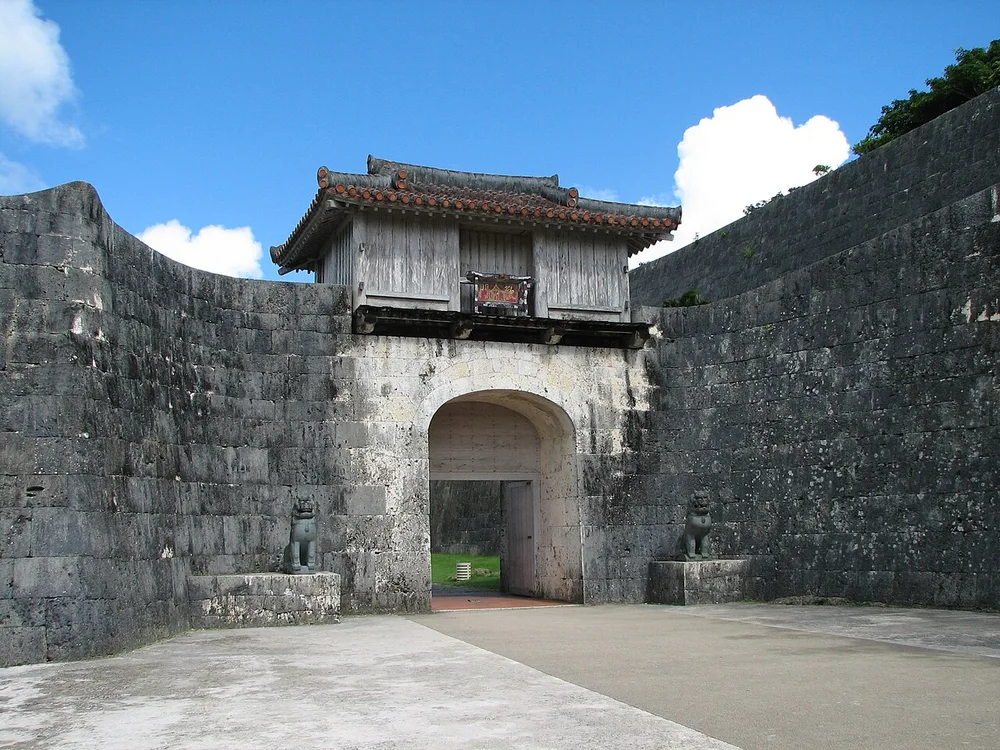
Scale the visit to your energy. With a Seiden interior reservation, follow the required ticket route first and leave other displays and viewpoints until afterwards. Without an interior booking, combine the open park areas with Tamaudun for a half-day. Each paid site takes time to find the entrance and read the information. Choose fewer places if you want to look closely.
For a guided tour, check both the meeting point and the finish point, and calculate the journey to lunch or your interior visit from where it ends. The Naha City Tourism Association’s Shurijo Monogatari tour lasts about one hour and 15 minutes and has its own dates when bookings are unavailable. Leave actual walking time between a tour and a Seiden visit. Visiting independently lets you shorten the route at any point, which is more flexible for companions who need frequent rests.
Shuri Castle Park’s official 30-second film shows the park scenery and accompanies the walk around its gates and castle grounds.
Choose Tamaudun for royal history without a full castle schedule
Tamaudun, at 1-3 Shuri Kinjocho, Naha, is the mausoleum of the Second Sho Dynasty. Naha City records that King Sho Shin built it in 1501 to rebury the remains of his father, King Sho En. It can be a main stop on a Shuri half-day for anyone interested in the Ryukyu royal family as well as castle buildings. Linking the mausoleum, castle grounds and surrounding residential streets shows the district’s different uses.
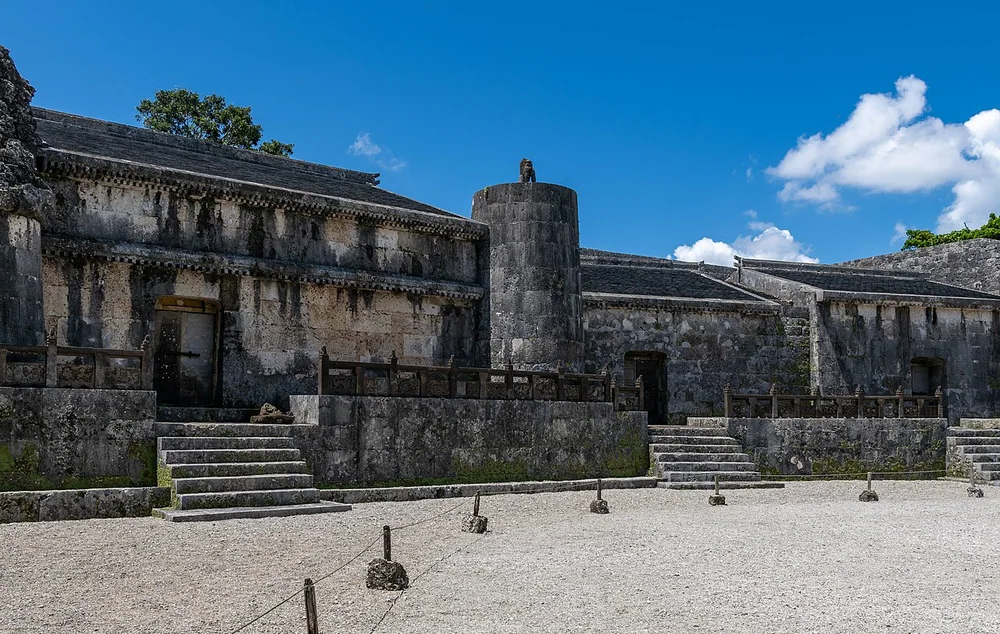
Naha City’s visitor information lists 9:00–18:00, with last entry at 17:30. Individual admission is ¥300 for adults and ¥150 for junior high school pupils and younger children. Children below school age enter free with a parent or guardian. For a late-afternoon visit, work backwards from last entry and leave enough time to see the site. If the previous stop took longer, choose between the castle and Tamaudun rather than splitting the final half-hour between both.
A mausoleum calls for a different pace from shopping streets. Tell children beforehand that this is a quiet place that needs respect. If some people want to read the information closely and others prefer a brief look, agree on a meeting point. Those who need a rest can wait in a suitable area rather than everyone urging each other along.
Kinjocho stone road: choose the return route before walking downhill
The Shuri Kinjocho stone-paved road is a surviving part of the old Madama-michi route, running between houses and stone walls. The tourism association gives the remaining length as 238 metres. That short figure can conceal the slope, time spent looking at the street and the walk back to transport afterwards. Plan it as a walk with a change in height rather than a 238-metre stretch on level ground.
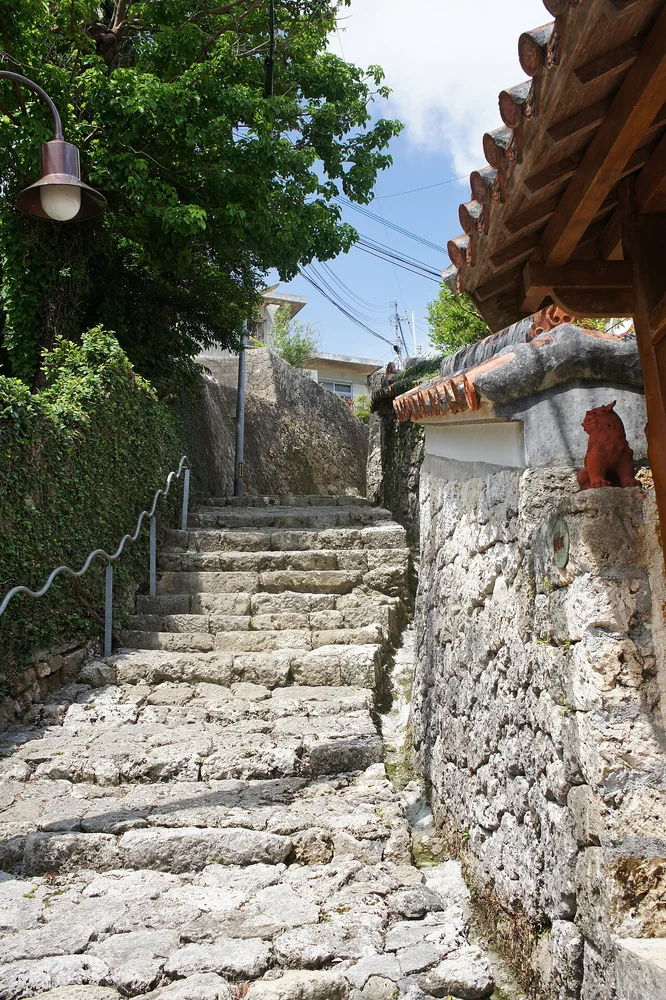
For a short, predictable walk, save this return plan: Shuri Castle or Tamaudun → upper entrance to the stone road → short walk and return to the same entrance → Shuri Station. Walk downhill only as far as you are willing to climb back. That avoids searching for an unfamiliar bus stop at the lower end. If you want to walk one way downhill and leave by vehicle, arrange a suitable vehicle and a road where boarding is permitted before descending. The small residential lanes are for walking.
Naha City provides a rest area beside the stone road, describing it as somewhere to pause while going up or down the steep slope. Stopping to look at wells, springs and stone walls is often more rewarding than rushing to finish the whole stretch. After rain, when the stone is wet and you are carrying pottery, omit this section. For a pushchair or wheelchair user, choose other main roads and sights, and leave the old road for a suitable group.
This is a residential area. Take photographs from public places where access is allowed, keeping clear of front doors, private gardens and vehicle entrances. Keep voices low in the lanes and stop out of the way when checking directions. If you only want a familiar photograph of the slope, a short look is enough. If the neighbourhood interests you, allow time to study the relationship between the paving, walls and houses along one stretch.
A day route: market first or Shuri first
For a day centred on the market, enter the area from the nearer monorail station, look at the ingredients, sit down for lunch and then walk through Tsuboya. Visit Shuri in the afternoon if you have the energy, choosing either the park or Tamaudun. With an afternoon Seiden reservation, shorten Tsuboya or move it to the next day. This route suits people most interested in food and happy to spend longer over lunch.
For a day centred on Shuri, have breakfast, take the monorail there and return to the city after visiting the castle or Tamaudun. Eat at the market in the afternoon, then choose either Heiwa-dori or Tsuboya. This completes the outdoor walking earlier and puts pottery and food shopping closer to your return to the accommodation. If your Seiden ticket is for the afternoon, reverse the order: city first, Shuri later, with shopping saved for another evening.
For example, after a morning interior visit, anyone hoping to choose pottery in the afternoon can simplify lunch by ordering from a market restaurant menu, avoiding a whole fish that needs repeated discussion of the cooking. Conversely, if the family has agreed to share a seafood lunch, the castle gate and Shuri streets may be enough. Trading off the meal against the extent of the sightseeing works better than repeatedly shortening every stop on the same schedule.
With only an arrival or departure half-day, stay in the city. Store your luggage, visit the market, eat one meal and walk a short shopping-street section, working backwards from the airline’s required check-in time. If Shuri is the essential visit, devote the half-day to it and skip the market meal. Reaching only the entrances of both areas uses up the remaining time waiting for transport and checking your phone.
Travelling together with older relatives, a pushchair or different walking speeds
When people walk at different speeds, arrange a few clear meeting times where everyone can sit. Choose specific places for breakfast, lunch and the point before returning to your accommodation. Others can browse one or two shops briefly without the whole group waiting at each doorway. A keen shopper can go into a pottery shop while those who want a rest wait somewhere with seats where waiting is allowed, then everyone moves on together.
Naha City lists a nursing room and accessible toilets, and monorail station information covers lifts and multipurpose toilets. Place these known facilities along your route so that you can use them before an urgent search is needed. Shuri Castle and the stone road demand more effort because of the terrain. Families with pushchairs should complete their main priority first, then decide whether to extend the visit, rather than pushing a sleeping child along every stone path.
Anyone who needs more rest can return to the accommodation after market lunch while others continue to Tsuboya, or return to the city after Shuri and skip Kinjocho. You can split up briefly if phones work, meeting points are clear and everyone has a way back. Exchange the accommodation address and contact details before separating, so that someone who needs a rest can return indoors without waiting outside for the others.
Adjusting for Sunday closures, rain or an extra bag of shopping
The Okinawa Convention and Visitors Bureau says Kokusai-dori’s Transit Mall normally operates on designated sections on Sundays from 12:00 to 18:00, and is cancelled in rain. The pedestrian area suits a slow walk, while taxis and hotel luggage drop-offs must use roads open to traffic that day. Choose a legal pick-up or drop-off place outside the area and give the driver the full address. A landmark on the main street is not necessarily somewhere a vehicle can stop at every hour.
If Sunday is also the market’s fourth-Sunday closure, make it a Tsuboya and Kokusai-dori day and visit the market on another opening day. If the rain only allows a short walk, stay with the market building and covered shopping streets, and omit Kinjocho. With a Seiden reservation, follow the park’s and transport operators’ notices that day. In strong wind and rain, stay in a safe indoor place, stop travelling between areas and contact each booking provider in turn.
Calculate the tickets you will use, and budget for one main meal first
The monorail’s 24-hour pass costs ¥1,000 for adults and ¥500 for children, valid for 24 hours from purchase. The 48-hour pass costs ¥1,800 for adults and ¥900 for children. List the journeys you will actually take, then compare the pass with the total single fares. If most of the day is spent walking around the market and Tsuboya, with only a return trip to Shuri, calculate those fares before buying a pass.
For two adults and one primary school child, three 24-hour passes total ¥2,500. From 23 November, individual Shuri Castle tickets for all three cost ¥1,000 + ¥1,000 + ¥370 = ¥2,370. Standard Tamaudun tickets add ¥300 + ¥300 + ¥150 = ¥750, bringing the three items to ¥5,620. Showing a still-valid monorail pass at Tamaudun gives discounted admission of ¥240 for adults and ¥120 for children, or ¥600 for this family. That reduces the combined pass and admission cost to ¥5,470. Meals, the final bus or taxi leg, and shopping are extra.
For a return monorail journey from Makishi to Shuri, the official Makishi Station fare table lists a single fare of ¥290 for adults and ¥150 for children. The return total for two adults and one child is ¥1,460, below the ¥2,500 for their 24-hour passes. With standard individual tickets at both attractions, add admission of ¥3,120 to those single fares for a total of ¥4,580. Add any airport or other journeys before comparing again. The Shuri Castle paid-area admission price is the same; access to a Seiden interior time slot is determined by the reservation.
Set a total table budget for the main market meal first and compare each quote against it, then leave money for breakfast and snacks. Put pottery in a separate shopping budget rather than treating it as a fixed cost of a day in Naha. Note the restaurants and purchases each companion wants too. After paying for lunch, you will know how much choice remains for the afternoon.
Save the Japanese names you will need for the next part of the day
Save “那覇市第一牧志公設市場” (First Makishi Public Market), “壺屋やちむん通り” (Tsuboya Yachimun Street), “首里駅” (Shuri Station), “守礼門” (Shureimon Gate), “玉陵” (Tamaudun) and “首里金城町石畳道” (Shuri Kinjocho stone road) in your phone’s map. Label each by its purpose: a meal, pottery shopping, a transfer or a visit. Give any luggage-collection point a prominent marker so that the next sight does not distract you from the station you must return to.
Your booking notes only need the Seiden date and time, the market closure date, lunch budget and accommodation address. If you are returning straight to your accommodation after Tsuboya shopping, save the departure station as the final stop. If you are continuing to Shuri, pack fragile items securely and free your hands before setting off.
A few useful answers
Can I have market lunch and visit Shuri Castle on the same day?
Yes. Fix either the main market meal or the Seiden reservation first. For a leisurely lunch using the market cooking service, shorten Shuri. If entering the Seiden is the priority, order from a market restaurant menu and save Tsuboya for another day.
Is there a standard price for Makishi Market’s mochiage cooking service?
Separate the ingredients, cooking method, cooking fee and number of diners when asking for a quote, and get the full table total before paying. With a small appetite or limited time, order directly from an upstairs restaurant menu.
Can I enter the Seiden after a 15-minute walk from Shuri Station?
The official walking estimate takes you to Shureimon Gate, with a further route inside the park. A Seiden interior visit needs a reservation for the correct date and time. Work backwards from that slot to allow for reaching the station, waiting for transport and walking.
Is Tsuboya Pottery Museum open now?
Naha City’s notice lists closure for building work from 1 September 2026 to 31 March 2027, with reopening planned for 1 April 2027. During this period, visit Tsuboya’s streets and shops.
With half a day, should I choose the market or Shuri?
For food and shopping, choose the market and a short neighbourhood walk. For royal history, focus on Shuri. Travelling between both in half a day breaks up the time available for meals and visits.
Official information and references
Sources used in this guide.
- Naha City | First Makishi Public Market information, last orders and closures
- Pork Tamago | Makishi Market branch address, hours and menu
- Ministry of Agriculture, Forestry and Fisheries | Okinawa soba ingredients, toppings and seasonings
- Ministry of Agriculture, Forestry and Fisheries | Jimami tofu ingredients
- Naha City Tourism Association | Tsuboya Yachimun Street
- Naha City | Tsuboya Pottery Museum closure for building work
- Shuri Castle Seiden completion commemoration | Public opening and interior reservations
- Shuri Castle Park | Seiden interior reservation portal
- Naha City Tourism Association | Shurijo Monogatari and admission fees by date
- Naha City Tourism Association | Shuri Castle transport and gate information
- Naha City | Tamaudun visitor information
- Naha City Tourism Association | Shuri Kinjocho stone road
- Naha City | Shuri Kinjocho stone road rest area
- Okinawa Convention and Visitors Bureau | Kokusai-dori and the Sunday Transit Mall
- Yui Rail | 24-hour and 48-hour passes
- Yui Rail | Shuri Station facilities
- Yui Rail | Makishi Station and lockers
- Yui Rail | Kencho-mae Station and the approach to Kokusai-dori
- Shuri Castle Park | Special closures and opening times on 22–23 November 2026
- Okinawa soba restaurant’s official multilingual menu | Sanmainiku, soki and nankotsu soki toppings
- Okinawa Convention and Visitors Bureau | Heiwa-dori shopping street
- Pork Tamago | The basic rice sandwich and its ingredients
- Okinawa Prefecture | Sonohyan Utaki Ishimon construction and the king’s prayers
- EIBUN | STAND EIBUN hours, address, payment and waiting list
- EIBUN | Main restaurant hours, address, payment and FastPass
- EIBUN | Tsuboya hours, standing restaurant address and cashless payment
- EIBUN | FAQ on branch formats, queues, reservations and children’s orders
- TableCheck | EIBUN FastPass fees, entry and changes