A family guide to Edo Wonderland Nikko Edomura covering 2026–2027 opening days, pass and costume prices, Ninja Theatre and Oiran Dochu show times, free children's ninja training, Kinugawa buses, and the free Toshogu shuttle, plus a two-day itinerary.
- Region & Focus
- Nikko and Kinugawa
- Reading Scope
- 17 min read · 8 chapters · 6 Q&As
- Official Verification
- 20 official sources checkedUpdated 22 November 2026
- Key Topics
- ItinerariesBookingRail travel
Chapter Route Map (tap any stop)
- Past the Checkpoint Gate, Through the Post Town to the Ninja Village
- Buying Your Pass and Checking Which Wednesdays Are Open
- Linking the Ninja Theatre, Suigeiza and Oiran Dochu
- Tilted Rooms, Trick Mazes and Free Ninja Training
- Dressing Up as a Samurai or Ninja: Check Heights Before Your First Show
- Board at Stand 3 from Kinugawa-Onsen, or Take the Free Shuttle from JR Nikko
- Lunch, Rainy Days and Pushchairs: Build in One Flexible Slot
- Two Days and One Night: Base in Kinugawa, or Save Toshogu for Another Morning
- Quick Q&A
Step through the checkpoint gate of Edo Wonderland Nikko Edomura and you are met by wooden post-town inns, shopfronts draped in fabric curtains, and ninja in black. Eight-year-olds can test their balance walking in a straight line inside a tilted house, or sign up for training to take their turn as a ninja themselves. On a first visit, fit the Ninja Theatre and one hands-on activity into the morning, then catch the Suigeiza water show or the Oiran Dochu procession in the afternoon. Changing at Kinugawa-Onsen Station is the easiest bus route, while guests staying near Nikko Station can take the free shuttle. Winter closing moves earlier in 2026, with several extra Tuesday closures in December, so check the open dates before buying train tickets.
Past the Checkpoint Gate, Through the Post Town to the Ninja Village
Located in Karakura, Nikko, Tochigi Prefecture, Edo Wonderland Nikko Edomura is a theme park recreating the streets and everyday life of the Edo period. Visitors enter through a sekisho checkpoint gate, pass in hand, as the surrounding forested hills recede behind wooden hatago inns, teahouses, and carved timber signboards. Inside, the park divides clearly into a post town (Shukuba-machi), merchant quarter, samurai district, and the ninja enclave of Shinobi no Sato. Along a single street, one timber house hosts an exhibition while the next opens its doors to serve soba noodles, and costumed performers roam the lanes in period dress.
From the checkpoint, follow the main street into the post town, passing the Jiku costume studio along the way. For straightforward street photography, framing shots from an inn doorway or across a bridge offers distinct perspectives. Even without hiring period outfits, you can set children a spotting challenge to work out which houses look like inns and which wooden signs belong to restaurants. Both the merchant quarter and the post town are easy to explore as you stroll, though if you want early theatre seats, save the photo stops for the return walk after the show. On the park map, stage shows are marked in purple and games or hands-on activities in blue, so starting with those two colours is enough to locate your main targets.
The Ninja Theatre sits in Shinobi no Sato at map number 29. The tilted house, timed number escape house, and trick maze are clustered in the same corner, so children keen to see performers emerge from the shadows can combine a show and the attractions in one sweep. Suigeiza, Wakamatsuya, and Minamimachi Bugyosho stand in the theatre district, while the Oiran procession passes through the merchant quarter. Folding a paper map for primary-school children so only the few morning numbers show makes navigation far simpler than scanning a full sheet of Japanese shop names—and at junctions, you can simply point to a number for costumed staff.
If you like the classic image of ninja perched on rooftops, look out for the Nikko Tourism Association's photographs of ninja on the tiled roofs of Edomura. Inside the park, scheduled stage appearances take place at the Ninja Theatre, where performers use split levels, blackouts, and hidden mechanisms to appear and vanish. Out on the streets, spotting roaming ninja or samurai and guessing with your children which district they belong to is often more fun than waiting under a row of eaves. The map also marks Satsuei no Sato, a filming studio area; general visitors stick to the public streets.
When you reach the merchant quarter with a few minutes to spare before a show, take a closer look at how the shops and residences handle their windows. Behind narrow wooden latticework, interiors sit noticeably darker than the street, and fabric noren curtains hide half the view inside; standing across the lane gives a much clearer sense of each building's proportions than pressing up against the doorway. Crossing a bridge, glance back toward the opposite bank to frame the shopfronts, canal, and forested hillside together. Just before the Oiran procession arrives, stow tripods and bulky bags, clear the street thoroughfare, and position children where they can see the procession's slow footsteps.
To fold one museum into a ninja-focused itinerary, try the Edo Town Fire Brigade Museum alongside the adjacent reconstruction of fire chief Masagoro's home. The museum explains how timber neighbourhoods fought fires, and looking out of the windows at houses packed eaves-to-eaves makes the difficulty of the job immediately clear. For traditional crafts instead, head to the Edo Life and Culture Tradition Hall. Since each museum tackles a different subject, picking the one that answers whatever your children are currently curious about—then stepping straight back onto the streets—leaves a stronger impression than ticking off every hall in a row.
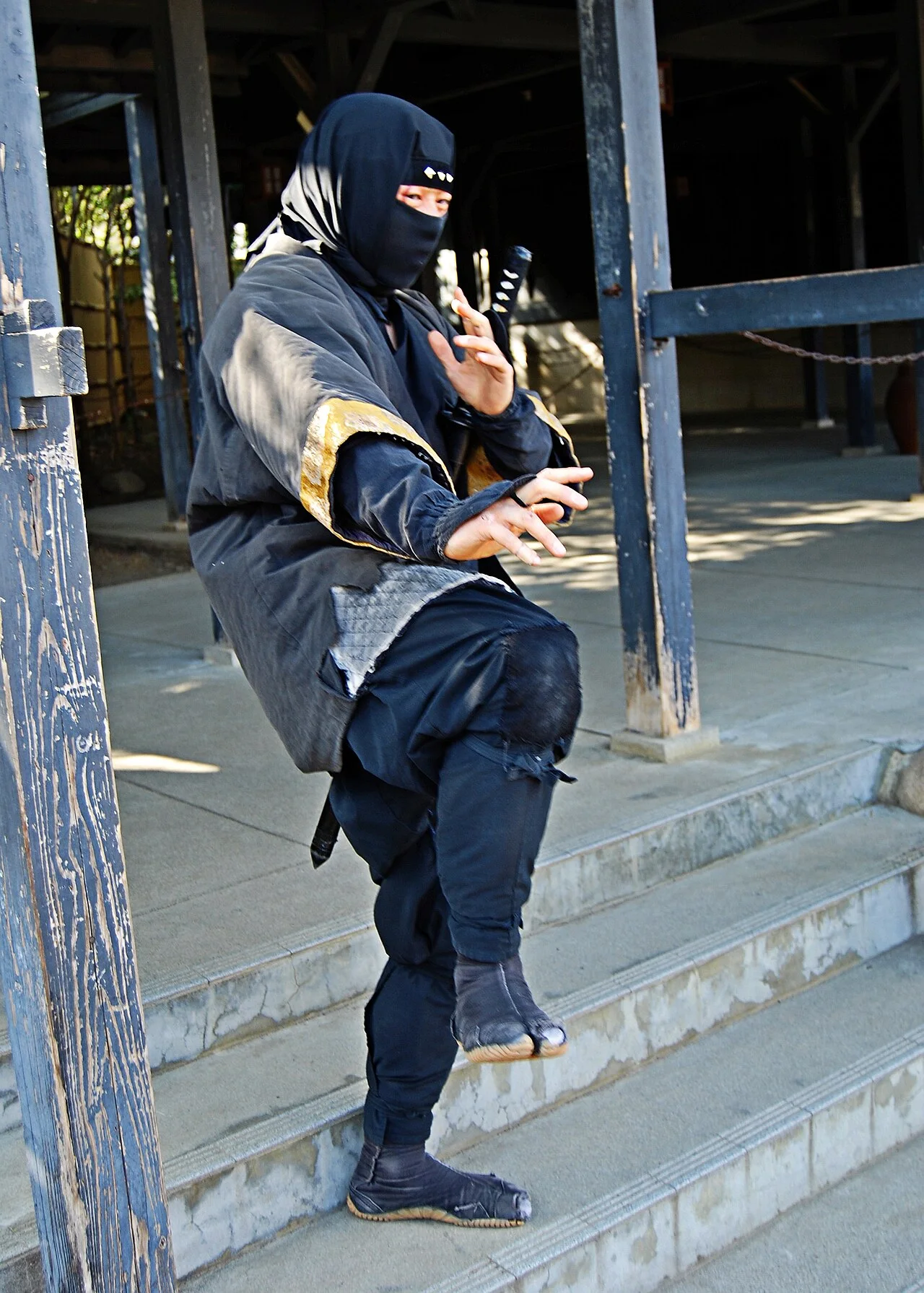
A family guide to Edo Wonderland Nikko Edomura covering 2026–2027 opening days, pass and costume prices, Ninja Theatre and Oiran Dochu show times, free children's ninja training, Kinugawa buses, and the free Toshogu shuttle, plus a two-day itinerary.
Buying Your Pass and Checking Which Wednesdays Are Open
Individual admission tickets are called Tsuko Tegata passes. A full-day pass covers entry from opening time at ¥5,800 for secondary-school students and adults, ¥3,000 for primary-school pupils, and free for pre-school children. Afternoon passes start at 14:00 in summer and 13:00 in winter, saving ¥800 per adult and ¥400 per primary-school pupil. For two adults and one primary-school child, full-day passes total ¥14,600 compared with ¥12,600 for afternoon entry—a ¥2,000 difference. If you plan to hire a child's ninja outfit, tackle the mazes, and see shows, a full day is usually worth it; if you only want two afternoon programmes, the afternoon ticket makes sense.
Your pass covers admission to the theatres and exhibition halls, as well as the free period-job experiences listed by the park. Costumes, paid games, certain attractions, and meals are priced separately. Starting with two adult and one child full-day passes, adding a ¥4,500 ninja costume and one ¥600 shuriken session brings entry and extras to ¥19,700 before transport and lunch. Bear in mind that if the whole family enters the paid escape house together, admission is charged per person rather than per group. Pricing out the one activity your child is set on will give you a realistic handle on most of the budget.
Ticket booths sell same-day passes only, while the official website's pricing page links to an official e-ticket portal. Booth sales close one hour before park closing, which the Nikko Tourism Association also lists as last entry—normally 16:00 in summer and 15:00 in winter. Same-day re-entry is permitted by showing your pass to staff at the checkpoint gate. Visitors aged 65 and over qualify for a ¥4,700 day pass with proof of age. Concession rates for disabled visitors cover the holder and one carer with valid documentation, at ¥3,500 per adult and ¥1,800 per primary-school child for a full day.
Summer hours run from 20 March to 30 November, opening 09:00–17:00. From 1 December to 19 March, winter hours tighten to 09:30–16:00. That cuts 90 minutes from the day and shortens costume-shop hours too, so families arriving around midday in winter should swap big plans for two manageable activities. The last free shuttle arriving in December reaches the gate at 14:00—an hour before ticket sales end, though close to the final session of popular children's training—leaving little margin for strolling and snacks.
On the official calendar covering April 2026 to March 2027, red cells mark closed days. Many Wednesdays are closed, with exceptions during peak seasons and the year-end holidays—Wednesday 30 December 2026, for example, is listed as open. From 22 November onwards, the park closes on 24 and 25 November 2026, and on 1, 2, 8, 9, 15, 16, 22, and 23 December, before opening on 29 and 30 December. If your preferred date falls on a red cell, swapping your Edomura and Toshogu days works far better than compromising with a late-afternoon ticket.
In early 2027, avoid the extended closure from 13 January to 17 February, as well as 6 January and 24 February. For spring holiday trips, 3, 10, 16, 17, and 24 March are closed, with summer hours resuming on 20 March. Because this calendar currently runs to the end of March, check the same official operating calendar for later dates. When planning limited-capacity children's activities, check the operating calendar and the daily show timetable separately, as the two tables answer different questions.
| Pass Type | Secondary School & Adults | Primary School | Valid Entry Hours |
|---|---|---|---|
| Full-Day Pass | ¥5,800 | ¥3,000 | From 09:00 in summer; 09:30 in winter |
| Afternoon Pass | ¥5,000 | ¥2,600 | From 14:00 in summer; 13:00 in winter |
Linking the Ninja Theatre, Suigeiza and Oiran Dochu
If your children have been scanning every alley for ninja, lock in the Ninja Theatre as the family's first fixed time of the day. The plot centres on a ninja named Tsubame, and once the lights drop, fast-paced choreography and hidden stage tricks pull the audience straight into the story. The official schedule allocates about 25 minutes per show; doors open 10 minutes before curtain and latecomers are not admitted once the performance begins. Waiting groups cannot hold spots for members joining halfway through the queue, so buy snacks, use the loos, and return umbrellas before lining up at the entrance together.
For first-time visitors, pairing the Ninja Theatre with Suigeiza on the same day shows off two very different stagecraft traditions. While the ninja rely on hidden traps and stage machinery, Suigeiza directs your gaze with sudden, hairline jets of water, some shifting mid-air with the props in the performer's hands. Even without Japanese, children have plenty of visual action to follow. If you want one Japanese-language comedy as well, catch Ooka Echizen-no-Kami investigating a case at Minamimachi Bugyosho, or watch the indoor courtesan parlour skit at Wakamatsuya, which sometimes brings audience members onto the stage and is separate from the outdoor Oiran Dochu parade.
The charm of the Oiran Dochu lies in its unhurried pace. Flanked by attendants, the procession moves slowly beneath the eaves in elaborate robes and hair ornaments, and shorter children in the front row often notice the towering wooden sandals and deliberate footwork first. On standard dates from September to November 2026, it runs from 14:00 to 14:20; on the winter timetable, it runs 14:25–14:45. Locate the Oiran Dochu icon along the street on your paper map, claim an unobstructed viewing spot early if you want to see the footwork, and plan an exit route into a side lane if you are heading straight to another theatre afterwards.
In the summer/autumn schedule, the 11:40 Ninja Theatre ends around 12:05, leaving just 10 minutes—right as doors open—to walk across to the 12:15 Suigeiza. That makes it easier to pick a single morning show, or have lunch straight after the ninja show and save the second performance for the afternoon. In winter, the 10:55 Ninja Theatre finishes around 11:20, giving a 15-minute buffer before the 11:35 Suigeiza. If a young child nods off in a pushchair or crowds slow the exit, pushing Suigeiza back to 15:25 takes the clock pressure off lunch.
In winter, the 14:25 Oiran Dochu sits tightly against the 14:50 Ninja Theatre: watching the full 20-minute procession leaves only five minutes to walk from the street to the theatre doors. If the Ninja Theatre is non-negotiable, take the 10:55 or 12:25 performance so you can stay in the merchant quarter for the entire parade, or pair the parade with the 15:25 Suigeiza instead. Afternoon-ticket visitors entering at 13:00 still have options, whereas families arriving on the 14:00 shuttle should choose between the Oiran parade and the ninja show first, then work backwards from their final bus.
The timetable below uses standard dates from 1 September to 30 November 2026 and the published timetable for 1 December 2026 to 19 March 2027. Both apply on open park days only. The autumn column excludes 19–23 September, which carry a separate special schedule, while the winter weekend/holiday schedule also covers 28–31 December and 4–5 January. Once your open date is settled, check the weekday versus weekend/holiday header on the official timetable and read the show and experience columns side by side.
| Show | 1 Sep – 30 Nov (Standard) | 1 Dec – 19 Mar (Winter) |
|---|---|---|
| Ninja Theatre (approx. 25 mins) | 09:40, 11:40, 14:30, 16:00 | 10:55, 12:25, 14:50 |
| Suigeiza (approx. 20 mins) | 10:00, 12:15, 16:30 | 11:35, 15:25 |
| Oiran Dochu (approx. 20 mins) | 14:00 | 14:25 |
| Wakamatsuya Parlour Show | 11:05, 15:20 | 10:30, 12:35 |
| Minamimachi Bugyosho (approx. 30 mins) | 10:30, 12:40, 15:25 | 09:55, 11:50, 13:05 |
Tilted Rooms, Trick Mazes and Free Ninja Training
When children ask for the quirky tilted ninja house, look for Ninja Shugyo no Yakata on the map. Visual cues in the room clash with your inner sense of balance, so your eyes insist you are tipping sideways even while your feet stand flat on the floor—hold hands, move slowly, and find your footing step by step. Nearby, Ninja Shikake Meiro is a hands-on trick maze of sliding panels where children enjoy taking the lead. Both attractions, along with the paid Ninja Karakuri Yashiki escape house, sit at map numbers 24, 28, and 27.
Inside the paid escape house, hidden numbers inside each room lead to the exit within a time limit, ranking finishers as upper, middle, or lower ninja for ¥600 per person. Siblings often have different instincts: one wants a maze where every corner can be tested straight away, while another prefers backtracking to double-check clues. If you only want to pay for one extra, let the child actually keen to go inside make the call. Both the Shuriken Dojo and the Yaba archery range also cost ¥600 per round, offering a compact paid add-on if you want just one.
Free Edo job experiences include ninja, young samurai, and mystery-solving constable trails. The regular Ninja Experience listed on the park's activity page is open to all ages and lasts around 30 minutes; in autumn 2026 registration runs 09:30–12:00 and 13:30–15:30, shifting in winter to 10:00–12:00 and 13:30–15:00. Because these are registration windows, places close early once full. On the winter schedule, registration is marked in Shinobi no Sato—look for the Ninja Experience sign on site or ask staff while holding the timetable. The constable mystery trail distributes street-exploration clues from Kuchiire-ya (map 1), ideal when children want to keep moving rather than stand in a theatre queue.
The weekend and holiday timetable also lists Shin Ninja Shugyo, restricted to ages 5–12 with on-the-day sign-up at Kuchiire-ya (map 11). On standard autumn 2026 holidays, the three sessions start at 10:30, 13:00, and 15:20, with sign-ups opening at 10:00, 12:30, and 14:50. On standard winter holidays and year-end dates, sessions begin at 10:20, 12:40, and 15:00, with registration at 09:50, 12:10, and 14:30. Arrive half an hour before the session start to catch that round; Shinsengumi and fire-brigade activities also register at Kuchiire-ya around the same times, so ask children to pick their top role if sessions overlap.
The park's activity page also mentions a Ninja Special Joint Training programme, described as a street-wide weekend and holiday activity for ages 5–12 who have already changed into a ninja costume. If that is the one you want, show the full Japanese name at the counter rather than assuming it shares the same slot as Shin Ninja Shugyo on the holiday sheet. Children's samurai training (ages 5–12) is scheduled at the Samurai Shugyo-kan (map 69), where you can check same-day slots. Teenagers aged 13 and over can check the adult swordplay session on the timetable, which registers separately from children's programmes.
If one child reads or understands some Japanese and another does not, the older sibling can help check noticeboards while staff guide the activity itself. Children nervous about solving Japanese clues can start with the trick maze, tilted house, or Suigeiza instead. Before registering the whole family for a single session, line it up against the day's show timetable so you are not forced into an awkward clash—for instance, queueing at Kuchiire-ya at 12:10 in winter means shifting the 12:25 Ninja Theatre to the morning or 14:50.
More cautious children can test the bright, easy-exit attractions first before deciding whether to step into darker rooms. Jigokudera (map 30) is a haunted temple walk with low, booming sound effects, so read the board outside before heading in. If adults split up—one taking the tilted house while the other explores street exhibits—agree to regroup at a landmark bridge or signboard near the next theatre so both halves can queue together.
| Attraction / Activity | Format | Fee or Registration |
|---|---|---|
| Ninja Shugyo no Yakata | Tilted house creating balance illusions | Included with pass |
| Ninja Shikake Meiro | Trick maze with hidden panels | Included with pass |
| Ninja Karakuri Yashiki | Timed number-hunt escape house | ¥600 per person |
| Shuriken Dojo | Throwing-star target session | ¥600 per turn |
| Shin Ninja Shugyo (Edo Job Experience) | Weekend/holiday session for ages 5–12 | Free; register at Kuchiire-ya 30 mins before start |
Dressing Up as a Samurai or Ninja: Check Heights Before Your First Show
If you want photos of your children dashing down timber lanes in black ninja gear, stop at the Jiku costume studio (map 13) soon after passing the checkpoint gate. Children's sizes cover primary school Year 6 and under, with options determined by height and stock. Children's ninja outfits fit heights of 80–160 cm at ¥4,500, while children's samurai costumes start from 110 cm at ¥4,800. Under 110 cm—or for children who prefer everyday Edo dress—townsman and townswoman outfits start at 80 cm for ¥3,800. Because the dark ninja gear, samurai silhouettes, and townsfolk kimono read very differently on camera, let children browse photos on the official site beforehand.
Allow 30–45 minutes for fitting, changing, and tidying up, plus queueing time during busy hours. In warm weather, head straight to the nearest street block for photos rather than losing a show window waiting outside the studio. In winter, plan base layers carefully and stow heavy coats and everyday clothes in the changing room lockers. Even if only one child hires an outfit, set up the shot in advance with one adult standing across the street to frame the photo and the other watching foot traffic; for action shots of children running, wait for a quiet stretch of lane.
Jiku opens 09:00–16:00 in summer and 09:30–15:00 in winter, though heavy demand can close same-day intake early. Standard costumes are handled on a first-come, first-served basis and can be paid by credit card, while adult Oiran outfits require booking at least one week ahead. If two children insist on matching sets, build in extra time for sizing and waiting. Always check the day's costume-return deadline before choosing your final show, as you will need to walk back from the theatre district to the post town to change.
Clothing rules also affect which activities you can join. According to the park's FAQ, visitors wearing standard hired period costumes cannot take part in the ninja or children's samurai experiences, though the ninja costume itself is an explicit exception. If a free children's training session matters most and your child wants to wear a samurai or townsfolk outfit, complete the training first and hire the costume afterwards. With two children wanting different plans, decide before entering who heads to Kuchiire-ya and who goes to Jiku, avoiding a wasted fitting only to change back into street clothes.
On a November weekend, reaching the first children's training means being at Kuchiire-ya by 10:00, leaving one hour from the 09:00 gate opening for walking and admission. If you arrive right at opening for a single costume, ask Jiku staff whether they can turn it round in time; if dressing two children, locking in the training registration first leaves far more breathing room. In winter, the first free shuttle arrives at 10:04—already past the 09:50 registration start—so anyone aiming for both an early training slot and costumes is better off arriving earlier from the Kinugawa side.
Board at Stand 3 from Kinugawa-Onsen, or Take the Free Shuttle from JR Nikko
From Asakusa in Tokyo, allow roughly two hours by Tobu limited express to Kinugawa-Onsen Station, checking the destination carefully since services from Asakusa also split toward Tobu-Nikko. From Shinjuku, Ikebukuro, or Omiya, look for the through-running JR–Tobu Kinugawa or Spacia Kinugawa limited express trains. Standard Tobu limited express seat tickets go on sale at 09:00 JST one month before travel, priced separately from the base fare. JR through-running limited express tickets open at Tobu ticket windows from 10:00 JST, letting you confirm train times and departure stations when choosing seats.
Outside Kinugawa-Onsen Station, head to Stand 3 on the station bus roundabout and look for signs reading Osaru no Gakko / Nikko Edomura or bound for Nikko Edomura. The park estimates a 15-minute ride and the Nikko Tourism Association cites 20 minutes, so budget 15–20 minutes on board plus waiting time. Under Nikko Kotsu fares effective June 2026, a single ride between Kinugawa-Onsen Station and Edomura costs ¥490 for adults and ¥250 for primary-school children; carry coins for on-board payment. On the return leg, board at the Nikko Edomura stop outside the gate—both the stop and entrance are marked at the bottom of the park map.
If you are making the round trip with Nikko Kotsu, compare the Kinugawa One-Day Pass at ¥820 for adults and ¥410 for primary-school children, which beats two single fares on the same day. Passes are sold at the Kinugawa-Onsen Station tourist information centre and via the operator's linked digital ticket platform. The Edomura bus route also switches to its winter timetable on 1 December: look up the outward stop page by date first, then check the return stop page separately. Bear in mind that the park's own free shuttle runs on a separate timetable—the 16:15 departure goes to JR Nikko Station and will not connect you back to Kinugawa-Onsen.
Staying near JR Nikko Station lets you use the park's free 39-seat shuttle bus. In summer, outbound buses leave JR Nikko Station at 09:34, 11:21, 13:30, and 15:05, arriving at Edomura at 10:04, 11:51, 14:00, and 15:35; summer returns depart the park gate at 12:30, 14:05, 16:05, and 17:15, though the 15:05 outbound and 17:15 return do not run on 16:00 closing days. In winter, the first three outbound services remain, while returns run at 12:30, 14:15, and 16:15, reaching JR Nikko Station at 13:00, 14:45, and 16:45.
Seats cannot be reserved on the free shuttle, so once all 39 seats fill, you must wait for the next bus or switch to paid transport. On the shuttle calendar, square-marked dates extend to Nikko Toshogu Omotesando, circle-marked dates run solely between JR Nikko Station and Edomura, and crosses indicate closed days—for instance, 5 December 2026 is a circle date and 7 December is a square date. On square dates, departures from Toshogu Omotesando run at 10:55 and 13:15 (plus 14:50 in summer), though the 13:15 service prioritises tour groups and cannot take walk-up passengers if full. Even on square dates, some returns terminate at JR Nikko Station; in winter, only the 12:30 park departure continues through to Omotesando at 13:10.
If you have reserved-seat tickets back to Tokyo, aim for an earlier shuttle. Taking the 16:15 winter bus out of Edomura reaches JR Nikko Station at 16:45—and if your train leaves from Tobu-Nikko Station, you still need time to walk next door and reach the platform. On the Kinugawa side, factor local buses or taxis against your ryokan's dinner cut-off. Nikko Kotsu estimates a taxi from Kinugawa-Onsen Station to Edomura at around 10 minutes and ¥2,200, departing from official taxi rank 7 outside the station—a useful benchmark against day-pass bus fares for two adults and one child.
Drivers exit the Nikko-Utsunomiya Road at Imaichi IC and follow Route 121 toward Kinugawa for roughly 15 minutes; standard car parking costs ¥800. In winter, driving guests are often better off saving Toshogu for a separate day rather than fighting midday traffic between the two areas. If travelling by public transport, save the three exact station names—JR Nikko Station, Tobu-Nikko Station, and Kinugawa-Onsen Station—on your phone, as the free shuttle, Tobu limited express, and local buses each use a different station.
| Departure Point | Boarding Location | Fare & Journey Time |
|---|---|---|
| Kinugawa-Onsen Station | Station roundabout Stand 3, Nikko Edomura Line | ¥490 adult / ¥250 primary-school one-way; approx. 15–20 mins |
| JR Nikko Station | Free shuttle stop shown on park access page | Free; scheduled approx. 30 mins, no reservations |
| Nikko Toshogu Omotesando | Omotesando shuttle stop (square-marked dates only) | Free; approx. 45–56 mins cross-area; 13:15 prioritises groups |
| Kinugawa-Onsen Station Taxi | Station front Taxi Rank 7 | Approx. ¥2,200 one-way; approx. 10 mins |
Lunch, Rainy Days and Pushchairs: Build in One Flexible Slot
When trying to fit the Ninja Theatre, Suigeiza, and Oiran Dochu into one day, lunch is the quickest bottleneck to throw off your schedule. Inside the park, Yabu serves hot and cold soba and udon (from ¥900 for cold noodles), while charcoal-grill stall Yamakujira offers ¥700 chicken skewers and ¥1,500 grilled chicken bento boxes. If family members order from different stalls, agree where to sit first—especially if someone is returning costumes or taking a child to the loo. In winter, heading straight for food after the 11:35 Suigeiza leaves the morning Ninja Theatre behind you so everyone can sit down to a hot meal without clock-watching.
If you are not hungry until closer to the afternoon shows, grab a ninja bun or two skewers of soy-glazed dango dumplings to tide everyone over and save a sit-down noodle meal until afterwards. Outside food and drink are prohibited in principle, though visitors with food allergies or dietary restrictions may bring suitable meals into park eateries by explaining to staff on arrival while the rest of the party orders normally. Allergen charts are available for certain dishes—asking staff to show the chart is safer than guessing ingredients from a dish name, so keep key allergen terms written in Japanese on your phone before entering.
Rain does not shut the park down, as your route can pivot to indoor venues such as the Ninja Theatre, the Edo Town Fire Brigade Museum, and Suigeiza, checking at each hall whether hands-on activities are running. The Oiran Dochu takes place outdoors, where waterproofs are far easier to manage along narrow shopfronts than umbrellas. Period job experiences may be adapted or moved indoors in wet weather, while canal yakatabune boat rides can be suspended in rain or high wind. Wet hems also slow walking down, so check the ground near the entrance before hiring long kimono robes rather than trousers.
Families with toddlers can hire pushchairs at the Honmaru office just outside the checkpoint gate for ¥200 per day. Three accessible toilets are marked on the official map, alongside a central nursing and nappy-changing room in the middle of the village. Wheelchair users can follow paved or alternative routes, and the park recommends alerting staff at theatre entrances beforehand. Rather than manoeuvring a pushchair into tight mazes or the tilted house, have one parent wait at an agreed spot outside while the other goes through with the children.
Keep an eye out for the park mascot Nyanmage, unmistakable as a giant white cat sporting a topknot. According to the park FAQ, Nyanmage roams without fixed appearances, so ask street staff where the cat was last spotted. Mascot-hunting slots neatly into the lull after lunch, and you can browse themed snacks or Echigoya souvenirs along the way. If you are visiting Toshogu first thing the next morning, pick up souvenirs near the park gate before leaving rather than juggling extra bags while changing trains.
Two Days and One Night: Base in Kinugawa, or Save Toshogu for Another Morning
If ninja training sits at the top of your children's wish list, travel straight from Asakusa to Kinugawa on Day 1 and drop large bags at your hotel or station first. Coin lockers also stand outside the checkpoint gate, with large compartments (78 × 36 × 41.5 cm) costing ¥400. Catch an early bus to the village, register for morning activities and see the Ninja Theatre, eat in the merchant quarter at midday, then fit in the Oiran parade or a maze in the afternoon—leaving one show gap for children to choose their own route. Staying in Kinugawa makes the evening effortless, though check your ryokan's final dinner check-in before boarding the return bus; for comparing onsen ryokans against station-front stays, see our Kinugawa Onsen travel guide.
In winter, families taking the free shuttle from JR Nikko Station can board the first 09:34 bus arriving at 10:04. Head straight toward the Ninja Theatre so you still have half an hour before the 10:55 show to explore nearby attractions. That bus arrives too late for the 09:50 children's training registration, however, so take a Kinugawa local bus or taxi instead if that slot is a priority. From 13:00 onwards, fit in the street mystery trail, snacks, and the Fire Brigade Museum around the 14:25 Oiran procession; if you stay for the 15:25 Suigeiza, the 16:15 shuttle back to Nikko works much better than the 14:15 departure.
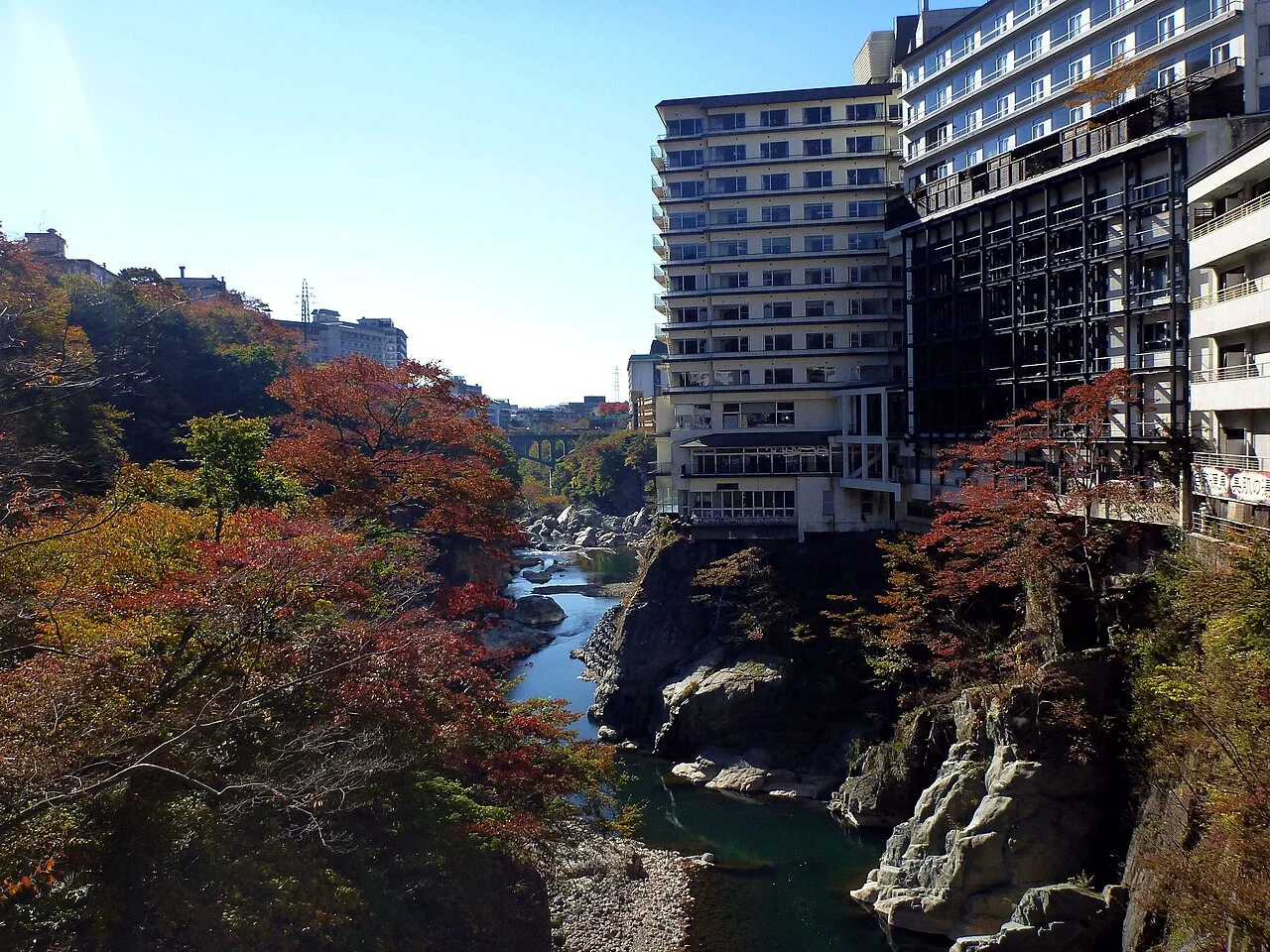
Staying in Kinugawa gives you an easy second morning: walk about 12 minutes from the station to the Kinugawa Tateiwa Otsuribashi suspension bridge, cross the 140-metre span over the gorge, and warm up at the free footbath in the station plaza afterwards. If you prefer World Heritage sightseeing on Day 2, take a Tobu train from Kinugawa-Onsen Station and change at Shimo-Imaichi for Tobu-Nikko Station—checking connection times in advance—then hop on a bus up to Toshogu. Leave luggage at whichever station you will depart from at the end of Day 2 so you do not have to backtrack to Kinugawa before heading back to Tokyo.
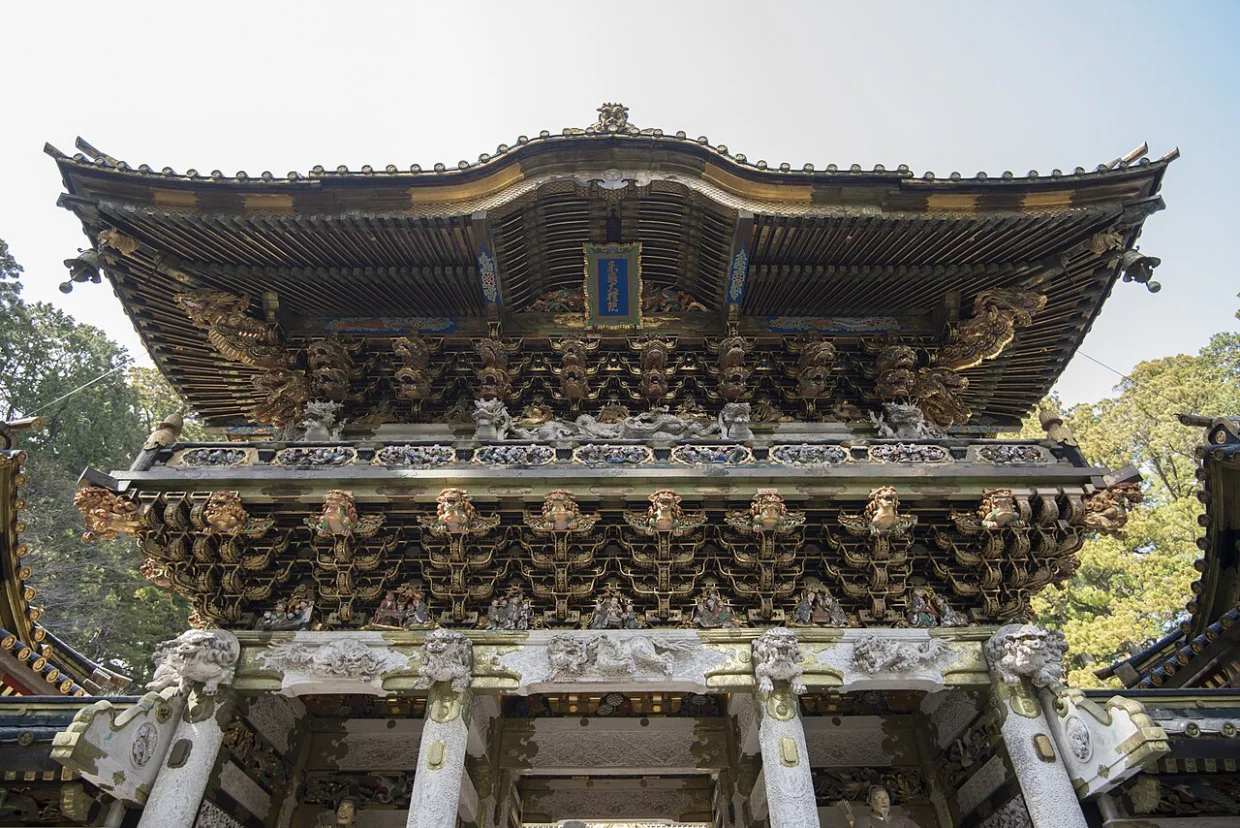
To put Toshogu first instead, visit the Yomeimon Gate, Three Wise Monkeys, and Sleeping Cat on Day 1 after arriving in Nikko, then devote a full block of Day 2 to Edomura. Standard admission at Nikko Toshogu is ¥1,600 for adults and upper-secondary students, and ¥550 for primary and lower-secondary pupils. Note that lower-secondary pupils (junior high age) pay the adult rate at Edomura but the child rate at Toshogu, so budget each day's tickets separately. Combining both sites in one day—visiting Toshogu in the morning and aiming for the 13:15 Omotesando shuttle—only works on square-marked dates and still risks tour groups filling the bus, so allow time to reach the 13:30 bus from JR Nikko Station or take paid transport.
Between Toshogu's stone steps and Edomura's long streets, both sights take plenty out of your legs. If you are travelling with toddlers or older relatives at a gentler pace, keep Day 1 at the shrines focused on the highlights you care about most, and build Day 2 around sit-down breaks at the Ninja Theatre and Suigeiza. To compare shrine areas, local buses, and rail passes before picking an overnight base, use our Nikko routes and transport passes guide; if you are still weighing Asakusa against Shinjuku from Tokyo, plan both legs with our Tokyo to Nikko transport guide.
If the rain clears with time left before your bus, save a quiet 15 minutes between your final show and departure to stroll back through the post town. Passing the costume studio again on the way out lets children spot the wooden lattices, bridges, and inns they saw on stage. Travellers staying in Kinugawa board the local bus outside the gate back to Kinugawa-Onsen Station, while those heading straight back to Tokyo should keep their pass handy, step back through the checkpoint, and walk straight to their chosen bus stop.
A few useful answers
Is half a day enough for Edo Wonderland Nikko Edomura?
Yes. Focus on one Ninja Theatre show, the tilted house or trick maze, plus either the Oiran Dochu parade or Suigeiza. If you want to hire costumes, join children's ninja training, and see three shows, arriving at opening time makes the schedule much easier to space out.
Is Edo Wonderland Nikko Edomura closed every Wednesday?
It normally closes on Wednesdays, with exceptions during peak seasons and the year-end holidays. Closed days are marked in red on the official operating calendar: early-to-mid December 2026 has several consecutive Tuesday–Wednesday closures before Christmas, and there is an extended closure from 13 January to 17 February 2027.
Can an eight-year-old join the free ninja training?
Yes. Shin Ninja Shugyo on the weekend and holiday schedule is open to ages 5–12 with on-site registration at Kuchiire-ya. The regular Ninja Experience is also free and accepts sign-ups during seasonal windows in the ninja area, though slots close early once full.
Can you reserve ninja costumes at Edo Wonderland in advance?
Standard costumes are arranged on the day on a first-come, first-served basis at the Jiku studio. Children's ninja outfits cost ¥4,500 for heights 80–160 cm. Only adult Oiran costumes require booking at least one week in advance.
Does the free shuttle bus stop at Kinugawa-Onsen Station?
No. The regular free shuttle serves Edomura, JR Nikko Station, and—on selected dates—Nikko Toshogu Omotesando. From Kinugawa-Onsen Station, take the Nikko Edomura Line bus from Stand 3 outside the station or a taxi from Rank 7.
Which shows work best for children who do not understand Japanese?
Start with the Ninja Theatre and Suigeiza. The ninja show moves on stunts and hidden stage mechanisms, Suigeiza centres on dramatic water jets, and the outdoor Oiran Dochu parade lets everyone enjoy the costumes and footwork directly. Note that no late entry is allowed at the Ninja Theatre once the show starts.
Official information and references
Sources used in this guide.
- Edo Wonderland Nikko Edomura Official Operating Calendar
- Edo Wonderland Nikko Edomura Pass Fares and Parking Fees
- Edo Wonderland Nikko Edomura Show and Job Experience Timetable
- Edo Wonderland Nikko Edomura Shows Overview
- Edo Wonderland Nikko Edomura Attractions and Activity Prices
- Edo Wonderland Nikko Edomura Jiku Costume Studio and Rental Prices
- Edo Wonderland Nikko Edomura FAQ, Dining and Accessibility Services
- Edo Wonderland Nikko Edomura Park Map
- Edo Wonderland Nikko Edomura Access and Free Shuttle Timetable
- Edo Wonderland Nikko Edomura Free Shuttle Operating Calendar
- Nikko Kotsu Kinugawa-Onsen Station Bus Stop Guide
- Nikko Kotsu Nikko Edomura Return Bus Stop Guide
- Nikko Kotsu Local Buses and One-Day Passes
- Nikko Kotsu Edomura Line Fare Table (Effective June 2026)
- Nikko Kotsu Kinugawa Area Taxi Information
- Tobu Railway Limited Express Ticket Purchase Guide
- Nikko Tourism Association Edo Wonderland Nikko Edomura Spot Guide
- Nikko Tourism Association Kinugawa and Kawaji Area Pamphlet
- Nikko Toshogu Shrine Visiting Hours and Admission Fees
- Nikko Tourism Association Kinugawa Onsen Walking Course