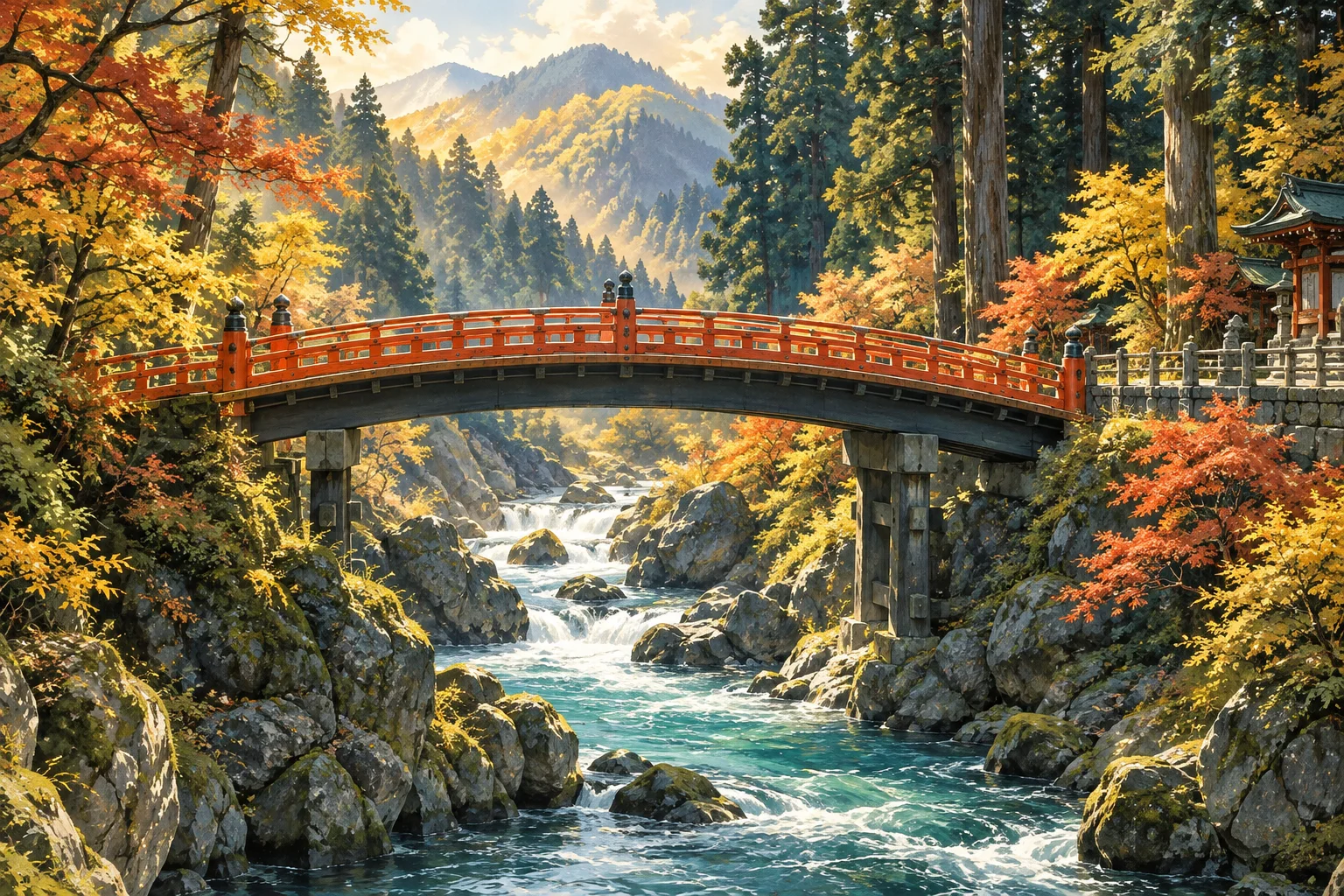
Choose your main Nikko route before buying a pass. With one day, give Toshogu, Rinnoji and Shinkyo time among the cedars; an overnight stay makes room for Lake Chuzenji in the morning or evening. If the inn and its baths are the priority, start with Kinugawa accommodation and transfers. An all area pass will not reserve your limited express seat or clear an autumn traffic jam. This guide uses actual transport coverage, shrine reception cutoffs, hotel child policies and meal arrangements to help you choose a Nikko trip you can carry out.
Choose your Nikko trip: shrines, the lake, or Kinugawa
Before planning your first visit to Nikko, decide what you want time for: studying shrines beneath tall cedars, walking beside Lake Chuzenji with mountains across the water, or eating dinner and soaking at a Kinugawa inn. All three belong to a Nikko trip, but they are separate areas. They are not a small collection of sights you can reach on foot after getting off one train. For a day trip, choose one main area; two nights give you more room to connect them.
The difficult part of a Nikko day trip is often getting back, rather than getting there in the morning. You might catch an early train from Tokyo but spend the afternoon intended for shrine visits on a slow bus down the mountain. You might also buy a lake-area pass before discovering that the ropeway you wanted is closed for a long renovation. Set your essential activity and latest workable departure first, then choose a pass that serves that plan.
Plan Nikko alongside your Tokyo hotel area and daily departure routes. Staying in Asakusa, leaving from Shinjuku, and bringing airport luggage straight to Nikko give you different starting points and amounts of usable time. This guide focuses on decisions for public-transport travellers. Fares and conditions were checked as of 21 October 2026; the sample routes and budget are editorial planning examples, rather than booked tours or guarantees of service on your travel date.
Read the geography: two Nikko stations, Shimo-imaichi, the lake and Kinugawa
JR Nikko and Tobu-nikko are separate stations, so keep the railway operator in the station name when checking a journey. Toshogu, Rinnoji and Shinkyo Bridge sit on the central Nikko shrine-and-temple route. Lake Chuzenji, Kegon Falls and the deeper Okunikko area require a mountain-bound bus. Kinugawa Onsen is reached by a different railway branch; it is not a stop you naturally pass after getting off at Lake Chuzenji.
Start with Tobu Bus maps and the coverage of its local passes. Mark your hotel and two main sights before deciding which lines connect them. Stop 26, Chuzenji Onsen; 37, Ryuzu Falls; 39, Akanuma; and 46, Yumoto Onsen are progressively farther into the mountain area. Typing only “Nikko” into a map app does not establish which bus to board or where to turn back.
A useful planning rule is to choose one main overnight base or turnaround direction each day. If you are sleeping beside Lake Chuzenji, group the lakeshore and waterfall together. If you are sleeping in Kinugawa, settle the train connection from the Nikko station area and the final transfer to your inn first. These groupings are planning concepts, and the illustrations are not navigation maps drawn to scale. Use the operator’s route map and signs for actual boarding locations.
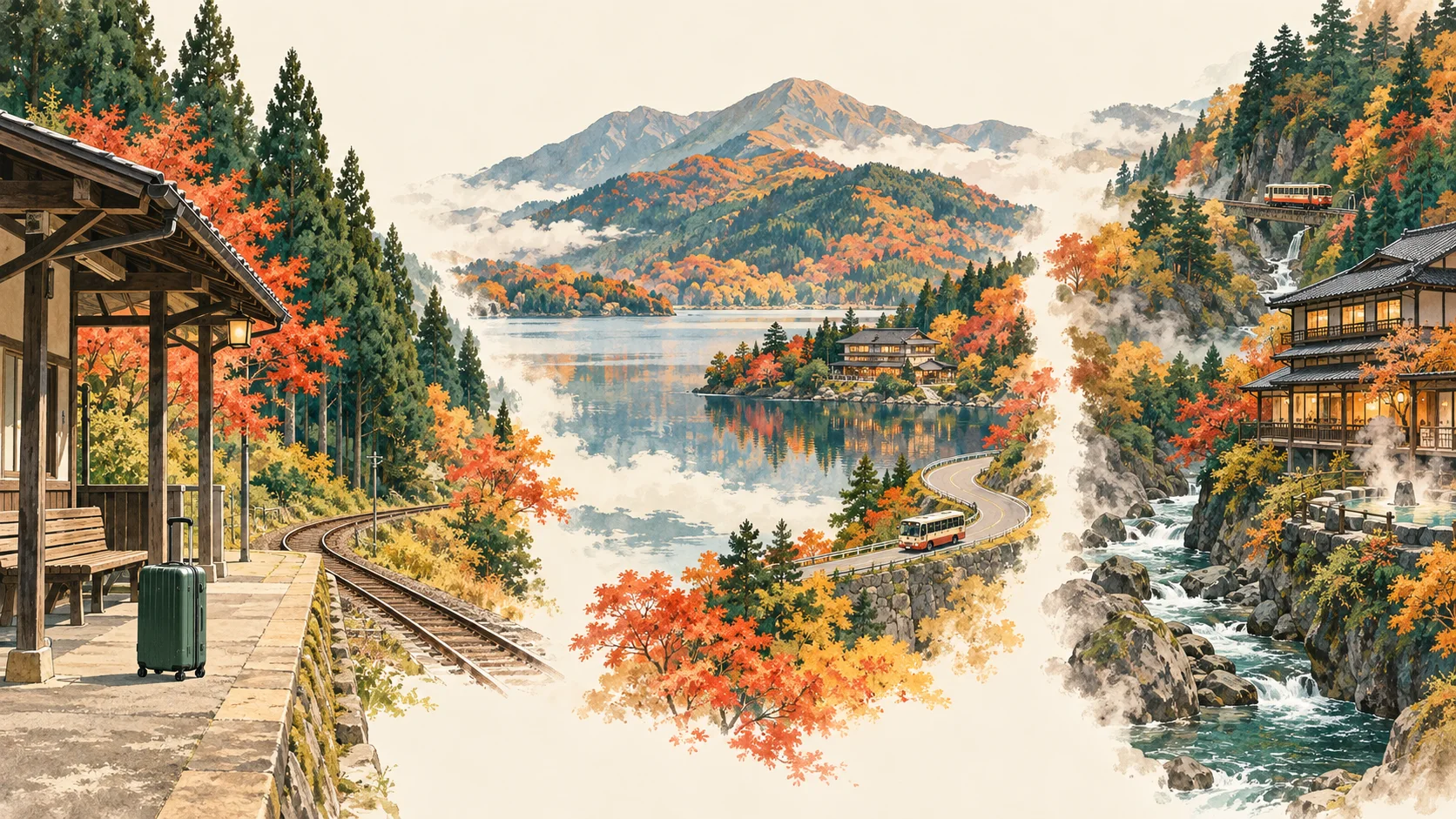
Tokyo to Nikko: establish whether you are leaving from Asakusa or Shinjuku
Asakusa, on the Tobu route toward Nikko, is the most straightforward starting point when comparing NIKKO PASS products. Tobu describes both direct trains to Tobu-nikko and journeys involving a change at Shimo-imaichi. Check the destination on Kinugawa-bound services as well. Two groups leaving Tokyo at the same time may need different trains: one to Tobu-nikko and another to Kinugawa Onsen. A general description such as “toward Nikko” is not enough to establish the final station.
Tobu’s official Tokyo–Nikko access information distinguishes the Asakusa route from through services out of Shinjuku and Ikebukuro. Those Shinjuku and Ikebukuro through routes are outside NIKKO PASS coverage. If you are staying in Shinjuku, compare the complete fare and convenience of the connection. You cannot assume the pass has paid the whole journey and then simply add an ordinary limited express ticket.
An advertised station-to-station journey time is not the time from your hotel room to Toshogu’s entrance. Allow for getting to the departure station, finding the platform, waiting for a connection, storing luggage after arrival and boarding a bus. If your available train gets you to Nikko late, prioritise central Nikko that day. Saving the lake for the following morning is usually easier to manage than starting the mountain journey after lunch.
Already have a JR Pass? Calculate this journey separately
A nationwide JAPAN RAIL PASS does not let you board Tobu trains from Asakusa by itself. Tobu’s limited express purchasing information explicitly states that the JR pass alone is insufficient on Tobu lines and that the relevant Tobu tickets are needed. Do not decide coverage from the train’s name, appearance, or the fact that it also travels toward Nikko. Identify the operator’s route and the exact product you hold.
If you want to use a JR pass you have already bought, investigate the route via Utsunomiya and the JR Nikko Line. Its value depends on your particular pass, departure city and available services. Regional JR passes are not all the same product, and a through train from Shinjuku should not be treated as automatically covered throughout by the nationwide pass. Cross-operator journeys especially require checking eligible sections and additional charges.
The useful principle in comparing a JR Pass with individual train tickets is to count journeys you will actually take. Buying another Tobu pass that includes a Tokyo return journey may duplicate a journey already covered by your JR product. Equally, you may decide to pay separately because leaving from Asakusa is simpler. Weigh the saving against extra transfers, luggage and the energy of everyone travelling with you.
NIKKO PASS comparison: two-day world heritage area or four-day all area
The official NIKKO PASS world heritage area costs ¥3,000 for an adult and ¥1,500 for a child, with two days of validity. The all area version costs ¥8,000 for an adult and ¥4,000 for a child, with four days of validity. These are products with different coverage and durations, rather than interchangeable names for the same ticket. A search for a Nikko day-trip pass should not lead you to describe the two-day world heritage product as a separate one-day version.
Both include one return journey between Asakusa and Shimo-imaichi and travel within the specified Tobu railway zone between Shimo-imaichi, Tobu-nikko and Shin-fujiwara. Their bus coverage differs. The world heritage version focuses on buses around the shrine-and-temple area, while all area extends into the mountains and lists seasonal transport and facility benefits. Compare the official world heritage area coverage as well as the price.
A limited express ticket, an SL Taiju seat ticket, and admission to places such as Toshogu, Rinnoji, Tobu World Square and Edo Wonderland are not automatically included because you hold a pass. Read discounts, included rides and admission as separate benefits. With children, check each attraction’s own age bands. A child fare on a transport pass does not determine the child price for a hotel, meal or shrine ticket.
| Pass | Adult | Child | Validity | Main use |
|---|---|---|---|---|
| World heritage area | ¥3,000 | ¥1,500 | 2 days | One Asakusa return journey, specified trains and world heritage area buses |
| All area | ¥8,000 | ¥4,000 | 4 days | Extended specified mountain transport and benefits with seasonal or usage conditions |
Local Nikko bus passes do not include the railway journey from Tokyo
Tobu Bus sells separate passes for specified local routes. The Yumoto Onsen version costs ¥3,500 for an adult and ¥1,750 for a child; the Chuzenji Onsen version costs ¥2,300 and ¥1,150 respectively. Both are valid for two days. They cover designated buses within the Nikko area, without the railway return journey from Tokyo. These are useful products to compare if you are arriving by JR or another arrangement.
For the shrine-and-temple area, the World Heritage Sightseeing Pass costs ¥600 for an adult and ¥300 for a child and is valid only on the day of use. The Kirifuri Kogen version costs ¥1,500 and ¥750 respectively and lasts two days, but is not sold from 1 December to 31 March. The shared words “world heritage” do not make the ¥600 local bus pass the same product as the ¥3,000 NIKKO PASS that includes travel from Asakusa.
The official bus map identifies the Hangetsusan line and the Tachiki Kannon / pleasure-boat boarding-point line as excluded from the local bus passes. A lakeside destination does not establish that the ride is included. Seasonal operating dates shown on the 2026 map are not a year-round timetable either. If your plan adds a lookout, a cruise pier or Kirifuri Kogen, check each route against the particular pass you are buying, rather than assuming every bus in the area is covered.
| Bus pass | Adult | Child | Validity or restriction |
|---|---|---|---|
| Yumoto Onsen | ¥3,500 | ¥1,750 | 2 days |
| Chuzenji Onsen | ¥2,300 | ¥1,150 | 2 days |
| Kirifuri Kogen | ¥1,500 | ¥750 | 2 days; not sold 1 December–31 March |
| World Heritage Sightseeing Pass | ¥600 | ¥300 | Day of use only |
Compare the price for your route instead of buying the widest pass automatically
Suppose you are staying one night, visiting the shrines on day one and travelling to and from Chuzenji Onsen on day two, without a cruise or a trip as far as Yumoto. You can start by comparing the ¥3,000 world heritage area pass plus the ¥2,300 Chuzenji bus pass, totalling ¥5,300 per adult, against the ¥8,000 all area pass. The difference is ¥2,700 per person or ¥5,400 for two adults. This is a comparison for that limited route; the benefits and validity periods are not equivalent.
Adding Ryuzu Falls, Akanuma or Yumoto can take you beyond the Chuzenji bus pass coverage, so you cannot keep using the same calculation. The all area product also lists Lake Chuzenji cruising, the low-emission bus and specified day-use hot springs among its benefits, each subject to seasonal or usage conditions. Include the benefits you will actually use when assessing the four-day all area pass.
Avoid adding an attraction you never wanted merely to recover a price difference, or packing day two so tightly that you cannot get down the mountain in time. Separate essential journeys from optional ones first, then total the required tickets. When the difference is small, easier purchasing and transfers can have value too. If you will stay entirely in central Nikko, however, you do not need to pay for mountain transport you will never board.
Digital tickets, paper vouchers and the official purchasing demonstration
Tobu lists both digital passes and paper exchange-voucher purchasing options. For a digital product, read the chosen seller’s instructions on activation, displaying the ticket and use by travelling companions. If you buy a paper exchange voucher, the official instructions direct you to collect the ticket at Tobu Tourist Information Center Asakusa. Check that day’s counter hours and allow time for the exchange. An order-confirmation screen is not necessarily a ticket, and phone-sharing rules from another region’s pass should not be applied to NIKKO PASS.
The embedded digital-ticket demonstration was posted by Tobu Tourist Information Center Asakusa on 31 August 2025, and that account is cited directly on Tobu’s pass website. It helps explain the purchasing entry point and general process. Payment, refund rules and the interface remain subject to the official purchase page when you buy. The original posting date is retained; an older video or social post should not be presented as a new 2026 operating notice.
The official description offers this NIKKO PASS to foreign travellers and says accompanying Japanese travellers may also buy it. Do not add the Temporary Visitor condition familiar from some JR products, or assume that every residence status in Japan necessarily qualifies. If your status or purchase channel raises a question, confirm eligibility with that seller before paying. Check every traveller’s name, group size, starting date and train destination individually as well.
SPACIA X and other limited expresses: match the seat ticket to the journey
A Tobu limited express requires a basic travel ticket and a limited express ticket. NIKKO PASS covers the basic fare within its eligible sections; it does not reserve a SPACIA X seat or allow you to choose an empty seat on any other departure. Select the actual train, departure station, destination and date, then buy the corresponding limited express ticket. Check both directions separately instead of assuming a return seat will be available because the outward journey is booked.
Tobu’s limited express purchasing instructions state that ordinary sales generally begin at 9 a.m. one month before travel and that you should buy the limited express ticket before boarding. Some online services exclude JR through trains, SL Taiju or DL Taiju, while compartments and special seating have their own rules. A standard seat’s price and purchasing process should not be applied to every carriage or booking website.
For an autumn return journey, choose a departure that still leaves room for the bus down the mountain and the wait for it after your main activity. On a day trip, reducing mountain activities is usually more dependable than taking the last train simply to fit in more sights. If members of your group have different expectations for scenery and special carriages, agree on an acceptable seat supplement first. The train can be part of the experience without turning the entire day into a rush.
Autumn foliage traffic: the downhill bus can determine the day
Tobu’s ticket homepage carries a specific October–November traffic warning: congestion between the Nikko stations and Lake Chuzenji can add more than two hours, and day-trippers are advised to consider the world heritage area. The operator also states that congestion does not entitle you to a pass refund, even if it prevents you from using the bus. Read that condition before buying, rather than after missing your return limited express.
Irohazaka (いろは坂), on the road to the lake, is another congested section identified in official advice for autumn foliage travel. The bus map’s approximate 48 minutes from the Nikko station area to Chuzenji Onsen and 88 minutes to Yumoto are references for normal traffic. They do not include queues, congestion or walking after you get off. Read Tobu’s current autumn transport warning alongside that day’s service information, rather than timing a foliage-weekend trip from a weekday navigation estimate.
Set a latest acceptable time to start descending. If you reach the lake late in the morning, avoid continuing deeper toward Yumoto in the afternoon. If the first bus is already substantially delayed, make Shinkyo, the shrines and a meal your main route. This is a usable order for cutting activities, not a guarantee of avoiding traffic. A rental car faces the same roads and limited parking, so driving is not an automatically punctual alternative.
A Nikko day trip: give central shrines and temples enough time
For one day out of Tokyo, a workable main route is luggage storage at the station, the shrine-and-temple area, lunch and a walk around the approach streets. On arrival, establish your return train and bus boarding point before heading to Toshogu according to conditions. Giving one major site a proper visit offers more context for the buildings, approaches and forest than spending ten minutes each at Toshogu, Rinnoji and the lake.
After lunch, choose Rinnoji’s Sanbutsudo or Taiyuin according to your interests, then decide whether time remains for Shinkyo. Avoid buying every admission ticket in advance of that decision. Ticket-sales cutoffs, set-ticket outlets and event restrictions differ between sites; another entrance nearby does not establish that it is still open to you. Tea near the approach or a shorter walk is a reasonable part of the itinerary when someone needs a break.
If the lake is your priority, make it the main destination and leave the shrines for another visit. Reaching both areas in one day is not a requirement for a worthwhile Nikko trip. Apply that choice to a manageable daily pace on your first Japan visit, particularly with jet lag, older relatives or children. One activity you can comfortably drop is more useful than a schedule in which every stop feels compulsory.
Toshogu tickets, visiting hours and the audio guide
An individual shrine-only ticket for Nikko Toshogu costs ¥1,600 for adults and high-school students, or ¥550 for primary and junior-high-school students. Other ticket types include the museum. Official visiting hours are 9 a.m.–5 p.m. from 1 April to 31 October and 9 a.m.–4 p.m. from 1 November to 31 March, with reception ending 30 minutes before closing in both periods. Do not substitute Rinnoji’s opening time or general sightseeing hours for Toshogu’s own rules.
For a bus from Tobu-nikko, check boarding point 2B for the World Heritage sightseeing direction and stop 83, Omotesando, before walking to the shrine entrances. The official shrine-only ticket areas include Yomeimon, the worship hall, Ishinoma, the east corridor containing the Sleeping Cat, Okumiya and Honjido, though festivals, events or repairs may restrict access. Read Toshogu’s visiting hours and ticket descriptions before adding museums. World Heritage status is a cultural designation, rather than a single ticket that opens every building.
For architectural context, consider the official audio guide. Rental costs ¥500 per unit per day, with Japanese, English and Chinese available. Individual visitors do not need a reservation, and the rental counter closes earlier than the shrine itself. Establish collection and return arrangements before planning walking sections such as Okumiya around your group’s energy. Follow posted photography and religious-ceremony rules, and keep paths clear when taking pictures.
Rinnoji Sanbutsudo and Taiyuin: set tickets have earlier cutoffs
A separate Rinnoji Sanbutsudo ticket costs ¥400 for an adult and ¥200 for a primary or junior-high-school student. Taiyuin separately costs ¥550 and ¥250 respectively. The two-site Rinnoji set costs ¥900 and ¥400, making it an option if you already intend to visit both. Sanbutsudo’s Buddhist statuary and Taiyuin’s architecture and approach offer different kinds of visits; owning a set ticket does not remove the need to allow walking and visiting time.
Rinnoji lists general opening hours of 8 a.m.–5 p.m. from April through October and 8 a.m.–4 p.m. from November through March, normally with reception ending 30 minutes before closing. Reception for the two-site set ends earlier: 2:30 p.m. in April–October and 1:30 p.m. in November–March. Read Rinnoji’s ticket types and early reception cutoffs rather than arriving at the ticket office in the afternoon with only the final closing time in mind.
Another set covering Sanbutsudo, Taiyuin, the treasure house and Shoyoen garden costs ¥1,000 for an adult or ¥500 for a primary or junior-high-school student. It is sold only through specified online-ticket channels or the Sanbutsudo lower ticket office, rather than at every entrance. Exhibition changes, services and other events can restrict visits. The same official page states that the common shrine-and-temple ticket is suspended, so an older guide’s combined ticket for all the sites should not be assumed available.
Futarasan Shrine and Shinkyo: distinguish a shrine visit from a bridge view
Nikko Futarasan Shrine’s main shrine is in the central shrine-and-temple area. Its lakeside Chugushi and Mount Nantai’s Okumiya belong to another geographical route. Keep the full site name when checking a map, particularly to avoid selecting a lakeside bus stop while trying to reach the shrine beside Toshogu. Shinkyo is also associated with Futarasan, but viewing the bridge, crossing it and entering the shrine garden are separate activities governed by their own on-site rules. If you plan to cross, check opening and admission conditions first.
Shinkyo can fit into a walk between the stations and the shrine area. Take photographs from safe places while watching for road traffic and other pedestrians. Avoid standing in the road or blocking a path to imitate an online angle. In rain, riverside surfaces, stone steps and forest paths deserve more attention than the distance displayed by a navigation app. Decide which section you could replace with a bus instead of expecting everyone to walk at the same pace throughout.
A Mount Nantai ascent needs its own complete hiking plan. Start with official Nikko National Park information and ask Futarasan Shrine about the climbing season, reception that day and limitations on mountain supplies. Reaching the summit takes equipment and sufficient outdoor time; it is not a casual walk to add after lunch at Lake Chuzenji. The two-day lakeshore example in this guide does not include the summit.
Two days in Nikko: one shrine day and one lake day
For one overnight stay, you can give day one to central Nikko and day two to Lake Chuzenji and Kegon Falls. From a station-area hotel, return after the shrine visits and take light luggage uphill the next morning. With a lakeside hotel, leave the shrines earlier on the first afternoon to allow for the bus and check-in. Neither arrangement works for everyone. The deciding factors are the hotel’s latest arrival time and when you must leave Nikko on day two.
An overnight stay at the lake is especially worth comparing in autumn. You can start lakeshore activities without first queuing for a bus from below, but you still have to get uphill on day one and descend on day two. Sleeping in the mountains does not remove return-road congestion. If both nights must be spent in Tokyo, choose a clear day-trip priority. Compressing a two-day route into one generally removes actual visiting and meal time.
This sample does not attempt every lakeside building, pier and trail. Choose one ticketed priority, leave an unhurried stretch by the water, and then decide on optional activities according to weather and boat services. If dinner is included at your inn, work backwards from the check-in and meal conditions of a dinner-and-breakfast stay. A scheduled meal needs its own place in the plan, rather than whatever time remains after sightseeing.
Add a night for Kinugawa, or replace another area
Kinugawa Onsen works well when the inn is a main part of the trip, rather than a station where you take a photograph before leaving. To combine central Nikko, the lake and Kinugawa, consider three days and two nights: shrines on day one, the lake on day two and a slower departure from the hot-spring area on day three. Adjust the order of overnight stays around trains, hotel access and luggage. There is no need to keep crossing areas merely to return to the same hotel.
Between central Nikko and Kinugawa, compare rail with direct buses on their actual operating days. The official 2026 bus map lists the Nikko–Kinugawa service for Saturdays, Sundays and national holidays only. It is not an everyday shuttle waiting whenever you need it. Even when your pass covers a route, establish whether it runs on your date; a line on the map does not mean a transfer with no waiting.
For a family theme-park trip, Kinugawa lodging may suit the route better than a lakeside stay, although theme-park admission remains a separate expense. If you mainly want a bath and have no particular inn in mind, central Nikko or lakeside accommodation may save a move. Every hotel change adds check-out, bags, waiting and another check-in. Include those steps in the schedule rather than adding only a destination name.
Lake Chuzenji cruises: confirm the season and piers before relying on a boat
The all area NIKKO PASS lists Lake Chuzenji sightseeing boats among its benefits, with the official pass page giving a season from mid-April to 30 November. That range does not mean every departure runs daily or that every pier allows boarding and alighting. Water levels, weather and operational arrangements can alter the usual plan. If you want the boat to connect sights, confirm the actual stops and final departure first.
Use the operator’s notices for your travel date to establish exact departures, separately purchased fares and pier calls. You can follow the official cruise link on Tobu’s all area pass page when preparing. If you cannot confirm that day’s service, keep the cruise optional and base the main itinerary on a land return you have verified.
Start with one lakeshore walk and one stopping point; a complete circuit of the lake is not necessary. Count the walk from a landing to a building, toilets, food and waiting within the available daylight. For companions prone to seasickness, cold or fatigue, enjoying one side of the lake is a workable plan. Do not board just because a pass includes it, or miss a booked dinner or downhill connection while waiting for another boat.
Kegon Falls: a free distant view and the paid lift are different visits
Kegon Falls can anchor a visit around Chuzenji Onsen. The official bus map gives an approximate five-minute walk from stop 26, Chuzenji Onsen, to the falls, but that is not the total time including bus waits and queues. Decide whether you want to view the falls from above or pay for the lift to the lower viewing area. Both involve seeing the waterfall, with different costs, routes and amounts of time.
The Kegon Falls lift’s official hours and fees list a return adult fare of ¥600, ¥400 for primary-school children, and free admission for preschool children. No reservation is required; visitors enter in arrival order. Hours are 8 a.m.–5 p.m. from 1 March to 30 November and 9 a.m.–4:30 p.m. from 1 December to 28 February. Pets cannot accompany you, and food and drink should not be taken into the lift. Do not assume this fee is included in a transport pass.
Mist, light and water conditions affect the view. Buying a lift ticket does not guarantee the complete waterfall face seen in a photograph. In thick fog, assess whether a shorter stop makes sense rather than waiting a long time merely to complete a checklist. With a wheelchair, pushchair or limited mobility, confirm access within the viewing area itself. The presence of a lift does not establish that the entire visit is step-free.
Akechidaira’s long closure changes a 2026 Nikko itinerary
Akechidaira frequently appears in Nikko autumn photographs, but a notice dated 15 January 2026 from its operator announces a long ropeway suspension for renovation. The planned period is 16 January 2026 to 31 August 2027, with a possible extension depending on the work. This is more than a temporary pause for strong wind or a day’s maintenance. Remove the ropeway trip to the lookout from an autumn 2026 itinerary.
You may still encounter an older English operator page showing ordinary hours and fares. The dated construction notice takes precedence over that general introduction. Consult Nikko Kotsu’s renovation and ropeway suspension announcement. The planned final day of the closure is not a guaranteed reopening date.
Alternatives include more lakeshore time, Kegon Falls or a more generous transfer between the station and your inn. Do not add an unfamiliar mountain road or trail simply to chase the same viewpoint photograph. Even for travel after 2027, check for a formal reopening announcement. A pass page retaining a facility discount does not establish that the facility is operating now; confirm those matters separately.
Okunikko and Senjogahara deserve a proper block of outdoor time
Ryuzu Falls, Akanuma, Senjogahara and Yumoto should not all be treated as extras after lunch at Lake Chuzenji. The bus continues farther into the mountains, trails require walking time, and return services and darkness limit the workable distance. Without much outdoor experience, start with a short nature walk. Save a longer hike for another full day when you have suitable equipment and understand the exits and bus connections.
Check the Ministry of the Environment’s Nikko National Park notices before departure. The 2026 Senjogahara boardwalk construction notice is an example of information with a specific period and form of restriction: it described possible temporary waits during material transport. An August construction notice should not be generalized into an all-autumn, all-day closure. Nor does the passing of those dates establish that every trail is now permanently unrestricted.
Confirm trail conditions at a local information point before setting out. Prepare warm layers, rain protection, water and suitable footwear for the weather. Keep your distance from wildlife, do not feed animals, and stay on designated paths instead of pursuing photographs off-trail. For a wheelchair, pushchair or route without steps, check the particular entrance and usable sections. A boardwalk looking level in a promotional photograph does not establish that the entire route lacks steps, slippery surfaces or repair gaps.
Nikko autumn foliage in 2026: match the area, date and current conditions
There is no single best foliage date covering all of Nikko. The official travel FAQ gives typical seasonal windows of late September–late October for Okunikko, late October–mid-November for central Nikko, and mid-October–late November for Kinugawa and Kawaji. These are general regional references, not daily peak-colour predictions for 2026. They also do not promise that every elevation will show the same colours on the same day.
When researching Nikko autumn foliage in November, establish whether you mean the lake, the shrines or Kinugawa, then read the information’s publication date. A lakeside live camera, a current official notice and an autumn album from several years ago answer different questions. Social photographs without a clear location or shooting date are unsuitable evidence for the whole area’s present condition. Retain the original publication year of official videos too.
Choose a main route you would still want to visit if the colours disappoint, then adjust individual stops as your departure approaches. Use a careful approach to Japan’s seasonal and foliage information to distinguish typical timing, recent reports and operations that day. A rumour of hills covered in red leaves is not a good reason to overturn a booked dinner, return transport or a walking distance your companions can manage.
Where to stay in Nikko: choose the location before the room style
A station-area hotel simplifies arrival, departure and luggage, especially if you need Tokyo or another city the following day. Lodging near the shrines suits a trip centred on walking through central Nikko, but check slopes and transfers from the station. Neither location becomes lakeside merely because the address says Nikko City. Put the actual entrance and nearest bus stop into your route before booking.
At Lake Chuzenji, the appeal is morning and evening lake views, mountain activities and fewer journeys up and down. The tradeoff is closer attention to buses, dinner and winter weather. Kinugawa suits a trip focused on hot-spring inns and nearby activities, rather than daily crossings to the lake. The properties below illustrate these practical differences. They are not luxury, midrange and budget winners based on stays we have not made.
Compare the same dates, adult and child ages, number of rooms, beds, meals and cancellation terms before looking at the total. A ryokan price per person can appear misleadingly cheap beside a hotel rate displayed per room. An en-suite bathroom, a private hot spring and a shared bath are different facilities. Start with room and meal questions for a hot-spring inn, then check each property’s official conditions.
| Property | Base | Needs it may suit | Key check before booking |
|---|---|---|---|
| Nikko Station Hotel Classic | JR Nikko / Tobu-nikko stations | Simpler arrival and luggage arrangements | A shared bath does not mean a private hot spring in every room |
| Nikko Kanaya Hotel | Central Nikko near Shinkyo | Shrine-area visits and time at the hotel | Steep entrance, shuttle times and full property name |
| Hotel Hana-An | Lake Chuzenji | Lake views and meals at the property | No preschool children; hot-spring rooms exclude children; latest check-in 5 p.m. |
| Asaya | Kinugawa | Ryokan meals and time at the property | Paid transfer; station-bound reservation; age-based child charges |
| K’s House Nikko | Kinugawa area | Self-catering, dormitory beds and private-room comparisons | No meals; no morning shared hot spring; confirm child bed-sharing charges |
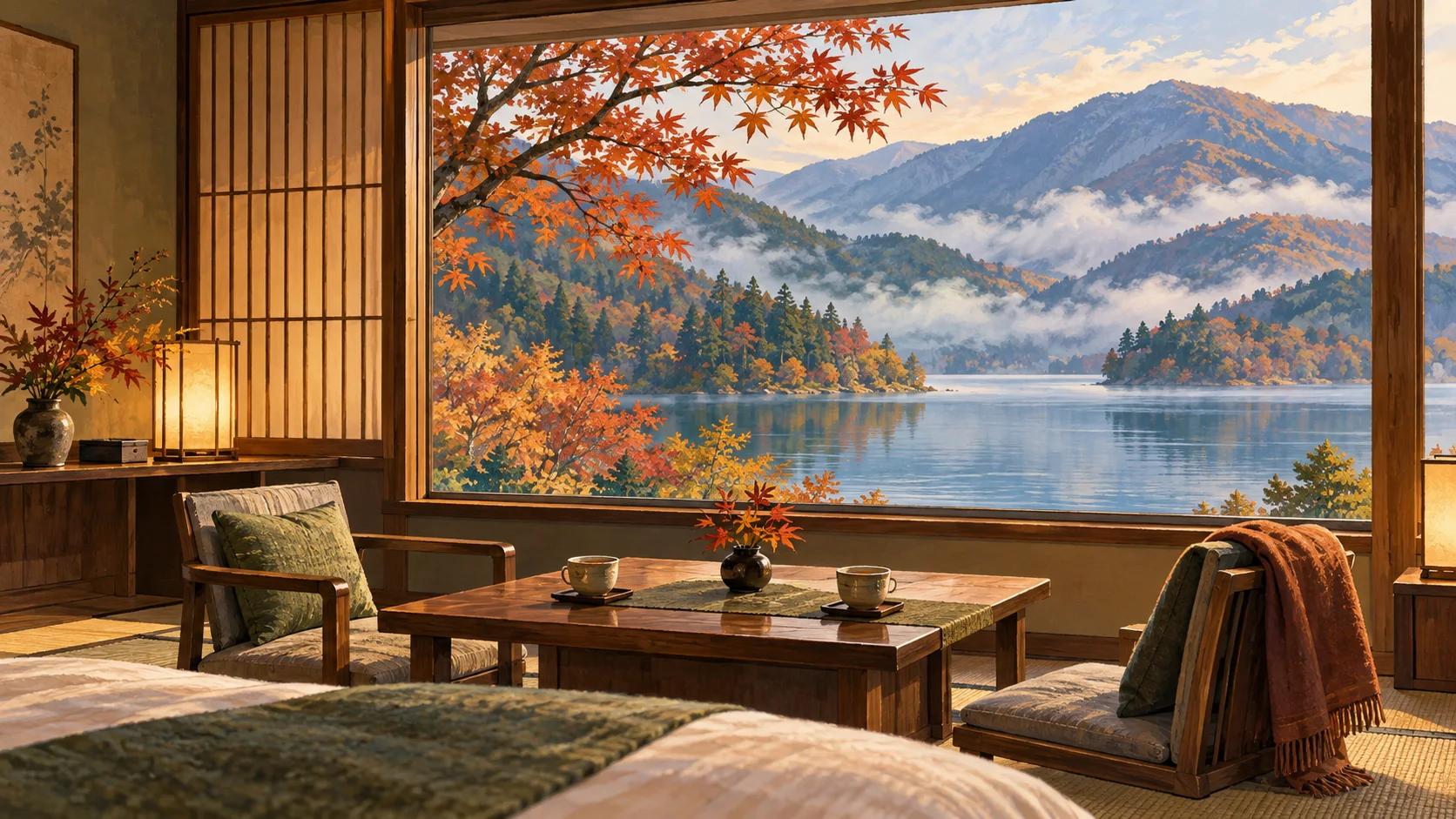
A station-area option: Nikko Station Hotel Classic
Nikko Station Hotel Classic is one property to compare if straightforward station access and luggage handling are priorities. The Nikko tourism association lists it about one minute on foot from JR Nikko and three minutes from Tobu-nikko. Allow extra time for your actual exit, crossings and luggage. Do not confuse it with other similarly named station hotels: check the address, 3-1 Aioi-cho, and the exact property name on the booking.
The hotel’s official facilities and arrival conditions give check-in from 3 p.m., a latest arrival of 10 p.m. with contact required for later arrival, and check-out at 10 a.m. Staying guests can use the shared Eki Spa baths without an additional admission fee. Different double and triple room types do not mean that any two-person room can accept a third bed, or that every room has its own open-air hot spring.
This location can work for a mountain-bound morning or a connection with the JR Nikko Line, but a hotel near the station does not remove autumn bus queues. Match breakfast service to your departure and, for a late arrival, check whether dining is still available. If bathing inside your own room matters, look for a room category that explicitly offers it. Natural hot-spring facilities somewhere in a hotel do not establish private bathing in every room.
Near the shrines: Nikko Kanaya Hotel and its steep approach
Nikko Kanaya Hotel is an option for travellers interested in a historic hotel near the shrines and time spent at the property itself. Confirm that you mean Nikko Kanaya Hotel in central Nikko, rather than Chuzenji Kanaya Hotel by the lake. Sharing the Kanaya name does not make them the same address or interchangeable places to get off a bus. Use the full property name on bookings, transfers and restaurant reservations.
According to Nikko Kanaya Hotel’s official access information, you can compare the free shuttle from Tobu-nikko with a bus to Shinkyo followed by the steep slope up to the entrance. The website explicitly warns of that slope. With large bags, a pushchair or difficulty walking, do not commit to walking from a straight-line map distance alone. Check shuttle times separately; a free transfer is not necessarily an on-demand service.
Compare the actual building and room category instead of buying on the brand name alone. If dining or spending time in the hotel is a main purpose, protect the hours after check-in. If you will leave early and return late merely to sleep, access and the total cost may deserve greater weight. No room availability or rate for a particular stay date was checked for this guide, so there is no precise-looking nightly starting price without dates and occupancy conditions.
A lakeside option: Hana-An’s child restrictions and latest check-in
Hotel Hana-An is a lakeside property to compare when researching accommodation at Lake Chuzenji. Its website states that every guest room has a lake view and that dinner and breakfast are served in the restaurant, rather than automatically in your room. Those conditions suit travellers who want scenery and meals in one place. Establish the room category, accepted ages and arrival deadline before choosing from photographs.
Hana-An’s child admission policy accepts children of primary-school age and above, but not preschool children. Rooms with their own hot spring do not accept accompanying children either. Another page gives primary-school children a rate of 70% of the adult price, with adult rates from junior high school, subject to room capacity. This should not be reduced to a description such as family-friendly with private baths. Families with younger children need another eligible property.
Official arrival information gives check-in from 3 p.m., a latest check-in of 5 p.m., and check-out at 11 a.m. The restaurant may use two sittings when busy, and your preferred time may not be available. If you leave Tokyo and visit the shrines on the first day, calculate the uphill departure backwards from those conditions. Do not assume late arrival preserves the original meal arrangement. Contact the inn promptly about a delayed bus; only the inn can confirm a special arrangement.
A Kinugawa ryokan option: Asaya transfers and child charges
Asaya in Kinugawa is a property to compare when meals and time inside the inn matter. It is not beside the Kinugawa Onsen station exit. Its website describes the Dial Bus circulating among the inns, with an approximate ten-minute journey. Check the time and fare separately: the listed price is ¥300 for an adult and ¥150 for a child. Calling it a hotel transfer does not make it a free private vehicle included in the room rate.
Under Asaya’s official transfer information, the station-to-hotel direction does not take reservations, while each hotel-to-station departure requires a reservation at reception at least 15 minutes beforehand. Confirm that directional difference at check-in. With a booked limited express back to Tokyo, check-out, a reserved bus and finding the railway platform form one connected sequence. Avoid waiting until departure time to ask where the bus is.
The official FAQ lists primary-school children at 70% of the adult rate, ages 3–5 at 50%, an admission charge of ¥2,200 for ages 1–2, and no charge for age 0. Meals and bedding are included for primary-school children and the specified ages 3–5; declining bedding does not automatically remove the listed charge. Normal check-in is 3 p.m. and check-out 10 a.m. Contact the inn for arrival after 6 p.m.; dinner may not be available if you arrive late. Confirm your actual package rather than importing another inn’s free-child policy.
Keeping lodging costs in view: K’s House Nikko and shared facilities
K’s House Nikko is in the Kinugawa Onsen area, rather than a hostel immediately outside the central Nikko stations. Its website gives approximate walks of ten minutes from Tobu World Square station or 15 minutes from Kinugawa Onsen. With large bags, rain or a late arrival, include that walk in your timing. The word Nikko in the name does not make it a base from which you can walk straight to Toshogu each morning.
It offers a shared kitchen, dormitory beds and several private-room types. The official FAQ states that meals are not provided and that shared hot-spring hours are 4–11 p.m., with no morning opening. This suits travellers willing to arrange their own food and assess rooms separately from shared spaces. It is not a lower-priced dinner-and-breakfast ryokan package. Use K’s House’s facilities and service information to establish what you need instead of comparing only the lowest displayed per-person rate.
The English FAQ saved on 21 October 2026 lists ¥1,000 per child aged 6 or under sharing a bed with a parent. The room-rate page saved the same day lists free accommodation for this age group only when sharing beds with adults and when the number of children does not exceed the number of adults; a child using a separate bed pays the adult rate. These charges conflict, so before booking with children obtain the property’s confirmation of the ages, bed arrangements and final charge. Both pages exclude children aged 6 or under from dormitories. The saved starting rates do not establish availability on your date or equal pricing for a private bathroom, river view and family room.
Nikko food starts with yuba, but a tofu-skin dish is not automatically vegetarian
Nikko’s yuba is a soybean product, also written 湯波 locally. Look at the actual dish when ordering: it may be a light individual item or part of a meal with soba noodles, rice, fried food and other sides. The same word does not establish portion size, price or what is included. Decide whether you need a full meal or a snack before choosing a shop, rather than buying small items until there is no time left for lunch.
The city tourism association describes Nikko Yuba Fujiya as a speciality retailer selling yuba and related products. When planning a visit to a Nikko yuba specialist, establish what the business actually offers. A product-sales address should not automatically be labelled a sit-down restaurant serving set meals. Before carrying chilled purchases to another city, ask the shop about storage, transport and consumption conditions.
A soybean ingredient does not make the whole meal fish-free, egg-free or free of allergens. Broth, sauces, frying and a shared kitchen can alter the answer. Ask about specific ingredients for dietary restrictions instead of assuming yuba will be suitable. The food illustration combines tofu skin, soba and side dishes; it is not a photograph of a particular shop’s set meal or evidence of ingredients or allergy safety.
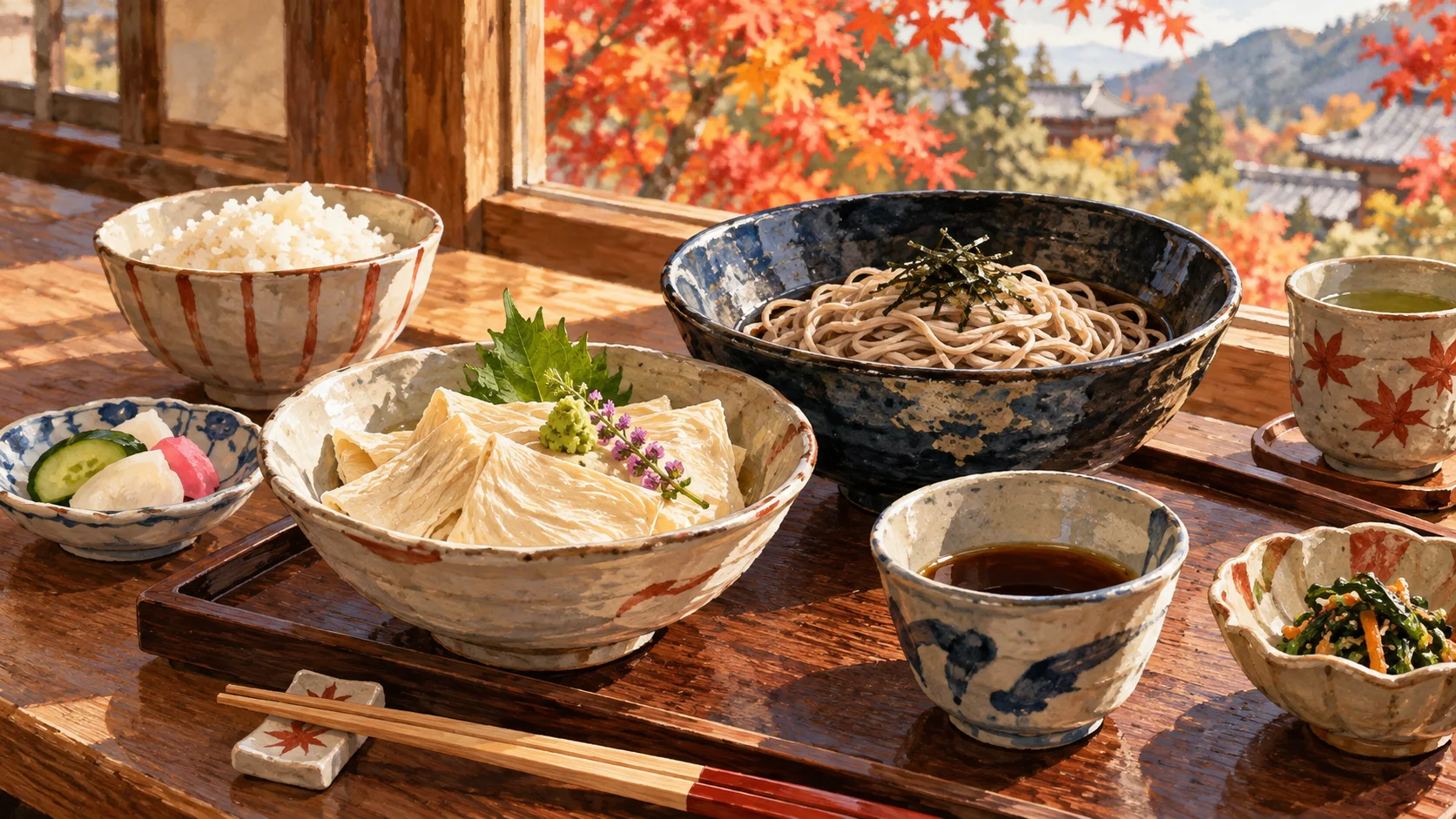
Specific food stops: a station snack, a hotel lunch and a dining-room change
For a snack near the station, consider Sakaeya’s fried yuba manju. The city tourism association lists the shop in front of Tobu-nikko at 10-1 Matsubara-cho, normally open 9:30 a.m.–5 p.m. with irregular closed days. It can fit around arrival or departure without another cross-area journey for a snack. Check your train time before joining a long queue, and ask about carrying and storing hot food or packaged souvenirs.
For Kanaya’s hundred-year curry as a sit-down meal, read the Craft Lounge closure and alternative dining announcement. The official site states that the ground-floor (1F) lounge is closed, with curry, light meals and tea service moved to the Main Dining Room on the main building’s first floor (2F). The main restaurant lists lunch from 11:30 a.m. with last orders at 2:30 p.m. Do not treat room-service or group-menu prices as the same offer for an ordinary individual lunch.
For a shorter station stop, The Kanaya Terrace inside Tobu-nikko station offers items such as curry pies. Listed hours are 10:30 a.m.–noon and 1–5:30 p.m., with only a small number of counter seats. A station shop, hotel restaurant and speciality yuba retailer serve different needs. Choose one that fits your location and time, rather than turning similarly named businesses into a compulsory food list.
Plan lunch and dinner separately: evening choices can be limited
The official travel FAQ notes restaurants around the stations, shrines and major sights, but many businesses operate only during the day. If your room excludes dinner, check actual last-order times, closed days and distance from the accommodation. A busy lunch street does not establish that the same options remain open at night. For a late arrival especially, securing something you can eat beforehand is more dependable than searching after reaching your lodging.
Choose lunch within the area where you will already be, with one main option and a nearby alternative. You do not need an extra journey up and down the mountain for a restaurant. If a queue is too long, use a confirmed nearby option to protect afternoon visiting time. With dinner included at an inn, adjust afternoon snacks too. Trying every speciality is little help if it makes you late for, or unable to enjoy, the substantial meal in your accommodation package.
Confirm special dietary needs when booking. Official Nikko information about Muslim-friendly options carries its own limits: an absence of pork does not establish full halal certification, and unverified restaurants should not be assigned that label. Families can bring familiar portable food for children while checking facility rules on outside food. For self-catering, establish kitchen facilities and grocery access; a kettle alone is not equipment for cooking a complete meal.
Children and older companions: check rooms first, then shorten the walking
For a family itinerary, establish whether the hotel accepts children, the permitted occupancy, beds, meals and bathing rules before choosing theme-park or lake photographs. Hana-An, Asaya and K’s House already have different age and charging policies. One general Japanese-hotel child policy cannot describe them all. Enter each child’s actual age when booking instead of selecting adults only. Two adults and a child do not necessarily fit any available double room.
With older companions, assess shrine steps, steep hotel approaches, bus queues and walking inside attractions together. One main visit with nearby food and rest may be enough for a day. For accessibility, check the particular entrance, toilets, wheelchair-accessible areas and transfers. A hotel lift, or an attraction called a waterfall lift, does not establish that the entire journey has no steps.
Bathing rules differ between properties as well. Asaya’s FAQ restricts use of shared baths by guests with tattoos, with conditions for some small designs that can be covered by a patch. Private baths require arrangements for the actual facility. If you need to accompany a child of another gender, provide care or bathe as a family, check whether a private bath can be booked and what it costs. Do not rely on staff making an exception after arrival.
Luggage and check-out day: avoid crossing the region to retrieve a suitcase
Nikko’s official FAQ lists lockers at stations and some bus terminals, including JR Nikko, Tobu-nikko, Kinugawa Onsen and Chuzenji Onsen bus terminal. That does not guarantee an available locker of your size on the day. Decide which station your bags ultimately need to reach. If you are sleeping in Kinugawa and visiting the lake, returning for a suitcase can take more time than an additional sightseeing stop.
If you use the same Tokyo hotel before and after Nikko, ask whether it can hold larger luggage while you take supplies for one night. Charges, permitted storage duration and acceptance during an intervening night away depend on that hotel’s response. For luggage delivery, confirm the receiving property, dispatch deadline and delivery date. Do not assume every bag can cross cities on the same day and arrive before dinner.
K’s House lists pre-check-in storage from 8 a.m. and free storage on check-out day until 7:30 p.m. Those are that property’s conditions, rather than a rule for every Nikko inn. Put collection locations and counter hours into each plan. A useful check-out-day route moves sightseeing, luggage collection and the departure station in the same direction, rather than shuttling between central Nikko, the lake and Kinugawa for a storage point.
Nikko in winter or rain: reduce outdoor plans and recheck seasonal services
A winter Nikko trip needs a different plan from an autumn foliage visit. Toshogu and Rinnoji close earlier, the Kirifuri Kogen bus pass has a winter sales suspension, and the all area pass page gives 30 November as the end of the listed Lake Chuzenji cruise season. Snow, ice and mountain cold also change walking conditions. Without winter driving experience, a navigation app showing a drivable road does not make a rental car the easier option.
In rain, reduce long lakeshore walks and trails in favour of shorter shrine visits or time at the inn. Shrines are not wholly indoors: approaches, entrances, steps and queues can remain outside, so rain gear and grippy footwear still matter. During strong wind, heavy rain or transport suspension, prioritise safety and the return journey. A ticket already bought or a view hidden by weather is not a reason to continue deeper into the mountains.
For winter, put weather, clothing and transport disruption planning in Japan into your preparation early. Check warm layers, optional activities you can drop, alternative trains to Tokyo and hotel contact details before departure. Forecasts and warnings need another look near the travel date. This guide does not guarantee snow-free conditions or a clear lake view on a particular day.
A one-night budget for two adults: recalculate each component
This two-day, one-night example for two adults is a calculation, not a live quotation: two all area passes at ¥16,000 total; an assumed room including dinner and breakfast at ¥40,000 per room; ¥6,000 set aside for other meals and incidentals; two shrine-only Toshogu tickets at ¥3,200 total; and Kegon Falls lift tickets at ¥1,200 for two. Keep checked fares separate from amounts you choose for budgeting, so an editorial assumption does not look like a hotel’s booking offer.
Nikko City’s official bathing-tax information lists ¥150 per person per night for overnight guests and ¥50 per person per day for day use, with exemptions including children under 12. If both adults in this example are liable and the room rate excludes it, add ¥300 for a total of ¥66,700. Do not add it again if already collected within the room price, or assume every person who does not bathe is automatically exempt.
The total still excludes limited express supplements, special seats, other shrine-and-temple admission, hotel transfers and personal shopping. Add them from your own orders. With the limited ¥5,300 transport combination, two adults’ transport becomes ¥10,600, giving ¥61,300 if every other assumption stays identical. Its cruise, deeper mountain access and validity benefits differ, however. A smaller total should not be achieved by removing transport you actually need.
| Item | Calculation | Subtotal |
|---|---|---|
| All area passes | ¥8,000 × 2 | ¥16,000 |
| Room with dinner and breakfast | Assumed price per room for one night | ¥40,000 |
| Other food and incidentals | Self-selected allowance | ¥6,000 |
| Shrine-only Toshogu tickets | ¥1,600 × 2 | ¥3,200 |
| Kegon Falls lift | ¥600 × 2 | ¥1,200 |
| Bathing tax | Assuming both are liable and the room rate excludes it: ¥150 × 2 | ¥300 |
| Total above | Excludes limited express, other admission, transfers and shopping | ¥66,700 |
Refunds and cancellations: passes, limited expresses and hotels have separate rules
The general NIKKO PASS description allows refunds through the seller while a pass is unused and still valid, with a cancellation fee. Check the actual conditions for a digital pass, exchange voucher or agency purchase. The operator separately warns that traffic congestion preventing bus use does not justify a pass refund. These conditions cannot be reduced to a promise that any missed ride is refundable, or to one platform’s customer-service process applying everywhere.
Tobu’s limited express refund and change information distinguishes ordinary Tobu limited expresses from products such as Shinjuku through services. The listed pre-departure refund fee for ordinary products is ¥100, but online and travel-agency purchases should be handled through their original channel. Through limited expresses between Shinjuku and Tobu-nikko or Kinugawa have different conditions, including a ¥340 earlier-refund fee and percentage-based charges nearer departure. Do not apply the ¥100 figure to every seat and ticket.
Hotel cancellation is a separate contract. Save the dates, deadlines and charges for your particular rate plan. If a train or bus is delayed, contact the hotel about dinner and check-in as well as handling the ticket; a transport cancellation does not automatically waive hotel charges. Record each cancellation entry point and deadline when booking, so you can identify which action matters first when the itinerary changes.
Booking order: resolve the conditions that can block the whole day
First choose a day trip or number of nights, then select a main route among the shrines, lake and Kinugawa. Establish the hotel location, child policy and latest arrival before connecting the trains into and out of Nikko. This order exposes incompatible conditions early. For example, Hana-An’s latest 5 p.m. check-in requires a change if you also intend a leisurely central Nikko shrine visit that afternoon. Hoping for a clear road is not a resolution.
Choose passes next and mark how basic rail fares, limited express seats, buses, boats and admissions will be paid for. Then add lunch, walks or another building. Put pass activation, train dates and overnight stays on the same schedule to avoid buying the right product but starting it on the wrong day. Where official information conflicts, check a dated operating announcement rather than ignoring an update because an older page is easier to read.
Before departure, check services, roads, weather and facility notices again. Save the hotel and return station names and give companions a version they can navigate independently. For the wider cost calculation, use a component-by-component Japan travel budget. If Nikko is only one part of a Tokyo trip, there is no need to compress other cities to fit every local name. Leaving a place for another visit can still produce a complete, usable itinerary.
Nikko or Hakone? Compare the two days you actually want
Nikko requires a geographical choice between the shrines, lake area and Kinugawa. A familiar Hakone plan involves transfers between mountain trains, different cable systems, boats and inns. If you can choose only one overnight trip from Tokyo, compare the scenery you most want, your interest in religious buildings or art museums, and your companions’ tolerance for transfers and long bus rides. Those questions are more useful than applying an online ranking to everyone.
Both places have transport passes, additional charges and services that may not operate. A pass does not make every sight easy to fit on one route. Compare Hakone pass coverage, lakeshore routes and onsen accommodation, listing the two things you actually want to do and your latest required return to Tokyo. Then compare two specific journeys instead of only the printed pass prices.
If you want both, separate overnight trips and returns are more dependable than assuming an unverified direct cross-region connection. This guide does not establish a through itinerary from Nikko to the Fuji Five Lakes or Hakone; actual services and luggage arrangements need separate research. Protect enough time to visit, eat and rest. Let the tickets support the trip you chose, rather than allowing their available benefits to dictate every stop.
A few useful answers
Which NIKKO PASS should I buy for a day trip?
Choose the area first. For central shrines, compare the world heritage area pass, valid for two days at ¥3,000 per adult. All area costs ¥8,000 per adult for four days, extending into the mountains with conditional benefits. Neither of these two checked NIKKO PASS products has a separate one-day version. The ¥600 local day bus pass is a different product.
Does NIKKO PASS include SPACIA X and Toshogu admission?
The basic fare within eligible sections and a limited express seat are separate. SPACIA X and other limited expresses require the appropriate additional ticket. NIKKO PASS also does not automatically include shrine or theme-park admission.
Can I use NIKKO PASS on a direct train from Shinjuku?
Tobu lists through routes from Shinjuku and Ikebukuro outside NIKKO PASS coverage. Compare the complete journey ticket rather than simply adding an ordinary limited express ticket to the pass.
Do I need a Nikko pass if I already have a JR Pass?
Compare your actual route. The nationwide JR Pass alone does not cover Tobu trains from Asakusa. If you arrive using JR via Utsunomiya, compare a local bus pass separately. Check your particular regional JR product and any cross-operator through service against its own conditions.
Can I ride the Akechidaira ropeway in autumn 2026?
The operator’s renovation notice gives a planned suspension from 16 January 2026 to 31 August 2027, with a possible extension. Remove the ropeway lookout from an autumn 2026 plan. The planned final closure date is not a guaranteed reopening date.
Can I visit Toshogu, Lake Chuzenji and Kinugawa in one day?
These are not one compact route. Autumn mountain traffic can add more than two hours. Choose the shrines or lake as a day-trip priority; add a night or replace another area if you want a Kinugawa stay.
Which part of Nikko suits autumn foliage in November?
Separate the areas first. Official typical windows place central Nikko in late October–mid-November, Kinugawa and Kawaji in mid-October–late November, and Okunikko mostly in late September–late October. These are not daily forecasts for 2026. Check current colours and transport closer to departure.
Does an included Lake Chuzenji cruise guarantee I can board?
No. The official all area page lists a season from mid-April to 30 November, but departures, piers, weather and water levels affect actual service. Confirm your travel date’s timetable and pier arrangements before boarding.
Can a family with preschool children stay at Hana-An?
Hana-An accepts children from primary-school age, not preschool children. Rooms with their own hot spring do not accept children either. Find another eligible property for younger children instead of assuming a private bath makes every room suitable for the whole family.
Are children sharing a bed always free at K’s House Nikko?
That cannot be promised. The English FAQ saved on 21 October 2026 lists ¥1,000 per child aged 6 or under sharing a bed with a parent, whereas the room-rate page saved that day lists free accommodation when sharing beds with adults and when the number of children does not exceed the number of adults. A separate bed is charged at the adult rate. Both pages exclude children aged 6 or under from dormitories. Confirm your bed arrangements and final charge with the property before booking.
Can I refund a pass if autumn traffic prevents a bus ride?
Tobu’s autumn warning states that congestion preventing bus use does not entitle you to a refund. Conditions for an unused, still-valid pass, limited express refunds and hotel cancellations need separate checks through the original seller or rate plan.
What is a sample budget for two adults staying one night?
The example totals ¥66,700: ¥16,000 for all area passes, an assumed ¥40,000 room, a ¥6,000 extra-food allowance, ¥3,200 for Toshogu, ¥1,200 for the Kegon lift and an assumed additional ¥300 bathing tax. Limited express and other items are excluded. It is not a live hotel quotation.
Check with the source
Schedules, availability and rules can change. These official sources are the place to confirm details before you book.
- Tobu Railway: all area NIKKO PASS fares, coverage and seasonal benefits
- Tobu Railway: world heritage area NIKKO PASS fares and coverage
- Tobu Railway: pass portal and autumn congestion refund warning
- Tobu Railway: Nikko access and Shinjuku through-route restrictions
- Tobu Railway: limited express sales, booking time and boarding requirements
- Tobu Railway: limited express refunds, changes and purchase channels
- Tobu Bus: local Nikko unlimited-ride passes
- Tobu Bus: April 2026 English routes, coverage and fare map
- Nikko Toshogu: official visiting hours, tickets and audio guides
- Rinnoji: ticket types, outlets, reception cutoffs and restrictions
- Nikko tourism association: Futarasan main shrine, Shinkyo and related areas
- Nikko tourism association: autumn Irohazaka traffic and overnight-base advice
- Nikko Kotsu: Akechidaira ropeway renovation suspension notice
- Kegon Falls lift: official hours and return fares
- Ministry of the Environment: Nikko National Park notices
- Kanto Regional Environment Office: 2026 Senjogahara boardwalk material transport notice
- Nikko tourism association: travel FAQ, typical foliage timing and luggage
- Nikko tourism association: area geography and travel themes
- Nikko Station Hotel Classic: facilities and arrival conditions
- Nikko tourism association: Station Hotel Classic walking access
- Nikko Kanaya Hotel: steep Shinkyo approach and station shuttle
- Hana-An: lake views and restaurant meal arrangements
- Hana-An: child restrictions and hot-spring room conditions
- Hana-An: child charges and room occupancy
- Hana-An: latest check-in and check-out
- Asaya: Dial Bus fares and different outward and return reservation rules
- Asaya: arrival, child charges and bath conditions
- K’s House Nikko: location, kitchen and arrival information
- K’s House Nikko: shared baths, meals, luggage and child FAQ
- K’s House Nikko: room types and child-charge information conflicting with its FAQ
- Nikko tourism association: Nikko Yuba Fujiya speciality retailer
- Nikko tourism association: Sakaeya station snack and opening information
- Nikko Kanaya Hotel: Craft Lounge closure and alternative dining
- Nikko Kanaya Hotel: Main Dining Room menus and meal times
- Kanaya Hotel: The Kanaya Terrace at Tobu-nikko station
- Nikko City: bathing-tax rates, liability and exemptions
- Tobu Tourist Information Center Asakusa: official 2025 digital NIKKO PASS demonstration