Choose between Nikko, Hakone, Mount Takao and Okutama using historical peak seasons and official foliage updates. Covers Tokyo day trips, onsen stays, pass fares, evening illuminations, and alternative routes when ropeways or pontoon bridges close.
- Region & Focus
- KantoAutumn leaves
- Reading Scope
- 21 min read · 11 chapters · 5 Q&As
- Official Verification
- 22 official sources checkedUpdated 22 November 2026
- Key Topics
- SeasonsItinerariesTokyo & Kanto
Chapter Route Map (tap any stop)
- Once Your Dates Are Set, Compare Foliage Updates Here First
- Nikko on a Day Trip: Stay on One Side of the Irohazaka Road
- Staying Overnight in Nikko: Pick Your Accommodation by Morning Plans
- Hakone's Gora and Lake Ashi: Focus on One Side First
- Where to Stay in Hakone Depends on Which Stretch You Want in the Morning
- Mount Takao in Half a Day: Walking to Yakuo-in Makes a Complete Route
- Lake Okutama and Hatonosu: Stick to One Main Route per Day
- For Both River Gorges and Evening Lights, Switch to Nagatoro in Saitama
- With Four Nights in Tokyo, Plan Two Dedicated Foliage Days
- Price Tickets by the Legs You Will Ride: Separate Reserved Trains from Local Passes
- When Rain, Fog or High Winds Roll In, Rework Your Return First
- Quick Q&A
For October autumn foliage around Kanto, start with Ryuzu Falls, Lake Yunoko or Lake Chuzenji in Okunikko. By mid-to-late November, the gardens in Hakone's Gora, the trails on Mount Takao and the gorges of Okutama often overlap in colour, so pick one area and explore it properly. Come early December, Tokyo's landscape gardens easily fill half a day without heading back into the mountains. All four destinations are reachable from Tokyo, differing mainly in the final stretch: Nikko means climbing the Irohazaka road, Hakone often involves switching between trains, cable cars, ropeways and boats, Lake Okutama requires a connecting bus, and Mount Takao lets you step off the train and walk straight to the trailhead.
Once Your Dates Are Set, Compare Foliage Updates Here First
In early October, look first to Ryuzu Falls and Lake Yunoko in Okunikko, shifting focus to Lake Chuzenji from mid-to-late October. The Nikko City Tourism Association lists peak foliage around the shrines and temples in early to mid-November, creating a clear gap from the lakeside. If your group wants both autumn maples and Tosho-gu Shrine, split your time according to each spot's update and give the bulk of your daylight hours to whichever area is at peak colour.
Heading to Hakone in early November? Check updates for Kowakudani and the Lake Ashi stops first. The Hakone Town Tourism Association lists historical peak colour at the Okada Museum of Art garden in Kowakudani from early to late November, while the Hakone Museum of Art garden in Gora leans towards mid-to-late November; Moto-Hakone usually only begins turning in early to mid-November. With just one morning to spare, choose a garden whose latest photos already show strong colour rather than spending time transferring between the mountains and the lake.
Mid-to-late November brings the most overlap, making the choice straightforward. Pick Mount Takao for a walk through forest and temple grounds, or Lake Okutama if you prefer wide water views and autumn-clad slopes across the shore over hunting down single maple trees. Strong walkers who favour rocky river gorges up close can ride to Hatonosu Station instead. On 20 November 2026, the Okutama Tourism Association reported the lakeside had reached peak colour, while individual gorges varied within the same week, so check the report for the next stop before heading downstream.
Official foliage trackers typically use three Japanese stages: irodzuki-hajime (starting to turn), migoro (peak viewing), and rakuyo-hajime (leaves beginning to fall). Always match the photo's date and caption against the exact spot listed on the tourism page. When galleries mix in archive peak photos from past years, the current status label and timestamp are far better guides to whether a bus ride is worth it; if you want sweeping hillside views, inspect the background trees rather than close-ups of a single early-turning maple.
| Travel Dates | Where to Check First | Key Transport Notes from Tokyo |
|---|---|---|
| Early to mid-October | Ryuzu Falls and Lake Yunoko (Okunikko) | Take a bus bound for Yumoto Onsen from Nikko Station |
| Mid-October to early November | Lake Chuzenji, Kegon Falls and Irohazaka | Target Chuzenji Onsen first and allow buffer time for mountain road traffic |
| Mid-to-late November | Hakone (Gora, Kowakudani or Lake Ashi) | Choose the mountain railway or lakeside bus based on current colour |
| Mid-November to early December | Mount Takao, or Lake Okutama and its gorges in late November | Walk straight from the station to Mount Takao's base; take a connecting bus to Lake Okutama |
| Late November to early December | Central Tokyo gardens | Plan half a day around each garden's opening hours |
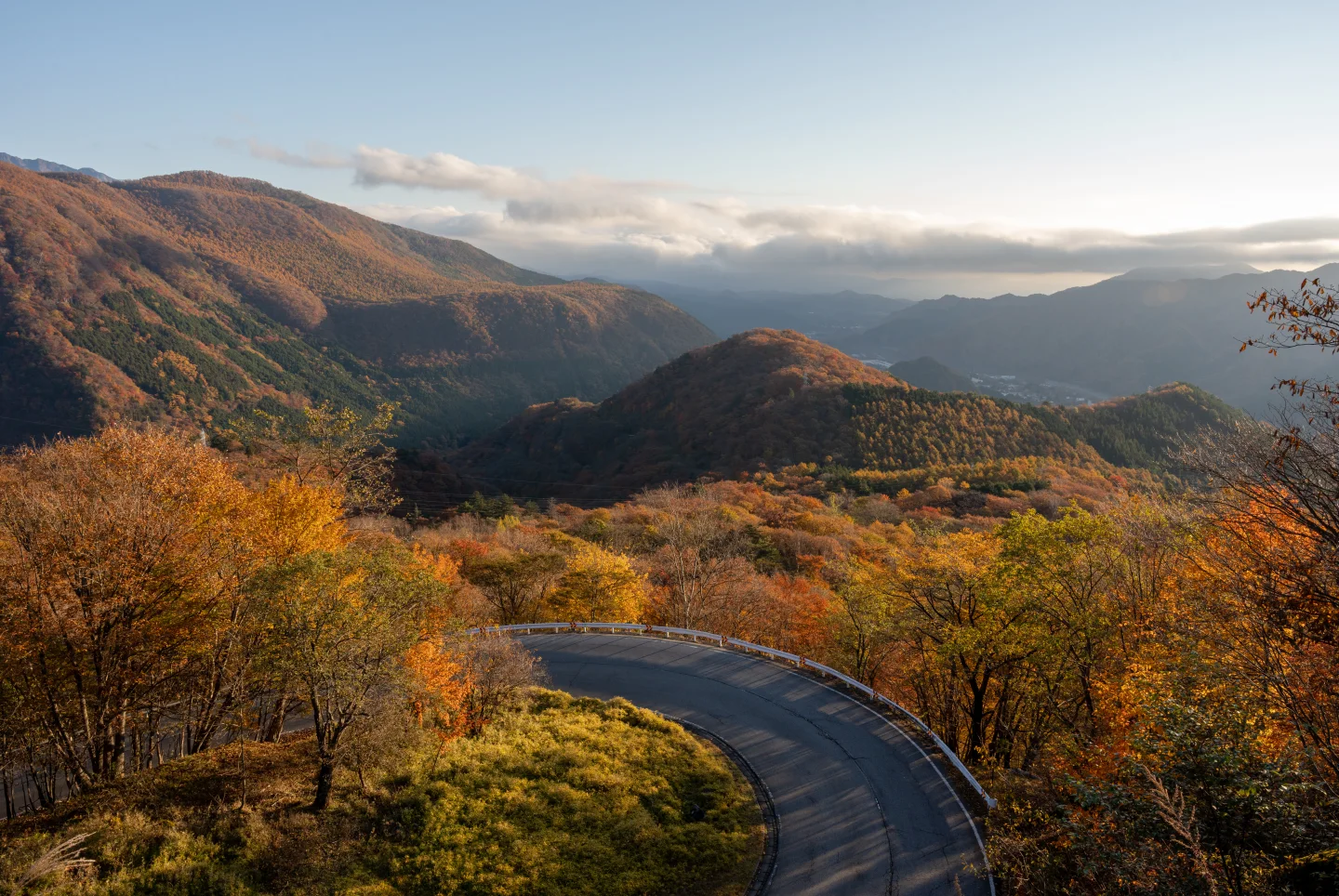
Choose between Nikko, Hakone, Mount Takao and Okutama using historical peak seasons and official foliage updates. Covers Tokyo day trips, onsen stays, pass fares, evening illuminations, and alternative routes when ropeways or pontoon bridges close.
Nikko on a Day Trip: Stay on One Side of the Irohazaka Road
After arriving at Nikko via Tobu Railway from Asakusa or on JR lines, catch a Tobu Bus from the station towards Chuzenji Onsen. You can cover both the lakeside and Kegon Falls on foot around that single stop; only add a second bus leg if you are heading up to Ryuzu Falls or Lake Yunoko. With just half a day left, pick a terminus where the sights are right off the bus so you keep enough margin for the return queue.
On a first visit to Okunikko when both Lake Chuzenji and Kegon Falls are at their best, dedicate your walk to the lakeside loop. Alight at Chuzenji Onsen, visit Kegon Falls first, then stroll along the shore; if low cloud or brief showers roll in, duck into the nearby Nikko Natural Science Museum (winter hours run from 11 November to 31 March, open 10:00 with last entry at 15:30). Pair lunch with your lakeside walk, as waiting until you are back at Nikko Station leaves you vulnerable to Irohazaka traffic eating into your evening.
If Ryuzu Falls is your goal in early October, check each bus's final destination and intermediate stops before boarding at Nikko Station. Some services terminate at Chuzenji Onsen while others continue to Yumoto Onsen, so hopping onto a bus marked Chuzenji may leave you waiting at the lake for a connection. Further upstream at Lake Yunoko, return departure times matter more than squeezing in an extra stop—save your return bus stop name and target departure on your phone so you know at a glance after taking photos whether you have time to walk further.
Check the route letter codes on the timetable before boarding: Tobu Bus route C runs to Chuzenji Onsen, while route Y continues towards Yumoto Onsen (with select Yumoto services detouring via Kotoku Onsen). The 2026 autumn timetable runs until 30 November, switching to winter schedules on 1 December, so anyone staying overnight across that turn of the month must check both days' times separately—especially for the first morning bus. For the shrines and temples, Tobu Bus also lists the Nishi-sando Iriguchi stop and the World Heritage Sightseeing Bus on a separate town-centre route map.
The Nikko City Tourism Association warns that weekend mountain roads clog easily during foliage season for both buses and cars. If you head above Irohazaka first thing and already see long uphill queues, drop any plan requiring an extra transfer and leave Tosho-gu Shrine, Rinno-ji Temple and Shinkyo Bridge for another day—or stay down in town altogether in a week when the temple grounds are peaking. When returning to Tokyo on a reserved limited express train, aim for a downhill bus that leaves a backup service behind it rather than treating scheduled mountain-road arrival times as guaranteed rail connections.
The Akechidaira Ropeway closed for construction after services ended on 15 January 2026, with Nikko Kotsu estimating a reopening in September 2027. While it remains shut, go straight to Chuzenji Onsen for the lake and waterfall views and enjoy the mountain slopes through the bus window on the climb up Irohazaka, saving the classic observation-deck panorama until the ropeway reopens.
Staying Overnight in Nikko: Pick Your Accommodation by Morning Plans
To photograph Lake Chuzenji in the quiet morning light, staying around Chuzenji Onsen shifts the uphill ride from Nikko Station to the day before. Even if afternoon traffic crawls, arriving before check-in and dinner cut-offs gives you the next morning free along the water. Check the walking distance from the bus stop when booking—particularly with wheeled luggage, late arrivals or half-board rates—as lakeside properties can sit far from the stop, and note any pre-booked shuttle details and last-bus times.
If day one centres on Tosho-gu Shrine and day two on the lake, base yourself near Tobu-Nikko or JR Nikko Station so you can leave bags at the hotel and ride up the mountain light, provided you allow plenty of time to come back down. Should you need to travel onward to Hakone that evening, put the lake on the earlier day and keep Shinkyo Bridge and the shrines for your final day near the station. Visitors booked into Kinugawa Onsen should spend their daytime around the nearby gorge and give Okunikko its own full block, checking cross-area connections before locking in your return.
The 2026 foliage timeline shows why location matters when choosing a bed for the night: on 10 November the Nikko City Tourism Association logged Lake Chuzenji and Kegon Falls as nearing the end of their season, while on 11 November the Sannai shrine and temple precinct was at peak colour; by 20 November, Kinugawa's Tateiwa Suspension Bridge and Ryuokyo Gorge still held colour as leaves began dropping. For trips in the second half of November, spot-specific updates beat a generic area calendar; for full Tobu train and bus details, read our Nikko routes and transport passes guide.
Hakone's Gora and Lake Ashi: Focus on One Side First
The Hakone Museum of Art and Gora Park sit in the same corner of Gora. For garden maples, ride the Hakone Tozan Railway from Hakone-Yumoto to Gora, then take the cable car to Koen-Kami Station for the museum. Though distances are short, slopes are steep, so anyone with a pushchair or sensitive knees is better off keeping to the gardens and station area, letting the train windows supply the wider valley views on the way in and out.
To frame mountains against the water, head straight for Moto-Hakone Port or Onshi-Hakone Park. The Hakone Town Tourism Association lists direct Tozan buses from Hakone-Yumoto to Moto-Hakone Port as well as services from Odawara to Onshi-Koen-mae. Set on the grounds of the former Hakone Imperial Villa with free entry, the park opens onto views across Lake Ashi towards Mount Fuji in clear weather; if fog rolls in, enjoy the shore near the water and catch the bus straight back to Yumoto from the same stop, saving the boat cruise for a clearer day.
For Choan-ji Temple in Sengokuhara, alight at Sengoku bus stop—and if you also want the pampas grass fields, treat them as two separate stops with their own drop-off points and walking routes. On Hakone's official foliage page on 20 November 2026, both Gora and Moto-Hakone were marked at peak colour while Miyanoshita was still just starting to turn. Trying to pack all three into one day eats into your time at bus stops, so commit to one area for a proper stroll and only add a second if the day's foliage updates justify it.
If the transport loop itself is part of the appeal, ride the cable car from Gora up to Sounzan and switch to the ropeway over Owakudani down to Togendai for the Lake Ashi cruise. Because the cable car and ropeway are two separate systems, high winds closing one section mean you can simply pivot to Gora's gardens or take a bus straight to the lake and return the same way. Before boarding at Togendai, save the return bus timetable from your landing port—especially if you need an Odawara rail connection that night; full transfer sequences and pass coverage are set out in our Hakone loop and transport passes guide.
Where to Stay in Hakone Depends on Which Stretch You Want in the Morning
Base yourself in Gora if you arrive later on day one, leaving the gardens for the next morning and deciding in the afternoon whether to push on to the lake or head back down. Staying near Lake Ashi makes finding a direct return bus near your hotel far simpler than backtracking via Gora, while Hakone-Yumoto suits travellers who want dinner and an onsen soak at the foot of the hills before heading up if the weather clears next morning. For any ryokan stay, anchor your last transfer of the day around check-in and dinner deadlines before filling in the sightseeing hours.
An overnight trip also lets you spread out the rides: take the mountain railway to Gora on day one for afternoon garden colour, then if you stay in Gora, ride the cable car to Sounzan next morning and check Owakudani and Togendai operations before committing to the boat. If you sleep at the base and mainly want the lake, take a direct morning bus from Hakone-Yumoto to Moto-Hakone and return on the same side. Travellers landing at Hakone-machi Port to walk through Onshi-Hakone Park should pin both the pier and their return bus stop separately on a map rather than simply labelling the whole area Lake Ashi.
When soaking in an onsen is half the reason for coming, keep the afternoon to a single foliage spot and check in early. Match luggage-drop, day-use bath and dinner hours against your bus or train times, and if you have only one night and want autumn views from your room, inspect the window orientation, real room photos and surrounding woodland carefully—lake-view rooms often face mostly open water, so leave daylight in your plan for a close-up garden walk.
In steady autumn rain, pair a garden with an indoor museum by the same stop—such as the Okada Museum of Art and its grounds in Kowakudani, or an indoor gallery in Gora—stepping outside whenever the rain eases. Staying in one pocket saves far more time than switching from a lakeside pier up into the hills mid-afternoon; if you hold a reserved Romancecar ticket back to Tokyo, allow extra time for wet-weather bus connections.
Mount Takao in Half a Day: Walking to Yakuo-in Makes a Complete Route
Check the final destination on Keio Line trains from Shinjuku, set your route planner to Takaosanguchi Station, and walk from the exit to Kiyotaki Station. From there, Takao Tozan Railway's funicular cable car climbs halfway up the mountain, while the two-person chairlift also drops you near the start of Trail 1. Walk from the mid-mountain station through the cedar avenue to Yakuo-in Temple and turn back there—or push on to the summit if legs feel fresh—leaving time for a sit-down snack so slower walkers and families can dodge the longest downhill queues.
Trail 1 (the Omotesando approach) measures 3.8 km end to end with a steady climb from the base, and riding up only bypasses the lower section. Let whoever needs the gentlest pace set the rhythm on the mid-mountain stretch and pick the turnaround point together; agreeing to regroup at the upper cable car station or a clear mid-mountain landmark saves far more hassle than trying to find each other at a crowded summit.
Takao Tozan Railway provides lifts at Takaosan Station, the upper funicular terminus, and station staff can assist wheelchair users with boarding before you assess the path onward from the upper station. Those who prefer seated viewpoints can combine the ride, the upper-station terrace and nearby resting spots into a compact outing while stronger walkers split off temporarily; when descending on the same side, set your meeting point near Kiyotaki Station and take care not to confuse Keio's Takaosanguchi Station at the base with the funicular's Takaosan Station halfway up.
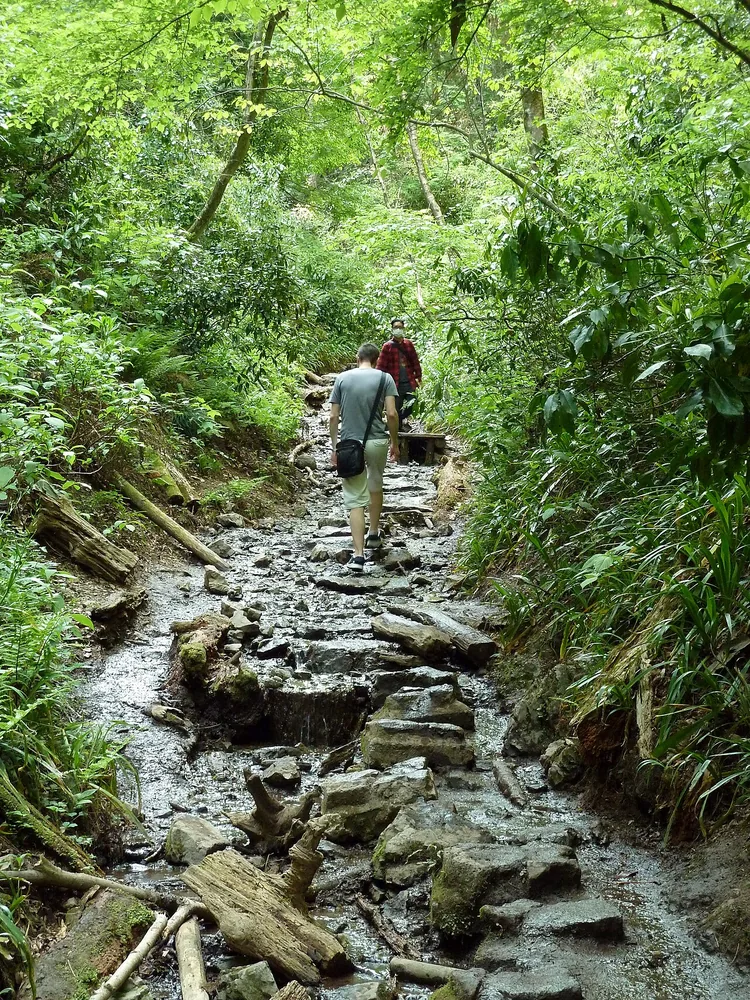
Experienced hikers can take Trail 6 from near Kiyotaki Station when it is open: listed at 3.3 km on Takao Tozan Railway's trail guide, it follows a mountain stream uphill, so sort out snacks and toilets at either end. After rain, the paved Trail 1 approach is much easier to manage, though you should still watch your footing on damp slopes and fallen leaves; if any section is closed or restricted to one-way traffic, follow local signage to turn back or switch trails and stick to familiar ground coming down.
Keio Corporation and Takao Tozan Railway's 2026 autumn notice places Mount Takao's typical peak foliage from mid-November to early December, with autumn illuminations running until 6 December on Fridays, Saturdays, Sundays and national holidays (excluding 4 December) and the last funicular posted at 20:30. To catch the lights, explore the mid-mountain trails in daylight and stay near the funicular line and Takaosan Station once dusk falls; the chairlift closes earlier on its own schedule, so plan any after-dark descent around the funicular timetable.
Both rides cost the same: ¥490 one way or ¥980 return for adults, and ¥250 or ¥500 for children, taking around 6 minutes by funicular or roughly 12 minutes on the chairlift. The enclosed funicular keeps groups together better in gusty winds or if anyone dislikes heights; a single ticket is plenty if you plan to ride up and walk down, and you can compare trail options and station layouts in our Mount Takao trails and transport guide.
Lake Okutama and Hatonosu: Stick to One Main Route per Day
Ride the JR Ome Line to Okutama Station and transfer to a Nishi Tokyo Bus to Okutama-ko, where you can take in both the wide reservoir and surrounding hillsides from Ogochi Dam. The lakeside promenade and the Lake Okutama Water and Green Fureai Museum share the same bus stop, letting you duck indoors if a crisp wind picks up and keeping your return bus back to the station easy to time.
Always check Nishi Tokyo Bus times for your exact travel date and save outbound and inbound bus stops separately. Pick two return departures to Okutama Station before deciding how far along the shore to roam, and if a bus leaves only a few minutes to catch the Ome Line, plan dinner around the following train's arrival in Tokyo; if you simply want lake scenery, turning back near the dam is plenty—always check walking distances on a map before setting off along the shore towards another stop.
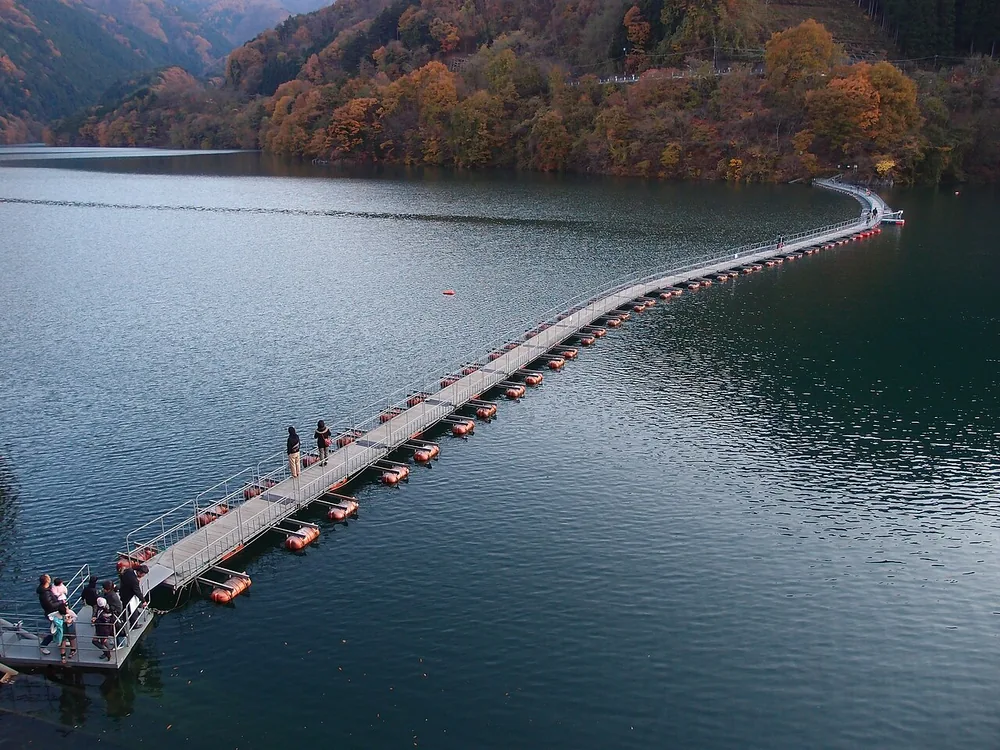
Because the Tokyo Metropolitan Bureau of Waterworks lowered water levels for work at Ogochi Reservoir, the Mugiyama Pontoon Bridge has been closed since 27 October 2026 and the Tozura Pontoon Bridge since 6 November, with engineering expected to run until late May 2027 before water levels allow reopening. For now, plan an out-and-back walk around Ogochi Dam; the tourism association's south-shore Ikoi-no-michi trail runs roughly 12 km (around 4 hours) and usually stays open until the end of November, so weigh current trail notices and exit buses before committing to a long hike.
For gorge scenery, ride the Ome Line to Hatonosu Station and stroll straight down to Hatonosu Gorge, turning back around the bridge or checking current status on the Otama Walking Trail and train times at Shiromaru Station if you want to continue that way. The Okutama Tourism Association lists the full Otama Walking Trail—taking in Suntei Bridge, Hatonosu Gorge and Shiromaru Dam—at around 3.5 hours; if you are focusing only on Hatonosu, eat lunch before entering the gorge so you can gauge how far to walk with the remaining daylight.
Stone steps, slopes and spray in the gorge slow everyone down, so visitors with pushchairs or sensitive knees will find the flat lakeside paths by the dam much easier to reverse back to the bus. Photographers can capture sweeping canyon frames right from the bridge and head back to the station if the river rises or stones are slick; for shorter walks and Mitake Gorge ideas, see our Lake Okutama, Hatonosu and Mitake Gorge autumn guide.
To keep your options open until you step off the train at Okutama Station, start right by the station in Hikawa. The Okutama Tourism Association publishes station-based walking maps covering short loops along the Nippara and Tama rivers as well as the longer Toke Trail, giving you an easy riverside day even if you miss a lakeside bus; save the 10 km, 4-hour one-way Okutama Mukashi-michi old road for a dedicated trip (walking one way and taking the bus back), and ease first-time hillwalkers in with a short loop before lunch.
For Both River Gorges and Evening Lights, Switch to Nagatoro in Saitama
If you want gorge views plus evening illuminations in mid-to-late November, swap Okutama for Nagatoro. The Nagatoro Town Tourism Association notes foliage along the Arakawa River usually begins turning in late October and peaks in mid-November; when your dates are fixed, compare updates for the cliffs opposite Iwadatami against Lake Okutama from the same week—Nagatoro puts you right beside the river terraces facing the Chichibu Red Cliffs, whereas Lake Okutama delivers broader expanses of water and hillside.
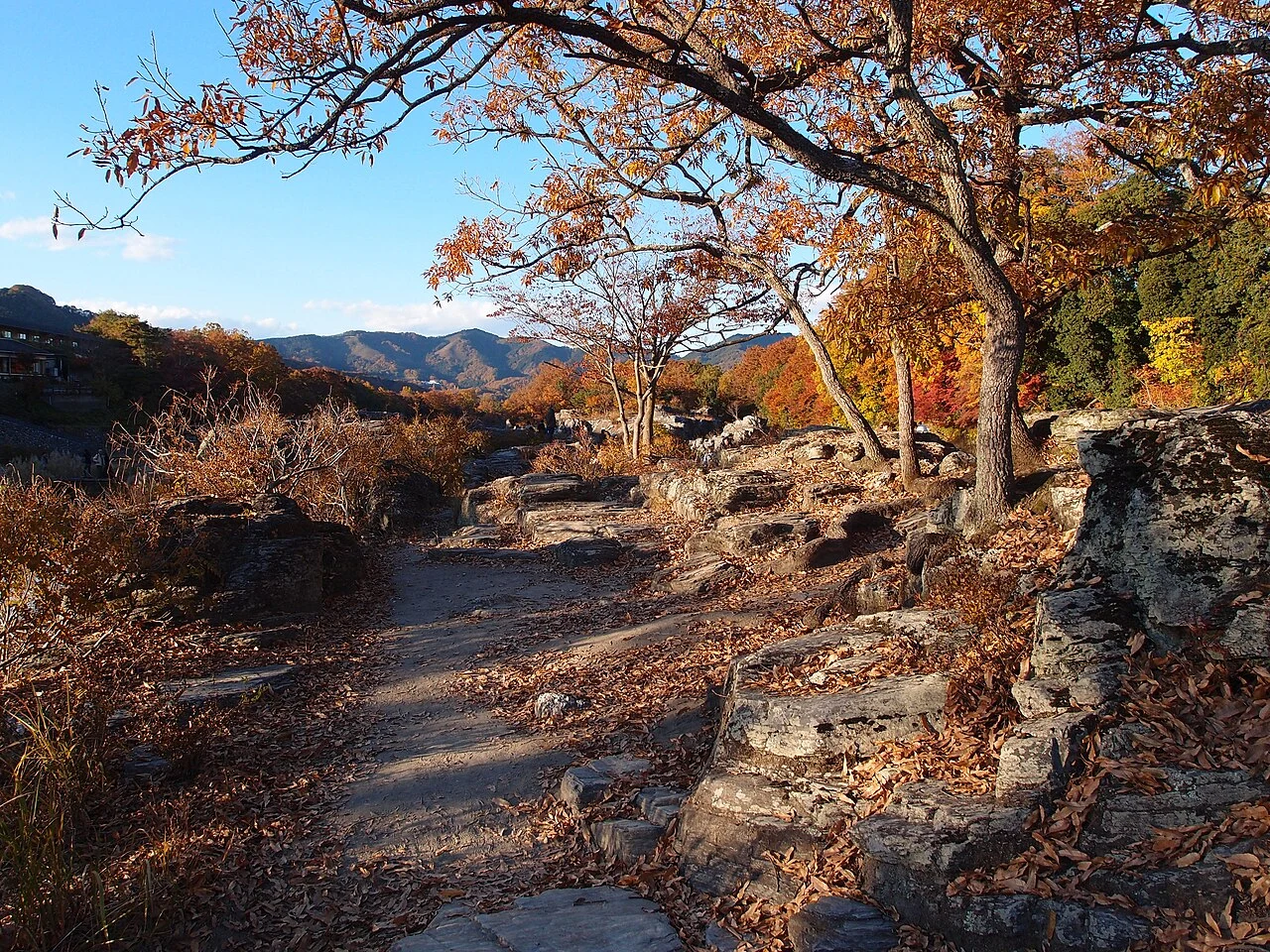
Arrive on the Chichibu Railway and walk from Nagatoro Station to the Iwadatami rock formations during the day, then continue to Tsuki-no-ishi Momiji Park and depart from nearby Kami-Nagatoro Station. The official autumn walking map marks detours should any path be closed—handy after rain, when wet rock slabs make sticking to open paths, stations and the park the safer call; treat the river boat descent as an optional extra, as the riverbank and maple grove already fill a well-paced day on foot.
In 2026, Tsuki-no-ishi Momiji Park's illumination runs from 6 to 29 November, 16:00 to 21:00, with admission at ¥500 for junior high school age and above. The park sits about a 5-minute walk from Kami-Nagatoro Station, so check your return trains to Tokyo before entering—and search from Kami-Nagatoro rather than Nagatoro if you arrived at one station in the morning and leave from the other after dark; for more walking ideas, see our Nagatoro Iwadatami and Mount Hodo day trip guide.
With Four Nights in Tokyo, Plan Two Dedicated Foliage Days
Arriving in late October? Sleep in central Tokyo on night one, head to Okunikko the next morning, stay overnight by Lake Chuzenji, spend day three around Nikko's shrines before catching the train back, and keep day four in the city ahead of your flight. That gives both the lake and Tosho-gu Shrine their own daylight hours—or, if you prefer a single Tokyo day trip, choose either the lake or the shrines so you keep half a day free and dinner reservations easy.
On a four-night stay in mid-to-late November, pair one full day in Hakone with a day on Mount Takao or in Okutama, leaving a Tokyo city day in between. Lock in whichever tickets require fixed departure times first and slot the flexible day trip into whichever day brings clearer skies; basing yourself near Shinjuku puts both Odakyu trains for Hakone and Keio trains for Mount Takao on your doorstep, whereas trying to jump directly from Nikko in the north to Hakone in the same day wastes daylight in transit and adds an extra luggage haul.
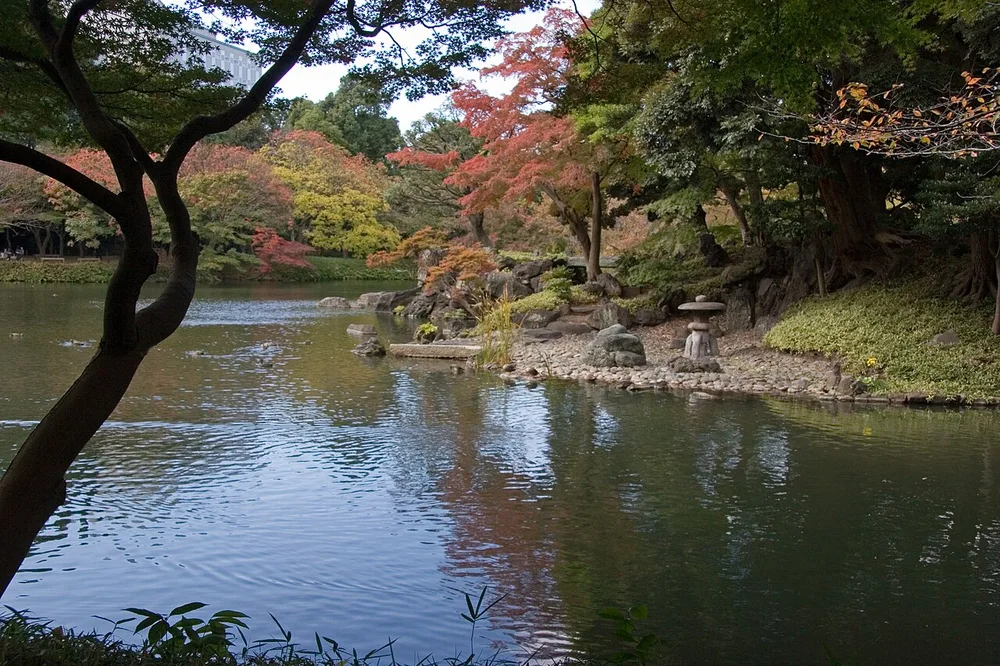
By early December, split your days between Tokyo's landscape gardens and city shopping. Rikugien's management places its autumn season in late November, with 2026 evening special openings scheduled from 25 November to 6 December; check standard daytime hours for pond-side strolls, or verify evening event times and ticketing directly—and avoid scheduling late suburban train returns on the same evening. For more maple and ginkgo spots around the capital, browse our Tokyo half-day autumn leaves routes.
When two foliage excursions sit a few days apart in the same trip, leave room to swap days around the forecast. If Mount Takao looks rainy on Thursday, tick off city sights then and head up the mountain on Friday once trail notices confirm conditions; overnight guests in Hakone can likewise save weather-sensitive Lake Ashi and the ropeway for the clearer half-day and put gardens or museums in the other. If Saturday is your only day out, pick the easiest area to reach and arrive before the first transit bottleneck builds.
Price Tickets by the Legs You Will Ride: Separate Reserved Trains from Local Passes
Using Tobu Railway's November 2026 fares as a benchmark, the NIKKO PASS ALL AREA for international visitors costs ¥8,000 for adults (valid 4 days), covering one return trip between Asakusa and Shimo-Imaichi plus Tobu trains and buses in the designated zone, while limited express surcharges and temple admission are extra. If you are only visiting the shrines and temples, compare the World Heritage Area pass against point-to-point tickets; heading to Lake Chuzenji or Yumoto Onsen changes the maths—Tobu Bus lists single adult fares from Nikko Station at ¥1,250 to Chuzenji Onsen, ¥1,600 to Ryuzu Falls and ¥1,950 to Yumoto Onsen, so double your chosen leg and add the base Tokyo fare plus any limited express supplement.
The Hakone Freepass pays off when riding multiple legs across the mountain railway, cable car, ropeway, sightseeing cruise and covered buses. November 2026 adult 2-day fares are ¥7,100 from Shinjuku (including one Odakyu return to Odawara, with Romancecar supplements extra) or ¥6,000 from Odawara. If you are only walking around Moto-Hakone—or if ropeway or boat suspensions force a simpler bus itinerary—compare a return bus fare from Odawara against the pass before buying, as locking in which rides you will actually take tells you both how much money and how much queue time at ticket machines you save.
Keio's Mount Takao discount tickets bundle rail travel with a one-way or return ride on the funicular or chairlift, making sense only if you plan to ride at least one way; hikers walking both ways just pay standard Keio fares. For two adults, return mountain-ride tickets total ¥1,960 versus ¥980 for two single rides, excluding the Tokyo train fare. Lake Okutama requires JR plus Nishi Tokyo Bus fares both ways, whereas Hatonosu Gorge only needs Ome Line rail fares between your boarding and alighting stops.
When some of your party want to ride the cable car and others want to hike, buying tickets individually beats putting everyone on identical bundles. Break total trip cost into four parts—the Tokyo return fare, local transfers, paid entry tickets and any overnight room rate—and if weekend hotel prices spike, test moving your stay to a simpler hub or switching to a Mount Takao or Okutama day trip to see how much lodging budget you save against daylight hours.
When Rain, Fog or High Winds Roll In, Rework Your Return First
Even peak colour sometimes calls for cutting a route short. In high winds around Hakone, check Hakone Navi's live service status first: if cruises between Togendai and Moto-Hakone are suspended, stay on your side of the lake, find a bus straight back to Odawara or Hakone-Yumoto, and enjoy the lakeside trees or head to your hotel—and if you are already in Gora, keep the rest of the day in Gora and Kowakudani rather than scrambling across the mountains.
In Nikko, when rain affects only half the day, shift mountain viewpoints and lake reflections into the clearer window and use heavier showers for museums or the sheltered shrine grounds. Because weekend autumn traffic slows the mountain roads, count backwards from your Tokyo train or hotel dinner time to pick both your uphill bus and your lakeside departure—guests without fixed dinner hours can linger longer at Lake Chuzenji, while half-board guests should keep shuttle and dining cut-offs front of mind.
After rain on Mount Takao or in Okutama, weigh sole grip, steep gradients and remaining daylight together. On Mount Takao, take the funicular and stroll a short stretch of Trail 1, turning back early if crowds or slick paving build up; around Hatonosu in Okutama, view the gorge from open bridges or switch to the flatter lakeside if trails are shut or river levels run high, and save group photos for wide landings so nobody blocks narrow stone steps.
Two browser tabs before you leave the hotel are all you need: the local tourism association or garden foliage page (for photo dates and exact spots) and the bus, rail or trail operator's live status page (for return connections and detour exits). Check Tokyo-bound departures one more time before leaving the mountain while signal is strong—if the transfer margin looks tight, walking to the bus stop straight away almost always beats squeezing in one last photo.
A few useful answers
Where should I go for a first Kanto autumn trip in late November if I can only pick one area?
Start with Mount Takao for an easy Tokyo day trip with minimal transfers. Choose either Gora or Lake Ashi in Hakone for garden strolls paired with an overnight onsen stay, or pick Okutama if you prefer waterside scenery—taking a bus to the lake or starting from Ome Line stations for Hatonosu Gorge.
Can I visit both Nikko Tosho-gu Shrine and Lake Chuzenji on the same day?
Yes—head up to Lake Chuzenji first and decide on the shrines in the afternoon based on when your bus makes it back down. On peak autumn weekends, especially if you hold a reserved train back to Tokyo, splitting half a day for each gives better control, and if traffic stalls, commit fully to one area.
If I arrive in Tokyo late, can I still visit Mount Takao in half a day?
Yes—aim for the stretch between the funicular's Takaosan Station and Yakuo-in Temple, deciding at the base how far up to go. If setting out from central Tokyo in the afternoon, check that day's last funicular departure first, and match your plans against that year's illumination and extended-hours notices if staying past dusk.
Can I still see autumn leaves at Lake Okutama while the Mugiyama Pontoon Bridge is closed?
Yes—take the bus to Okutama-ko stop and walk the open paths around Ogochi Dam. While both the Mugiyama and Tozura pontoon bridges remain shut, plan your walk as an out-and-back loop from that same bus stop.
Are there still autumn leaves to see in Tokyo in early December?
Check foliage updates for Rikugien and other Tokyo metropolitan gardens first. In 2026, Rikugien's evening special openings run until 6 December, and daytime visits also give clear views of the maples around the pond.
Official information and references
Sources used in this guide.
- Nikko City Tourism Association — Spot-by-Spot Autumn Foliage Status and Peak Forecasts
- Nikko City Tourism Association — Autumn Peak Timing and Road Congestion
- Tobu Bus — Nikko Routes to Chuzenji Onsen and Yumoto Onsen
- Nikko Natural Science Museum — Exhibitions and Opening Hours
- Nikko Kotsu — Akechidaira Ropeway Construction and Suspension Notice
- Tobu Railway — NIKKO PASS ALL AREA Fares, Coverage and Limited Express Tickets
- Hakone Town Tourism Association — Area Foliage Reports and Sightseeing Access
- Hakone Navi — Mountain Railway, Cable Car, Ropeway, Cruise and Bus Operations
- Hakone Navi — Hakone Freepass Coverage and Purchase Guide
- Takao Tozan Railway — Funicular and Chairlift Timetables and Fares
- Takao Tozan Railway — Trail Map and Distances
- Keio Corporation — Mount Takao Access and Discount Tickets
- Keio Corporation & Takao Tozan Railway — 2026 Illumination Dates and Typical Peak Foliage
- Okutama Tourism Association — Seasonal Lake and Gorge Reports
- Okutama Tourism Association — Otama Walking Trail and Lake Okutama South Shore Trail
- Tokyo Metropolitan Bureau of Waterworks — Mugiyama and Tozura Pontoon Bridge Closure Notice
- Keio Bus & Nishi Tokyo Bus — Okutama-ko to Okutama Station Timetable
- Tokyo Metropolitan Park Association — Rikugien Autumn Foliage and Visitor Information
- Tokyo Metropolitan Park Association — Rikugien Evening Special Opening
- Takao Tozan Railway — Funicular and Takaosan Station Lift Access
- Nagatoro Town Tourism Association — Peak Foliage, Tsuki-no-ishi Momiji Park Illumination and Access
- Nagatoro Town Tourism Association — Iwadatami and Kami-Nagatoro Autumn Walking Routes