Compare Yadoya Nishijinso, Nishijin Villa, Nishijin Fujita, Nishijin Itsutsuji and RESI STAY Nishijin by beds and futons, stairs, kitchens, bathrooms, children’s facilities, laundry and cleaning.
- Region & Focus
- Kyoto
- Reading Scope
- 40 min read · 15 chapters · 4 Q&As
- Official Verification
- 15 official sources checkedUpdated 26 October 2026
- Key Topics
- Where to stayBookingRyokan
Chapter Route Map (tap any stop)
- Whole house, inn or apartment: start with how everyone sleeps
- Horikawa and Senbon need different arrival routes
- Yadoya Nishijinso: twin rooms and tatami rooms for small families
- Kyo no Ondokoro Nishijin Villa: a two-storey house for eight
- Nishijin Fujita: bedrooms and daily life on the east wing's ground floor
- Nishijin Itsutsuji: beds upstairs, futons downstairs
- RESI STAY Nishijin: a lift and rooms for five
- Four adults and two generations need separate bed counts
- Stairs and changes in floor level shape each day
- Bathrooms: private use, separate facilities and taking turns
- Breakfast, reheating or cooking: three kitchen needs
- Four nights or more: laundry and cleaning routines
- Babies and school-age children lead to different choices
- Check-in and accommodation addresses change the first day's route
- Put guests, meals and cancellation terms into the same booking
- Quick Q&A
When staying in Nishijin, start with how everyone will sleep, bathe and eat each day. Two people wanting beds, four friends needing separate sleeping places, older relatives avoiding stairs and children needing an early bedtime all lead to different choices. These five named properties compare a small inn, whole-house machiya rentals and apartments, bringing beds and futons, kitchen and bathroom floors, cleaning, laundry and check-in into the same decision.
Whole house, inn or apartment: start with how everyone sleeps
Four friends spending three nights in Kyoto may want a shared dining table and a separate sleeping place each. A whole house is worth comparing. But if two need beds and two turn in early, the distribution of beds and futons matters however large the house is. Nishijin offers an eight-room inn, apartments with kitchens and machiya houses reserved for one group. They suit quite different travelling parties.
Two travellers spending most of the day out, returning for a bath, a bed and breakfast, can start with Yadoya Nishijinso. For three to five sharing one room who need a lift, washing machine and space for simple cooking, RESI STAY Nishijin is easier to match. For two generations wanting separate places to relax and dinner at home, consider Nishijin Villa, Nishijin Fujita or Nishijin Itsutsuji.
Staying together can mean several things. Five people in one room share the space for early coffee and late conversation. A two-storey house can separate waking and sleeping areas but adds trips on the stairs. When a tatami sitting room becomes a bedroom at night, those still awake need somewhere else to sit. Agreeing on acceptable sleeping arrangements narrows the choice faster than collecting photographs.
| Property | Main sleeping arrangement and space | Needs to compare first |
|---|---|---|
| Yadoya Nishijinso | Twin rooms for two; tatami rooms for two to four, depending on the named room | Small-inn breakfast and separate rooms |
| Kyo no Ondokoro Nishijin Villa | Four beds plus futons; two storeys; up to eight guests | Group living, cooking and washing facilities on two floors |
| Nishijin Fujita | Two beds plus tatami-room futons on the east wing’s ground floor; up to nine | Fewer stairs for older relatives and advance catering |
| Shuei Minpaku Nishijin Itsutsuji | Two beds upstairs; up to three futon sets downstairs | Guests comfortable with steep stairs, cooking and housekeeping |
| RESI STAY Nishijin | Double beds or ordinary beds and bunks depending on room; capacity five | Lift, kitchen, bathroom and laundry in the same room |

Compare Yadoya Nishijinso, Nishijin Villa, Nishijin Fujita, Nishijin Itsutsuji and RESI STAY Nishijin by beds and futons, stairs, kitchens, bathrooms, children’s facilities, laundry and cleaning.
Horikawa and Senbon need different arrival routes
Nishijin is a district, not a station. These properties are spread around Horikawa-dori and Senbon-dori, with different final walks from the underground. Towards the east, Yadoya Nishijinso's official access page gives about eight minutes on foot from Imadegawa Station and identifies exit 3 as having a lift. Further west, Nishijin Villa gives about 19 minutes from exit 4, or about one minute from Imadegawa Jofukuji bus stop. With suitcases, that already makes a difference.
Yadoya Nishijinso is at 458 Nishimachi; Nishijin Fujita, at 811 Yamana-cho, is also on the Horikawa side. Nishijin Villa is on Jofukuji-dori south of Imadegawa. RESI STAY Nishijin is at 11 Nishinakasuji-cho; its main official approach is about a minute's walk from Senbon Nakadachiuri bus stop. Randen's Kitano-Hakubaicho Station is about 16 minutes away on foot. That suits walkers; with suitcases, use a bus or vehicle for the final stretch.
If your days centre on Kyoto Gyoen, textiles or the north-western neighbourhoods, Nishijin puts your base close to daytime activities. If you dine in Kawaramachi every evening, include the journey back after dinner in your comparison. Extra living space pays off when you return to use it. If you come back late for several nights, a smaller room with suitable transport is the more direct choice.
Yadoya Nishijinso: twin rooms and tatami rooms for small families
Yadoya Nishijinso's room page lists all eight rooms. Two guests wanting beds can consider the Western-style Arashiyama or Saga rooms, each for two. Among the tatami rooms, nine-mat Uji and ten-mat Rakuchu also sleep two; eleven-mat Nishijin sleeps three; fourteen-mat Gosho and Rakuhoku sleep four. Eight-mat Maruyama sleeps two and has a table and chairs, useful for tea and planning while sitting on chairs in a Japanese-style room. These are room names within Nishijinso: booking Arashiyama still puts you in Nishijin.
A family of four can compare Gosho and Rakuhoku together; two adults wanting beds can go straight to the Western-style rooms. More floor space leaves more room to move around laid-out futons, but one tatami room still provides one bedroom. If you want to work with the light on after the children sleep, or separate the couple from older relatives, two rooms often work better than squeezing into the largest tatami room.
The facilities page lists Japanese- and Western-style bathrooms, a Kyoto home-style breakfast by reservation, a garden dining room, luggage storage and parcel dispatch and receipt. Breakfast at the inn saves an early shopping trip. Those wanting to buy ingredients and cook full meals should consider the kitchen-equipped properties below. Nishijinso also lists a nearby launderette, so allow time outside the inn if several nights generate a large wash.
Pets are accepted in Western-style rooms, with one pet per family, advance contact and guests supplying pet equipment. This narrows the room choices directly. Two people with a pet need a different arrangement from four choosing the Gosho tatami room. Give the inn the full party details so it can arrange the room and services together.
Kyo no Ondokoro Nishijin Villa: a two-storey house for eight
Kyo no Ondokoro Nishijin Villa is a 196 m² whole-house rental for one to eight guests. Four semi-double beds occupy two upstairs bedrooms. Futons are added from the fifth guest onwards, up to four sets. Four adults needing a bed each have a clear arrangement; eight guests use both beds and futons, so give beds to those who find getting up from the floor difficult.
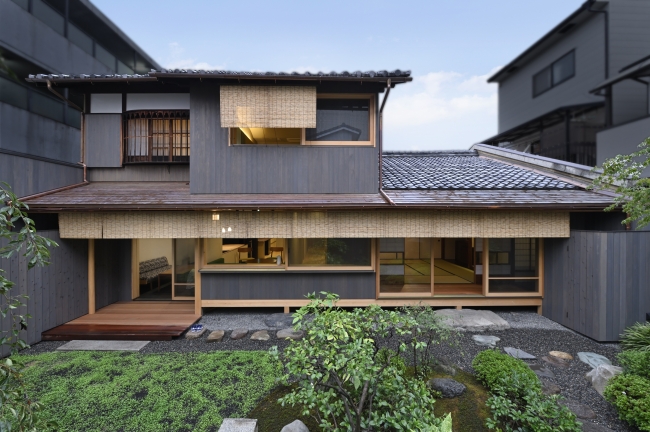
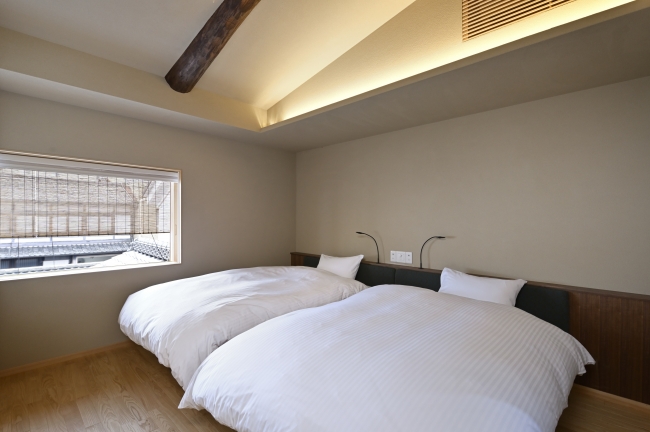
The ground floor has a kitchen-dining room, coffee space, two tatami rooms, bathroom and toilet. Upstairs, alongside the bedrooms, are a shower, washbasin and toilet. Two generations can find separate places to relax and divide evening washing between floors. Nishijin Fujita is closer to a single-level arrangement. The villa's separation is more valuable when everyone wants somewhere to sit, and some want a bath while others prefer a shower.
A large fridge, three-ring hob, grill and combined oven-microwave suit a group that genuinely plans to cook. Before shopping, divide a meal into washing vegetables, cooking and laying the table. Leave working space for the cooks and let others sit elsewhere; eight people surrounding the hob waste the house's other spaces. The website explicitly says seasonings are not supplied. Buy ingredients and small quantities of seasoning for the meal you intend to make.
The villa also has a private two-car garage with a 2.0 m height limit. This suits travellers already planning to drive. On a day when the car stays at the property, eat and walk locally. Choose chiefly for the living arrangements and party size; booking mainly for parking can leave much of the house and kitchen unused.
Nishijin Fujita: bedrooms and daily life on the east wing's ground floor
Nishijin Fujita offers the ground floor of the Fujita residence's east wing. The main bedroom has a semi-double and a single bed; two further tatami rooms take futons, for a maximum of nine guests. This is a useful single-level option. Night-time trips to wash and daytime meals can take place on the same floor, making the layout a good starting point for families avoiding repeated stair use.
To give older relatives beds and others tatami rooms, allocate the two beds to those who need them most, then divide the tatami rooms by waking time. Guests using walking frames or wheelchairs need actual entrance, threshold and bathroom measurements and assistance arrangements. For people who walk independently but dislike daily stairs, ground-floor living is the main advantage.
The living room has a fridge, microwave, kettle, coffee machine and tableware; there is also a laundry room and washer-dryer. The meal page describes catered meals, Kyoto-style boxed meals and restaurant arrangements. This suits guests wanting a full meal in the house without cooking it themselves. Meals should normally be booked with the stay, with requests accepted no later than a week before dining and cancellations required four days beforehand. Arrange this meal before travelling.
The cultural-property residence has specific house rules. The rules prohibit placing or wheeling suitcases on tatami, require quiet after 21:00 and prohibit parties and unregistered visitors. It suits families wanting space during the day and quiet meals at night. To invite friends staying elsewhere for a late snack and conversation, choose a venue that accepts that use.
Nishijin Itsutsuji: beds upstairs, futons downstairs
The official Shuei Minpaku Nishijin Itsutsuji booking page clearly separates the spaces. The outer entrance and inner passage are shared. The guest wing's ground floor has a living-dining room, kitchen, two toilets, bathroom, garden and a bedroom taking up to three futon sets. Upstairs are two semi-double beds. Families wanting a shared living area with some people sleeping downstairs can compare this layout with Nishijin Villa.
Deal with the stairs first. The property explicitly describes them as steep and warns about carrying large or heavy items. Adults comfortable with stairs can use the upstairs bedroom, but still go downstairs to leave in the morning and bathe at night. Older relatives assigned downstairs futons must be able to rise comfortably from the floor. Guests needing a bed who cannot manage steep stairs are better matched to Nishijin Fujita or a lift-served apartment.
Itsutsuji supplies an induction hob, microwave, fridge, cookware, tableware and a washing machine with detergent. Breakfast and a simple cooked meal are possible at home. There is no cleaning during the stay, and each guest receives one towel and amenity set. For several nights, fit laundry into the daily routine. The service does not suit those wanting daily room cleaning. Two toilets reduce morning queues; bathing still needs an agreed order.
After completing the guest register, guests receive an arrival guide. The property sends the door code three days before arrival and again that morning. Have one person keep the complete instructions so the group can find the guest wing from the lane. Use the full property name for map searches, rather than searching only for Itsutsuji and stopping at a nearby shop.
RESI STAY Nishijin: a lift and rooms for five
RESI STAY Nishijin has 20 rooms, a lift and luggage storage, offering apartment accommodation without meals. Hina measures 37.95 m² and Origami 39.40 m². Each has two 140 cm-wide double beds and one 100 cm-wide sofa bed, sleeping five. Two adults with children and four adults wanting separate sleeping places will view this arrangement differently.
Mari and Kids Room each measure 43.54 m² and list two 120 cm-wide beds, a bunk bed and a sofa bed, with capacity also set at five. For five people preferring separate sleeping places, these deserve closer comparison than the double-bed layouts. Two families wanting separate bedrooms can book a room each. Separate apartment doors give fuller separation than dividing one house by tatami rooms or floors.
Each room has a kitchen, induction hob, microwave, washing machine and bathroom drying equipment, keeping takeaway meals and laundry inside the room. If a child goes to bed halfway through dinner, everyone else remains active in that same room. Accept that routine when sharing. If a child needs complete darkness, retiring together or choosing a machiya with separate bedrooms helps more than extra floor area.
Kids Room retains its climbing wall. The website states that projection games ended on 14 January 2026. Choose it for climbing space and sleeping arrangements. Two families booking separate rooms can also separate bathroom, kitchen and rest times. The room handbook prohibits unregistered visitors in the rooms or building; meet visiting friends and relatives elsewhere.
RESI STAY’s official introduction to its Nishijin property, to accompany this section’s room layouts.
Four adults and two generations need separate bed counts
Four friends unwilling to share a bed can start with Nishijin Villa's four beds. If two can use futons, Nishijin Fujita's main bedroom and tatami rooms are another possibility. Two twin rooms at Nishijinso give separate rooms and independent bedtimes. The differences are the amount of shared space and the privacy the group is willing to pay for.
Four adults using only Hina's or Origami's two double beds sleep in pairs. A five-person capacity may still be unsuitable for friends wanting separate places. Mari and Kids also require deciding who takes each bunk. Give ordinary beds to those unable to climb a ladder, then allocate the rest. Count acceptable separate sleeping places rather than person icons on a booking page.
For two generations, sketch the night-time arrangement: where older relatives sleep, who stays with the children and who comes back late. Older relatives downstairs at Itsutsuji must manage getting up from futons; upstairs at Nishijin Villa, they must manage stairs. Fujita's ground-floor layout reduces vertical movement, but allocating its two beds remains central. Resolve this before choosing meals; it is more useful than choosing a beautiful garden photograph first.
Futon rooms have daytime uses too. An early riser drinking tea in the same tatami room can disturb those still asleep. Before making beds, move cups, plates and luggage to suitable places. A whole house lets people spread out, but everyone must cooperate over furniture and room uses, especially when the largest tatami room becomes the whole family's bedroom.
Stairs and changes in floor level shape each day
On a machiya floor plan, connect the sleeping, bathing, toilet and dining areas to work out daily stair journeys. Nishijin Villa has a shower and toilet upstairs, so upstairs sleepers can stay there at night and descend only if they want the ground-floor bath. Itsutsuji puts the main washing facilities downstairs; upstairs guests need to bring their clean clothes down together.
With a toddler who still naps, rooms on separate floors also mean carers moving between them. If the family eats downstairs while a child sleeps upstairs, someone must take responsibility for staying with the child and moving back and forth. For frequent carrying or frequent night-time toilet visits, prioritise Fujita's single-level living or RESI STAY Nishijin's lift.
Luggage needs different handling too. Itsutsuji expressly warns about carrying bulky or heavy items upstairs. Open cases on a suitable ground-floor surface, take out that night's items and let someone comfortable on the stairs carry a small amount of clothing. At Fujita, keep suitcases off tatami and gather them where they will not damage the floor. This also keeps passageways clear.
If someone cannot cross thresholds at all, specify door width, changes in level, bathroom turning space and help with transfers. Ground-floor machiya accommodation reduces climbing, and a lift reduces vertical travel, but the actual route still determines suitability. Ask the property about specific movements to get a usable answer, rather than simply asking whether it suits older people.
Bathrooms: private use, separate facilities and taking turns
A whole-house bathroom lets one group agree its own order, useful with children or when families want to handle washing together. Nishijin Villa's ground-floor bath and upstairs shower separate bathers from those wanting only a shower. Toilets and washbasins on both floors also help eight guests organise the morning.
Nishijin Fujita sleeps up to nine. Bedrooms are flexible, but everyone shares time in the bathroom. If all want to bathe within an hour before dining out, start early. With dinner delivered, those already washed can sit in the living area while others take their turns. In a large-capacity house, dining, hot water and cleaning routines often matter more than sleeping area.
Itsutsuji has two ground-floor toilets, so other guests can use a toilet while someone bathes. At RESI STAY Nishijin, each apartment is a kitchen-and-bathroom unit. Two families booking a room each handle washing separately; five sharing one room take turns within that room. Calculate the morning rounds of washing for your party rather than comparing whole-house area alone.
Kyoto City's accommodation information updated in 2023 lists Nishijinso's baths for private use; the property's current facilities page lists Japanese- and Western-style bathrooms. It is worth considering for inn services instead of looking after a whole house. Sharing a bath with family and each person wanting a private room bathroom are different needs. Clarify which you want before choosing an inn, one apartment or a whole house.
Breakfast, reheating or cooking: three kitchen needs
A fridge, microwave and dining table cover most needs for breakfast tea and reheating prepared food. Nishijin Fujita's living-dining room suits making a meal of bought food, with catered meals available in advance. Every meal need not become family housework. Two people at Nishijinso can simply reserve breakfast and spend the morning preparing to go out.
For simple children's meals, noodles or eggs, the induction kitchens at RESI STAY Nishijin and Itsutsuji are a closer match. A one-pot or one-plate menu makes shopping, cooking and washing up easier to fit into a holiday. Savings from cooking full meals daily depend on pack sizes, leftovers and how many people will do the work.
To set aside an evening for group cooking, Nishijin Villa's three-ring hob, large fridge and utensils become more useful. Agree who cooks, who washes up and when everyone eats before buying chilled ingredients. If arrival day includes off-site check-in and collecting luggage, buy prepared food or reheat something simple first, leaving elaborate cooking until the second night.
Dining space affects sleeping too. If the ground-floor tatami room takes futons at night, refrigerate leftovers, wash dishes and clear the bed-making route after dinner. Early sleepers can retire to a separate bedroom while others talk at the table. In an open-plan apartment with all sleeping places together, finish dinner earlier. A kitchen brings flexible meal times and food choices; comfortable sharing also needs agreement on cleaning.
Four nights or more: laundry and cleaning routines
Differences emerge over four nights or a week that are less obvious on the first night. Nishijin Villa and Fujita have washer-dryers; Itsutsuji has a washing machine and hangers; RESI STAY Nishijin combines an in-room washing machine with bathroom drying. Four people washing one outfit each need different drying time and space from a family washing a whole bag of children's clothes. For longer stays, let the equipment inform how much luggage you pack.
Kyo no Ondokoro's consecutive-stay cleaning information gives light cleaning once every three nights. In its four-night, five-day example, this falls on the day of the fourth night, between 11:00 and 13:30. Guests requesting no cleaning when booking can go up to six nights without it. If you want a midday nap or time working at home, eat lunch out on cleaning day; request uninterrupted use when booking if that matters more.
Itsutsuji provides no cleaning during the stay and one towel and amenity set per person. Guests staying several nights must wash used towels and allow drying time, and the group keeps the rooms tidy. RESI STAY Nishijin's handbook likewise states there is no daily cleaning during the stay. Separate recyclable bottles and cans from general rubbish and take full bags to the designated outside containers.
For regular cleaning on a longer stay, RESI STAY accepts requests for extra paid cleaning at reception. An additional towel set costs ¥300 and contains one face towel and one bath towel; request it two days before arrival. Compare that cost with in-room washing if packing fewer changes. Nishijinso has a nearby launderette, allowing a laundry trip outside followed by the inn's usual services.
Babies and school-age children lead to different choices
With a baby, cot space and the route between bathing and preparing milk matter most. The RESI STAY Nishijin cot page gives ¥4,000 including tax per stay and an age-and-weight range from newborns weighing at least 2.5 kg up to 24 months and 13 kg. Supply is limited and advance requests are required. These are Nishijin's own rental conditions; families choosing an apartment can arrange sleeping places and equipment together.
Toddlers walking independently need adult help on Itsutsuji's steep stairs, and the two upstairs beds also affect where carers rest. Fujita keeps daily life on the ground floor, but children must still follow the rules of the cultural-property house. Earthen walls, tatami and antique furniture suit quiet observation and daily use. Store luggage and toys appropriately.
For school-age children excited by bunks and climbing, RESI STAY Nishijin's Mari or Kids differs from Hina and Origami's double-bed layouts. Choose Kids for its climbing wall and in-room activity space; projection games have ended. Play and sleep share one room. Families whose children keep different hours still need agreed times for putting toys away, switching lights off and letting younger children rest.
Nishijin Villa suits extended families willing to keep care and meals within one house. Adults can divide the work: one stays with children downstairs while another cooks. At night, those needing beds use them and those using additional futons take the tatami rooms. Include children's numbers and bedding in the booking, with charges calculated under the chosen plan, so everyone arrives expecting the same sleeping arrangement.
Check-in and accommodation addresses change the first day's route
Kyo no Ondokoro requires check-in at The Royal Park Hotel Iconic Kyoto before going to the machiya. Nishijin Villa allows entry at 16:00 and check-out at 11:00. Early-arrival and departure-day luggage storage is at the hotel reception; stored bags are not delivered to the machiya, and chilled or frozen items are not accepted. Check in and leave cases, eat near reception, then collect them and head to Nishijin. Buy fresh food when you can take it straight to the fridge.
The RESI STAY arrival process uses a reception counter near Kyoto Station, open 08:00–20:00. Contact it in advance for arrivals after 20:00 to arrange the appropriate entry method. Nishijin rooms have 15:00 check-in and 11:00 check-out. Check yourself out at the accommodation, without returning to reception. A free one-way transfer to the accommodation operates daily from 14:15 to 20:00. Request it on site after checking in; service follows the vehicle's rounds and cannot be reserved ahead. Those entering Kyoto through the station with large cases can include this leg in their arrival route.
Itsutsuji uses a guest register completed in advance, followed by a guide and door code. If people arrive separately, keep the information together and agree who will let relatives in. Fujita's rules give check-in from 15:00 to 19:00 and check-out at 10:00, suiting an afternoon arrival followed by dinner nearby. If your flight is likely to mean an evening arrival, choose accommodation that can handle that time.
For the same three-night stay, check-in may affect only day one, yet it changes luggage handling, meals and how much of the first evening you spend at the property. Travellers arriving late from another city can put a machiya needing earlier arrival later in the trip and start at a transport hub. To avoid changing rooms throughout the trip, choose a property compatible with the entire arrival plan.
Put guests, meals and cancellation terms into the same booking
Before splitting a whole-house bill, get agreement on sleeping places, meals and shared costs. If eight people plan to share and one family withdraws, those keeping the house must accept the revised contribution. Two apartment rooms or smaller inn rooms offer different adjustment options. Start with how stable the party is, then compare quotes for identical dates, numbers and meals.
Nishijin Fujita's rates page directs guests to the selected booking screen for current cancellation conditions. RESI STAY also uses different cancellation policies by plan. Save the plan name, date cancellation charges begin, and charges for fewer guests or early departure, so the booker can explain them to everyone. Catered meals have separate request and cancellation deadlines; adjust the meal along with the stay.
Some properties restrict entry by purpose too. Nishijin Villa generally admits registered guests only; Fujita prohibits unregistered visitors and parties; Itsutsuji prohibits pets and flames on the premises. Quiet family meals and friends retiring to their own rooms fit these rules. For entertaining guests or events, choose a venue and plan designed for that use.
A few useful answers
Where can four adults each have a bed in Nishijin?
Start with Nishijin Villa’s four semi-double beds, or book two twin rooms at Nishijinso. RESI STAY Nishijin’s Hina and Origami have two doubles and a sofa bed; Mari and Kids have ordinary beds and bunks, making the sleeping arrangements different.
Which option suits older relatives avoiding repeated stair use?
Nishijin Fujita occupies the east wing’s ground floor and suits single-level living. RESI STAY Nishijin has a lift. Allocate beds first to those needing them; for wheelchair or walking-frame users, arrange door widths, changes in level and bathroom transfers individually with the property.
Is a Nishijin whole-house rental suitable for a week?
Choose by laundry equipment and cleaning routine. Nishijin Villa has a washer-dryer and light cleaning every three nights; Itsutsuji has no cleaning during the stay and one towel and amenity set per guest; RESI STAY Nishijin has in-room washing and bathroom drying.
Does RESI STAY Nishijin’s Kids Room still have projection games?
Projection games ended on 14 January 2026. The climbing wall, bunks, kitchen and bathroom remain the room’s main features.
Official information and references
Sources used in this guide.
- Yadoya Nishijinso: rooms
- Yadoya Nishijinso: facilities
- Yadoya Nishijinso: access
- Kyo no Ondokoro: Nishijin Villa
- Kyo no Ondokoro: cleaning for consecutive stays
- Nishijin Fujita: room layout
- Nishijin Fujita: meals
- Nishijin Fujita: house rules
- Nishijin Fujita: booking and cancellation gateway
- Nishijin Itsutsuji: official accommodation and house rules
- RESI STAY Nishijin: rooms and facilities
- RESI STAY Nishijin: cots
- RESI STAY: check-in and plan cancellation
- RESI STAY Nishijin: official room handbook
- Kyoto City: Nishijinso accessibility information, updated in 2023