Compare Yadoya Nishijinso, Nishijin Villa, Nishijin Fujita, Nishijin Itsutsuji and RESI STAY Nishijin by beds and futons, stairs, kitchens, bathrooms, children's equipment, laundry and cleaning.
- Region & Focus
- KyotoHotels and stays
- Reading Scope
- 40 min read · 15 chapters · 4 Q&As
- Official Verification
- 15 official sources checkedUpdated October 26, 2026
- Key Topics
- Where to stayBookingRyokan
Chapter Route Map (tap any stop)
- Start with sleeping arrangements: a whole house, an inn or an apartment
- Getting there differs between the Horikawa and Senbon sides
- Yadoya Nishijinso: beds for two or tatami rooms for small families
- Kyo no Ondokoro Nishijin Villa: a two-story house for eight
- Nishijin Fujita: sleeping and daily life on the east wing's ground floor
- Nishijin Itsutsuji: beds upstairs and futons downstairs
- RESI STAY Nishijin: an elevator and rooms for five
- Count beds separately for four adults and multigenerational families
- Stairs and changes in floor level shape daily routines
- Bathrooms: private use, separate facilities and taking turns
- Three kitchen needs: breakfast, reheating bento or cooking
- Four nights or longer: laundry and cleaning have different rhythms
- Babies and school-age children lead to different choices
- A separate check-in location changes your first-day route
- Put guests, meals and cancellation terms in the same booking plan
- Quick Q&A
When staying in Nishijin, first compare how you will sleep, bathe and eat each day. A couple who want beds, four friends who each need their own sleeping space, older relatives who want to avoid stairs, and children with early bedtimes will need different places. These five named properties cover small inns, private townhouses and apartment rooms. Use their beds and futons, kitchen and bathroom floors, cleaning, laundry and check-in arrangements to choose.
Start with sleeping arrangements: a whole house, an inn or an apartment
Four friends are spending three nights in Kyoto. They want a table for dinner together and a separate sleeping space for each person. A whole-house rental is worth comparing. But if two can only sleep in beds and two go to bed early, even a large house needs the right distribution of beds and futons. Nishijin has everything from an eight-room inn to apartments with kitchens and townhouses reserved for one group. They suit very different groups.
Two travelers who spend most of the day out and return for a bath, a bed and breakfast can start with Yadoya Nishijinso. For three to five people sharing a room who need an elevator, a washing machine and somewhere to cook simple meals, RESI STAY Nishijin is an easier fit. If two generations want separate places to relax indoors and plan to eat dinner at home, compare townhouses such as Nishijin Villa, Nishijin Fujita and Nishijin Itsutsuji.
Staying together can mean several things. Five people in one room share the same space for early coffee and late conversations. A two-story house can separate sleeping from daytime activities but adds trips up and down stairs. A tatami room that becomes a bedroom at night leaves those still awake needing somewhere else to sit. Ask each traveler which sleeping arrangements they can accept. This narrows the choice faster than saving attractive photographs.
| Property | Main sleeping arrangements and layout | Needs to compare first |
|---|---|---|
| Yadoya Nishijinso | Twin rooms for 2; Japanese-style rooms for 2–4, depending on the named room | Breakfast at a small inn and separate guest rooms |
| Kyo no Ondokoro Nishijin Villa | 4 beds plus futons, 2 floors, up to 8 guests | Group stays, cooking and washing facilities on both floors |
| Nishijin Fujita | 2 beds plus futons in Japanese-style rooms on the east wing's ground floor; up to 9 guests | Fewer stairs for older relatives and preordered catered meals |
| Shuei Minpaku Nishijin Itsutsuji | 2 beds upstairs; up to 3 futons downstairs | Guests comfortable with steep stairs, cooking and tidying up |
| RESI STAY Nishijin | Double beds or regular beds plus bunks, depending on room type; capacity 5 | Elevator, kitchen, bathroom and laundry within the room |

Compare Yadoya Nishijinso, Nishijin Villa, Nishijin Fujita, Nishijin Itsutsuji and RESI STAY Nishijin by beds and futons, stairs, kitchens, bathrooms, children's equipment, laundry and cleaning.
Getting there differs between the Horikawa and Senbon sides
Nishijin is a district, not a station. These properties are spread around Horikawa-dori and Senbon-dori, with different final journeys from the subway. To the east, Yadoya Nishijinso's official access page gives an approximately 8-minute walk from Imadegawa Station and identifies Exit 3 as having an elevator. Farther west, Nishijin Villa lists an approximately 19-minute walk from Exit 4 of Imadegawa Station or about 1 minute from the Imadegawa Jofukuji bus stop. With suitcases, that already makes a substantial difference.
Yadoya Nishijinso is at 458 Nishimachi. Nishijin Fujita, at 811 Yamana-cho, is also on the Horikawa side. Nishijin Villa is on Jofukuji-dori south of Imadegawa, while RESI STAY Nishijin is at 11 Nishinakasuji-cho. The latter's official directions primarily use the Senbon Nakadachiuri bus stop, about a minute away on foot. The walk from Randen's Kitano-Hakubaicho Station to RESI STAY Nishijin takes about 16 minutes. That suits willing walkers; with luggage, use a bus or vehicle for the final stretch.
If your days center on Kyoto Gyoen, textiles or the northwestern neighborhoods, Nishijin brings your accommodation closer to those activities. If you dine in Kawaramachi every night, add the journey home after dinner to your comparison. Extra living space in a whole house earns its value when you actually return to use it. If you will be back late every night, a small room with suitable transport is a more direct choice.
Yadoya Nishijinso: beds for two or tatami rooms for small families
Yadoya Nishijinso's room page lists all eight rooms individually. Two people wanting beds can consider the Western-style Arashiyama or Saga rooms, each with a capacity of 2. For tatami, the 9-mat Uji and 10-mat Rakuchu rooms also take 2; the 11-mat Nishijin takes 3; and the 14-mat Gosho and Rakuhoku rooms take 4. The 8-mat Maruyama room takes 2 and has a table and chairs, useful for a couple who want to sit in chairs for tea or trip planning in a Japanese-style room. These are names of rooms within Nishijinso: booking Arashiyama still means staying in Nishijin.
A family of four can compare Gosho and Rakuhoku together; two adults wanting beds can go straight to the Western-style rooms. More floor area gives you more room to move after laying out futons, but it does not turn one tatami room into two bedrooms with closing doors. If you need to work with the lights on after the children sleep, or a couple and their older relatives want to sleep separately, two rooms often work better than squeezing everyone into the largest tatami room.
The facilities page lists Japanese- and Western-style bathrooms, a reservable Kyoto home-style breakfast, a garden dining room, luggage storage and parcel handling. Breakfast at the inn saves an early shopping trip. Those who want to buy full meal ingredients and cook should choose one of the kitchen-equipped properties below. Nishijinso also lists a nearby coin laundry. Allow time outside the inn if you need to wash a large load after several nights.
For pets, the inn specifies Western-style rooms, one pet per family, advance contact and guests bringing their own pet supplies. This directly narrows the room choice: a couple with a pet choosing a Western-style room has different needs from four people choosing Gosho. Tell the inn the full makeup of your group so it can arrange the room and services together.
Kyo no Ondokoro Nishijin Villa: a two-story house for eight
Kyo no Ondokoro Nishijin Villa is a private two-story house of 196 square meters for 1–8 guests. Four small double beds are in two upstairs bedrooms. Futons are added from the fifth guest onward, up to four sets. The arrangement is clear for four adults who each need a bed. Eight guests use both beds and futons; assign beds to those who find getting up from the floor more difficult.
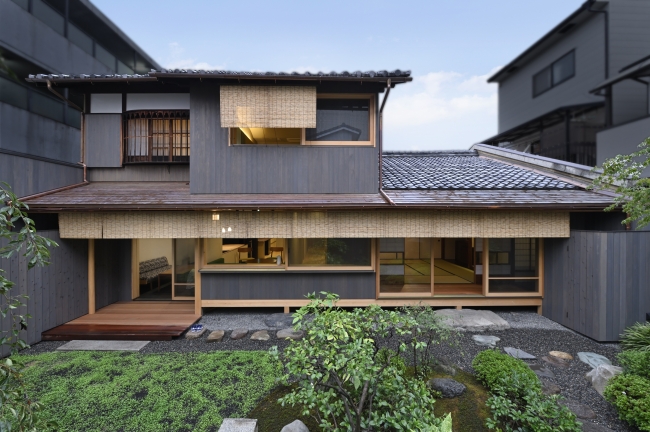
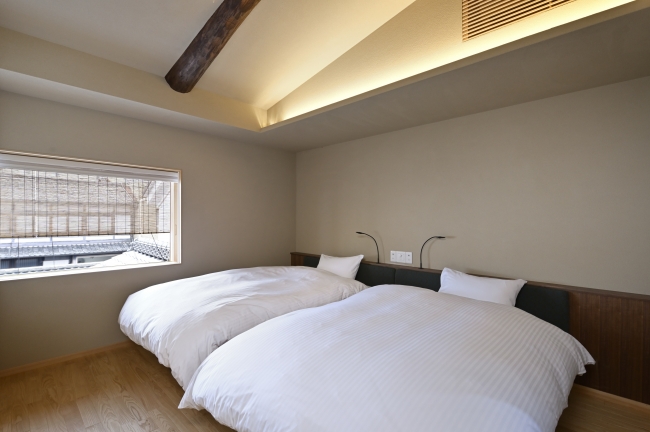
The ground floor has a kitchen and dining room, coffee space, two Japanese-style rooms, a bathroom and a toilet. Upstairs, alongside the bedrooms, are a shower, washbasin and toilet. Two generations can relax in different places and divide evening washing between the floors. If everyone needs to live on one floor, Nishijin Fujita's layout is closer to that need. The villa's separate facilities offer more value when people want their own places to sit, or some want a bath while others only need a shower.
The kitchen has a large refrigerator, a three-burner stove, a grill and a microwave/convection oven. It suits a group that intends to cook. Before shopping, divide a meal into washing ingredients, cooking and setting the table. Give the cooks working space while others sit elsewhere. All eight crowding around the stove wastes the other space a house provides. The official site states that seasonings are not supplied. Buy ingredients and small quantities of seasoning for the meal you actually plan to make.
The villa also has a private garage for two vehicles, with a height limit of 2.0 meters. This suits travelers already planning to drive. On a day when the car stays at the house, eating and walking nearby is also appealing. Choose it mainly for the living space and group size. If parking is the only reason, you may make little use of the extra rooms and kitchen.
Nishijin Fujita: sleeping and daily life on the east wing's ground floor
Nishijin Fujita offers the ground floor of the Fujita residence's east wing as accommodation. Its main bedroom has one small double and one single bed. Futons can be laid in two other Japanese-style rooms, for a total capacity of 9. This is a useful single-floor option: night trips from bedroom to washbasin and daytime meals at the table can all stay on the same floor. Families who need to avoid repeated stair use can start with this layout.
If older relatives need beds while others can use tatami rooms, reserve the two beds for those who need them most, then divide the Japanese-style rooms by waking time. For travelers using walkers or wheelchairs, obtain specific entrance, threshold and bathroom dimensions and agree on assistance. For people who can walk but prefer not to climb stairs daily, ground-floor living is the property's main advantage.
The living room has a refrigerator, microwave, kettle, coffee maker and tableware. There is also a laundry room with washing and drying equipment. The dining page offers options for catered meals, Kyoto cuisine bento and restaurant arrangements. This suits guests who want a full meal indoors without cooking it themselves. Meals should generally be requested with the accommodation booking; requests are accepted no later than one week before dining, and cancellations must be made 4 days beforehand. Arrange this meal before departure.
Staying in a cultural property brings specific house rules. The property rules prohibit placing or dragging suitcases on tatami, require quiet after 9 p.m., and prohibit parties and unregistered visitors. It suits families wanting space during the day and quiet meals at night. If you want friends staying elsewhere to come over for late food and conversation, choose a venue that permits that use.
Nishijin Itsutsuji: beds upstairs and futons downstairs
The official booking page for Shuei Minpaku Nishijin Itsutsuji clearly separates the spaces. The outer entrance and inner corridor are shared. The guest wing's ground floor has a living and dining room, kitchen, two toilets, bathroom, garden and a bedroom with space for up to three futons. Two small double beds are upstairs. Families wanting a common living area while some people sleep downstairs can compare this with Nishijin Villa.
Deal with the stairs first. The property explicitly describes them as steep and calls for care when carrying large or heavy objects upstairs. Adults comfortable with stairs can use the upstairs beds, but still need to go down to leave in the morning and bathe at night. If older relatives use downstairs futons, consider whether they can rise easily from the floor. Anyone needing a bed who cannot manage steep stairs is better served by Nishijin Fujita or an apartment with an elevator.
Itsutsuji supplies an induction cooktop, microwave, refrigerator, cookware, tableware and a washing machine with detergent. Breakfast and a simple meal can be handled at home. There is no cleaning during the stay, and towels and amenities are supplied as one set per person. Longer-stay guests can build laundry into their routine. This service model does not suit those wanting daily housekeeping. Two toilets reduce the morning queue, but bathing still needs an agreed order.
After guests complete the accommodation register, they receive a check-in guide. Door codes are sent three days before arrival and again on the morning of arrival. Have one designated traveler keep the complete messages so the group can follow the guide straight to the guest wing on reaching the lane. Search the map using the full property name, rather than just Itsutsuji, which may lead to a nearby shop.
RESI STAY Nishijin: an elevator and rooms for five
RESI STAY Nishijin has 20 apartment rooms, an elevator and luggage storage, with no meals included. Hina measures 37.95 square meters and Origami 39.40 square meters. Both have two 140-centimeter-wide double beds and one 100-centimeter-wide sofa bed, for up to 5 guests. Two adults sharing with children and four adults each wanting a separate sleeping space will experience this configuration differently.
Mari and Kids Room each measure 43.54 square meters and list two 120-centimeter-wide beds, a bunk bed and a sofa bed, also with a capacity of 5. For five people who prefer to sleep separately, these deserve comparison with the two-double-bed rooms. Two families needing separate bedrooms can book one room each. Separate apartment doors provide more separation than dividing a shared house by tatami room or floor.
Each room has a kitchen, induction cooktop, microwave, washing machine and bathroom drying equipment, so guests can bring food back and do laundry in their room. If a child goes to bed halfway through dinner, everyone else is still active in the same room. That is part of choosing a shared room. If the child needs complete darkness to sleep, resting together or choosing a townhouse with separate bedrooms helps more than adding floor space.
Kids Room retains its climbing wall. The official site announced that the projection game ended on January 14, 2026. Choose this room for its climbing area and beds. If two families each book a room, their kitchen, bathroom and rest schedules can also remain separate. The room manual prohibits unregistered visitors in the rooms or building. Meet visiting relatives and friends elsewhere.
An introduction to the Nishijin property published by RESI STAY, to accompany this section on room layouts.
Count beds separately for four adults and multigenerational families
Four friends unwilling to share beds can start with Nishijin Villa's four beds. If two can sleep on futons, Nishijin Fujita's main bedroom and tatami rooms are another possibility. Two twin rooms at Nishijinso provide separate rooms and freedom to turn in at different times. These choices differ in the amount of shared social space and the privacy you are willing to pay for.
Four adults in Hina or Origami who use only the two double beds will sleep two to a bed. A capacity of 5 may still be unsuitable for friends wanting separate sleeping places. Mari and Kids introduce upper and lower bunks. Assign regular beds to those who cannot climb a ladder, then work out the remaining beds. Count acceptable individual sleeping places, rather than the person icons on a booking screen.
A multigenerational family can sketch the nighttime arrangement: where older relatives sleep, who stays with the children and who returns late. Older relatives downstairs at Itsutsuji must be able to rise from futons. Those upstairs at Nishijin Villa must manage stairs. Fujita's ground-floor layout reduces vertical travel, but allocating its two beds remains central. Agree on this before choosing meals. It is more useful than first choosing a beautiful garden photograph.
Futon space also has a daytime use. An early riser drinking tea in the same tatami room will disturb those still sleeping. Before laying bedding at night, move dishes and luggage to suitable places. A whole house lets people spread out, but everyone must cooperate over furniture and room use, especially when the largest tatami room becomes the family's shared bedroom.
Stairs and changes in floor level shape daily routines
On a townhouse floor plan, connect the sleeping, bathing, toilet and dining areas to see how often you will climb stairs. Nishijin Villa has an upstairs shower and toilet, so upstairs sleepers can stay on that floor at night and go down only to use the bathtub. Itsutsuji places the main washing facilities downstairs. Guests in its upstairs bedroom need to bring clean clothes down with them.
For toddlers who still nap, rooms on different floors also mean caregivers moving between them. If everyone eats downstairs while a child sleeps upstairs, someone must handle supervision and trips between floors. For frequent carrying or companions who often use the toilet at night, prioritize Fujita's single-floor living or RESI STAY Nishijin's elevator.
Luggage handling differs too. Itsutsuji explicitly warns about carrying large, heavy items upstairs. On arrival, open bags on a suitable ground-floor surface, take out what you need that night, and have someone who can safely use the stairs carry a small amount of clothing. At Fujita, keep suitcases off the tatami and avoid dragging them. Group bags on a surface they will not damage. This makes the rooms easier to use and keeps passageways clear.
If a companion cannot cross thresholds at all, specify door width, changes in level, bathroom turning space and transfer assistance. Ground-floor townhouse accommodation reduces stairs, and an elevator reduces travel between floors within a building, but the choice depends on the actual route the guest must use. Ask the property about specific movements. That produces a more useful answer than simply asking whether it is suitable for older people.
Bathrooms: private use, separate facilities and taking turns
A bathroom in a whole-house rental can be used in the group's own order. This suits families with children or those wanting to handle washing together. Nishijin Villa's downstairs bathtub and upstairs shower separate quick showers from baths. Toilets and washbasins on both floors also help eight people get ready in the morning.
Nishijin Fujita accommodates up to 9 guests. Its sleeping arrangements are flexible, but bathroom time is shared. If the whole group wants to bathe within one hour before dinner out, start early. With dinner delivered, those already washed can sit in the living area while others take their turns. In a high-capacity house, the rhythm of meals, hot water and cleaning often affects comfort more than sleeping area.
Itsutsuji has two ground-floor toilets, so others can still use a toilet while someone bathes. At RESI STAY Nishijin, each apartment has its own kitchen and bathroom. Two families booking separate rooms handle washing independently. Five people in one room continue to take turns within it. Instead of comparing total floor area alone, calculate how many morning bathroom rounds your group needs.
Kyoto City's accommodation information updated in 2023 lists Nishijinso's bathrooms for private use. The inn's current facilities page also lists Japanese- and Western-style bathrooms. Consider it if you want inn services instead of maintaining a whole house. Using a bathroom together as a family and each person having a private room bathroom are different needs. Clarify which you want before choosing a small inn, a single apartment or a house.
Three kitchen needs: breakfast, reheating bento or cooking
For morning tea and reheating prepared food, a refrigerator, microwave and dining table cover most tasks. Nishijin Fujita's living and dining space suits setting out purchased food as a meal, and catered meals can be arranged ahead. Dinner need not become a daily family chore. A couple at Nishijinso can simply reserve breakfast and spend the morning preparing to go out.
RESI STAY Nishijin and Itsutsuji's induction kitchens better suit making simple food for children, cooking noodles or frying eggs during a trip. Keep the menu to one pot or plate so shopping, cooking and washing up fit your travel time. If you plan full meals daily, any savings over restaurants depend on package sizes, leftover food and how many people are willing to do the work.
Nishijin Villa's three-burner stove, large refrigerator and cooking equipment are more useful if you deliberately reserve an evening to cook together. Decide who cooks, who washes up and when everyone eats before buying refrigerated ingredients. If arrival day also involves check-in and collecting luggage, make the first meal prepared food or simple reheating, and save a more involved meal for the second night.
The dining location also affects sleeping arrangements. If downstairs tatami rooms need futons at night, put food in the refrigerator, wash dishes and clear the bedding route after dinner. Early sleepers can retire to a separate bedroom while others talk at the table. In an apartment with all sleeping places in one open room, end dinner earlier. A kitchen gives flexible mealtimes and control over food. An agreement on cleaning duties makes the stay comfortable.
Four nights or longer: laundry and cleaning have different rhythms
Differences that are invisible on the first night emerge over four nights or a week. Nishijin Villa and Fujita have washing and drying equipment. Itsutsuji supplies a washing machine and hangers. RESI STAY Nishijin combines an in-room washing machine with bathroom drying. Washing one outfit each for four people differs from washing a full bag of children's clothes in drying time and space. On a longer stay, use the equipment to decide how much luggage to bring.
Kyo no Ondokoro's cleaning information for consecutive nights specifies light cleaning once every 3 nights. Its four-night, five-day example places cleaning on the day of the fourth night, from 11 a.m. to 1:30 p.m. Guests who decline cleaning when booking can stay up to 6 nights without it. If you want a midday nap or to work indoors, eat lunch out on cleaning day. If uninterrupted time in the house matters, include that request when booking.
Itsutsuji provides no cleaning during the stay and one towel and amenity set per person. Guests staying several nights wash used towels themselves and allow drying time. The group also remains responsible for keeping the rooms tidy. RESI STAY Nishijin's manual likewise states that there is no daily cleaning during a stay. Separate recyclable bottles and cans from general waste, then take full bags to the designated outdoor containers.
For longer stays with periodic housekeeping, RESI STAY accepts requests for paid extra cleaning at reception. Extra towel sets cost ¥300 each and contain one face towel and one bath towel; request them 2 days before arrival. If you want to pack fewer changes, compare this charge with doing laundry in your room. Nishijinso has a nearby coin laundry, allowing a laundry trip outside before returning to the inn's regular services.
Babies and school-age children lead to different choices
With a baby, space for a cot and the route for bathing and preparing milk are especially useful. The RESI STAY Nishijin cot page lists ¥4,000 including tax per stay, for newborns from 2.5 kilograms up to 24 months and 13 kilograms. Numbers are limited and advance requests are required. These are Nishijin's own rental conditions. Families choosing an apartment can arrange sleeping places and equipment together.
Toddlers walking independently need adult accompaniment on Itsutsuji's steep stairs. The two upstairs beds also affect where caregivers rest. Fujita keeps daily life on one floor, but children's activities must still follow the cultural property's rules. Earthen walls, tatami and antique furniture suit quiet observation and daily use. Keep luggage and toys in suitable places.
For school-age children interested in bunks and climbing, Mari or Kids at RESI STAY Nishijin offers a different attraction from Hina and Origami's double beds. Choose Kids for its climbing wall and room activity space; the projection game has ended. Play and sleep share one room. Families whose children have very different routines still need to decide when to put toys away, turn off lights and let younger children rest.
Nishijin Villa suits a large family willing to keep childcare and meals in one house. Adults can divide tasks, with one accompanying children downstairs while another prepares food in the kitchen. At night, those needing beds use beds, and those needing extra futons use the tatami rooms. Include children and their bedding in the booking, with charges calculated under the chosen plan, so different assumptions about sleeping do not emerge at the door.
A separate check-in location changes your first-day route
Kyo no Ondokoro requires check-in at The Royal Park Hotel Iconic Kyoto before going to the townhouse. Entry to Nishijin Villa starts at 4 p.m.; checkout is at 11 a.m. Early-arrival and departure-day luggage storage are handled at the hotel's front desk. Stored bags are not delivered to the townhouse, and refrigerated or frozen items are not accepted. On the first day, check in and leave bags, eat near reception, then collect them and head to Nishijin. Buy fresh food when you can take it directly to the refrigerator.
The RESI STAY check-in procedure uses a reception desk in front of Kyoto Station, open from 8 a.m. to 8 p.m. Contact it ahead if arriving after 8 p.m. to obtain the appropriate check-in method. Nishijin rooms allow check-in at 3 p.m. and checkout at 11 a.m. Checkout is self-service at the accommodation, so there is no return trip to reception on departure day. Reception offers a free one-way shuttle to the accommodation daily from 2:15 to 8 p.m. Request it on site after check-in; it follows the vehicles' service order and cannot be reserved ahead. Travelers entering Kyoto through the station with large cases can include this leg in their arrival route.
Itsutsuji uses advance registration, a guide and a door code for entry. If members arrive at different times, keep the information together first, then decide who will take relatives inside. Fujita's rules list check-in from 3 to 7 p.m. and checkout at 10 a.m. It suits an afternoon arrival followed by dinner nearby. If your flight is likely to bring you in late, a property that supports that arrival time is more practical.
For the same three-night stay, check-in may affect only the first day but still determines luggage handling, meals and how much of the first evening you spend at the property. Travelers arriving from another city at night can put a townhouse requiring earlier arrival later in the trip and initially stay near a transport hub. If you want no hotel changes, choose a candidate that accommodates the arrival arrangements for the whole trip.
Put guests, meals and cancellation terms in the same booking plan
Before splitting the cost of a house, agree on sleeping places, meals and shared expenses. If eight people plan to share and one family withdraws, those keeping the same house must absorb a different share. Adjusting two apartment rooms or inn rooms works differently. First consider how stable the group is, then compare quotes for the same dates, number of people and meals.
Fujita's official rates page directs current cancellation conditions to the selected booking screen. RESI STAY also uses different policies by plan. Save the plan name, cancellation deadlines and charges for reducing the group or leaving early when booking. The organizer can then explain them directly to everyone. Catered meals have separate request and cancellation deadlines. Adjust that meal too when changing the accommodation.
Some properties restrict entry according to how the space is used. Nishijin Villa generally admits only registered guests; Fujita also prohibits unregistered visitors and parties. Itsutsuji prohibits pets and sources of fire on the premises. Quiet family dinners and friends retiring to their own rooms fit these rules easily. For entertaining guests or holding an event, choose a venue and plan intended for that purpose.
A few useful answers
Where should four adults stay if each wants a bed?
Start with Nishijin Villa's four small double beds, or book two twin rooms at Nishijinso. RESI STAY Nishijin's Hina and Origami have two double beds and a sofa bed, while Mari and Kids have regular beds and bunks. The sleeping arrangements differ.
Which option suits older relatives who want to avoid repeated stair use?
Fujita's accommodation is on the east wing's ground floor and suits single-floor living. RESI STAY Nishijin has an elevator. Allocate beds first to those who need them. For wheelchair or walker users, ask the property to address door widths, changes in floor level and bathroom transfers individually.
Does a Nishijin whole-house rental work for a week?
Choose by laundry equipment and cleaning arrangements. Nishijin Villa has washing and drying equipment and light cleaning every 3 nights. Itsutsuji has no cleaning during the stay and supplies one towel and amenity set per person. RESI STAY Nishijin has an in-room washer and bathroom drying.
Does RESI STAY Nishijin's Kids Room still have the projection game?
The projection game ended on January 14, 2026. The climbing wall, bunks, kitchen and bathroom facilities remain the room's main features.
Official information and references
Sources used in this guide.
- Yadoya Nishijinso: rooms
- Yadoya Nishijinso: facilities
- Yadoya Nishijinso: access
- Kyo no Ondokoro: Nishijin Villa
- Kyo no Ondokoro: cleaning for consecutive stays
- Nishijin Fujita: room layout
- Nishijin Fujita: meals
- Nishijin Fujita: house rules
- Nishijin Fujita: booking and cancellation entry
- Nishijin Itsutsuji: official accommodation and house rules
- RESI STAY Nishijin: rooms and equipment
- RESI STAY Nishijin: baby cot
- RESI STAY: check-in and plan-specific cancellation
- RESI STAY Nishijin: official room guide
- Kyoto City: Nishijinso accessibility information, updated 2023