A first-timer's guide to choosing hotels in Kobe by Sannomiya station exits, walkable Motomachi and the Former Foreign Settlement, and the distinct shores of Harborland and Meriken Park. Compares harbour-view orientations, triple and quad bed layouts, airport and Shinkansen connections, and booking plans for one-night, two-night and Arima Onsen stays.
- Region & Focus
- Kobe
- Reading Scope
- 24 min read · 11 chapters · 6 Q&As
- Official Verification
- 29 official sources checkedUpdated 22 November 2026 at 08:00 GMT+8
- Key Topics
- Where to stayNeighbourhoodsBooking
Chapter Route Map (tap any stop)
- One City Centre, Four Station Landmarks to Pin Before Booking
- Check Your Gate in Sannomiya: Different Starting Points for Early Flights and the Shinkansen
- Which Side of Motomachi You Choose Decides Where You Walk for Dinner
- Pick Your Shore on the Waterfront: Keep the Ferris Wheel and Port Tower Separate
- Sannomiya Bus Stops Sound Alike: Follow Your Hotel's Access Map for Shuttles
- Booking for Three or With Children: Count Every Bed Before You Book
- Compare Total Trip Cost, Factoring In Early Starts and Luggage Transfers
- For Light Festivals or Mountain Night Views, Decide Your Return Time First
- Travelling with Children or Older Relatives: Choose an Area You Can Return to Midday
- Arima Onsen: Day Trip vs Overnight Stay — and How to Pick a Stop on Awaji Island
- When Booking Just One Night, Put Your Hotel Where Day Two Still Uses It
- Quick Q&A
For a first stay in Kobe, choose Sannomiya if you have an early train or flight the next morning, Motomachi if you want to linger around Nankinmachi and the Former Foreign Settlement past dinner, or the waterfront if you want a waterside stroll and harbour views from your room. When nightly rates are similar, weigh up your hotel's exact entrance, your final stop at night and your first departure the next day. Even hotels labelled Kobe-Sannomiya differ on the ground: some connect directly to the Hankyu ticket gates, while others sit closer to the Subway Kaigan Line. On the waterfront, too, the two sides are distinct — Kobe Port Tower and the Ferris wheel stand on opposite shores, changing both your nearest station and the direction your window needs to face.
One City Centre, Four Station Landmarks to Pin Before Booking
Zoom out your map until you can see Shin-Kobe, Sannomiya, Motomachi and Kobe Station all at once. Shin-Kobe sits towards the mountains and is where the Sanyo Shinkansen stops. Sannomiya is a cluster of stations connecting westwards to Motomachi and down towards the sea to the Former Foreign Settlement and Meriken Park. Further southwest lies Harborland, served by JR Kobe Station and Harborland Station on the Subway Kaigan Line. Before writing "Kobe Station" in your itinerary, write out the full operator and station name — and use that exact name with anyone travelling with you. Auto-translation in messaging apps easily blurs Kobe Station, Shin-Kobe Station and Kobe-Sannomiya into one.
For a one-night stay, the walk into and out of your hotel matters more than daytime sightseeing. Once you drop your bags, strolling and browsing between Sannomiya and Motomachi is effortless. On check-out morning, dragging suitcases across busy roads while hunting for step-free entrances makes that exact same stretch far slower. If you have an intercity departure before 09:00, start from that train's platform and trace the route backwards to your hotel. If your next morning is unhurried and the evening is the main event, work backwards from where you want to end up after dinner.
For a two-night stay with a full day in the city, keeping the same room throughout is usually best. You can drop your bags and head to the waterfront on the first evening, explore Kitano or the outskirts the next morning, and return to rest in your room. If you are thinking of switching to a harbour-view hotel for the second night, map out the two check-outs, bag drops and collections first. Changing hotels only really pays off if you will spend an afternoon or a full evening enjoying the new room.
When comparing options on a map, pin two shortlisted hotels: one right by your most convenient station exit, and another close to dinner or your main sights. Note down any stairs, exposed stretches in the rain, and whether you would need a shuttle bus. If the pricier hotel only saves you a routine flat walk, the cheaper one usually wins. If it spares the whole family hauling suitcases through two early-morning transfers, do the maths again.
| Area | Best suited for | Pin on the map first |
|---|---|---|
| Sannomiya | Kobe Airport, trains to Osaka or Himeji, transfers to Arima Onsen | The exact railway line you will ride and the hotel entrance |
| Motomachi / Former Foreign Settlement | Nankinmachi, shopping arcades, evening strolls and dinner in the Former Foreign Settlement | JR/Hanshin Motomachi or Subway Kyukyoryuchi-Daimaru-mae |
| Meriken Park | Kobe Port Tower, Kobe Maritime Museum, pier-side waterfront hotels | Hotel shuttle stops or Subway Minato-Motomachi |
| Harborland | umie, MOSAIC, Kobe Anpanman Children's Museum | JR Kobe Station Central Exit and underground passages |
| Shin-Kobe | Early Sanyo Shinkansen departures or the Nunobiki area | Lift and escalator connections between the Shinkansen gates and hotel entrance |
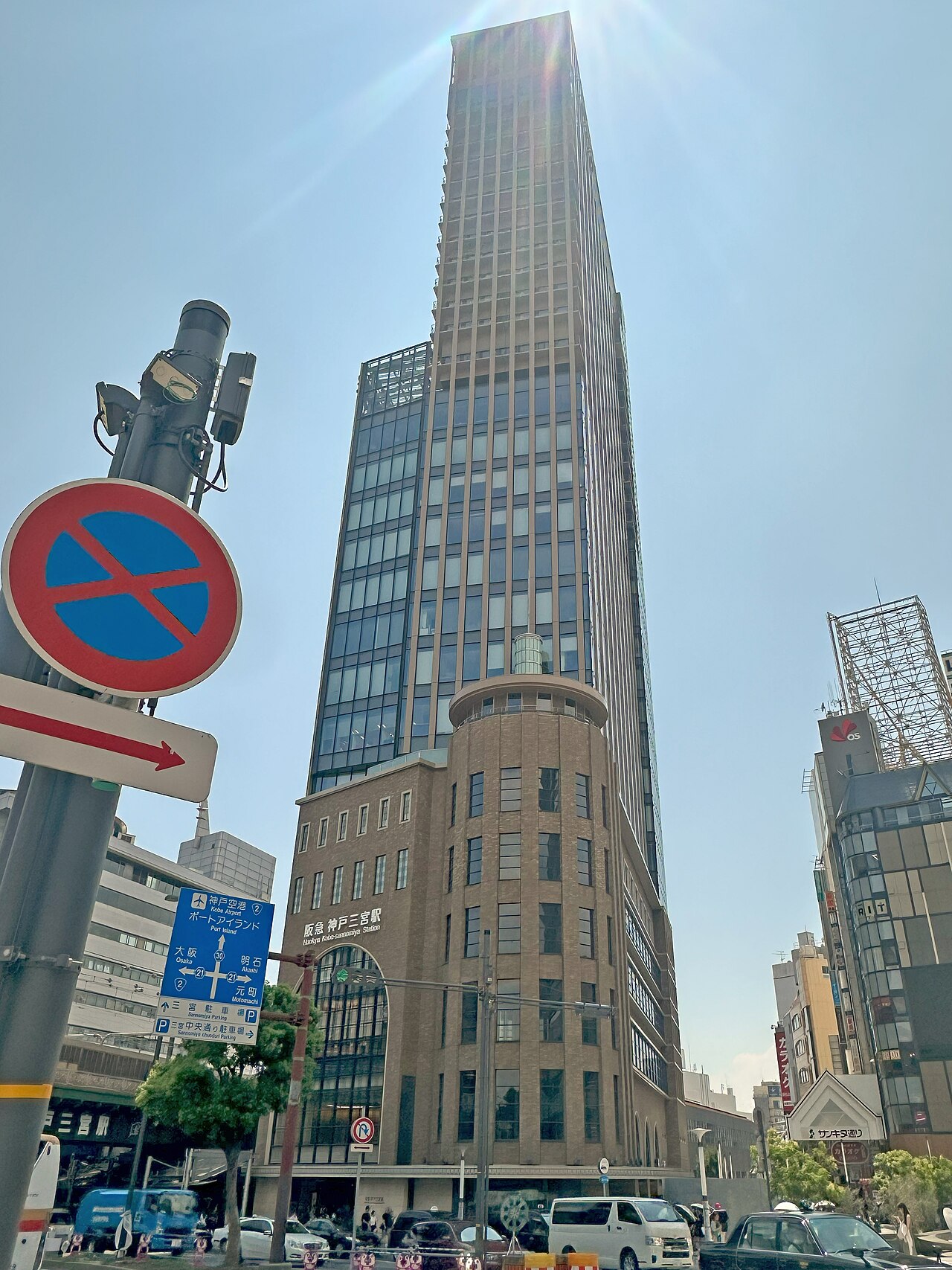
A first-timer's guide to choosing hotels in Kobe by Sannomiya station exits, walkable Motomachi and the Former Foreign Settlement, and the distinct shores of Harborland and Meriken Park. Compares harbour-view orientations, triple and quad bed layouts, airport and Shinkansen connections, and booking plans for one-night, two-night and Arima Onsen stays.
Check Your Gate in Sannomiya: Different Starting Points for Early Flights and the Shinkansen
Station names differ by operator: JR signs it as Sannomiya, Hankyu and Hanshin each operate separate Kobe-Sannomiya stations, while the Port Liner and the Municipal Subway Seishin-Yamate Line use Sannomiya. The Subway Kaigan Line also has its own Sannomiya-Hanadokei-mae Station. If you ride Hanshin from Osaka-Namba, you arrive underground; if you take a JR Special Rapid from JR Osaka Station, look for the JR ticket gates. Heading towards Himeji with large suitcases, check Special Rapid services from JR Sannomiya and save the lifts and exits you need beforehand using JR West's current station layout map.
remm plus Kobe Sannomiya is a textbook example of what "direct station access" really means. Its official access page illustrates separate step-by-step routes from the Hankyu Kobe-Sannomiya East Gate and the JR Sannomiya West Exit, plus walking paths from the other lines. If you arrive on Hankyu, save the Hankyu set of diagrams to your phone rather than waiting until you exit Hanshin's East Gate to follow them. When another hotel advertises "3 minutes on foot from Sannomiya", apply the same check to see which exact exit those three minutes are measured from. If you have a pushchair, switch the whole route to lift-only access and compare the two options on the map.
Your late-evening route back does not have to match your arrival route. If you plan to eat around Sannomiya Center Gai and walk back, save both the restaurant and your hotel entrance, along with the pedestrian walkways or crossings over the railway tracks. For rooms beside the tracks or a main road, light sleepers should request a room facing away from the rails and well away from the lifts, checking recent guest reviews to see which aspect is quieter. On a standard one-night stay, a good bed and quiet sleep count for far more than the view out of the window.
On the Port Liner to Kobe Airport, the scheduled journey from Sannomiya to Kobe Airport Station takes roughly 18 minutes and costs ¥340 for a single adult fare. Make sure the train's destination clearly reads Kobe Airport, as Sannomiya also dispatches services towards Kita-Futo and other stops. Factor in the walk from your hotel to the station, platform wait time and terminal check-in. If friends are staying at a different hotel, meet right at the Port Liner Sannomiya ticket gate and share that exact entrance pin.
Sanyo Shinkansen trains depart from Shin-Kobe. Staying in Sannomiya means taking the Municipal Subway Seishin-Yamate Line one stop to Shin-Kobe the next morning, so allow extra minutes to find lifts both entering and transferring. If you arrive late and face an early Shinkansen departure, booking directly around Shin-Kobe cuts out that early-morning change. If you plan to visit the Kitano Ijinkan historic houses, leave large bags behind before tackling the uphill lanes; for hotels tucked into residential streets in Kitano, check where a taxi can easily drop you off after dinner. For mountain-side outings, see our guide to visiting Kobe Nunobiki Herb Gardens up and down the slope.
Which Side of Motomachi You Choose Decides Where You Walk for Dinner
If you have two nights and want to explore central Kobe on foot, draw your search radius south of JR and Hanshin Motomachi Station, extending towards Nankinmachi and the Former Foreign Settlement. Staying closer to Motomachi Station makes JR and Hanshin transfers straightforward, with covered shopping arcades leading straight to Nankinmachi by day. Staying around Kyomachi and the Daimaru department store makes it easy to walk down from southern Sannomiya through the Former Foreign Settlement, stroll out to Meriken Park and loop back. Navigating this district by historic blocks, arcades and restaurants shows a hotel's real convenience far better than a broad search for "central Sannomiya".
Motomachi Station, Minato-Motomachi Station and Kyukyoryuchi-Daimaru-mae Station are separate stations on different platforms. Use the latter two for the Subway Kaigan Line, and pick between JR or Hanshin at Motomachi depending on your train to Himeji or elsewhere in Kansai. When a hotel lists several nearby stations, save both an arrival route with bags and a post-dinner walk back on your phone. In rainy weather, follow the covered shopping arcade as far as it goes and turn out at the closest corner to your hotel: when carrying an umbrella, shopping bags and luggage, avoiding an extra street crossing is worth more than shaving off 100 metres.
One property whose name frequently trips up searches sits at 25 Kyomachi, Chuo-ku. Formerly known as Oriental Hotel Kobe, it rebranded as THE ORIENT on 1 February 2026. If an older blog mentions Oriental Hotel Kobe, verify the street address on your map. Located in the heart of the Former Foreign Settlement, its Oriental Floor room listings distinguish between harbour-facing Harbor View rooms and Rokko-facing City View rooms. By contrast, Kobe Meriken Park Oriental Hotel at 5-6 Hatobacho is a completely separate waterfront property down by the pier. If friends are booking individually, share both the hotel name and full address — especially if you are arriving at different times.
If you already have a Kobe beef dinner reservation, factor the easy walk back to your hotel into the room rate in this district. You can stroll the Former Foreign Settlement in the morning, eat in Nankinmachi at midday, drop off shopping bags or heavy coats at your room, and head out in a fresh direction after dark. If you want a long spell admiring the waterfront lights, book an earlier dinner and walk straight down to the harbour afterwards. Anyone catching a bus to Arima with suitcases the next morning is better off doing any shopping the afternoon before check-out so you can head straight to your designated Sannomiya bus stop.
Pick Your Shore on the Waterfront: Keep the Ferris Wheel and Port Tower Separate
For the Harborland side, JR Kobe Station or Harborland Station on the Kaigan Line usually works best. From JR Kobe Station's Central Exit, follow the Hamate underground passage through Duo Kobe and take the appropriate exit towards umie, MOSAIC or the Kobe Anpanman Children's Museum. Those travelling with a pushchair or large suitcases should check the official Harborland underground route map first, as it marks lifts and exits clearly. If meeting friends for dinner, name a specific shopping-centre entrance rather than a station so half your group is not underground while the other half is already out by the water.
The Meriken Park shore puts you beside Kobe Port Tower, the Kobe Maritime Museum and the waterside promenade. Choose this side if stepping straight out of your hotel towards the tower is the main appeal. Remember to account for the exposed final stretch on foot if you walk down from Motomachi or take the Kaigan Line. In windy or wet weather, when wheeling two suitcases, or after a late night out, check hotel shuttles and sheltered drop-off entrances in advance. For families making the Anpanman Museum the centrepiece of a two-day trip, staying on the Harborland side itself makes midday naps, outfit changes and mealtimes far easier.
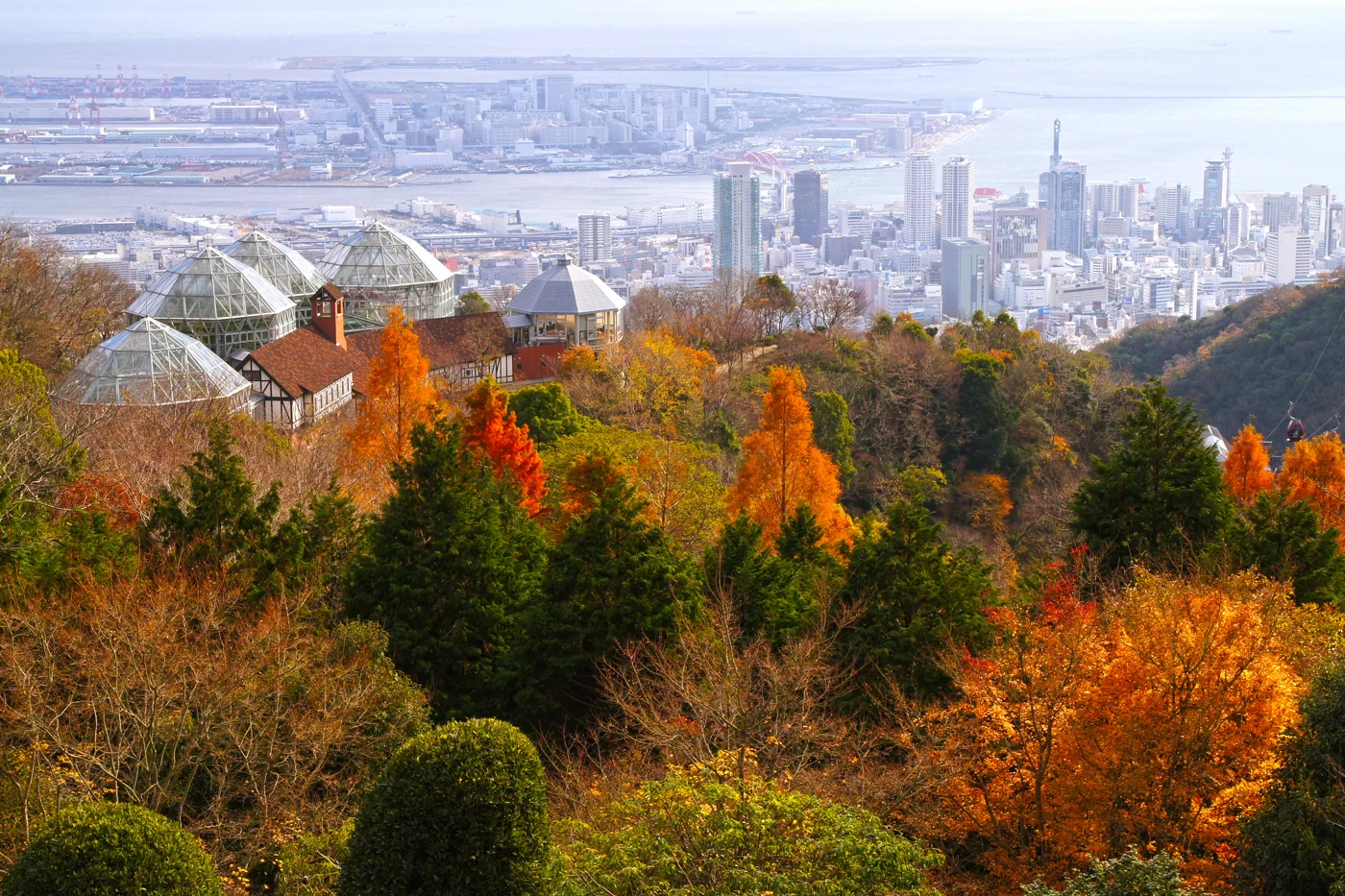
Take Kobe Meriken Park Oriental Hotel's official four-aspect view guide as a benchmark: west-facing rooms look towards the Harborland Ferris wheel, north-facing rooms frame Kobe Port Tower and the Maritime Museum, east-facing rooms look out to Kobe Bridge and the far side of the harbour, and south-facing rooms open onto the sea. Even under the single label "harbour view", wanting to photograph the tower, the lit-up Ferris wheel or unobstructed water sends you to completely different room categories. Never book on a glossy night-view hero shot alone — filter the available room list by the exact orientation you want.
If you hope to see the harbour right from the bed, inspect floor plans and interior photos for that exact category to see whether the window sits at the foot or side of the bed, or only opens cleanly from the balcony. For older relatives who want to sit comfortably indoors looking out at the sea after dinner, a table, chairs and full-height glazing matter more than balcony size. Where room specs combine indoor and balcony floor area, remember you pack and unpack in the former: for example, a Standard Double West View on the 8th or 9th floor at the same hotel starts at 25.1 sq m total, comprising from 21.1 sq m indoors and 4.0 sq m of balcony. Compare the indoor figure across room types to see how much space remains once your suitcases lie open.
If you will only reach the hotel in time to sleep, save the views for a morning walk along the promenade before breakfast. Spend extra on a guaranteed aspect only if you plan to unwind in the room during the afternoon, stroll out to dinner and come back to enjoy the illuminated skyline — and make sure the facing direction is stated in both the room title and your booking confirmation. If your group wants two rooms sharing the same view, book the exact same room category, then contact the hotel together with all reservation numbers to request rooms on the same floor or next door.
Sannomiya Bus Stops Sound Alike: Follow Your Hotel's Access Map for Shuttles
If you are staying on the waterfront and relying on a hotel shuttle, look up its exact Sannomiya boarding bay beforehand. Kobe Meriken Park Oriental Hotel boards at Bay 8 of the Sannomiya Bus Terminal on the ground floor (1F) of M-INT KOBE — a bay shared by several hotels, so check the hotel name on the coach side before loading your bags. The regular Sannomiya route runs daily, while the Shin-Kobe route operates on Saturdays, Sundays and public holidays; the hotel also states that its holiday timetable via Shin-Kobe will apply from 26 December 2026 to 3 January 2027. Travellers visiting over New Year can plan directly from that timetable, and anyone dropping bags at reception first can time their arrival around the shuttle schedule.
Medium- and long-distance bus stops around Sannomiya remain split across several sites, so follow your specific operator's map to distinguish between the Sannomiya Bus Terminal and the Shinki Bus Kobe Sannomiya Bus Terminal printed on tickets. A new terminal under construction around Kumoidori 5-chome — officially named Busta Kobe Sannomiya — will operate alongside the existing M-INT KOBE ground-floor terminal, with the city still targeting December 2027 for Phase 1 completion as of October 2026. For current trips, note down the exact terminal name, floor and bay number on your ticket, and update your pins only once live timetables move to the new complex.
For Kansai Airport limousine buses, check the Kobe-Sannomiya stops on the Kansai Airport Transportation Kobe Line timetable. On your return trip, verify whether your flight uses Terminal 1 or Terminal 2 and work back from check-in cut-off times. Staying in Sannomiya saves dragging luggage after disembarking and waiting for an onward connection. If you have booked a waterfront hotel, whoever arrives first can leave bags at reception and advise the rest of the party whether to catch the hotel shuttle or take a taxi straight from Sannomiya.
If you are considering the Kobe-Kanku Bay Shuttle high-speed ferry, check the timetable against your flight's landing time. The advertised sea crossing takes roughly 30 minutes, with dedicated shuttle buses linking the airport terminals to the pier, followed by an onward transfer from Kobe Airport into town. Because discounted ferry tickets for overseas visitors were discontinued on 30 June 2026, compare costs using current standard fares. If you want to book dinner on your arrival night, add up every leg of this journey first and choose a later sitting — or schedule that meal for lunch the next day.
Booking for Three or With Children: Count Every Bed Before You Book
For two adults sharing a room in separate beds, open the Twin room specs and check each bed's exact width. At remm plus Kobe Sannomiya, the 26 sq m Twin comes with two 110 × 195 cm beds, a bathtub and a separate toilet and bathroom. This layout works well when two people need the toilet and bath at the same time; use the room gallery to inspect the bathroom and entrance door placement. If one guest rises early while the other sleeps on, check the floor plan to see which bed sits further from the hallway entrance.
When three adults share one room, check the third bed's length before looking at overall floor space. At Daiwa Roynet Hotel Kobe Sannomiya PREMIER in Sannomiyacho, Chuo-ku, the 27.2 sq m Moderate Twin accepts three guests using a 97 × 181 cm extra bed, whereas the 45 sq m Triple fits three guests with 110 × 203 cm beds. If the third adult is close in height to an extra bed's length, or all three are travelling with full-size suitcases, put the Triple rate side by side with the total cost of two doubles. Note that the hotel's Relax Twin — also 27.2 sq m — sleeps at most two, so running your initial search for three adults avoids wasted clicks.
For four guests, examine the exact bed configuration too. At the same PREMIER hotel, the 48 sq m Four room pairs two permanent beds with two extra beds. Splitting into two separate rooms gives you a second bathroom, which makes all the difference when everyone gets ready together in the morning, if someone snores, or if a toddler needs a quiet nap space. When travelling with young children across two rooms, assign at least one adult to each room before booking and ask the hotel about adjoining or connecting doors.
Always enter children's exact ages when checking bed-sharing rules. Under this PREMIER property's policy, eligible room types allow one child of primary-school age or younger (up to 12 years old) to share an existing bed free of charge per bed, with meals billed separately. However, if a Twin room is booked at a single-occupancy rate with a bed-sharing child, the hotel charges the two-adult rate instead. Free cots are limited by room type and availability, restricted to babies under one year old who cannot yet stand, and must be requested in advance. Put every requirement that could affect your rate — whether a child needs breakfast, their own bed or pushchair space — into your booking enquiry before paying.
If someone in your party uses a wheelchair or cannot step over a high bath rim, open the hotel's official Universal Room floor plan while comparing rates. Trace the path step by step: from drop-off bay to lobby, lift to room door, and bedroom to toilet and shower. If lateral transfers are required, send the wheelchair's width and turning radius to the hotel to ask for clear doorway widths and bathroom layouts, leaving a few days before any free-cancellation deadline for their reply. Families bringing a pushchair to Harborland can narrow that checklist to lifts, bath access and where a folded pushchair fits inside the room.
Compare Total Trip Cost, Factoring In Early Starts and Luggage Transfers
Search with the exact check-in dates and headcount, then open two browser tabs to log the tax-inclusive totals. Check the final checkout breakdown to confirm whether rates are per person or per room, how many breakfasts are included, and whether extra beds or child meal supplements are charged separately. Often, two seemingly identical non-smoking twins differ in price simply because one carries an earlier cancellation cut-off. Put both the date and JST deadline on your calendar, and hold off on non-refundable rates until headcounts, flights and companions are locked in.
Suppose two travellers attend an evening waterfront event in Kobe and head to Himeji the next day. A night at a Kobe waterfront hotel costs ¥5,000 more than a refundable double room in Osaka. Staying in Kobe saves two train journeys — back to Osaka that night and through Kobe again the next morning — say ¥1,800 in fares. If you would also have spent ¥2,000 getting to the station after the event, walking straight back to a waterfront hotel cuts the real price difference to ¥1,200. Plug your own travel dates, train fares and cancellation terms into that equation. Note that if the Osaka booking is already non-refundable, that sunk cost remains in both scenarios, so adding a Kobe room means paying its full price on top.
Work backwards from your first commitment the next morning to decide if hotel breakfast is worth adding. Before an early flight or Shinkansen, compare the restaurant's opening time against your departure time before opting for a room-only rate. If you plan a leisurely morning overlooking the harbour before check-out, dining hours and a harbour-facing restaurant matter more than shaving a small discount off between booking platforms. In larger groups, check children's breakfast charges up front so a free bed-sharing deal does not turn into an unexpected bill at breakfast.
If you are checking out of Osaka for one night in Kobe before returning to Osaka, ask whether your next Osaka hotel accepts overnight bag storage — and make sure its location sits cleanly on your return route. When packing a small overnight bag for Kobe, keep essential medicines, chargers and travel documents with you. If you are continuing on to Himeji or flying out of Kobe Airport, leaving large suitcases back in Osaka forces an unnecessary detour; instead, use left-luggage lockers on arrival in Kobe or arrange courier delivery to your next stop.
If you plan to do laundry over a multi-night stay, inspect the room facilities and floor directory before booking. An in-room washer-dryer saves repeated trips up and down corridors late at night compared with shared coin-operated laundry rooms. Parents who warm up children's food should also check which floor has a microwave and how spacious the room fridge is. In Motomachi or Sannomiya, picking up breakfast items on the walk back after dinner gives you much more flexibility the following morning.
For Light Festivals or Mountain Night Views, Decide Your Return Time First
Dates for the 32nd Kobe Luminarie in 2027 are confirmed for 29 January to 7 February across Meriken Park, Higashi Yuenchi Park and the Former Foreign Settlement. Access to the main illuminated installation inside Meriken Park's paid zone requires a timed-entry special viewing ticket for a specific date and slot. If you are staying overnight specifically for Luminarie, secure an evening with ticket availability before comparing refundable hotel rates. For older relatives who feel the cold, staying on the south side of Sannomiya or near Motomachi makes walking back from Higashi Yuenchi Park or the Former Foreign Settlement quick and easy; if you hold Meriken Park entry tickets, a hotel closer to that shore gives you welcome breathing room between dinner and your entry slot. For moving between venues and evening events, pair this with our guide to Kobe's waterfront and event evenings.
If you want to visit Mount Maya's Kikuseidai viewpoint, check the return departure times from Hoshi-no-Eki Station before locking in a late dinner reservation. The Maya View Line links the Maya Cable Car and Maya Ropeway with a transfer at Niji-no-Eki Station, and you still have to travel back into central Kobe once down the mountain. On that evening, it is far more practical to book somewhere effortless to reach from the station — or close to late-night dining in Sannomiya — and save your pricier harbour-view room for a night when you will actually sit by the window.
Keep two conditional winter dates in mind. The Maya View Line operator has announced special evening services on 29 and 30 December 2026 and 2 and 3 January 2027, with the final descent from Hoshi-no-Eki Station at 19:50. Both the Maya Cable Car and Maya Ropeway will close for annual maintenance from 12 January to 19 March 2027 — overlapping directly with the 2027 Luminarie dates. Visitors arriving during that closure can skip Mount Maya altogether, keep their post-dinner night views along the waterfront and visit Nunobiki or Kitano by day.
Even outside festival weeks, it pays to separate sightseeing views from dinner plans. Two companions flying into Kobe can check in, drop bags and eat before taking an easy stroll from the hotel towards the harbour — or, if arriving late, just walk as far as the first spot where the waterfront lights come into view. Conversely, if you will spend most of the next day in Himeji or Arima, do not pay extra for a harbour-view room that sits empty until midnight; save rooms with lounge seating for an evening when you arrive well before dusk.
Travelling with Children or Older Relatives: Choose an Area You Can Return to Midday
With young children visiting the Kobe Anpanman Children's Museum & Mall, staying on the same Harborland shore makes meals and naps straightforward. From 1 April 2026, dated online tickets go on sale 28 days before the visit date and can be cancelled free of charge until 08:59 JST on the morning of entry. To catch an early slot without delay, drop your suitcases at the hotel first if morning storage is available, leave bag check-in until afternoon, and park your pushchair in the designated area beside the museum ticket booth before heading inside.
Families based in Sannomiya who only want half a day in Harborland can treat it as one self-contained outing, keeping shopping, lunch and the waterfront on the same shore. In bad weather, follow the underground walkways from JR Kobe Station and eat as soon as you come up to street level. If harbour views matter to the adults, one parent can take tired children back to the room early on one evening while you all enjoy the park together the next day; scheduling sit-down restaurants for lunch keeps evenings flexible for casual local spots, food halls or simple snacks back in the room.
When someone in the group walks at a gentler pace, choose spots with seating as your meeting points. In Motomachi, stroll through the covered arcade to a cafe in the Former Foreign Settlement: those with energy to spare can continue down towards Kobe Port Tower while anyone heading back to the room has a short, simple return walk. If you arrive at Shin-Kobe with luggage, do not tackle the steep Kitano slopes on the way into town — drop your bags at the hotel first and head back up unencumbered. For crossing between shores, rely on hotel shuttles or budget for a short taxi ride to save energy for the sights you actually want to explore.
On family trips of two days or longer, deliberately build in a mid-afternoon return to the hotel. Coming over from Osaka on day one, you can drop your bags, browse Nankinmachi, check in for an afternoon rest and walk down to the waterfront refreshed. If rain hits or someone flags on the second morning, keeping the same room lets everyone linger comfortably. For that pace of trip, it pays to spend extra on practical room comfort — three permanent beds, easy bathroom access or a hallway big enough to keep a pushchair open.
Arima Onsen: Day Trip vs Overnight Stay — and How to Pick a Stop on Awaji Island
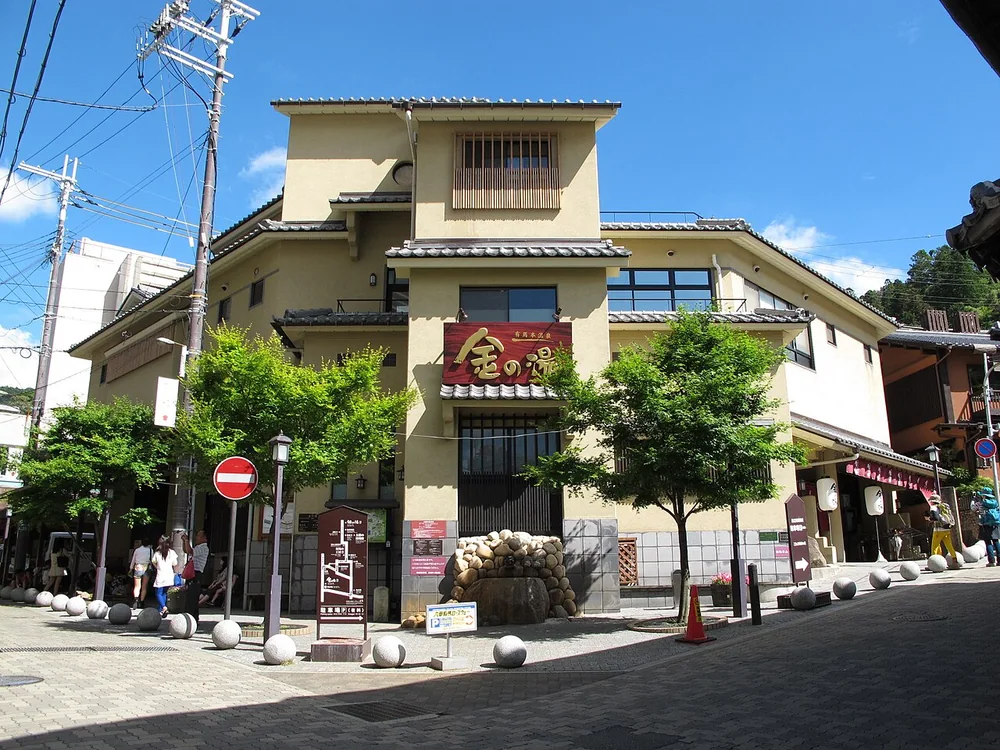
If you simply want a soak in the iron-rich Kin-no-Yu golden waters and a stroll through the hot-spring lanes, keep your hotel in Sannomiya or Motomachi and visit Arima as a day trip before returning to Kobe for dinner. By train from Sannomiya, ride the subway to Tanigami and transfer onto the Kobe Electric Railway via Arimaguchi to Arima Onsen Station. If taking a direct express bus, save the exact boarding stop and plan your return around that operator's timetable: buses involve less walking on the way up, while the railway avoids road traffic on the way back. Note that several ryokan lie up steep slopes from Arima Onsen Station, so ask your property about pick-up arrangements and meeting points before arriving with large bags.
Moving to Arima for the night makes sense when you want the full sequence: evening baths, a ryokan multi-course dinner and an unhurried morning soak. Before booking a half-board plan, check the latest dinner seating. At Arima Grand Hotel, for instance, dinner plans require you to start your meal between 17:30 and 20:00 JST, with no dinner service possible after 20:00. Anyone travelling on a late connection should move the Arima stay to the next night or choose a rate with alternative dining. Also keep the bathing tax separate in your budget: Kobe City levies a ¥150 per-person, per-night hot-spring bathing tax on eligible stays, with exemptions including children under seven. To compare public bathhouses and overnight stays, see our guide to Arima Onsen day trips and overnight stays.
The Rokko-Arima Ropeway connects Rokko Sancho Station with Arima Onsen Station, whereas Mount Maya's Kikuseidai uses a different route. If you plan to take in the Mount Rokko viewpoints before checking into a ryokan, line up the summit bus connections, the last ropeway departure towards Arima and your ryokan's shuttle pick-up before setting out. Travelling with two large cases and a pushchair, store or forward heavy bags first so you can cross Mount Rokko light. For a straightforward weekend soak and dinner in Arima, taking the train or direct bus from Sannomiya straight into the hot-spring town is all you need.
Awaji Island lies in the opposite direction. Highway buses run from Sannomiya to Awaji Island and Sumoto: choose your hotel first, confirm the nearest stop where your express bus actually calls, and check the walking route from there. If an island transfer is needed, save both the local bus return timetable and hotel shuttle schedule in advance. Travelling by public transport works best when you stay in a single hub — such as spending one night around Sumoto — rather than squeezing in sights at the far end of the island the same evening. If you already have dinner booked in Kobe, visit Awaji as a separate day trip the next day, leaving a generous buffer for the return coach.
When Booking Just One Night, Put Your Hotel Where Day Two Still Uses It
Arriving from Osaka with plans to browse Nankinmachi, dine nearby and wander down to the harbour, Motomachi makes an ideal base. Drop your bags early if you arrive ahead of check-in, stroll down to Meriken Park, and head to Sannomiya or JR Motomachi after breakfast the next morning. If you would rather watch dusk settle from your bedroom window, book a properly oriented waterfront room instead and pair it with one short waterside walk. Either approach clusters your check-in and evening around one neighbourhood instead of crisscrossing the city after dark.
If you fly into Kansai or Kobe Airport by day and head to Himeji the next morning, choose a Sannomiya hotel by working back from the exact JR gate you need on day two. Store your bags near the station on arrival, head light to Motomachi for a meal, and walk down to the harbour if you arrive early enough. The next day, once you board with your luggage and stop first at Himeji Castle, plan your route using our guide to Himeji Castle and Koko-en Garden. If you are moving on to further cities afterwards, check which station you depart from last so bulky bags only travel in one direction.
If you only plan a daytime visit to Kobe and can easily take the same railway line back to Osaka that evening, leaving your luggage in your Osaka hotel is by far the simplest option. Staying overnight in Kobe earns its keep when dinner, a light festival or mountain night views naturally run late. Once you decide to stay, hold a refundable room first before booking restaurants, event slots and trains; after your timed tickets are confirmed, double-check your hotel entrance against your final walk of the night and cancel any backup bookings you no longer need.
A few useful answers
For a first trip to Kobe, is it more convenient to stay in Sannomiya or Motomachi?
Choose Sannomiya — and check the exact station exit — if you are catching a JR train, the Port Liner or an Arima Onsen connection the next morning. Stay south of Motomachi Station or in the Former Foreign Settlement if your priority is Nankinmachi, Motomachi Shopping Street and central dining.
Which room type should I book to see the Kobe Ferris wheel from my hotel?
At Kobe Meriken Park Oriental Hotel, book a west-facing West View room as listed on its official website; for views of Kobe Port Tower, look for a north-facing room. For other waterfront hotels, always check their individual floor and aspect view guides.
Is there a free shuttle bus from Shin-Kobe Station to Kobe Meriken Park Oriental Hotel?
Yes, typically on Saturdays, Sundays and public holidays, and the hotel has announced that its holiday timetable via Shin-Kobe will run from 26 December 2026 to 3 January 2027. On regular weekdays, take the hotel's daily shuttle via Sannomiya or take a taxi directly.
How do three adults sharing a room in Kobe find a third bed that is long enough?
Search for three adults from the start and check the third bed's dimensions in the room specs. At Daiwa Roynet Hotel Kobe Sannomiya PREMIER, the Moderate Twin uses a 181 cm extra bed, whereas the Triple provides 110 × 203 cm beds. Comparing the cost of two separate rooms is also worthwhile.
Is it better to stay in Sannomiya or Arima Onsen for hot springs?
Stay in Sannomiya and visit Arima for the day if you want a daytime soak followed by dinner back in Kobe. Stay overnight in Arima if you want a ryokan dinner and an early-morning bath — arriving in the afternoon and working your transport backwards from the ryokan's latest dinner seating.
Where on the waterfront is best to stay during the 2027 Kobe Luminarie?
Stay near Meriken Park if you hold timed-entry tickets for the main installation there, or choose southern Sannomiya or Motomachi for easy walks around the Former Foreign Settlement and Higashi Yuenchi Park. The 2027 festival runs from 29 January to 7 February.
Official information and references
Sources used in this guide.
- JR West | Sannomiya Station Layout Map & Platforms
- Kobe Municipal Transportation Bureau | Municipal Subway Route Map
- Kobe New Transit | Port Liner Route Map & Travel Times
- Kobe New Transit | Port Liner Fare Table
- remm plus Kobe Sannomiya | Station Gate & Access Directions
- remm plus Kobe Sannomiya | Twin Room Size, Bed Width & Bathroom Layout
- Kobe Motomachi Shopping Street | Nearby Stations & Entrances
- THE ORIENT | Former Foreign Settlement Hotel Rebranding Notice
- THE ORIENT | Oriental Floor Harbor View & City View Rooms
- Kobe Harborland | Underground Route & Lift Map from JR Kobe Station
- Kobe Meriken Park Oriental Hotel | Four-Aspect View Guide
- Kobe Meriken Park Oriental Hotel | Standard Double West View Floor Space & Bed Specs
- Kobe Meriken Park Oriental Hotel | Free Shuttle Bus & Year-End/New Year Timetable
- City of Kobe | New Sannomiya Bus Terminal Plan & Official Name
- City of Kobe | Mayor's Press Conference (7 October 2026) & New Bus Terminal Works
- Kansai Airport Transportation | Kobe-Sannomiya Timetable, Fares & Stops
- Kobe-Kanku Bay Shuttle | Pier Locations & Airport Shuttle Transfers
- City of Kobe | Notice on Discontinuation of Discounted Ferry Tickets for Overseas Visitors
- Daiwa Roynet Hotel Kobe Sannomiya PREMIER | Room Capacity, Floor Area & Bed Dimensions
- Daiwa Roynet Hotel Kobe Sannomiya PREMIER | Child Bed-Sharing & Cot Policy
- Kobe Luminarie Organising Committee | 32nd Festival Dates, Venues & Paid Viewing Zone
- Maya View Line | 2026–27 Year-End/New Year Special Services & Maintenance Closure
- Kobe Anpanman Children's Museum & Mall | 2026 Dated Online Ticket Policy Update
- Kobe Anpanman Children's Museum & Mall | Pushchair & Admission FAQ
- Arima Onsen Tourism Association | Train & Bus Access from Kobe
- Arima Grand Hotel | Dinner Seating Hours for Half-Board Plans
- City of Kobe | Bathing Tax Rates & Exemptions
- Rokko-Arima Ropeway | Terminal Stations & Operating Hours
- Shinki Bus | Highway Bus Routes from Kobe-Sannomiya to Tsuna & Sumoto