Compare meals, rooms, gold and silver springs and private-bath access at Koki, Maple Arima, Hyoe Koyokaku, Kamenoi Hotel Arima and Taketoritei Maruyama. Add a shorter or longer walk through Yumotozaka, the springs and temple district.
- Region & Focus
- Arima Onsen
- Reading Scope
- 35 min read · 12 chapters · 6 Q&As
- Official Verification
- 16 official sources checkedUpdated 26 October 2026
- Key Topics
- RyokanWhere to stayBooking
Chapter Route Map (tap any stop)
- Choose between a room and a lunch already arranged
- Koki’s three options: the room and private silver baths make the difference
- An overnight stay at Koki adds the evening and morning, with meals separate
- Maple Arima: lunch and silver baths, with an optional four-hour room
- Hyoe Koyokaku: a meal and baths, without a day room
- Hyoe’s private gold baths belong in an overnight stay
- Kamenoi Hotel Arima: its own gold spring, with weekend lunch packages
- Taketoritei Maruyama: private gold and silver baths with a night’s stay
- Short Yumotozaka walk: enter at Nene Bridge and turn back after Tenjin Spring
- Extend to Tansanzaka: find Uwanari Spring before choosing the uphill route
- Temple district: reach the Taiko bath museum before 16:30
- Half-day and overnight plans for two adults
- Quick Q&A
For an afternoon in Arima, start with the kind of rest you want. Kamenoi Hotel Arima offers a gold-spring bath; Maple Arima combines lunch with silver-spring bathing; Koki offers a room and private silver-spring baths. For private gold and silver baths and an overnight stay, consider Taketoritei Maruyama. Walks divide into a short lower route along Yumotozaka and uphill routes to the temple district and carbonated spring. Choose your bath or meal time first, then add a walk that suits your energy.
Choose between a room and a lunch already arranged
Two adults travelling together may want different things: one wants a bath, the other somewhere to sit. Include both in your choice. Koki’s day-use room package includes a room, indoor baths and private silver-spring baths, with meals arranged separately. Hyoe Koyokaku sells meals with bathing, without a day-use room. Maple Arima has lunch packages both without a room and with a room for four hours. These differences shape your afternoon more than the general label “Arima Onsen day trip”.
If you want to change and lie down in your own room, start with packages that include a room. If you want a meal and a bath in the same hotel, compare their overlapping service hours. To bathe together, check private-bath eligibility and spring type. Koki’s private baths use silver spring water; Hyoe’s private gold-spring baths are for overnight guests. Taketoritei Maruyama offers private gold and silver baths as part of an overnight stay.
An afternoon is enough for a worthwhile stay in Arima. Book the main service, then choose one walk: Yumotozaka, Tenjin Spring or the temple district. This is easier than arriving and searching for three different bathhouses. If your interest in bathing differs, a room package lets one person stay in the room. With a room-free package, include the shared rest areas in your decision.
Prices are in yen. For travel between cities, the combined Kin no Yu and Gin no Yu ticket, and room conditions at Arima Grand Hotel, read our comparison of Kansai onsen bases.
| Package | Spring water and bathing arrangement | Meals | Rest space |
|---|---|---|---|
| Koki bathing only | Gold and silver indoor baths in both men’s and women’s areas | Arrange separately | No room or private baths |
| Koki day-use room | Indoor baths and private silver baths | Arrange separately | Room; children aged 12 and under not accepted |
| Maple lunch day visit | Silver-spring communal baths | Specified lunch | Lobby and bath rest area |
| Maple lunch with day-use room | Silver-spring communal baths | Midori Gozen | Room, 12:00–16:00 |
| Hyoe day visit | Communal baths; private baths for overnight guests only | Lunch or dinner | No room |
| Kamenoi bathing only / meal-and-bath package | Free-flowing gold-spring communal baths | Meal-and-bath packages on weekends and public holidays only | Bathing-only admission has no room |
| Taketoritei Maruyama overnight stay | Eight private gold/silver baths; no communal bath | Breakfast only from 2027 | Room for one night |
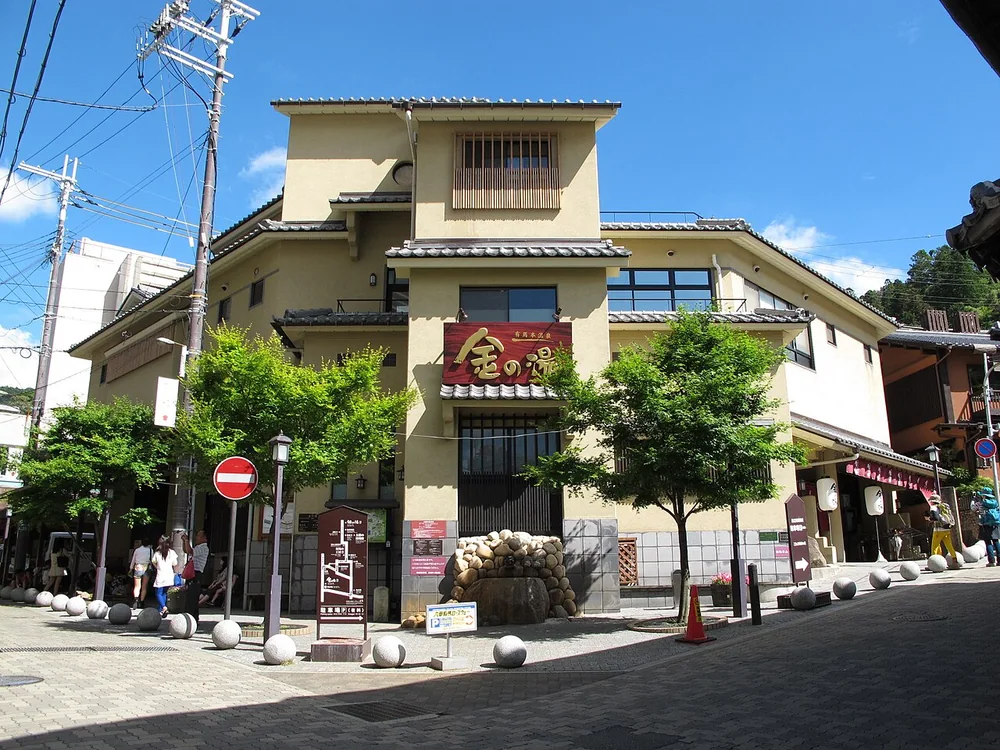
Compare meals, rooms, gold and silver springs and private-bath access at Koki, Maple Arima, Hyoe Koyokaku, Kamenoi Hotel Arima and Taketoritei Maruyama. Add a shorter or longer walk through Yumotozaka, the springs and temple district.
Koki’s three options: the room and private silver baths make the difference
Koki’s onsen page calls bathing-only visits “tachiyori-yu”. Both the men’s and women’s indoor areas have gold and silver baths. No booking is needed. Admission is ¥1,300 for adults, ¥700 for ages 5–12 and ¥400 for ages 3–4, payable in cash. Bath towel hire and a small towel to keep cost ¥150 each. For two adults needing both towels, the total is ¥2,600 plus ¥600, or ¥3,200. Koki’s home page lists bathing tax separately: bathing-only visits are exempt, day-use rooms add ¥75 per person, and overnight stays add ¥150 per person. For two adults these are ¥0, ¥150 and ¥300 respectively. Include the relevant tax when comparing a day room with an overnight quote.
Normal bathing-only hours are 10:00–19:00, with last admission at 18:00. The regular closing days are Monday and Tuesday. It opens on a Monday that is a national holiday; if Monday or Tuesday opens for a holiday, that Wednesday is an extra closing day. The latest opening-day notice lists exceptions for the month. The hotel states that you cannot bathe again after leaving the changing room. Wash, use the gold and silver indoor baths, change, then leave for your walk. To rest in your own room between baths, choose a day-use room or overnight stay rather than treating bathing-only admission as an afternoon of re-entry.
Day-use room and overnight guests can use four private silver baths: San no Yu, Yon no Yu, Go no Yu and Roku no Yu. Each session lasts 45 minutes. With a standard package, book one session on arrival, return the key afterwards, then book another if a slot is free. Some early-booking packages allow two sessions to be booked at check-in. This suits two people willing to rest in their room while waiting. Arriving in the afternoon after sightseeing elsewhere leaves fewer available gaps.
Koki’s FAQ states that overnight and day-use room guests must be over 12. Children can use the bathing-only service. Two adults and a child can consider the indoor baths together; for a room or private bath, choose a package that accepts the child’s age. Check this before spending time choosing twin beds in a room the child cannot use.
Koki serves no meals and has no shuttle. Coffee and drinks are provided for overnight and day-use room guests. Bathing-only visitors can eat in town first, then walk to the entrance at 1401 Arimacho. Overnight and day-use room guests can leave luggage at reception on arrival before walking through town. Drop large bags first so you do not have to pull a suitcase uphill.
The indoor-bath washbasin area provides facial cleanser, cotton buds and cotton pads. Shampoo, conditioner and body wash are available in the baths. Of the four private baths, San, Yon and Go are on floor 1F and Roku is on floor 3F; guest rooms are on floors 2F and 3F. If a companion uses stairs slowly, ask which 1F slots are free on arrival, then fit room breaks between sessions.
An overnight stay at Koki adds the evening and morning, with meals separate
Standard check-in starts at 15:00 and check-out is at 10:00 the next day, giving a room-use window of up to 19 hours. Indoor baths open 15:00–23:45 and 06:30–09:00 the next morning; the private-bath schedule for overnight guests separately extends to 09:15. You can walk through town by day, bathe after returning in the evening, and bathe again in the morning. Bathing-only admission does not provide this schedule.
The official room page lists a 26 m² twin with semi-double beds, 16 m² Hollywood Twin, 16 m² bunk-bed room, 27 m² twin with loft and 21 m² Small Twin. If either traveller finds an upper bunk or loft difficult, choose a standard twin with both beds at floor level. Read the bed layout before comparing floor area.
All rooms list a bathroom, toilet, towels, samue leisure wear and Wi-Fi. Use the gold and silver springs and private baths in their designated hotel bathing areas. A room base lets you separate walks, dinner and bathing instead of doing everything as soon as you reach Arima. Arrange dinner and the next morning’s breakfast separately. Koki therefore suits adults who want to choose their meals and are willing to go out within restaurant opening hours.
The home page publishes cancellation charges of 30% from seven days before, 50% from two days before, and 100% on the day or for a no-show. If your package has separate conditions, put its deadline in your calendar before payment. Changing a day visit to an overnight stay means checking the new order’s price and terms. For an afternoon room to rest in, compare day-use quotes first. If you want evening and morning bathing, compare the overnight price for the same room type.
Maple Arima: lunch and silver baths, with an optional four-hour room
The Maple Arima day-use page lists Hana Kago Zen from ¥3,700, Midori Gozen from ¥4,500 and Wagyu Gozen from ¥7,500. Each includes lunch, bathing and a welcome drink. Hana Kago Zen suits a simple sit-down meal; Midori Gozen uses seasonal ingredients and includes dessert; Wagyu Gozen centres on wagyu cooked on an iron griddle. Choose the meal first, then enter your date and party size on the official booking page for the price.
These three lunch options have no private guest room, but allow use of the communal-bath rest area and lobby. These spaces work if you want a drink after bathing or somewhere to wait while your companion changes. For an undisturbed room after changing, choose the package with Midori Gozen, bathing, a welcome drink and a room. The website lists it from ¥9,000, with room use from 12:00 to 16:00, up to four hours.
Lunch is served at Suifutei from 11:30 to 14:00, with last orders at 13:30. Day-package bathing is 13:00–16:00 and allows one bath visit. Eat first, then change and bathe, and finish in the room or shared rest area. If you enter the room at 12:00, there is no need to rush to the baths: day-use bathing starts at 13:00.
The Hoju no Yu communal baths use the hotel’s own silver spring. The hotel describes six bath types and a far-infrared sauna. Room and bath use have separate schedules: both finish at 16:00. To leave the last half-hour for drying hair and changing, bathe earlier. Borrow bath and small towels at reception. Use the welcome-drink voucher at Moemiji beside the entrance lobby.
The Maple Arima FAQ states that there are no private baths and that bathtubs in some guest rooms use ordinary water. It suits visitors who accept separate men’s and women’s communal bathing and value lunch and rest. A pick-up service runs from Arima Onsen railway station, bus stops and ropeway station from 09:00 to 19:00; contact the hotel after arrival. Use the ride for the uphill journey to the hotel and save the short town walk for after going downhill to reduce strain on your knees.
Hyoe Koyokaku: a meal and baths, without a day room
The Hyoe Koyokaku day-use FAQ separates lunch and dinner visits clearly. Lunch packages allow hotel use from 11:30 to 16:00; dinner packages from 16:00 to 21:00. Both combine a meal and bathing. There is no bathing-only or dining-only option. Start here if you want a meal and baths in one building without needing a room.
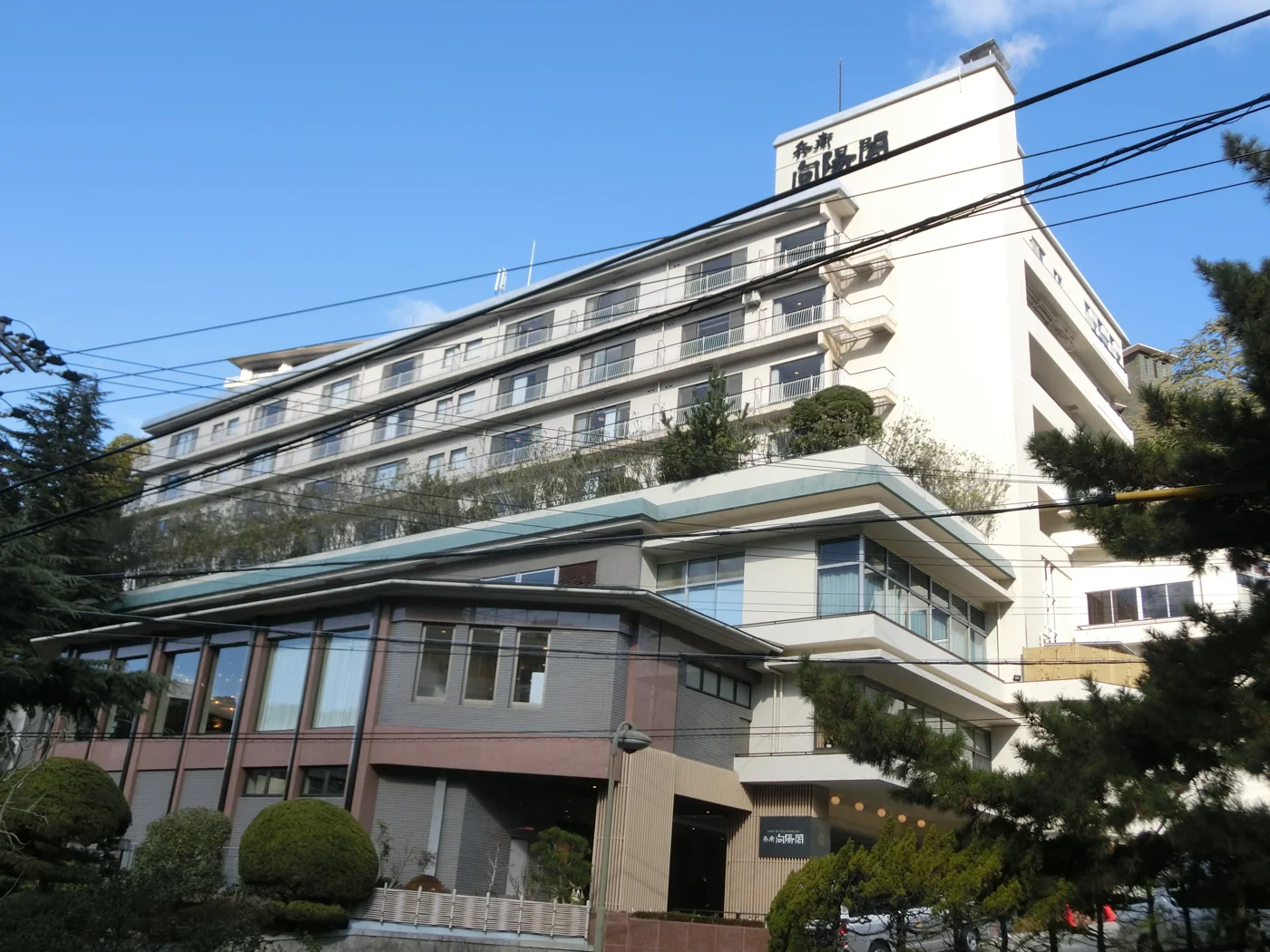
Book lunch by 17:00 the day before. Dinner can be booked until 15:00 on the day if space remains. If two people decide that morning to visit Arima after the lunch deadline, choose another service still taking bookings or keep Hyoe for dinner. For the dinner version, walk through town before entering. After dining and bathing, go straight to your return transport rather than searching the uphill streets for a restaurant that has closed.
Day visitors have no guest room and cannot use the private open-air baths. Small and bath towels are lent free. Leave luggage at reception or in the changing-room lockers; separate valuables lockers are available. These services let you reach the baths without bags. If you want a nap after lunch, choose a day-use room elsewhere before arriving.
Hyoe has three communal bathing areas: Ichi no Yu, Ni no Yu and San no Yu. The official onsen introduction lists gold spring water in all three. Ichi no Yu has a Japanese lattice ceiling; Ni no Yu uses Roman-style columns and curves. Both have indoor and open-air gold baths and a sauna. San no Yu is in the garden on floor 9F. Glass doors between the bathing room and open-air area can open to make a semi-open space. For indoor gold-spring bathing in rain, start with Ichi no Yu or Ni no Yu.
Ichi no Yu and Ni no Yu switch between men and women daily. San no Yu has separate men’s and women’s baths. Day visitors interested in the architecture use the allocation for that day; an overnight stay lets you add the other area after the morning switch. During a short day visit, focus on a meal and one bathing area you like, leaving time to appreciate the building.
Between the three bathing areas is a post-bath rest space with garden and koi views. Free drinks are served 14:30–21:30. Lunch visitors can leave time here after 14:30 and use it as a meeting point when changing at different speeds. The hotel also lists cots in each communal-bath area and lends baby baths, seats and children’s all-in-one hair and body wash. Include meals and care supplies when choosing a package for a young child.
Hyoe Koyokaku’s September 2020 bath introduction compares the indoor and open-air spaces of Ichi no Yu, Ni no Yu and San no Yu.
Hyoe’s private gold baths belong in an overnight stay
The Asagiri and Yugiri private-bath page limits use to overnight guests. Asagiri holds six people and costs ¥4,400 for 50 minutes. Yugiri holds four and costs ¥3,300 for 50 minutes. Both have gardens. For two adults choosing Yugiri, the charge is for the entire bath for 50 minutes; accommodation and meals are separate. Larger groups should first check capacity against the number bathing.
The latest start is 22:00 for Asagiri and 21:40 for Yugiri. Each also has morning start slots. Set dinner first, then choose a private bath with a usable gap between them. A family staying in two rooms can use a shared bath slot as a meeting time. The gardens and baths shown in the introduction video are available for paid private booking only with an overnight stay.
The difference from Koki is practical: a Koki day-use room includes private silver baths, while Hyoe’s private gold baths are for overnight guests. If spring type matters most, use this condition first. If privacy is the main aim, also compare Taketoritei Maruyama’s overnight baths. Note meals, stairs and room-use hours together when choosing.
Kamenoi Hotel Arima: its own gold spring, with weekend lunch packages
The Kamenoi Hotel Arima onsen page lists its own Atagoyama source and free-flowing gold spring water. Bathing-only day visits run 11:00–16:00, with last admission at 15:00. Ages 12 and over pay ¥800 on weekdays and ¥1,000 on weekends and public holidays. Ages 6–11 pay ¥400 and ¥700 respectively. A small towel costs ¥200 and bath towel hire ¥150. For two adults needing both towels, admission and supplies total ¥2,300 on weekdays or ¥2,700 on weekends and public holidays.
This option centres on a gold-spring bath, followed by leaving the hotel. For a town walk in the morning and a bath after lunch, arrive before the 15:00 admission deadline. For an early-evening arrival, choose a service still receiving guests. The address is 1617-1 Arimacho. Leave time at the end of your walk to reach it, using last admission as a firm itinerary limit.
The official dining page also lists a ¥2,900 Kinsen package with a seasonal Japanese set meal, gold-spring bathing and small towel, bookable by 10:00 on the day. The ¥5,000 Utage package includes seasonal kaiseki, bathing and a small towel, booked by 17:00 the day before. Both are sold only on Saturdays, Sundays and national holidays. The lunch restaurant opens 11:30–14:30, with last orders at 14:00.
For two adults ordering one package each, the Kinsen total is ¥5,800 and Utage ¥10,000. Compare the set meal with the kaiseki meal; add bath towels and any supplies not included. On an ordinary Tuesday, use bathing-only admission with lunch in town. The advertised weekend-package prices do not apply that day.
The same dining page lists a Kobe beef steak lunch at ¥6,000, beef sukiyaki lunch at ¥4,500 and hitsumabushi at ¥4,000, with daily limits of 10 or 15 servings depending on the dish. These are menu items. For a complete lunch-and-bath visit, choose a product whose name and contents explicitly include gold-spring bathing. Use the package inclusions to set your budget when a page contains both food and bath information.
Taketoritei Maruyama: private gold and silver baths with a night’s stay
The Taketoritei Maruyama FAQ says it takes no outside bathers and has no communal bath. Overnight guests use eight private baths free of charge. It suits people who want to bathe with their companion and can spend a night in Arima. Standard check-in is 15:00 and check-out 11:00 the next day. Book baths on a first-come basis after check-in, dividing visits between afternoon, evening and morning to leave room for rest.
The hotel’s bath page lists different arrangements, including paired gold and silver pools, silver baths and gold baths. Water types vary across the eight baths. To try both, ask for a gold-and-silver arrangement when booking on site and choose from available slots. The FAQ gives a maximum of 45 minutes per reserved family-bath session. Overnight guests with tattoos can also use the private baths.
Check the stairs first. There are 13 entrance steps with no ramp. The family baths are on a hillside with another ten steps, and wheelchair users cannot reach them. The hotel states that it is not barrier-free. If a companion can walk short distances but wants to avoid the climb from the station, contact the hotel for collection after reaching Arima Onsen railway station or bus stop. The steps inside the grounds to the baths still have to be climbed.
Meal provision is changing. As of 26 October 2026, the hotel had stopped taking new dinner bookings for 2026 and announced the end of dinner service on 30 December. From January 2027, breakfast is the only meal served. For dinner and breakfast at the hotel, compare other ryokan. If private gold and silver baths are the priority, choose a suitable breakfast package and book dinner in town.
Standard cancellation charges are 10% from 14–8 days before, 30% from 7–2 days before, 50% the day before, and 100% on the day or for a no-show. Before paying for a night, agree an arrival time the hotel accepts and a dinner location. Tansan Spring Park is about five minutes downhill from the hotel, making a short walk for guests. If you want to avoid the return climb, arrange collection with the hotel.
Short Yumotozaka walk: enter at Nene Bridge and turn back after Tenjin Spring
This stretch suits visitors without a room booking who want to see Arima before bathing. Approach Nene Bridge from Arima Onsen Station. Nene’s statue beside the bridge faces Hideyoshi’s on the other side, introducing the town’s link with him. Continue to the outside of Kin no Yu. The free footbath beside it shows gold spring water in everyday use. Then enter Yumotozaka. Keep the footbath stop short, or walk on if you have a full bath planned for the afternoon.
Kobe City’s spring-walk introduction describes Yumotozaka as a sloping street lined with shops and places to eat. Buy a snack or have a meal here, and retrace your route downhill when you need a rest. If you have booked a ryokan lunch, browse before the meal. If you have eaten, choose one takeaway snack so you are not eating while rushing to the bath admission deadline.
Near the red postbox on Yumotozaka, turn into Tenjin Shrine to find Tenjin Spring. Kobe City lists a temperature of 99.4°C and a well depth of 206 metres. Kin no Yu also draws water from here. From the public viewing position, the torii, steam and supply equipment show how spring water reaches the town baths. Stay outside the barriers around the hot source and keep hands and feet out of the flow.
After Tenjin Spring, return to Yumotozaka and retrace your route downhill towards Kin no Yu and Taiko-dori, then the railway or bus station. This turning point suits sore knees, heavy clothing or anyone who has just bathed and wants no further climb. Treat the next stretch as optional. The bridge, street, bathhouse exterior and spring already provide four different things to see.
Extend to Tansanzaka: find Uwanari Spring before choosing the uphill route
To continue, return from Tenjin Spring to Yumotozaka and walk uphill to a red torii and small shrine. This marks the old Uwanari Spring. The active source is in the adjoining lane, identified by a tall tower. Kobe City lists it at 100.5°C with a well depth of 187 metres. Distinguish the old shrine from the working facility so a photo at the torii does not replace seeing the equipment supplying water today.
The name Uwanari has a local tale about spring water erupting in jealousy as a beautiful woman passed. Read it as a town story. The spring itself is a working water-supply facility: look at the tower, pipes and steam. Return to Yumotozaka from the lane and decide again at the route towards Tansanzaka. Stay on the main street if you have not eaten or have a fixed booking ahead; climb to Tansan Spring Park only with enough time and energy.
Kobe City’s official account specifically mentions the uphill slope of Tansanzaka. Put Tansan Spring Park before bathing so you can change and rest after the walk. Older companions can retrace the route from Uwanari Spring. Leave large bags at the hotel first. Families with pushchairs can omit this extension, avoiding a climb where one adult must push while watching children near spring facilities.
Temperature makes the difference from the gold springs easy to understand. Kobe City lists Tansan Spring at 18.3°C with a 13-metre well: a cold mineral spring containing carbon dioxide. The park’s drinking point has instructions. Follow the posted eligibility, method and limits if you want to drink. The location also explains the name tansan senbei: carbonated water was once used locally to make the crackers, linking a town snack with the water underground.
Temple district: reach the Taiko bath museum before 16:30
Descend Tansanzaka towards Gin no Yu to reach Gokuraku Spring and the temple district. Gokuraku Spring is in a lane beside Gin no Yu. Kobe City lists 98.1°C and recounts a tradition that it supplied Hideyoshi’s baths. See the small supply facility from the public path, then visit Taiko no Yudono-kan. It adds a different subject after several springs: remains showing how hot springs were used in the past.
Taiko no Yudono-kan is a museum, at a separate location from the Taiko no Yu day-bathing facility. At 1642 Arimacho, it displays rock-bath and steam-bath remains, the excavation process and finds including tiles and tea ware. A reconstruction above the steam-bath remains helps companions compare sitting in hot water with using steam.
The museum opens 09:00–17:00, with last entry at 16:30, and closes on the second Wednesday. Admission is ¥200 general and ¥100 for children and students. If your hotel day package runs until 16:00, changing, payment and the walk leave little viewing time. For the full exhibition, go in the morning or take the temple route before a lunch package. After 16:30, keep to an outdoor walk through the district.
Onsenji Temple is at 1643 Arimacho. The tourism association says Gyoki founded it in 724. Its wooden statues of Gyoki and Ninsai are linked to the annual first-bathing ceremony on 2 January. Kobe City’s history also brings together Gyoki’s development of the springs, Ninsai’s revival of temple lodgings and Hideyoshi’s renewal of the town. Reading about these people at the temple gives the bath visit a local history.
Use the temple areas open to visitors that day, then descend to the Gyoki statue outside the Arima Tourist Exchange Centre and continue to Gosho Spring. Its circular wellhead and pipes leading to ryokan bring the museum’s history back to today’s supply system. This route ends in the lower town. Leave distant parks and hiking routes aside to retain time for your booked service and return journey.
Half-day and overnight plans for two adults
For a lower-cost visit centred on gold spring water, walk Nene Bridge, Yumotozaka and Tenjin Spring in the morning, eat in town and bathe once at Kamenoi. On an ordinary weekday, admission for two adults with a set of towels each totals ¥2,300; lunch and transport are extra. If tired in the afternoon, turn back after Tenjin and go to the baths. Save Tansanzaka and the museum for another visit.
For a meal and bath in one hotel, start with Kamenoi’s weekend and public-holiday Kinsen package, ¥5,800 for two. For silver spring water and a choice of lunches, use a room-free Maple day package: eat first, bathe once after 13:00, then use the communal rest space. Both versions work with a morning walk and an afternoon kept within the hotel before the journey home.
If you need an afternoon room, Maple gives a clear 12:00–16:00 window, with food and baths in the same hotel. Koki’s day-use room includes private silver baths, with meals arranged separately. Write down whether lunch or bathing together in silver water matters more, then choose. Resting in your own room while waiting for a private-bath slot is a practical use of the room charge.
For an overnight stay, separate an afternoon temple walk, dinner, evening bathing and the next morning. Taketoritei Maruyama centres on private gold and silver baths, with dinner booked elsewhere. Koki offers a room, gold and silver indoor baths and private silver baths, with all meals separate. At Hyoe, an overnight package with dinner can be combined with a paid gold-spring private-bath booking. Compare quotes for the same date, meal basis and cancellation deadline, choosing the one that protects the time you value most.
Before leaving, keep an unbooked gap in the lower town to collect luggage, change into outdoor clothes and settle hotel charges before reaching the railway or bus station. If a lunch visit ends at 16:00, remove the nearly closed museum from the plan. If a dinner visit ends at 21:00, choose workable return transport in advance.
A few useful answers
Can bathing-only visitors at Koki book a private bath?
Bathing-only admission covers the men’s and women’s indoor baths. The four private silver baths are for overnight and day-use room guests. Each session lasts 45 minutes. Standard packages allow one booking on arrival, then another after returning the key; some early-booking packages allow two bookings at first.
Is there an Arima day package with lunch, bathing and a room?
Maple Arima’s Midori Gozen room package includes lunch, a welcome drink, silver-spring bathing and a room from 12:00 to 16:00. Day-use bathing is 13:00–16:00, for one visit.
Can I visit Hyoe Koyokaku just to bathe or use a room?
Day packages combine a meal with bathing. There is no bathing-only, dining-only or day-room option. Book lunch by 17:00 the day before, or dinner by 15:00 on the day if space remains.
Can I book dinner and breakfast at Taketoritei Maruyama in 2027?
The hotel announced that dinner service ends on 30 December 2026. From January 2027 it serves breakfast only. For dinner at your accommodation, compare other overnight packages that include it.
Are Taiko no Yudono-kan and Taiko no Yu the same place?
Taiko no Yudono-kan is the hot spring history museum at 1642 Arimacho, displaying rock-bath and steam-bath remains and excavated objects. Taiko no Yu is a separate day-bathing facility.
Where can older companions turn back on the spring walk?
After Nene Bridge, Yumotozaka and Tenjin Spring, retrace the route downhill into town. Treat Uwanari Spring and Tansanzaka as extensions. Omit the climb if it is too demanding, keeping your planned meal or bath.
Official information and references
Sources used in this guide.
- Koki: springs, bathing-only visits and private baths
- Koki: use, ages, prices and cancellation
- Koki: meals, luggage and private-bath booking FAQ
- Koki: room layouts and facilities
- Maple Arima: lunch and day-use room packages
- Maple Arima: private baths, room bathtubs and pick-up FAQ
- Hyoe Koyokaku: day-use inclusions and booking FAQ
- Hyoe Koyokaku: three communal bathing areas
- Hyoe Koyokaku: private gold baths, capacity, prices and overnight eligibility
- Kamenoi Hotel Arima: spring water and day bathing
- Kamenoi Hotel Arima: lunch, meal-and-bath packages and booking deadlines
- Taketoritei Maruyama: stays, stairs, meal changes and cancellation FAQ
- Taketoritei Maruyama: private gold and silver baths
- Kobe City: spring sources, Yumotozaka and town locations
- Arima Onsen Tourism Association: Onsenji Temple
- Taiko no Yudono-kan: opening, admission and exhibitions