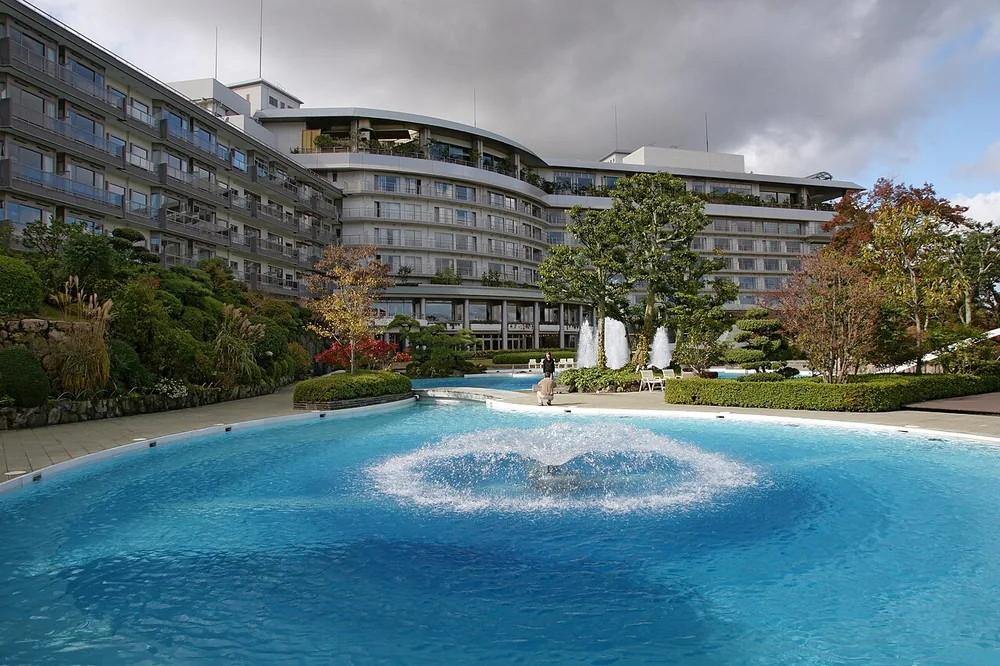
Compare meals, rooms, gold and silver springs and private-bath access at Koki, Maple Arima, Hyoe Koyokaku, Kamenoi Arima and Taketoritei Maruyama. Add a flexible walk through Yumotozaka, the springs, Onsenji and Taiko no Yudonokan.
- Region & Focus
- Arima Onsen
- Reading Scope
- 35 min read · 12 chapters · 6 Q&As
- Official Verification
- 16 official sources checkedUpdated October 26, 2026
- Key Topics
- RyokanWhere to stayBooking
Chapter Route Map (tap any stop)
- First choose a private room or a planned lunch
- Koki’s three options differ in room use and private silver-spring access
- An overnight stay at Koki adds evening and morning time, with meals separate
- Maple Arima: lunch and silver springs, with an optional four-hour room
- Hyoe Koyokaku: meals and baths, without a day-use room
- Hyoe’s private gold-spring baths belong in an overnight stay
- Kamenoi Arima: its own gold spring, with lunch packages on weekends and holidays
- Taketoritei Maruyama: private gold and silver baths with a night in a room
- Short Yumotozaka walk: enter by Nene Bridge and turn back after Tenjin Spring
- Extend up Tansan-zaka: identify Uwanari Spring before choosing the climb
- Temple-district walk: reach Taiko no Yudonokan before 16:30
- Practical half-day and overnight plans for two adults
- Quick Q&A
For an afternoon in Arima, first choose how you want to rest. Consider Kamenoi Arima for a gold-spring bath, Maple Arima for lunch and a silver-spring bath, or Koki for a room and private silver-spring bathing. For private gold and silver baths plus a night away, Taketoritei Maruyama offers another complete stay. Split your town walk into the lower Yumotozaka route and the uphill temple district and carbonated spring route. Book your bath or meal first, then add the stretch you can comfortably walk.
First choose a private room or a planned lunch
When two adults travel together, one may want a bath while the other wants somewhere to sit. Choose a package that works for both. Koki’s room-inclusive day stay provides a room, indoor baths and private silver-spring baths, with meals arranged separately. Hyoe Koyokaku sells meals with bathing but no day-use room. Maple Arima offers lunch packages both without a room and with four hours of room use. These differences shape your afternoon more than the label “Arima Onsen day trip.”
If you want to change and lie down in your own room, filter for packages that include one. If you want a meal and a bath in the same building, compare their overlapping service hours. To bathe together, check private-bath eligibility and spring type. Koki’s private baths use silver-spring water. Hyoe’s private gold-spring baths are for overnight guests. Taketoritei Maruyama has private gold and silver baths and accepts overnight stays.
One afternoon is enough for a worthwhile Arima visit. Book the main service, then choose one walk: Yumotozaka, Tenjin Spring or the temple district. This is easier to schedule than arriving and searching for three baths. If your interest in bathing differs, a room-inclusive package lets one person stay in the room. With a room-free package, include a suitable shared rest area in your choice.
Prices are in yen. For intercity access, the combined Kin no Yu and Gin no Yu ticket, and room conditions at Arima Grand Hotel, see the Kansai onsen base comparison.
| Product | Spring water and bathing arrangement | Meals | Rest space |
|---|---|---|---|
| Koki bath-only admission | Separate men’s and women’s indoor baths, each with gold and silver springs | Arrange your own | No room or private bath |
| Koki room-inclusive day stay | Indoor baths and private silver-spring baths | Arrange your own | Guest room; children aged 12 and under not accepted |
| Maple lunch day package | Large communal silver-spring bath | Specified lunch | Lobby and bath rest area |
| Maple lunch day package with room | Large communal silver-spring bath | Midori Gozen | Guest room 12:00–16:00 |
| Hyoe day package | Large communal baths; private baths for overnight guests only | Lunch or dinner | No guest room |
| Kamenoi bath-only / meal-and-bath package | Free-flowing gold-spring communal bath | Meal-and-bath packages on weekends and public holidays only | Bath-only admission excludes a room |
| Taketoritei Maruyama overnight stay | Eight private gold/silver baths; no large communal bath | Breakfast only from 2027 | Guest room for one night |
Compare meals, rooms, gold and silver springs and private-bath access at Koki, Maple Arima, Hyoe Koyokaku, Kamenoi Arima and Taketoritei Maruyama. Add a flexible walk through Yumotozaka, the springs, Onsenji and Taiko no Yudonokan.
Koki’s three options differ in room use and private silver-spring access
Yuya no Yado Koki’s hot-spring page calls bath-only admission “tachiyori-yu.” Both the men’s and women’s indoor areas have gold and silver baths. No reservation is needed. Admission is ¥1,300 for adults, ¥700 for ages 5–12 and ¥400 for ages 3–4, payable in cash. Bath-towel rental and a small towel each cost ¥150. Two adults needing both towels pay ¥2,600 plus ¥600, or ¥3,200. Koki’s home page lists bathing tax separately: bath-only admission is exempt; a room-inclusive day stay adds ¥75 per person, and an overnight stay ¥150 per person. For two adults, those totals are ¥0, ¥150 and ¥300. Add the applicable tax when comparing day-room and overnight quotes.
Normal bath-only hours are 10:00–19:00, with last admission at 18:00. The property closes on Mondays and Tuesdays. It opens on a Monday that is a public holiday; when Monday or Tuesday opens because of a holiday, it closes that Wednesday instead. The latest official opening-day notice lists monthly exceptions. The property states that you cannot bathe again after leaving the changing room. Complete washing, the gold and silver indoor baths, and changing in one visit, then go for a walk. For room rest between baths, choose a room-inclusive day stay or an overnight stay. A bath-only ticket does not provide unrestricted access all afternoon.
Room-inclusive day and overnight guests can use four private silver-spring baths: San no Yu, Yon no Yu, Go no Yu and Roku no Yu. Each session lasts 45 minutes. Standard packages let you reserve one session when you check in; return the key after bathing before booking another, subject to availability. Some early-booking packages allow two reservations at check-in. This suits two people who are happy to rest in their room while waiting. If you spend the morning sightseeing elsewhere, a later afternoon arrival leaves fewer slots.
Koki’s FAQ excludes children aged 12 and under from overnight and room-inclusive day stays, but welcomes children for bath-only visits. Two adults with a child can consider a family visit using the indoor baths. For a room or private bath, choose a product that accepts the child’s age. This age limit affects your booking before the choice of twin beds does. There is little value in selecting a room the child cannot use.
Koki serves no meals and has no shuttle. Coffee and drink services are for overnight and room-inclusive day guests. Bath-only visitors can eat in town before walking to the entrance at 1401 Arimacho. Overnight and day-room guests can leave luggage at reception on arrival, then walk without it. Drop off large bags first so you do not have to pull them uphill through town.
Koki’s indoor-bath washbasins have face cleanser, cotton swabs and cotton pads. The baths provide shampoo, conditioner and body wash. Of the four private baths, San, Yon and Go are on the first floor; Roku is on the third. Guest rooms are on the second and third floors. If stairs take one person longer, ask about first-floor slots on arrival and fit room rest between bathing sessions.
An overnight stay at Koki adds evening and morning time, with meals separate
Standard check-in at Koki starts at 15:00, with check-out at 10:00 the next day: up to 19 hours of room use. Indoor baths open 15:00–23:45 and 6:30–9:00 the next morning. Overnight private-bath access is listed separately until 9:15 in the morning. You can explore town by day, return for an evening bath, then bathe again in the morning. A bath-only visit does not offer that schedule.
The official room page lists a 26 m² twin with semi-double beds, a 16 m² Hollywood Twin, a 16 m² bunk-bed room, a 27 m² twin with a loft and a 21 m² Small Twin. If either traveler cannot easily climb to a top bunk or loft, choose standard twin beds on the same level as the floor. Check bed layout before room area.
All rooms list a bathroom, toilet, towels, samue lounge wear and Wi-Fi. Gold and silver springs and private bathing use the property’s designated baths. With a room as your base, you can separate your walk, dinner and bathing instead of doing everything on arrival. Arrange dinner and the next morning’s breakfast yourself. Koki therefore suits adults who want to choose their own meals and can go out during local restaurant hours.
The home page lists cancellation charges of 30% from seven days before arrival, 50% from two days before, and 100% on the day or for a no-show. If your booking has separate cancellation terms, put that product’s deadline in your calendar before paying. When changing a day stay to an overnight stay, check the new order’s price and terms. If you only need an afternoon room, compare day-use quotes first. If you want evening and morning baths, compare the overnight price for the same room type.
Maple Arima: lunch and silver springs, with an optional four-hour room
Maple Arima’s day-use page lists Hana Kago Zen from ¥3,700, Midori Gozen from ¥4,500 and Wagyu Gozen from ¥7,500. Each includes lunch, bathing and a welcome drink. Hana Kago Zen suits a simple sit-down meal; Midori Gozen uses seasonal ingredients and includes dessert; Wagyu Gozen centers on teppanyaki wagyu beef. Choose the meal first, then enter your date and party size on the official booking page for the price.
These three lunch packages include no private room for rest. Guests can use the bath rest area and lobby. Those shared spaces work if one person wants a drink after bathing or somewhere to wait while the other changes. For a quiet private room after changing, consider the Midori Gozen package with bathing, welcome drink and room use. The website lists it from ¥9,000, with a room from 12:00 to 16:00, up to four hours.
Lunch is served at Suifutei from 11:30 to 14:00, with last orders at 13:30. Day-package bathing is 13:00–16:00 and allows one visit. Eat first, then change and bathe before returning to your room or the shared rest space. A 12:00 room entry does not mean you need to hurry to the baths: day-use bathing starts at 13:00.
The large Hoju no Yu bath uses the property’s own silver spring. The hotel describes six bath types and a far-infrared sauna. Room use and bathing have separate schedules, both ending at 16:00 for day guests. To leave the final half-hour for drying your hair and changing, start your bath earlier. Borrow bath and small towels at reception. Redeem the welcome-drink voucher at Moemiji beside the entrance lobby.
Maple Arima’s FAQ states that it has no private baths and that some guest-room tubs use ordinary water. It suits travelers who accept separate men’s and women’s communal baths and value lunch and rest. The hotel provides pickup from Arima Onsen railway station, bus stops and ropeway station between 9:00 and 19:00; call after arrival. Use pickup for the uphill trip to the hotel, then save a short street walk for downhill travel to reduce the strain on your knees.
Hyoe Koyokaku: meals and baths, without a day-use room
Hyoe Koyokaku’s day-use FAQ clearly separates lunch and dinner visits. Lunch guests can use the property 11:30–16:00; dinner guests 16:00–21:00. Both combine a meal and bathing. Bath-only and meal-only products are not offered. Start here if you want a meal and bath in one property and do not need a guest room.
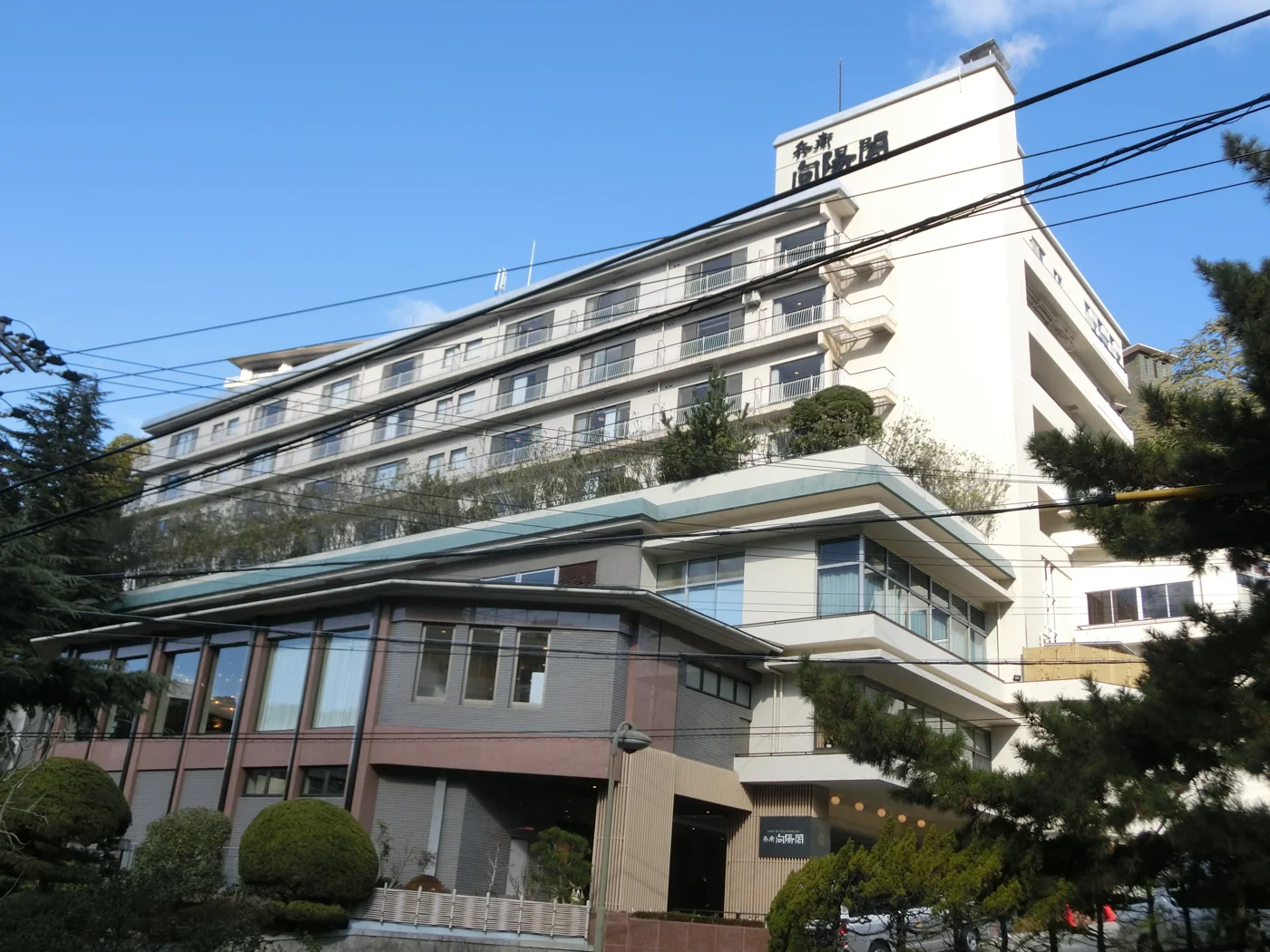
Book lunch by 17:00 the previous day. Dinner can be booked until 15:00 on the day if places remain. If you decide that morning to visit Arima and have missed the lunch deadline, choose another available package or consider Hyoe for dinner. With dinner, walk around town before entering, then return home after your meal and bath. You will not need to head uphill again in search of a shop that has already closed.
Day guests have no guest room for rest and cannot use the private outdoor baths. Small and bath towels are lent free of charge. Leave luggage at reception or in the changing-room lockers; separate lockers are provided for valuables. These services make it easier to move around the baths without bags. If you want a nap after lunch, choose a room-inclusive day stay before arriving.
Hyoe has Ichi no Yu, Ni no Yu and San no Yu. The official hot-spring introduction lists gold-spring water at all three. Ichi no Yu has a Japanese lattice ceiling, while Ni no Yu uses Roman-style columns and curves. Both have indoor and outdoor gold-spring baths and a sauna. San no Yu sits in the ninth-floor garden; opening the glass doors between the indoor and outdoor areas creates a semi-outdoor space. For an indoor gold-spring bath on a rainy day, consider Ichi no Yu or Ni no Yu.
Ichi no Yu and Ni no Yu switch between men and women each day. San no Yu has separate men’s and women’s baths. Two adults interested in the architecture must follow the day’s allocation on a day visit. An overnight stay lets you include the other bath after the morning switch. With only a few daytime hours, focus on a meal and a bath you like so you have time to appreciate the property.
Rest areas between the three baths overlook the garden and koi. Free drinks are available 14:30–21:30. Lunch day guests can spend time here after 14:30 and use it as a meeting point after changing. The hotel also lists baby cots at each large bath and lends baby tubs, seats and children’s all-in-one shampoo and body wash. When booking a meal package with a young child, plan both the food and care equipment.
Hyoe Koyokaku’s September 2020 bath introduction compares the indoor and outdoor spaces at Ichi no Yu, Ni no Yu and San no Yu.
Hyoe’s private gold-spring baths belong in an overnight stay
For two people wanting a private gold-spring bath at Hyoe, the Asagiri and Yugiri private-bath page restricts access to overnight guests. Asagiri holds six people and costs ¥4,400 for 50 minutes; Yugiri holds four and costs ¥3,300 for 50 minutes. Both have gardens. For two adults choosing Yugiri, this is the price for the whole bath for 50 minutes; accommodation and meals cost extra. Larger groups should first filter by actual bath-party size.
The latest start is 22:00 for Asagiri and 21:40 for Yugiri, with separate morning start slots. Choose a bath after booking dinner so there is time between the two. A family staying in two rooms can use a shared bath slot as a meeting time. Day guests attracted by the garden and tubs in the introduction video need an overnight stay to qualify for this paid reservation.
The difference from Koki is practical: Koki’s room-inclusive day stay includes private silver-spring access; Hyoe’s private gold-spring baths are only for overnight guests. If spring type matters most, use this condition first. If your aim is simply to avoid bathing with strangers, also compare Taketoritei Maruyama’s overnight baths. Put meal inclusion, stairs and room-use hours in the same booking notes.
Kamenoi Arima: its own gold spring, with lunch packages on weekends and holidays
Kamenoi Hotel Arima’s hot-spring page lists its own Atagoyama source and free-flowing gold-spring water. Day bathing runs 11:00–16:00, with last admission at 15:00. Ages 12 and over pay ¥800 on weekdays or ¥1,000 on weekends and public holidays; ages 6 to under 12 pay ¥400 or ¥700 respectively. A small towel costs ¥200 and bath-towel rental ¥150. Two adults needing both towels pay ¥2,300 on weekdays or ¥2,700 on weekends and public holidays, including admission.
This option centers on a gold-spring bath, after which you leave the hotel. For a morning town walk followed by lunch and one bath, arrive before the 15:00 admission cutoff. For a late-afternoon arrival, choose a product still accepting guests. The hotel is at 1617-1 Arimacho. Allow time for the last stretch of your walk to the hotel, treating last admission as a firm itinerary limit.
The official dining page also lists a ¥2,900 Kinsen lunch package with a seasonal Japanese set meal, gold-spring bath and small towel; book by 10:00 on the day. The ¥5,000 Utage package includes seasonal kaiseki, bathing and a small towel; book by 17:00 the previous day. Both are sold only on Saturdays, Sundays and public holidays. Lunch runs 11:30–14:30, with last orders at 14:00.
For two adults ordering one package each, Kinsen costs ¥5,800 and Utage ¥10,000 in total. Compare the Japanese set meal with kaiseki; add items not listed in the package, such as bath towels, separately. On an ordinary Tuesday, use bath-only admission plus lunch in town. The published weekend-package price does not apply that day.
The same dining page lists a Kobe beef steak lunch at ¥6,000, beef sukiyaki lunch at ¥4,500 and hitsumabushi at ¥4,000, with daily limits of 10 or 15 servings depending on the dish. These are meal items. For a complete meal-and-bath package, choose a product whose name and inclusions explicitly list gold-spring bathing. When a page shows both food and hot springs, base your budget on the chosen product’s inclusions.
Taketoritei Maruyama: private gold and silver baths with a night in a room
Taketoritei Maruyama’s FAQ states that it accepts no outside bathers and has no large communal bath. Overnight guests use eight free private baths. It suits travelers who want to bathe together and can spend a night in Arima. Standard check-in is 15:00 and check-out 11:00 the next day. Reserve after arrival on a first-come, first-served basis, spreading sessions across afternoon, evening and the next morning to leave time for rest.
The property’s bath page shows different layouts: paired gold and silver tubs, silver-spring baths and gold-spring baths. Water types differ among the eight baths. To try both, ask for a gold-and-silver configuration when reserving on site, then choose from available slots. The FAQ limits reserved family baths to 45 minutes per session. Overnight guests with tattoos may also use the private baths.
Check the stairs first. The entrance has 13 steps and no ramp. The family baths sit on a slope and require another ten steps; wheelchair users cannot reach them. The property states that it is not barrier-free. If a companion can walk short distances but wants to avoid the climb from the station, contact the property for pickup after reaching Arima Onsen railway station or a bus stop. The steps from the building to the baths still have to be walked.
Meal service is changing. As of October 26, 2026, the property had stopped taking new dinner reservations for 2026 and announced that dinner service would end on December 30. From January 2027 it will serve breakfast only. For a stay with dinner and breakfast, compare other ryokan that serve dinner. If private gold and silver baths are your priority, choose a suitable breakfast package and reserve dinner in town.
Standard cancellation charges are 10% from 14 to eight days before arrival, 30% from seven to two days before, 50% the previous day, and 100% on the day or for a no-show. Before paying for a night for two, settle an arrival time the ryokan accepts and a dinner venue. Tansan Sengen Park is about five minutes downhill from the property, suitable for a short guest walk. If you prefer not to climb back, contact the property for pickup under its arrangements.
Short Yumotozaka walk: enter by Nene Bridge and turn back after Tenjin Spring
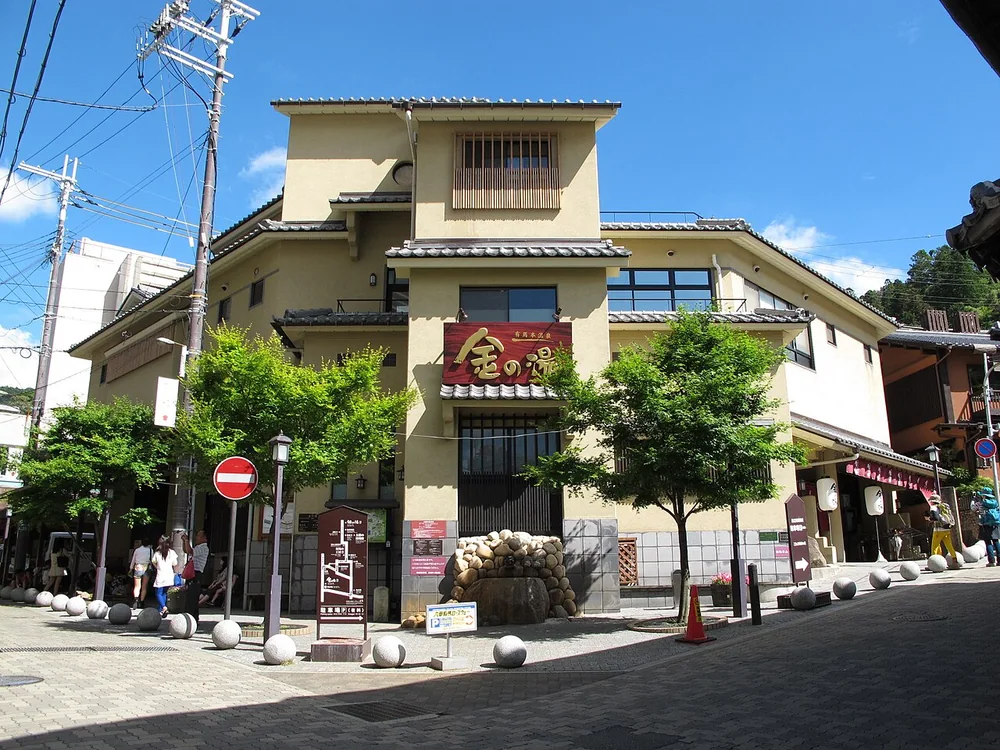
This stretch suits visitors with no room reservation who want to see Arima before one bath. Walk from the station area to Nene Bridge. Nene’s statue beside the bridge faces Hideyoshi’s on the other side, an introduction to his link with the spa town. Continue past Kin no Yu. Its free outdoor footbath shows gold-spring water in everyday use, then enter Yumotozaka. Keep the footbath stop short, or walk on if you already have a full bath planned that afternoon.
Kobe City’s spring-walk guide describes Yumotozaka as a sloping street lined with shops and eateries. Buy a snack or a meal here, and walk straight back downhill when you want to rest. If you have a ryokan lunch booking, browse before the meal. If you have already eaten, choose one portable snack so you are not eating while rushing to last bath admission.
Near the red postbox on Yumotozaka, turn into Tenjin Shrine for Tenjin Spring. Kobe City lists a water temperature of 99.4°C and well depth of 206 meters. Kin no Yu also draws water from it. From the public viewing area, look at the torii, steam and supply equipment to understand how spring water reaches the town’s baths. Stay outside the barriers around the hot source and keep hands and feet out of the flow.
After Tenjin Spring, return to Yumotozaka and follow the same downhill route to Kin no Yu and Taiko-dori, then the railway station or bus stop. This turnaround suits sore knees, heavy clothing, or anyone who has just bathed and wants no more climbing. Treat the next stretch as optional. Even a walk ending at Tenjin includes a bridge, street, bathhouse exterior and spring source; you do not need to circle every spring.
Extend up Tansan-zaka: identify Uwanari Spring before choosing the climb
To continue, return from Tenjin Spring to Yumotozaka and walk uphill to a red torii and small shrine. This is the old Uwanari Spring site. The working Uwanari source is in the side alley, marked by a tall tower. Kobe City lists its temperature as 100.5°C and depth as 187 meters. View the old shrine and working installation separately so a photograph at the torii does not replace seeing today’s supply equipment.
The name Uwanari comes with a local legend that the spring spouts in jealousy when a beautiful woman passes. Read it as a town story. The source itself supplies water every day; observe the tower, pipes and steam. Return from the alley to Yumotozaka, then decide whether to head up Tansan-zaka. If you have not eaten or have a fixed booking ahead, stay on the main street. Walk to Tansan Sengen Park only with enough energy and time.
Kobe City’s official introduction specifically mentions the uphill slope on Tansan-zaka. Put Tansan Sengen Park before bathing so you can change and rest afterward. With older travelers, turn back at Uwanari Spring. Leave large luggage at your ryokan first. Families with strollers can skip this extension so the main caregiver does not have to push a stroller while also keeping children away from the spring.
The temperature makes the difference between this carbonated spring and the gold springs clear: Kobe City lists 18.3°C and a well depth of 13 meters, a cold mineral spring containing carbon dioxide. The park’s drinking point has instructions. Follow the posted rules on who may drink, how, and any restrictions. This also explains the name tansan senbei: carbonated water was used locally to make the crackers, linking the street snack with water underground.
Temple-district walk: reach Taiko no Yudonokan before 16:30
Descend Tansan-zaka toward Gin no Yu to reach Gokuraku Spring and the temple district. In the alley beside Gin no Yu, Kobe City lists Gokuraku Spring at 98.1°C and recounts a tradition that it supplied Hideyoshi’s bathhouse. View the small supply installation from the public path, then turn toward Taiko no Yudonokan. This adds another layer after several springs: remains showing how people used hot springs in the past.
Taiko no Yudonokan is a museum at a different site from the Taiko no Yu day spa. At 1642 Arimacho, it displays rock-bath and steam-bath remains, the excavation process, and finds such as roof tiles and tea utensils. A reconstruction model stands above the steam-bath remains, helping your group compare sitting in hot water with bathing in steam.
The museum opens 9:00–17:00, with last entry at 16:30, and closes on the second Wednesday. General admission is ¥200; children and students pay ¥100. If your ryokan day stay ends at 16:00, changing, settling the bill and walking leave little museum time. Visit in the morning for a fuller look, or choose the temple route before a lunch day package. After 16:30, keep to an outdoor temple-district walk.
Onsen Zenji stands at 1643 Arimacho. The tourism association says Gyoki founded it in 724. Its wooden statues of Gyoki and Ninsai are linked to the annual January 2 Irizome ceremony. Kobe City’s history also connects Gyoki’s development of the springs, Ninsai’s revival of temple lodgings and Hideyoshi’s rebuilding of the spa town. Reading about these people and places at the temple adds local history to a bathing trip.
Use the worship areas open that day, then descend toward Gyoki’s statue outside the Arima Tourist Exchange Center and continue to Gosho Spring. Its round well opening and pipes extending toward ryokan bring the museum’s history back to today’s water supply. This direction returns you to the lower town. Finish there rather than adding distant parks or mountain trails, leaving time for your reservation and trip home.
Practical half-day and overnight plans for two adults
For a lower budget focused on gold-spring water, walk the short Nene Bridge, Yumotozaka and Tenjin Spring route in the morning, eat in town, then bathe once at Kamenoi. On an ordinary weekday, two adult admissions and one set of towels each cost ¥2,300; lunch and transport are extra. If you feel tired in the afternoon, turn back after Tenjin and go straight to the bath. Leave Tansan-zaka and the museum for another visit.
For a meal and bath in the same building, start with Kamenoi’s Kinsen package on a weekend or public holiday: two packages total ¥5,800. For silver-spring water and more lunch choices, switch to a room-free Maple day package. Eat first, bathe once after 13:00, then use the shared rest space. Both versions work with a morning walk and an afternoon spent within the property before going home.
For an afternoon room, Maple has a clear 12:00–16:00 window with lunch and bathing in the same hotel. Koki’s day-room package provides private silver-spring baths and a room, with meals arranged separately. Write down whether you want lunch or a shared private silver bath, then choose. If your bath slot is later, rest in your own room: that is what the room charge buys.
With one night, separate an afternoon temple walk, dinner, evening bathing and the next morning. Taketoritei Maruyama focuses on private gold and silver baths, with dinner booked separately. Koki offers self-arranged meals, a room, indoor gold and silver baths and private silver baths. At Hyoe, an overnight package with dinner can be combined with a paid private gold-spring reservation. Compare quotes for the same arrival date, meal conditions and cancellation deadline, then choose the option that preserves the time you most want.
Before returning, leave an unbooked interval in the lower town to collect luggage, change into outdoor clothes and settle property charges before heading to the station or bus stop. If your lunch day package ends at 16:00, remove the nearly closed museum from the plan. If your dinner day visit ends at 21:00, choose connecting return transport in advance.
A few useful answers
Can bath-only visitors at Koki reserve a private bath?
Bath-only admission covers the separate men’s and women’s indoor baths. The four private silver baths are for overnight and day-room guests, for 45 minutes per session. Standard packages allow one reservation on arrival, then another after returning the key. Some early-booking packages allow two initial reservations.
Does Arima have a day package with lunch, a bath and a room?
Maple Arima’s Midori Gozen day-room package includes lunch, a welcome drink, silver-spring bathing and a room from 12:00 to 16:00. Day bathing is 13:00–16:00, for one visit.
Can Hyoe Koyokaku day guests bathe without a meal or use a room?
The property offers day packages combining meals and bathing, with no bath-only admission, meal-only visit or day room. Book lunch by 17:00 the previous day; dinner by 15:00 on the day if space remains.
Can I book dinner and breakfast at Taketoritei Maruyama in 2027?
The property has announced that dinner service ends on December 30, 2026. From January 2027 it will serve breakfast only. For dinner at your accommodation, compare other packages that include it.
Are Taiko no Yudonokan and Taiko no Yu the same?
Taiko no Yudonokan is a hot-spring history museum at 1642 Arimacho, displaying rock-bath and steam-bath remains and excavated objects. Taiko no Yu is a separate day spa.
Where can older travelers turn back on the spring walk?
After Nene Bridge, Yumotozaka and Tenjin Spring, return downhill along the same route. Treat Uwanari Spring and Tansan-zaka as extensions. Skip the climb if it is too tiring and keep your booked meal or bath.
Official information and references
Sources used in this guide.
- Yuya no Yado Koki | Springs, bath-only visits and private baths
- Yuya no Yado Koki | Visit types, ages, fees and cancellation
- Yuya no Yado Koki | Meals, luggage and private-bath booking FAQ
- Yuya no Yado Koki | Room layouts and facilities
- Maple Arima | Lunch and day-room packages
- Maple Arima | Private baths, room tubs and shuttle FAQ
- Hyoe Koyokaku | Day-use services and booking FAQ
- Hyoe Koyokaku | Three communal bath areas
- Hyoe Koyokaku | Private gold baths, capacity, prices and overnight eligibility
- Kamenoi Arima | Spring water and day bathing
- Kamenoi Arima | Lunch, meal-and-bath packages and booking deadlines
- Taketoritei Maruyama | Stays, stairs, meal changes and cancellation FAQ
- Taketoritei Maruyama | Private gold and silver baths
- Kobe City | Springs, Yumotozaka and town locations
- Arima Onsen Tourism Association | Onsen Zenji
- Taiko no Yudonokan | Opening hours, admission and exhibits