Choosing ski accommodation in Katashina, Gunma for the 2026–27 season: compare Marunuma slopeside lodges, Oze Iwakura Resort Hotel and Iwakura House, plus Shinjuku buses, Tsuchiide shuttles, night skiing and winter road closures.
- Region & Focus
- KantoAccommodation
- Reading Scope
- 21 min read · 9 chapters · 6 Q&As
- Official Verification
- 33 official sources checkedUpdated 22 November 2026
- Key Topics
- Where to stayWinterRyokan
Chapter Route Map (tap any stop)
- Match Your Katashina Base to Tomorrow's Ski Resort
- Marunuma Kogen Stays: Slopeside Chalet and Half-Board Lodge
- Oze Iwakura Stays: Half-Board Resort Hotel and Twin Rooms at Iwakura House
- Where to Stay in Koshimoto, Kamata, and Tokura
- Getting There from Tokyo: Direct Ski Bus vs Shinkansen Connections
- 2026–27 Lift Passes: Match Your Stay Length Before Booking Overnight
- Driving Conditions: The Final Mountain Stretch Makes All the Difference
- How to Structure a Two-Day, One-Night Trip Around Your Return Journey
- Adjusting Your Base for Spring Skiing, Lakeside Stays, and Oze Hikes
- Quick Q&A
Start choosing your Katashina accommodation by deciding which resort you will ski the next morning. For Marunuma Kogen, stay in Higashiogawa at a slopeside lodge or an inn offering dinner. If you plan to ski into the evening at Oze Iwakura, stay slopeside in Tsuchiide so you skip a downhill shuttle after dark. Drivers planning to ski both resorts will find Kamata easiest for switching between valleys at the junction. Those arriving by Shinjuku bus should book the shuttle from the roadside station to their resort in advance. Marunuma Onsen Kankoso by the lakeside closes for winter stays, so save this hot-spring inn for spring.
Match Your Katashina Base to Tomorrow's Ski Resort
If you only have one morning on the snow, book your room right beside the resort you want to ski. Drivers enter the village from the Numata IC on the Kan-etsu Expressway and follow Route 120 to Kamata, where heading east leads to Marunuma Kogen in Higashiogawa and turning north onto Route 401 leads to Tsuchiide, Oze Iwakura, and Tokura. Kamata has bus stops and a roadside station, making it practical for travellers needing to catch buses, grab lunch, or meet up from separate routes. If you are skiing the same resort every day, staying halfway along the road means loading and unloading the car twice daily and coordinating who needs the vehicle first the next morning.
The biggest test of a location comes when someone wants to head back to the room early in the afternoon. When half the group wants the last lift and the other half wants out of their ski boots by 14:00, slopeside accommodation at Oze Iwakura lets everyone keep their own schedule. Groups who head out together and dine back at the inn each night can choose a small half-board lodge near Marunuma or drive from a base around Tsuchiide or Koshimoto. Car-free travellers must also factor in the final stretch from a bus-served hamlet up to the slopes, especially with luggage, young children, or plans for night skiing. When booking, confirm the exact bus stop name and shuttle drop-off point; two properties that both list Katashina on their address can involve completely different journeys.
There are also two pairs of names that are easy to confuse. Chalet Marunuma near the Marunuma Kogen slopes and Marunuma Onsen Kankoso on the shores of Lake Marunuma are two separate properties. The former is the ski resort's own lodging, whereas the latter closed for the season after its final night on 22 November 2026 and is scheduled to reopen in late April 2027. The other distinction is Katashina Kogen, which is open exclusively to skiers. Snowboarders should base themselves at Marunuma Kogen or Oze Iwakura, and mixed ski-and-snowboard groups should follow the same rule when booking rooms.
Families with children can also choose lodging around ski school meeting points. When lessons start in the morning, a shorter drive leaves extra time to collect rental kit, swap ill-fitting boots, or let children finish breakfast indoors. If you are only visiting for the snow scenery and nobody in your party is renting gear, prioritise dinner, bathing facilities, and village transport over slopeside proximity. Once you decide who will actually walk back to the room in ski boots each day, comparing price differences becomes much simpler.
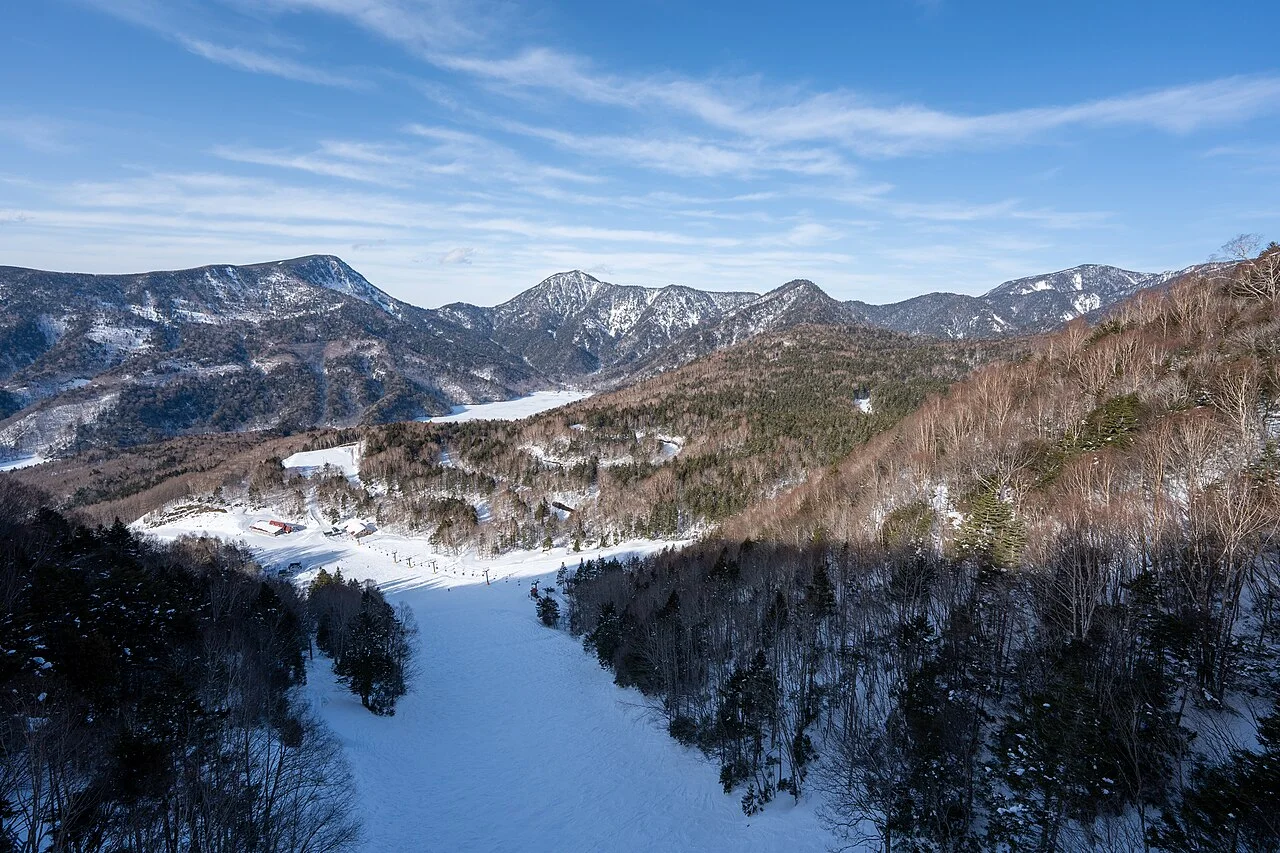
Choosing ski accommodation in Katashina, Gunma for the 2026–27 season: compare Marunuma slopeside lodges, Oze Iwakura Resort Hotel and Iwakura House, plus Shinjuku buses, Tsuchiide shuttles, night skiing and winter road closures.
Marunuma Kogen Stays: Slopeside Chalet and Half-Board Lodge
Chalet Marunuma sits right in the Marunuma Kogen resort area and offers 6-tatami and 10-tatami Japanese-style rooms where guests lay out their own futons and share toilets and washbasins. The property provides an onsen bath for guests, a shared fridge, and a microwave, along with a simple breakfast of bread and coffee in the morning. If you plan to ski until the lifts close, pick up dinner and snacks before heading up the mountain so you can stay in for the evening. When friends share a tatami room, remember to allow floor space for unpacking: two board bags plus ski jackets, gloves, and next-day clothes take up far more room than the same headcount on a standard trip.
If you prefer not to sort out your own evening meal, consider Regent House next to Marunuma Kogen Car Park 3. Each guest room has a private bath and toilet, and winter dinner is served from 18:00 JST. According to rates updated in October 2026, per-person weekday prices with tax for two to four guests per room are ¥12,500 for the half-board Eco plan and ¥13,000 for the Hotel plan with bath towels, nightwear, and amenities. The bed-and-breakfast plan is ¥9,500, excluding the year-end and New Year period. If you travel up from Tokyo on day one and still want the last afternoon run, align your arrival, changing, kit return, and check-in times around the 18:00 dinner service. Travellers arriving later on a weekday can book the B&B plan and dine on the Numata side before heading up; if you book dinner and cannot make 18:00, the lodge asks guests to call ahead. Whether your family values private en-suite bathrooms or a shared hot-spring bath, these two properties offer distinct room and meal setups.
On a one-night trip, much of the first day goes into boot fitting, rental paperwork, and getting your bearings, leaving a fuller morning on day two. Drivers staying at the base of Marunuma should save upper-mountain gondola rides for the second morning and use the first afternoon to explore the open lower runs. Those arriving around midday on the Shinjuku bus can book a half-day session on day one with time for lunch, then buy a full-day pass on day two. If you are taking the bus back to Shinjuku, work backwards from the resort shuttle departure to schedule rental returns and luggage collection.
If someone in your group takes a day off skiing, Centre Station has changing rooms, lockers, and a shop on the ground floor (1F), plus a free rest area and Zazen Onsen on the upper floor (2F). Zazen Onsen opens at 13:00 JST with last entry at 16:30 JST, costing ¥1,000 for adults and ¥800 for primary school children. Drivers can take off their ski boots for a soak before heading home. Those catching the 15:20 JST shuttle who want a bath beforehand should schedule it straight after lunch rather than leaving the last person returning rentals to manage the shuttle meet-up. Agreeing to meet on a specific floor inside Centre Station is also much easier than waiting outdoors by the lifts.
Oze Iwakura Stays: Half-Board Resort Hotel and Twin Rooms at Iwakura House
Choosing Oze Iwakura Resort Hotel in Tsuchiide usually means spending full days at a single resort. The hotel offers Japanese-style, Western-style, and combined Japanese-Western rooms, and guests have access to Tsuchiide Onsen Ichiyama-no-Yu, open from 15:00 to midnight and 5:00 to 9:00 JST the next morning. For the 2026–27 winter season, the main hotel reopens on 12 December. Winter stays feature a buffet dinner with free-flowing drinks, while set-course meals are served on select dates; check the meal format when booking half-board so you can time dinner around night skiing.
Iwakura House is also located within the resort grounds, centred on 19-square-metre twin rooms for one or two guests equipped with a kitchenette and en-suite bathroom, alongside a shared public bath, washing machines, and dryers. Published weekday rates on the official website list ¥14,800 per room for two guests, with breakfast and dinner optional at ¥1,800 and ¥3,200 per adult respectively. On the same weekday basis, adding both meals for two guests comes to ¥24,800 per room, which makes a clear benchmark against half-board twin rates at the main hotel. Groups of three or four wanting to share one room should check actual occupancy limits at the main hotel or nearby guesthouses rather than restricting searches to Iwakura House.
Car Park 1 primarily serves guests of the Resort Hotel and Iwakura House. Day-trippers mainly use Car Park 2, where a resort entrance shuttle runs from 8:00 to 16:30 JST. If you park at Car Park 2 and stay for night skiing, plan your return route to the car separately. The daytime shuttle stops as night skiing begins, so take note of your parking bay, exits, and walking route in daylight, and pack a pair of walking shoes alongside your ski boots. Groups staying at the Resort Hotel or Iwakura House can separate gear and dining arrangements for the second evening and simply walk back in time for their booked slot.
The main hotel also suits mixed parties where some ski for half a day and others prefer to relax at the base. Schedule rentals and lessons early on day one and pick an easy-to-spot meeting point on the ground floor (1F) for the afternoon. If your companions are not skiing, compare rooms by bed configuration, private bathrooms, and meal options—especially for anyone planning a late morning or staying indoors. Before checking out on day two, pack train tickets, coats, and dry socks into a small daypack so you can collect larger bags from storage after skiing without digging through wet gear.
Where to Stay in Koshimoto, Kamata, and Tokura
Over towards Koshimoto, Katashina Kogen is scheduled to operate from 24 December 2026 to 28 March 2027. For ski-only groups who want children to have lessons, meals, and rest in one place, the resort's directly managed Child Lodge and Katashina Kogen Hotel are two straightforward options. Guests staying at the lodges take their luggage to the entrance pickup area upon arrival; the snowcat transfer to the cabins normally runs from 14:30 to 17:00 JST, with transfers after 17:00 JST costing ¥2,200 per trip. Each cabin has its own bathroom, while breakfast and dinner are served at Snow Child Restaurant, so keep snow-ready footwear handy at check-in.
Katashina Kogen Hotel stands roughly 700 metres from the slopes; according to the resort's accommodation FAQ, the complimentary hotel-to-slope shuttle operates from 8:00 to 16:30 JST, and buses on the Kamata Line stop at Katashina Ski-jo Iriguchi, about a one-minute walk from the hotel. Note that this is the stop for Katashina Kogen, whereas guests bound for Oze Iwakura Resort Hotel should alight at Tsuchiide Onsen. The three-storey Katashina Kogen Hotel has no lift, so ask about room floors when booking if you are carrying heavy ski bags or travelling with anyone who finds stairs difficult. Staying in the cabins also involves walking across snow to and from the restaurant, so weigh those two routes if you have a pushchair or mobility needs.
Kamata's advantage lies in route flexibility. If you want to ski two resorts while unpacking only once, driving from a base around Kamata lets you swap the order of Marunuma and Iwakura depending on snow conditions and open trails. Head east up to Marunuma one morning and north to Tsuchiide the next, buying lift passes and rentals separately on each day. If you are travelling by public transport and staying in Kamata, take the Kamata Line north to Tsuchiide for Iwakura and connect to your lodge, or arrange the final leg separately for Marunuma since the Tokura-bound Kamata Line follows a different branch. Roadside Station Oze Katashina and the Kamata bus stop work well as rendezvous points, and you should state your station, date, and arrival time when requesting hotel pickups.
Tokura lies further north towards Oze and puts you closer to the trailheads if you are focusing on Snow Park Oze Tokura or planning warm-season hikes into Oze via Hatomachi Pass or Oshimizu. Before booking winter accommodation in Oze Tokura, check whether the inn sits near the Oze Tokura stop in the village or at the Snow Park Oze Tokura terminus. Kan-etsu Kotsu's winter timetable separates the two stops and suspends the final stretch from 1 to 20 December, starting and ending services at Oze Tokura instead. When travelling between seasons, Oze Tokura offers hot-spring inns, though the Hatomachi Pass shuttle and winter ski transport run on two separate systems.
Getting There from Tokyo: Direct Ski Bus vs Shinkansen Connections
If you are not driving and your dates fall within the operating season, you can book the reservation-only Katashina Snow Express from Shinjuku Expressway Bus Terminal (Busta Shinjuku). Marunuma Kogen lists the scheduled season from 19 December 2026 to 21 March 2027, running one round trip daily: departing Shinjuku at 7:35 JST and returning from Roadside Station Oze Katashina at 16:00 JST. Fares are ¥4,500 one-way and ¥8,000 return, half price for children. Tickets go on sale from one month prior to travel until 15:00 JST the day before departure, and overnight guests can book the return leg for a later date. When friends buy tickets individually over holiday weekends, coordinate the exact travel date and direction first so nobody accidentally books a same-day return.
To transfer onto each resort's free shuttle from the roadside station, you must select your resort and direction when purchasing the highway bus ticket—add both legs if travelling round trip. Shuttles are operated by each resort and run non-stop with no intermediate boarding or alighting. Marunuma's shuttle timetable departs the roadside station at 11:15 JST, arriving at 11:45 JST, with the return coach leaving Marunuma at 15:20 JST. If your accommodation sits between the roadside station and the slopes, ski the daytime session first and follow your inn's transfer instructions, or arrange a pickup at the roadside station. Travellers taking the bus to Oze Iwakura for night skiing should stay slopeside and book their return bus for the next day, as the 16:00 JST departure back to Shinjuku leaves before night skiing starts.
To bypass the seasonal dates of the Shinjuku coach, take the Joetsu Shinkansen to Jomo-Kogen Station and transfer to Kan-etsu Kotsu's Kamata Line bus, or take the JR Joetsu Line to Numata Station and board the same bus route. On the winter timetable effective from 1 December 2026 to 31 March 2027, some departures start from Jomo-Kogen while others run only between Numata and Katashina. Buses bound for Tsuchiide must continue north past Kamata; services terminating at Kamata do not reach the resort. Guests at Oze Iwakura Resort Hotel should telephone in advance to reserve a pickup from the Tsuchiide Onsen bus stop. If you leave Tokyo in the afternoon, confirm your hotel pickup and dinner check-in deadline before buying your Shinkansen ticket.
Following the suspension of the winter Marunuma bus route, Katashina Village introduced replacement transport between Kamata and Hatsudensho Iriguchi from 1 November 2026 for registered recipients of the bus fare subsidy. Winter rail-and-bus travellers bound for Marunuma should arrange a lodge pickup or taxi from Kamata. For spring skiing at Marunuma in April, after the seasonal Shinjuku bus finishes and the Kamata Line switches timetables, lock in your final leg up to Marunuma and your return to the station before paying for accommodation. Groups sharing a ride with long board bags should give the driver or taxi firm an exact luggage count, as a vehicle with enough seats may not have matching boot space.
2026–27 Lift Passes: Match Your Stay Length Before Booking Overnight
Marunuma Kogen's full winter season is scheduled from 4 December 2026 to 5 May 2027. Early-season rates run until 18 December at ¥5,200 for an adult one-day pass and ¥2,500 for primary and junior high pupils. Peak rates begin on 19 December, with on-site adult one-day passes at ¥6,000 on weekdays, ¥6,700 on weekends and public holidays, and ¥7,000 on designated peak dates, while primary and junior high pupils pay ¥3,000 across all days. Designated dates cover the year-end, New Year period, and select weekends in January and February. When planning your holiday dates, check each day against the resort's own fare calendar so you can calculate pass differences separately from lodging; if you ski one weekend day and one weekday, buy each day's pass at its respective rate.
During peak season, Marunuma's Friendly Pass covers only the lower Chuo Lift, Lift No. 1, and Lift No. 4. It costs ¥3,500 on weekdays and ¥3,800 on weekends, public holidays, and designated dates for adults, and ¥2,000 for primary and junior high pupils. For two adults and two primary or junior high pupils practising on the lower slopes on a weekday, four Friendly Passes total ¥11,000 compared with ¥18,000 for four peak weekday full-day passes. Weigh that saving against where ski lessons meet and which runs are open that day. Upgrading from a weekday adult Friendly Pass to full-mountain access in the afternoon costs ¥2,600, bringing the total to ¥6,100—slightly more than buying a one-day pass outright—so if adults plan to head higher while children stay low, buy different passes for each.
Marunuma's same-day five-hour consecutive pass costs ¥5,400 on peak weekdays, just ¥600 less than a one-day pass, and lunch breaks count within those five hours. Frequent visitors returning several times in one winter can compare the 10-hour time-bank pass at ¥11,000 or the 20-hour pass at ¥20,000, with online versions offering 11 and 22 hours respectively for the same price. Unused hours carry over to later visits within the same season. However, if you are only staying one night in Gunma and visiting two different resorts across two days, a multi-hour pass for a single mountain often leaves unused credit behind. First-time online buyers at Marunuma scan a QR code at an automated ticket machine to collect an IC card, while holders of an existing card can top up online and head straight to the lifts.
Oze Iwakura is scheduled to operate from 12 December 2026 to 4 April 2027. Standard operating hours are 8:30 to 16:45 JST, with last lift boarding at 16:30 JST. Adult one-day passes are ¥6,000 on weekdays, ¥6,700 on weekends and public holidays, and ¥7,200 on designated dates, while five-hour consecutive passes are ¥5,600, ¥6,100, and ¥6,600 respectively. Note that Iwakura places senior high school students in the high school / junior high rate tier, whereas Marunuma charges them as adults, so select age brackets carefully when travelling with teenagers. First-time buyers at Oze Iwakura collect their IC card on site, while returning visitors with a dedicated card can top up online; clarify who holds which card before zipping them into pockets, especially when mixing age tiers.
Night skiing at Oze Iwakura costs ¥2,500 for adults and is scheduled on 11 dates: 31 December 2026, 2, 9, 10, 16, 23, and 30 January 2027, and 6, 13, 20, and 27 February 2027. The Romance, Expert Lower, and Family runs open for evening sessions, with Quad Lift No. 3 running until 19:45 JST, Pair Lift No. 7 until 19:30 JST, and the resort open until 20:00 JST. If you want to pack in evening laps, schedule night skiing on the night you stay slopeside. Guests eating dinner at the Resort Hotel or Iwakura House can ski a short first session and return in time for their meal booking; if only two members of a group want to ski at night, there is no need for everyone to buy night passes or delay dinner.
Driving Conditions: The Final Mountain Stretch Makes All the Difference
Gunma Prefecture has announced that the Konsei Road section of Route 120—from the Marunuma Ski Resort entrance to the Tochigi prefectural border and Konsei Tunnel—is scheduled to close for winter from 12:00 JST on 25 December 2026 to 12:00 JST on 23 April 2027. Exiting the Kan-etsu Expressway at Numata IC and approaching Marunuma from the Gunma side along Route 120 takes around 50 minutes according to the resort's website. Anyone hoping to stay in Nikko first and drive over via Lake Chuzenji the next day will need to schedule the two areas on separate trips; setting Numata IC as a waypoint also stops satnavs from routing you towards Konsei Pass.
Book a hire car with winter tyres and confirm that correctly sized snow chains are stowed in the boot. NEXCO East notes that when full-vehicle chain regulations are enforced, even cars already fitted with winter tyres must put on chains to pass. Even the Gunma-side approach to Marunuma involves mountain roads, so ask the rental desk how to fit the chains and check road advisories before setting off—scrambling for equipment at a checkpoint delays both skiing and check-in. If you leave Tokyo after work on day one and still want dinner at your inn, book a rate with a later arrival window or stay overnight in Numata and drive up in daylight. When heavy snow is forecast, adjust your ascent time first; holding off on a day-one lift pass makes itinerary changes much easier.
When travelling with children or sharing a car, pack overnight food and snow boots in an easily reachable spot in the back seats before entering the mountains. Some car parks at Marunuma sit a walk from Centre Station; during the peak period listed on the official website from 12 December to 4 April, designated areas such as Chuo and Car Park 1 charge ¥1,000 on weekends, public holidays, and peak dates, while Car Parks 2 to 4 are free. If you need to drop passengers and bags at the door first, one adult can take the children inside while the other parks and rejoins them. Note also that the Chuo car park closes its gates at 17:30 JST, so guests at mountain lodges should use the parking area assigned by their accommodation.
If the forecast worsens, check first whether any road closure affects the mandatory route to your inn, then see which lifts the resort expects to run. When only gentle lower slopes open in the morning, families with lessons may still be able to stick to their plan. Experienced riders aiming specifically for upper-mountain runs can focus on a single resort for the day or swap the first afternoon for an onsen soak. Leave time on the Numata side to refuel and clear snow off the hire car before returning it, rather than treating the last lift as your departure countdown.
How to Structure a Two-Day, One-Night Trip Around Your Return Journey
For a car-free overnight stay at Marunuma, leave Shinjuku in the morning and spend the afternoon getting rentals sorted and learning the pistes at that same resort. Reserve the full second morning for formal lessons or the runs you most want to ski. To catch the 15:20 JST bus back to the roadside station, work backwards straight after lunch through returning rentals, changing footwear, and collecting luggage. Even skiers with their own kit need time to pack board bags and wet outerwear, and anyone returning separately should hold their own bus ticket rather than keeping every pass on one person's phone.
A two-day trip featuring night skiing works best starting at Oze Iwakura. Focus on the upper slopes during daylight on day one, return to your room before daytime lifts close to add warm layers, and time your evening session around dinner. Staying by Car Park 1 lets companions step off the snow whenever they finish and swap easily into warm boots during the day. If you plan to ski again on day two, keep protectors and a dry change of clothes near the top of your bag, and keep luggage storage and gear return on the same side of the base. Families wanting a long soak can put their main hot-spring session on the first evening so day two stays focused on making the journey home; anyone staying until night skiing finishes at 20:00 JST will need transport back to Kamata, Numata, or Tokyo that runs after that hour.
Drivers skiing two resorts can let snow coverage and group ability dictate the order, heading to whichever mountain has the most suitable trails open each day. If you want day-one lessons and dinner in one convenient base, stay beside the resort hosting your lesson, check out the next morning, and drive to the second mountain. To avoid repacking luggage, stay two nights in one place and save the extra drive for the middle day. Lift tickets are valid only at the issuing resort, and rentals must be returned where hired. Once you add two separate sets of rentals, parking, and meals into the total budget, it becomes clear whether switching mountains is worth the effort—especially for first-time children, who often progress faster with a second day in the same boots on a familiar slope.
When comparing package deals that include lift passes, check which resort, dates, and guests are covered—particularly for families where not everyone skis. At Oze Iwakura on a weekday, two adult one-day passes alone cost ¥12,000, rising by ¥5,000 if both add night passes. Non-skiing companions coming just for the hot springs or to watch from the base should request room-only or room-and-board quotes first. Itemise clothing rentals, board or ski rentals, transport, and dinner separately so you can see whether a higher package price is paying for meals, extra slope hours, or slopeside convenience.
On a two-day stay at the same resort, rentals account for a sizeable share of the bill. Marunuma Kogen's rental counter accepts orders from 8:00 to 17:00 JST and requires photo ID; gloves, goggles, and beanies must be brought from home or purchased on site, and adult and children's sizing charts are published separately online. At Oze Iwakura, guests staying at the Resort Hotel or Iwakura House receive a ¥1,000 discount on ski or snowboard sets, clothing sets, and full packages—collect your discount voucher from the hotel reception before heading to rentals. Standard daytime rentals at Iwakura run until 16:30 JST, so guests using rented kit for night skiing should select a package covering evening hours from the outset. Note that junior high pupils pay adult rental rates at Iwakura while falling under the high school / junior high lift-ticket tier, so budget those two lines separately; anyone only stepping outside to watch should still bring waterproof walking boots, leaving properly fitted ski boots to those actually riding.
Adjusting Your Base for Spring Skiing, Lakeside Stays, and Oze Hikes
When the tail end of the ski season stretches into April, three dates shape your plan: Oze Iwakura is scheduled to close on 4 April, Marunuma stays open until 5 May, and Gunma Prefecture lists Konsei Road to reopen at 12:00 JST on 23 April. If you want both skiing and hot springs in early April, look at accommodation on the Marunuma slopeside or commute from the Numata side by day. Once late April arrives, Kankoso comes back into play for travellers wanting a lakeside overnight stay. If you plan a half-day spring ski followed by an afternoon drive into Okunikko over the holidays, plan around the actual lifting of Konsei Road closures and keep an eye on changing road conditions between sunny valley floors and high mountain passes.
Kankoso is described on its official site as a lakeside inn by Lake Marunuma at roughly 1,430 metres elevation, where all 16 guest rooms look out onto the lake and rooms have no air conditioning. Summer hikers tackling Mt. Nikko-Shirane who want to spend late afternoon by the water will find this side well placed. Early-start walkers should check breakfast serving times and trail openings before deciding between a half-board lakeside inn or a simpler lodge where they can prepare their own breakfast. Spring visitors combining lake views with a gondola ride should also check whether they are buying a ski-season pass or a green-season gondola ticket, as the two operating periods are announced separately.
For trips focused on hiking the Oze marshes, shift your base north to Tokura. Gunma Prefecture's 2026–27 winter closures—covering Tsunagi Bridge to Hatomachi Pass and the Tokura junction towards Oshimizu—are scheduled to reopen at 10:00 JST on 16 April 2027. That date marks road-management reopening; actual entry into Oze still requires following seasonal traffic controls for transfers at Tokura and matching shuttle timetables to your walking route. Walking from Hatomachi Pass down to Yamanohana and Ozegahara is a separate trailhead from approaching Ozenuma via Oshimizu, so pick your route before booking an inn close to the right departure point. If anyone in your group stays behind or arrives late, confirm in writing which village you will meet at the next day.
Between seasons, when you want a stop that does not rely on ski lifts, schedule lunch at Roadside Station Oze Katashina in Kamata. Katashina Shokudo serves Oze Meisui Udon alongside a farm shop for supplies, giving bus travellers a practical meal stop while waiting for connections. Plan ahead if you want to use the panoramic footbath during its open season, as in winter that hot-spring water is diverted to melt snow along Route 120. Leaving time for children to use the toilets and for motion-sensitive passengers to have a light bite before transferring to the Shinkansen makes the journey home far more comfortable.
A few useful answers
Should I stay at Marunuma Kogen or Oze Iwakura when skiing in Katashina?
For two consecutive days at Marunuma, stay at Chalet Marunuma or Regent House beside Car Park 3. For night skiing at Oze Iwakura, stay slopeside at Oze Iwakura Resort Hotel or Iwakura House so you can walk straight back to your room afterwards. If you are driving to both resorts from a single base, Kamata makes it easy to turn towards either valley.
Is Marunuma Onsen Kankoso open during winter?
Kankoso closed for the season after its final night on 22 November 2026 and is scheduled to reopen in late April 2027. Travellers skiing at Marunuma in winter who want a hot-spring soak can stay at Chalet Marunuma or visit Zazen Onsen on the upper floor (2F) of Marunuma Kogen Centre Station.
How do I reach Katashina ski resorts from Tokyo without a car?
The seasonal Shinjuku ski bus is scheduled to run from 19 December 2026 to 21 March 2027; reserve the free resort shuttle from Roadside Station Oze Katashina when buying your coach ticket. Alternatively, take the Joetsu Shinkansen to Jomo-Kogen Station or the JR Joetsu Line to Numata Station and transfer to the Kamata Line bus. Guests at Oze Iwakura Resort Hotel can reserve a pickup from the Tsuchiide Onsen bus stop.
Does Oze Iwakura offer night skiing every weekend?
For the 2026–27 winter season, night skiing is scheduled on only 11 select dates between 31 December and 27 February, as listed on the resort's official website. An adult night pass costs ¥2,500 and lifts stay open until 20:00 JST. Because the Shinjuku seasonal bus returns at 16:00 JST, book your return journey for the next day if you plan to ski at night.
How do I drive from Nikko to Marunuma Kogen in winter?
Gunma Prefecture has announced that the Konsei Road section from the Marunuma Ski Resort entrance to the Tochigi border and Konsei Tunnel is scheduled to close from 12:00 JST on 25 December 2026 to 12:00 JST on 23 April 2027. Leave the Kan-etsu Expressway at Numata IC and approach via Route 120 from the Gunma side instead.
Are snowboards allowed at Marunuma Kogen, Oze Iwakura, and Katashina Kogen?
Both skis and snowboards are permitted at Marunuma Kogen and Oze Iwakura, whereas Katashina Kogen is open exclusively to skiers. Mixed groups wanting to stay at one resort should choose Marunuma Kogen or Oze Iwakura.
Official information and references
Sources used in this guide.
- Katashina Village Tourism Association | Village Areas and Access
- Marunuma Kogen Ski Resort | 2026–27 Season, Lift Passes and Ticket Pickup
- Marunuma Kogen Ski Resort | Winter Access, Parking and Shuttles
- Marunuma Kogen Ski Resort | Chalet Marunuma Room Types and Facilities
- Regent House | Location and Dinner Arrangements
- Regent House | En-Suite Bathrooms and Guest Information
- Regent House | Accommodation and Meal Plans
- Marunuma Kogen Ski Resort | Centre Station and Zazen Onsen
- Marunuma Kogen Ski Resort | Rental Specs and Opening Hours
- Oze Iwakura Ski Resort | 2026–27 Lift Passes and IC Cards
- Oze Iwakura Ski Resort | 2026–27 Operating Dates and Night Skiing
- Oze Iwakura Ski Resort | Parking and Resort Shuttles
- Oze Iwakura Ski Resort | Rental Hours, Rates and Guest Discounts
- Oze Iwakura Resort Hotel | Room Types and Facilities
- Oze Iwakura Resort Hotel | Winter Reopening on 12 December 2026
- Oze Iwakura Resort Hotel | 2026–27 Bookings and Winter Dinner
- Oze Iwakura Resort Hotel | Guest Bathing Hours at Tsuchiide Onsen
- Oze Iwakura Resort Hotel | Tsuchiide Onsen Bus Stop Transfers
- Iwakura House | Twin Rooms, Meal Rates and Facilities
- Katashina Kogen Ski Resort | 2026–27 Opening Dates and Facilities
- Katashina Kogen Ski Resort | Lodge and Hotel Accommodation FAQ
- Katashina Kogen Ski Resort | Access from Jomo-Kogen, Numata and Bus Stops
- Kan-etsu Kotsu | Shinjuku–Katashina Ski Bus and Reserved Shuttles
- Kan-etsu Kotsu | Kamata Line Winter Outbound Timetable
- Kan-etsu Kotsu | Kamata Line Winter Return Timetable
- Katashina Village | Replacement Transport During Marunuma Line Suspension
- Gunma Prefecture Road Management Division | 2026–27 Winter Closures for Konsei Road and Oze
- NEXCO East | Winter Tyre and Snow Chain Regulations
- Marunuma Onsen Kankoso | End of 2026 Season and Planned April 2027 Reopening
- Marunuma Onsen Kankoso | Lakeside Setting and Guest Rooms
- Gunma Prefecture Nature Conservation Division | Oze Entry Traffic Controls
- Roadside Station Oze Katashina | Oze Meisui Udon and Dining Hall
- Roadside Station Oze Katashina | Footbath and Winter Snow-Melting Use