Where to stay in Katashina, Gunma for the 2026–27 ski season. Compare Marunuma ski chalets, Oze Iwakura Resort Hotel, and Iwakura House, plus Shinjuku buses, Tsuchiide shuttles, night skiing, and winter road closures.
- Region & Focus
- KantoHotels and stays
- Reading Scope
- 21 min read · 9 chapters · 6 Q&As
- Official Verification
- 33 official sources checkedUpdated November 22, 2026
- Key Topics
- Where to stayWinterRyokan
Chapter Route Map (tap any stop)
- Pick Your Base Around Tomorrow's Ski Area
- Marunuma Kogen Stays | Slopeside Chalet and Meal-Included Lodges
- Oze Iwakura Stays | Half-Board Main Hotel and Twin Rooms at Iwakura House
- Koshimoto, Kamata, and Tokura | Matching Each Village to Your Trip
- From Tokyo | Direct Ski Buses and Shinkansen Connections
- 2026–27 Lift Tickets | Match Passes to Hours on Snow Before Booking a Night
- Driving In | The Last Stretch of Mountain Road Makes the Difference
- How to Plan a 1-Night, 2-Day Trip | Work Backward from Departure
- Spring Skiing, Lakeside Inns, and Oze Hiking | When to Shift Your Base
- Quick Q&A
Start choosing your Katashina stay by checking which ski area you are hitting the next morning. For Marunuma Kogen, stay in Higashiogawa at the slopeside chalet or a nearby lodge with dinner included. If you plan to ski into the evening at Oze Iwakura, book slopeside in Tsuchiide so you skip a downhill shuttle after dark. Drivers splitting days between both mountains will find Kamata at the main junction easiest for switching resorts. Coming by bus from Shinjuku? Reserve your shuttle from Michi-no-Eki Oze Katashina to the slopes ahead of time. Note that lakeside Marunuma Onsen Kankoso closes to overnight guests for the winter—save that hot-spring inn for spring.
Pick Your Base Around Tomorrow's Ski Area
If you only have one morning to ski, book right next to the resort you want to ride. Driving in from the Kan-etsu Expressway via Numata IC, you follow Route 120 into Katashina until Kamata: head east from there to reach Marunuma Kogen in Higashiogawa, or turn north onto Route 401 for Tsuchiide, Oze Iwakura, and Tokura. Kamata has bus stops and a roadside station, making it handy for pickups, lunch breaks, or splitting up the group. If you are skiing the same mountain every day, staying halfway in between just adds two extra gear-loading trips and a morning debate over who needs the car first.
What tests a lodging choice most is when half the group wants to call it early. If some skiers ride until last chair while others want out of their boots by 2:00 PM, slopeside lodging at Oze Iwakura lets everyone move on their own schedule. Groups heading up together and returning for dinner can choose a meal-included lodge near Marunuma or drive from a base in Tsuchiide or Koshimoto. Car-free travelers reaching a bus-served hamlet still need to connect the final leg to the lifts—especially with luggage, kids, or night-ski plans. When booking, confirm the exact bus stop name and shuttle drop-off point; two properties that both list Katashina Village as their address can require completely different transfers.
Two pairs of names are also easy to confuse. Chalet Marunuma next to the Marunuma Kogen slopes and lakeside Marunuma Onsen Kankoso are separate properties: the former is the resort's own lodging, while Kankoso closed for the season after its final overnight stay on November 22, 2026 and is slated to reopen in late April 2027. The other lookalike is Katashina Kogen, which stands apart because it is a skiers-only mountain. Snowboarders should stick to Marunuma Kogen or Oze Iwakura, and mixed ski-and-snowboard groups should follow the same rule when booking rooms.
Families taking lessons can also anchor their stay around the ski school meeting point. For a morning class, the lodge with the shortest drive buys extra time to pick up rentals, swap out tight ski boots, or let kids finish breakfast indoors. If part of your group only wants to see snow without renting gear, prioritize dinner quality, bathing facilities, and village transit access over being right at the lift. Once you decide who will actually walk back to the room in ski boots each day, comparing room rates gets much easier.
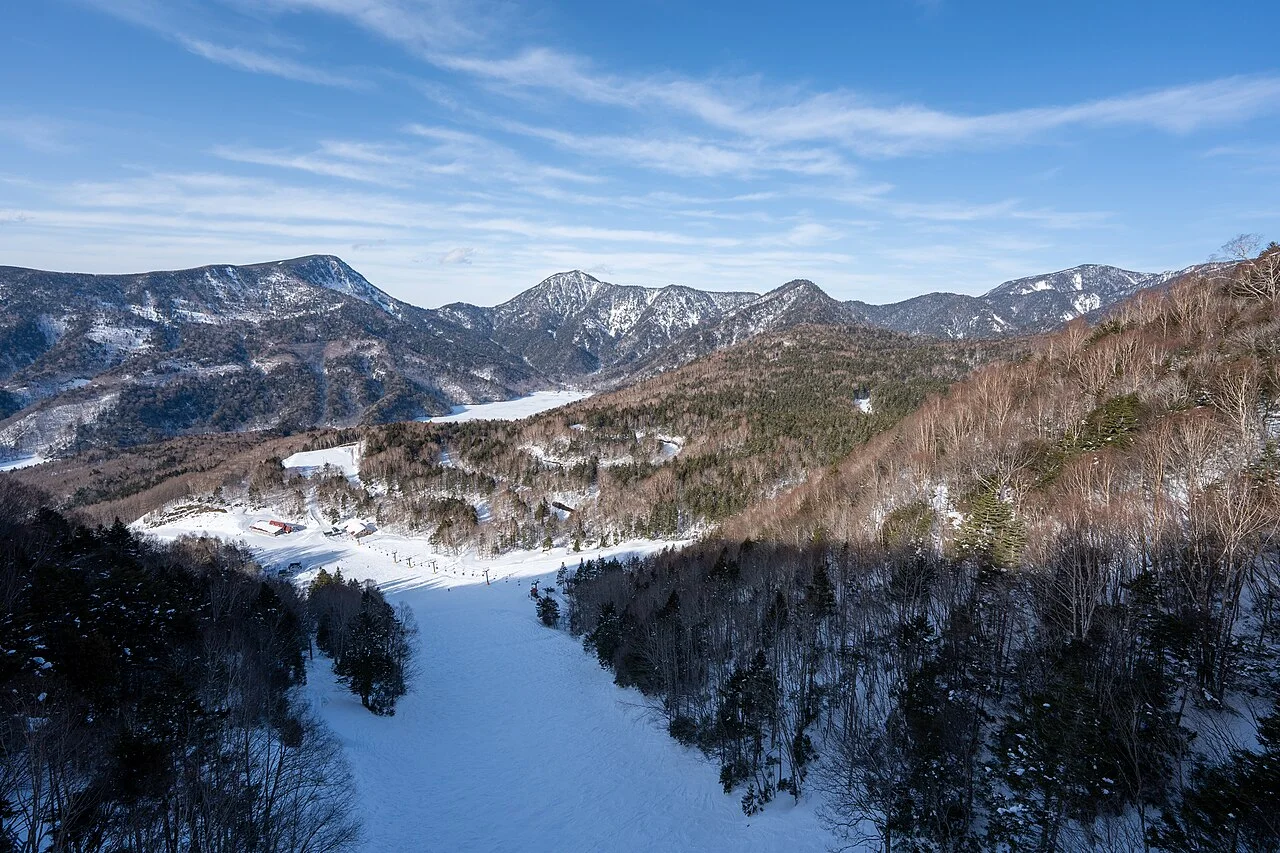
Where to stay in Katashina, Gunma for the 2026–27 ski season. Compare Marunuma ski chalets, Oze Iwakura Resort Hotel, and Iwakura House, plus Shinjuku buses, Tsuchiide shuttles, night skiing, and winter road closures.
Marunuma Kogen Stays | Slopeside Chalet and Meal-Included Lodges
Chalet Marunuma sits in the Marunuma Kogen base area with 6-tatami and 10-tatami Japanese-style rooms, where guests lay out their own futons and share toilets and washbasins. The building has an on-site hot spring for guests, a shared refrigerator, and a microwave, and serves a simple breakfast of bread and coffee. If you want to ski until closing, pick up dinner and snacks before heading up the mountain so you can stay put for the night. When friends share a tatami room, factor in floor space for open luggage—two board bags plus outerwear, gloves, and day-two street clothes take up far more room than a typical trip for the same headcount.
If you would rather not pack your own dinner, look at Regent House right beside Marunuma Kogen's Parking Lot 3. Every guest room has a private bath and toilet, and winter dinner starts at 6:00 PM. Under rates updated in October 2026 (per person, tax included, for 2–4 guests per room on weekdays), the half-board Eco Plan is ¥12,500 and the Hotel Plan with bath towels, sleepwear, and amenities is ¥13,000. The B&B plan with breakfast only is ¥9,500 and is unavailable over New Year's. If you are riding up from Tokyo on day one and still want the last afternoon laps, line up your arrival, changing, gear return, and lodge check-in together. Guests arriving later on weekdays can book the B&B plan and eat dinner near Numata; if you book dinner and will miss 6:00 PM, the lodge asks that you call ahead. Between private en-suite baths for families and a shared onsen soak, these two properties offer distinct room and meal setups.
On a one-night trip, day one often goes to boot fitting, rental paperwork, and learning the layout, leaving day two for a solid morning on snow. If you drive and stay at the Marunuma base, save upper-gondola runs for day two and warm up on the open lower trails on day-one afternoon. Riders arriving around noon on the Shinjuku bus can treat day one as a half-day session with time for lunch, then buy a full-mountain ticket the next day. For the Shinjuku return bus, work backward from the resort shuttle departure to schedule gear returns and bag pickup.
If someone in your group takes a day off from skiing, Center Station has changing rooms, lockers, and a shop on the first floor, plus a free lounge and Zazen Onsen on the second floor. Zazen Onsen opens at 1:00 PM with last entry at 4:30 PM, costing ¥1,000 for adults and ¥800 for elementary school students. Drivers can unbuckle their boots for a soak before hitting the road. Travelers catching the 3:20 PM shuttle who want a soak should slot it right after lunch so the last person returning rentals isn't holding up the bus. For indoor meetups, pick a specific floor inside Center Station rather than waiting outside by a lift.
Oze Iwakura Stays | Half-Board Main Hotel and Twin Rooms at Iwakura House
Choosing Oze Iwakura Resort Hotel in Tsuchiide usually means spending the full day on one mountain. The hotel offers Japanese-style, Western-style, and Japanese-Western rooms, and guests bathe in Tsuchiide Onsen 'Ichiyama-no-Yu,' open from 3:00 PM to midnight and 5:00 AM to 9:00 AM the next morning. For the 2026–27 season, the main hotel reopens on December 12. Winter stays feature a dinner buffet with all-you-can-drink options (set courses on select dates); when booking a meal plan, check that day's dinner service to order your night skiing and meal times.
Also right on the resort grounds, Iwakura House focuses on 19-square-meter twin rooms for one or two guests, equipped with a mini-kitchen and private bath, plus shared large baths, washers, and dryers in the building. Published weekday rack rates list the twin room at ¥14,800 per room for two guests, with breakfast and dinner booked separately at ¥1,800 and ¥3,200 per adult. On the same weekday basis, two guests adding both meals pay ¥24,800 total—a useful benchmark against two-person half-board rates at the main hotel. Groups of three or four wanting one room should check actual room capacities at the main hotel or nearby guesthouses instead of forcing a search around Iwakura House.
Resort Parking Lot 1 primarily serves guests of the main hotel and Iwakura House. Day-trippers mostly use Parking Lot 2, where the shuttle to the resort entrance runs from 8:00 AM to 4:30 PM. If you park in Lot 2 and plan to stay for night skiing, plan your return route to the car in advance. Daytime shuttles stop when night skiing starts, so scout your parking spot, exit, and walk back while it is still light—and pack walking shoes beyond your ski boots. Groups staying at the main hotel or Iwakura House can split evening gear and meals separately and simply walk back when dinner time arrives.
The main hotel also works well when half the group skis a half-day and the rest relax at the base. Schedule rentals and lessons early on day one, then meet in an easy-to-spot place on the first floor in the afternoon. If non-skiers are joining, start your room search with bed setup, private-bath availability, and meal plans—especially for anyone sleeping in or skipping the morning cold. Before checking out on day two, pack train tickets, jackets, and dry socks into a day bag so you don't bury dry clothes at the bottom of stored luggage after your final runs.
Koshimoto, Kamata, and Tokura | Matching Each Village to Your Trip
Toward Koshimoto, Katashina Kogen is scheduled to operate from December 24, 2026 to March 28, 2027. For all-ski groups who want kids to take lessons, eat, and rest in one place, the resort's direct-run Child Lodge cabins and Katashina Kogen Hotel are the two main options. Cabin guests bring luggage to the resort entrance waiting area, where a snowcat shuttles up to the lodging zone normally between 2:30 PM and 5:00 PM; transfers after 5:00 PM cost ¥2,200 per trip. Each cabin has a bath, while breakfast and dinner mean walking over to the Snow Child restaurant, so keep snow-ready shoes handy at check-in.
Katashina Kogen Hotel sits roughly 700 meters from the slopes; its official lodging FAQ lists a free hotel-to-slope shuttle from 8:00 AM to 4:30 PM, and the Kamata Line bus stops at 'Katashina Ski-jo Iriguchi,' about a one-minute walk from the hotel. That stop serves Katashina Kogen—guests bound for Oze Iwakura Resort Hotel should get off at 'Tsuchiide Onsen' instead. The three-story Katashina Kogen Hotel has no elevator, so ask about room floors when booking if you carry multiple ski bags or have guests who struggle with stairs. Cabin stays also involve walking across snow to and from meals, which helps families with strollers or mobility needs compare the two options.
Kamata's strength is flexibility at the crossroads. Drivers skiing both resorts who only want to unpack once can stay around Kamata and swap the order of Marunuma and Oze Iwakura depending on snow conditions and open trails. Head east up to Marunuma one morning and north to Tsuchiide the next, buying lift tickets and rentals separately each day. Car-free travelers staying in Kamata bound for Iwakura can catch the Kamata Line toward Tsuchiide and connect to their lodge; those headed to Marunuma need to arrange that final leg separately, since Tokura-bound Kamata Line buses follow the other valley road. Michi-no-Eki Oze Katashina and the Kamata bus stop make clear meetup spots, and any shuttle inquiry should state your exact stop, date, and arrival time.
Tokura lies farther north toward Oze, putting you closer to Snow Park Oze Tokura in winter or to the Hatomachi Pass and Oshimizu trailheads in the warmer months. Before booking winter lodging in Oze Tokura, check whether your lodge is near 'Oze Tokura' in the village or at the resort terminus 'Snow Park Oze Tokura.' Kan-etsu Kotsu's winter timetable splits the two: from December 1 to December 20 that upper stretch is suspended, with buses starting and ending at Oze Tokura. On shoulder-season trips, Oze Tokura has hot-spring inns, though Hatomachi Pass shuttles and winter ski transit operate as completely separate systems.
From Tokyo | Direct Ski Buses and Shinkansen Connections
Without a car during the operating window, you can take the reservation-only 'Katashina Snow Express' from Shinjuku Expressway Bus Terminal (Busta Shinjuku). Marunuma Kogen lists the scheduled operating window as December 19, 2026 to March 21, 2027, running one round trip daily: departing Shinjuku at 7:35 AM and returning from Michi-no-Eki Oze Katashina at 4:00 PM. Fares are ¥4,500 one-way and ¥8,000 round-trip, half price for children. Tickets go on sale from one month ahead until 3:00 PM JST the day before departure, and overnight guests can book the return leg on a different day. If group members buy tickets separately over a holiday weekend, align the exact date and direction first so no one accidentally books a same-day return.
To ride the free resort shuttle from the roadside station, add your chosen ski area and direction when booking the express bus—select it twice if you need both ways. Each resort runs its own direct shuttle with no intermediate stops or pickups. Marunuma's timetable departs the roadside station at 11:15 AM (arriving 11:45 AM) and leaves Marunuma at 3:20 PM on the return. If your lodge sits between the roadside station and the resort, ski the daytime session first and use your lodge's transfer—or arrange a pickup at the roadside station. Travelers taking the bus for night skiing at Oze Iwakura should stay slopeside and book the return bus for the next day, since the 4:00 PM Shinjuku departure leaves before night skiing starts.
To travel outside the Shinjuku bus dates, ride the Joetsu Shinkansen to Jomo-Kogen Station or the JR Joetsu Line to Numata Station, then transfer to Kan-etsu Kotsu's 'Kamata Line.' Under the winter timetable running December 1, 2026 through March 31, 2027, some buses start at Jomo-Kogen while others only run between Numata and Katashina. Buses to Tsuchiide must continue north past Kamata—trips terminating at Kamata won't take you straight through. Guests staying at Oze Iwakura Resort Hotel can reserve a pickup by phone from the 'Tsuchiide Onsen' stop. Leaving Tokyo in the afternoon? Lock in your lodge pickup cutoff and dinner time before buying your Shinkansen ticket.
While the winter Marunuma bus route is suspended, Katashina Village runs an alternative transfer between Kamata and 'Hatsudensho Iriguchi' starting November 1, 2026 for eligible transit-subsidy applicants. Winter rail-and-bus travelers bound for Marunuma after reaching Kamata can arrange a lodge pickup or taxi instead. For April spring skiing at Marunuma—after the seasonal Shinjuku bus ends and the Kamata Line switches schedules—confirm both the final leg up to Marunuma and your ride back to the station before paying for lodging. If sharing a cab with long board bags, tell the taxi company your exact bag count; a vehicle that seats everyone may not fit all the gear.
2026–27 Lift Tickets | Match Passes to Hours on Snow Before Booking a Night
Marunuma Kogen's full ski season is scheduled from December 4, 2026 to May 5, 2027. Early-season rates run through December 18 at ¥5,200 for an adult 1-day pass and ¥2,500 for elementary and junior high students. Peak-season rates begin December 19, with window 1-day adult passes at ¥6,000 on weekdays, ¥6,700 on weekends and holidays, and ¥7,000 on designated peak dates, while elementary and junior high passes stay at ¥3,000. Designated dates cover year-end/New Year's and select weekends in January and February. When setting your trip dates, check each day against the resort's pricing calendar so you can weigh ticket differences separately from lodging—skiing one weekend day and one weekday simply lets you buy each day at its own rate.
Marunuma's peak-season Friendly Pass covers only the lower-mountain Central, No. 1, and No. 4 lifts, priced at ¥3,500 on weekdays and ¥3,800 on weekends, holidays, and designated dates for adults, and ¥2,000 for elementary and junior high students. Two adults and two elementary/junior high kids practicing on the lower slopes on a weekday pay ¥11,000 total versus ¥18,000 for four full-mountain weekday passes—a gap worth judging by your lesson meeting point and open terrain. If an adult later upgrades from a weekday Friendly Pass to the full mountain for the afternoon, the ¥2,600 upgrade brings the total to ¥6,100, slightly more than buying a 1-day pass upfront. When adults ride the upper mountain while kids stay below, buy separate pass types.
Marunuma's consecutive 5-hour pass is ¥5,400 on peak weekdays—¥600 less than a 1-day pass, with lunch eating into those five hours. Returning several times in one season? Compare the split-use 10-hour pass (¥11,000) and 20-hour pass (¥20,000), or the 11-hour and 22-hour online versions at the same prices, since unused hours carry over to later visits within the same season. On a one-night Gunma trip skiing two different mountains, multi-hour passes for one resort often leave unused hours behind. First-time online buyers at Marunuma scan a QR code at an automated kiosk to pick up a card, while returning holders of an existing IC card can top up online and head straight to the lifts.
Oze Iwakura is scheduled to operate from December 12, 2026 to April 4, 2027. Regular lift hours are 8:30 AM to 4:45 PM, with last chair at 4:30 PM. Adult 1-day passes are ¥6,000 on weekdays, ¥6,700 on weekends and holidays, and ¥7,200 on designated dates; consecutive 5-hour passes are ¥5,600, ¥6,100, and ¥6,600 respectively. Note that Iwakura places high schoolers in the junior/senior high tier whereas Marunuma charges them adult rates, so check age categories carefully when buying for teens. First-time Iwakura buyers pick up their IC card on-site and can recharge existing resort IC cards online—label or assign each person's card before tucking them into jacket pockets, especially when mixing age tiers.
Night skiing at Oze Iwakura costs ¥2,500 for adults across 11 scheduled nights in 2026–27: December 31, 2026; January 2, 9, 10, 16, 23, and 30, 2027; and February 6, 13, 20, and 27, 2027. Open runs are Romance, Lower Expert, and Family, with the No. 3 quad running until 7:45 PM, the No. 7 pair until 7:30 PM, and resort hours extending to 8:00 PM. To stack laps without rushing, plan night skiing for the evening you are staying overnight. If you also have dinner at the main hotel or Iwakura House, ski a short early session or time your laps around your dinner slot—and if only two people want night runs, there's no need to buy night passes for everyone or delay dinner for the whole group.
Driving In | The Last Stretch of Mountain Road Makes the Difference
Gunma Prefecture has announced that the Konsei Road section of Route 120—from the Marunuma Ski Resort entrance to the Tochigi prefectural border and Konsei Tunnel—is scheduled for winter closure from 12:00 PM on December 25, 2026 to 12:00 PM on April 23, 2027. Taking Numata IC off the Kan-etsu Expressway and following Route 120 from the Gunma side takes roughly 50 minutes to Marunuma Kogen according to the resort's website. If you were thinking of staying in Nikko and crossing past Lake Chuzenji to Marunuma the next morning, split those into separate trips. Setting Numata IC as a waypoint in your navigation app also prevents your GPS from trying to route you over Konsei Pass.
When renting a car, reserve winter tires and confirm that properly sized tire chains are packed inside. NEXCO East notes that during all-vehicle chain regulations, even cars equipped with winter tires must put on chains to pass. Because the Gunma approach to Marunuma still involves mountain roads, ask how to fit the chains and check road status when picking up the car rather than scrambling at a checkpoint and delaying check-in. Leaving Tokyo after work on day one? Either book a lodge with a late check-in window or stay near Numata and drive up the next morning. If heavy snow is forecast, adjust your mountain arrival time first—buying one fewer half-day lift ticket makes schedule changes far easier.
With kids or a full car, stash overnight snacks and snow-friendly shoes where you can grab them from the back seat before climbing the mountain. Some Marunuma parking lots sit a walk from Center Station: during the peak period listed on the resort's website from December 12 to April 4, designated lots such as Central and Lot 1 charge ¥1,000 on weekends, holidays, and designated dates, while Lots 2 through 4 are free. If you want to drop off passengers and bags at the door first, one adult can take the kids inside while the other parks and meets up afterward. Keep in mind the Central lot closes its gate at 5:30 PM, and check with smaller mountainside lodges for their designated guest parking.
When the forecast turns bad, first check whether any road closure hits the route to your lodge, then look at which lifts the resort expects to run. If only gentle beginner runs open in the morning, families with scheduled lessons can usually stick to the plan. Expert riders targeting the upper mountain may be better off staying at one resort for the day or swapping day-one afternoon for an onsen soak. Returning a rental car? Leave buffer time near Numata to refuel and brush snow off the car instead of timing your departure around the very last chair.
How to Plan a 1-Night, 2-Day Trip | Work Backward from Departure
For a car-free one-night stay at Marunuma, take the morning bus from Shinjuku and spend day-one afternoon getting fitted for gear and learning the trails. Save the full morning of day two for formal lessons or the runs you came to ski. To catch the 3:20 PM return bus to the roadside station, work backward from lunch through returning rentals, changing shoes, and claiming bags—even guests with their own gear still need time to pack board bags and wet jackets. If group members are returning at different times, make sure everyone holds their own bus ticket confirmation rather than keeping every pass on one phone.
A two-day itinerary with night skiing starts smoothly at Oze Iwakura. Hit the upper runs during day-one daylight, head back to your room before the daytime lifts close to layer up, and time your night laps around dinner. Staying near Parking Lot 1 lets tired skiers bow out whenever they want and makes it easy to switch into warm shoes during the day. If you plan to ski again on day two, set aside the easiest-to-grab pads and one dry outfit before checking out, keeping luggage storage and rental returns on the same side of the base. Families wanting a long onsen soak should save it for night one so day two stays focused on catching the afternoon ride home; anyone staying until the 8:00 PM night-ski close will need a return option to Kamata, Numata, or Tokyo that runs after 8:00 PM.
With a car and two mountains on your list, let snow conditions and group skill levels set the order—go wherever the best open trails match your crew that day. To keep day-one lessons and dinner in one spot, stay next to your day-one mountain, check out the next morning, and drive to the second resort. Prefer not to move bags? Stay two nights at one base and drive the extra stretch on the middle day. Lift tickets are separate at each mountain, and rentals must return to the shop where you picked them up. Once you tally two full sets of rentals, parking, and meals, it is often clear whether switching mountains is worth it—and young first-timers benefit from keeping the same boots and familiar slope for a second day.
When comparing lift-and-lodging packages, check which resort, dates, and guests are actually covered—especially if only part of the group skis. At Oze Iwakura on a weekday, two adult 1-day passes already run ¥12,000, and two adult night passes add another ¥5,000. Non-skiers joining just for the onsen and scenery should start by requesting a room-only or meal-only quote. Breaking out rentals (outerwear separate from boards and boots), transit, and dinner makes it obvious whether a higher package rate is buying meals, extra ski hours, or slopeside convenience.
On a two-day stay at one mountain, rentals can be a major line item. Marunuma Kogen's rental counter runs from 8:00 AM to 5:00 PM and requires photo ID; gloves, goggles, and beanies must be brought or purchased, and adult and kid sizing charts are posted separately online. At Oze Iwakura, guests of the main hotel and Iwakura House get ¥1,000 off ski or snowboard sets, wear sets, and full sets—pick up the discount voucher at the hotel front desk before renting. Iwakura's standard daytime rental ends at 4:30 PM, so anyone keeping gear for night skiing needs to choose a night-inclusive rental plan upfront. Remember that Iwakura prices junior high students as adults for rentals even though they fall under the junior/senior high lift-ticket tier, so budget those two lines separately—and make sure non-skiing family members watching outside still wear warm, waterproof walking shoes.
Spring Skiing, Lakeside Inns, and Oze Hiking | When to Shift Your Base
Once the season stretches into April, three dates shape your plan: Oze Iwakura is scheduled to close on April 4, Marunuma aims to stay open through May 5, and Gunma Prefecture lists Konsei Road for reopening at noon on April 23. For an early-April ski-and-onsen trip, base yourself on the Marunuma side or commute from near Numata during the day. By late April, Marunuma Onsen Kankoso comes back into play for travelers wanting a quiet lakeside overnight. If you plan to ski half a day over Golden Week and drive on to Okunikko in the afternoon, confirm that Konsei Road has actually reopened and watch for sharper weather and road differences up at the pass.
Kankoso describes itself as a lakeside inn at about 1,430 meters elevation where all 16 rooms look out onto Lake Marunuma, with no air conditioning in guest rooms. For summer hikes around Mount Nikko-Shirane or lingering by the water before sunset, this side of the valley is ideal. Early-start hikers should compare inn breakfast times against trail openings before choosing between a meal-included lakeside inn and a lodge where you can prep your own early breakfast. In spring, if you want both lake views and a gondola ride, verify whether you are buying a ski-season pass or a green-season sightseeing ticket—the two operating periods are announced separately.
If Oze marshland hiking is your main goal, move your base up to Tokura. Gunma Prefecture's 2026–27 winter closures cover Tsunagi Bridge to Hatomachi Pass and the Tokura intersection toward Oshimizu, both slated to reopen at 10:00 AM on April 16, 2027. That date marks the road-management reopening—entering Oze itself still requires following seasonal traffic restrictions, taking Tokura shuttle transfers, and matching your hike to Hatomachi Pass shuttle hours. Hiking from Hatomachi Pass via Yamanohana into Ozegahara and starting from Oshimizu toward Ozenuma are two distinct trailheads, so pick your route before booking a nearby inn. If anyone is staying behind at the hotel or arriving late, write down the exact village where you will meet the next day.
For a lift-free midday stop during shoulder season, plan lunch at Michi-no-Eki Oze Katashina in Kamata. Katashina Shokudo serves udon made with Oze spring water alongside a local farm market, giving bus passengers an easy place to eat between connections. Check ahead if the scenic footbath is open in season, as that thermal water is diverted to melt snow along Route 120 in winter. If you still have a Shinkansen transfer ahead in the afternoon, giving kids a restroom stop and motion-sick travelers a light bite here makes the ride home far smoother.
A few useful answers
Should I stay near Marunuma Kogen or Oze Iwakura for a Katashina ski trip?
If you are skiing Marunuma for two straight days, book Chalet Marunuma or Regent House beside Parking Lot 3. If you want night skiing at Oze Iwakura, stay slopeside at Oze Iwakura Resort Hotel or Iwakura House so you can walk straight back to your room. Drivers splitting days between both mountains will find Kamata easiest for heading either direction.
Is Marunuma Onsen Kankoso open in winter?
No. Marunuma Onsen Kankoso ended its seasonal operations after its final overnight stay on November 22, 2026, and is scheduled to reopen in late April 2027. For a winter soak while skiing Marunuma, stay at Chalet Marunuma or visit Zazen Onsen on the second floor of Marunuma Kogen's Center Station.
How do I get from Tokyo to Katashina ski resorts without a car?
The seasonal bus from Shinjuku is scheduled to run from December 19, 2026 to March 21, 2027; add the free shuttle from Michi-no-Eki Oze Katashina to your ski area when booking your bus ticket. Outside those dates, take the Joetsu Shinkansen to Jomo-Kogen Station or the JR Joetsu Line to Numata Station and transfer to the Kamata Line bus. Guests at Oze Iwakura Resort Hotel can reserve a pickup from the Tsuchiide Onsen bus stop.
Does Oze Iwakura offer night skiing every weekend?
No—only 11 nights are scheduled for the 2026–27 season, on specific dates from December 31 to February 27 listed on the resort's website. Adult night passes are ¥2,500, and lifts run until 8:00 PM. Since the seasonal return bus to Shinjuku leaves at 4:00 PM, plan to stay overnight and book your return bus for the next day.
Can I drive from Nikko to Marunuma Kogen in winter?
Not via the mountain pass. Gunma Prefecture announces that Konsei Road and the Konsei Tunnel section from the Marunuma Ski Resort entrance to the Tochigi border are closed from noon on December 25, 2026 to noon on April 23, 2027. Instead, exit the Kan-etsu Expressway at Numata IC and approach from the Gunma side along Route 120.
Do Marunuma Kogen, Oze Iwakura, and Katashina Kogen all allow snowboarding?
Marunuma Kogen and Oze Iwakura allow both skiing and snowboarding, while Katashina Kogen is skiers-only. Mixed ski-and-snowboard groups wanting to stay at one resort should pick Marunuma Kogen or Oze Iwakura.
Official information and references
Sources used in this guide.
- Katashina Village Tourism Association | Village Areas & Access
- Marunuma Kogen Ski Resort | 2026–27 Season, Lift Tickets & Pickup
- Marunuma Kogen Ski Resort | Winter Access, Parking & Shuttles
- Marunuma Kogen Ski Resort | Chalet Marunuma Rooms & Facilities
- Regent House | Location & Dinner Schedule
- Regent House | Private Baths & Guest Information
- Regent House | Lodging & Meal Plans
- Marunuma Kogen Ski Resort | Center Station & Zazen Onsen
- Marunuma Kogen Ski Resort | Rental Gear Specs & Counter Hours
- Oze Iwakura Ski Resort | 2026–27 Lift Tickets & IC Cards
- Oze Iwakura Ski Resort | 2026–27 Operating Dates & Night Skiing
- Oze Iwakura Ski Resort | Parking Lots & Resort Shuttles
- Oze Iwakura Ski Resort | Rental Hours, Rates & Guest Discounts
- Oze Iwakura Resort Hotel | Rooms & Lodging Facilities
- Oze Iwakura Resort Hotel | December 12, 2026 Season Reopening
- Oze Iwakura Resort Hotel | 2026–27 Reservations & Winter Dinner
- Oze Iwakura Resort Hotel | Tsuchiide Onsen Guest Bathing Hours
- Oze Iwakura Resort Hotel | Tsuchiide Onsen Bus Stop Pickup
- Iwakura House | Twin Rooms, Meals & Facilities
- Katashina Kogen Ski Resort | 2026–27 Opening Dates & Facilities
- Katashina Kogen Ski Resort | Lodge & Hotel FAQ
- Katashina Kogen Ski Resort | Jomo-Kogen, Numata & Bus Access
- Kan-etsu Kotsu | Shinjuku–Katashina Ski Bus & Shuttle Reservations
- Kan-etsu Kotsu | Kamata Line Winter Outbound Timetable
- Kan-etsu Kotsu | Kamata Line Winter Return Timetable
- Katashina Village | Alternative Transit During Marunuma Line Suspension
- Gunma Prefecture Road Management Division | 2026–27 Konsei Road & Oze Winter Closures
- NEXCO East | Winter Tire & Chain Regulations
- Marunuma Onsen Kankoso | 2026 Season Close & Expected 2027 Reopening
- Marunuma Onsen Kankoso | Lakeside Setting & Guest Rooms
- Gunma Prefecture Nature Conservation Division | Oze Trailhead Traffic Restrictions
- Michi-no-Eki Oze Katashina | Meisui Udon & Shokudo Dining
- Michi-no-Eki Oze Katashina | Footbath & Winter Snow-Melting Use