Kumoba Pond and Kyu-Karuizawa are the top spots for autumn foliage in Karuizawa. Plan around peak leaf season, shuttle buses, Shiraito Falls services, Shinkansen fares from Tokyo, day trips, overnight stays and wet-weather backups.
- Region & Focus
- Karuizawa
- Reading Scope
- 18 min read · 12 chapters · 7 Q&As
- Official Verification
- 39 official sources checkedUpdated 22 November 2026
- Key Topics
- SeasonsItinerariesRail travel
Chapter Route Map (tap any stop)
- When to Visit Karuizawa for Autumn Foliage: Check Kumoba Pond Before Heading into the Hills
- Walking the Kumoba Pond Loop
- Karuizawa Station North Exit to Kumoba Pond: Walking, Foliage Shuttles and Parking
- Taking the Kusatsu Kotsu Bus to Shiraito Falls: Outbound and Return Planning
- Driving the Shiraito Highland Way and Walking the Shinanoji Nature Trail
- Kyu-Karuizawa Ginza for Lunch and Two Historic Churches
- Shiozawa Lake or Hoshino Area for One Afternoon?
- Shinkansen Tickets from Tokyo and Using Both Station Exits
- Which Stop Should Come First on a Karuizawa Day Trip?
- Overnight Stay: Karuizawa Station, Kyu-Karuizawa or Naka-Karuizawa?
- Hiring Bicycles for a Half-Day Around Town
- Half-Day Backups for Rain, Cold Snaps or Late-Season Leaf Drop
- Quick Q&A
For a first autumn foliage trip to Karuizawa from Tokyo, spend the morning at Kumoba Pond and walk on to Kyu-Karuizawa Ginza for lunch. Kumoba Pond typically reaches peak colour between mid-October and early November. That loop is easy to cover on foot; if you want to add Shiraito Falls, pick one outbound bus and two viable return options before setting off. An overnight stay gives you more breathing room for still-water reflections, an unhurried pace with older relatives, or an onsen soak before dinner. Because leaf colour turns at different speeds at each spot, check the town's Kumoba Pond livestream and the Karuizawa Tourist Association's Shiraito Falls updates when choosing your dates and deciding which end to visit first.
When to Visit Karuizawa for Autumn Foliage: Check Kumoba Pond Before Heading into the Hills
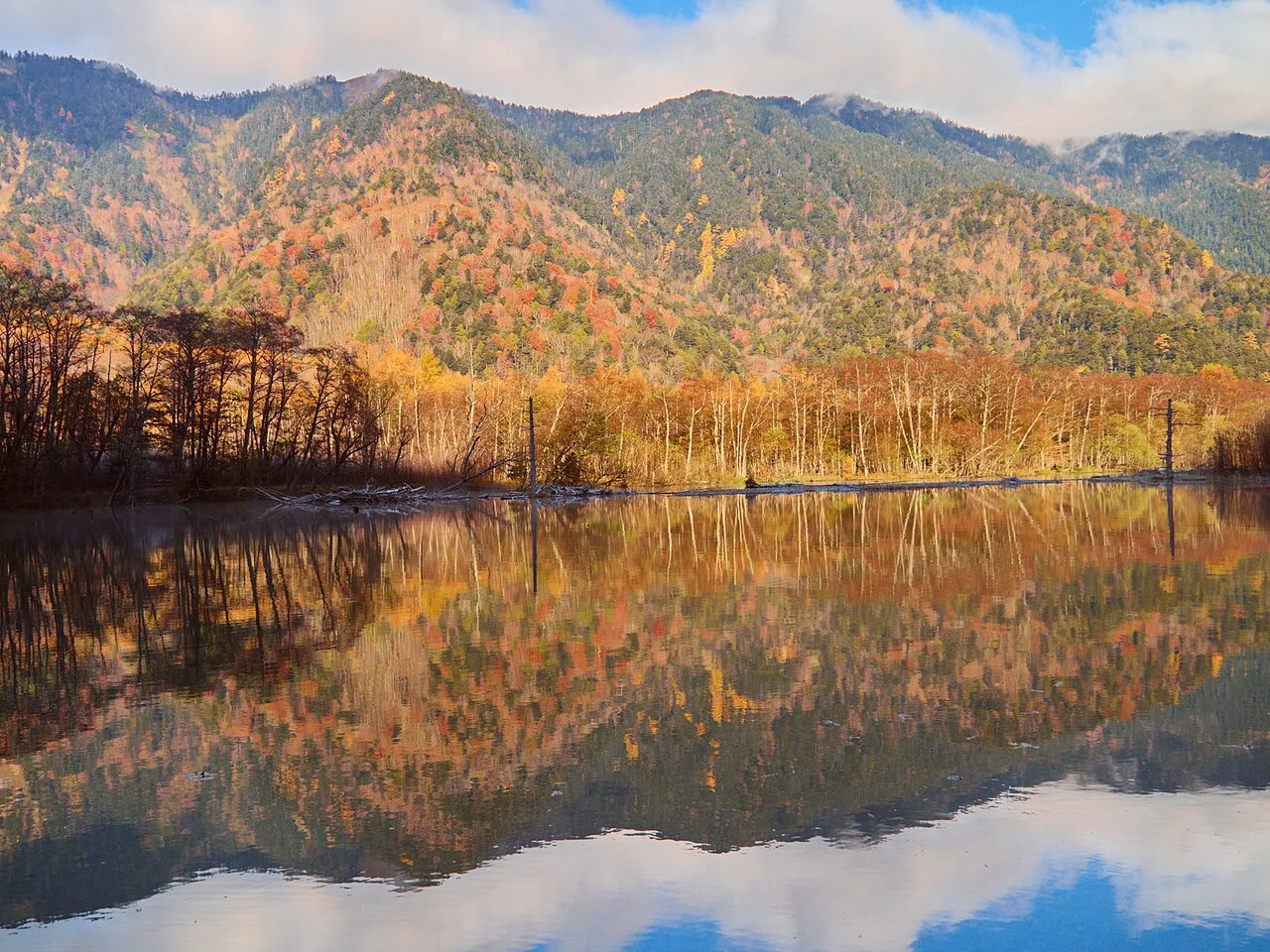
If your schedule is flexible, compare weekday train tickets and accommodation in late October first. Nagano Prefecture's official tourism site lists Kumoba Pond's typical peak foliage from mid-October to early November, putting late October right in the middle of that window. In mid-October, trees around the pond can still hold plenty of green; to gauge whether colour has deepened, look at whether both the downstream entrance and the opposite bank are turning together. Later in the season, focus on whichever side of the water still holds strong colour and keep time for lunch in the old town or the waterfall up in the hills.
Photos from 2026 show just how much autumn colour can vary on the very same day. On 29 October, the Karuizawa Tourist Association photographed the downstream entrance of Kumoba Pond just entering peak colour, while up at Shiraito Falls at roughly 1,260 metres elevation on the same day, Japanese larch had turned yellow, other deciduous trees were red, and the area around the falls was already at its height. By 13 November, the association's Kumoba Pond photos showed bright red along the west bank while the east bank had mostly shed its leaves. If you want full water views framed by canopies on both sides, those two lakeside records tell you far more than a close-up shot. If you can only travel in mid-November and one bank still looks vibrant, put the pond first and keep the mountain leg flexible.
On the town's livestream page, select Camera 9 for Kumoba Pond. Check it during Japanese daytime hours: inspect the far-shore canopy first, then look for wind ripples on the surface. If you are staying in Tokyo and have a choice of weekdays, checking the same camera around the same time of day over a few days makes it much easier to judge progress than comparing an overcast morning with a sunny afternoon. Photographers chasing mirror reflections should watch the wind, while walkers simply need a dry half-day. Under thick cloud, waterside foliage and fallen leaves underfoot still look good, though you may need to rethink mountain visibility, bus connections and how long you stay up top.
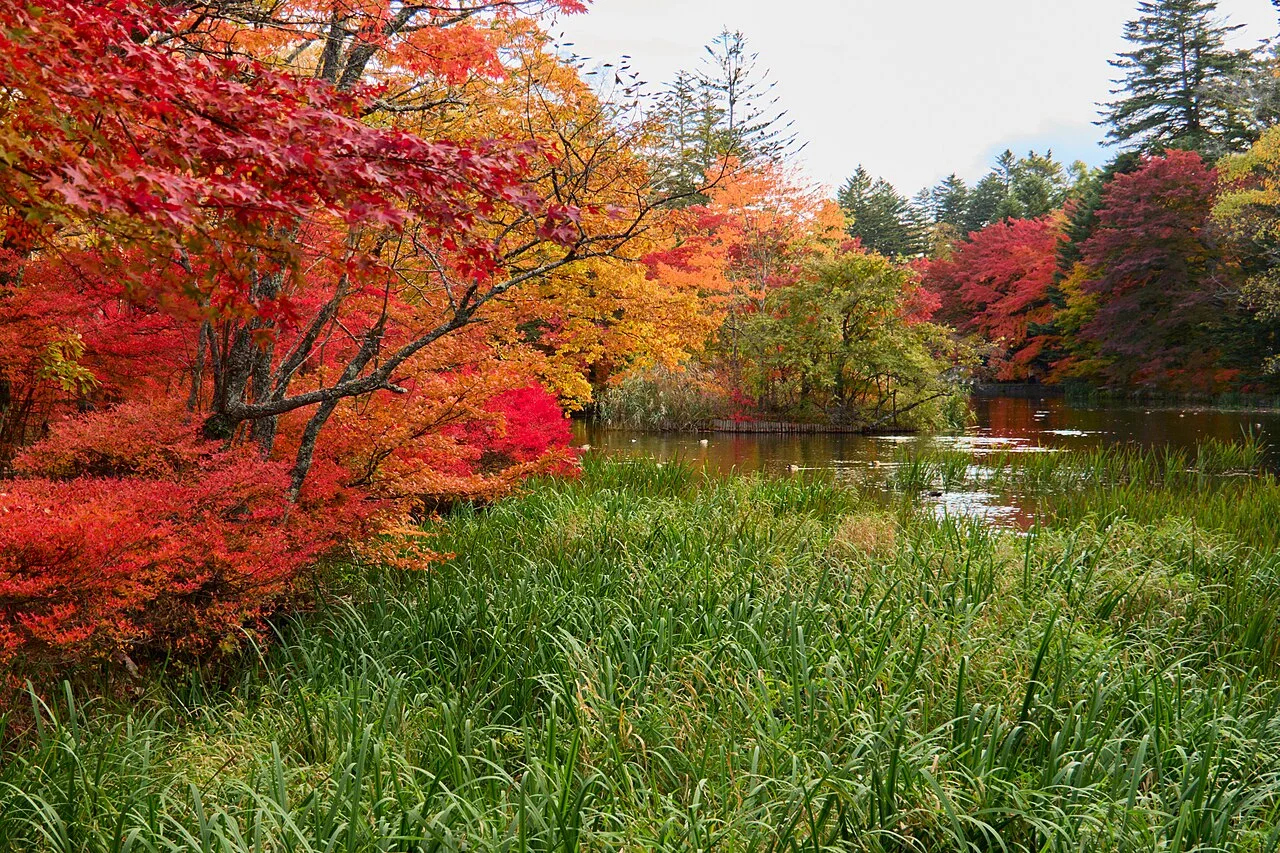
Kumoba Pond and Kyu-Karuizawa are the top spots for autumn foliage in Karuizawa. Plan around peak leaf season, shuttle buses, Shiraito Falls services, Shinkansen fares from Tokyo, day trips, overnight stays and wet-weather backups.
Walking the Kumoba Pond Loop
You enter Kumoba Pond at its downstream end, where autumn visitors often stop to take photos straight away. Walk a little further in and the water widens at the bend, letting you frame overhanging branches, the far bank and reflections together before finding a spot where others can still pass along the path. The lakeside loop is about 1 kilometre, which Nagano's tourism site estimates at roughly 20 minutes of walking. Use that as a baseline for a brisk circuit, and allow 40 minutes or more if you are taking photos or walking with older relatives or children. Once inside, you can always turn back the way you came to keep lunch and bus timings predictable.
Even on a short path, footing matters. After rain, wet fallen leaves can hide uneven ground, and umbrella rims or low branches along the walkway can easily brush passers-by. If you are pushing a pram or using a wheelchair, check the surface and passing width near the entrance first; a short, wider stretch near the start still gives good views over the water. For taxi drop-offs and pick-ups, set the meeting point at the station or your hotel so nobody is waiting roadside. Parking is prohibited on the roads beside the pond, so drivers should park first and walk in together.
To catch light on the leaves, note the tourist association's late-autumn 2026 observation along the west bank, where sunlit foliage was still relatively easy to see from morning into early afternoon. Start with a short stroll along a clear stretch to see which way the wind is blowing and which shore is lit, then decide how long to linger. When you cannot fit the whole pond into one frame, a single spray of red leaves hanging over the water still makes a strong shot. On busy weekends, leave tripods at your hotel so people can pass comfortably on the path.
Karuizawa Station North Exit to Kumoba Pond: Walking, Foliage Shuttles and Parking
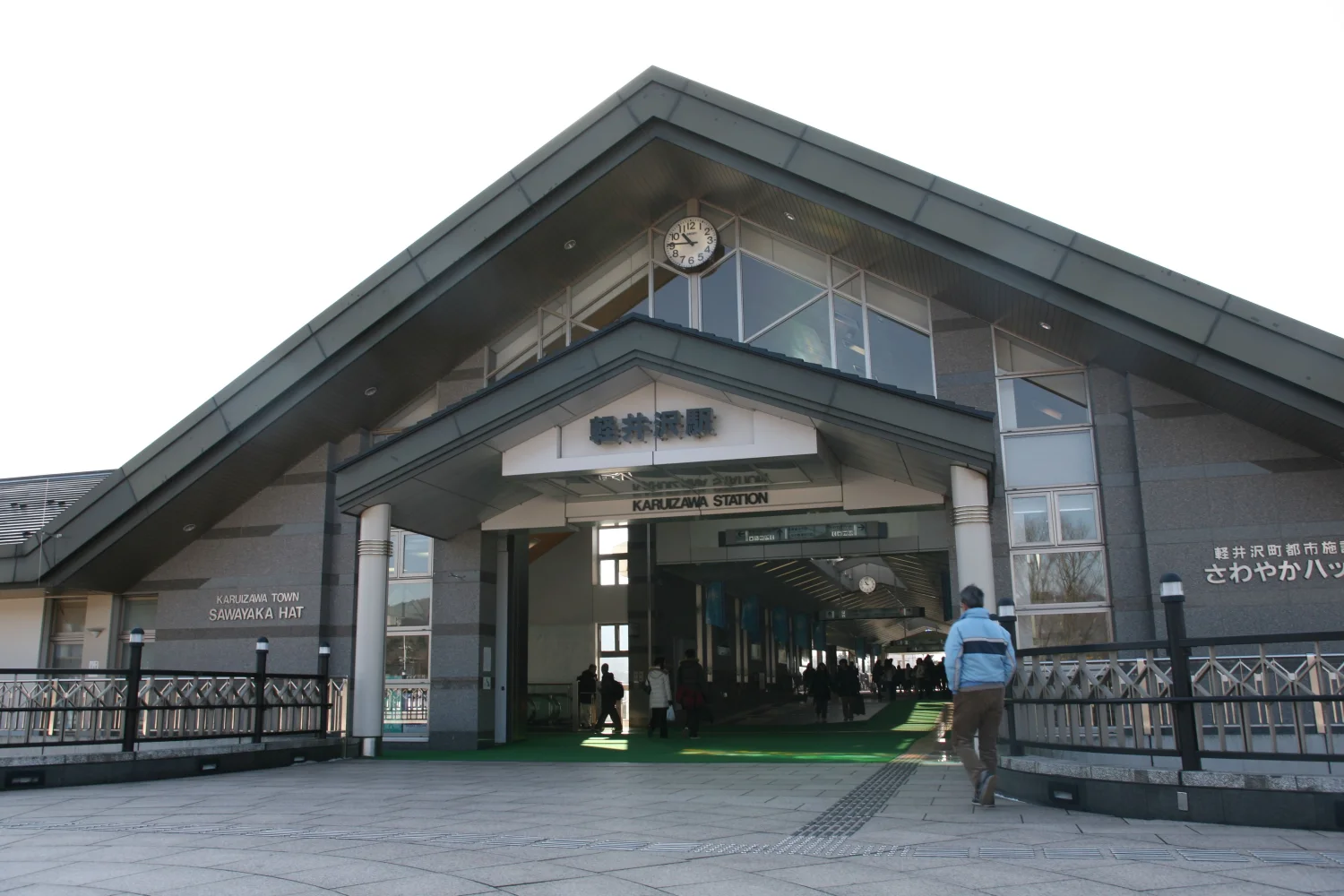
Leaving Karuizawa Station via the North Exit, walking to Kumoba Pond first and continuing to Kyu-Karuizawa Ginza for lunch is the simplest route on foot. If you want to head straight to the water, set your map destination to the Kumoba Pond entrance. By bus, look for the Roppontsuji-Kumoba-ike stop. Roppontsuji is the junction nearest the pond, and the town estimates a 3-minute walk from the bus stop to the water. Kyu-Karuizawa at the entrance to Ginza street is another stop along the corridor. Anyone wanting less walking can take the bus out to Roppontsuji, then decide afterwards whether to walk on to Ginza or catch a bus back from the same stop.
In 2026, Seibu Kanko Bus ran daily autumn foliage shuttle services from 10 October to 23 November between Karuizawa Station and Roppontsuji-Kumoba-ike for ¥220 one way. The town's timetable listed eight departures a day, starting at 10:10 and finishing at 15:10 from the station, with the last return leaving Roppontsuji-Kumoba-ike at 15:16. These extra services fill gaps in the regular timetable. To reach the pond before 10:00, walk from the station or check regular route buses for that day. If you arrive in the afternoon, lock in your return option before deciding how long to spend by the water.
Kusatsu Kotsu also operates the Kyu-Karuizawa Shuttle from the North Exit. Its November 2026 timetable lists Route 20 at ¥150 for adults and ¥100 for primary school children, which is handy if you are only heading to the old town. Whenever you see 'Shuttle' on a stop sign, check both the operator and the destination. For Kumoba Pond, look for Seibu's Roppontsuji-Kumoba-ike service; for Shiraito Falls, look for Kusatsu Kotsu buses bound for Shiraito-no-Taki, or services to Kusatsu Onsen and Kita-Karuizawa that call there. Because different routes share some of the same stop names, checking the destination board is much more reliable than relying on bus livery.
If you miss the shuttle, check the East and South loops of the Karuizawa Town Circular Bus. Both serve Roppontsuji-Kumoba-ike at a flat town fare of ¥100, or ¥50 for primary school children and younger; paper transfer tickets were discontinued from April 2026, so changing routes requires a separate fare. The loops also serve Naka-Karuizawa, Kazakoshi Park and Minami-Karuizawa, meaning journey times from the station depend on whether you board the inner or outer loop. Check the route diagram at the stop to find the next call and loop direction so you pick the one running via the old town first. Coming from Naka-Karuizawa, this circular bus also gets you to the pond without backtracking to the Shinkansen station.
Kumoba Pond has no dedicated car park. If you are driving in from the Joshin-etsu Expressway, save the municipal Karuizawa Station North Exit West Car Park and Yazaki Park Car Park to your map beforehand. Official town figures list 220 standard spaces at the North Exit West lot, open 24 hours with a 2.5-metre height limit, while Yazaki Park is about 350 metres from the station. During autumn 2026—specifically 10–12 October, 17 October–15 November, and 20–23 November from 08:15 to 17:00—the town made designated roads south of Kumoba Pond one-way only from the roundabout end for motor vehicles and motorcycles (excluding bicycles and light vehicles). Parking once and walking saves you from navigating narrow villa lanes and U-turns.
Taking the Kusatsu Kotsu Bus to Shiraito Falls: Outbound and Return Planning
Shiraito Falls fans out across a curved rock face, officially listed at roughly 3 metres high and 70 metres wide. Groundwater seeps through countless fine fissures in the rock, creating curtains of thin white threads visible from the path right below. The falls sit in Nagakura Kose within Karuizawa Town. Because several waterfalls across Japan share the same name, search specifically for Shiraito-no-Taki in Karuizawa, Nagano when checking bus times or ordering a taxi. From Karuizawa Station North Exit bay 2, Kusatsu Kotsu buses run via Kyu-Karuizawa and Mikasa up the Shiraito Highland Way, taking about 25 minutes from the station before a short walk from the Shiraito-no-Taki bus stop.
Under Kusatsu Kotsu's winter timetable effective 1 November 2026, the adult single fare to Shiraito Falls is ¥720 from Karuizawa Station and ¥650 from Kyu-Karuizawa. After lunch in Ginza, you can board directly at the Kyu-Karuizawa stop. On busy weekends, if your group wants to sit together, walking back to queue at the North Exit gives you a better chance than waiting mid-route for a bus that may already be full. Boarding is first come, first served, and the operator notes that buses do not hold for Shinkansen connections during road congestion. Using the same winter timetable as an example, the 10:20 departure from the North Exit reaches the falls at 10:45, giving you return options at 11:43 or 12:30, which arrive back in Kyu-Karuizawa at 12:02 and 12:49—handy benchmarks when deciding whether to book lunch.
For the return trip, board buses signed for Karuizawa Station North Exit at the falls stop, or get off early at Kyu-Karuizawa to add a stroll and lunch. When reading the timetable, find a column with a departure time at Shiraito-no-Taki and check its terminus at the bottom; route headers mentioning Kusatsu Onsen or Kita-Karuizawa indicate the bus's overall direction rather than a separate destination. Always give yourself at least two possible buses back down the mountain. If the next departure already gets you back to the station in time, take that one and save the longer forest trails around the falls for another visit.
Driving the Shiraito Highland Way and Walking the Shinanoji Nature Trail
Driving up from Kyu-Karuizawa takes you along Mikasa-dori to the Mikasa Toll Gate; from Naka-Karuizawa, Prefectural Route 146 leads into the Mine-no-Chaya Toll Gate. The road operator charges ¥500 for standard cars and kei cars. That toll covers one entry—you can exit at the opposite gate or turn round and leave via the same gate, though leaving and re-entering incurs another toll. Note that mapping apps sometimes draw town roads and forest footpaths right next to one another: pedestrians, bicycles and motorcycles of 125cc or under are barred from the Shiraito Highland Way.
From mid-November onwards, check the road operator's live road-conditions page whenever snow or ice is possible. On 20 November 2026, for example, snow closed the stretch between Mine-no-Chaya and Nagahinata Bridge, while roadworks in the same week affected the Mikasa approach and Kusatsu Kotsu bus operations. Snow and maintenance can hit the northern and southern approaches separately. Reading the highway status alongside the bus company's diversion notices from town tells you whether cars can get through and whether buses are still stopping at the falls. If your hire car is on standard tyres and the mountain road has snow or ice, drop the falls and keep your plans in town.
Walkers keen on forest trails can pick a section of the Shinanoji Nature Trail from the official map. Running roughly 11 kilometres from Mikasa to Mine-no-Chaya with an elevation change of about 410 metres, the full route passes Shiraito Falls and Ryugaeshi Falls—the latter lies roughly 1 kilometre from Kose along a valley stretch and works well as a shorter out-and-back from Kose. Before leaving the busier zone around Shiraito Falls, decide whether you are walking back to the same bus stop or catching a bus out from another stop. The town estimates around 4 hours for the full trail, and there is no car or bicycle parking at either trailhead. Walk in company in the woods, carry a bear bell or radio that makes steady sound, avoid dawn and dusk, and stick to the short walk between the bus stop and Shiraito Falls if there is frost on the ground or daylight is fading.
Kyu-Karuizawa Ginza for Lunch and Two Historic Churches
Enter Ginza-dori from the roundabout end near the Kyu-Karuizawa bus stop, where bakeries, cafes and jam shops line the street. As soon as you step off the bus, note where the return stop to the station is and which side Kusatsu Kotsu uses for Shiraito Falls. If you have a weekend lunch reservation, treat it as your one fixed anchor in town and push the waterfall to the afternoon. Without a booking, grabbing bakery food to eat on the move makes it much easier to catch an earlier mountain bus than trying to juggle a restaurant queue and a bus queue at once.
If your group splits up around Ginza, the timber-framed Karuizawa Tourist Hall (Karuizawa Kanko Kaikan) makes a far clearer meeting point than a specific shopfront. In autumn it generally opens from 09:00 to 17:00, with visitor information downstairs, the Karuizawa Railway Mini Museum on the upper floor, and baby-changing facilities. Public toilets here generally charge ¥100 per use. Anyone keen on railways can browse the hall while others walk further north up Ginza, then meet back near the roundabout for the bus.
For a longer walk in the old town, continue up to Shaw Memorial Chapel, an Anglican church tucked into the woods at the far end of Ginza shopping street. St. Paul's Catholic Church sits in a separate spot nearby and is easy to recognise by its steep triangular wooden roof. Type each church's full name into your map app so you are not routed out towards Karuizawa Kogen Church in Naka-Karuizawa by mistake. Follow on-site notices if a service, wedding or restricted access is underway, and stick to public paths if you only want to view the exteriors.
If rain sets in after lunch, hop on a bus from Kyu-Karuizawa towards Mikasa to see the Former Mikasa Hotel. The historic wooden hotel is open as a cultural heritage facility with exhibitions, a cafe and a museum shop. Official hours are 09:00 to 17:00 with last entry at 16:30, and admission is ¥1,000 for senior high school students and adults, or ¥500 for primary and junior high school pupils. Its regular Wednesday closure moves to the next weekday when Wednesday falls on a public holiday, and the regular Wednesday closure is suspended from 15 July to 31 October. On a wet Wednesday in November, stay along Ginza's open shops or head back to Karuizawa Station's South Exit.
Shiozawa Lake or Hoshino Area for One Afternoon?
If you are travelling with children and want room by the water, spend the afternoon at Shiozawa Lake in Minami-Karuizawa. Inside Karuizawa Taliesin, you will find lakeside promenades, art museums and historic buildings, with rowing boats and other activities priced separately. On a calm sunny day you can stroll down to the jetty; if the wind picks up, duck into the galleries or a cafe. Because individual museums and attractions within the grounds have their own hours and tickets, start with whichever building matters most to you and let everyone's energy dictate how long you linger by the lake. If you only want a quick glance at water before moving on, stick to Kumoba Pond and skip the southbound bus transfer.
To get there, take Seibu Kanko Bus's Shiozawa Lake Express towards Kazakoshi Park from Karuizawa Station North Exit bay 4 and alight at Shiozawa-ko, or use the East and South loops of the town circular bus. Check the return timetable from the Shiozawa-ko stop before heading inside, remembering that the inner and outer circular loops run in opposite orders. If you also want to visit the Picture Book Museum and Erz Toy Museum, stay on the same route to the next stop—they are close enough that you can visit the museums after lunch and board at Shiozawa-ko on the way back. By taxi, give the driver the full name Karuizawa Taliesin and ask for the main entrance.
If you would rather dine beside a mountain stream and finish with an onsen, give the afternoon to the Hoshino area. Take the Seibu route bus bound for Hoshino Onsen Tombo-no-Yu from Karuizawa Station North Exit bay 1, listed by the operator at about 20 minutes. Alternatively, ride the Shinano Railway 5 minutes to Naka-Karuizawa Station and follow Hoshino's official walking route for about 17 minutes. Harunire Terrace has restaurants and cafes, while Tombo-no-Yu is a separate bathhouse facility; eat at the terrace first, walk along the riverside while there is still daylight, then soak last before catching a bus or walking back to Naka-Karuizawa for the train.
There are no coin lockers inside the Hoshino area, and the official guidance directs visitors to use lockers at Karuizawa or Naka-Karuizawa stations instead. If you plan to leave by train from Naka-Karuizawa, factor both the walk and locker retrieval into your return buffer. Guests staying in Hoshino who want to visit Shiraito Falls the next morning will find it easiest to take the train back to Karuizawa Station and transfer to North Exit bay 2 for Kusatsu Kotsu buses. Those staying in Naka-Karuizawa can leave luggage with their hotel or in a station locker on their Shiraito and old-town day, then keep the Hoshino area for the following day.
Shinkansen Tickets from Tokyo and Using Both Station Exits
When booking the Hokuriku Shinkansen from Tokyo to Karuizawa, enter Karuizawa as your destination and pick an Asama service or a Hakutaka train scheduled to call there. The tourist association estimates the ride at roughly 1 hour 10 minutes. Because stopping patterns vary by train, plan transfers around your exact arrival time. Anyone hiring bicycles, stowing bags in lockers or picking up tickets should build a short buffer after stepping off the train before heading out to the bus bays. Avoid booking an outbound Shinkansen with a razor-thin connection to an early mountain bus—waiting for the next departure beats watching the clock all the way from Tokyo.
A standard-season adult paper ticket for an ordinary car on Tokyo–Karuizawa costs ¥6,130 for a reserved seat and ¥5,600 for a non-reserved seat one way. Booking JR East's standard Shinkansen e-ticket knocks ¥200 off an adult ordinary reserved seat, while non-reserved seats cost the same as paper tickets. Reserved seats generally go on sale one month ahead at 10:00 JST. For two or more people aiming for a specific morning bus and an evening hotel check-in or dinner back in Tokyo, reserving seats both ways removes guesswork. If you want flexibility on the return leg, compare non-reserved seats against a later reserved train depending on how your afternoon unfolds. Before tapping through the Shinkansen gates, make sure each passenger's ticket is linked to their own physical IC card or mobile Suica.
Exit via the North Exit for Shiraito Falls and Kyu-Karuizawa, and the South Exit for Karuizawa Prince Shopping Plaza. With the Shinkansen platforms, luggage lockers and the Shinano Railway line to Naka-Karuizawa all inside the same station complex, splitting North and South in your head keeps navigation simple. Save shopping for the end of the day so you are not carrying bags around the pond. If you have an hour left after returning from the old town, the South Exit mall works well for an early supper and souvenirs, though anyone with a reserved Shinkansen should factor in finding the exit, collecting bags and clearing the ticket gates within that hour.
Which Stop Should Come First on a Karuizawa Day Trip?
For a first visit, Kumoba Pond in the morning followed by Kyu-Karuizawa Ginza at midday requires the fewest transfers. Arrive early, walk from the North Exit to the pond, continue on to Ginza, and you can still catch an afternoon bus up to the falls directly from Kyu-Karuizawa. Save the outbound and return mountain bus times on your phone so you know instantly whether a 20-minute restaurant wait will cost you the bus. If the next bus up is too late by afternoon, pivot to old-town browsing, the churches or shopping at the South Exit and you will still have plenty of time to get back to the station.
If Shiraito Falls is your main reason for coming, flip the order: head straight up the mountain from the North Exit, eat lunch in Kyu-Karuizawa on the way down, and finish at Kumoba Pond. That puts the bus-dependent leg in the first half of the day and leaves the afternoon flexible. During days like the tourist association's late-October 2026 peak at the falls, morning sun lights up the cascading water threads and golden larch canopy first, leaving the slightly later-turning Kumoba Pond for whichever shore still holds good colour in the afternoon.
With only one or two hours in the afternoon, pair the North and South sides of the station instead. Start at the North Exit for Kumoba Pond, collect your bags at the station, then cross to the South Exit for Karuizawa Prince Shopping Plaza—and a stroll along its grassy outdoor mall if you still want fresh air. This is also an easy fallback whenever weekend buses are full, mountain roads are diverted, or a delay pushes you close to your booked train home from the South Exit.
If you plan to stay for dinner at the shopping plaza, check retail and restaurant hours separately. In November 2026, for instance, shops opened at 10:00 and closed at 20:00 from 1–9 November, shifting to 19:00 from 10 November onwards, while restaurants kept their own opening and last-order times. If you end up buying more than you want to carry, lockers sit next to the Center Mall information desk—check depth and width if you have large suitcases. Wheelchairs can also be borrowed from the same desk, making it easy for anyone needing a rest to meet up again indoors.
When travelling with toddlers or older relatives, agree on a meeting point where the group can split comfortably. Put Kumoba Pond in the morning while everyone's legs are fresh; after sitting down for lunch in Ginza, keen photographers can continue up to the churches while others browse the street or wait near the station. Everyone gets to see the autumn leaves without anyone being hurried to catch the same mountain bus. Splitting transport between the outbound and return legs cuts down roadside walking and saves energy for the lakeside path.
Overnight Stay: Karuizawa Station, Kyu-Karuizawa or Naka-Karuizawa?
If you are arriving from Tokyo after work on day one or catching an early Shinkansen on day two, staying by the station saves an extra luggage transfer. For resort comfort next to the outlets, look at Karuizawa Prince Hotel West on the south side: the hotel lists roughly a 13-minute walk from the South Exit along with a free South Exit shuttle bus running to a timetable. Parts of your group can browse the mall while others head straight back to their rooms, meeting back on the south side; the next morning, simply cross through the station to the North Exit for Kumoba Pond.
If the whole point of the trip is quiet morning walks by the pond and unhurried lanes in Ginza, Kyu-Karuizawa beats the South Exit. Properties on the old-town side such as Mampei Hotel offer a complimentary South Exit shuttle for overnight guests—confirm pick-up details before arrival to avoid wheeling suitcases up wooded lanes. You can step out early to Kumoba Pond, return for breakfast or check-out, and browse Ginza afterwards. If heavy rain greets you at wake-up, eat breakfast first and wait for a dry spell rather than standing outside waiting for shops to open.
For an onsen soak and riverside dinner, Naka-Karuizawa and the Hoshino area work nicely alongside a second half-day there. When checking hotel locations, pin both Naka-Karuizawa Station and Hoshino Onsen Tombo-no-Yu on your map so you are judging the walk back after dinner, not just daytime sightseeing distances. Hoshinoya Karuizawa and Hotel Bleston Court (next to Karuizawa Kogen Church) publish official guest shuttle details, while other inns set their own pick-up points and terms. Dropping large bags at your hotel early beats hauling them to dinner or a day-visit bathhouse.
Even a single overnight stay gives you two shots at the weather. If the first afternoon is sunny, go straight up to Shiraito Falls and save Kumoba Pond and the old town for the morning; if the next day looks brighter, start with lunch and indoor sights in town, ride up to the falls the next morning, and stop by the outlets on your way back to the station. Compare hotels on early-morning transport access, how easily you can get back after dinner, and where to store bags after check-out. For a year-round breakdown of areas and hotels, see our Karuizawa accommodation and transport guide.
Hiring Bicycles for a Half-Day Around Town
When the weather is dry and paths are clear, hiring bicycles near the station to ride to Kumoba Pond and on to Kyu-Karuizawa cuts out several bus waits. Directly connected to Shinano Railway's Karuizawa Station, BIGCLOUD CYCLE BASE offers both standard and electric-assist bikes via advance booking or walk-in hire, with its 2026 seasonal opening announced from 18 April. If you plan to catch a mountain bus later, time your bike return before that Kusatsu Kotsu departure and keep the drop-off near the North Exit. Before entering the lakeside path or crowded shopping streets, park only in designated bike racks and continue on foot.
Riding out towards Naka-Karuizawa and Hoshino means handling uphill gradients and sharing space beside traffic. Electric-assist bikes take the sting out of the climbs, though you still need to dress for chilly winds on the downhill return. If anyone wants to stay in Hoshino until dark, taking the bus or train back saves a rushed ride to beat shop closing times. Writing bike pick-up and return times alongside bus departures and shop locations makes it obvious when walking is simply easier. Families needing child seats should specify ages, headcount and bike models when booking rather than scrambling at the counter.
Half-Day Backups for Rain, Cold Snaps or Late-Season Leaf Drop
Japan Meteorological Agency 1991–2020 climate normals for Karuizawa put October's mean daily high at 16.2°C and mean daily low at 6.3°C, dropping in November to 11.2°C and -0.2°C. Leaving Tokyo on the same morning, standing still in the breeze by the pond and stepping into a heated restaurant means switching rapidly between layers. For short walks, a windproof outer jacket and shoes that handle damp paths are enough; add gloves if you plan to cycle or linger lakeside at dawn, plus a packable thermal layer for the hills in November.
When heavy rain drives you back towards the North Exit early, Karuizawa T-SITE is about a minute from the station entrance for coffee or lunch. Inside, AQUAIGNIS GARDEN SPA offers day-visit hot-spring bathing, listed by the operator from 09:00 to 22:00—ideal right before your return Shinkansen without adding another bus ride. With just half an hour left before departure, browse around the North Exit instead of crossing to the South Exit and back.
In light drizzle, duck into a cafe in the old town first and slip over to Kumoba Pond during a lull since it is close by. With older relatives or young children, move the Former Mikasa Hotel up your schedule on open days and head back to Ginza for lunch. If most leaves at Kumoba Pond have already fallen, you can still find autumn colour along tree-lined streets in town—just expect a shorter spell outdoors in a cold wind and lean towards architecture and cafes. Keep shopping for last on the way back through the station to the South Exit so you are not walking far in the rain with paper carrier bags.
A few useful answers
When is the best time to see autumn leaves in Karuizawa?
Kumoba Pond typically peaks from mid-October to early November. In 2026, the Karuizawa Tourist Association photographed the downstream shore entering peak colour on 29 October and still recorded bright red leaves along the west bank on 13 November.
Is there parking at Kumoba Pond?
No. Kumoba Pond has no dedicated car park and parking is prohibited on surrounding roads. Use the municipal car parks at Karuizawa Station North Exit West or Yazaki Park, then walk or take a bus.
Is the Kumoba Pond foliage shuttle the same as the Kyu-Karuizawa shuttle?
No. In 2026, Seibu's autumn foliage shuttle between Karuizawa Station and Roppontsuji-Kumoba-ike cost ¥220, while Kusatsu Kotsu's Kyu-Karuizawa Shuttle runs to Kyu-Karuizawa for ¥150 (adult) and serves the Ginza shopping district.
Where do you catch the bus to Shiraito Falls?
Board a Kusatsu Kotsu bus at Karuizawa Station North Exit bay 2 and get off at Shiraito-no-Taki. Under the timetable effective 1 November 2026, the adult single fare is ¥720 from the station or ¥650 from Kyu-Karuizawa.
Which Shinkansen runs from Tokyo to Karuizawa?
Take the Hokuriku Shinkansen Asama, or a Hakutaka service shown as stopping at Karuizawa in the booking system. In standard season, a one-way adult ordinary-car ticket from Tokyo to Karuizawa costs ¥6,130 for a reserved seat or ¥5,600 for a non-reserved seat.
Can you visit Karuizawa for autumn foliage as a day trip from Tokyo?
Yes. First-time day trippers can easily combine Kumoba Pond and Kyu-Karuizawa Ginza, adding Shiraito Falls when mountain bus connections line up. Stay overnight if you want an onsen soak, early morning lakeside views or a slower pace with family.
Which lake in Karuizawa has rowing boats?
Head to Karuizawa Taliesin in Minami-Karuizawa, where Shiozawa Lake has a boat jetty alongside lakeside paths and museums. Take Seibu Kanko Bus's Shiozawa Lake Express and alight at Shiozawa-ko.
Official information and references
Sources used in this guide.
- Nagano Prefecture Official Tourism | Kumoba Pond Peak Foliage & Walking Trail
- Karuizawa Town | Nearest Bus Stop and Walking Route to Kumoba Pond
- Karuizawa Town | Town Circular Bus Fares and Transfer Rules
- Karuizawa Town | 2026 Kumoba Pond Autumn Foliage Shuttle & Timetable
- Karuizawa Town | 2026 One-Way Traffic Controls Around Kumoba Pond
- Karuizawa Town | Live Cameras at Kumoba Pond and Other Locations
- Karuizawa Tourist Association | 29 October 2026 Kumoba Pond Downstream Foliage Update
- Karuizawa Tourist Association | 13 November 2026 Kumoba Pond West Bank Foliage Update
- Karuizawa Tourist Association | 29 October 2026 Shiraito Falls Foliage Update
- Karuizawa Tourist Association | Shiraito Falls
- Karuizawa Tourist Association | Shinkansen Travel Times & First-Timer Routes
- Kusatsu Kotsu | Route Bus Timetables, Fares & Boarding Rules
- Shiraito Highland Way | Tolls, Access & Winter Regulations
- Shiraito Highland Way | Current Road Conditions
- Karuizawa Town | Shinanoji Nature Trail, Trailheads & Wildlife Guidance
- Karuizawa Town | Autumn Bear Safety Advice on Forest Trails
- Shiraito Highland Way | Shinanoji Nature Trail & Waterfall Map
- Karuizawa Town | Station North Exit West Car Park & Nearby Spaces
- Karuizawa Town | Churches & Sightseeing Facilities in Kyu-Karuizawa
- Karuizawa Town | Karuizawa Tourist Hall & Opening Hours
- Karuizawa Tourist Association | Railway Exhibition & Facilities at Karuizawa Tourist Hall
- Former Mikasa Hotel | Visitor Information & Admission
- Karuizawa Tourist Association | Karuizawa Taliesin
- Seibu Bus | Shiozawa Lake Express Timetable & North Exit Bay 4 Information
- Karuizawa Town | Town Circular Bus East & South Loops
- Karuizawa Hoshino Area | Access, Shuttles & Luggage Information
- JR East | Shinkansen Services Stopping at Karuizawa & Ticketing
- JR East | 2026 Revised Regular-Season Shinkansen Fares
- Kusatsu Onsen Tourism Association | Tokyo–Karuizawa–Kusatsu Transfers & Fare Table
- JR East | Shinkansen e-Ticket & Reserved Seat Sales
- JR East | Karuizawa Station Information
- Karuizawa T-SITE | Station Access
- AQUAIGNIS GARDEN SPA | Day-Visit Bathing & Opening Hours
- Karuizawa Prince Shopping Plaza | 2026 Opening Hours
- Karuizawa Prince Shopping Plaza | Lockers & Information Desk
- Karuizawa Prince Hotel West | Karuizawa Station South Exit Access & Shuttle
- Mampei Hotel | Station Shuttle for Overnight Guests
- BIGCLOUD CYCLE BASE | Bicycle Hire at Karuizawa Station
- Japan Meteorological Agency | Karuizawa Monthly Climate Normals (1991–2020)